On the island of North Uist, threatened birds have found a protected home: the Balranald Nature Reserve. But it’s not just birdwatchers who’ll love this stretch of coast.
Listen to this article:
“Is that a Crex Crex?” the woman asks, holding her camera display right under my nose. On it is a rather unlovely, upright bird standing in the middle of a meadow. “Yes, that’s a Crex Crex,” I reply, a touch irritated. “See, I told you so,” she turns to her companion, “and on the first try!” Slightly sourly, I go on my way.
Because that woman had tremendous luck. What I’ve been hoping for days to achieve – a glimpse of the corncrake, “Crex Crex” in Latin – fell into her lap by chance within a few minutes, and she even managed a close-up shot of the rare bird to boot. She had a stroke of luck that has continued to elude me.
That she found the corncrake at Balranald, though, is no coincidence. On the north-western tip of the Hebridean island of North Uist, this rare bird feels right at home. Here, near the village of Balranald, the Royal Society for the Protection of Birds (RSPB) has established a nature reserve. Around 600 pairs of wading birds nest in the protected area, including lapwings and turnstones. Particularly interesting: the corncrake and the hen harrier – both species are critically endangered back home.
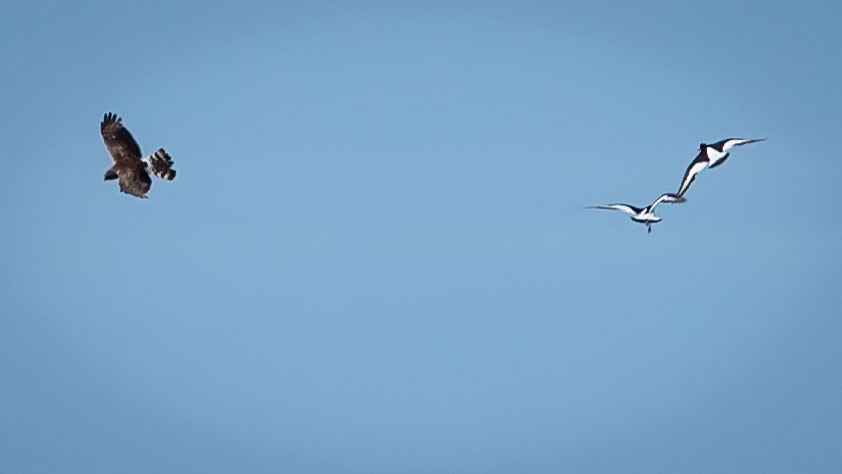
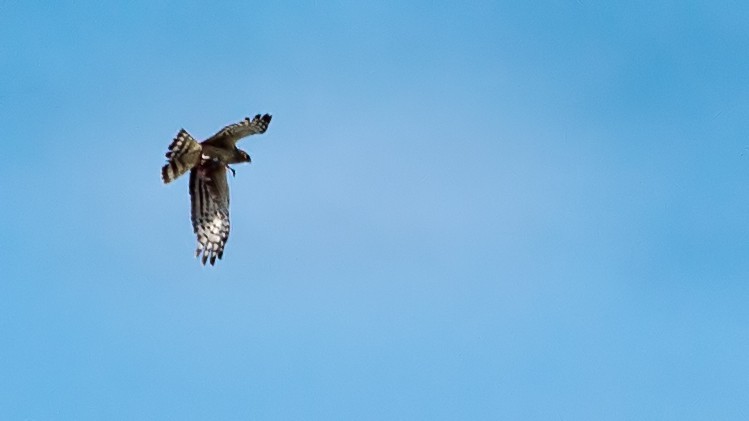
And at least with the latter I get lucky too. A female hen harrier is circling right over the machair meadows – click, in the bag.
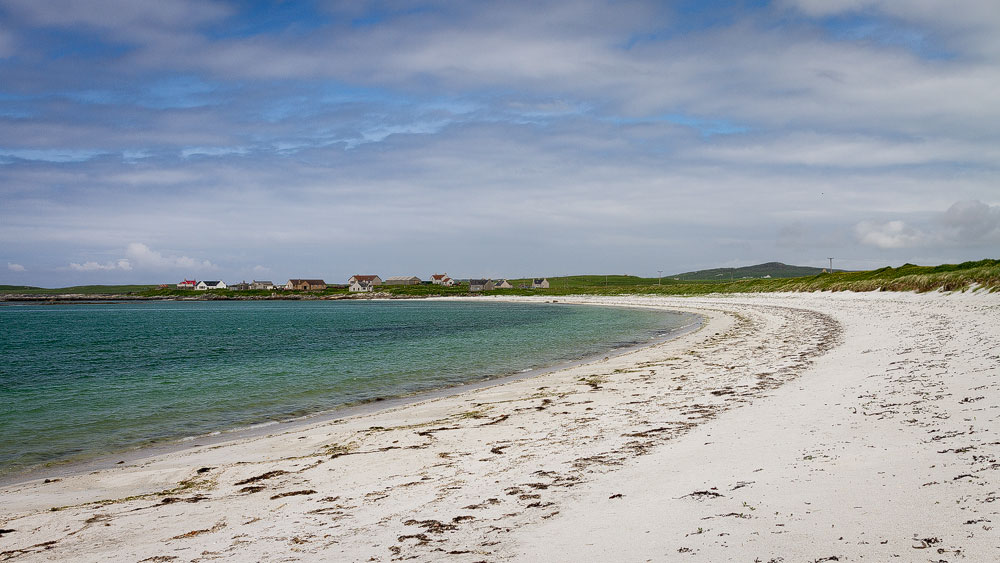
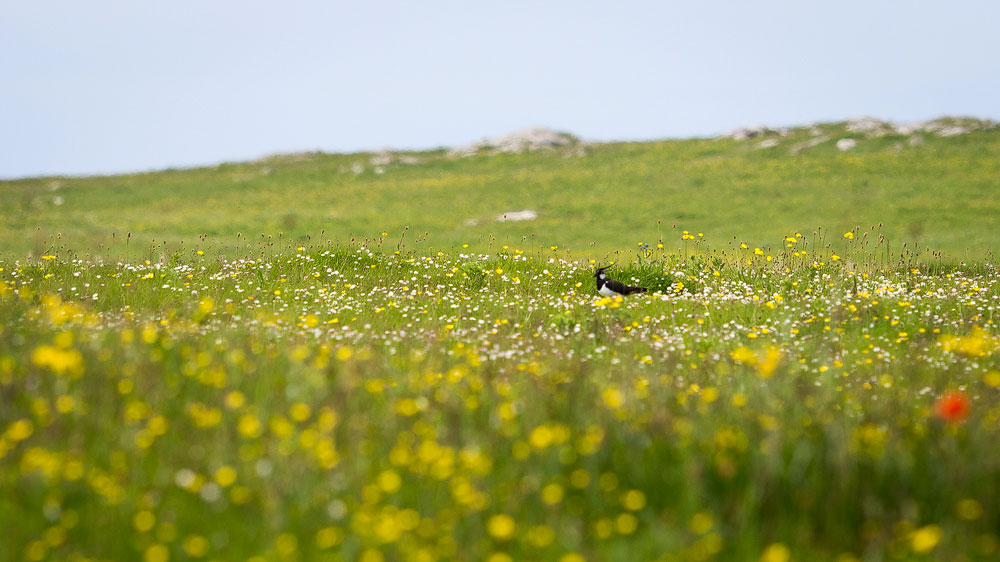
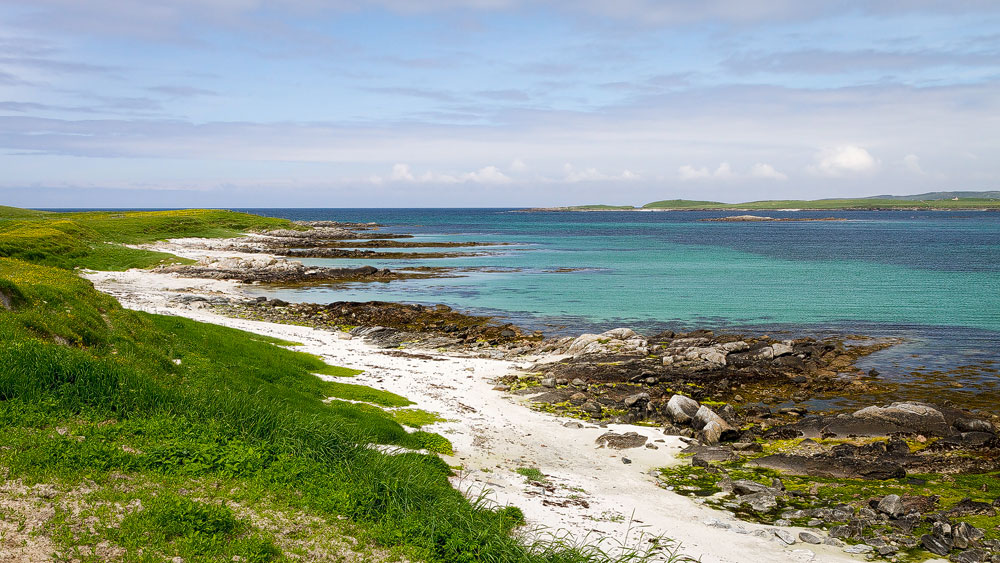
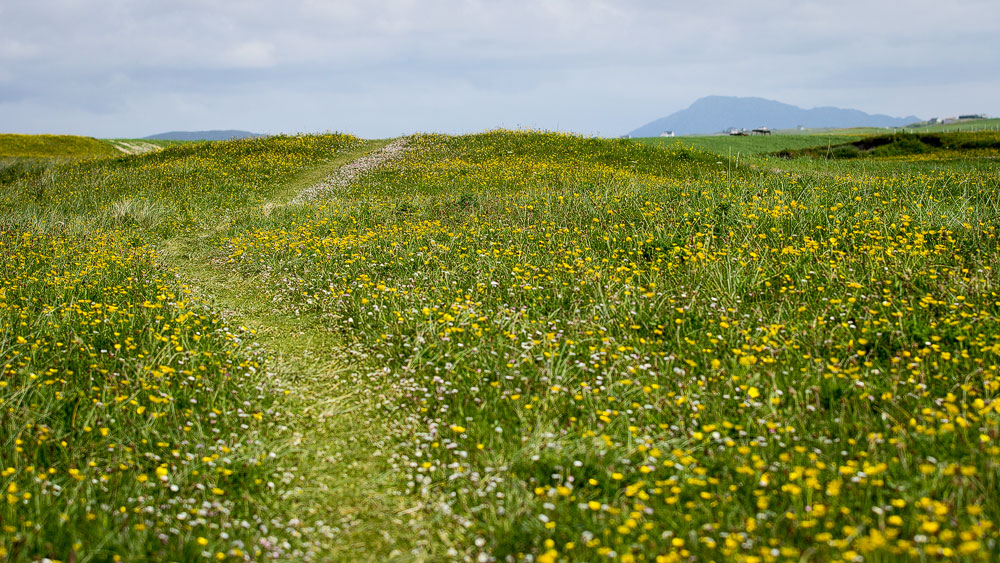
But Balranald Nature Reserve has more to offer than just birds. For one thing, there’s a beautiful sandy beach that curves into a deep bay, its azure water dotted here and there with grey rocks. For another, the famous machair stretches from the beach deep inland. Machair forms wherever sand neutralises acidic peat, creating a highly fertile strip of land. The result in summer is a dreamlike wildflower meadow right on the sea. And that, in turn, is a paradise for birds like the corncrake, as well as for the bumblebee, which is rare in Scotland.
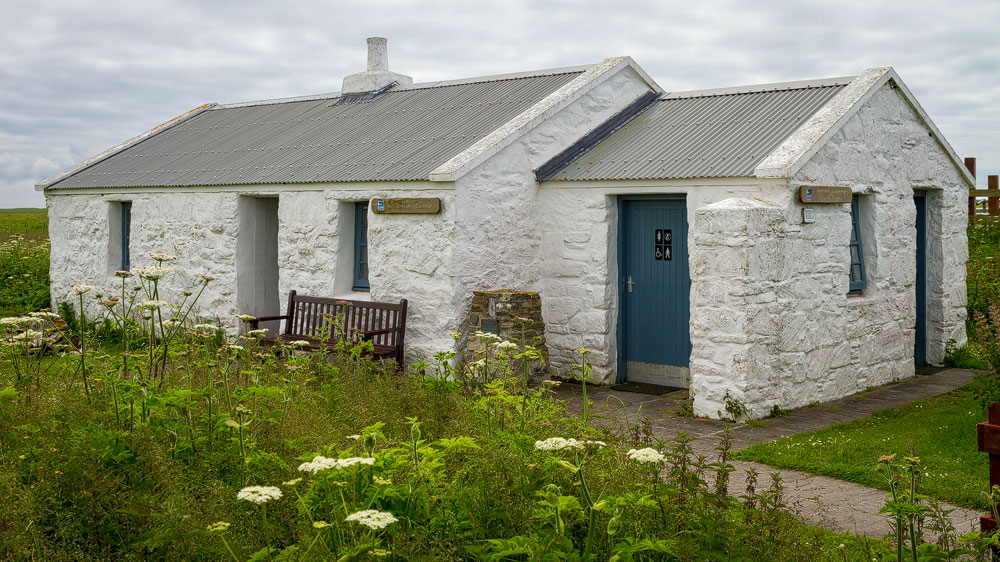
Visitors like us can take all of this in comfortably on a 4.5-kilometre circular walk. The route starts at Goular Cottage, the visitor centre of the bird reserve. “Centre” is perhaps a bit grandiose – inside you’ll find just a handful of information boards and leaflets to take away. But the real attractions lie outside the building anyway. The path starts here and leads past the large beach of Tràigh nam Faoghailean, out onto the headland, along the coast and back. Walkers can spot more than just birds here – otters and seals put in an appearance too, if you’re lucky.
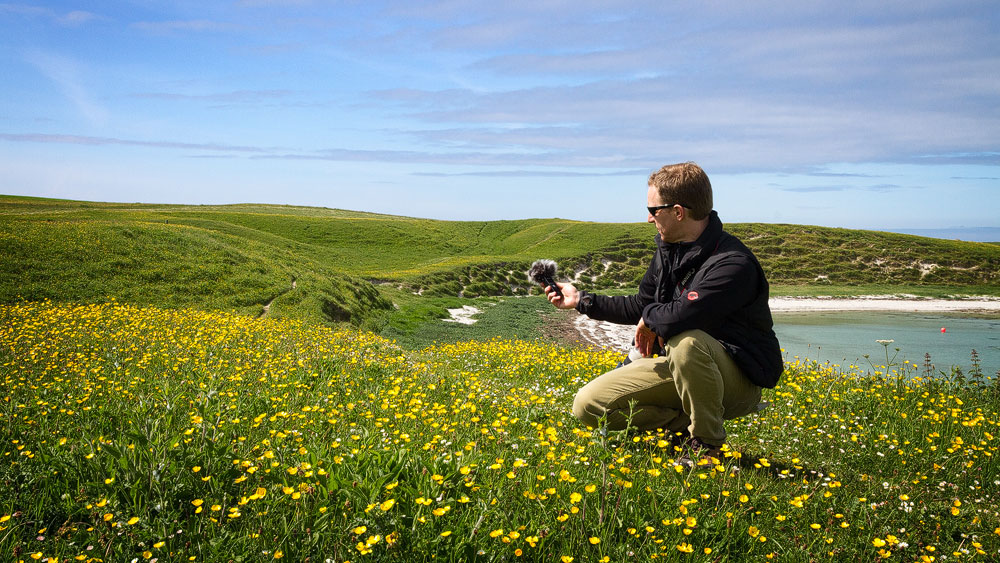
I’m still trying to force my luck. I’ve already had success with the hen harrier and spotted a few waders and a couple of gull species – but the corncrake continues to elude my eyes. I want to at least hear it, so I kneel down in the grass with my recorder.
I can’t swear to it, but I think I heard it and got it on tape. And with that feeling, I leave Balranald’s bird paradise behind. I’ll get to see it on my next visit.
Good to know: Corncrakes – the stars among birdwatchers
“Crex Crex” – this Latin name for the corncrake isn’t really a formal name at all, but an imitation of its call. It’s exactly this sound that the rare bird produces, distinctive and audible from far away.
The corncrake isn’t a particularly pretty bird in itself, yet it’s a star among birdwatchers. That’s because it has become vanishingly rare in Western Europe and is also quite shy.
That it finds a home here is down to the machair, the special grassy ground along the coast. The corncrake loves exactly this kind of meadow, where it can perfectly hide itself and its nest.
Tips: Equipment for the Balranald Nature Reserve
Alongside the usual important clothing and equipment for the Highlands, I also brought along a small recording device, the Zoom H1, fitted with a furry windscreen. With it you can record birdsong and identify it later. I also borrowed a strong telephoto zoom lens for my camera specifically for this trip, to get as close to the birds optically as possible. Alternatively, a pair of binoculars is enough if you just want to observe the animals.
Personal note: Wiser only afterwards
Most of the birds I could only identify afterwards. I did see an “interesting bird” up in the air, but I had no idea it was a hen harrier until I went through the photos later.
Getting there:
With sat nav: “HS6 5DL” should get you roughly in the vicinity.
Without sat nav: On the A865 along the west coast. Coming from the north, you can already turn right at the village sign “Taigh a Ghearraidh” and follow the road towards the coast. After a while you’ll see the bay on your right. The road then heads back inland. Watch for the T-junction here, where a sign points to the toilets. Turn right and drive on to the Goular Cottage visitor centre.
Coming from the south on the A865, a large brown sign will eventually point left, reading “Raon Gleidhteachas Bhaile Ragnaill”. Follow this sign until another one points to the visitor centre. Turn left there and drive to Goular Cottage. Park in front of it.