Sweating strongmen, graceful dancers, and over it all the drone of bagpipes. A day at the Bridge of Allan Highland Games.
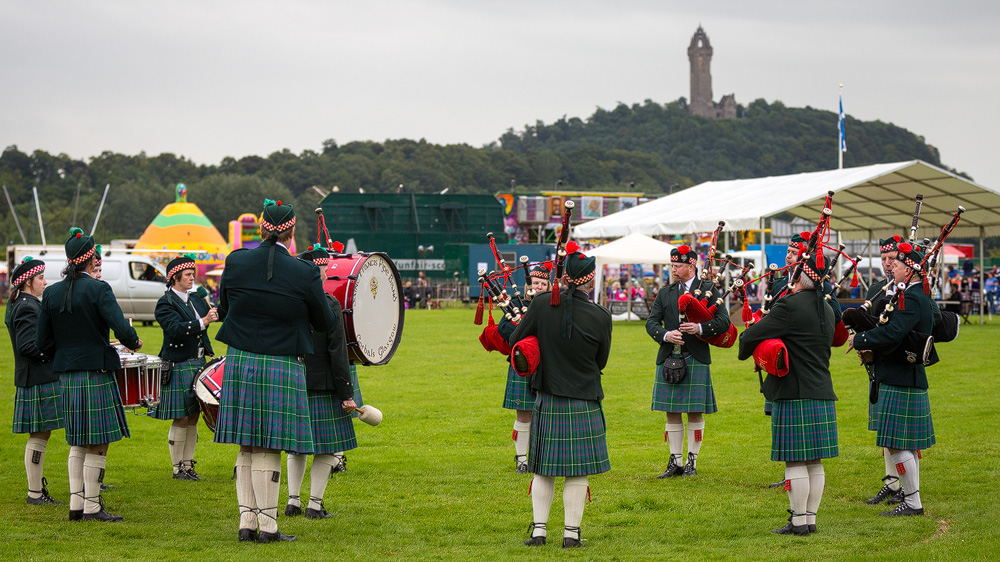
There’s a reason the wail of the bagpipes keeps going all day: thirty bands from all over the world go head to head here at the Bridge of Allan Highland Games, in the shadow of the National Wallace Monument. Every one of them wants to take the prize home. And “home” isn’t necessarily in Scotland – the bands come from every corner of the former British Empire. This year, for instance, there are entries from Canada, Malaysia and Oman too. And these exotic guests are quite a sight.
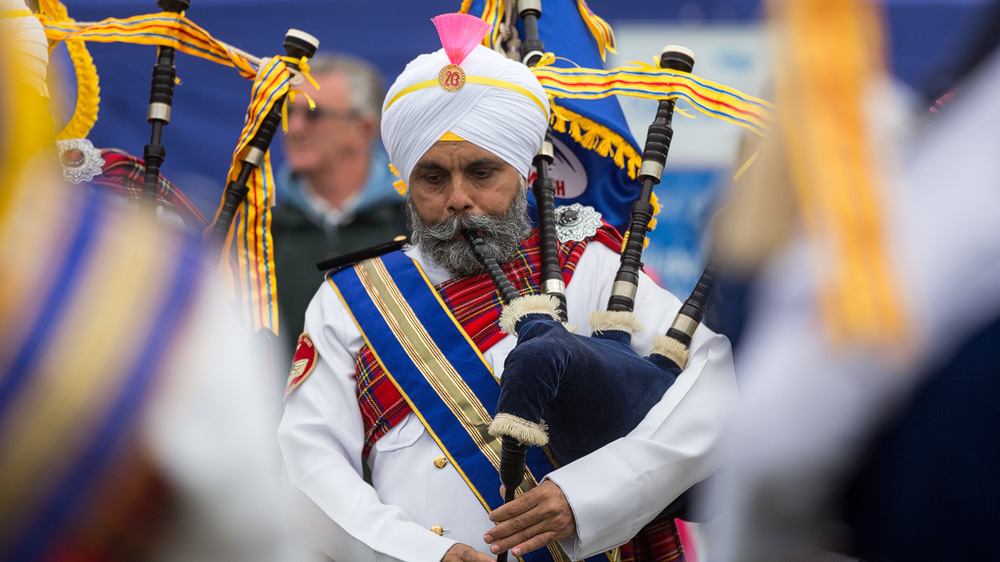
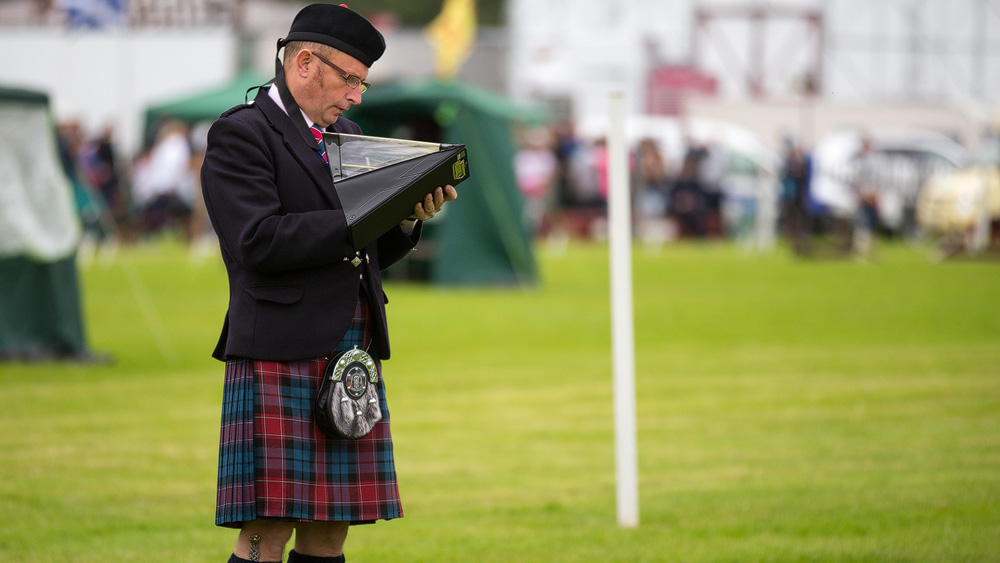
Under the strict eye – and above all the attentive ears – of the judge, all the bands start out equal. They have to prove themselves across three different pieces of music.
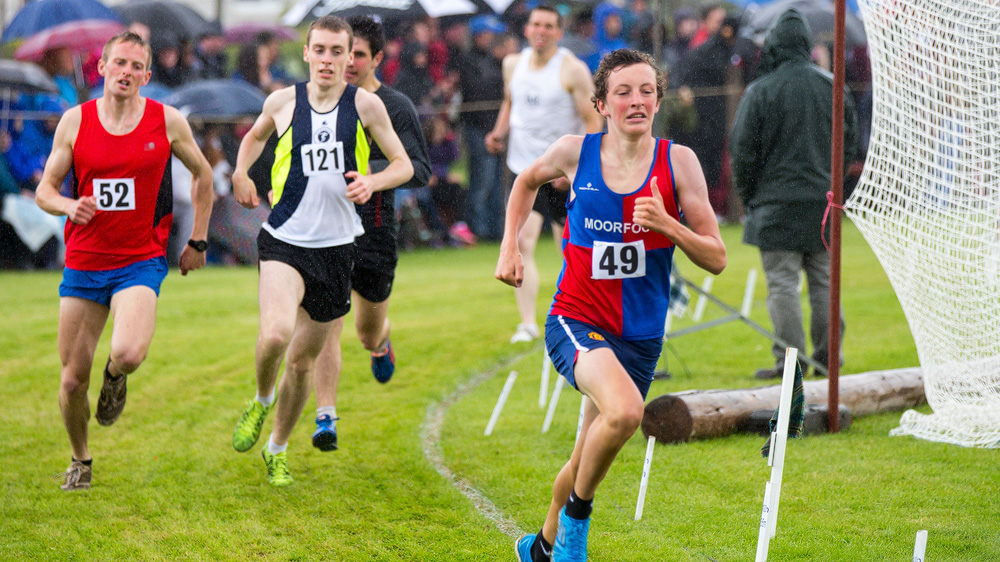
While the bands play in the centre, athletes and cyclists race round the outer track. There’s no cinder track here, mind you – it all takes place on grass. And today that grass isn’t just extremely wet, it gets deeper and more churned up with every single race. Mud flies up behind the wheels.
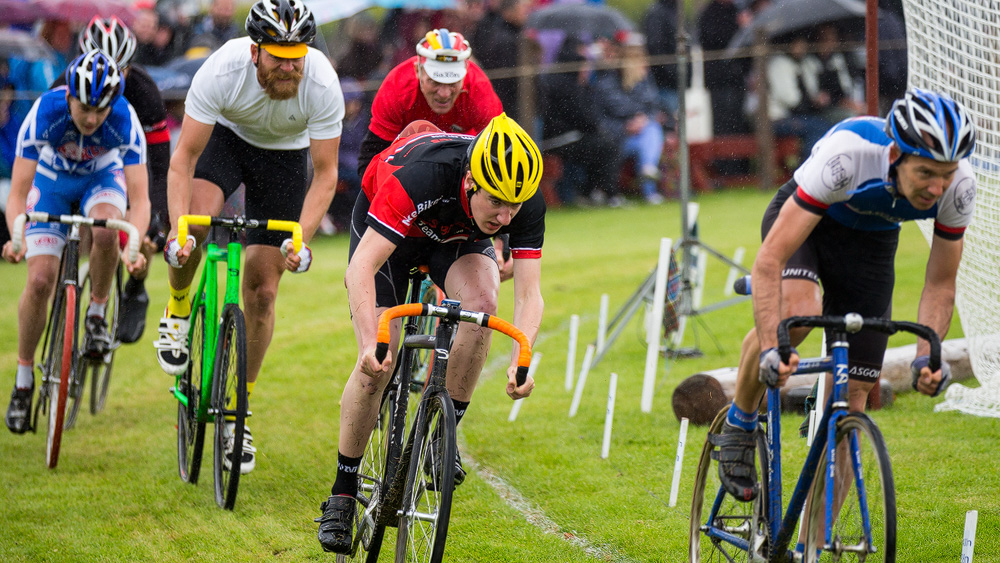
The cycle races cover distances between 800 and 3,200 metres – and finish with the elimination race “De’il Tak’ the Hindmost”, roughly “the devil takes the last one”. Almost every race is won by the same rider, Scottish grass-track champion Craig Hardy – but anyone only interested in the winners misses out on the best part of the Highland Games anyway: the small, human moments. Like when the oldest runner gives the oldest cyclist a helpful push-start.
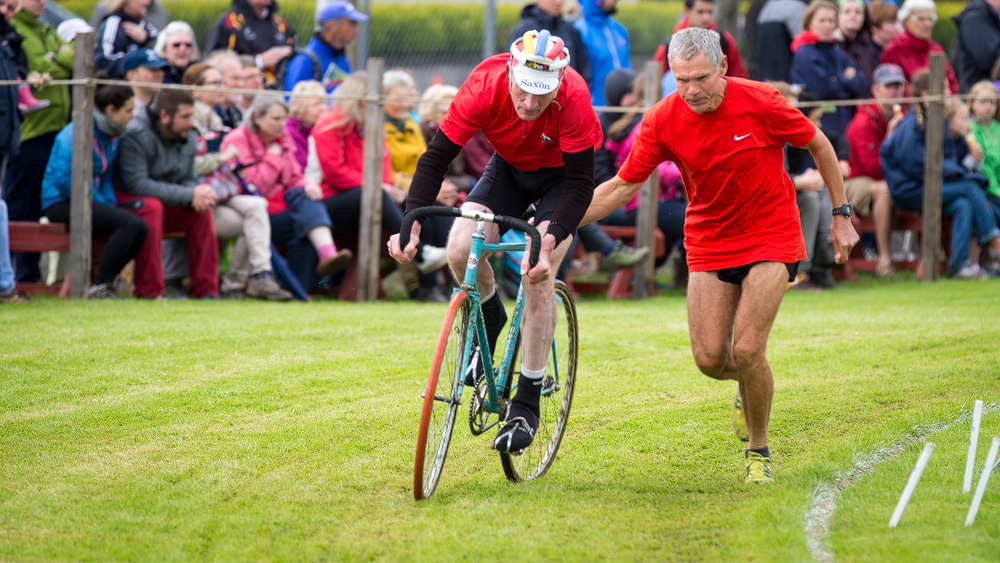
But Highland Games and road bikes aren’t exactly what most people associate together – after all, the history of the Highland Games stretches back hundreds of years. Flying tree trunks and weights – that’s what people picture when they think of these Scottish games. Don’t worry, the heavyweights are already getting ready.
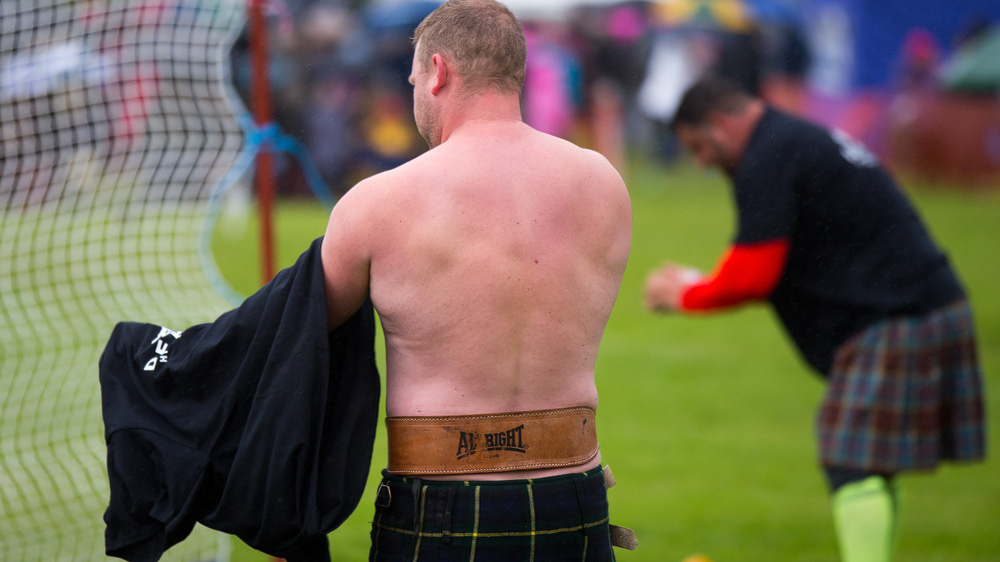
The first event: the hammer throw. And “hammer” here really does mean a weight on the end of a wooden pole.
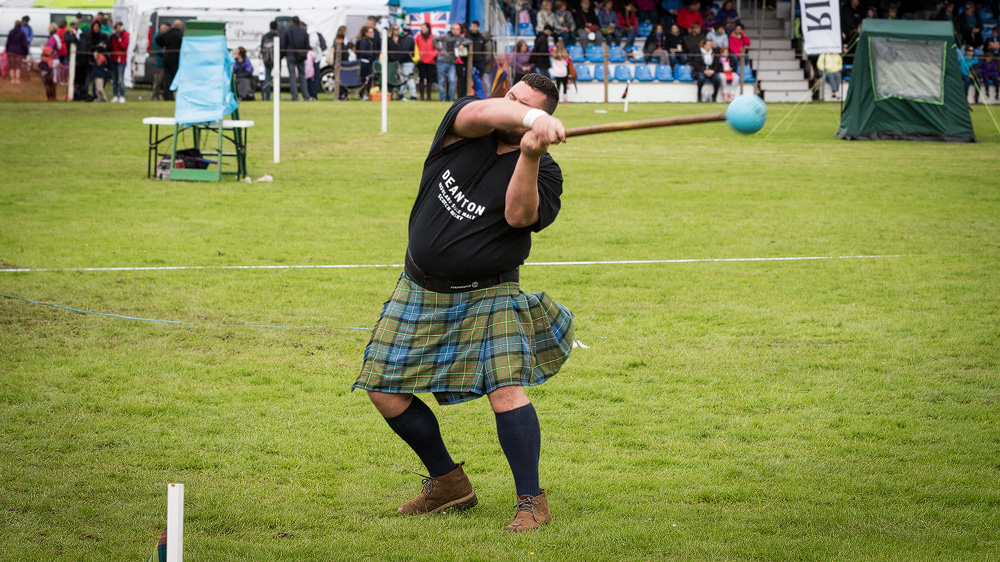
The hammer throw is just one of four heavyweight events at the Bridge of Allan Highland Games. They’re spread out across the whole day.
By the way: if you think it’s all strong men and dainty women here, you only need to walk a little further to the wrestling, where the girls are currently proving themselves.
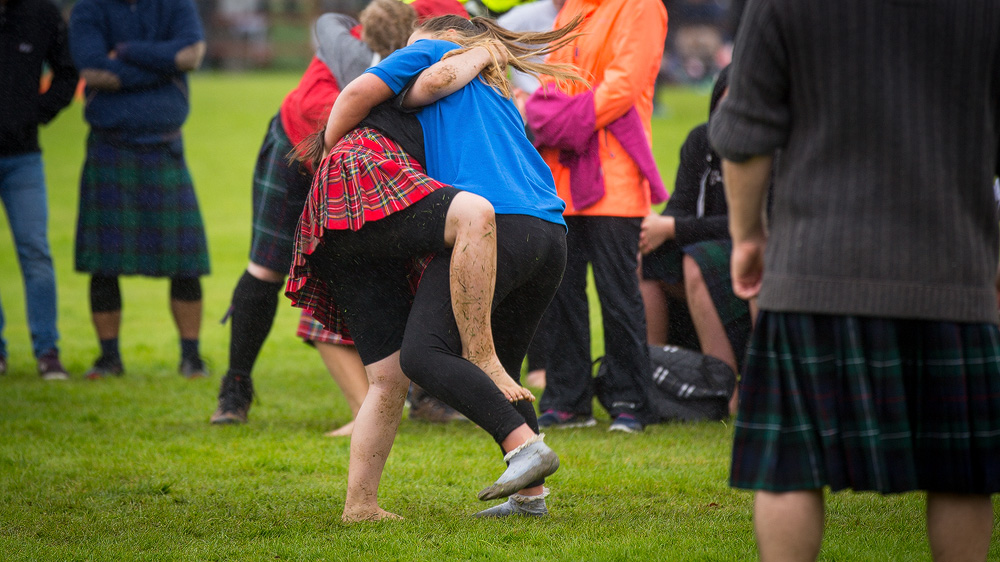
Since the various events are spread across the whole field, there’s nothing for it but to keep moving on every so often. Behind the stands there’s plenty else worth seeing too – like an open-air fish smokery:
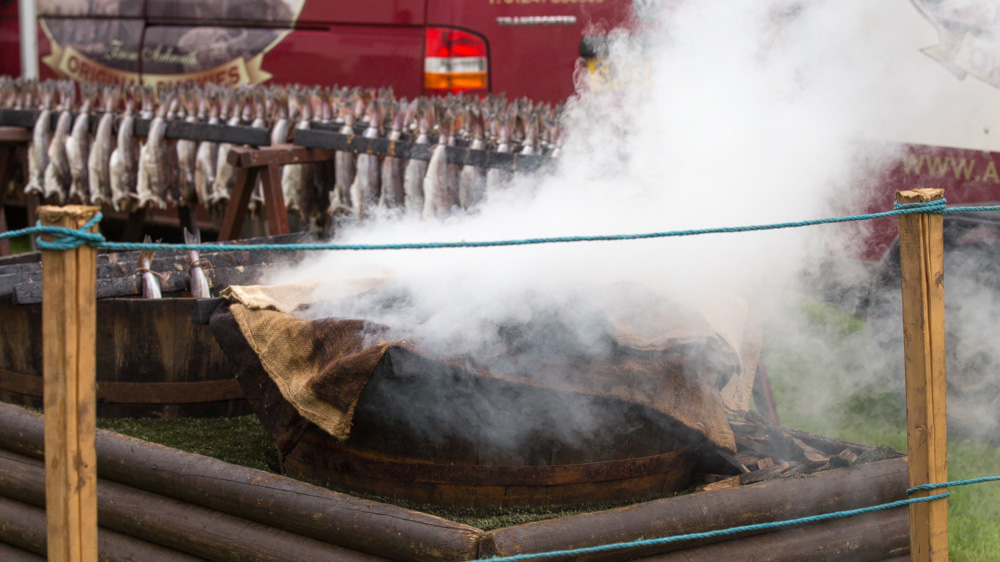
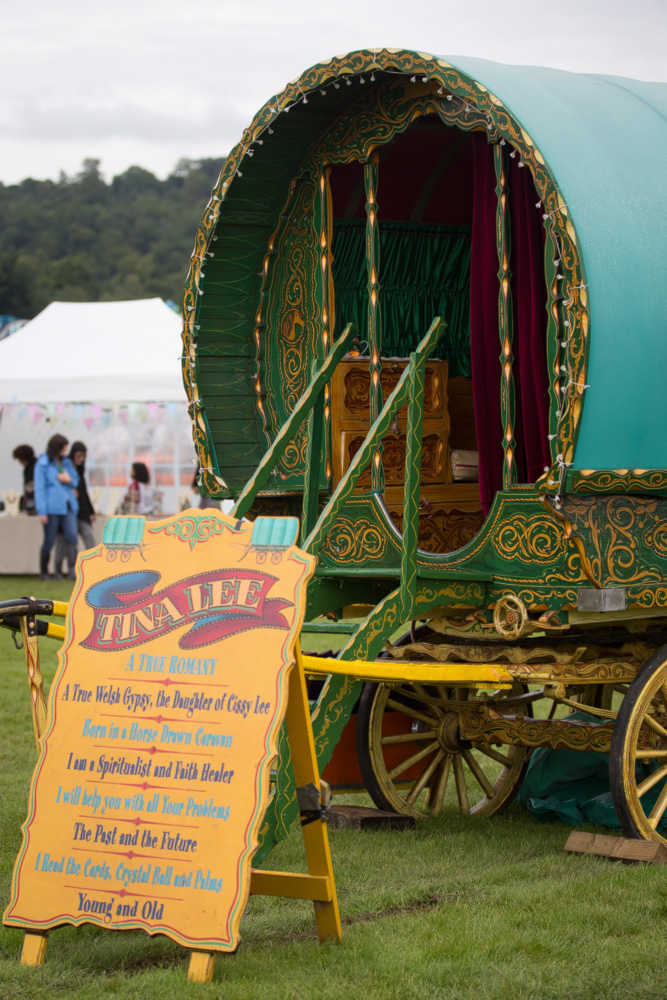
Or a Welsh fortune teller:
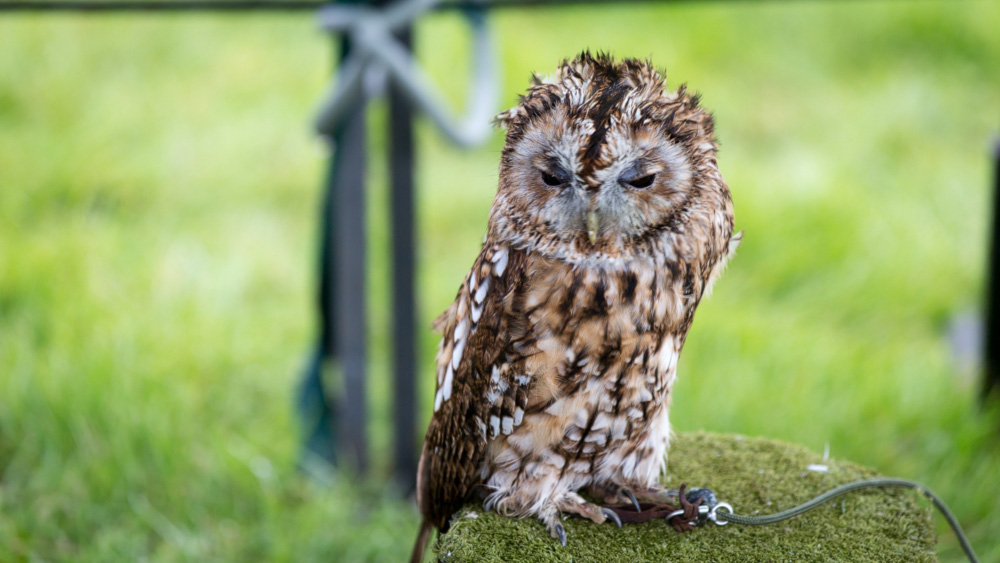
Or a small bird-of-prey display featuring this slightly sleepy specimen.
We’ve almost made it all the way around the field when suddenly we can’t go any further: a small camp of tents has sprung up right in the middle of the muddy grass, blocking our path. Sitting in the little tents are young women and girls, heavily made-up in colourful costumes. We’ve accidentally wandered into the dancers’ “dressing room”. Most of the ladies’ expressions are tense and serious. They’re waiting for their turn on the nearby stage.
Naturally, we want to see that too – only we can barely get through. No event at the Bridge of Allan Highland Games was as crowded as the Highland dance. It seems to me it’s mostly the parents of the dancers. Yes, there are boys too… but only a few.
When we finally get a good view of the Highland dance, we start to understand the tension in the girls back in the tents. What happens on stage is seriously hard work, and yet everything somehow looks light and graceful.
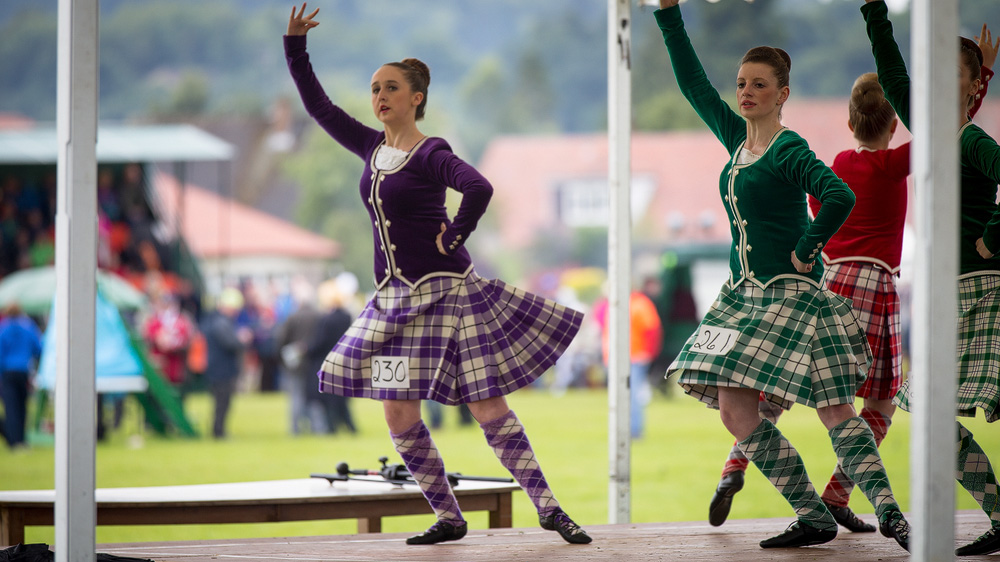
I manage to snap a few photos before someone behind me makes it very clear I’m blocking their view. That’s a bit too tense for my liking, so we head back to the strongmen. They’ve now reached the event everyone associates with the Highland Games: tossing the caber – throwing a tree trunk.
The trunk has to flip end over end and land as straight as possible. A fierce contest unfolds – yet the athletes treat each other with friendliness and respect, even helping one another out when needed.
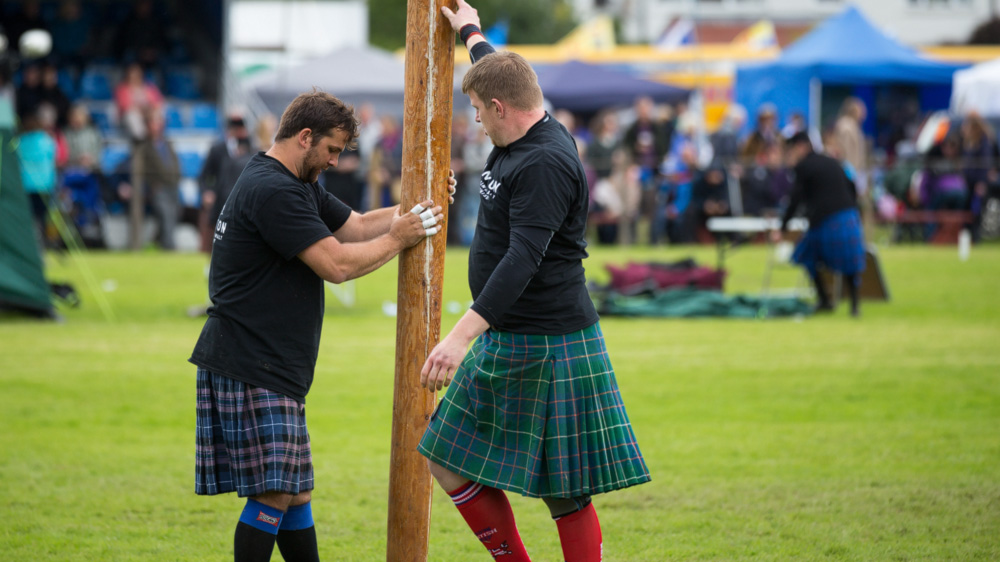
We’ve been here since ten in the morning now – and of course, so have the athletes. It’s approaching 5pm, and tiredness is slowly setting in. Even the constant bagpipe sound now feels like an unending lullaby. The final events follow: the runners fight out their last race on the grass track.
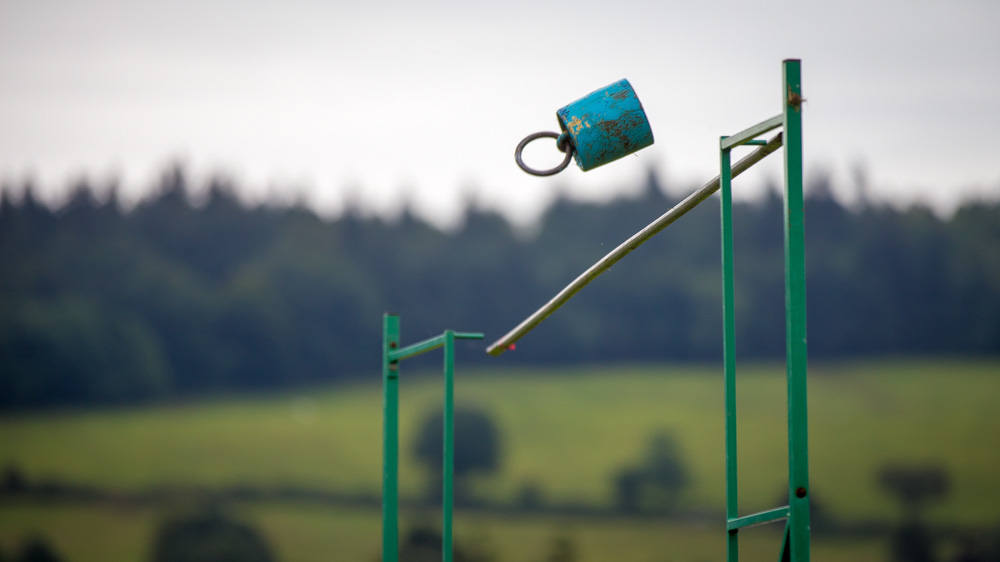
And the heavyweights only have the weight-over-the-bar throw left, in which a 25-kilogram iron weight has to be thrown over a bar suspended several metres above the ground.
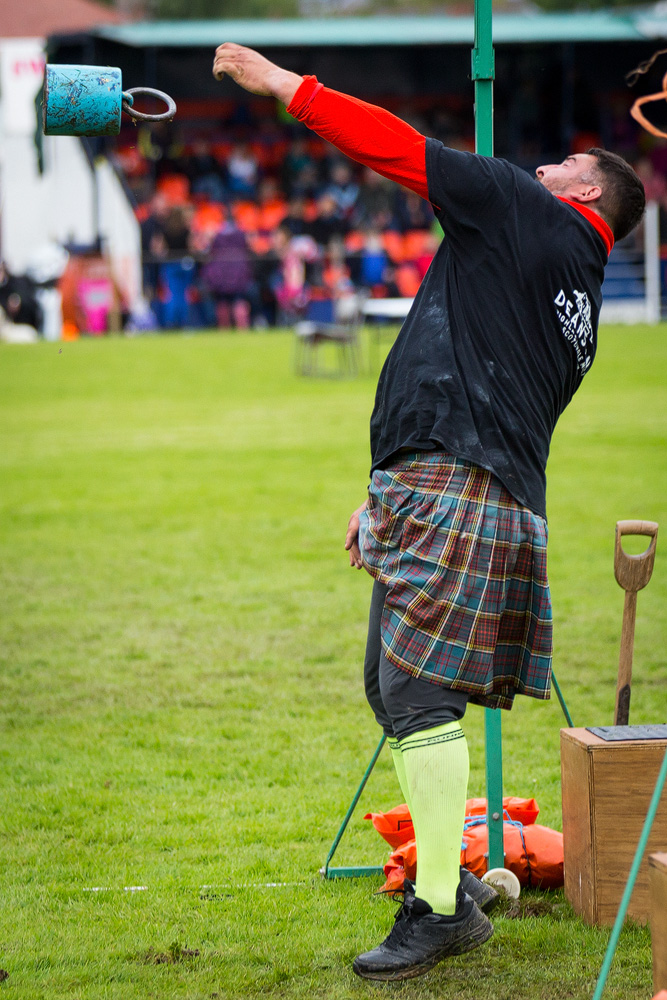
The bar, of course, keeps rising, until even the last remaining competitor fails to clear it three times.
At last, we’re approaching the grand finale. All thirty pipe bands file, one after another, around the outer track, presenting themselves to the crowd one more time.
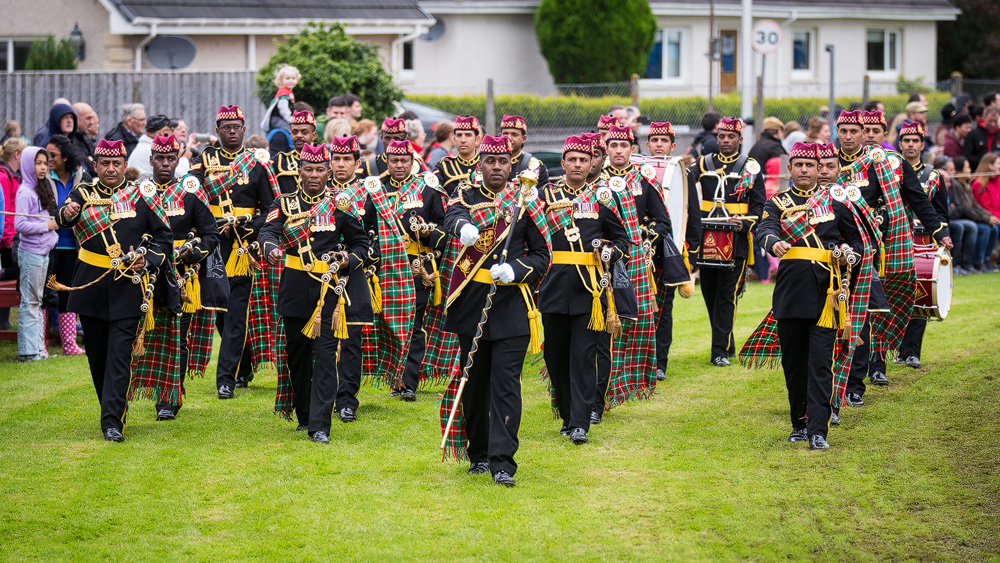
Led by their pipe majors – essentially the bandleaders…
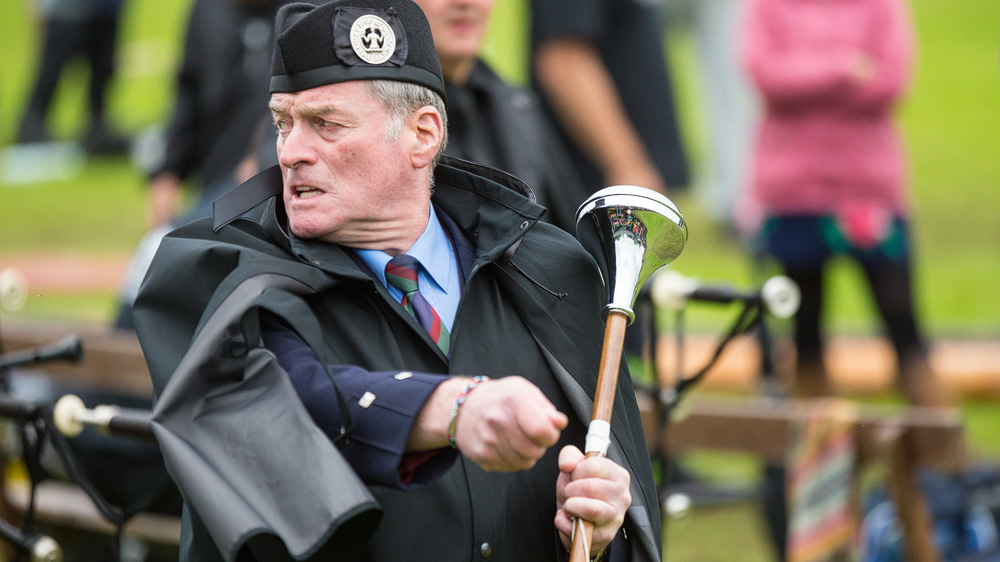
… they parade past the Chieftain, the patron of the games. A different personality is chosen for the role each year; this year it’s Judy Murray, mother of tennis star Andy Murray, who hails from Bridge of Allan.
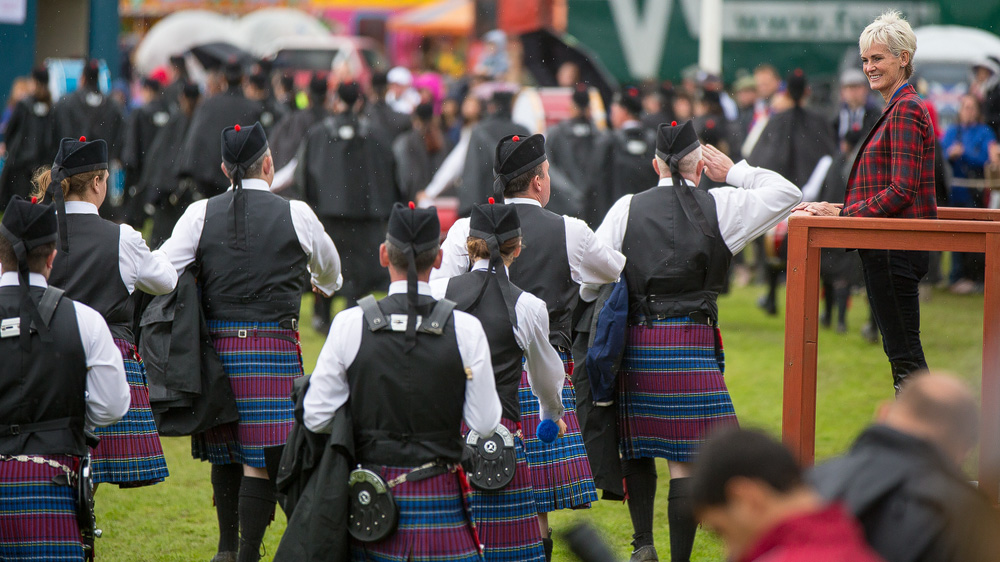
Once all the bands have finally gathered on the field, the grand finale of the 2015 Bridge of Allan Highland Games arrives. Together, all thirty bands play the “Salute to the Chieftain” – and it’s certainly a moment neither the Chieftain nor the crowd will forget anytime soon.
Note: I’d like to thank my brother Andreas once again, from the bottom of my heart, for lending me his expensive telephoto lens for this trip. It really paid off, especially at the Bridge of Allan Highland Games. Thank you!