Chanonry Point is the best meeting place between humans and dolphins in Scotland. Here’s why that is, and how best to watch the bottlenose dolphins.
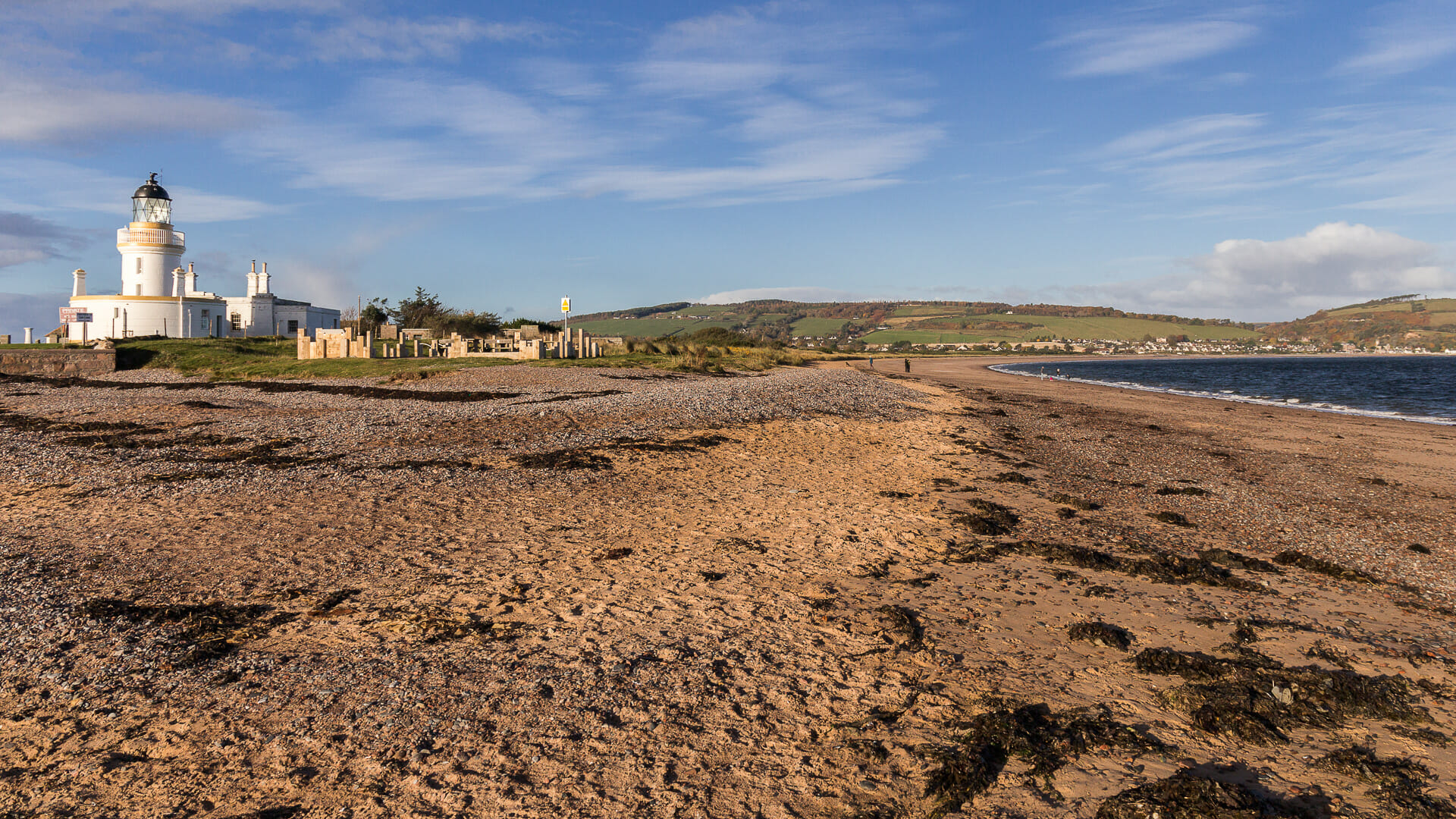
A small lighthouse, a long sandy beach, and a pod of dolphins – Chanonry Point on the Black Isle in north-east Scotland doesn’t skimp on beautiful promises. But most visitors who come here have only the bottlenose dolphins in mind. And they don’t always show themselves.
So why is this spot such an interesting destination for dolphin lovers?
It comes down to the particular nature of this place. Chanonry Point near Fortrose is the tip of a spit of land that stretches about 2.2 kilometres into the arm of the sea known as the Moray Firth. Together with the opposite spit of land, which curls into the sea like a whirl, it narrows the Moray Firth here to a width of just 1.25 kilometres.
This strait was strategically important, since it was the best place to control passing ships. That’s why the formidable Fort George looms on the other side of Chanonry Point.
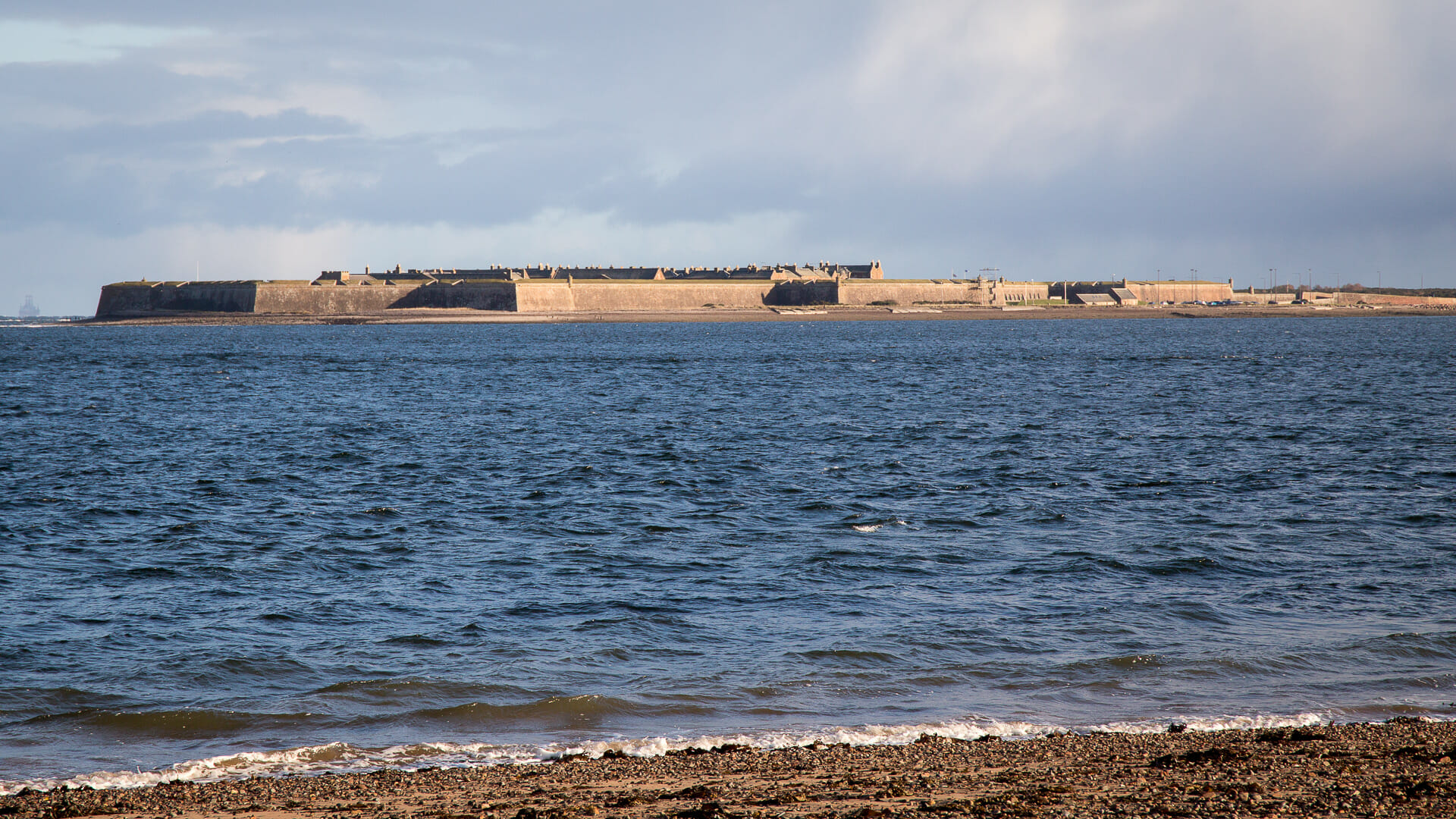
Shoals of fish, such as salmon, also have to pass through the strait. This makes it an ideal hunting ground for the dolphins – and so an ideal spot for dolphin watchers too.
On good days in summer there are definitely more spectators here than dolphins. Meeting a hundred other people on a nice July day is not unusual. On the large beach, the crowd spreads out a bit. And there’s a big advantage to that: a hundred pairs of eyes see more than one.
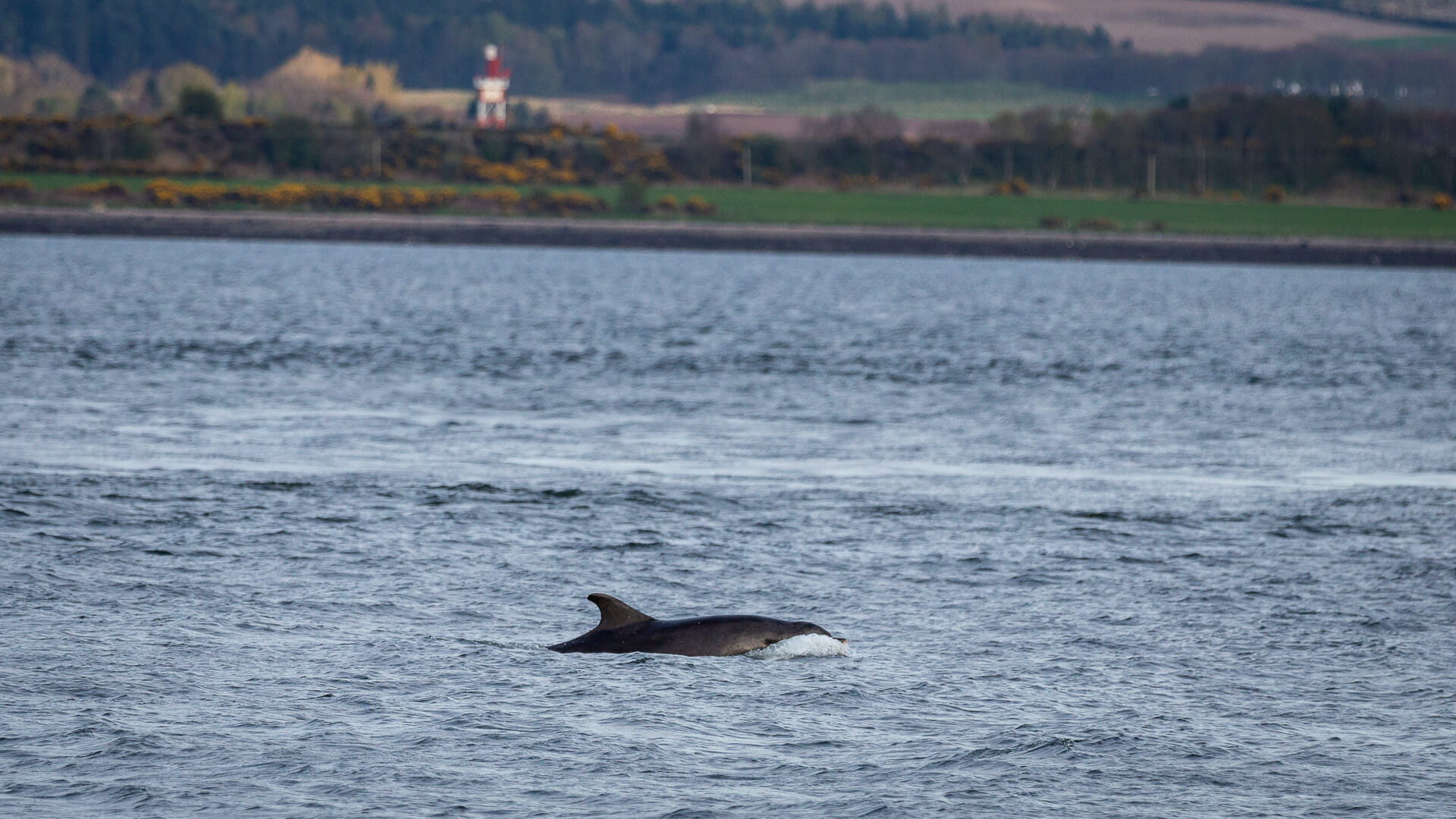
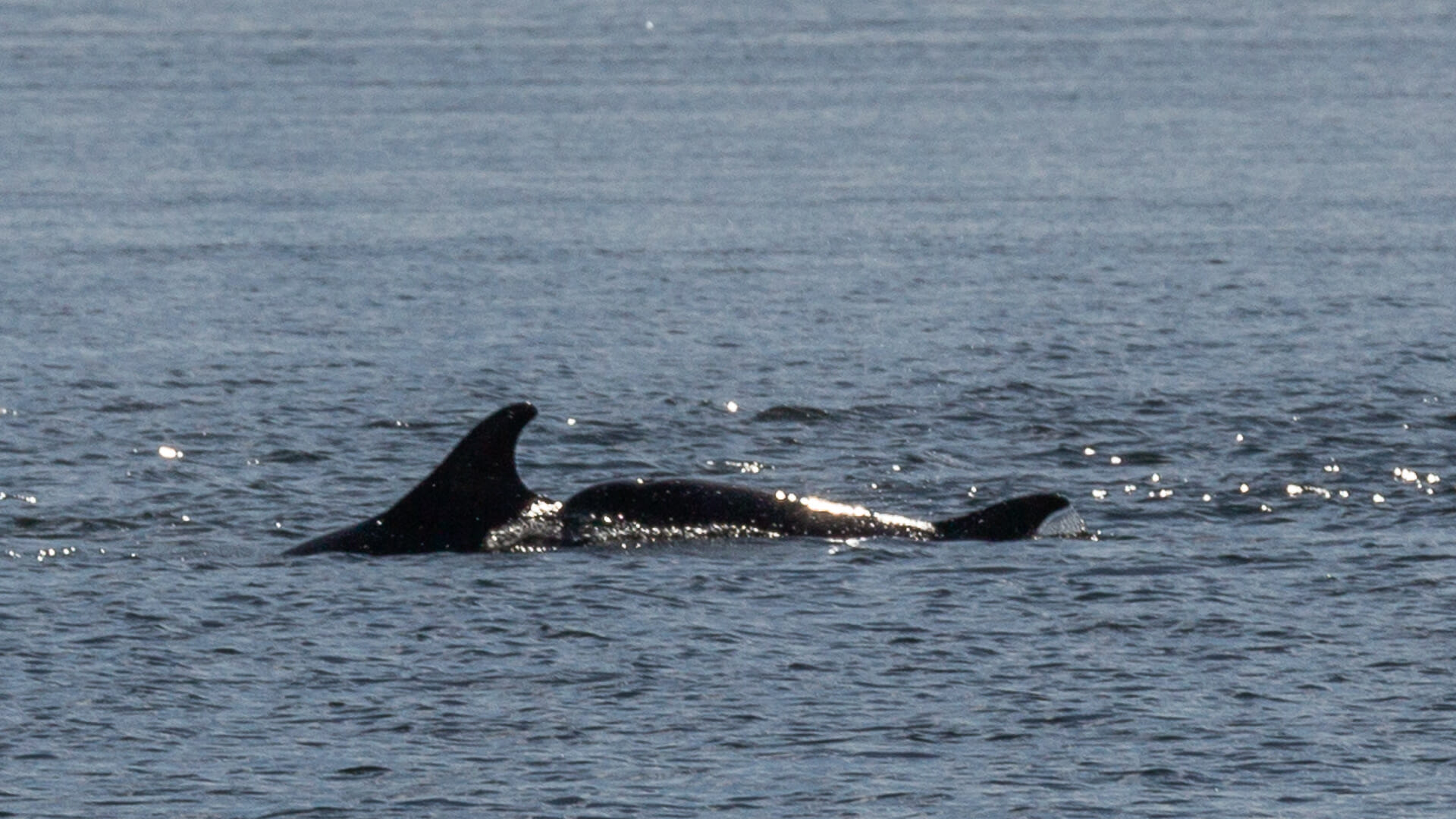
Especially when the dolphins are at work – that is, catching fish – you only ever see them surface briefly to breathe. That’s certainly lovely to watch, but tricky to photograph. Most of the time you just about manage to capture the fin, i.e. the dorsal fin, or the fluke, just before the animal dives again.
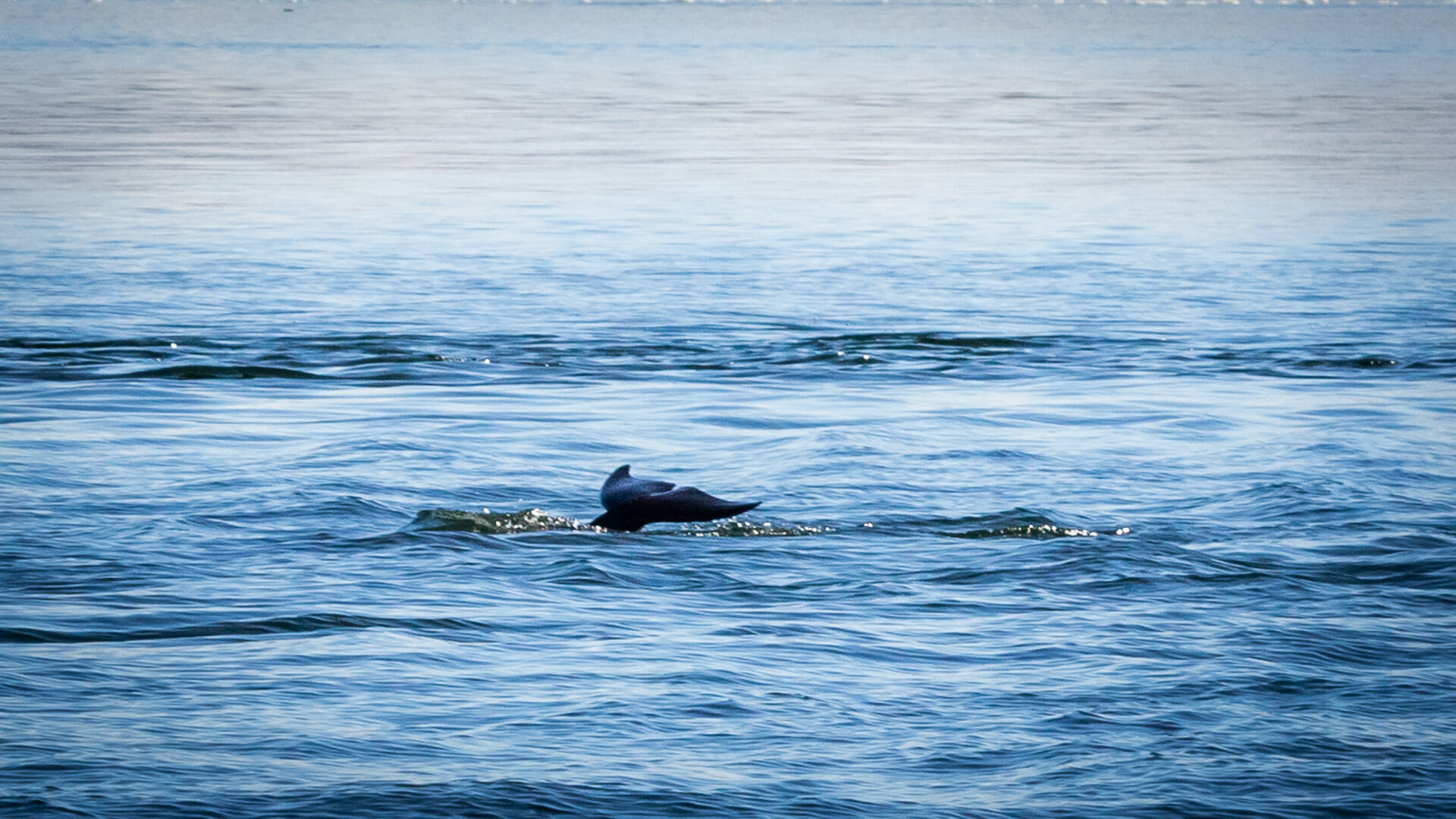
Sometimes, though, the dolphins are in a playful mood. Then they leap high out of the water and spin around themselves. However, not everyone waiting on the shore is granted this sight. Because sometimes the dolphins simply aren’t there at all.
In that case, there’s still the beauty of the long beach, which is perfect for a walk.
Good to know: The best time to watch dolphins at Chanonry Point
The dolphins live in the Moray Firth all year round, but their prey doesn’t. So the likelihood of sightings rises considerably in spring and summer. The best feeding conditions are said to occur roughly an hour after the tide turns from low to high. Even so, it remains a bit of a gamble. Equally, the bottlenose dolphins might be hanging around the Kessock Bridge instead, or perhaps somewhere else entirely. Often, though, they move further inland with the rising tide, so the Kessock Bridge above Inverness is also a good vantage point if the dolphins were seen at Chanonry Point beforehand.
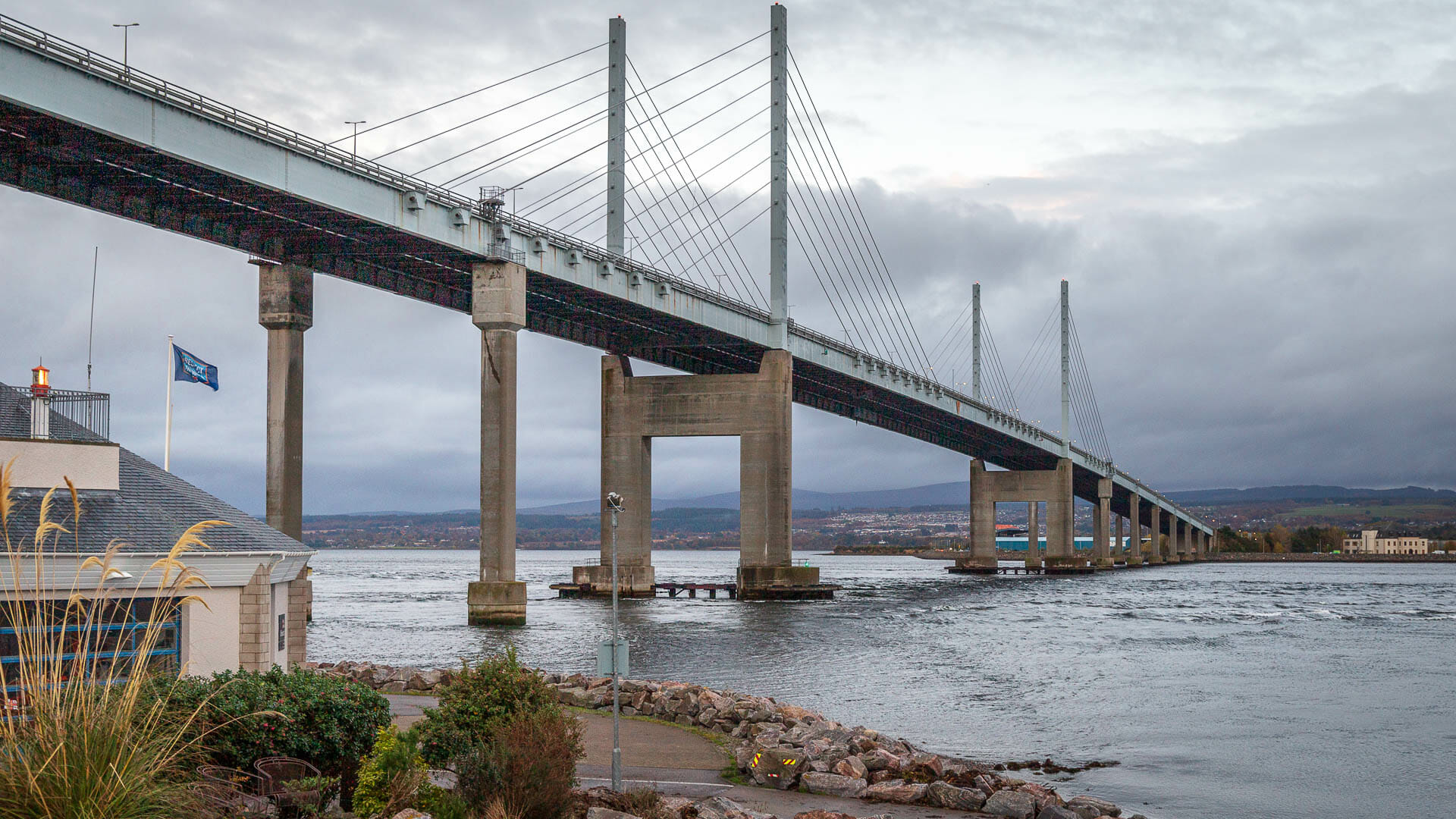
It’s also worth a look in the evening or early morning, when there may still be few other tourists around. At peak times the car park can already be full.
At the car park, incidentally, there are information boards commemorating the Brahan Seer. He came from Uig on the Isle of Lewis (in German for now) and became known as a seer who prophesied the future. Whether he really lived or was the invention of a writer cannot be settled – there is no historical evidence of his existence. Nevertheless, he is said to have met his gruesome end here at Chanonry Point. He is said to have been put into a burning barrel of tar. The reason: he had prophesied to Lady Seaforth that her husband was being unfaithful – she was so enraged by this that she had Brahan executed for it.
Personal note: Two attempts needed
We’ve waited at both the Kessock Bridge and Chanonry Point at the supposedly optimal times (an hour after the tide turns). Without success. But in April 2018 we finally got lucky. We had booked a B&B in Avoch, not far from Fortrose. We drove over in the evening and already saw two dolphins there. The next morning we were lucky again, probably with the same two animals.
Tip: A walk along the beach
In good weather, the long sandy beach is perfect for a lovely walk all the way to the Rosemarkie Beach Café. Have a coffee and cake there and walk back. The one-way route from Chanonry Point is 2.5 kilometres long.
Getting there:
With a sat nav: “IV10 8SD” will take you to Fortrose, on a road called “Ness Road”.
Without a sat nav: From Inverness, take the A9 towards Thurso across the Kessock Bridge. Then at the next roundabout, take the exit for Fortrose and Cromarty. Drive to Fortrose and continue right through it. At the end of the village, a signpost appears pointing to the golf club, the campsite and Chanonry Point. Turn off here and follow the road through the golf course (slowly!) to the very end. There’s a car park here, though it may already be full on summer days. Parking directly at Chanonry Point now costs between 1 and 3 pounds. From the car park, walk past the lighthouse on the right and follow the wall along to the beach.