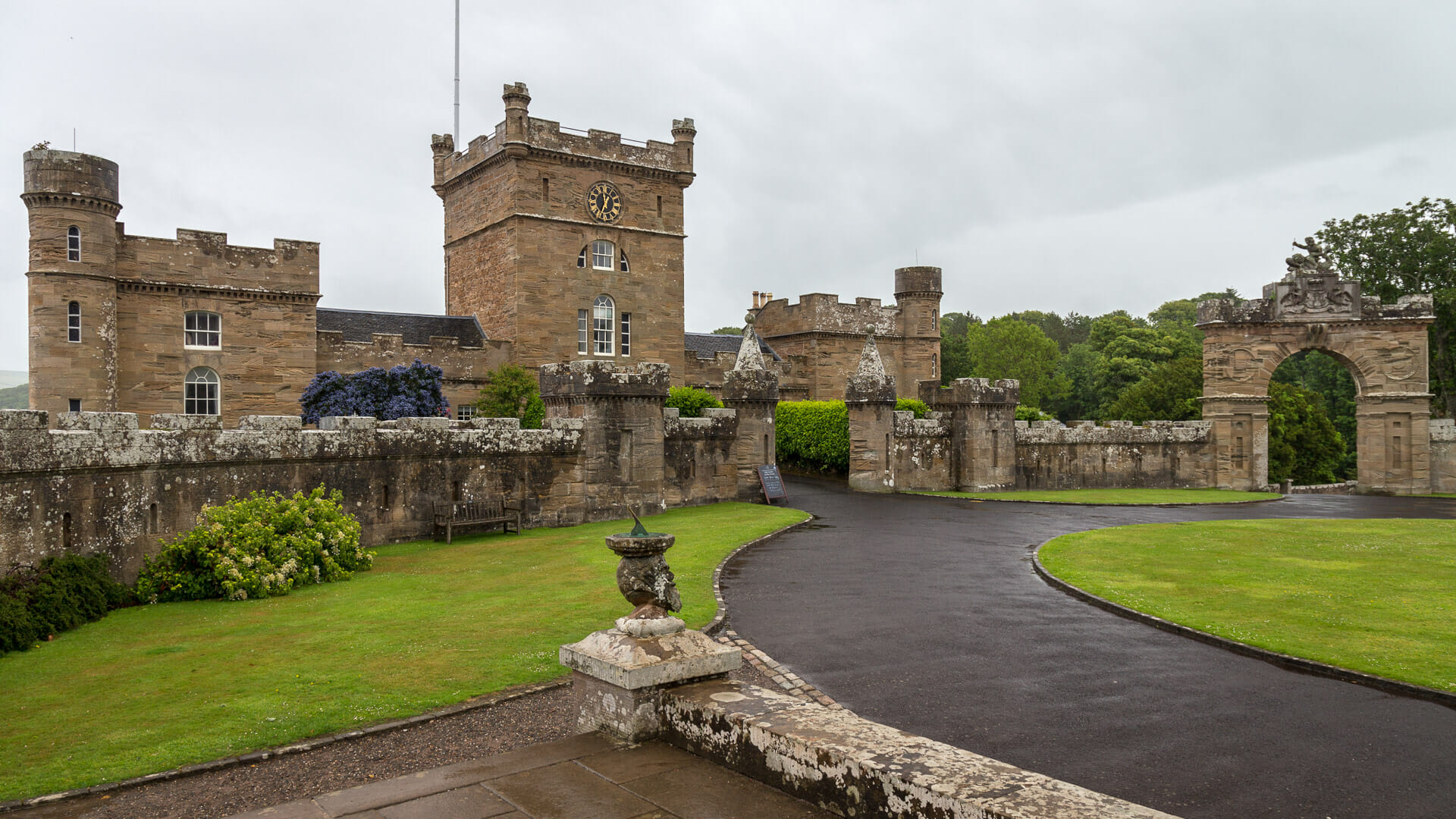
A proud, grand castle on a high clifftop, surrounded by wonderful gardens – that’s Culzean Castle in the west of Scotland. Visitors here can expect something special.
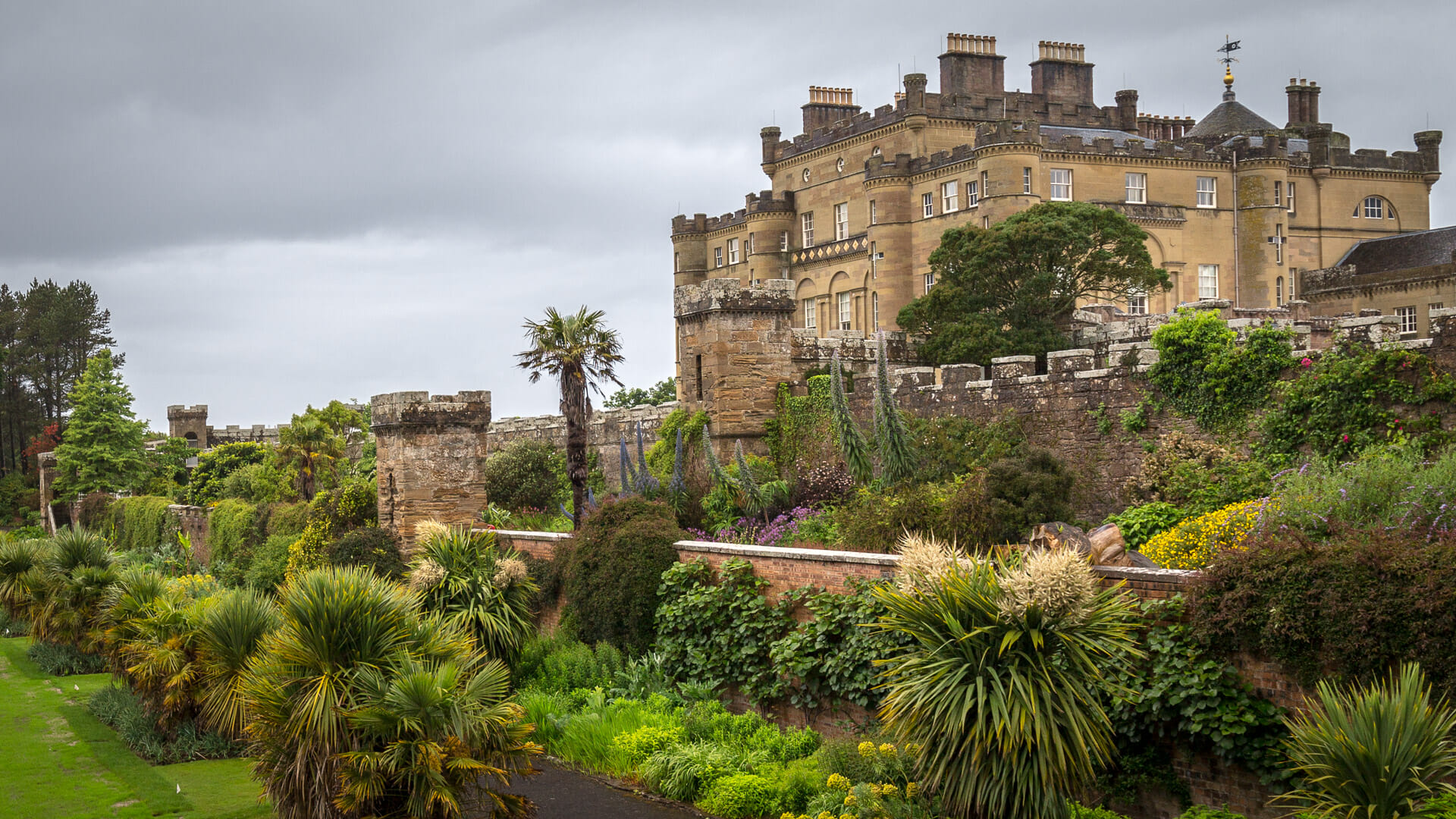
It was time for a new masterpiece! In recent years, fortune had stopped smiling on the famous architect Robert Adam. He had already worked on so many houses, and so many architects had copied his work, that people had simply grown tired of Adam’s style. On top of that came a failed speculation, one that hadn’t ruined him but had scared off potential clients.
But with Culzean Castle, he was given a new chance – and he was going to make the most of it!
It was the year 1777, and the 10th Earl of Cassillis, David Kennedy, wanted his castle rebuilt for the times. Once perched on the steep cliff to withstand enemies, it was now meant to impress and entertain friends instead. The castle was to become a fitting country seat.
What Adam achieved over the following two decades still draws crowds of visitors today. Culzean Castle is the second most visited attraction of the National Trust for Scotland, with around 230,000 visitors a year. And all because Adam did such fine work.
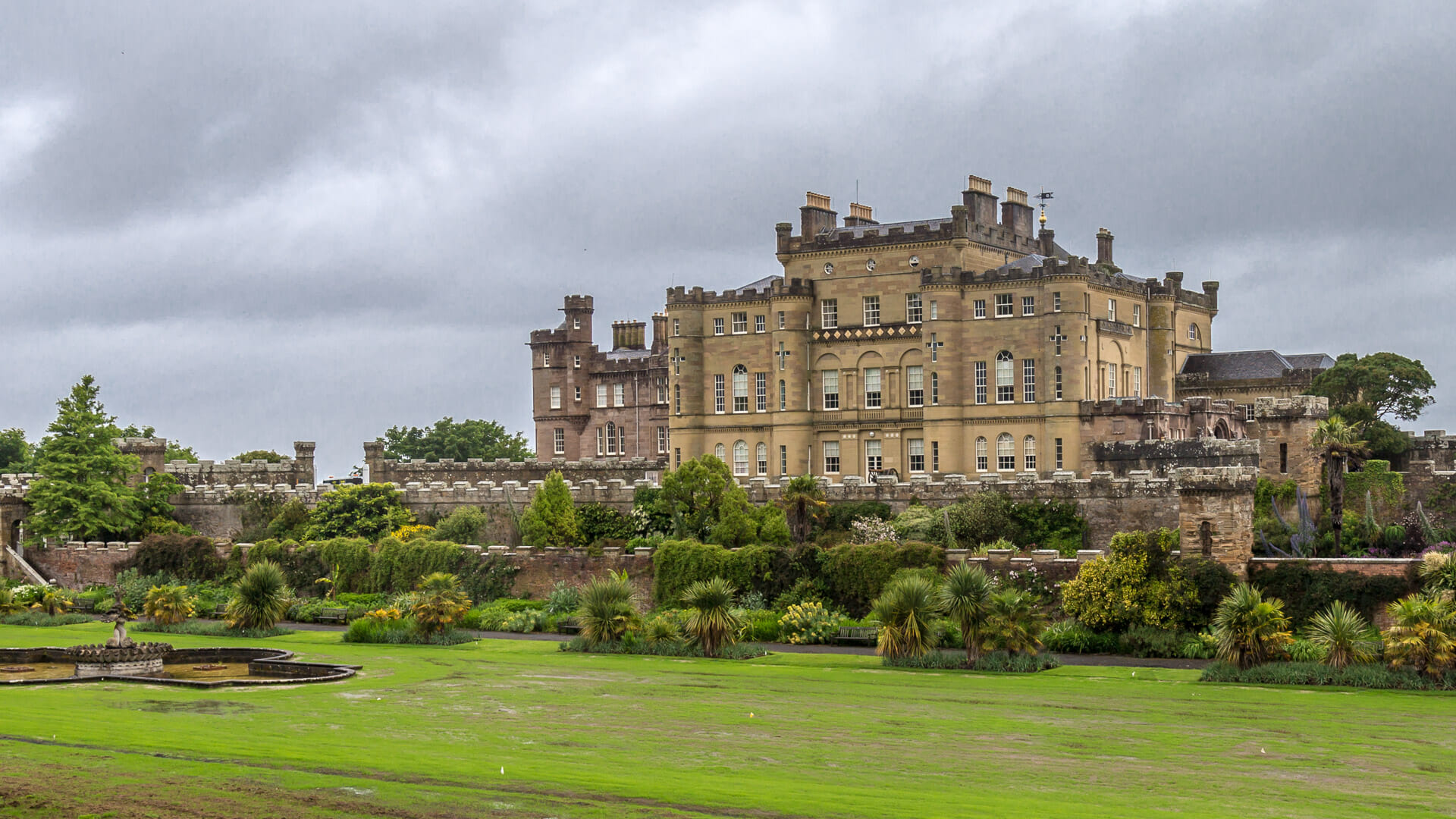
Culzean Castle can only really be understood together with its gardens and the surrounding landscape. As Adam set to work on his final design, a wave of Romanticism was sweeping across Scotland, bringing the wild Highlands back into fashion – after they had rather been demonised ever since the Battle of Culloden. Now, though, wildness and nature were meant to harmonise with fine architecture. And Adam pulled it off.
Visitors today can experience this too, approaching Culzean Castle via the viaduct out front: first they see the house framed through a crumbling archway. Then – on the viaduct itself – they grasp the true scale of the house and the gardens. Finally they drive into the side courtyard, and the almost endless view out over the sea opens up before them.
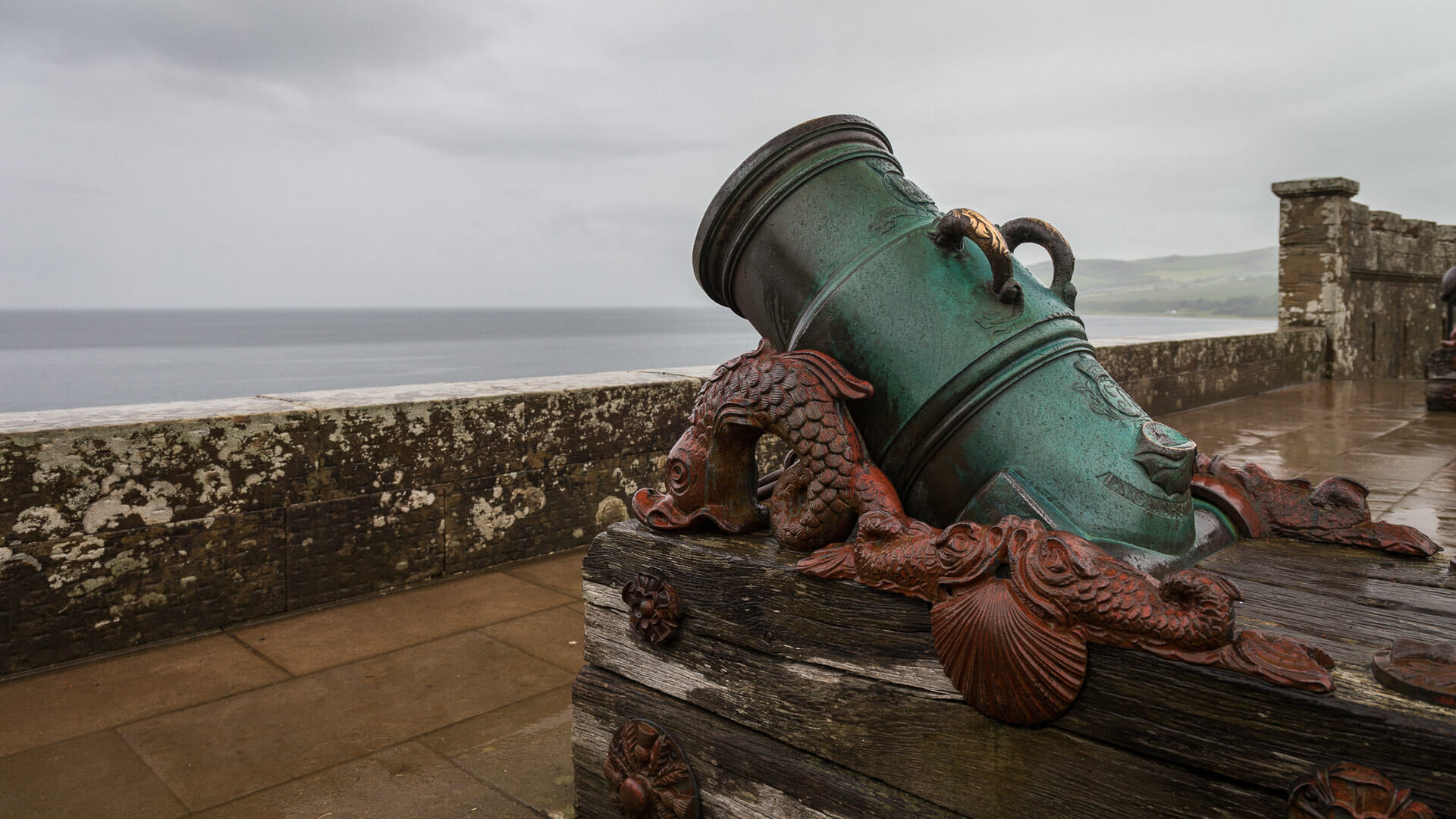
So there’s no need here for a grand double door at the top of some sweeping staircase – the courtyard, with its view, already does that job. Visitors step through a ground-level glass door into a rather unremarkable entrance hall. In the 18th century, they would next have entered the equally impressive staircase hall. Adam thereby created a constant back-and-forth between calm and astonishment.
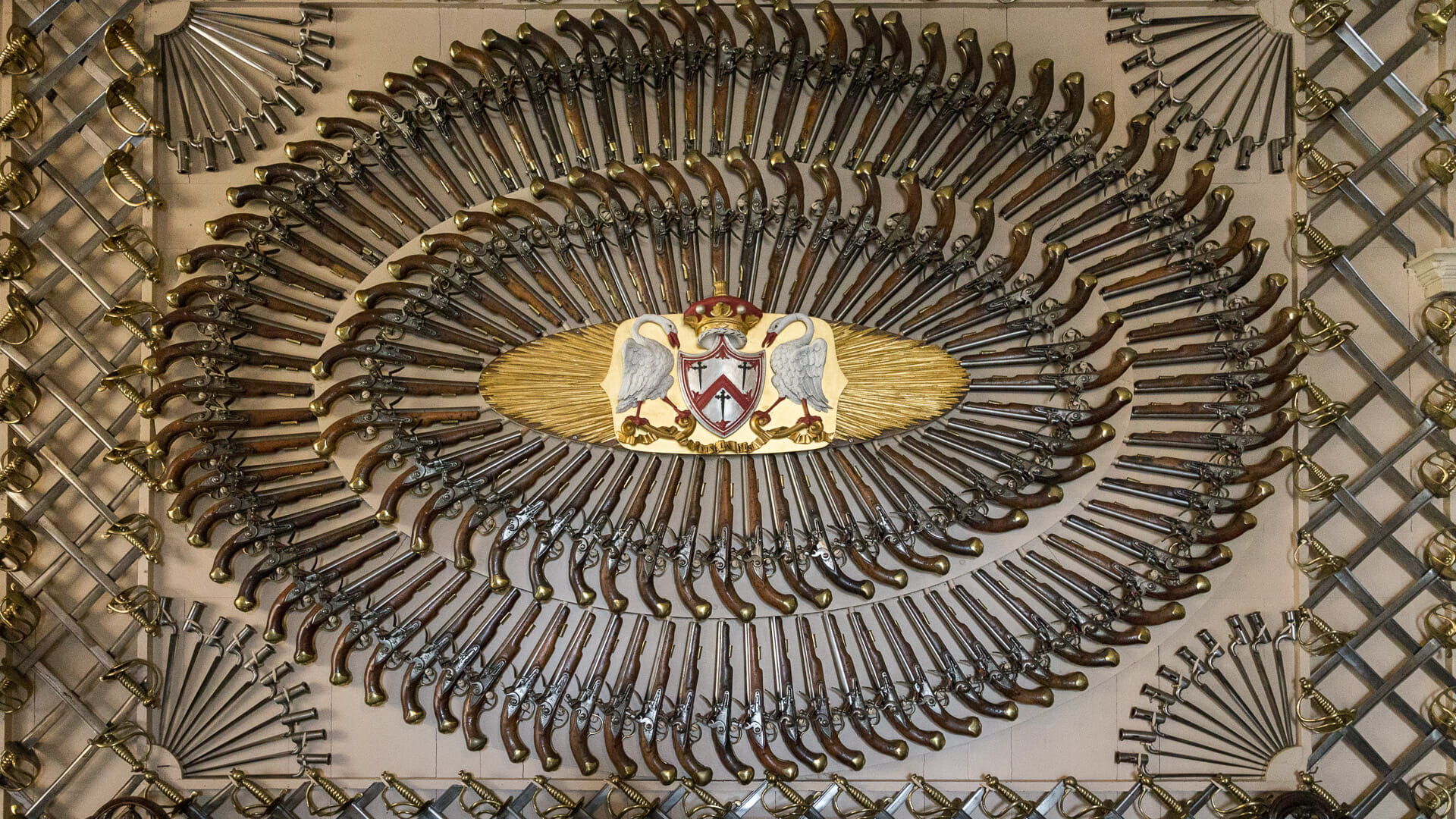
Today’s visitors, however, are led differently from here – though it’s no less impressive. First, they walk into a huge collection of weapons. The 12th Earl of Cassillis had old weapon stocks bought up for this purpose. Short sabres and pistols are arranged in patterns across the wall.
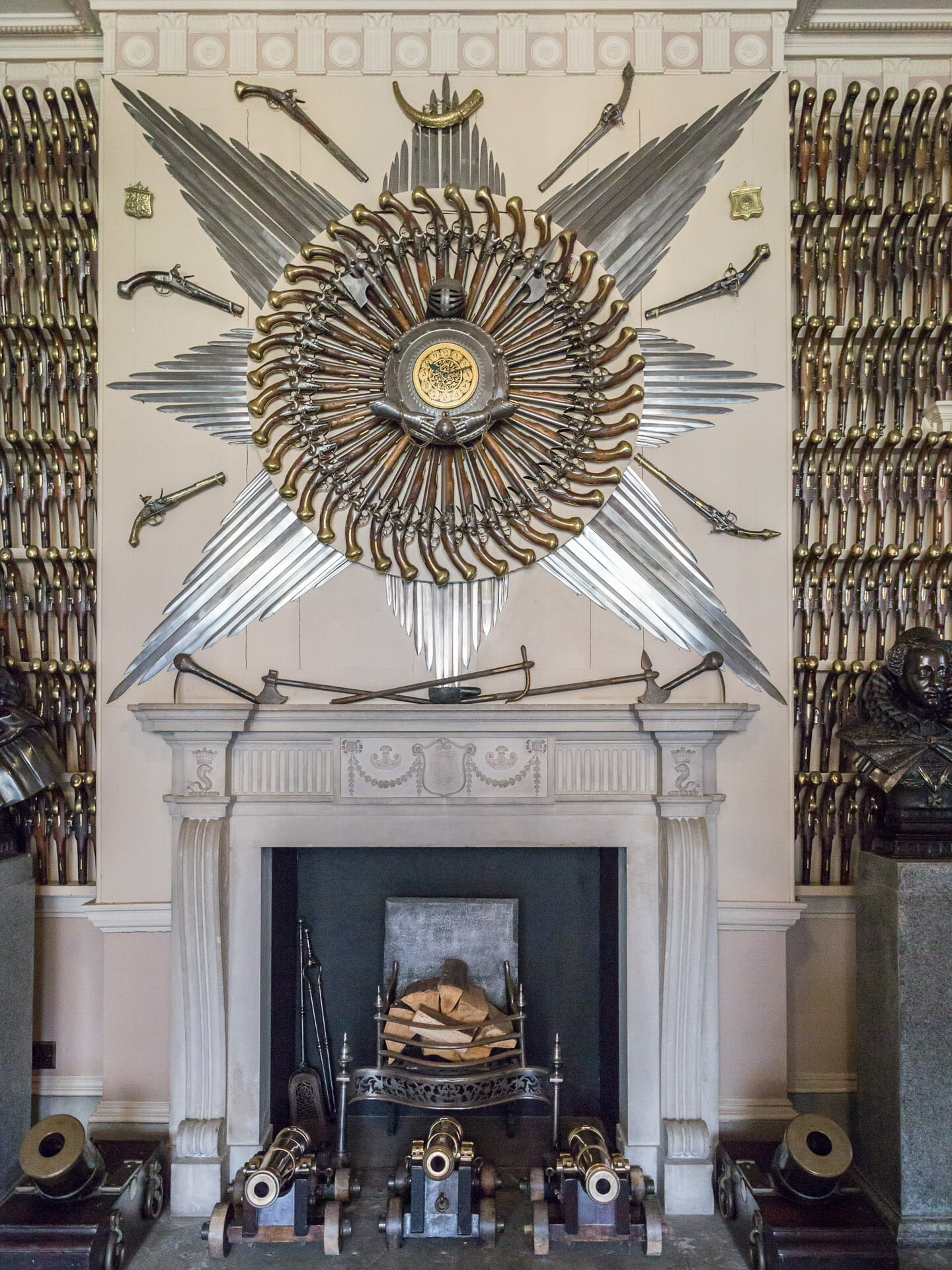
The Kennedy family coat of arms is surrounded by them too.
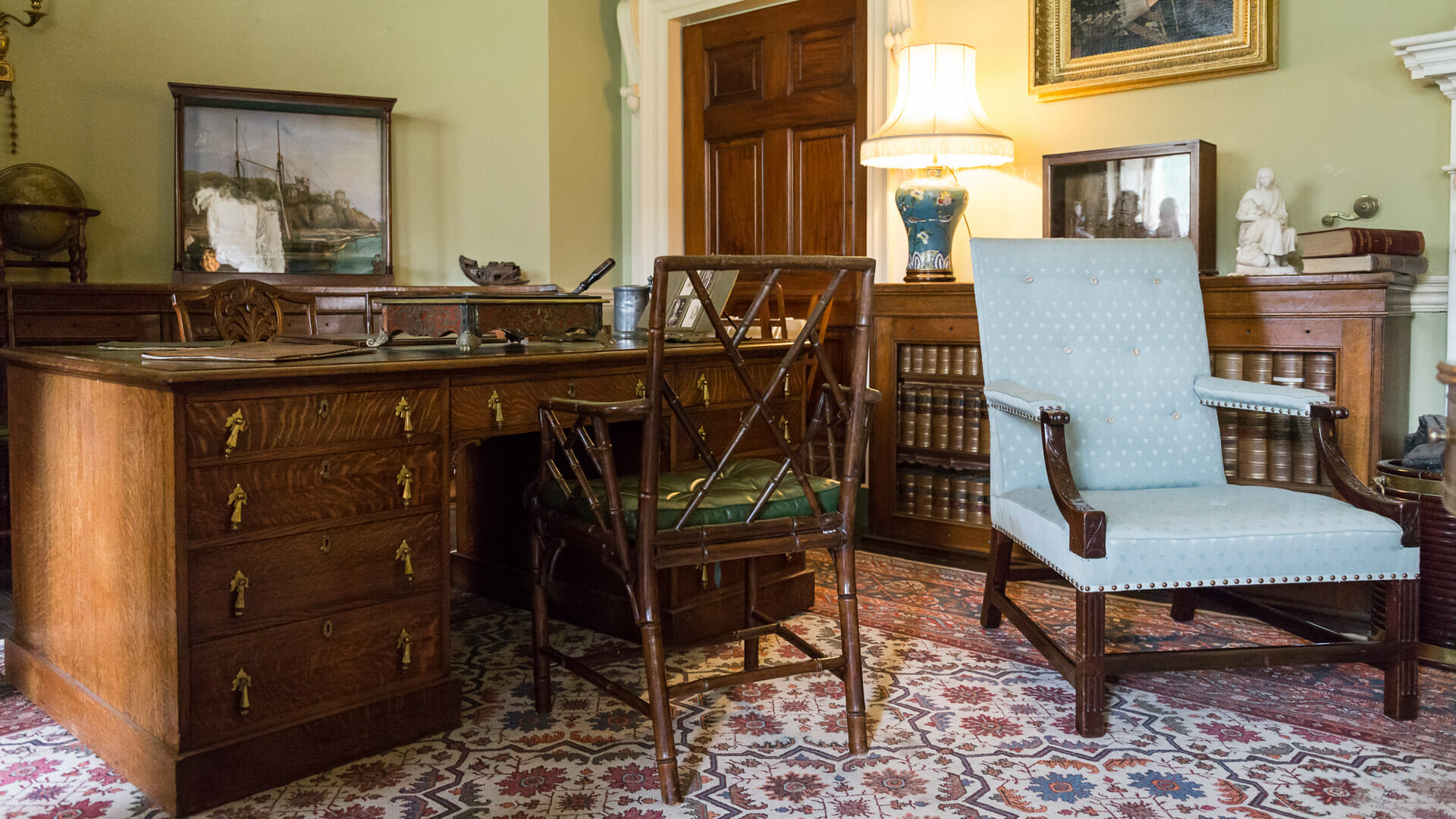
The pen is mightier than the sword. Behind the next door lie the library and the study.
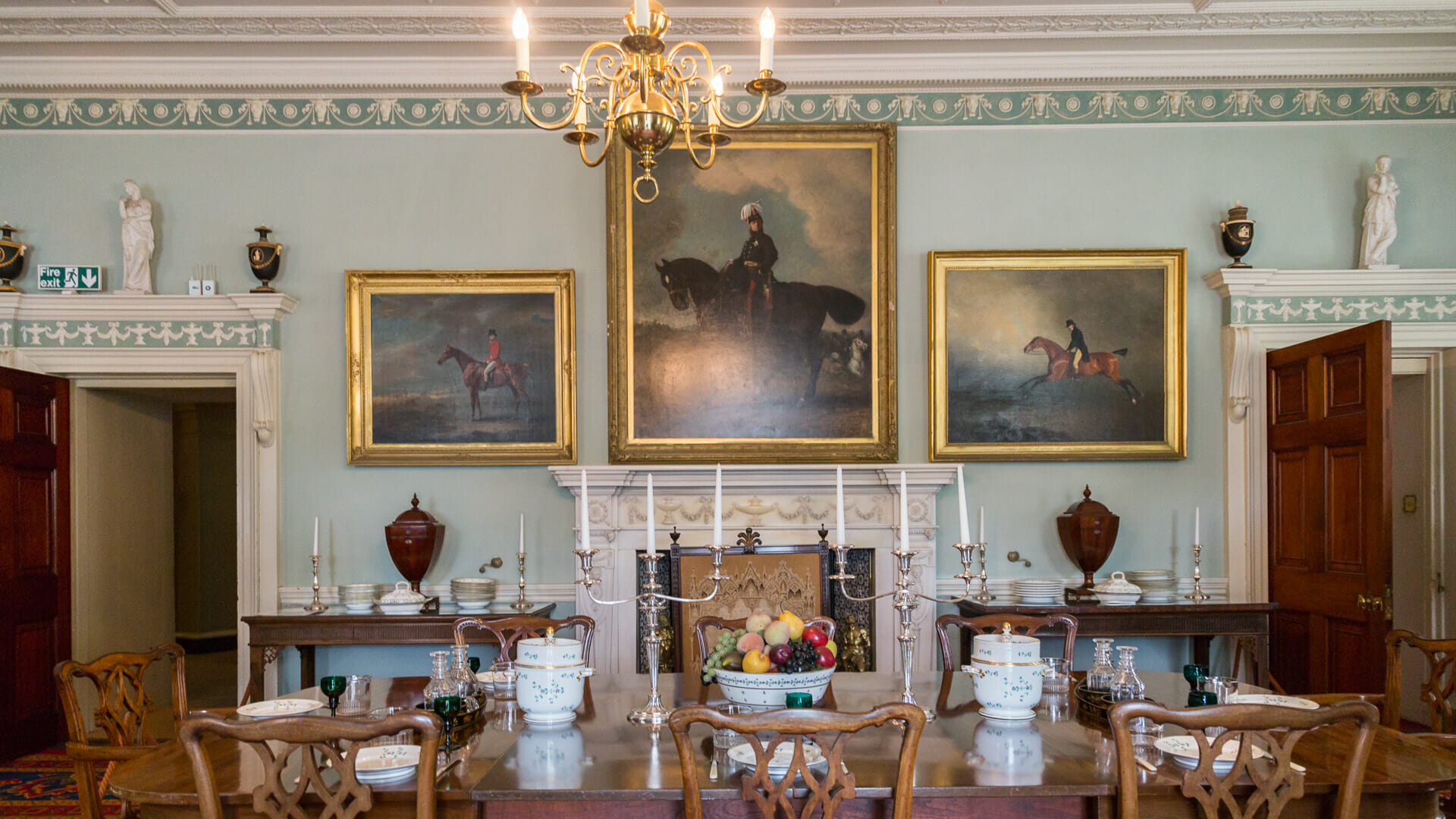
Whoever works must eat: the dining room.
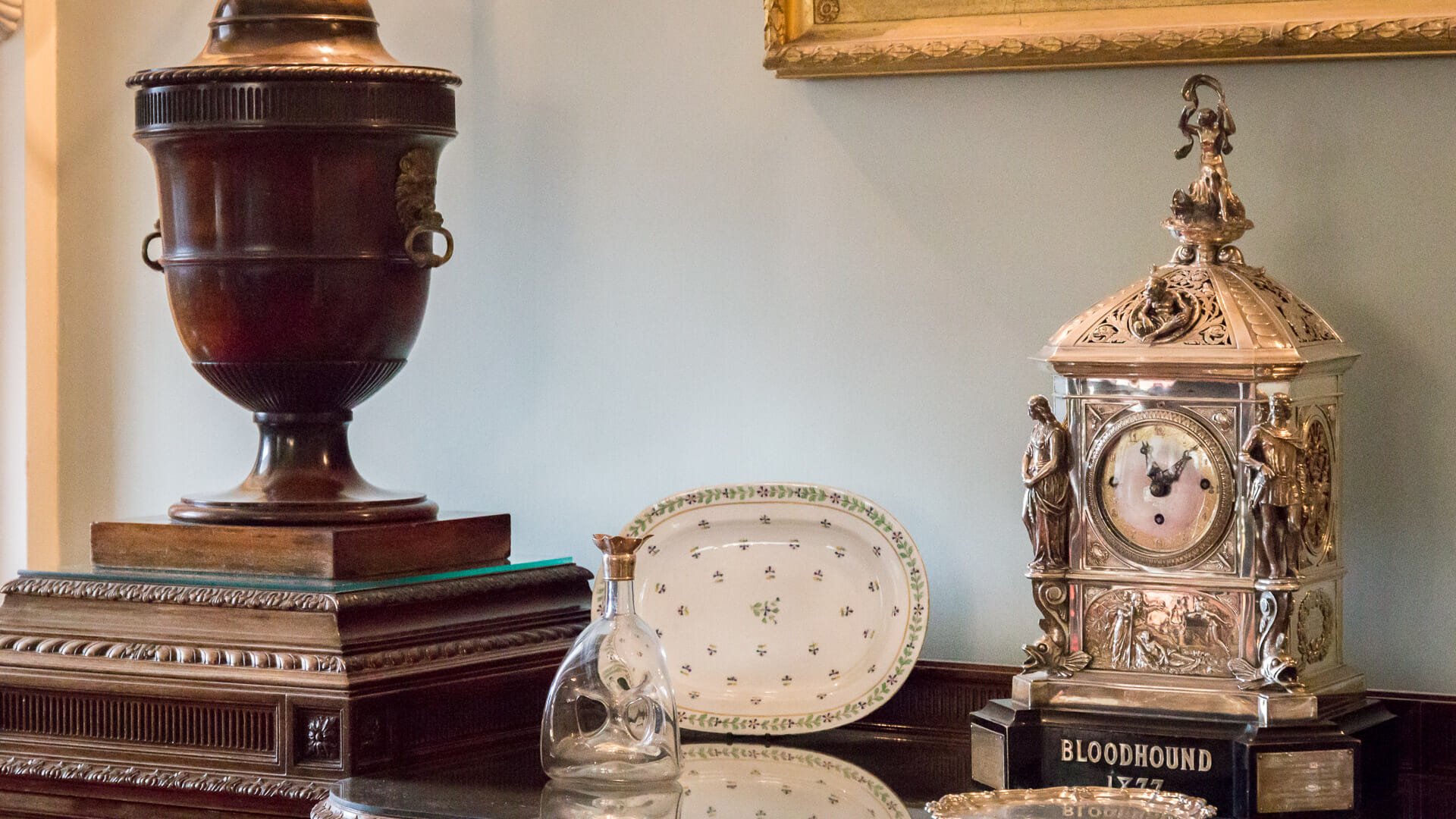
As in any castle, it’s worth taking a closer look at the objects on display. Take, for instance, the silver clock on the sideboard.
And a glance up at the ceiling reveals something beautiful too.
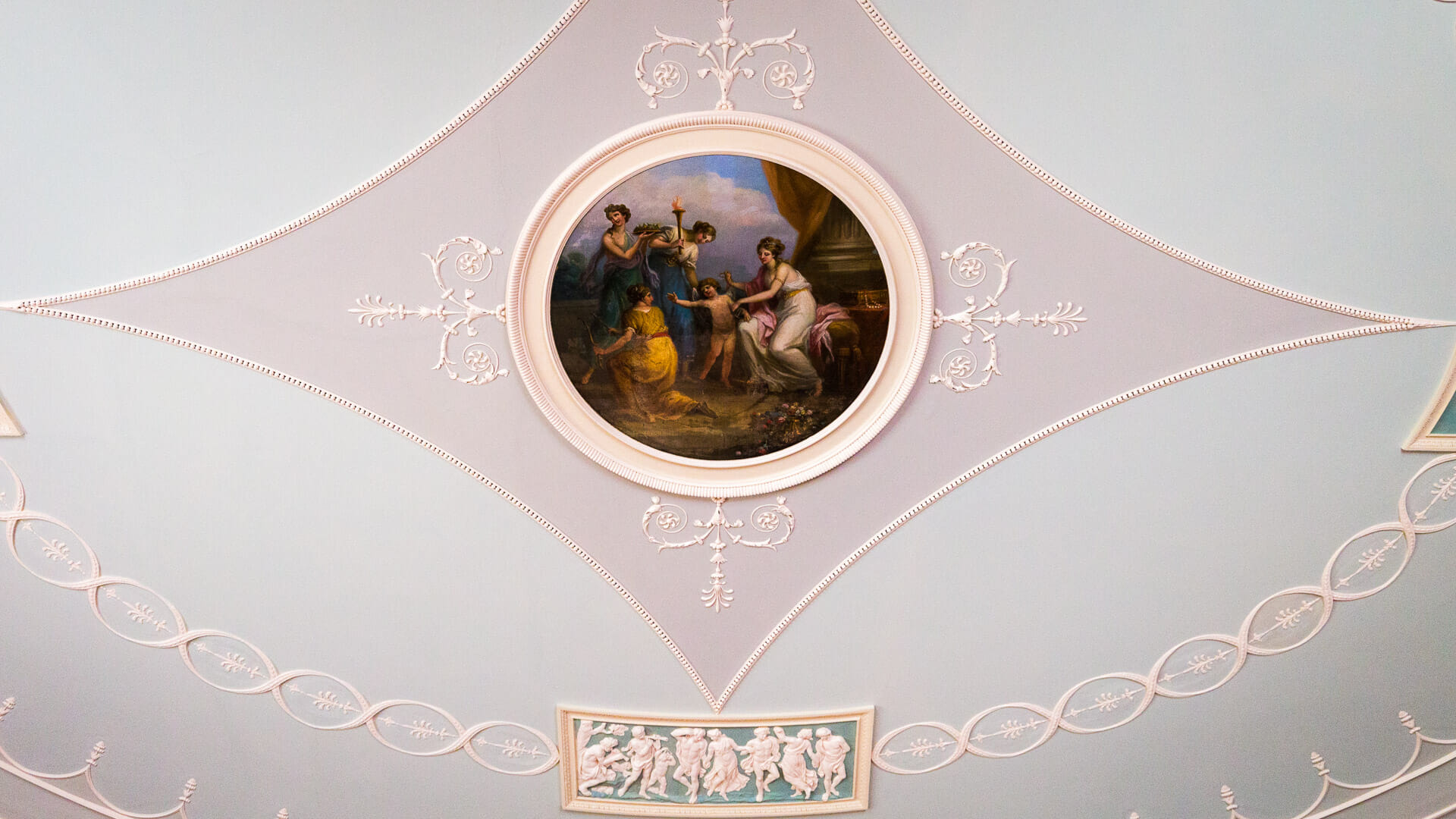
This decoration shows exactly what Adam’s design and style stood for: he squeezed the previously exuberant Rococo into a finer, more restrained form.
Only after the dining room do today’s visitors get to see what earlier guests would already have marvelled at right after the entrance hall: the great staircase hall.
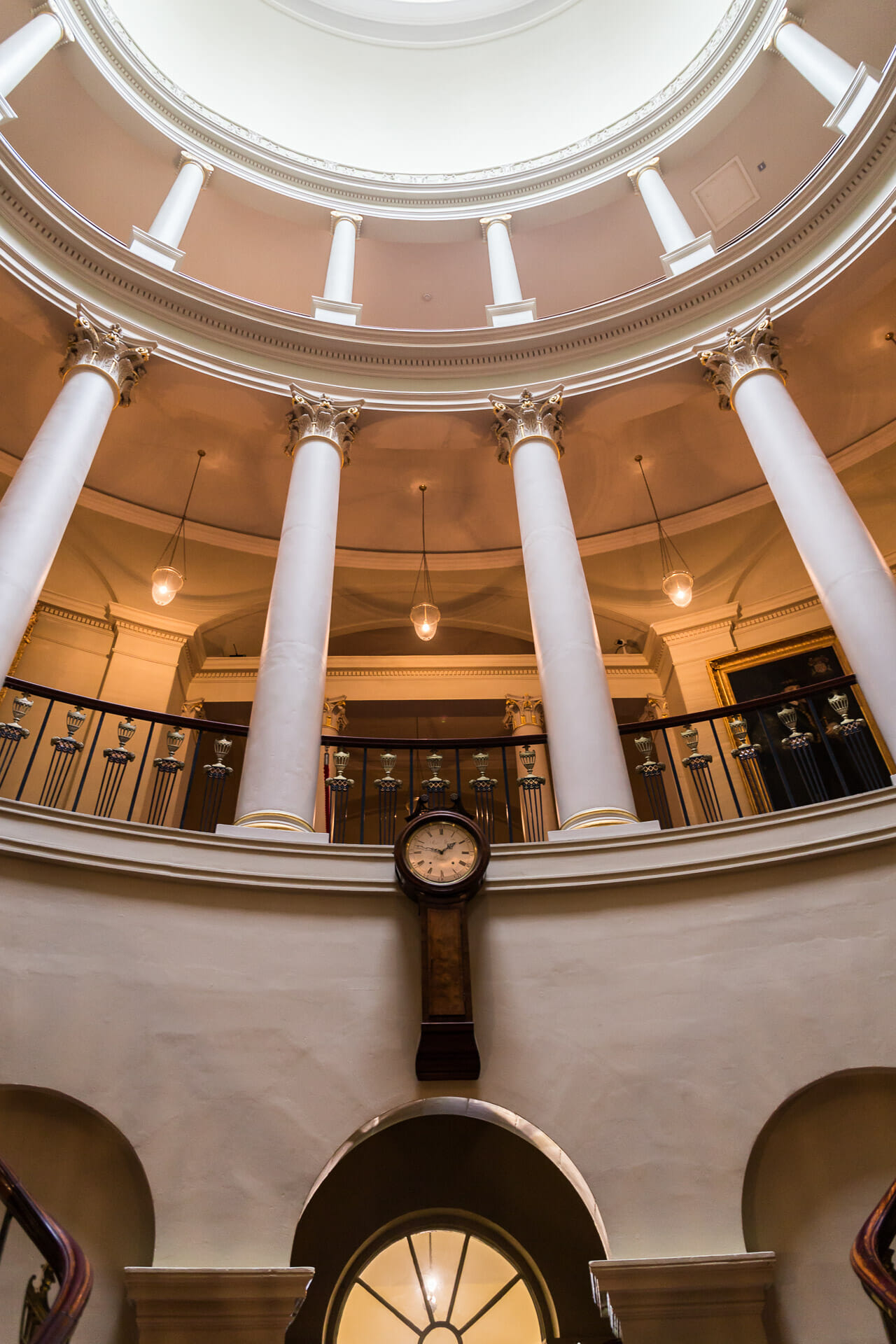
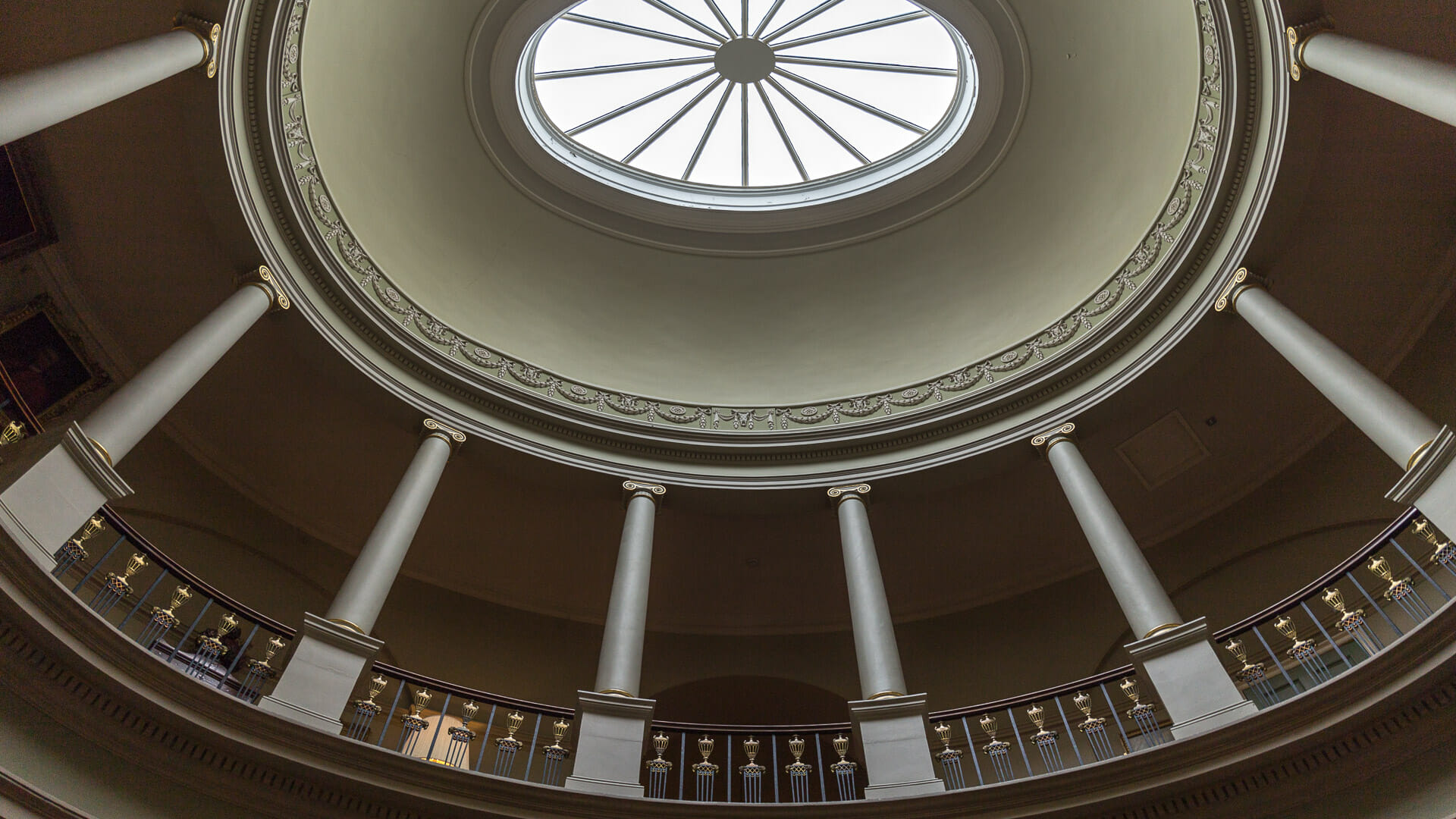
This area was once the castle’s courtyard, and its ugliest corner. Adam transformed it into an impressive showpiece encompassing all the classical orders of columns: Ionic, Doric and Corinthian. The staircase hall is crowned above by an oval glass dome.
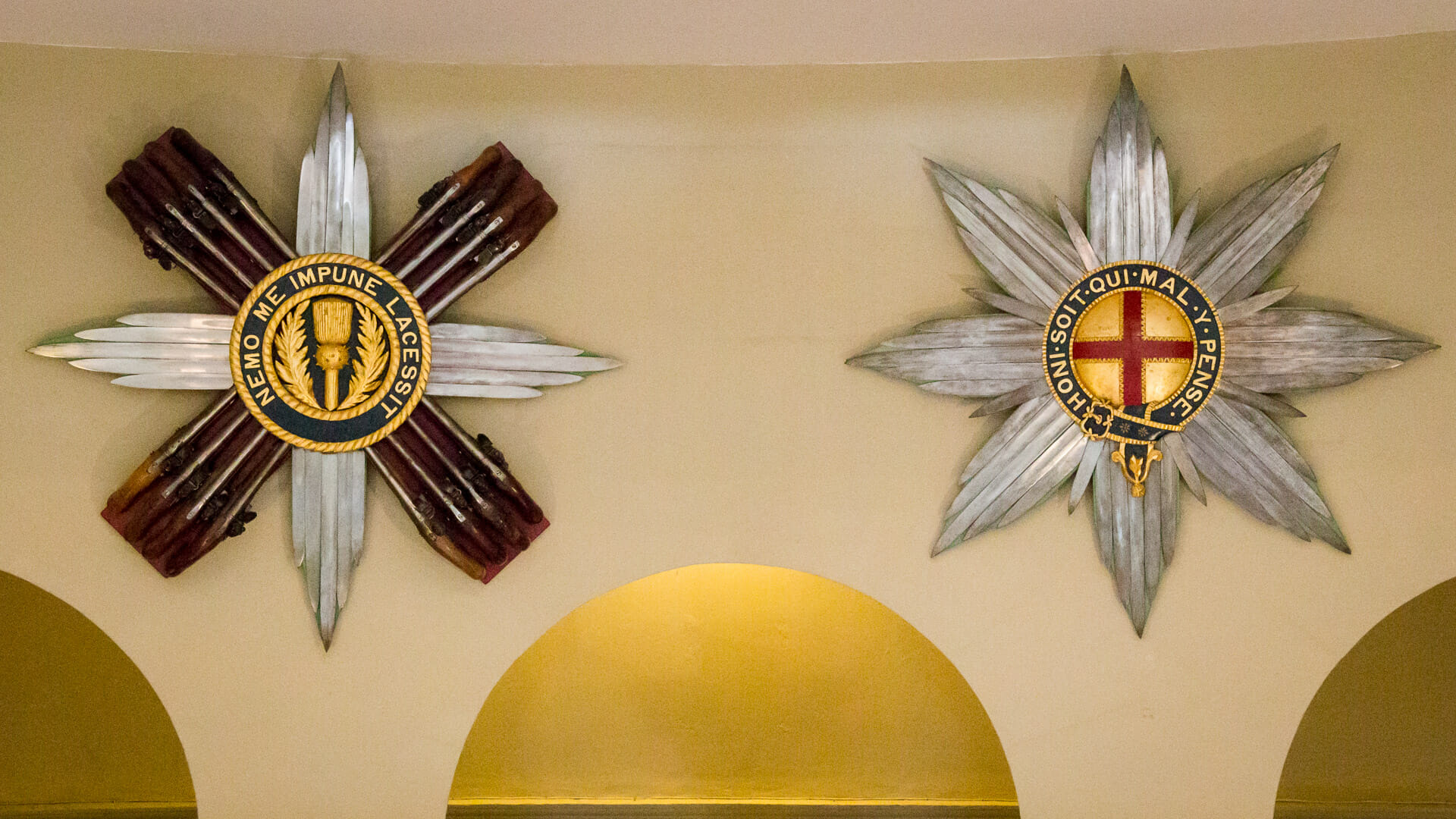
Opposite the staircase itself hang the arms of the two most important British orders of chivalry, the Order of the Thistle (currently only available in German) and the Order of the Garter.
On the second floor too, the rooms dazzle with their splendid yet never overloaded decor.
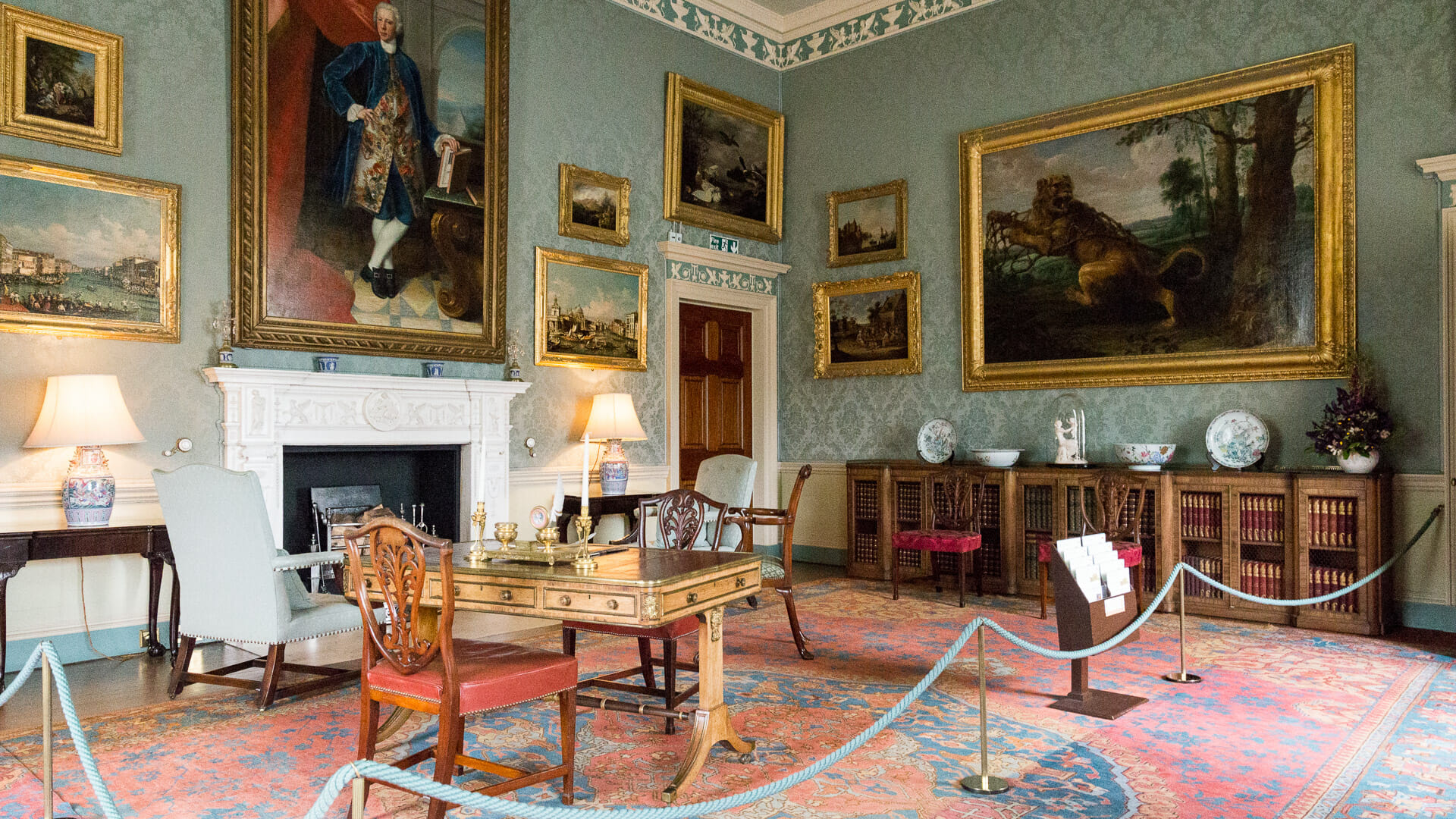
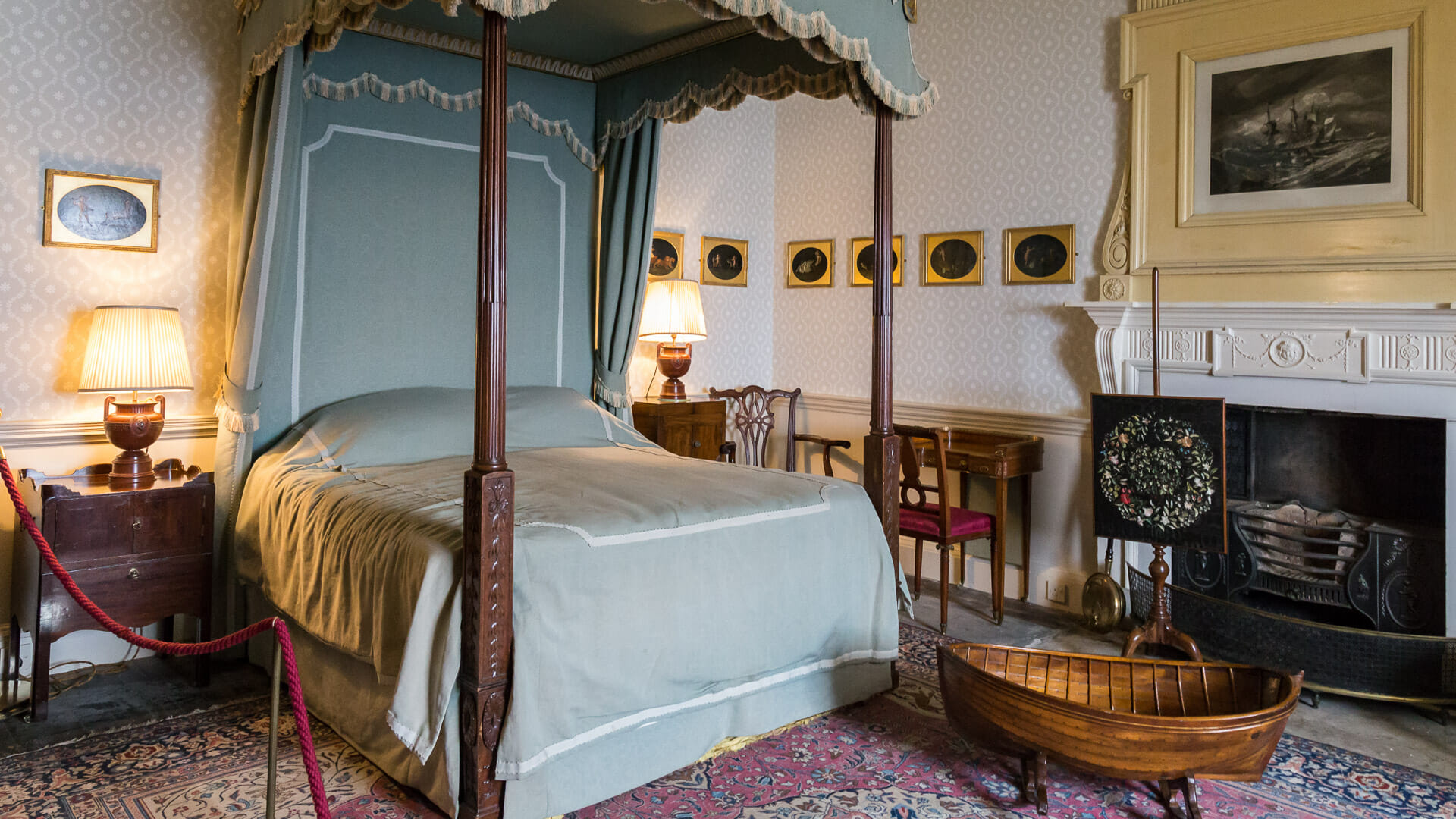
The opulence of the rooms, the awe-inspiring staircase hall – all of it was made to be seen. These were grand rooms built for just a few people: the Earl, his family, and his guests. But alongside this visible world, Culzean Castle hides an invisible parallel universe – that of the servants. Of the castle’s 85 rooms, 36 were used by the Earl, his family, and friends. But another 22 were taken up by the up to nineteen servants employed here at the time. These rooms were by no means the servants’ living quarters – the kitchen, for instance, was counted among them too.
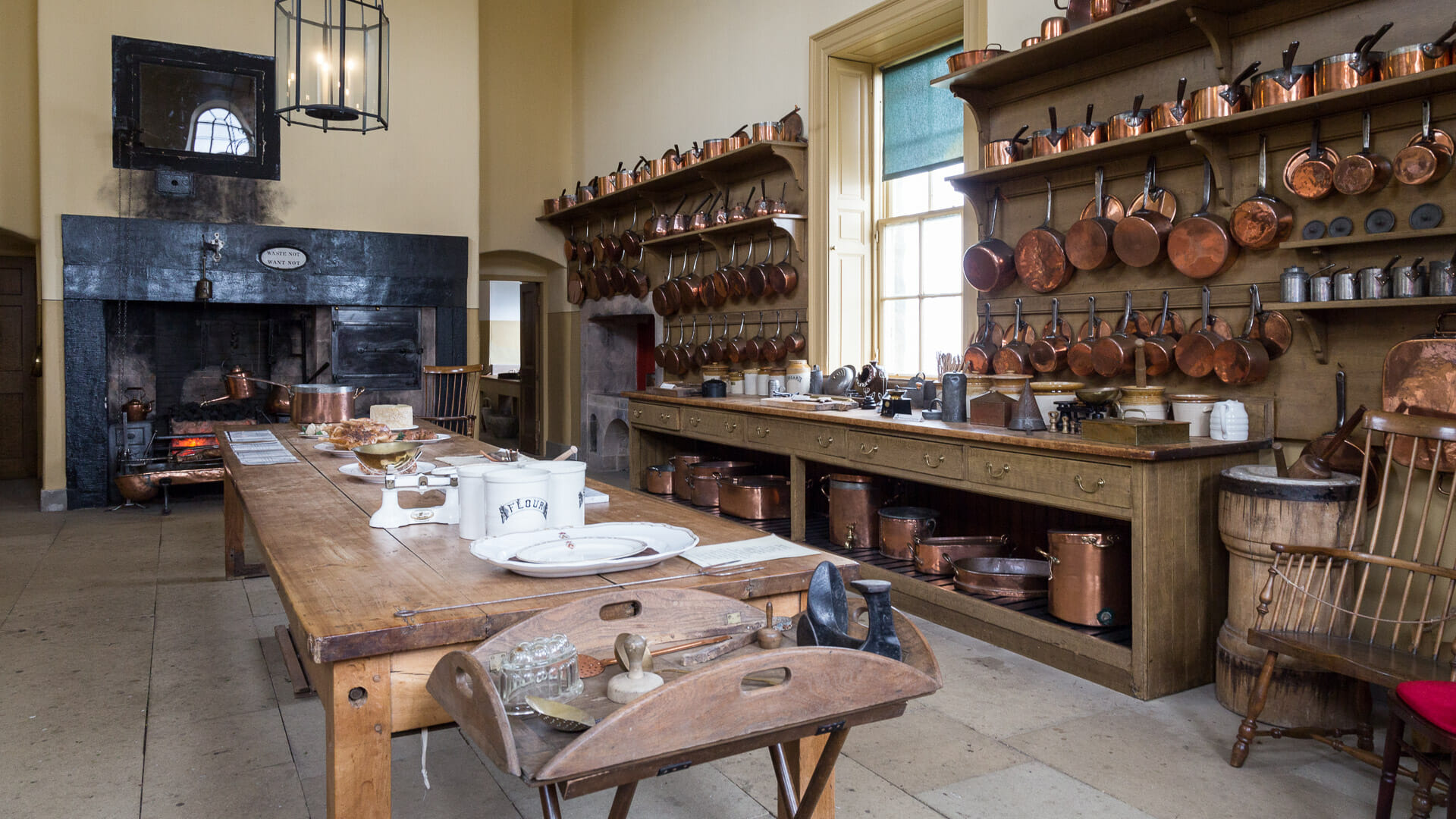
Servants came and went through hidden doors, and Adam even laid out separate routes across the courtyard so that staff could pass to the stable block invisibly, without ever crossing paths with the family.
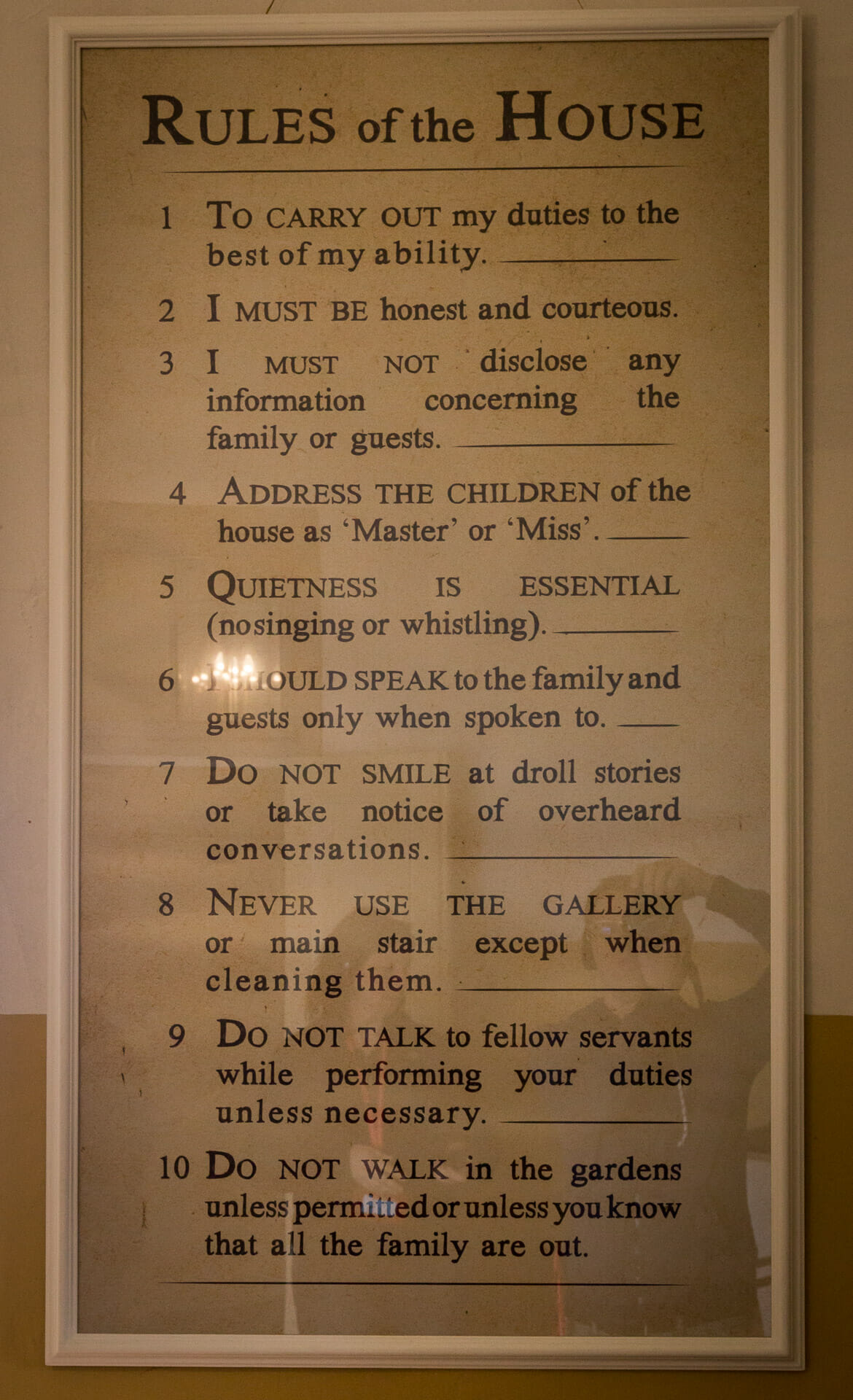
The servants mostly slept on the floor. There was also a clear and strict set of rules that likewise kept the servants effectively banished from the family’s sight:
Others lived even further away from the family – just to be safe. Down by the bay stands a house with a chimney. From the 19th century onwards, coal gas was produced here and piped up to the castle, where it fuelled the gas lamps right up until 1947. The gas man lived right next door, in his own little cottage.
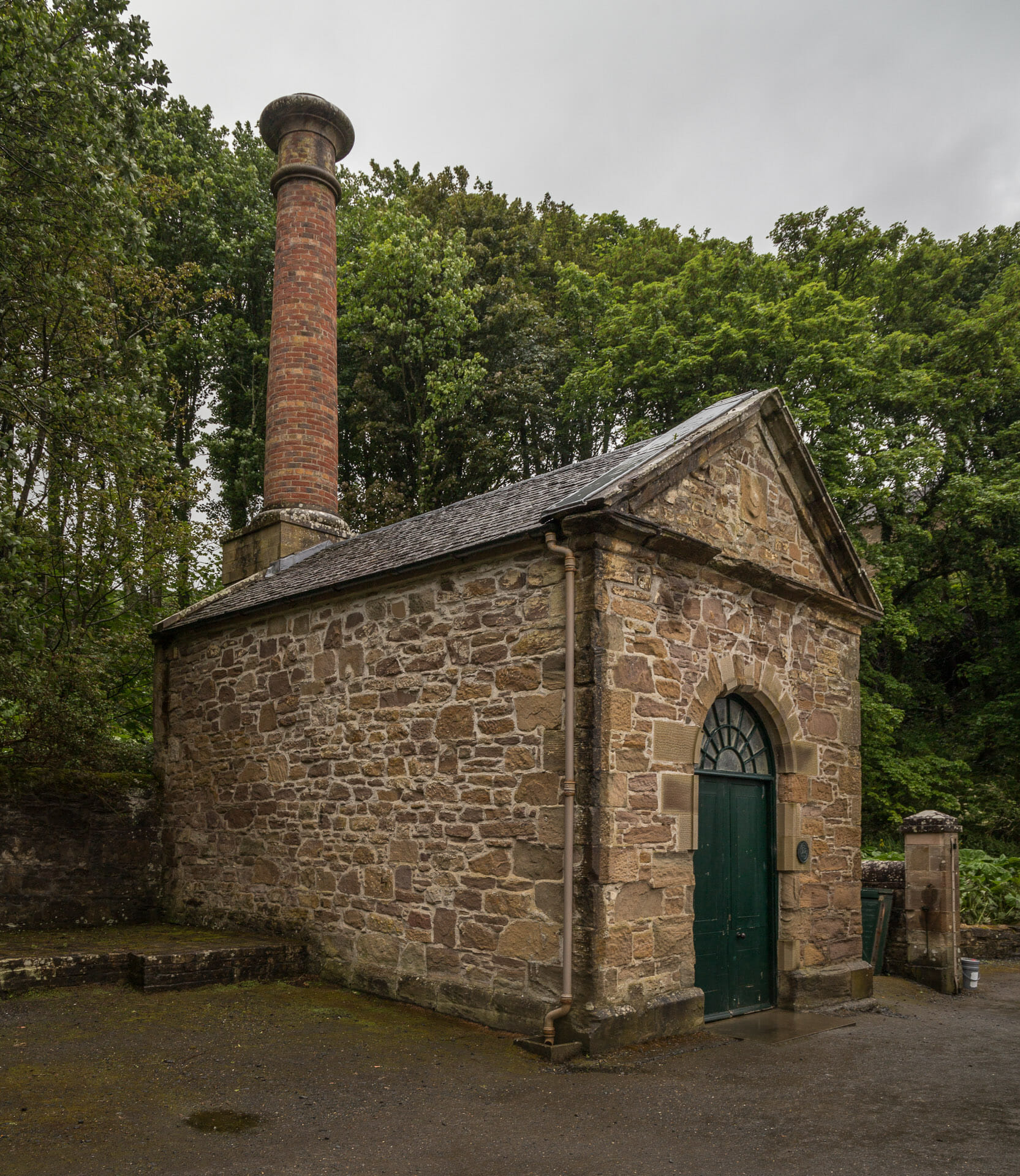
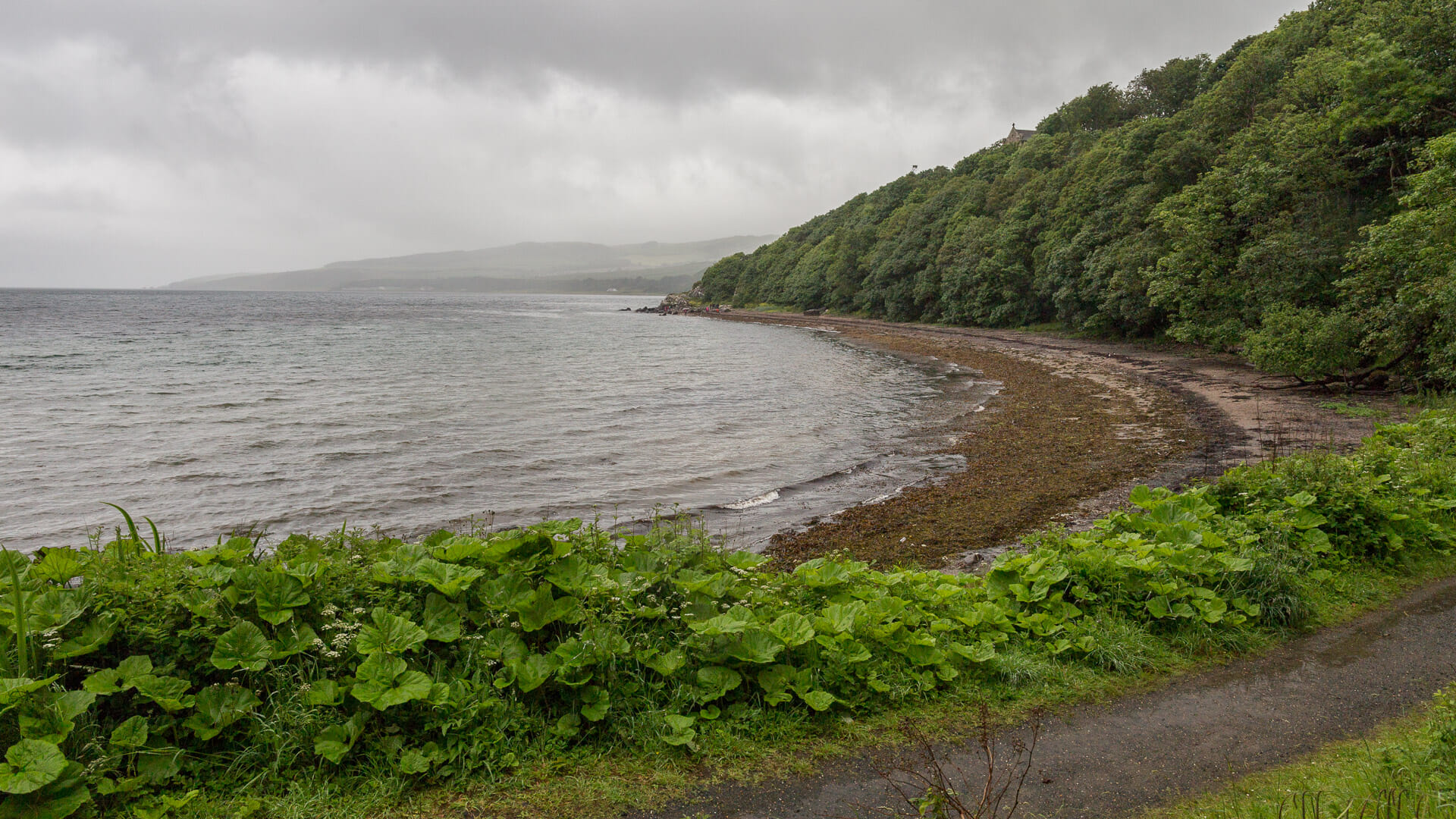
The gas machinery wasn’t placed down by the bay for no reason. First, it was out of the family’s sight; second, an explosion wouldn’t affect the castle itself; and third, the necessary coal could be landed straight off ships in the neighbouring bay.
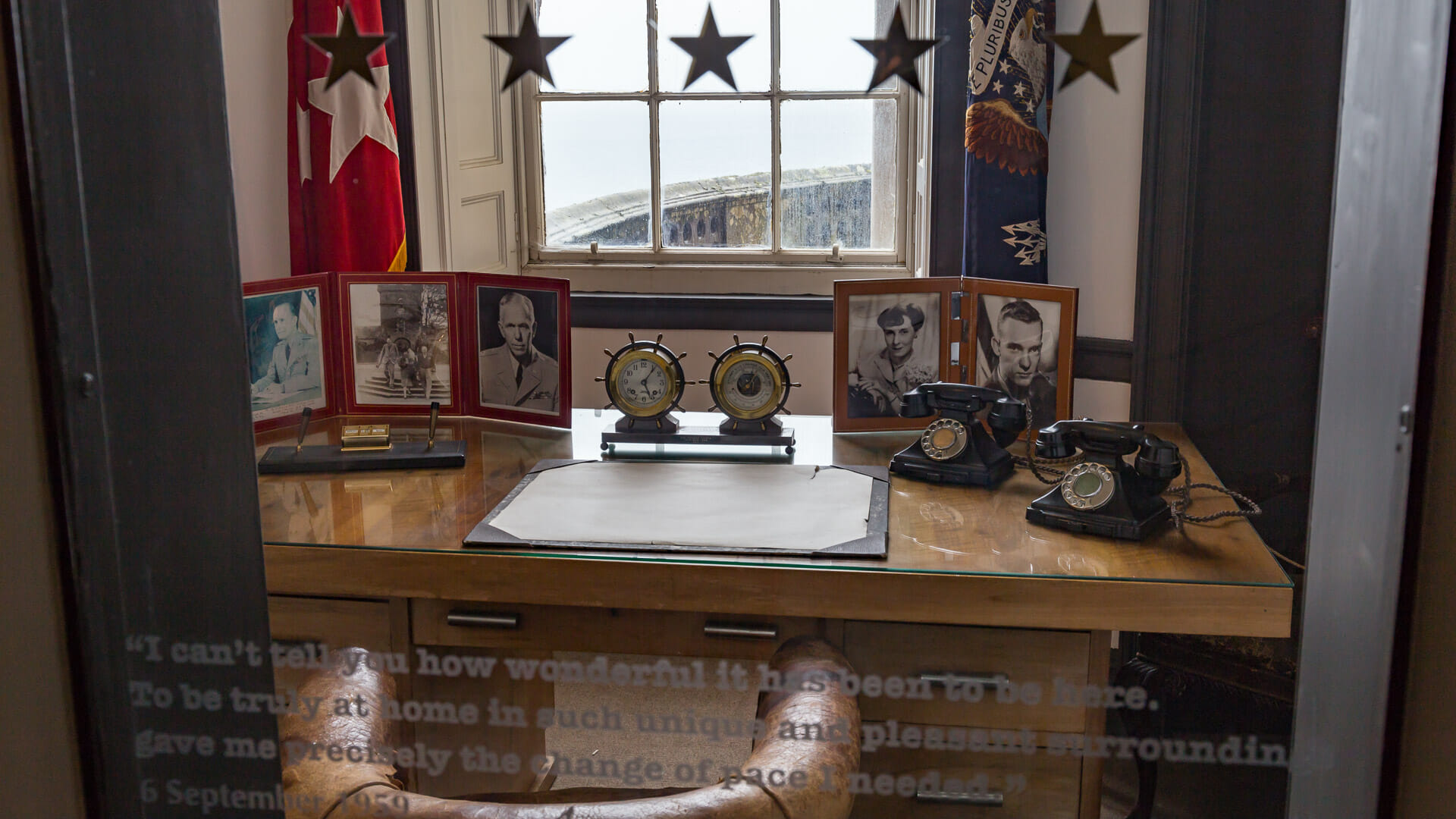
However, Robert Adam had nothing more to do with this marvel of engineering – and neither did his client. Both died in 1792, before Culzean was even finished. By the end of his life, David Kennedy was deep in debt, but his cousin and his heirs carried on his work. In 1945, the Kennedy family gifted the upper rooms of Culzean Castle to American President Eisenhower, in thanks for his service in the Second World War. Today the Eisenhower Hotel is housed there.
The entire estate, along with its gardens and outbuildings, now belongs to the National Trust for Scotland, which looks after its preservation.
And architect Robert Adam? He did indeed achieve what he had hoped for. Culzean Castle is today regarded as a prime example of his late style, one that found recognition across the whole of the western world at the time.
Good to know: how do you pronounce Culzean Castle?
At first glance, nothing about the spelling seems unusual – until you hear the guides say the name out loud. They pronounce it roughly as “kuh-LAIN”. No trace of a “z” sound at all. In earlier centuries, in fact, the castle’s name was spelled “Cullean”. Only later did the spelling change. What looks like a “z” here isn’t really a “z” at all, but a letter called yogh, or Ȝ. This was its own distinct letter in Middle English, sitting somewhere between “g” and “y” in sound. It’s no longer in use today, but in the case of our castle’s name, it ended up being represented with a “z”.
Personal note: a fun, interactive guide
The National Trust for Scotland (NTS) takes great care of this hugely important attraction. Since visitor numbers dipped for a while, the NTS keeps introducing new features – the huge children’s playground, for instance.
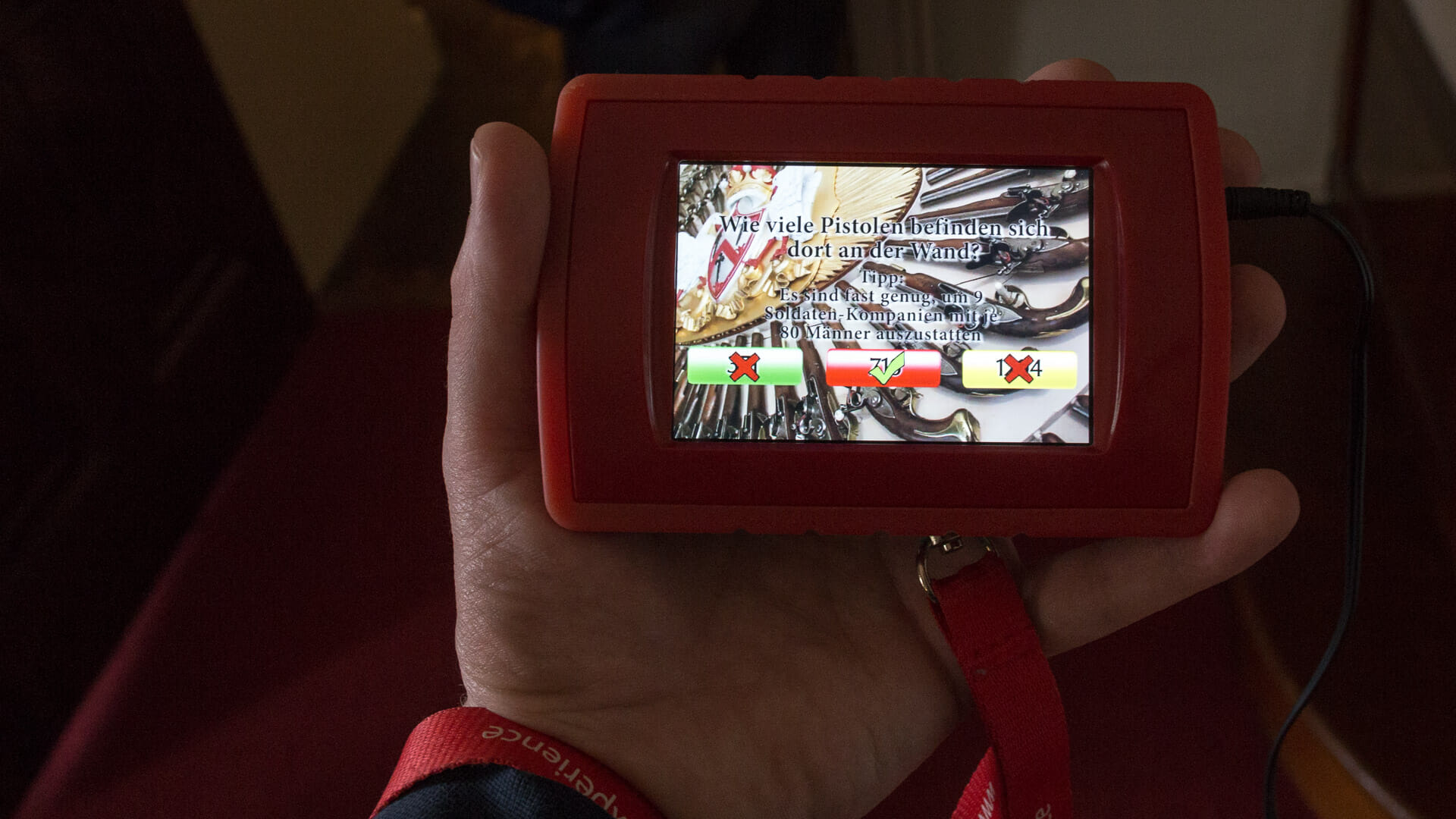
I really enjoyed the electronic guide, which didn’t just deliver excellent information but also worked in the occasional little game:
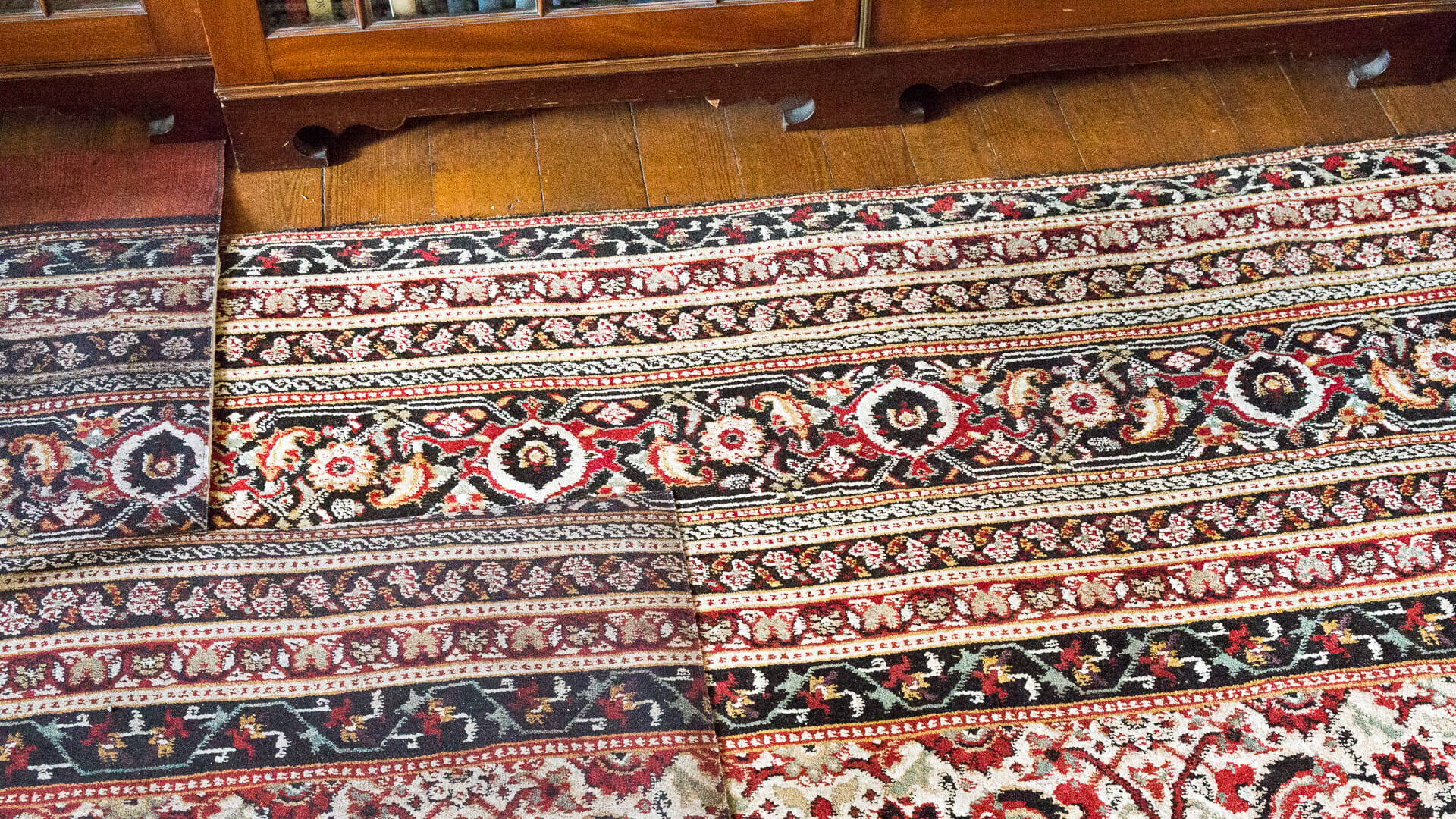
What I find impressive is the effort put into preserving these historic pieces without hiding them from visitors. As a result, you walk here almost unaware across a highly accurate reproduction of the original carpet and flooring, which only reveals itself as such in a few spots:
Tip: bring enough time for the gardens
Of course, the castle and its buildings are the main draw. But if the weather cooperates, a walk through the park and along the bay is well worth it. With a bit of luck, you’ll catch a fine view of Culzean perched atop its cliffs. You might even spot the caves down below in those cliffs, which were once used for smuggling – and are said to be haunted by a ghost, too. Back at the castle, you can treat yourself to a hot drink and a slice of cake at the attached café.
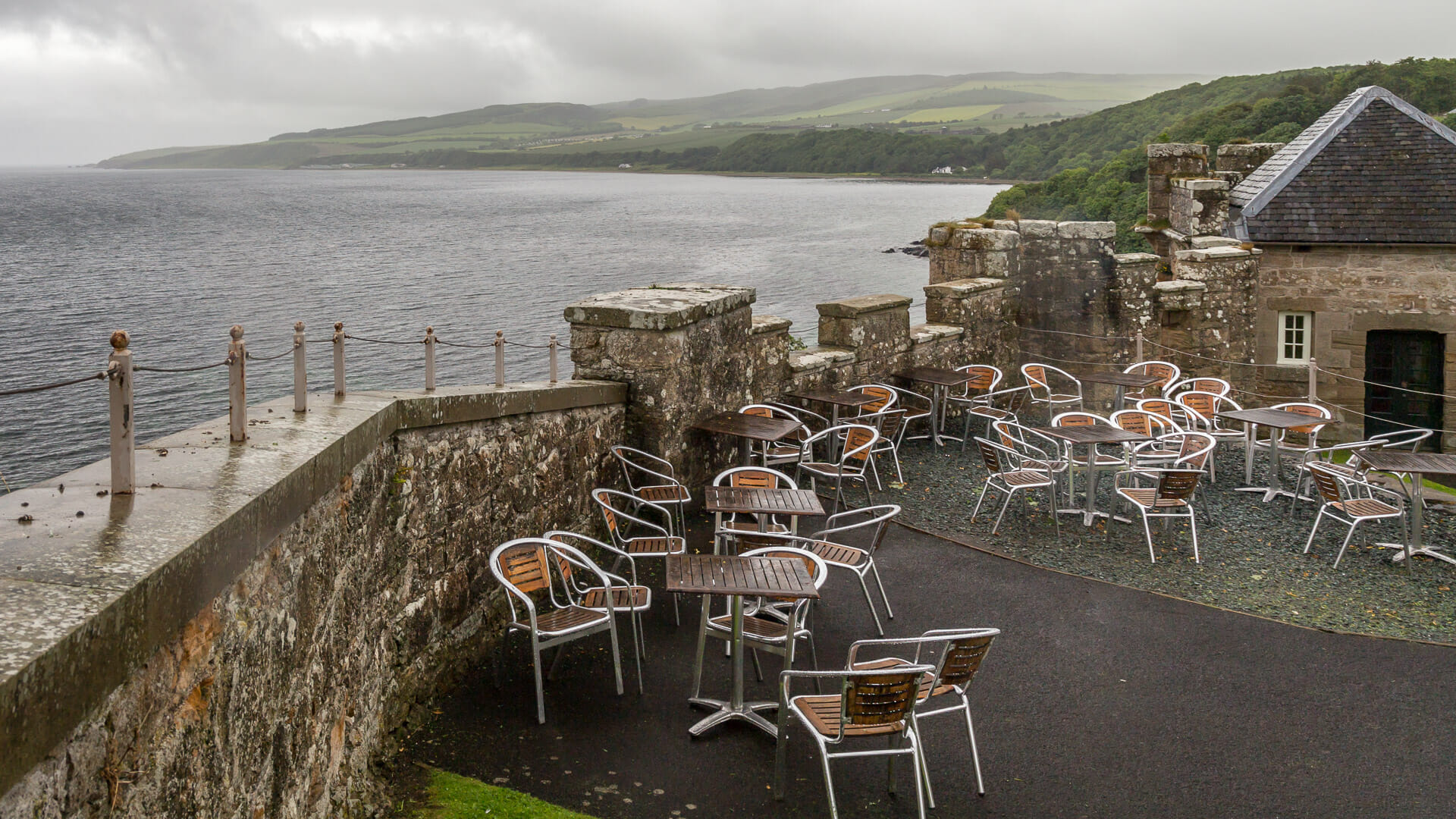
If you can’t find a seat there, there’s also a self-service restaurant in the former brewhouse near the car park.
Getting there:
With a sat nav: “KA19 8LE” brings you right to the area.
Without a sat nav: coming from Ayr, take the A719 and then turn off at the signposts. Note: you pay on entry, up at the parking area. Parking is then near the former brewhouse.