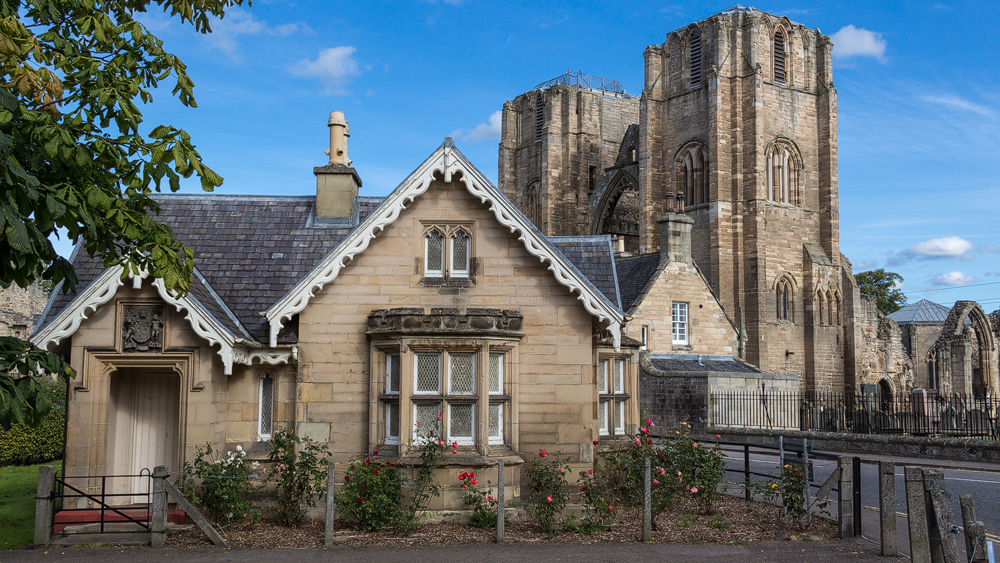
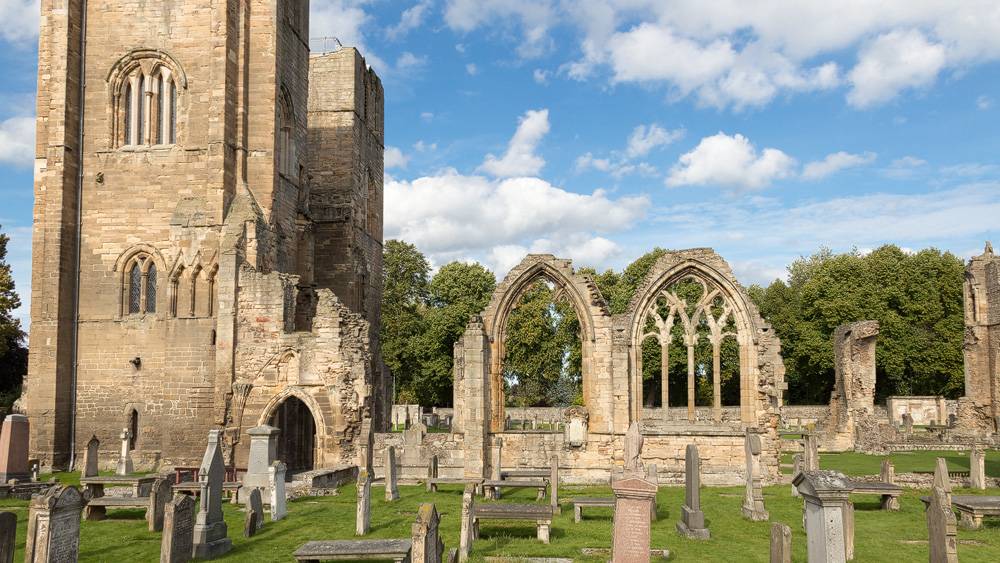
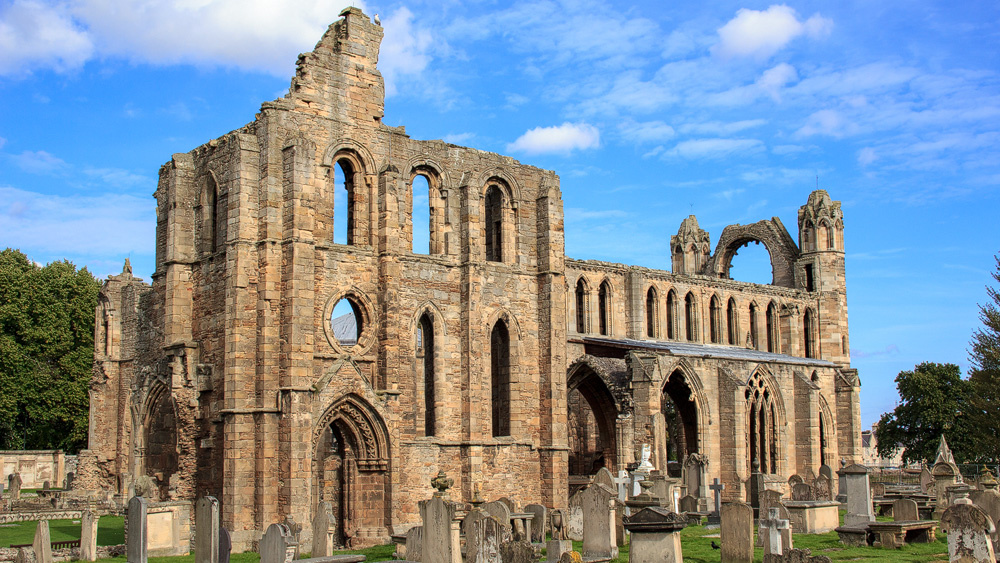
It was once the second-largest cathedral in Scotland. Today, however, only a ruin stands in Elgin, hinting at its former splendour. Here’s how that came to be …
The Wolf of Badenoch, the Celtic Attila – history has no kinder nicknames for Alexander Stewart. And he certainly earned them. He ruthlessly did away with his opponents. The luckier ones merely ended up in a dungeon, the less lucky ones straight in the grave. His opponents were anyone standing in the way of his expansion plans, for Alexander Stewart continuously grew his territory in eastern Scotland through violence and marriage.
All of it together – violence, marriage, and the Wolf of Badenoch – would eventually spell the end for Elgin Cathedral. In the 14th century it was known as the Lantern of the North. A proud, magnificent building, a beacon for Christians in Scotland. But fire would soon bring it down.
What had happened?
In 1382, the Wolf of Badenoch took the Countess of Ross as his wife. With her, he also gained the earldom of Ross – a huge additional territory. This gave him rule over large parts of the Scottish Highlands.
There was just one problem. Euphemia, his wife, bore him no children. And that the fault lay with her was considered beyond doubt, since Alexander Stewart had already fathered plenty of children. Seven legitimate offspring are documented, though there are said to have been around 40 in total.
Alexander therefore wanted to be rid of his wife and asked the Bishop of Moray, Alexander Bur, for permission. The bishop refused, insisting Alexander should stay with his wife. But the Wolf would not have earned his name if he had simply accepted that. He ignored the ban and entered into a new marriage. The usual punishment clerics imposed in those days followed: excommunication.
That was too much for Alexander Stewart! With a large force, he invaded the small earldom of Moray, destroying various churches and monasteries along the way, and finally reached Elgin. Here too, he made short work of church property: he had fire set to Elgin Cathedral. The beautiful building burned to the ground. The year was 1390.
And the Wolf of Badenoch? Was he punished?
He was indeed made to answer for it. The earldom of Ross was taken from him again, as was Urquhart Castle, which was also in his possession – so he did lose a fair amount of power. But after that the matter was settled, at least in this world. Rumours surround the death of Alexander Stewart. It’s said that in 1394 the devil himself challenged him to a game of chess, and the Wolf lost. The next day he was found dead in the hall of his castle. So in the end, he did pay for his wicked deeds after all.
Know: Elgin Cathedral
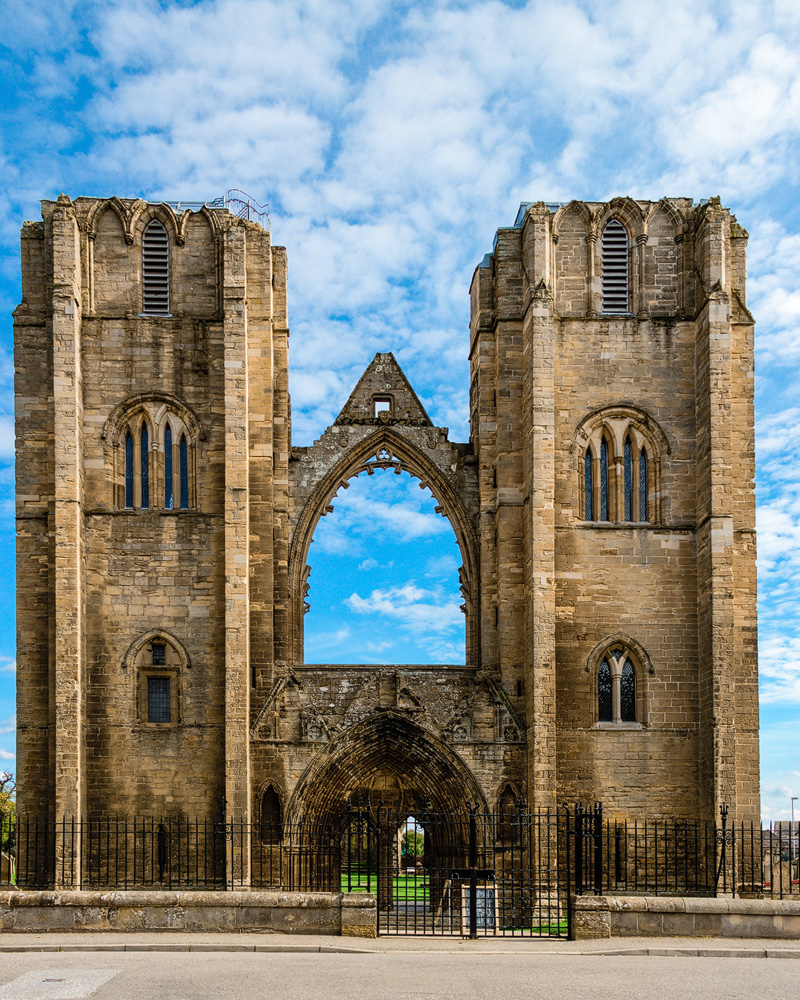
Elgin Cathedral was built in 1224 at the request of the Scottish bishop Andrew de Moravia. The church formed the centrepiece of an entire walled sacred precinct.
The 1390 fire did not yet mean the end of Elgin’s cathedral, as the church had the building restored to its former glory. Slow decline only set in with the Reformation in the 16th century. Elgin Cathedral was simply abandoned. The forces of nature took their toll on the church. In 1711 the central, tallest tower of the cathedral finally collapsed (the towers at the front are considerably smaller than the tower that once stood in the middle), dragging almost the entire nave down with it in ruin.
Today Elgin Cathedral is in the care of Historic Environment Scotland.
Tip: The cathedral from above
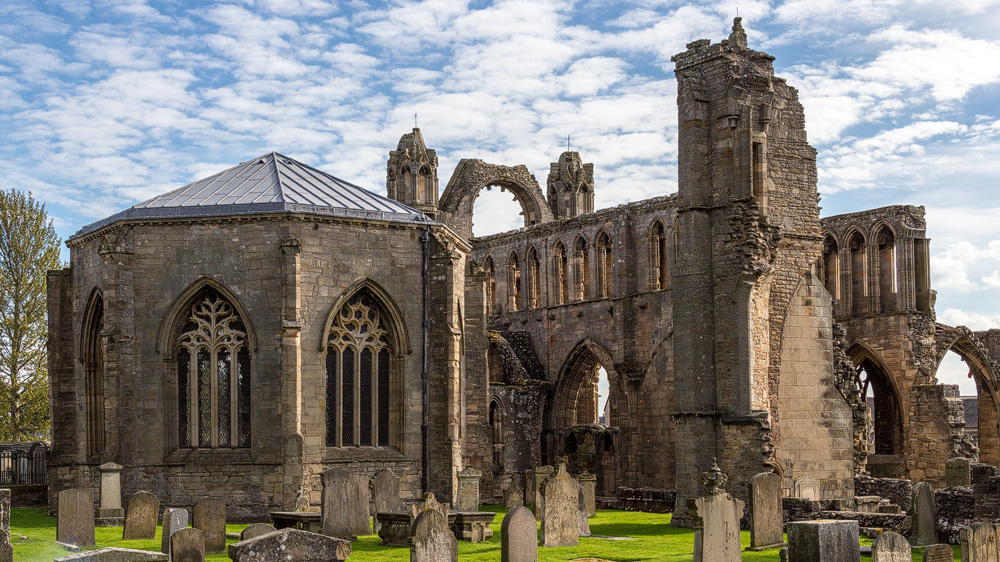
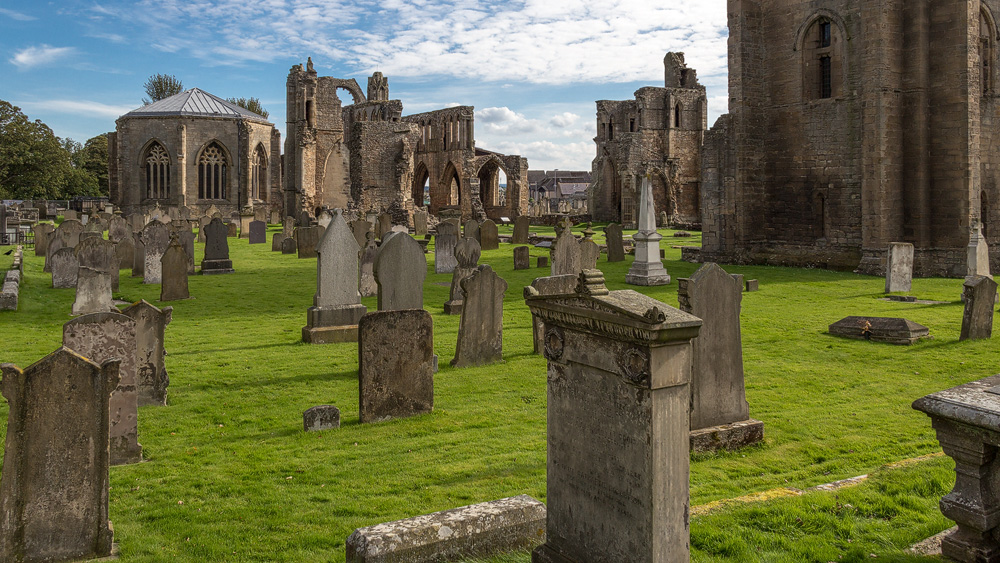
Unfortunately, we arrived too late to join a guided tour. But I’ve heard from friends that it’s supposed to be very interesting, not least because you can climb one of the towers, and the view from above gives you a much better sense of what shape the church once had. Another highlight of the tour is the almost fully preserved octagonal chapter house.
Personal note: Kitschy gardens
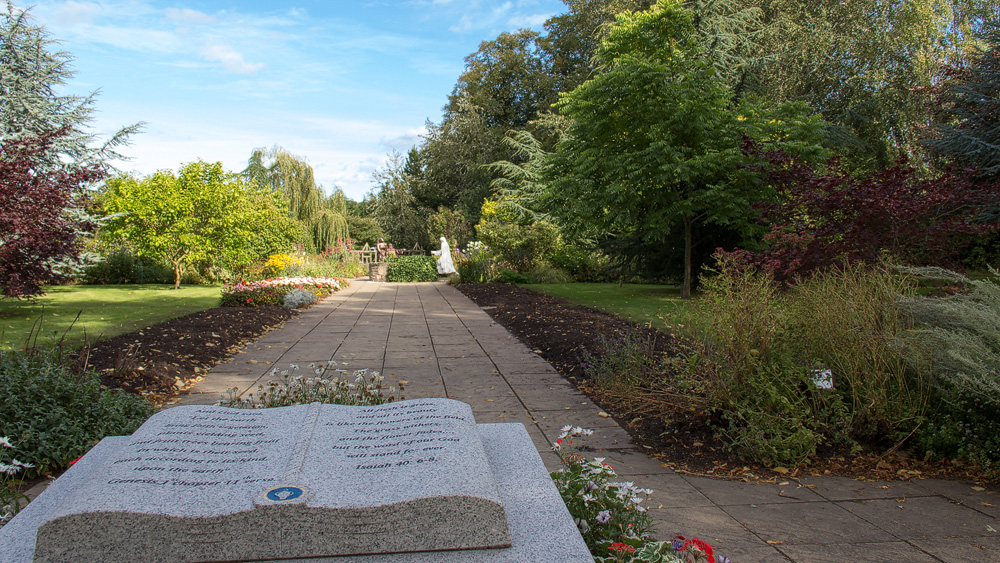
On the north side of the cathedral, where the octagonal building stands, you’ll find the Biblical Garden. The plants there are beautifully laid out and it’s a lovely place to relax – if only it weren’t for the statues. They look rather kitschy and don’t quite fit the otherwise beautiful setting, in my opinion at least. Still, the garden is well worth a visit.
Getting there:
With a sat nav: entering “IV30 1HU” takes you to Elgin, almost right up to the cathedral.
Without a sat nav: whether coming from Aberdeen or Inverness, simply take the A96 – it runs straight through Elgin, and the cathedral is well signposted.