If Loch Ness has a beginning, it’s probably Fort Augustus. Because here, every boat heading for Inverness has to pass through a magnificent flight of locks.
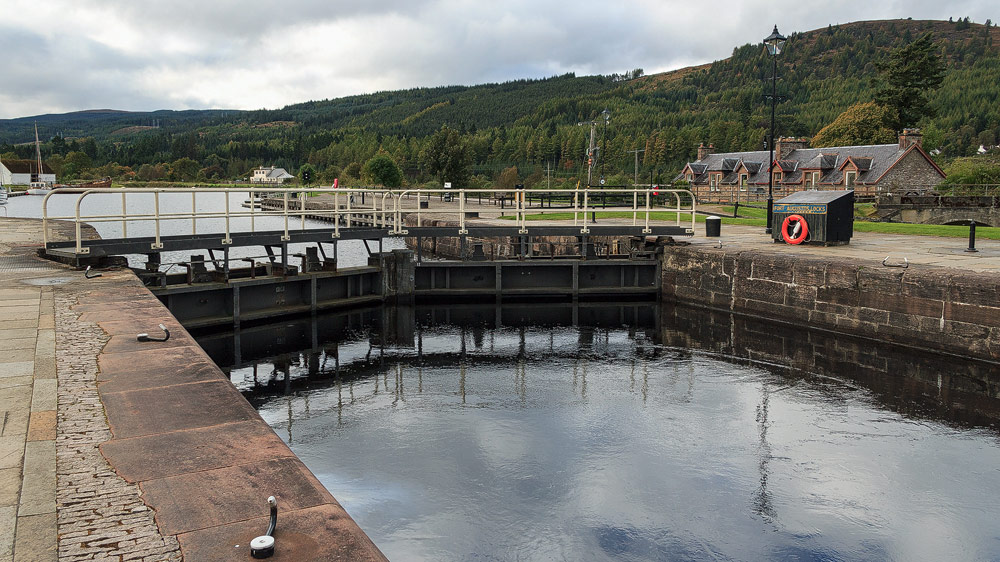
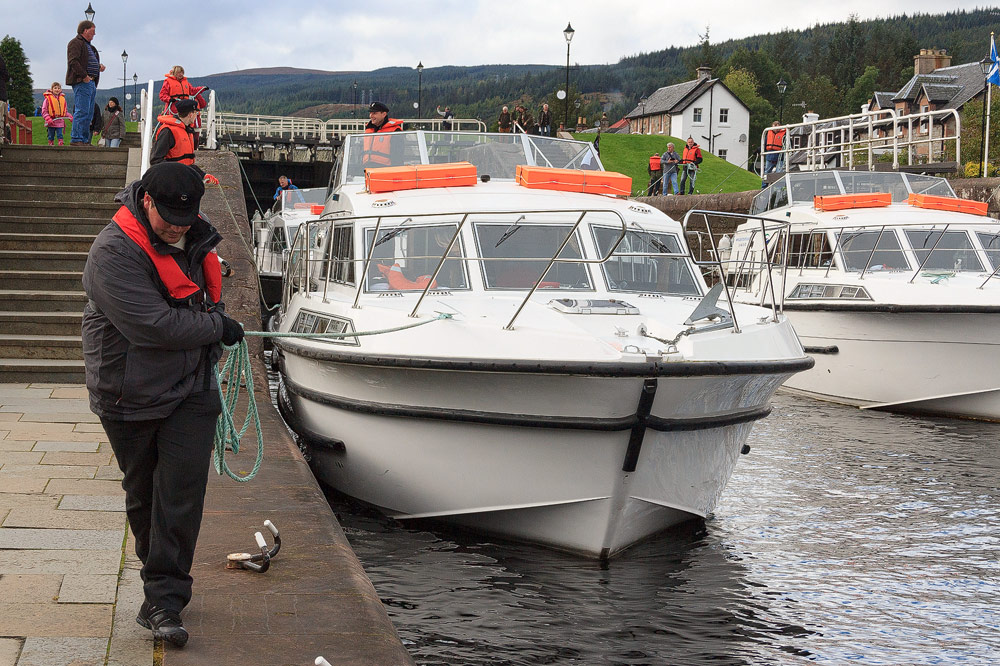
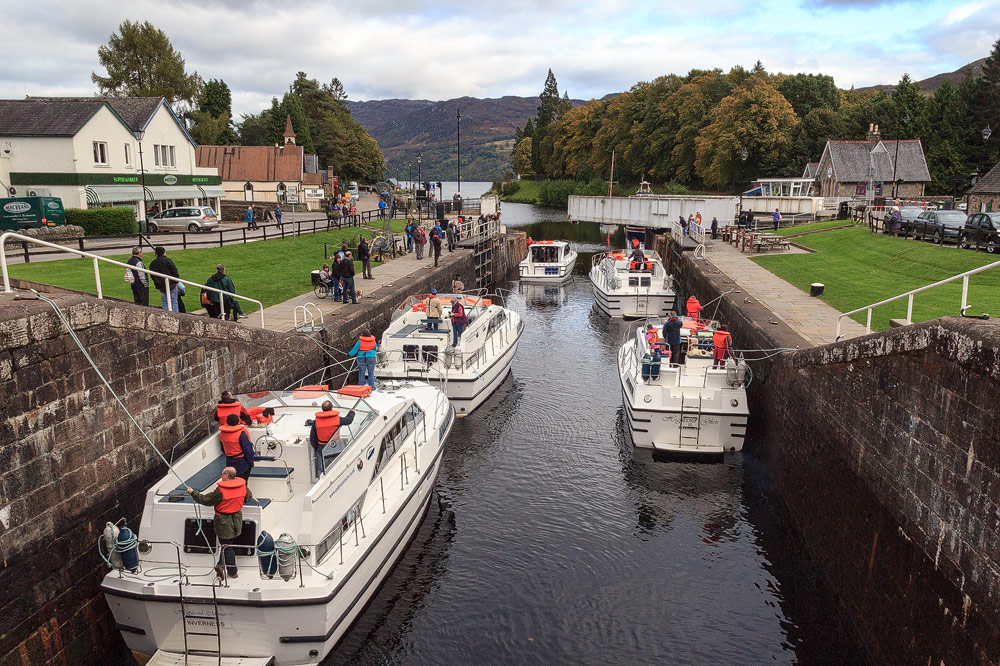
Nothing remains today of the old fort that gave the village its name. A far more interesting structure has taken its place: this is where a stretch of the Caledonian Canal flows into Loch Ness. Before that, though, the canal still has to overcome five lock steps. It takes about an hour for a boat to pass through all six lock gates. Only then does the vast expanse of Loch Ness lie ahead of it. Much of it is still done by hand, as the boats are hauled from one lock chamber to the next.
The old locks date from the 19th century and sit right in the centre of the village – life here has more or less grouped itself around this attraction. Even the main road through the Great Glen has to cross the canal, which it does via a swing bridge at the end of the locks.
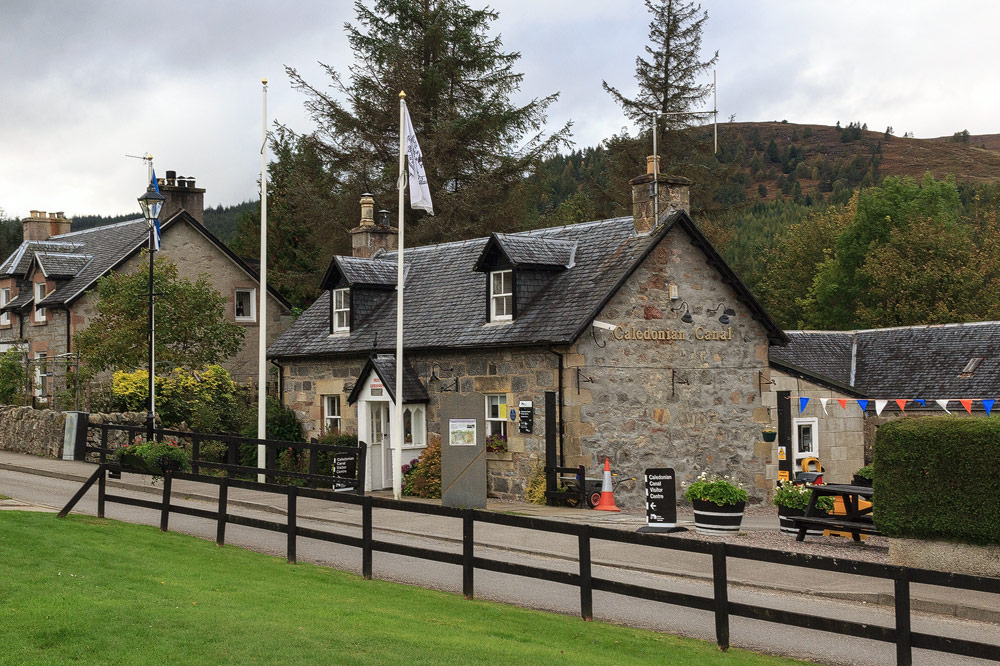
To find out more about the engineering and construction of the locks, it’s worth taking a short detour into the visitor centre. There you’ll learn that the gates used to be opened by hand using long poles, among other things.
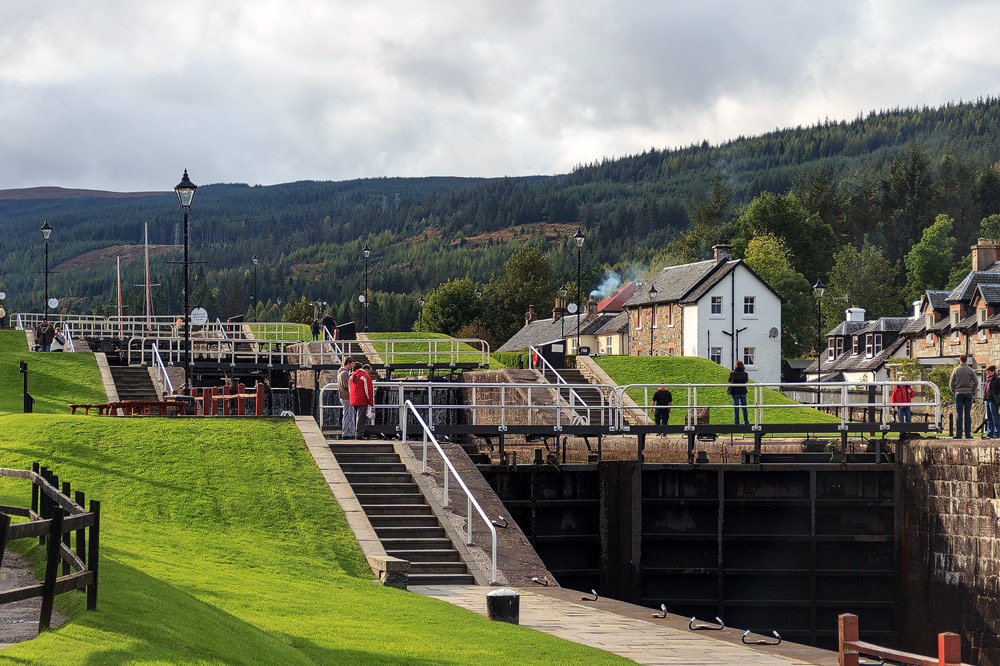
The lock system at Fort Augustus overcomes five of the Caledonian Canal’s 29 steps in total. Only Banavie near Fort William offers more in one go, with eight steps – that’s the famous staircase of Neptune, known in English as “Neptune’s Staircase”.
Once you’ve watched a full locking process, it’s worth browsing the surrounding shops a little. There’s a glassblower here, for instance, whom you can watch at work. And, of course, plenty of souvenir shops selling Nessies too.
Tip: A view across the wide Loch Ness
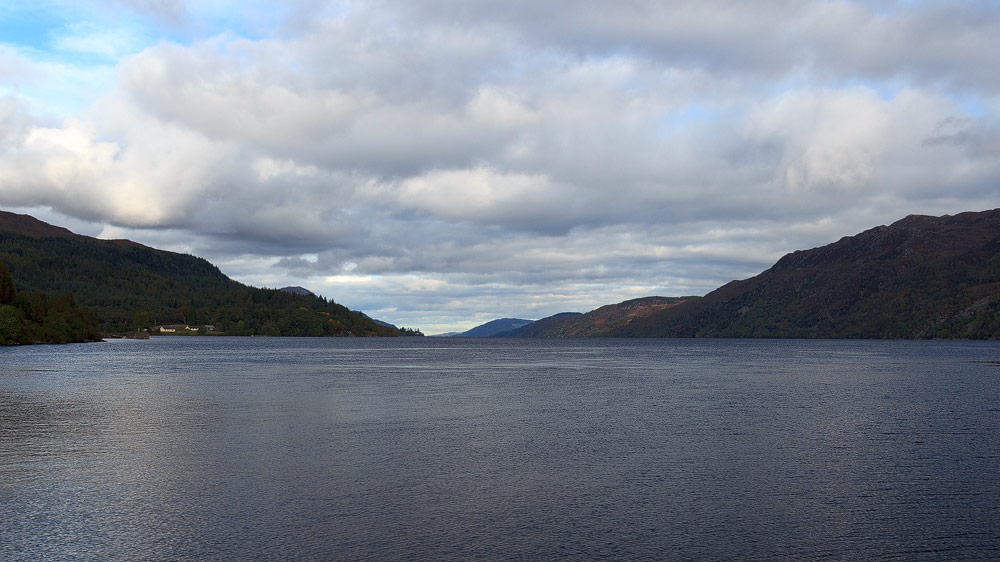
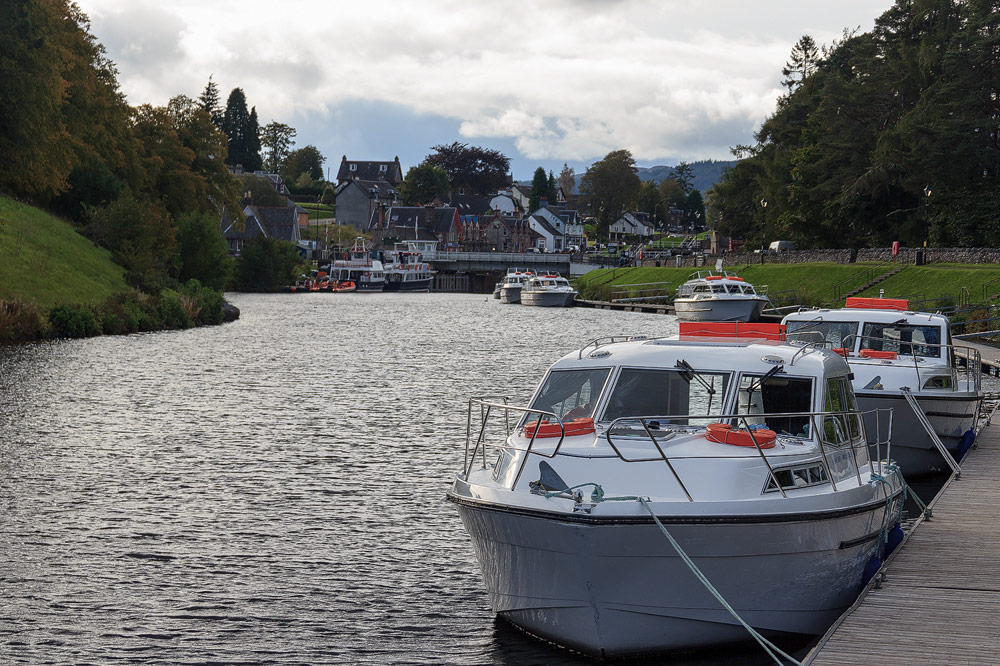
Take a moment and walk the remaining stretch of the Caledonian Canal down to Loch Ness. On the right-hand bank of the canal you’ll find the Pepperpot Lighthouse – a small lighthouse marking the canal.
Enjoy the view into the Great Glen here too, and out across the wide expanse of Loch Ness. Don’t forget a photo!
The grounds beyond the Pepperpot Lighthouse belong to the great abbey, which these days, however, is no longer inhabited by monks but by ordinary residents.
Good to know: The butcher’s town
Fort Augustus roughly means “the fortress of the exalted one”. Augustus, in this case, was the name of the youngest son of King George II – his full name was William Augustus. He later became known, however, under the name Duke of Cumberland – or “Butcher Cumberland”. He was the one who led the British army into the field against the Jacobites at Culloden, and showed no mercy in doing so.
Fort Augustus, however, had already been named after him earlier, when the English king had a fortress built there following the first Jacobite rising of 1715. Fort Augustus was built between 1729 and 1742. Before that, the settlement was called Kilchuimein (“Cille” is Gaelic for “church”; “Chuimein” means “of Cummein”), after Saint Cummein.
A glance at the map shows why the English built a fort here of all places: Fort Augustus sits centrally within the Great Glen. From here, the garrison could control the route between the east and west coasts, as well as the passage north into Scotland. At first it did little good: Fort Augustus was successfully captured by the Jacobites during the second rising.
Later, about a month after his 1746 victory over the Jacobites near Inverness, the Duke of Cumberland actually took up residence for two months in the very village that bore his name. From here he organised the final subjugation of the Highland clans – a grim period, and not exactly a flattering chapter for Fort Augustus…
Personal note: The fascination of a lock
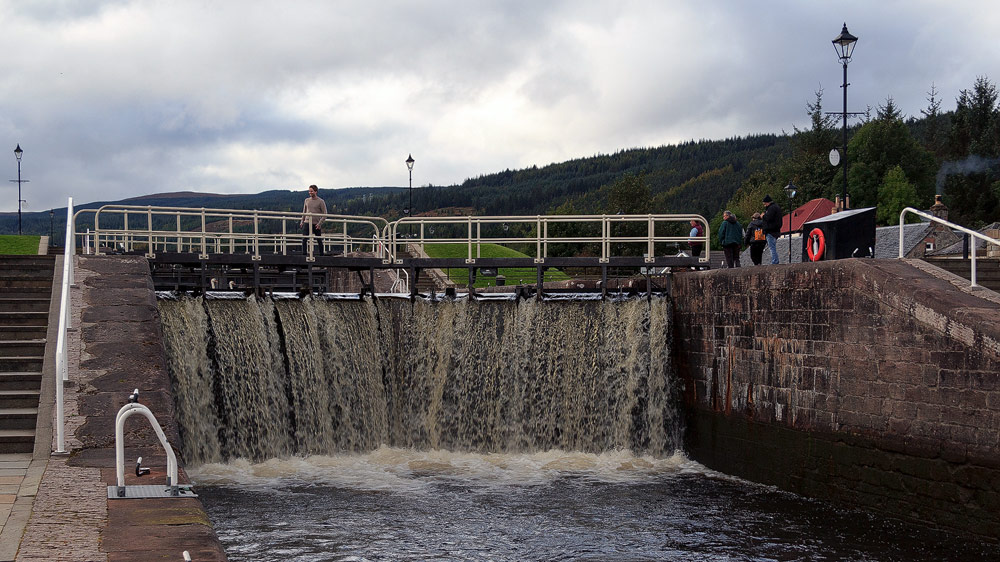
Katrin and I really did take our time watching an entire locking process. Walking along the gates and watching the churning water pour down over the metal doors is wonderful. And, of course, a snapshot at the wire Nessie was an absolute must too.
Getting there:
Fort Augustus is hard to miss. Whether coming from Fort William in the west or Inverness in the east, take the A82 into the Great Glen and follow it all the way to Fort Augustus. There’s a large car park right on the road there – coming from the east, it’s on your right just before you cross the canal; coming from the west, you first cross the bridge, and it’s then a few hundred metres further on the left.