A beautiful view of untouched nature: a walk through Glen Affric is one of the enchanting moments of any trip to Scotland.
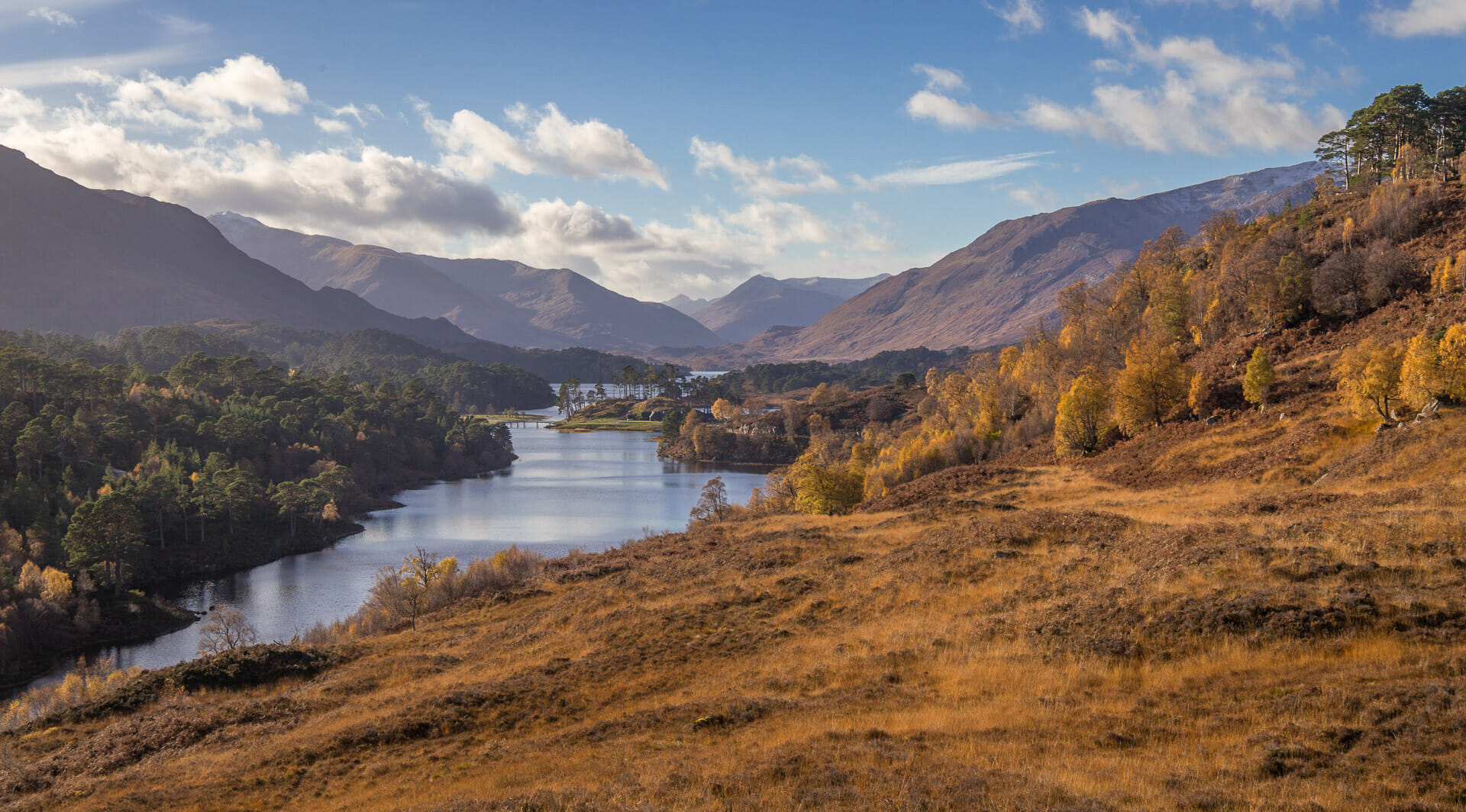
After the last village, Cannich, the car rattles for half an hour along the single-track road before reaching the car park at Loch Affric. Here, parallel to the Great Glen and Loch Ness, Scottish nature is still intact. And there’s a reason for that: Glen Affric is a nature reserve.
In this roughly 30-kilometre-long glen, Scotland’s forestry authority, the Forestry Commission, is trying to preserve an original woodland. That’s not easy. For a long time, native trees here – as elsewhere – were replaced by commercial timber species from other continents, in order to increase forestry yields. And so American pines soon displaced the native Scots pines across the whole country.
Forester Finlay MacRae discovered and protected a few remaining stands of the original forest here in Glen Affric in 1951. MacRae not only protected these last trees; together with a team, he also made sure their seeds were spread throughout the glen. Alongside the Scots pine, he spread birch, aspen and rowan – his team is said to have planted around eight million trees over time. And so today Glen Affric has a mix of 300-year-old trees, among which young saplings are growing up.
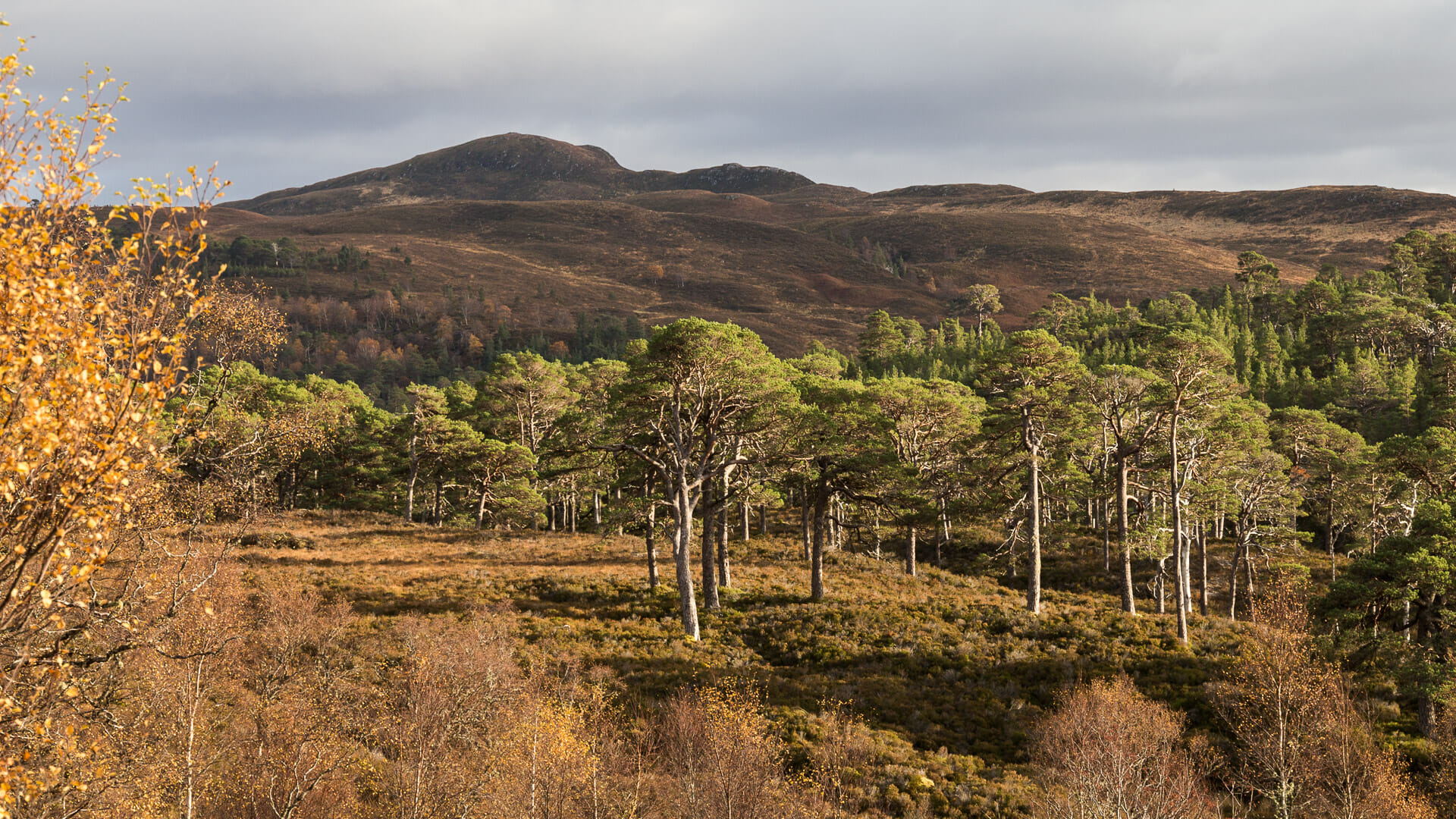
It took time, but then the success became visible. Not only did the trees return, the animals also found a home in the woods again. Alongside deer, foxes, pine martens and red squirrels soon roamed once more; eagles, finches and butterflies were soon rising into the air again too.
The best part is: visitors can enjoy all of this. Because this nature has been made accessible. From the car park at Loch Affric, for example, two short walking trails set off.
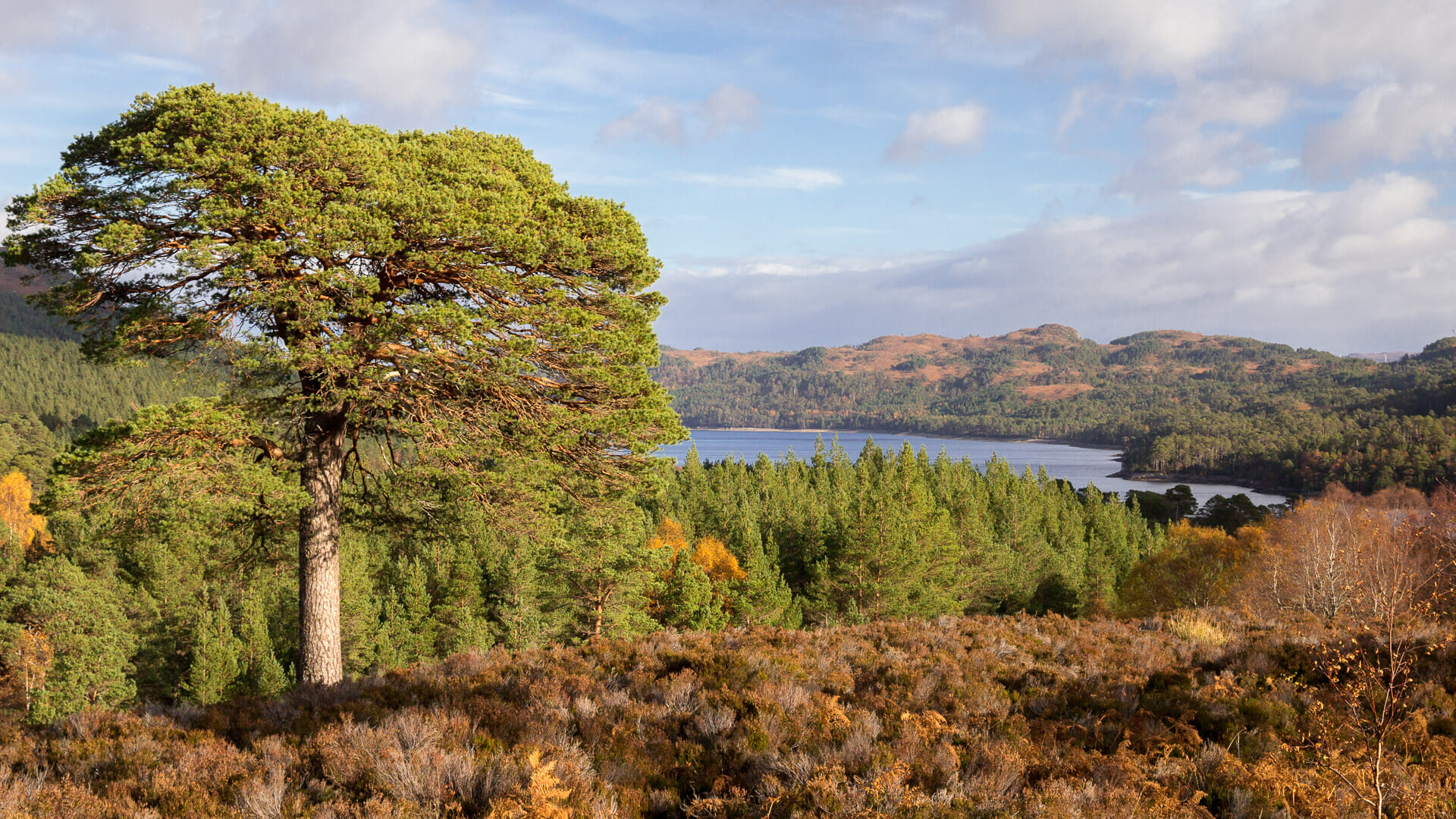
The path to the viewpoint and back is only about 500 metres long. At the top you’re rewarded with a view over the loch, framed by high mountains.
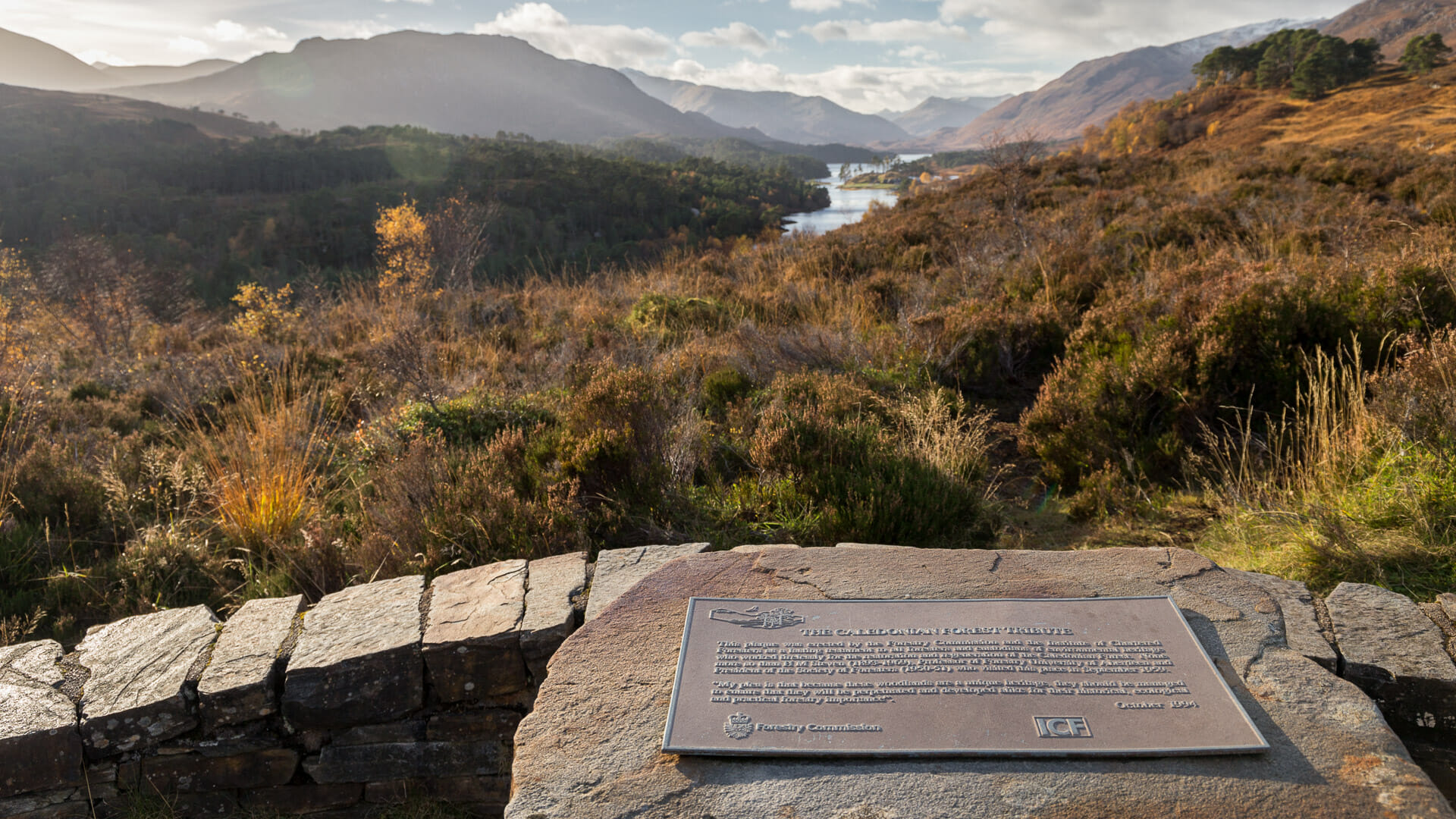
The plaque at the top, incidentally, honours the foresters’ efforts. In the distance rises Càrn Eige at 1,184 metres. It’s the highest mountain in the northern Highlands.
Back at the car park, the River Trail awaits visitors. It takes about an hour to cover 1.6 kilometres if you want to take your time. The path first leads into the forest.
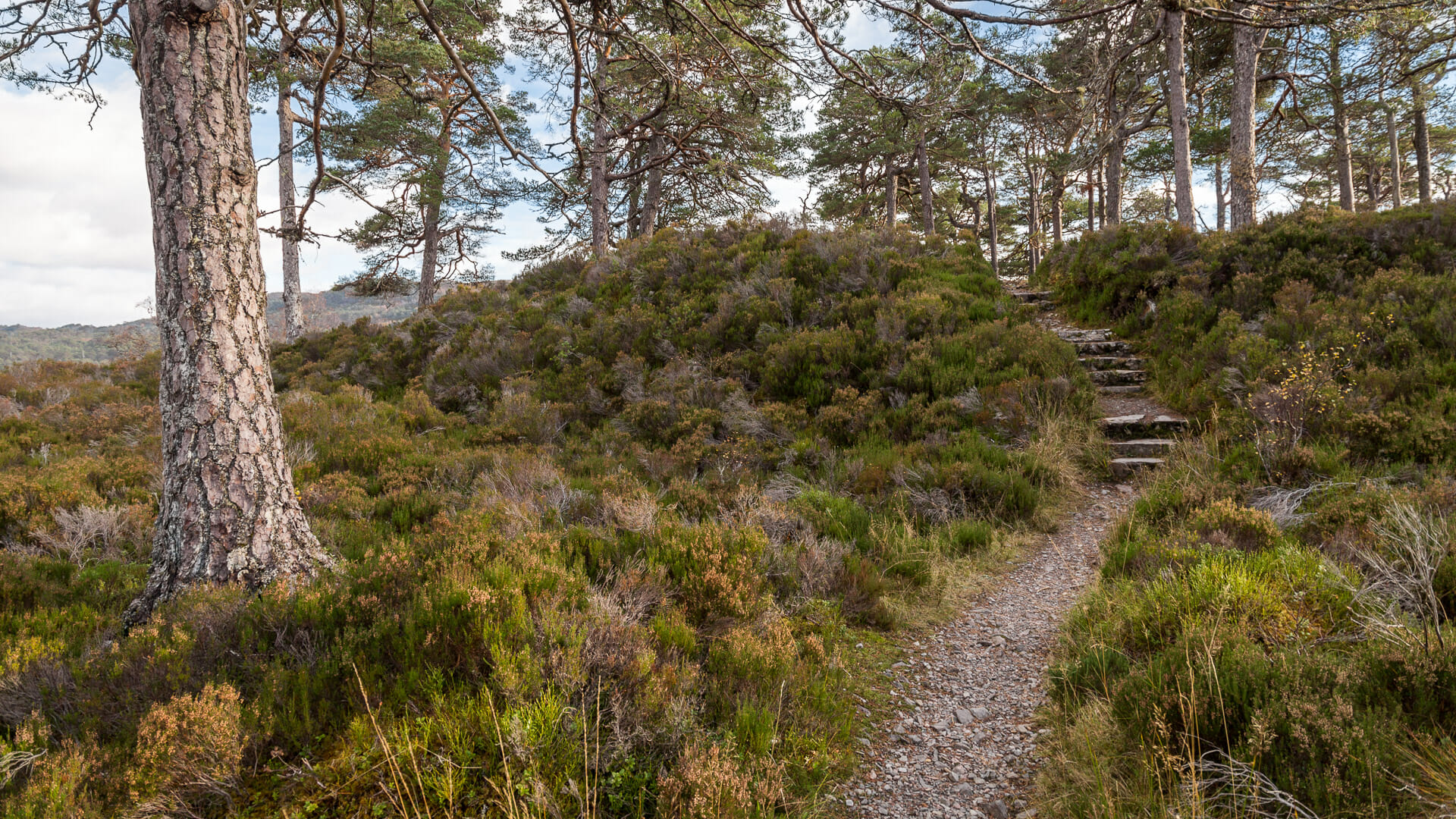
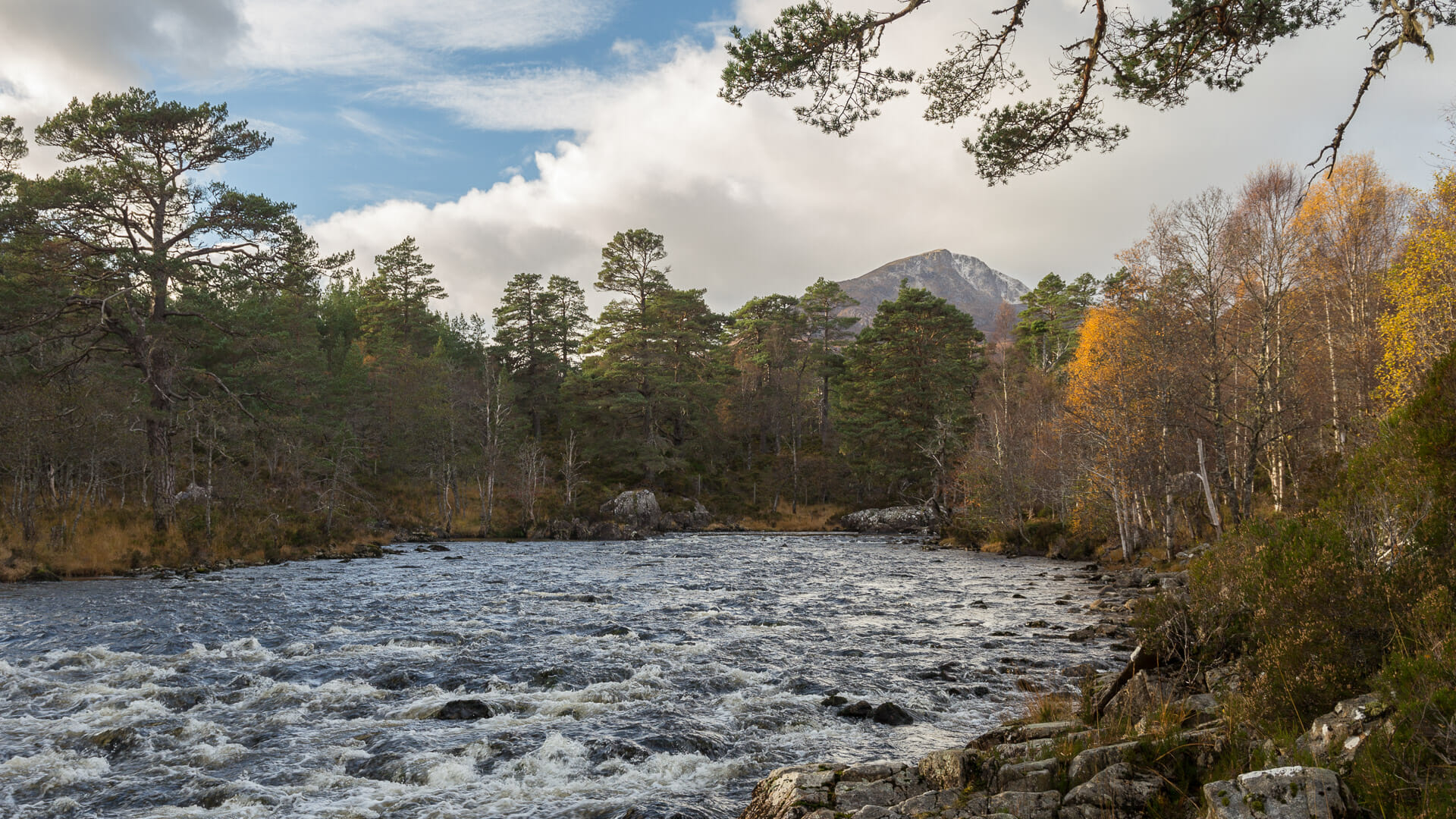
It then leads down to the river, which connects Loch Affric and Loch Beinn a’ Mheadhoin.
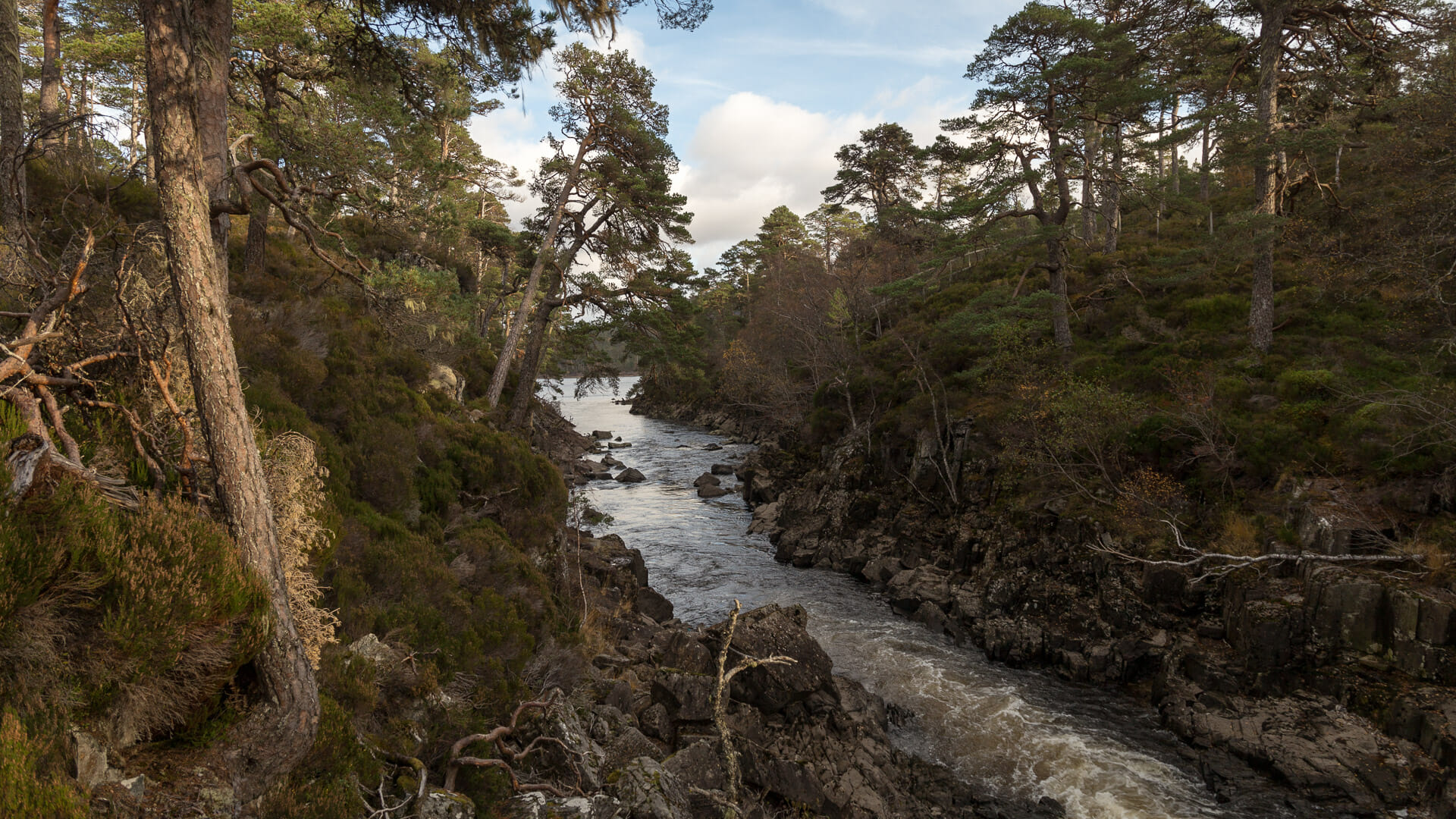
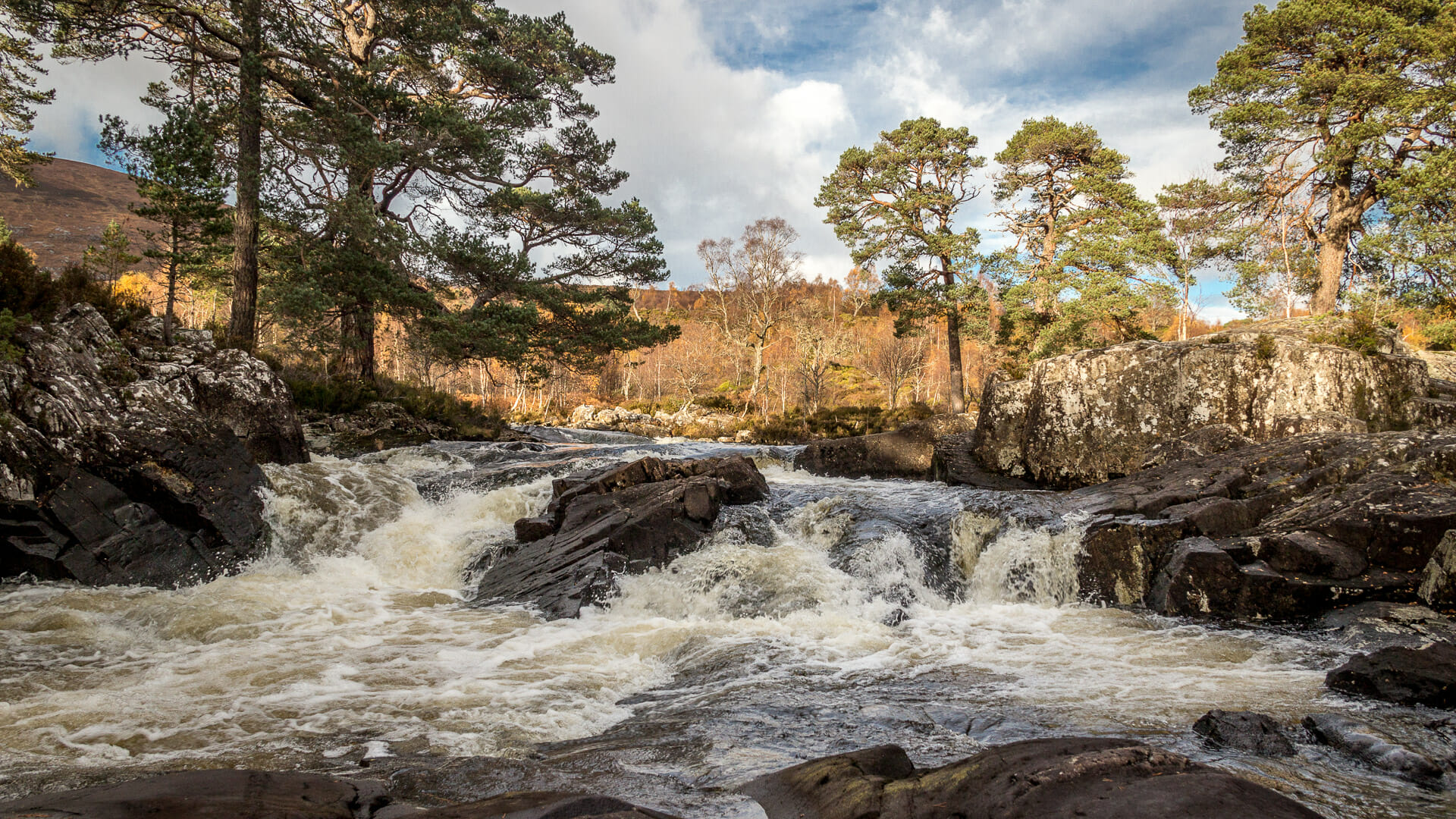
The path continues along the river until it reaches a fork. To the left is a more difficult, rocky path. It leads down to a small waterfall.
In places, from here on the path is even cut into the rock.
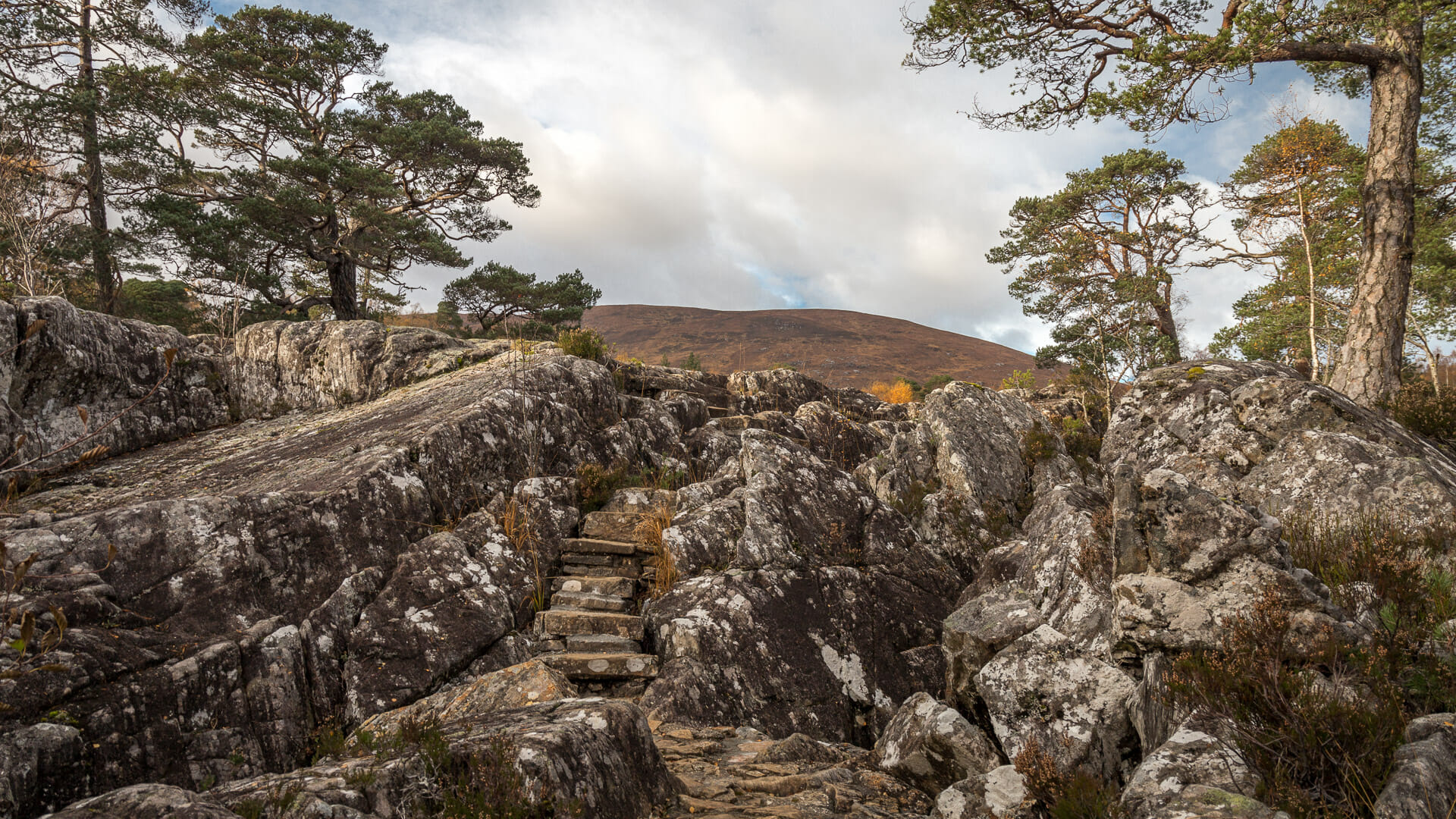
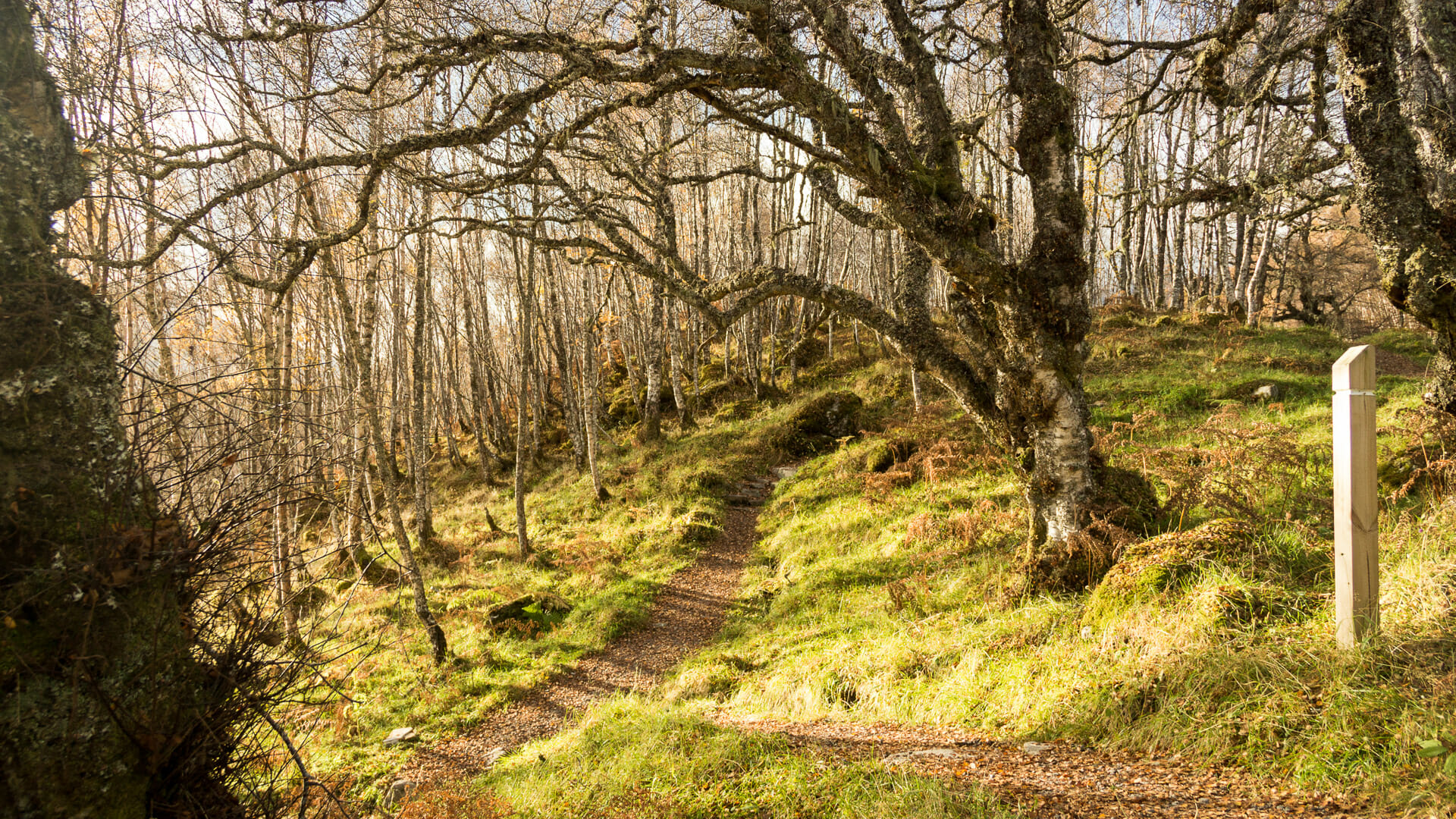
From here the forest changes character and feels enchanted – lichens and birds’ nests, in which grass grows, add to that impression.
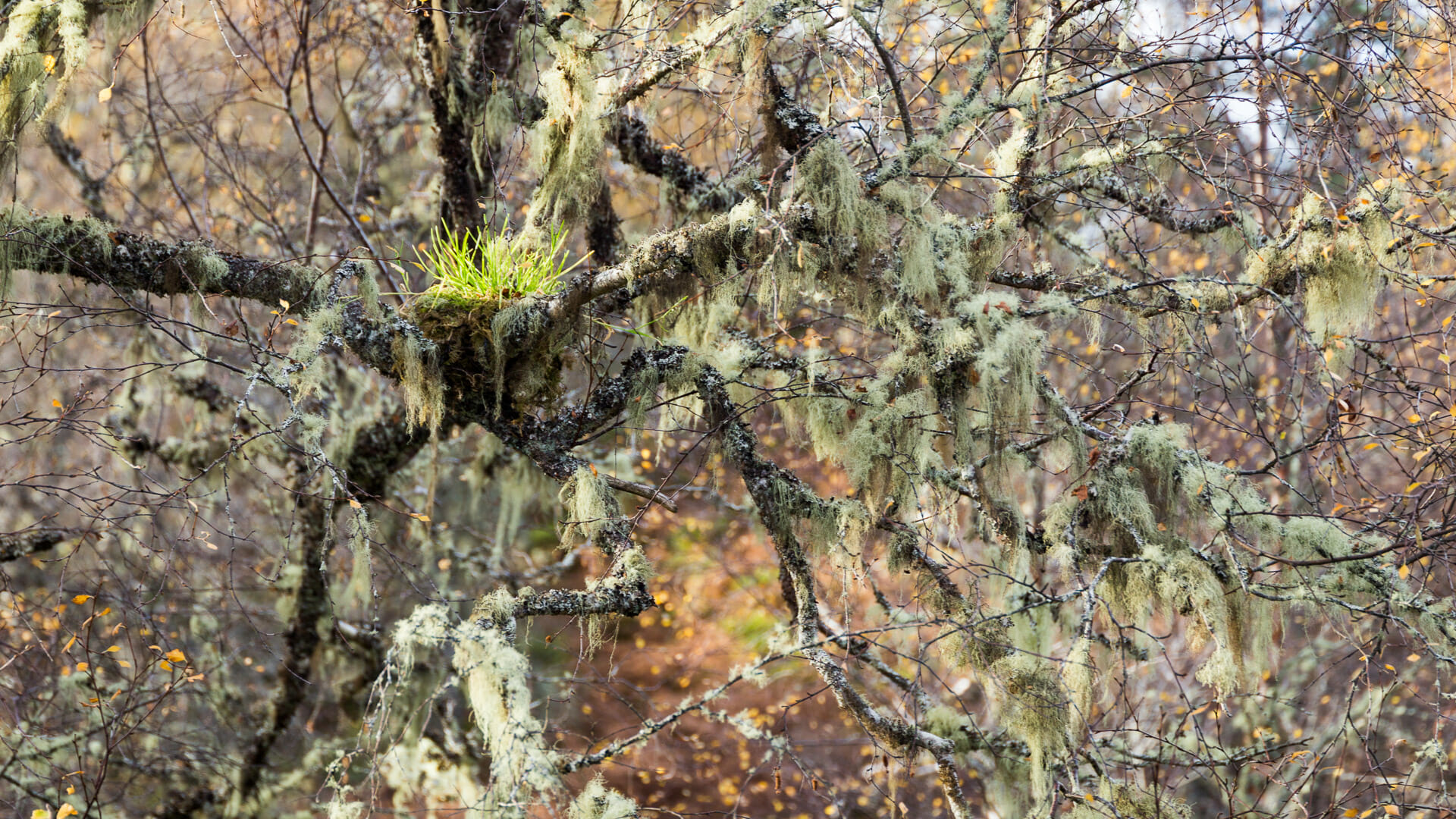
A little further and the path ends back at the car park where it started. It’s not a strenuous circular walk, but a pleasant stroll through one of Scotland’s most beautiful natural landscapes.
Facts: the history of Glen Affric
The glen was once ruled by Clan Chisholm. Yet few people lived in Glen Affric, since the soil wasn’t fertile enough. In the 18th century, the Highland Clearances (in German for now) did the rest and emptied the glen of its people.
In 1721 there was even a battle in Glen Affric. Both the Chisholms and the neighbouring MacKenzies had supported the Jacobites in the first rising of 1715, so the British Crown transferred the territory to the loyal Clan Ross. When the Rosses then tried to collect rent in Glen Affric, they were ambushed by the MacKenzies and the MacRaes. After the battle ended, the Rosses pledged that they would never again act as landlords of this land.
By the 19th century, the Chisholms no longer held power in Glen Affric. Sir Dudley Coutts Marjoribanks, first Lord Tweedmouth, bought part of the land and built a large house, along with the hunting lodge that can be seen from the viewpoint on the small island in Loch Affric.
In the 20th century, another structure was added: a dam for generating electricity. It is, however, fairly well blended into the landscape.
Tip: several options for walking
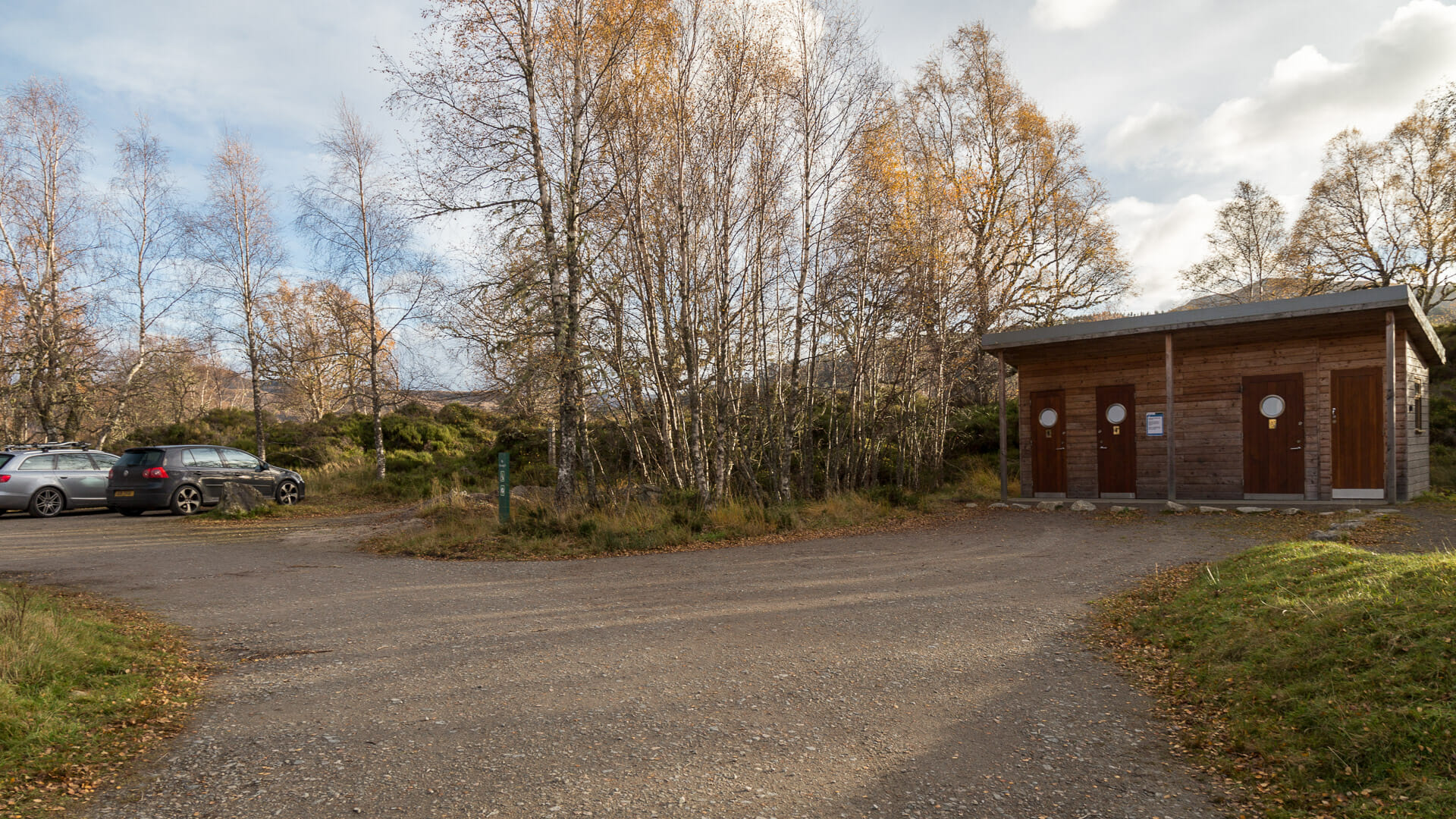
Besides the car park right at the far end at Loch Affric, there are further car parks. Right at the start of the glen you’ll find the Dog Falls, the waterfalls of the River Affric. About halfway between Loch Affric and the Dog Falls comes the Loch Beinn a’ Mheadhoin car park. Circular walking trails also set off from both of these.
At the car parks there are also small stands with info leaflets describing the circular walks.
Long-distance walkers cross Glen Affric on the Affric Kintail Way, which starts at Loch Ness and leads across to Morvich at Kyle of Lochalsh near the west coast.
Personal note: the colours of autumn
When we visited Glen Affric, it was already early November. The weather was good: mild but cold. That had several advantages. There wasn’t a nasty midge in sight, likewise there were only a few other walkers there besides us, and the parking meters were switched off. The toilets, however, were also closed.
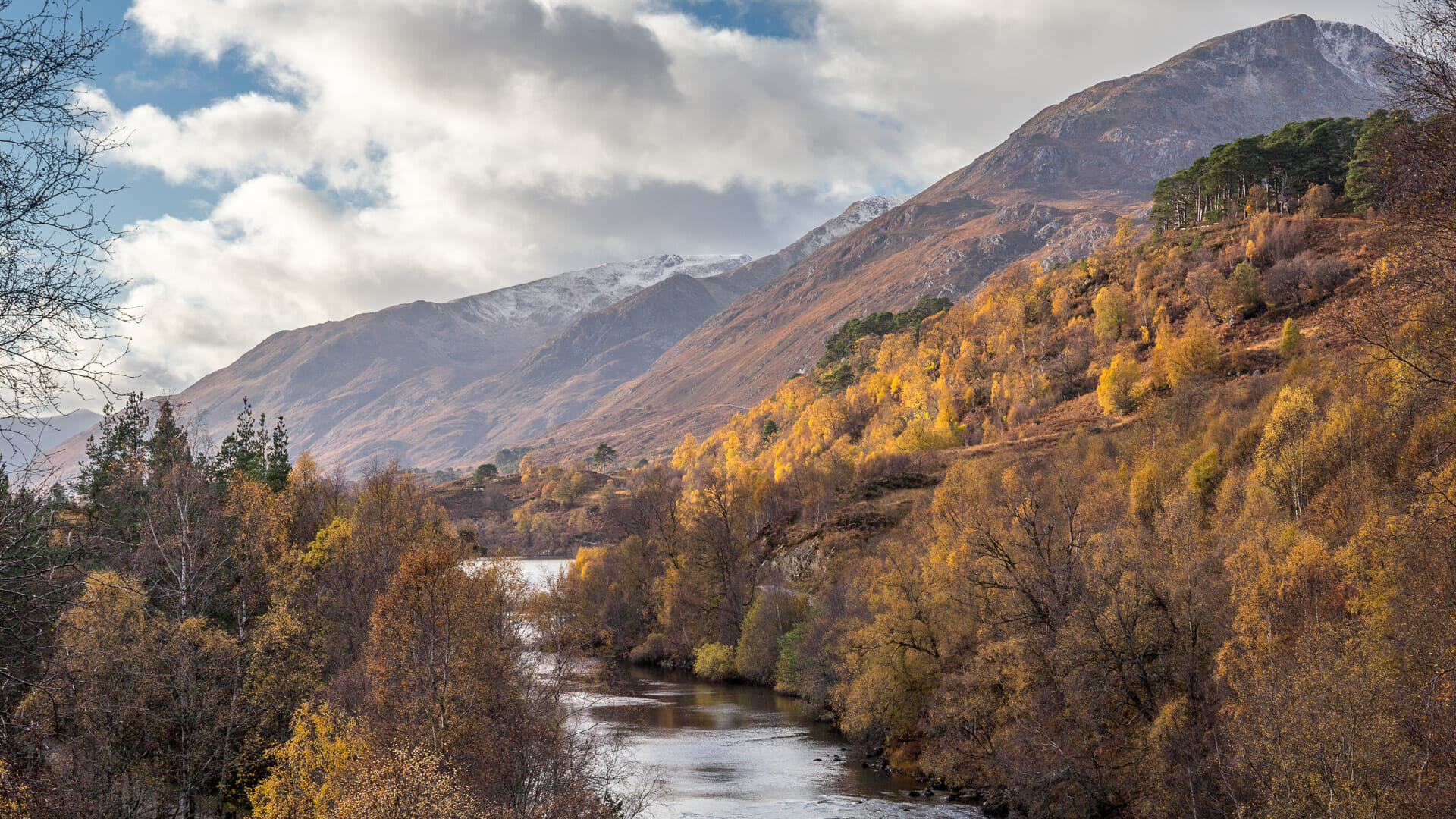
In autumn, a wonderful splash of colour opened up before us: green pines with red trunks, yellow foliage, beige-brown heather, blue sky reflected in the water. Our day in Glen Affric was wonderful.
Getting there:
With a sat nav: “IV4 7NB” will take you to Fasnakyle. From there, follow the single-track road to the “River Affric” car park.
Without a sat nav: from Fort William or from Inverness, first head into the Great Glen as far as Drumnadrochit. There, turn off towards “Cannich”. In Cannich, Glen Affric is already signposted. In the village of Fasnakyle there’s a large building, the Fasnakyle Power Station. Directly opposite, the various car parks are already signposted: Loch Affric and the Dog Falls. Here, continue straight onto the small road leading into Glen Affric and drive all the way to the Loch Affric car park.