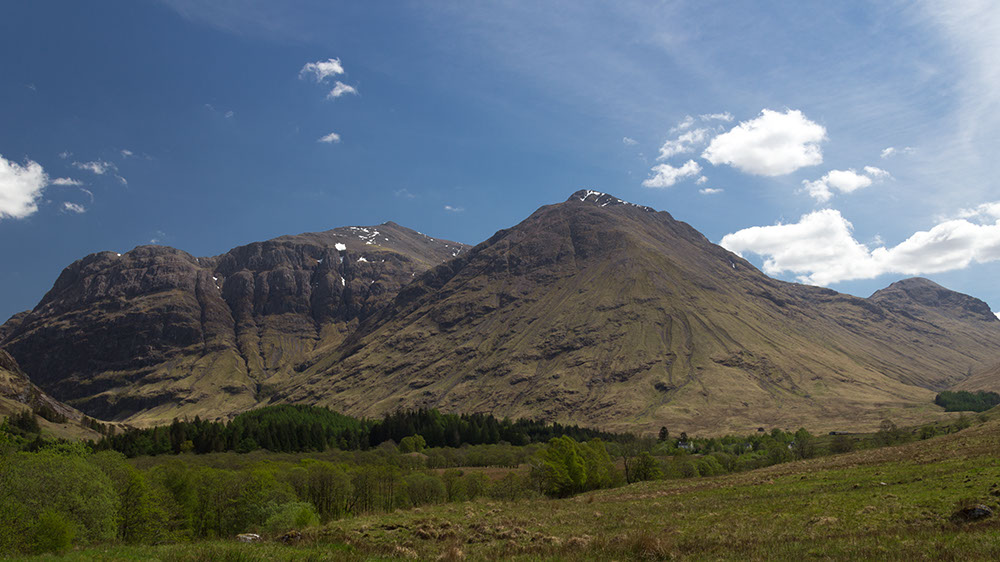
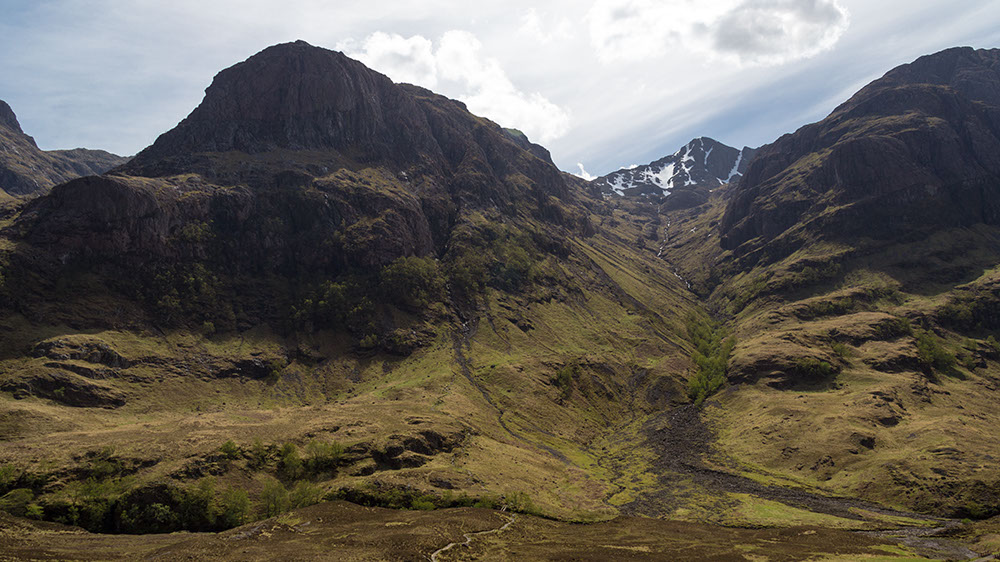
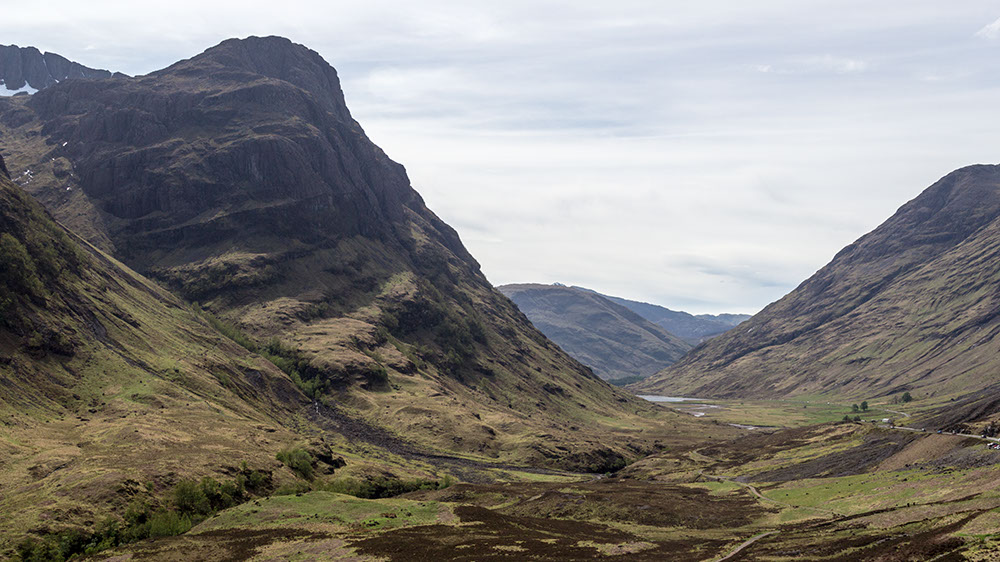
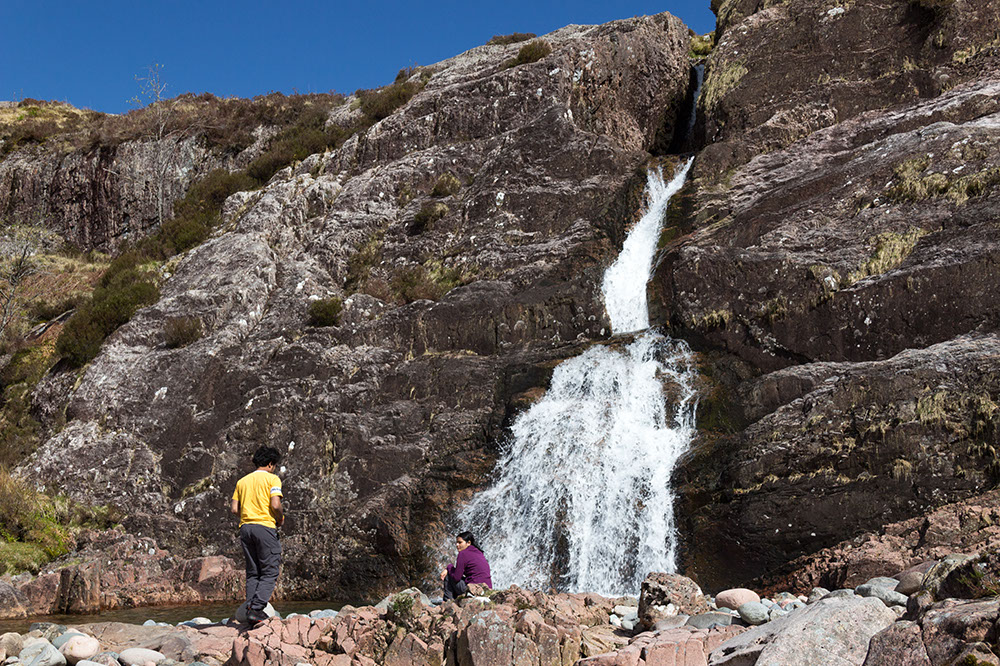
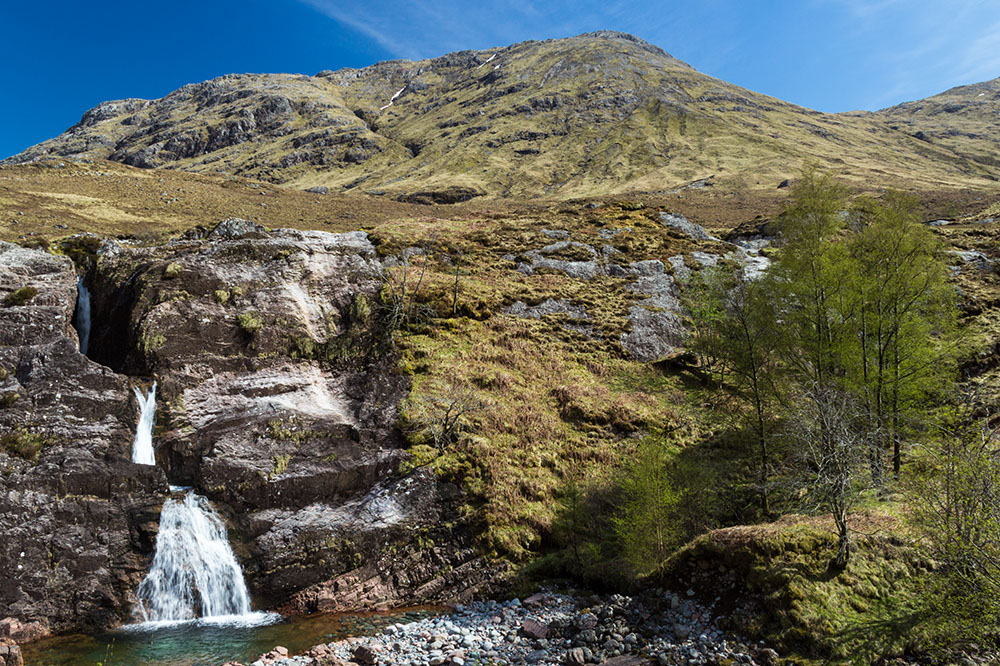
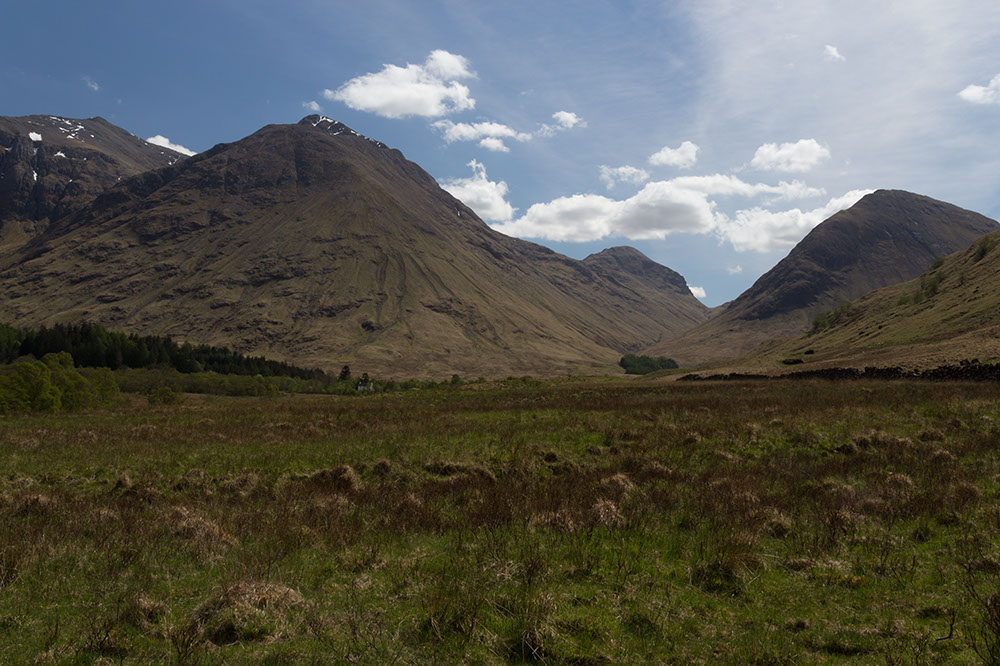
What a beautiful landscape, what a brutal story. The Highland valley of Glen Coe was the setting for Scotland’s most infamous massacre.
Two lines in a letter can be this deadly: “You are hereby ordered to fall upon the rebells, the McDonalds of Glenco, and put all to the sword under seventy.” In other words: every MacDonald in Glen Coe must die. The recipient of the dispatch was Robert Campbell of Glenlyon, a crown officer who, together with his 120 soldiers, had already spent days enjoying the hospitality of the very people he was now ordered to kill.
Not in open combat, either – no, he was to murder his hosts in their sleep. Because the letter gave instructions on that too: “att fyve of the clock precisely” – precisely at five in the morning.
But why did the MacDonalds of Glencoe have to die at all? What supposedly made them rebels? Where did the order come from?
Late arrivals pay with their lives
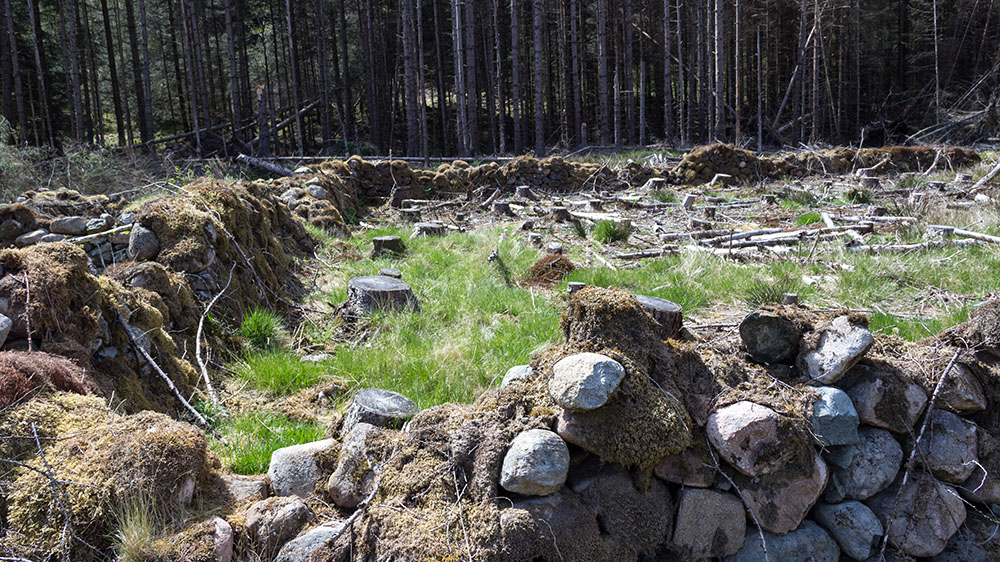
The MacDonalds are a Highland clan, and at the time many Highland clans were loyal to James II, King of England and Scotland. But James was driven into exile and replaced by William III of Orange.
A war followed between the Jacobites – the supporters of James II – and government troops. At Killiecrankie the Jacobites won, but after that the uprising fizzled out. Officially, though, a state of war still existed.
To end it, the Scottish government and the new king demanded an oath of allegiance from the Highland clans and set them a deadline: by the 1st of January 1692, everyone had to have sworn it. Otherwise …
An oath wasn’t something the clans took lightly. They wanted to seek permission from their exiled ruler James first – and that took time. Through a combination of circumstances, the MacDonalds of Glencoe ended up swearing the oath a few days late. And that was reason enough for the government to make an example of them. A bloody one.
Now all that was needed was the right man to carry out the order. They found him in Robert Campbell of Glenlyon. Contrary to the story often told, this wasn’t a clan feud between Campbells and MacDonalds. The background was considerably more complex.
If you want the full picture, watch the (somewhat longer) video on it:
The massacre unfolds
And so it happened, on the morning of the 13th of February 1692. Right on time, at five o’clock, the soldiers began their deadly work and slaughtered one MacDonald after another – few were able to fight back or flee. The beautiful valley of Glen Coe had turned into a deadly trap.
In such brutal moments of history, the small heroes are often forgotten – people who don’t lose their humanity just because an order demands it. The two lieutenants Francis Farquhar and Gilbert Kennedy were such heroes. They refused the order and broke their swords. Other soldiers warned their hosts, helping some of them to flee in time.
But that didn’t stop the course of fate. The other soldiers ruthlessly carried on with their work, hunting down and killing the men of Clan Donald. Houses and cottages were set alight, so that winter finished the brutal job, and women and children died in the icy cold of the night. In the end, almost 80 people were murdered or froze to death.
The aftermath of the Glen Coe massacre
Murdering your own host? Simply not done! Scotland’s population was horrified, and parts of the Scottish administration wanted to put the killers on trial. But the order had come from the king himself, and he was untouchable.
Everyone agreed the crime deserved every kind of contempt, and those responsible were even named. But none of them was ever put on trial. Not even Robert Campbell.
The one good thing: nothing happened, in the end, to the two lieutenants who had refused the order either.
But the cowardly murder burned itself into the collective memory of the Highlanders. For many, the memory of it later became a reason to join the great Jacobite uprising – which ended in an even greater massacre.
Good to know: About Glen Coe
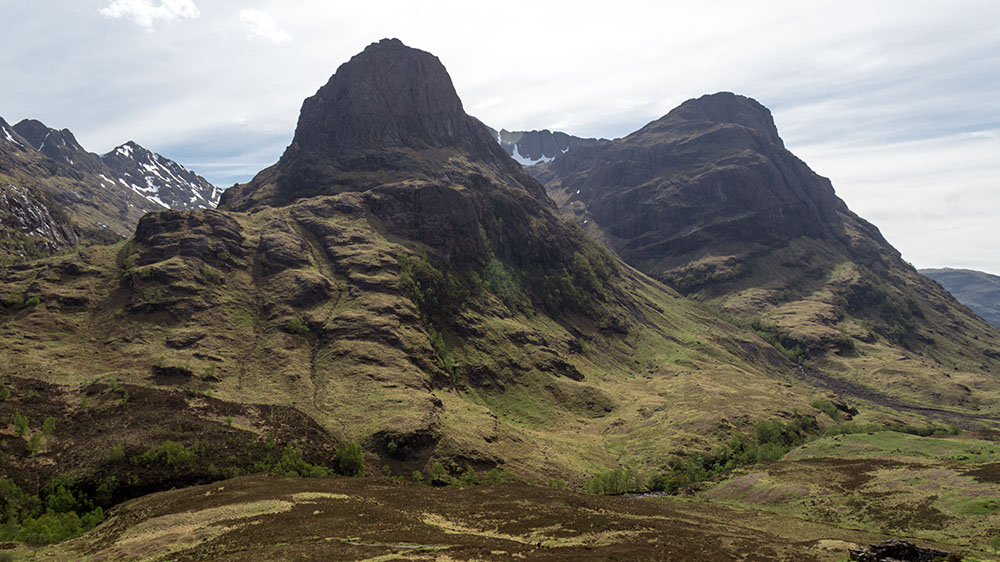
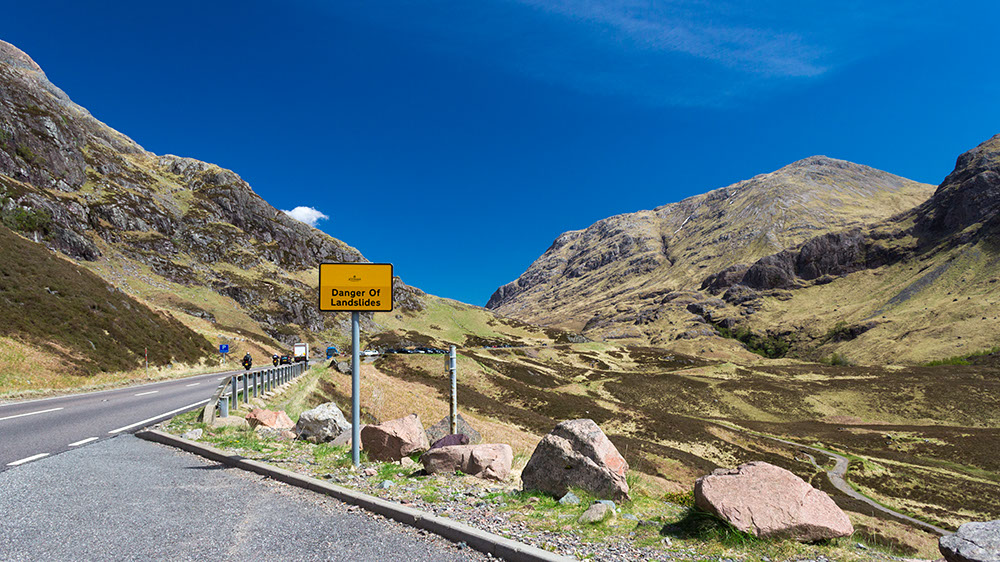
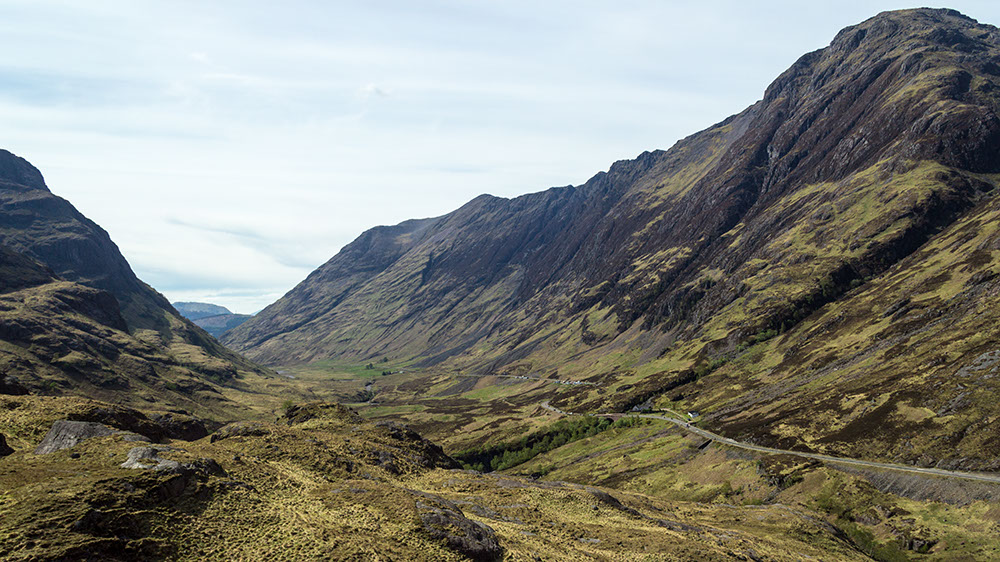
Reducing Glen Coe to that tragic event, though, wouldn’t do justice to its beauty. The valley offers a truly unique mountain landscape that captivates many hikers. Glen Coe is also, so to speak, the Scots’ Brenner Pass – the connecting road between the south-east and the northern west coast.
NOTE: Since 27 April 2021, there’s a no-stopping order on the A82 between Tyndrum and North Ballachulish. This applies to photo stops at the roadside as well as parking for walks. Exceptions are made only for police instructions or emergencies. The aim is to prevent tailbacks, accident risk, and increasing damage to the verges. Stopping is still permitted only in designated car parks, some of which are being expanded for this purpose. The order itself can be read here.
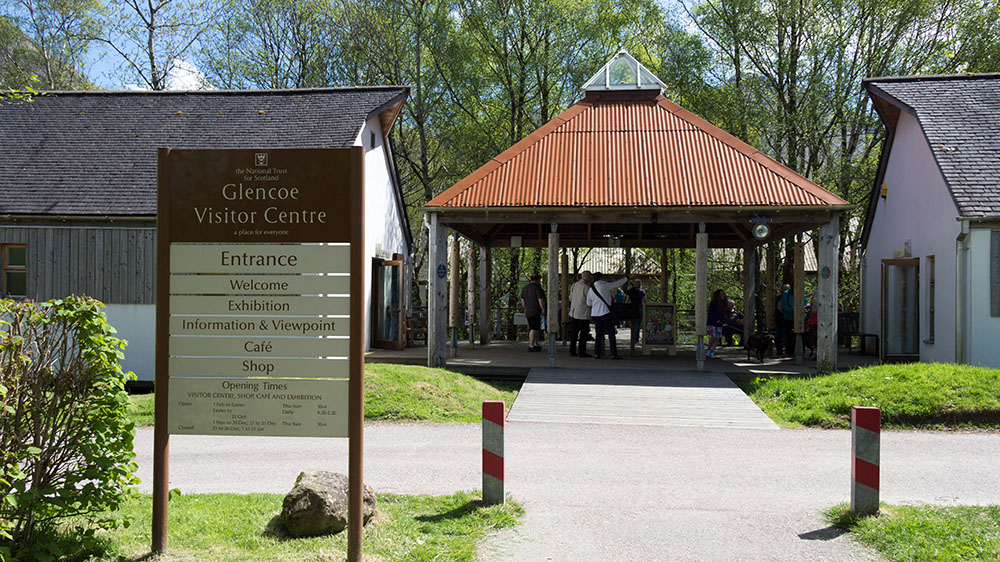
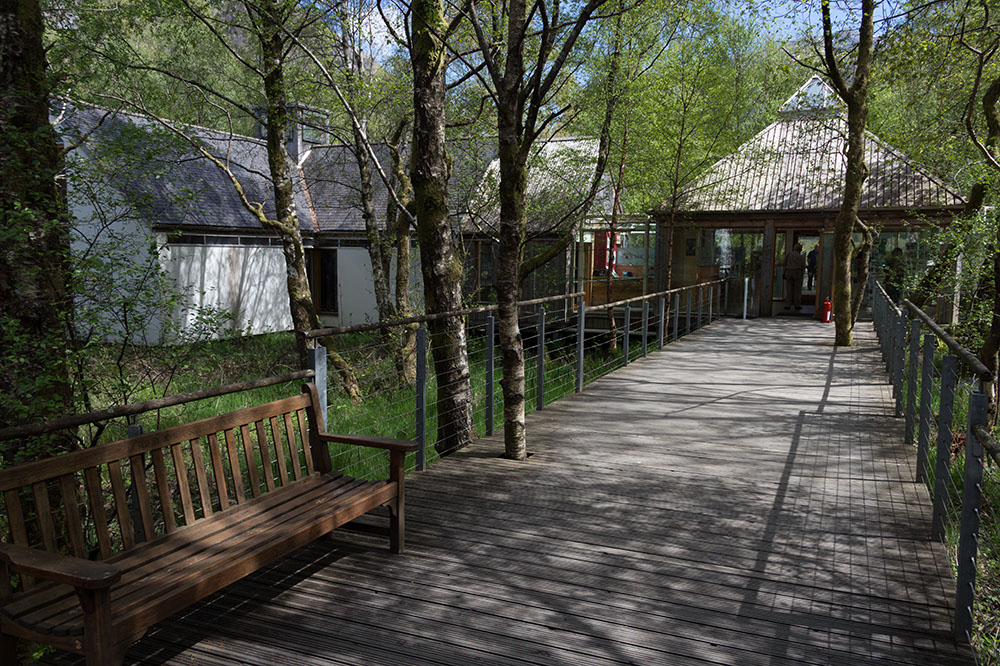
In the west, where the village of Glencoe sits, you’ll find the visitor centre, which has plenty to say about the valley’s history and geology. Alongside a shop and a café, there’s also a viewing platform here looking out over An t-Sròn and Fhionn Glen. From here you can also take a small circular walk through the woods.
Following the road eastward, the valley bends. A further car park follows, offering a circular walk to Signal Rock. The rock gets its name because a fire lit on it can be seen from both sides of the curved valley. Legend has it that the signal for the massacre was given from here too – though there’s no serious evidence for that in the history books.
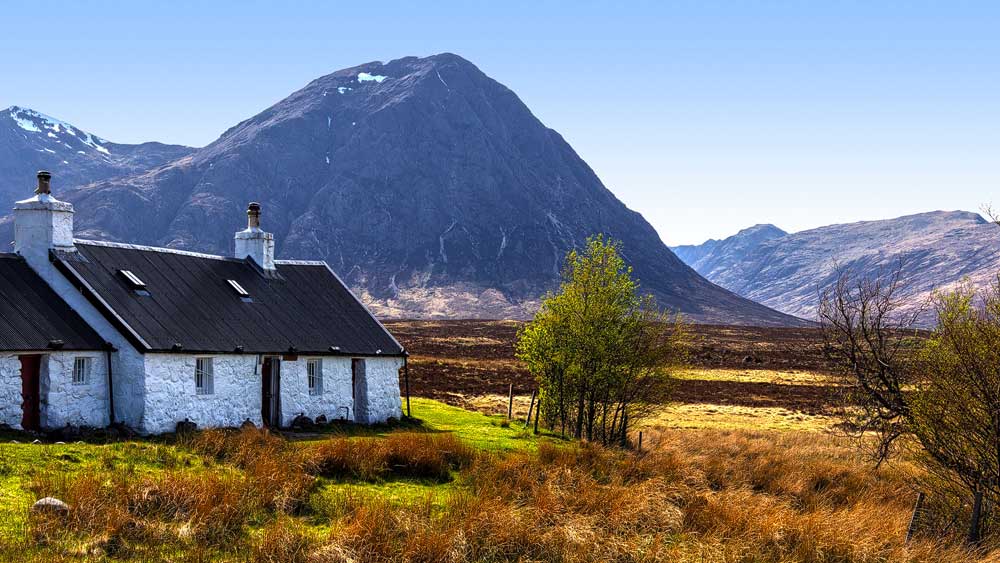
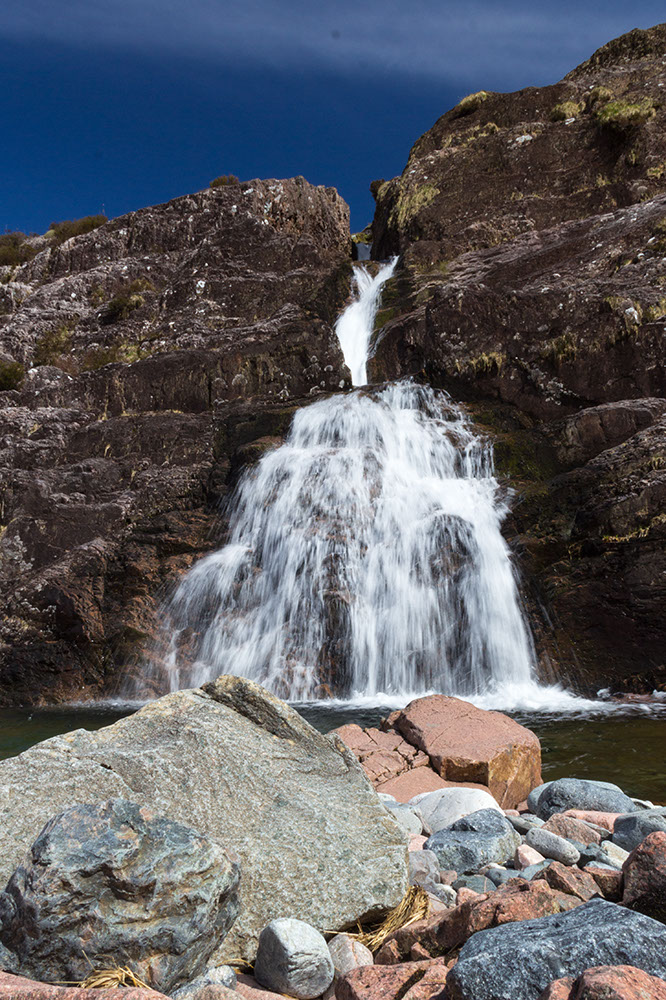
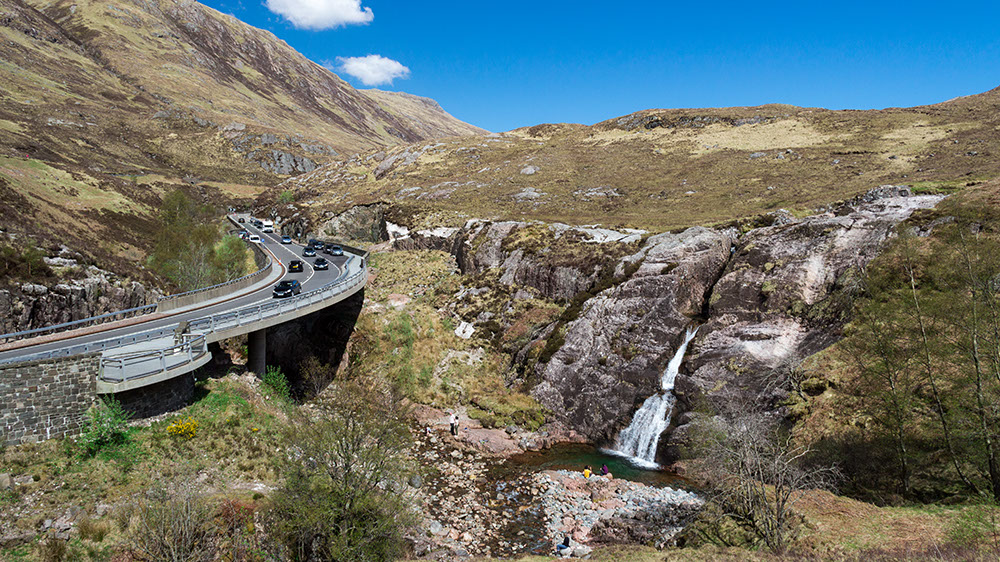
Back on the road, you now reach the Three Sisters, three beautifully shaped mountain peaks that, however, hide Bidean nam Bian, the highest mountain in Glen Coe at 1,150 metres. Further east you pass a waterfall right by the road, before the valley widens out into a high plateau.
Finally, Glen Coe ends in a short descent down to the wild Rannoch Moor.
By the way: some scenes for “The Prisoner of Azkaban” from the Harry Potter film series were also shot in the valley. Near the Clachaig Inn and Signal Rock, for instance, stood Hagrid’s hut and the end of the bridge to Hogwarts.
Tip: A detour on the single track into Glen Etive
A side valley of Glen Coe is well worth a look. It’s called Glen Etive and stretches from the high plateau in the east down towards the south. A small single-track road leads into it and ends at the large Loch Etive.
Personal note: The valley and the motorway
The valley is beautiful, but unfortunately Glen Coe is also a heavily used mountain pass. On good days, motorbikes come tearing along the road, revving as loudly as they can. So sadly Glen Coe isn’t exactly a quiet place – unless you get a little way off the road and walk for a bit.
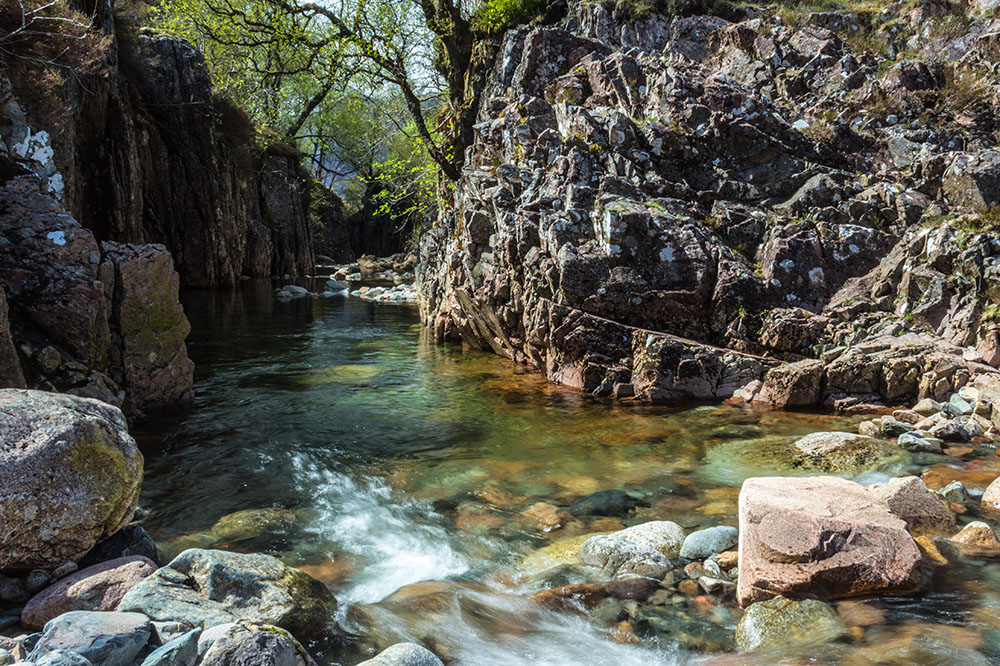
Speaking of getting off the road: the small waterfall in the middle of Glen Coe, near the Three Sisters, sits pretty much right by the road bridge. But if you climb down there (carefully!), you’ll find a beautiful little spot and quickly forget about the road – the little gorge the river flows through is especially lovely.
Getting there:
For your sat nav: “PH49 4HX” gets you close to the visitor centre.
Without sat nav: Coming from the south-east, follow the A82 towards Fort William. The road runs right through Glen Coe. Coming from the west coast, take the A82 towards Crianlarich.