Celtic knots, mysterious mythical creatures, and a sarcophagus that once held a king. The Govan Stones in Glasgow transport visitors back to the mysterious Middle Ages.
Where the River Kelvin flows into the great River Clyde, there was once a ford across the water. It was an ideal location for a settlement and a church. Some 1,000 years later, a church still stands here: the Govan Old Parish Church. Its interior preserves a stone legacy from the early Middle Ages: the Govan Stones.
The Govan Stones are a collection of stones dating from the 8th to the 10th centuries. Early medieval stonemasons demonstrated their craftsmanship here: serpents wind their way through Celtic knots, artfully framing images of warriors and hunters.
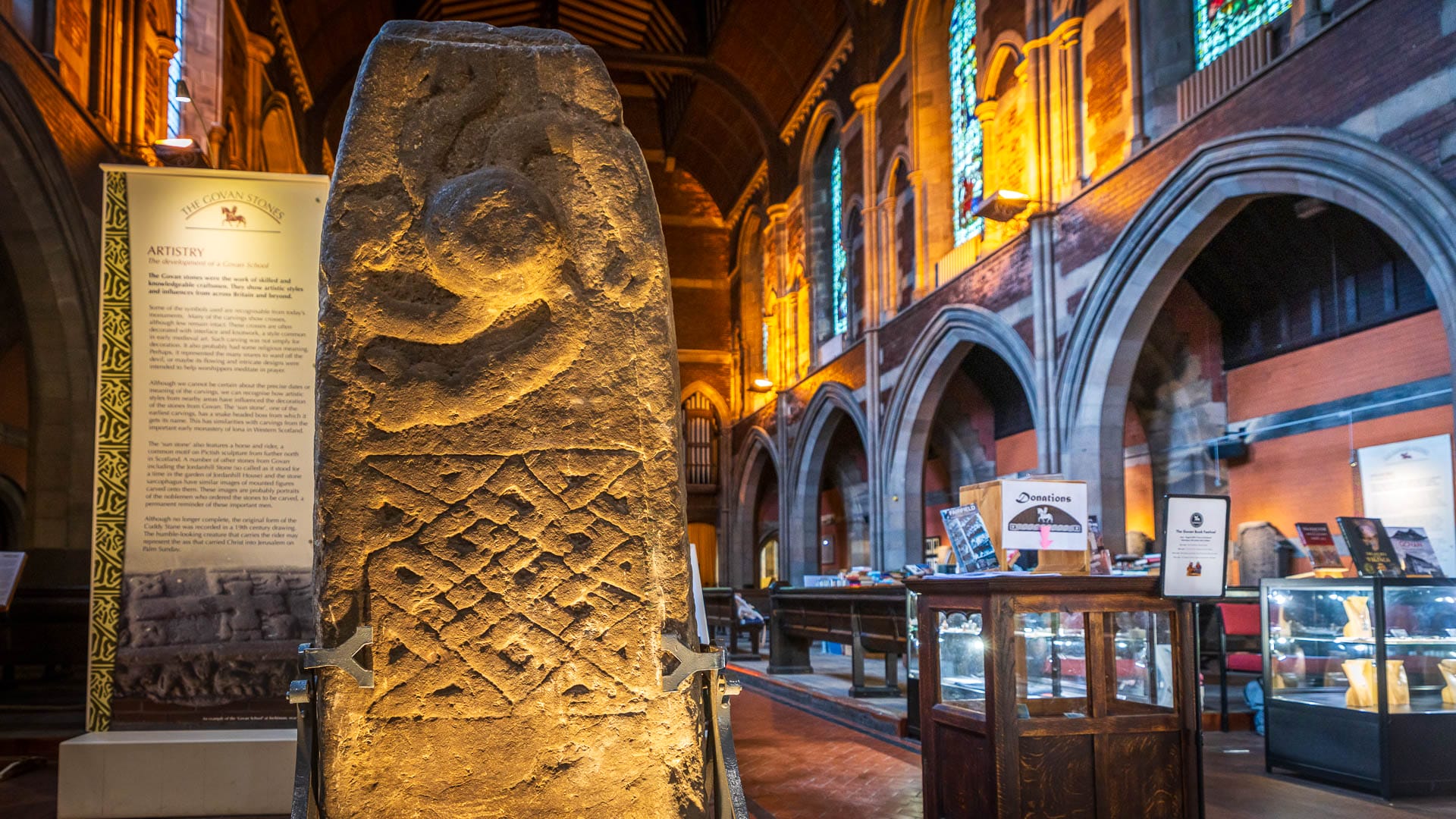
Right at the entrance stand three very special examples. The Sun Stone depicts a sun from which four thick serpents wind their way out. On the reverse side, a warrior rides a horse.
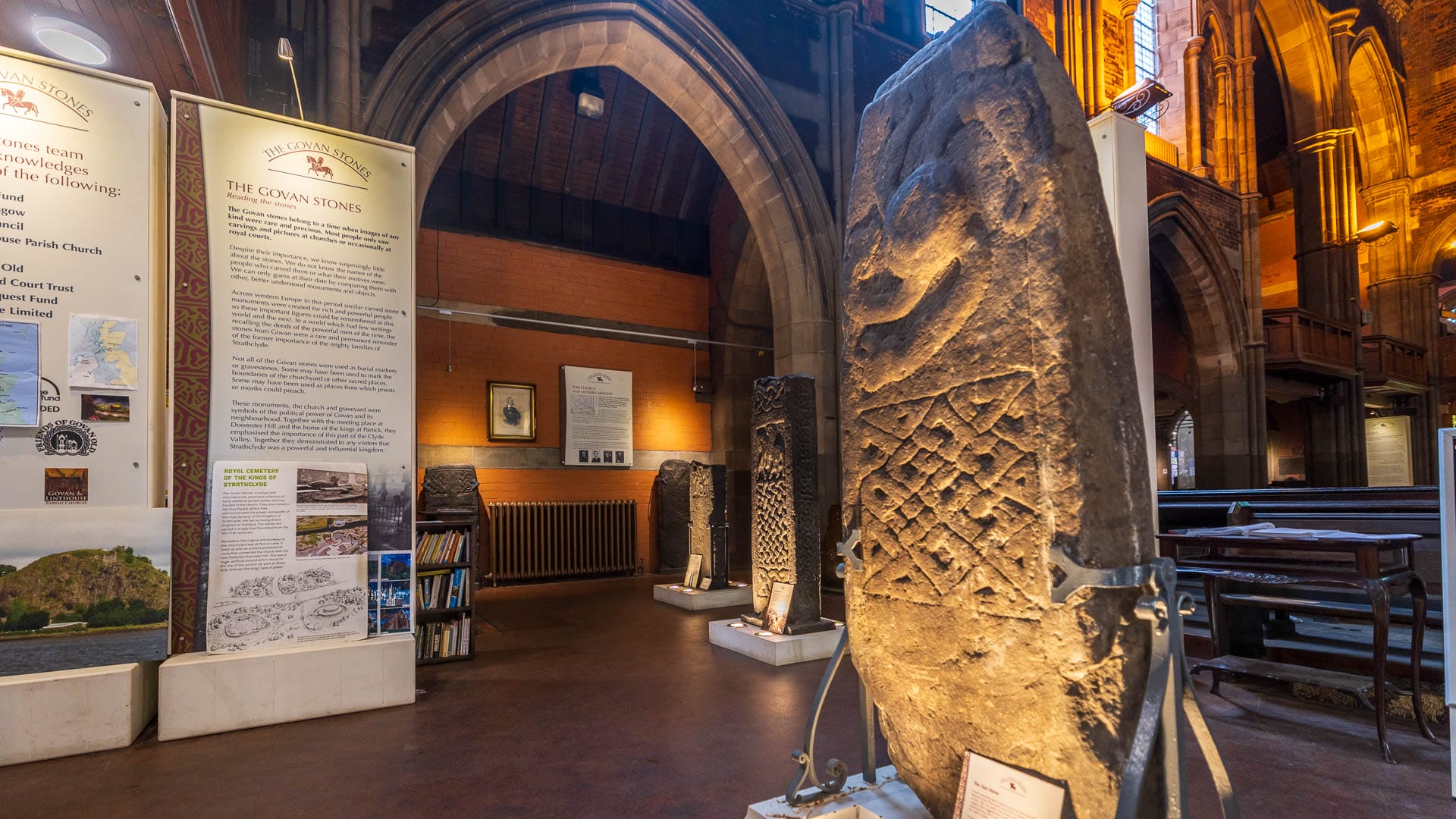
Next to them stand the Jordan Hill Stone and the Cuddy Stone. “Cuddy” is a Scottish word for donkey. The stone depicts a mount with long ears, hence the name.
Another highlight awaits visitors at the altar. There, you’ll find a sarcophagus. The stonemasons used a massive block of sandstone and carved the container from it. They decorated the exterior lavishly.
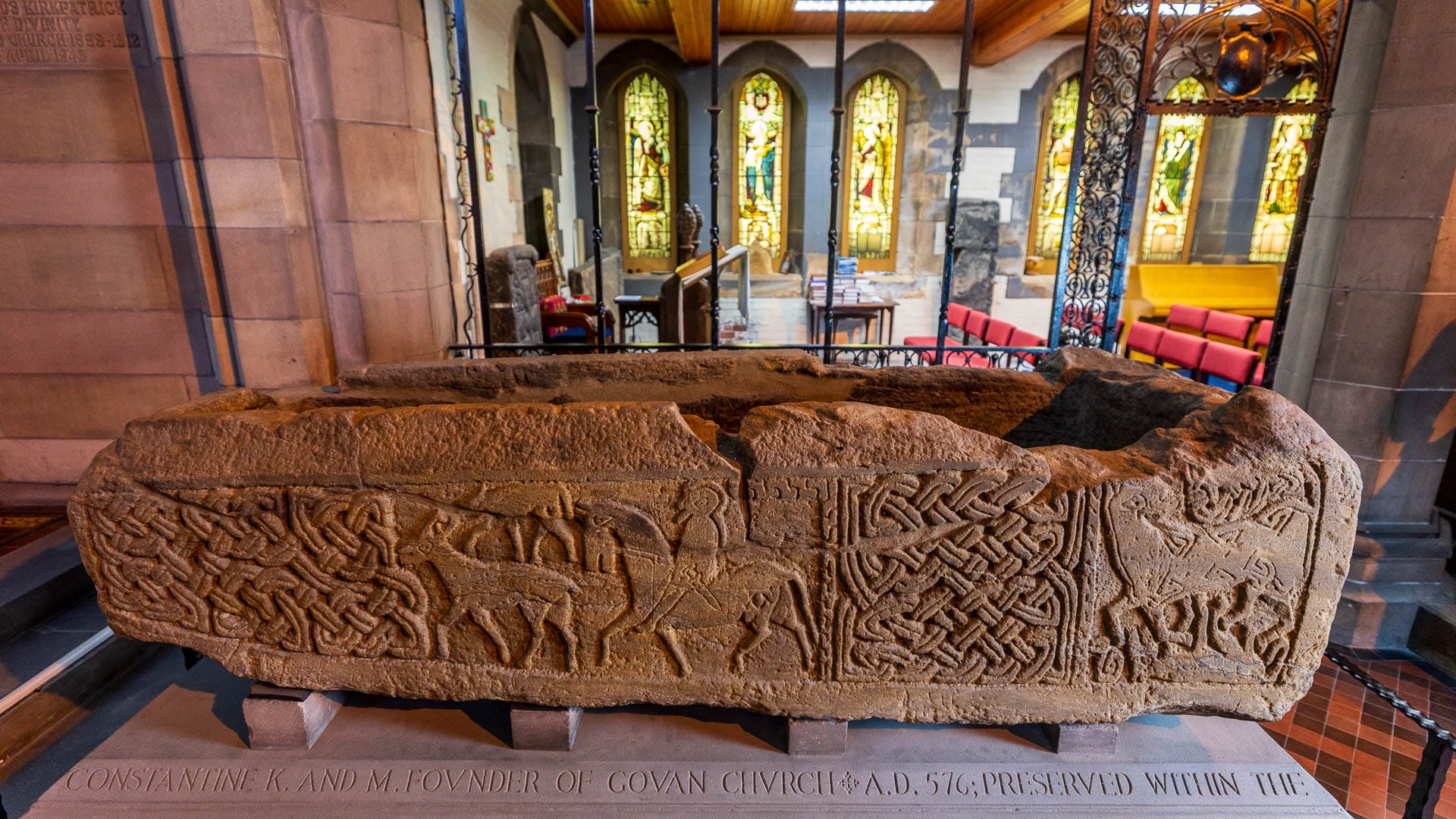
The sarcophagus likely held the relics of a Scottish saint. Some speculate that it was Constantin, the son of Kenneth MacAlpin, or his son Donald. Others believe it was Constantine of Strathclyde, who lived in the 6th century. However, this is not certain.
In any case, the sarcophagus contained significant remains. Unfortunately, its lid is missing—and with it, any certainty about its contents.
The hole in the sarcophagus is macabre. It was intended to ensure that fluids could drain out while the body decomposed inside. Presumably, the sarcophagus was on public display at the time.
Another distinctive feature is the so-called hogback stones—literally, “wild boar’s backs.” While the shape of the gravestones does indeed resemble them, they were likely intended to symbolize house roofs.
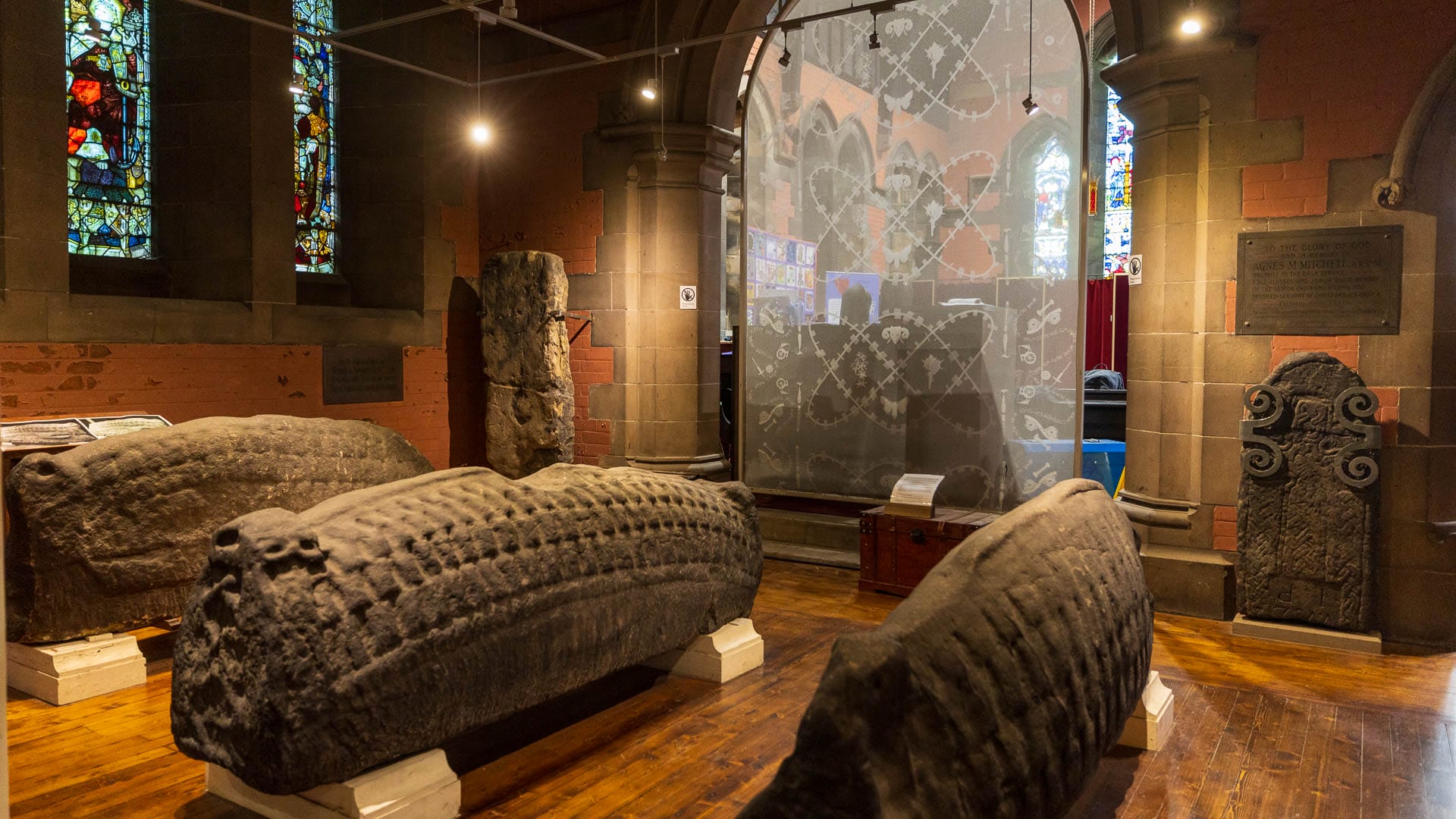
This type of stone was found only in areas influenced by Vikings and Norse settlers.
Including the three stones at the entrance, there are more than 30 of these examples in the church. There are also many explanatory displays, a small shop, a used book exchange, and the fantastic stained-glass windows.
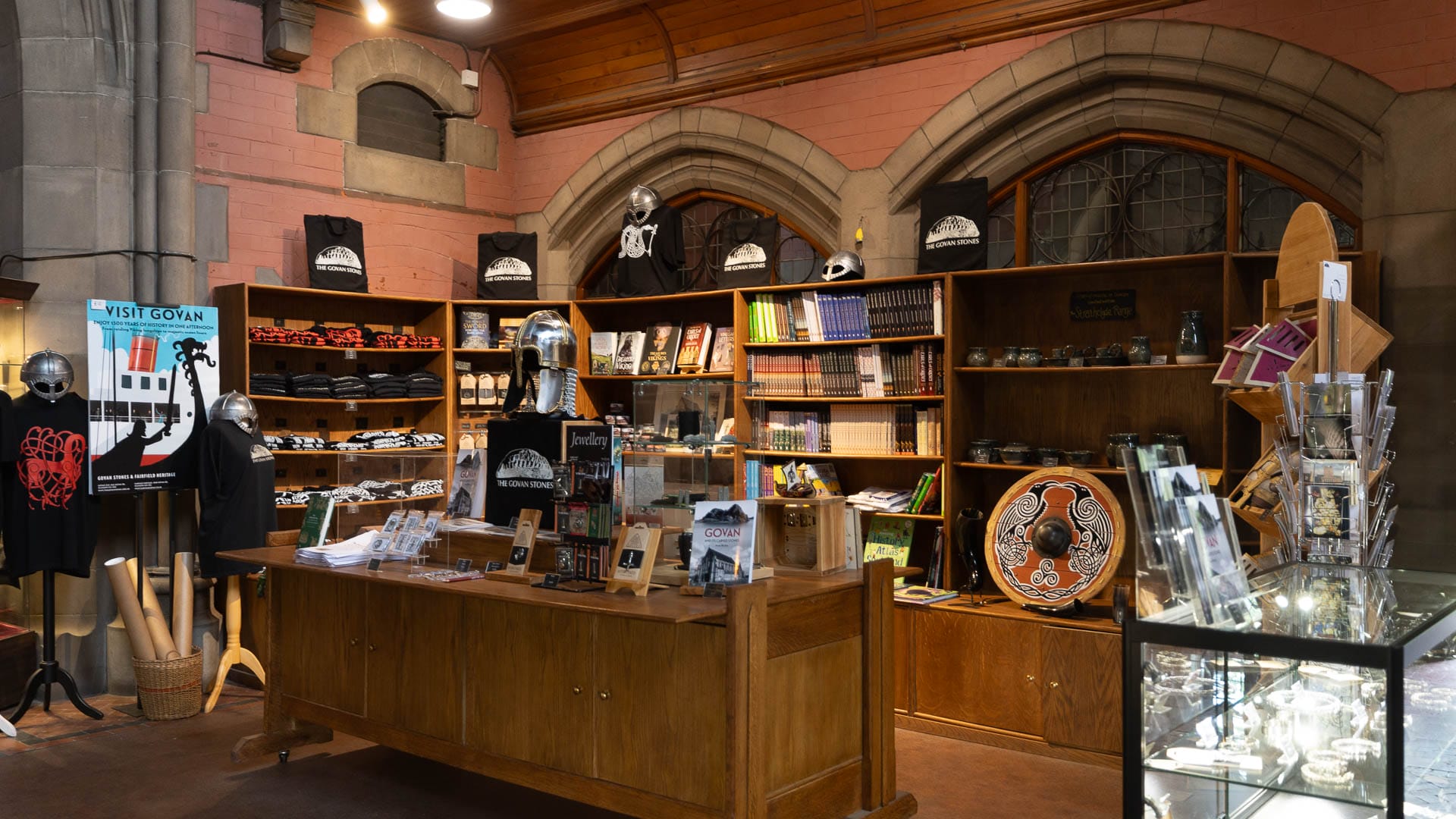
A visit to the Govan Stones is not only an exciting experience for visitors. It also helps preserve the church and the collection within it—and, in doing so, tells the cultural history of Strathclyde and this special place.
Admission is free, but a donation is truly appreciated.
Background: The Govan Stones and the Kingdom of Strathclyde
Around 800 AD, there were three major kingdoms or factions in what is now Scotland: the Picts, the Gaels of Dal Riata, and the Kingdom of Strathclyde. The kings of Alt Clut ruled from Govan—now known as Dumbarton Rock.
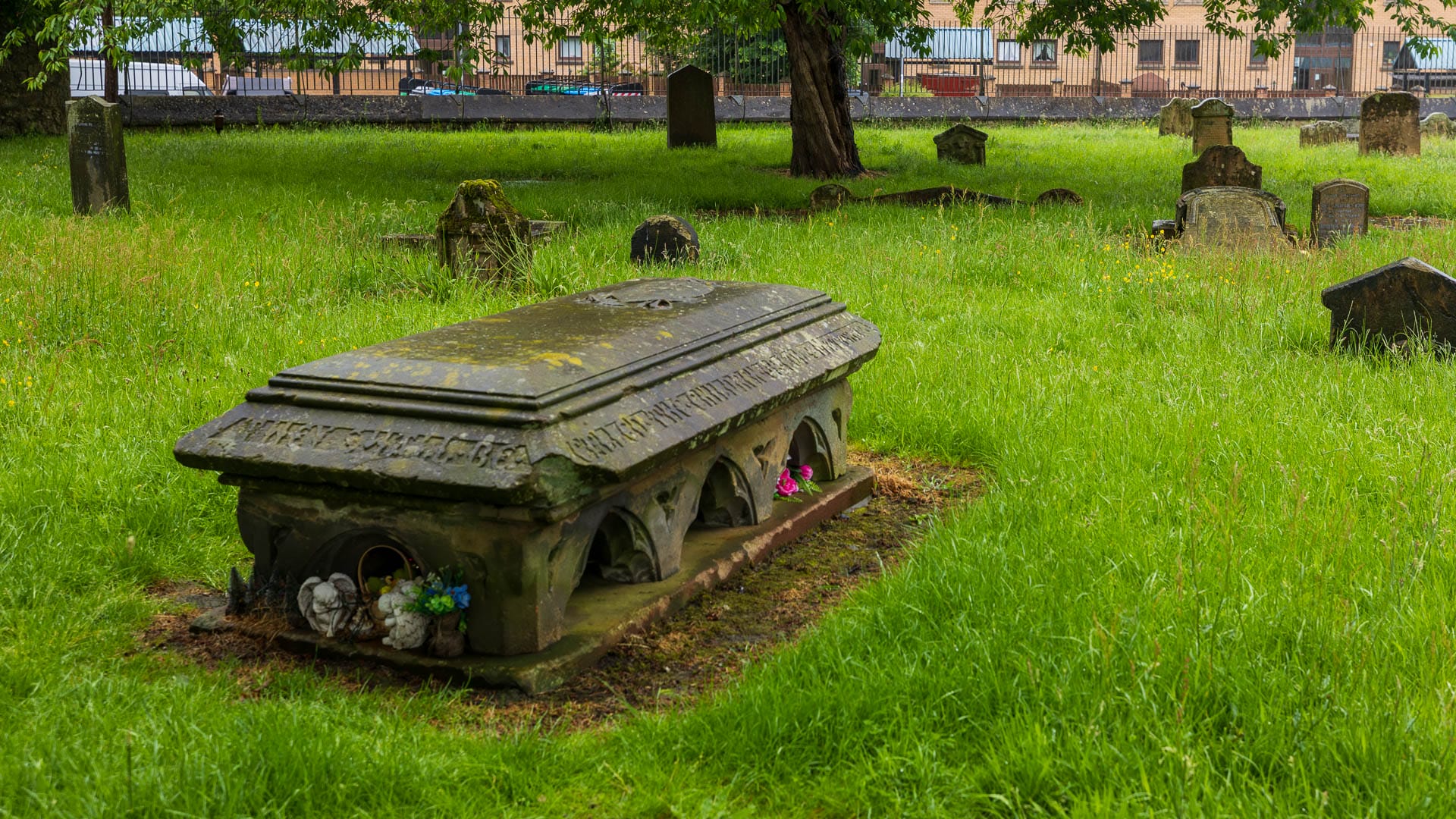
The stones lay dormant for a long time in the churchyard. The sarcophagus was finally rediscovered in 1855 and then moved inside the church in 1908.
Directions
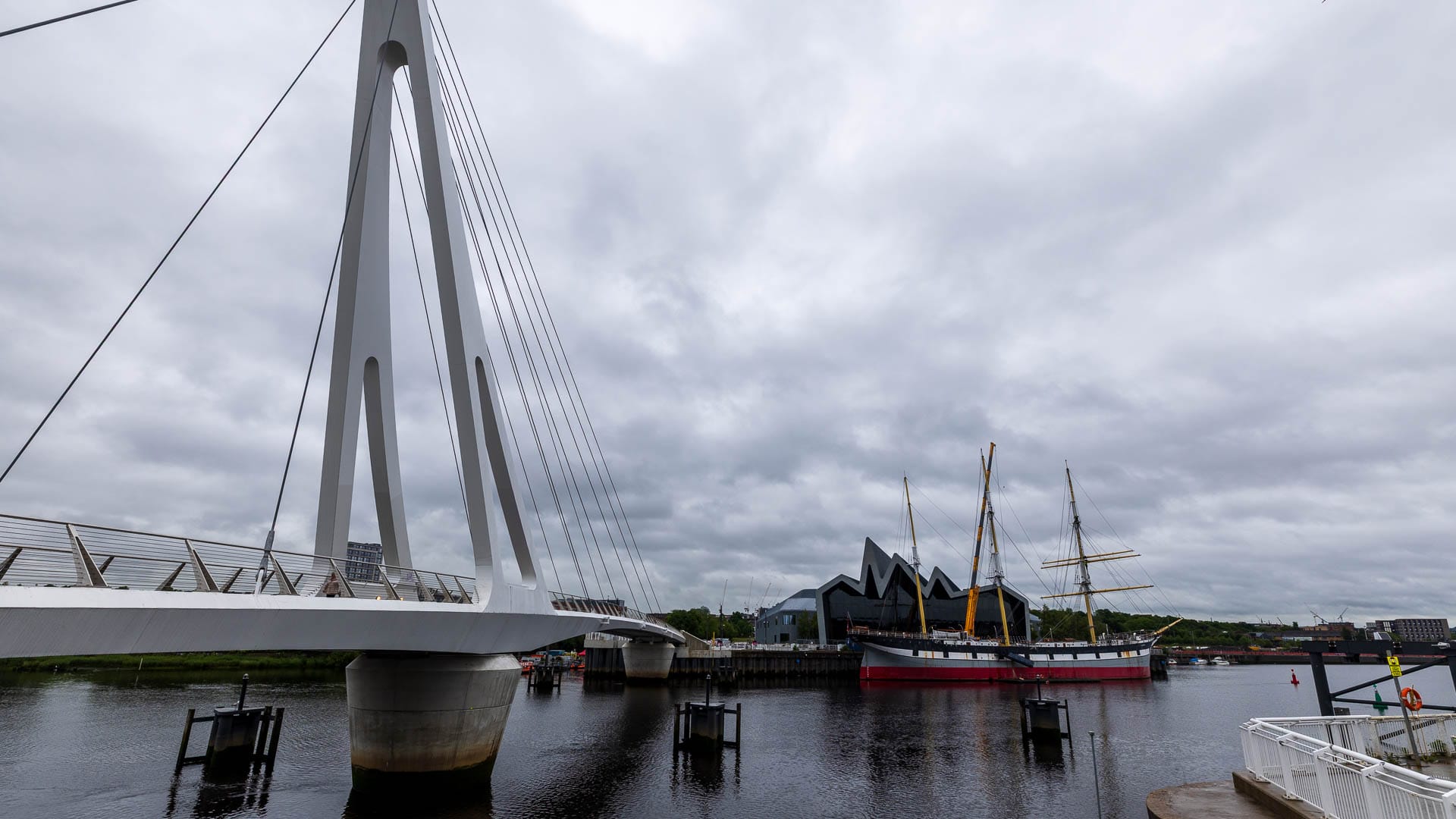
The Govan Stones are a wonderful addition to a visit to the Riverside Museum on the other side of the river. The City Sightseeing Bus stops there, and there is a parking lot. The new bridge over the Clyde makes it possible to visit on foot.
If you’d rather drive directly to Govan, that’s certainly an option as well.
With a GPS: Enter “G51 3AQ” to get you close.
Without a GPS: From the M8, take Exit 23 toward the Clyde Tunnel/Govan onto the A814. Then follow Broomloan Road (A739) to Govan Cross and turn left onto Govan Road. The Govan Stones are located in the Govan Old Parish Church on Govan Road. Parking is available in the surrounding streets.