Scottish folk hero Rob Roy lived on the shores of Loch Katrine, and Scotland’s national poet Sir Walter Scott set several of his works here. A steamer trip into romance.
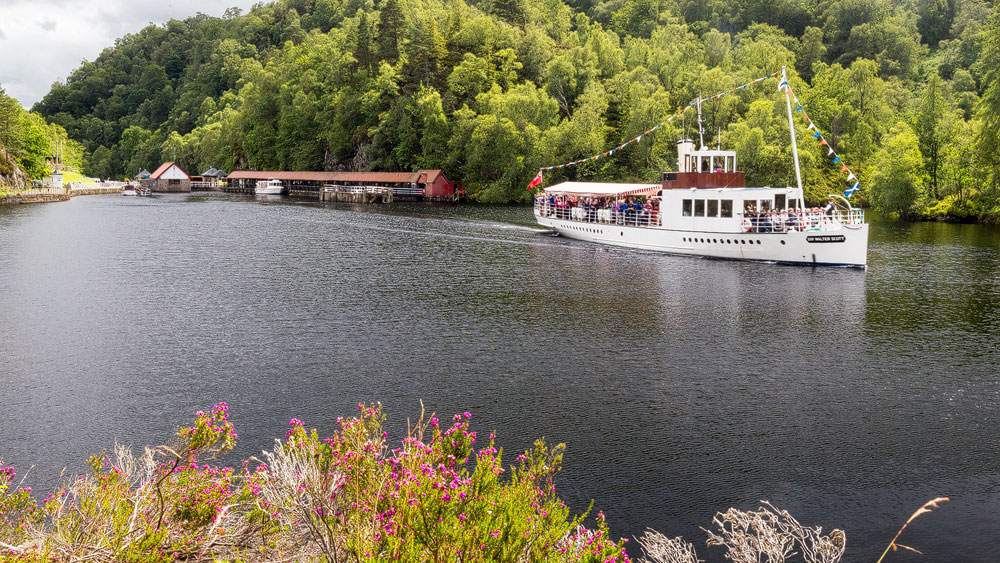
Even the drive to Loch Katrine is picturesque. The last stretch of the narrow road winds through a fairy-tale forest, the trees draped in moss. The large car park at the end feels like a small culture shock by comparison.
We’re running late – I promised my wife years ago that we’d visit Loch Katrine. My wife’s name is Katrin. This time it finally worked out, but we’re not exactly relaxed about it: a sprint to the ticket office. We really want to catch the steamship tour.
We get our tickets, along with a warning to hurry. The covered walkway to the jetty seems to go on forever. But at last we dash onto the boat. Made it. From here on, it’s a romantic steamer ride.
Because the fascination here doesn’t just come from the picturesque setting of Loch Katrine, but also from one very special ship: the “SS Sir Walter Scott”.
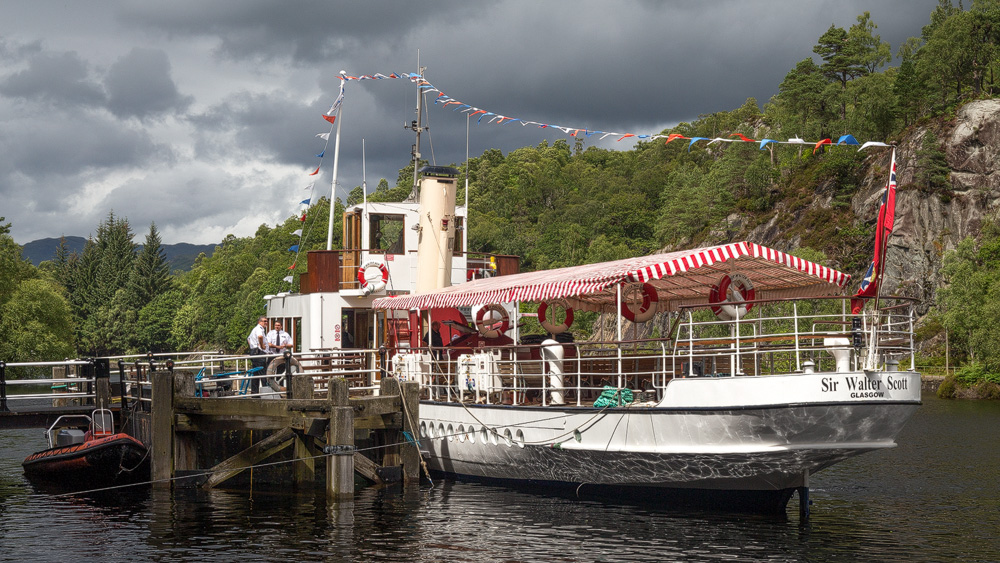
After all, she’s been sailing Loch Katrine for well over a hundred years now, and has kept her particular charm throughout. As she pulls away from the jetty, I already start wandering the ship, heading first to the stern, since the platform at the back gives a good view over the deck. It’s covered by a red-and-white awning.
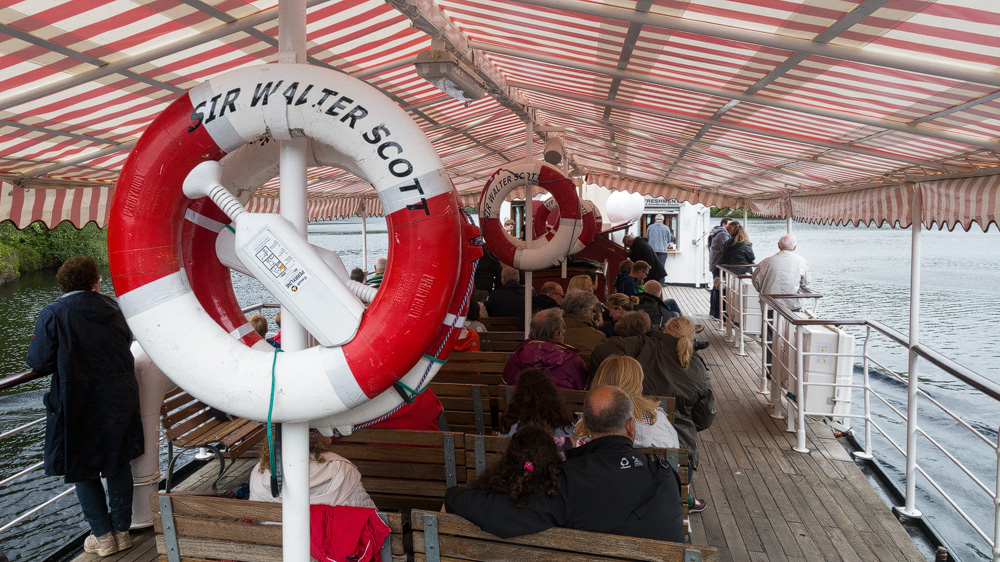
The SS Sir Walter Scott really is a cosy little steamer, purpose-built in 1899 for “pleasure cruises”. She’s been sailing this loch ever since 1900. It’s easy to picture Victorian-era visitors under this same awning – flowing dresses and smart suits back then, Jack Wolfskin and The North Face today.
One thing stands out: there’s no other boat in sight. We’re the only one so far. Why? Quite simply: Loch Katrine is one of Glasgow‘s drinking-water reservoirs. If a ship were to have an accident here and spill fuel, it would have drastic consequences for the city’s water supply.
The reason the SS Sir Walter Scott is still allowed to sail at all comes down to her special engine – and that’s exactly what I want to go and see. About halfway along the ship, a red metal structure rises up with its hatches open.
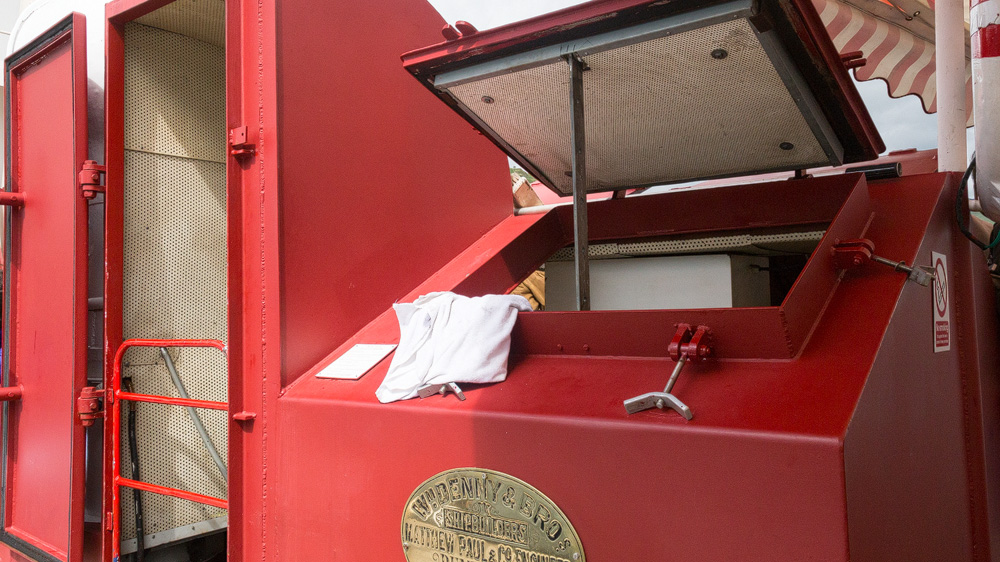
The steps lead down into the engine room. They’re blocked off, but through the open hatches I can still see down below:
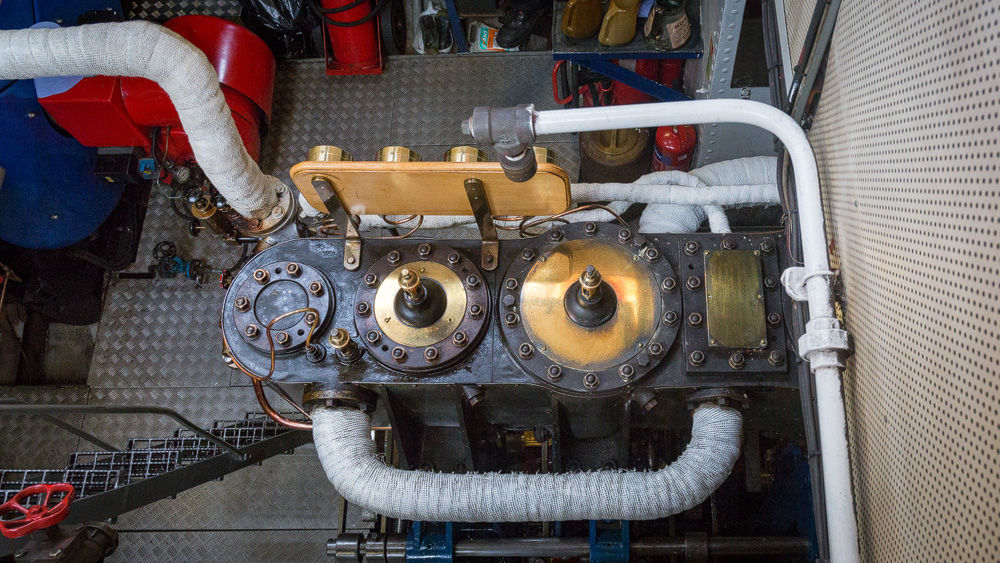
So there it is. Remarkable how quietly it runs. Its secret: until 2007, the steamship was still coal-fired. Today, though, the engine runs on biodiesel. If this fuel were to leak, it would break down within a short time – so there’s only a minimal risk.
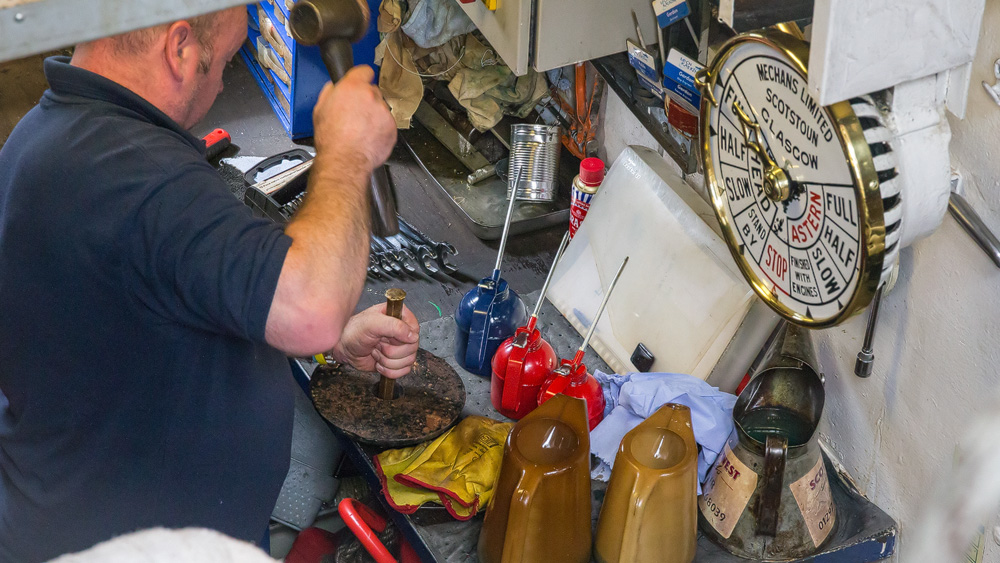
Besides the power of biodiesel, though, it still takes muscle power too. I spot one of the five crew members down below.
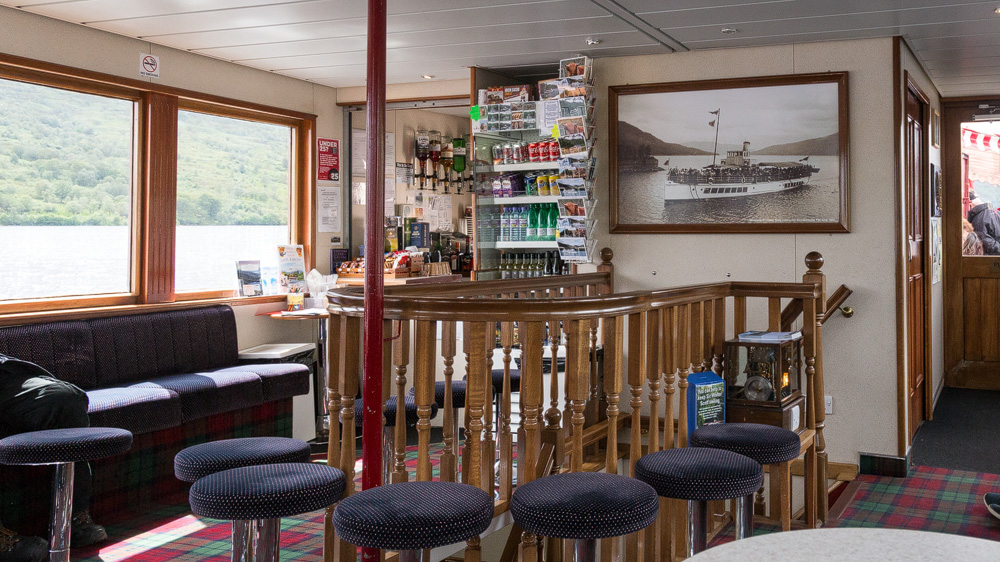
Over a hundred years, a boat doesn’t just get new engines – there have been a fair few conversions too. At the front, in the ship’s bar, an old photograph hangs on the wall.
In it, you can see large windows set into the Walter Scott’s hull. So I head below deck too, to go looking for these windows. But when I get there…
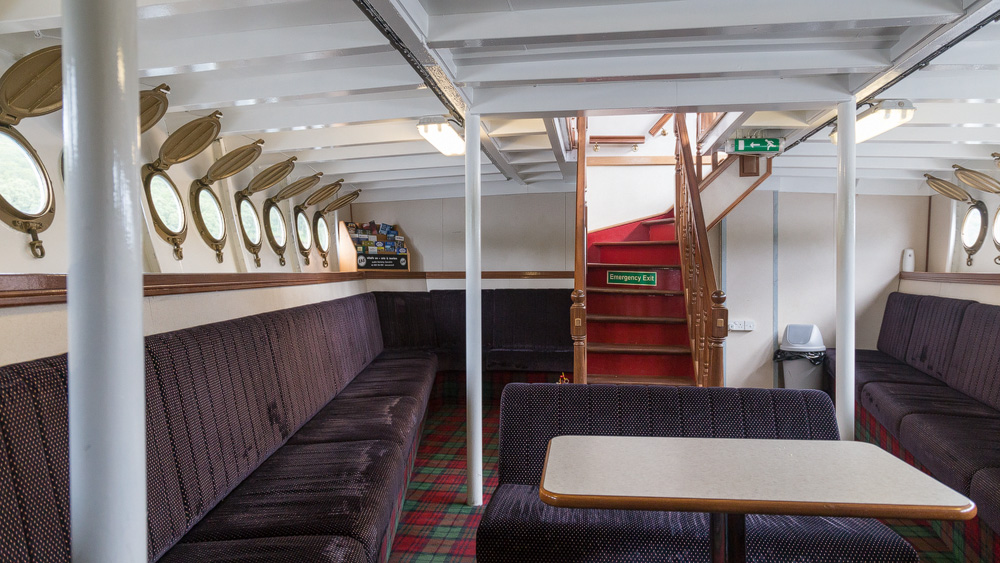
All the large windows have since been replaced with small portholes that barely let you see out. No wonder nobody wants to sit here.
A sharp blast from a loud whistle snaps me out of my thoughts. I head back up top and discover we’re not quite alone on Loch Katrine after all. The Walter Scott had just sounded a loud greeting to her smaller, younger sister – the Lady of the Lake.
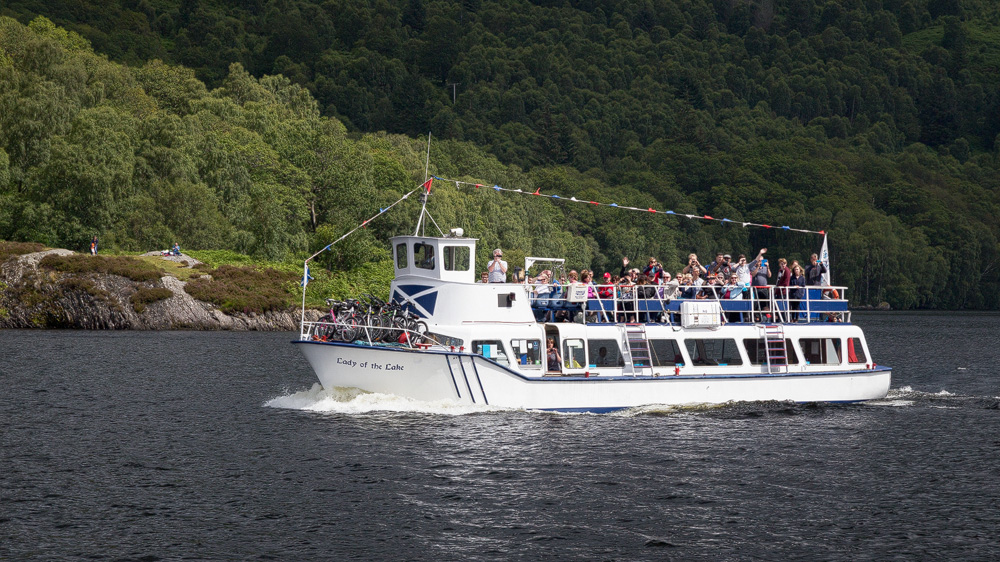
She’s just come from Stronachlachar, where she picked up cyclists and other day-trippers. That’s because a mostly paved path runs all the way around Loch Katrine, largely closed to cars. So you can cycle the roughly 20 kilometres from the big jetty at the Trossachs to Stronachlachar, and take the boat back.
We don’t make it as far as Stronachlachar on the Sir Walter Scott, though – we’ve booked a round trip, and turn back partway. Now that I’ve finished exploring the ship, I finally want to enjoy the view.
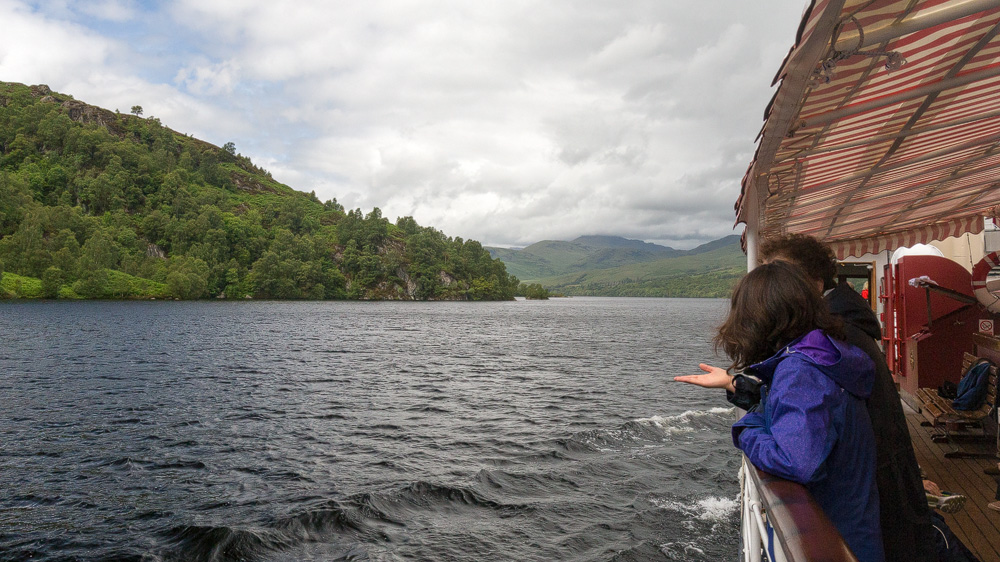
After about an hour’s sailing, we finally arrive back at the pier and disembark. We walk a little further along the lakeside promenade and get the chance to see the Sir Walter Scott in all her glory once more.
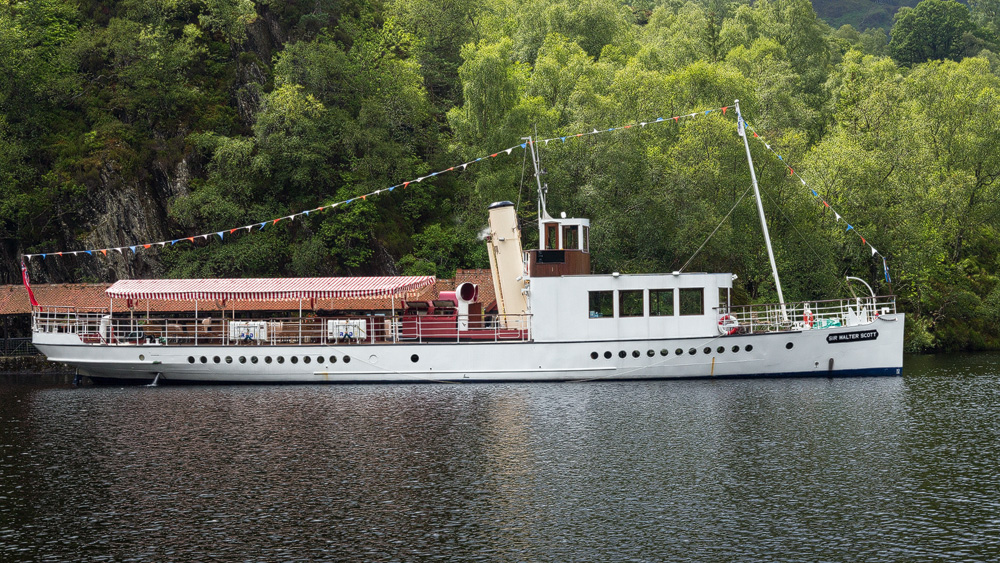
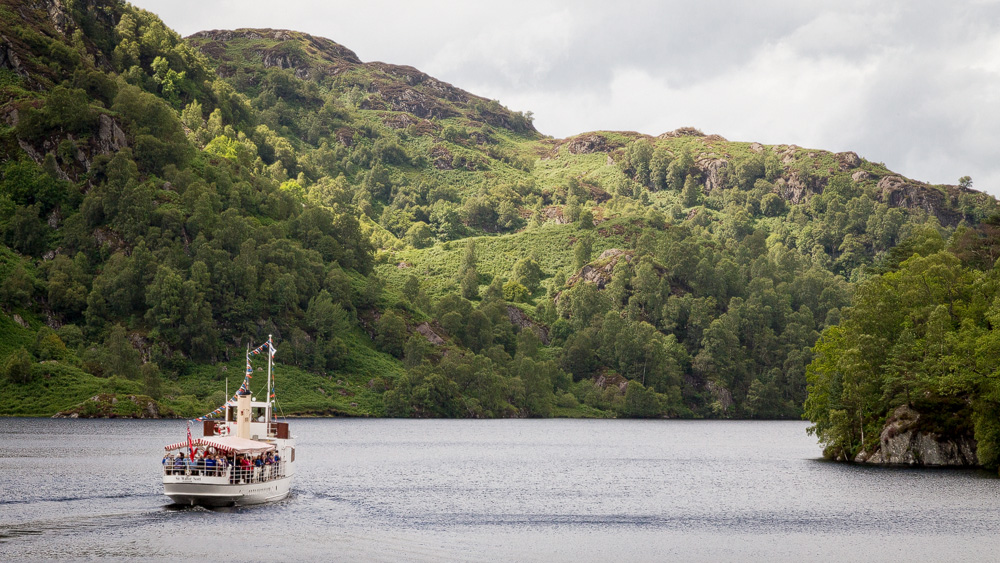
She doesn’t linger long. After only a short while she casts off again and soon disappears behind the small islands of Loch Katrine.
Good to know: Why the ship on Loch Katrine is called “Sir Walter Scott”
Sir Walter Scott was one of Scotland’s great national poets. That alone might be reason enough, but he also had a real connection to Loch Katrine. One of his best-known tales told the story of the “Scottish Robin Hood”, Rob Roy MacGregor, who was born in Glengyle at the northern end of Loch Katrine and spent part of his life here too.
Scott also published another poem set around Loch Katrine, called “The Lady of the Lake”.
Personal note: Only on the steamship
As beautiful as Loch Katrine is, the ship itself impressed me even more than the landscape. So I’d always recommend taking the trip on the Sir Walter Scott.
Tip: Rent bikes for a tour around Loch Katrine
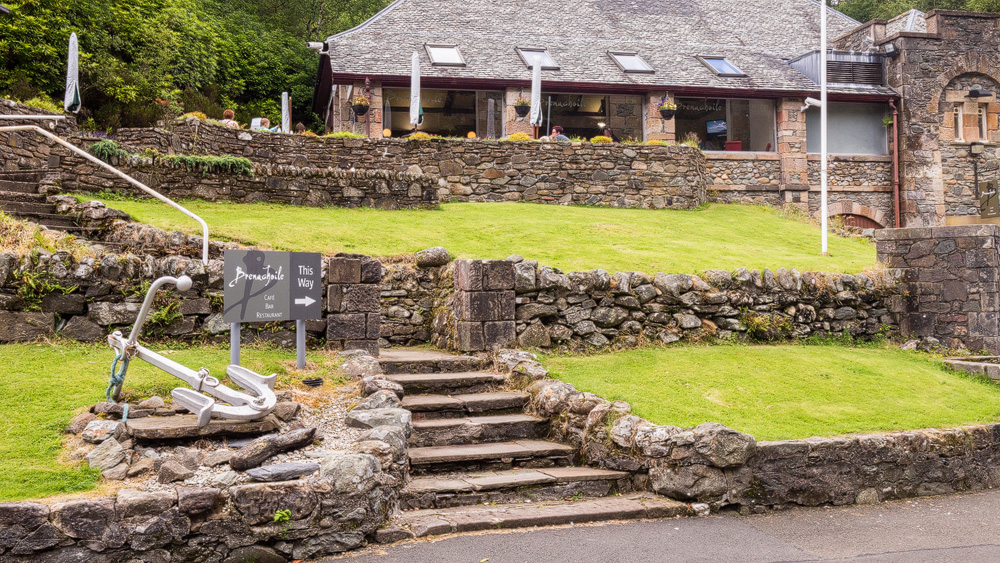
At the pier by the Trossachs, you can also rent bikes for a tour along the loch. There’s a visitor centre and a restaurant there too.
Getting there
With sat nav: entering “” gets you to the Trossachs. Watch for the signs from there.
Without sat nav: from Edinburgh, take the M9 towards Stirling. Turn off towards Callander onto the A84, and just beyond Callander turn left onto the A821 towards Aberfoyle. Follow the road until the “Loch Katrine” sign guides you the rest of the way.
From Glasgow, take the A81, then the A821 towards Aberfoyle. In the village, turn right towards Callander, and soon after watch for the signs to Loch Katrine.