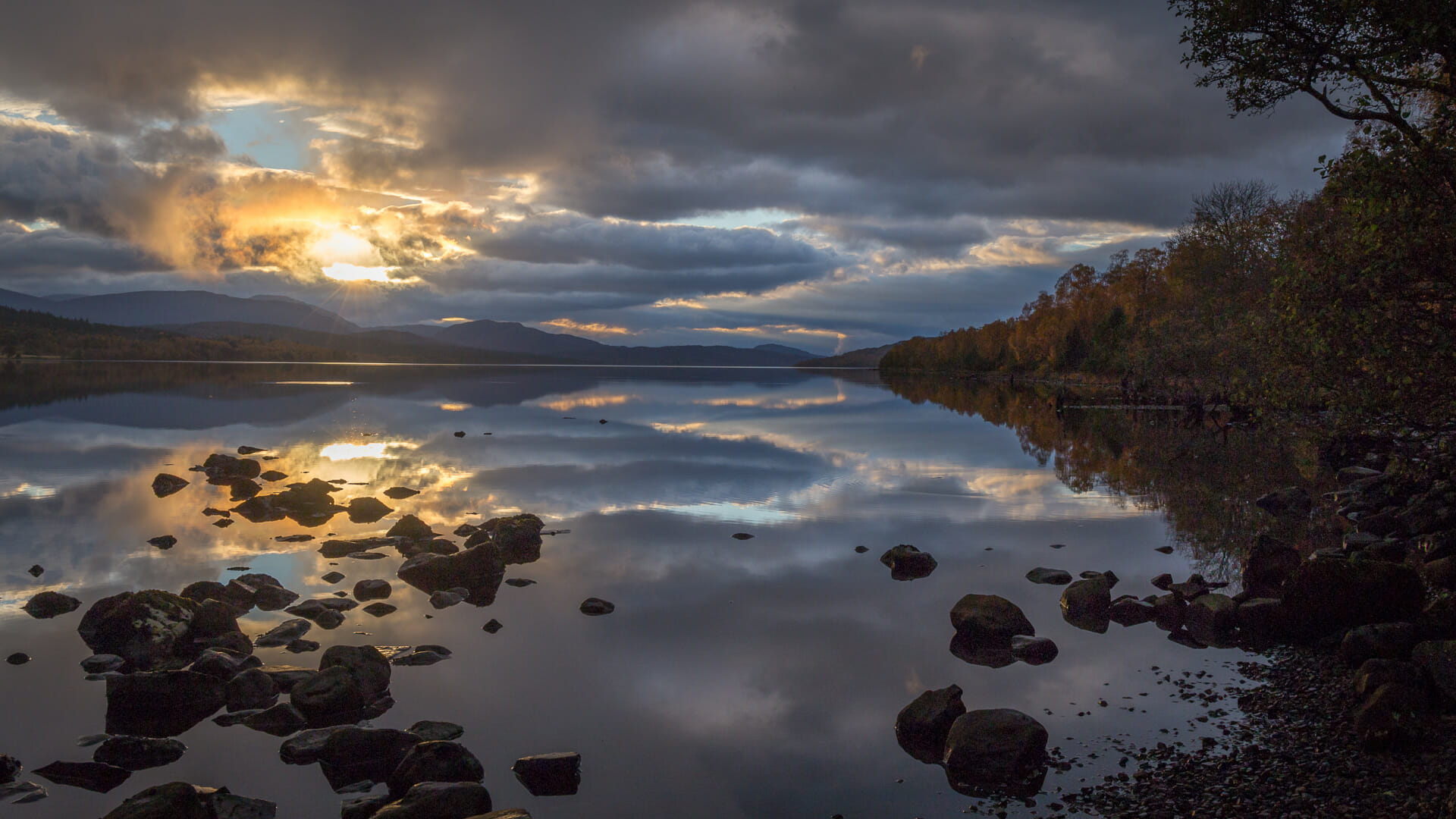
A touch of railway romance right in the middle of the moor: Rannoch Station marks the beginning of the trackless wilderness of the western Highlands. Solitude has never looked more beautiful.
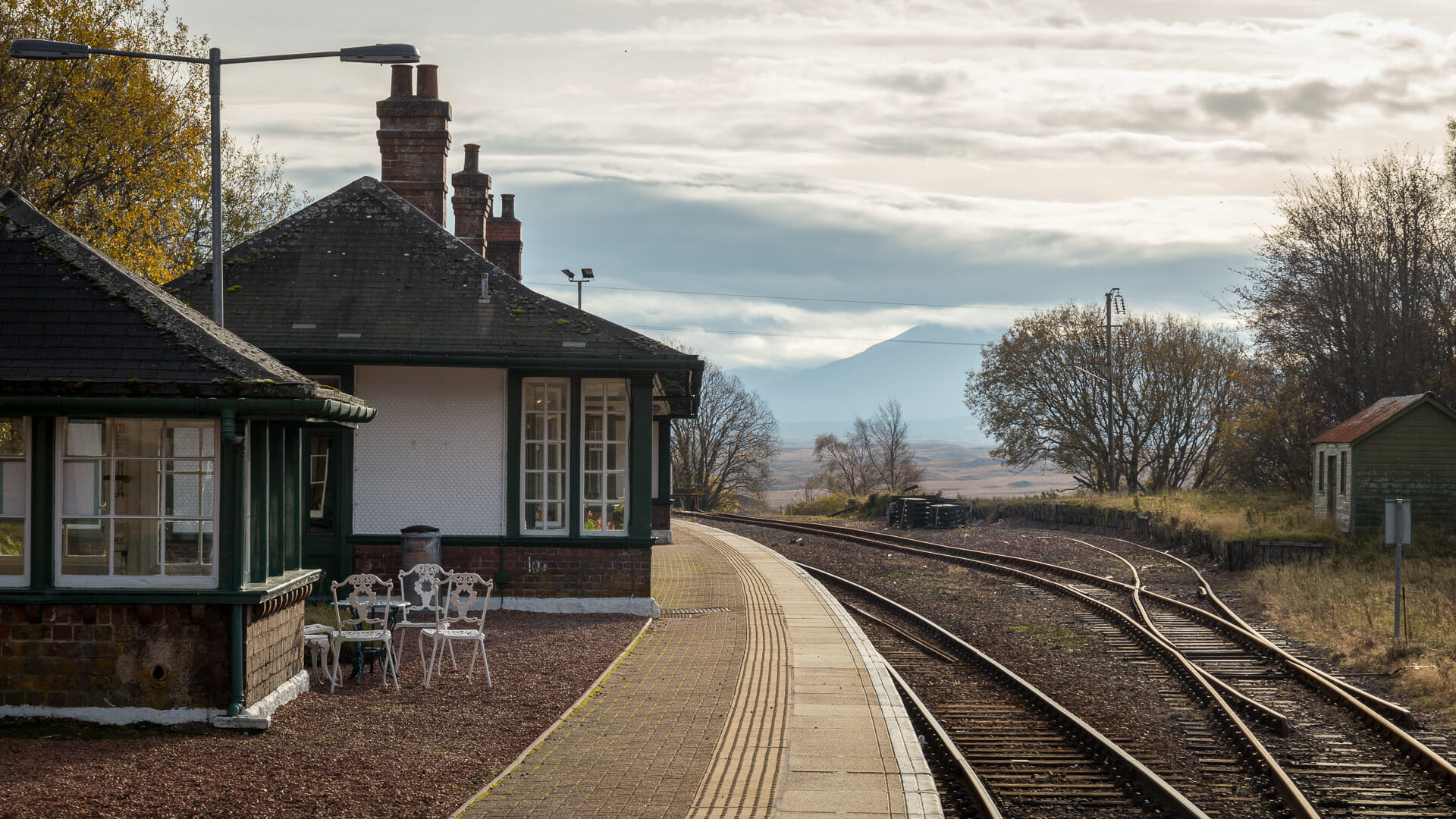
Right in the wild middle-of-nowhere of the Scottish Highlands lies Rannoch Station. A vast landscape of ferns, heather and grasses, speckled with small pools in shallow hollows, surrounds the old station. At the edge of this landscape rise the distant mountains of Glen Coe and the Grampians. Here, the diesel trains of the West Highland Line labour their way up across Rannoch Moor, before finally encountering a hint of civilisation again: the end of a road, a hotel, and the station buildings themselves.
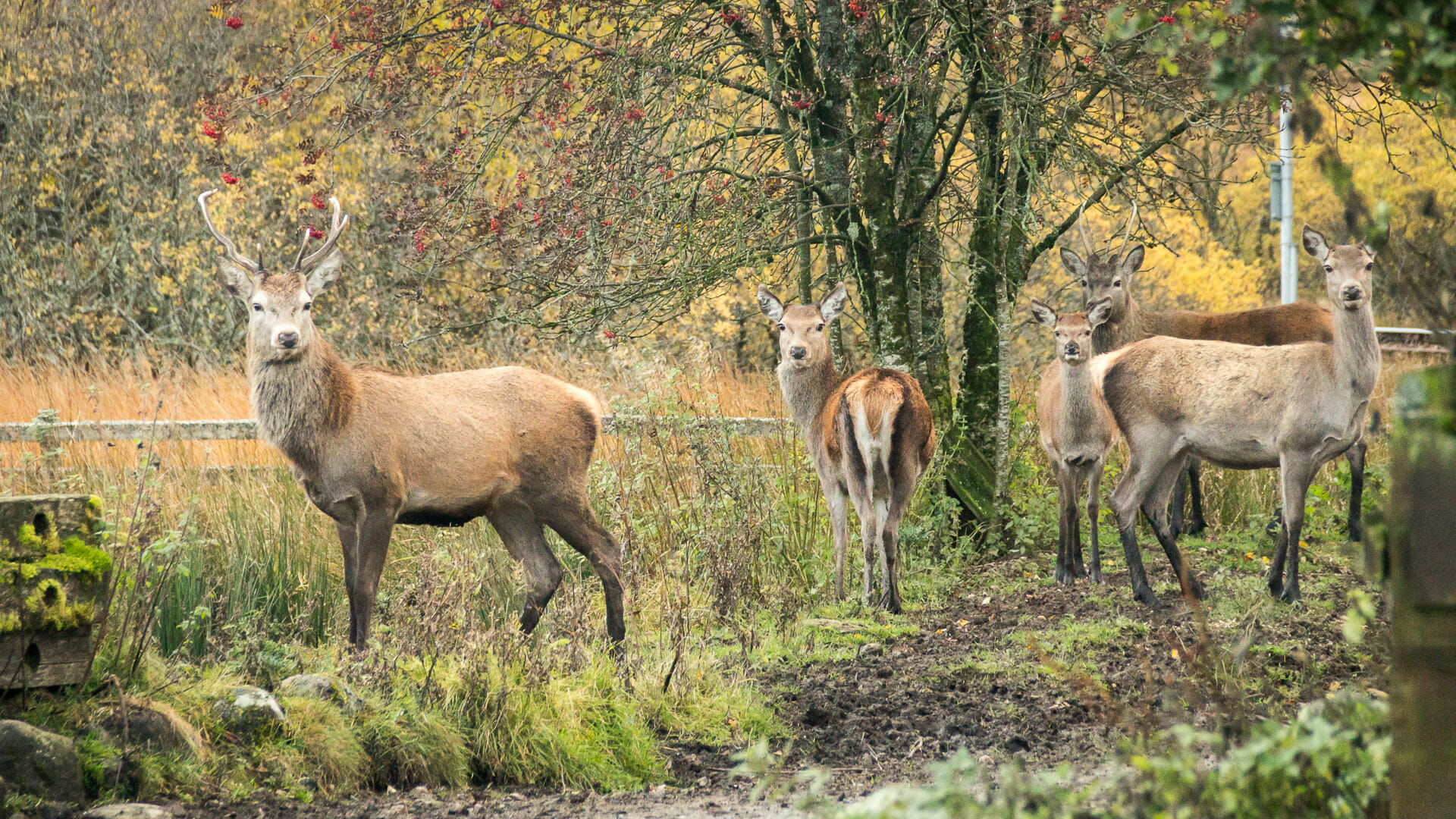
That’s it. Otherwise, deer and pheasant bid each other goodnight out here.
And yet: those few buildings are enough to create somewhere really special. A little warmth in this bleak wilderness; a base for walkers heading out into the moor, who then refuel afterwards in the station’s tearoom with a cup of tea and something sweet.
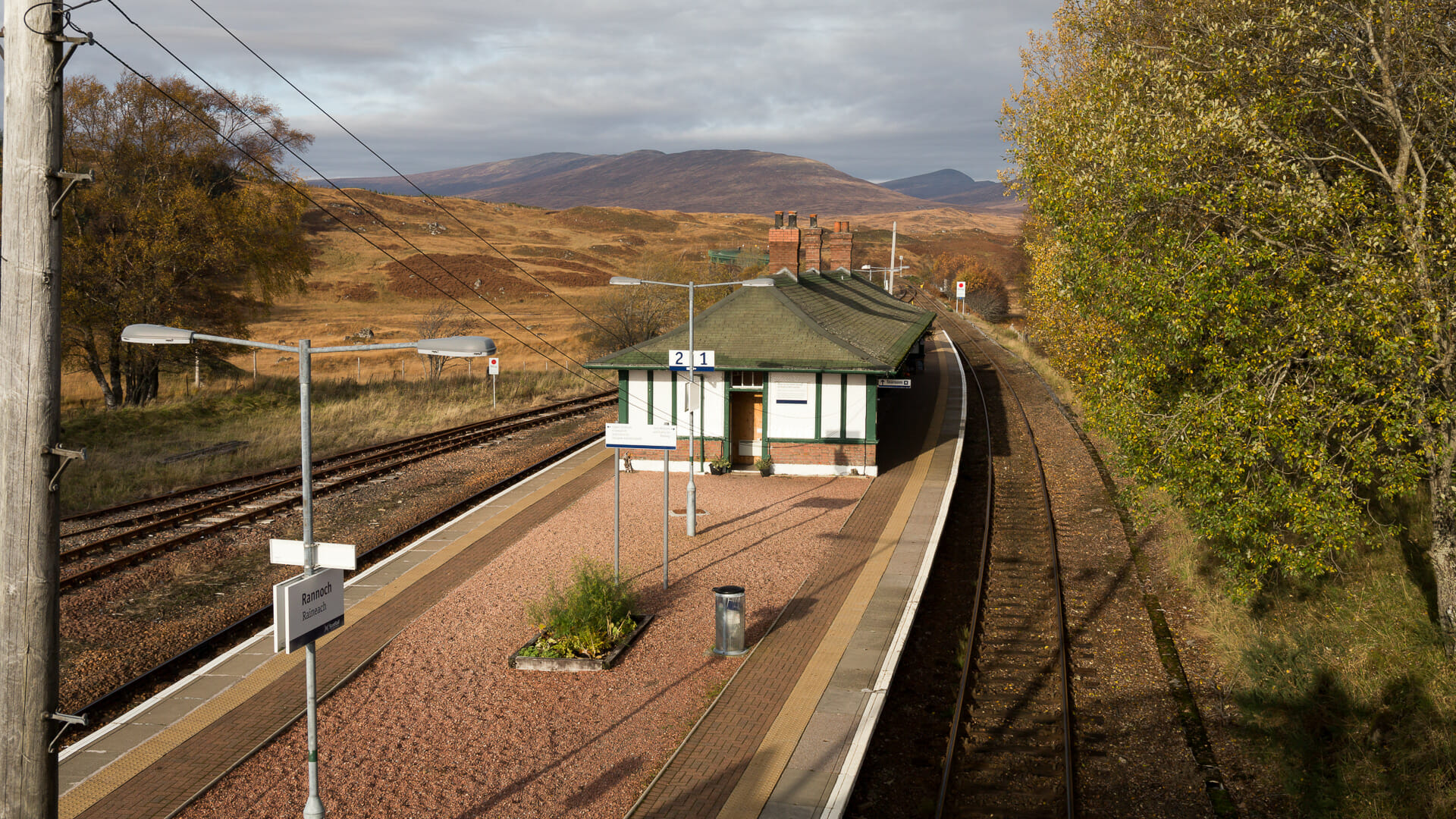
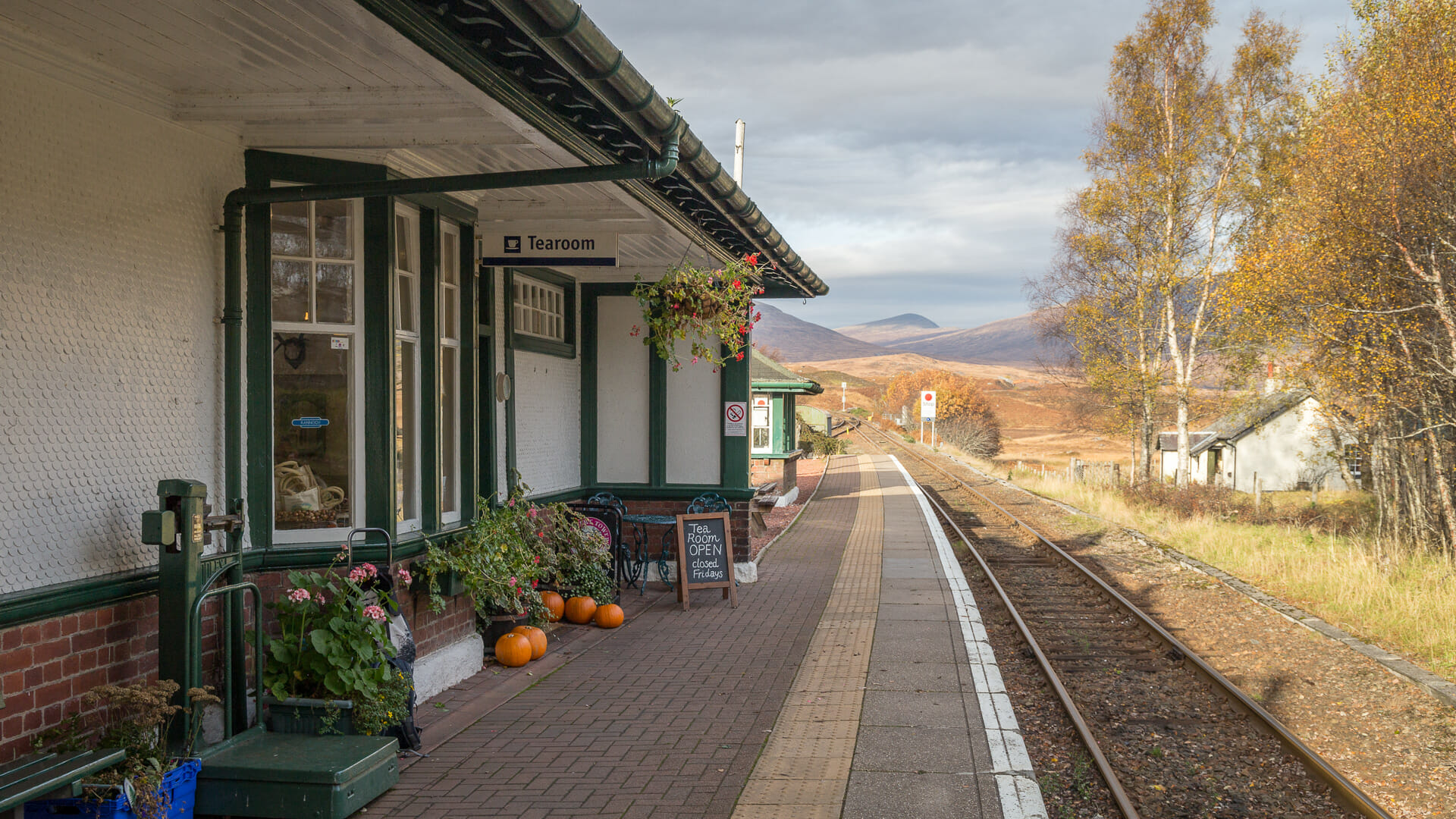
The station itself is a genuine sight to see. It’s stood here since the line opened in 1894, and – like many of its counterparts along the route – was built in the style of a Swiss chalet. That means its flat roof, covered in wooden shingles, extends far out, offering travellers waiting outside shelter from the wind and rain of the Scottish Highlands. Thanks to its blend of rust-red brick, white walls and green timber framing, Rannoch Station sits harmoniously within the surrounding countryside.
In one part of the building, the cosy tearoom invites you in for soup, filled toasties and cake.
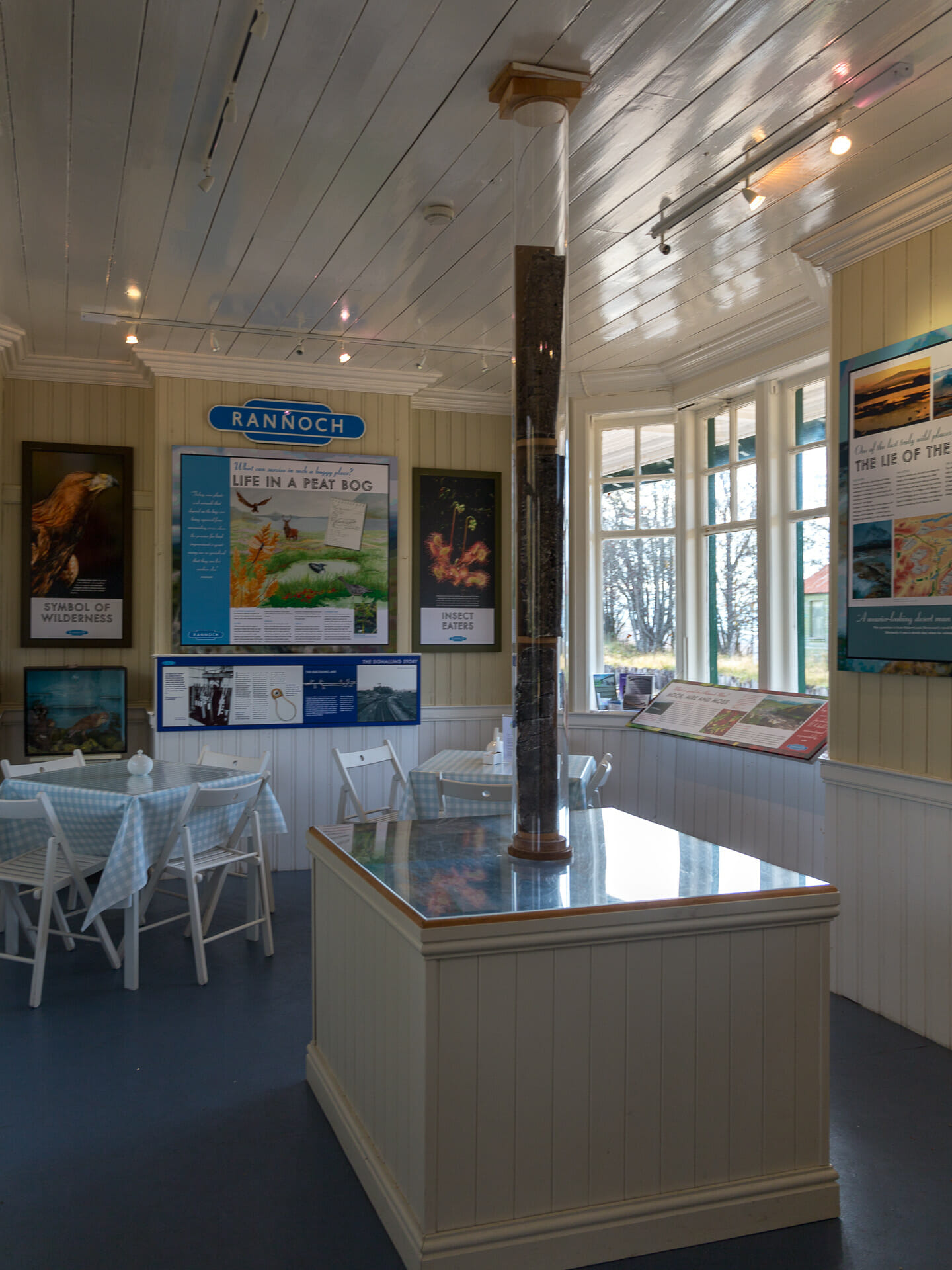
The waiting room, meanwhile, offers a small exhibition giving an insight into the hardships of building the railway back then, and explains the nature of the surrounding moorland.
Leaving the main building, travellers can head over to the old signal box, where the red, blue, yellow and black signal and points levers can still be seen.
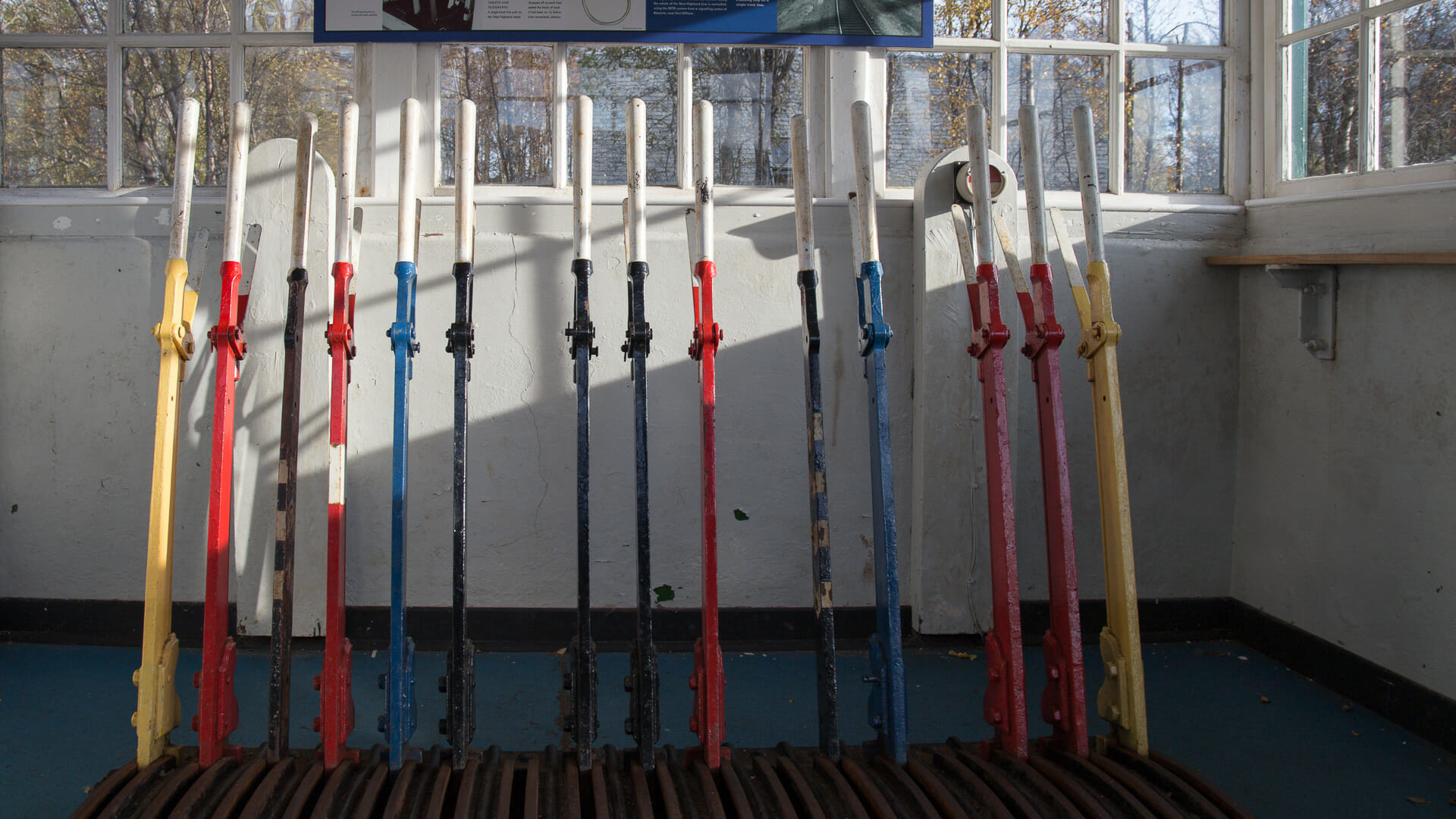
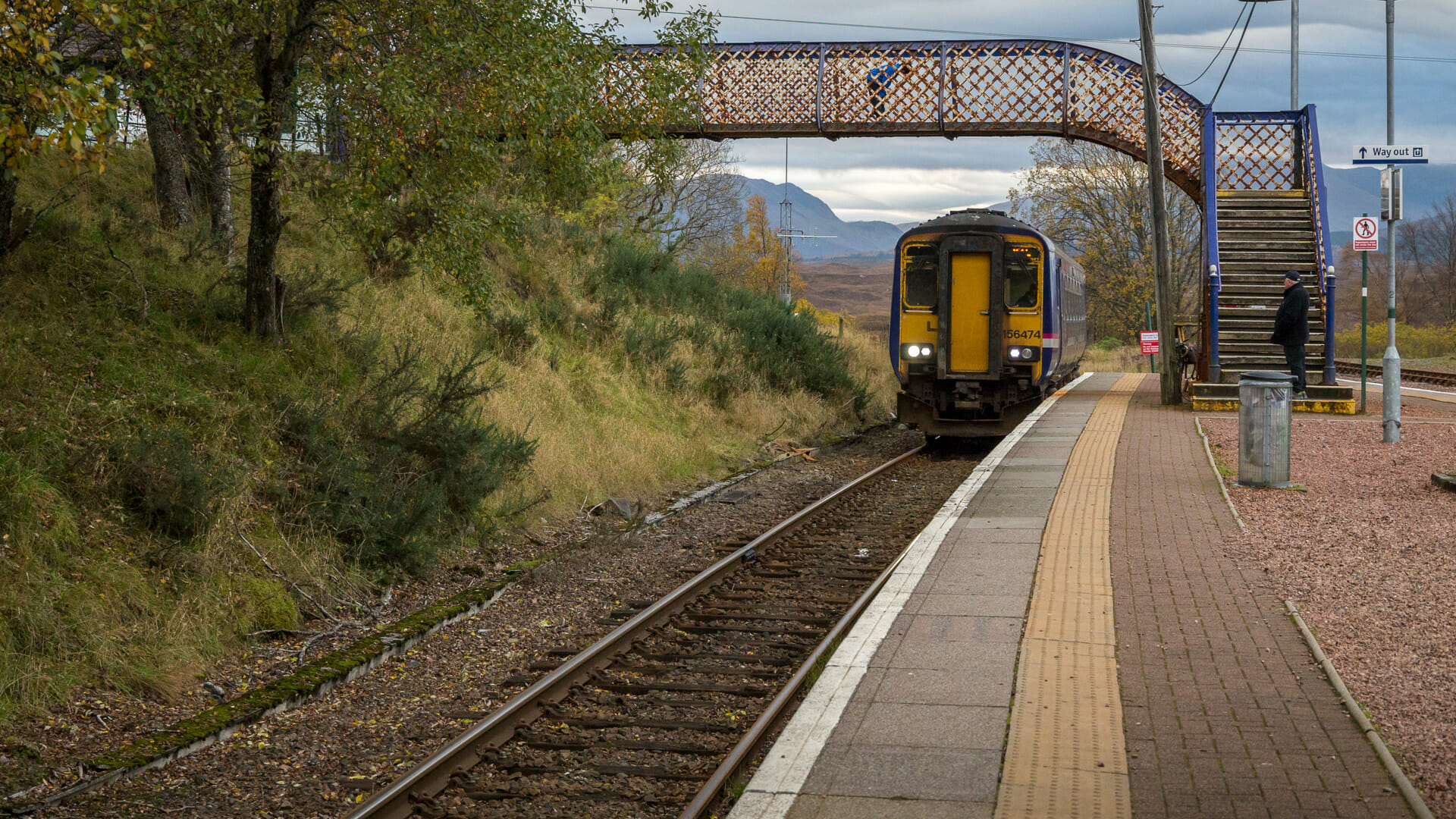
The line is of course controlled electronically today, yet this so-called lever frame is a listed structure – as, indeed, is almost the entire station ensemble. That includes the rusty iron footbridge connecting the car park to the platform, which sits like an island between the two sets of tracks.
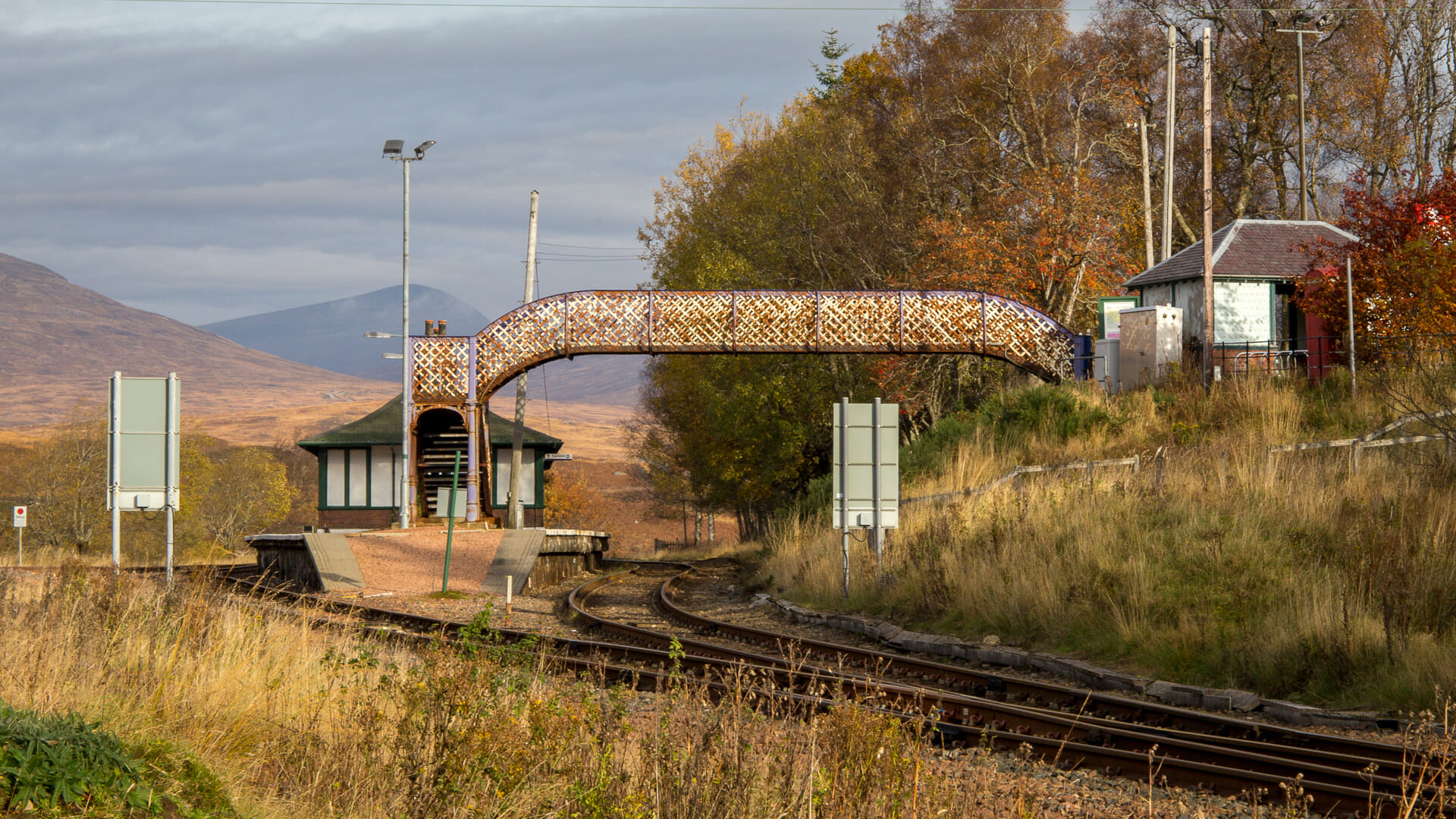
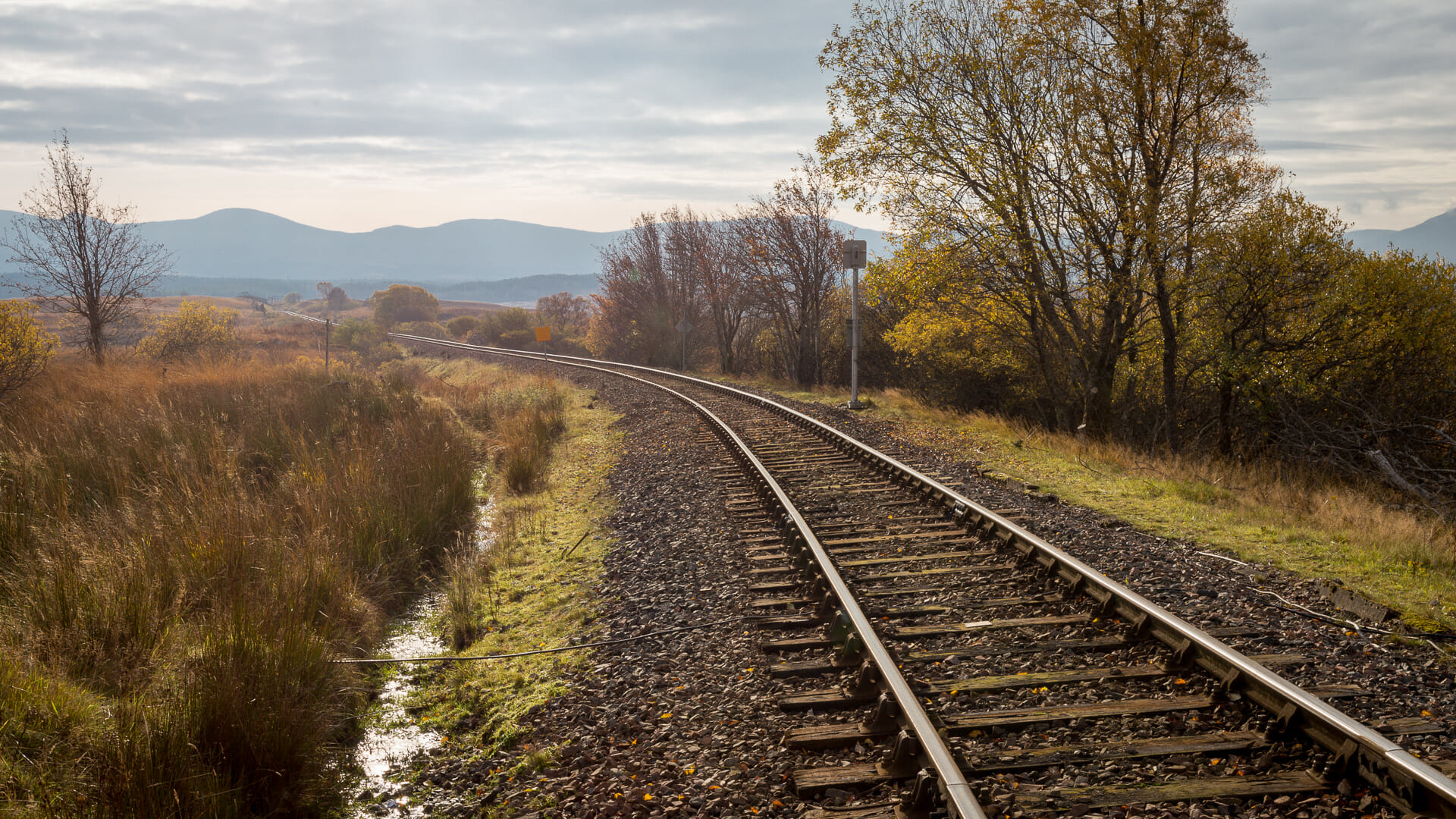
This platform between two tracks is what makes Rannoch Station so important. It’s here that trains coming from both directions can pass each other on what is otherwise a single-track line.
A hundred metres to the north, the railway line then crosses a striking viaduct, built from a green-painted steel structure supported by stone-built piers.
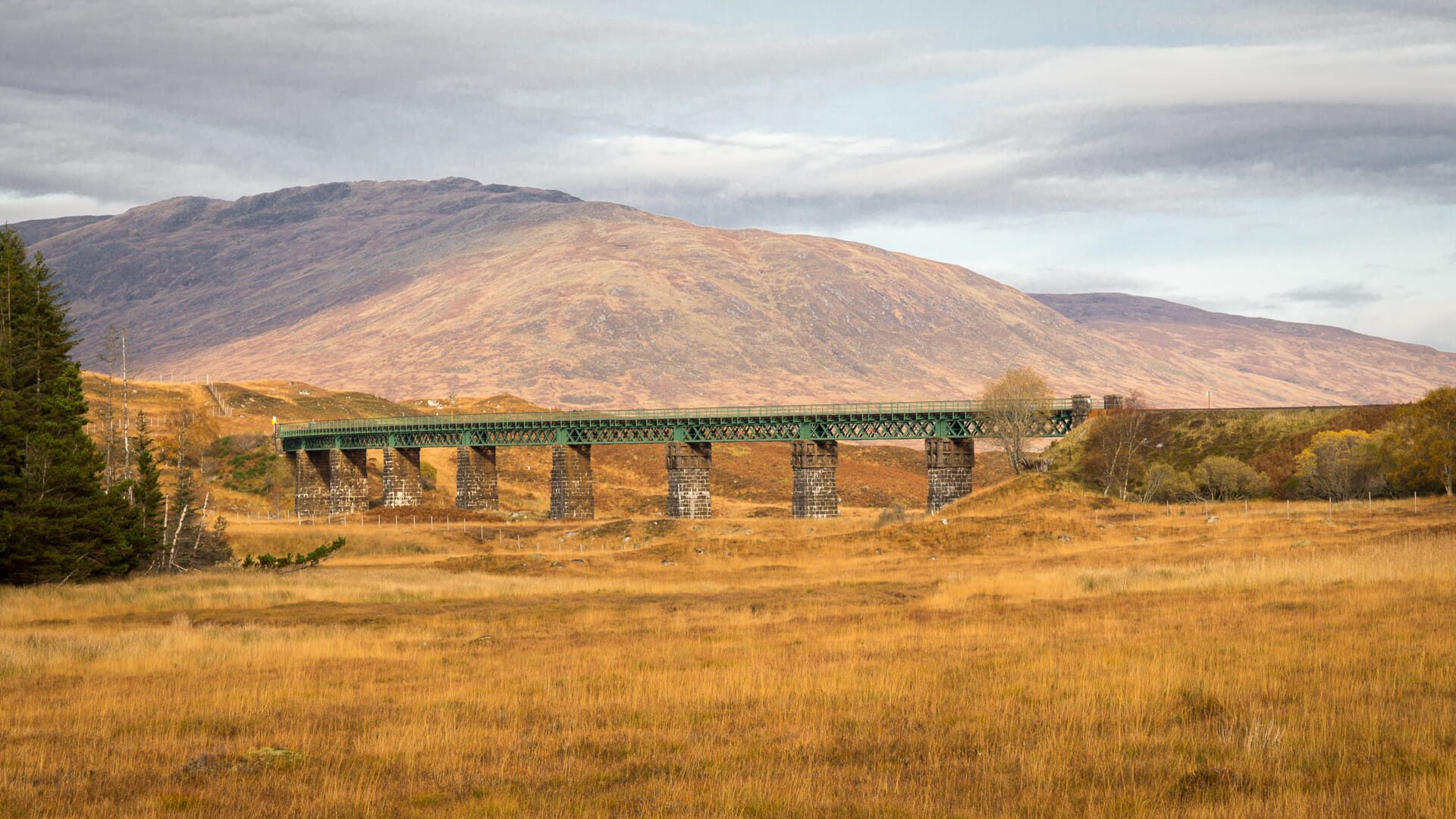
This bridge also shows just how difficult it was to lay the railway through the moor. Its foundations, in fact, are “floating” – laid on turf and brushwood. The West Highland Line really is, even today, a genuine feat of engineering.
After the bridge, the line finally disappears into the moor for good – next stop: the mysterious Corrour Station, which isn’t even reachable by road any longer.
Did you know: the moor around Rannoch Station
Climate change roughly 5,500 years ago hit Scotland hard. Where pine forests once thrived, moorland has now taken over. Back then, the climate grew colder and wetter – ideal conditions for mosses. These multiplied heavily in the increased moisture, acidifying the soil until the trees eventually died off. Only at the edges of the moor do a few pine plantations remain, planted here by people for timber harvesting.
And yet the old forest is still there: buried in the peat. Because every so often, the moor releases its old timber back to the surface. Here and there, old tree stumps then poke through. They’ve since been bleached to a ghostly white, lending the scenery a rather morbid charm.
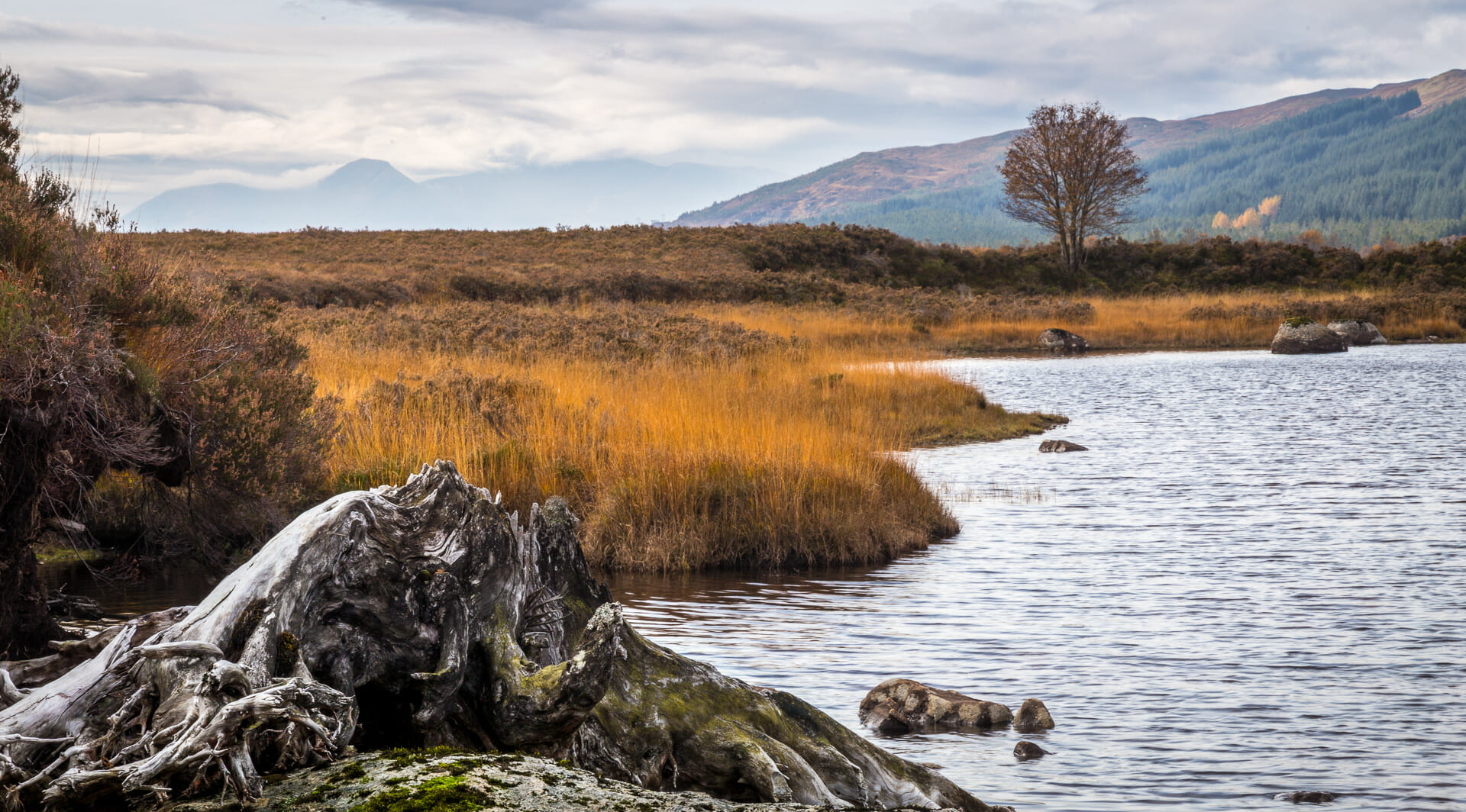
Yet moorland doesn’t just mean death – it’s also a habitat for plenty of remarkable species. For the insect-devouring sundew plant, for instance. For quite a number of birds. For ferns, heather and mosses. The moor has even lent its name to a plant, the “Rannoch rush”.
Unfortunately, one rather less welcome species also feels right at home here in summer. Midges, the Highlands’ notorious biting flies, are perfectly happy in this damp environment. That’s why the moor is also particularly appealing to visitors in late autumn, winter and early spring, when the little pests aren’t out and about.
Tips: excursions from Rannoch Station
Opposite the hotel, a path branches off sideways towards the tracks and crosses them just south of the station. This is where the route heading west into the moor and the forest begins.
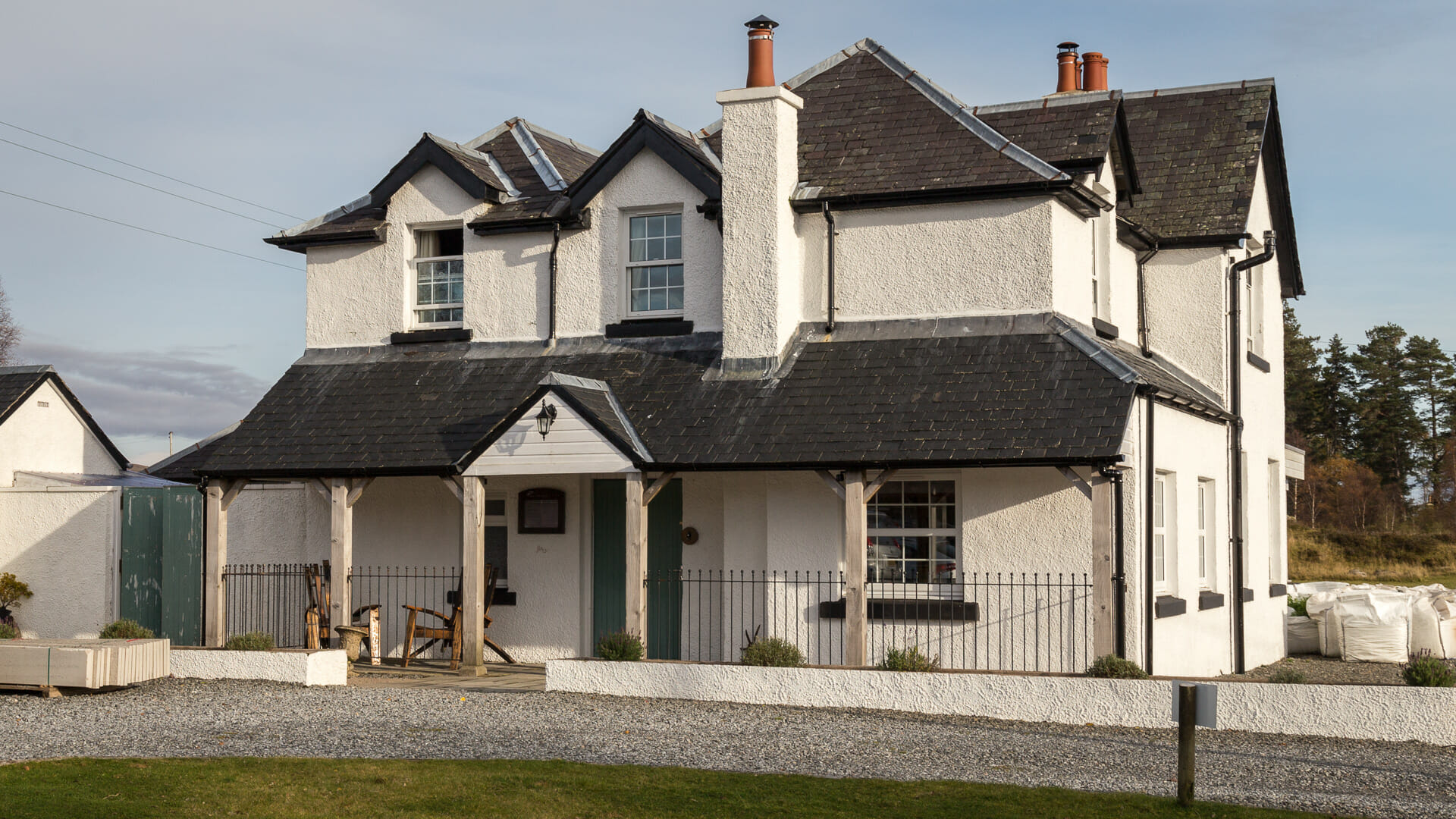
It’s well-built and wide, though closed to most cars. It first passes Duch Lochan, then continues on to Loch Laidon – an eight-kilometre-long loch right in the middle of the moor.
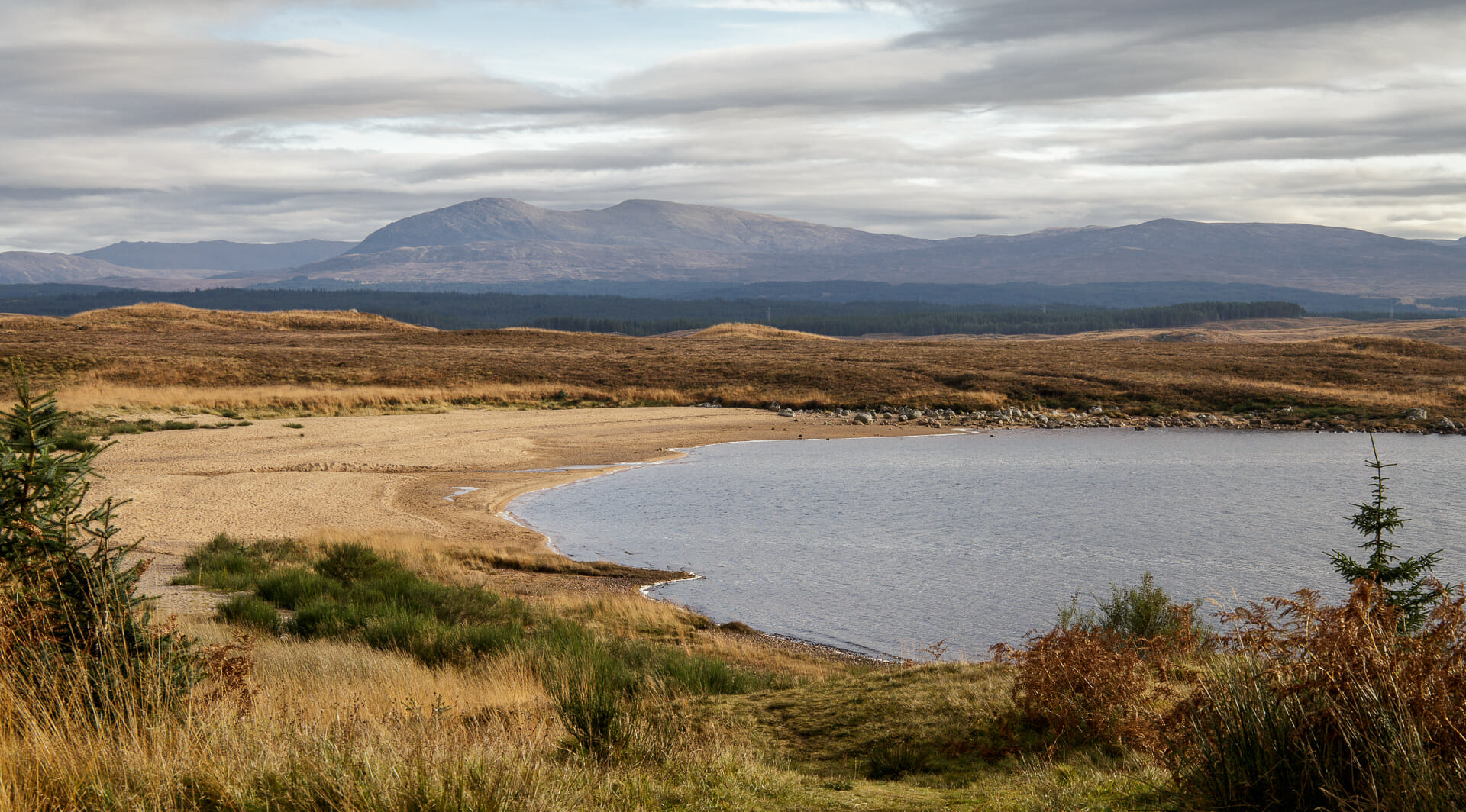
Smaller paths also naturally lead down to its sandy shores here – well worth a look. The route then continues on through a forest.
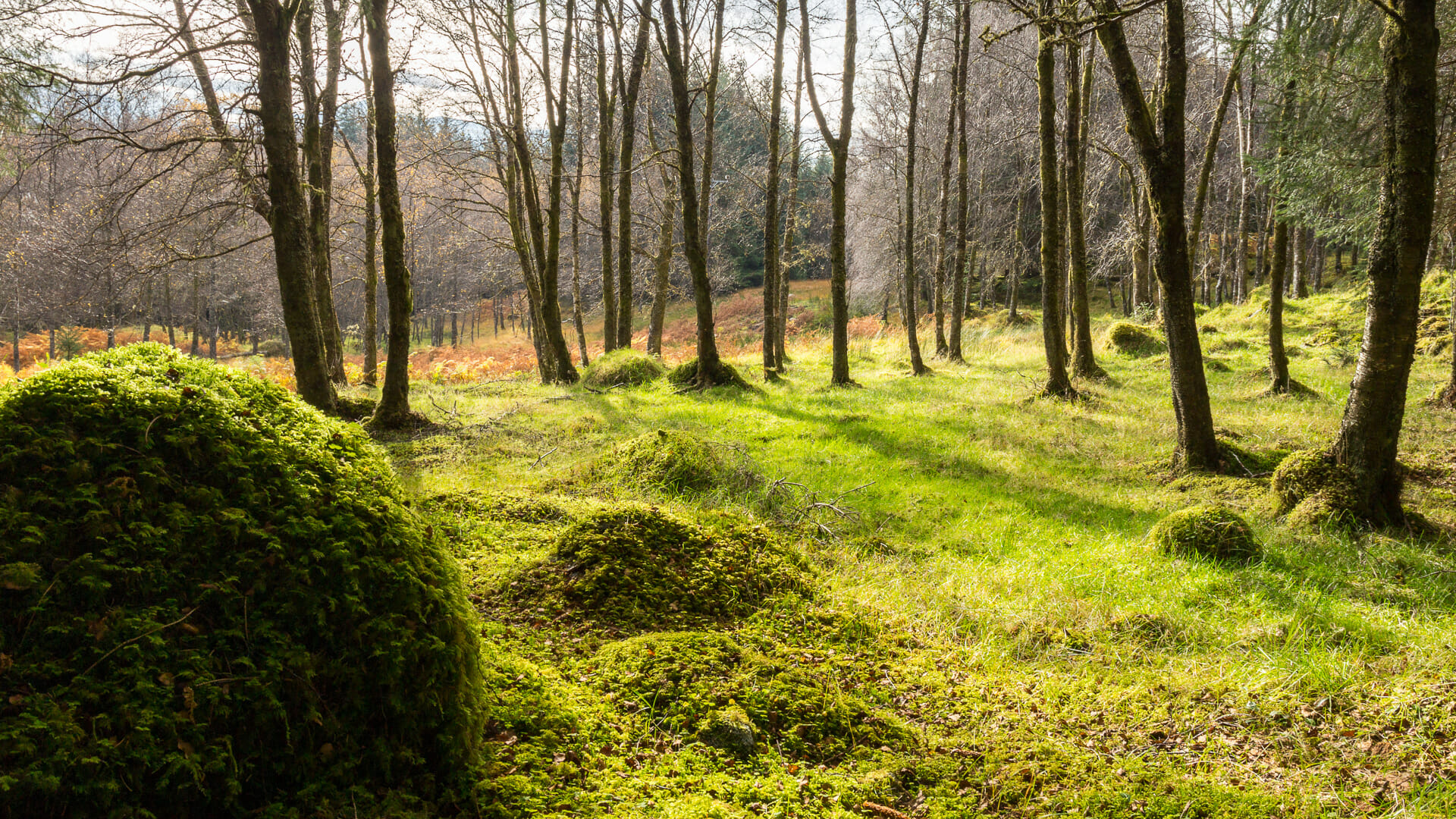
The wide path ends after a few kilometres, but if you follow the pylons, you’ll reach a further trail that leads all the way to the Kingshouse Hotel in Glen Coe. We didn’t take on this nearly 20-kilometre hike ourselves, but instead turned back to Rannoch Station. An English-language description of the route can be found here.
Other excursions worth considering: a train ride to the next station, Corrour Station. From there, a walking route leads back to Rannoch Station, roughly ten kilometres in length.
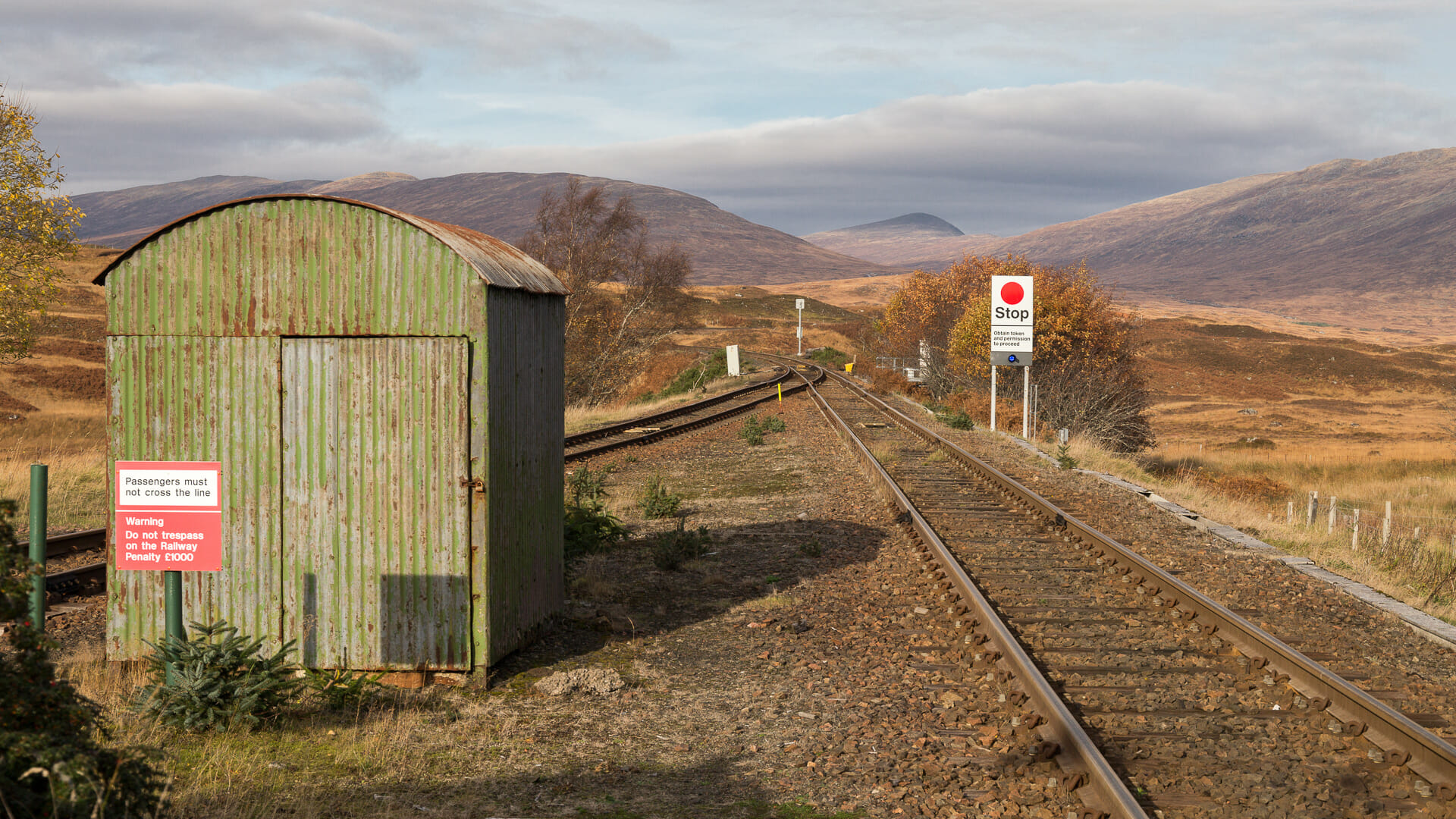
The small hut in the station’s car park also has an interesting overview map of the surrounding area, with the various routes marked on it.
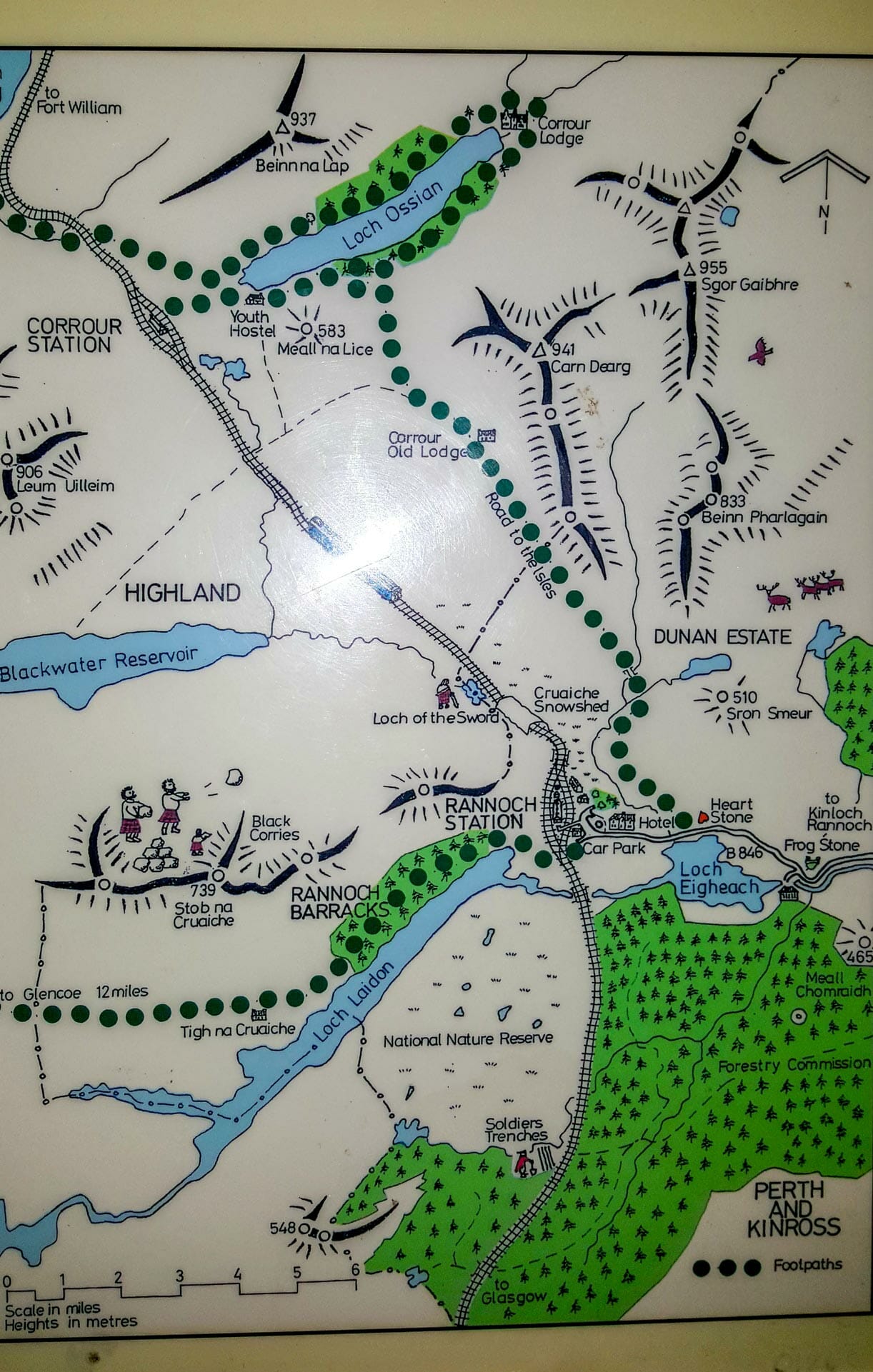
Personal note: special trains
When I arrived here at night, a rather special train was standing at the platform. I’m not entirely sure whether it was the Royal Scotsman – a train of vintage carriages reserved for luxury travellers – or a special charter run by West Coast Railways. Either way, I thoroughly enjoyed that touch of railway romance out in the moor on a November night.
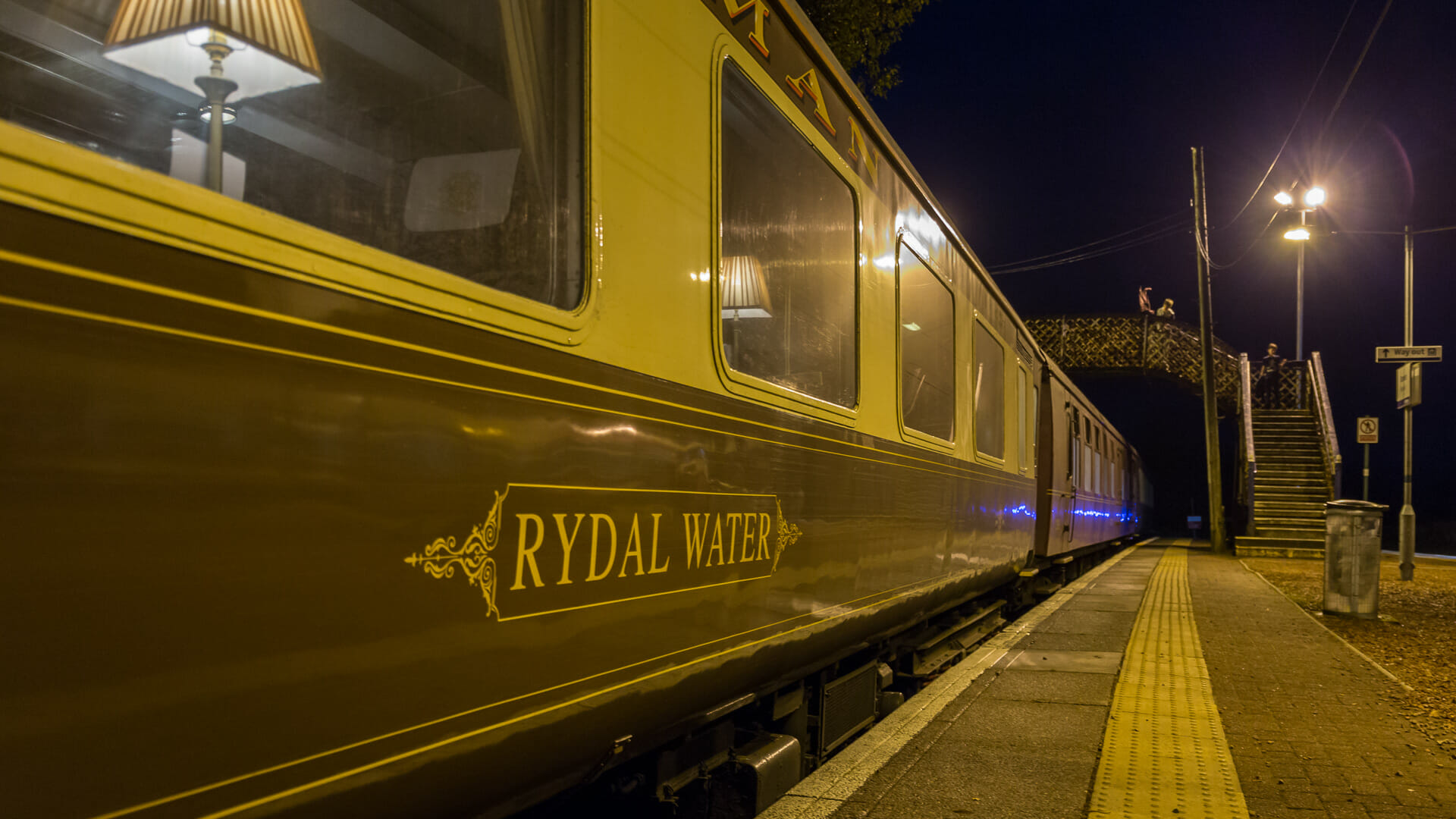
Incidentally, my wife and I stayed overnight at the hotel here. Not only is it wonderfully cosy and gloriously remote, it also serves genuinely excellent, refined food.
Getting there:
The best way to arrive here is undoubtedly by train. Up to four times a day, travellers can hop on or off here, coming either from Glasgow or Fort William. Timetables and prices are available on the Scotrail website.
By sat nav: enter “PH17 2QA” and follow the road all the way to the end.
Without sat nav: coming along the A9 from Inverness or Edinburgh, take the exit for “Kinloch Rannoch”. Follow the B8019, single-track in places, along Loch Tummel. If you’re inclined, stop here at the wonderful viewpoint of Queen’s View. Continue on past Loch Rannoch until you reach the station. A stop at Loch Rannoch itself is well worth it too, incidentally.