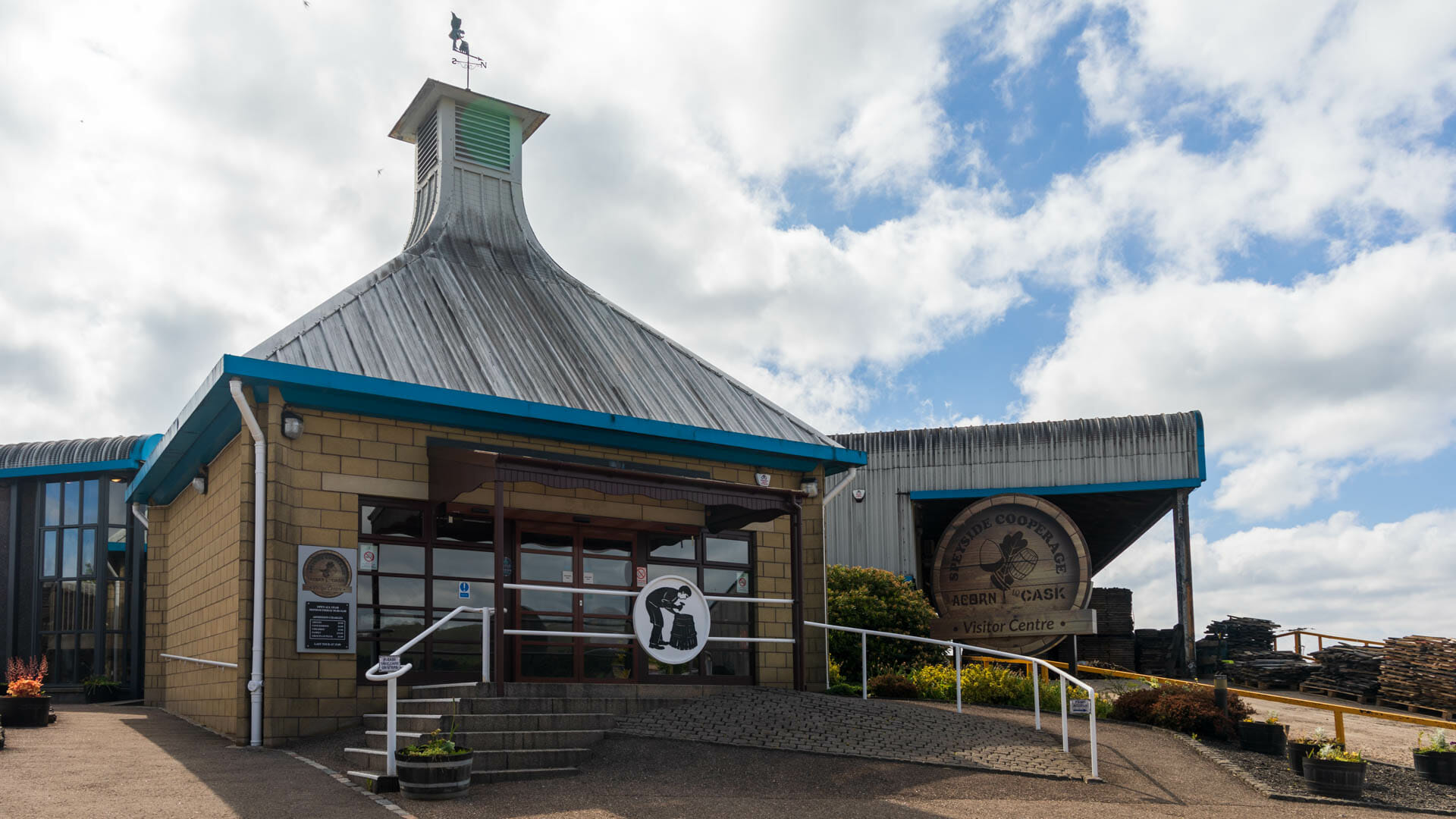
Speyside Cooperage makes barrels for Scotland’s whisky distilleries. A tour offers insight into the craft of coopering.
Around 22 million casks of whisky are said to be maturing in Scottish warehouses at any given time – a staggering number. Most whisky lovers naturally think of the contents. But those casks have to come from somewhere. Scotland’s distilleries need a constant supply of casks for the millions of litres of newmake spirit they produce every year. Speyside Cooperage plays an important role here, so it’s well worth a visit.
The word “cooperage” refers to the craft and workshop of a cooper – a barrel maker. Though strictly speaking, that’s not quite accurate here, since the casks aren’t built from scratch. They’re mostly restored and reconditioned.
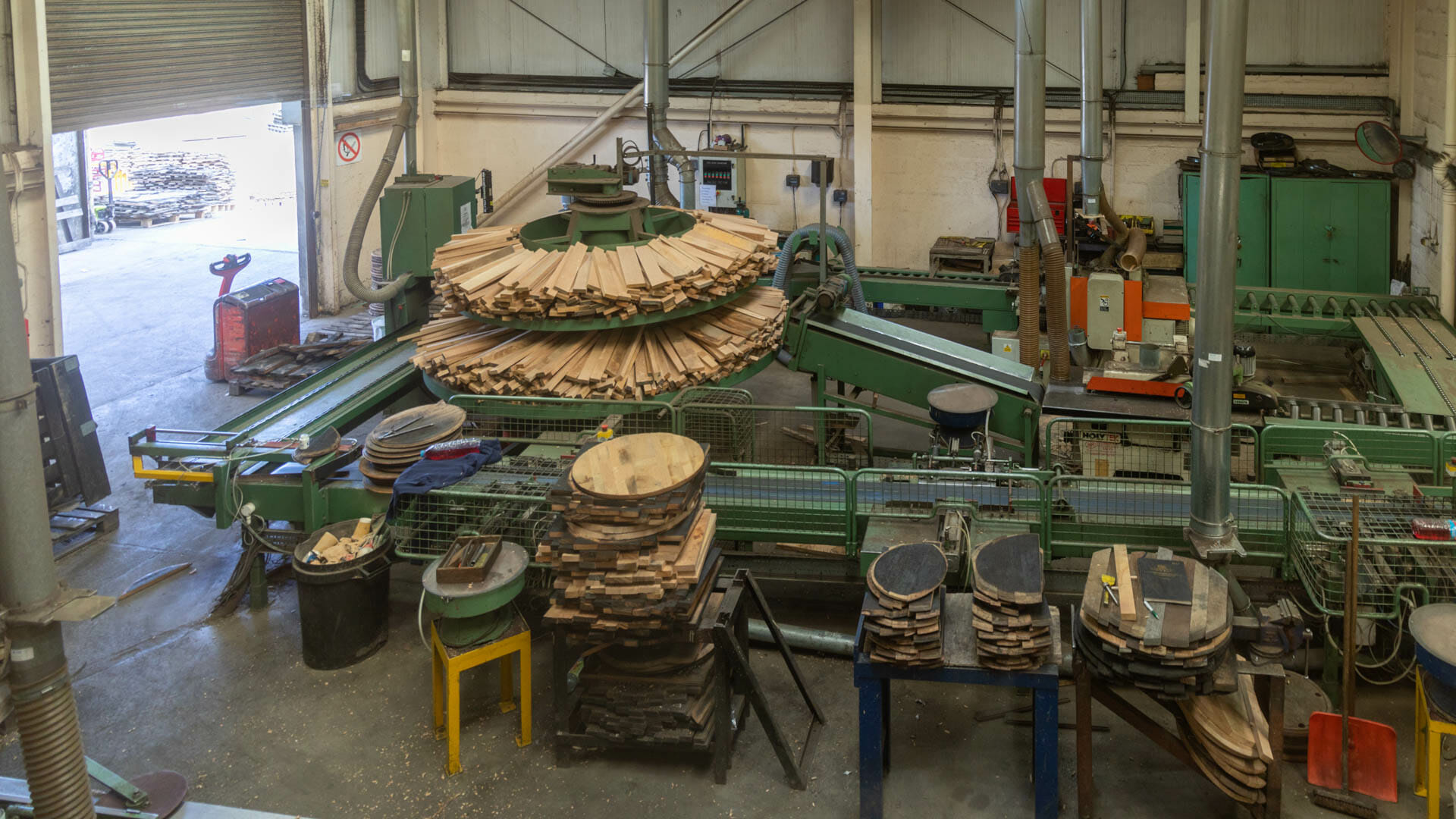
Scotch whisky is matured in used casks. Their origin, and the drink that was previously stored in them, guarantee the whisky’s characteristic notes. Spanish sherry casks tend to give a darker colour and often a chocolatey, raisiny or nutty flavour. American bourbon casks are known more for a paler colour and notes of honey, lemon and vanilla. Of course, the flavour world of Scotch whisky is far more complex still – and casks play a decisive role in that.
That’s what makes the work at Speyside Cooperage so enormously important. Here, casks from all over the world are reconditioned, rebuilt and stored. And visitors can watch it all happen.
Why the cooperage is so important, and its place in the whisky-making process, is explained by a short film at the start of the tour, in a “4-D cinematic presentation” – meaning a few light effects and some scented dry-ice fog accompany the screening. Nice touch, but the real highlight is the production process itself.
A guide then leads visitors into the workshop hall, though they’re kept strictly separate from the coopers, looking down at the workers from an enclosed gallery.
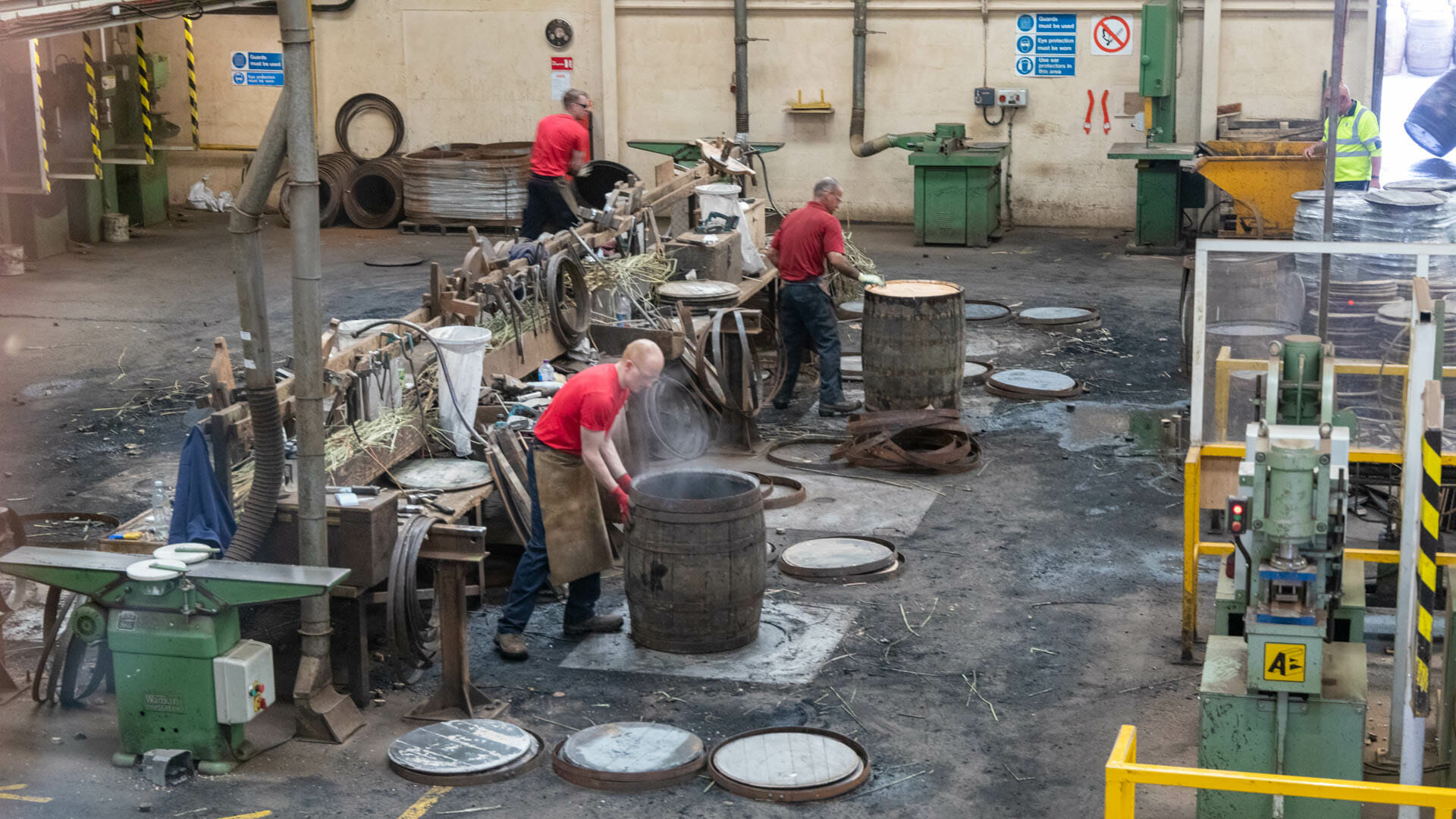
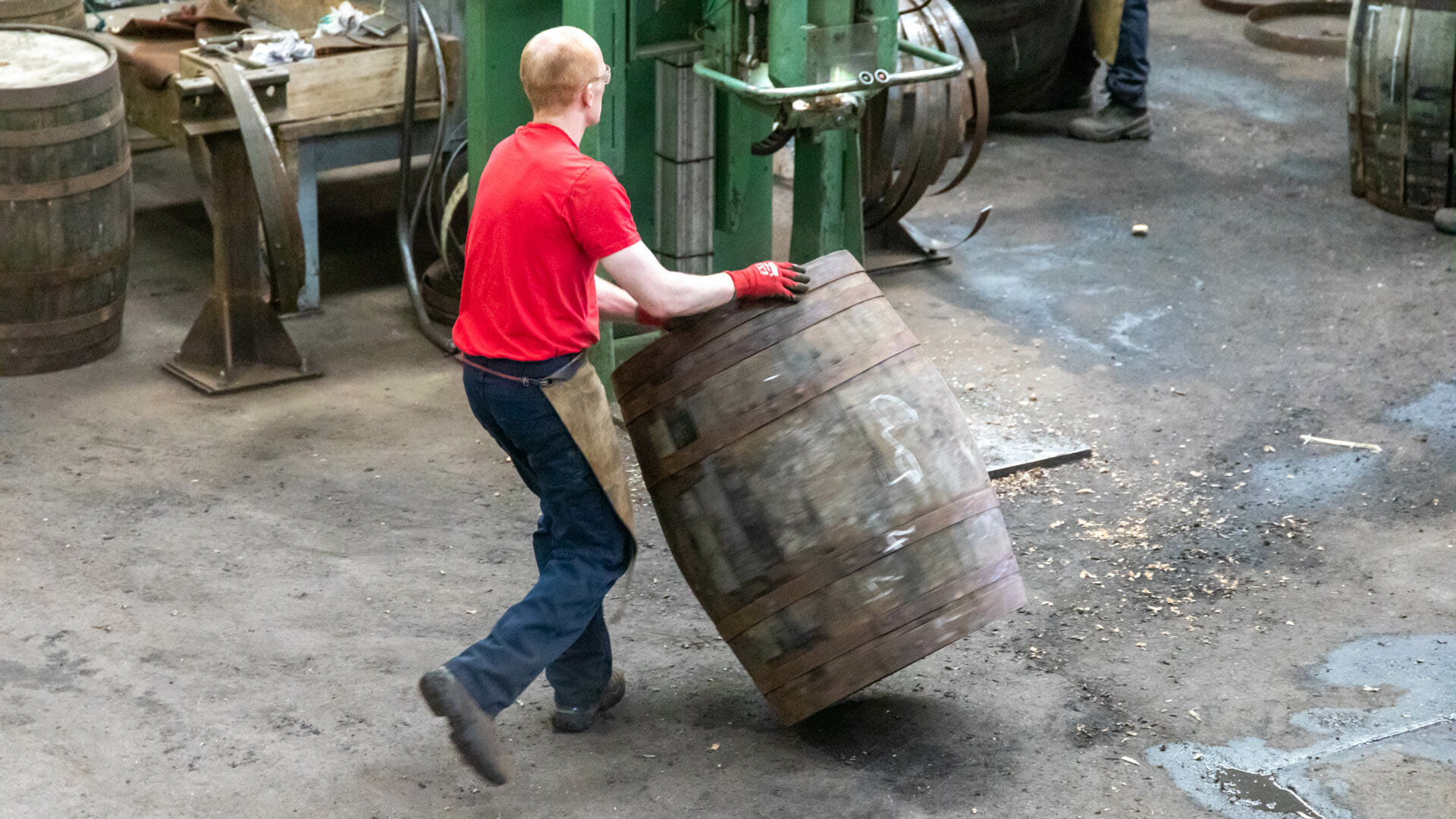
The speed and precision the coopers display is impressive. Casks are assembled, fitted with a bung hole, tested and stored at a rate of one a minute. This kind of piecework takes real skill to learn. Speyside Cooperage is the largest cooperage in the United Kingdom, so it’s no surprise that it has to train its own coopers – otherwise there would be an acute shortage of skilled workers.
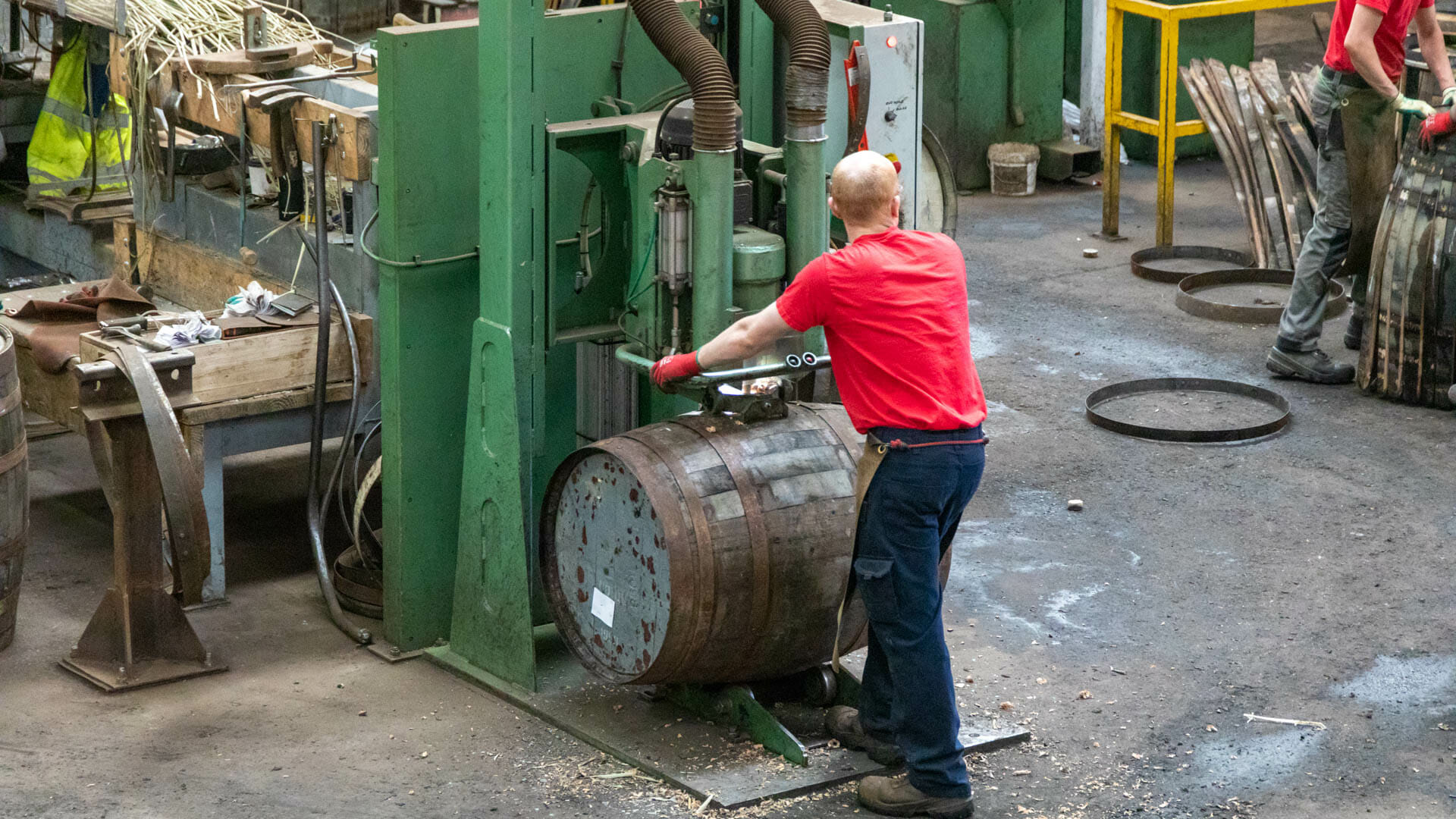
Around 150,000 casks leave the halls of Speyside Cooperage every year. Many are taken up by the surrounding Speyside distilleries. And many come back again, since a cask can be used for around 60 years. Between fillings, it’s reconditioned again at the cooperage.
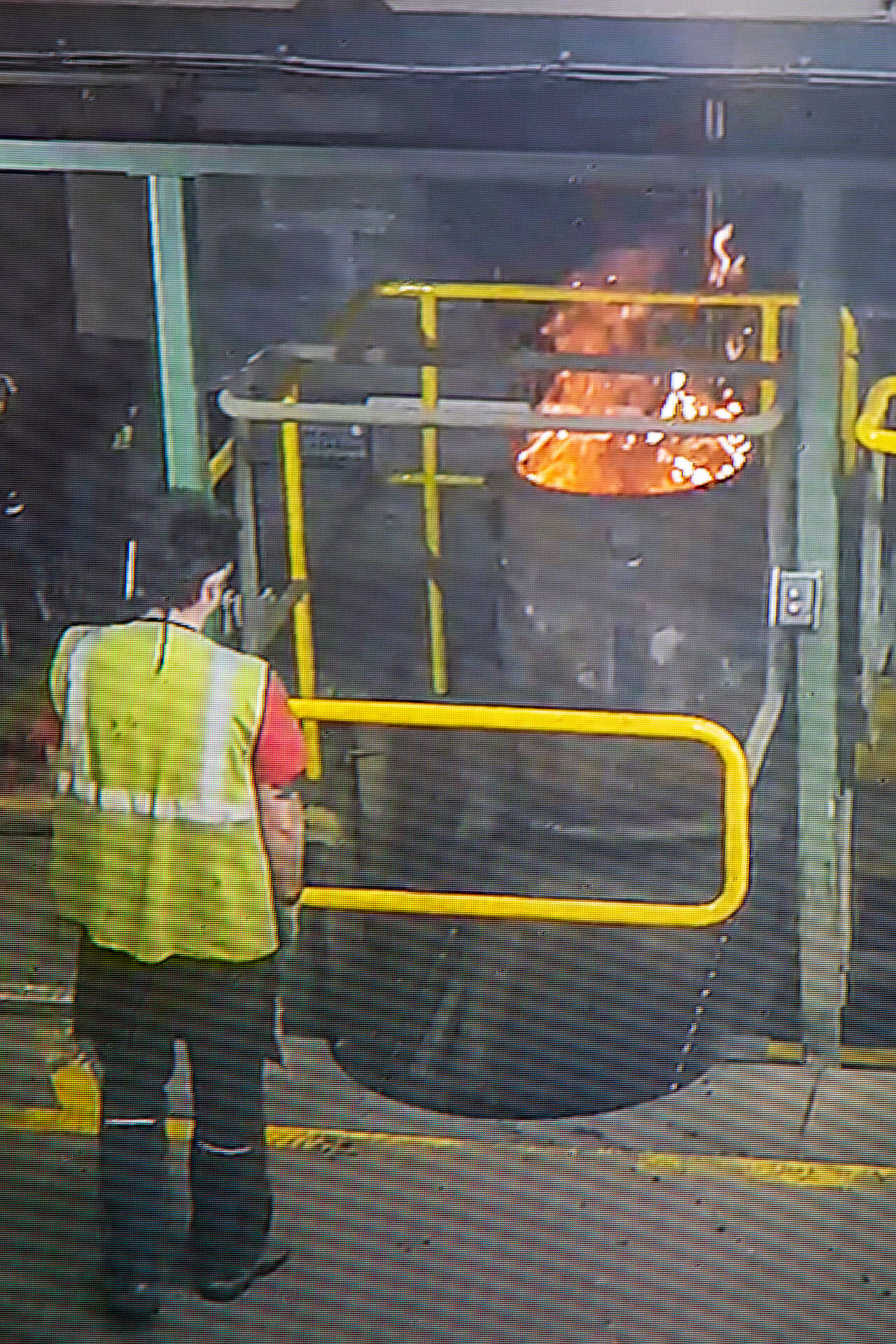
One of the most fascinating steps in reconditioning is charring the inside of a cask – it’s briefly burned out with fire. This opens up the wood and changes the flavours it releases.
Unfortunately, that’s exactly the step that can no longer be viewed directly at Speyside Cooperage – a disappointment, especially for photographers. Charring the cask can only be watched via a monitor from the gallery.
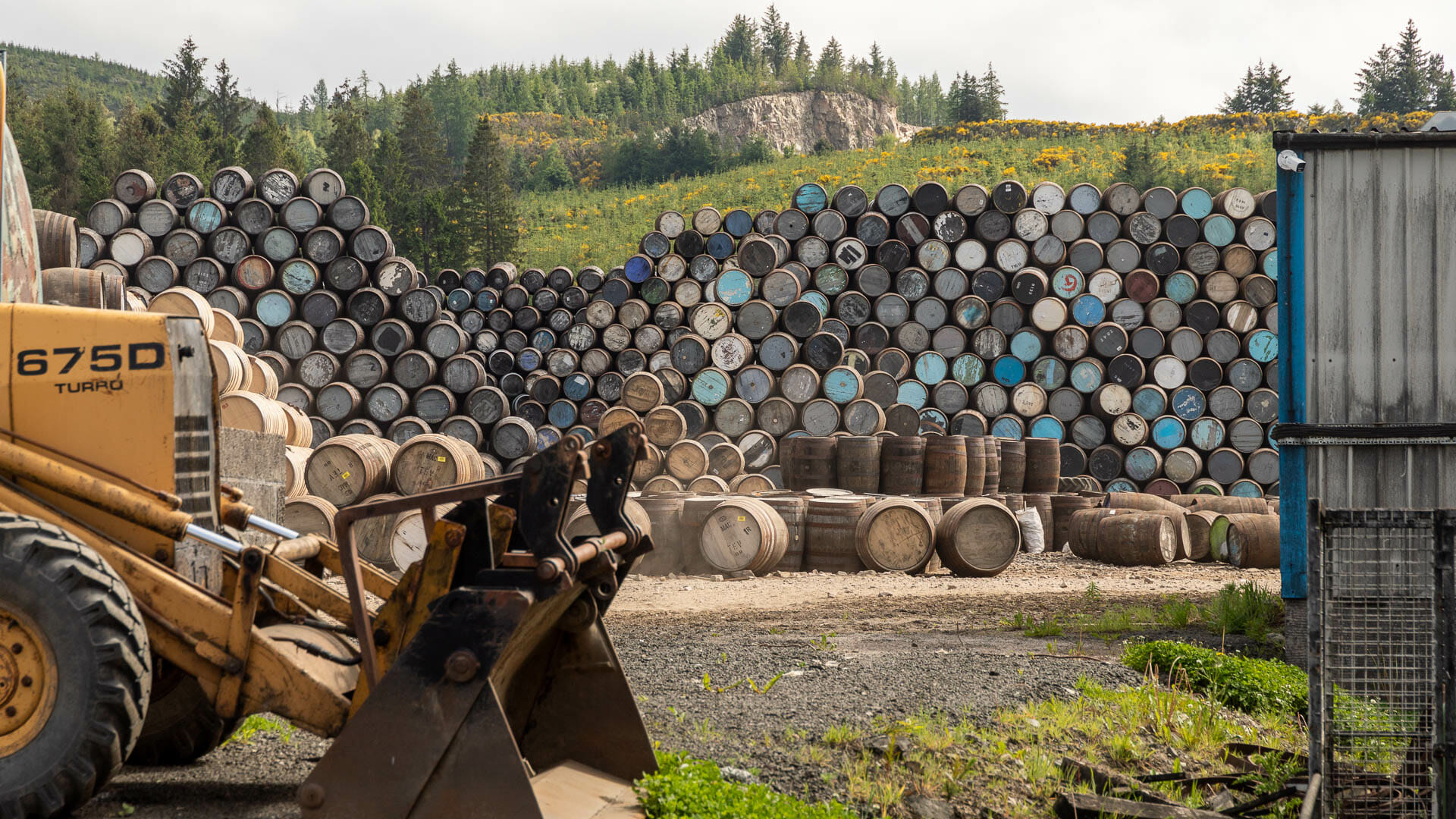
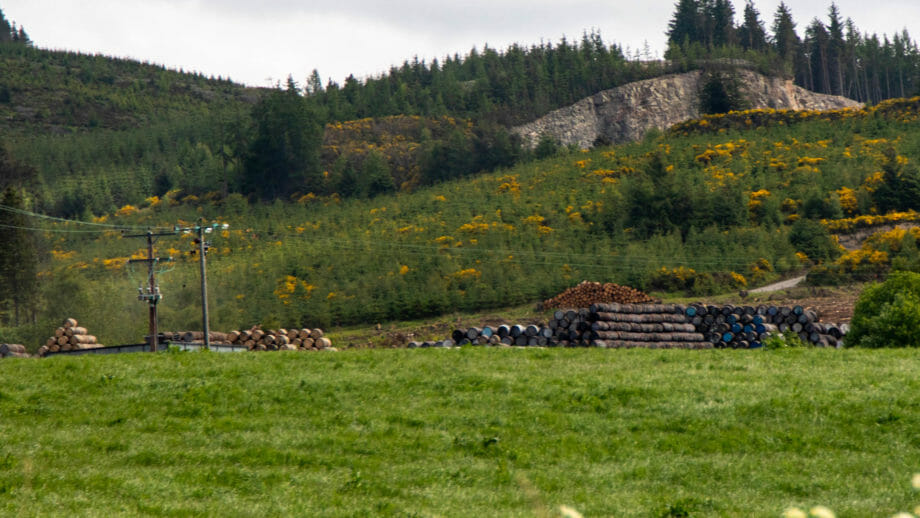
And there’s one more thing missing that would have made a photographer’s heart skip a beat: the famous pyramids of casks seen in almost every photo of the site are absent from the tour. Most visitors can’t get close to them, and can at most glimpse them from the road.
Despite these small disappointments, the tour of Speyside Cooperage is a must for whisky enthusiasts, offering a unique look into how whisky casks are made and reconditioned.
Good to know: the history of Speyside Cooperage
Shortly after the Second World War, in 1947, the Taylor family founded Speyside Cooperage. It was initially based in the village of Craigellachie. However, the need for space – not least for storage – grew so much that the workshop halls were moved to the outskirts of the village in 1991. After all, the cask pyramids have to go somewhere.
Since 2008, Speyside Cooperage has belonged to the Tonnellerie Francois Freres Group, which also makes wine casks, among other things.
Getting there:
With a sat nav: enter “AB38 9RS” and follow your sat nav.
Without a sat nav: coming from Speybridge, take the A95 north. Shortly past the village of Aberlour, a road branches off to the right, marked by a brown sign for Glenfiddich and Speyside Cooperage. The road passes the John Dewar & Sons Distillery before the cooperage comes into view on the right.