His mother found the walk to the nearest church too far – so he built a new one. St Conan’s Kirk is now one of the most remarkable places of worship in the Highlands. Here’s what makes it so special.
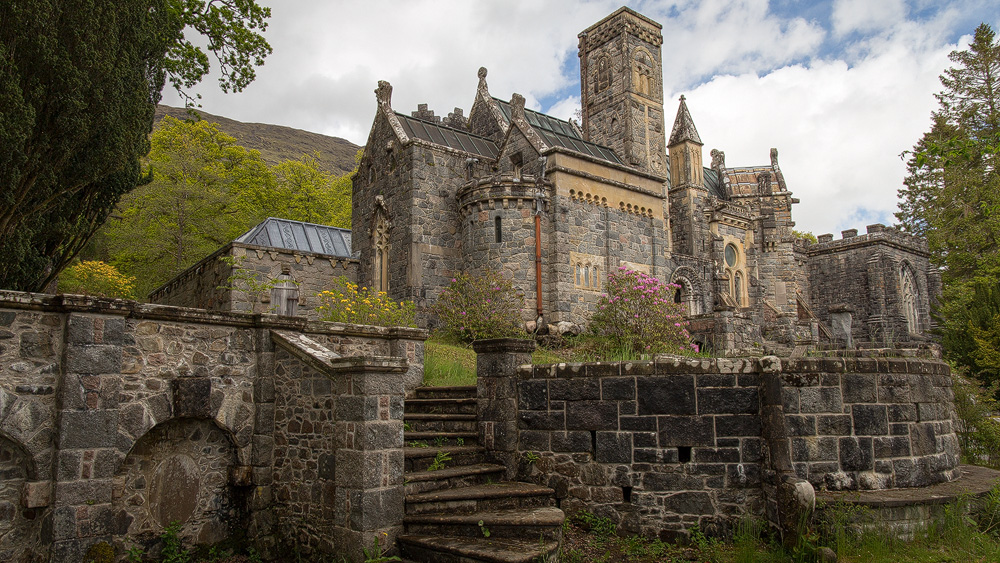
With the new railway line, a remote corner of the Scottish Highlands suddenly became interesting. Loch Awe, lying between Oban on the west coast and Tyndrum in the east, was around 1870 a remote stretch of land, almost devoid of people. But with the railway came people – one of them was Walter Douglas Campbell.
Walter was one of six brothers from the Blythswood estate near Glasgow. Since he wasn’t the eldest son and therefore not the heir, he looked for a new home elsewhere. A small island in Loch Awe caught his fancy – the island of the Saint Conan, in Gaelic Innis Chonain. Saint Conan would go on to become a recurring theme of his life.
Walter had moved to Loch Awe along with his sister Helen and their mother Caroline Agnes. Life there was good, except for one thing: there was no church nearby – the nearest place of worship was in Dalmally, seven kilometres away. Too far for Walter’s mother. So they decided to build a “chapel of ease” for everyone for whom the journey to Dalmally was too much.
In just five years, the first building rose near Lochawe, a simple place of worship only a few metres from the island of Saint Conan. The name pretty much chose itself: Saint Conan’s Kirk – the church of Saint Conan.
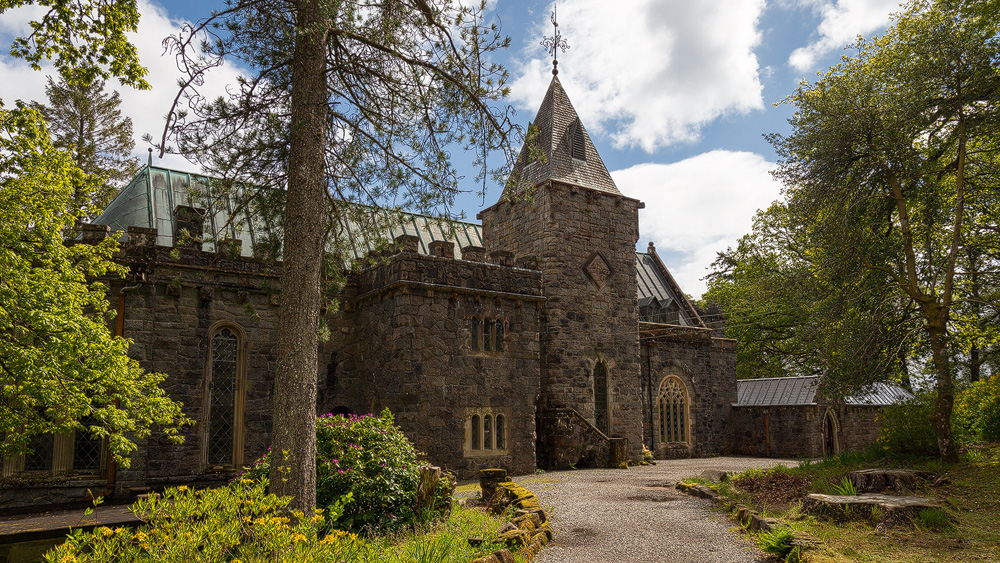
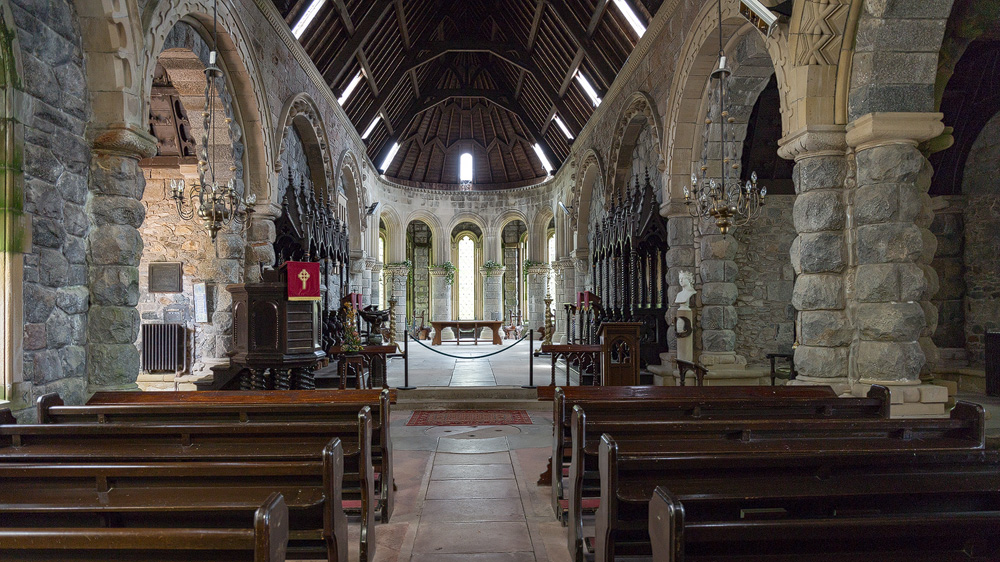
By as early as 1886 the church was considered finished. It consisted of a single nave, enough to hold a proper service. But Walter was nowhere near finished with the new church. A passionate architect at heart, he had far bigger ideas: St Conan’s Kirk was to become a church that combined the wonderful elements and structures of every Scottish place of worship – regardless of which era they belonged to. For Walter, this was about aesthetics, not historical accuracy.
Work on the new, expanded church began in 1907.
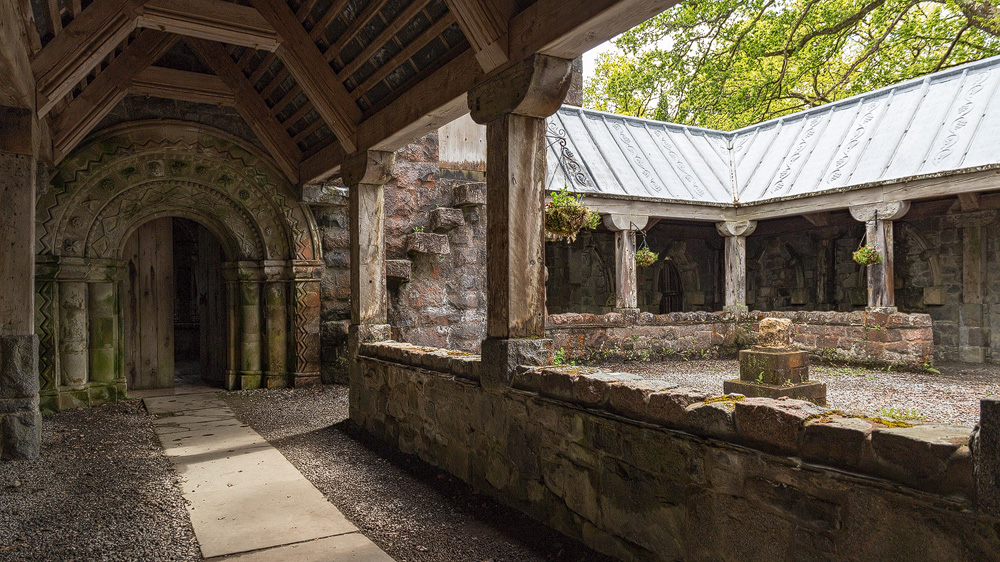
Approaching the church from the road today, it first appears rather unremarkable – almost every parish has one like it. But immediately to the right comes a feature Walter absolutely insisted on building: a cloister. Something usually reserved for old monasteries, he recreated it right here. For it, he used stones from a demolished church in Glasgow; the timber for the pillars came from a great battleship, the “Duke of Wellington”; and the roof was covered in elaborately decorated lead.
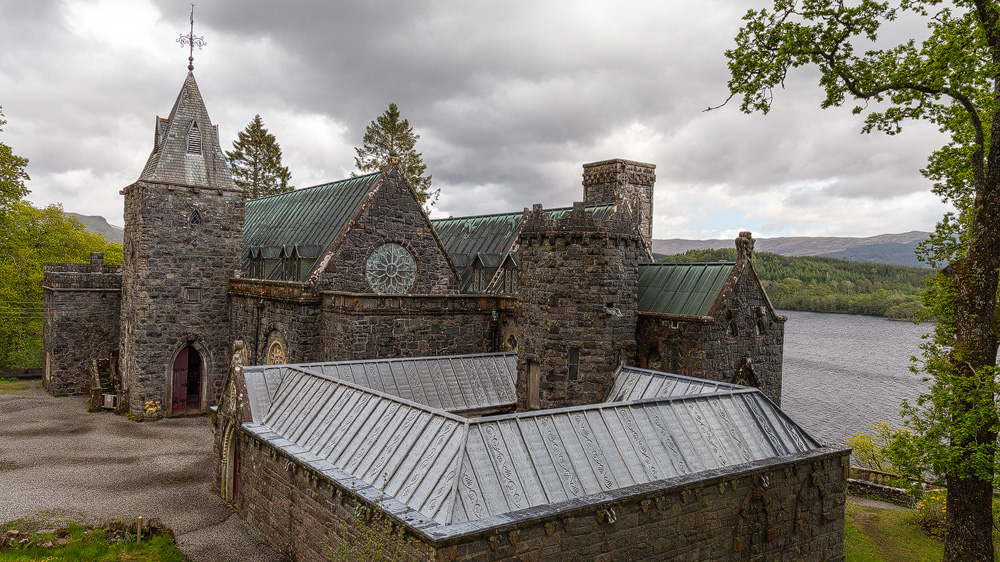
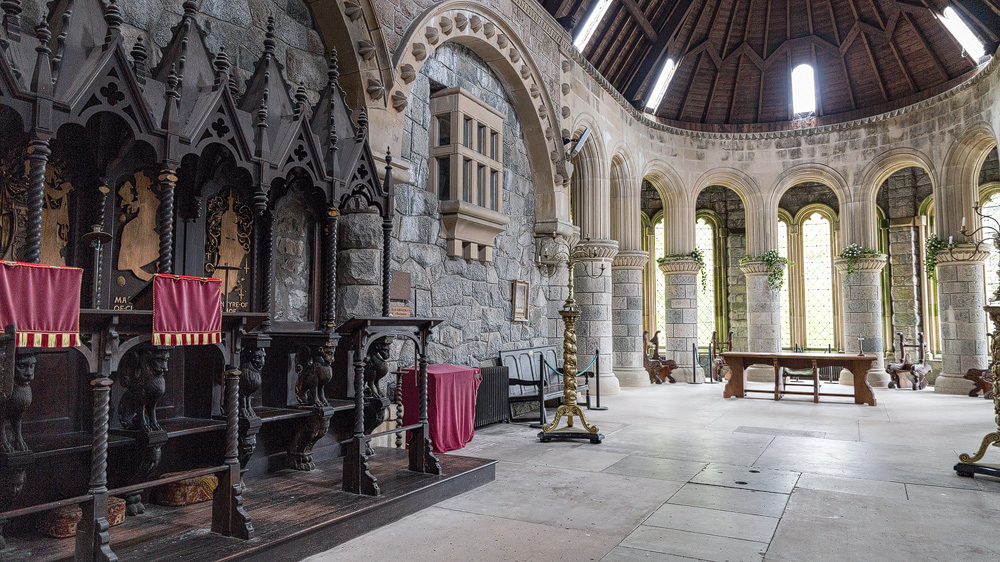
He also had not one but three towers built, and the nave was closed off with a round chancel walk. It’s all a crude mix of different eras of church-building history, and yet somehow it all seems to harmonise. Walter’s ideas balance perfectly between madness and genius.
Walter Douglas Campbell never lived to see his church completed. He died in 1914 – unmarried and without children. But his sister Helen carried his ideas forward. After the First World War, she oversaw further construction until 1927, the year she too passed away. But she had already made provisions for after her death, and so trustees finished St Conan’s Kirk in 1930.
Today, the wonderfully eclectic St Conan’s Kirk, together with nearby Kilchurn Castle, ranks among the most important sights in the area.
Good to know: Saint Conan, the Baronets of Blythswood and the Duke of Argyll
Not much is known about Saint Conan. The church’s website states that he was the patron saint of Lorne, the area around Oban. He was also said to be a disciple of Saint Columba, who brought Christianity to Scotland. He’s thought to have come from Ireland and lived in Glenorchy, not far from St Conan’s Kirk. More distant places bearing his name, such as Killichonan, point to his extensive missionary work.
In any case, Walter Douglas Campbell seemed so taken with Saint Conan that he named not only the church after him, but also the winter residence he had built above the island on Ben Cruachan – it’s called St Conan’s Tower.
The St Conan’s Tower website claims that Walter was the great-grandfather of the current Duke of Argyll, Torquhil Campbell – and the English Wikipedia copied that claim directly, letting an error spread across the internet once again. Because Walter Douglas Campbell had no children. So where does the mistake come from? Quite simply: the current Duke of Argyll’s great-grandfather was named Douglas Walter Campbell – easy for the names to get swapped.
In fact, Walter initially had very little to do with the Campbells at all – he was born a Douglas. Only when he inherited the title “Baronet of Blythswood” from his likewise childless brother did he, like his brother, also take on the surname Campbell. He held the Blythswood title until his death, after which another brother took it on, and after his death, that brother’s son – who died in a car accident in 1940. With him, the title died out.
Tip: What to look out for in and around St Conan’s Kirk
St Conan’s Kirk is packed with details and surprises. Here are a few things worth looking out for:
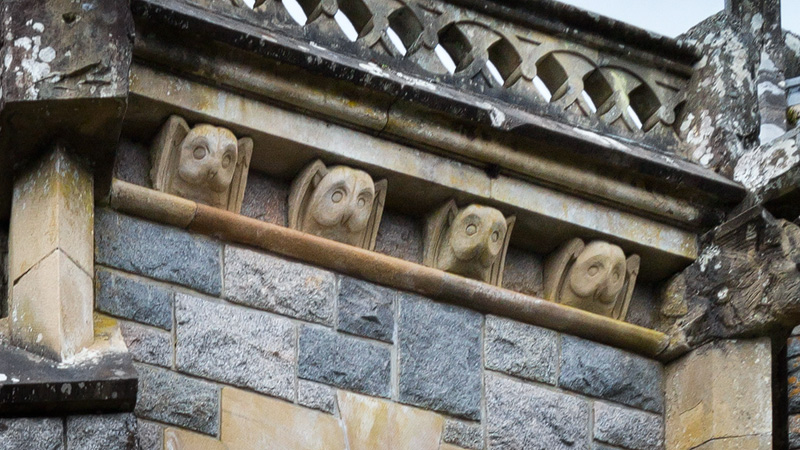
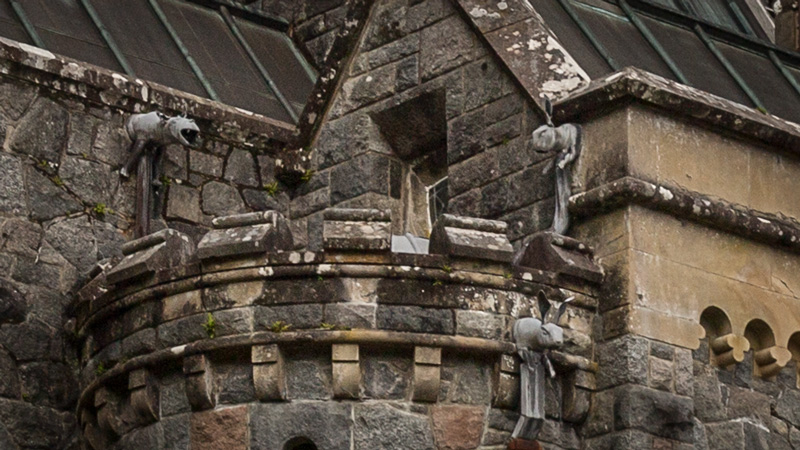
- The gargoyles on the south-west side aren’t the ugly grotesques you often see elsewhere – here, instead, a dog is chasing two hares.
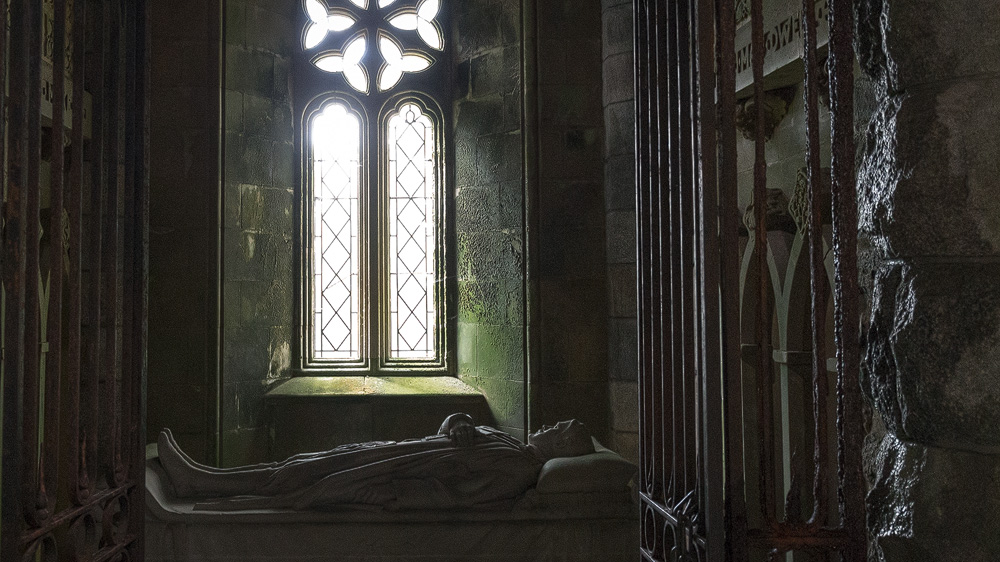
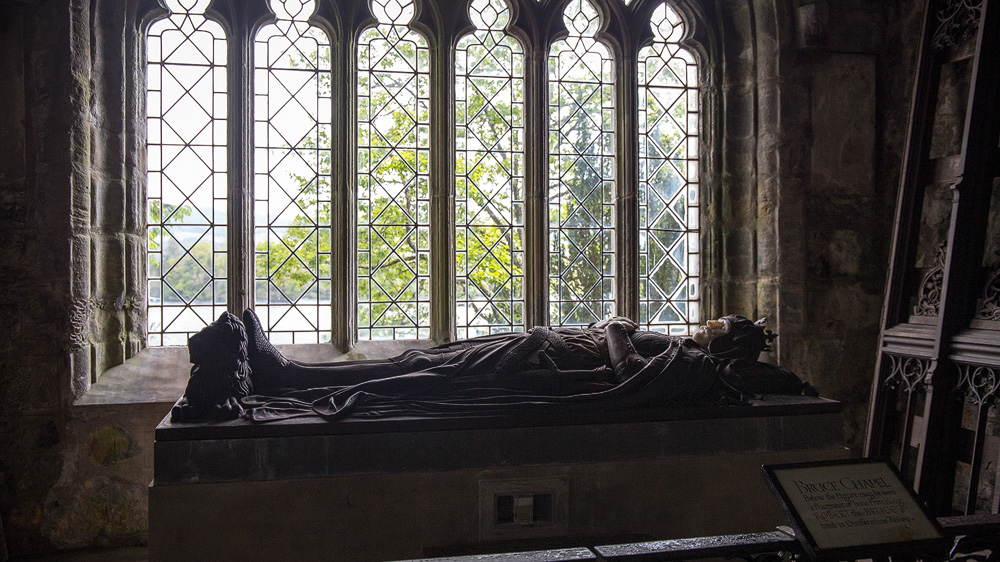
- Bruce’s Chapel holds an oversized statue of Robert the Bruce lying on a sarcophagus. The king isn’t actually buried here, of course – the chapel commemorates the Battle of the Pass of Brander, which he fought and won just above the church. A fragment of the king’s bone is said to be inside the sarcophagus too. The statue’s face is made of alabaster; when light falls through the window, it creates a wonderful scene.
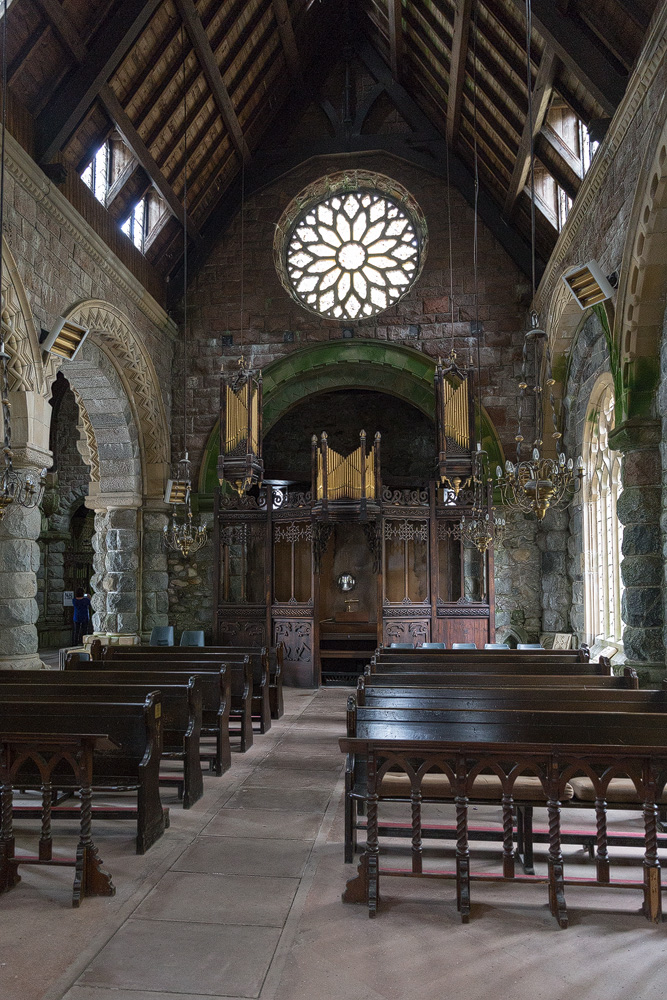
- The wooden screen around the organ was carved by Walter Campbell himself.
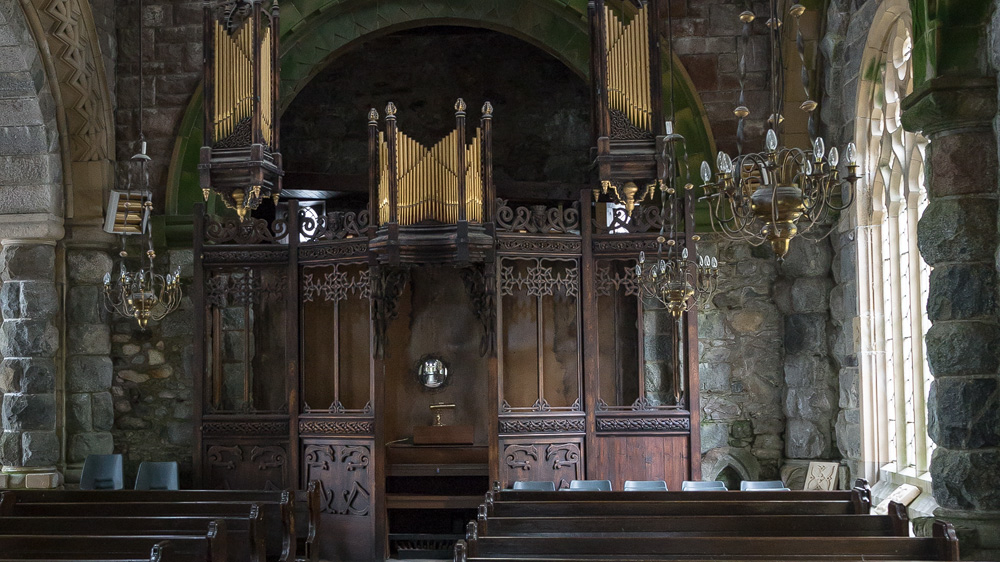
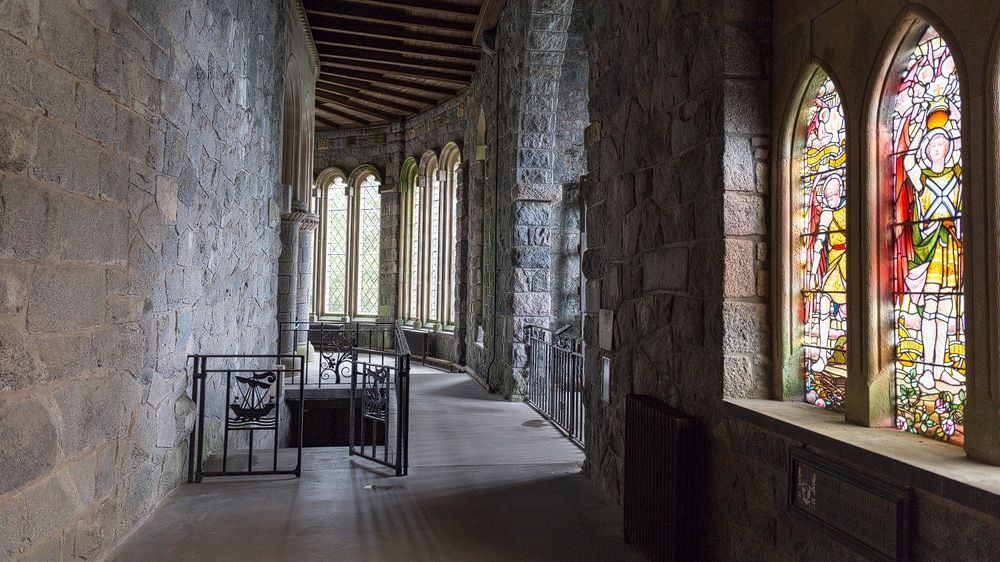
- There are numerous stained-glass windows.
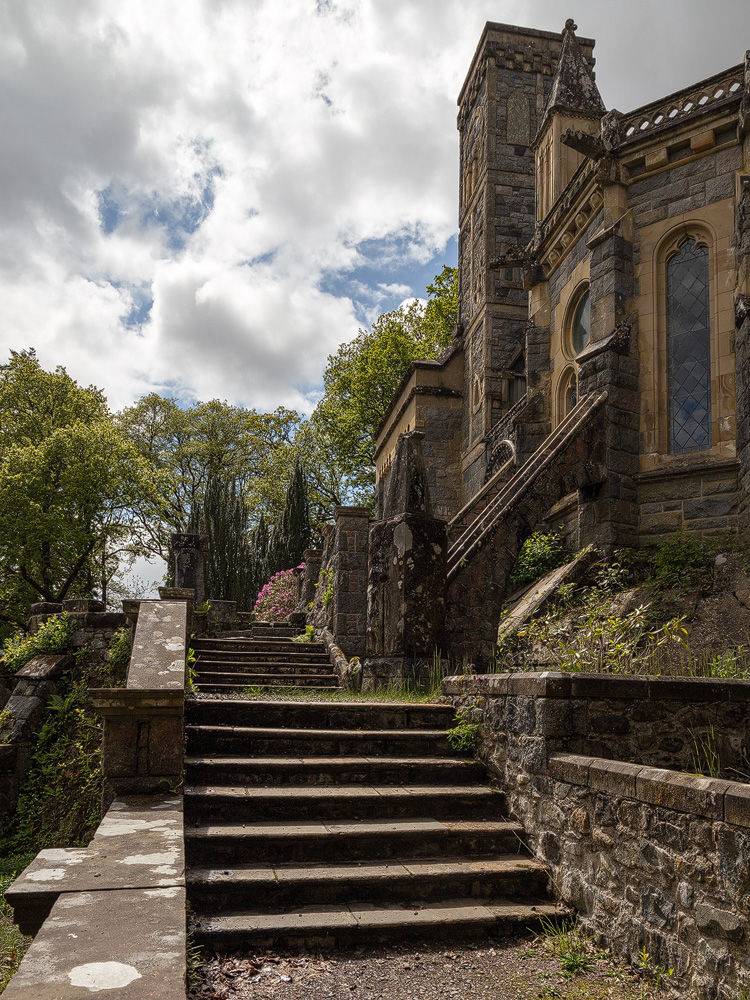
- Three different towers were built: a square one with a pointed roof at the entrance, an octagonal one at the cloister garden, and a narrow, square one on the south side – all three copied from completely different eras. There’s also a smaller tower next to the south entrance and a kind of bastion at the south-west end.
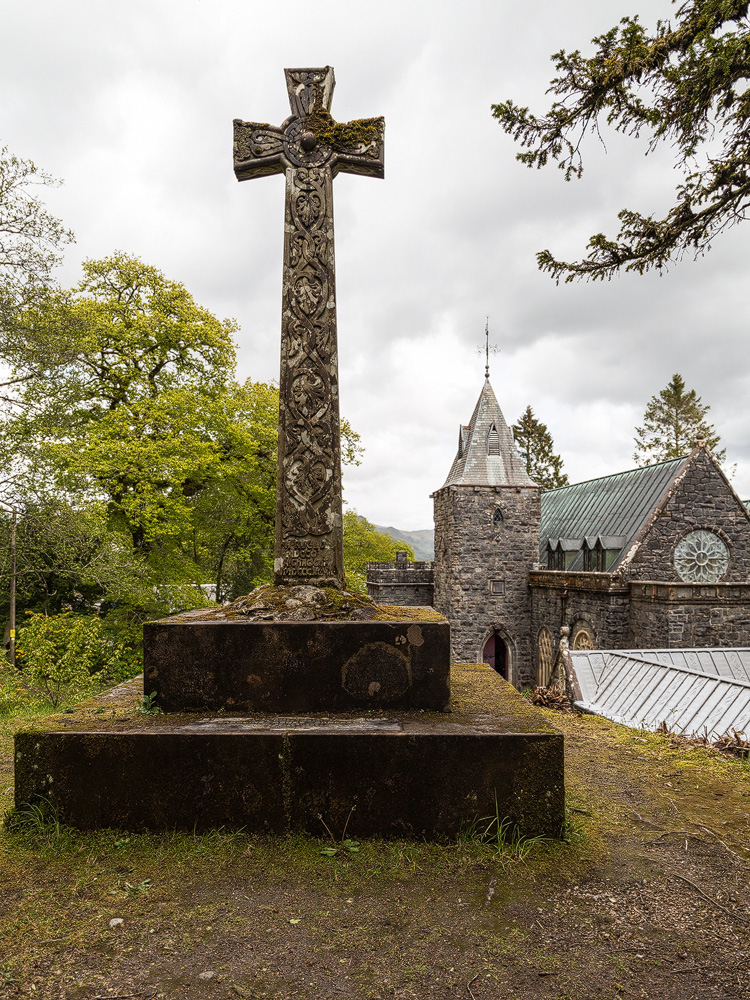
- A little further from the entrance, towards the road, a Celtic cross stands on a small hill. It commemorates Helen and Walter’s mother, for whose sake the church was built in the first place.
And of course there’s plenty more besides. As I said, the church is packed with details.
Personal note: Finally seeing this church
The first time, we drove straight past the church. From the road it really does look quite unremarkable. It was only later, seeing photos on Facebook of the south, or loch, side of St Conan’s Kirk, that I really wanted to go back. On a short trip to Glasgow I finally managed to make the visit happen. I now consider St Conan’s Kirk to be one of the most beautiful churches in all of Scotland – it combines a wonderful setting with remarkable architecture.
Getting there:
With sat nav: “PA33 1AQ” gets you to Loch Awe. Keep an eye out along the road there for the church.
Without sat nav: from Edinburgh, take the A84, or from Glasgow the A82, until you reach the A85, then follow it to Tyndrum and continue from there towards Oban. Journey time from either city is around two hours.
From Inveraray, take the A819 (which branches off under the arch in Inveraray) and, after a longer drive, you’ll meet the A85 towards Oban – turn left there, drive through Lochawe, and again keep an eye out on the left for the church. Journey time is about half an hour.
Coming from Oban, take the A85 and look on your right, just before the village of Lochawe itself, for St Conan’s Kirk. Journey time is about half an hour.
There’s no brown tourist sign for the church, only a small white one. Opposite the entrance to the church is a long parking bay you can use. Please be careful, as the spot isn’t very easy to see.