An artist couldn’t have created this island any better. Staffa displays a bizarre columnar structure, within which the wonderful Fingal’s Cave opens up. We set off on a trip there.
A narrow staircase leads up the cliffs from the sea, its lower steps washed over by blue-green water. This is our landing stage. Our skipper leaps expertly from the boat onto the steps and ties the boat fast. We’ve arrived on Staffa.
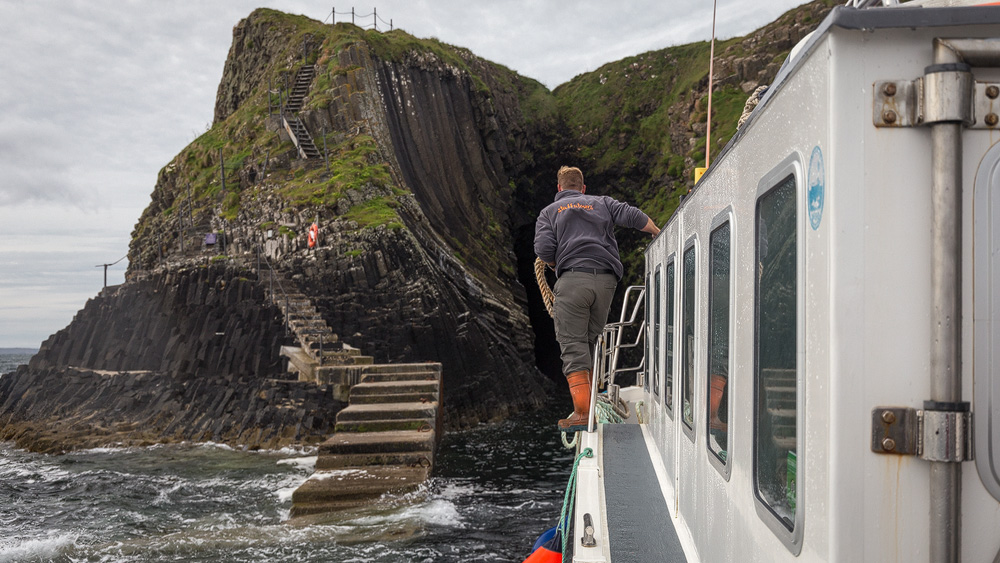
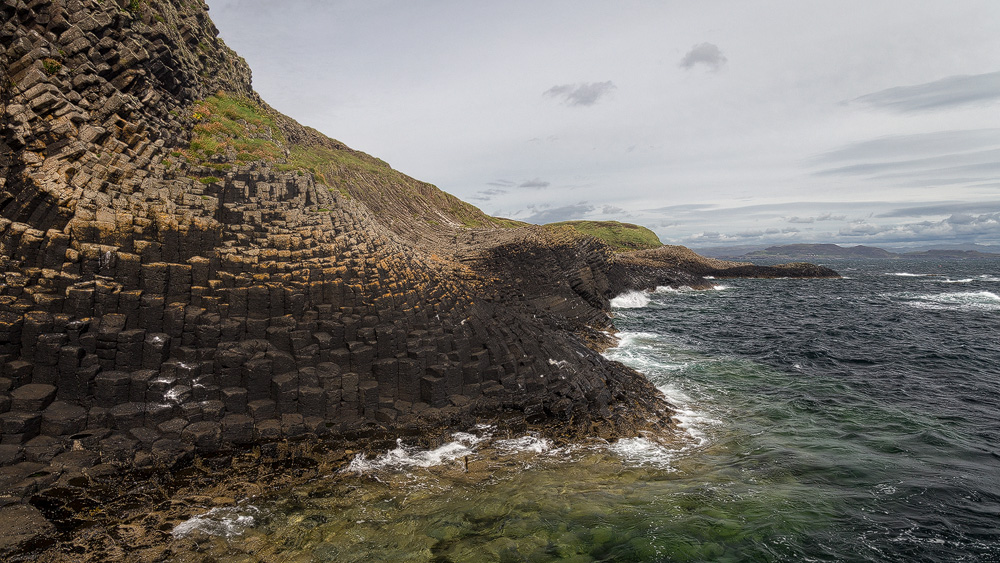
The island of Staffa belongs to the Treshnish Isles, a group of islands stretching west of Mull. Staffa stands out for its unusual geological structure. Its appearance is defined not by smooth rock, but mostly by hexagonal basalt columns, which grow upward sometimes straight, sometimes with a curve, or even slightly interwoven.
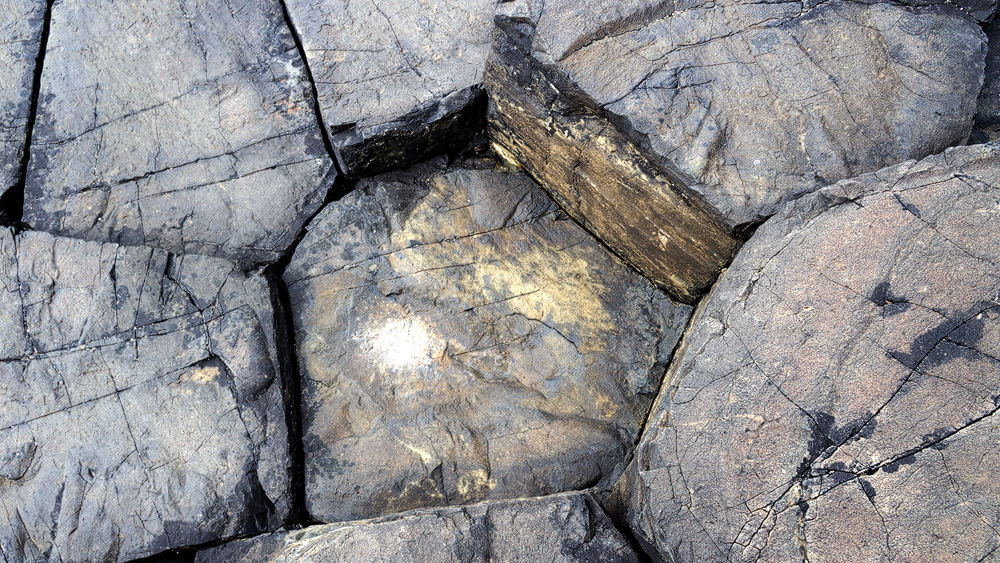
That alone is already wonderful to look at. But it was only the power of the Atlantic that turned it into a further wonder: Fingal’s Cave, a grotto at the headland of the island. And it’s towards this that we set off from the boat. At first the way doesn’t lead up the staircase, but sideways along the coastline. A small handrail has been drilled into the rock, giving visitors a little extra security on the way across the basalt columns.
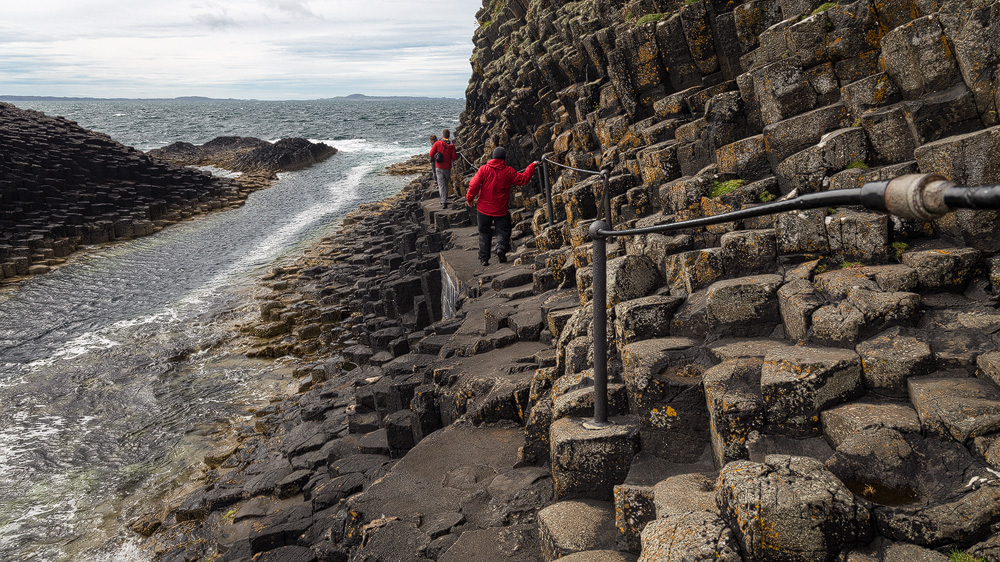
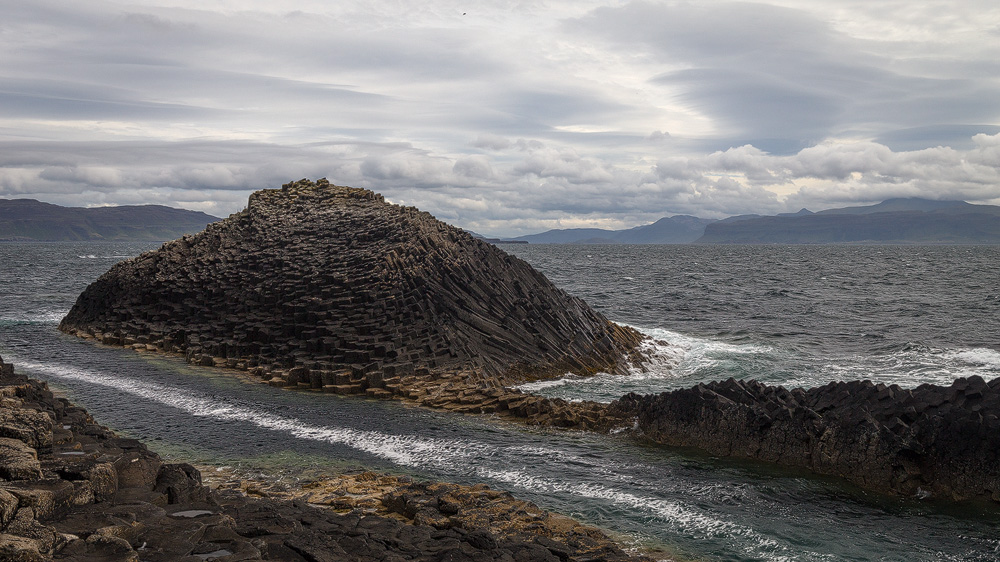
Beside us: the sea, and within it, bizarre little islands of its own.
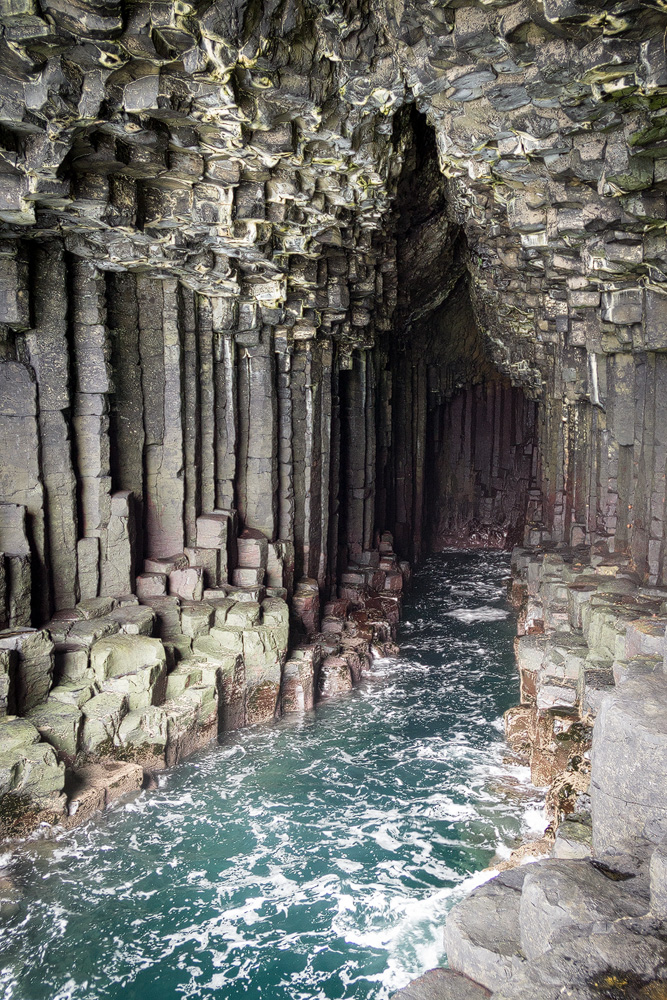
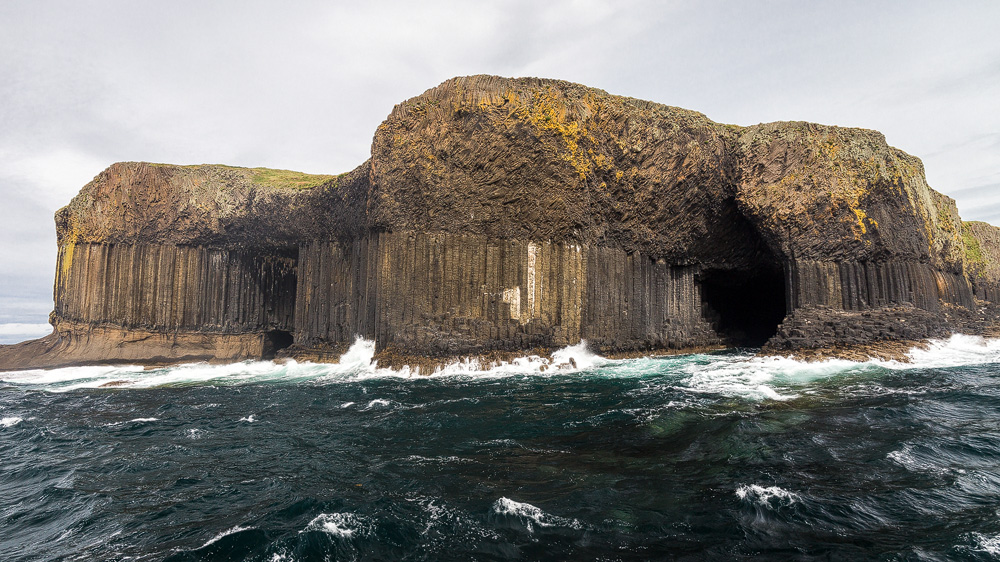
Then, at last, Fingal’s Cave opens up before us: a dome with a curved roof, carried by many columns, its floor the surging sea. Gigantic!
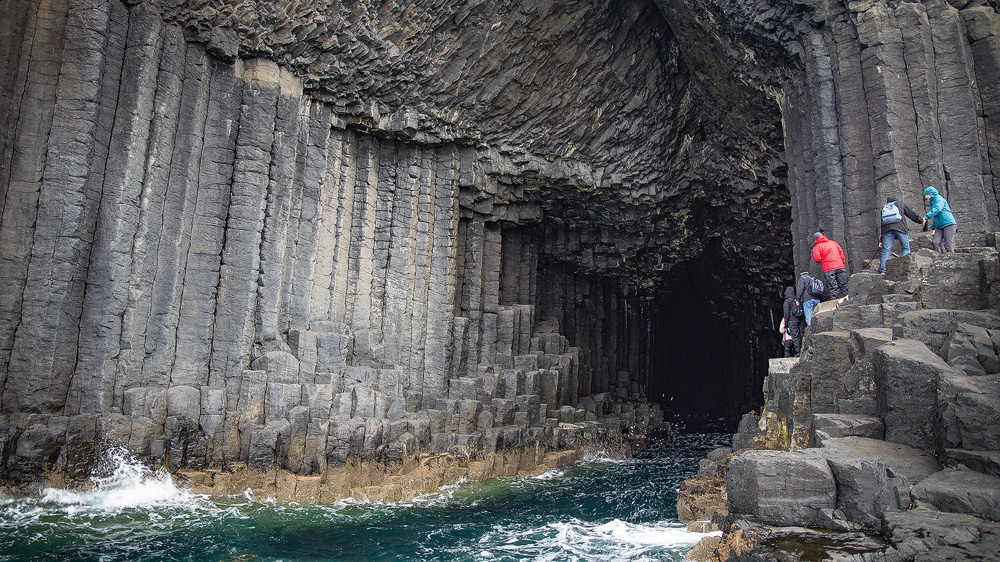
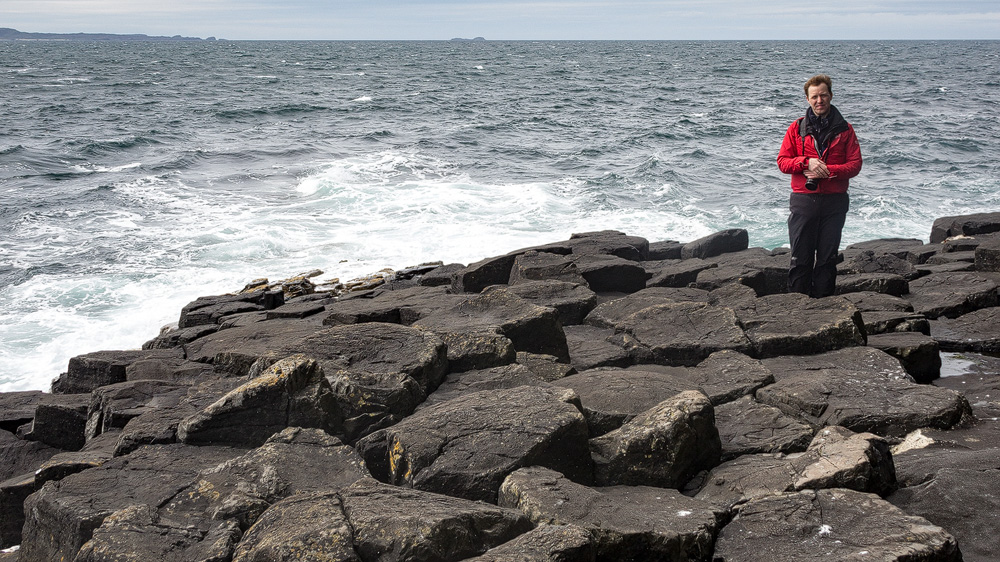
You don’t go far into the cave, and inside it becomes narrow. Only one person at a time can stand right at the back. I’d rather wait a while, since for me the more interesting view is from a bit further away. In front of the cave, the rocks form a spit of land – a good spot to take photos.
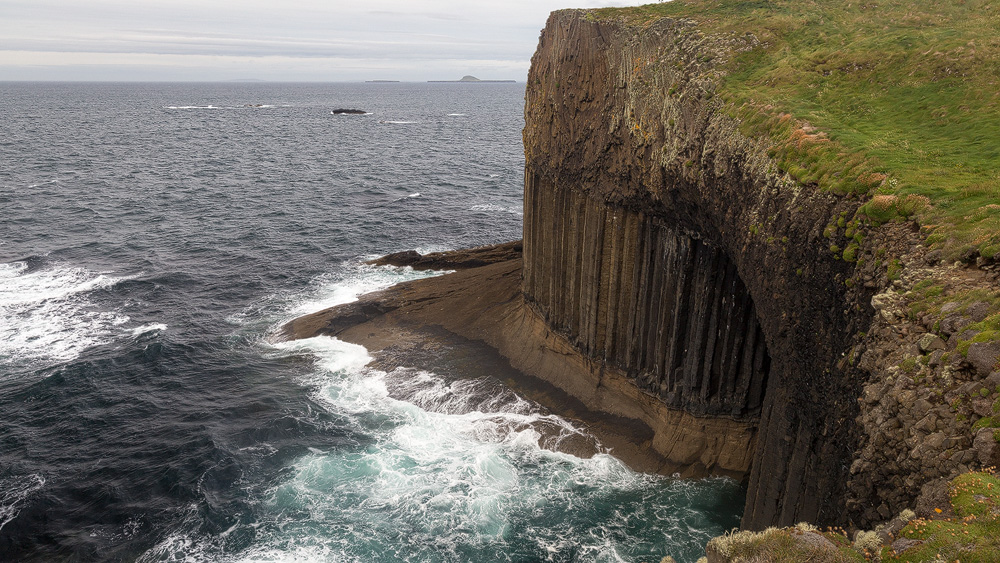
But reducing Staffa to just its famous cave would do the little island an injustice. So we take the path back to the staircase and climb it. Staffa’s highest point lies at 42 metres, almost directly above Fingal’s Cave. As always, my wife is the bold one and is the first to look down over the cliffs. I too then dare to take a photo.
Up top, the island is almost flat, mostly covered in grass with a few pretty little flowers dotted in between.
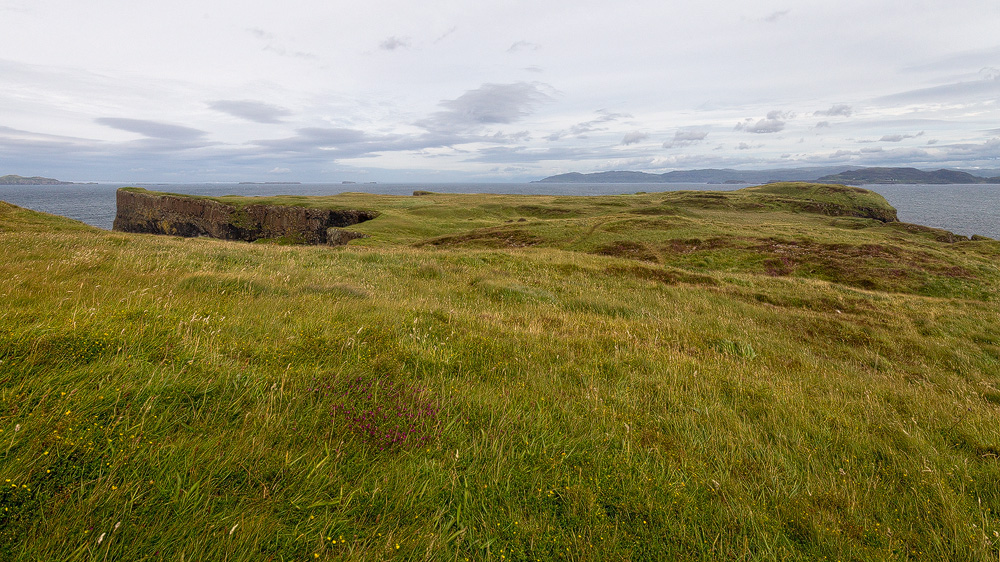
When the sun comes out, we lie down in the grass for a moment and let the surroundings work on us. It’s peaceful here; the passengers from our boat have scattered, so something almost like solitude sets in.
“If you’re late, we’ll see you again tomorrow,” the skipper had told us as we set off. And so we have to climb back down the staircase – from above it looks creepier than from below.
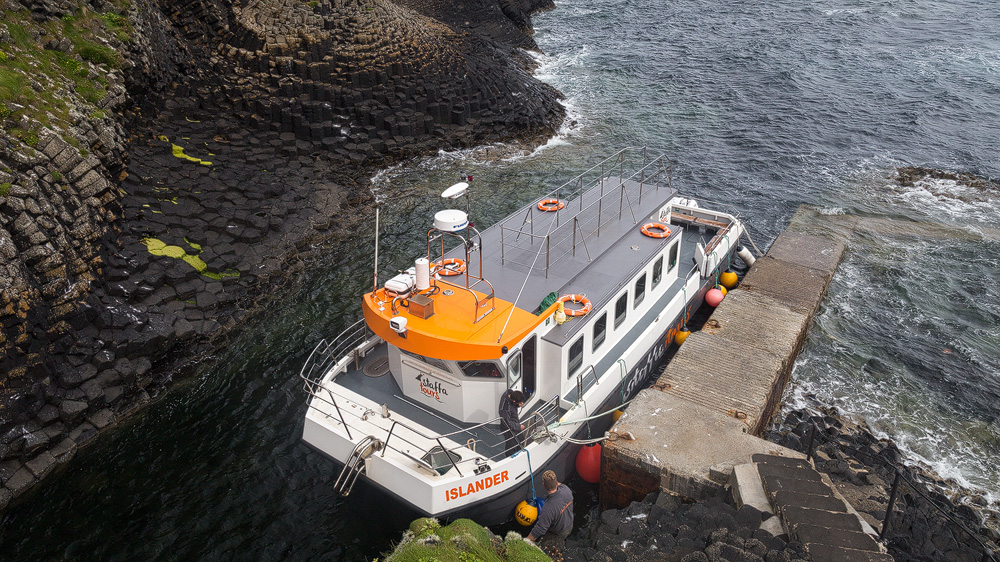
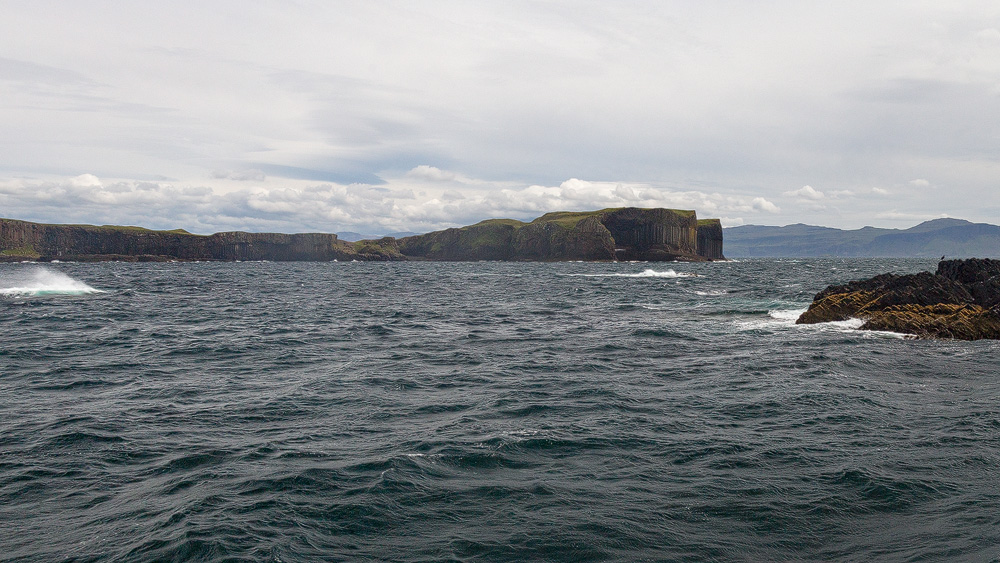
We cast off, and the “Islander” sails out of the safe little harbour towards the headland. From here we can take one more look at Fingal’s Cave.
Then the skipper sets course for the other Treshnish Isles, and Staffa slowly disappears over the horizon.
Facts: Staffa’s geology and history
So how do these interesting rock structures come about? Behind it is something geologists call columnar jointing. This happens when lava rises and then cools unevenly. If the mass at the top cools faster than at the bottom, it cracks at the top, usually in a hexagonal pattern around small centres. This then continues further downward, and once everything has cooled, you’re left with columns (a more precise and better explanation can be found here, in English).
Geologically speaking, Staffa is actually a sandwich: tuff at the bottom, then the columnar basalt, and finally another layer of basalt that doesn’t show any particular structure.
Staffa’s history is fairly quickly told, since the island was only rarely inhabited. That’s why you won’t find any remains of houses here. More interesting were the visitors who began arriving from the 18th century onward. Jules Verne was among them, as were Walter Scott and Robert Louis Stevenson (author of “Treasure Island”). The composer Felix Mendelssohn Bartholdy also landed here – he’s said to have been seasick the entire crossing to Staffa, but was nonetheless inspired by the cave to write a famous overture:
The name of the grotto, “Fingal’s Cave”, also dates from the 18th century. Back then, the poet James MacPherson wrote the epic “The Songs of Ossian”. In it, Ossian’s father is called Fingal, and the cave was named after him.
Personal note: leave a little money behind
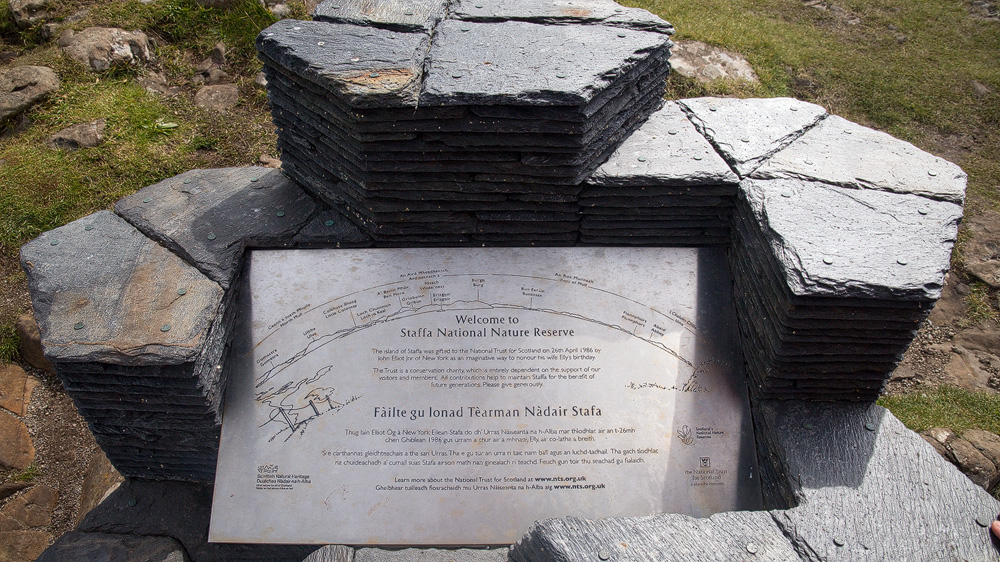
Staffa falls under the National Trust for Scotland, which runs it as a nature reserve. For this and many other projects, the trust is always glad of donations. Staffa itself of course charges no admission, but there are donation boxes here. I was happy to leave a little something.
Getting there:
There are several companies that organise trips there. On the one hand, Staffatours runs from Tobermory, Fionnphort and Iona. Alternatively, and a bit closer to the destination, is Turus Mara, a family business that has been organising these tours for a very long time and whose boss, Ian, has plenty of stories to tell.