There’s no other house quite like it! The Hill House in Helensburgh is unique, not only in Scotland. And it showcases the style of one of Glasgow’s most important sons.
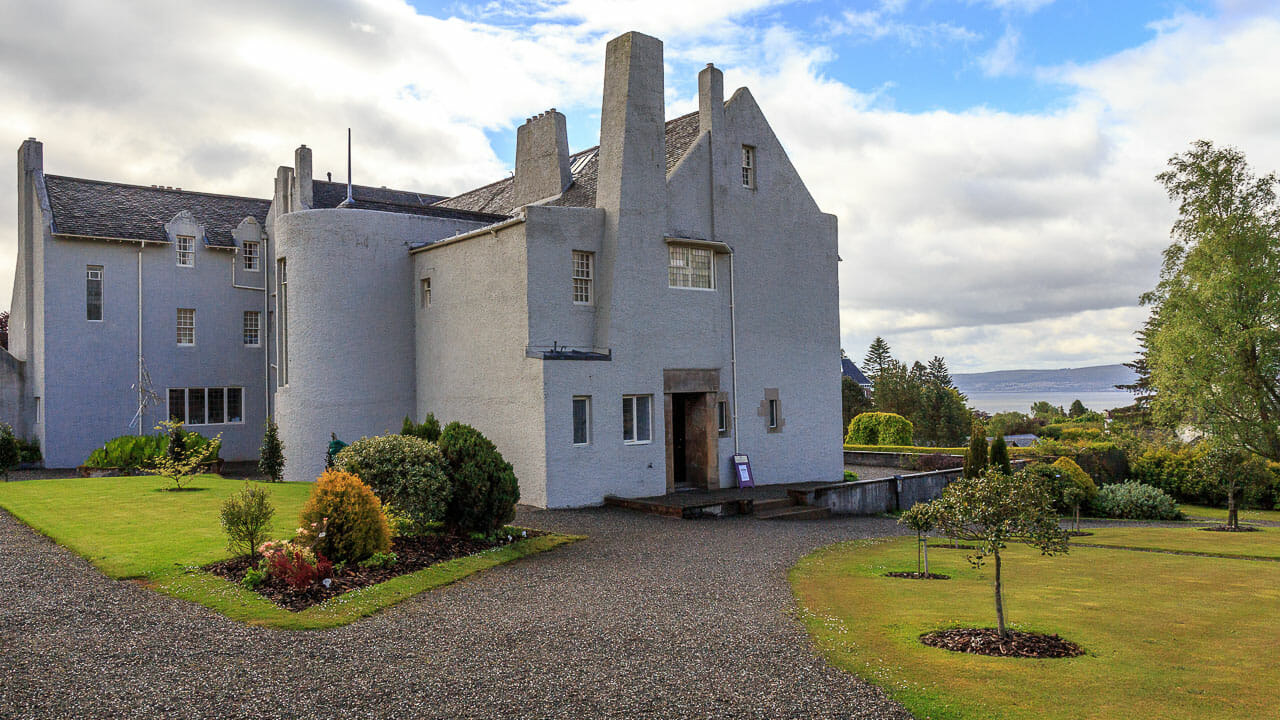
The Hill House was designed by the architect Charles Rennie Mackintosh. For his client, he was allowed to design not just the house itself, but also its furniture and interior.
Mackintosh was the best-known figure of the “Glasgow Four”, an artists’ group in Glasgow. For his client, the publisher Walter Blackie, he had completely free rein in designing the villa.
The conditions for the Hill House were already superb. As the building plot, a slope was chosen on the northern edge of the small Scottish town of Helensburgh. The view looks out over the Firth of Clyde, the sea inlet that stretches west of Glasgow.
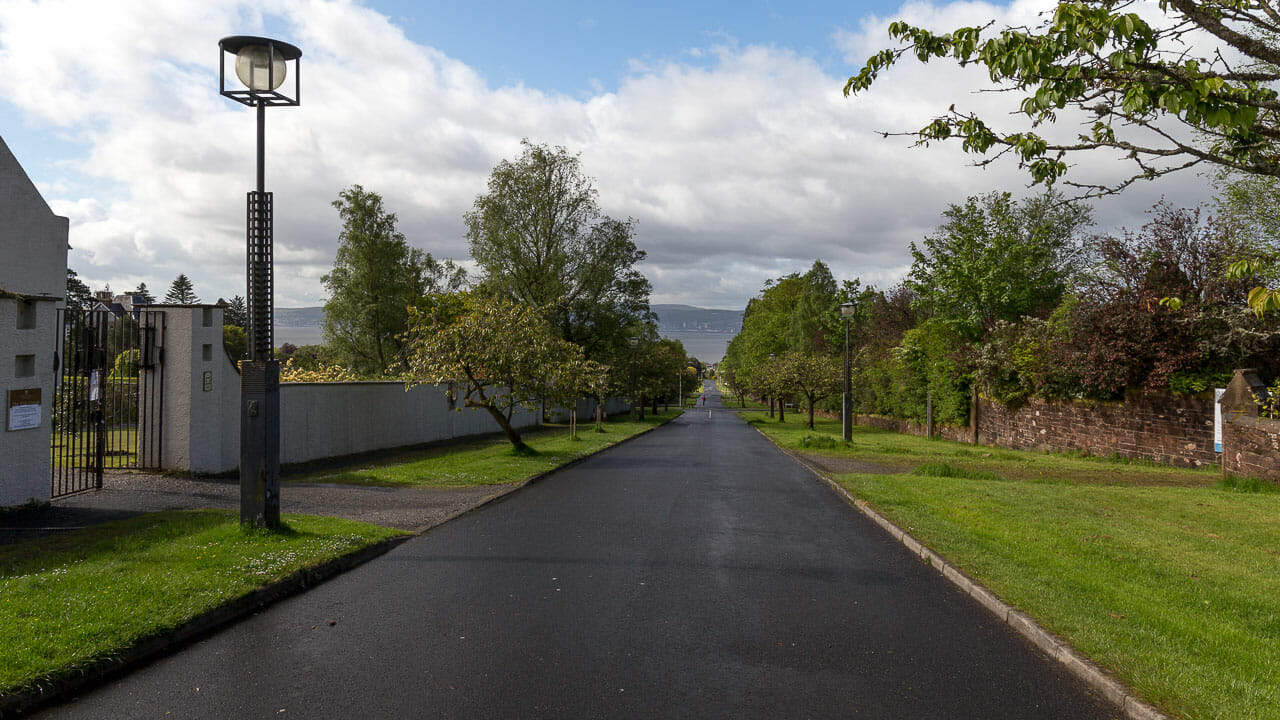
The Hill House was completed in 1902. The villa itself is a curious mix of styles. Mackintosh worked during the Art Nouveau era, yet had a visual language entirely his own. Still, influences can be made out: the Scottish baronial style found in many 19th-century country houses. A touch of Japanese influence rounds off this interesting mixture.
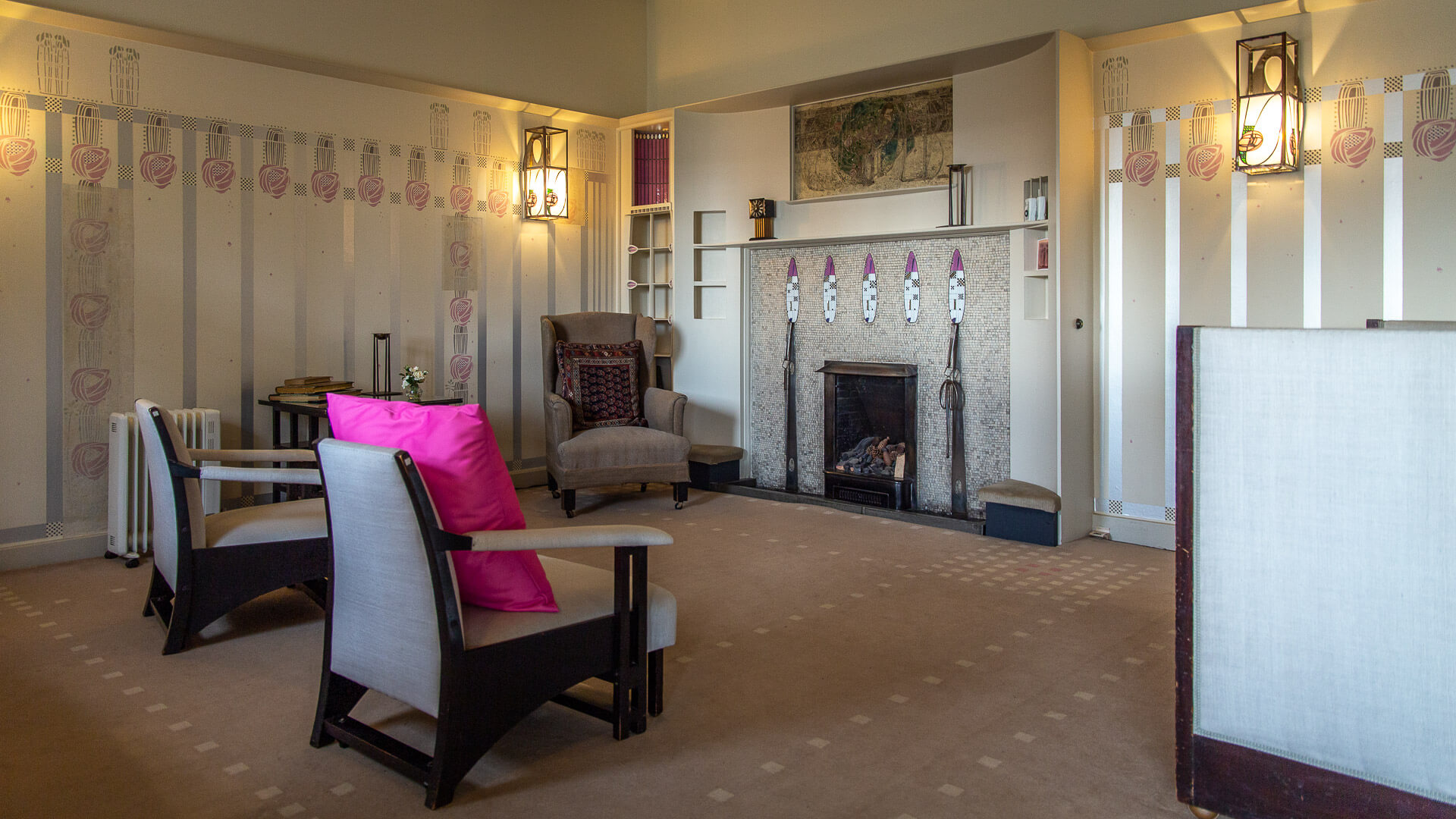
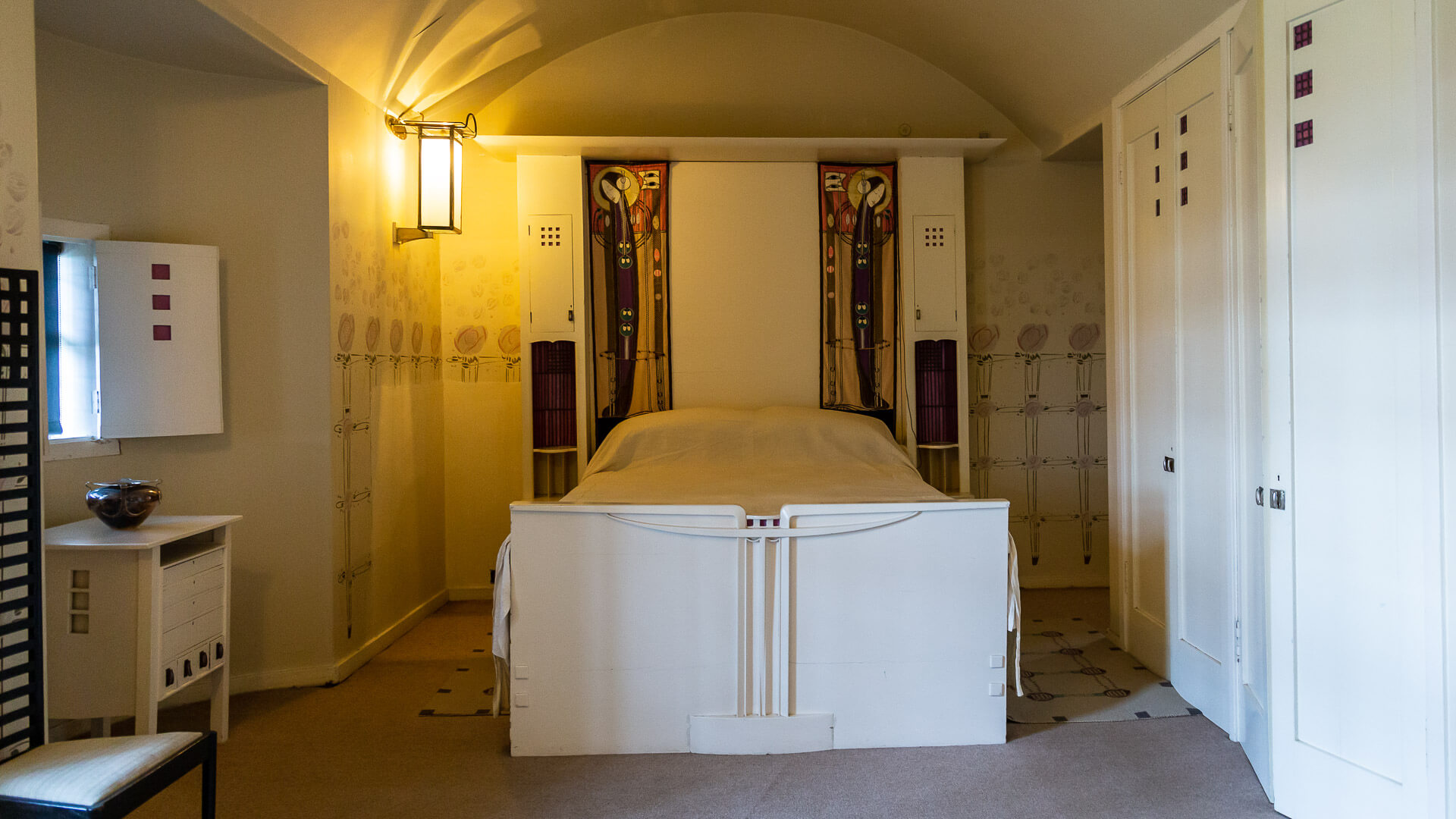
The house is truly impressive on the inside. Charles Rennie Mackintosh’s wife, Margaret Macdonald Mackintosh, designed the textiles and painted the pictures, which drew on the fairy-tale themes that had made the publisher Walter Blackie a rich man. Charles created furniture with strict geometry and bold splashes of colour set against white-beige walls.
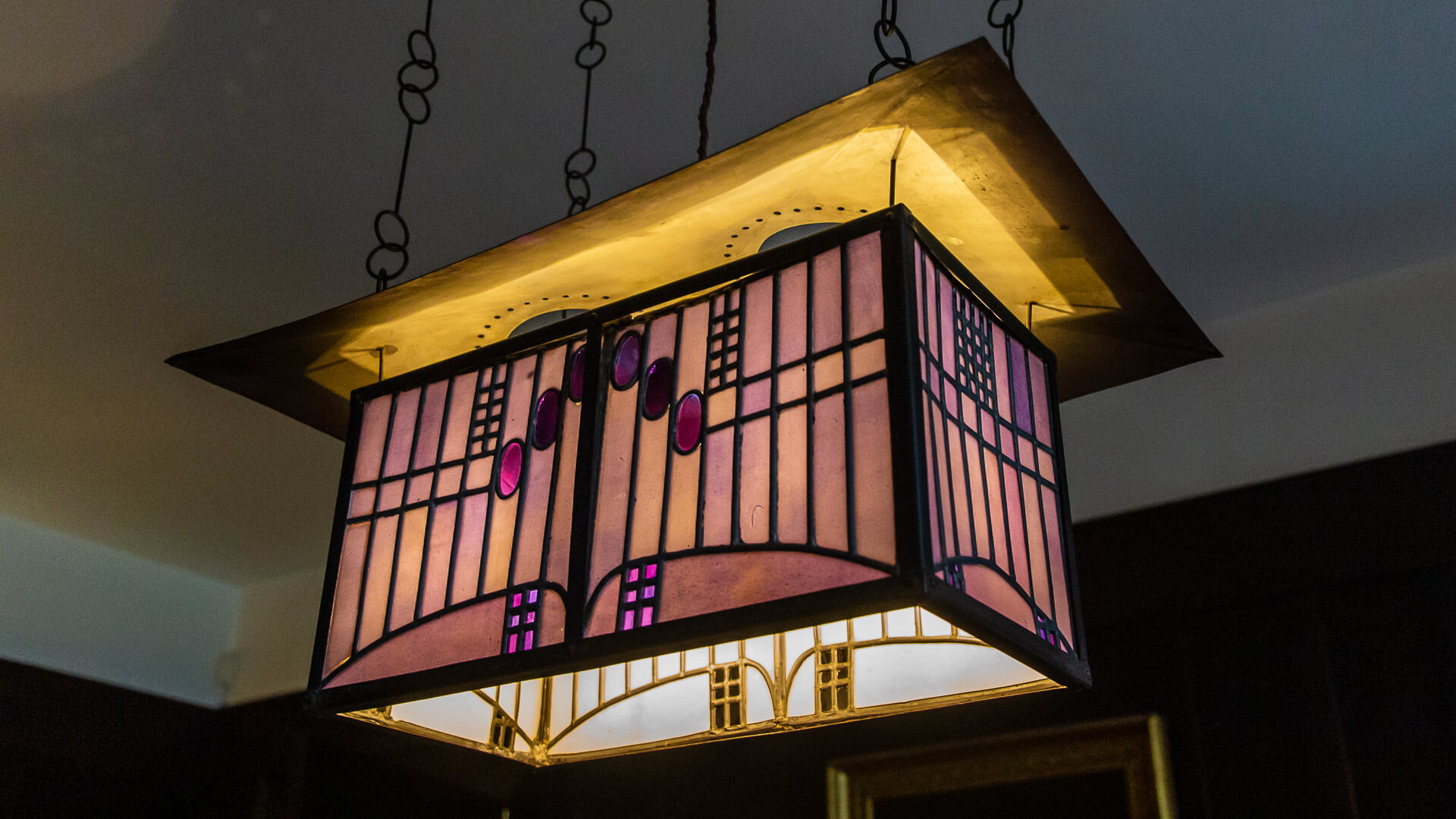
Lamps that look like little Japanese pavilions, …
… large chairs and small tables …
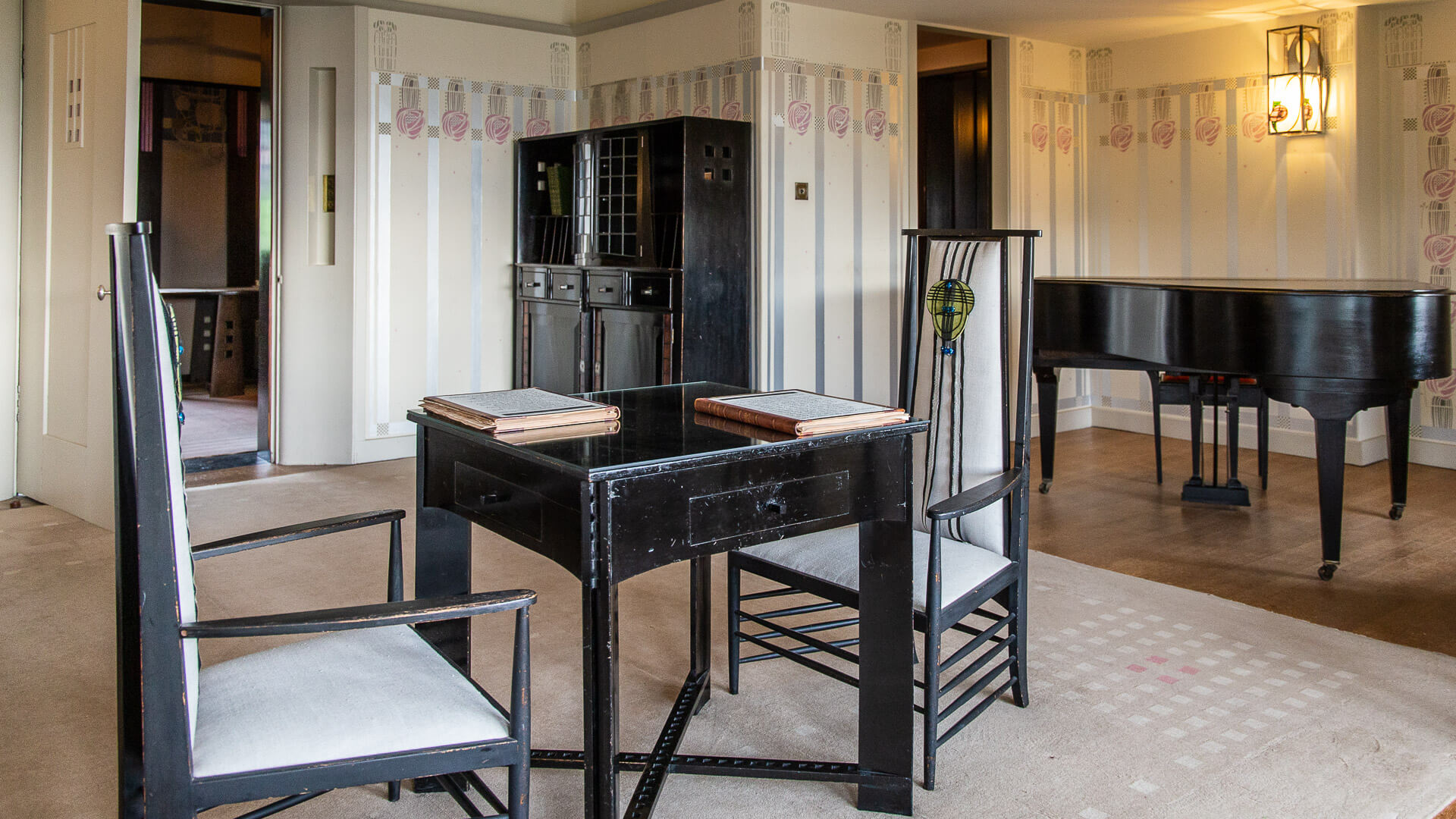
… and rather cool bedrooms.
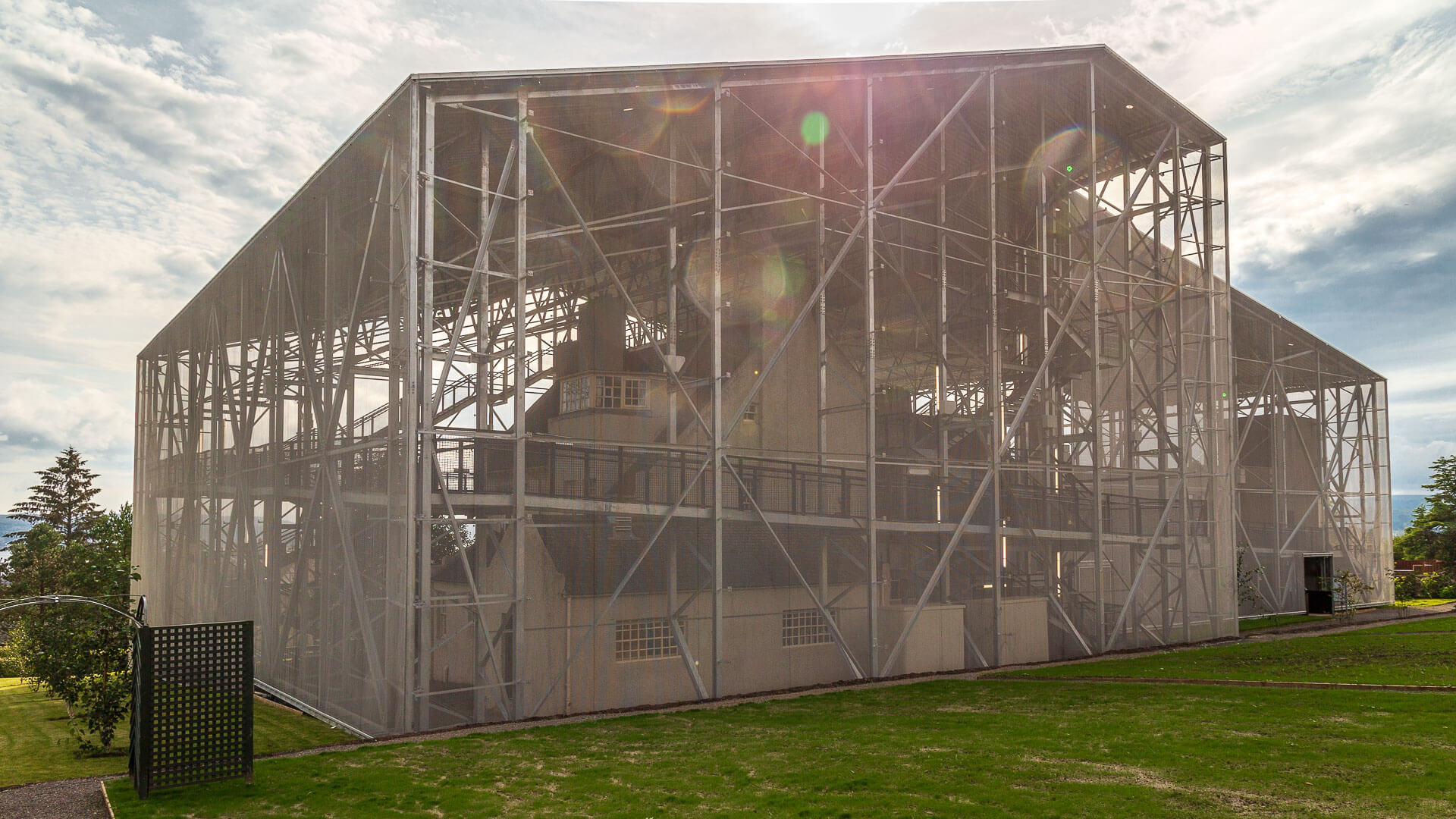
But today many visitors marvel at something else entirely: a new piece of architecture. In 2019 the entire villa was enclosed and roofed over with a hall – a house built over a house, in other words.
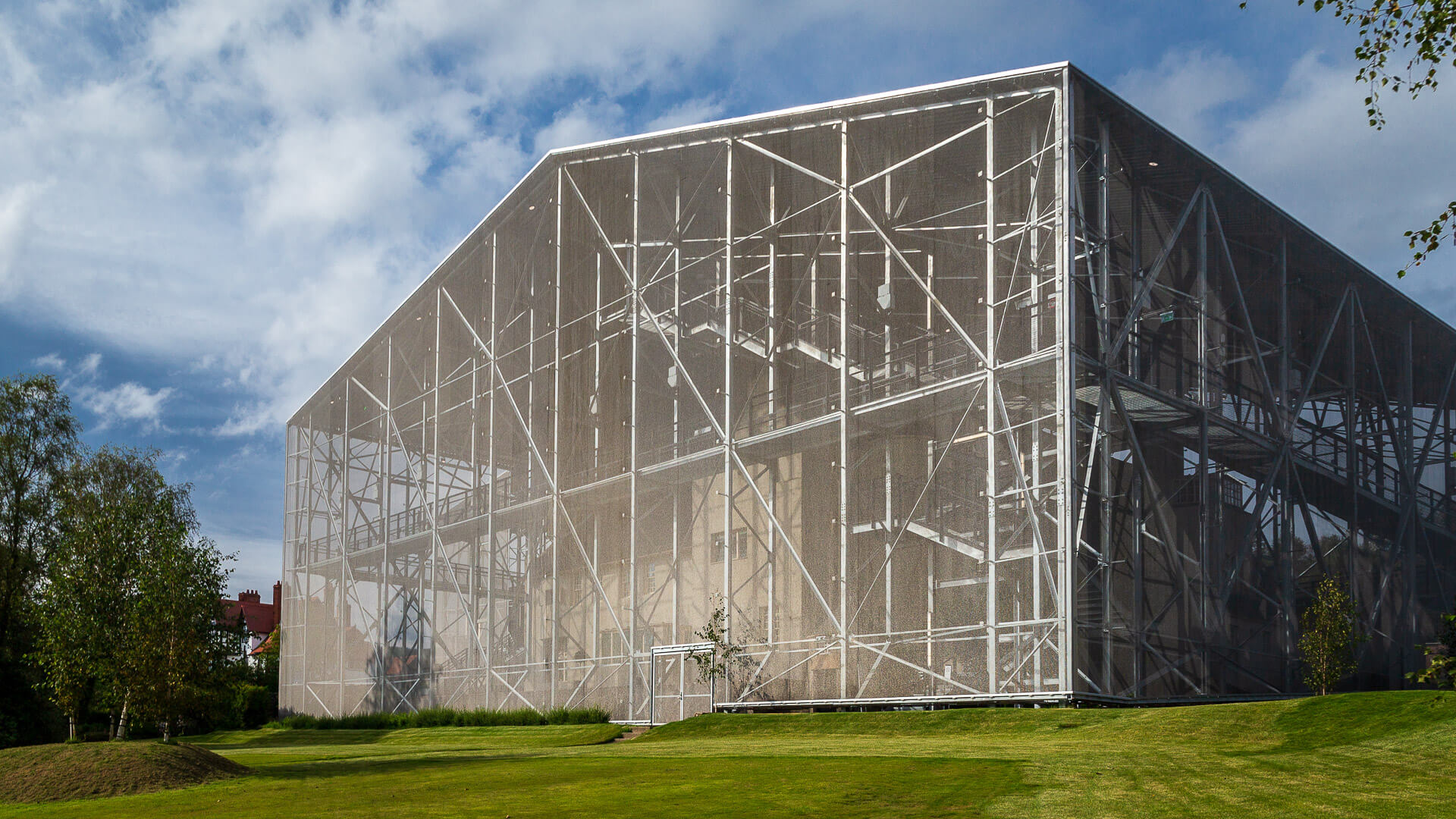
Of course, the outer shell robs the artwork of some of its charm on one hand, since you can no longer see the Hill House as a whole within its garden setting. But in exchange, visitors have gained something: unusual perspectives that weren’t possible before. Stairs now run up alongside the house, and there’s even a suspended walkway across the roof.
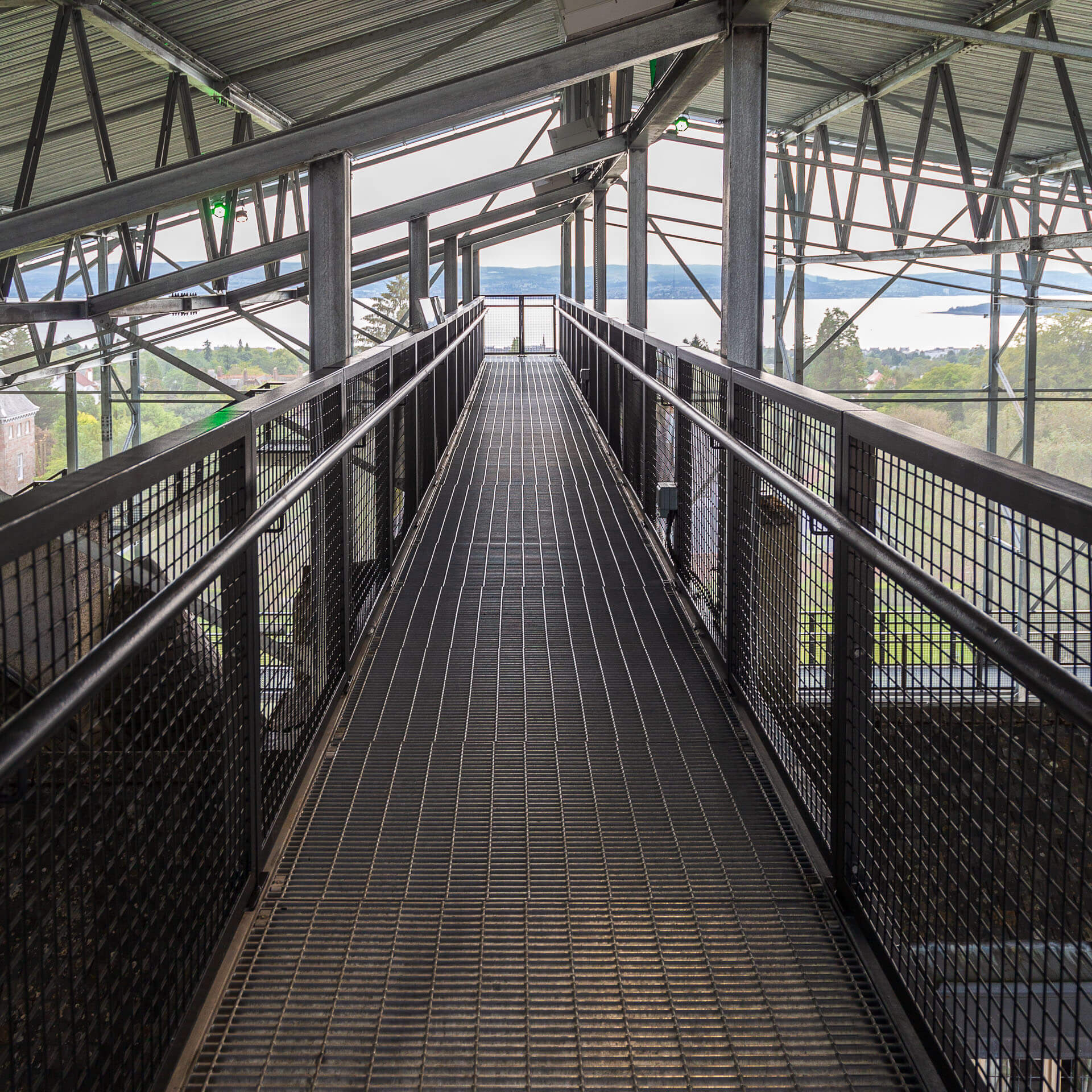
And suddenly you can see the genius of the architecture from every side – even from above.
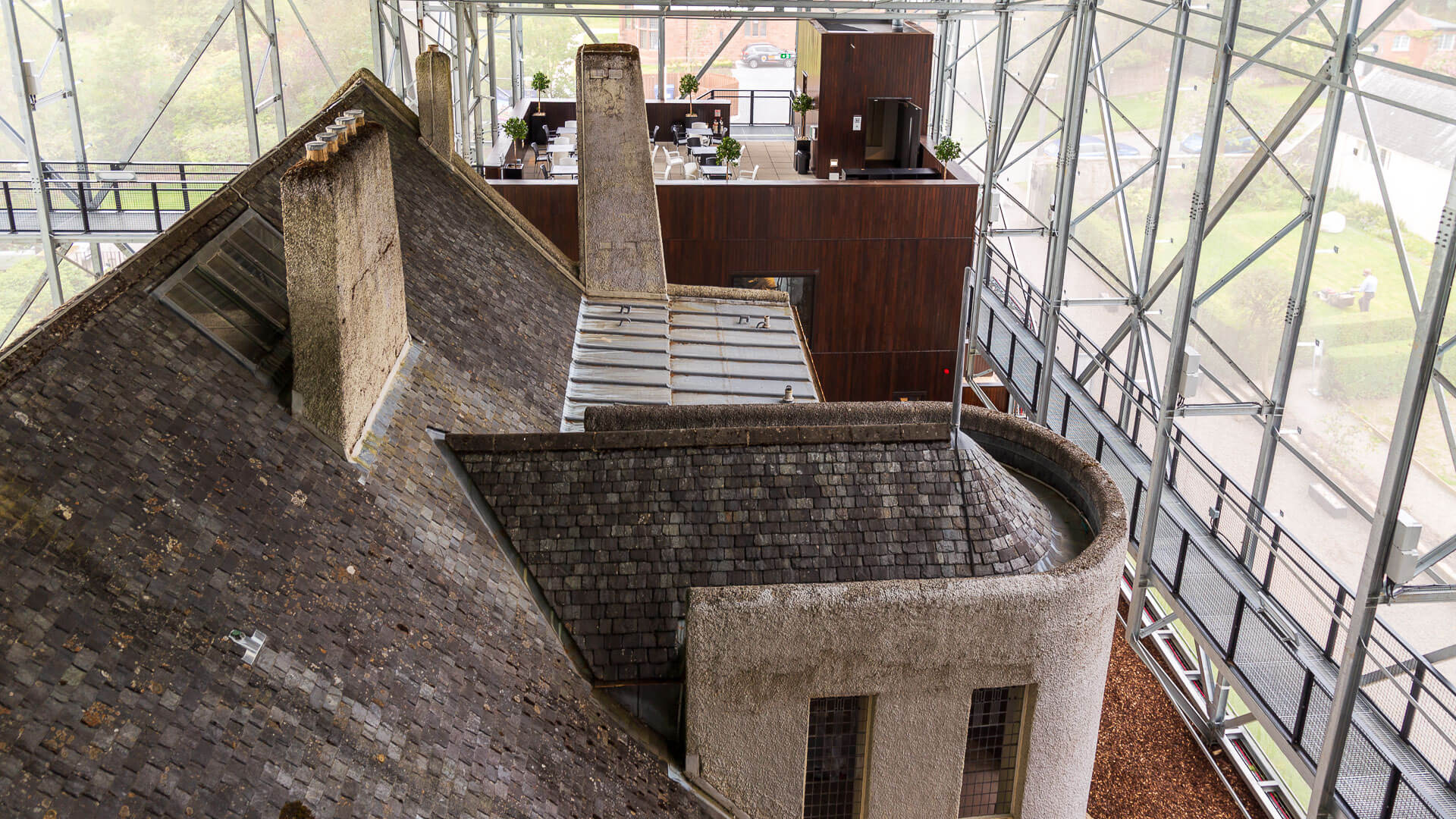
Admittedly, the surrounding garden has suffered a little. It’s noticeably shrunk because of the hall – and yet it’s still well tended and full of charm.
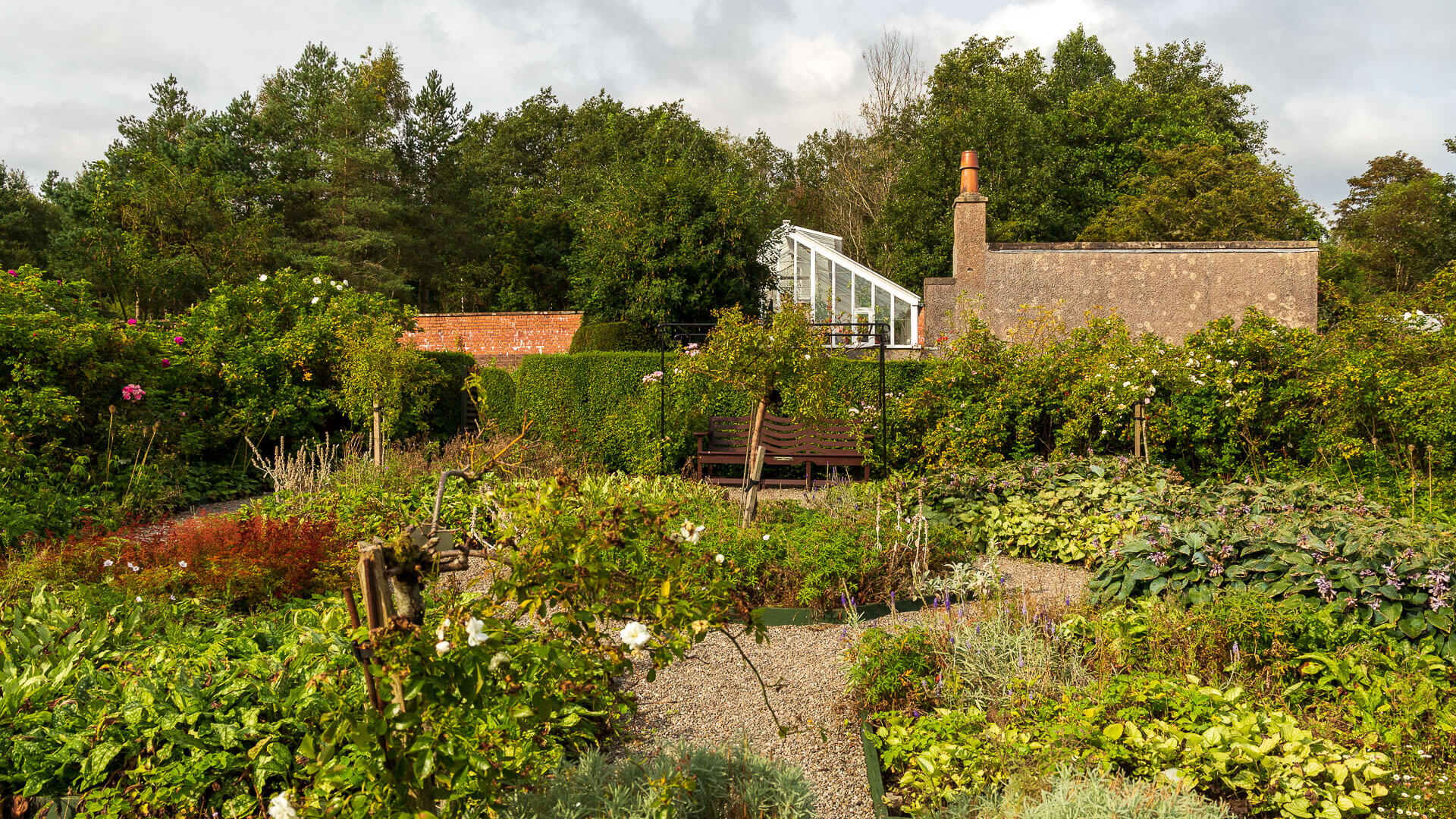
There’s also now a new café at the Hill House – coffee and cake with a view of the architecture. A real bonus.
Today, even more than a few years ago, the Hill House really is one of a kind – a fantastic contrast to old Scottish buildings and castles.
Good to know: Why the Hill House stands inside a box
From the outside, visitors of course see only the new outer shell at first. From a distance, it looks as though it’s made of glass. Coming closer, it becomes clear: it’s a kind of chainmail that envelops the house.
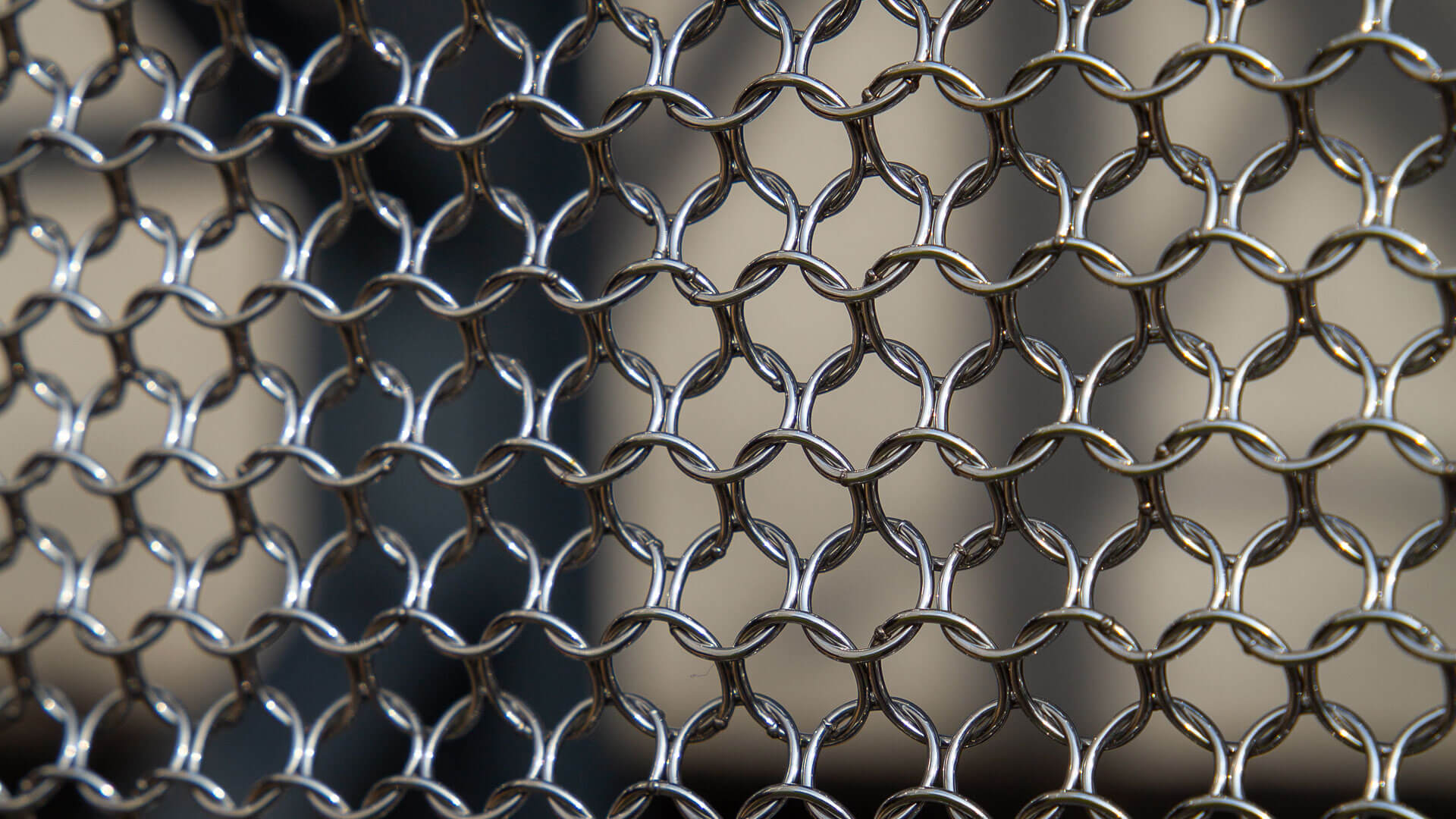
But why all this? It comes down to a mistake the ingenious architect made while planning. He was determined to realise his concept, even if that meant experimenting with a material that hadn’t yet been tested: cement render.
Mackintosh was convinced that this render wouldn’t just look attractive, but would also protect against damp. It was meant to evoke traditional lime render, while using a new material and allowing more possibilities.
The problem: traditional lime render had been used on old Scottish houses for centuries – it let a house “breathe”. If moisture got in, it could also dry out again. Modern cement kept moisture out completely – as long as it stayed intact. But once it cracked, the cement then also trapped moisture inside the house.
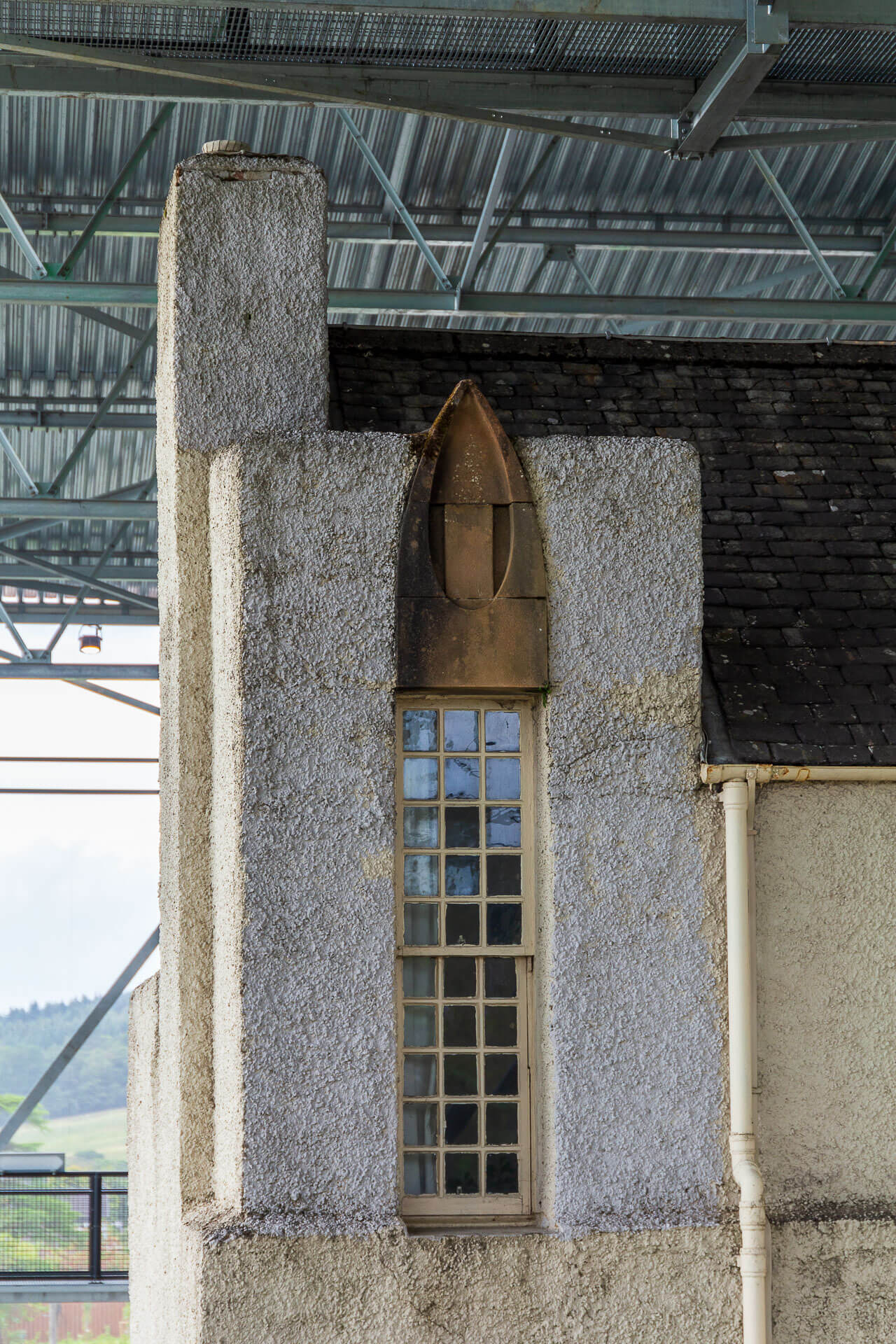
The Hill House therefore has a moisture problem, visible on the inside too, where the elaborate frescoes are dissolving in the damp.
To save the artwork, the National Trust raised funds (I made a small donation myself) and commissioned the architecture firm Carmody Groarke to build a hall. The result can be seen today. The structure regulates moisture: it keeps out 80 percent of rain from the side and 73 percent of rain from above. And as a side effect, visitors can now view every side of the house even more closely and enjoy the details better.
Tip: A walk from the Hill House
Above the villa there’s a larger car park. From there, several circular routes head off into the hinterland. I haven’t done these walks myself, but I’ve been told they’re rather lovely. You can find them at Walkhighlands.
You can also stroll a little through the streets around the Hill House and enjoy the view over the Clyde. There are further lovely houses to see all around too.
Getting there:
With a sat nav: “G84 9AJ” brings you into Helensburgh right near the house. It sits at the upper end of .
Without a sat nav: the fastest way from Glasgow is via the A82 towards Loch Lomond, then turning off at the Arden roundabout onto the A818 towards Helensburgh. Alternatively, you can also take the coastal A814, which runs through Dumbarton.