
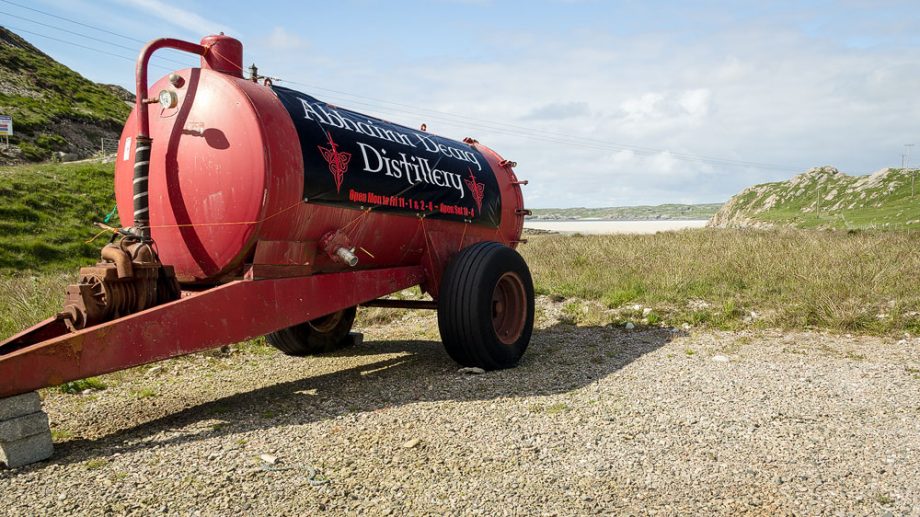
It is the first legal distillery in the Outer Hebrides: Abhainn Dearg. Here, everything is still done by hand. Only one thing is missing…
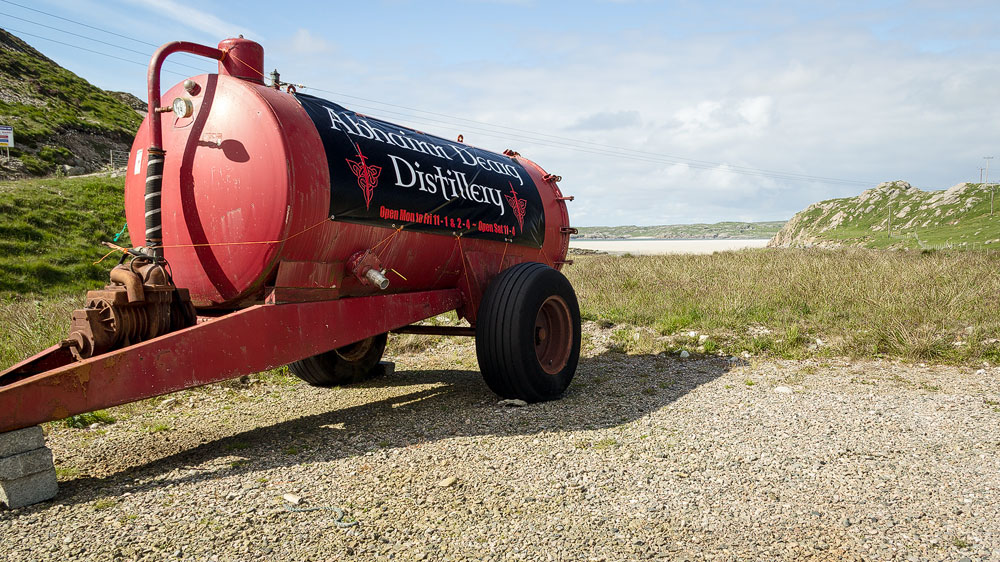
Because anyone looking for over-the-top romance in and around the Abhainn Dearg Distillery won’t find it here. There’s no visitor center with a coffee shop, no colorfully painted doors on whitewashed buildings, as you might be familiar with from the Edradour Distillery. The landscape is dominated by plain concrete gray beneath red tin roofs. Abhainn Dearg thus represents a younger generation of whisky distillers, much like the Kilchoman Distillery once did when it first started on Islay.
The distillery is little known, and its marketing is rather low-key. It has only been distilling its whiskey since 2008. Most of its malts are aged for at least ten years. Bottlings have been available since 2018, though their flavor didn’t exactly knock your socks off at first. However, there are now cask-strength bottles from Sherry PX and Madeira casks. And they’re quite drinkable. Fans of unpeated whiskey, in particular, will find something to their liking.
Visitors to the Abhainn Dearg Distillery will discover something different here: a philosophy summed up by the phrase “from field to bottle.” That means everything comes from the Isle of Lewis. Even the barley—and this sets it apart from most distilleries, which sometimes import their grain from eastern Scotland or even from abroad. Abhainn Dearg sources its barley from Melbost Farm near Stornoway.
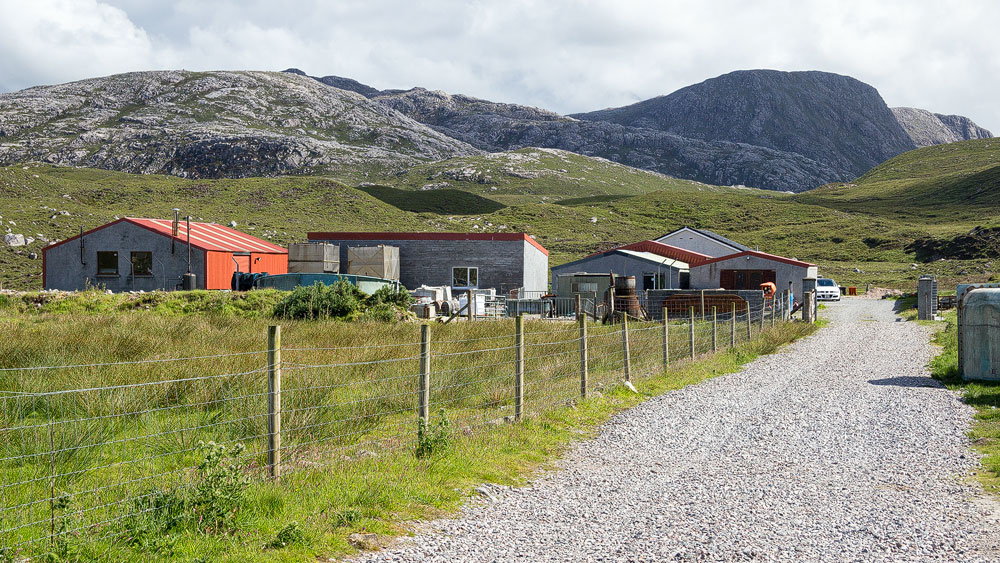
The water is drawn from the eponymous little stream that flows right past the brewhouse: “Abhainn Dearg” is Gaelic and means “red river”—incidentally, it’s pronounced something like “ain dscheräg.” Even the bottles are filled and labeled in-house.
And Abhainn Dearg does away with another bad habit: no caramel color is added to the whiskey to darken its color. Nor does cold filtration even cross the minds of the distillers here.
A visit here is definitely worthwhile for anyone who’s already seen the romantic distilleries and now wants to see a distillery in the making in a remote location. If that sounds like you, Abhainn Dearg is the place to go.
Experience Report: The Tour at Abhainn Dearg
“Do you see that car just driving away? That’s the owner with the keys.” For the second time in 2014, I’m standing in front of the gates of the Abhainn Dearg Distillery, ready to visit—and once again, I’ve just missed the tour. This time, on my third try, it works out. We get a tour, and it turns out to be one of the most unique whiskey tours I’ve ever taken.
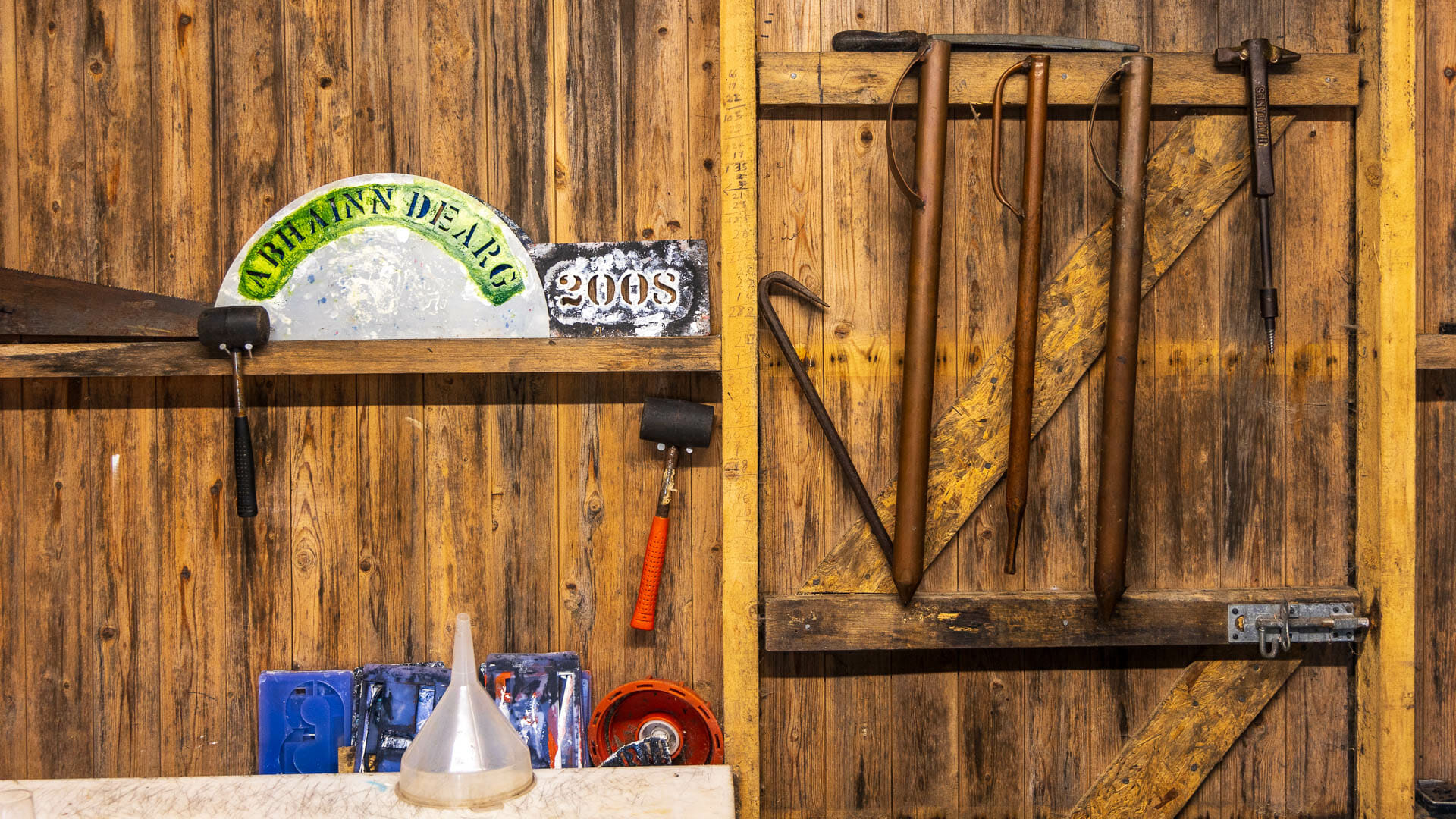
For one thing: The lady who usually leads the tours wasn’t there, so Marco (the boss?) showed us around. Second: The distillery isn’t currently in production. And you can tell just by looking at it. Distillation isn’t scheduled to resume until August of this year (2023). Until then, the staff still has a lot of work ahead of them—even the tour guide was just up on a ladder helping with the installation.
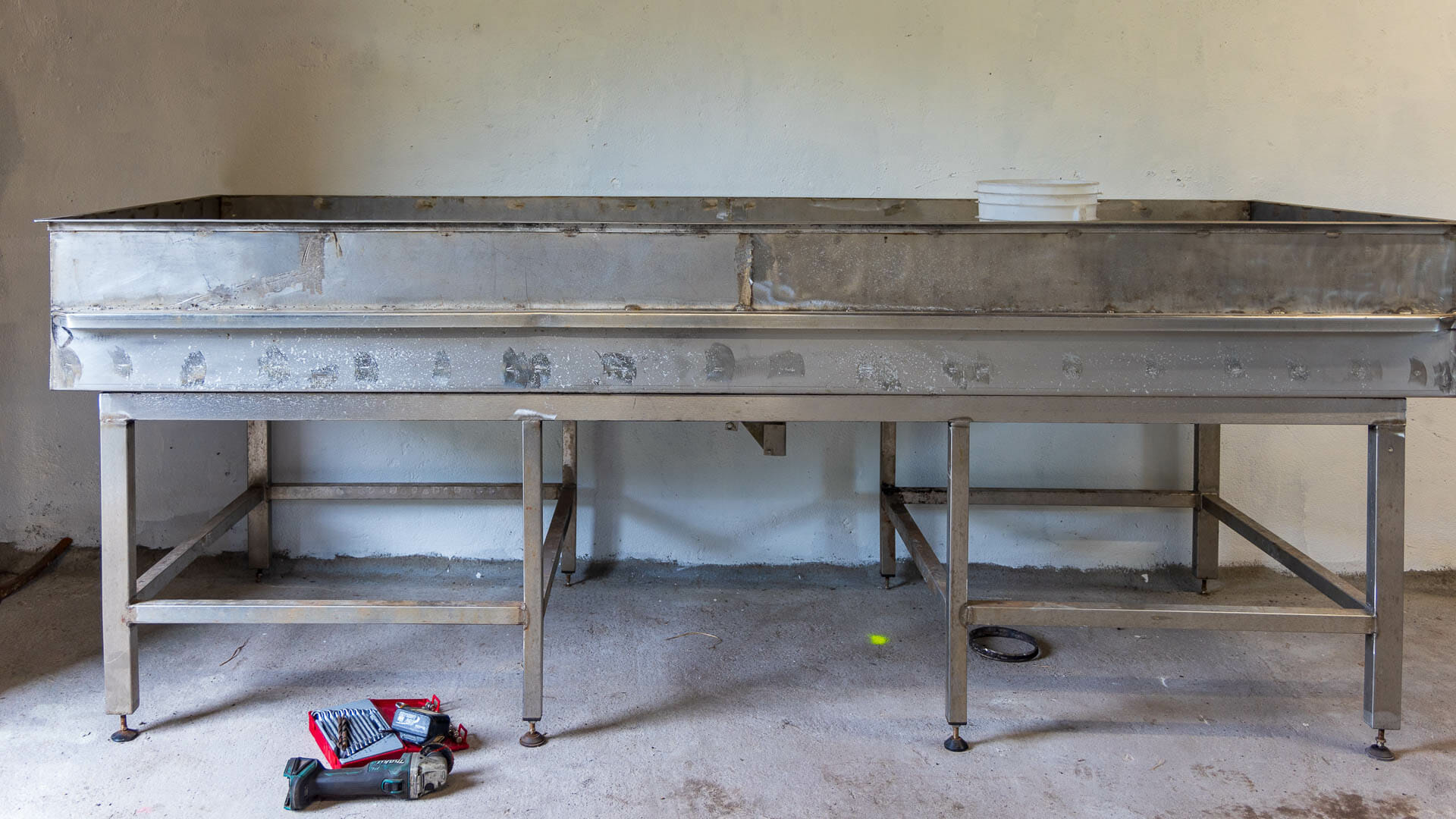
I’ve never seen a distillery like this before! Admittedly, the stops on the tour are basically the same as at any other whiskey distillery. Scotch single malt whiskey is simply made in a specific way. But the volume at Abhainn Dearg is quite small, so, for example, the barley is heated on a kind of table over a peat fire—instead of in a separate loft, as is the case at other distilleries. The table wasn’t even fully connected yet during the tour.
In the next shed stands the strangest still I’ve ever seen. It’s meant to mimic the old illegal stills—only larger. However, the condition of the equipment clearly shows that there was a long hiatus in distillation here.
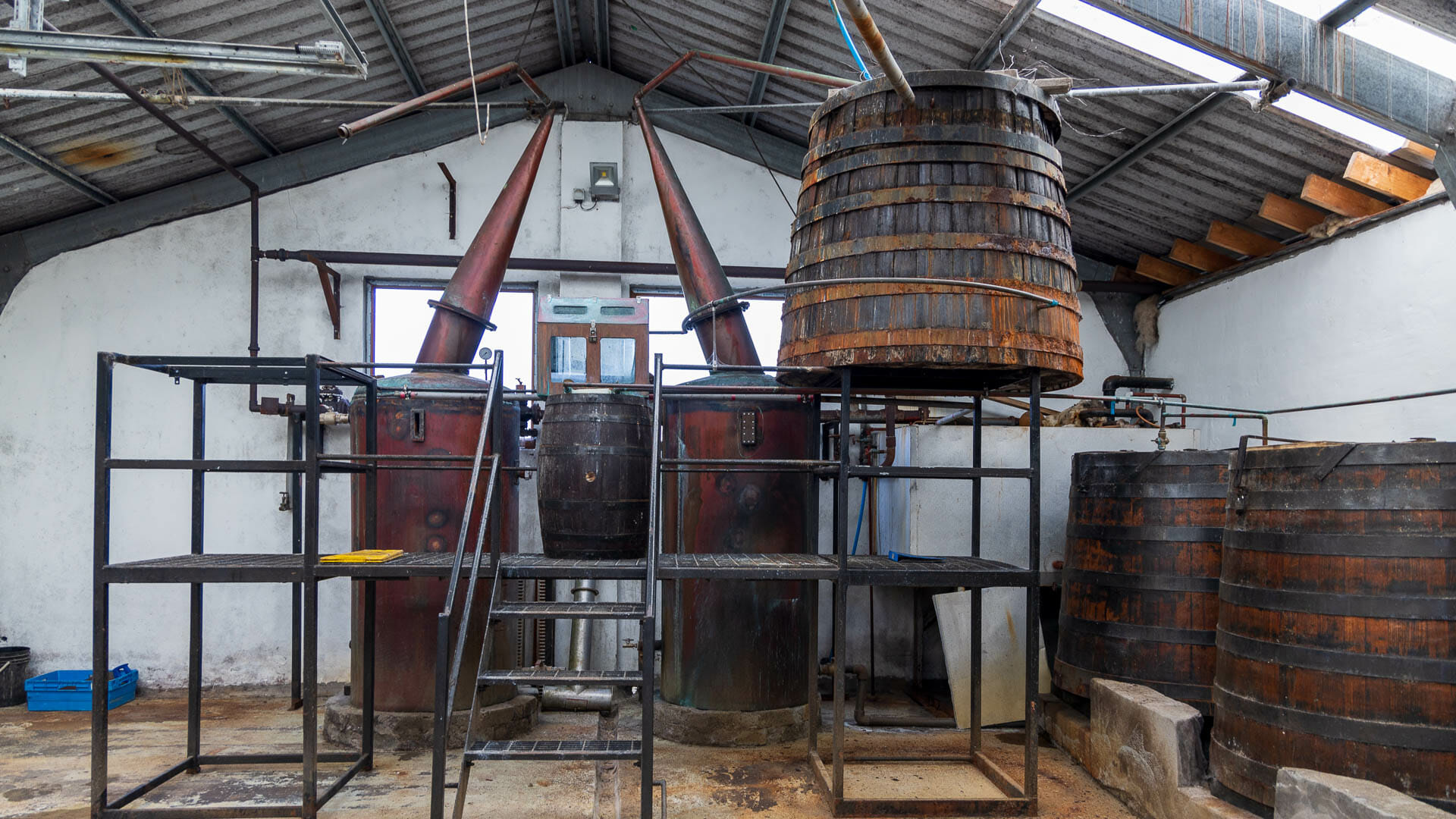
Currently, the vats in which the distillate is condensed—the so-called worm tubs—are being replaced. Normally, there are two of them on the racks flanking the two stills. The one that’s still there shows just how severely these components are worn down by heat and copper. At least the mash tuns and washbacks look significantly better.
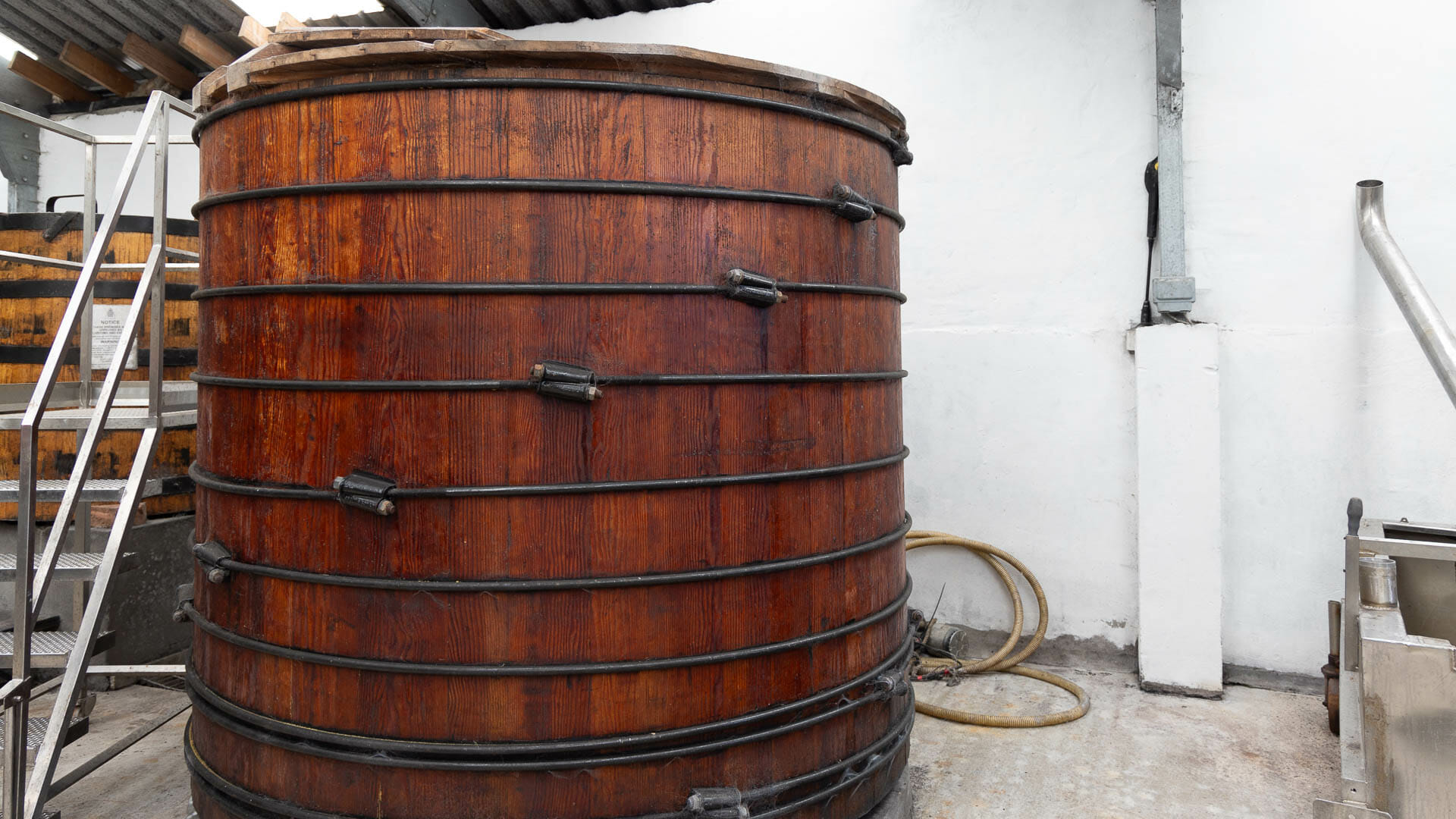
The best part of this tour: First, authentic storytelling—no rote recitation of marketing jargon.
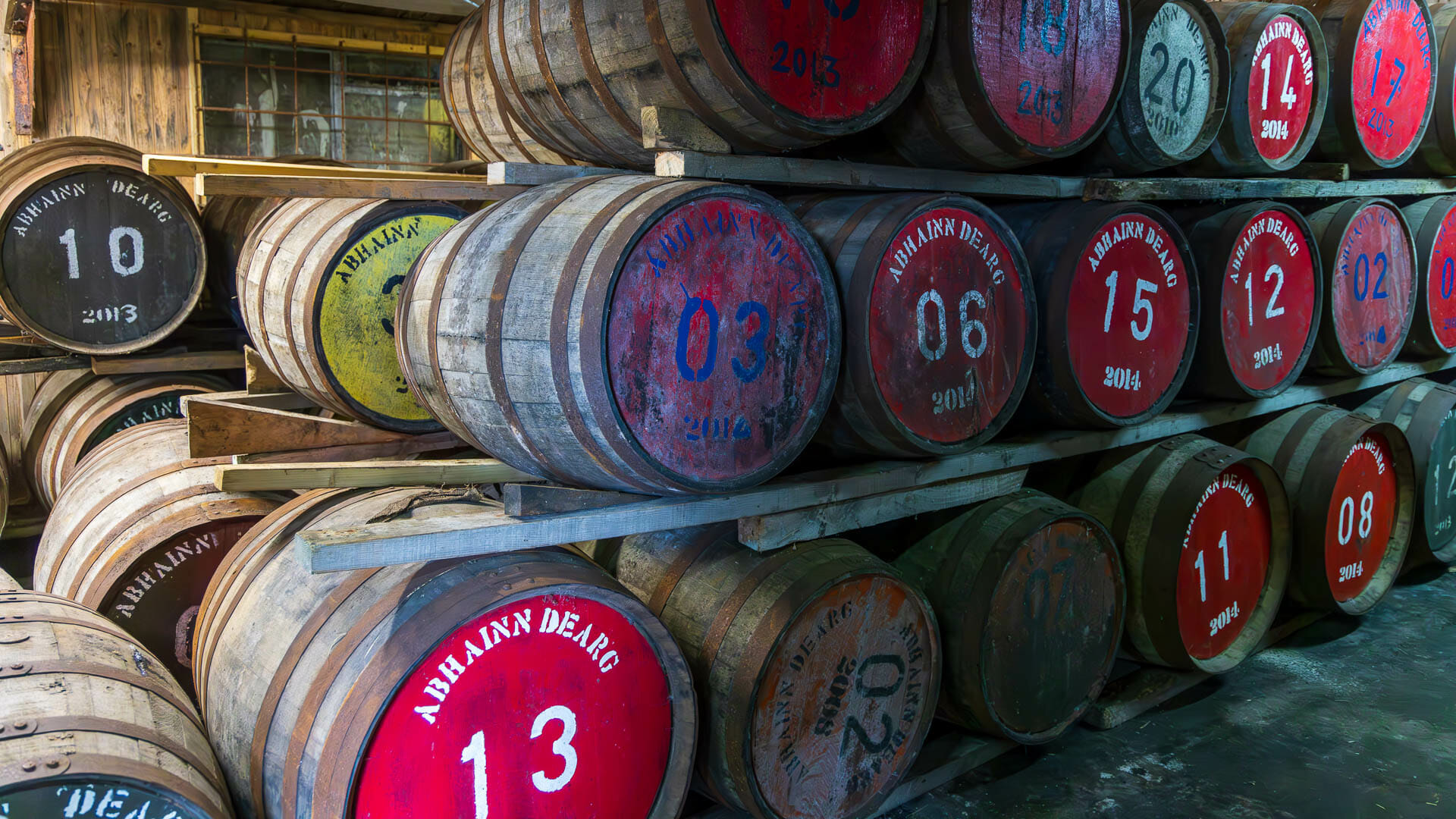
The small warehouse exudes the familiar scent of Angel’s Share. But even here, everything looks a bit more laid-back. And at least we couldn’t find a single cask bearing a date stamp later than 2014.
The tour then ends back at the first shed, the “shop.” Compared, say, to the Harris Distillery with its bottles, gifts, and books, here there are just a few chairs, some honey, and otherwise nothing but the whiskey. We get to taste it, too. Two drams per tour. The cask-strength whiskies from Madeira and Sherry PX casks are special—in a very good way.
At the end, I asked the tour guide, Marco, directly whether and when production would resume. He told me August of this year. I’m a bit skeptical, but I’m keeping my fingers crossed that this special distillery in the far west of Scotland will be around for a long time to come.
Is the tour worth recommending? I think so. But always keep in mind that everything here is a little different.
Facts: How Abhainn Dearg is Produced
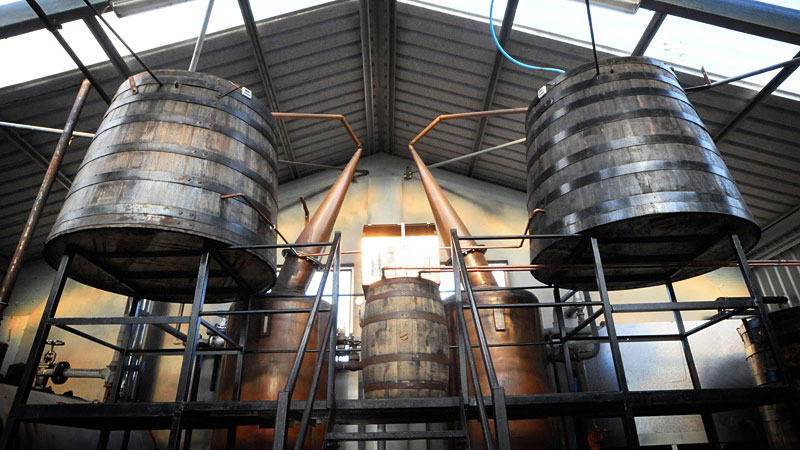
Abhainn Dearg is a small farm distillery that can’t produce the same volume of whiskey as one of the big, well-known brands. Inside, there are two mash tuns with a capacity of half a metric ton. The ground malt is steeped in them to extract the sugar. At large distilleries, the mash tuns hold several metric tons.
The sugar-rich liquid is transferred to the two washbacks, which can hold 7,500 liters. Yeast is added there to allow the liquid to ferment. It is then distilled in the first still, the wash still, which has a capacity of 2,112 liters. The second distillation takes place in the Spirit Still, which has a capacity of 2,057 liters. The final product is then aged in used bourbon or sherry casks until it finally becomes whiskey.
Incidentally, Abhainn Dearg used to be the only distillery in the Outer Hebrides, but since October 2015, the Isle of Harris Distillery in Tarbert on Harris has been producing whiskey and gin. And on Benbecula, the North Uist Distillery and the Benbecula Distillery are set to begin whisky production in 2023. The North Uist Distillery is already producing gin. On Barra, Isle of Barra Distillers is preparing to distill whisky in addition to Barra Gin—plans for a new building are already in place.
Tip: The hidden beach of Mhangarstadh
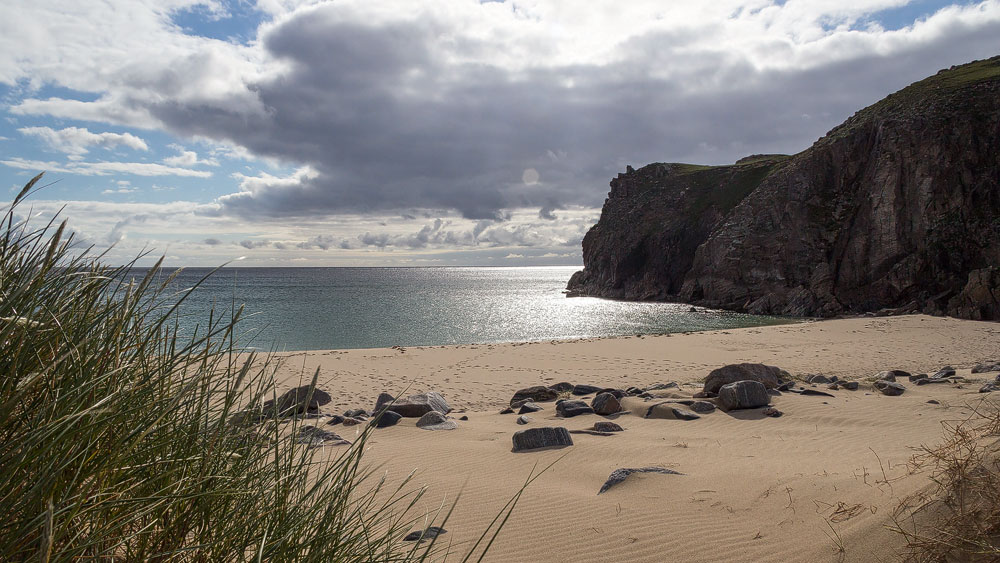
If you drive another 1.7 miles—about 3 kilometers—down the road after visiting Abhainn Dearg, a sign reading “To the shore” will appear on the right side of the road. Park here and follow the sign on foot for a few minutes.
You’ll be rewarded with the small, hidden beach “Tràigh Mhangarstadh,” a sandy beach nestled between cliffs and dotted with reddish-brown rocks lapped by the clear blue waters of the Atlantic.
Directions:
With a GPS: Entering “HS2 9EX” will take you very close.
Without a GPS: You can find directions from Stornoway to Uig here. After passing through the Valtos Valley, continue on the B8011 road, past the Uig Community Shop, and keep going until you cross the bridge over the Abhainn Dearg. Immediately after the bridge, turn left into the small parking lot at the distillery.