Ancient trees surround this small old house. A visit to Ardkinglas House and its gardens makes a welcome stop on the way over the mountains.
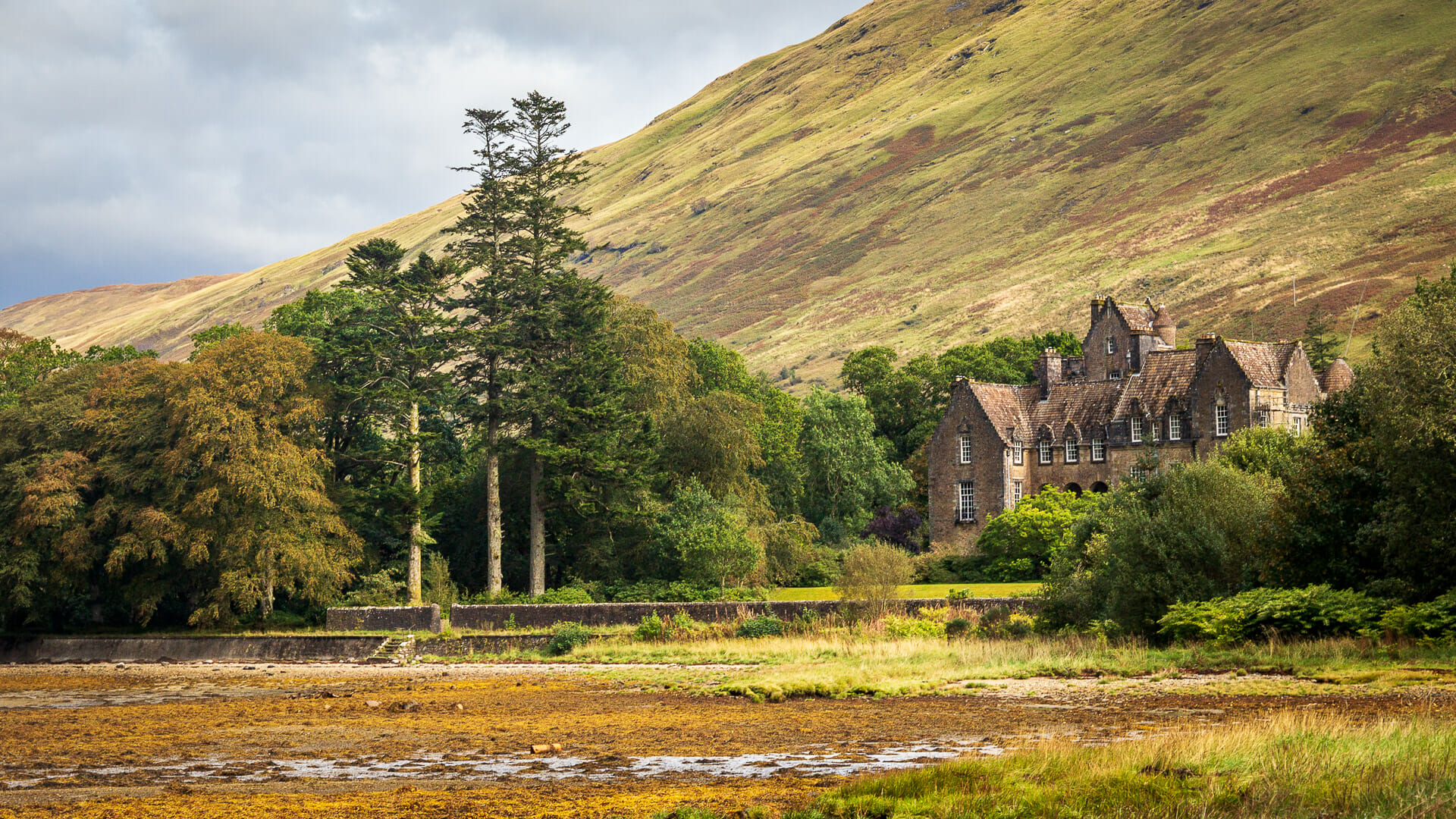
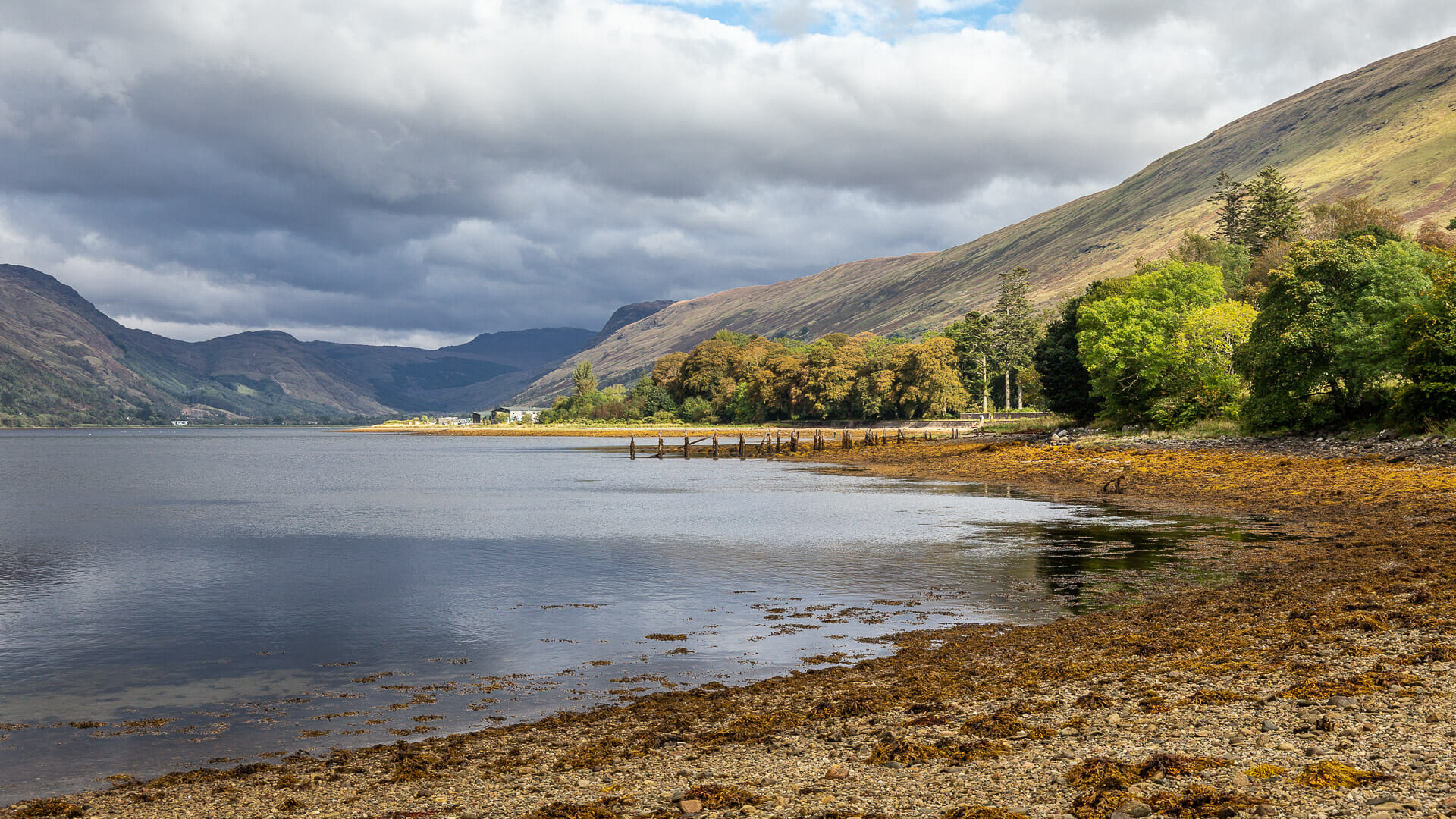
The wide expanse of Loch Fyne ahead, and behind it the heights of Beinn an Lochain, from which the River Kinglas rushes down. The setting of Ardkinglas House and its gardens could hardly be more romantic.
So why does hardly anyone know this place? It may be because Ardkinglas House lies on the road between the splendid Inveraray Castle and the famous view from the “Rest and be thankful” pass. Many visitors to Scotland simply rush past it on the busy A83.
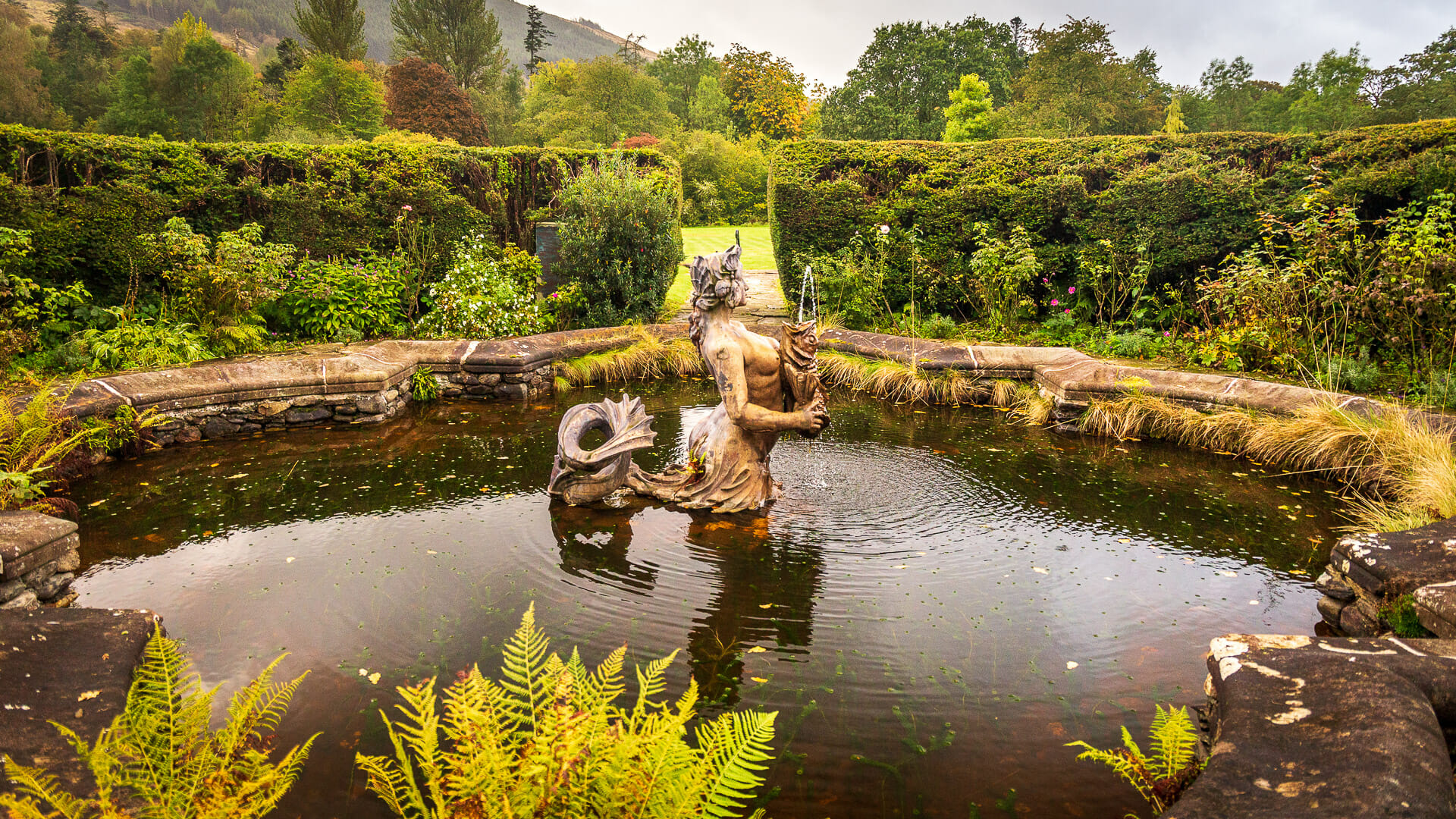
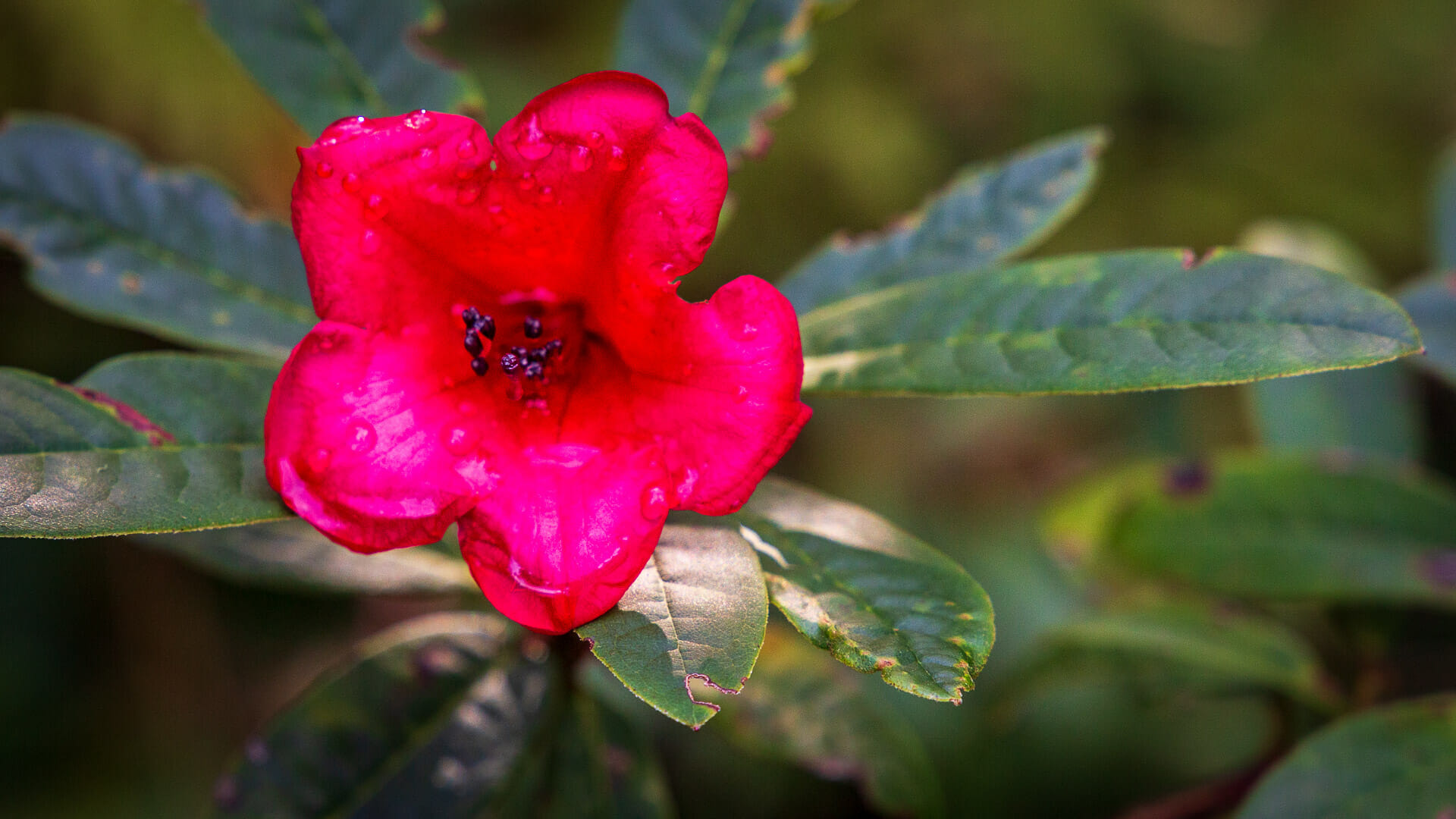
Anyone who instead turns into the unassuming entrance towards Cairndow, right at the point where the A83 touches Loch Fyne, comes upon the Woodland Gardens. They invite drivers to take a short – or a longer – walk beneath old, towering trees and among flowering rhododendrons.
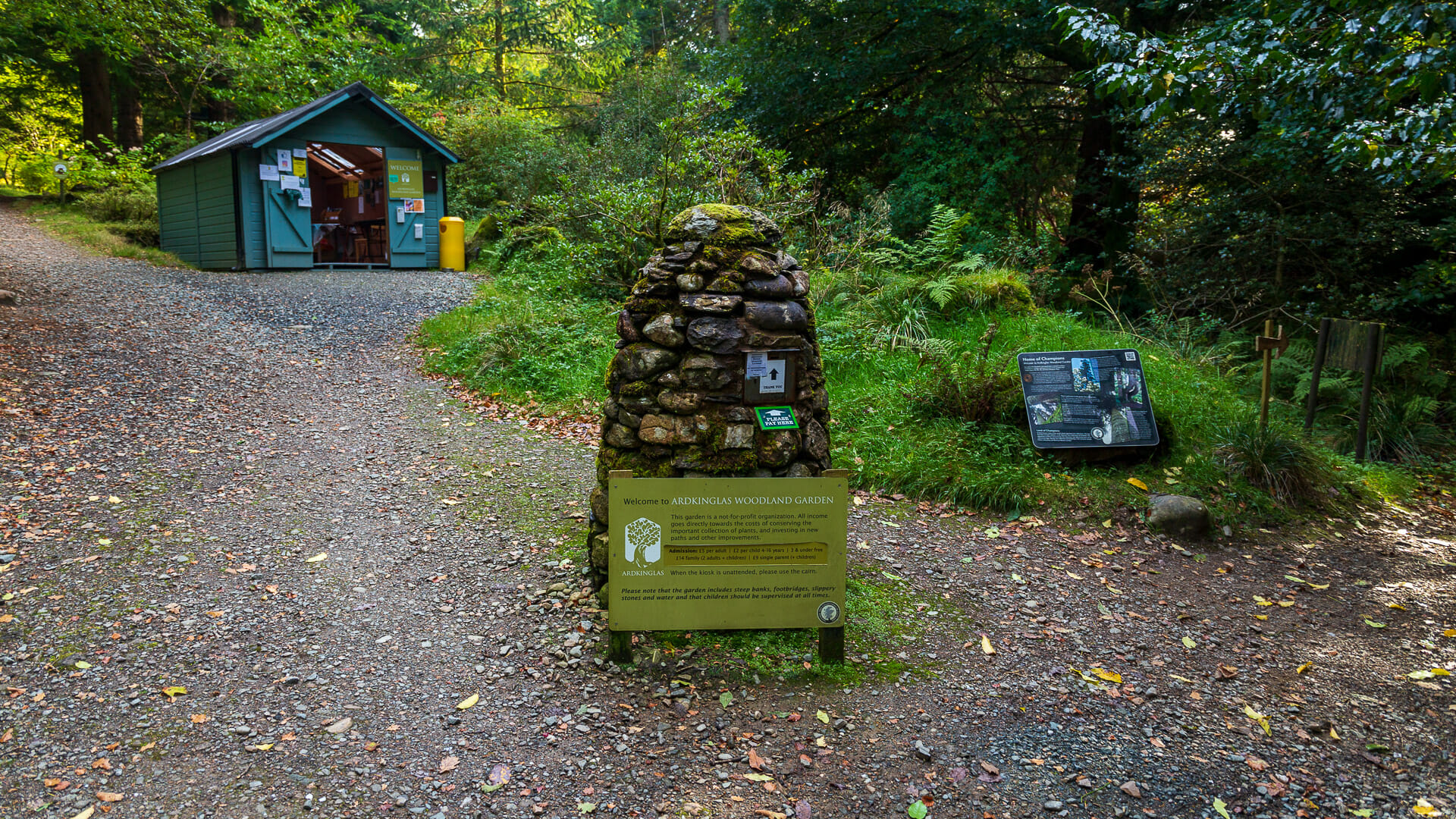
The starting point is a small hut right by the car park, behind the large iron gate. Here you’ll find a stone-mounted honesty box – and honesty is indeed called for, since maintaining the garden costs a great deal of money.
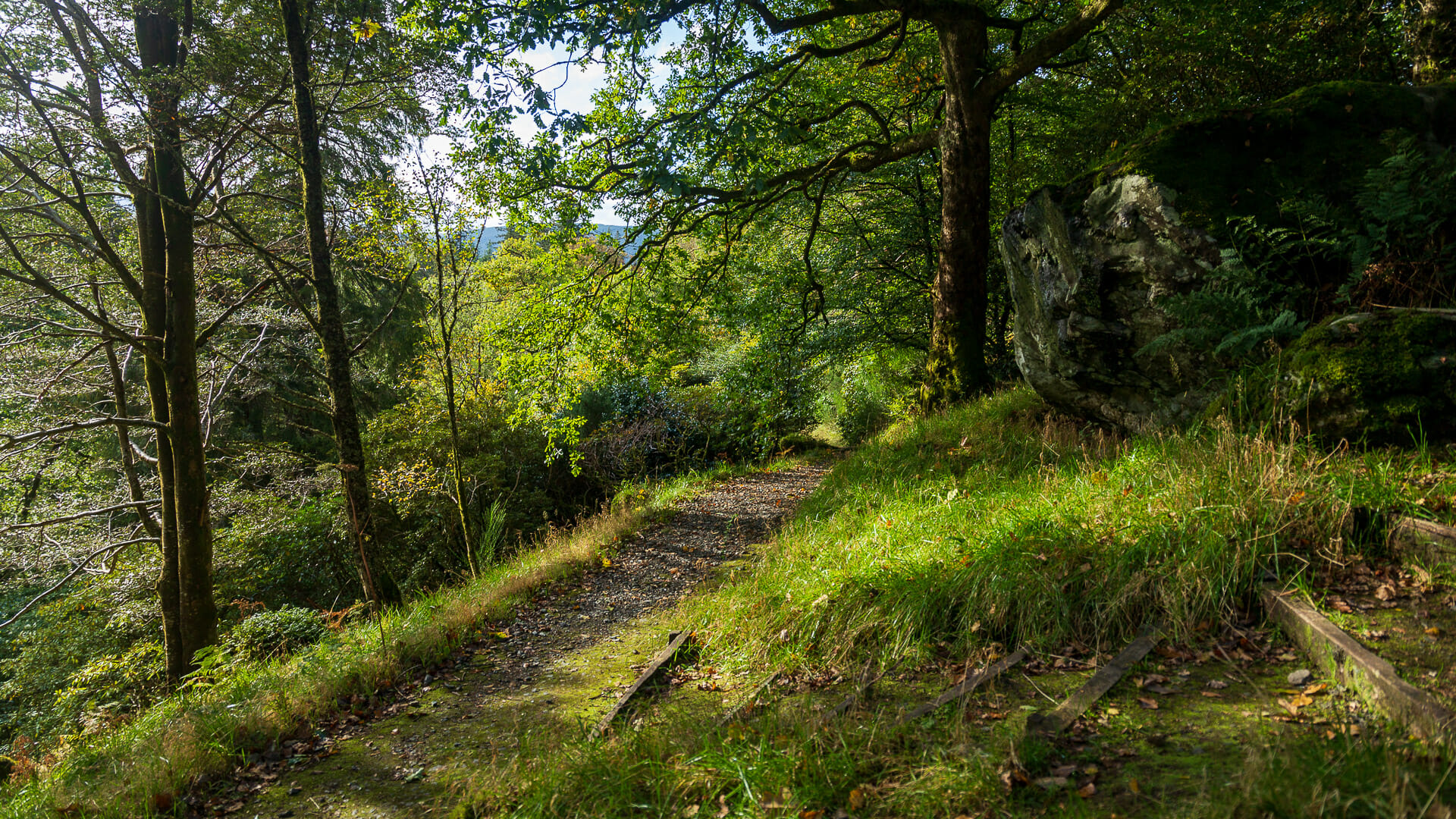
Behind the hut begins the path through old trees gathered from all over the world. This is indeed one of the special features of the Ardkinglas estate: it is one of 23 Scottish sites that are part of the National Tree Collections. This means that at Ardkinglas, both native and international trees are planted, cared for, and preserved for the world – and have been since 1875.
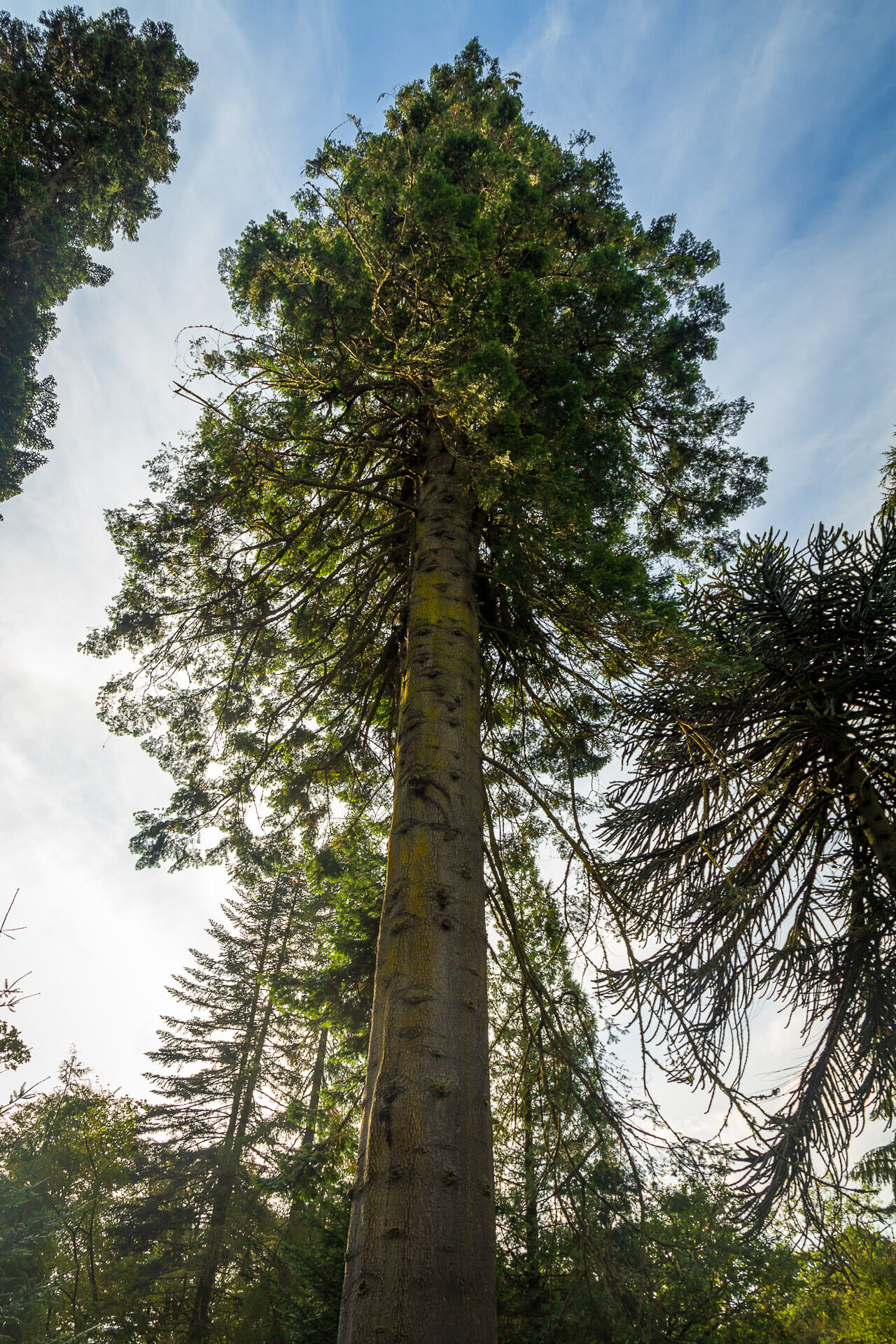
Given this long history, it’s no surprise that real giants stand here. A silver fir, for instance, with a trunk circumference of ten metres – it might take a whole extended family to link arms around it. Or the coastal redwood, which at over 60 metres tall counts among the tallest trees in Britain.
Anyone venturing further along the paths through the Ardkinglas Gardens will find plenty to discover: the remains of an old mill, for example, standing by the rushing River Kinglas. Or, for younger visitors, the Gruffalo Trail and the Fairy Trail.
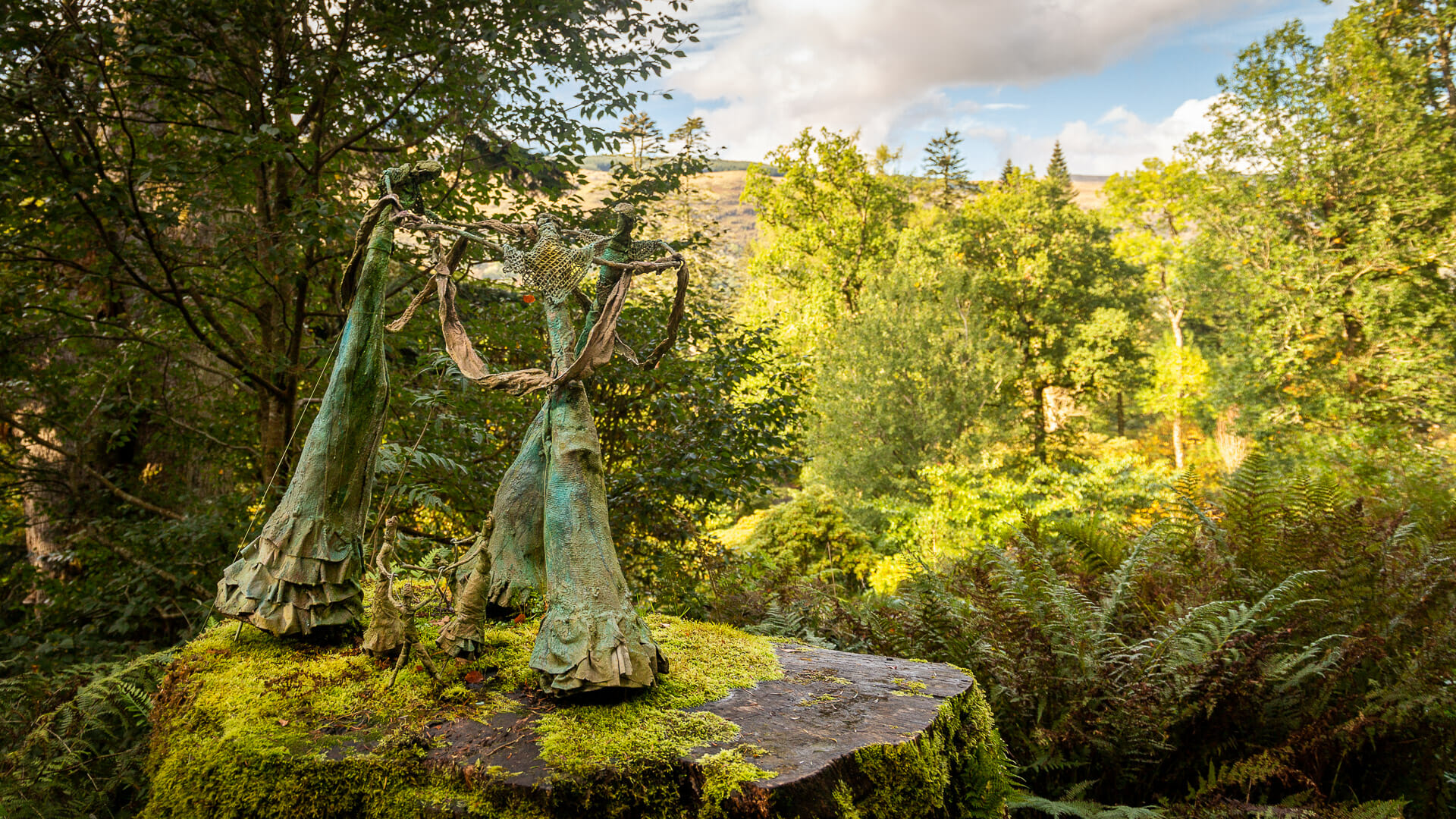
Incidentally, the best time to visit the gardens is from May to August – though that’s not to say they don’t show plenty of flora and fauna in other months too.
Anyone walking through the gardens towards Loch Fyne may well come out right by Ardkinglas House.
Ardkinglas House
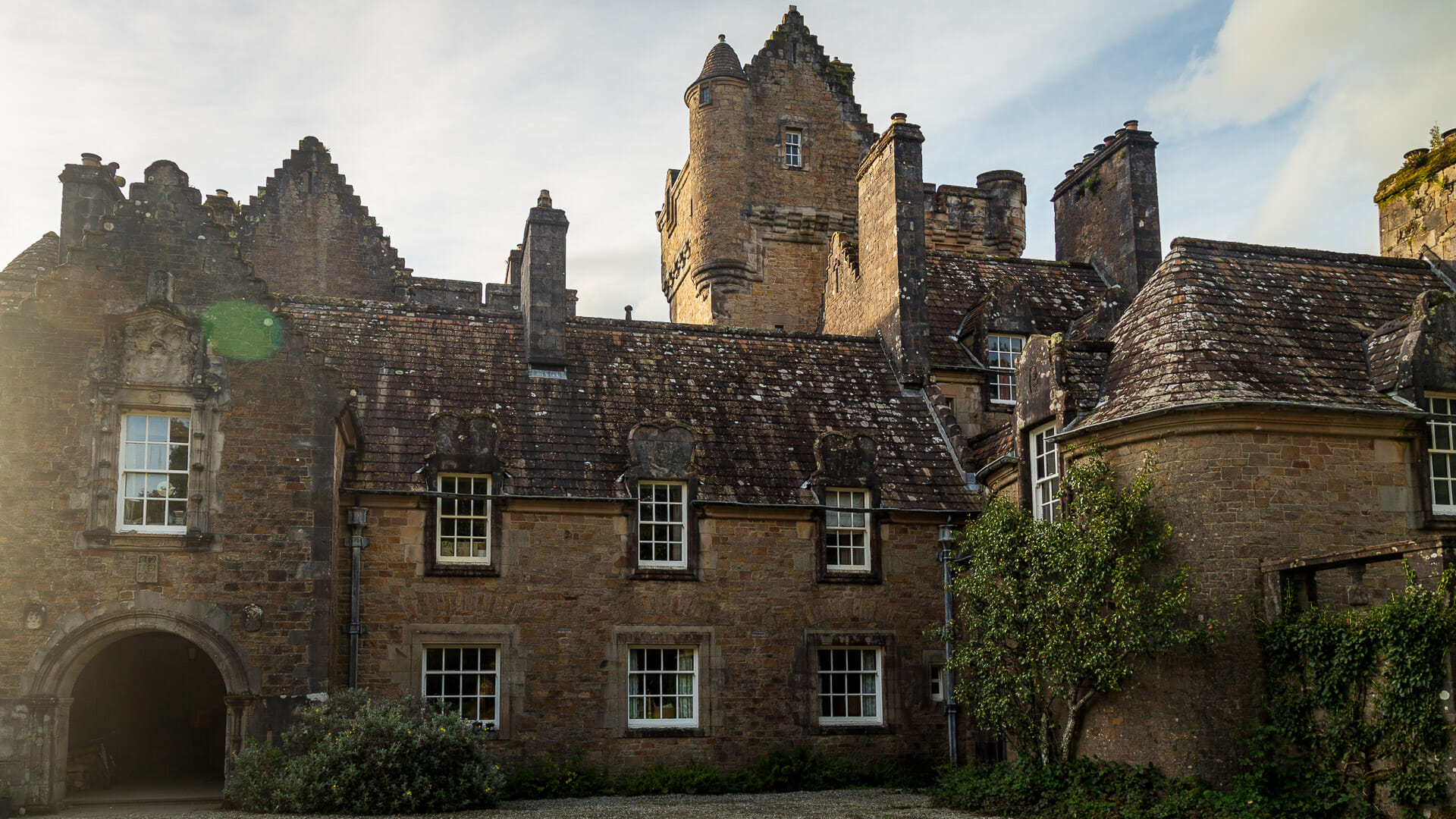
Ardkinglas House was built in the typical style of a Scottish country estate. Yet it’s younger than you might assume.
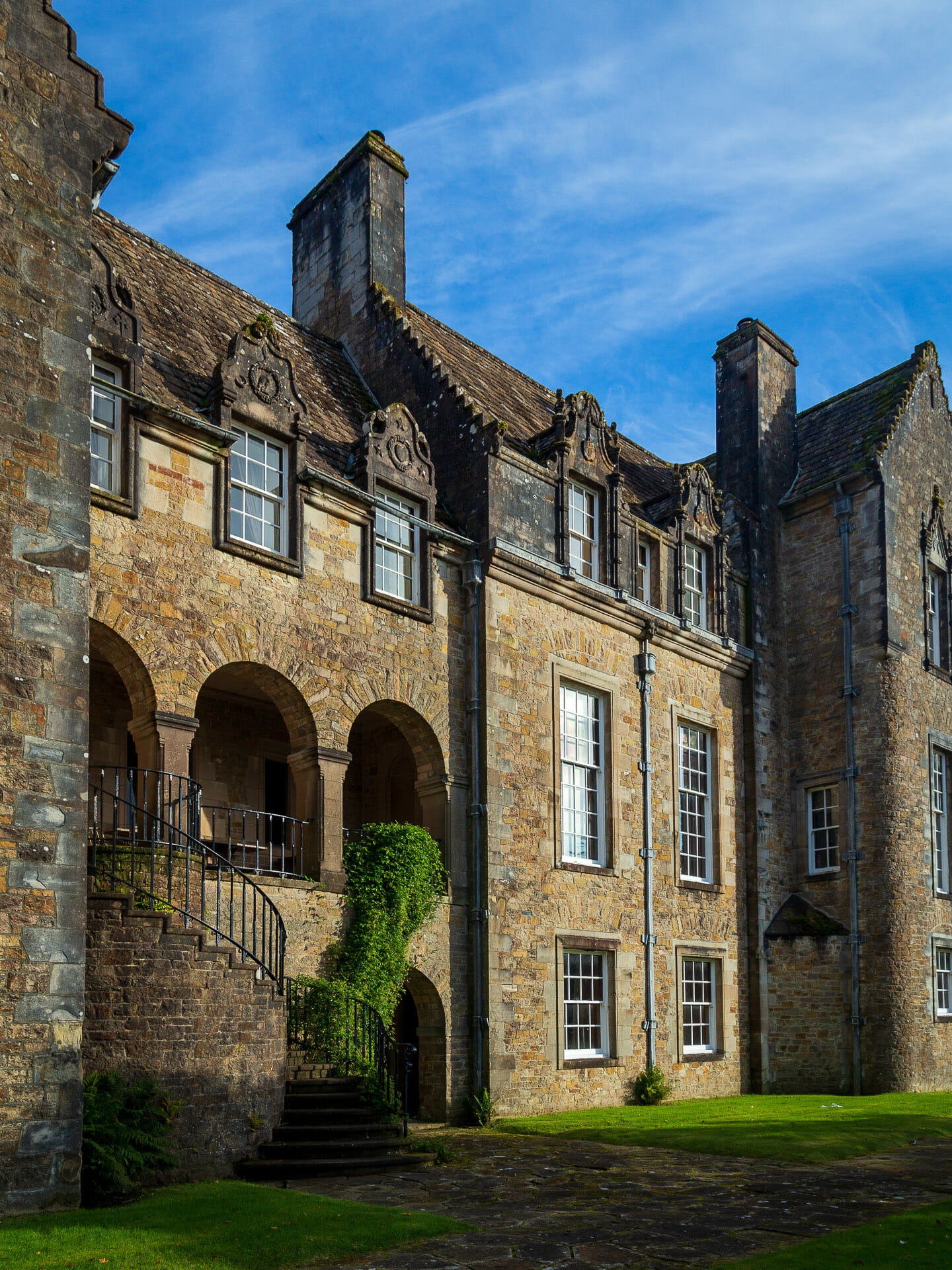
The building standing here today only dates from 1907. It was designed by the architect Sir Robert Lorimer, who was also involved in several other well-known Scottish buildings. The Thistle Chapel in St Giles’ Cathedral in Edinburgh is his work. The Scottish National War Memorial at Edinburgh Castle is also his design. He was also involved in the renovation of Dunrobin Castle.
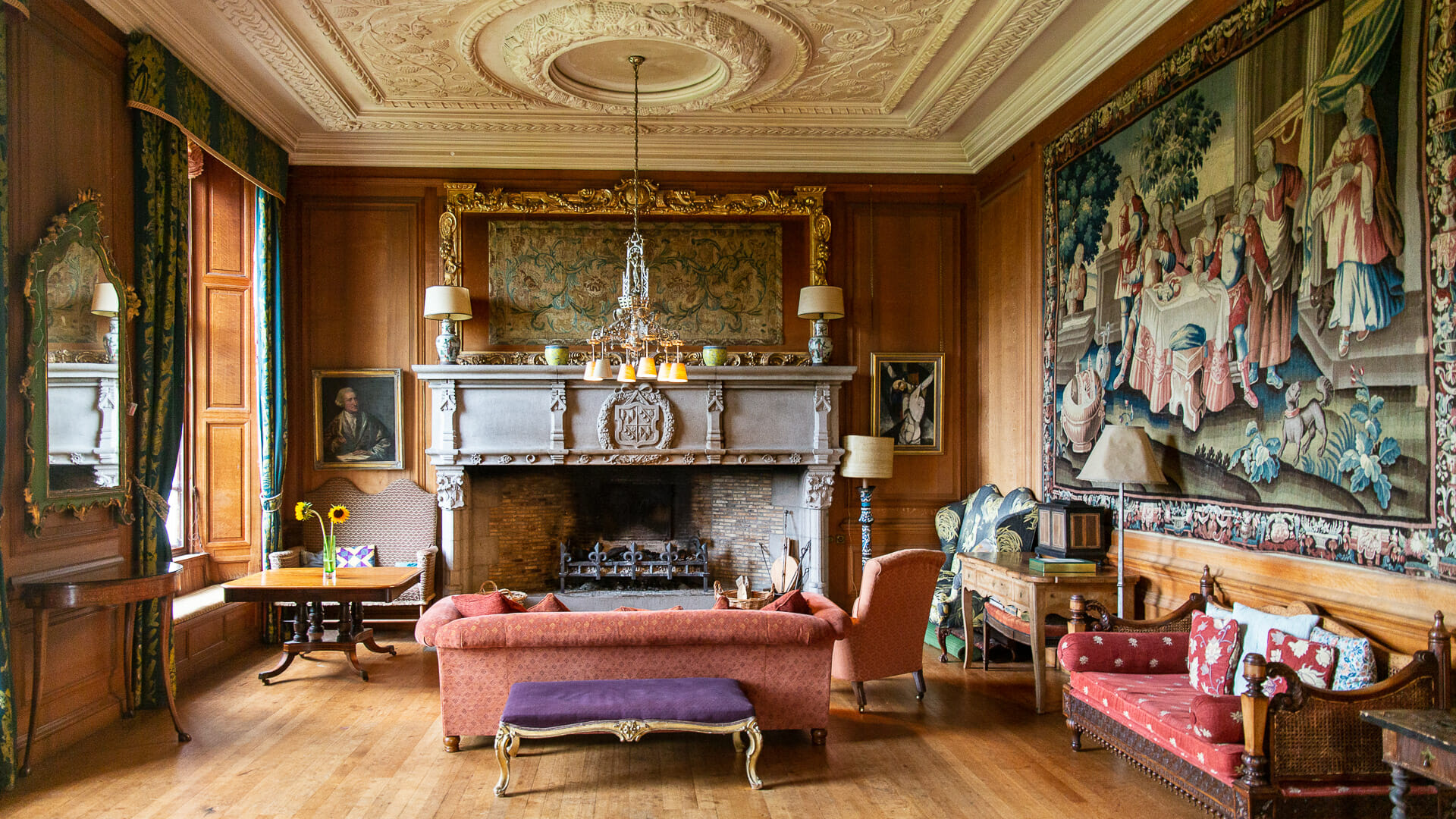
Inside, the house is still fitted out with many of its original pieces of furniture, which makes it a popular film location as well as a sought-after wedding venue.
Ardkinglas House, by the way, is still lived in by a family, who continually have to deal with keeping the house maintained. Damp is a constant enemy here, which the residents must keep out of the walls. But the effort is worth it – not only in the grand chambers, but also in the former servants’ quarters, which are lined with wonderful tiled walls.
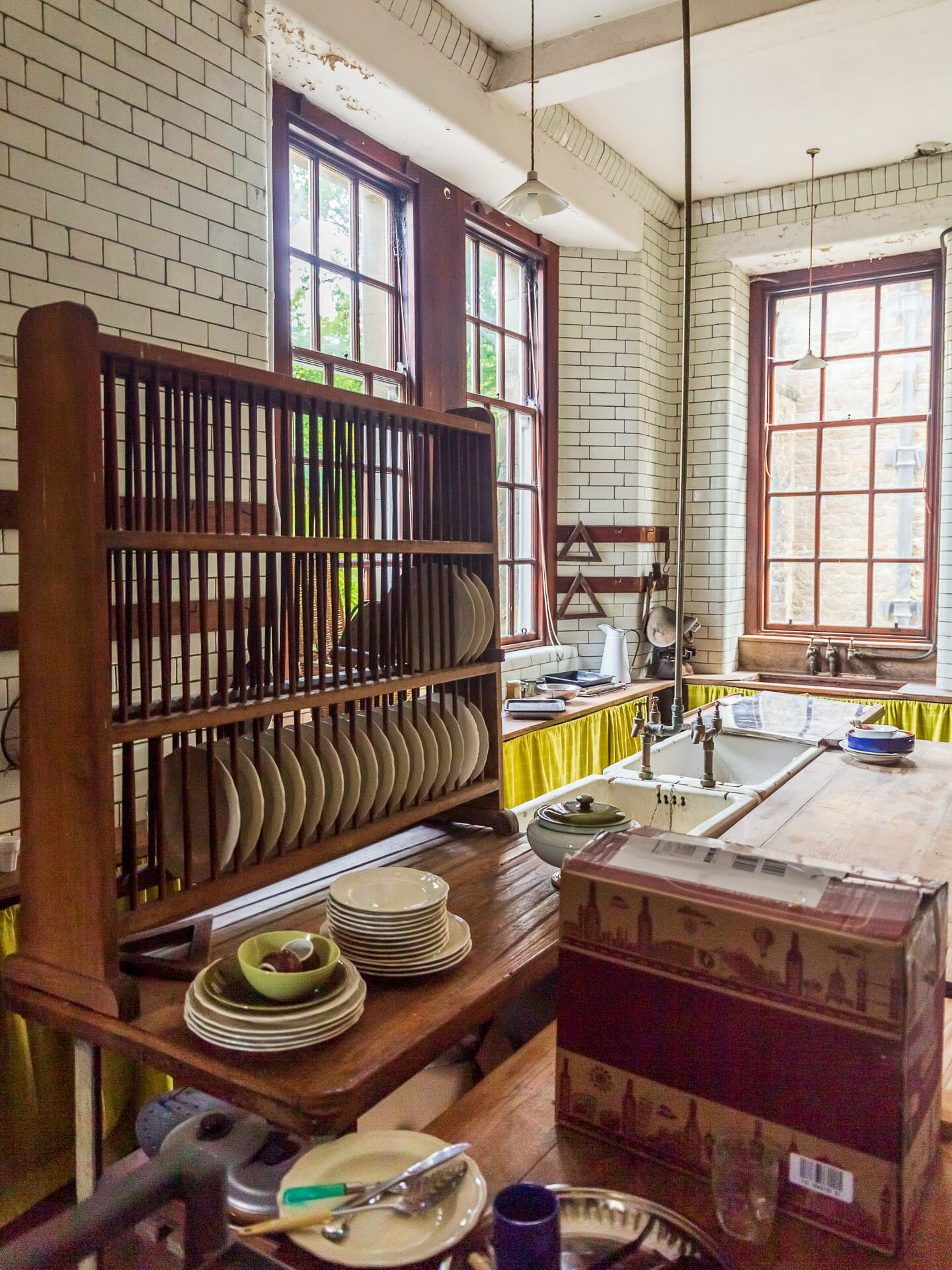
Ardkinglas House certainly can’t compare with the splendour of nearby Inveraray Castle. But that’s precisely why the rooms here feel a little more authentic. Visitors can tour the chambers by arrangement with the owners, or on Fridays.
By the way: the basement of the house, the “Butler’s Quarter”, can be rented as self-catering accommodation. The corridors here are also lined with white tiles and feature beautiful, heavy wooden doors.
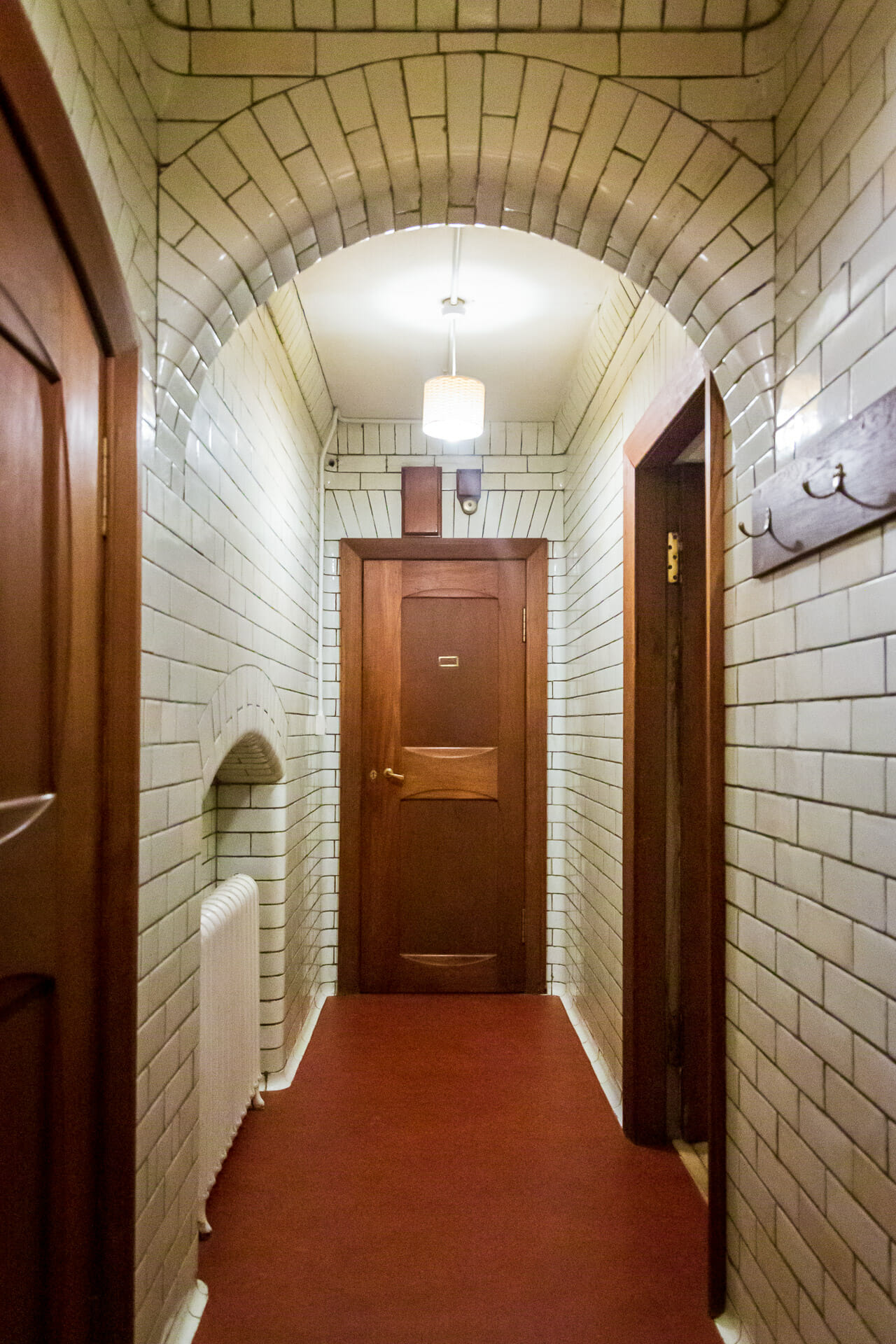
The rooms themselves are, of course, kept far simpler and cosier – the tiles are only found in the corridor and the bathroom, and you really do get used to them. And the view from the terrace over Loch Fyne is especially romantic in the evening.
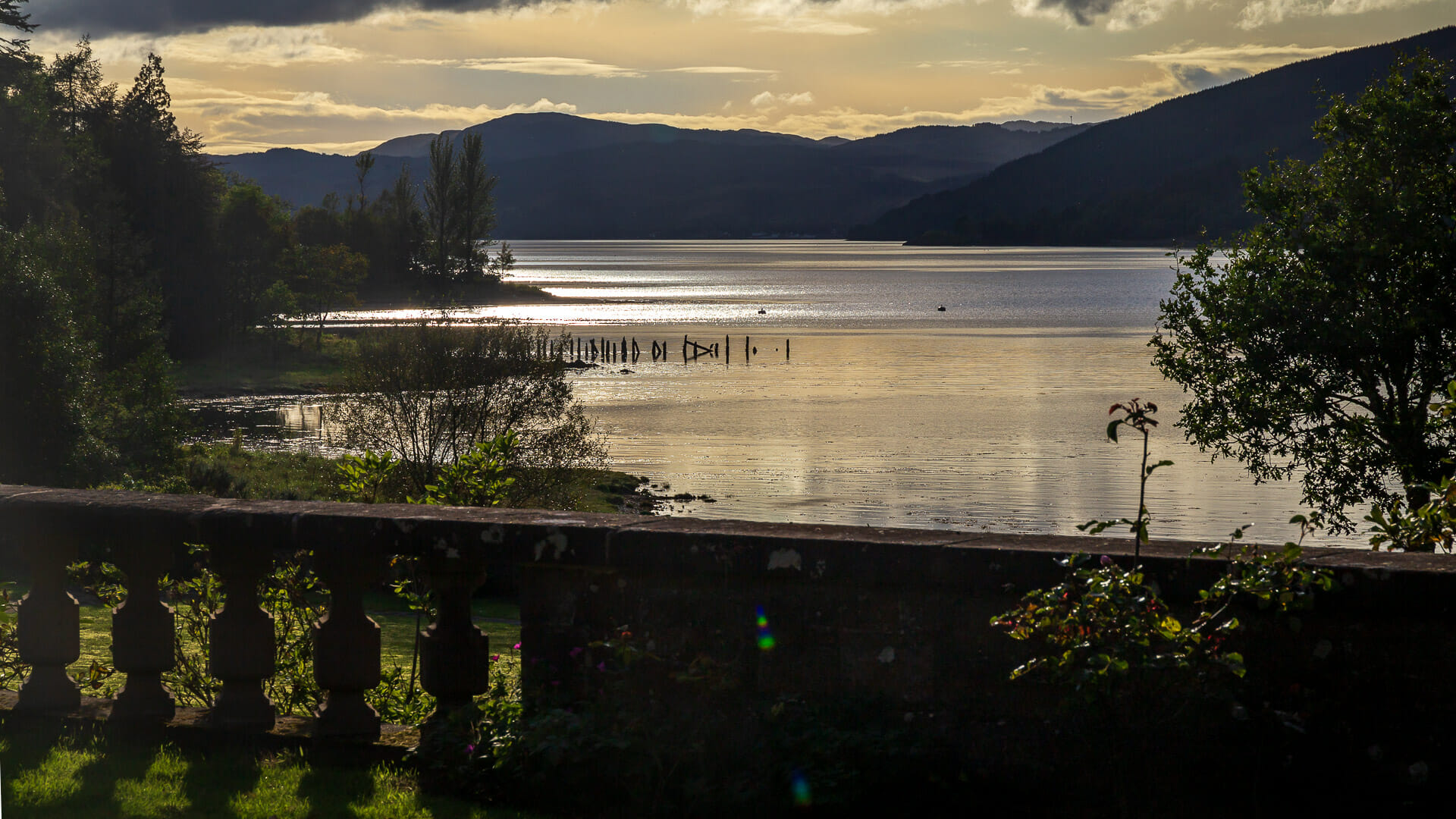
All in all, the Ardkinglas Estate is not one of those big-name attractions that every first-time visitor to Scotland ticks off. Rather, it’s one of those little-known gems that even seasoned repeat travellers can still discover, even after their umpteenth trip.
Note: the paths are well laid out, but sturdy footwear is still recommended. Especially if you head along the river, the terrain becomes considerably more demanding and requires a certain level of fitness. Unfortunately, the paths are not well accessible for people with disabilities.
Good to know: the history of Ardkinglas
Its proximity to Inveraray Castle already gives it away: Ardkinglas too once belonged to the territory of the influential Clan Campbell. It passed, around the year 1396, to a son of the 5th Lord of Lochawe, who from then on was known as Colin Campbell of Ardkinglas. The name Kinglas comes from the river and its valley, through which the A83 still runs today, up to the “Rest and be thankful” pass.
Nothing remains today of the original Campbell castle – it was destroyed in 1769. Later, a manor house was built here by the Callander family, but it burned down completely in 1831. In 1905, Sir Andrew Noble, an arms manufacturer, bought the estate and had today’s house built. He also took over the gardens at that time.
As is often the case with large Scottish estates, they are no guarantee of good income. When Simon John Noble inherited Ardkinglas in 1972, he took on debts and running costs that had brought the estate close to ruin. Together with a friend, he founded Loch Fyne Oysters – initially an oyster farm, but today a producer of a wide range of seafood. The first Loch Fyne Oysters bar was opened. The company still exists today, with several restaurants across Britain, and it’s still located near the house, along with a salmon farm.
The Ardkinglas Estate today belongs to Simon John Noble’s nephew, David Sumsion. He is working to preserve the gardens, and with them the tree and plant heritage they contain.
Tip: visiting Fyne Ales Brewery
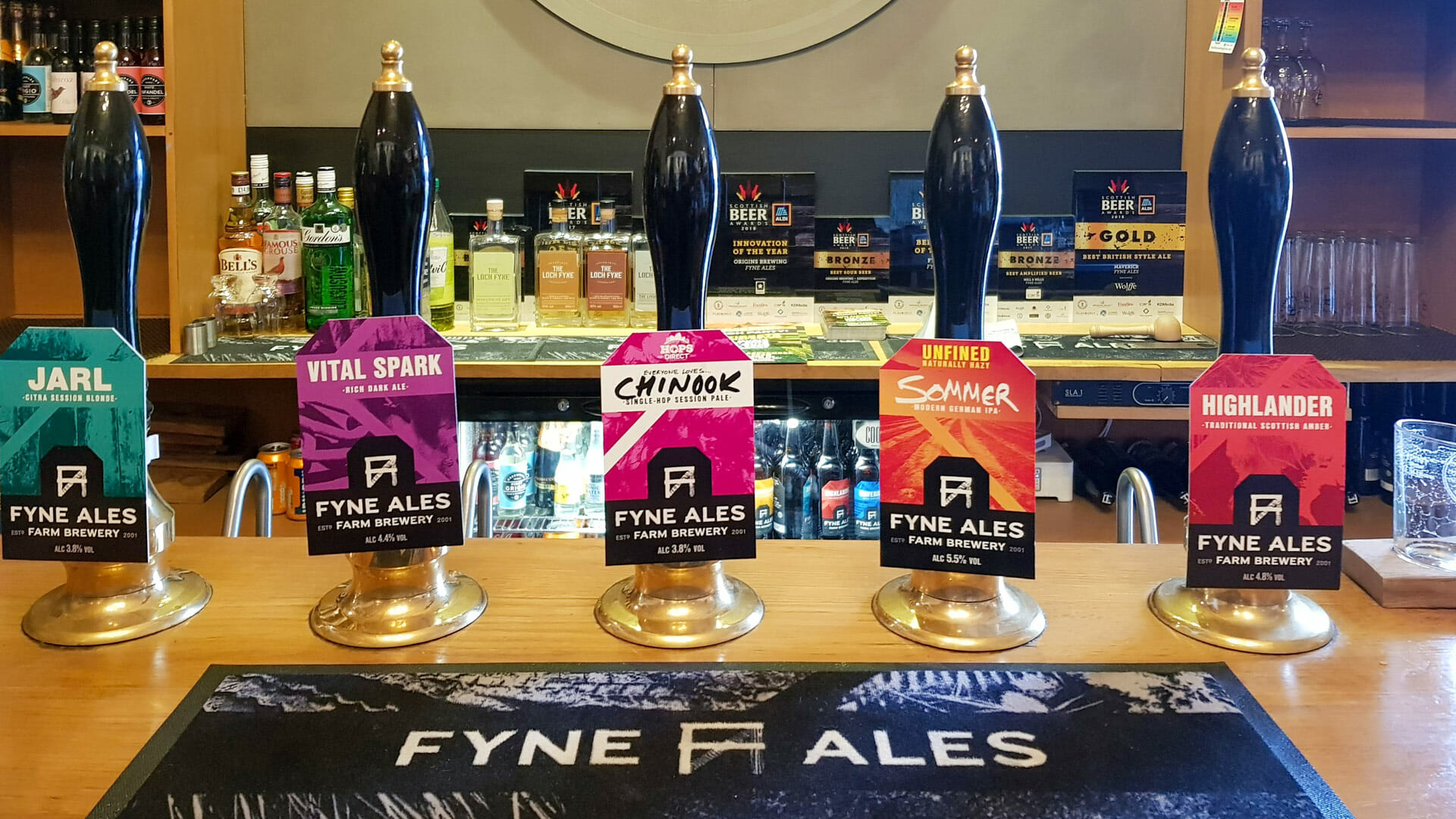
Less than ten minutes’ drive to the north stands the small brewery of Loch Fyne Ales. The craft beer movement has brought about many new, small and refined beers with a wide range of flavours – and Loch Fyne Ales is one of them. In the tap room, the various beers can be bought or sampled on the spot.
Getting there:
With a sat nav: “” will get you close by.
Without a sat nav: coming from Inveraray, follow the A83. Just before it turns away from Loch Fyne, a war memorial appears on the right, and a sign points the way to Cairndow and the Ardkinglas Woodland Garden. Turn right here and follow the small road through the village. After the village, a turning to the right leads through an iron gate, behind which the hut is already visible. Drive through here and park by the hut.
Coming from the “Rest and be thankful” pass, the road to Dunoon and the ferry branches off to the left first; shortly afterwards, a brown sign appears pointing to the gardens. Turn left here and carefully follow the single track road. After a while, a hairpin turn to the left leads to the iron gate and the car park.