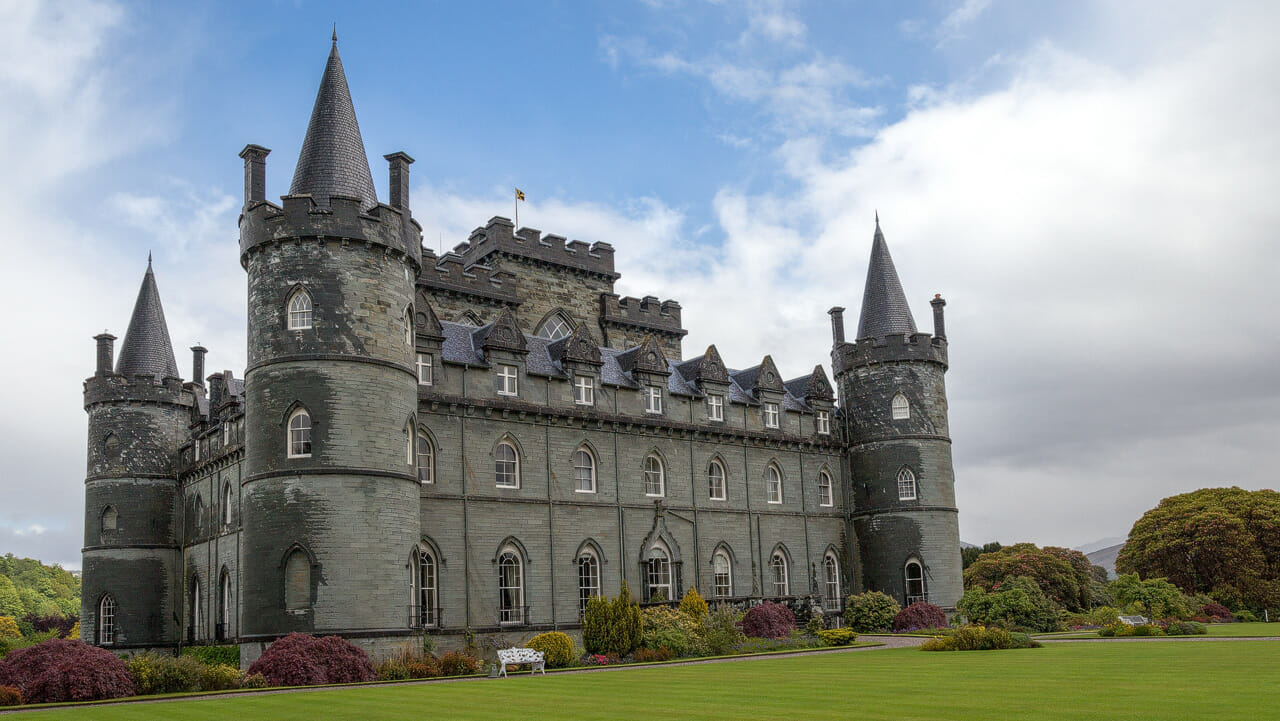
Right in the middle of the wild Highlands stands a magnificent castle: Inveraray Castle. It shows off the full wealth of Clan Campbell and the Dukes of Argyll.
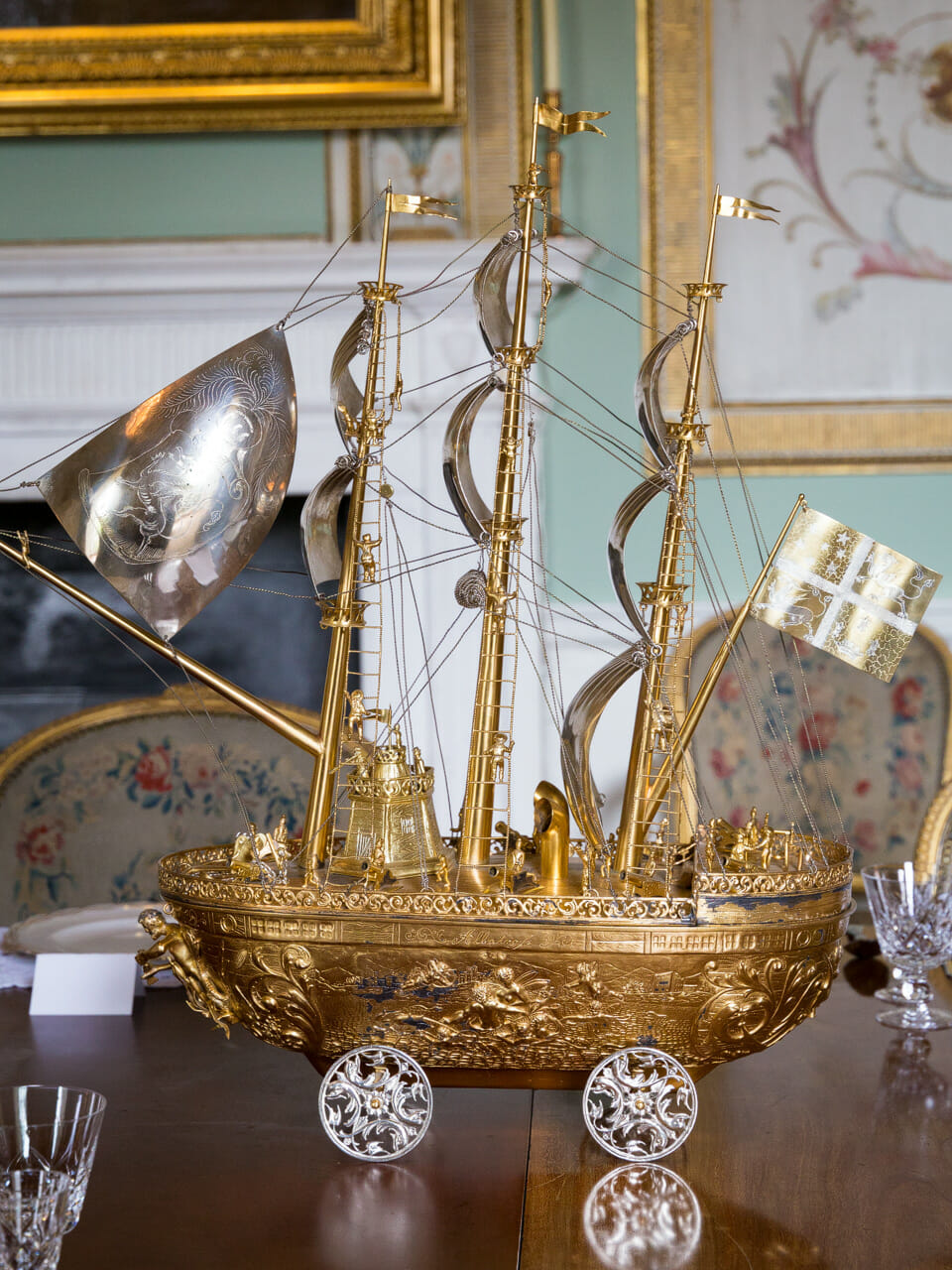
It’s absolutely stunning – but also just plain decadent: laid out on the dining table in Inveraray Castle’s dining room sits a model ship, exquisitely crafted from silver. Not far away, an ornate silver tureen competes for visitors’ attention. In the end, the eye barely knows which showpiece to settle on. It’s simply too much, all gathered on one single “dinner table”.
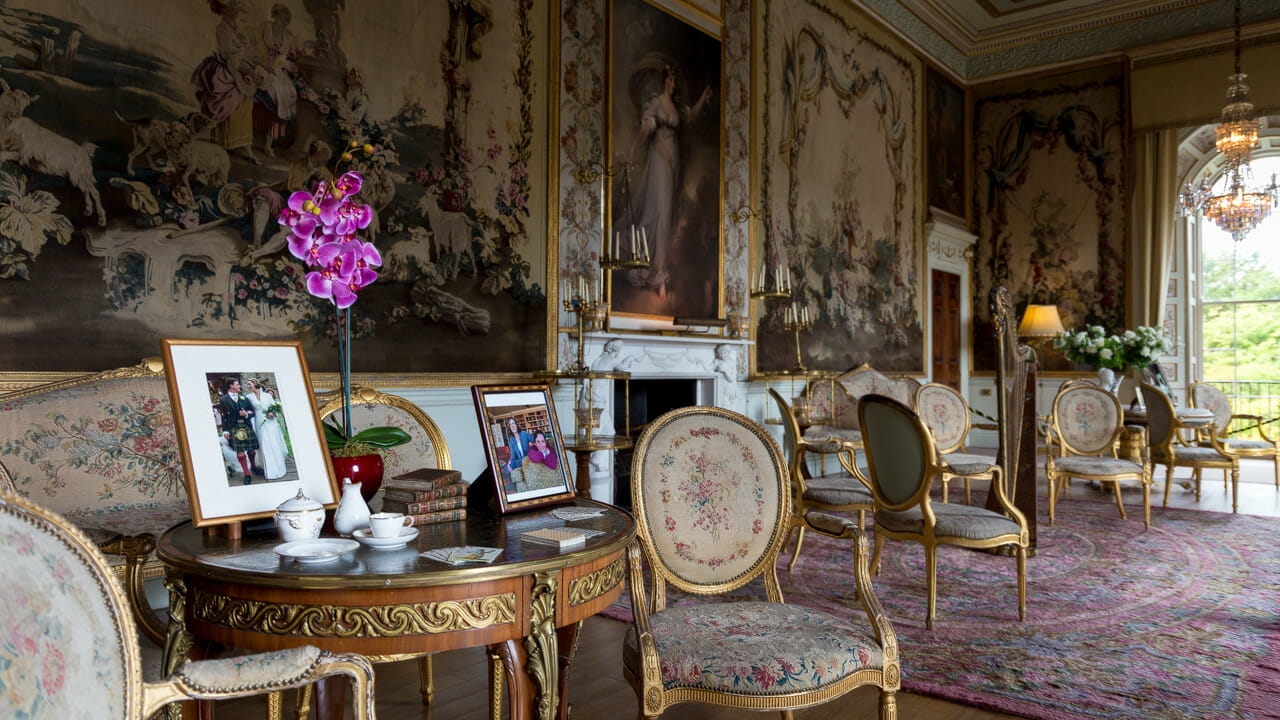
Splendour and extravagance seem to be the motto of the seat of the Dukes of Argyll, the manor house of the Dukes of Argyll, who descend from Clan Campbell. Because the other rooms too are lavishly furnished, with tapestries and wonderful stucco painting, for instance.
The centrepiece of the castle is the tower structure at its middle. Inside it, among other things, is the armoury – and it’s practically bursting at the seams too.
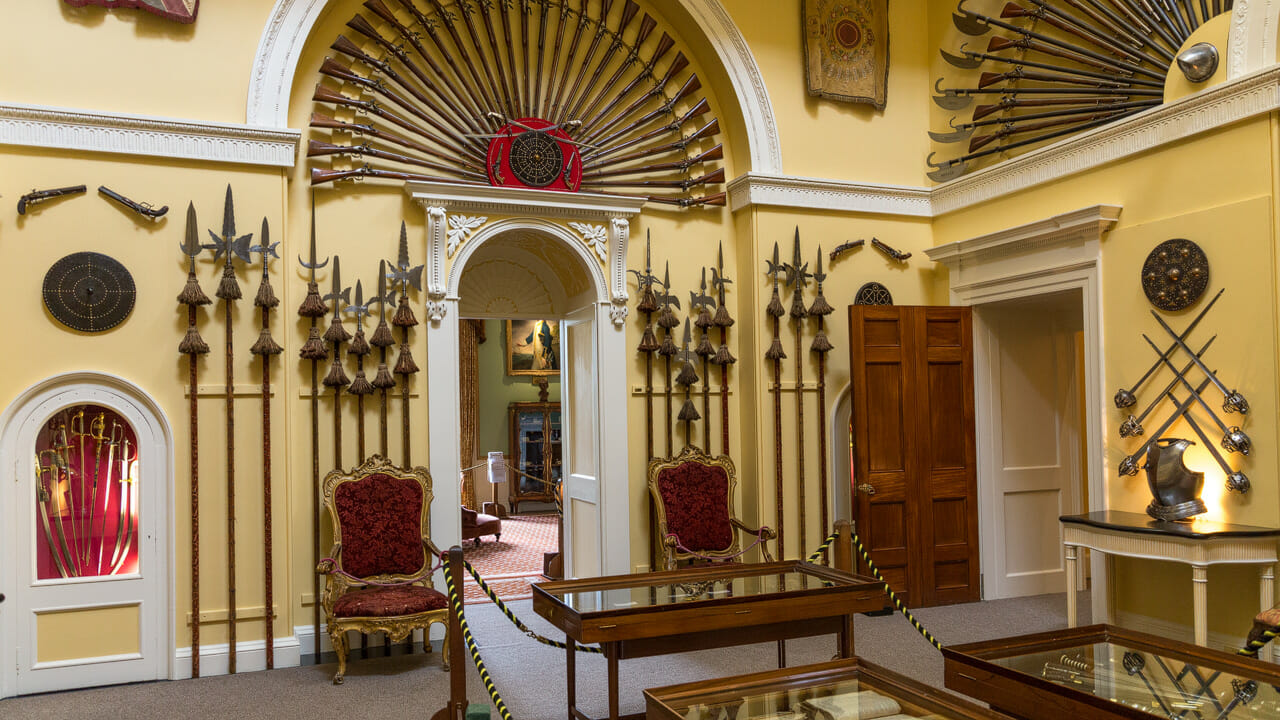
There are said to be around 1,300 muskets and halberds here. One of the display cases also holds a very special dagger. It’s said to have once belonged to the folk hero Rob Roy MacGregor.
The rooms of Inveraray Castle have much more still to offer, but the splendour isn’t confined to the interior: sweeping parkland stretches out all around the castle.
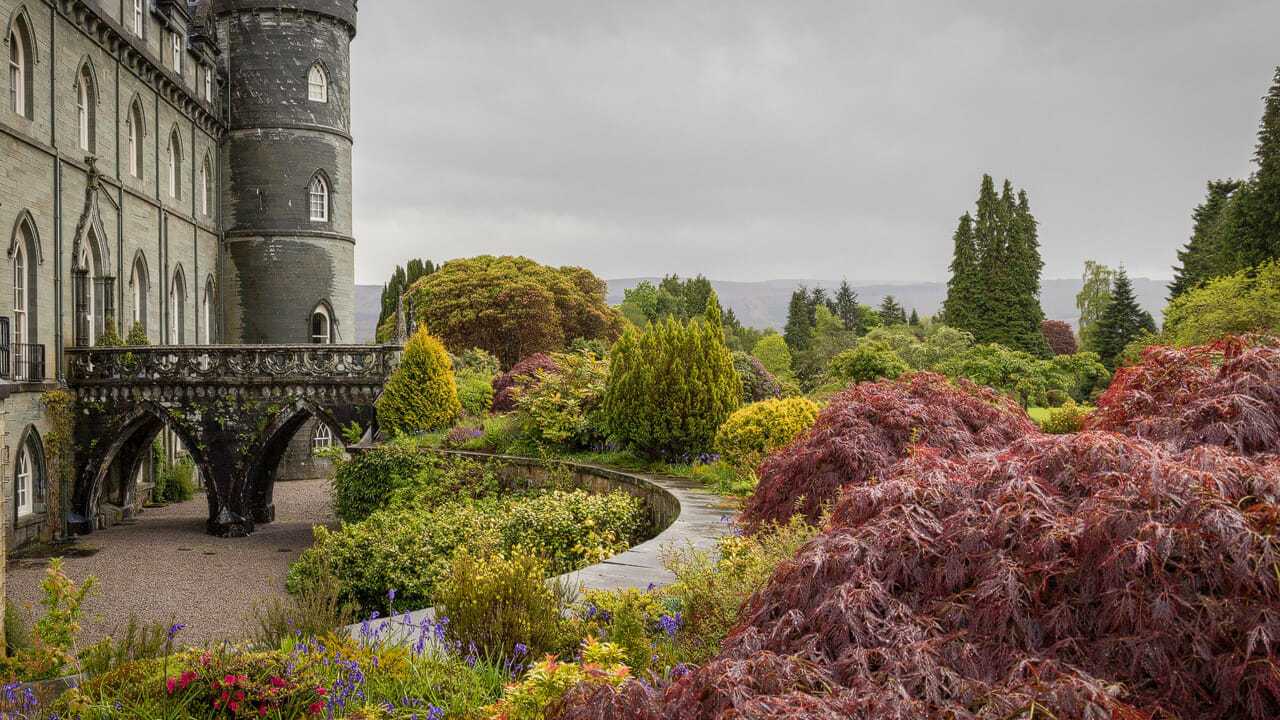
The Campbells used to enter the park through the rear exit, though today’s visitors instead pass alongside the building. Across an area the size of nine football pitches, neatly kept grounds with gravel paths have been laid out, which soon give way to meadows and a small woodland.
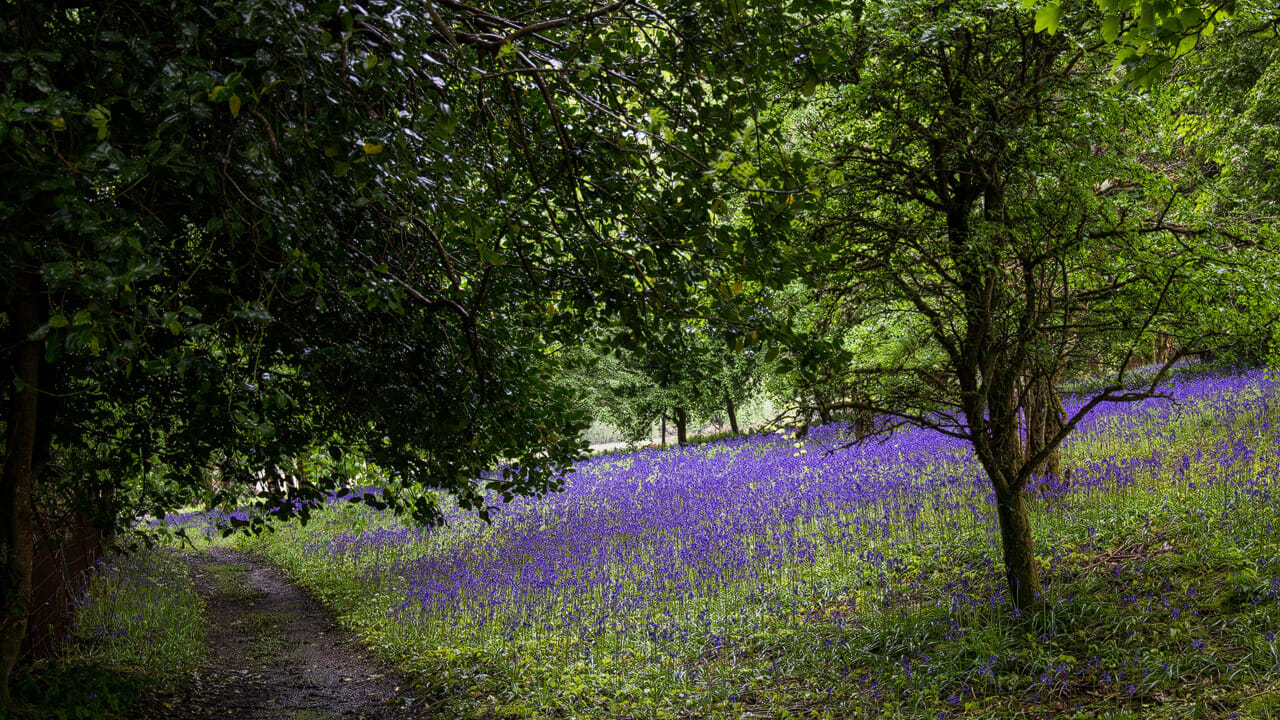
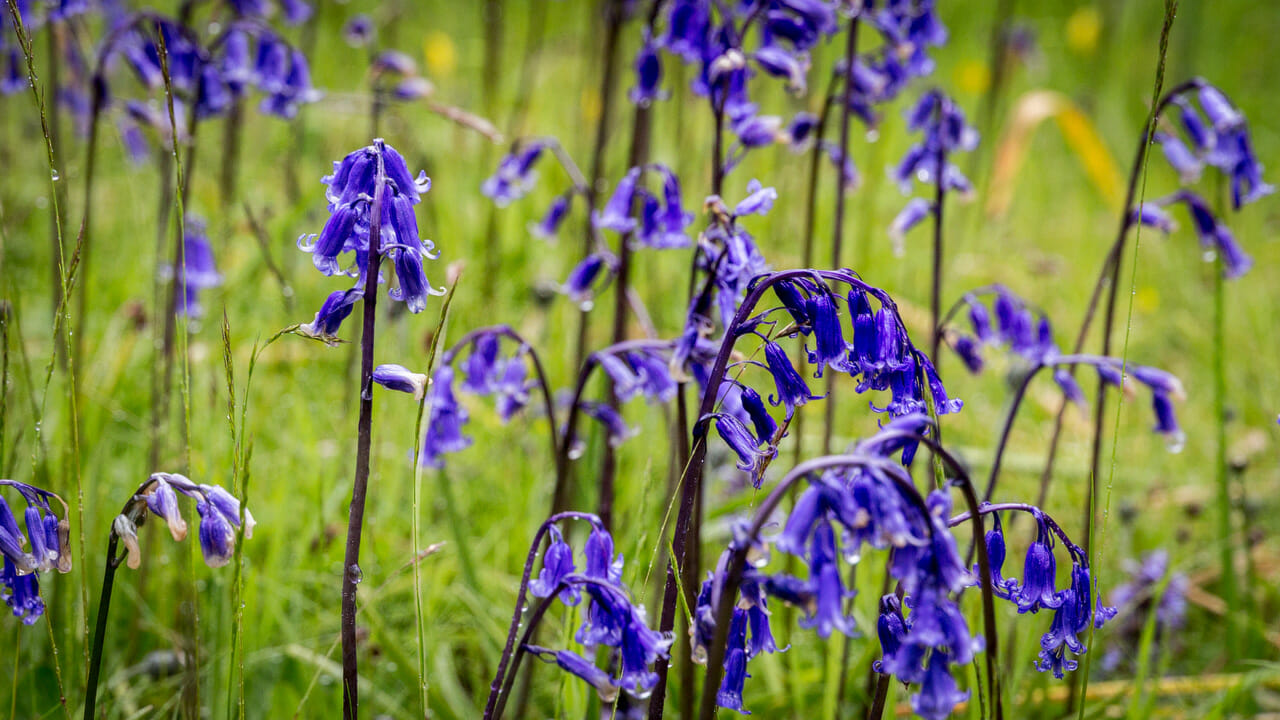
In spring, the bluebells spread out across the woodland here.
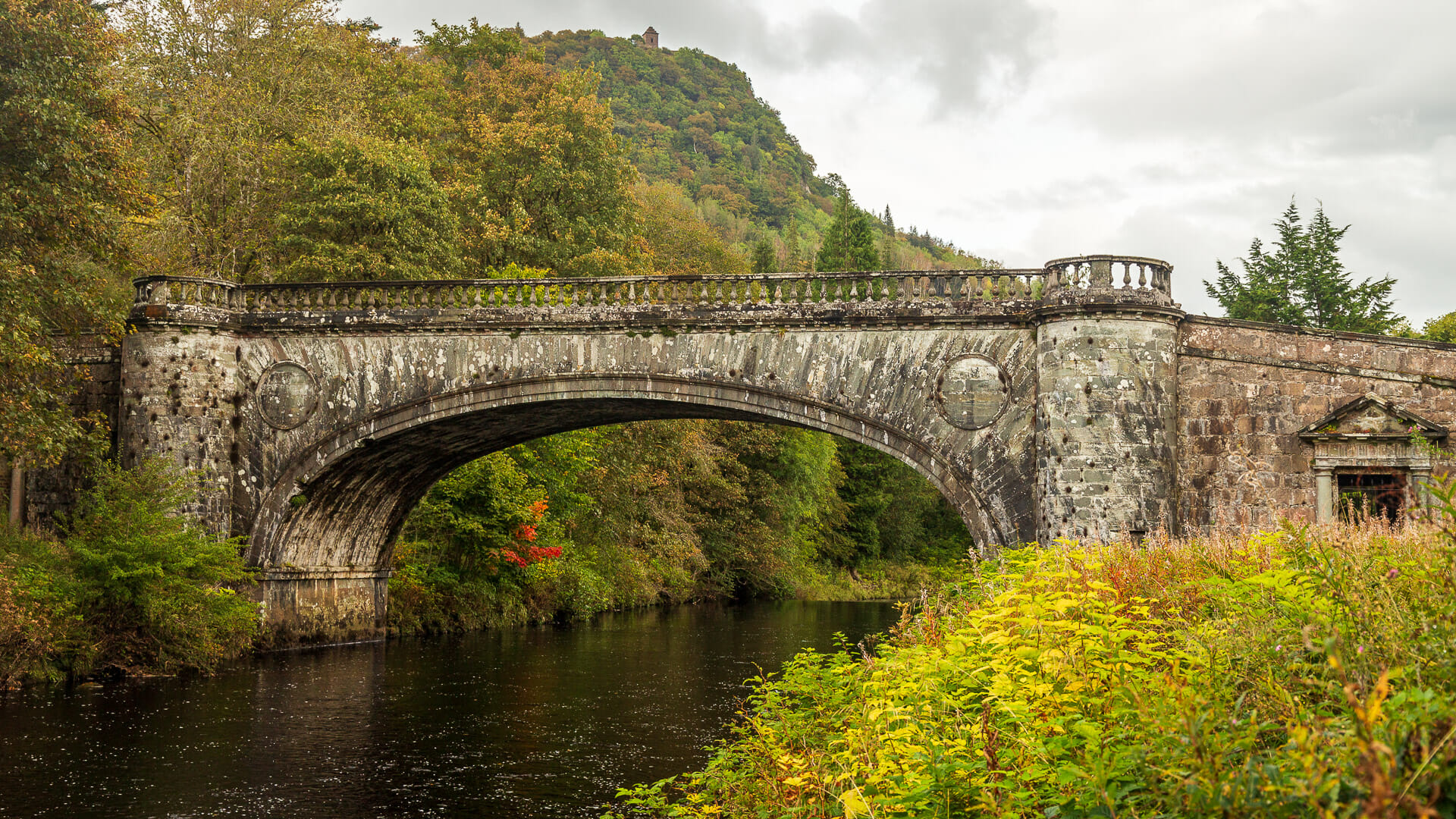
The woodland stretches all the way down to the main road into Inveraray. Follow it away from the village and you’ll reach the River Aray. It gives the village its name, since “Inver Aray” means “mouth of the Aray”. A stone bridge spans the river here.
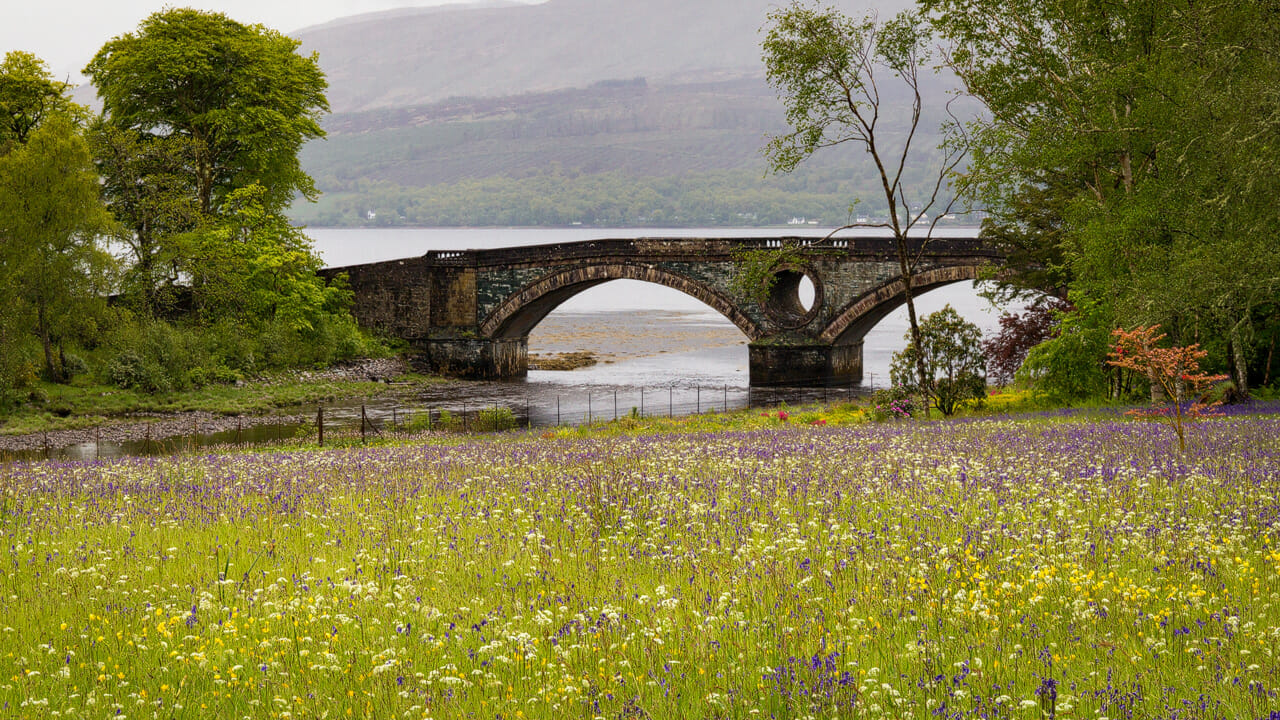
Beyond it, the Aray flows out into Loch Fyne, the largest sea loch in Scotland.
From here you can turn back and return to the castle across wide meadows.
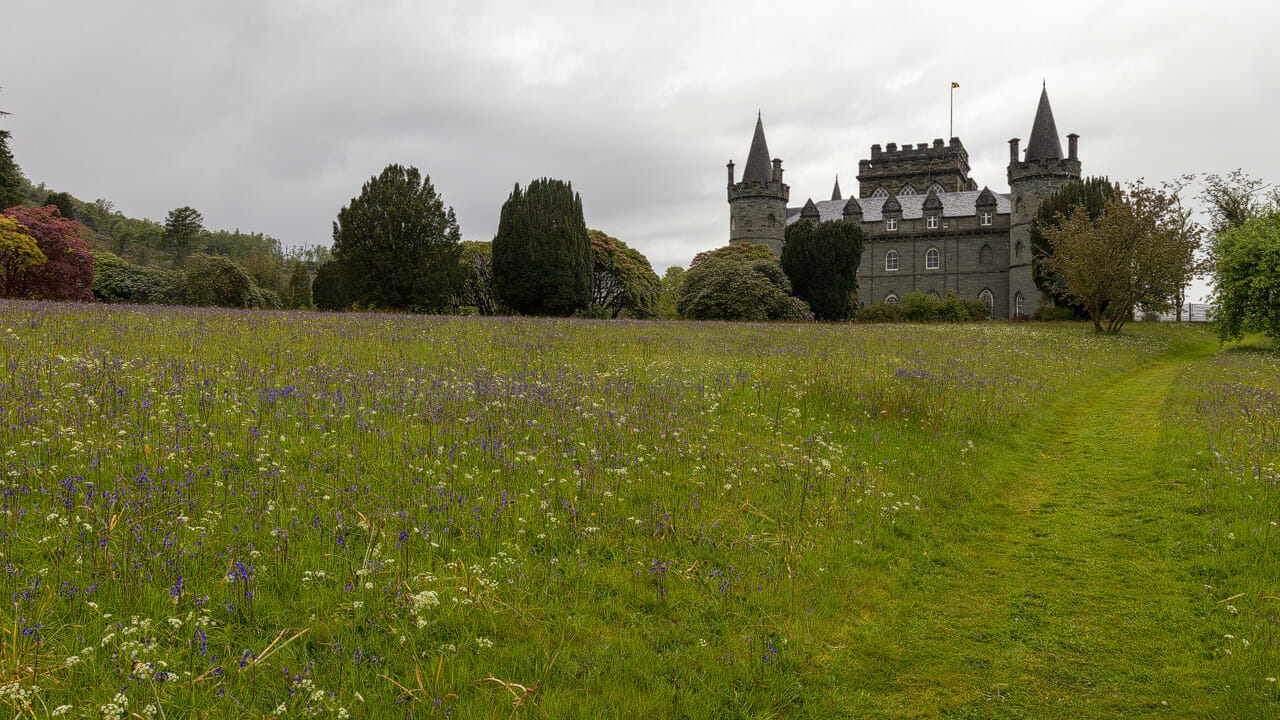
Inveraray Castle is a rare gem in the southwest Highlands, and absolutely worth a visit. But its splendour didn’t come without difficulty, as its history shows.
Good to know: the splendour and pain of Inveraray Castle
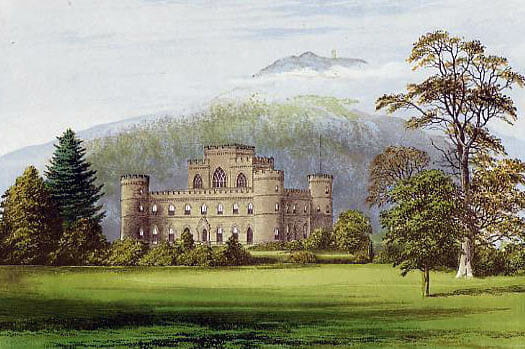
Inveraray Castle has long been the ancestral seat of the Lochawe Campbells. They initially resided at Innis Chonnel Castle, whose remains can still be seen today on neighbouring Loch Awe. But in the 14th century they moved to Inveraray, at first still into a castle. It was only in the 18th century, once fortified strongholds fell out of fashion in favour of country houses, that designs emerged for the new Inveraray Castle. At first, they looked like this:
The Lochawe Campbells were supporters of the new British king, William of Orange, when he replaced the old Stuart monarchy. In gratitude for this loyalty, William raised them to Dukes of Argyll. The Campbells were therefore – unlike many other Scottish clans – opponents of the rebellious Jacobites (currently only available in German).
Fittingly enough, the foundation stone for the new castle was laid in the very same year the Jacobites were defeated on the battlefield of Culloden, the old clan structure of the Highlands was laid to rest, and the Clearances (currently only available in German) began. Inveraray Castle itself, however, wasn’t completed until 1789, though the Campbells had already moved in as early as 1770.
The Duke also showed little regard for the residents of Inveraray village. The houses’ existing location blocked his view of the sea. Without much ceremony, he simply had the village relocated to the spot where it still stands today.
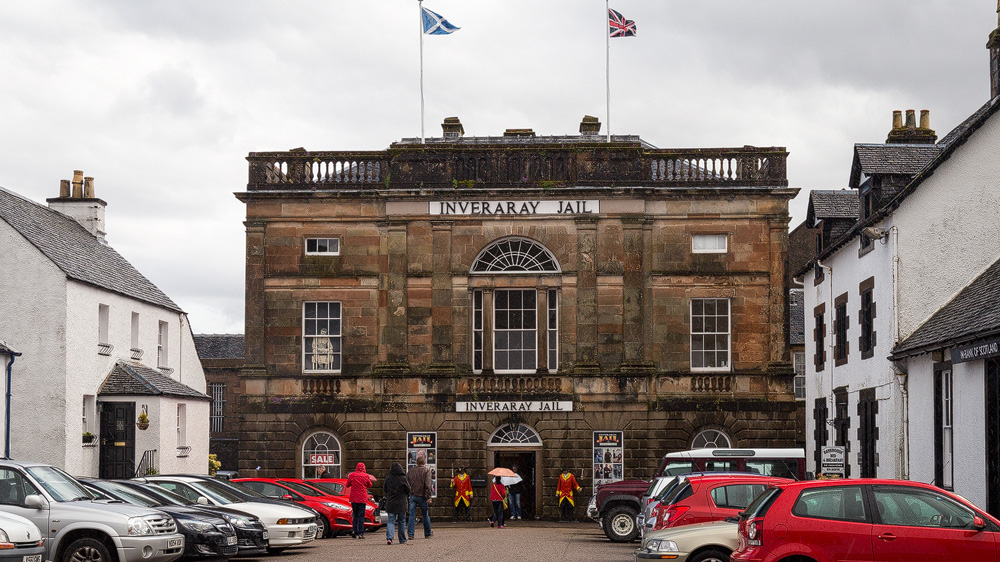
And while the Duke dined splendidly in the castle, just a few hundred metres away poor souls suffered from hunger, cold and torture at Inveraray Jail.
In 1877, fate struck in the form of a fire. During the castle’s reconstruction, conical roofs were added to each of the towers.
The Dukes of Argyll, incidentally, still live in the castle to this day – one wing is closed off from visitors, and it’s there that the family resides. By now, 24,000 hectares of land belong to the estate.
Hike: to the Dun na Cuaiche viewpoint
Armin once told me the hike up to the viewing tower is well worth it. And I’ve since taken this little hike myself – views like this over Loch Fyne are simply too tempting to resist:
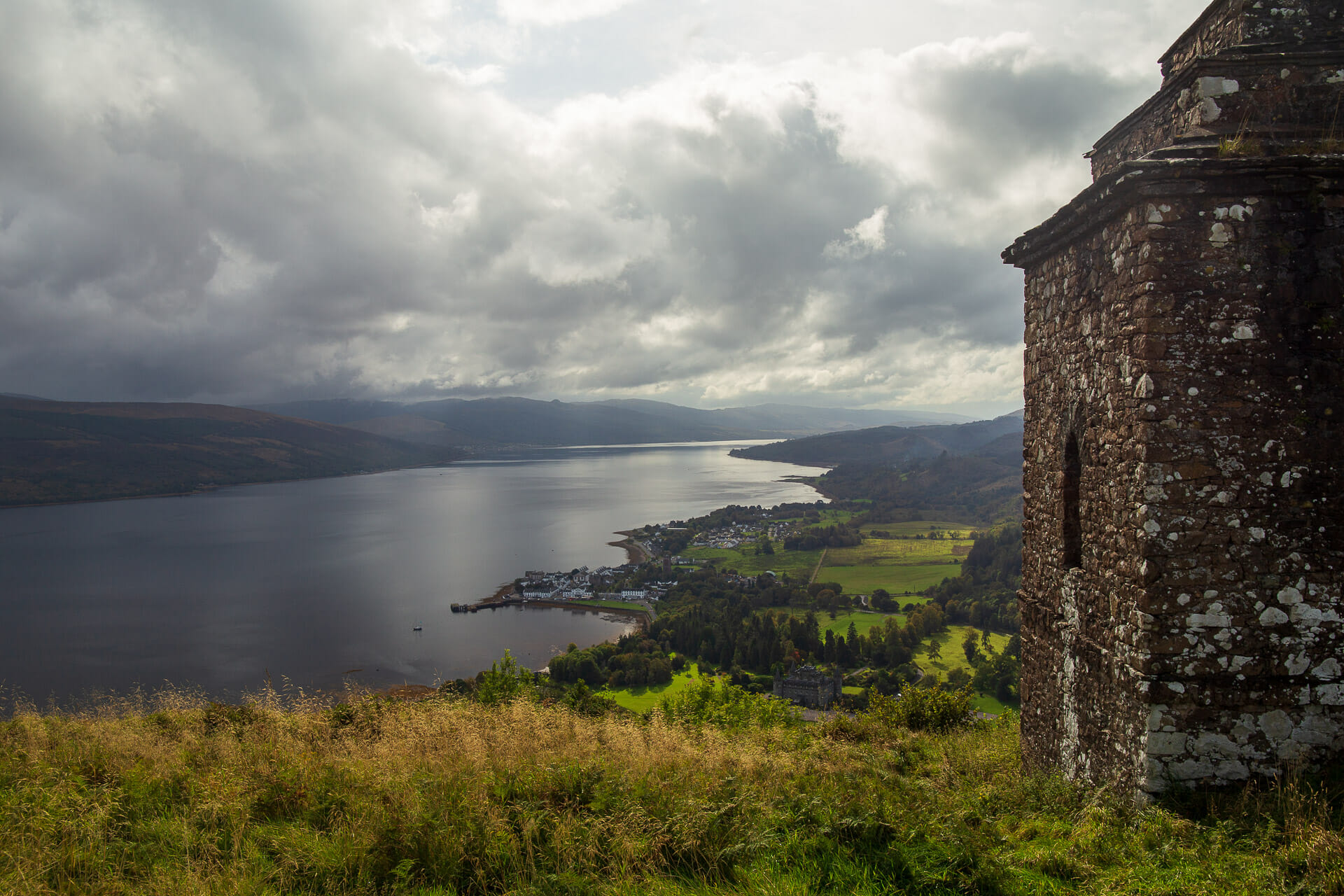
The route runs 4.7 kilometres in total, climbing 230 metres of elevation along the way. Allowing some time at the top, you should plan for around 1.5 hours.

The path leads from the castle first onto the bridge over the River Aray.
Beyond it, the path begins and is also marked with a signpost. This map shows the GPS track – click/tap on it to display it.
Tip: plan a full day for Inveraray
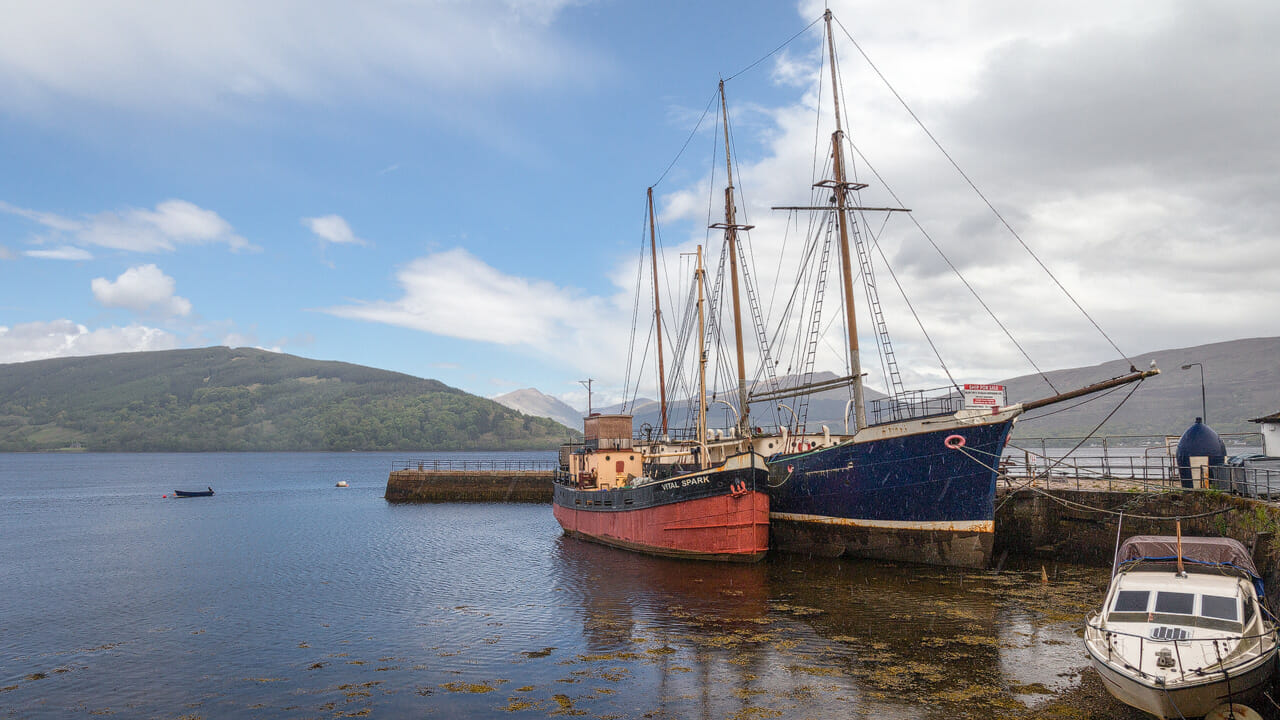
Along with the already-mentioned Inveraray Jail, which you can visit, the village offers plenty of other nice attractions too. Take, for instance, the ships in the harbour – the Arctic Penguin, a three-masted schooner from 1911, and the Vital Spark. The Vital Spark is a classic “puffer” – the small steamships that once delivered cargo to all the remote corners of the Highlands and Islands. Unfortunately, both can now only be viewed from the outside.
Getting there:
With a sat nav: “PA32 8XE” brings you to Inveraray.
Without a sat nav: from Glasgow, take the A83 towards Tarbet; at Tarbet the A83 branches off to the right at a junction. Continue straight on here towards Campbeltown. Keep following the road all the way to Inveraray. On the stone bridge, you’ll already see the castle to the right. The entrance to Inveraray Castle comes shortly after the village sign, on the right-hand side. Follow the drive to the car park.
Coming from the northwest, from Lochawe you can take the A85 onto the A819. This route is also very scenic, running first alongside Loch Awe. You enter Inveraray through a kind of archway. Turn left here, then left again straight away for Inveraray Castle.
