The sea crashes loudly against the cliffs, spray hisses and churns between jagged rocks – the Cliffs of Yesnaby put on a truly spectacular natural show.
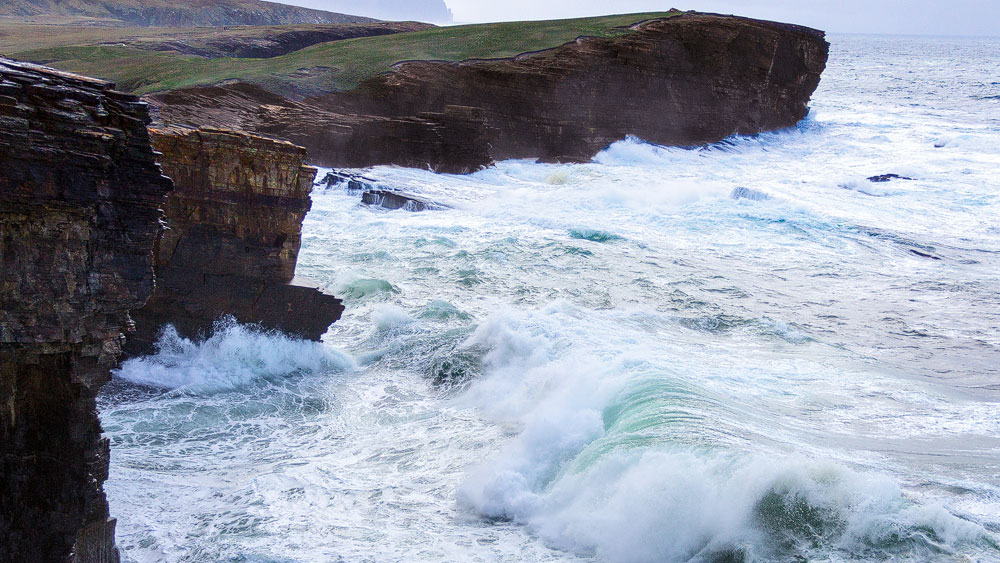
The wild Atlantic has done some serious work here: at Yesnaby, on the west side of Orkney‘s Mainland, it has carved wonderful sculptures out of the soft stone.
It has created overhanging rock noses that the water plays around, and blowholes where rolling waves first split apart before crashing back together in a spray beneath the rock.
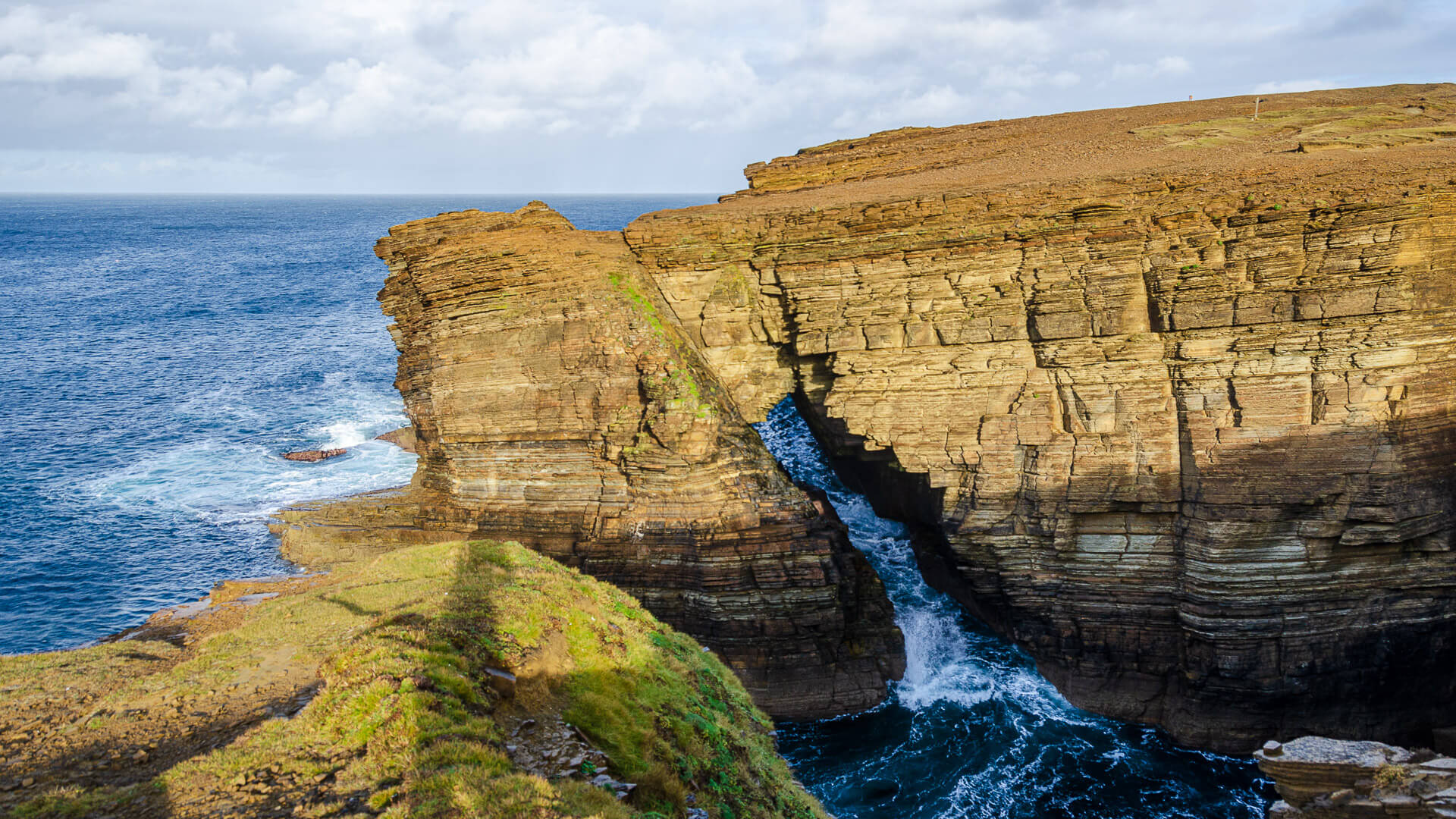
Flat rock platforms lie offshore, where the waves break in picturesque fashion.
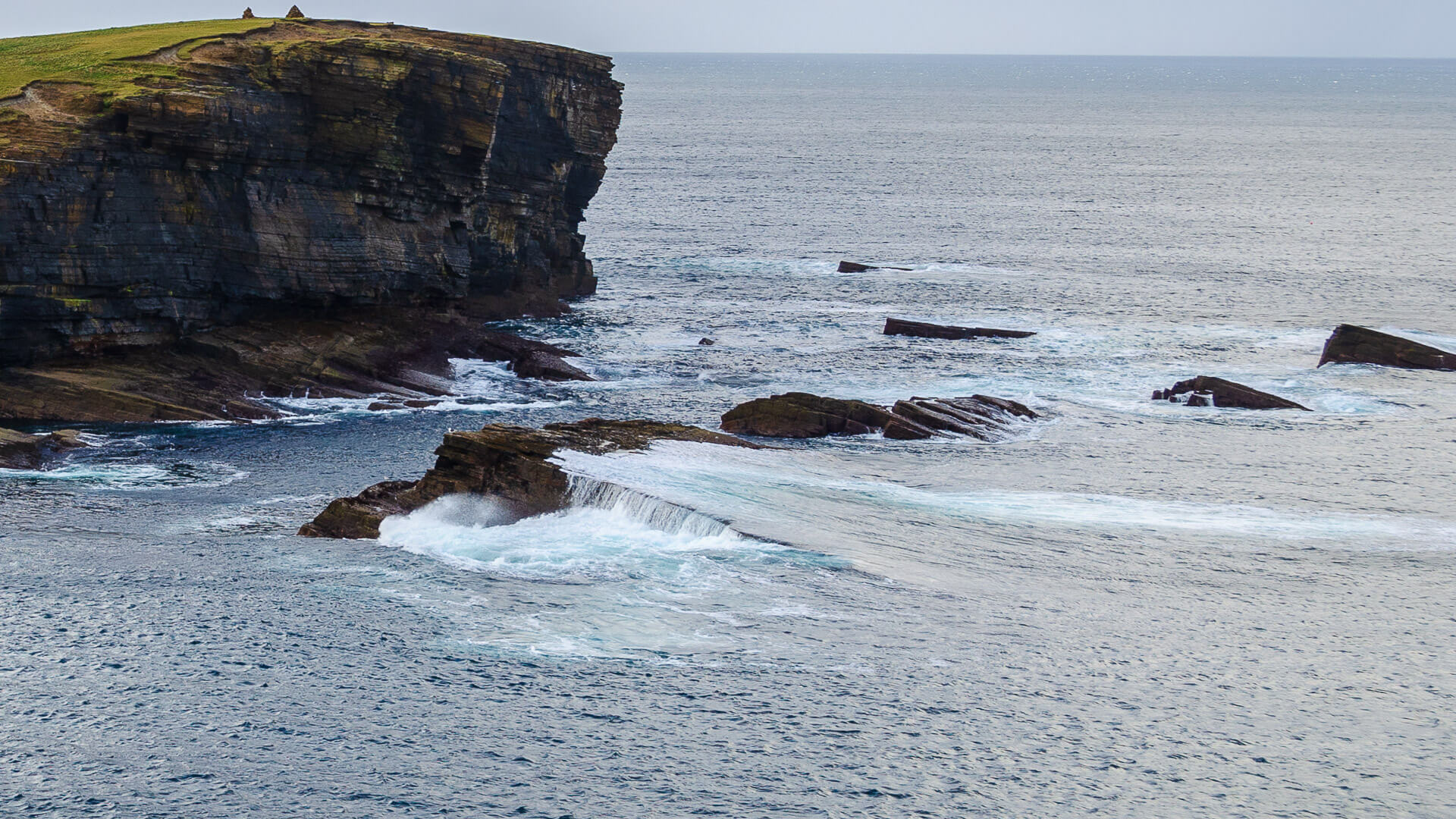
The brown of the rock and the blue of the sea contrast beautifully with the green grass on the clifftop plateaus. The rather rare Scottish primrose also grows here. And Yesnaby offers a wonderful habitat for several bird species too: gannets, puffins and skuas breed and fly here. There are even said to be bumblebees around, according to the information board.
For visitors, Yesnaby offers an unforgettable spectacle that can be discovered on a short walk. A word of warning, though: the cliffs are genuinely dangerous if you venture too close. The rocks can suddenly become slippery in places. As recently as 2017, a tour guide fell to their death here. Please be extremely careful, especially when taking photographs.
With a healthy dose of respect, a bit of time, and due caution, the Cliffs of Yesnaby absolutely belong on any island driving tour.
Did you know: related to the Old Man
The rock of these cliffs dates from the Devonian period of the Earth’s history. It’s very similar stone to that which forms the famous Old Man of Hoy, which stands off the Orkney island of Hoy.
The story of the Cliffs of Yesnaby begins 400 million years ago – before the age of the dinosaurs. Back then, the landmass that includes Orkney lay south of the equator. In a lake that existed at the time, now known as “Lake Orcadie”, layer upon layer of sediment settled and was compressed together. These layers can still be seen in the cliffs today.
There’s volcanic rock here too. For geologists, the Yesnaby Cliffs are certainly a fascinating sight.
Tip: a walk to the sea stacks
The Yesnaby Coastal Walk runs along the cliffs. It’s well worth walking at least as far as the sea stacks, which are genuinely a highlight of this already impressive stretch of coastline.
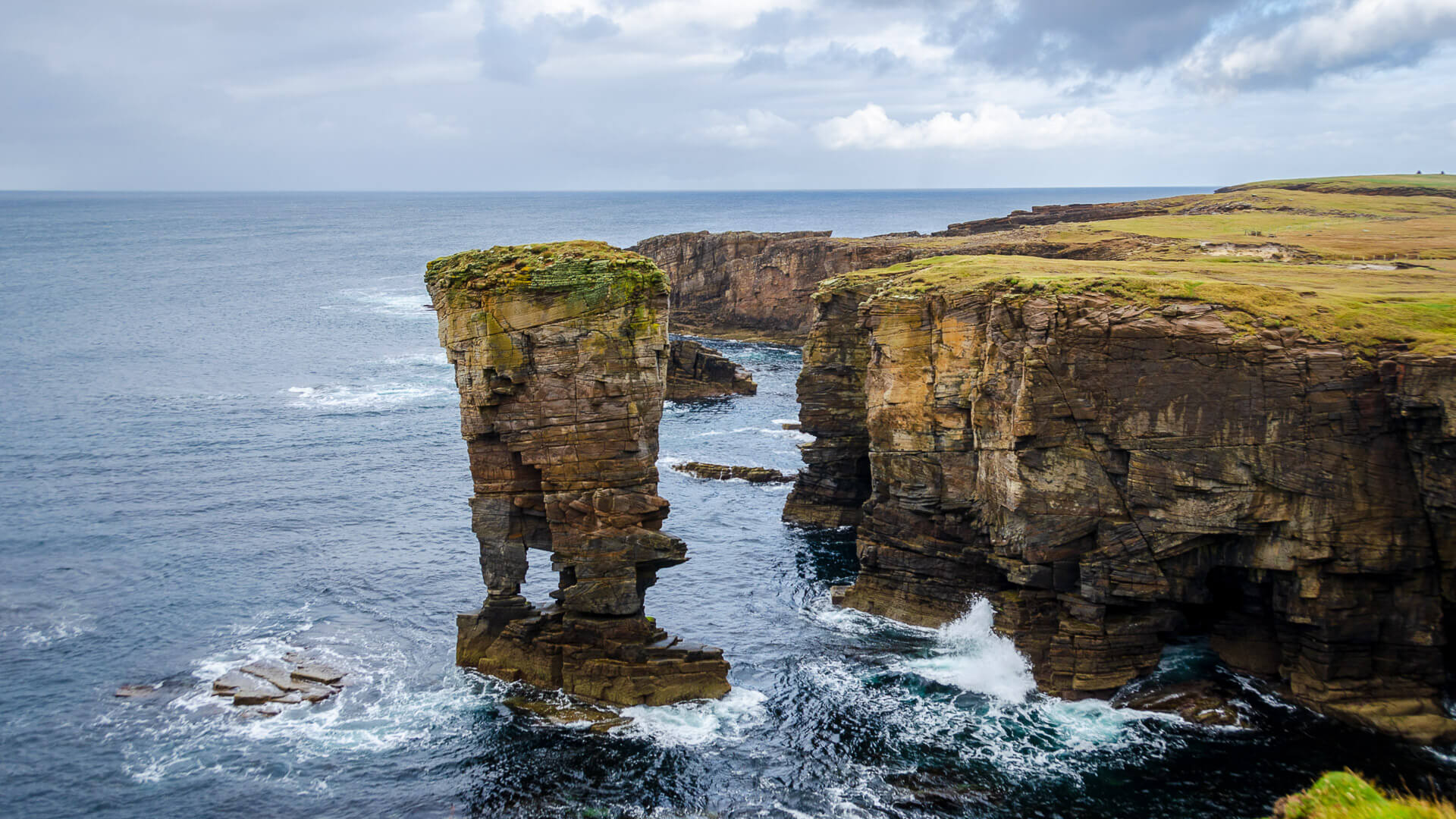
The walk itself takes around 30 minutes of actual walking time. The path is easy to follow but can be muddy in places. There are wooden steps at a few points, and you’ll need to cross a small stream via stepping stones.
There are two larger sea stacks to see, one of which is still connected to the mainland.
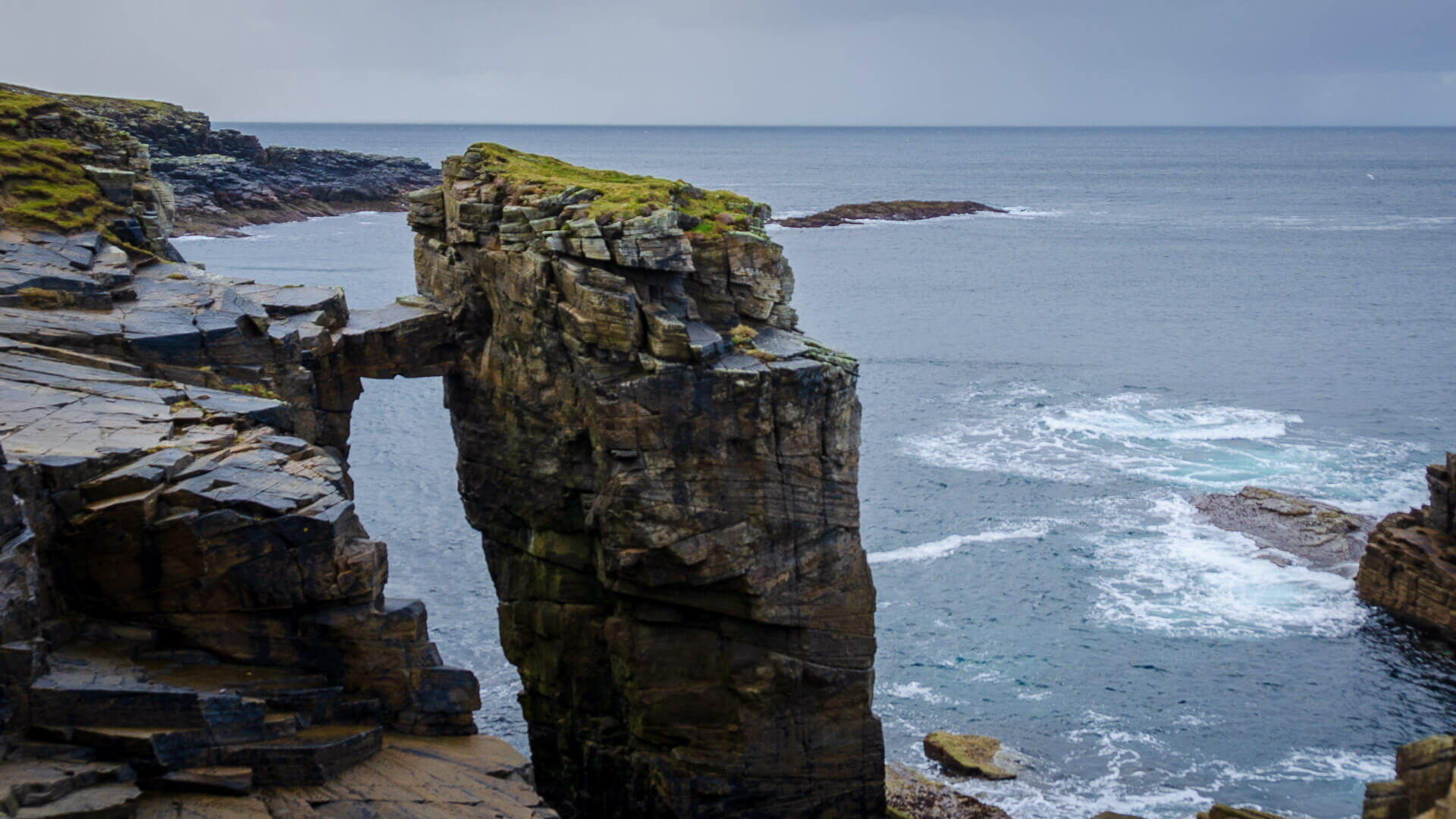
The short walk starts at the car park and heads south from there.
Getting there:
The drive takes around 20 minutes by car. There’s also a scheduled bus service to Yesnaby, as well as a number of tourist coach tours, which you can ask about at the tourist information office.
By car: From the Stromness ferry, take the road towards Kirkwall. After a while, a turning to the left appears signposted “Sandwick” – take it. Continue until you reach a sign pointing towards Marwick, and follow that direction.
Then turn left as soon as the “Yesnaby” sign appears. Drive all the way to the car park at the end, get out, walk, and enjoy.