Cullykhan Bay is still very much an insider tip. A stop at this beautiful bay is worthwhile, and not just for the fantastic views.
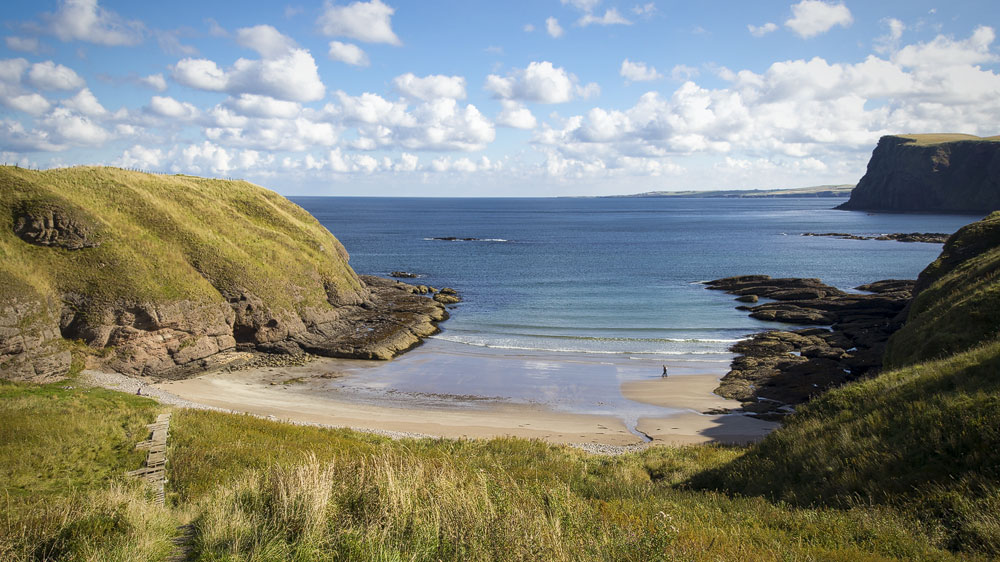
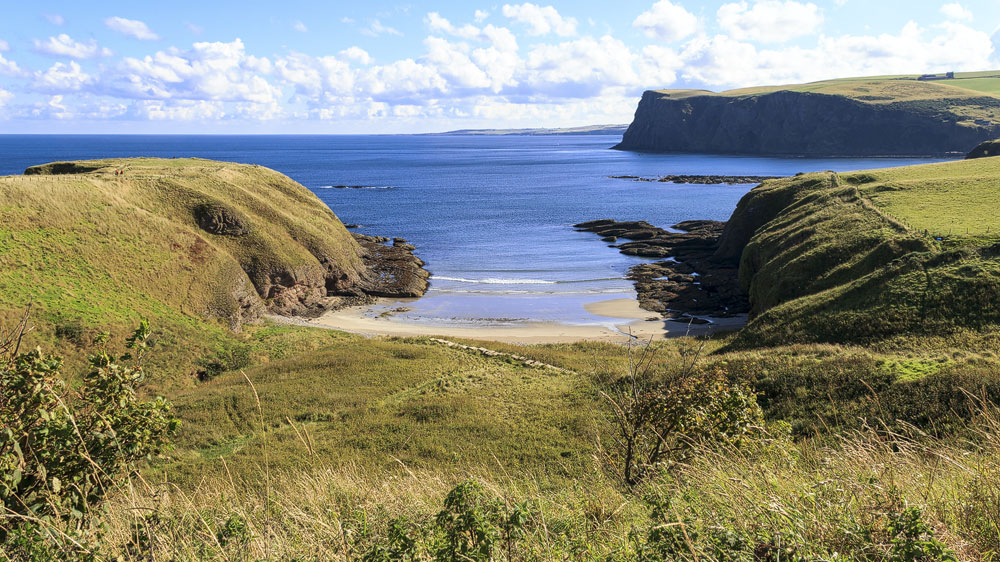
Along the coastal road, a little way past the famous fishing village of Pennan, lies Cullykhan Bay, nestled between two green headlands. Its floor is lined with the finest sand, and the waters of the Moray Firth kiss the beach with gentle waves. The surrounding cliffs offer shelter from the often fierce wind. In short: an idyllic spot.
Bronze Age people evidently appreciated this view too, since they built a fort on the headland northwest of the bay. In this case, “fort” means they erected a wooden palisade at the neck of the headland, with a large wooden gate serving as the entrance. Later, the palisade was replaced by a stone wall and reinforced with a ditch.
To reach the headland, visitors have to climb a slope, and for a short stretch the path narrows, with the ground falling away to either side. It’s easy to imagine how any would-be attackers could have been successfully repelled right here.
Cullykhan Bay wasn’t just an advantage for the people at the fort because of its idyllic setting, though. The bay also served as an excellent natural harbour, sheltering not only fishing boats but potentially trading vessels too. That, at least, seems likely, since the fort’s inhabitants manufactured goods of their own, while excavations have also turned up beads believed to have come from mainland Europe – as early as 700 BC.
The fort was probably still in use well into the era of the Picts. Later, a fortified tower house stood here, and later still, in the 18th century, a battery of cannons known as Fort Fiddes.
Not much of all this remains visible on the green headland today, however.
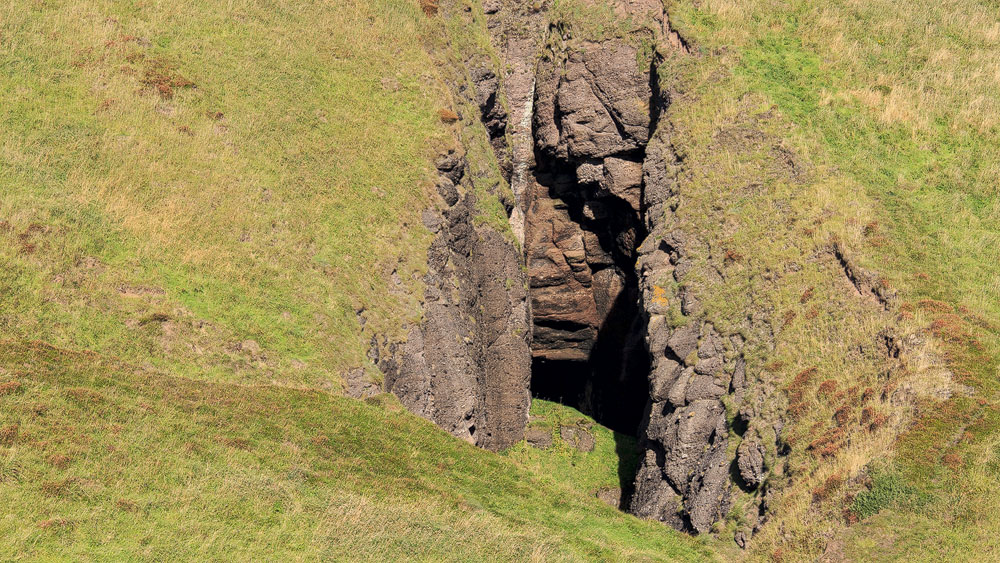
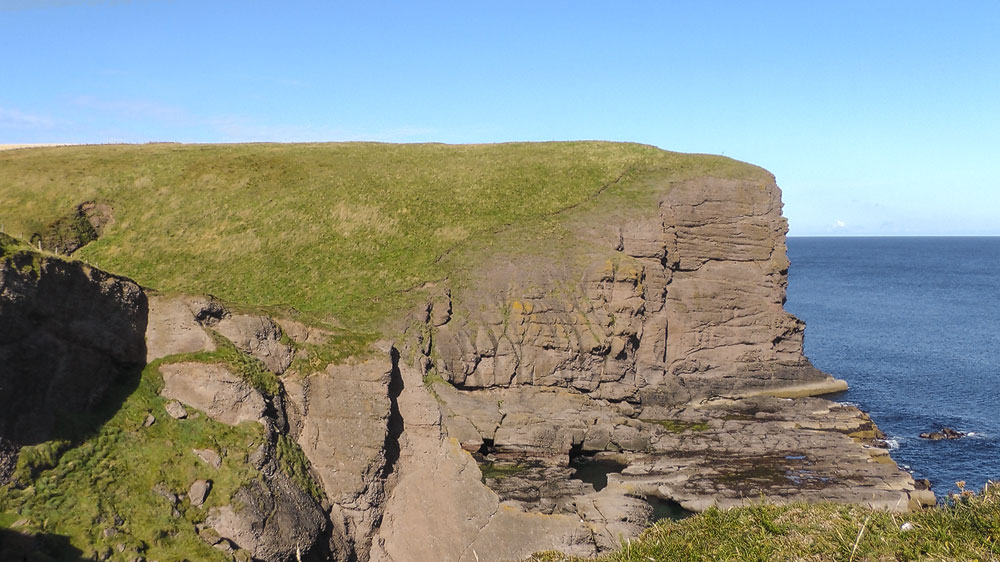
What does catch the eye on the way over, though, is something else entirely: a strange hole in the flank of the mountain opposite. It bears an eerie name: Hell’s Lum, the Chimney of Hell. Legend has it that you can hear the voices of a thousand drowned sailors inside.
The legend is easily explained: Hell’s Lum is in fact a cave that runs right through the cliff known as Lion’s Head and opens out into the sea on the other side. When wind and swell pick up, the open hole produces the corresponding sounds.
Good to know: The Banffshire coast
Along the entire coastline between Banff and Pennan, there were several clashes between the local Picts and the Vikings. One of these, not far from Cullykhan, was the Battle of the “bloody pits”, in which the Scots rolled boulders down the hillsides. As the Danes tried to flee and reach safety over the hilltops, they found others already waiting for them there …
The remains at Cullykhan, incidentally, are considered to be one of the earliest industrial sites in Europe.
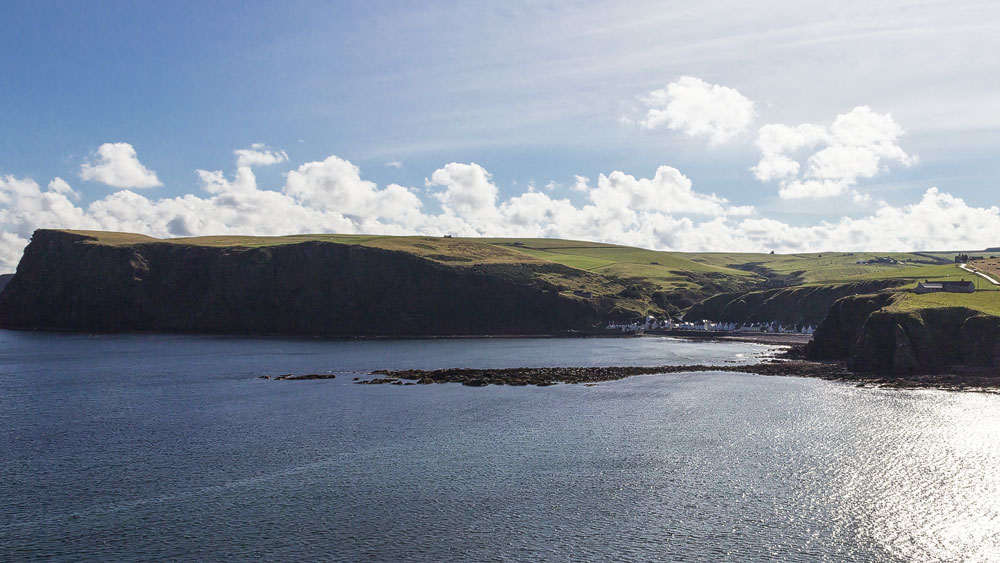
Tip: The view towards Pennan
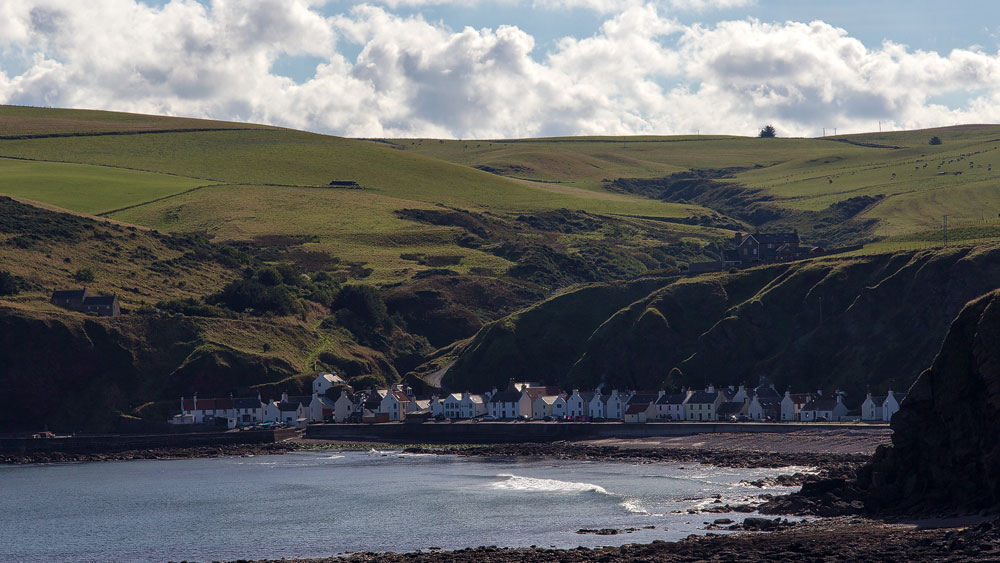
From the headland of the fort, you get a wonderful view over the bay of Pennan. With a telephoto lens on your camera, you can capture the coastal village from the front.
Getting there:
With sat nav: “AB43 6JA” will get you to the right area, but keep an eye out for the signpost here on the coastal road, the B9031.
Without sat nav: Follow the coastal road, the B9031. Between Pennan and Banff, a brown signpost to the bay will appear. Follow the gravel track to the car park, then continue on foot.