The former splendour is still easy to picture: Earl’s Palace in Kirkwall on Orkney is a thing of beauty, and at the same time a cautionary tale about the abuse of power, decadence and decline. The story behind today’s ruin is bound up with Patrick Stewart, a greedy and cruel ruler of the island who wanted to live in this grand building.
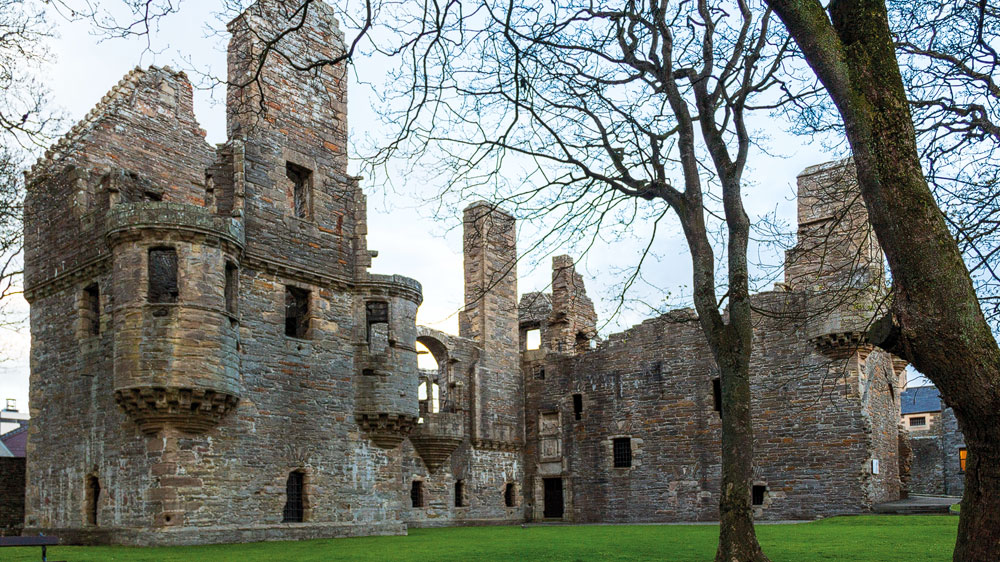
Directly opposite the cathedral in Kirkwall, the windowless walls of the old palace still rise up into the sky. The multi-storey building was laid out in an L-shape, its heart being the 16-metre-long great hall with its two large fireplaces. To this day, Earl’s Palace is considered one of the finest Renaissance buildings in Scotland. But however wonderful the building may have been by the standards of its time – or ours – it carried the stain of having been built through forced labour and oppression.
The unloved builder of the palace was Earl Patrick Stewart, a greedy and violent ruler of the Orkney and Shetland Islands, who reigned from 1592. The population called him “Black Patie” for his cruelty.
Patrick Stewart could simply have moved into the nearby Bishop’s Palace, but he found it too old-fashioned and too small. His father’s palace at Birsay, also fairly new at the time, was apparently too far from Kirkwall for the young ruler’s liking. So, from around 1600 AD, Patrick began building his own grand residence. To make it happen, the Stewart earl squeezed every penny out of his subjects and forced the people of Orkney into unpaid labour on his building site.
Did you know: the end of Black Patie
By 1607 the palace was almost finished, but Patrick Stewart didn’t get to enjoy much of it, having badly overreached himself financially. Because of his debts, and his cruel nature, he was thrown into prison in Edinburgh.
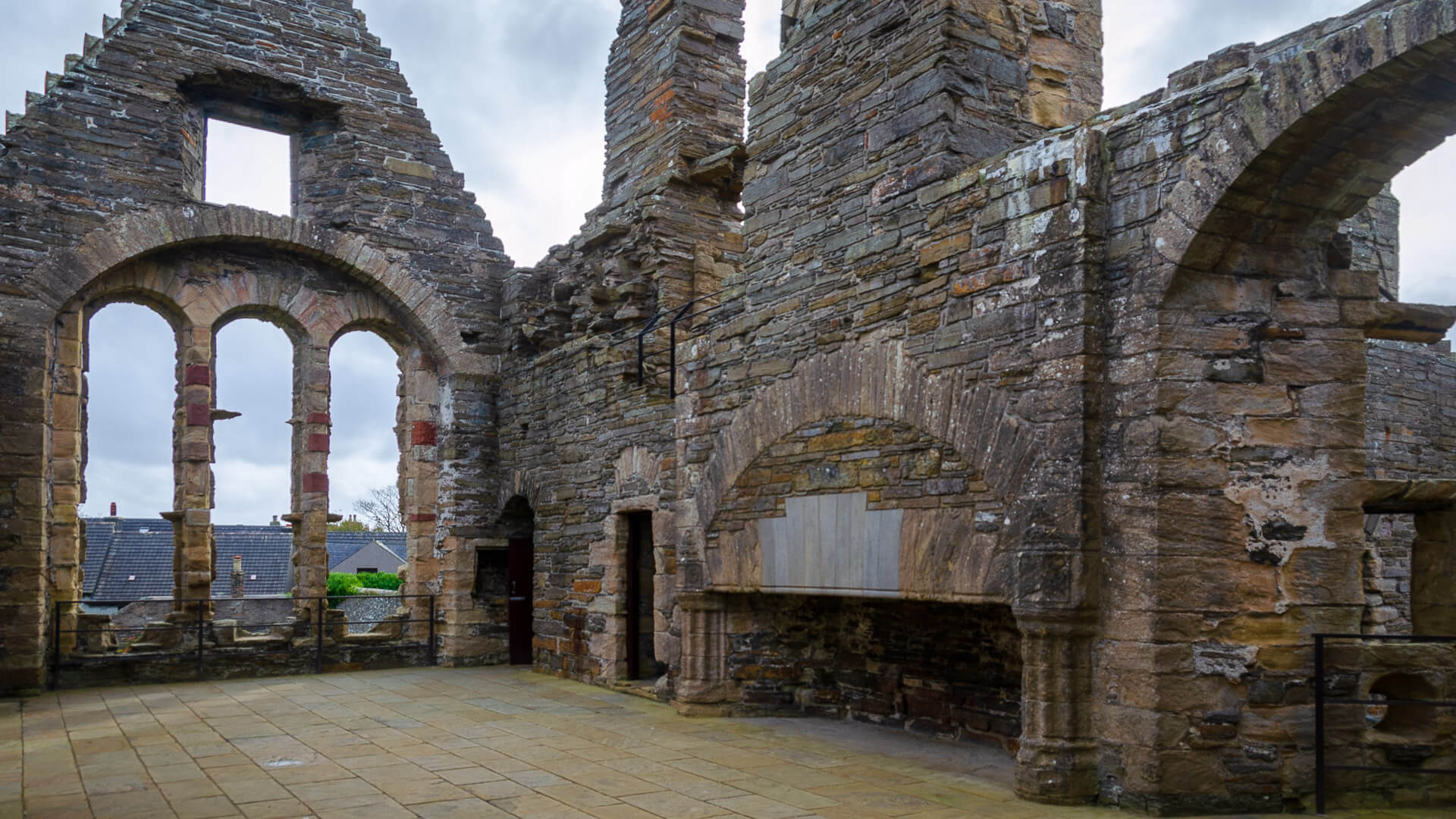
From there, Patrick incited his illegitimate son Robert to reclaim the Stewart holdings on Orkney from the Crown. Robert promptly hired a number of men and occupied Kirkwall’s town centre. In the end, the palace even became the scene of a siege, during which cannon fire was directed at its walls – most of the cannonballs are said to have simply shattered against the walls rather than damaging them. Even so, the rebel Robert was eventually captured. He too was taken to Edinburgh, and there, like Patrick Stewart before him, was finally executed in 1615.
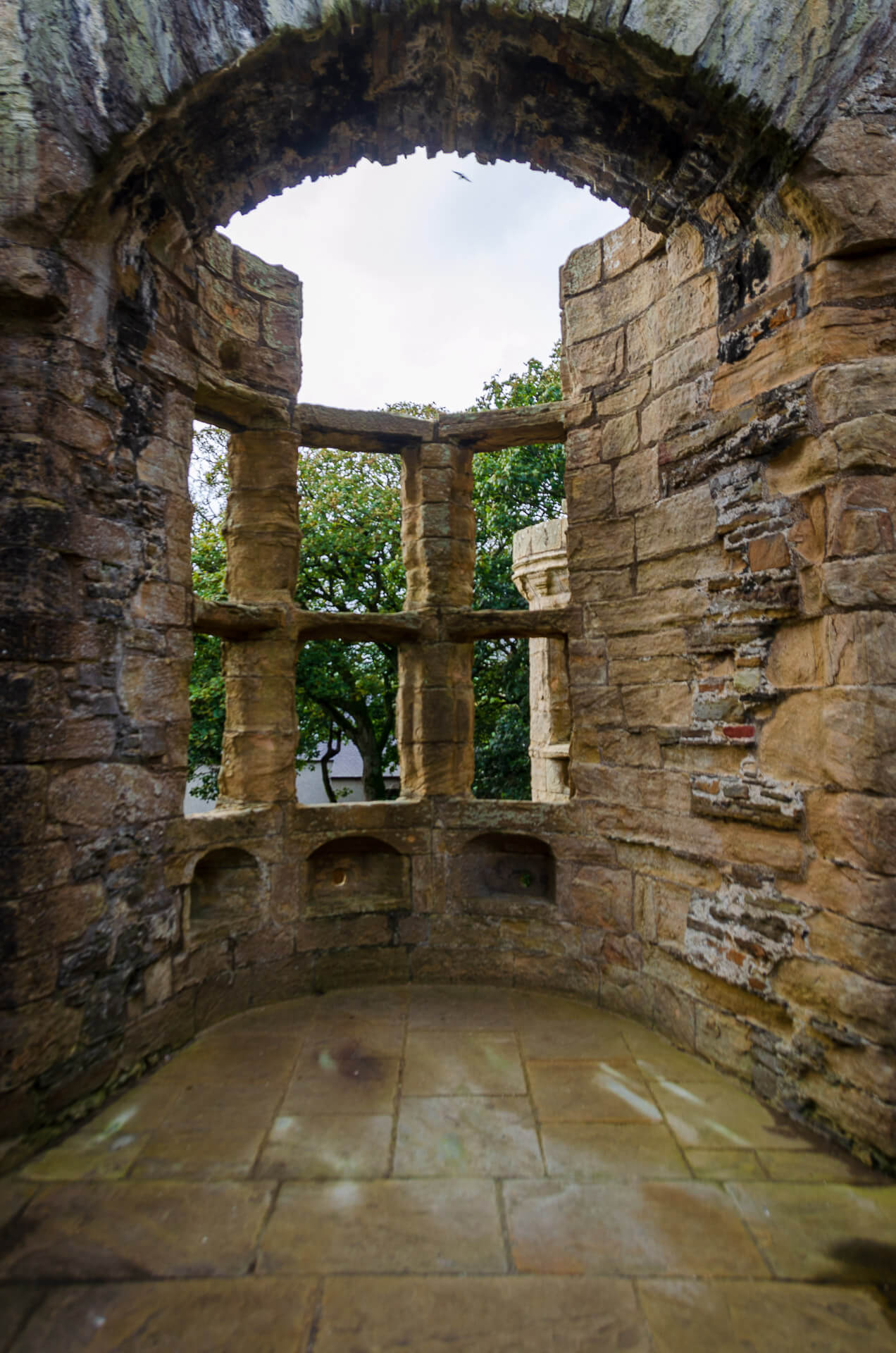
The palace subsequently passed into the hands of the bishops, who lived in it at times. By the 18th century, it belonged to the Scottish Crown but could no longer be kept in good repair; in 1745 the roof and other parts were even sold off. So Earl’s Palace in Kirkwall eventually fell into disrepair, becoming the ruin we see today.
Tips: everything at a glance in central Kirkwall
While in Kirkwall, be sure to also visit the Bishop’s Palace (right next door) and St Magnus Cathedral.
Getting there:
With sat nav: “KW15 1PD” will take you straight into the centre of Kirkwall.
Without sat nav: Coming from Stromness (ferry), simply follow the signs to Kirkwall by car, staying on the A965 throughout.
My tip: park at the harbour in Kirkwall at the start of Albert Street and walk along it (a few minutes’ stroll past the shops). Pass St Magnus Cathedral, then turn left behind it into Palace Road, then take the next small street on the right. The entrance to the palace is on the left.