Great power emanated from this small island: Close to the north shore of Loch Finlaggan lies an island on which the “Lords of the Isles” had their seat. From here, they ruled the islands and the west coast of Scotland.
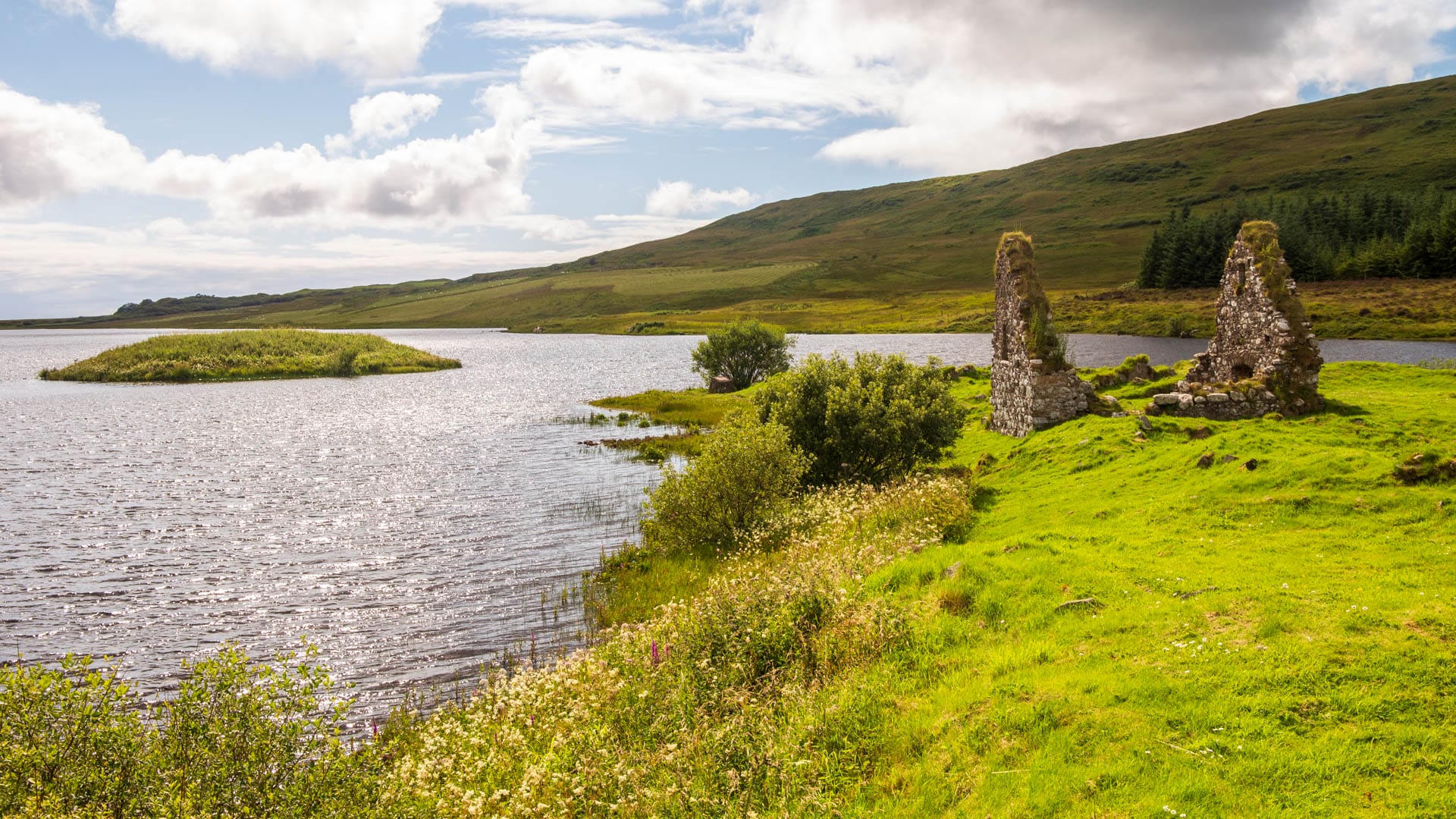
Two islands in a small loch, which in turn lies on the island of Islay. This was the centre of the influential Lords of the Isles, the rulers of the islands and the west coast of Scotland. In the Middle Ages, these island lords of the Highlands and Islands were actually as powerful as the Scottish kingdom in the south-east.
This kingdom naturally needed a seat of power, and as it was a kingdom of islands, it was only logical that this should be located on an island. Loch Finlaggan, with its two islets, not only offered protection from enemies, it also symbolised the kingdom itself as a kind of miniature.
The remains of the ruler’s seat can still be found today on Eilean Mòr, the “big island”. It was not a large castle, but rather a small village with its own paths, a chapel and even agriculture in the form of small fields.
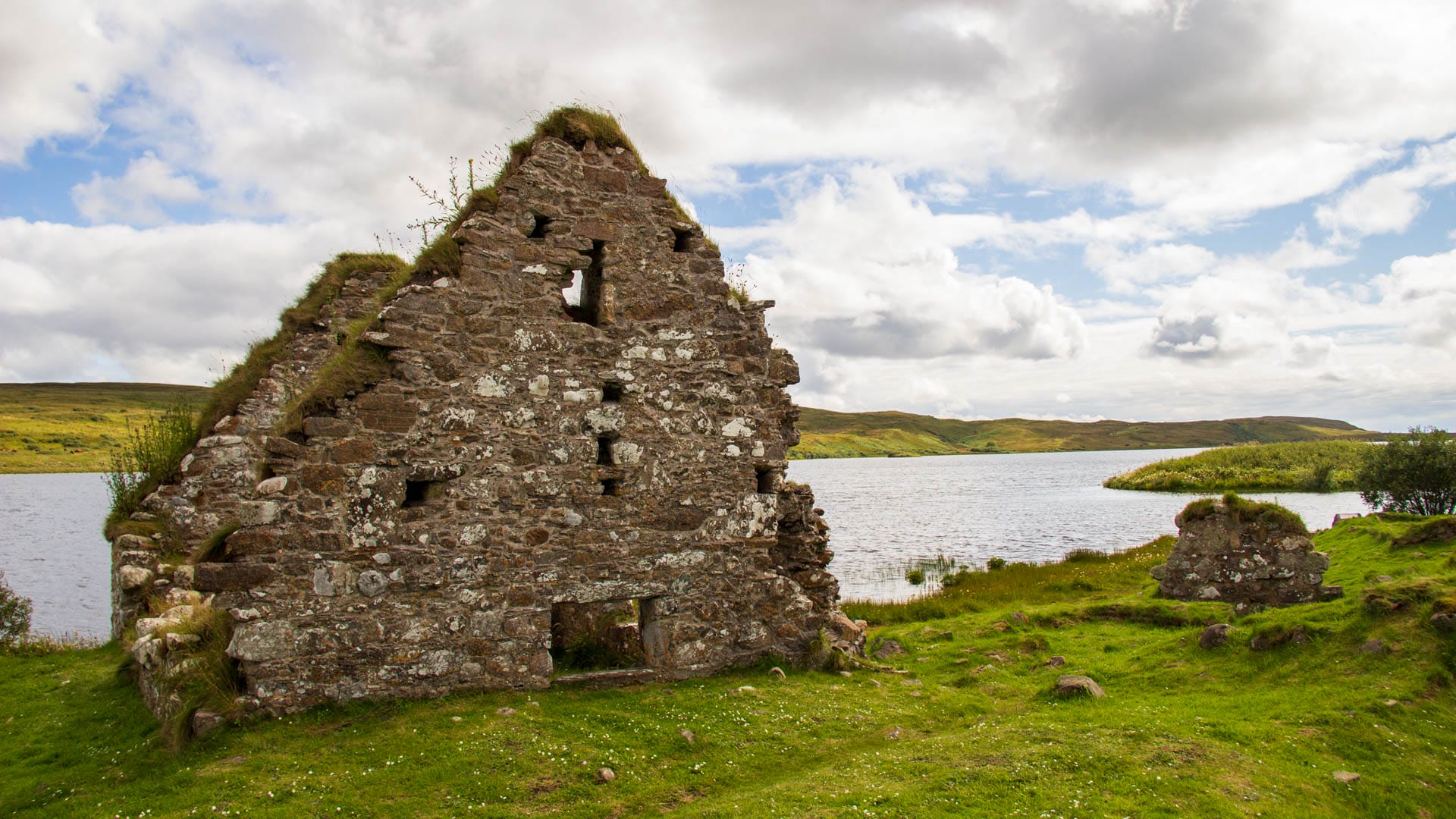
The festival hall was also located here, where bards with harps praised the deeds of the ancestors. Of course, there were also accommodations for the great council of the realm, which consisted of the members of the most important families.
When it met, it would retire to the second island in the loch, where the stone council table stood in a house. This island is therefore also called “Eilean na Comhairle”, which means “Council Island”.
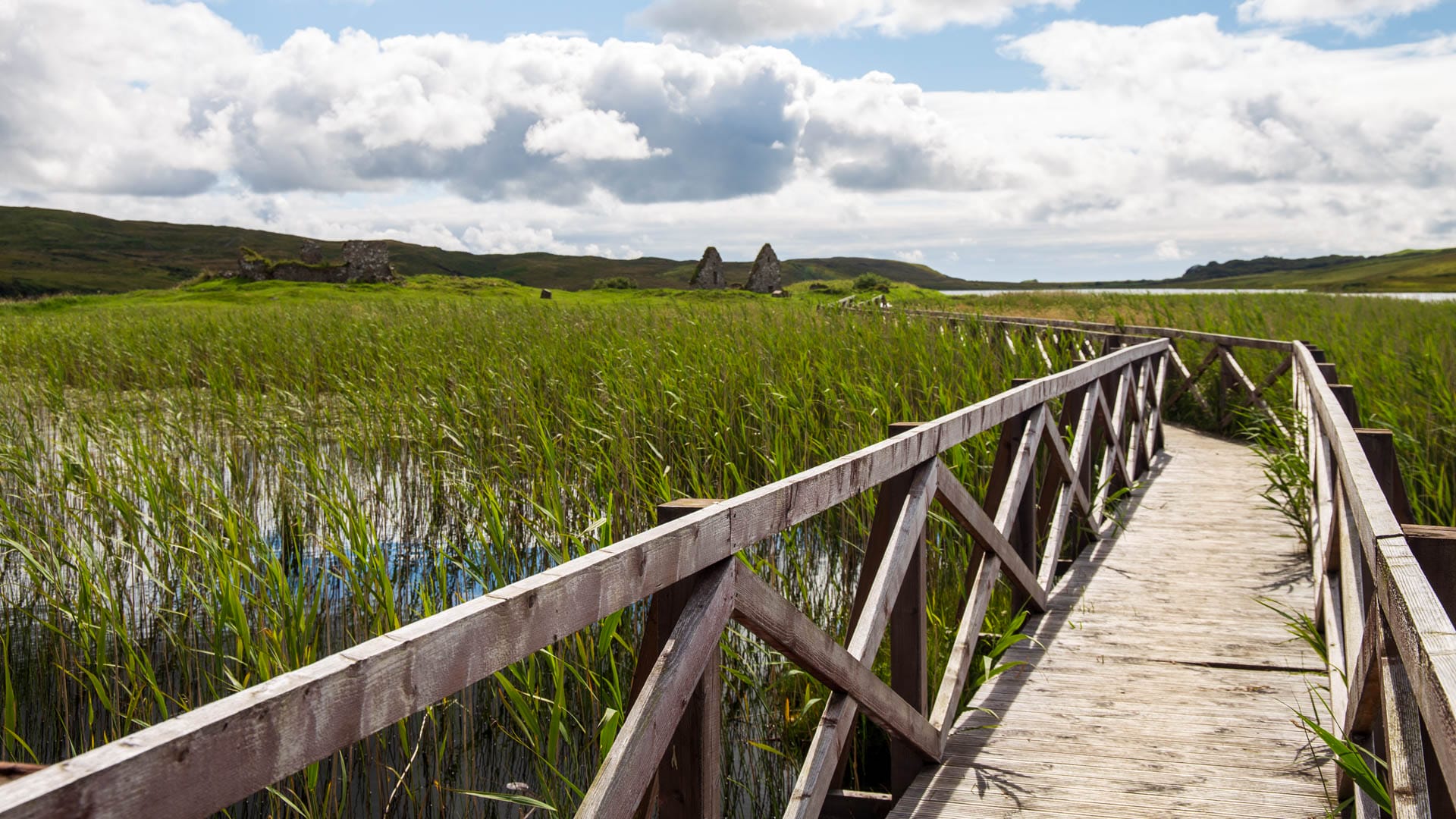
In the past, visitors could only get to the large island by boat, but today there is a picturesque little footbridge that soldiers have recently built through the peat and reeds. Visitors can enjoy a short circular walk along the remains of the houses, each with explanatory panels about what they are seeing.
Other interesting finds from the time of the Lords of the Isles can be seen in the Visitor Centre: ornate stones and statues. There are also ship models and replicas of armour on display. Together they bring the island kingdom back to life in the visitor’s mind’s eye.
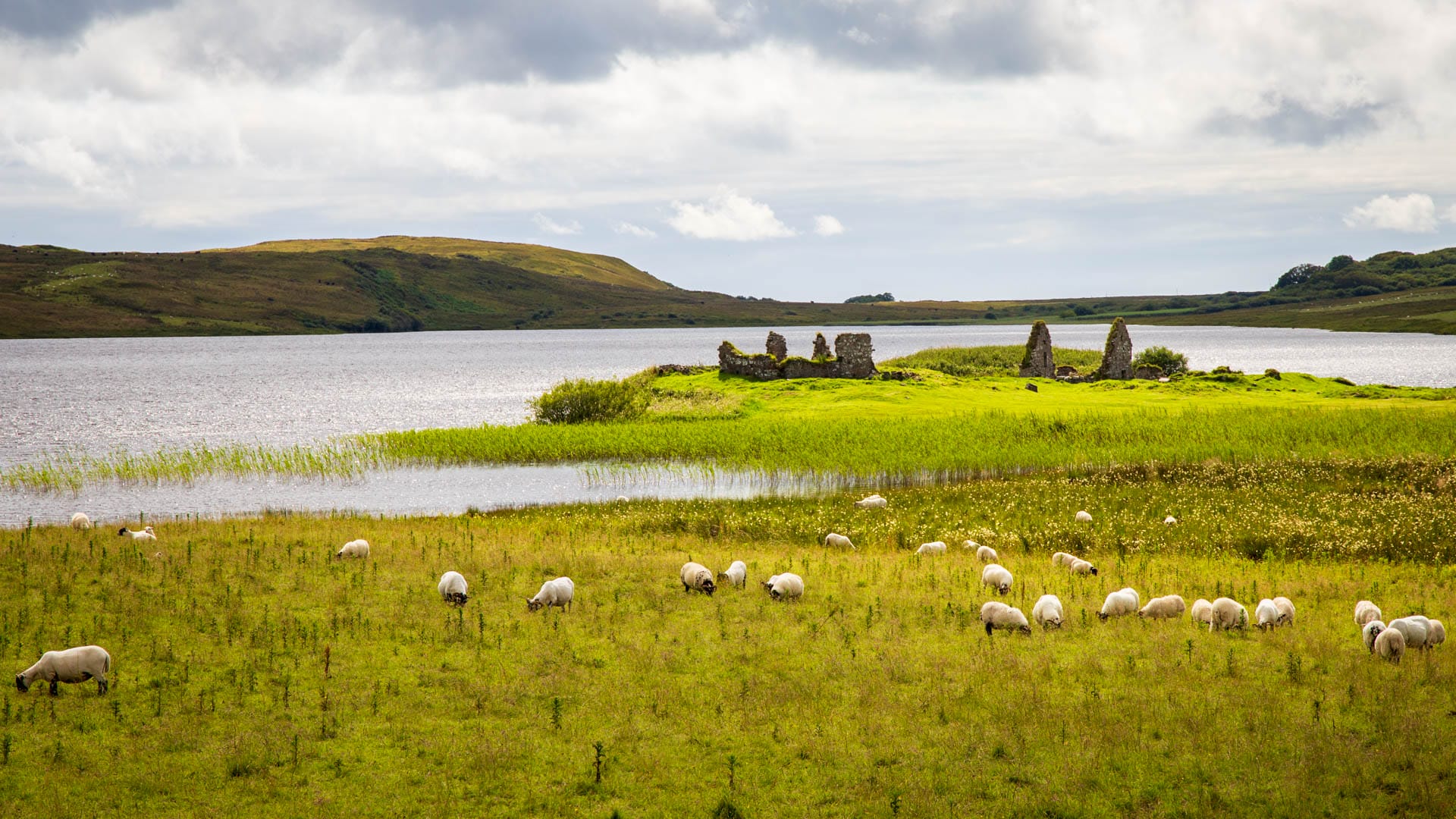
Finlaggan has a long history, even before the time of the Lords of the Isles. in 2025, researchers revealed that there was still a castle on the two islands in the loch around the 12th century: a square tower measuring 19 x 19 metres on the small island, which was connected to the large island by a path. On the latter was a walled courtyard with a chapel, cemetery and other buildings.
However, no name is known for this castle and it does not appear in the records. It had already disappeared by the time of the Lords of the Isles. Presumably the small island was not stable enough to hold this large stone structure securely.
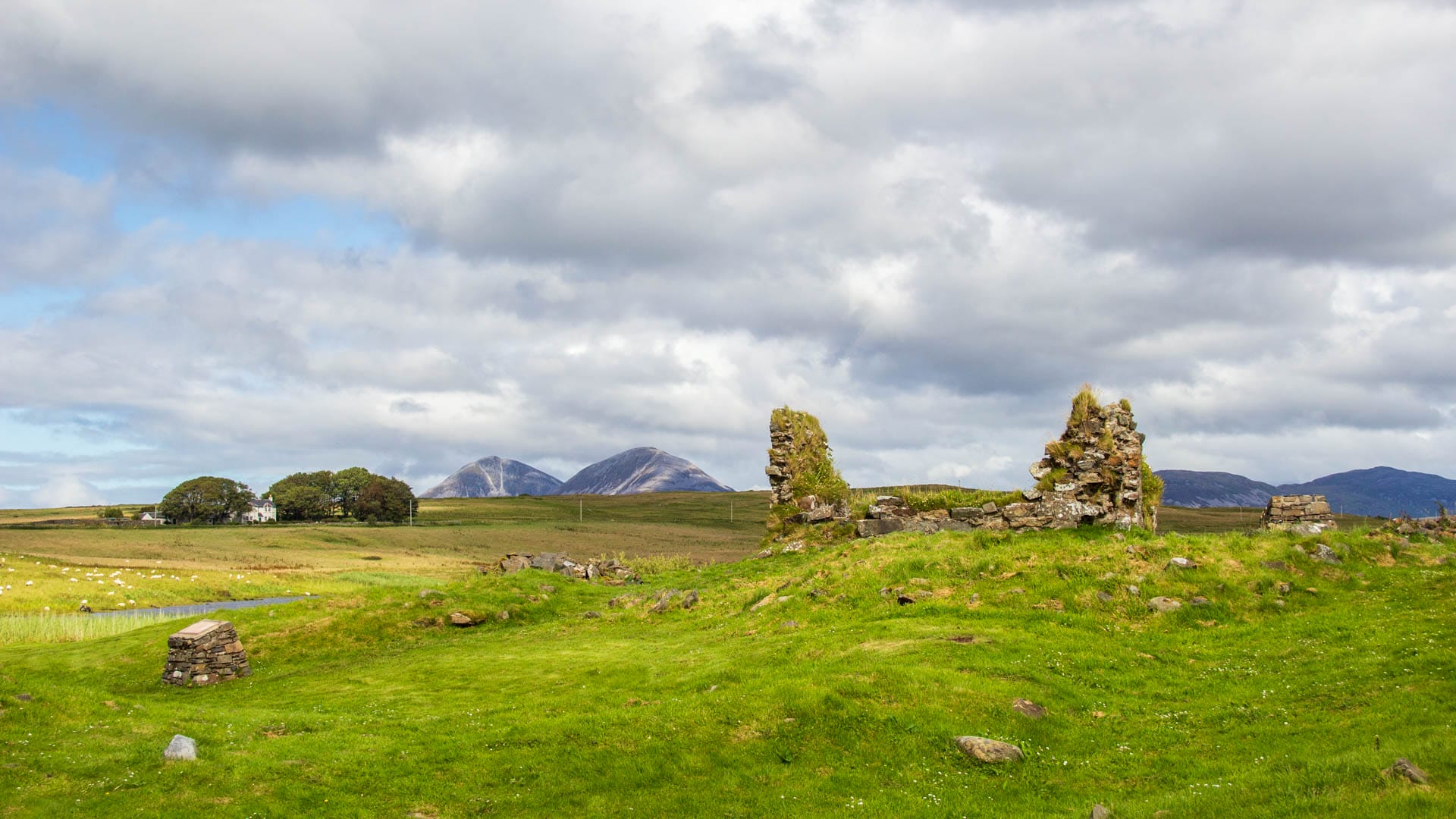
Knowledge: The last “Lord of the Isles”
In the 15th century – after a fistful of treason against the Scottish king – the latter had had enough and relinquished the title “Lord of the Isles”. However, the title still exists today – it is held by the heir to the British throne, currently Prince Charles.
However, Prince Charles has not yet visited Finlaggan … he preferred the Laphroig distillery.
Personal note: A lot of heart and soul
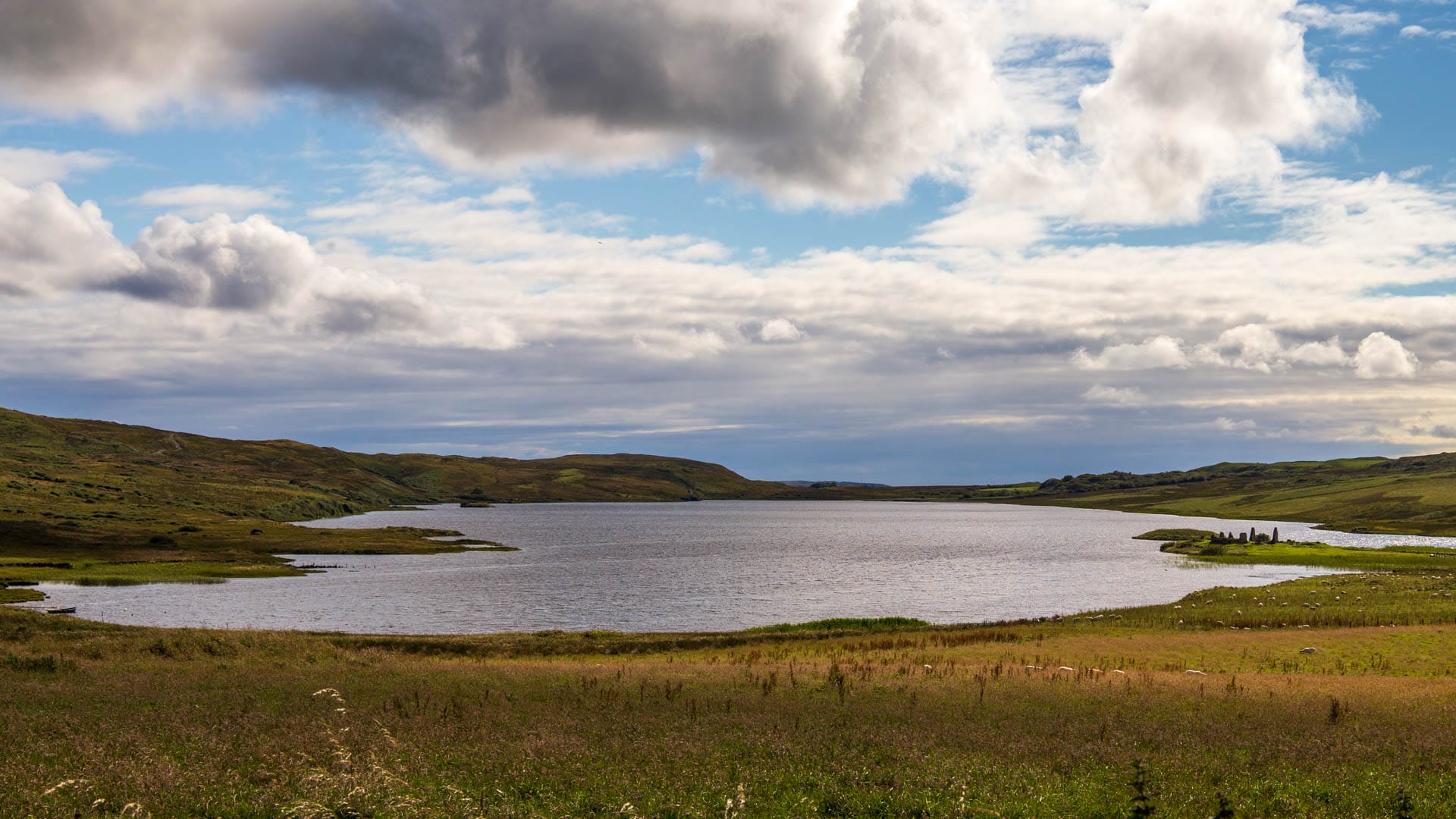
In addition to the ruins, which are steeped in history, it was the landscape that impressed me at Finlaggan: the loch, the two mountains of the Isle of Jura in the background.
And also the warmth: the elderly lady who sat behind the bar during our visit worked there on a voluntary basis. When she learnt that we were German, she immediately showed us a newspaper clipping about the wedding of a German on Finlaggan. It took place at midnight, by torchlight, as the priest was unable to attend earlier. I love stories like that.
How to get there:
With satnav: “PA45 7QT” will get you very close.
Without satnav: From Bowmore, take the main A846 road to the north-east. At Bridgend continue towards Port Askaig. Shortly after Ballygrant, look out for the “Finlaggan” sign, turn left, take the next left turn with the “Finlaggan” sign and continue to the car park at the end.