A masterpiece among Celtic crosses. Kildalton Cross dates from the 9th century, and for hundreds of years it kept a grisly secret.
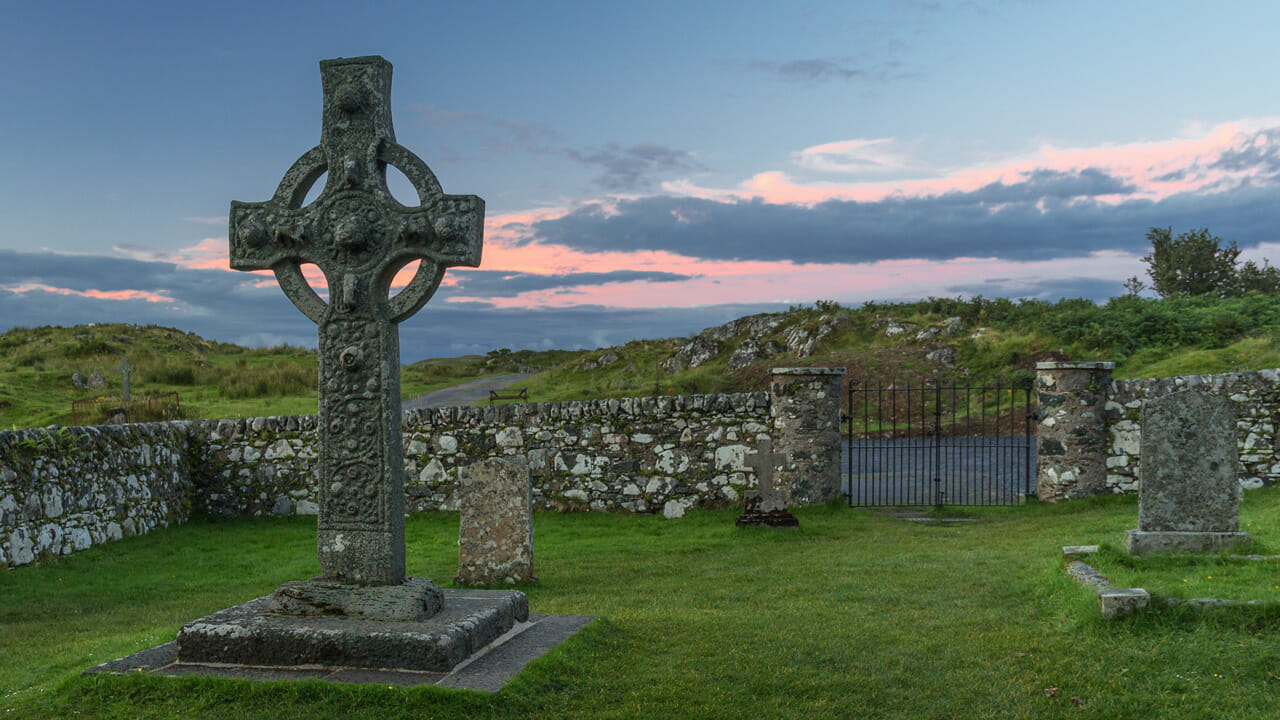
They hadn’t bargained for a discovery like this: mutilated skeletons beneath this beautiful cross? What on earth had happened here?
John Ramsay was a wealthy man: a Member of Parliament, owner of the Port Ellen distillery on Islay, and heir to a considerable fortune. He also saw himself as a guardian of Islay’s ancient heritage. When he learned that the thousand-year-old Kildalton Cross was leaning dangerously and even at risk of toppling over, he decided in 1862 to have it re-erected.
He and a number of experts from Edinburgh set to work. First, Kildalton Cross had to be lifted out so it could be placed back into a new foundation. It stood in a graveyard next to the church of the same name, but it was clearly no gravestone. So imagine the group’s astonishment when, beneath the great cross, they found a second, smaller cross – and beneath that, human remains: the skeletons of a man and a woman.
The man appeared to have died a violent death.
This discovery became the starting point for a legend that grew up around Kildalton Cross: the man, it was said, had likely been subjected to a gruesome Viking ritual known as the “blood eagle”. In it, the victim was pinned face-down to the ground, the ribs cut away from the spine and spread outward – like wings. All while the victim was still alive, of course.
Whether this ever really happened isn’t entirely clear. Scholars such as Professor Roberta Frank of the University of Toronto were already questioning back in 1984 whether the blood eagle ever actually existed, even though it’s described, for instance, in the Orkneyinga Saga. But most accounts come from later Christian sources, which were rather keen to attribute every conceivable cruelty to their pagan ancestors. What is certain, though, is that the Vikings were raiding Islay at this time, and later ruled over it as well.
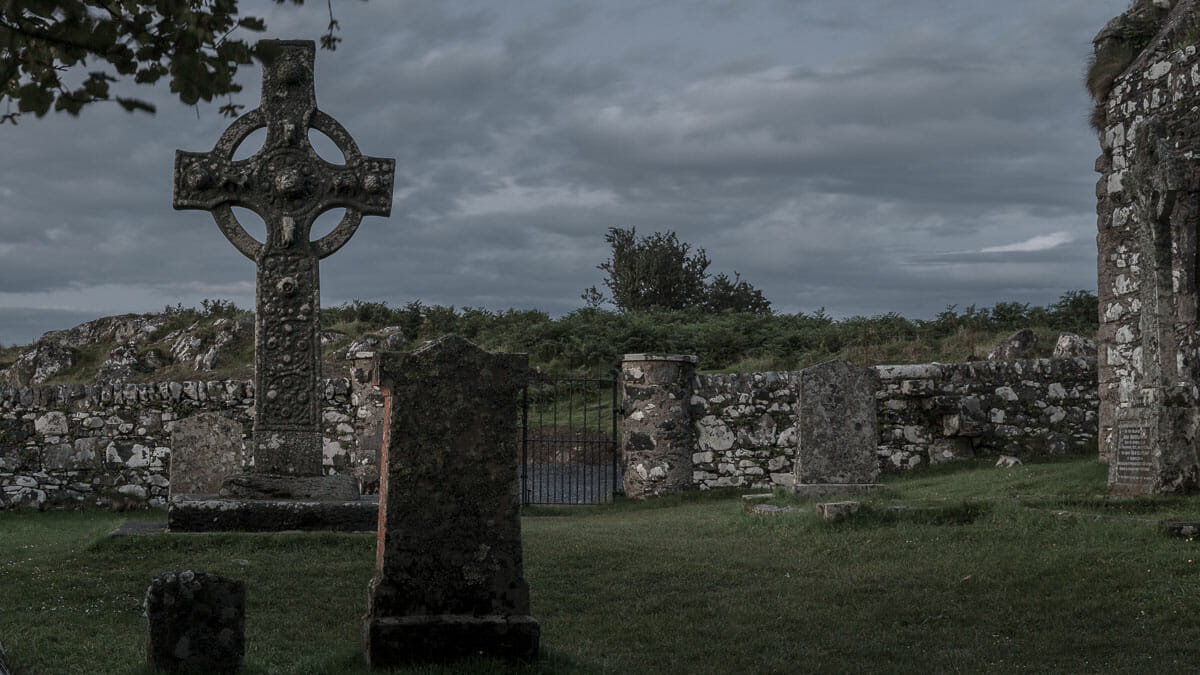
Despite the discovery, Ramsay and his colleagues weren’t deterred from their original task. They re-erected the cross and set it into a stone step, giving it far greater stability.
Thanks to Ramsay’s efforts, we can still admire this masterpiece some 150 years later.
Did you know: about Kildalton Cross and the church
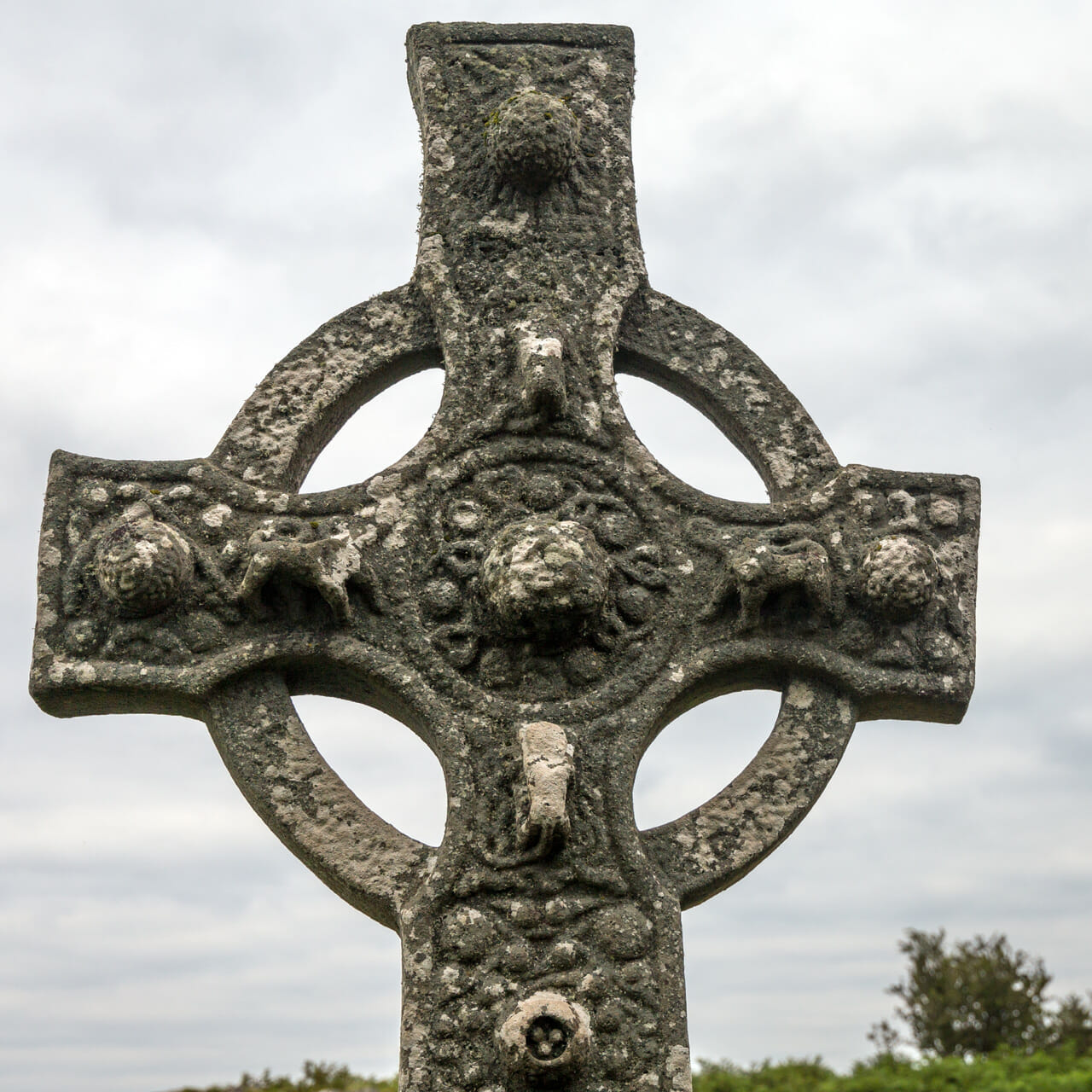
The cross is estimated to date from the second half of the 800s. It stands 2.65 metres tall with a span of 1.32 metres, and is regarded as a prime example of the magnificent stone-carving craft of the period in Scotland – closely related to the crosses on Iona, the island off Mull from which the Christianisation of Scotland set out in the 9th century.
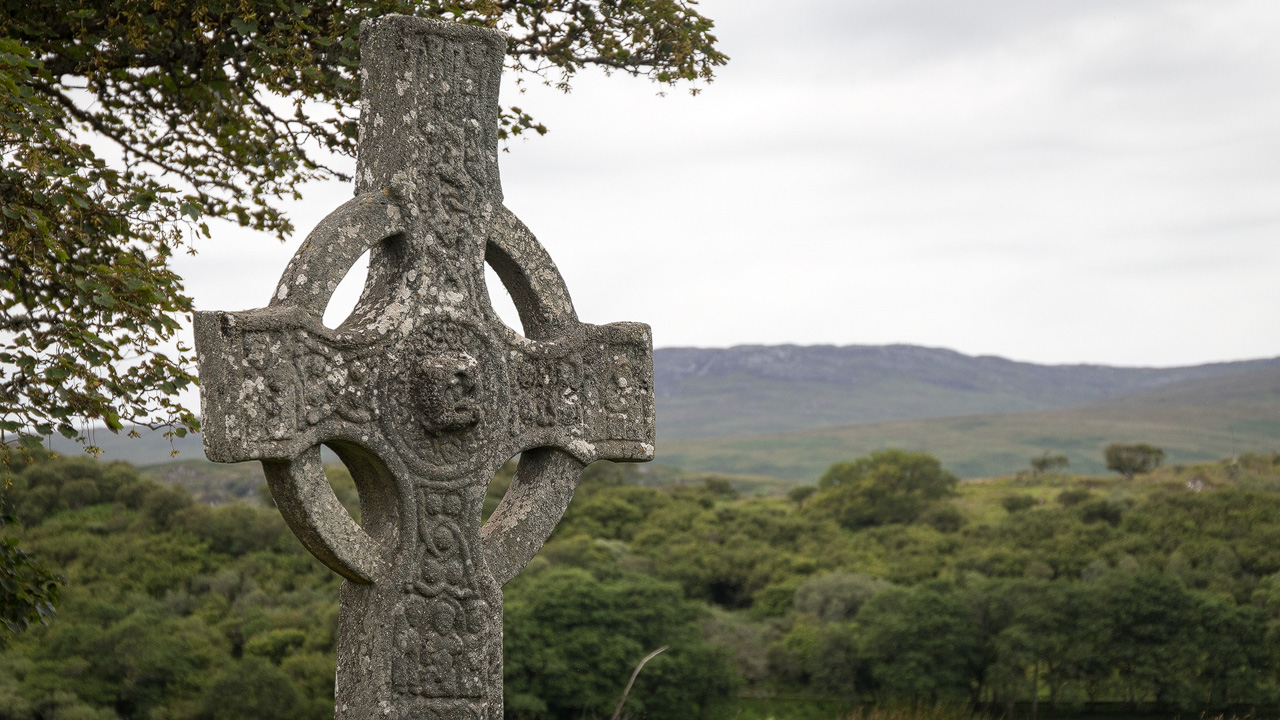
The ornamentation and symbols are still clearly recognisable today, despite weathering. All the figures on the surface relate to devotion and sacrifice before God – one arm of the cross depicts Abraham’s sacrifice of Isaac.
Look closely at the cross and you’ll quickly notice it isn’t symmetrical – it’s slightly skewed. But don’t be too quick to laugh at the stonemason for that: for reasons of stability, he worked along the grain of the stone itself, which wasn’t perfectly straight to begin with. High art indeed!
The cross stands beside Kildalton Old Parish Church on the Isle of Islay, part of the Inner Hebrides off Scotland. On the other side of the road stands a second, smaller cross, erected in the late medieval period and left unfinished.
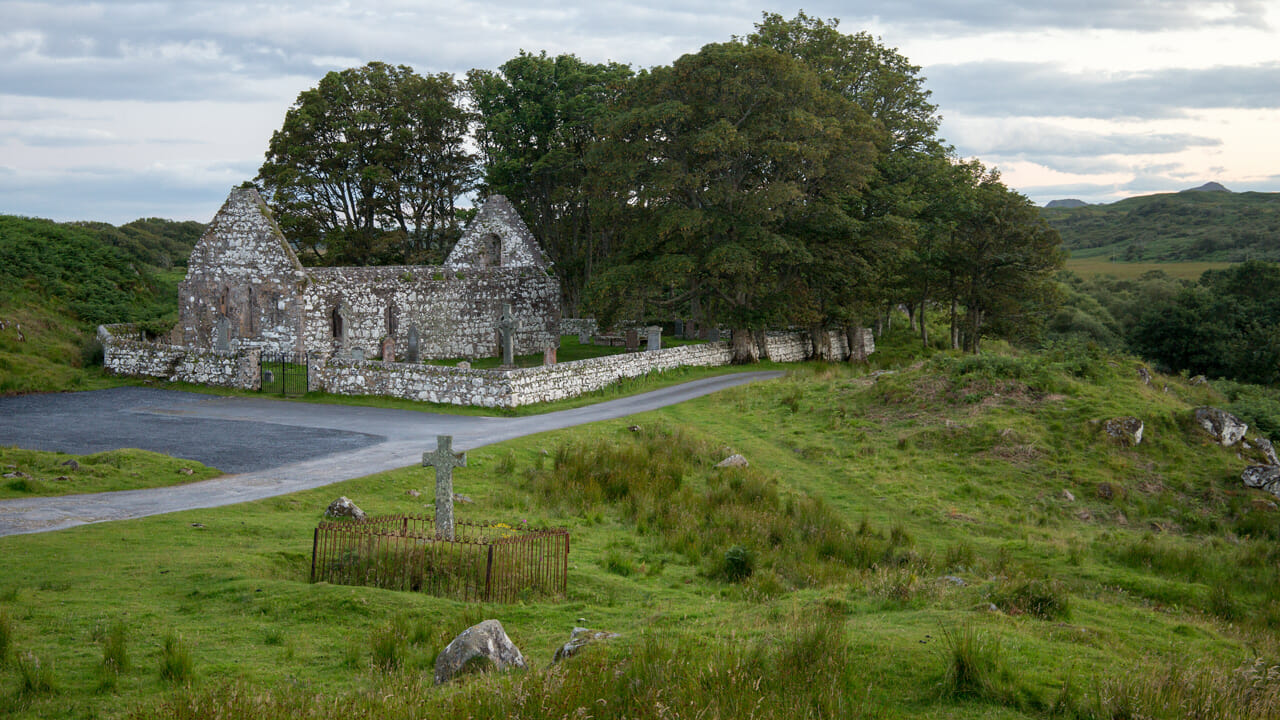
Legend has it that this smaller cross marks the grave of a criminal, since it stands outside the graveyard walls – hence its name, “the Thief’s Cross”. It’s more likely, however, that it was erected in the medieval period by a dignitary.
The word Kildalton derives from the Gaelic “Cill Daltan”, meaning roughly “church of the pupil” – here meant in the sense of a “disciple” of Christ. Kildalton is thought to be dedicated to the Evangelist John, considered Jesus’s favourite disciple. The building is believed to have stood here since as early as the 12th or 13th century.
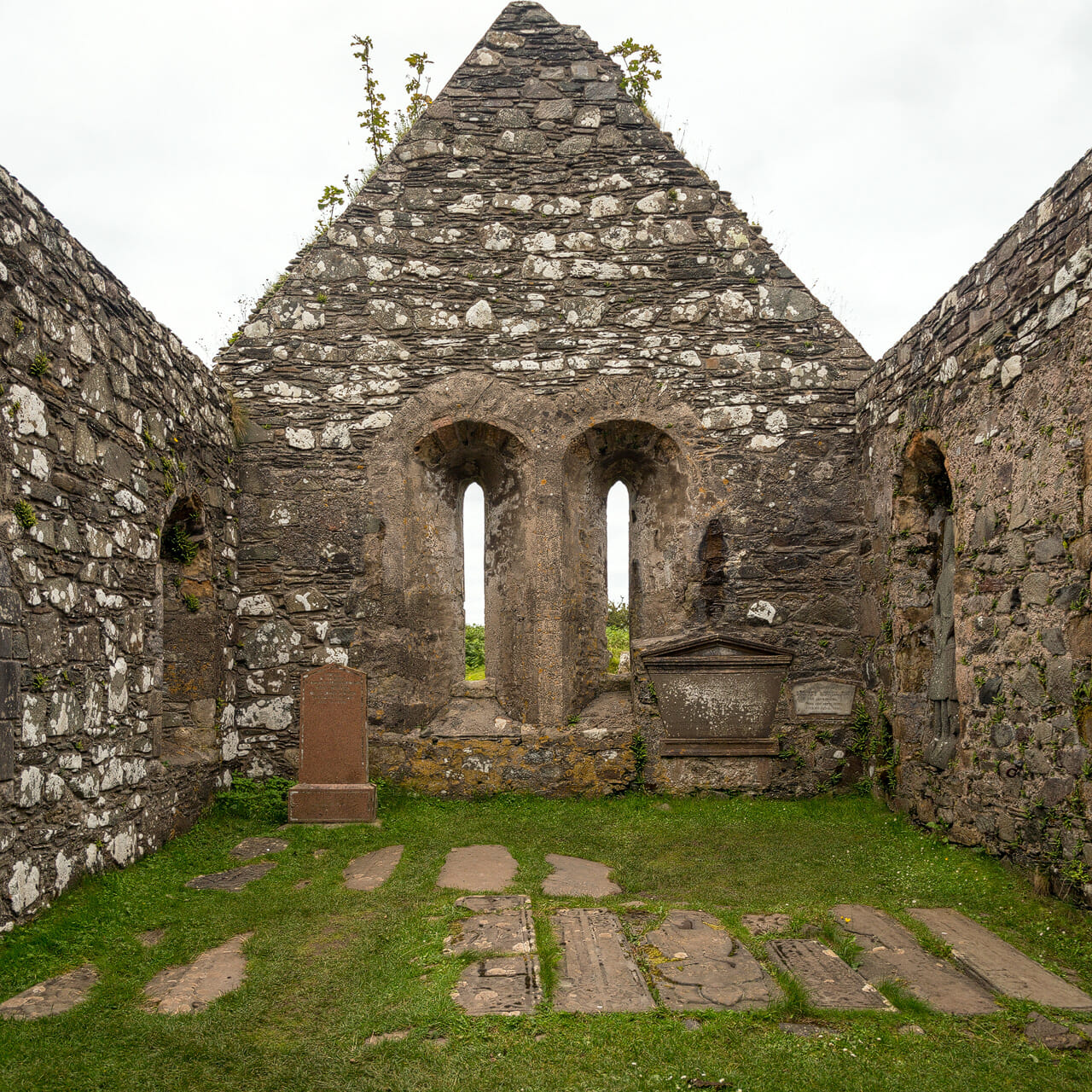
Inside are medieval grave slabs whose engravings resemble those found at Finlaggan.
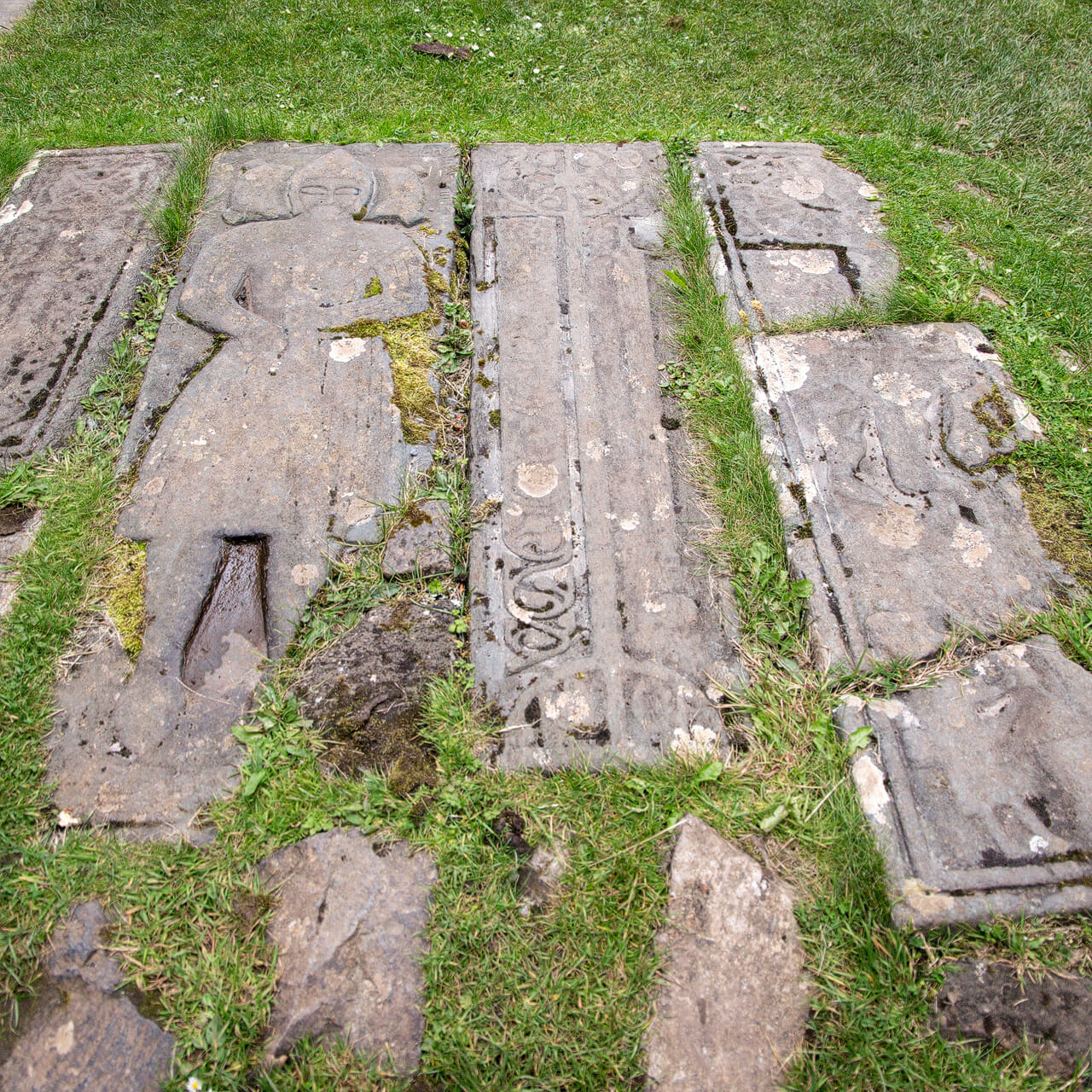
Personal note: a lonely graveyard in the middle of nowhere
Even without the gruesome tale attached to the cross, the place felt quite eerie to me. It really is a remote spot – a small wood stands behind the church, and the walled graveyard with the cross does the rest… brrrr.
The second time I was here, we were lucky enough to catch a wonderful sunset.
Tip: a great spot for photos, and cake from the honesty box
To get a good photo showing both church and cross together, the best spot is up on the rocks above the car park. From there you can see over the graveyard wall and still get a good view of the building at the same time.
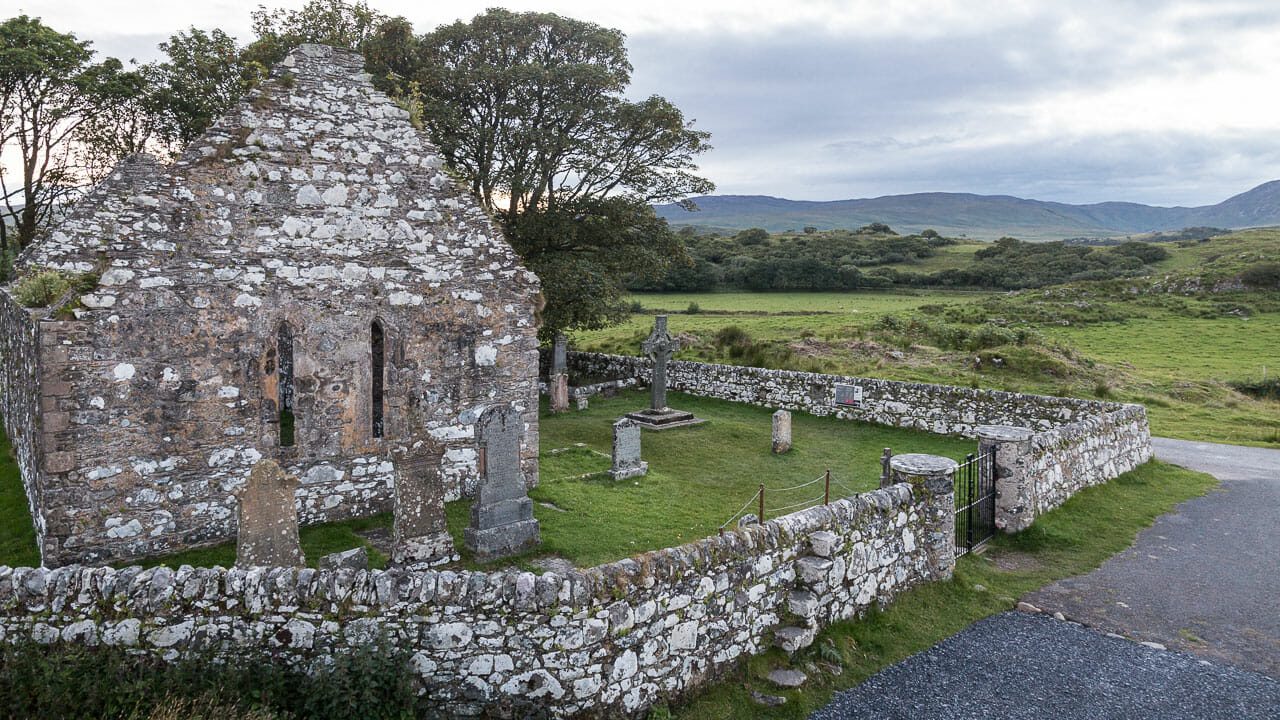
Islay specialist Armin also points out that in summer there’s an honesty box at Kildalton Cross with coffee, tea and cake. An honesty box is an unstaffed stall with a cash box, into which visitors pay the set price on trust.
Getting there:
With sat nav: Enter “PA42 7EE” as your destination, but don’t miss the turning to the right.
Without sat nav: From Port Ellen, follow the signs to Ardbeg on the A846. Along the way you’ll pass the Laphroaig and Lagavulin distilleries. By the Ardbeg distillery, a brown sign already points the way to Kildalton Cross. Fair warning: from here on, the road isn’t for the faint-hearted. The scenery is stunning, but there are several blind spots on the single-track road. After around 6 kilometres, turn right once more; the church and cross will then be on your right, where there’s also a tarmac car park.