A small chapel with a graveyard guards ancient and beautiful stonemasonry from Scotland. A visit to Kirkmichael on the Black Isle.
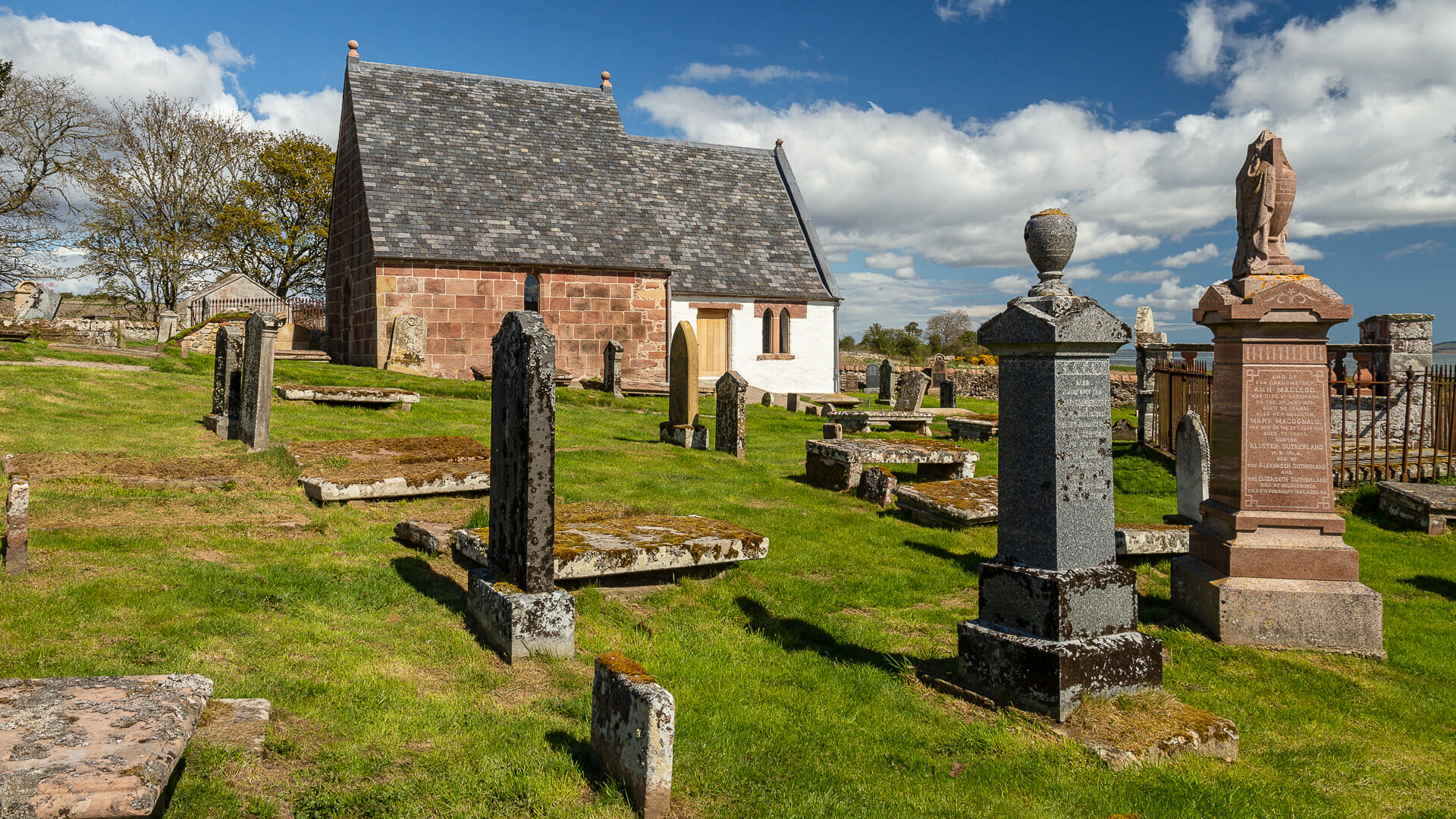
Edinburgh Castle, Urquhart Castle, Culloden – these are Scotland’s big tourist magnets. Run highly professionally, with equally high entry prices, they keep Scottish history alive. And yet it can sometimes feel like a mass-market operation, too many people. That’s why more and more Scotland travellers are coming to appreciate the unknown little gems – and Kirkmichael on the Black Isle is exactly that.
Kirkmichael consists of a small chapel with an old graveyard. What makes it special: the gravestones number among the finest work produced by medieval stonemasons. And the chapel’s interior gives them room to tell their story.
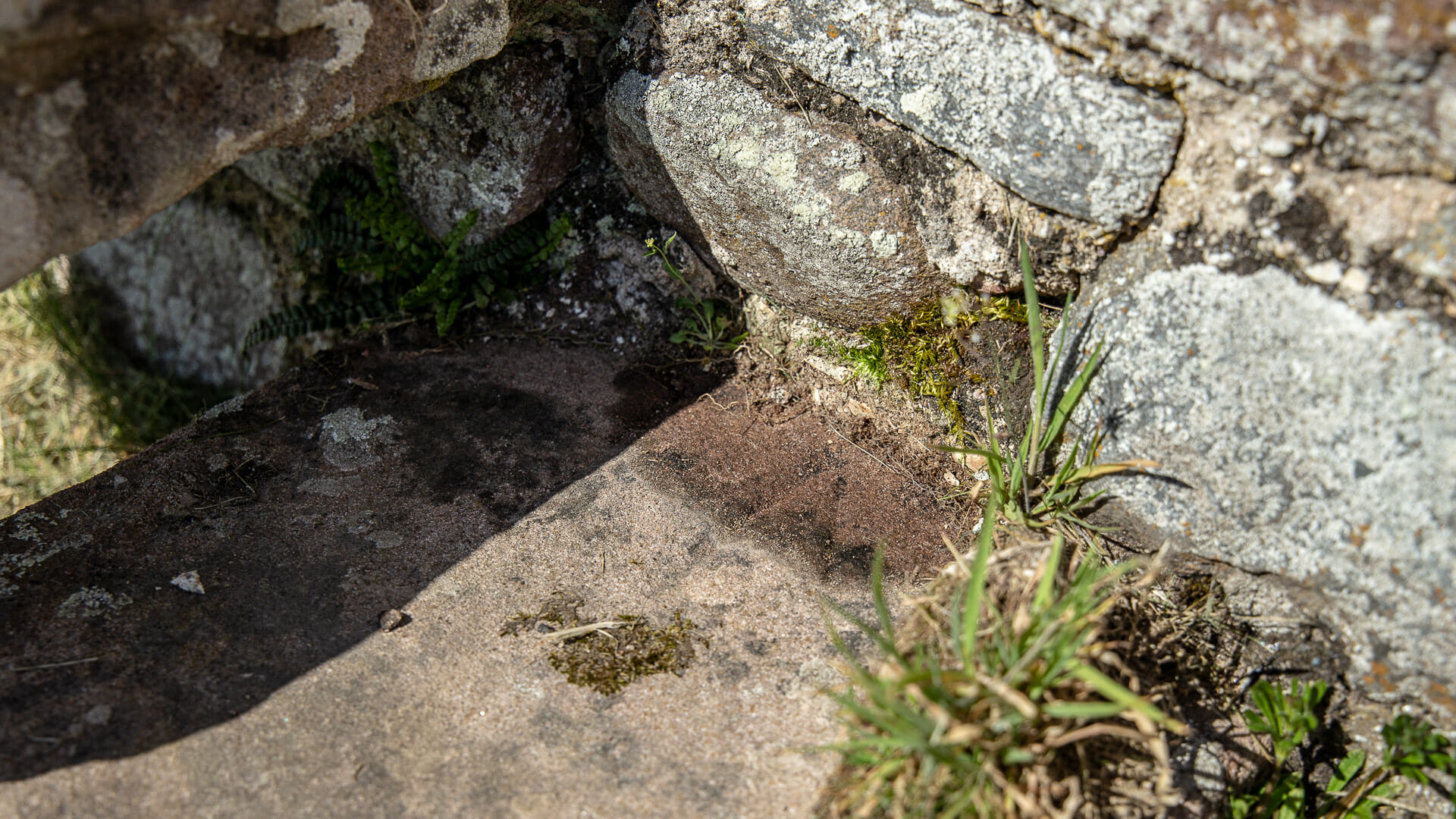
I probably would never have heard of Kirkmichael if my Gaelic teacher hadn’t taken me there on a visit. When we arrived: not a single other visitor, but two men bent excitedly over a step stone in the wall, deep in discussion.
Why? Because they had just discovered names carved into the step stones. On one side of the wall, a man’s name peeks out; on the other, a woman’s. What today serves as a step stone was once the gravestone of a married couple.
The two men belong to the Kirkmichael Trust, which looks after the restoration and preservation of the small church and its graveyard. And gravestones are a dominant theme here. History is often literally “dug up” – whether it’s trapped in a stone wall or lying beneath the grass, as was the case with many of the gravestones.
The gravestones at Kirkmichael almost trace a journey through the fashions of the centuries. You could spend hours looking at the different styles and decorations. Inside the restored church, information boards then tell us all the details about the stonemasonry and about the families who lived here.
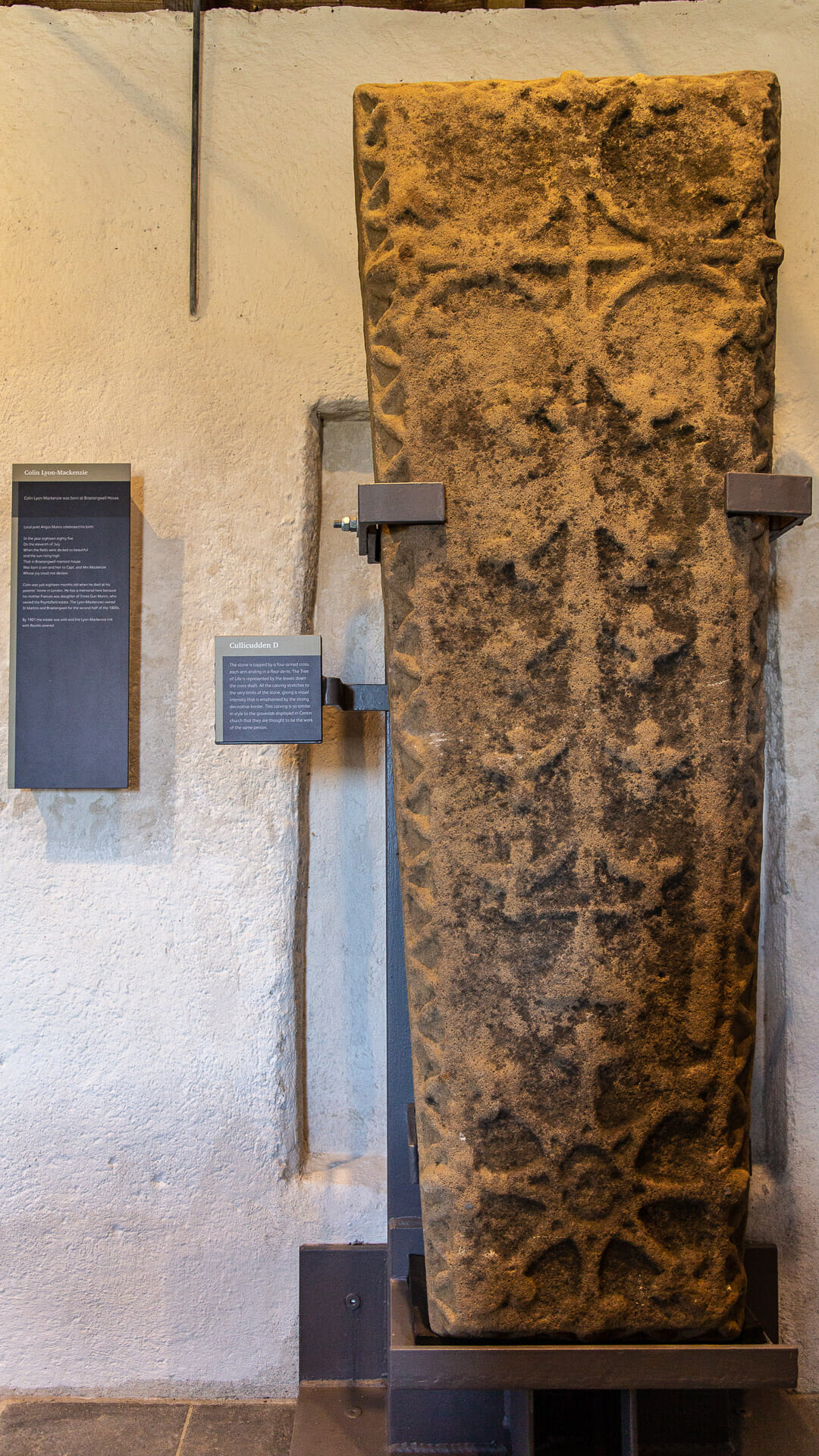
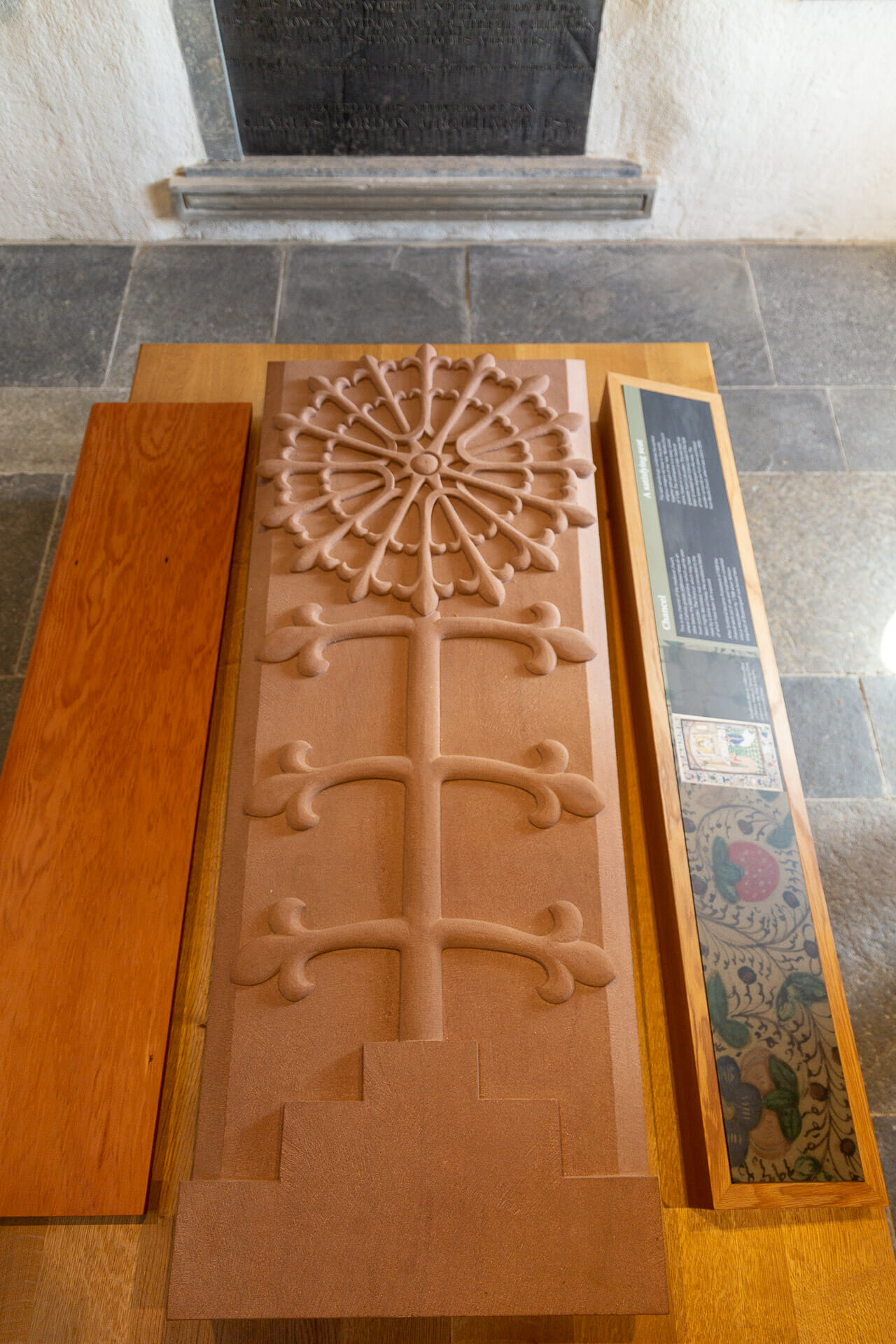
Before the Reformation, for example, gravestones were usually decorated with symbols such as swords, fleurs-de-lis (heraldic lilies), branches, steps and crosses. The steps were meant to recall Calvary, Golgotha, where Christ was crucified. The fleurs-de-lis stand for purity, the branches for life and the cross of Christ; the meaning of the swords isn’t entirely clear.
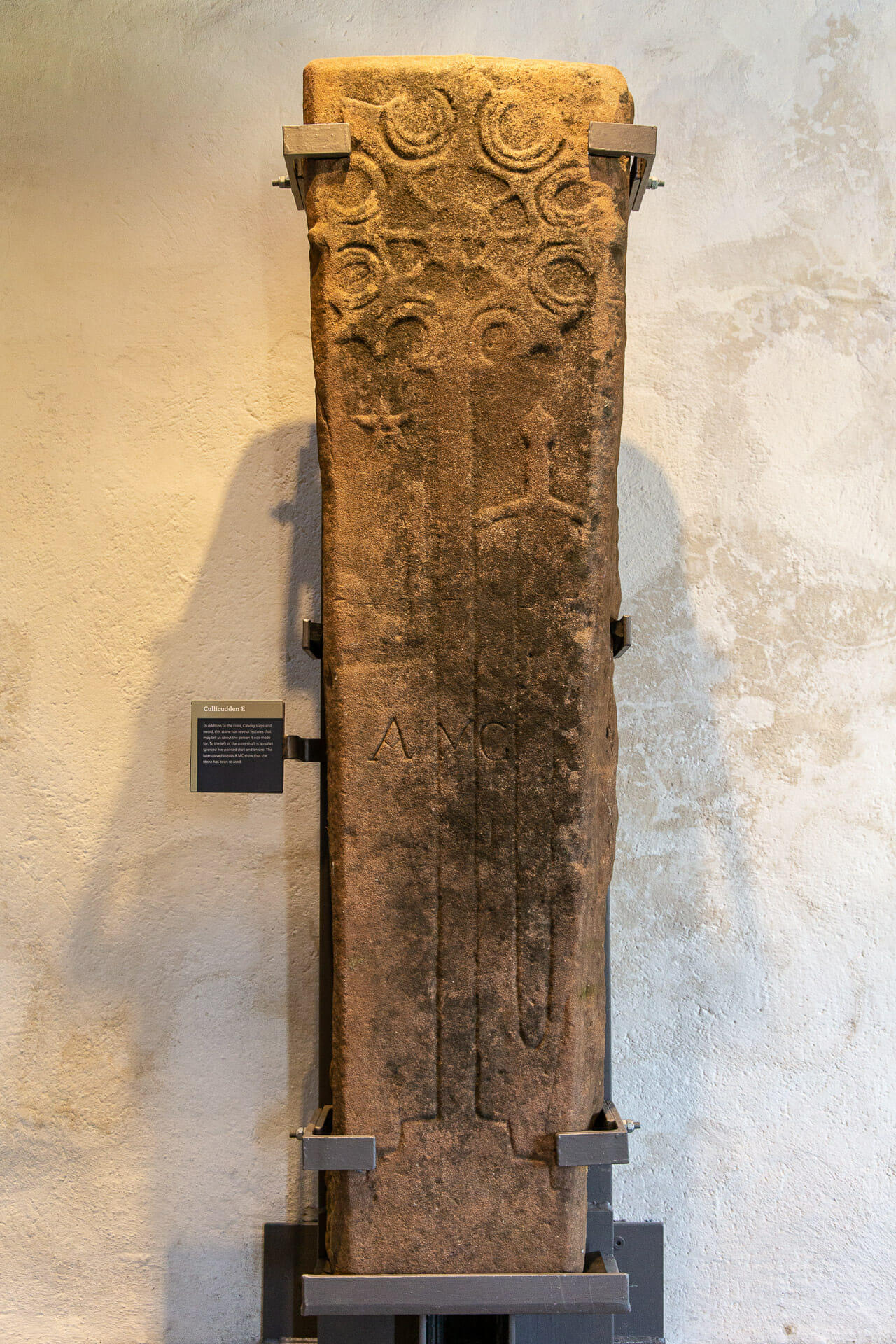
These gravestones have real rarity value today. Most of their kind were destroyed – whether through the Reformation or simply through time and weather. The examples at Kirkmichael were brought back inside the chapel, where they find protection. And a replica shows what they may once have looked like.
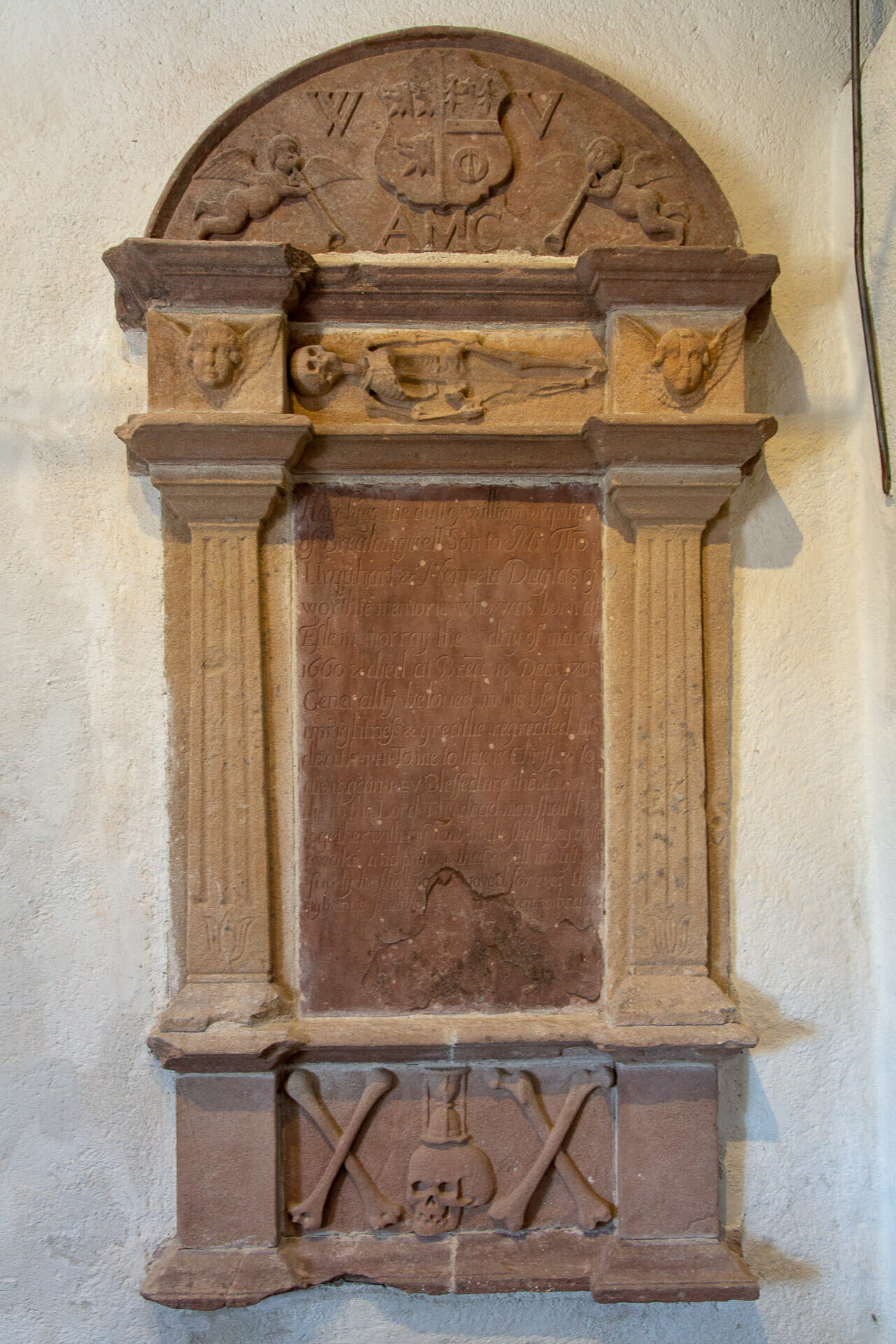
Gravestones from the period after the Reformation, around 1560, are easy to identify, my Gaelic teacher explains to me. The stonemasonry then shows darker motifs: skulls, skeletons, bones and hourglasses running out took the place on the tombstones. Only the trumpets of the Resurrection and a few angels offered any hope.
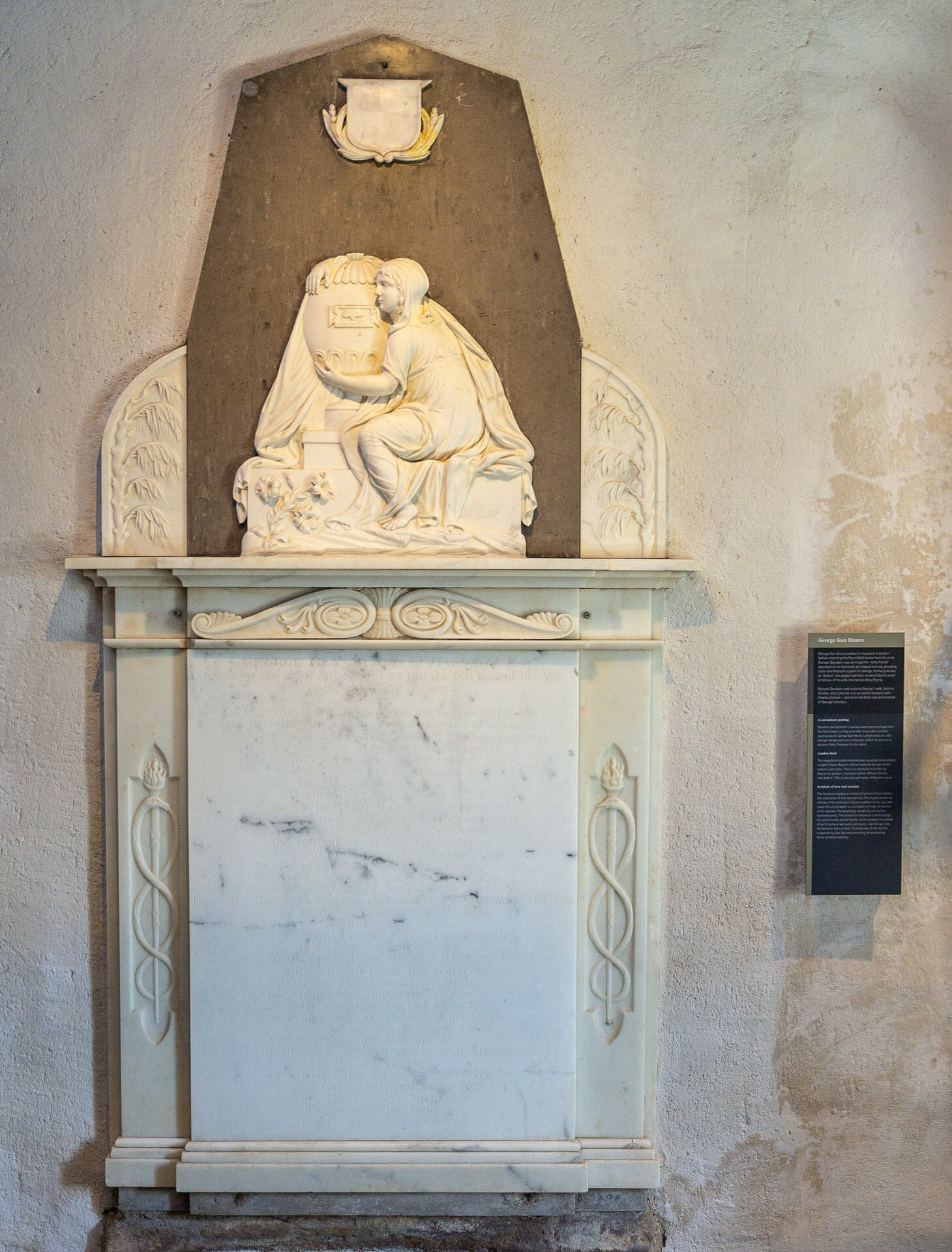
In the chapel, visitors can see yet another “fashion step” in the gravestones. As my Gaelic teacher describes it: classical, elegant, urban, modern – deliberately not local. The grave of George Gun Munro was created in the early 19th century by the London sculptor Charles Regnart. It shows completely different symbols, such as the serpent devouring itself as a sign of eternity.
There was another shift too: graveyards around churches also only became fashionable after the Reformation. Before that, important people were buried inside the church building itself. Outside, then, visitors can find further interesting graves.
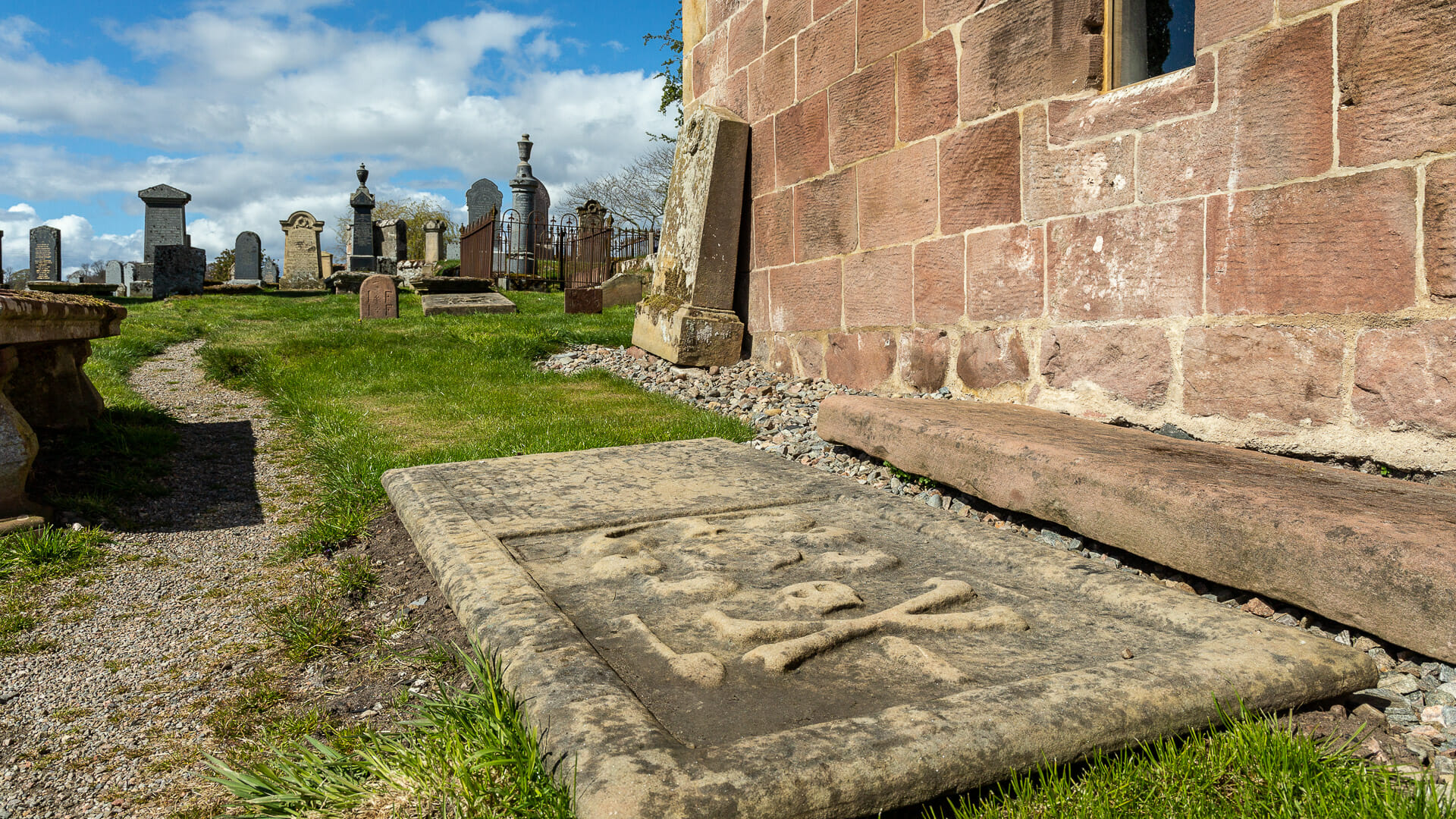
Fashionable outdoors in the 18th century: table stones – grave slabs raised on legs. Over time, however, the legs sink into the ground and are often no longer visible. At Kirkmichael’s graveyard, they still are.
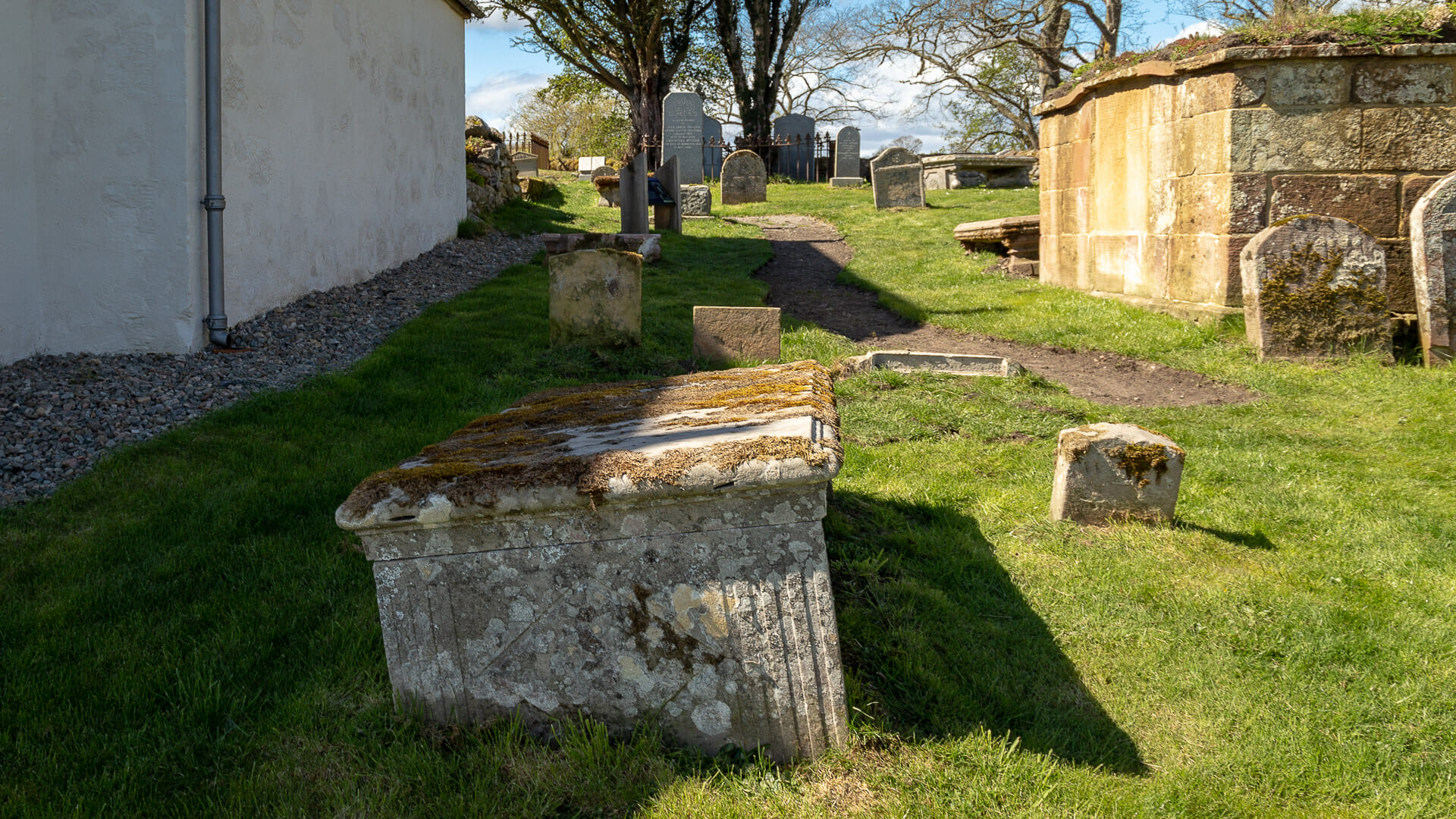
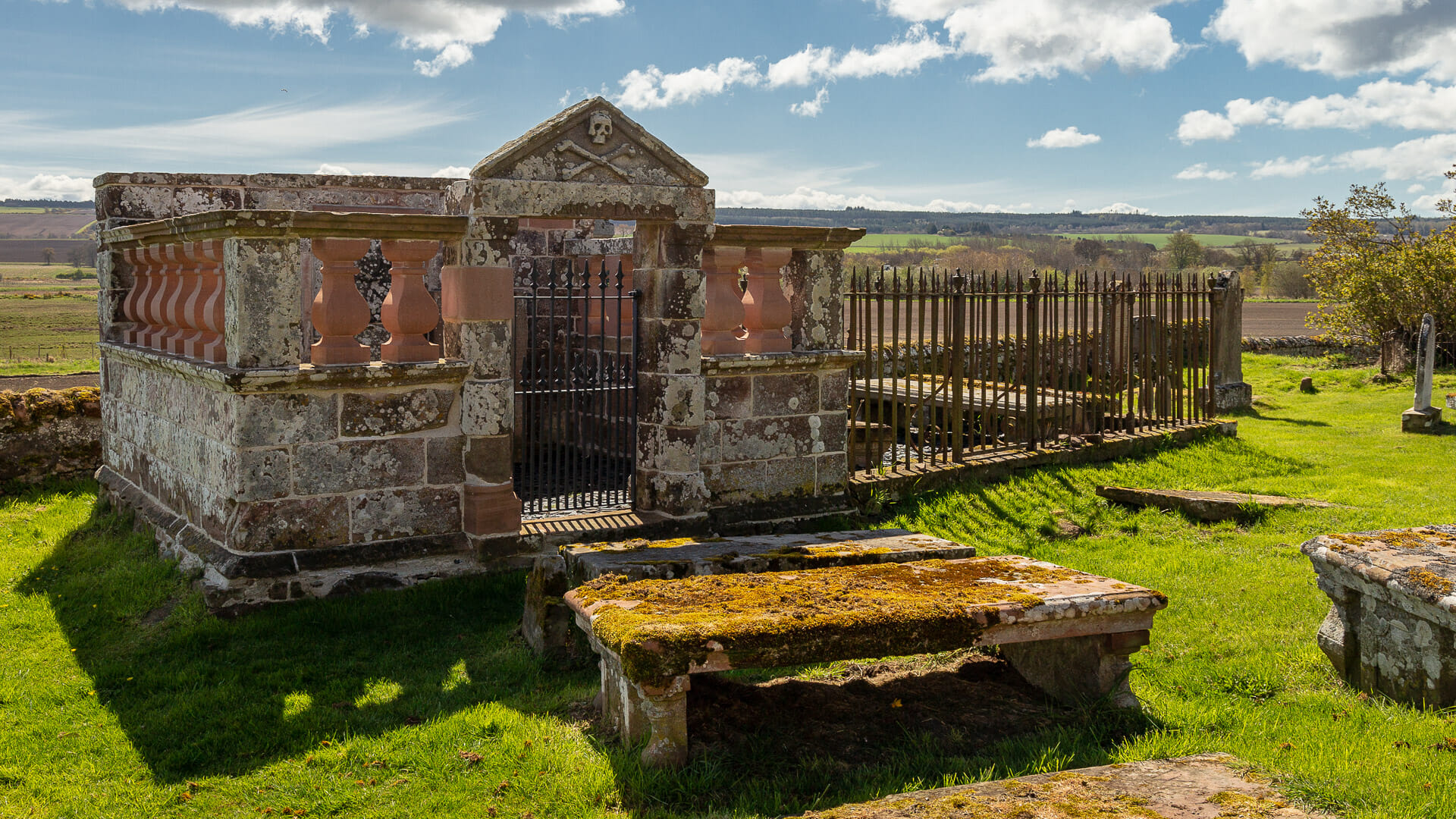
Those with plenty of influence and money even had a mausoleum built for themselves. At Kirkmichael, the Grants of Ardoch had one built in 1680. And here too you can recognise the Kirkmichael Trust’s restoration work.
Right at the back, in the corner of the graveyard, where the view already sweeps across the waters of the Cromarty Firth with its oil rigs, we discover another gravestone. Small and unassuming, it bears the year 2017.
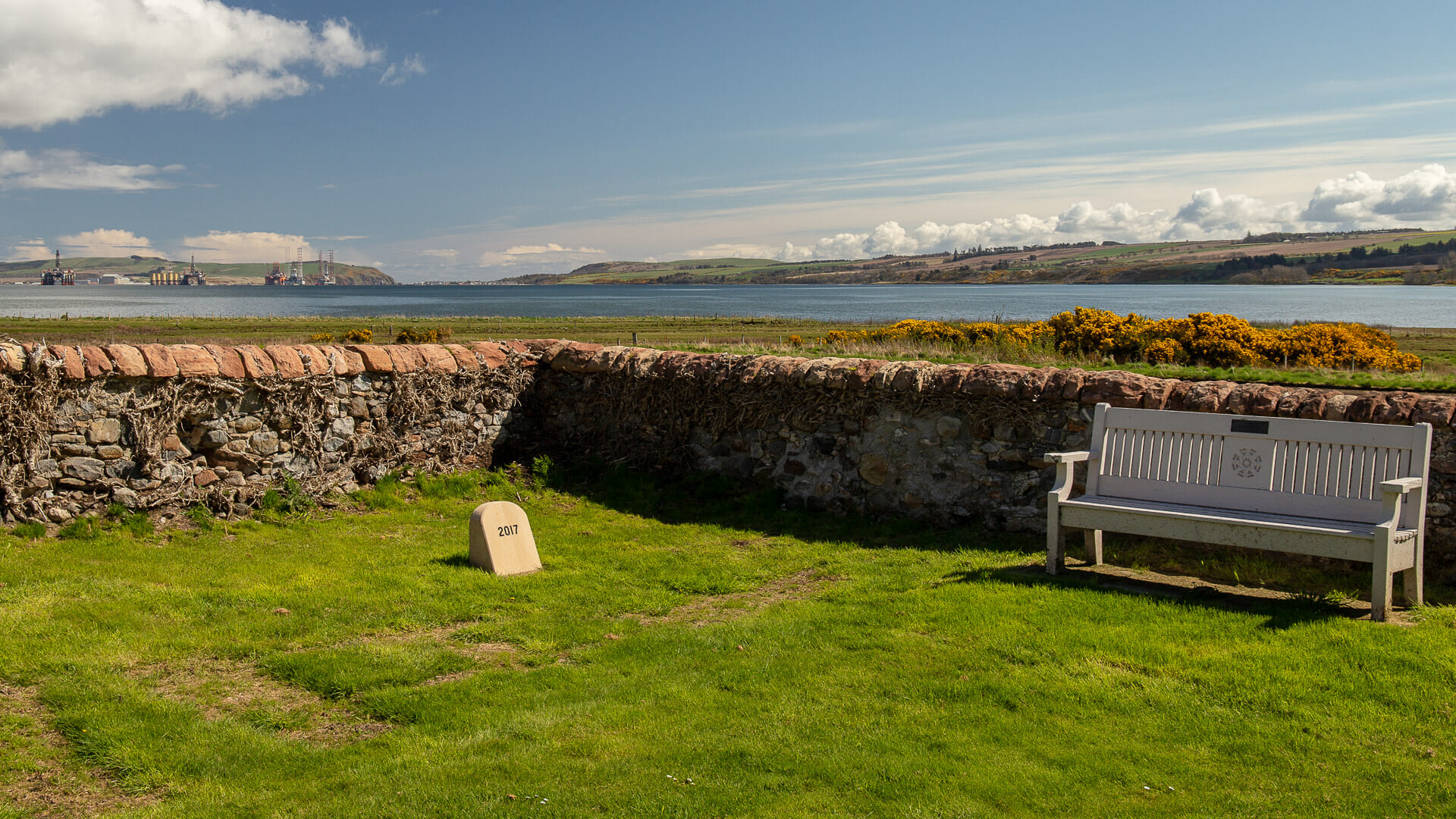
Here, my Gaelic teacher explains to me, all the remains were buried that were found during the restoration of the graveyard and the laying of the paths. And all of it with full respect for the dead.
Know-how: The history of Kirkmichael
Enough about the gravestones. So what’s the story behind the small chapel itself? For one thing, it was once considerably larger. What we see today as a building was only part of a structure that included a small bell tower and a nave. That can be seen, for example, in the wall arch in front of the chapel, which once belonged to an internal grave, of the kind still visible nearby at Fortrose Cathedral.
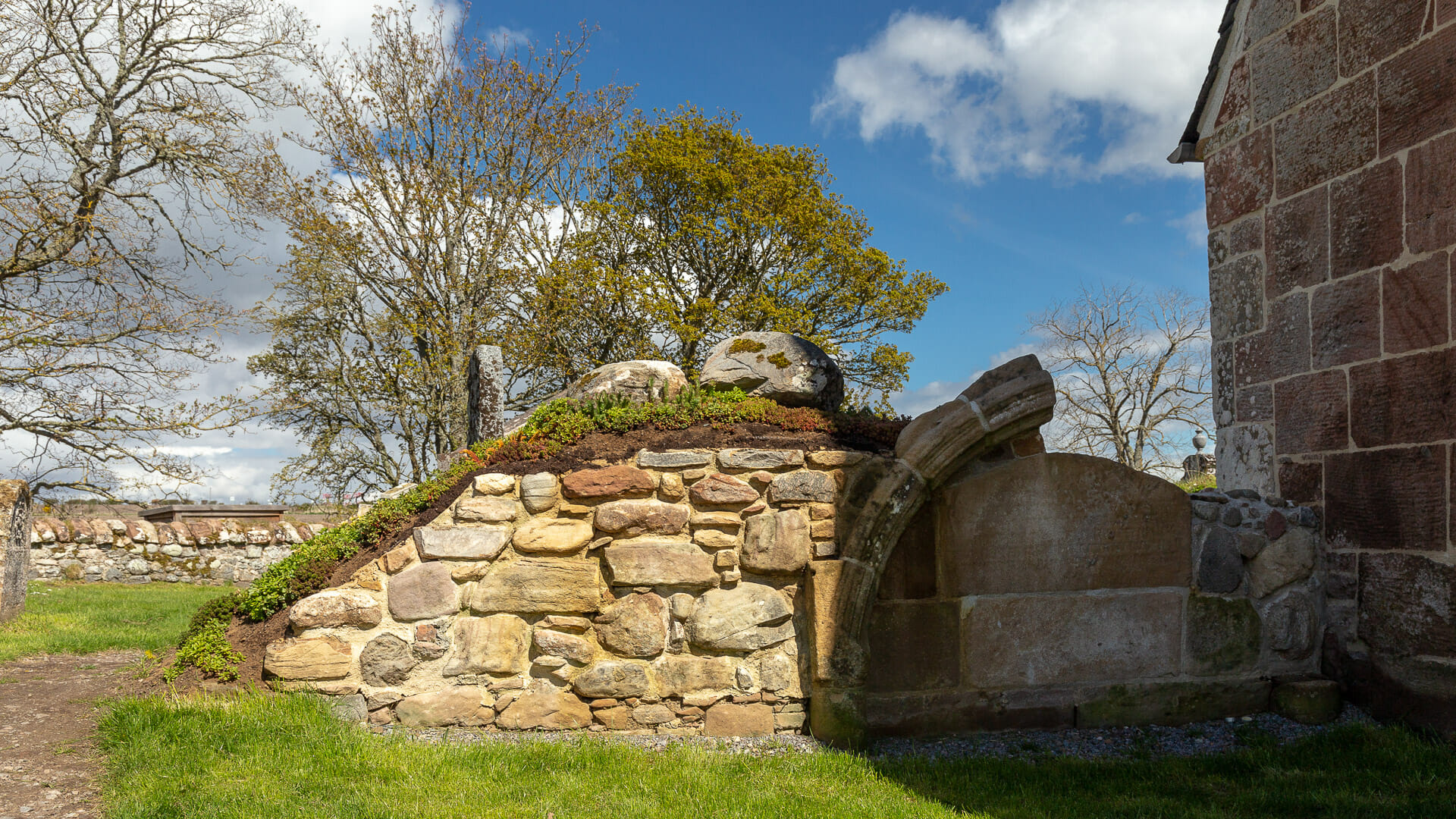
A congregation gathered around Kirkmichael from at least the 15th century onwards. But in 1769, nearby Resolis took over this role, and Kirkmichael was used as a mausoleum. As late as 1906, the wall along with the bell tower was still standing. Yet around a hundred years later the rest of the building was in a pitiful state: the roof had collapsed and the walls had to be propped up.
That visitors today can go inside the building and see information and exhibits there is entirely thanks to the Kirkmichael Trust, made up of volunteers from the local area. They also carried out the excavations, though under professional supervision. What a dedication to local heritage.
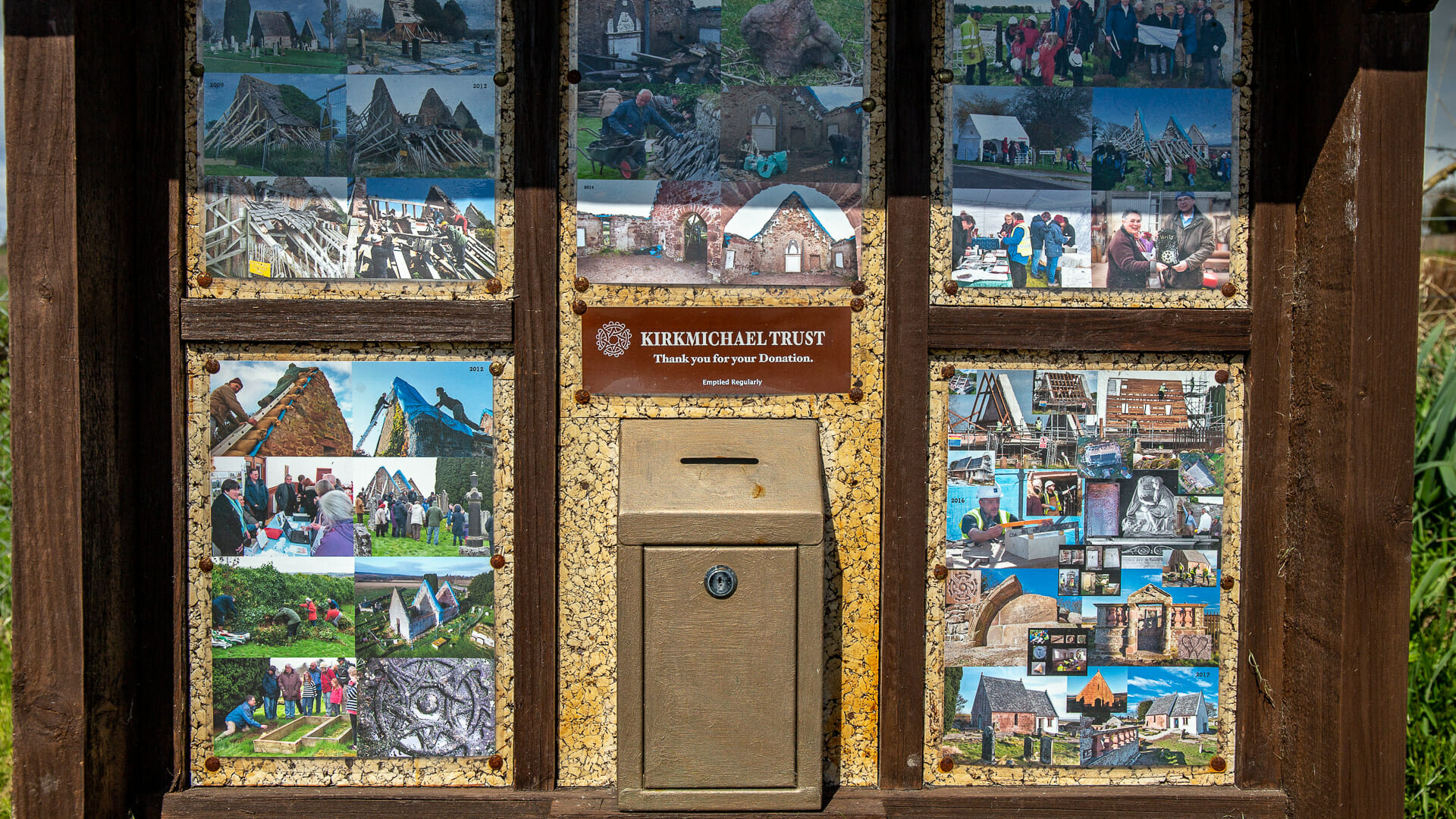
Tip: Check out the leaflets before your visit
There are even more stories to be found in the graveyard. On the Kirkmichael Trust’s website you’ll therefore find three leaflets available as PDFs to download. They can be found here.
By the way: if you drive the small road directly in front of Kirkmichael heading north, a viewpoint over the Cromarty Firth appears on the right, just before the road curves left towards Resolis.

Getting there:
With satnav: enter the postcode “IV7 8LQ”, which brings you close by.
Without satnav: from Inverness take the A9 towards Thurso over the Kessock Bridge and continue until signposted for Culbokie. Turn right here onto the B9169. Go straight through Culbokie and on through Resolis. At Balblair the road curves south. On the left, a turning to Kirkmichael soon appears. Turn off there and park.