The rise and fall of the Stewart monarchy is mirrored in the history of Linlithgow Palace. A very special ruin.
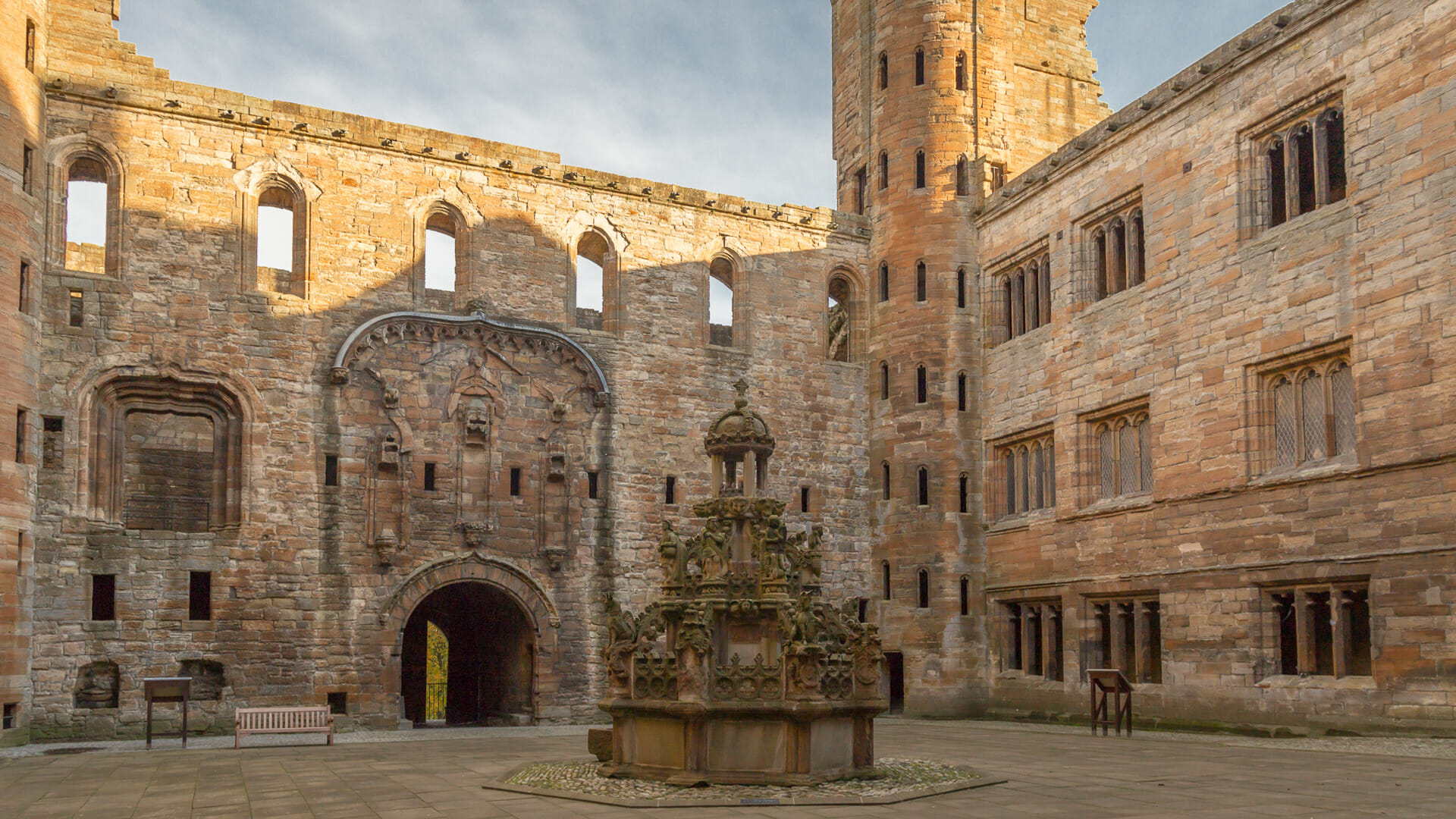
You could almost say Linlithgow Palace was the Stewarts’ motel. After all, the kings and their court liked to stop off here on the journey between Edinburgh and Stirling Castle, since it lies roughly halfway between the two. However, that would sell the palace’s historical role short – and give a false impression of the scale of the site.
Linlithgow Palace really did play a major role in Scottish history. The queens in particular were fond of the fresh air away from Edinburgh, which meant that two Scottish monarchs were even born here: James V and Mary, Queen of Scots.
Achtung: Die Betreiber dieser Sehenswürdigkeit, das Historic Environment Scotland (HES), führt seit 2021 an vielen Sehenswürdigkeiten Untersuchungen oder Baumaßnahmen zum Erhalt der Gebäude durch. Dieses gehört dazu. Darum vorher informieren, ob und was begehbar ist. Mehr Hintergrund hier.
For two hundred years, this site was also a royal residence, repeatedly expanded over time. And although Linlithgow Palace is a ruin today, it still radiates a certain grandeur and beauty. That begins the moment you enter the grounds through the main gate.
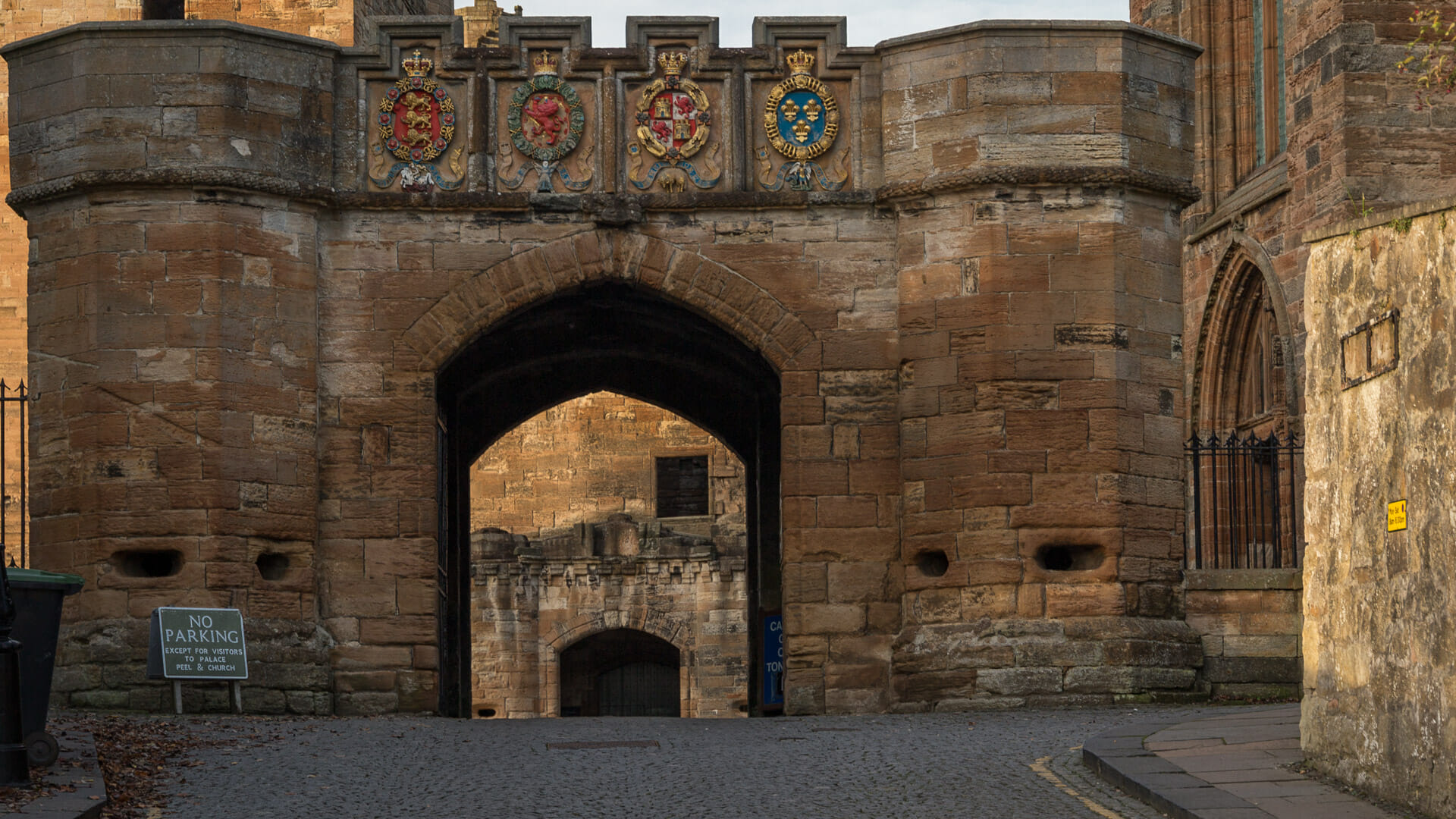
The colourful coats of arms above the entrance stand out especially. From left to right, they show the emblems of the four orders of chivalry to which James V belonged: the Order of the Garter, the Order of the Thistle, the Order of the Golden Fleece, and the Order of Saint Michael.
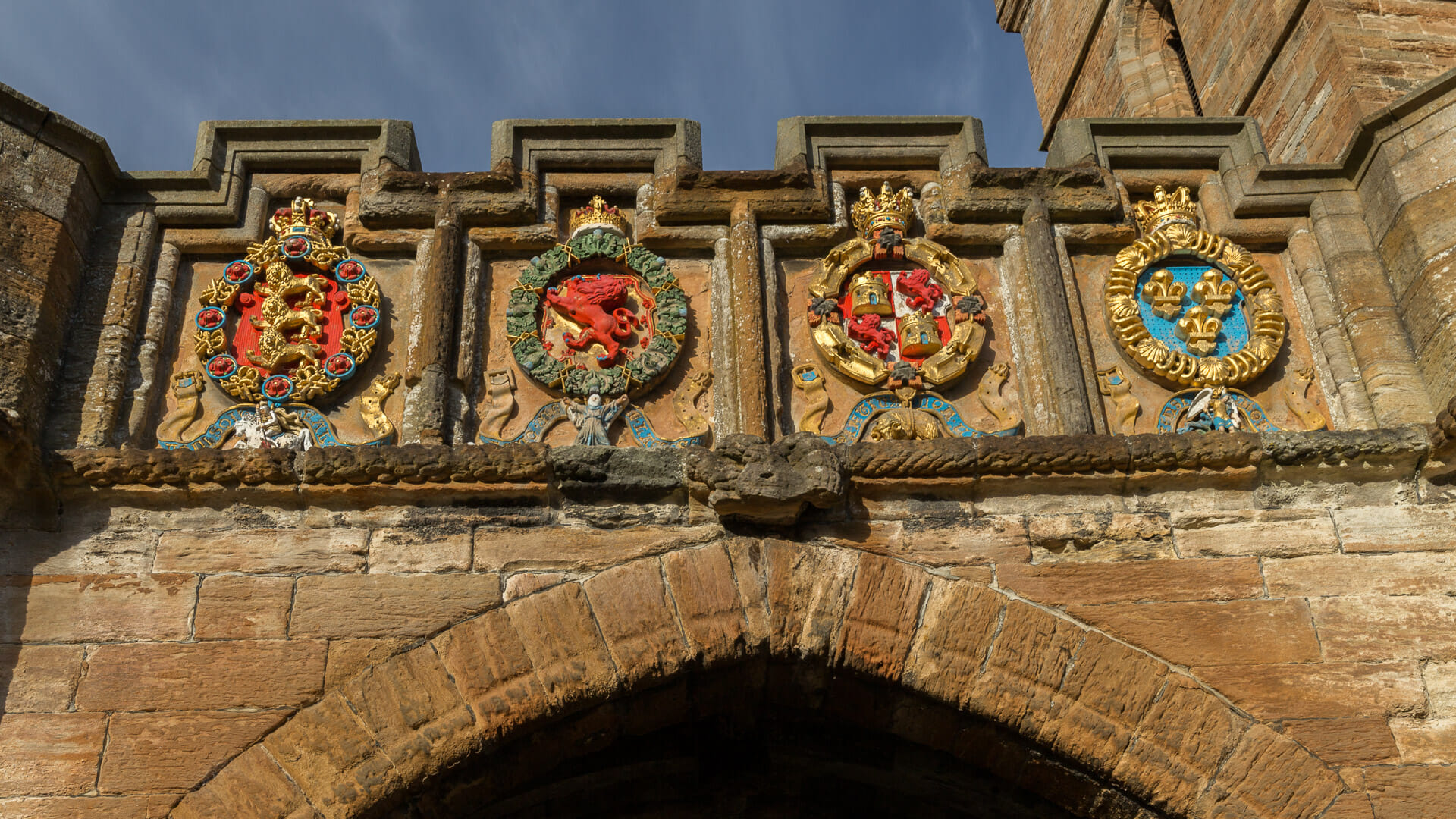
Their colour has been restored, and you can imagine the palace being similarly colourful in its day, since it would not always have been dominated by the beige of the sandstone.
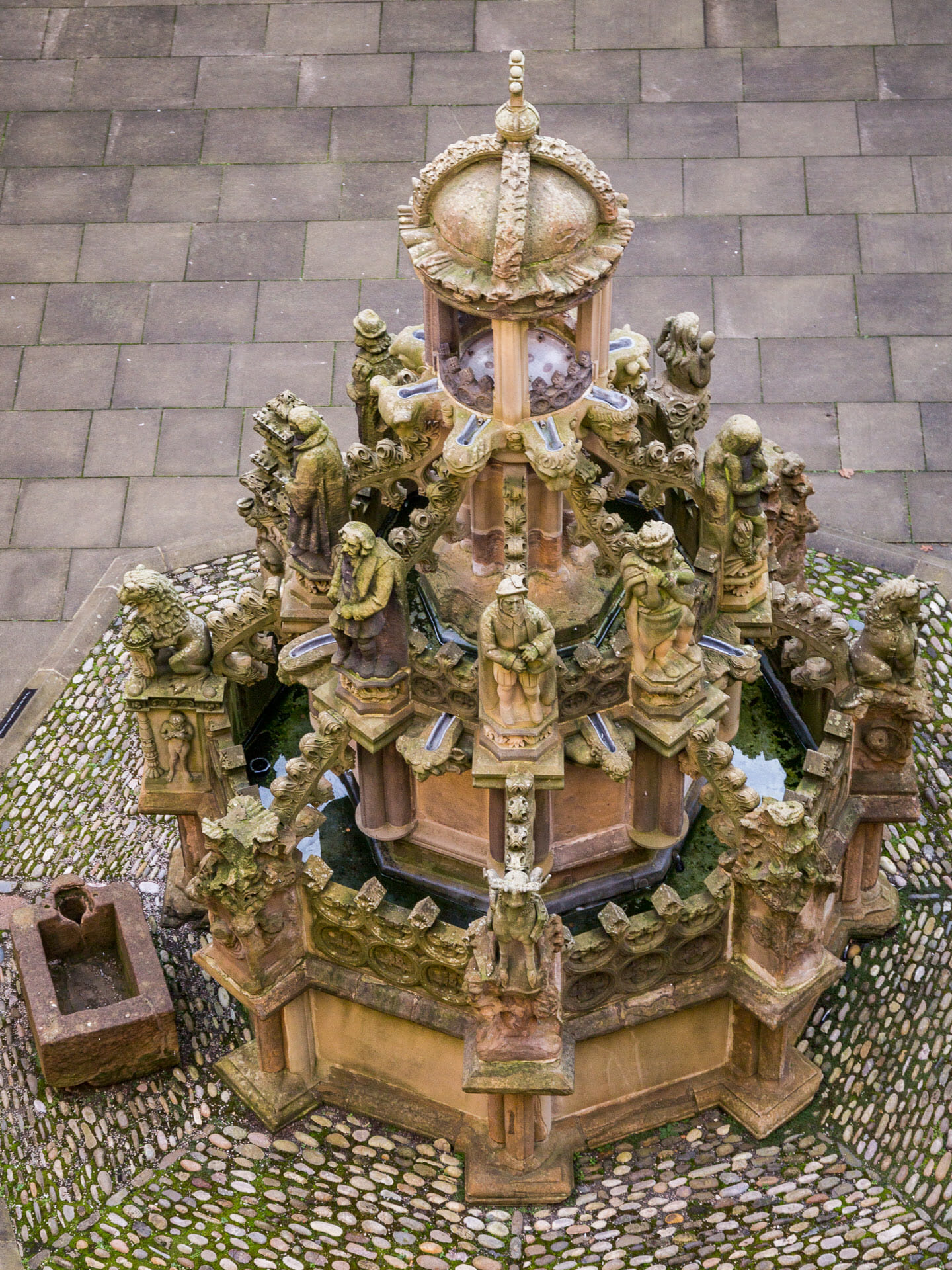
Once you enter the main building, you reach the inner courtyard. Here, the palace’s four wings rise up into the sky. In the middle, the old ornamental fountain draws the eye.
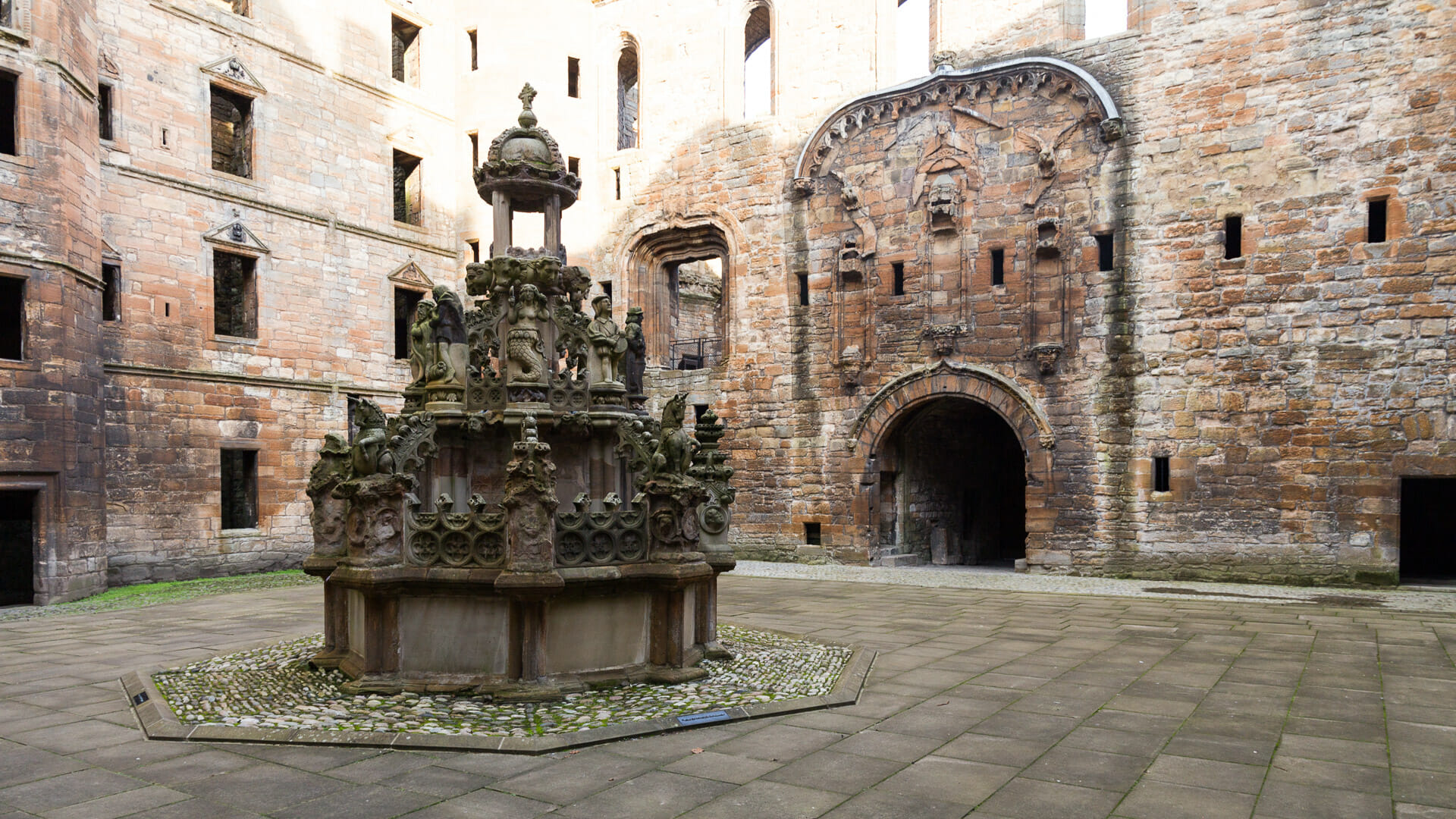
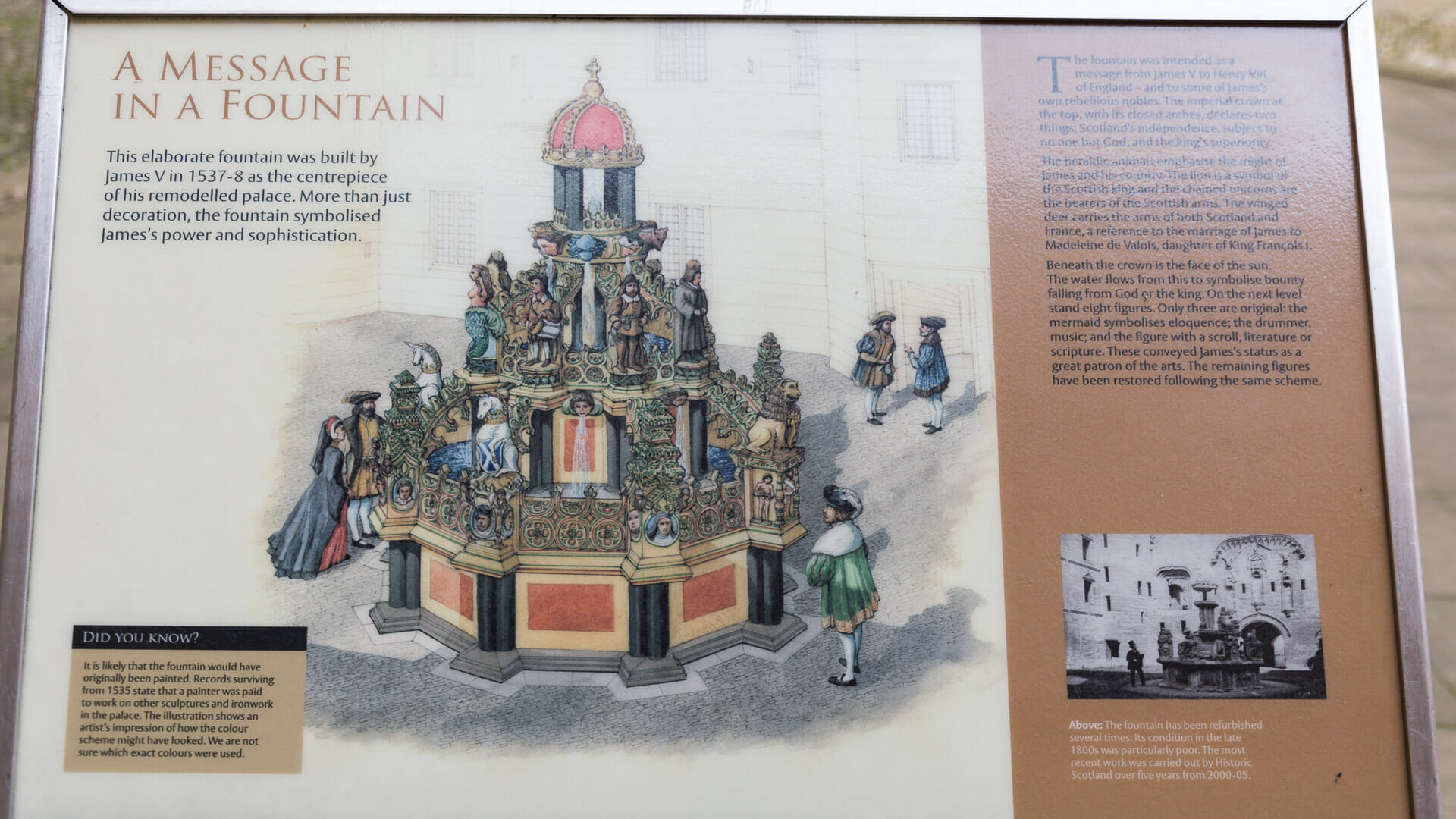
The fountain is a masterpiece which, incidentally, still works today, though it’s only supplied with water on special occasions. It was commissioned by James V, and the delicacy of its statues is still astonishing today.
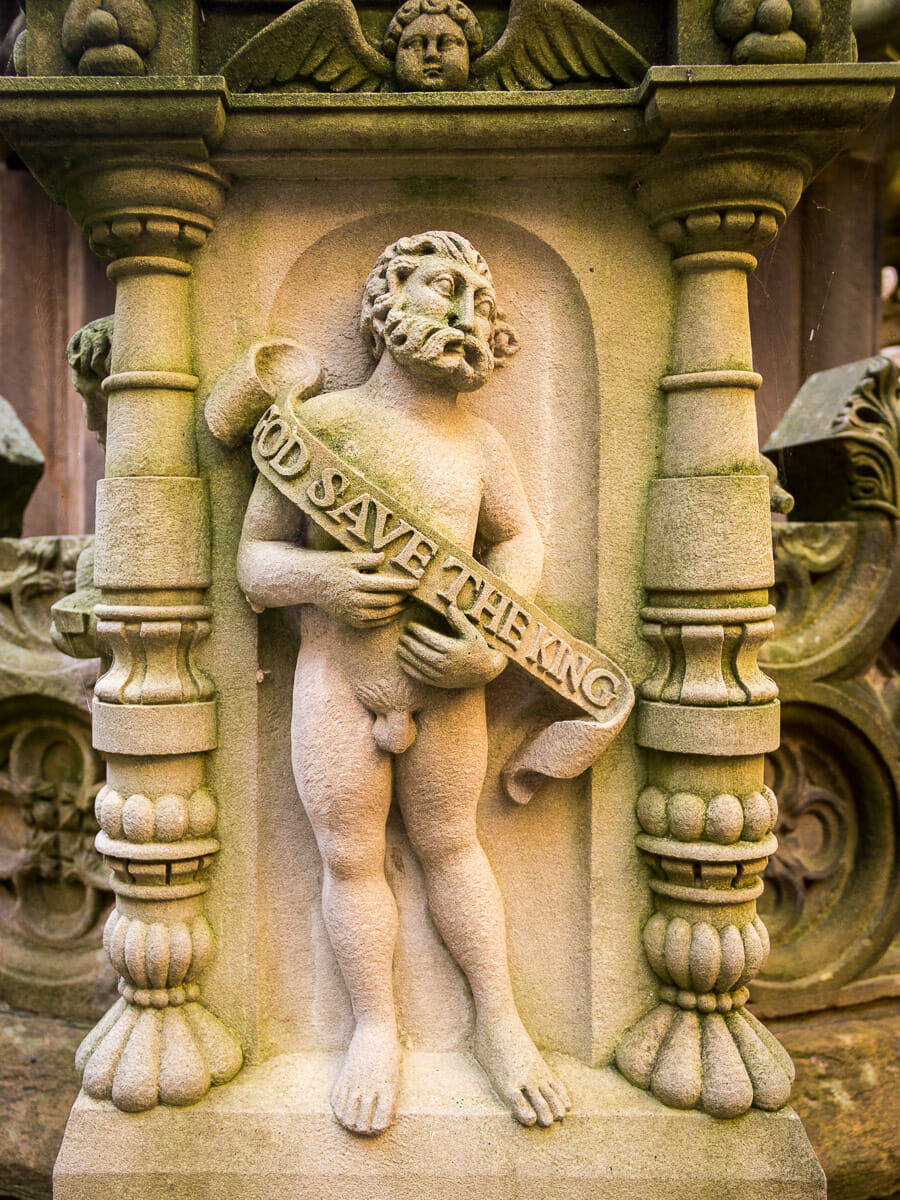
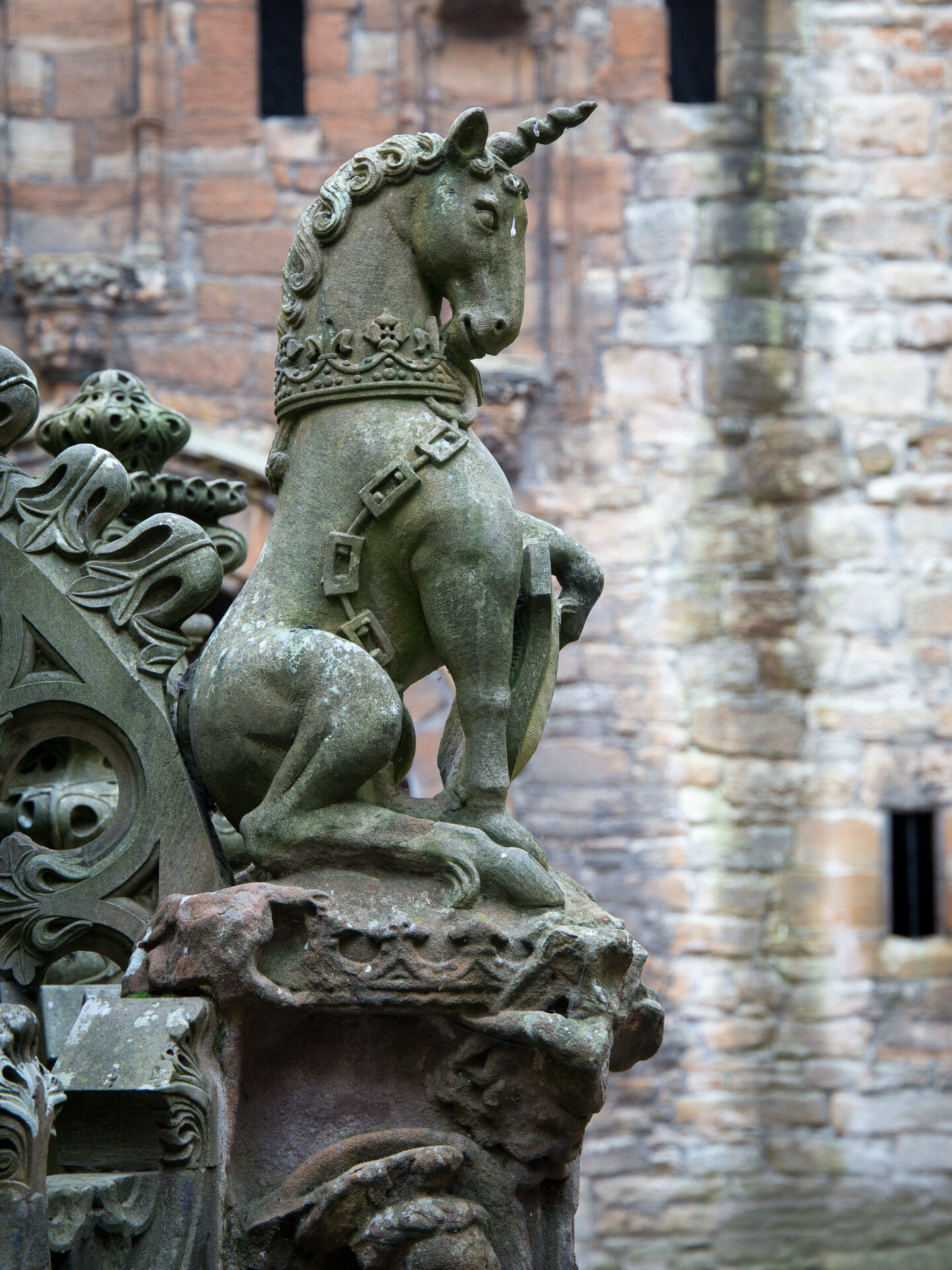
Of course, the Scottish unicorn (in German for now) couldn’t be missing here either.
The fountain was also painted in its day, as the information board shows.
Opposite the entrance lies the North Range, the newest part of the palace, which rises to four storeys plus a ground floor.
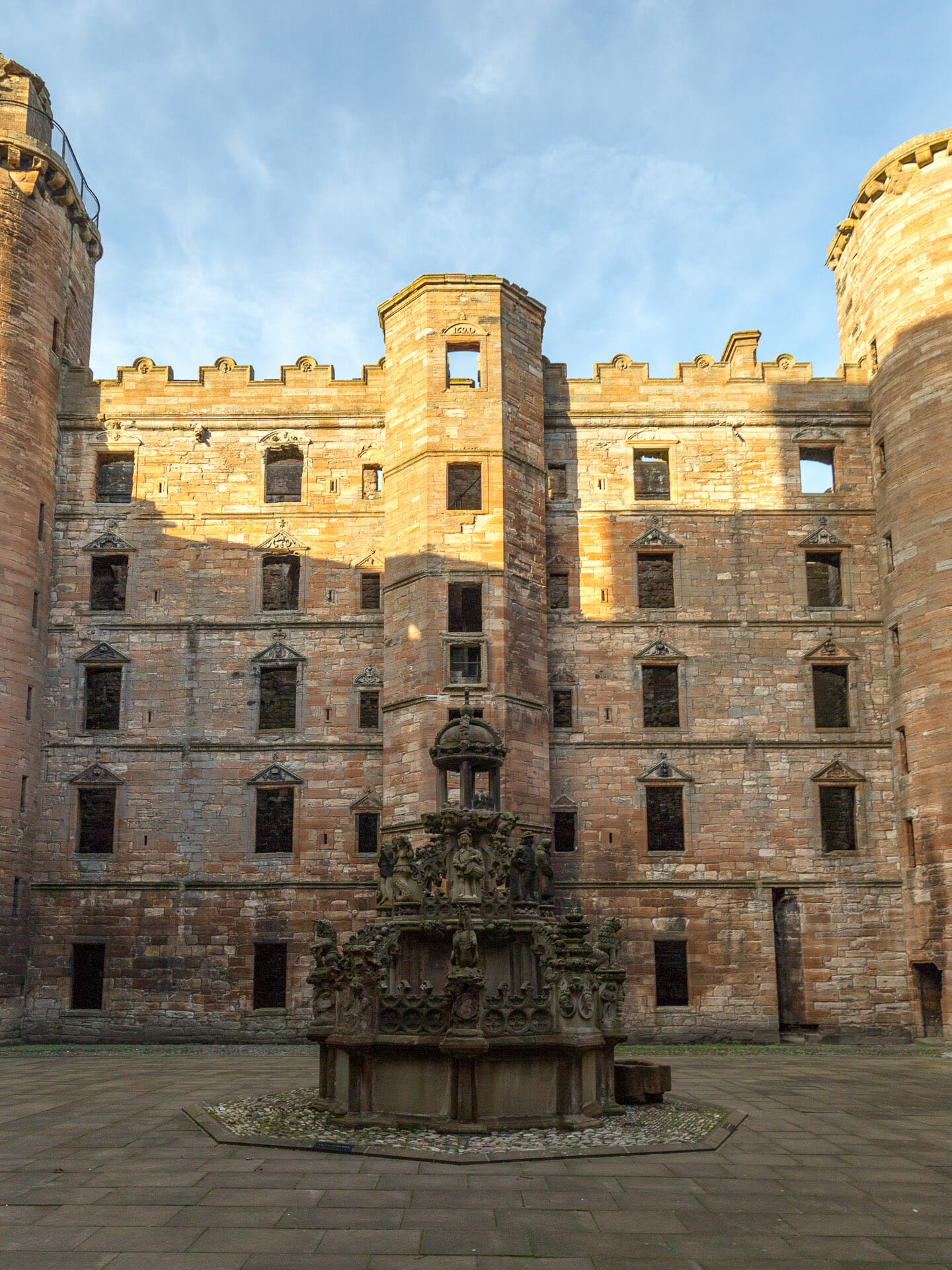
One thing stands out here: each of the 24 windows across the four storeys has a different pediment – sometimes triangular, sometimes arched.
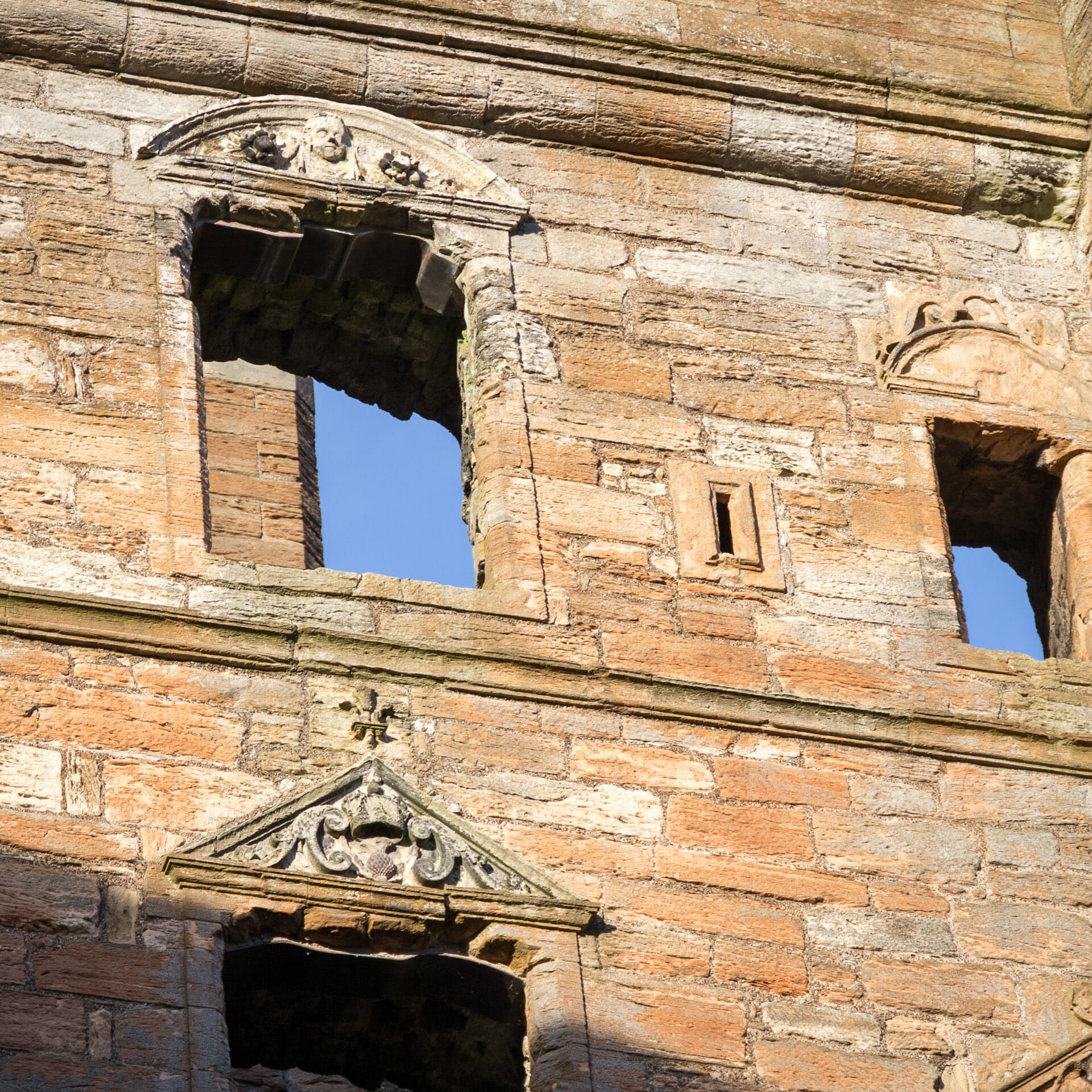
Although only built in 1607, the North Range is in the worst condition and is at risk of collapse – not for the first time. This new section, after all, was built after the old North Range had already collapsed. Back then, the warnings about its poor condition were ignored. Today, by contrast, it’s taken very seriously: construction work is already under way, and visitors currently aren’t allowed into this part – though the other three wings remain open.
Turning right from the entrance, you head towards a large gateway. This is the original old East Gate of Linlithgow Palace. The three oriel windows above the passageway used to show statues symbolising the three estates – clergy, nobility and burghers. Today, only a single pair of feet remains visible. The gate itself, however, still looks magnificent, and it continued to be used ceremonially even after the new southern entrance was built.
Inside the East Range is the Great Hall, with its three-part fireplace at the far end.
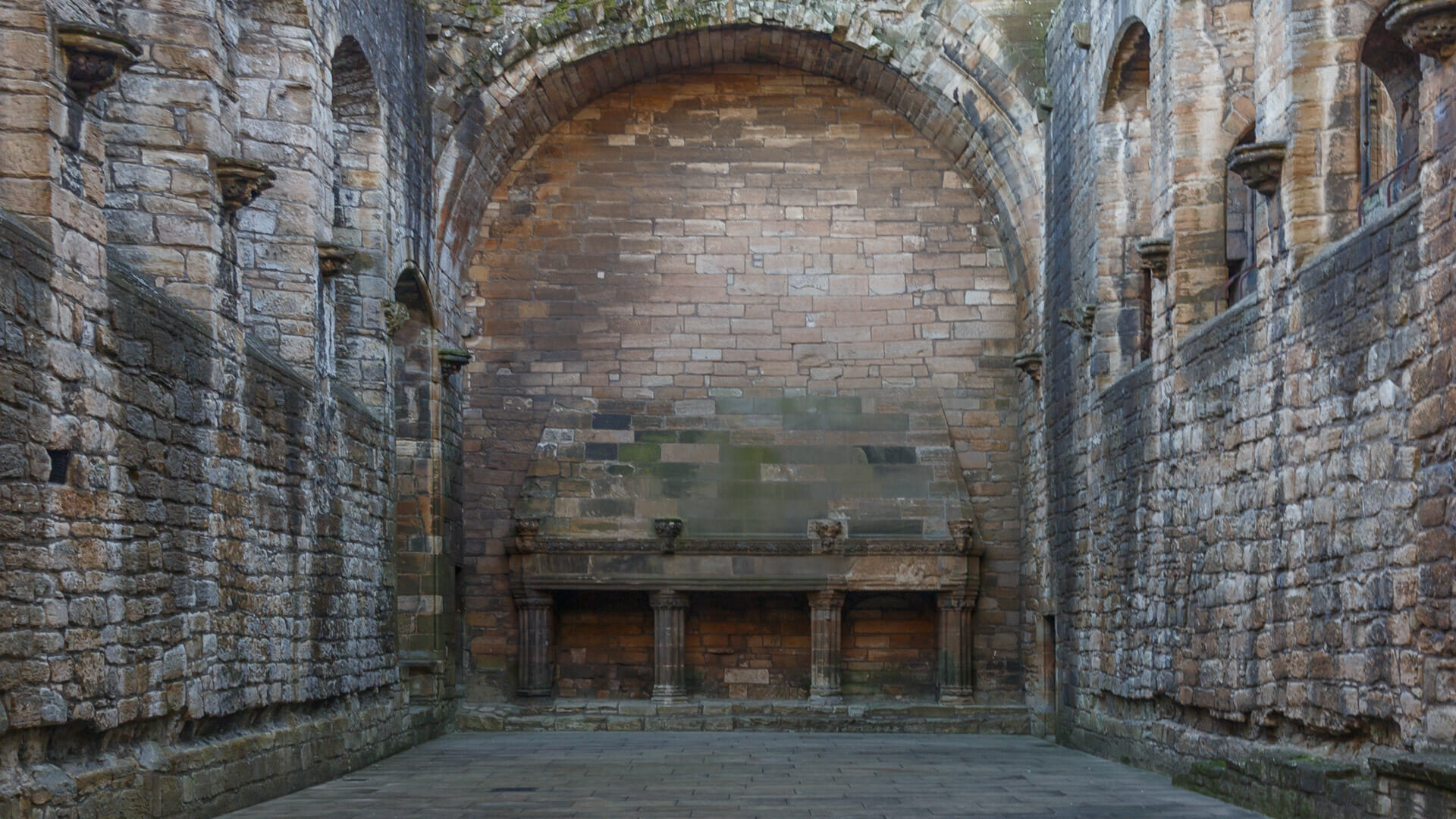
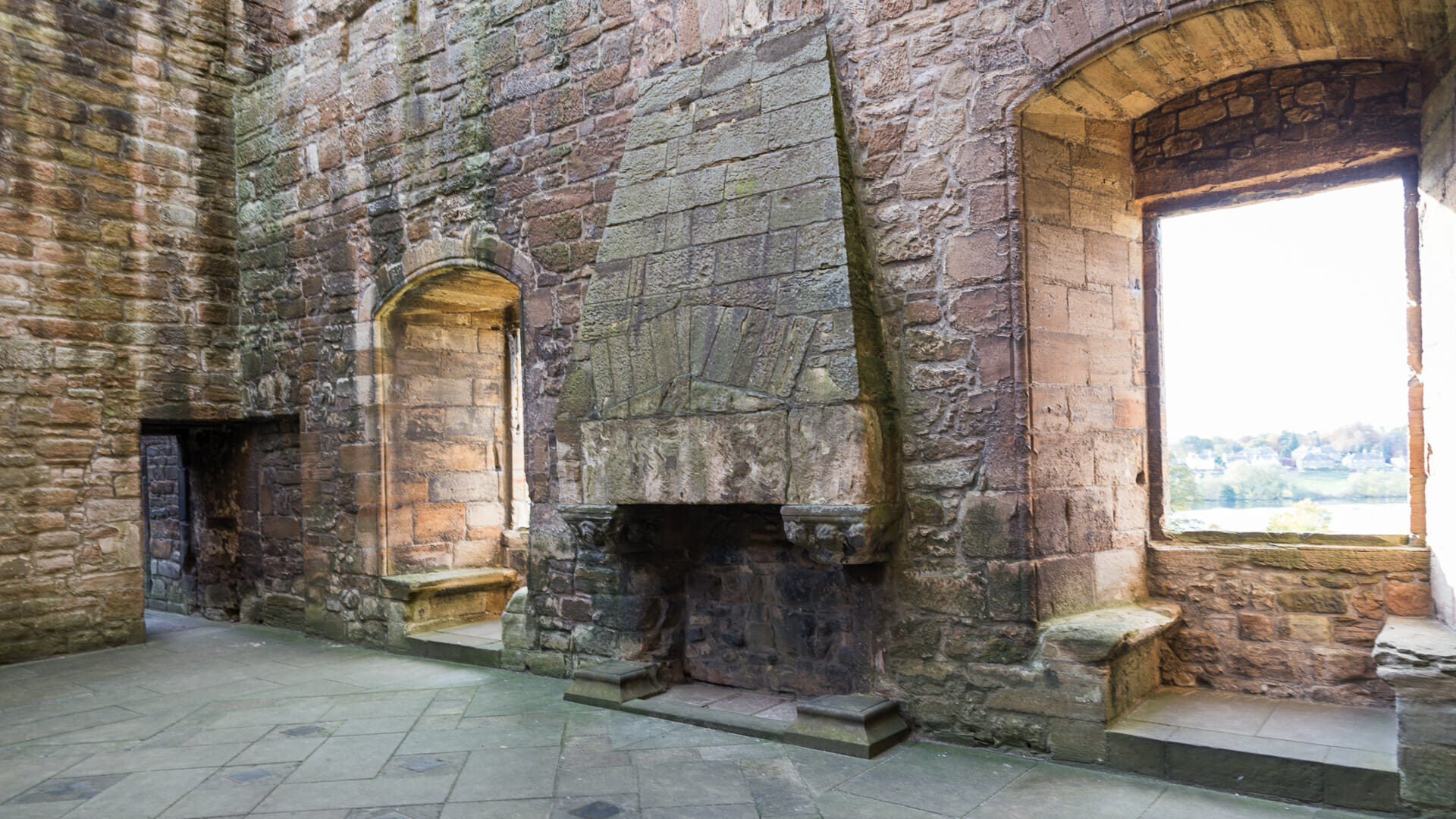
From here, and via the four spiral staircases in the courtyard, you can explore the whole interior of Linlithgow Palace – and that’s quite a task in itself. Alongside vaults and kitchens, you’ll find the royal apartments, a chapel and many other rooms here. All of them, though, are unfurnished, and most have no window glass.
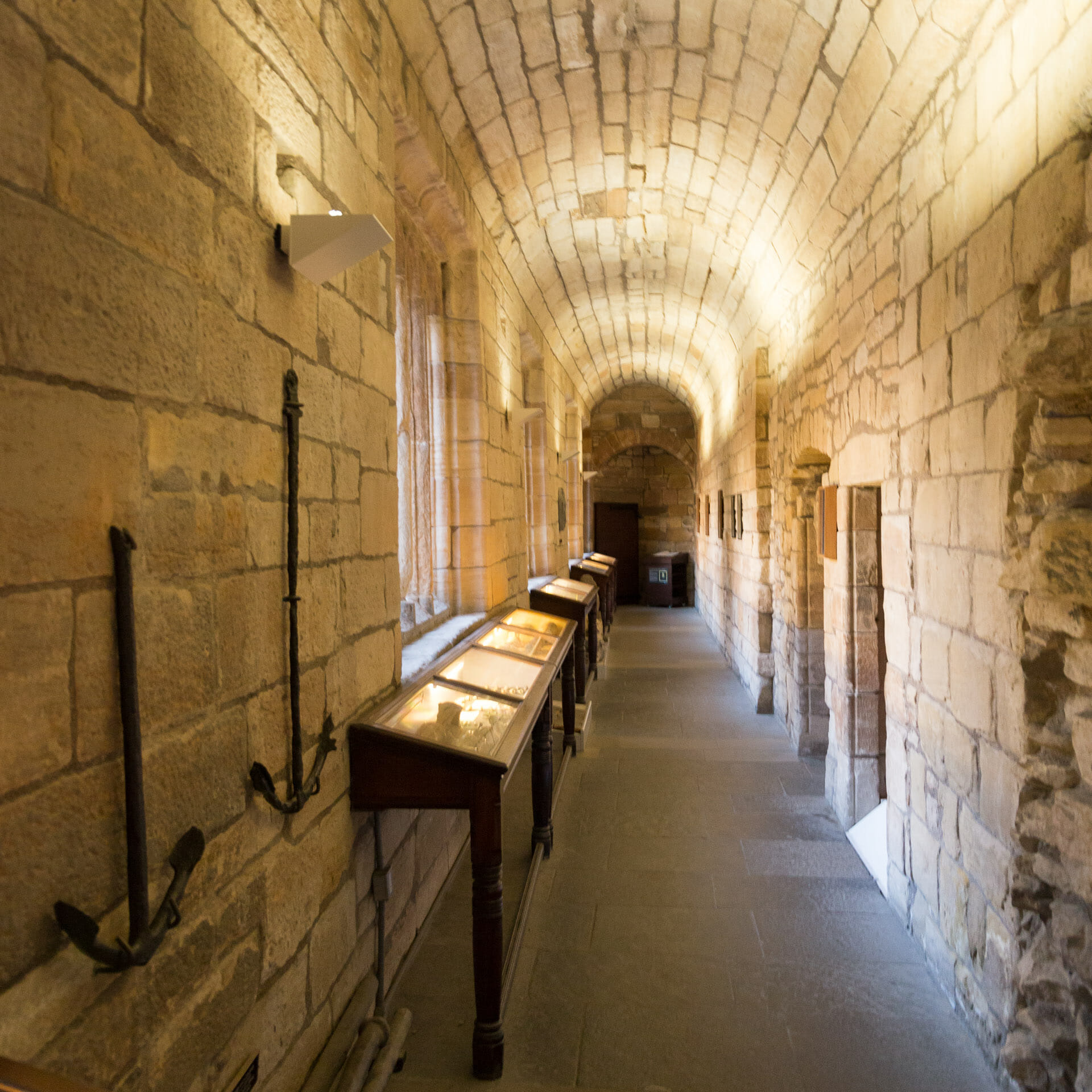
Only in one corridor in the South Range do glazed windows protect a few display cases from the weather. Here visitors can see relics and finds from the palace: old crockery, hunting weapons, ship anchors and more.
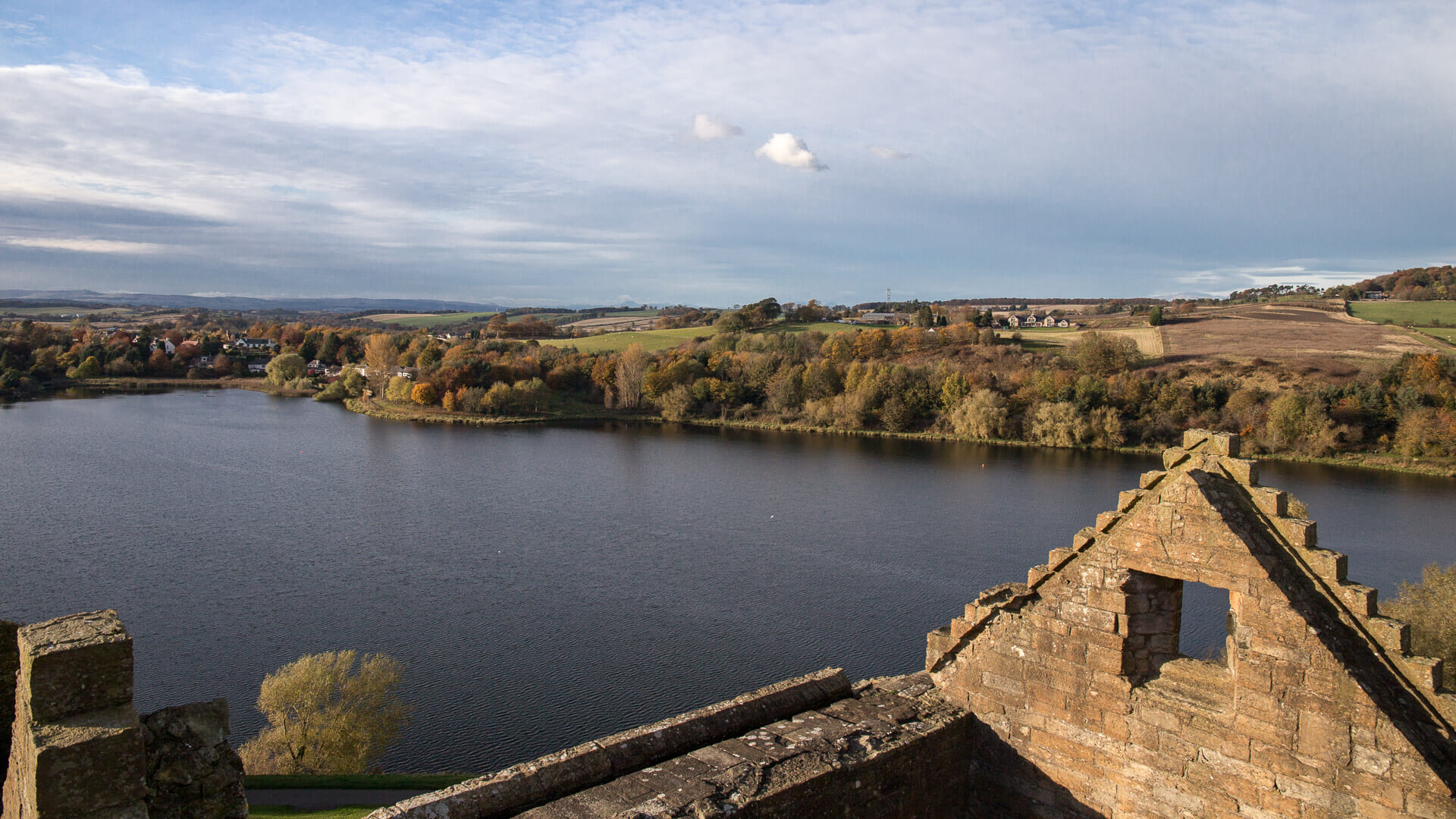
The braver visitors treat themselves to one more experience and climb the tower in the north-west. Up there, a wonderful view opens up in every direction, including over Linlithgow Loch …
… or towards the town and the church.
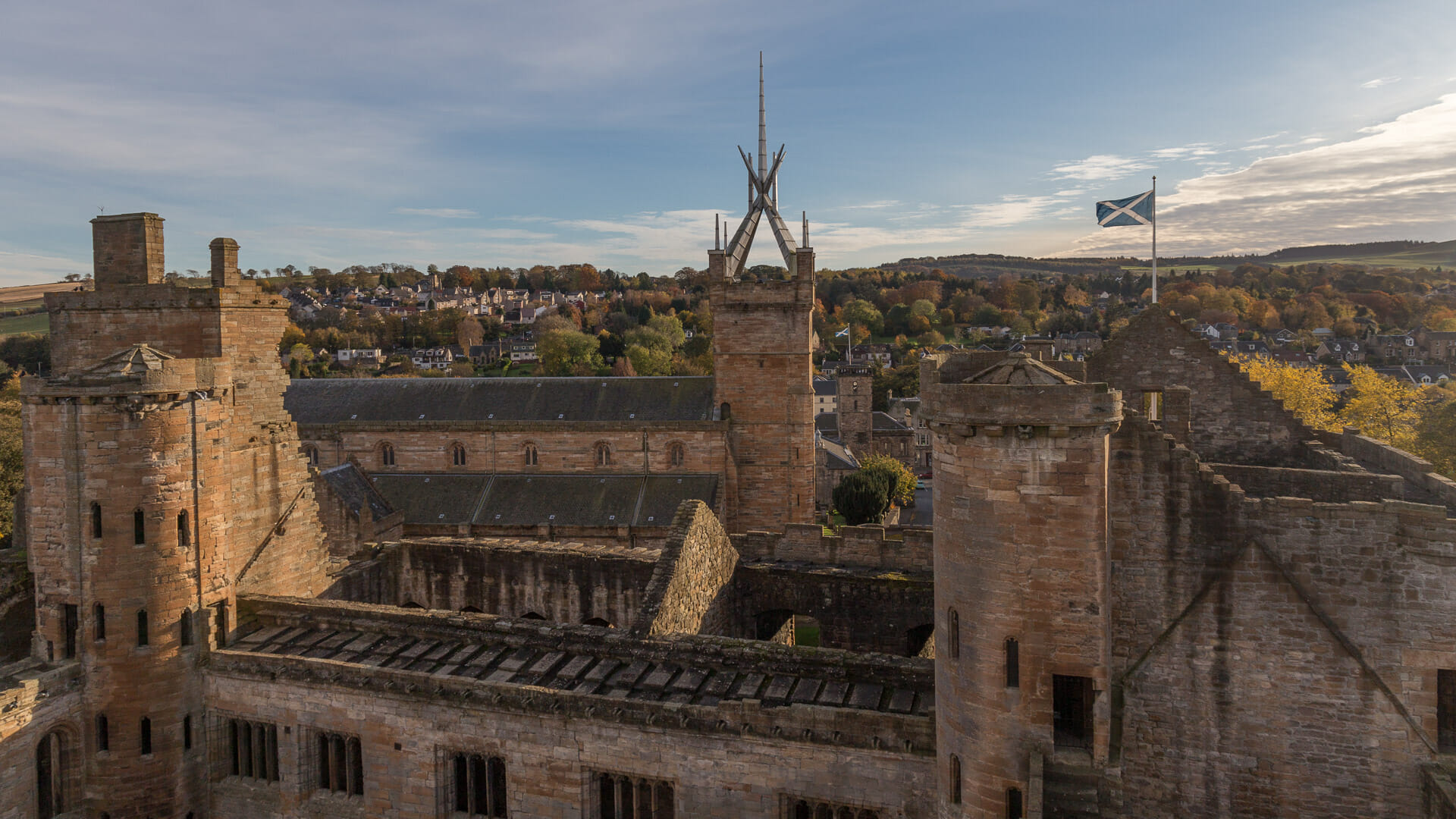
You’d better not have a fear of heights up here.
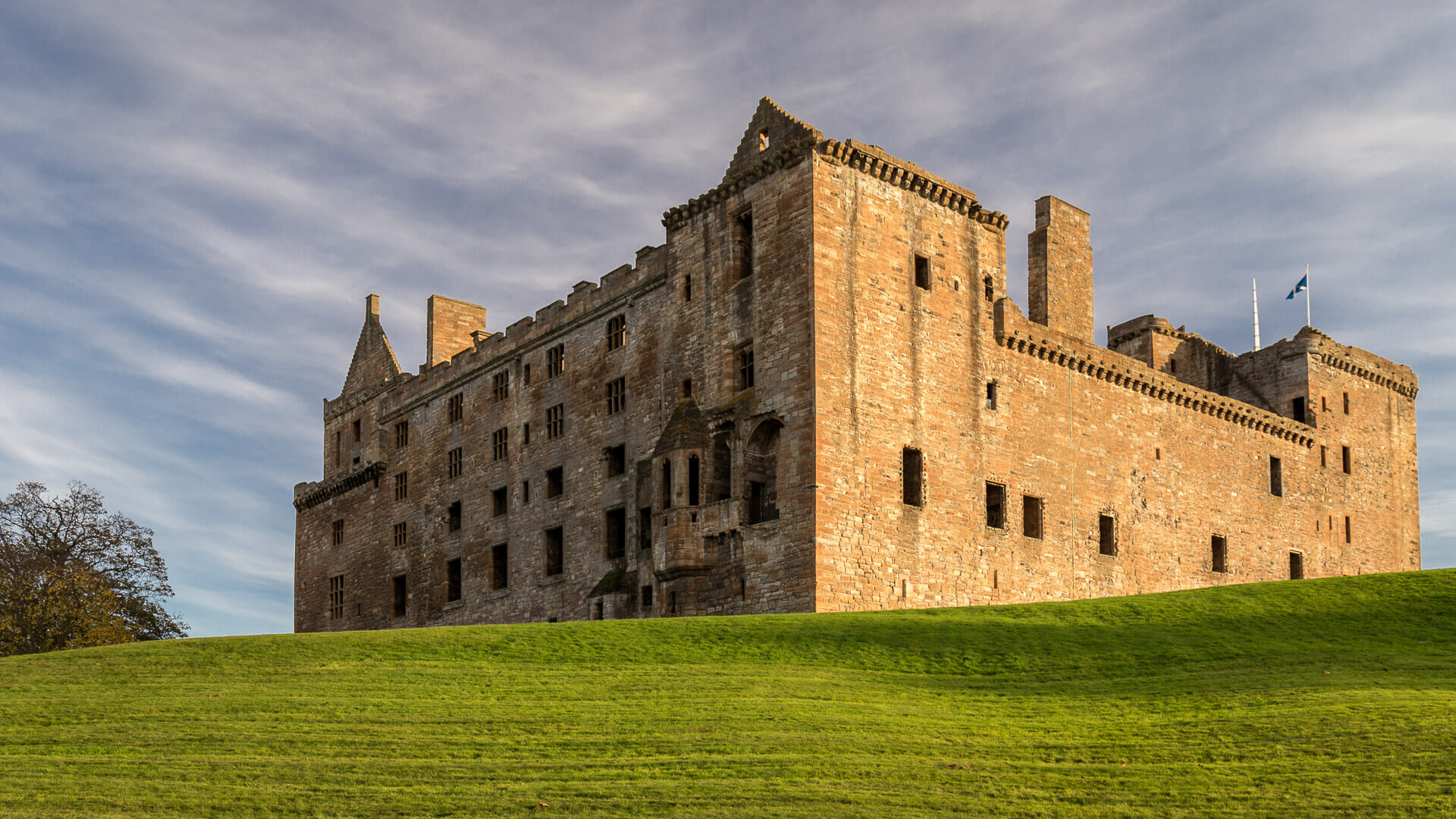
Once you’ve had your fill of the palace interior, it’s worth walking all the way around the building once more. Although the palace looks rather like a solid block from the outside, there are still a few details to discover.
Especially in the east, you can see the former main entrance and picture how a drawbridge was once installed here.
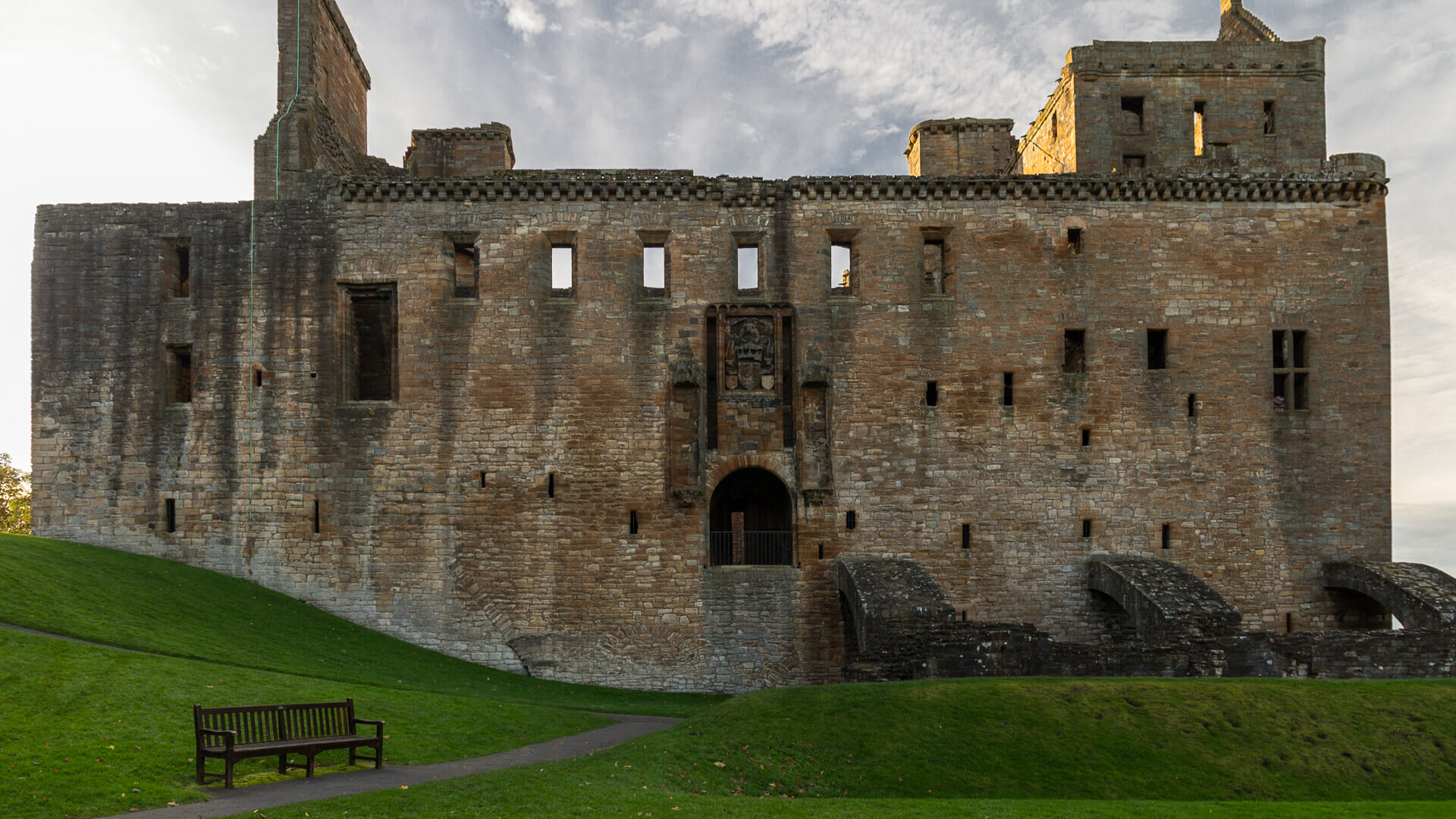
You can also see the outwork, which was built partly for defensive purposes and partly for reasons of structural stability.
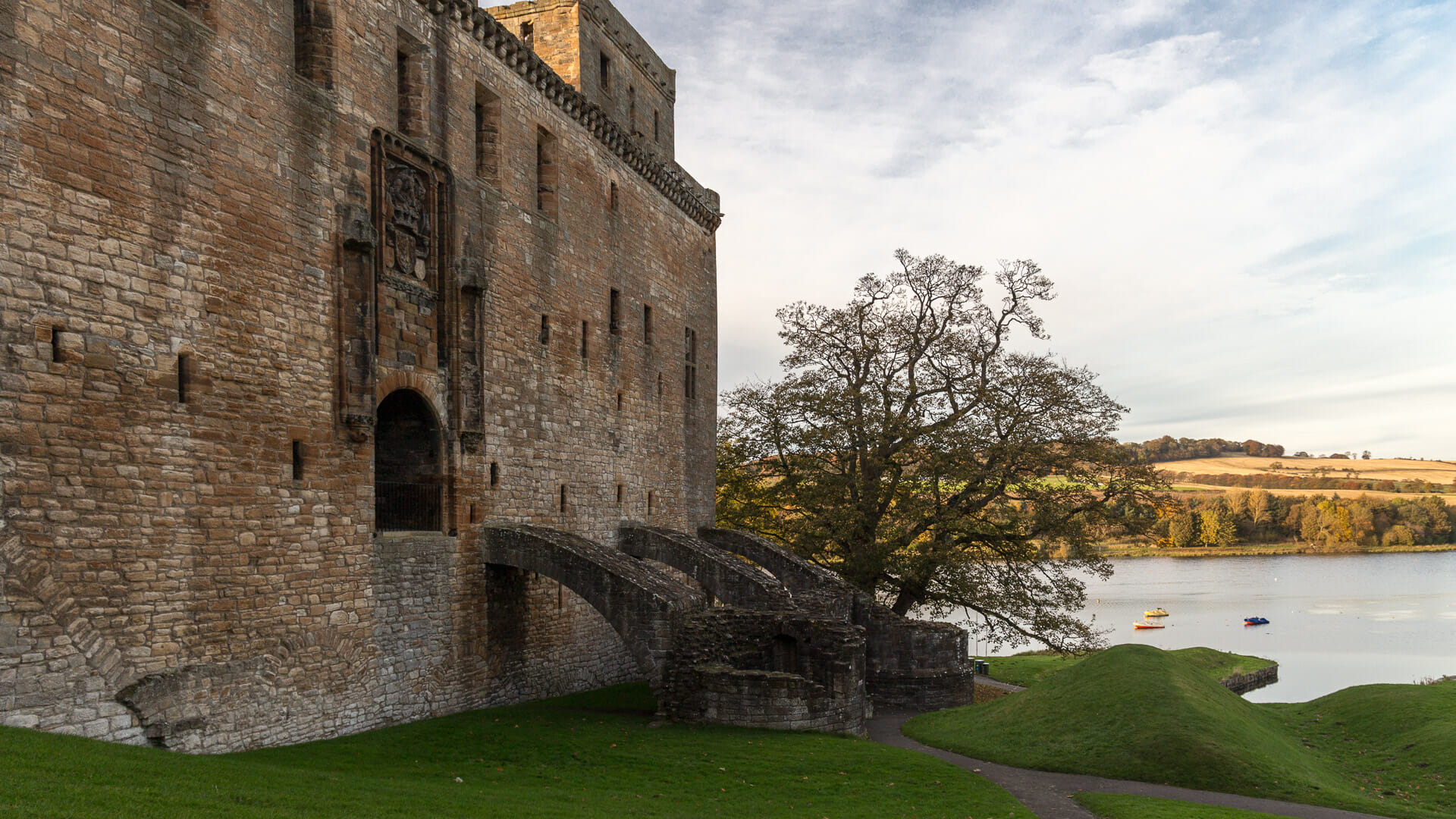
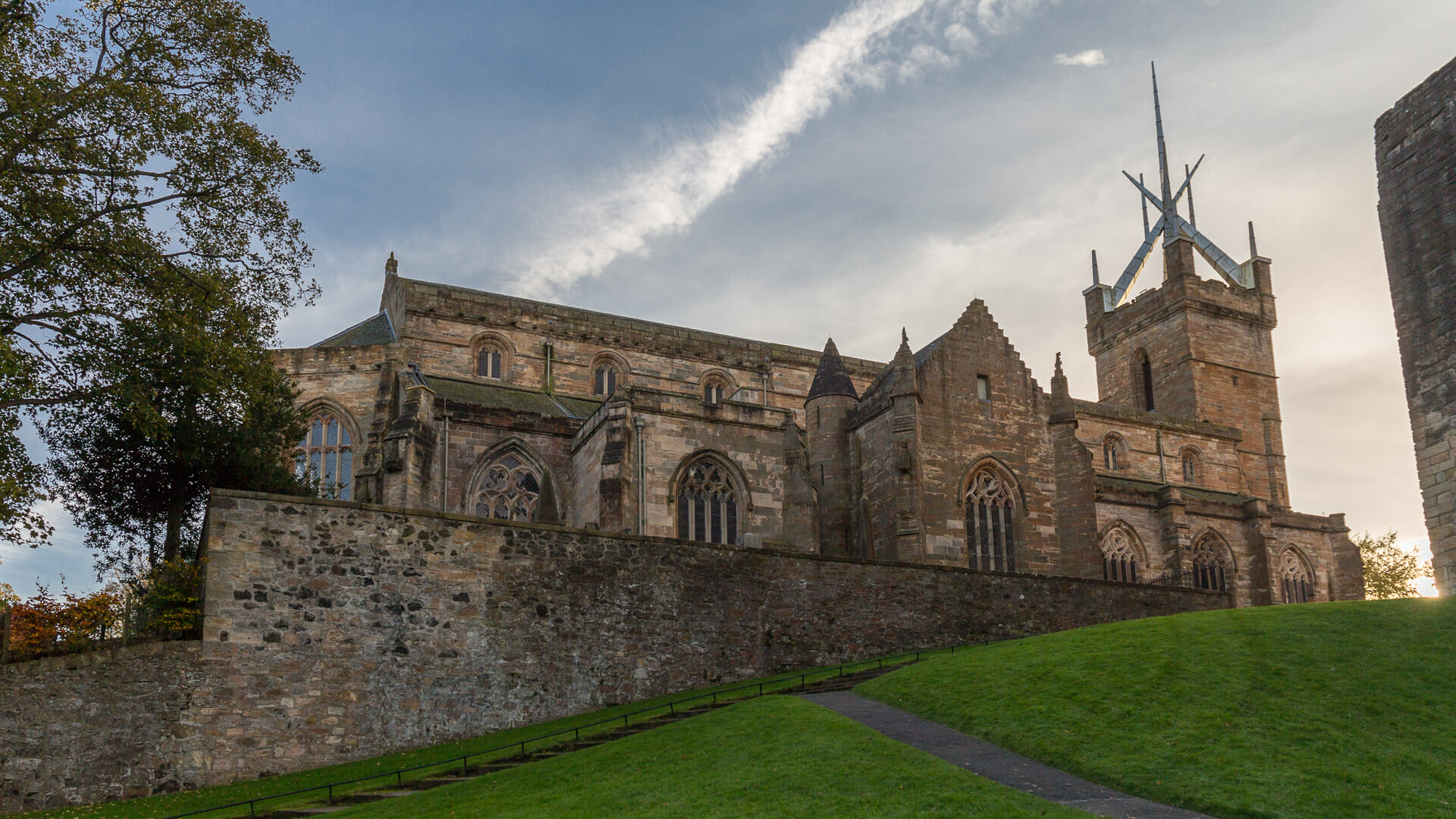
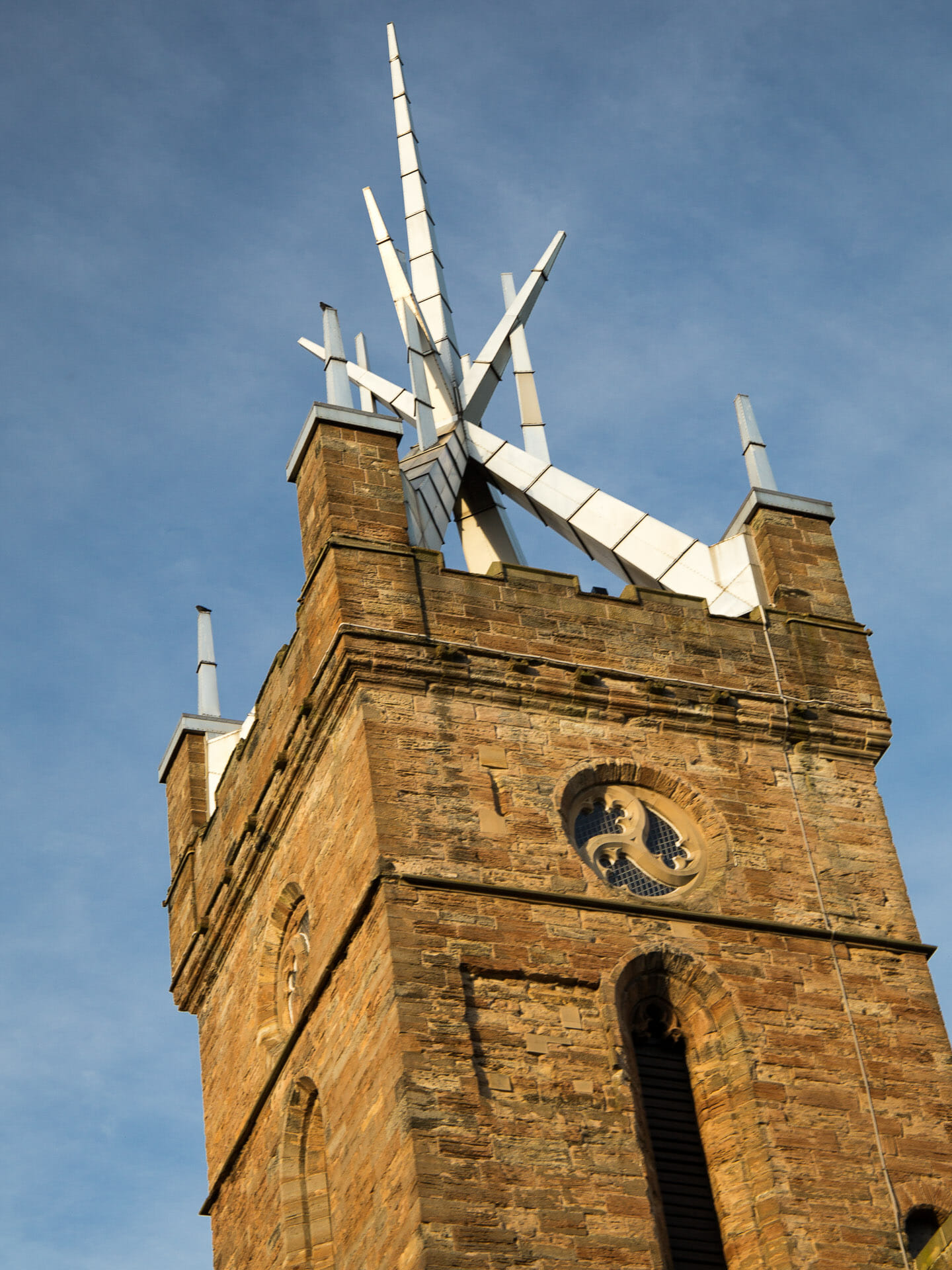
And of course, there’s also a lovely view of St Michael’s Church.
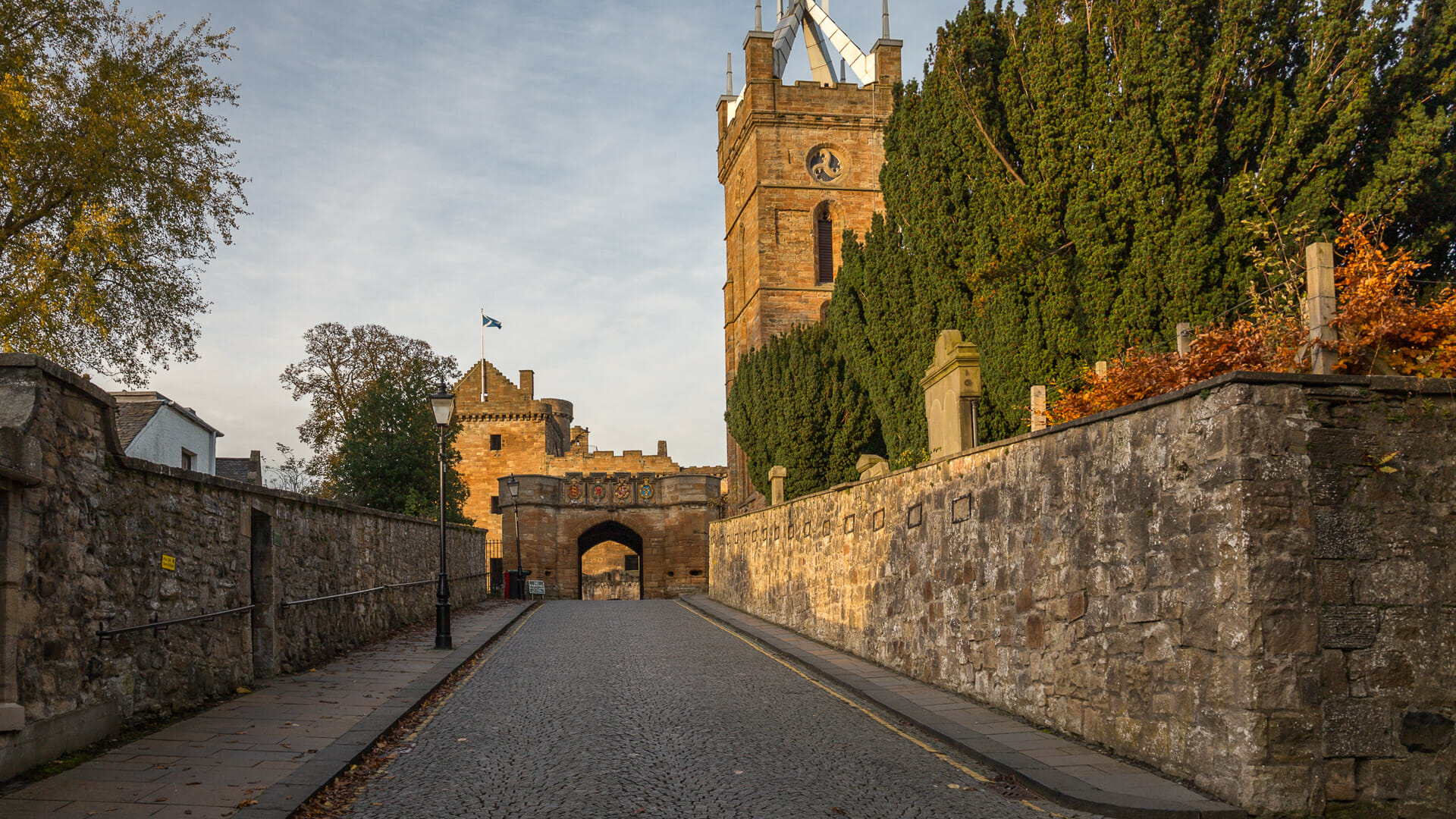
After that, visitors can leave the palace again. The narrow lane from the gate leads down to the market square, where cafés promise refreshment and a rest after a thorough exploration of the site.
Good to know: The history of Linlithgow Palace and its Outlander filming location
The various building phases of the palace are documented fairly well. Work on it began under James I of Scotland in 1424, after the castle that previously stood on this site had been destroyed by fire. First, the East Range and part of the South Range were built in an L-shape. James III continued building from 1460, completing the South Range and starting the West Range. His successor James IV then closed the palace into its present rectangular shape.
Work was also carried out continuously on the neighbouring St Michael’s Church, whose predecessor was destroyed by the same fire as the old castle.
James V commissioned his master builder James Hamilton of Finnart to make changes. He moved the entrance from the East Gate to the south. Incidentally, Finnart made similar changes at Blackness Castle (in German for now), and also built the Renaissance section of Stirling Castle.
The palace’s most beautiful feature, the fountain, was also created during this period.
Around 1550, Linlithgow Palace was at its peak. But in 1603, the crowns of the kingdoms of England and Scotland were united on the head of a single ruler: James VI of Scotland became James I of Great Britain. The consequence was that the life of the royal court shifted to London, and interest in the palace in Scotland waned. James VI was forced to invest in the new North Range after the old one had collapsed, but the decline could no longer be halted.
The final downfall of the Stewarts also spelled the end for the palace. The last Stewart claimant to the throne, Charles Edward – better known as Bonnie Prince Charlie – passed by the palace in 1745 during the Jacobite Rising (in German for now) on his way to Edinburgh. A year later, the troops of his opponent, the Duke of Cumberland, camped here. Whether by intent or by accident, the soldiers set fire to the palace, and it burned down for the most part. The Stewart dynasty came to an end after the defeat at Culloden. Linlithgow Palace remained a ruin.
Incidentally, Linlithgow Palace was also a filming location for Outlander: the scenes for Wentworth Prison were filmed here.
Tip: A walk around Linlithgow Loch
At the foot of the palace lies Linlithgow Loch. It is the largest freshwater loch in the Lothians and provides a home for many wild animals: otters, martens, bats, birds – they all live around the loch. From here, too, you get a lovely view of the palace itself.
A circular path runs around the loch, roughly 3.5 kilometres long.
Personal note: The palace of a thousand paths
I would probably have starved to death on the way to the dining room – the corridors inside the palace felt that long and confusing to me. I lost my bearings more than once. In my view, it’s well worth getting hold of a floor plan of the site beforehand.
Getting there:
With a sat nav: “EH49 7AL” will take you into the town. The rest is as described below.
Without a sat nav: From Edinburgh, take the M9 towards Stirling. Leave the motorway at junction 3 for Bo’ness and Linlithgow, and drive to Linlithgow. At each roundabout, continue straight ahead and stay on the main road through the town, until the market square appears with its fountain and the old Town Hall behind it. Here, follow the brown sign for Linlithgow Palace. You can try parking up at the palace itself, or turn left just past the market square towards the large car park. This costs a small fee, though it’s fairly modest.