Its location in the heart of Scotland made this castle strategically vital. That is why Stirling Castle was constantly fought over — and even the reason for Scotland’s most important battle.
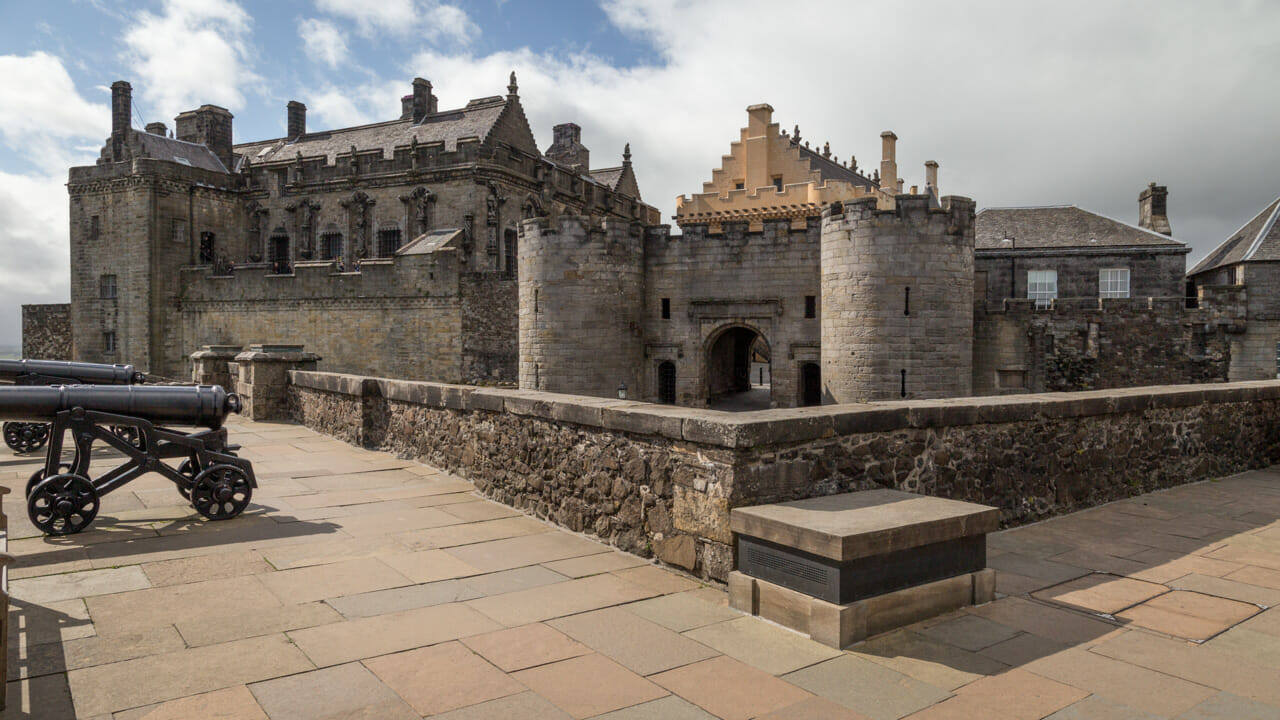
Stirling Castle sits in the heart of Scotland – roughly halfway between Glasgow, Edinburgh and the Highlands, it guards the River Forth, which later widens into the Firth of Forth. For centuries, this central position made the castle a key stronghold in the struggle for the Scottish kingdom – and it was fought over time and again.
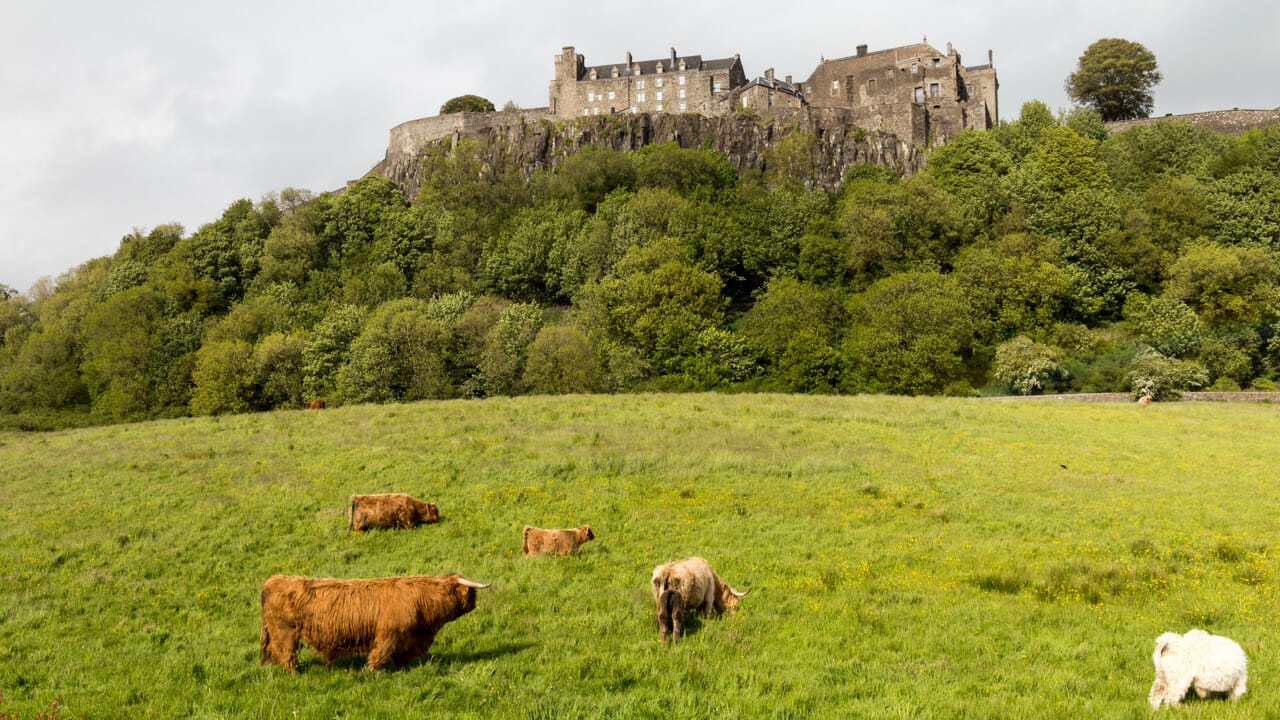
As you approach Stirling Castle, it looks almost impregnable. It sits enthroned on “Castle Hill”, a hill whose sides drop away steeply and rocky – an old volcanic plug.
The only way into the castle is from the south, but the gate there is heavily fortified. And yet, despite its thick walls, its high position, and its seemingly impregnable air, Stirling Castle kept changing hands, especially during the 13th and 14th centuries: in 1296 the English king took Stirling Castle, in 1297, after the Battle of Stirling Bridge with William Wallace, it went back to the Scots, in 1298 back to the English, in 1299 back to the Scots again… one could almost say the mighty Stirling Castle was surprisingly easy to take.
But it was usually the battles fought nearby, rather than at the castle itself, that sealed its fate. The most famous of these was the Battle of Bannockburn (in German for now). Its cause: the English army was trying to relieve Stirling Castle, which was under siege by Robert the Bruce. After Robert the Bruce’s victory, the castle duly fell into Scottish hands – until the English retook it in 1333. And so it went on and on.
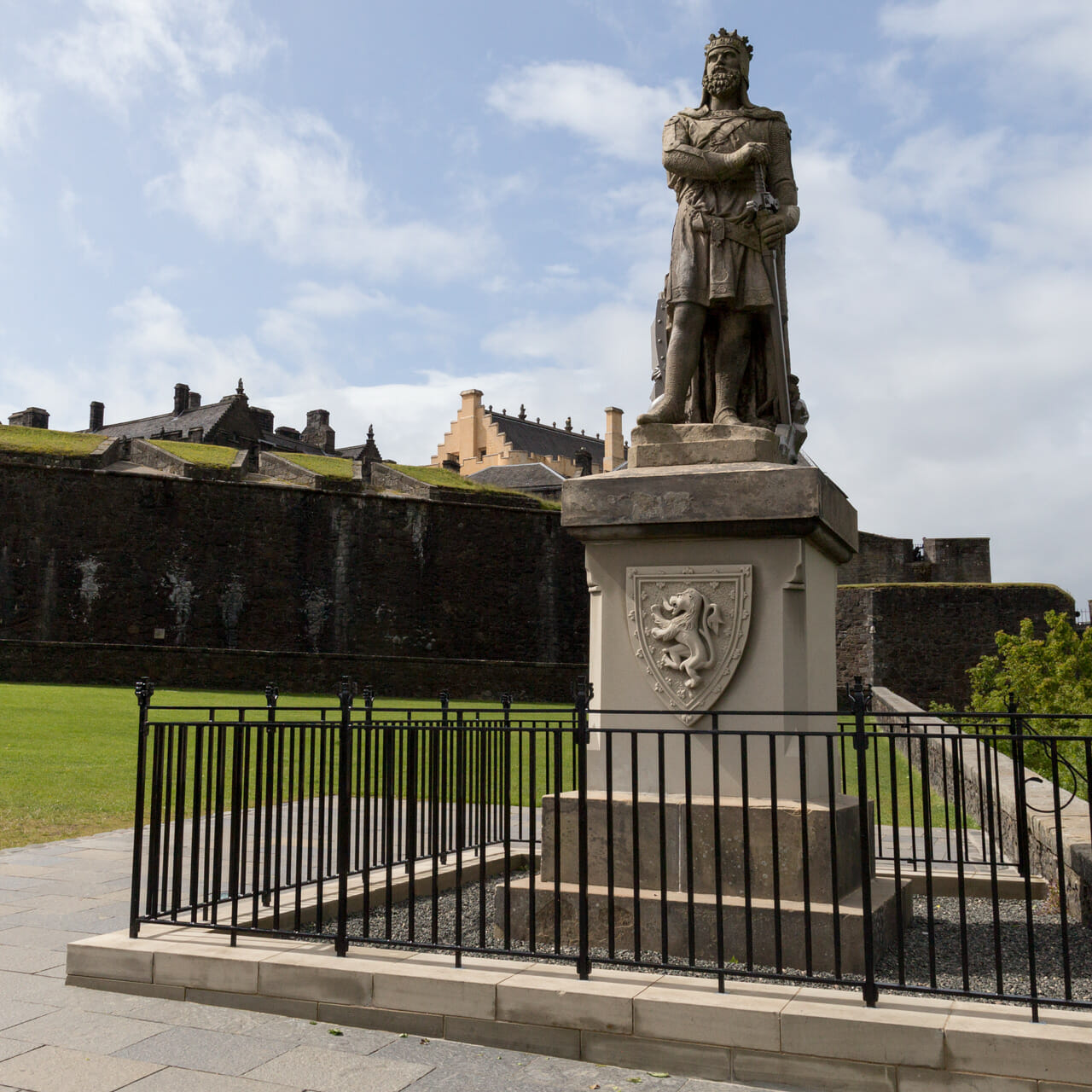
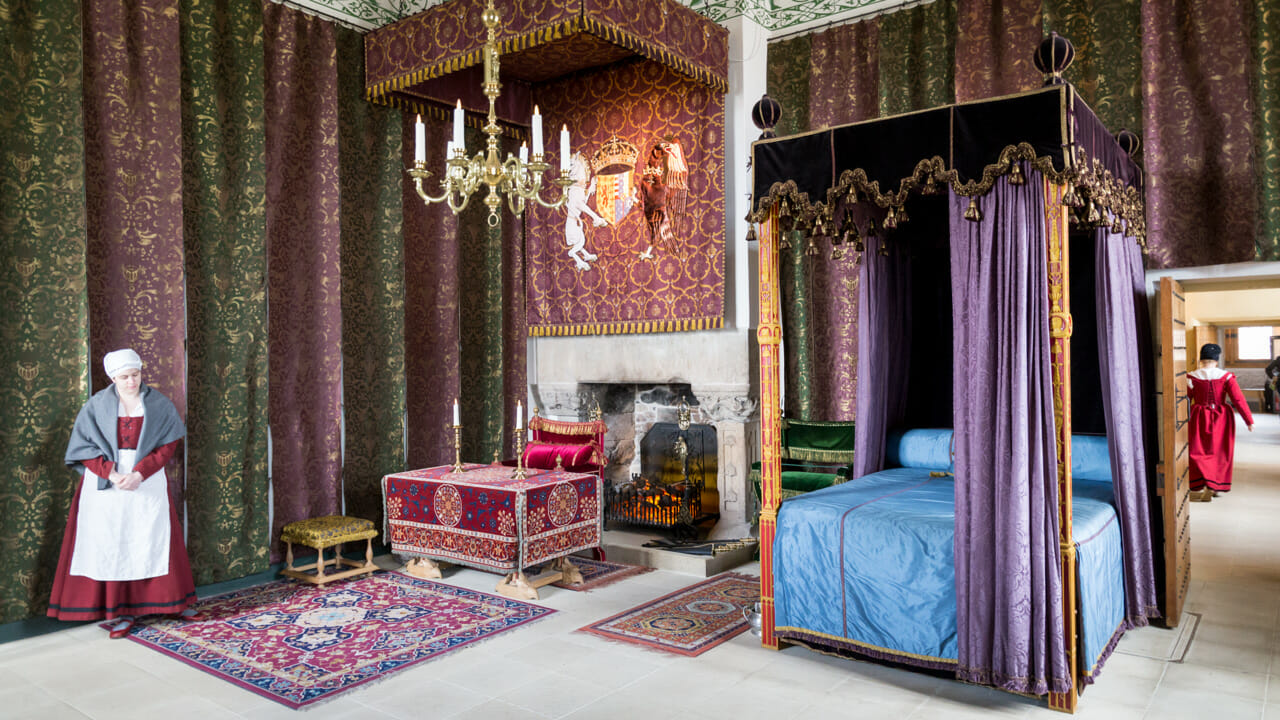
It’s a wonder the castle managed to grow to its present size at all. But later occupants took care of its expansion. Monarchs such as James IV, James V and Mary de Guise added new buildings, such as the Palace around 1550.
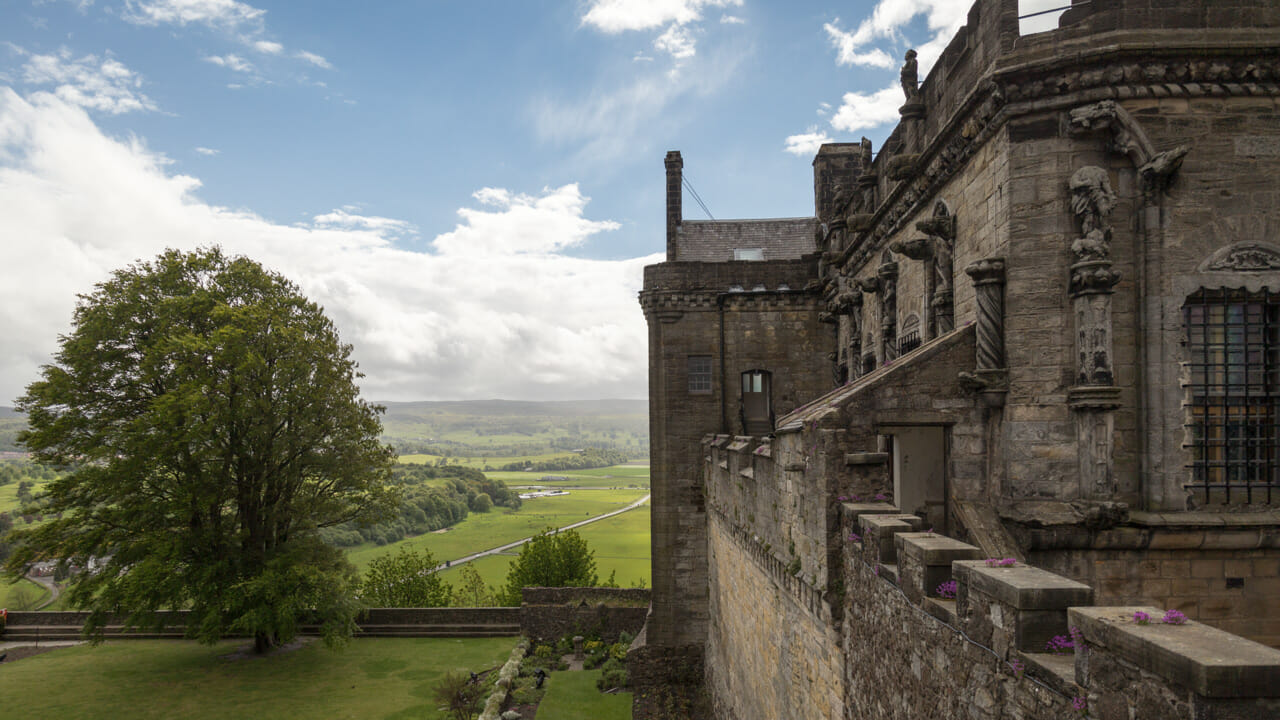
Because Mary Queen of Scots was also crowned at Stirling Castle in 1543, the castle soon took on a symbolic character. It had become one of the main residences of the Scottish monarchs.
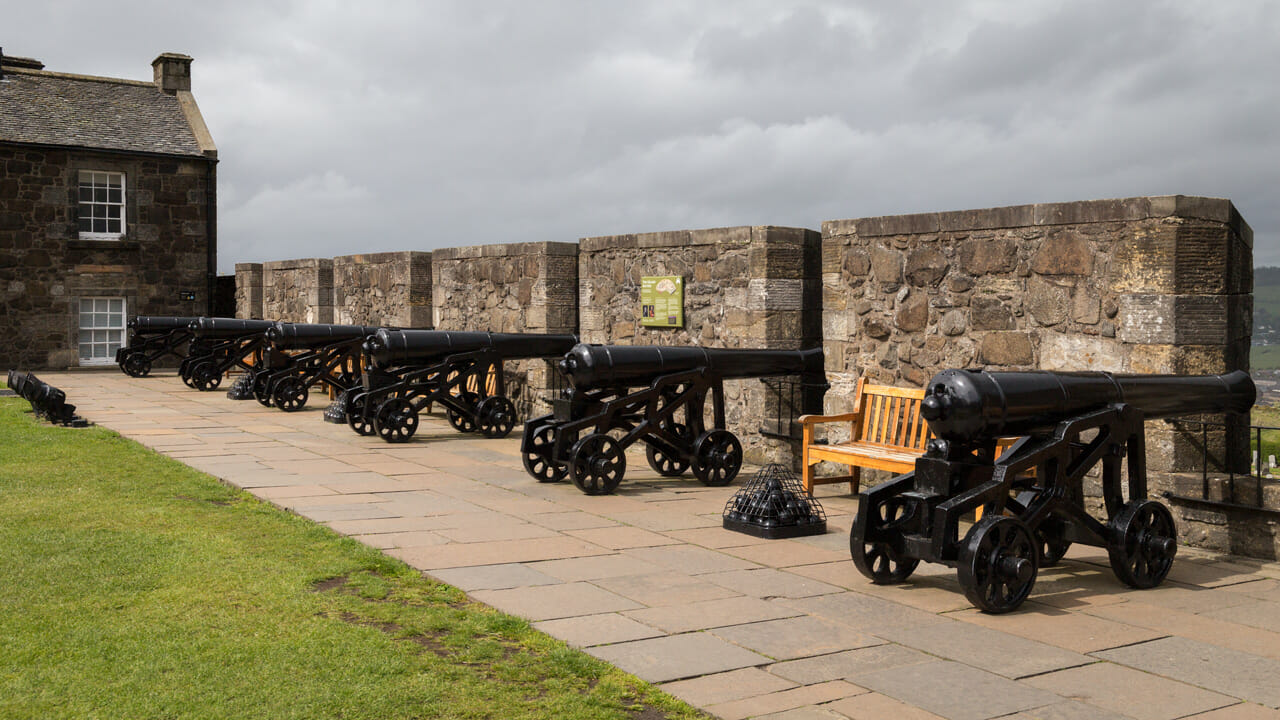
Stirling Castle’s star only began to fade when Oliver Cromwell’s army captured it. The artillery bombardment of the so-called New Model Army badly damaged the walls. Afterwards the castle was turned into a barracks – kings no longer wished to reside here, and cannons moved in instead.
Stirling Castle played one final role in 1746, when it successfully held out against Bonnie Prince Charlie’s Jacobites (in German for now). After that there was no more war on British soil, and so no more great task remained for this fateful castle at the heart of Scotland.
Today tourists storm up the castle hill unopposed and pour behind the walls in great numbers. Stirling Castle is one of Scotland’s great tourist attractions, rivalling Edinburgh Castle in both size and history. Rightly one of the 20 most beautiful sights in Scotland.
Did you know: the unicorn of Stirling Castle
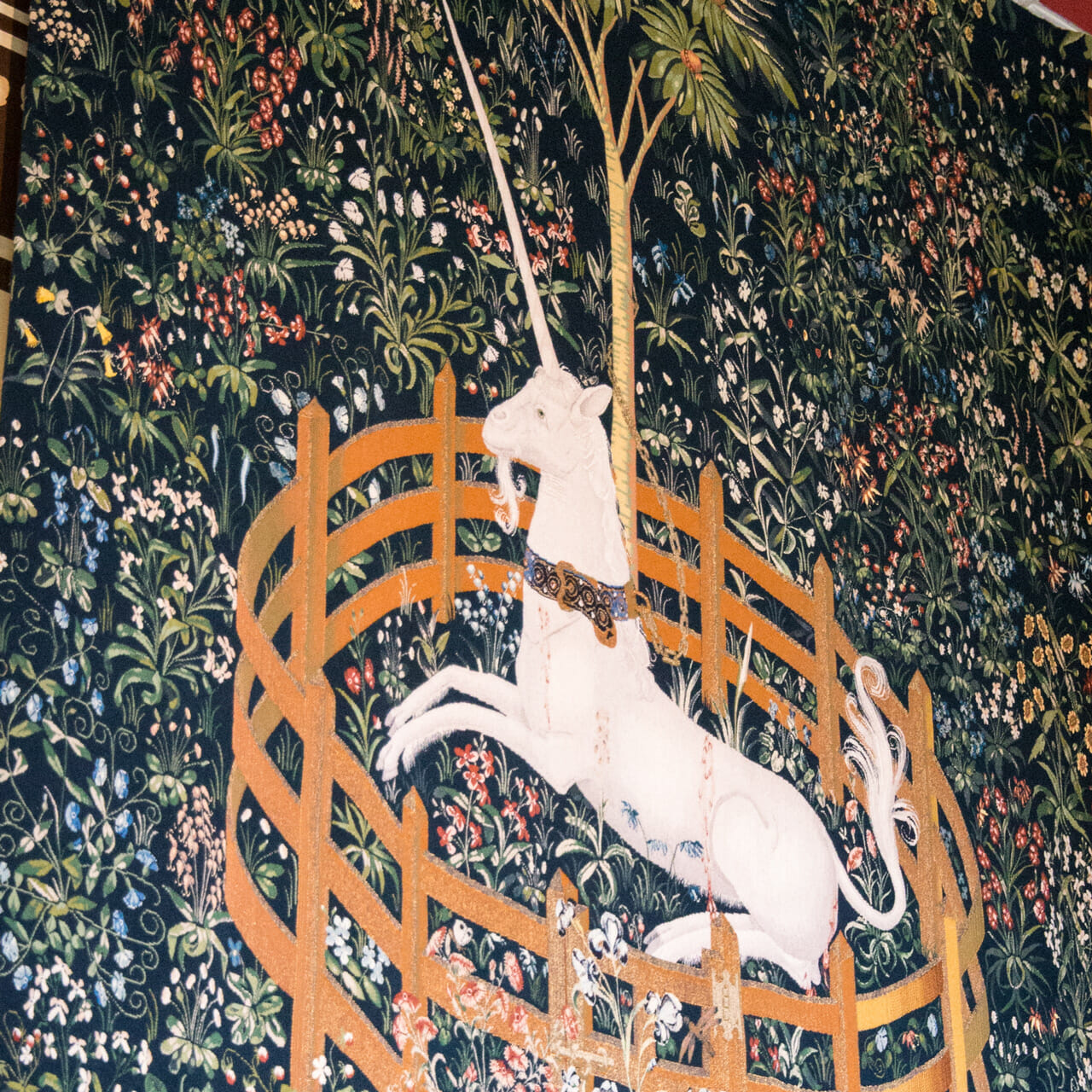
In the Palace, in the Queen’s chambers, hang seven tapestries, each depicting a unicorn. Together they form a series showing the hunting and killing of a unicorn. The final tapestry, however, shows the mythical creature alive again, in captivity.
These tapestries are, however, only replicas of a famous series that now hangs in New York. The originals came originally from the Netherlands and date to between 1495 and 1505. The copies, too, took 13 years to hand-weave and cost as much as 2 million pounds.
The unicorn is one of Scotland’s heraldic animals and can also be found in many other places throughout the castle.
Personal note: Stirling Castle is huge
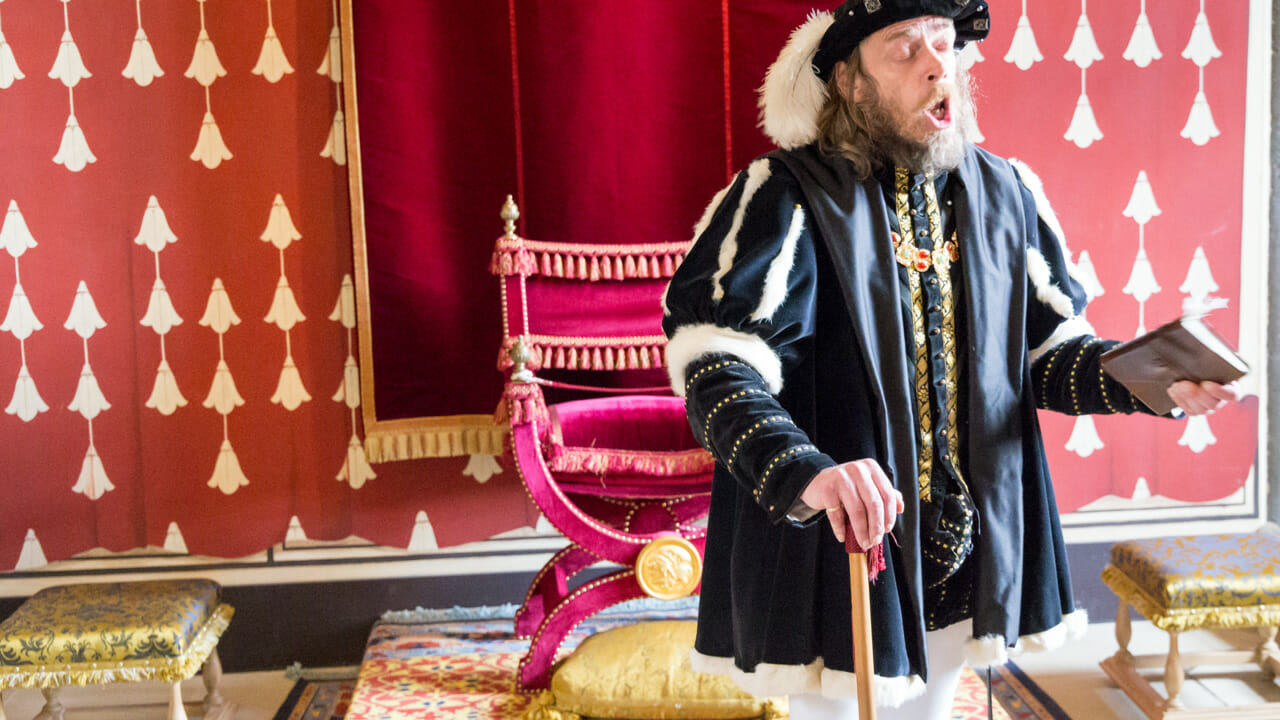
No question: Stirling Castle is a castle well worth seeing, one where you could happily spend a whole day wandering around. Costumed actors and many richly decorated rooms bring the past to life.
And yet: to me the castle is simply a bit too big. What’s more, all this splendour comes at a price. On my visit, admission and the audio guide together cost 17 pounds. If you don’t really bring several hours with you – which was the case for me – it’s hard to truly enjoy Stirling Castle.
Getting there:
Stirling lies close to the M9 motorway, which comes from Edinburgh and eventually continues as the A9 all the way to Perth. Take junction 10 and, at the roundabout, follow the A84 towards Stirling. Brown tourist signs already announce the castle from here. At the next roundabout you’ll already see the castle; pass it on your right and follow the sign for the ring road, Erskine Bridge.
At the next roundabout, follow the sign for “City Centre” and stay on this road until, on the left, a church appears, followed directly by a large building and then a sloping approach road. Those who enjoy walking can park down here and hike up through the old town to the castle.
Everyone else drives up “Corn Exchange Road”, the sloping approach road. Turn left at the next street and keep following it all the way to the car park right in front of the castle.
