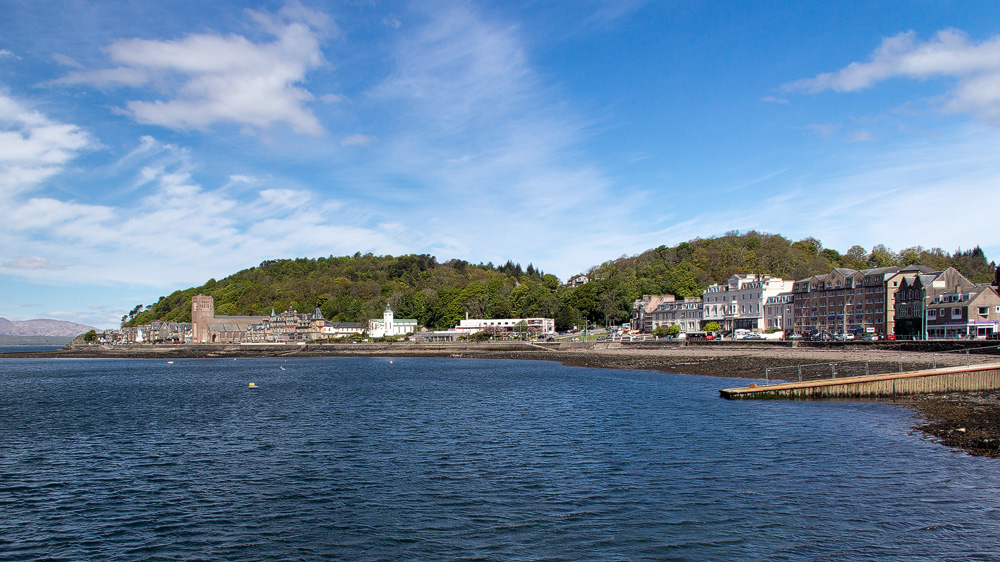
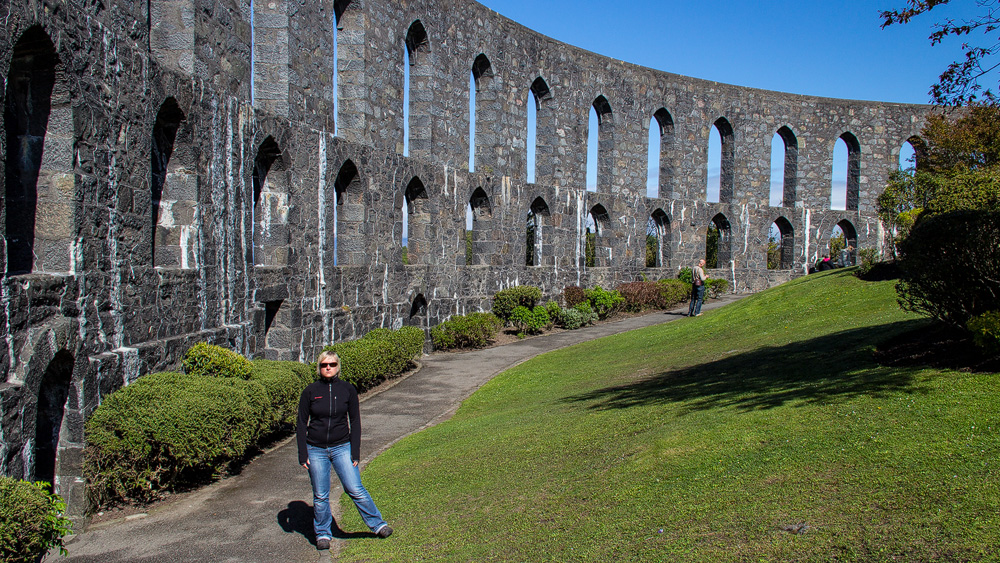
Oban is the gateway to the western isles, home to one of the oldest distilleries, and boasts a very special landmark in the style of antiquity. What’s a Roman colosseum doing in the Highlands? Well, it went like this…
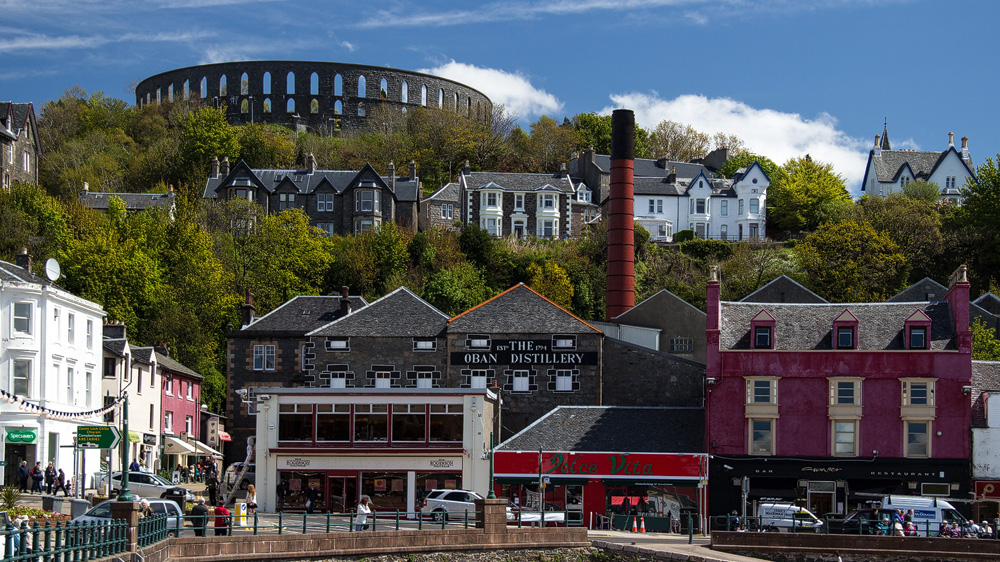
Oh, Rome. If only a mere hint of the flair of that eternal city could drift through Oban’s sooty lanes. Just a single building here in the Highlands to pay homage to the artistry of southern Europe.
John Stuart McCaig was a philanthropist, loved Roman architecture, and had made a certain fortune as a banker. Whole parts of Oban belonged to him back then. Though he came from the countryside, this small town on Scotland’s west coast had become his home.
When McCaig arrived in Oban in the mid-19th century, there wasn’t much here yet. It was only in 1794 that the Stevenson brothers had built a distillery on the bay, which attracted workers, and small rows of houses and streets formed around the building and the harbour. A first gentle awakening of the sleepy little place came with a visit from the poet Sir Walter Scott, soon followed by tourists. The next big step came in 1880: Oban got its own rail link to Glasgow. The small town, the harbour, the distillery – everything grew, everything got bigger.
But what was missing here was beauty, art, leisure. At least, that’s how John McCaig saw it.
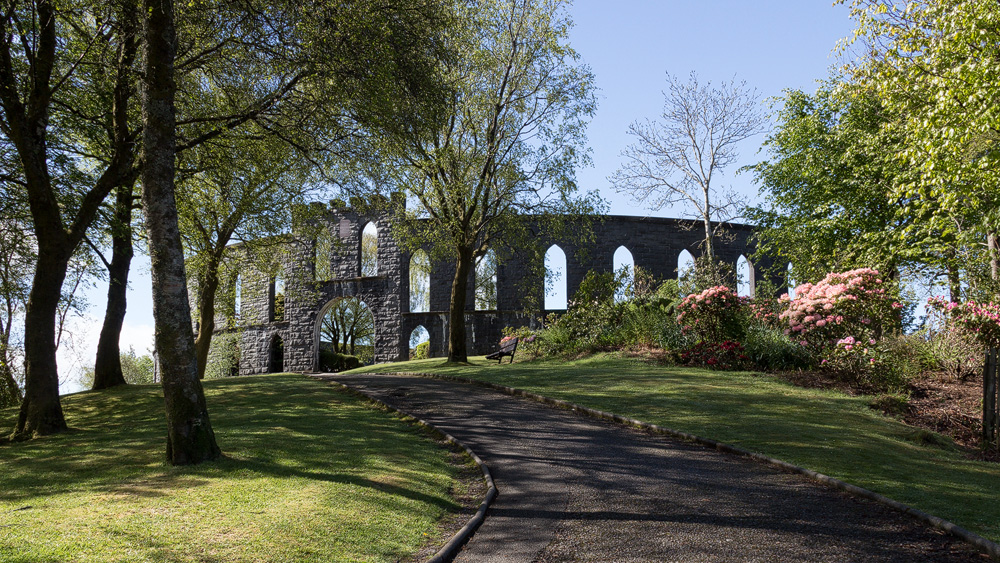
He would change that. As both financier and architect, he wanted to crown Oban with a stone crown – a colosseum modelled on the Roman original. Inside, it was meant to house an art gallery, and of course also serve as a monument to himself and his family, in the form of a tower at its centre – credit where credit’s due.
As mentioned: McCaig was a philanthropist. From 1897 he deliberately hired stonemasons during the winter months, who would otherwise have had no work at that time of year. On the hill above the town, towering over the distillery, they created a granite ring with two rows of arched windows, 94 in total. Circumference of the structure: 200 metres.
The costly undertaking swallowed up £5,000 over five years. Doesn’t sound like much. But those £5,000 back then would be worth roughly half a million pounds today. Quite a lot for a ring of stone.
Once both rings were complete, however, luck deserted the by-then 78-year-old man. He knew his heart was weak; he had been suffering from angina for a while. So, before his death, he arranged for further funds to be set aside for the colosseum’s interior. He had thus made provisions by the time he met his maker on 29 June 1902.
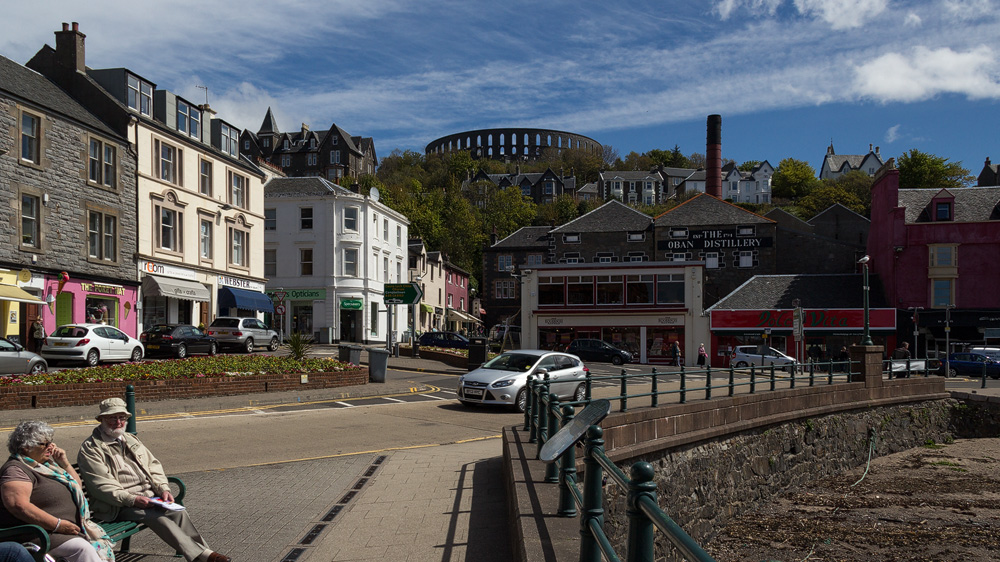
But he hadn’t reckoned with his heirs. They had no time for the old man’s dream and halted the works immediately.
“McCaig’s Folly” is what many townsfolk call the structure today. And yet, in the end, the philanthropist achieved his goal. The little colosseum is now considered Oban’s landmark and, alongside the distillery, is certainly its most important attraction. A beautiful garden has been laid out at its centre, and locals and visitors alike can stroll here, rest on a bench, or enjoy the view over the harbour.
And so, in the end, a hint of Rome does after all drift through Oban’s lanes.
Did you know: about the town of Oban
The ferry port is known today as the “Gateway to the Isles”. Indeed, no other town in Scotland has more ferry connections than Oban. From here, CalMac sails to Mull, Coll & Tiree, Barra, South Uist, Colonsay, Lismore and Islay.
The name Oban comes from Gaelic and means “little bay”. Around 8,500 people now live at this “little bay”.
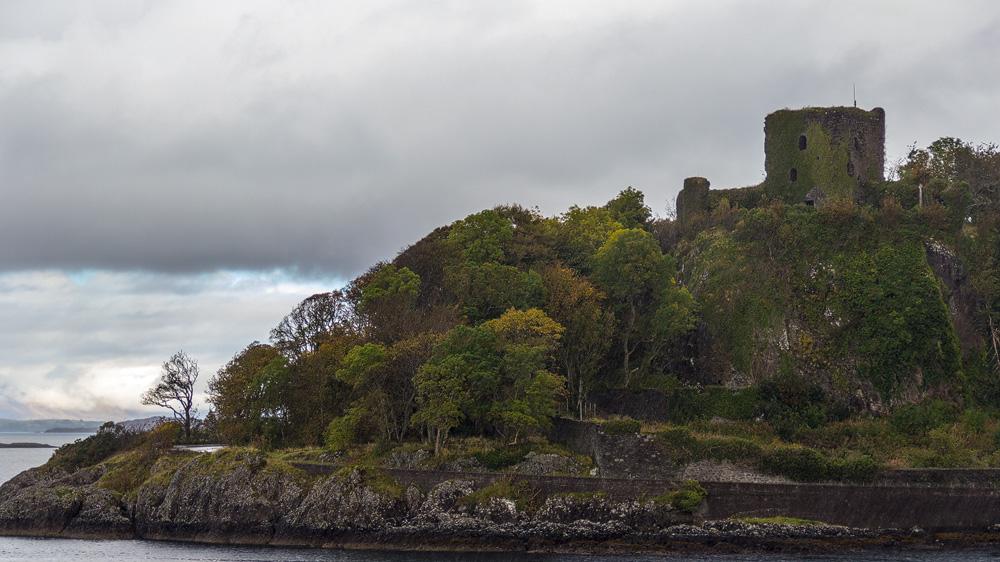
As the ferry approaches the harbour, you catch a glimpse of the oldest building. It’s Dunollie Castle, which stands on foundations dating back to the Bronze Age. The ruin is beautifully overgrown with ivy and lies just over a kilometre north of the town.
Oban has by now earned a reputation for its excellent seafood and fish cuisine – though since I unfortunately don’t eat either, I can’t judge it myself.
Tips: dreamy views and a stiff drink
When visiting the town, it’s well worth walking the whole length of both the quieter northern harbour and the southern promenade. The latter offers shops ranging from charity shops to touristy little stores.
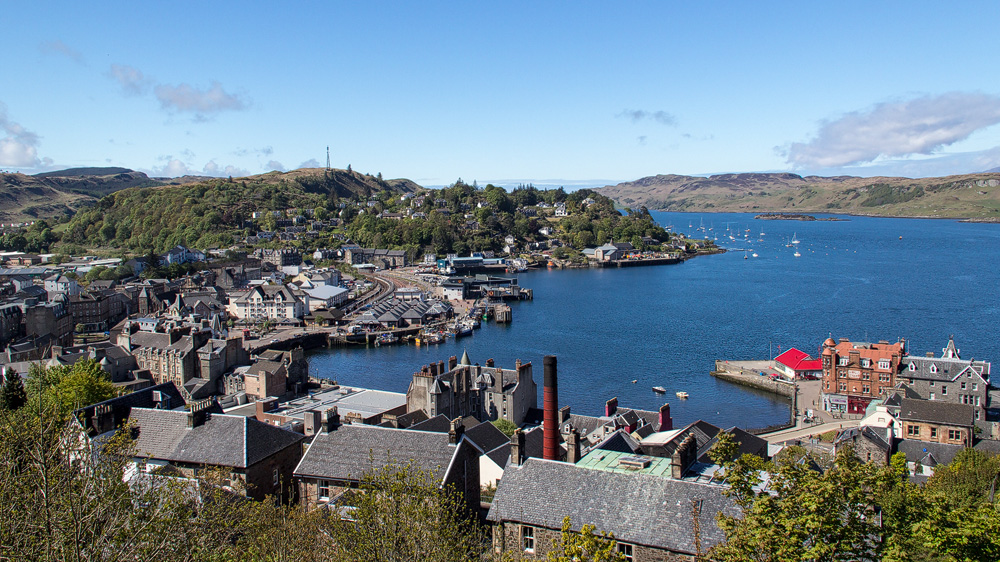
And of course a visit to the Oban Distillery is worthwhile – it now belongs, like Talisker and several other distilleries, to the drinks giant Diageo. Naturally, there’s also a dram to taste at the end of the tour.
You definitely shouldn’t miss the short climb through Oban’s villa district up to McCaig’s Tower. From here you get a dreamy view over the town and the nearby island of Kerrera.
Anyone with even a passing interest in history should also check out the Oban War & Peace Museum.
Personal note: a base for day trips
We spent a few days in Oban, and also did a round trip from there through the valley of Glen Coe and back via the Old Military Road and Loch Awe. So Oban made a good base for day trips.
I found the town itself interesting, but one day of sightseeing there was enough for me.
Getting there:
With a sat nav: “PA34 5PZ” will take you into town.
Without a sat nav: from Glasgow, take the A82 and then turn onto the Old Military Road, the A85, before turning left onto the A816 to Oban. From Fort William, first take the A82, then stay along the coast from Glencoe onwards on the A828, which eventually meets the A816 again.