An old fishing town with lanes, steps and boutiques. There’s a lot to discover in Pittenweem in the Kingdom of Fife. Here’s what.
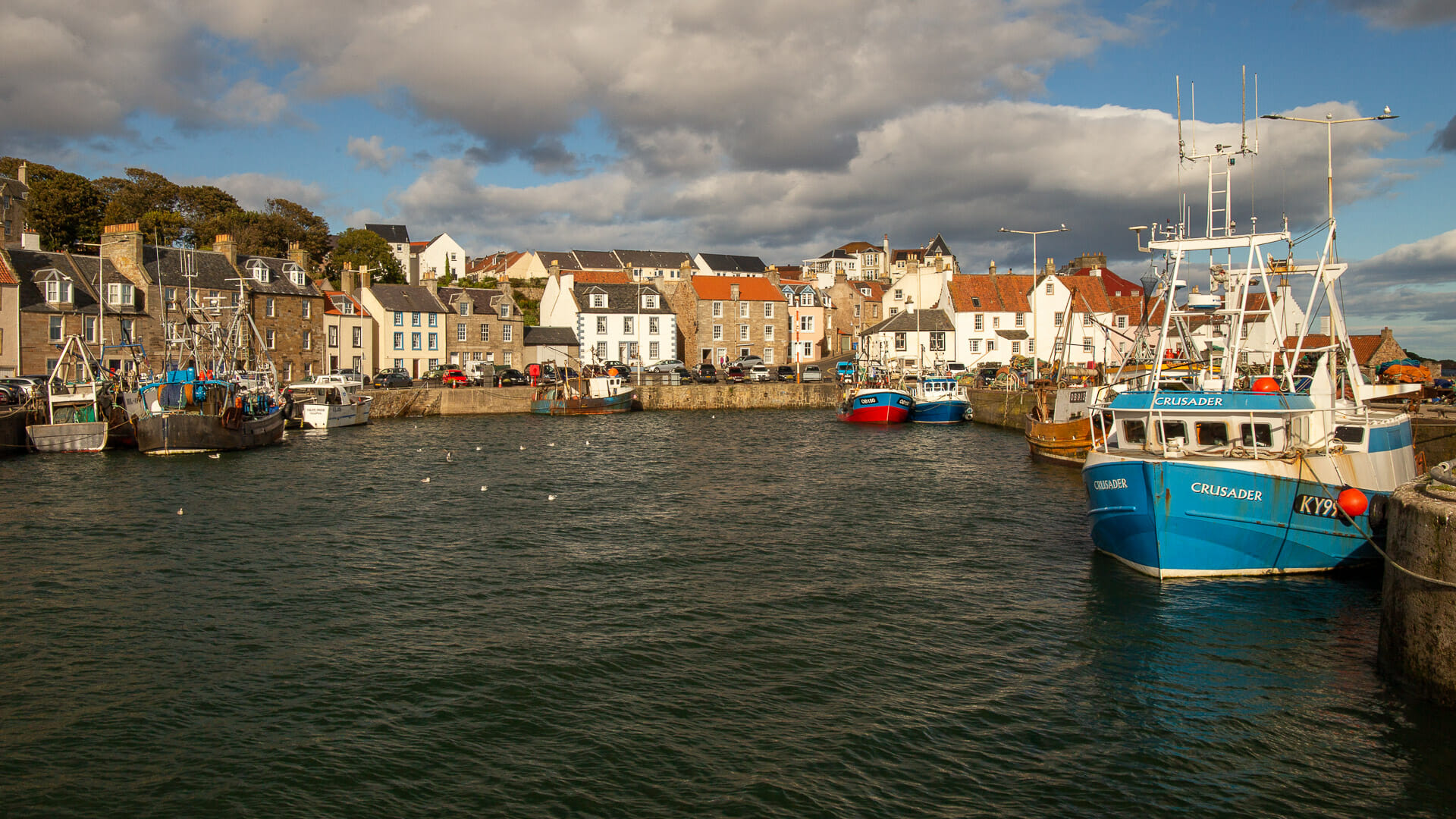
Colourful boats gently rock against the quay wall. In the background, stone houses with red roofs – some of them still showing the old crow-stepped gables once common in the Royal Burghs. Pittenweem is pure east-coast romance.
Yet this is no faded, sleepy romance. Pittenweem is today the busiest fishing harbour on the east coast of Fife. Easy to tell from the sheer number of old and new boats.
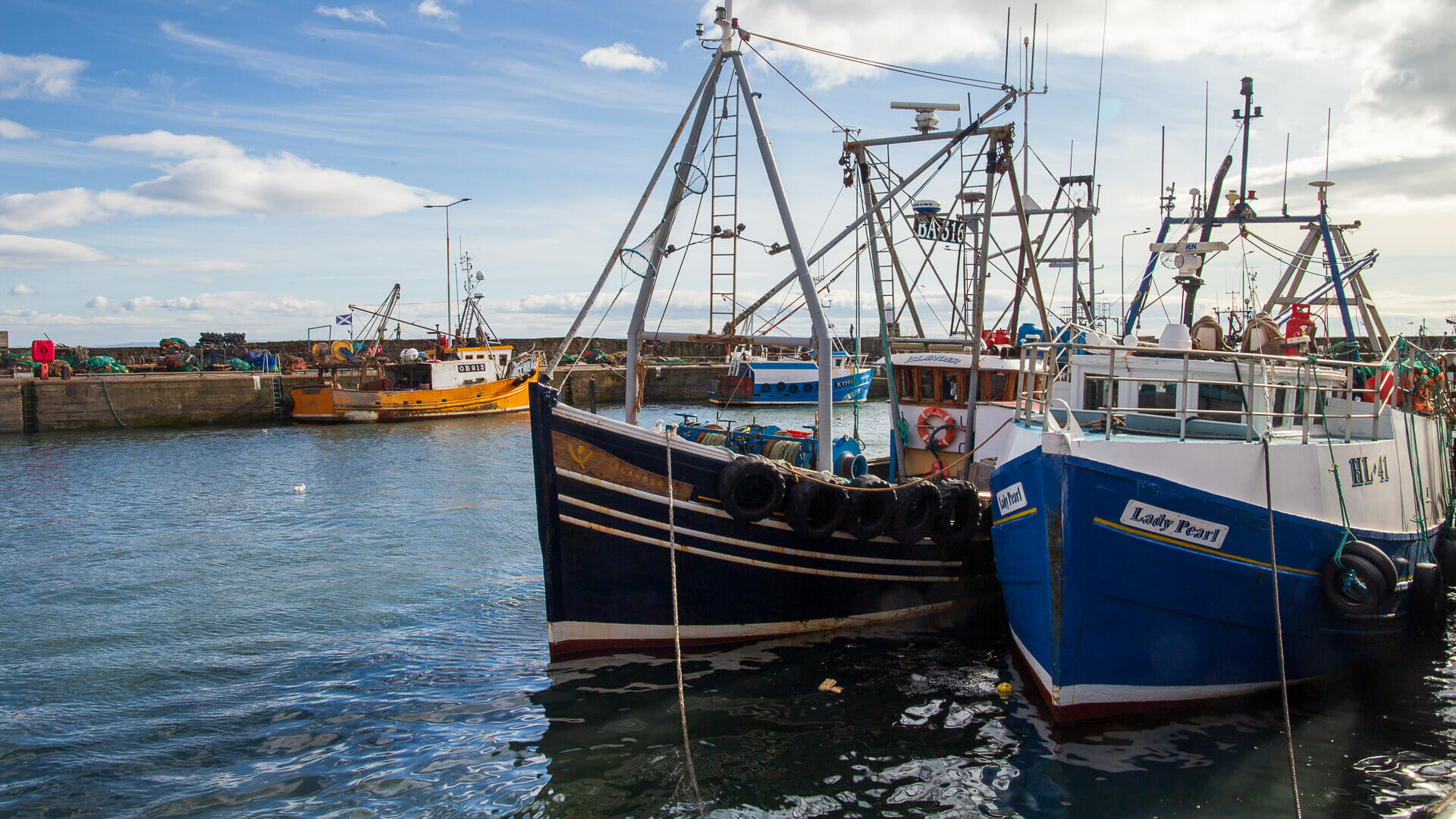
But it’s not just the harbour – the buildings gathered around the harbour basin are also what makes Pittenweem look so picturesque. Old stone houses, often roofed with red tiles, typical of the region.
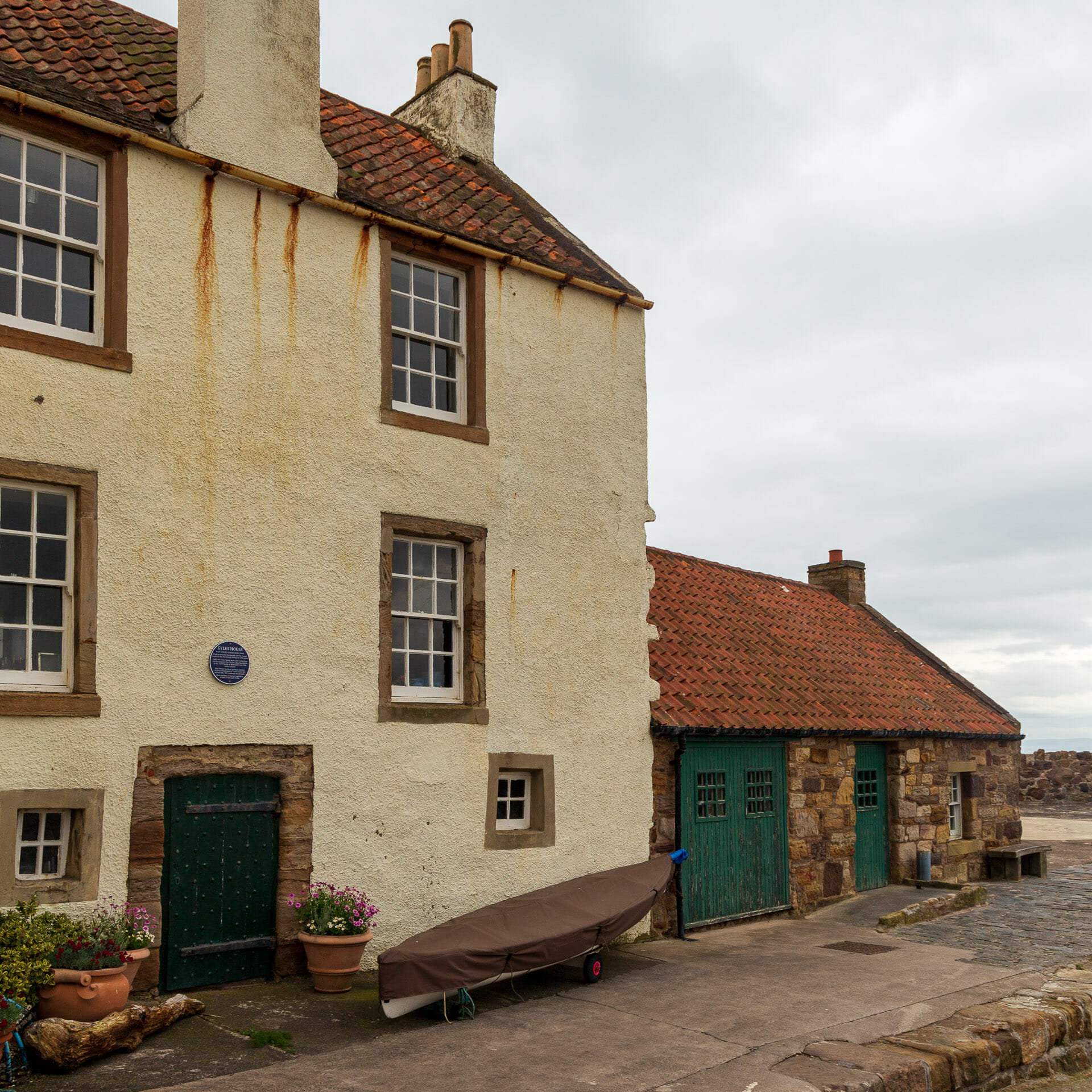
Some houses stand out in particular, such as the Gyles House of Captain James Cook (not the explorer Cook). In 1651 he carried King Charles II, driven out by Parliament, to safety in France.
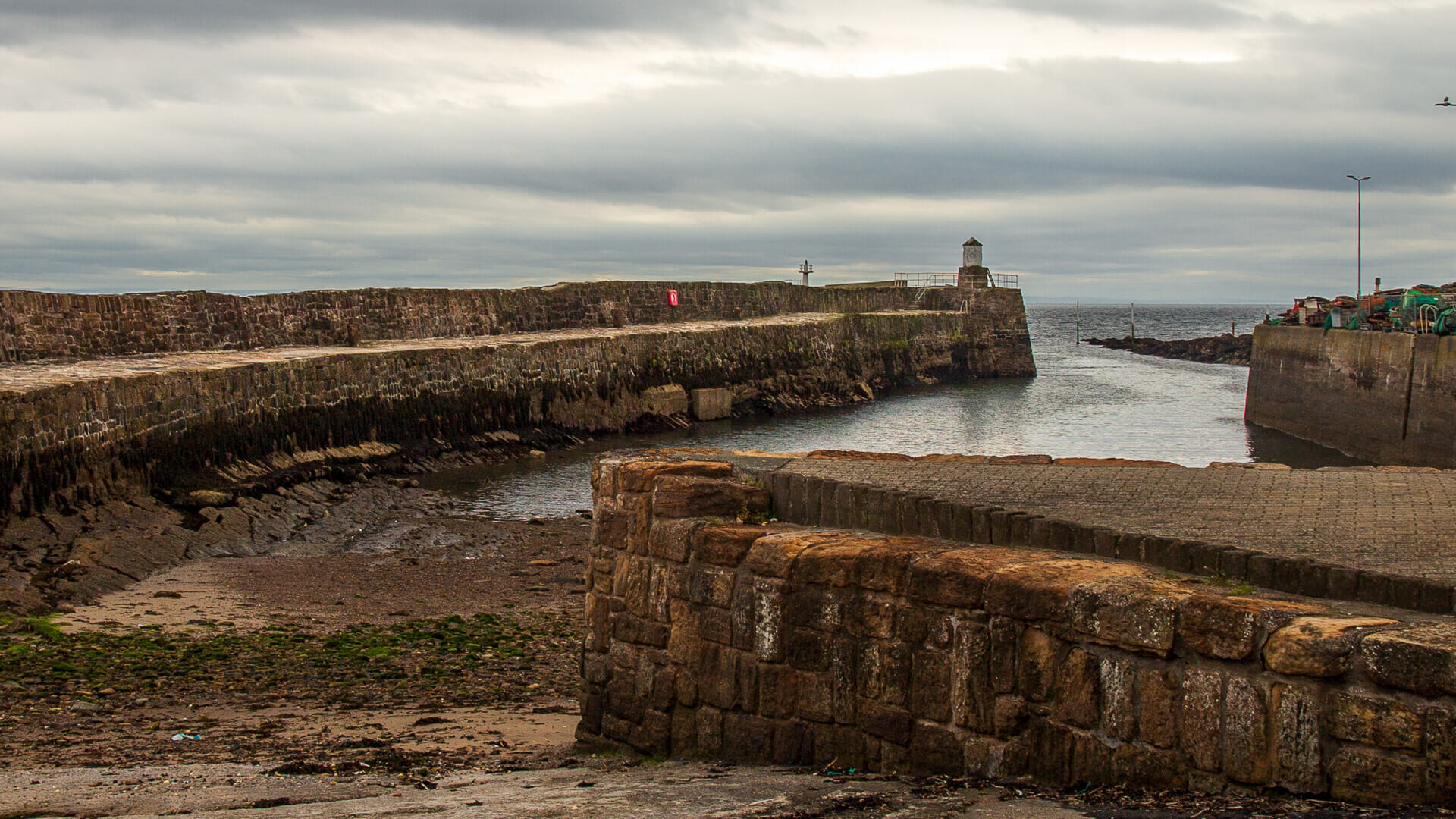
Several long piers stretch out into the sea, a solid bulwark protecting the fleet in the harbour. At the end of one of the piers, a small lighthouse guides fishermen home.
But it’s not only the harbour that makes Pittenweem so beautiful. The small and larger lanes, some with steps and some without, that wind up the hill between the houses are enchanting. Take Cove Wynd, for example.
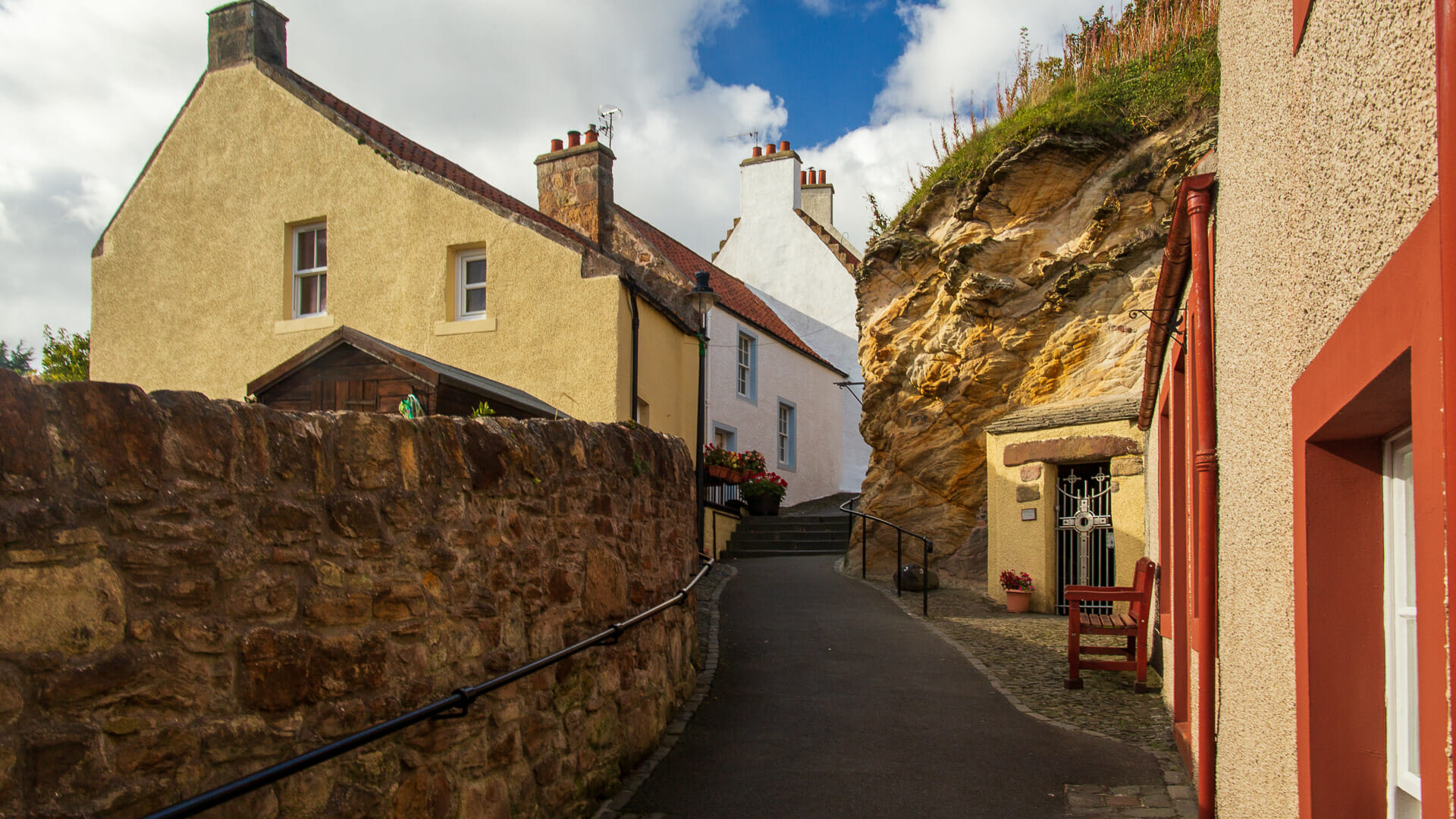
This is also where you’ll find what is probably Pittenweem’s most important sight: St Fillan’s Cave. Saint Fillan (in German “Filanus”) is said to have lived and worked here for a time in the seventh century. Pittenweem is said to translate as “place of the cave”, so the cave gave the town its name. Inside St Fillan’s Cave stands an altar, and services are occasionally held there. It is sometimes open to visitors.
At the end of the lane you reach the High Street, where a number of old houses also stand. One particularly interesting one is Kellie Lodging.
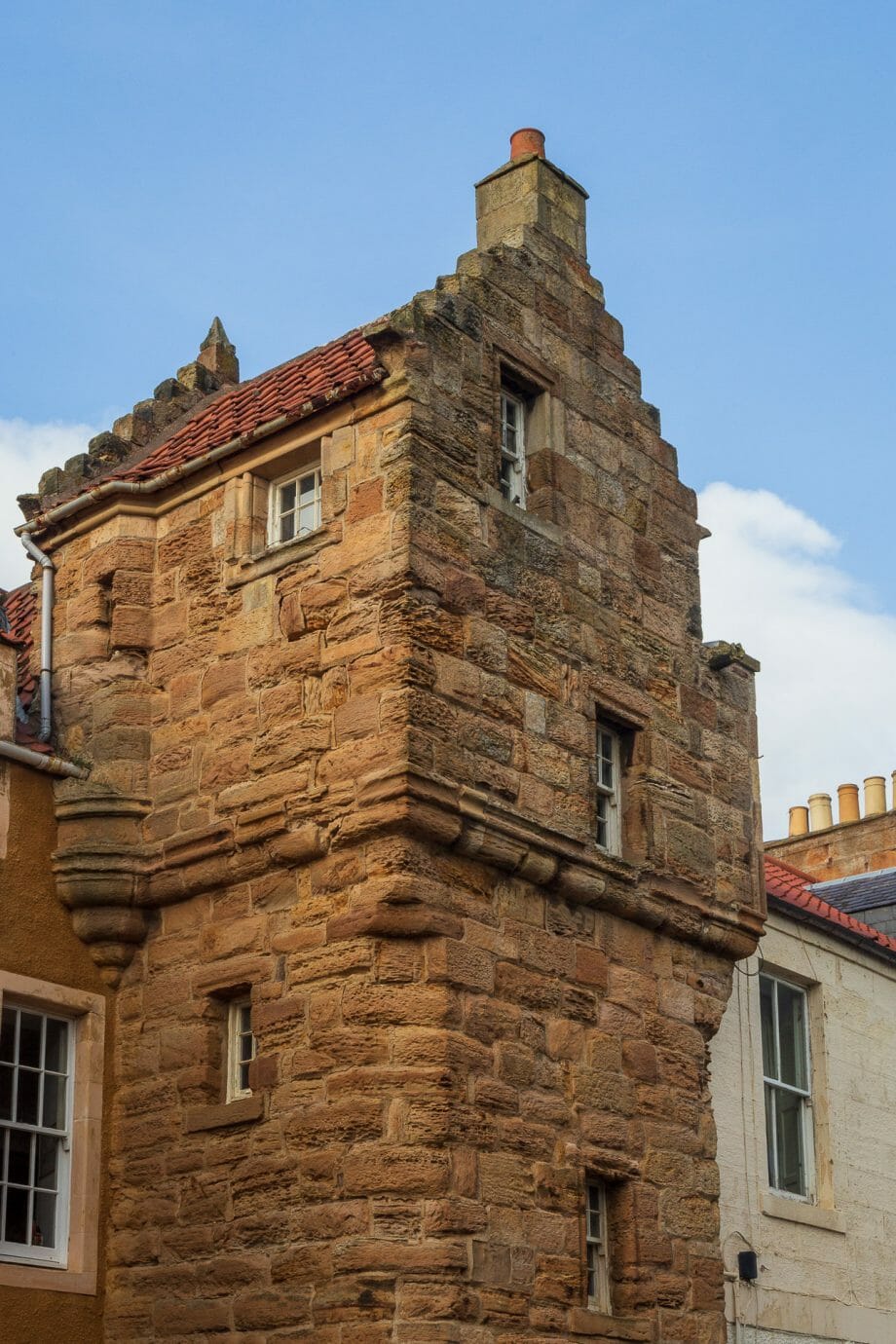
If the shape looks familiar: a very similar style of building can be found around 70 kilometres away in Culross. And that building in Culross became known as Geillis Duncan’s house in Outlander.
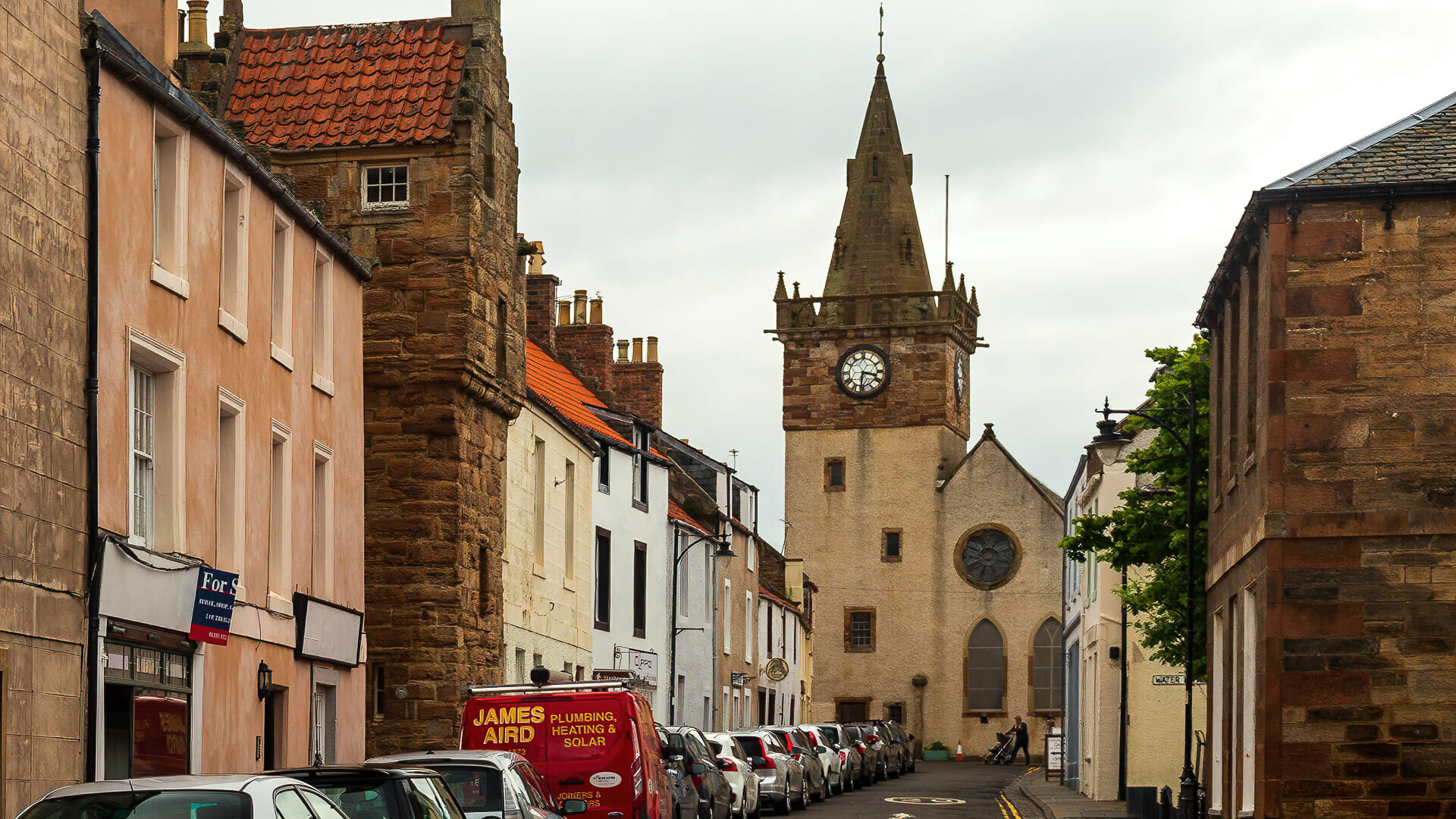
The church at the end of the street dates from the 16th century and is surrounded by an interesting cemetery. Its tower once also served as the town’s prison, where some women awaited their sentence during the witch trials.
Small shops are scattered all across Pittenweem, by the way. Up on the main road there’s an antiques dealer called “Pop in”, on the High Street the Cocoa Tree Shop, and down at the harbour, eateries and an ice cream shop that also sells plenty of other sweets.
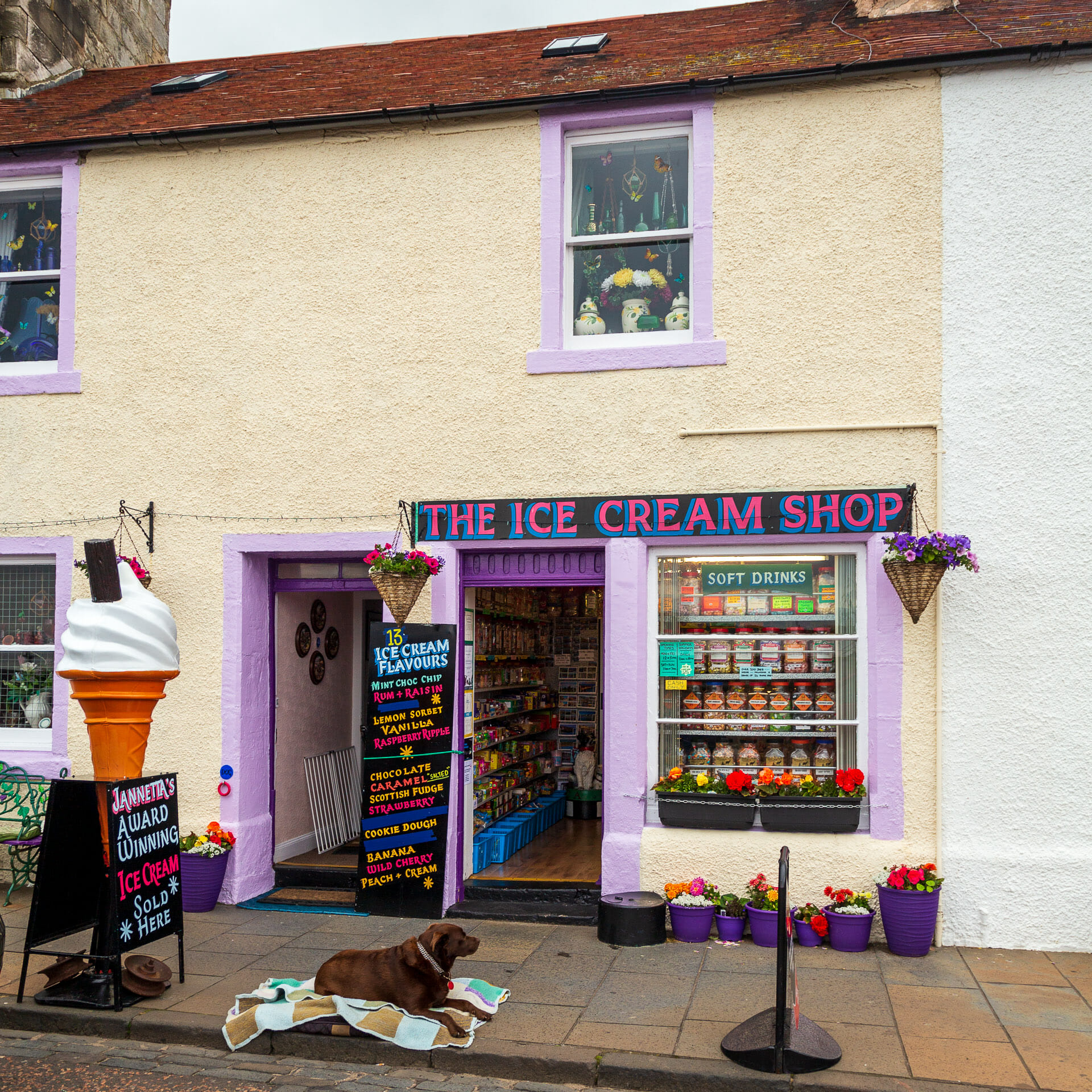
An ice cream is the perfect way to round off your walk from the harbour through Cove Wynd, along the High Street and back to the harbour. That’s what makes Pittenweem one of the highlights of a visit to the Kingdom of Fife.
Good to know: Why Pittenweem has red roofs
The area in the south-east of Fife, whose coastline forms part of the Firth of Forth, is called East Neuk. “Neuk” is a Scots word meaning “corner”. And for this eastern corner of Fife, the red tiled roofs with crow-stepped gables are almost a kind of trademark.
There are reasons why they became established here. In 1541, Pittenweem was elevated to the status of a Royal Burgh. This granted the town the privilege of trading with foreign countries too.
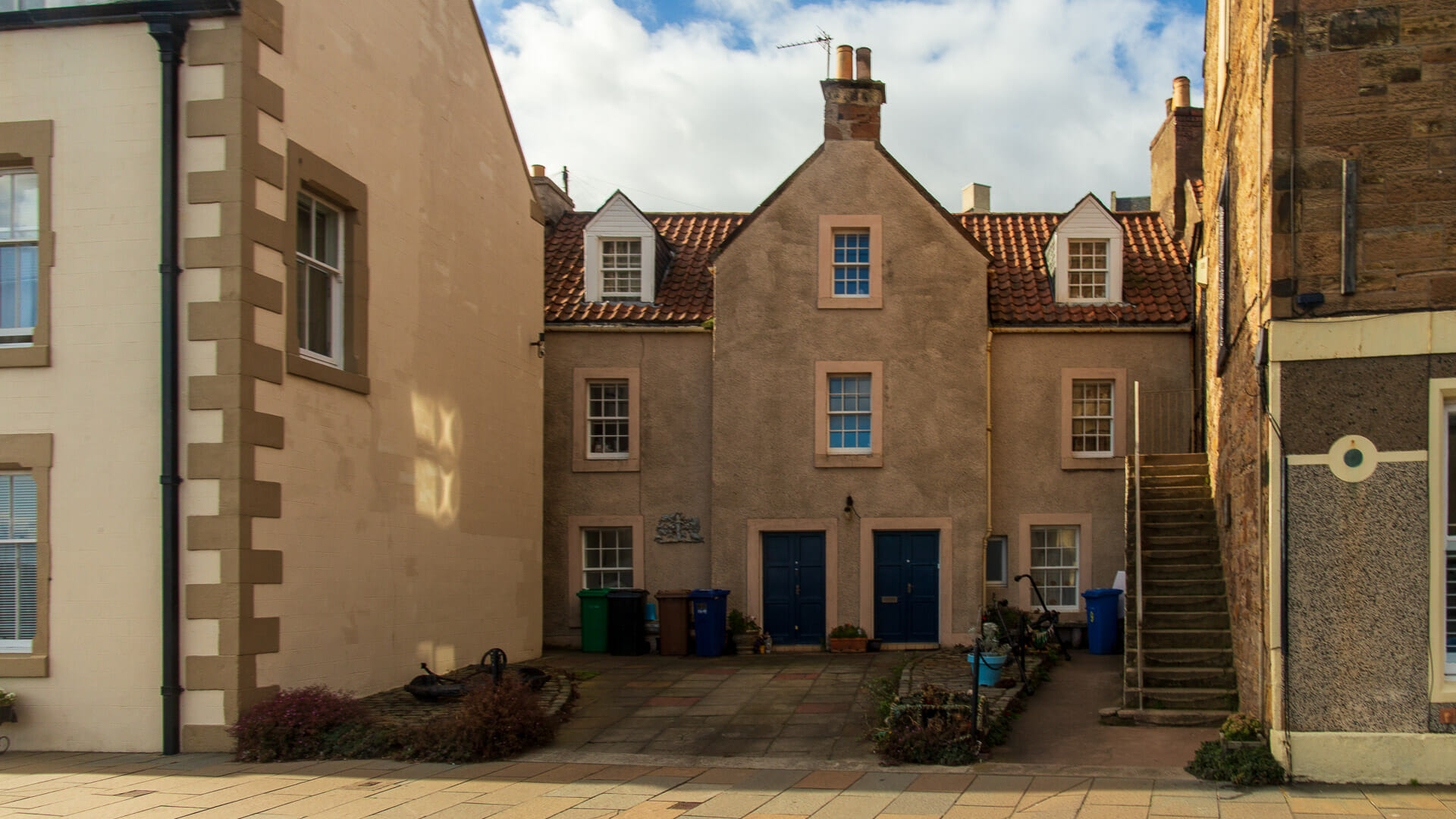
Above all, there was lively trade with Holland. And in Holland, building with red bricks and crow-stepped gables was widespread. The ships also often arrived with red bricks as ballast, which they then left behind once loaded with new goods. So the bricks soon ended up on the roofs. Holland, in other words, shaped the houses of Pittenweem.
Getting there:
With a sat nav: enter “KY10 2QA” and you’ll be taken straight to the town. See below for more.
Without a sat nav: from Edinburgh, Fife lies to the north. Take the M90 across the Queensferry Crossing. Exit onto the A921 after Inverkeithing – this is the scenic coastal road for Fife. Go through the roundabout and head east. Approaching Kirkcaldy, watch for the roundabout to take the A915, signposted towards St Andrews. In the small village of “Upper Largo”, however, don’t follow the A915, which turns off towards St Andrews there – instead continue straight ahead on the A917, following the “Fife Coastal Tourist Route”. Pittenweem will soon be signposted. There’s also a turn-off from the A917 to St Monans – if you like, you can visit this village before reaching Pittenweem.
On the main road into Pittenweem, you’ll see a petrol station on the right and a shop called “Pop in” (which sells antiques – well worth a stop). A little further on, a sign points right towards the “Historic Harbour”. Follow the parking signs down and park at the harbour.