The whole village is a sight in itself: the houses and lanes of the Royal Burgh of Culross take visitors back centuries into the past.
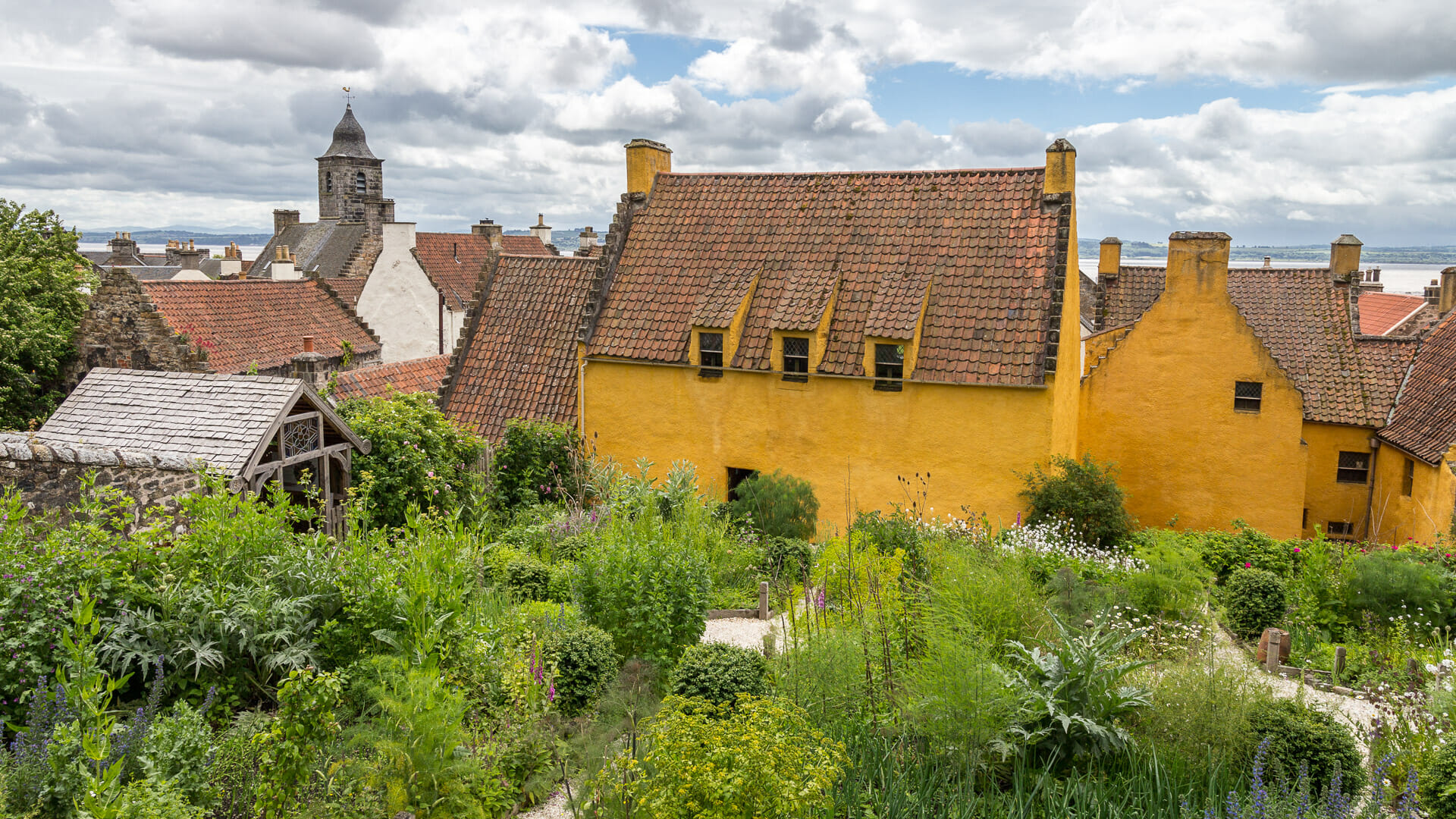
It was sheer hardship. For 150 years, the community of Culross experienced economic decline. And while the other towns here on the arm of the Firth of Forth could afford new, modern houses, the residents of Culross had to make do with what had been built here from the 16th century onwards.
It was pure good fortune that the National Trust for Scotland recognised, already in the early 20th century, what an incredible opportunity Culross presented. For nowhere else had the structure of an old “royal burgh” been so well preserved as here. Almost all the important historic houses in Culross now belong to the National Trust, which cares for them as part of its Little Houses Improvement Scheme (LHIS).
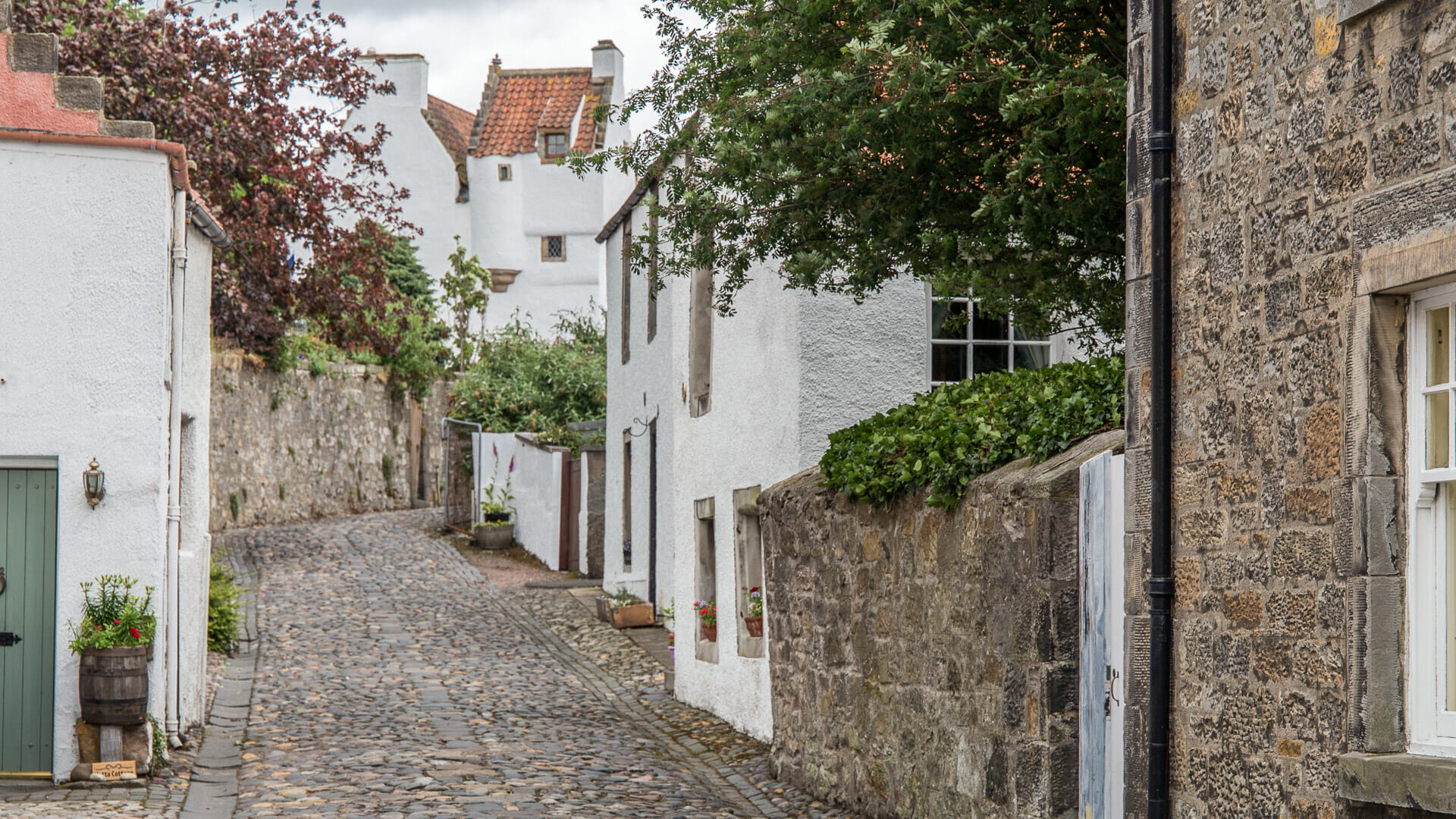
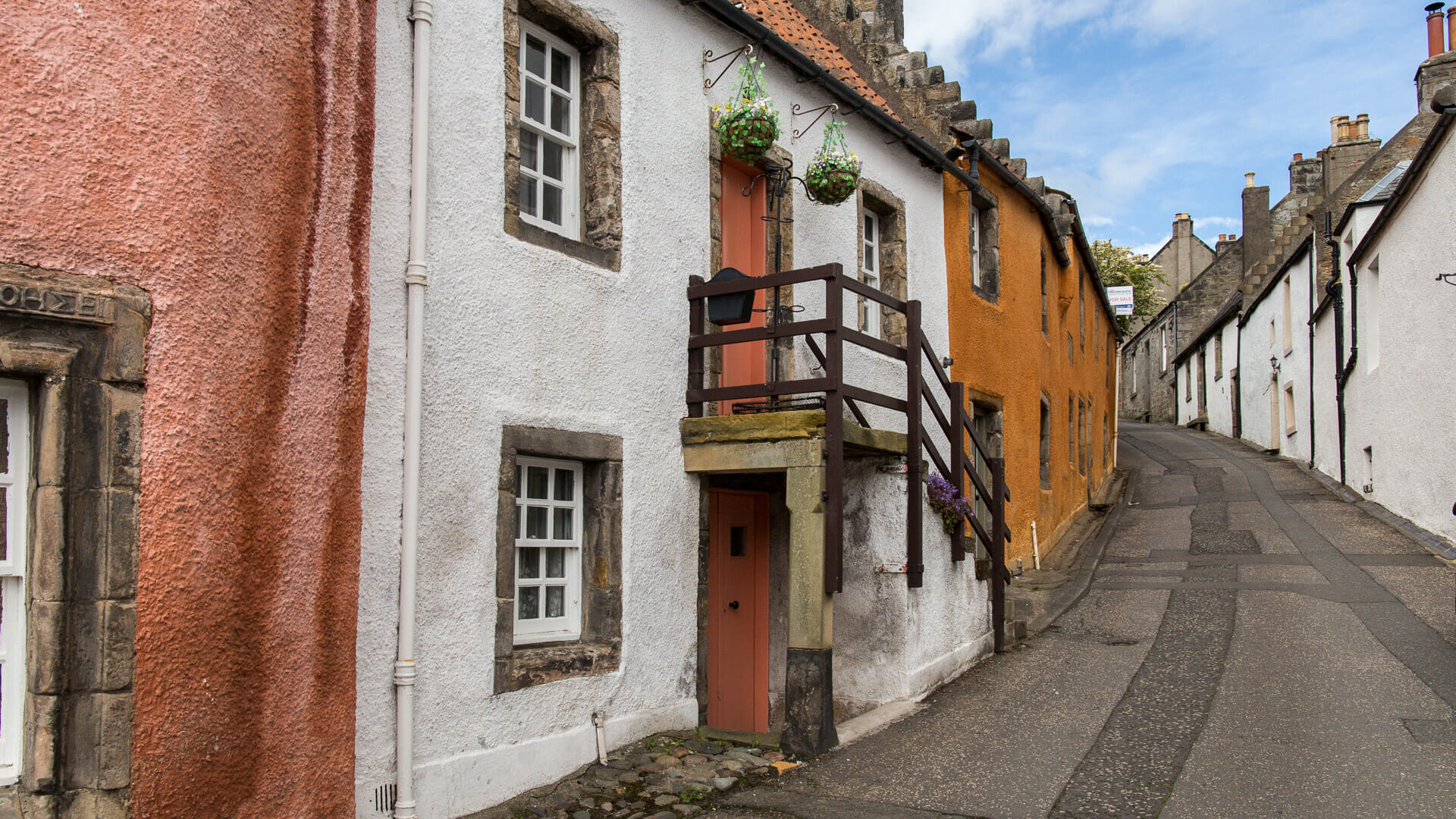
And so Culross shines once again today, showing off its facades to visitors. Almost all the buildings are whitewashed, with only the Town House and the Palace as exceptions.
Culross Palace
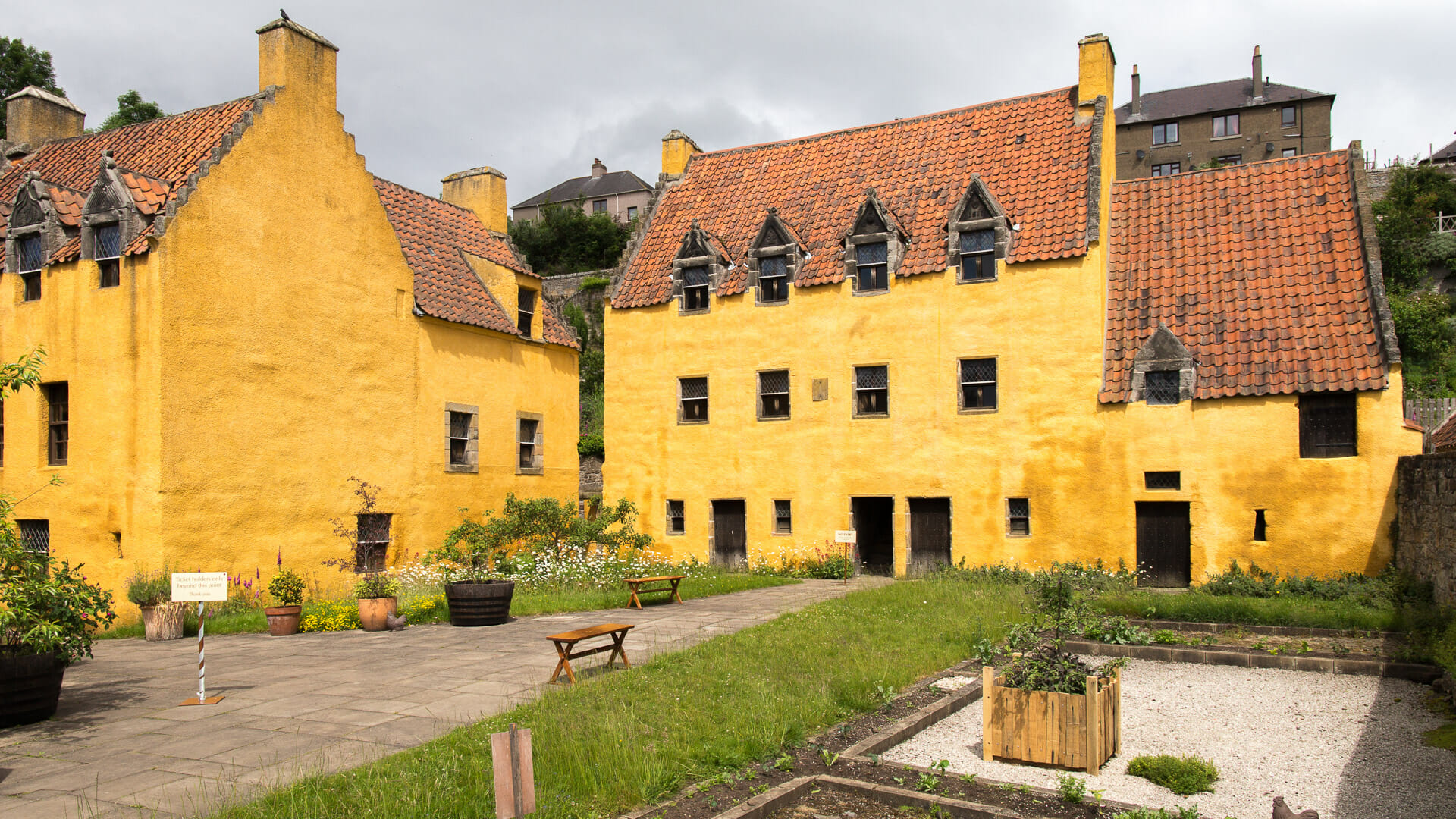
The Palace naturally catches the eye immediately. Not only because the property is one of the largest in the village, but also because of its bright yellow facade. Although it’s called Culross Palace, it has nothing to do with a royal palace. “Palace” is probably a corruption of “pallatial”, meaning “splendid” – and that, at least, is absolutely true. The property was built by the merchant and entrepreneur Sir George Bruce in the early 17th century.
In his day, Culross was thriving. Coal mines were dug here and shipped straight out across the Firth of Forth. The residents also used some of the coal to heat pans of seawater in order to extract the salt within. There were 22 such salt-pan operations in Sir Bruce’s time. It’s said that back then thick smoke from the coal fires drifted through the lanes.
George Bruce set new standards in coal mining: he had the mines driven ever deeper beneath the Firth of Forth. Modern drainage systems made this possible. The end of the shaft sat as a small island in the middle of the water, protected only by a wall. From there, coal could be loaded directly onto barges. Mining below, shipping above – for its time, this was a sensation, one that King James VI even had demonstrated to him in person.
Sir Bruce’s wealth is expressed in his Palace. Inside, it’s comfortably and lavishly furnished for its time. Painted wooden barrel-vaulted ceilings arch overhead like a sky above lavish tables and comfortable beds. And yet visitors still notice a clear difference from what they might be shown in some royal palaces. (I don’t have any photos from the rooms themselves, as photography isn’t allowed inside. There are, however, very friendly guides who’ll answer almost any question.)
Bruce’s wealth is also evident on the outside. A unique, large garden lies behind the house, climbing up the hillside.
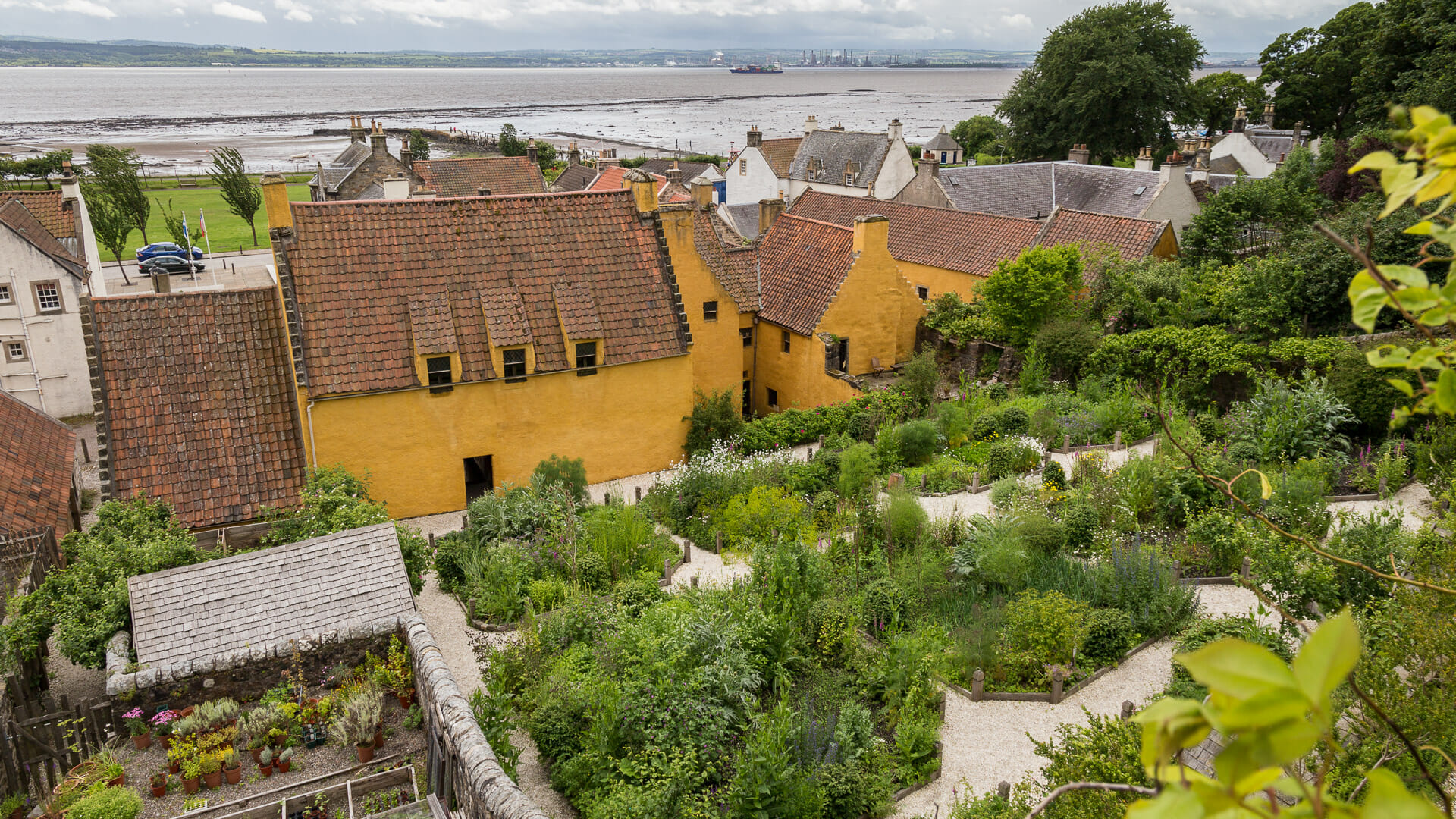
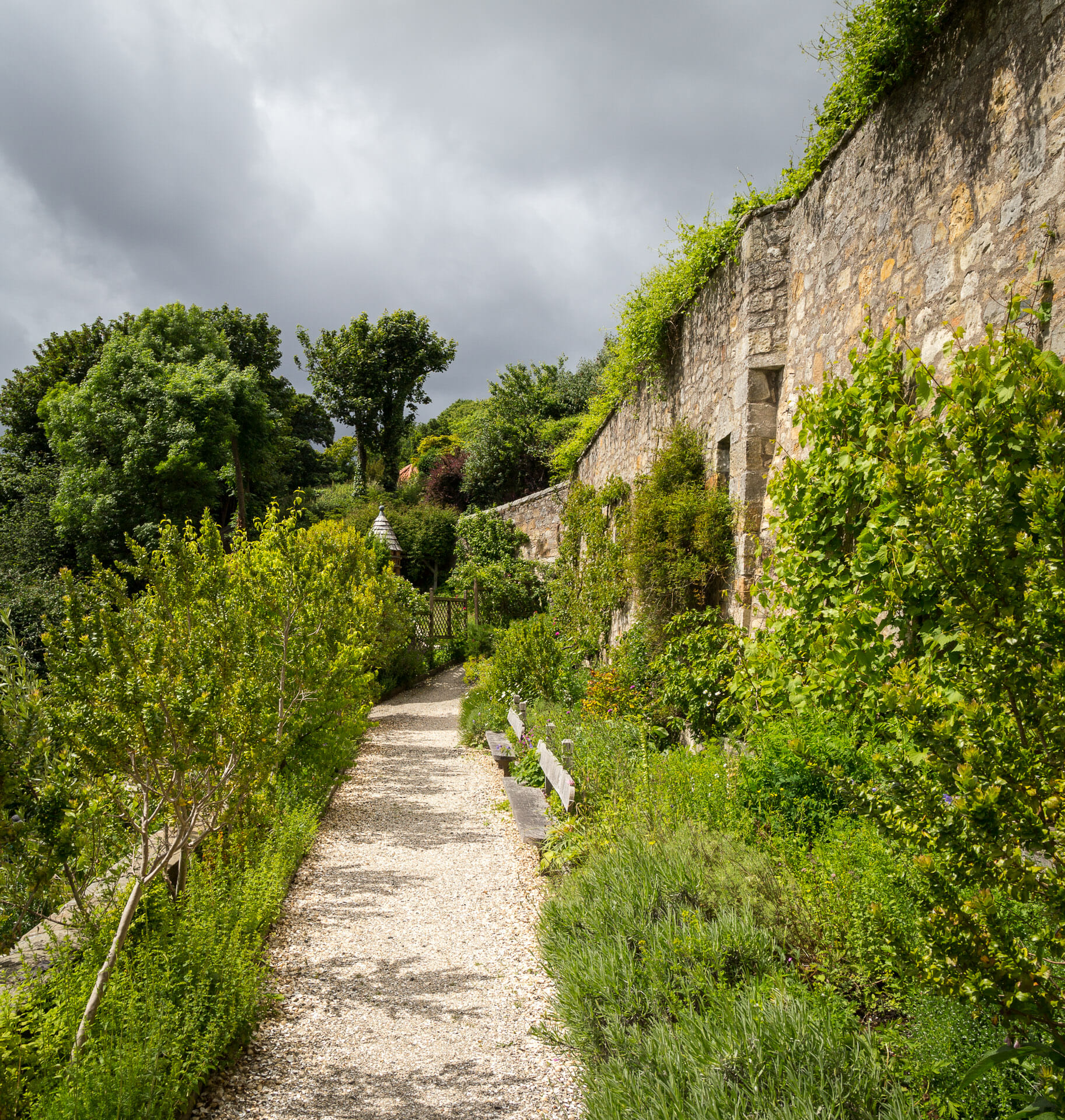
It is protected by a wall that keeps out wind and weather, making it possible to grow many delicate plants there too.
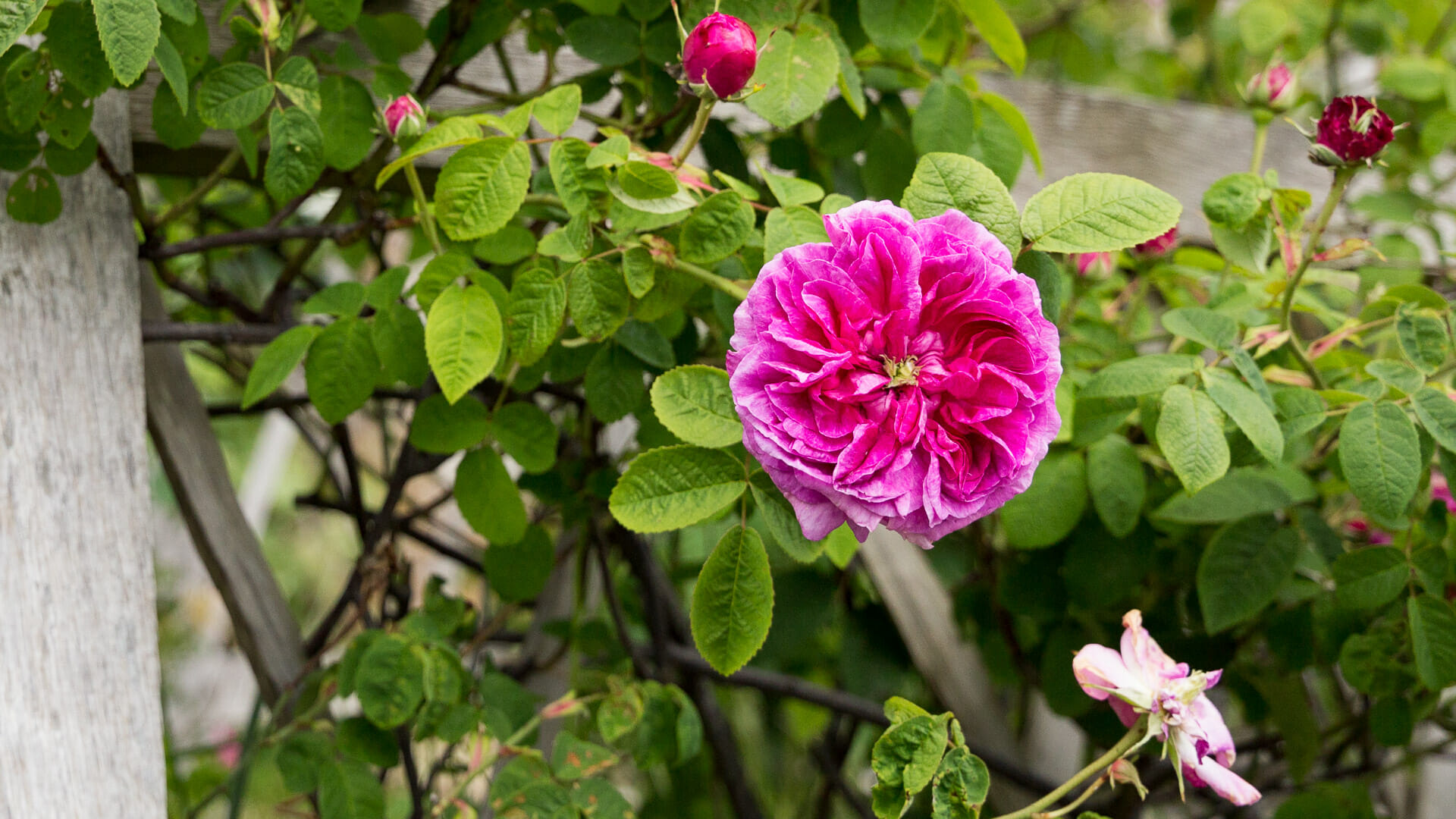
At the very top, there’s even a rose garden.
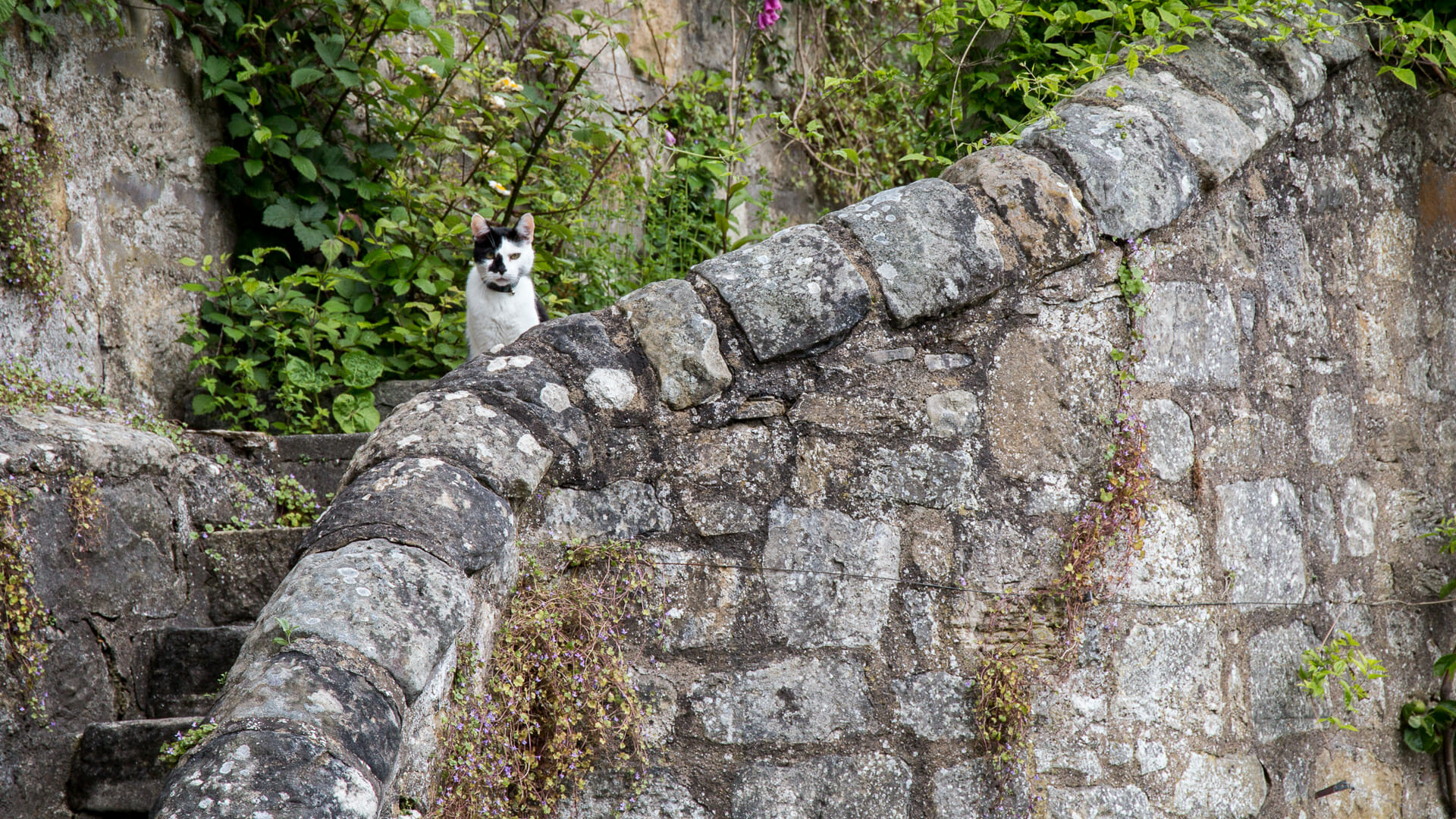
Chickens wander around inside, and if you’re lucky, you’ll meet the garden’s secret ruler:
So Culross Palace displays the splendour of a merchant who was successful in the 17th century. The sea, incidentally, reached back then all the way to the square where the Palace and the Town House now stand. Sir Bruce was thus right by the harbour, ready to trade.
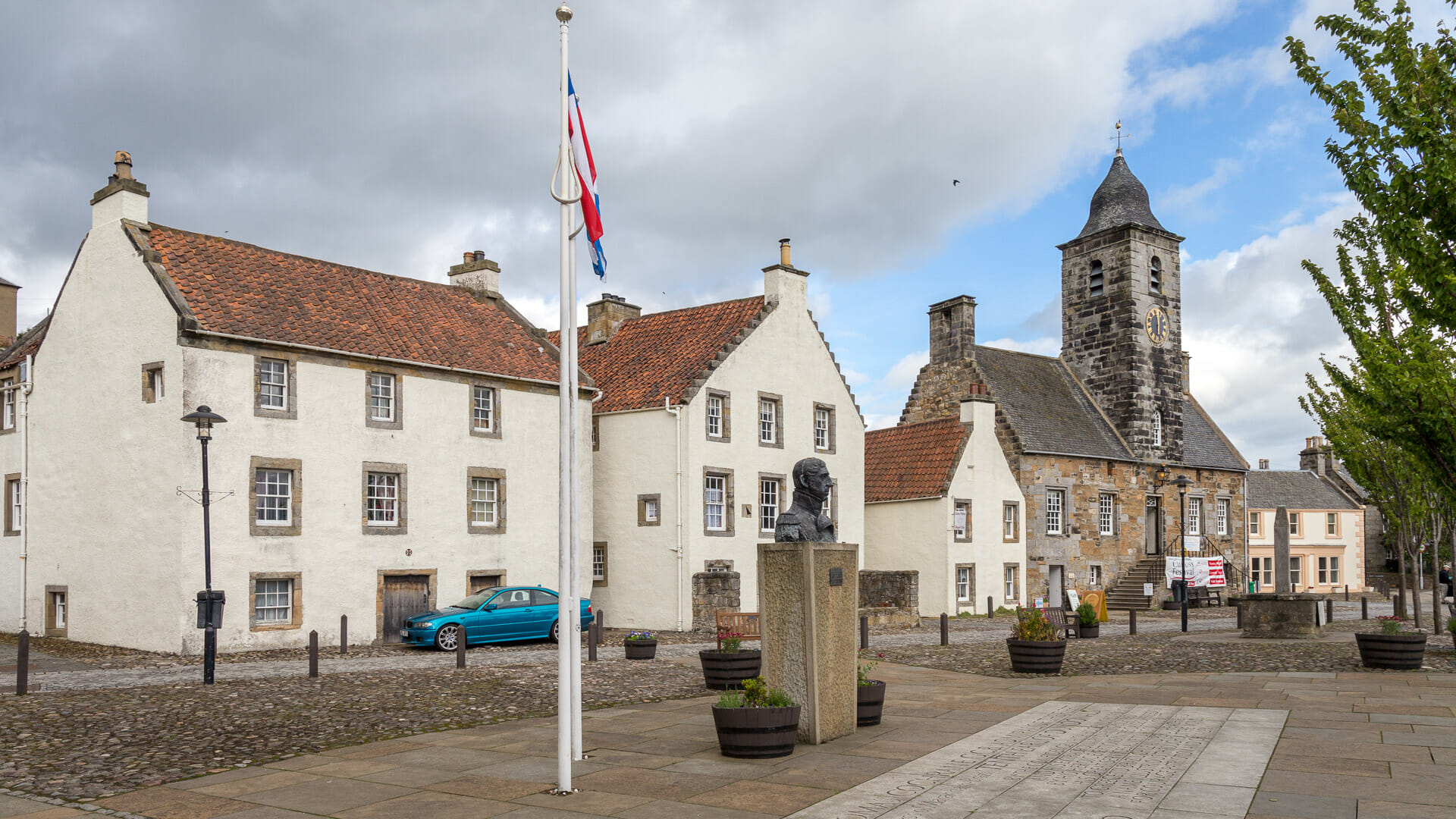
Town House
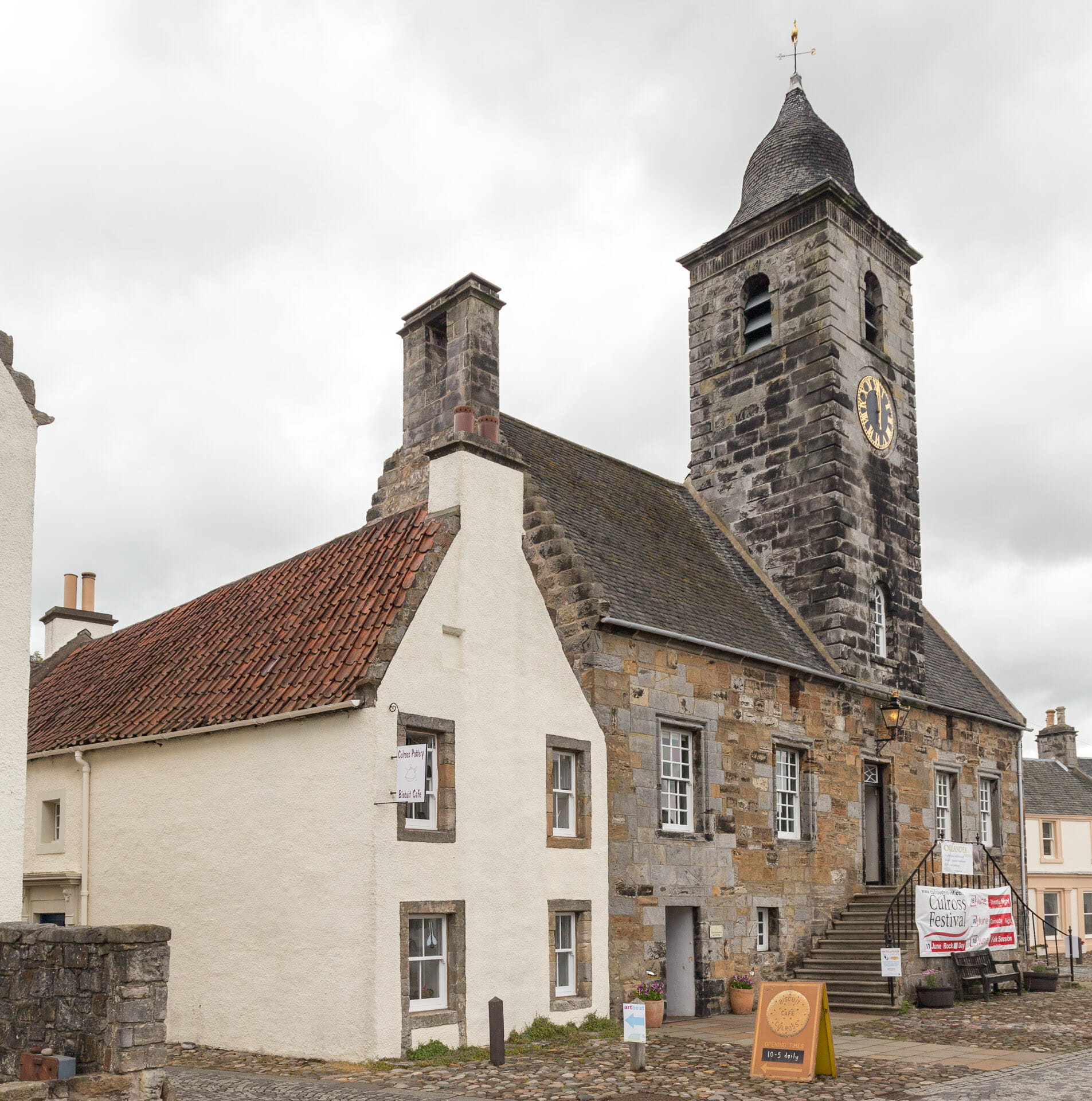
It was the last official act of the dissolving town council in 1975: they handed over Culross’s Town House to the care of the National Trust for Scotland. After all, it too is an old building well worth preserving. It dates back to 1626, even though the bell tower was only added in 1783.
Today, this is where the shop is located. Tickets for entry to the Palace and for the (highly recommended!) town tour are sold here, along with a small exhibition and a look into an old holding cell.
The Study
If you head into the lane that starts to the right of the Town House, you’ll soon come to a striking building with a tower. This is “The Study”.
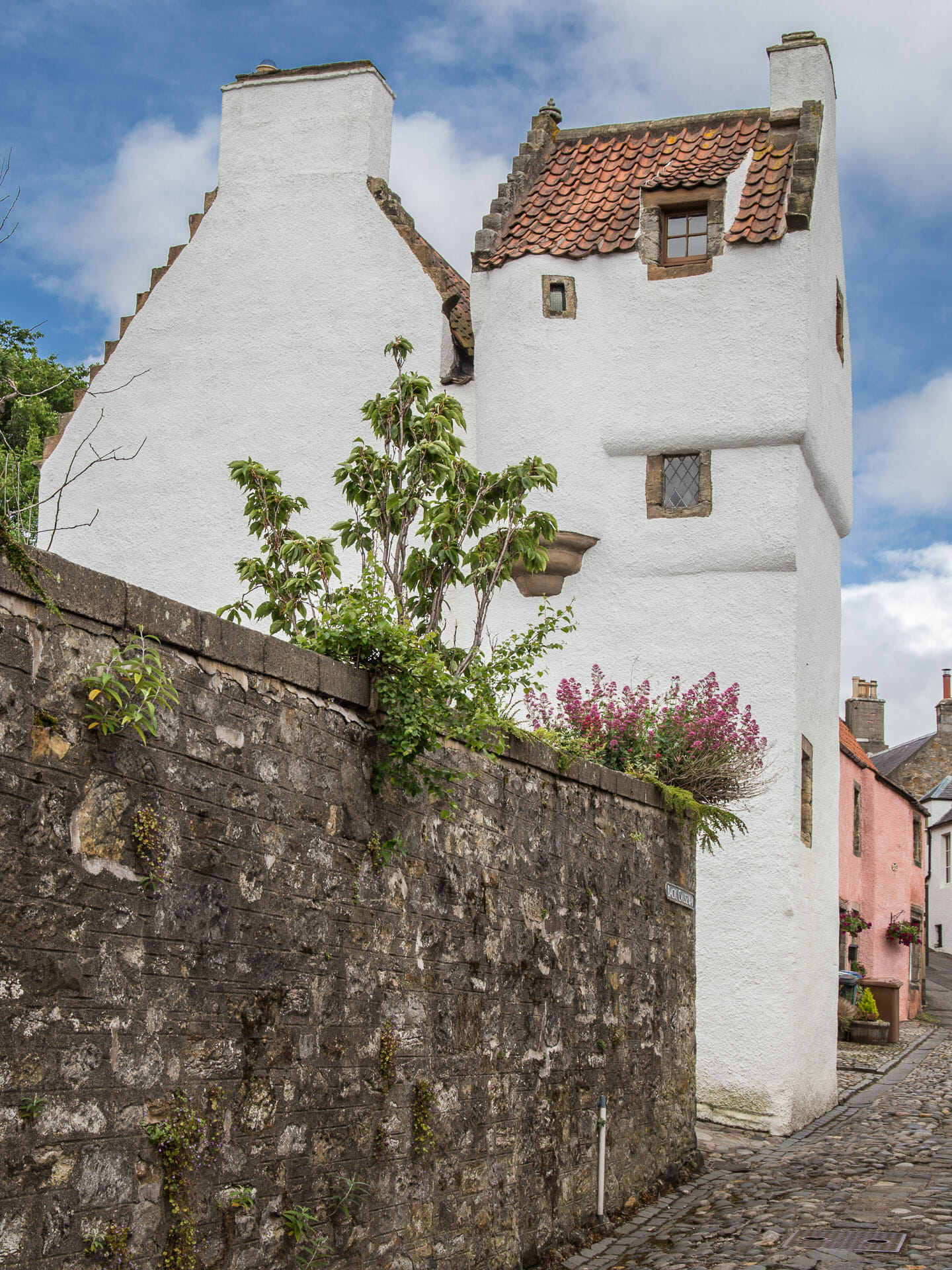
The house was built in 1610 and gets its name from the study at the top of the tower, where Bishop Leighton is said to have read and studied at times in the late 17th century.
It’s well worth joining a town tour, as it lets you go inside the house and learn some interesting details – for example, how the early “doorbells” worked.
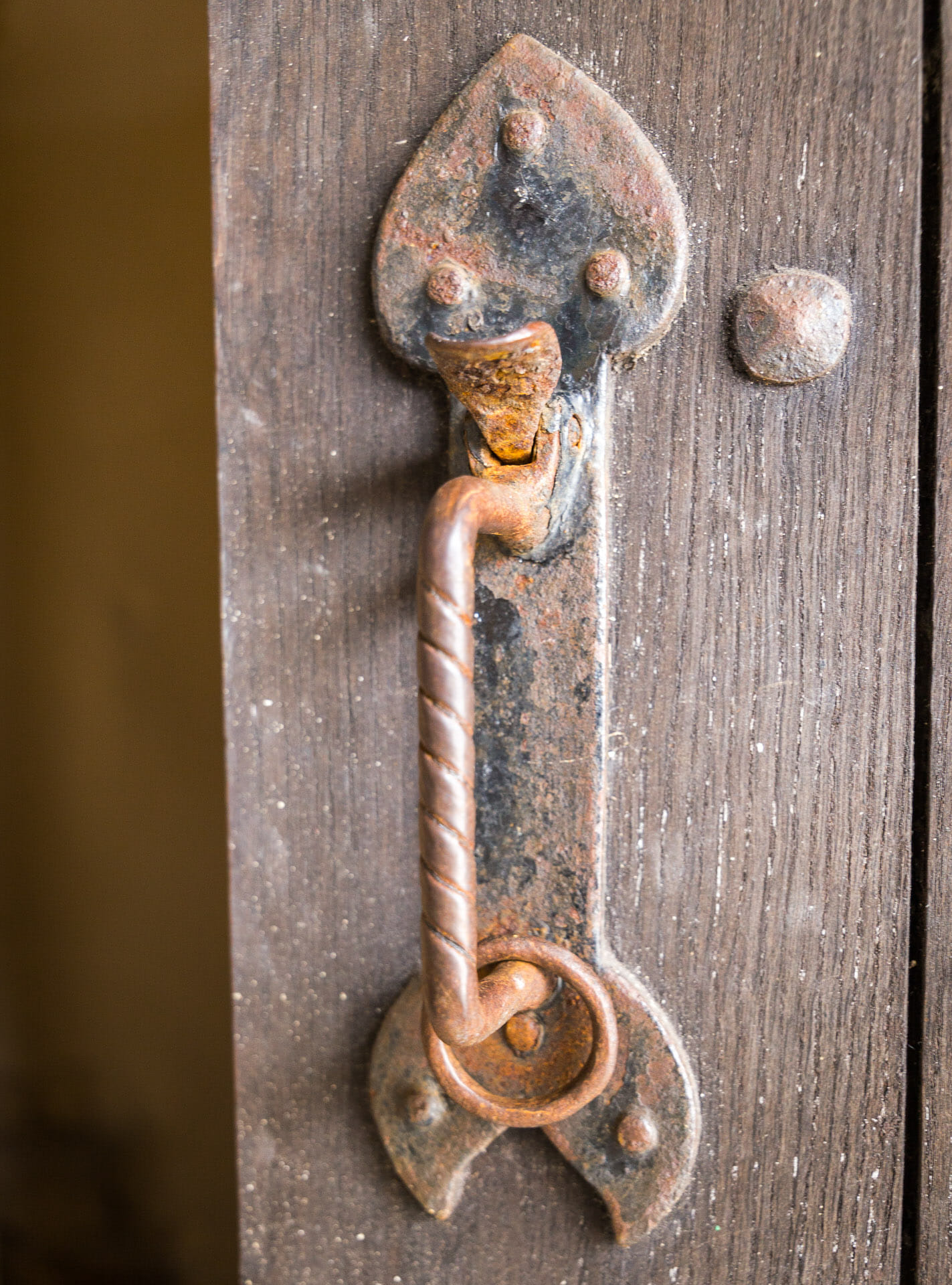
You take the ring right up to the top, give it a swing, and it slides noisily down the grooves, spinning as it goes.
Inside the house itself, you enter a typical furnished room.
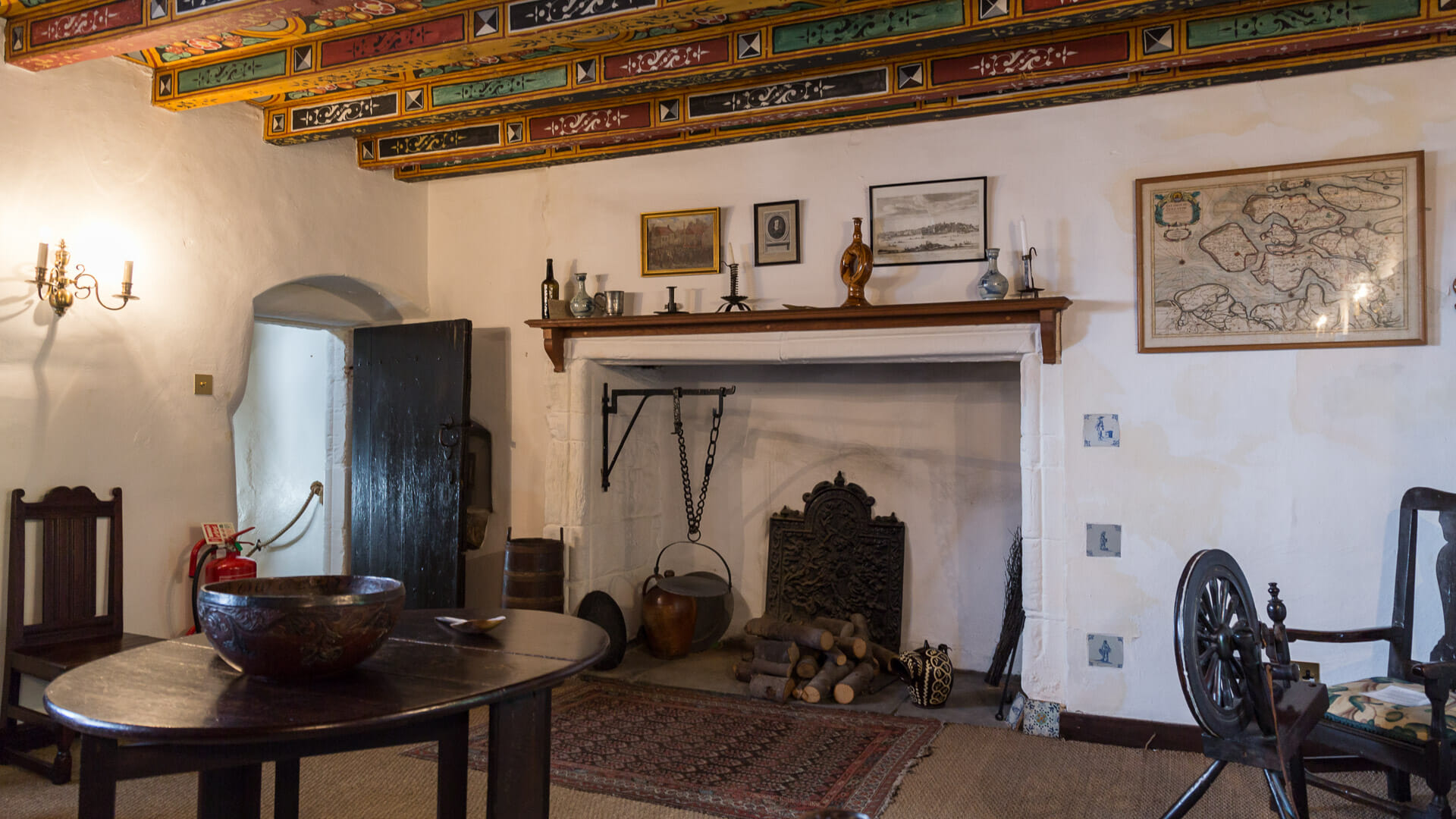
Here too, as in the Palace, the ceilings are painted in period patterns, only the colour has been refreshed (here I was allowed to take photos).
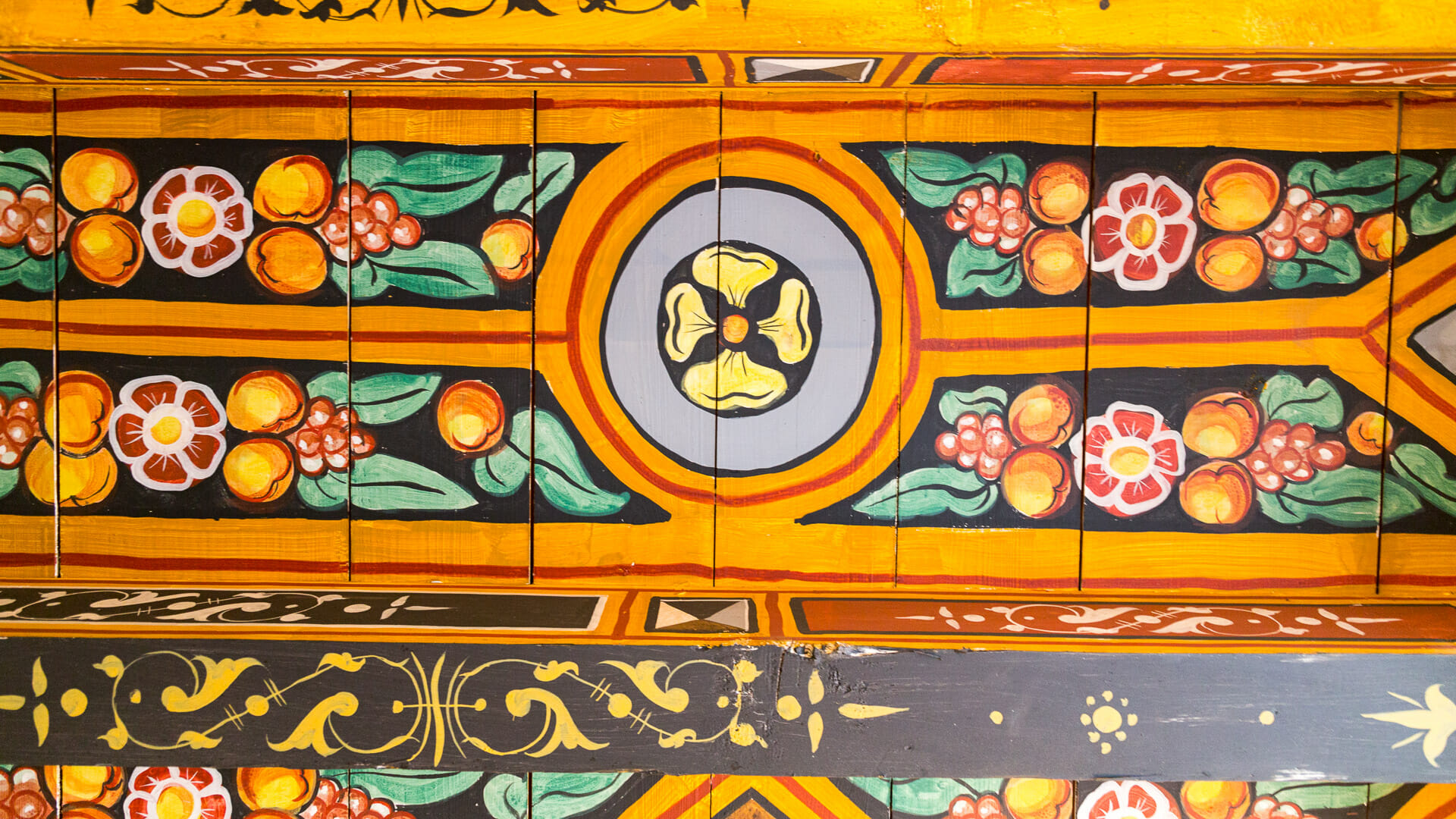
The topmost room in the tower isn’t particularly exciting – it’s empty and bare. But the view from up there is well worth it in any case, including a view of the square with the Mercat Cross, the market cross.
Mercat Cross
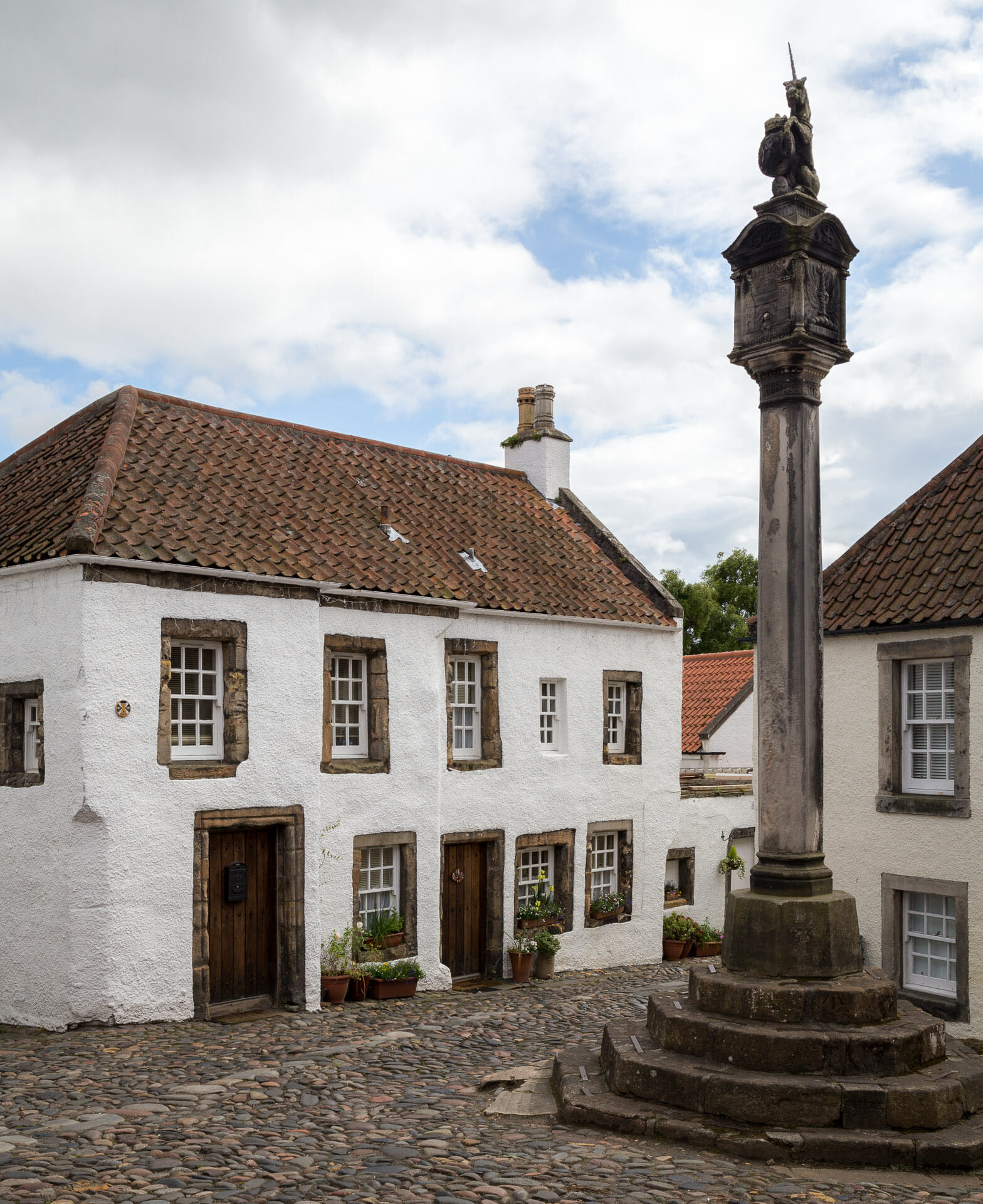
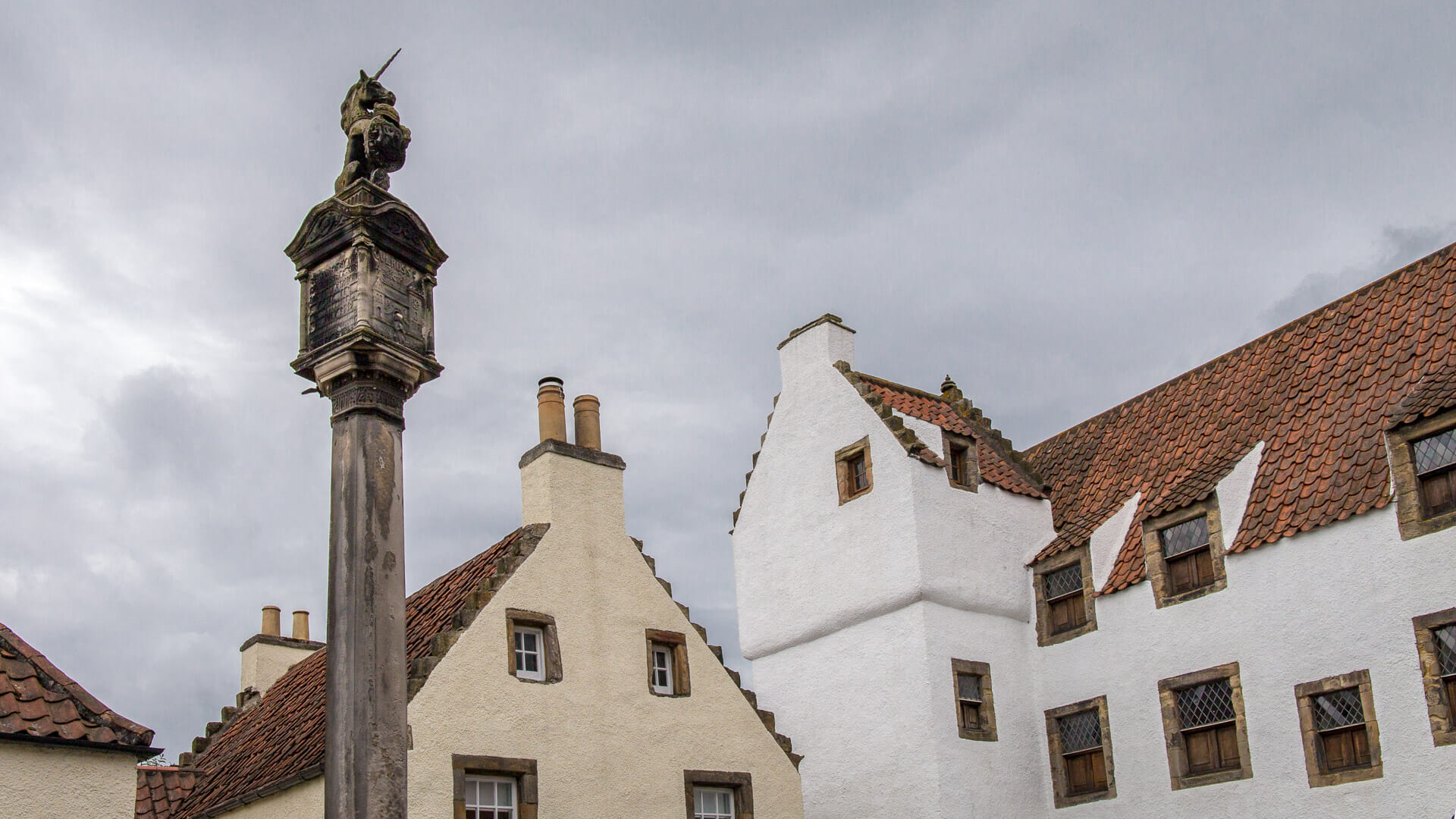
The market cross has stood here since as early as 1598. Today, however, only the steps date from that time; the column and the unicorn on top date from 1902.
Culross Abbey
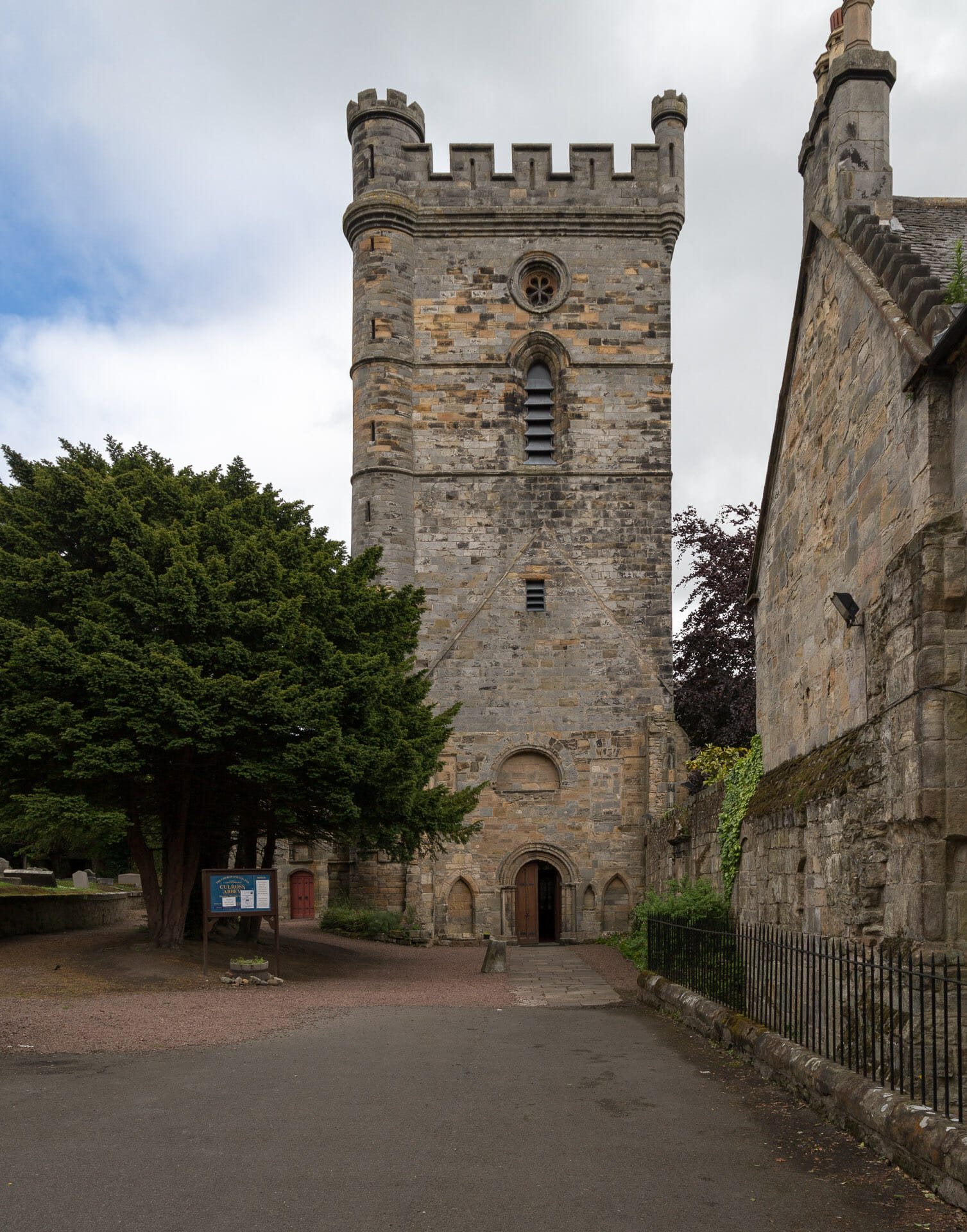
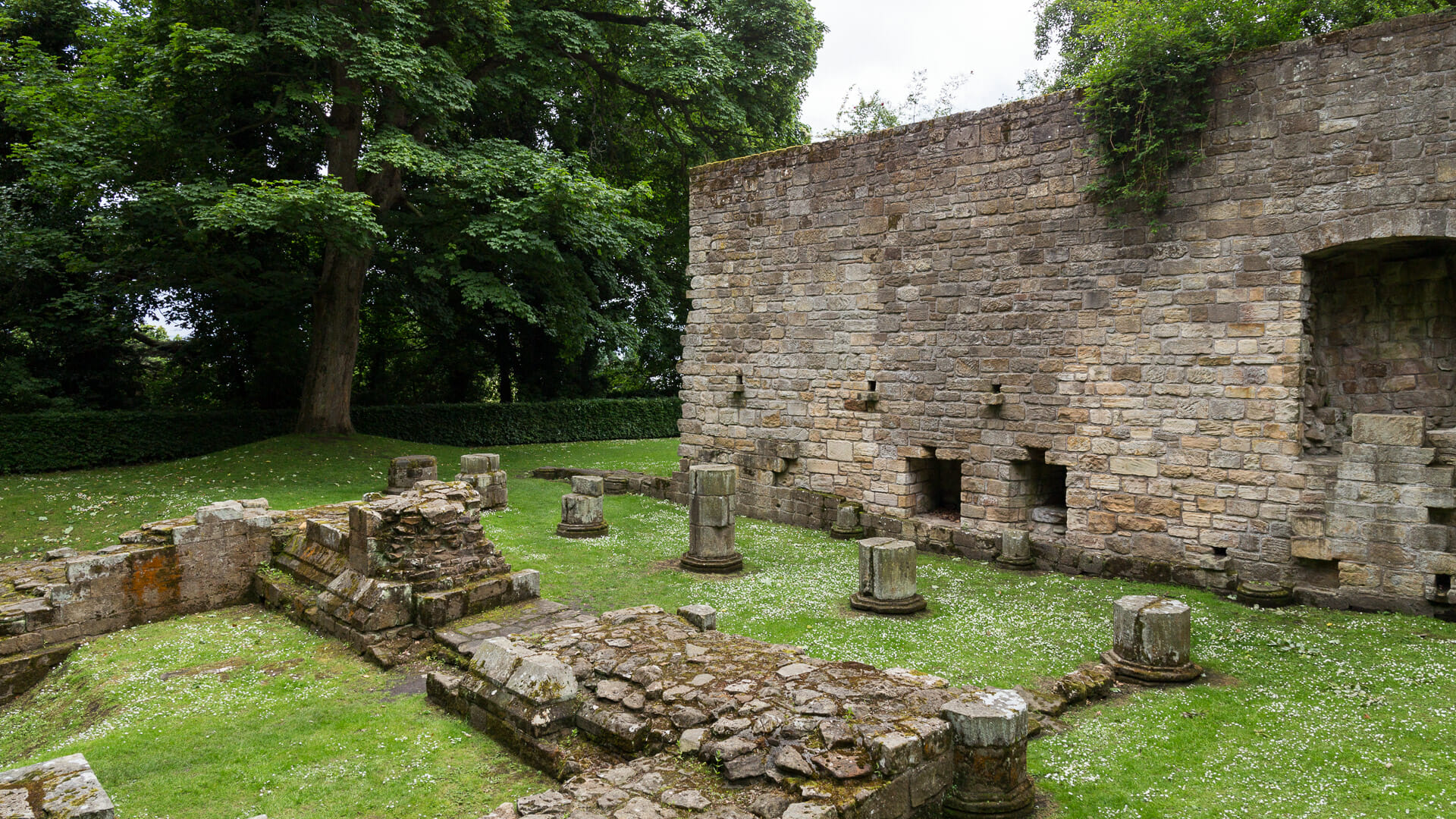
If you continue past The Study up the lane further up the hill, you’ll come to Culross Abbey. Alongside the modern church, there are also ruins here from an earlier time.
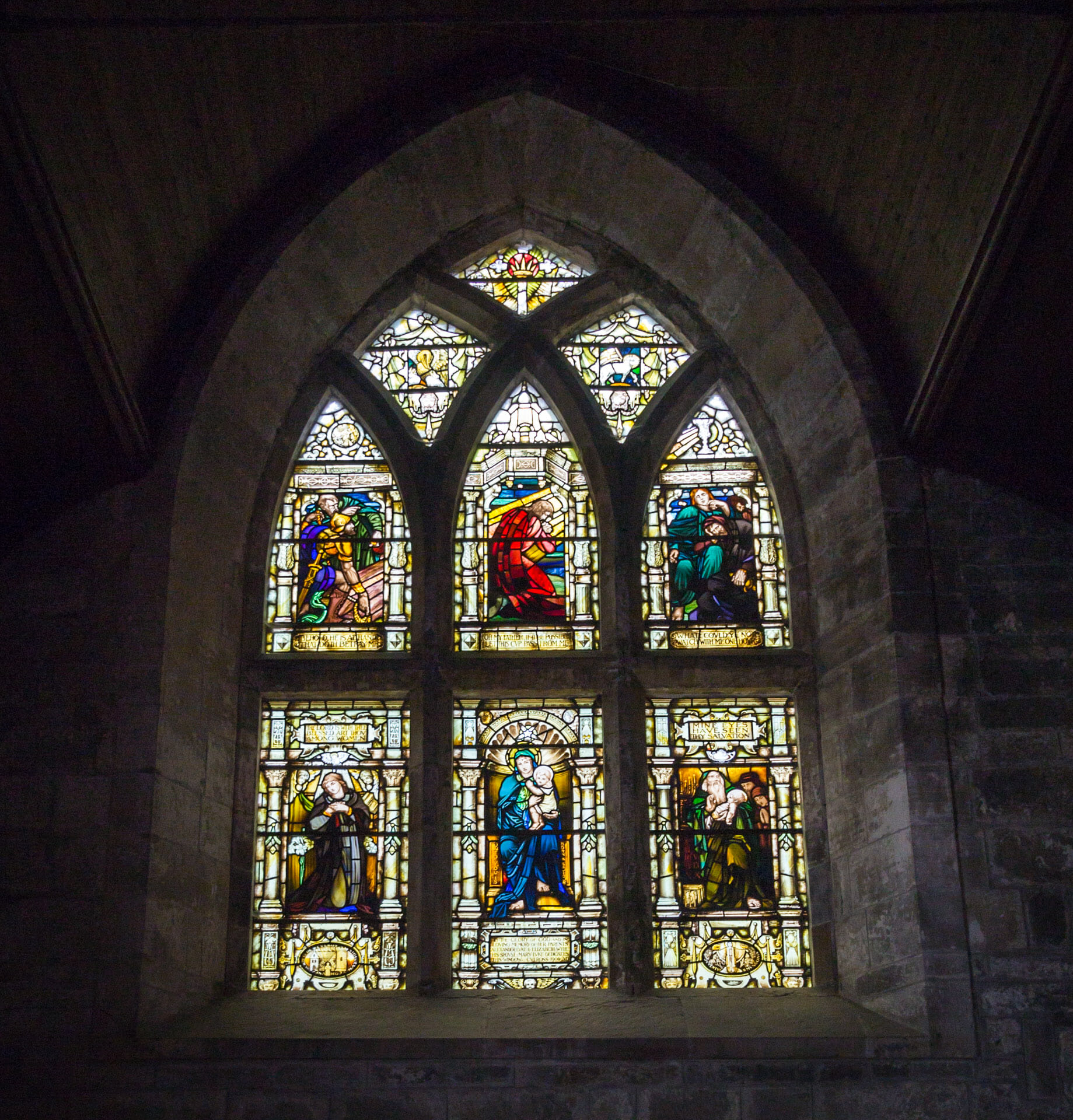
Inside the church itself, the stained-glass windows are especially impressive.
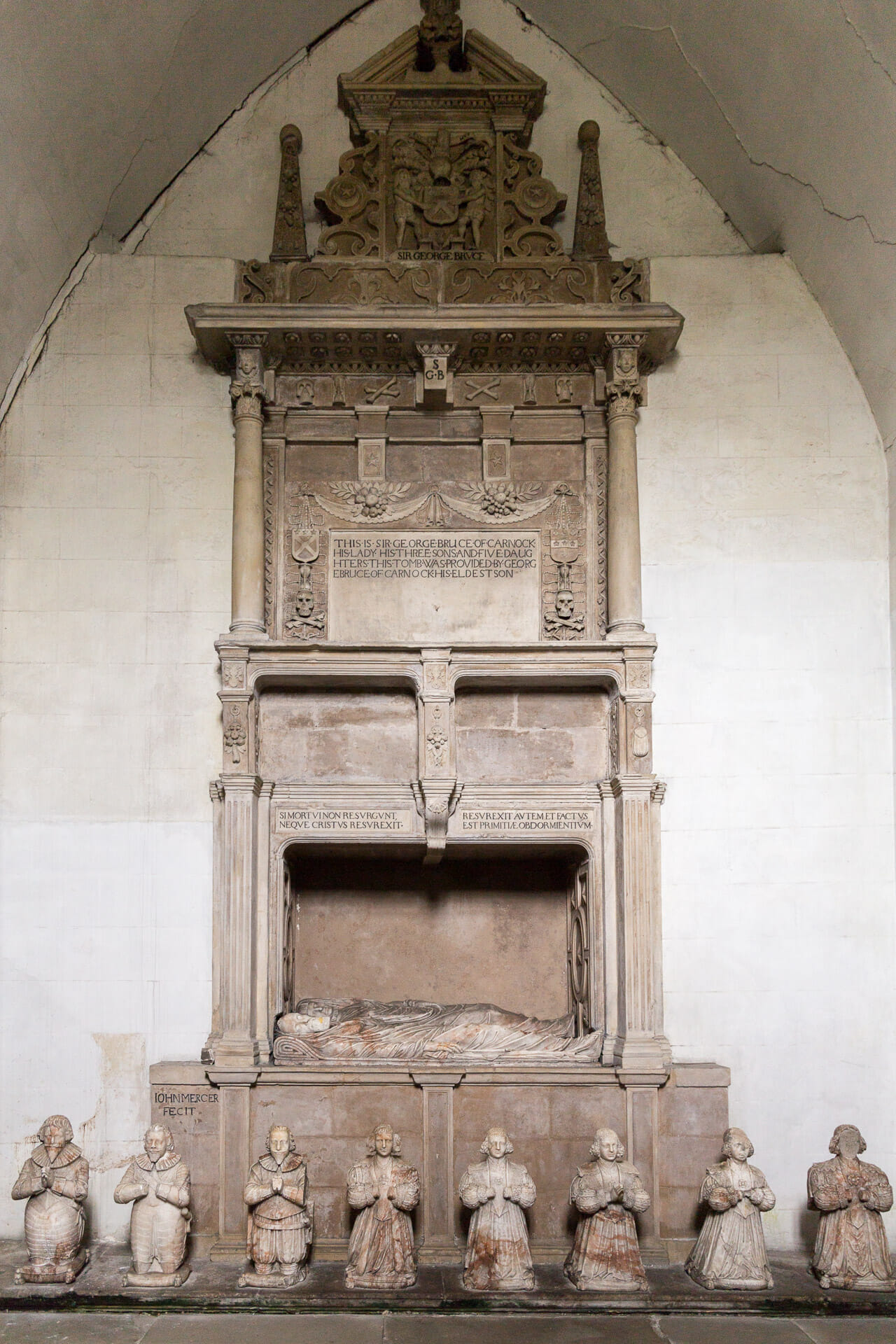
Inside, there is also a large memorial to Sir George Bruce, the builder of Culross Palace.
Outlander and co: Culross as a film location
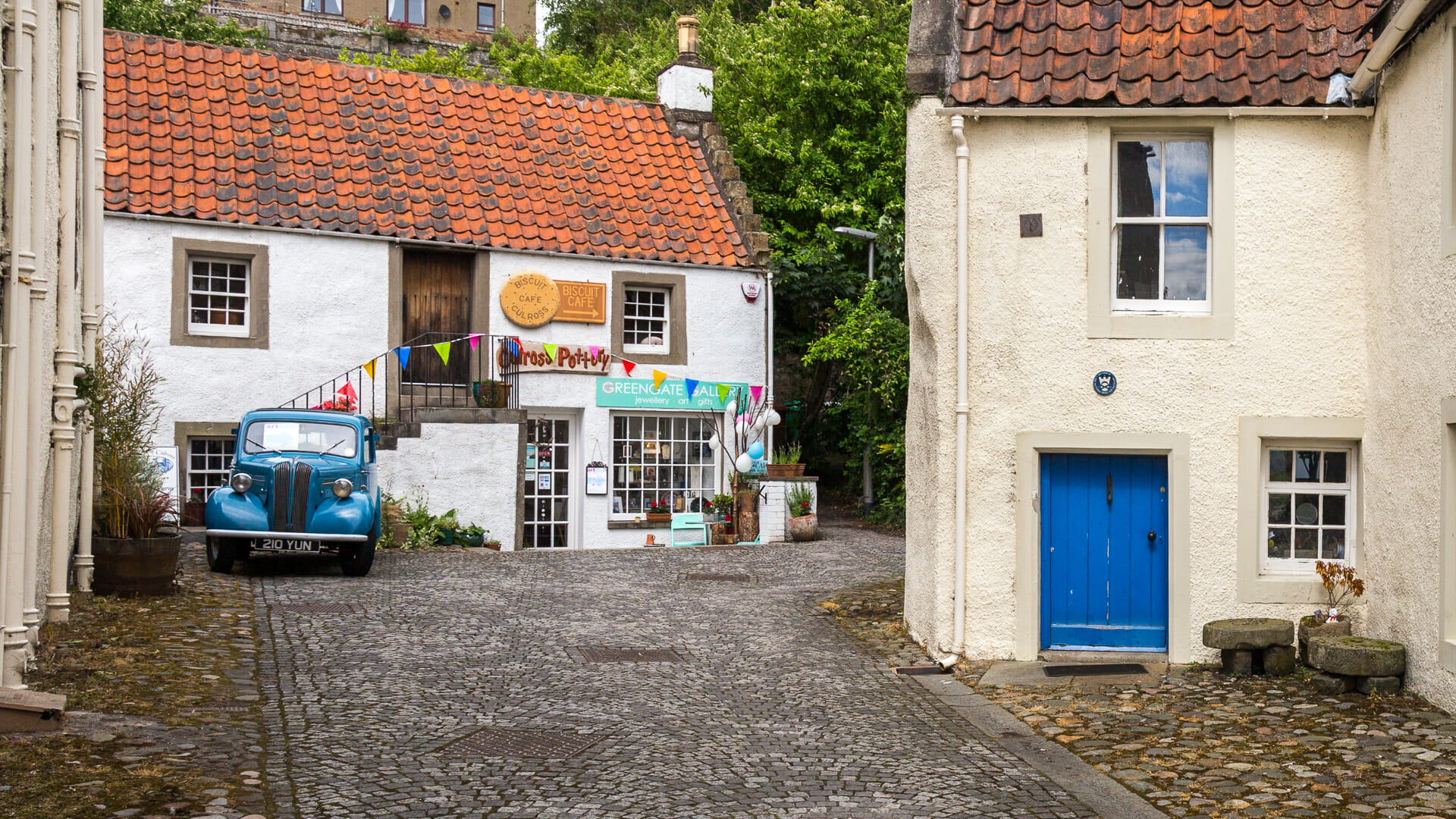
The uniqueness of Culross naturally attracts all the filmmakers looking for a historic setting. The well-known series Outlander alone filmed several scenes here:
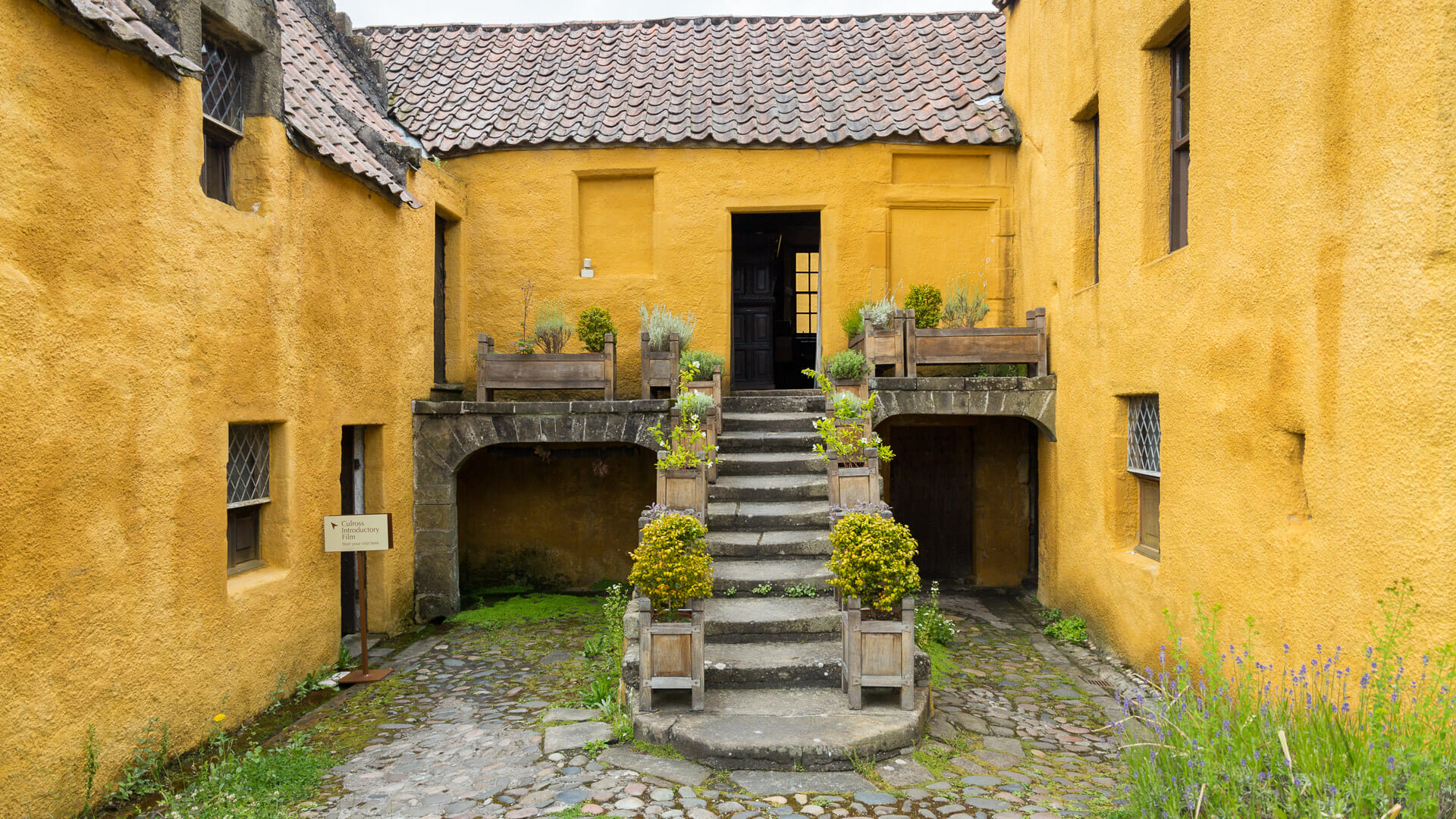
Culross Palace: Several scenes were filmed inside, including one set in a bed. The gardens served as the herb gardens of Castle Leoch. And finally, the staircase appeared in season 2, episode 11, as a set for a stop along the campaign of the Jacobites (in German for now).
The Study: The house where Geillis Duncan lived is “The Study”. For those scenes, incidentally, the white facades of the houses were painted grey and then whitewashed again after filming.
The market square and the houses also appeared as a Norwegian village in 2011 in the film “Captain America: The First Avenger”.
Good to know: Culross, birthplace of Glasgow’s founder
Of course, it isn’t certain that it happened this way, but the story goes like this. King Lot (Loth), after whom the region of Lothian is named, banished his daughter Teneu (Thenew) because she was expecting a child after being raped by a Welsh prince. He set her adrift in a boat to the west of the Firth of Forth. But the wind and currents carried her ashore at Culross, where a Christian community already existed at the time under Saint Serf (St Serf).
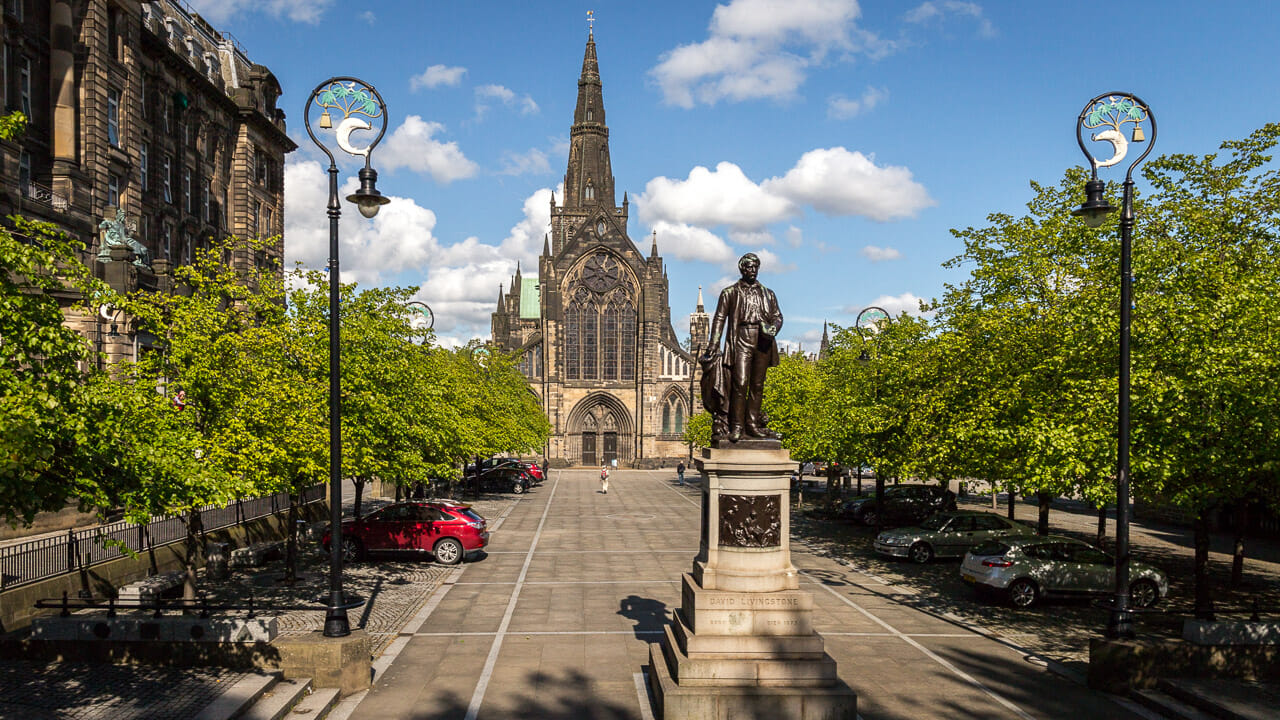
Teneu gave birth to her child here and named him Kentigern. Saint Serf, however, always called him by the nickname “Mungo”, meaning “dear one” or “most esteemed”. As an adult, Mungo himself set out to spread Christianity. He travelled west and settled by a stream to build a church. The settlement that grew up there still venerates him today as Saint Mungo. Its name: Glasgow.
Tips: Town tour and stairs
A guided tour through Culross starts three times a day, and it’s well worth experiencing, as it packs in a huge amount of fascinating information. Tickets are available at the Town House, and at the end of the tour you’re also allowed a look inside its former council chamber.
Once that’s over, and you’ve had a good look around the Palace and gardens, it’s worth taking a walk through the village. There are, for example, small stairways and lanes that run around the outside of the garden.
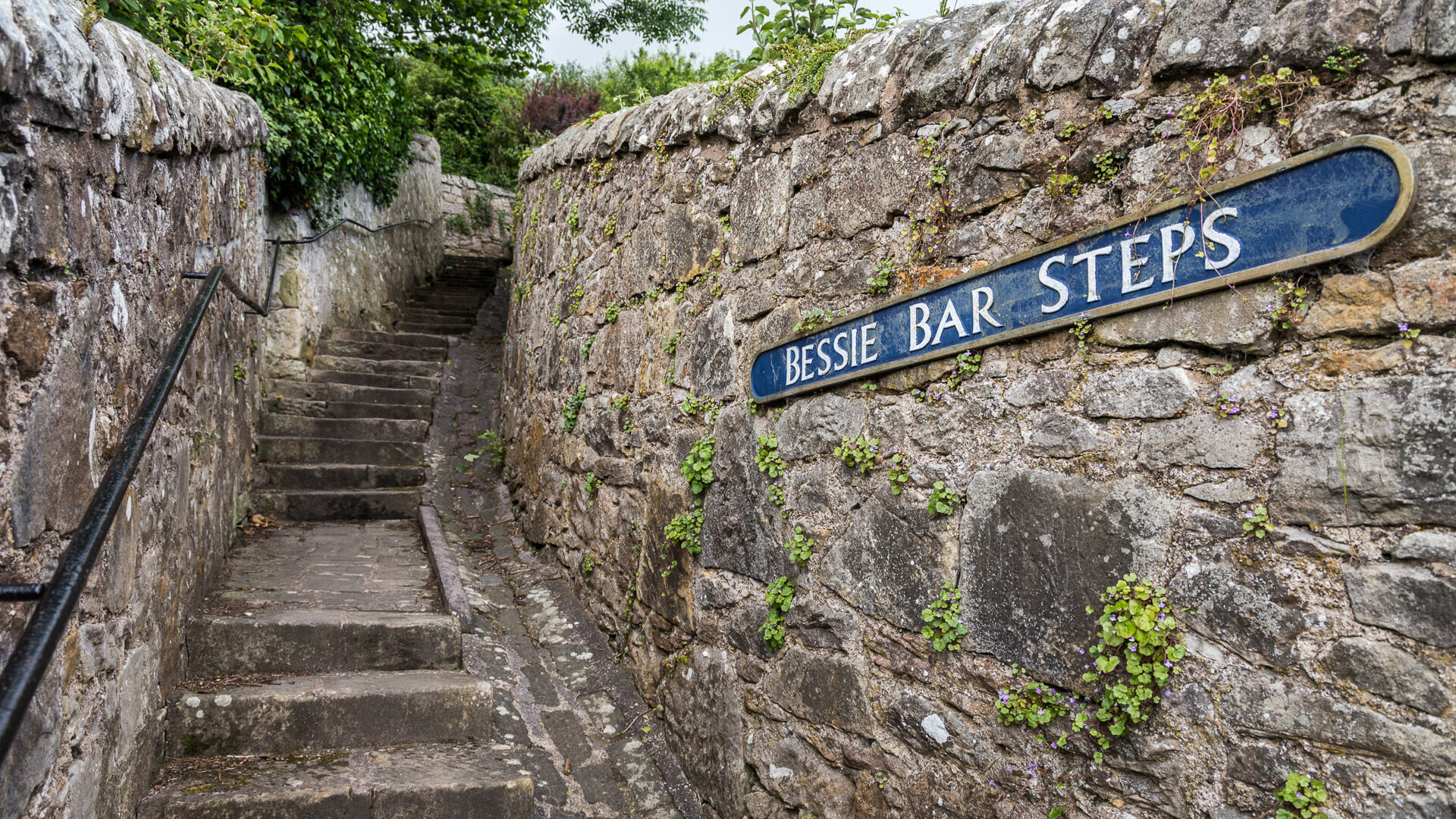
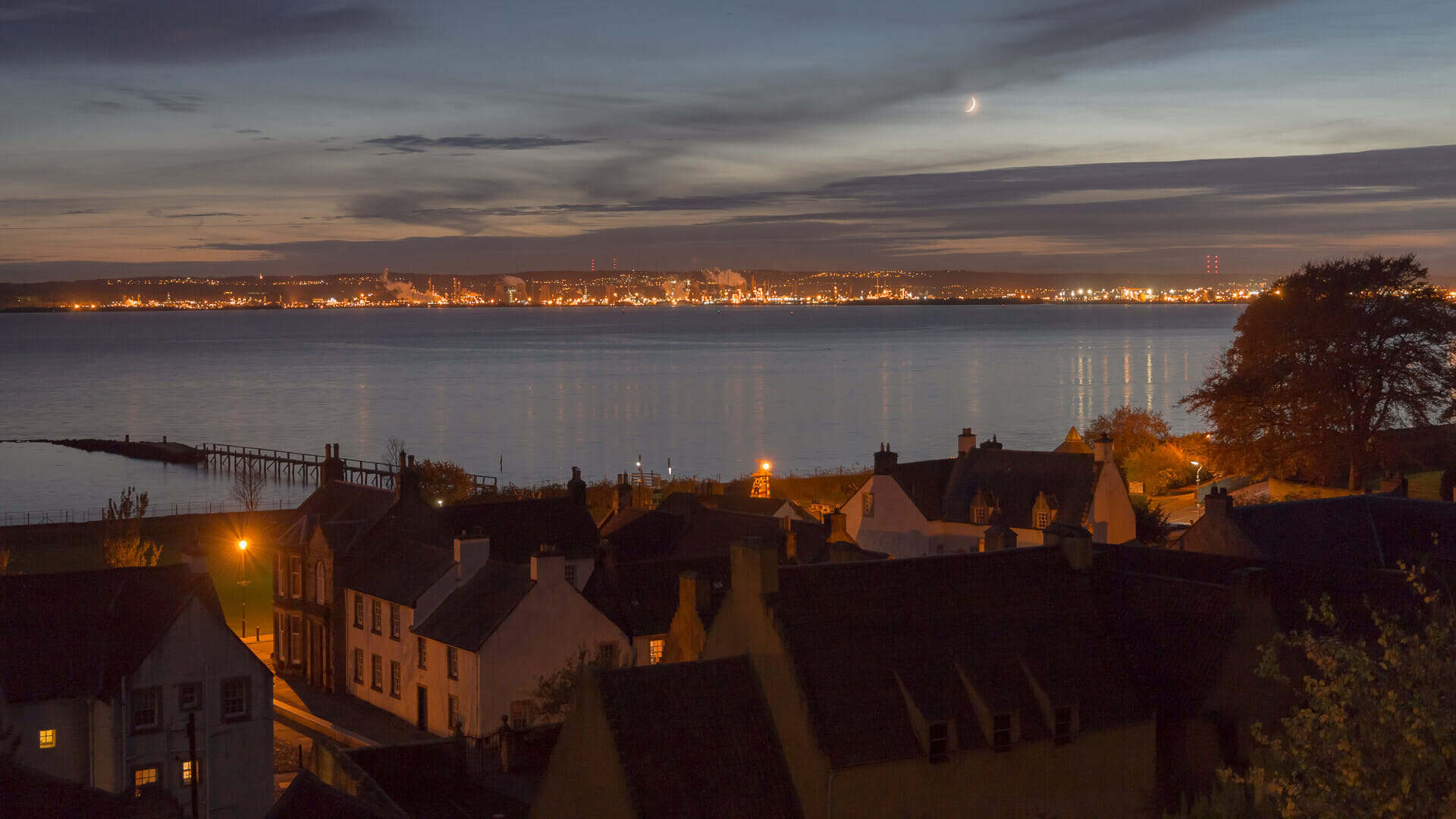
Above the gardens, there’s also a wonderful view over the Firth of Forth, with its industrial area on the far side.
Getting there:
With a sat nav: The code “KY12 8JH” will take you to Culross.
Without a sat nav: From Edinburgh, first take the A90 across the Firth of Forth. Right after that, take the A985 towards Kincardine. From there, follow the turn-off for Culross and down the narrow road to the Firth of Forth. Continue driving through the village, and you’ll come to a large visitor car park for cars only, right next to the Palace.
