To the southwest of downtown Glasgow, a large green patch stands out on the map: Pollock House and its park. A destination for nature and art lovers.
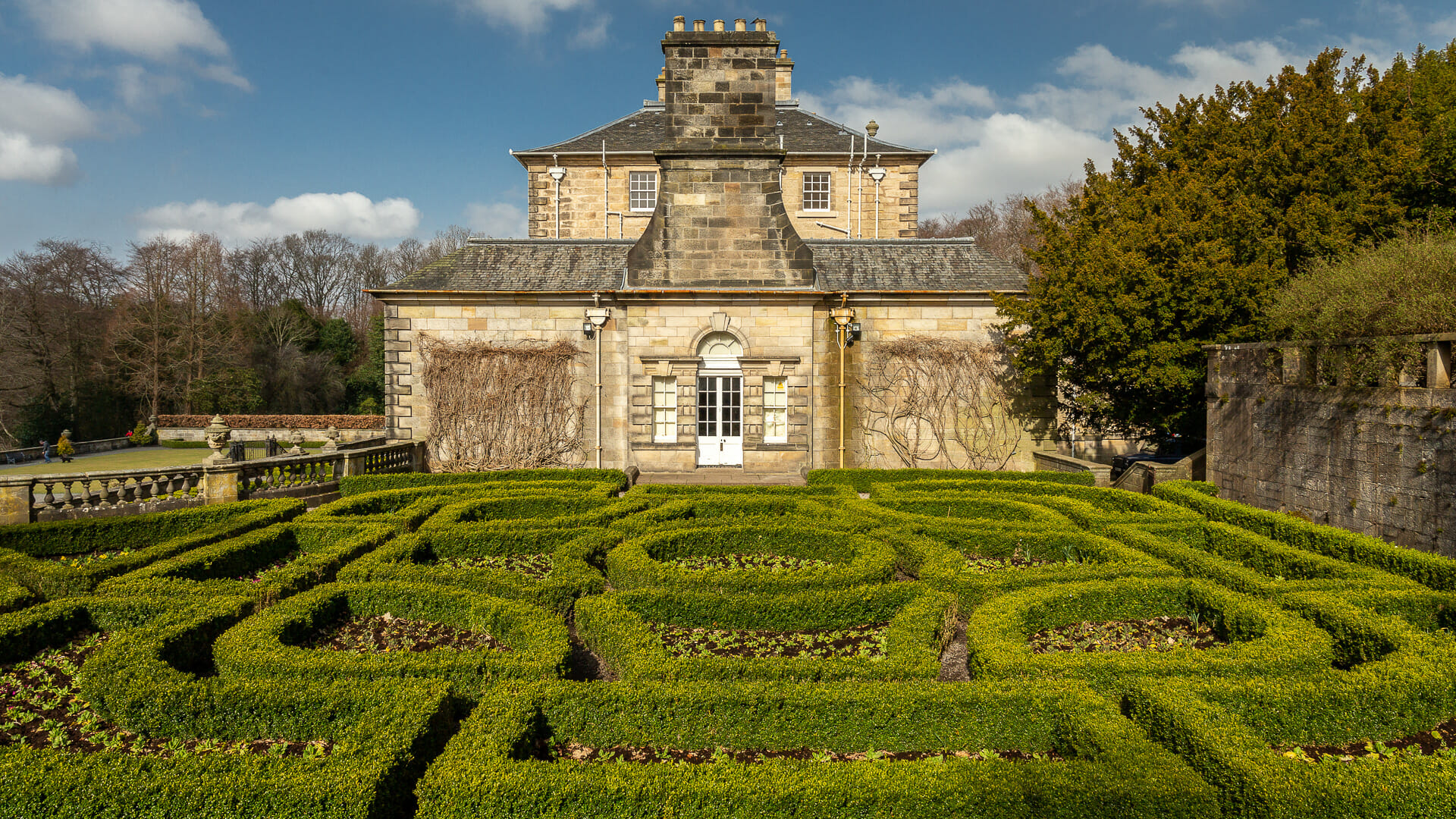
PLEASE NOTE: Pollock House and its café are closed for renovations from spring 2024 through 2026—according to the plan, they should have reopened by now. As of July 2026, however, that is not the case. A new reopening date has not yet been announced.
It takes just ten minutes by taxi from the River Clyde in Glasgow to the vast parkland of Pollock House. As soon as you turn off the main road, the city’s residential buildings and major streets fade from view, replaced by meadows and forests. A vast green oasis on the outskirts of Scotland’s largest city.
But the varied landscape of the vast park isn’t the only highlight. In the center stands Pollock House, surrounded by a well-tended garden and situated on the banks of an idyllic little river.
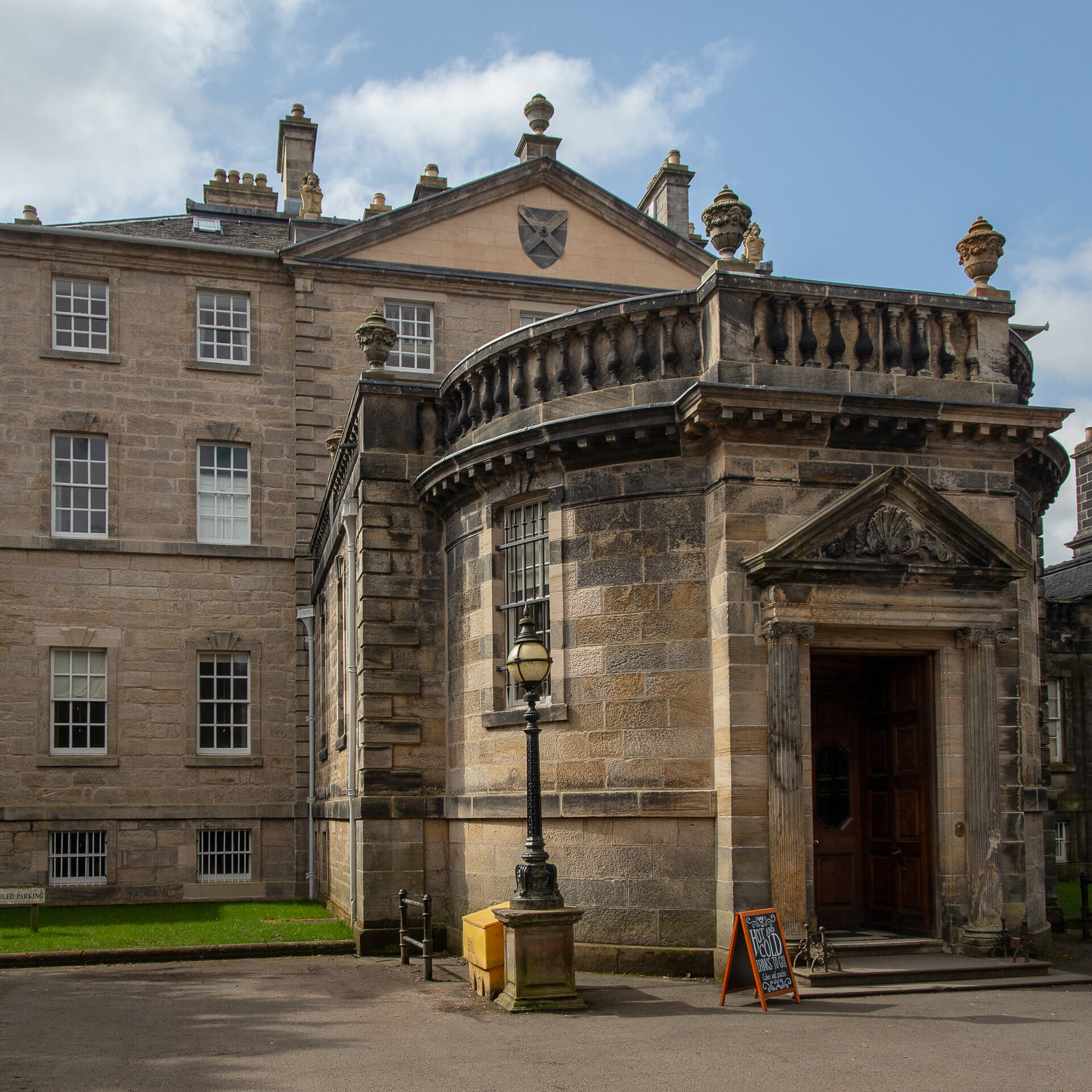
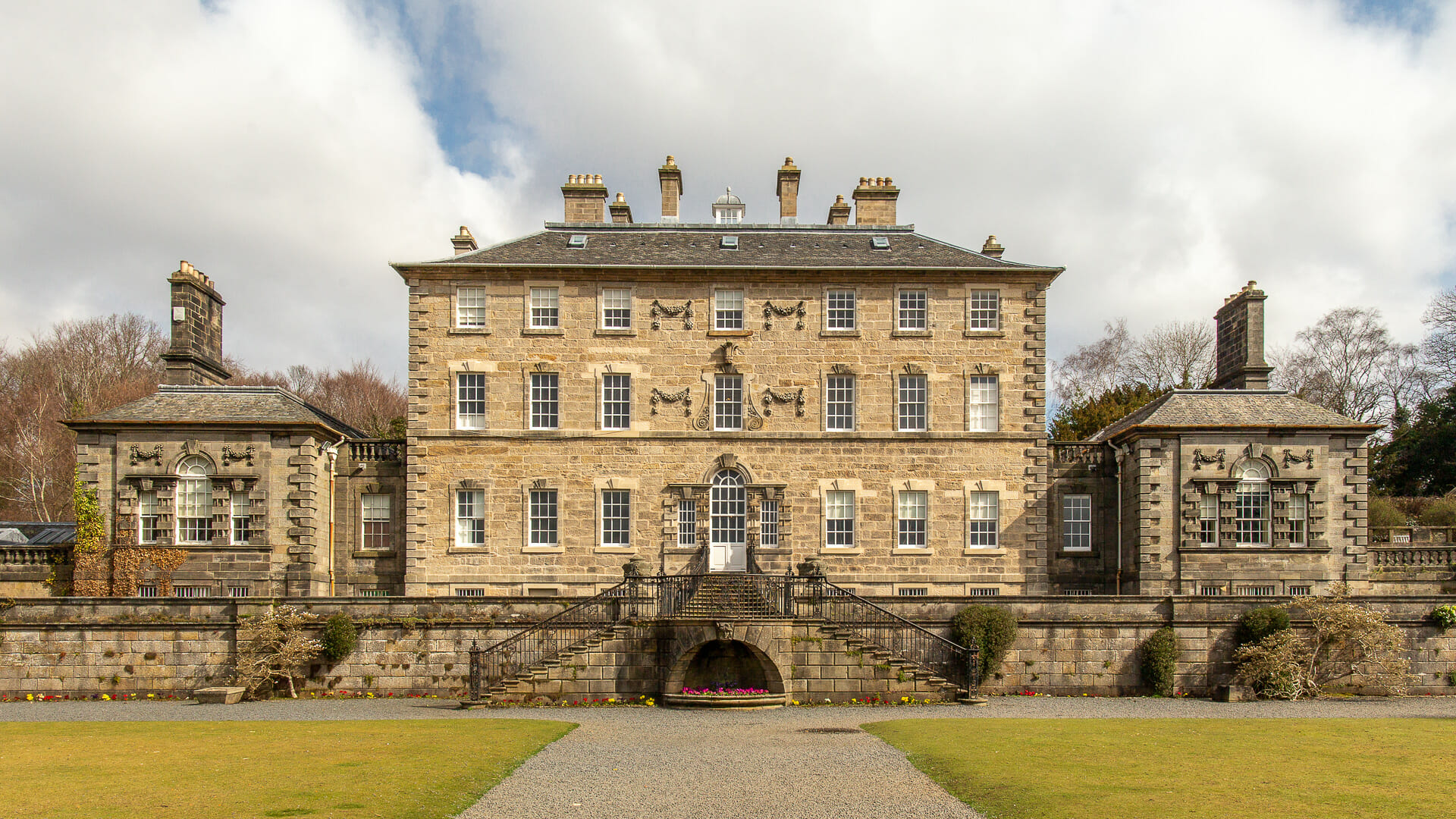
When visitors approach the house from the road, the main entrance presents an impressive portal, but the true beauty lies to the side and behind it—that’s where the house reveals its full splendor. For example, in the form of the symmetrically laid-out gardens, which, set slightly higher, offer a view of the park landscape.
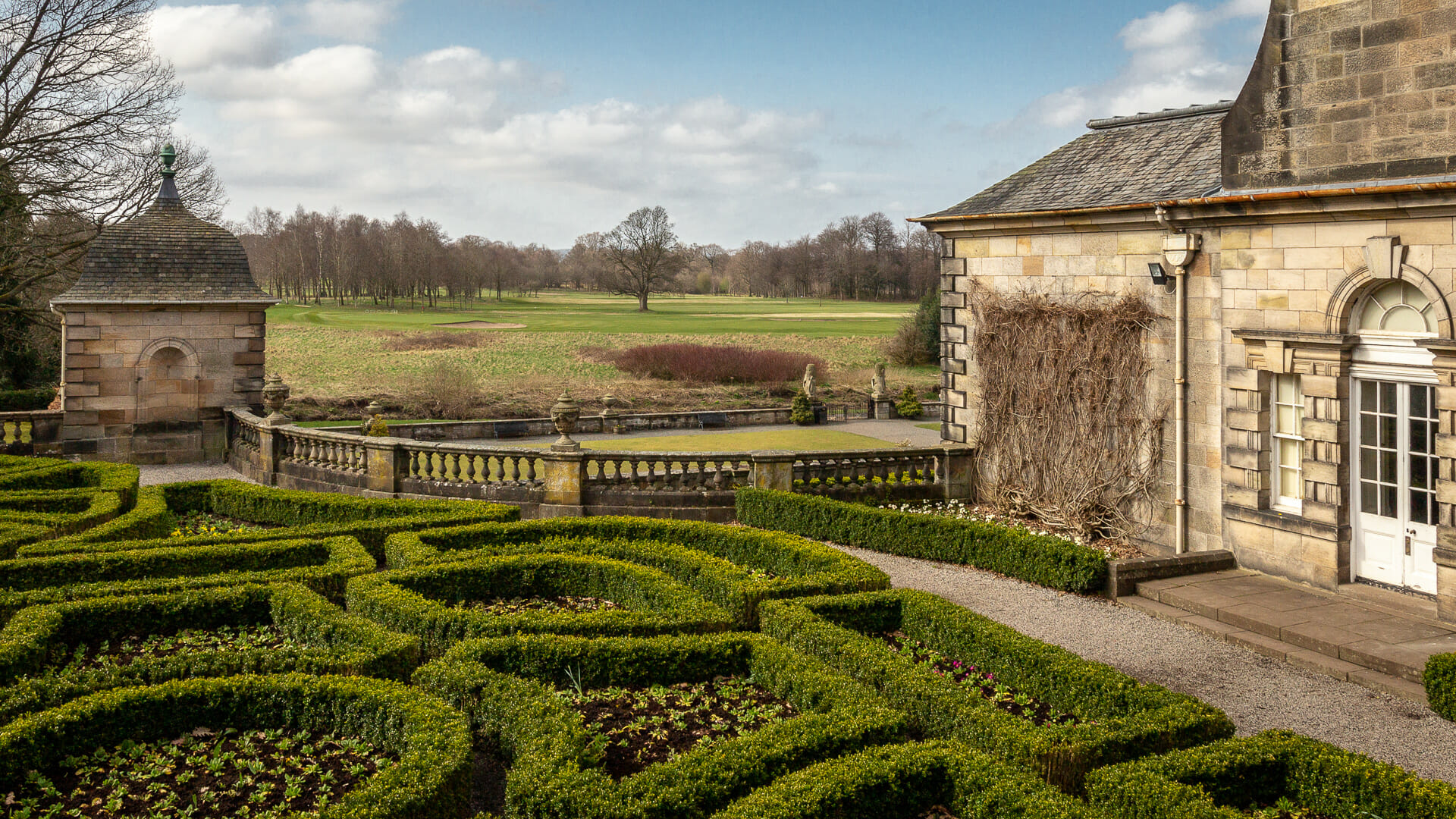
When visitors finally walk around the house and head down to the park beyond the small wall surrounding the house, they are greeted by the majestic rear of Pollock House in all its beauty.
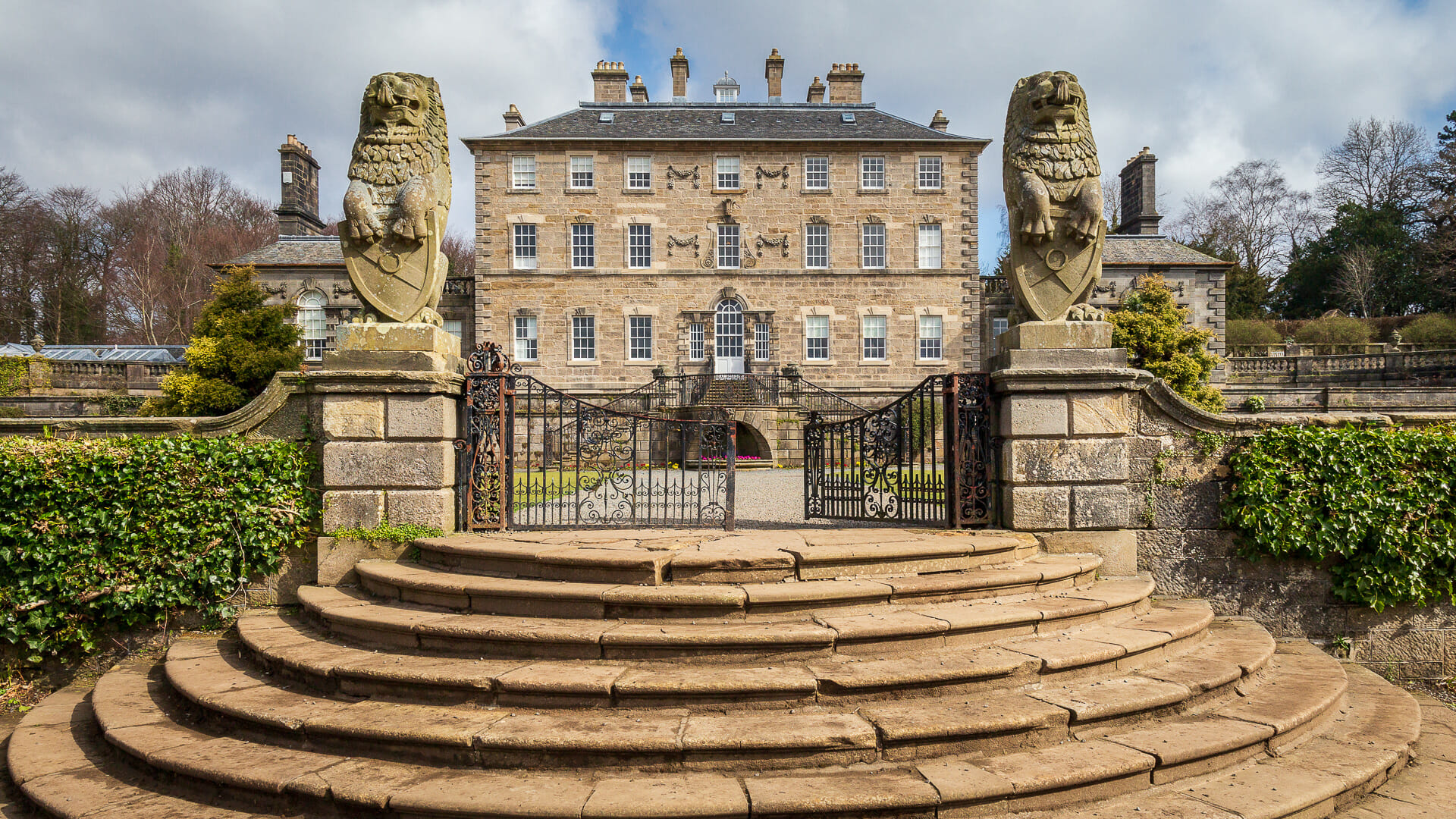
You could easily spend hours just in the garden and the park when the weather is nice—and without paying an admission fee. That changes once you step inside the house. The National Trust of Scotland needs funds to maintain it, so it charges an admission fee. Is it worth it?
Definitely, if you’re into opulent, old-style interiors. That much is clear from the entrance hall alone, which is a dream of marble and mahogany, complemented by busts, Chinese vases, and paintings.
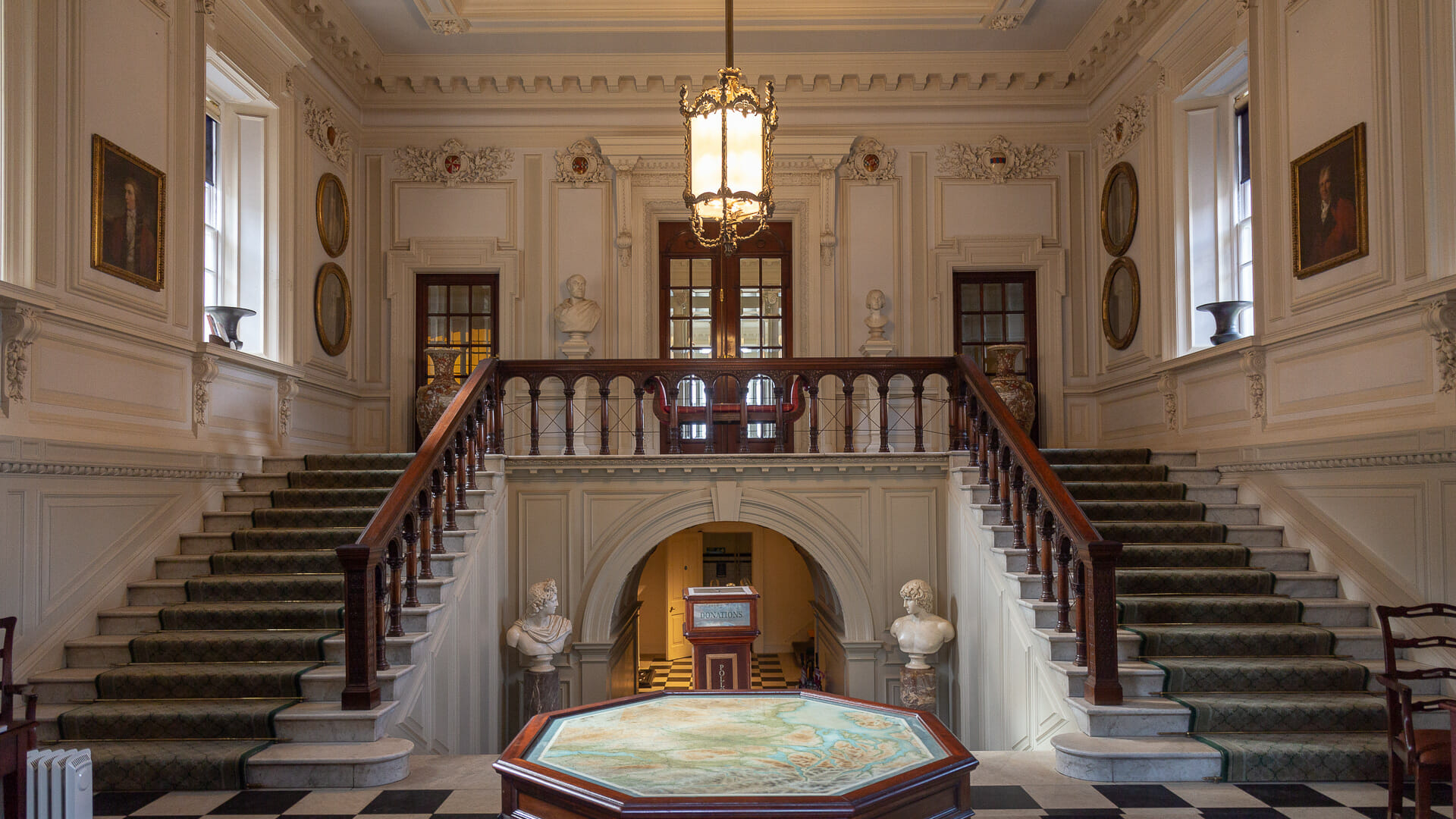
And a visit is especially worthwhile for art lovers. As soon as you’ve climbed one of the two staircases and walked through the door, you’re greeted by works by the Spanish masters. Sir William Maxwell, one of the house’s owners, had earned a reputation as a connoisseur and collector in the mid-19th century. So now, the hallways are lined with portraits of the Habsburg kings of Spain and works by Goya and El Greco (which I deliberately didn’t photograph).
Visitors should definitely take a look at the astronomical grandfather clock in the hallway. It dates from 1746 and belonged to the house’s first owner.
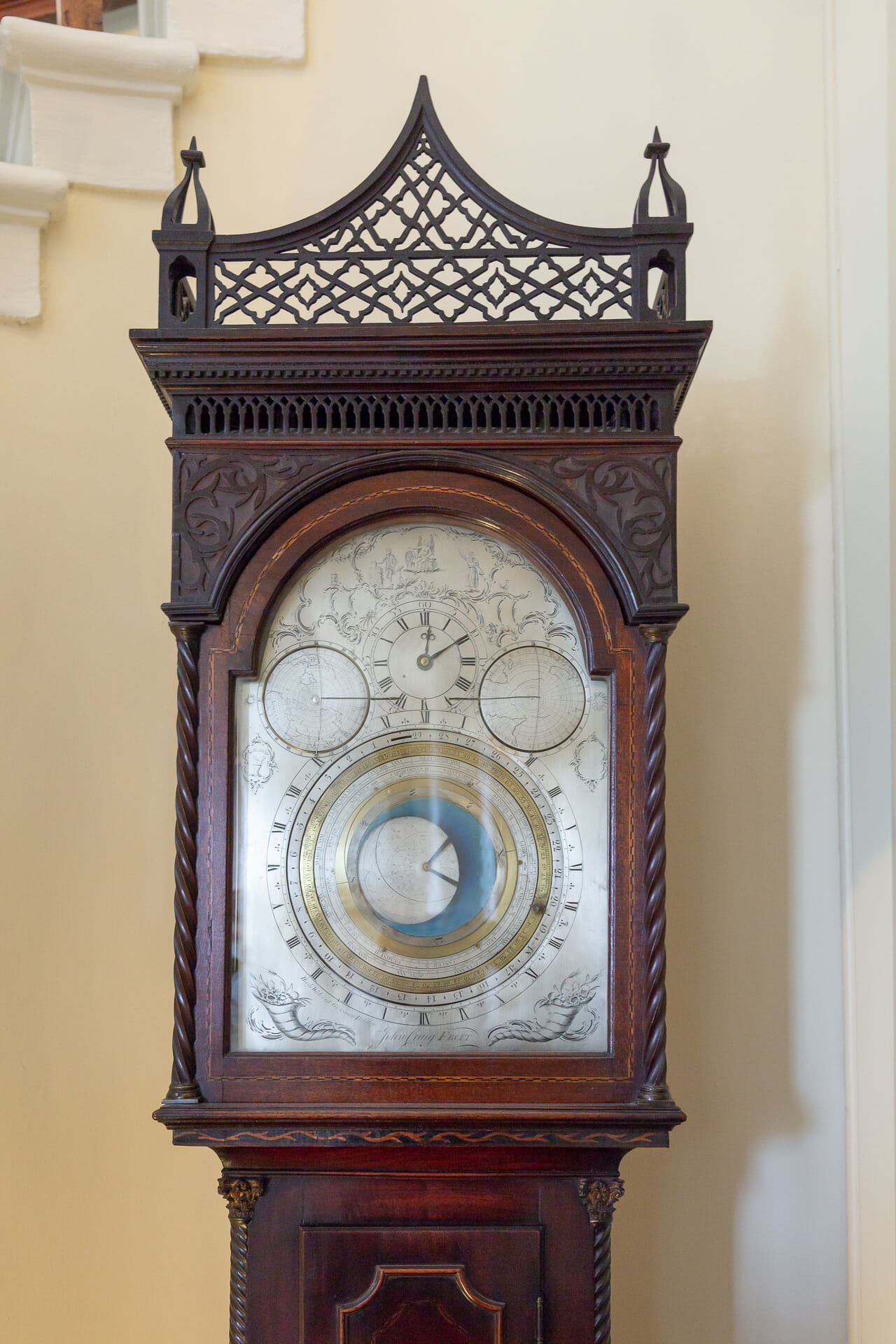
In addition to the time, the clock displays the position of the sun and the phases of the moon, as well as the water level for high and low tides. From the hallway, you can then begin exploring the rooms on the ground floor.
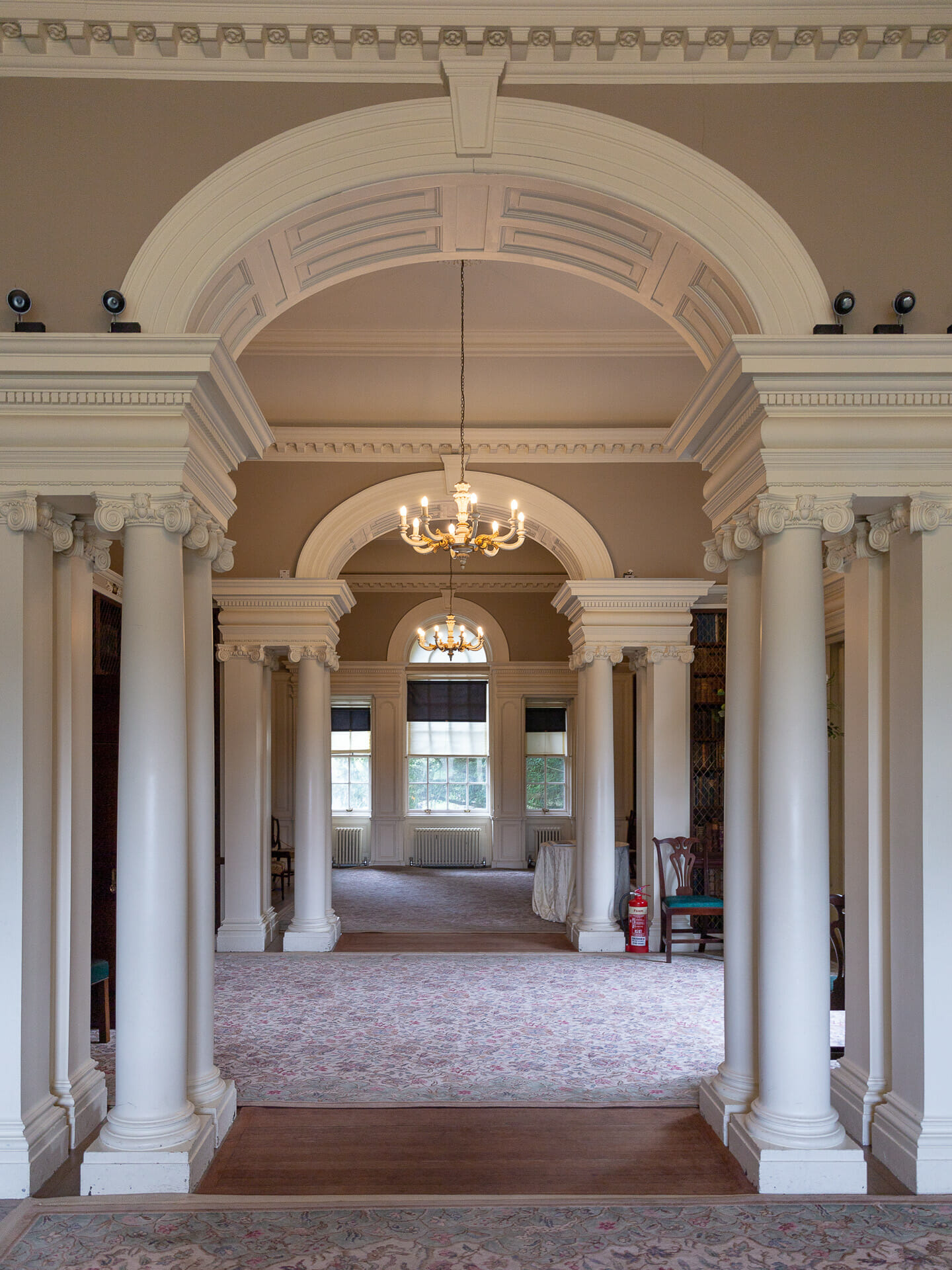
Each room has its own function, such as the dining room…
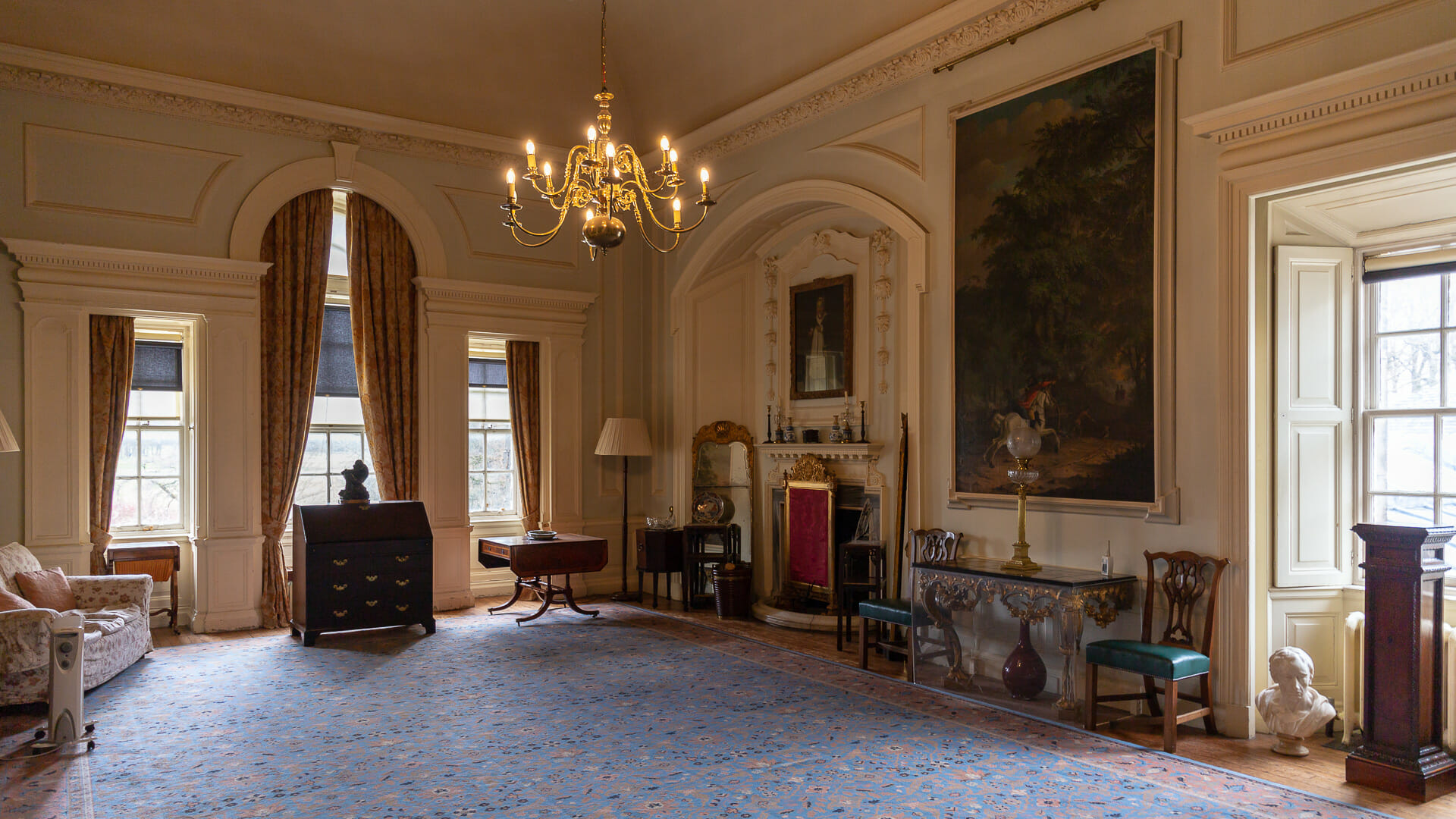
…or the Cedar Room, which served as a smoking room—the scent of the cedar wood was intended to counteract the smell of smoke.
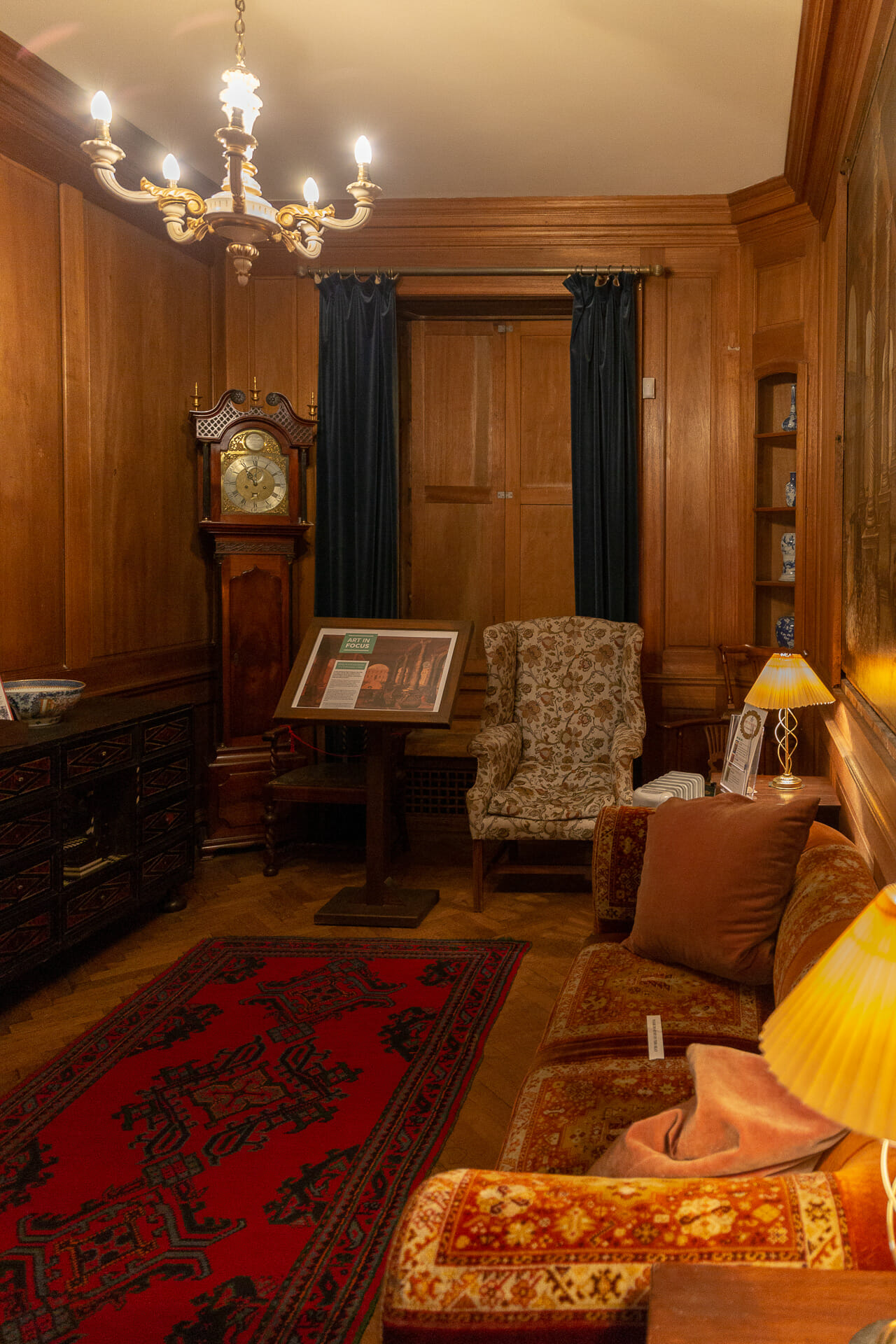
Incidentally, the Cedar Room has a very special story to tell. It was within these walls that Sir Iain Colquhoun of Luss, the Duke of Atholl, the Earl of Crawford and Balcress, and Sir John Stirling Maxwell first seriously discussed the idea of founding a National Trust for Scotland—a foundation dedicated to preserving historic buildings—in the early 1930s.
It was clearly a success, as Pollock House is now operated and maintained by the very foundation that was conceived back then.
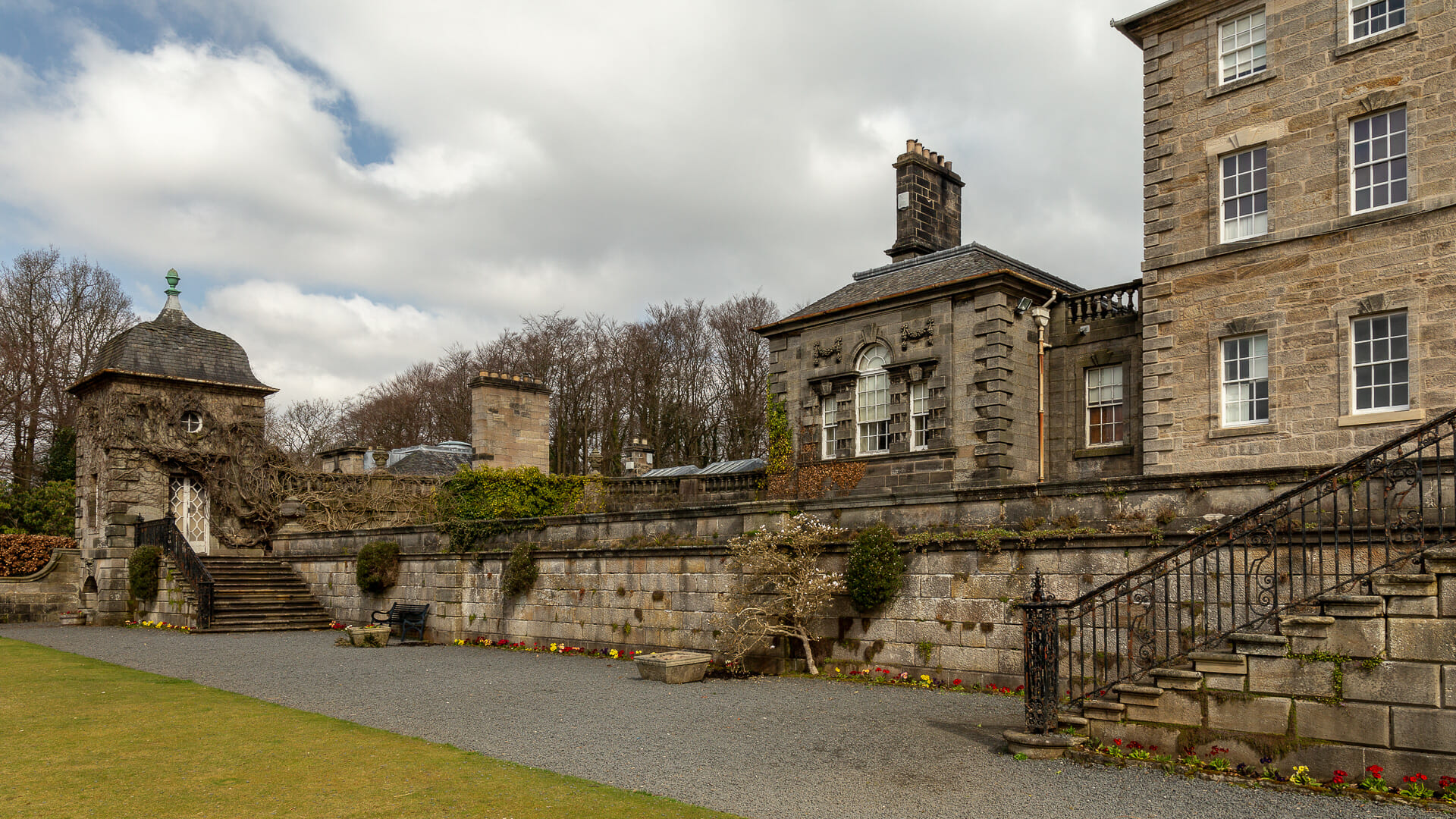
So it’s no wonder that the National Trust safeguards and maintains this treasure on the outskirts of Glasgow. But precisely because Glasgow isn’t Scotland’s top destination—and the outskirts of the city are even less so—Pollock House isn’t an overcrowded tourist attraction, but (still) a true hidden gem for visitors.
Did YouKnow: The History of Pollock House
One family name is inextricably linked to the lands surrounding Pollock House. Legend has it that this name comes from a Saxon named Maccus, who fled to Scotland to escape the Normans and settled by a spring—Maccus’ Well became Maxwell. In the 13th century, his great-grandson, Sir John Maxwell, was first mentioned as living in Pollock.
The term “Pollock” likely derives from the Gaelic “pollag,” meaning “small pond.” However, the lands held by the Maxwells here extended far beyond the shores of a small pond.
Over the centuries, the Maxwells passed the estate down to their children—just as they passed down the first name “John,” which was given to the eldest son in each generation (yes, a rule that held true almost without exception). No wonder, then, that it was the nobleman John Maxwell who had Pollock House built by 1752. His son John then had the stone bridge over the river constructed to provide access to the road to Paisley.
In the mid-19th century, Sir William Maxwell took over the house (“William” was the exception that proved the rule). He traveled throughout the Mediterranean, where he discovered his interest in Spanish art. Not only did he write treatises on the subject, but he also collected Spanish masterpieces and laid the foundation for today’s collection.
His son John Maxwell (there really were very few exceptions to the rule…) benefited from the fact that Glasgow’s city limits had by then expanded to border his estates. The value of the estate rose. Sir John died in 1956 at the age of 90; his widow eventually bequeathed Pollock House and the collection to the City of Glasgow, which handed over management to the National Trust of Scotland, an organization Sir John had once helped found.
Tip: Visit the Burell Collection
Another attraction is just a ten-minute walk away. The Burell Collection features medieval weapons and armor, Chinese porcelain, tapestries, and paintings by artists such as Manet, Cézanne, and Degas. The collection comprises a total of 9,000 exhibits. However, the exhibition is closed until 2020 due to a complete renovation, so there are no pictures here. The Burell Collection will reopen its doors to visitors in 2020.
Film Location: “Outlander” Filming Site
A park with so many different facets—from manicured meadows with tree-lined avenues to the wild forests surrounding it, all located near a major city—is ideal for film sets. And so the series “Outlander” is a regular guest at Pollock Park. Most of the time, the natural setting represents other locations—French landscapes, for example.
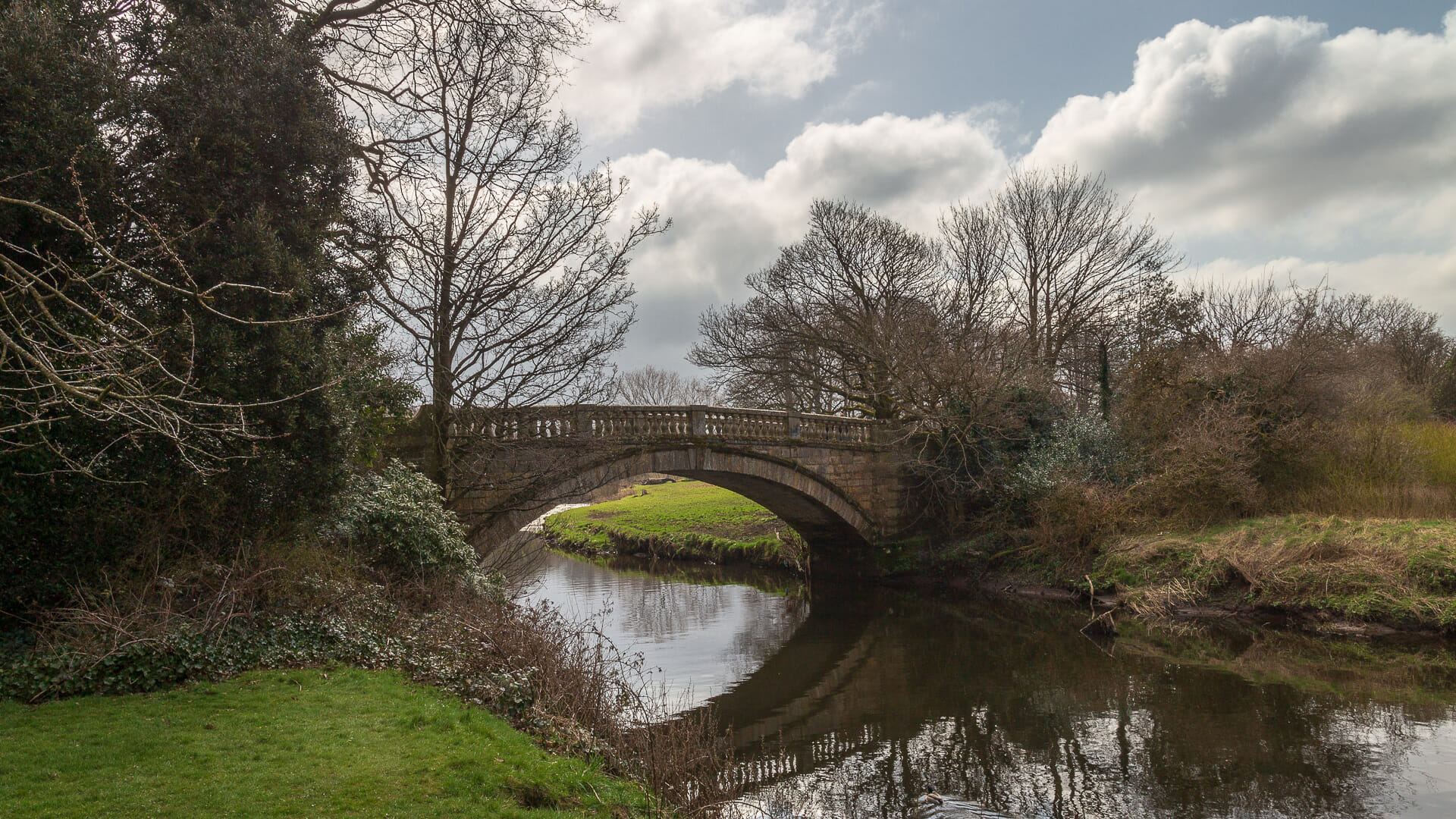
The area around Pollock House is most clearly recognizable in the episode “Best Laid Schemes” (German title: “Das Versprechen”) from Season 2, Episode 6. Starting around the 45-minute mark, Claire tries to prevent the duel between Black Jack Randall and Jamie. She’s sitting in a carriage that, among other things, crosses a bridge.
The walls around which the carriage curves are also part of the Pollock House grounds. Finally, the body of Faith Frazer from Episode 7 of Season 2 lies on the small plateau above the garden, which can be seen in the first image of this post.
Directions:
With a GPS: Entering “G41 4SN” will take you close to the park’s north entrance on Dumbreck Road.
Without a GPS: In Glasgow, take the highway toward Greenock, then continue on the M77 toward Kilmarnock. Take the “P’shields/Mosspark” exit. Keep left at the bottom, toward Pollockshaws. Immediately get into the right lane and turn right. A sign welcomes you to Pollock Country Park. Continue on the road for a few more minutes until you reach the house.
By public transit: The park itself, located on the outskirts of the city, is easy to reach. The train from Glasgow Central Station toward Barrhead takes about ten minutes to reach the final stop, Pollokshaw West. The fare is approximately 2.50 pounds. From Pollokshaw West, it’s just a few steps to the park entrance and then about a 20-minute walk to the house.