Two natural harbours and a beautiful lighthouse make the Isle of Scalpay a paradise. Visitors will find lovely nature and fine food here.
Contents
Scalpay lies to the east of the Isle of Harris, part of the Outer Hebrides, and was for a long time a tiny, remote island with two important anchorages: An Acarsaid a Tuath and An Acarsaid a Deas – the North Harbour and the South Harbour. Both bays offered a fleet of fishermen shelter from wind and weather. And so two traditions grew up on the island: the men went to sea, while the women knitted and wove fabrics, for example for the “Scalpay Jersey”, which kept the fishermen warm.
Scalpay could easily have shared the fate of many small Hebridean islands: the young would have turned to a different future, and the population would have kept shrinking. But then something happened that would change the island profoundly.
Scalpay Bridge
In 1998, resident Kirsty Morrison, then 103 years old, became the first person to cross the road bridge that has connected Scalpay to Harris ever since.
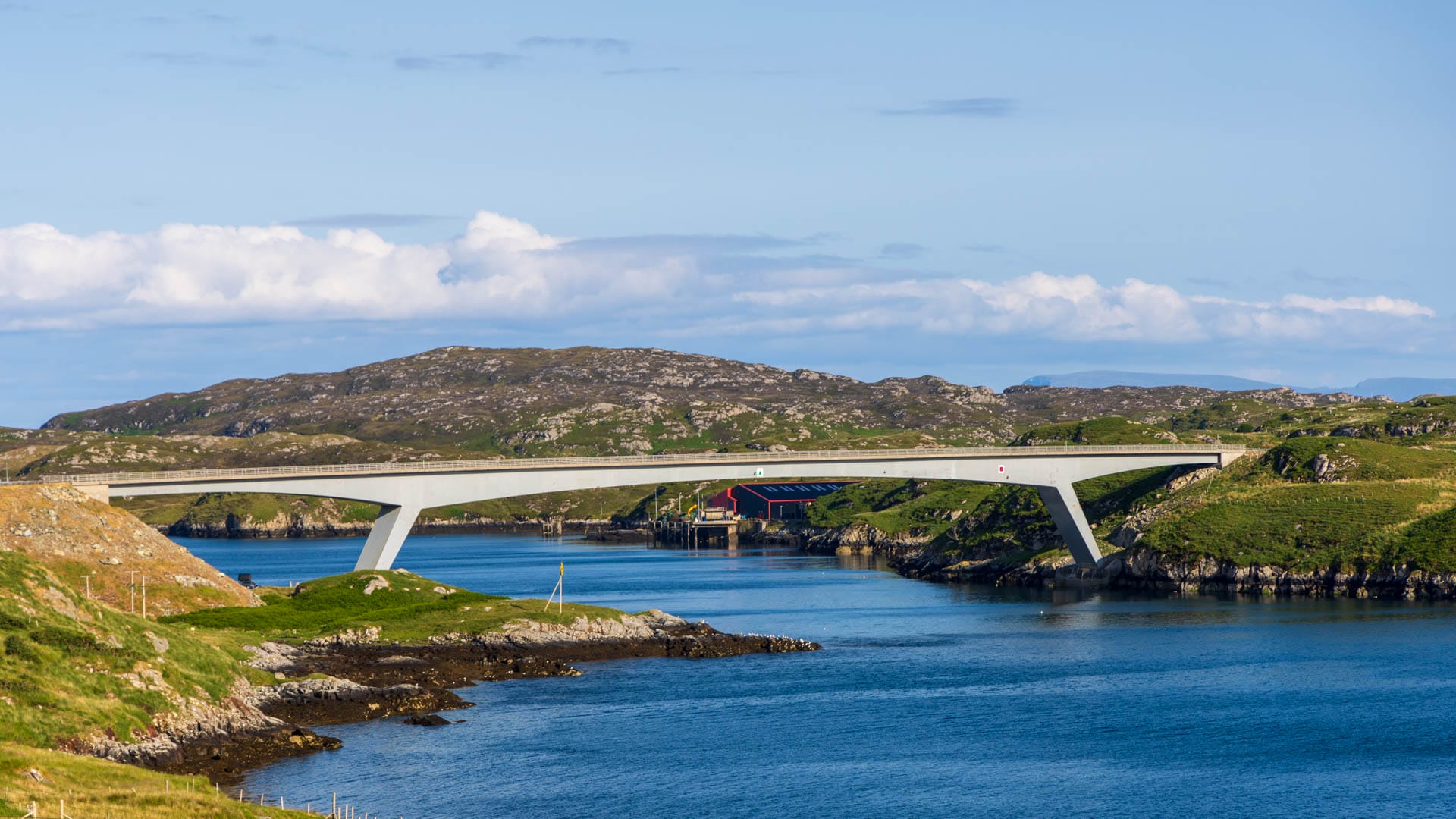
This has drawn new residents to the island. It has effectively become a “suburb” of Tarbert, and a sought-after destination for tourists.
Another pivotal event changed Scalpay too. Until 2012, the entire island was privately owned. But when the owner passed away, his heir decided to hand Scalpay over to its residents – as a gift.
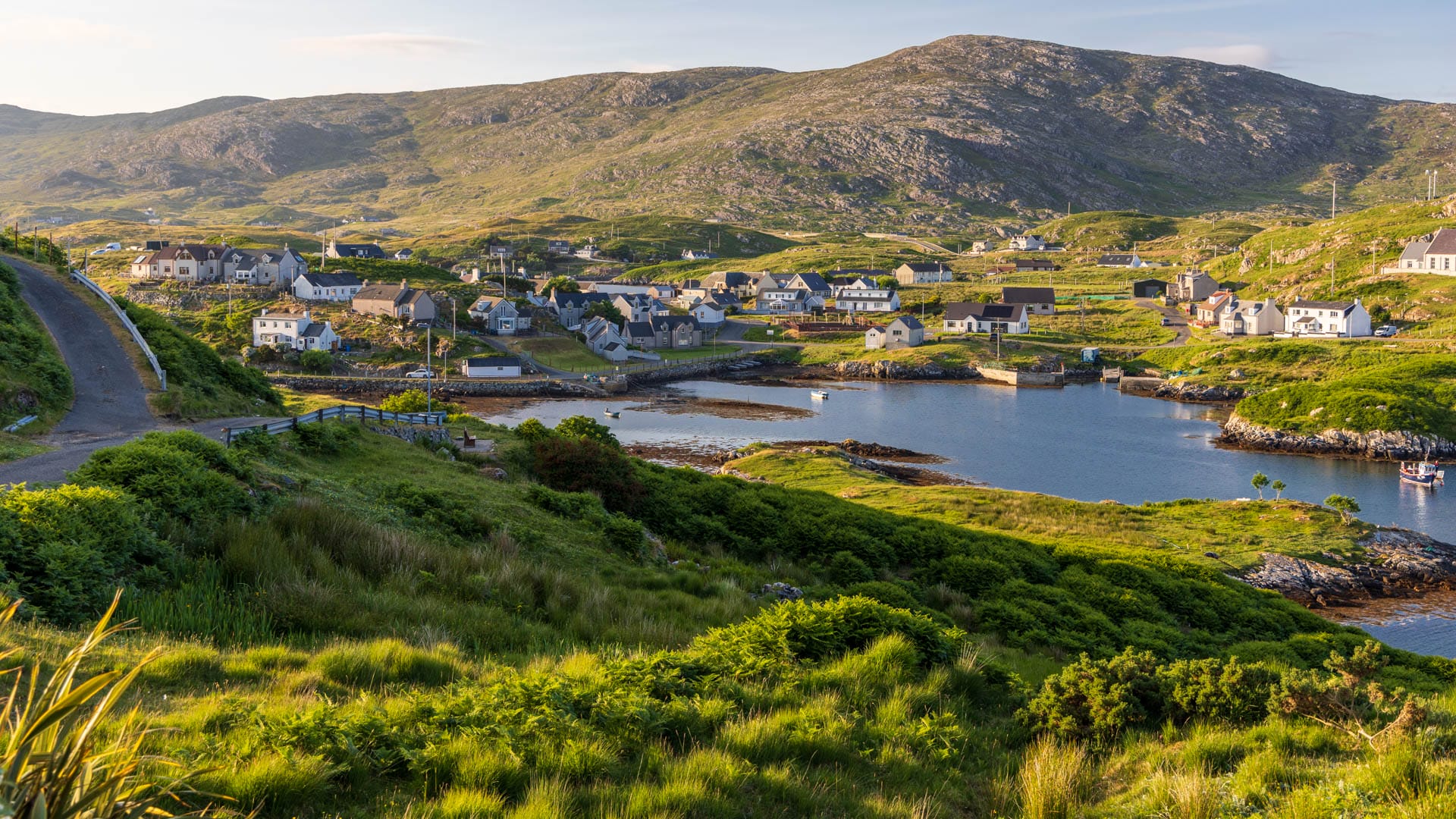
Thanks to the bridge, visitors can now easily explore Scalpay’s beauty too: gentle green hills frame the bays where fishing boats lie at anchor. The view of An Acarsaid a Deas in the sunlight shows this off beautifully.
The island has plenty to offer nature lovers in particular. Those who are up for it can set off on the roughly ten-kilometre circular walk around the island, which also leads to the Eilean Glas Lighthouse (see below).
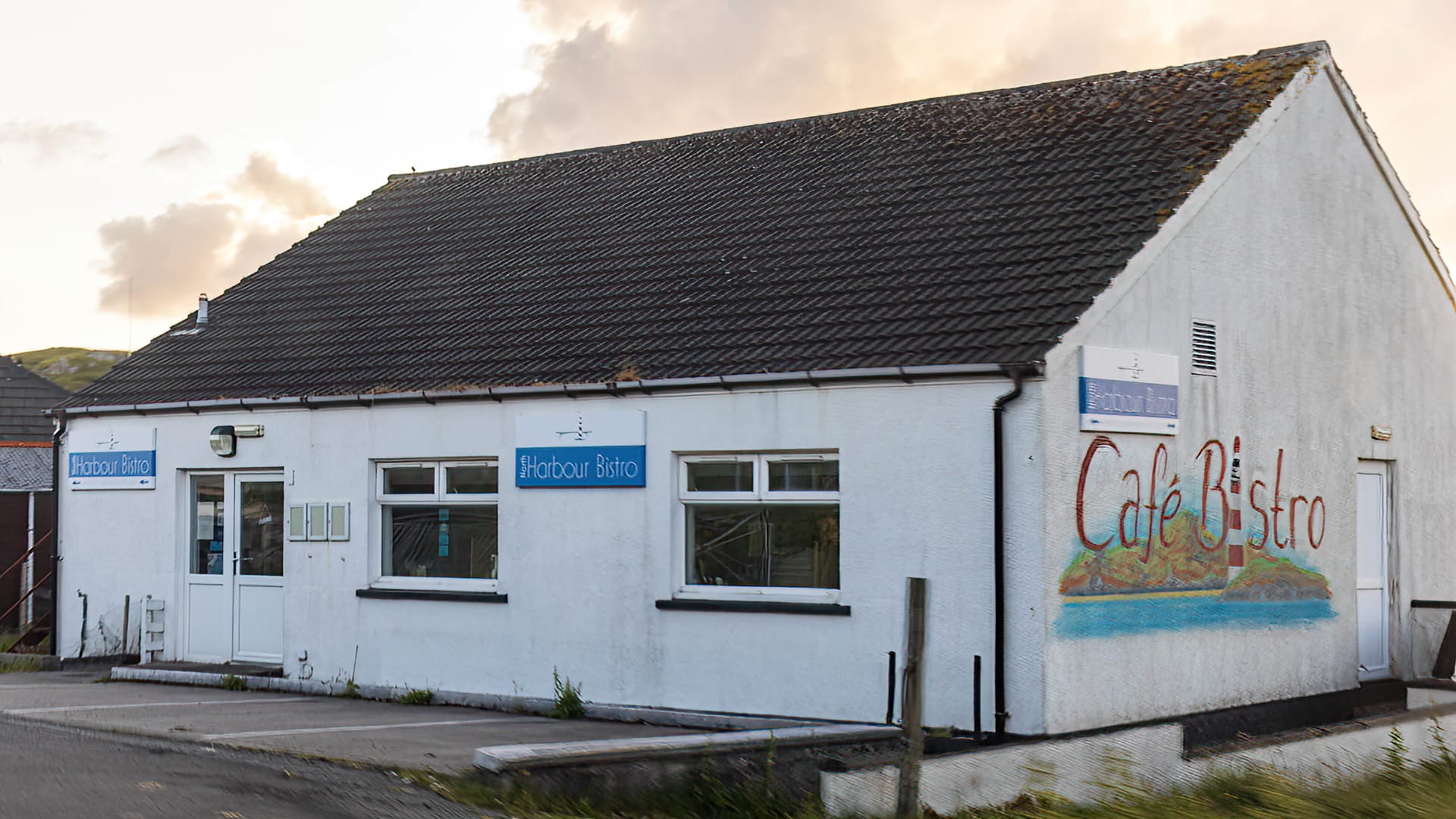
After the three-to-four-hour walk, the North Harbour Bistro offers a fitting reward. The restaurant is known for the excellent cooking of chef George Lavery, originally from Glasgow. The food is superb, though it costs accordingly. To be safe, visitors should book a table in advance via Facebook.
Concrete ship Cretetree
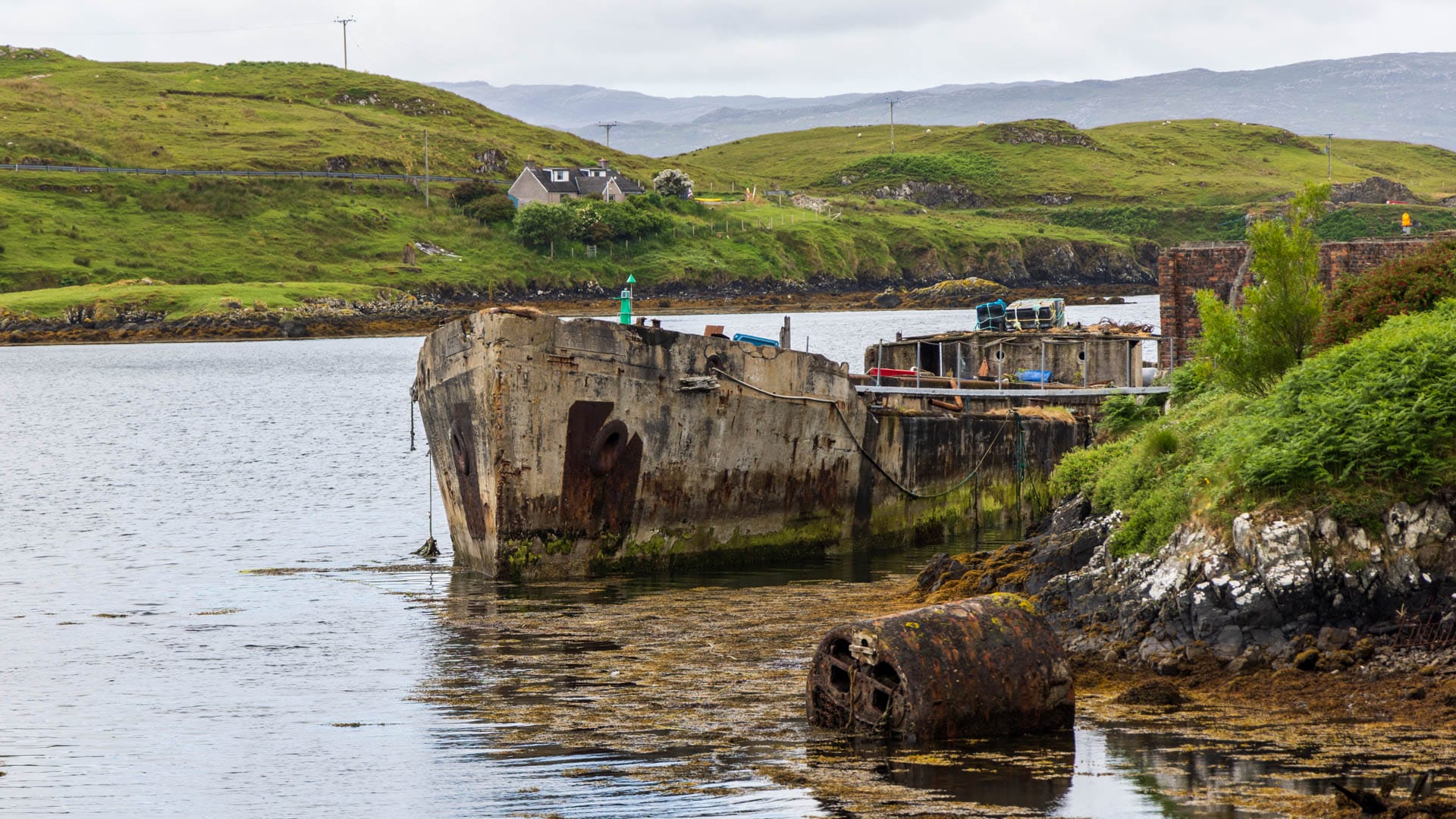
The North Harbour holds a special sight. There lies the nearly 55-metre-long wreck of the concrete barge “Cretetree”. Because steel became scarce during the First World War, the British government commissioned 64 ships with concrete hulls. Most of them are now lost.
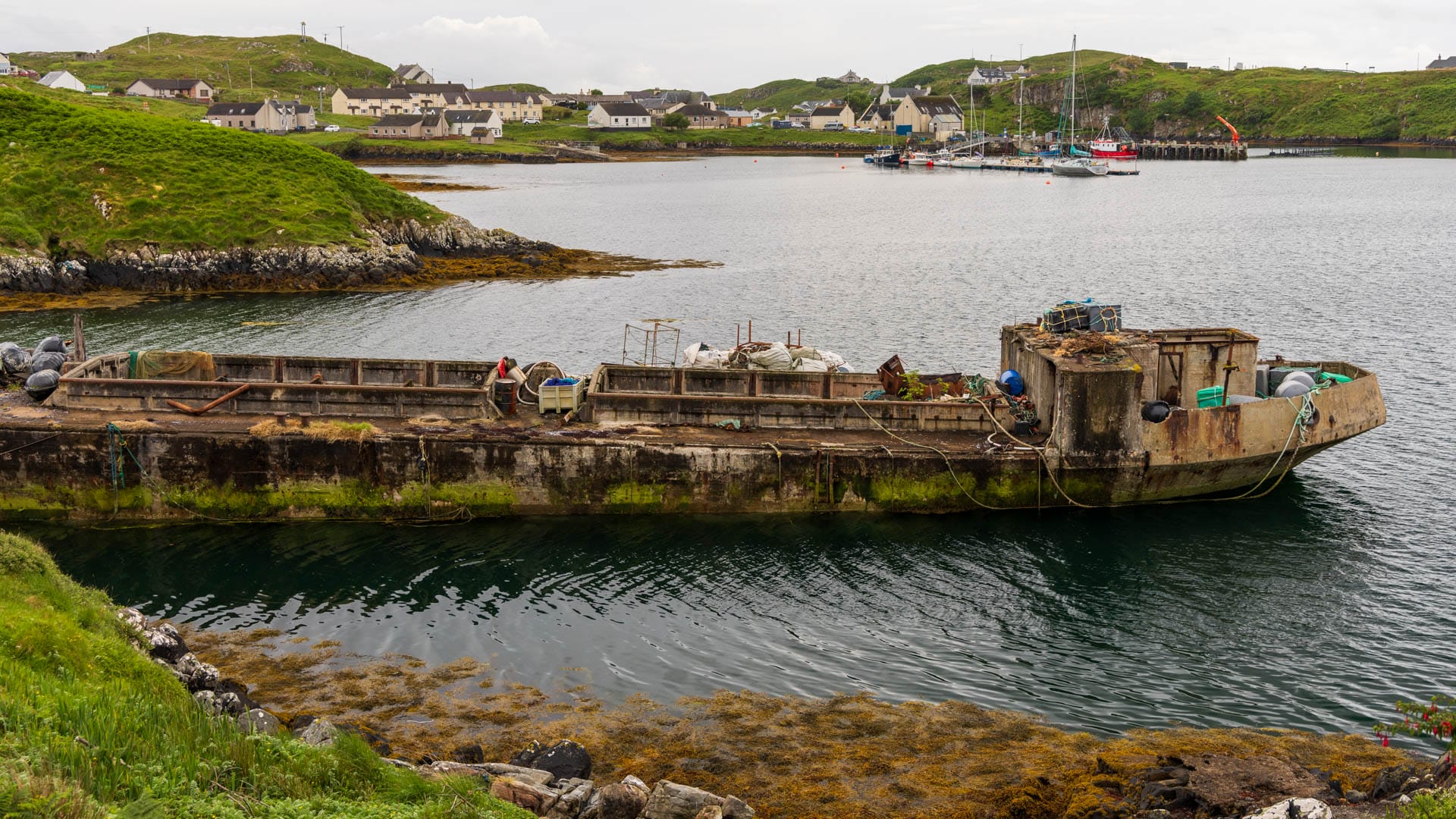
For a while, the Cretetree was used to transport coal. But as early as 1961, she was towed to her current mooring and decommissioned. Today she is slowly rotting away and is used by fishermen to store nets. She is easy to spot from the turning right after crossing the bridge. Turn towards Aird an Aiseag and drive a short way until she comes into view.
Eilean Glas Lighthouse
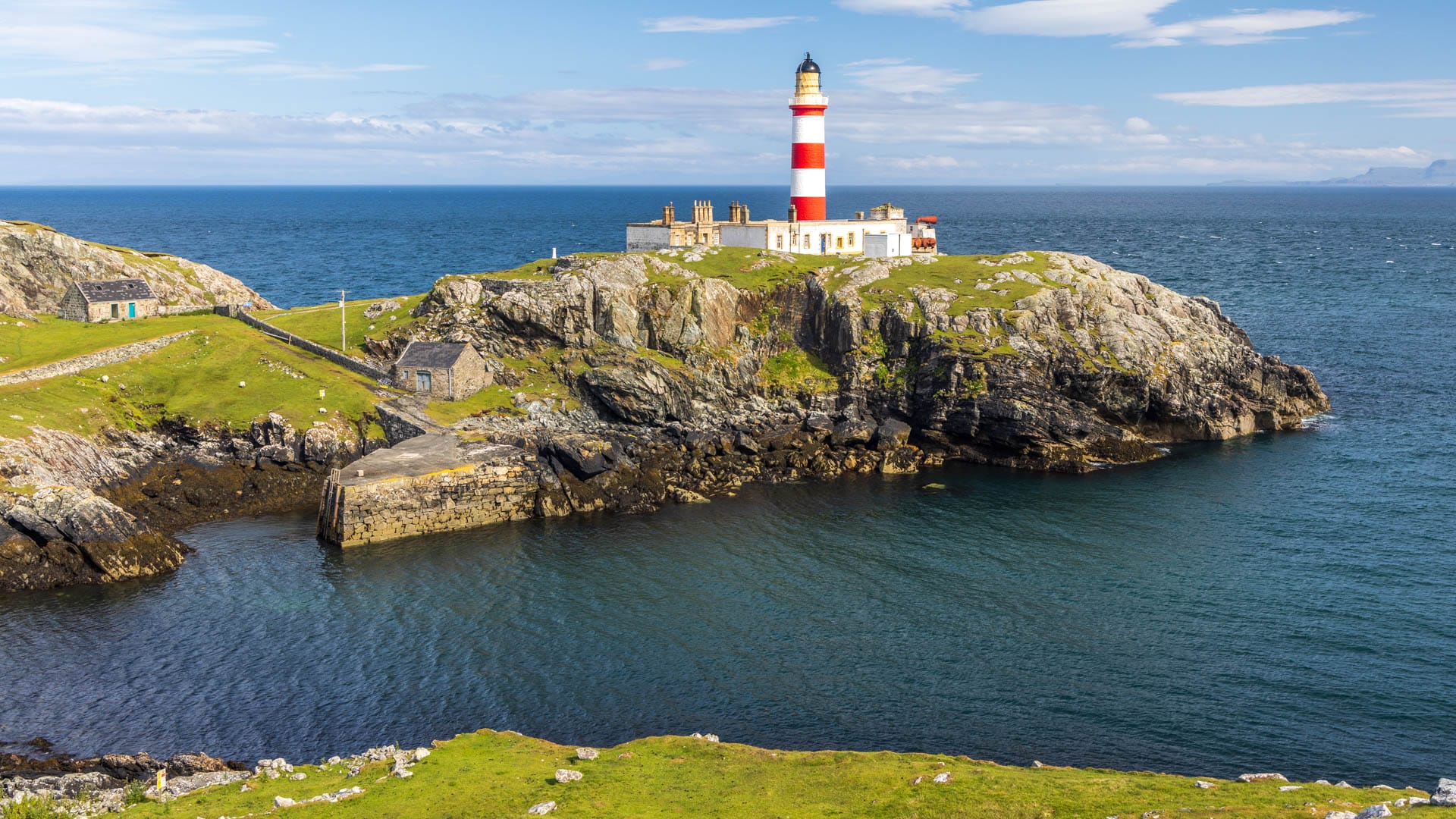
On a picturesque headland of Scalpay stands the Eilean Glas Lighthouse, a wonderful destination for a walk. It’s about 3.5 kilometres, the path is well maintained, and you should set aside around two hours for the outing overall. The walk is explained in detail below.
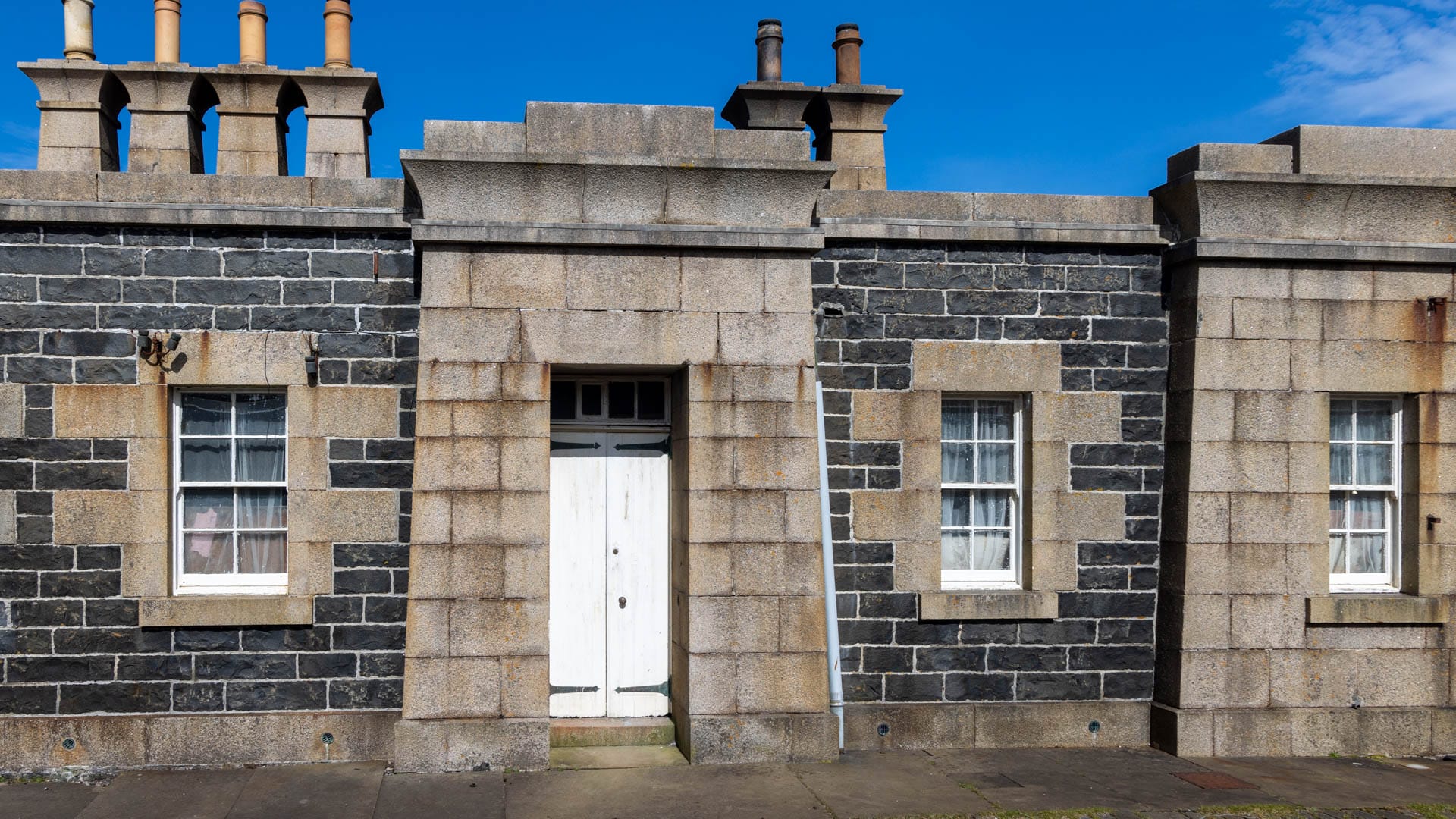
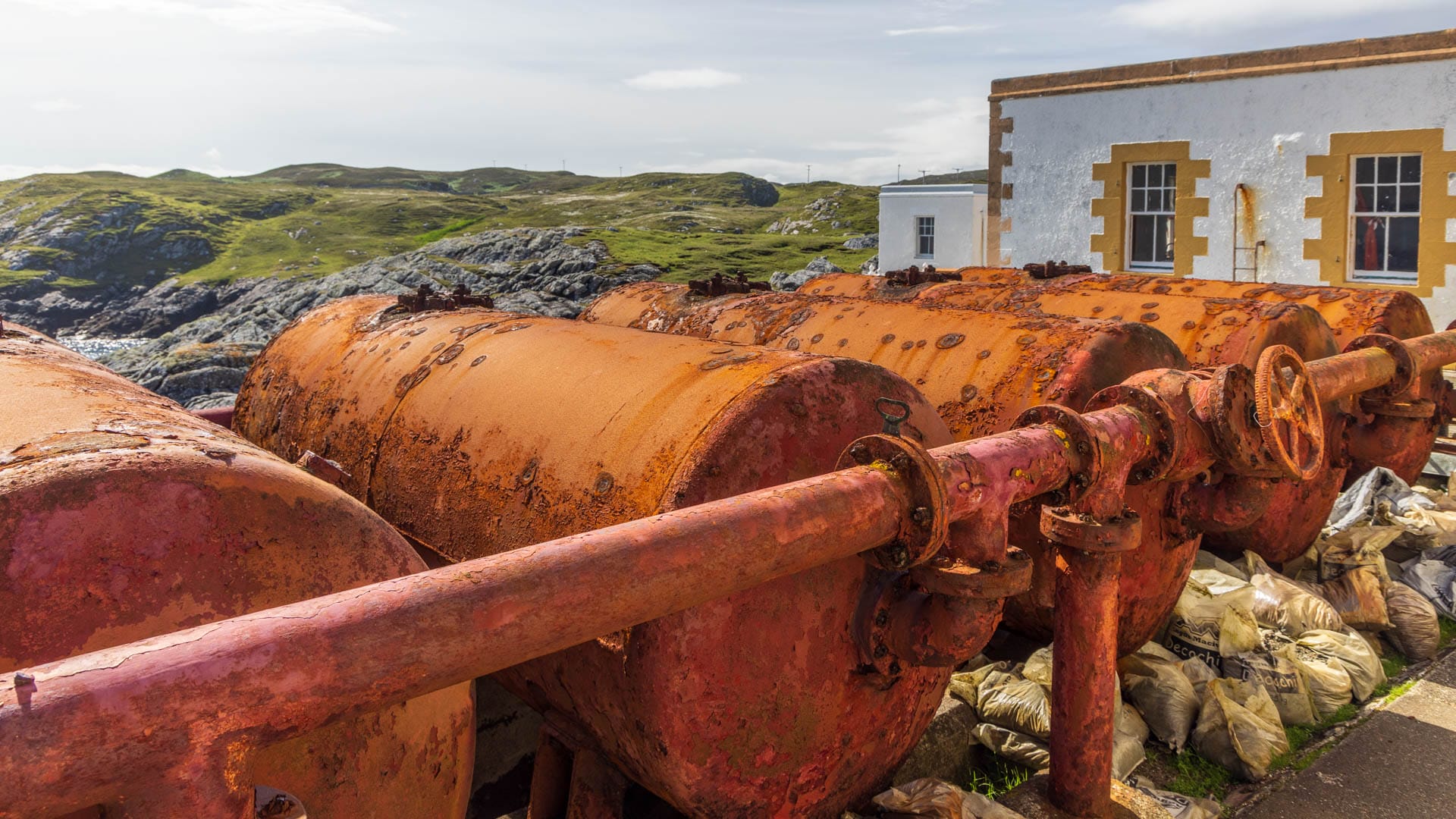
There had already been a light on Eilean Glas since 1789, and in 1824 Robert Stevenson set about building today’s tower along with its buildings. The houses are built in an Egyptian-influenced style. A small café has now moved into one of the buildings.
The lighthouse on this small island was, however, the scene of a scandal: in order to renovate the property, a couple in the 1990s swindled more than £100,000 out of a man with Alzheimer’s. The buildings are certainly worth preserving, of course – but never at the expense of the vulnerable.
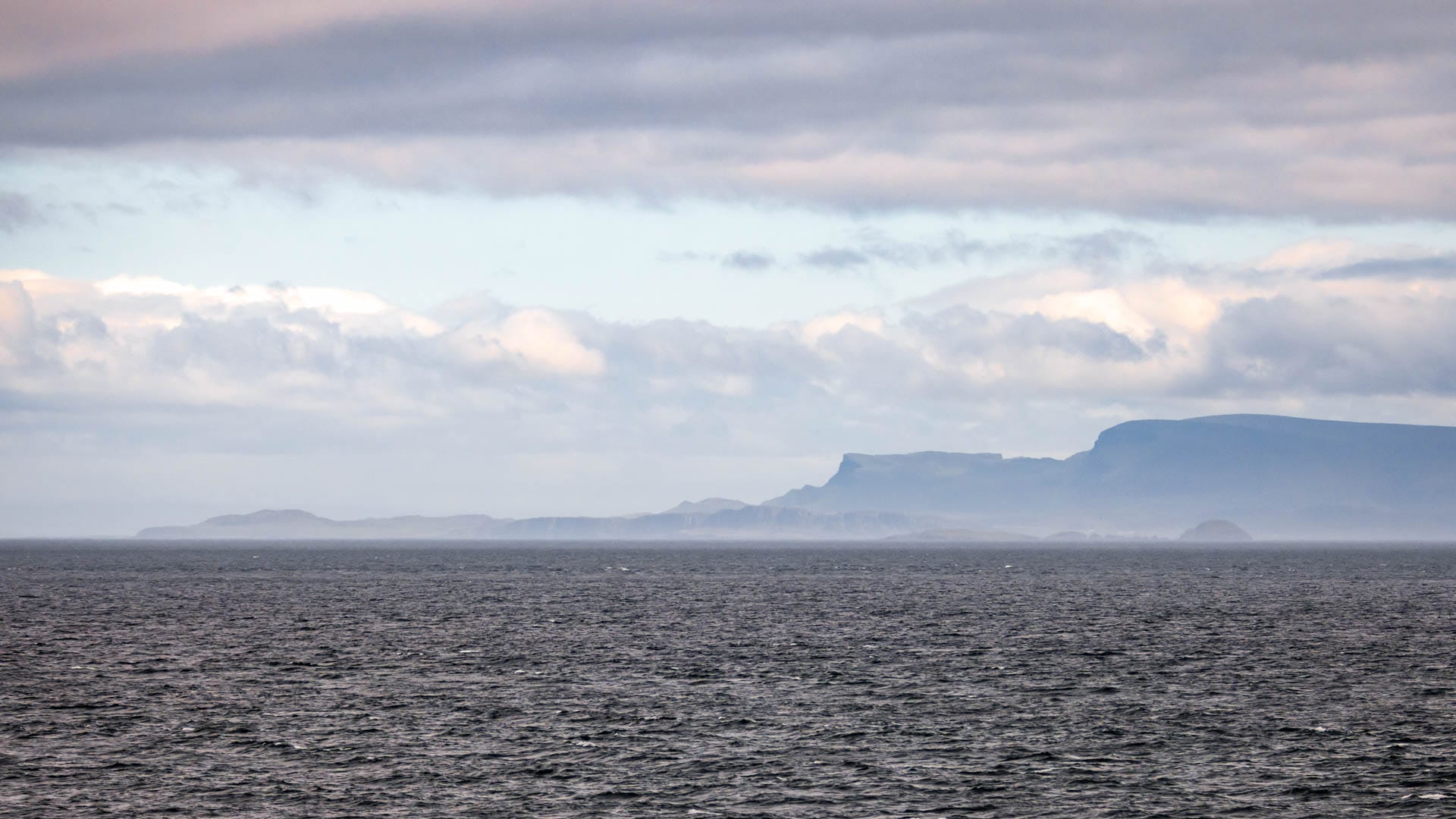
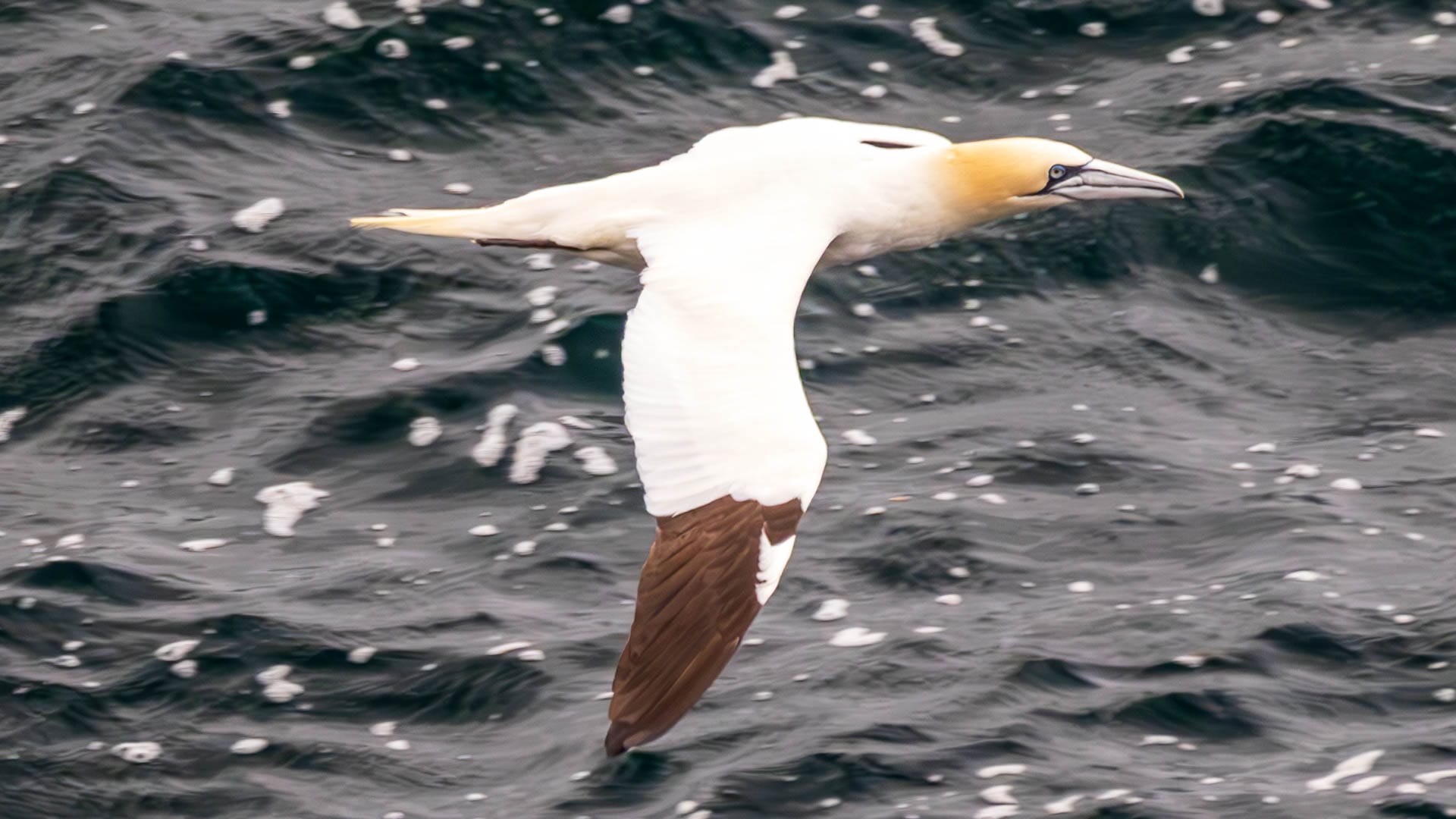
The trip to the lighthouse is the highlight of any visit to Scalpay. The route leads through wonderful scenery, and the Eilean Glas peninsula is considered one of the best places in the Outer Hebrides to spot whales and dolphins. Plenty of seabirds fly here too. And even if none of that turns up, there’s still the wonderful view across to the Isle of Skye.
Walk to the Eilean Glas Lighthouse
The Outend car park lies almost at the very end of Scalpay’s main road. This is where the short walk begins. First follow the road uphill for a few metres, then turn left at the sign for “Eilean Glas Lighthouse” and go through the cattle grid.
The path is briefly tarmacked before it turns into a gravel track.
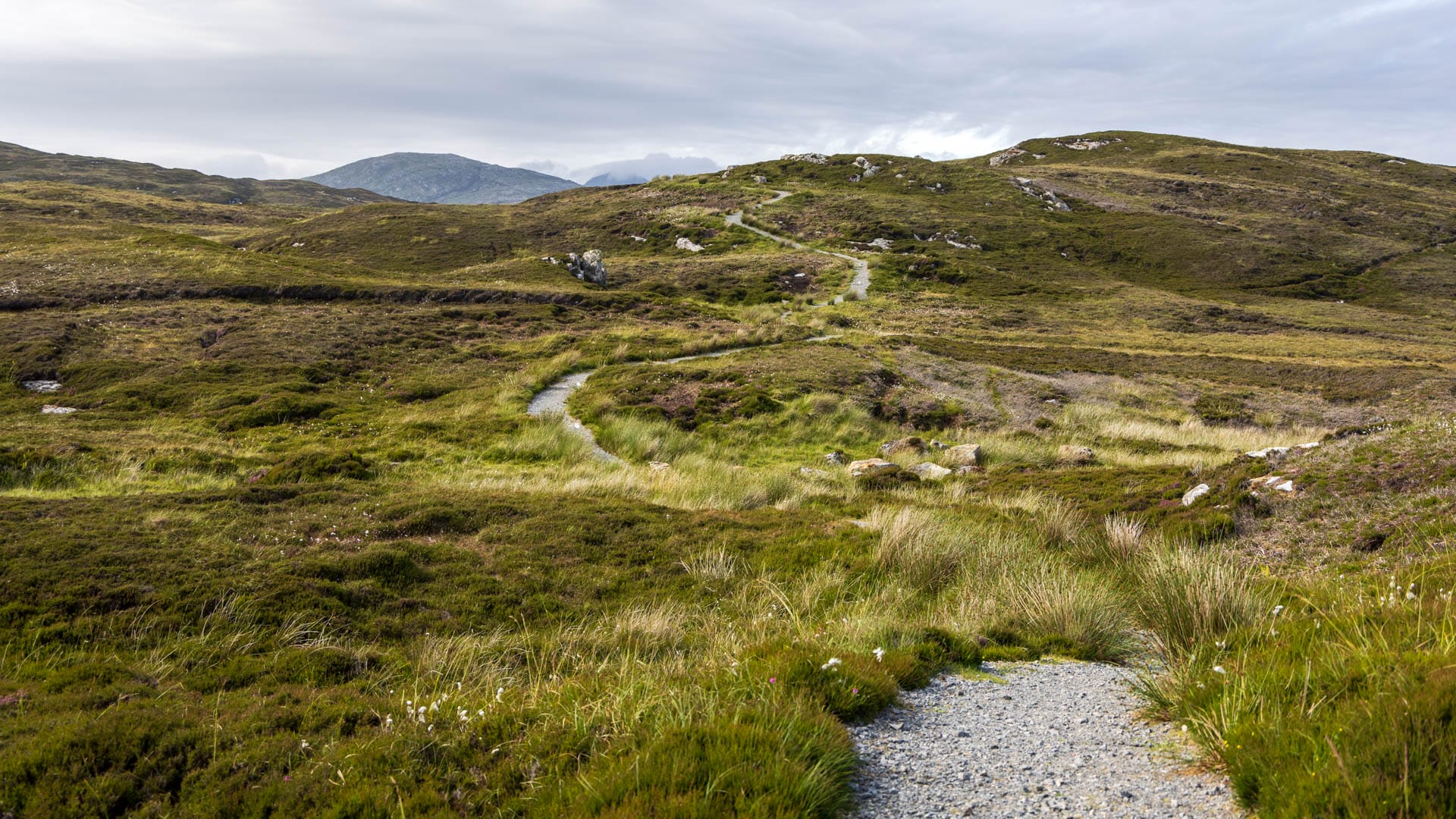
The route crosses a stretch of moorland dotted with a few lochs. At one point it passes through a gate in a typical stone wall. Then the lighthouse comes into view.
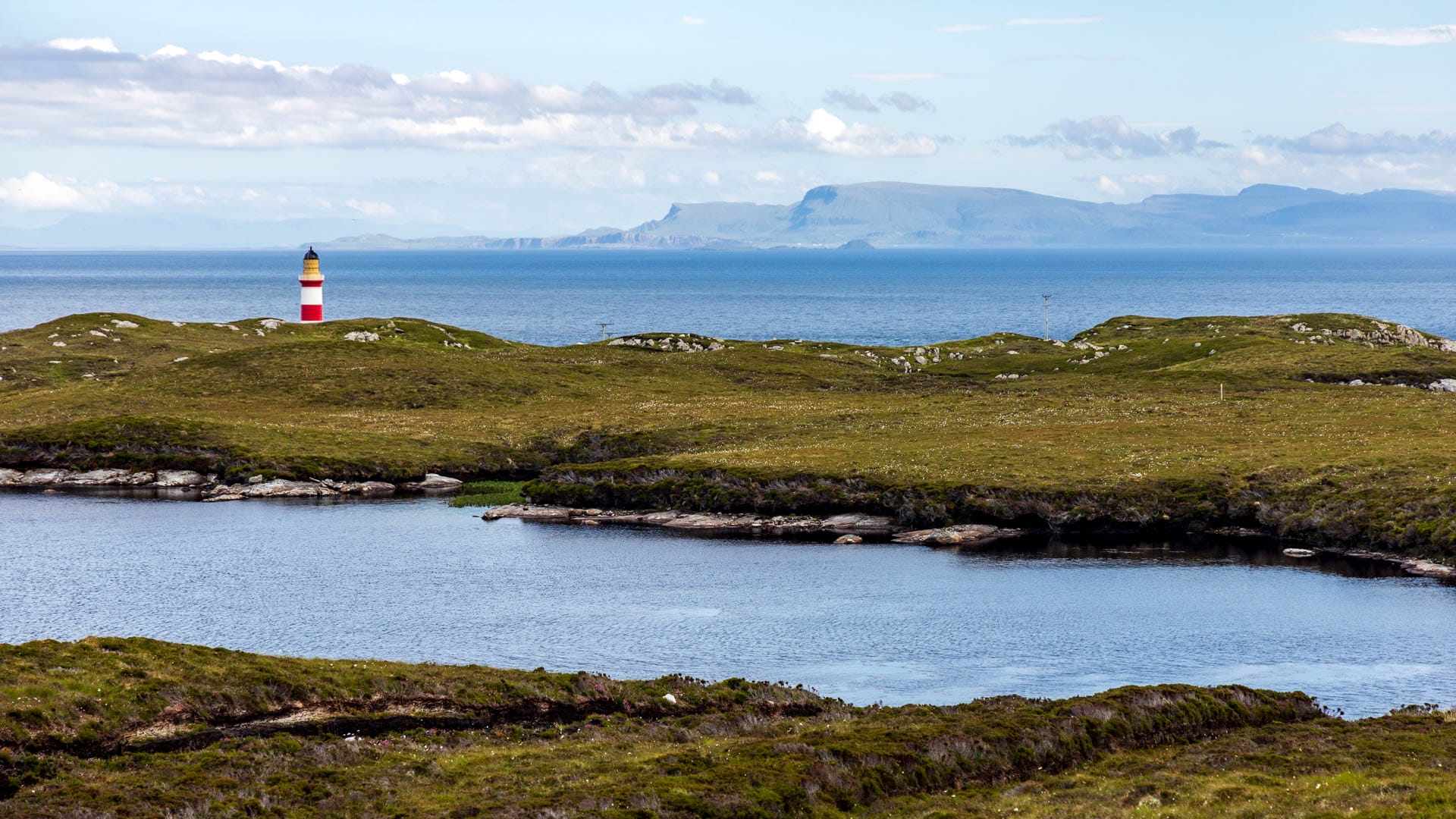
Take care, as a descent down towards the bay of Eilean Glas follows. It isn’t very steep, but the stones and grass can be slippery. After that, the path leads to the hut with the blue doors. Here you’ll find information about the flora and fauna around the lighthouse.
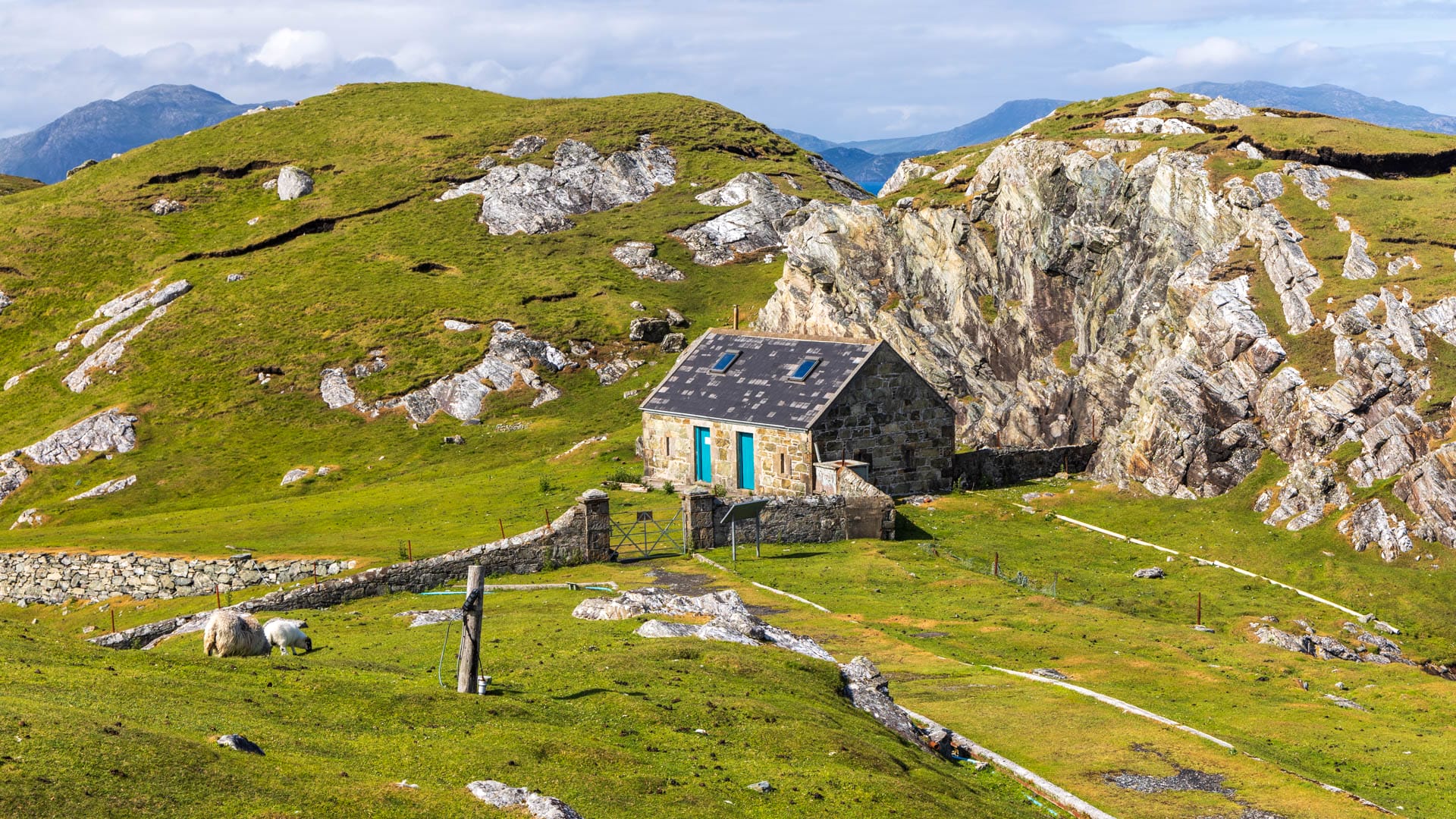
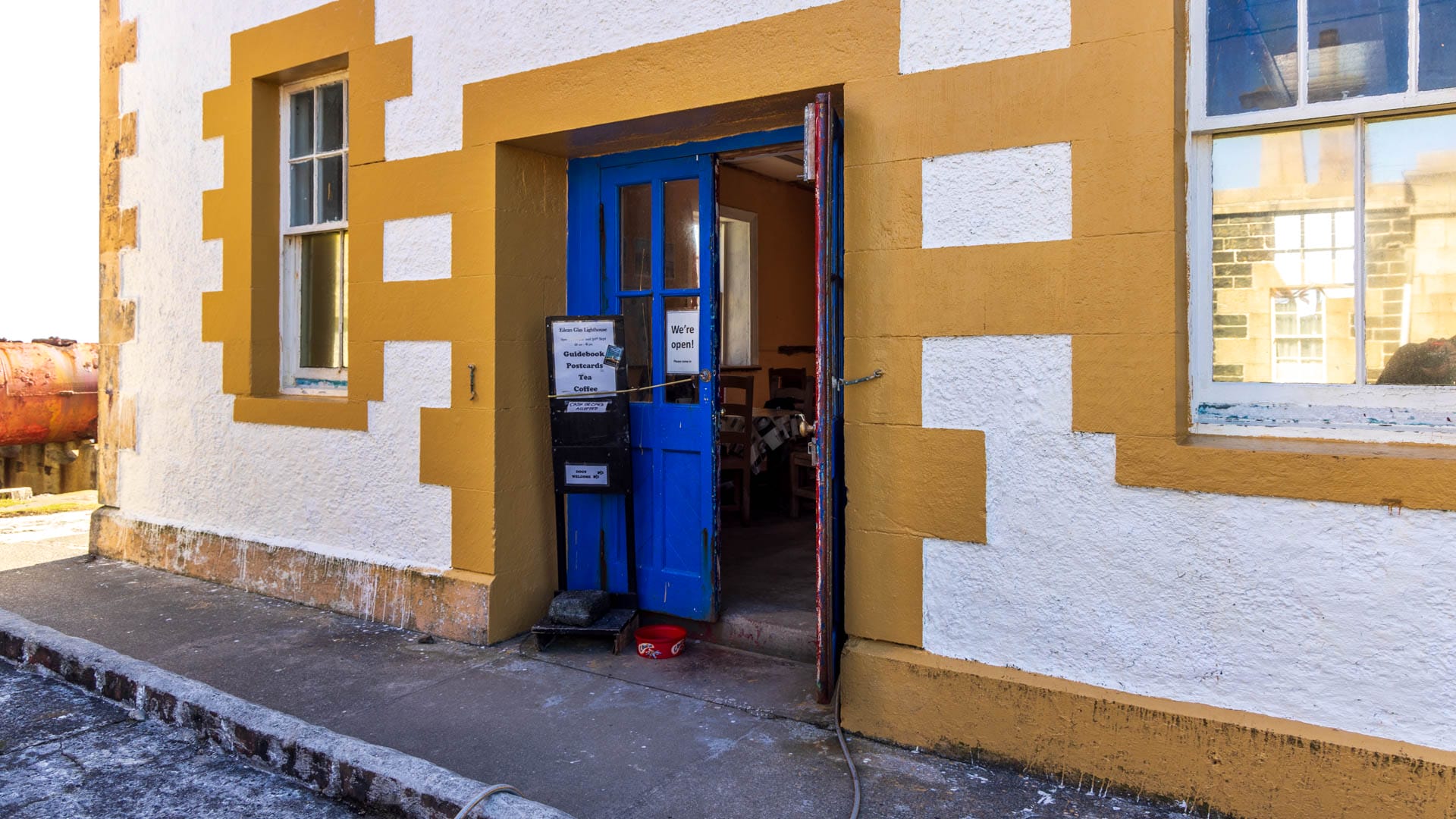
After visiting the hut, the path continues towards the lighthouse through another cattle grid. More information boards can be found here too, before the path leads between the buildings with their ancient-Egyptian look.
On the right, in the hut, the café serves hot drinks.
In front of the lighthouse, on the left, a small passage opens onto a platform. From here you can watch for birds, whales and dolphins – with a bit of luck, at least.
From the platform, you can walk around both the old and the new tower. The way back then simply follows the same route you came by.
Getting there
With a sat nav: The postcode “HS4 3YA” will take you to Ardinashaig, the island’s main settlement.
Without a sat nav: At the large roundabout in Tarbert, the main town on Harris, “Scalpay” is already signposted. Simply keep following this road, past Loch Laxadale and over the bridge onto Scalpay.
To reach the car park for the walk, follow the road through the village and take the turning towards “An Ceann a Muigh (Outend)”. Keep following the road until you reach the car park.