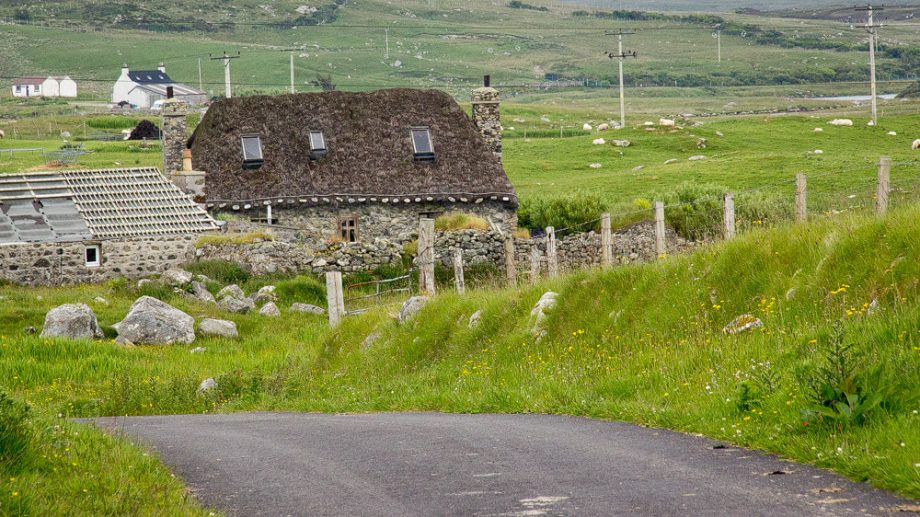
Thatched houses, the ruins of early Christian chapels, and a cosy youth hostel – that’s what the small settlement of Tobha Mòr, or Howmore, offers its visitors.
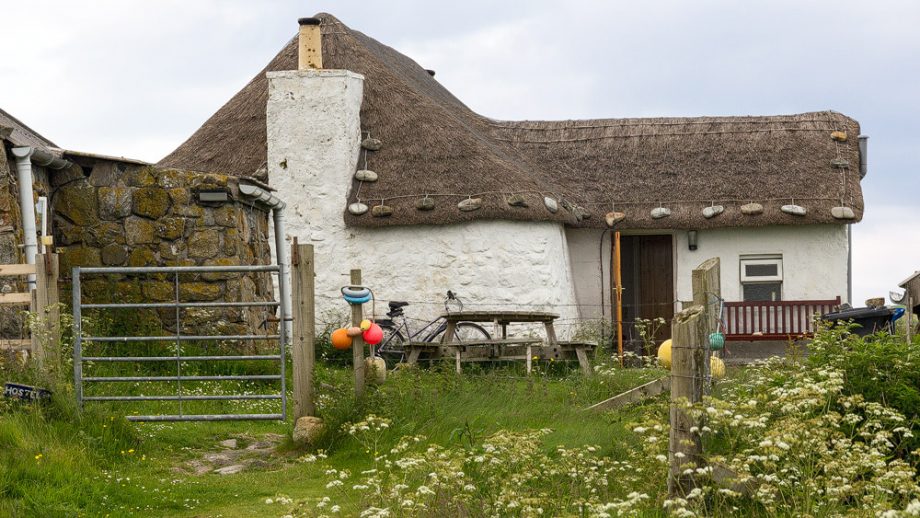
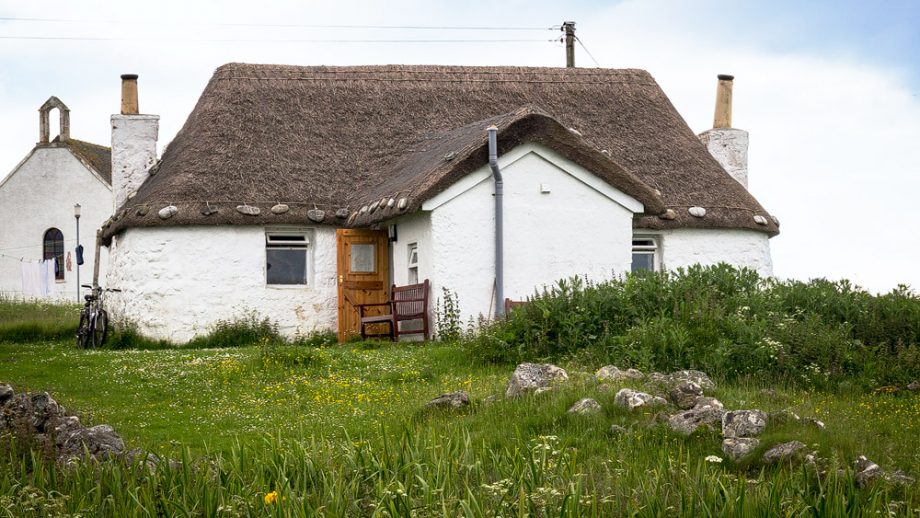
South Uist’s most beautiful spots usually lie just a stone’s throw from the island’s main road, and Tobha Mòr – or Howmore in English – is no exception. Turn towards the village and you’ll quickly notice the thatched-roof houses, where this tradition is still upheld. A few bends and small rises later, the road ends right at the car park in front of the church.
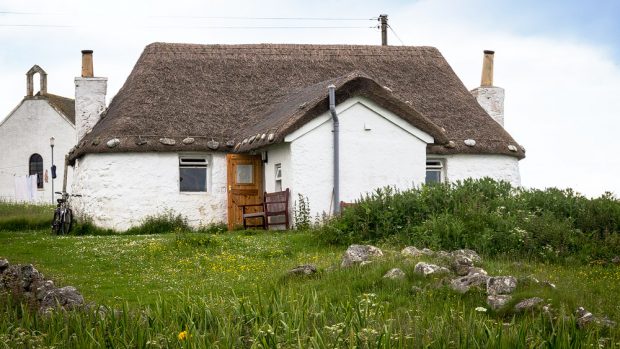
This church is no showpiece – it’s rather functional. But visitors’ eyes are quickly drawn elsewhere: to the whitewashed, thatched-roof building with its inviting seating area out front. The house really does look cosy. The good news: it’s still hospitable too, since it’s actually a hostel – one of three on the Outer Hebrides owned by the Gatliff Trust.
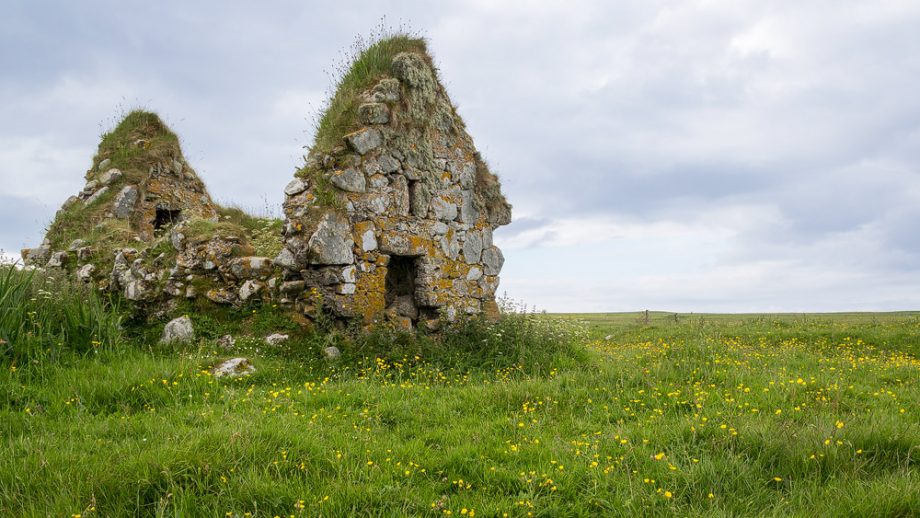
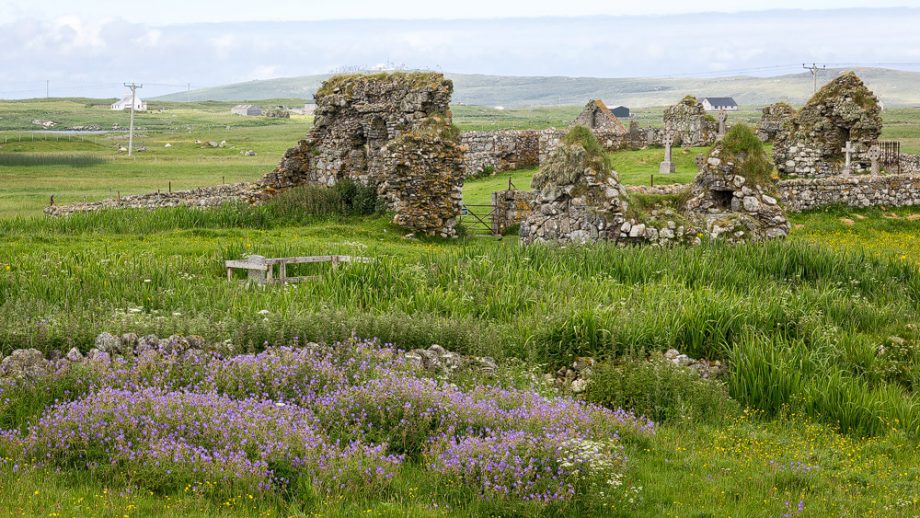
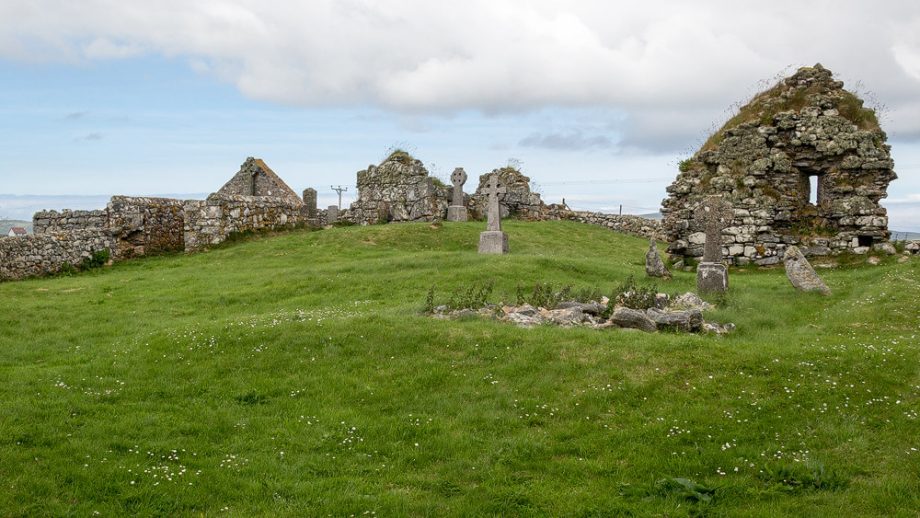
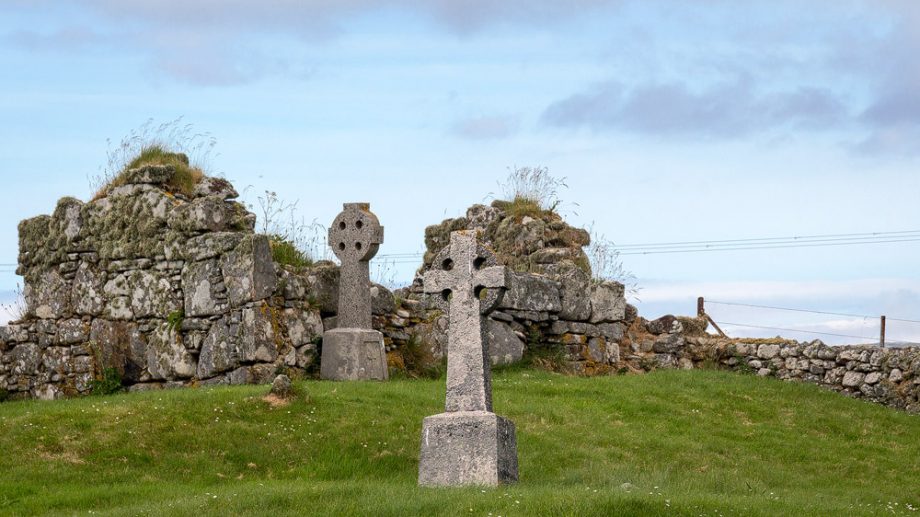
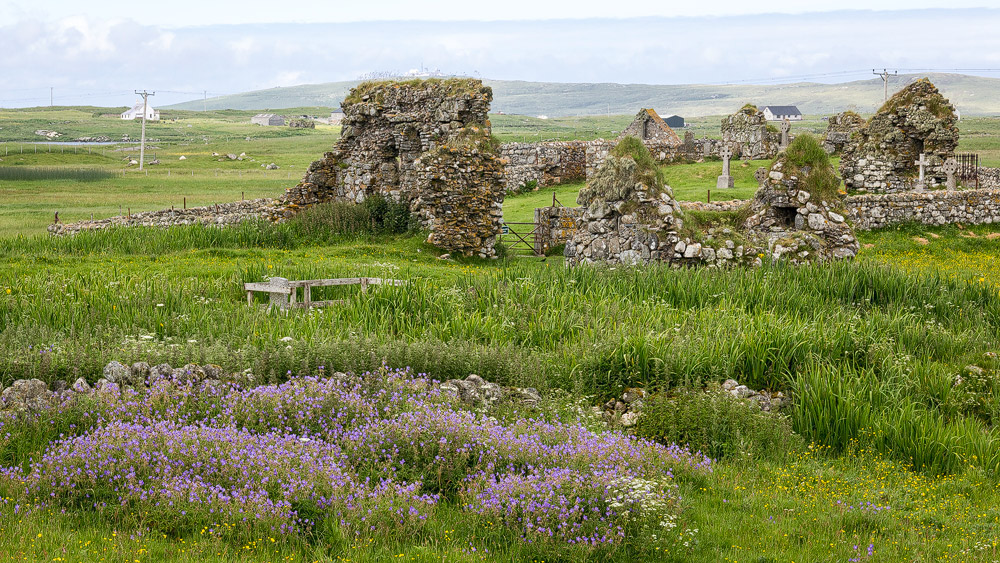
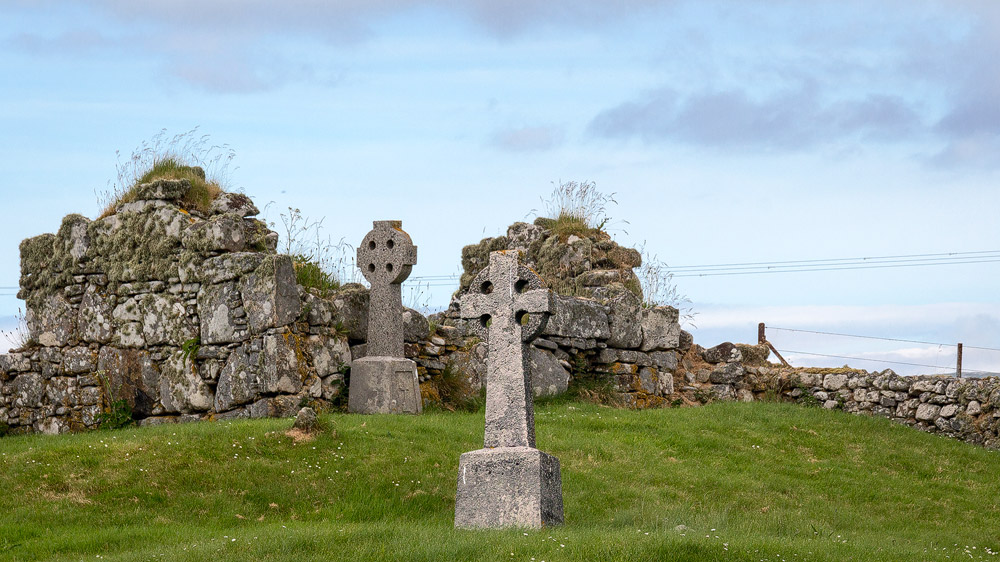
But Tobha Mòr’s heyday – as is so often the case on the western isles – lies in the past. Four remnants of churches or chapels are gathered here on a single site, and these ruins date back to the 13th century. One of the gravestones is even believed to have been here since before the 9th century.
That wouldn’t be unusual. Scotland’s Christianisation began from Ireland, so it makes sense that the Outer Hebrides were among the first “colonies”. One of the chapels also shows a clear kinship with Irish building style. In its heyday, then, Tobha Mòr was a spiritual centre of considerable importance for the surrounding area.
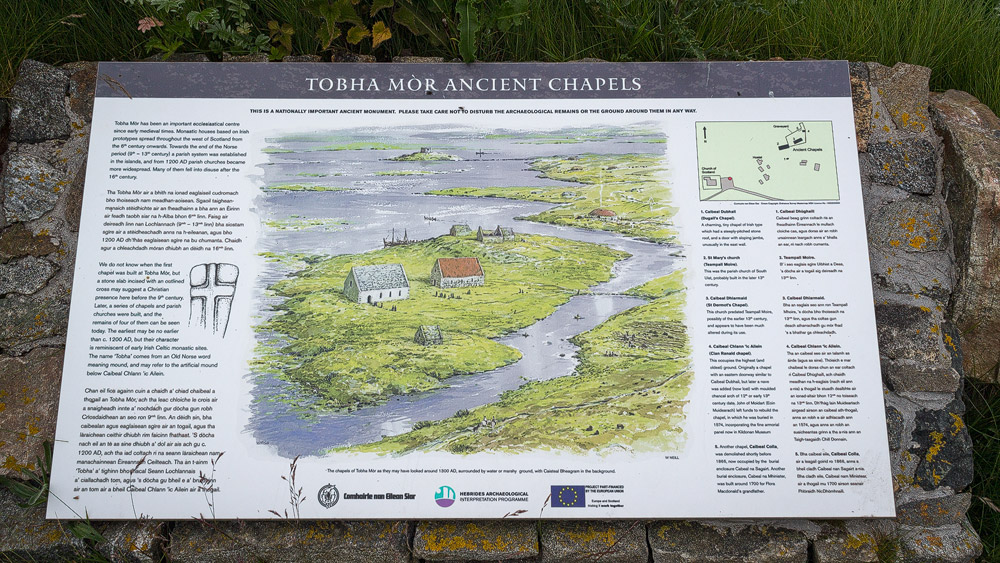
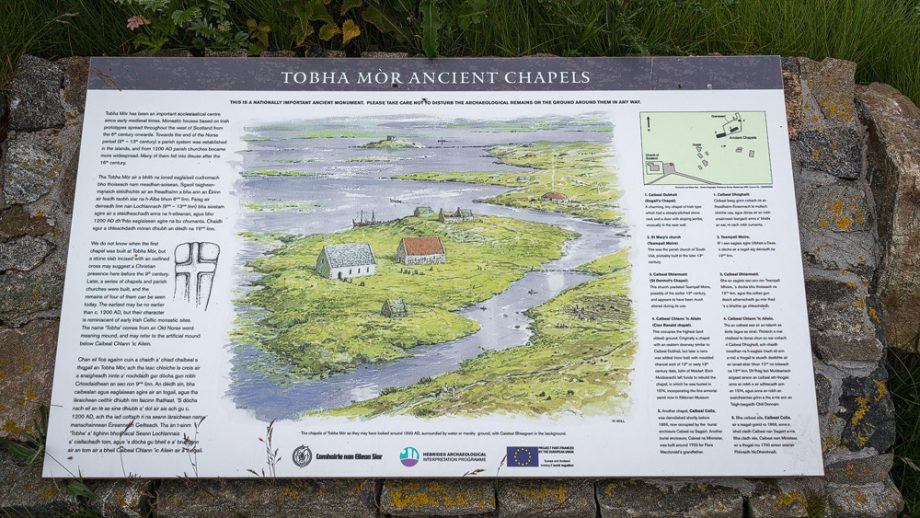
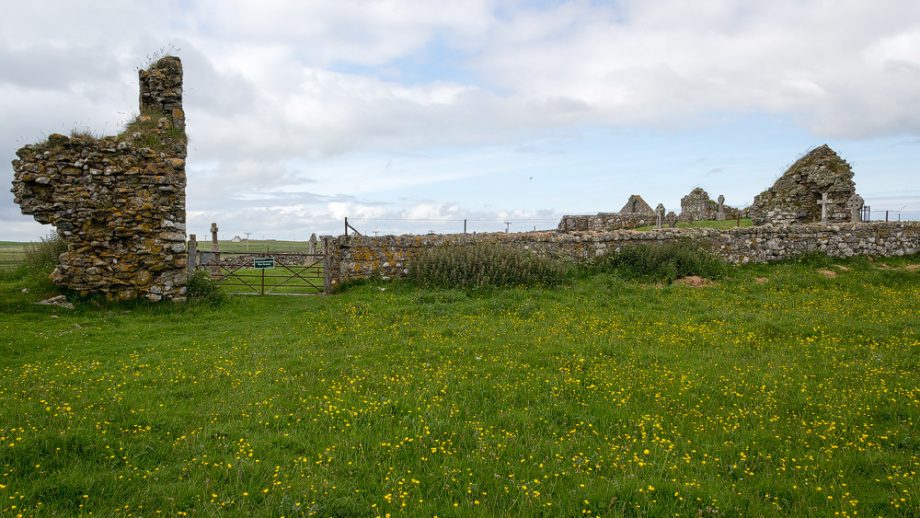
The two largest of the four chapels barely survive at all today; only on the information board can you still make out their former grandeur. On the site itself, only one corner of St Mary’s Chapel remains, adjoining the gate that leads through to the cemetery.
Right at the back stand the remaining walls of Caibeal Chlann ‘ic Ailein, the chapel of Clanranald. Clanranald was, for many centuries, the ruling clan on Benbecula and South Uist, as well as on the mainland at their Castle Tioram. One of their most famous chiefs, John of Moidart, had it built, and was buried here after his death in 1574. The chapel once held a magnificent heraldic stone, now on display nearby at the Kildonan Museum.
Good to know: The name Tobha Mòr
As so often in Scotland, this place goes by several names: it’s called Howmore in English, roughly how the Gaelic name is pronounced. On maps, it’s shown as Tobha Mòr, but spellings such as “Togh Mòr” or “An t’-Hogh Mòr” are also in circulation. “Tobha” means rope, but is also used as an expression for “slut”. In this case, though, “tobha” is thought to derive instead from the Norse “haugr”, meaning burial mound. “Mòr” simply means “big”. Nearby there’s also a Tobha Beag, or Howbeg – “beag” being Gaelic for “small”.
Tip: Visit the Clanranald heraldic stone
The Clanranald heraldic stone, and its – quite literally – eventful history, can be discovered at the Kildonan Museum, around nine kilometres away.
Getting there:
With sat nav: enter “HS8 5SH” and then follow the signs to Tobha Mòr.
Without sat nav: follow the A865 until two clear signs point west towards Tobha Mòr. Follow the road to the church and park in front of it. Then walk a short way back along the road, past the hostel, and into the field to reach the ruins.