In the graveyard of Balquhidder lies a hero of the Highlands: Rob Roy MacGregor. At his grave, we get to know the outlaw.
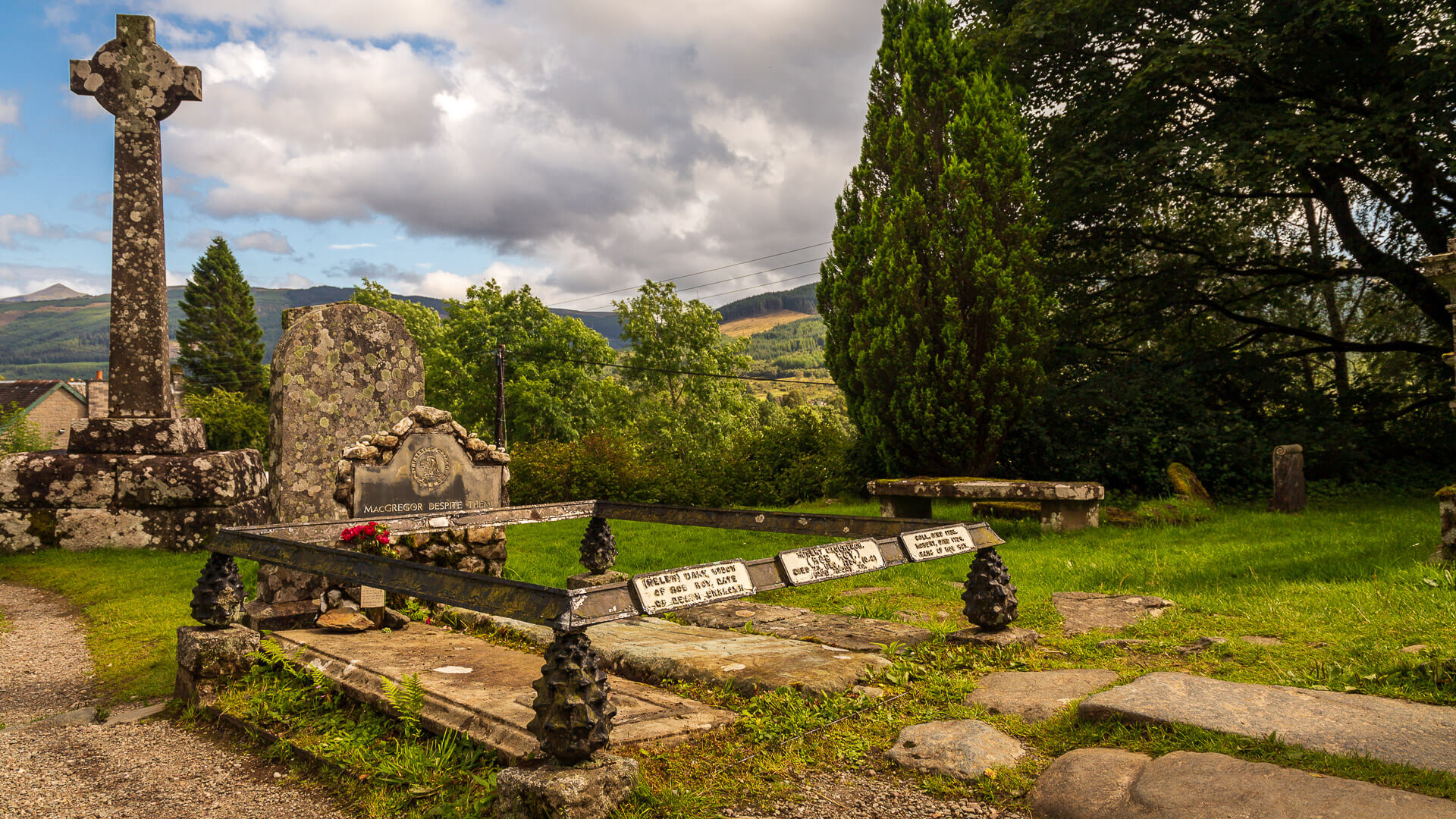
It’s hard to shake the impression that there are actually two Rob Roys. One is the hero of films and novels – a Robin Hood type, a freedom fighter embodying all the ideals of the honest Highlander. And then there’s the other, the historical figure. There’s hardly any reliable evidence about him. In the end, though, both come together again at Rob Roy MacGregor’s grave in Balquhidder.
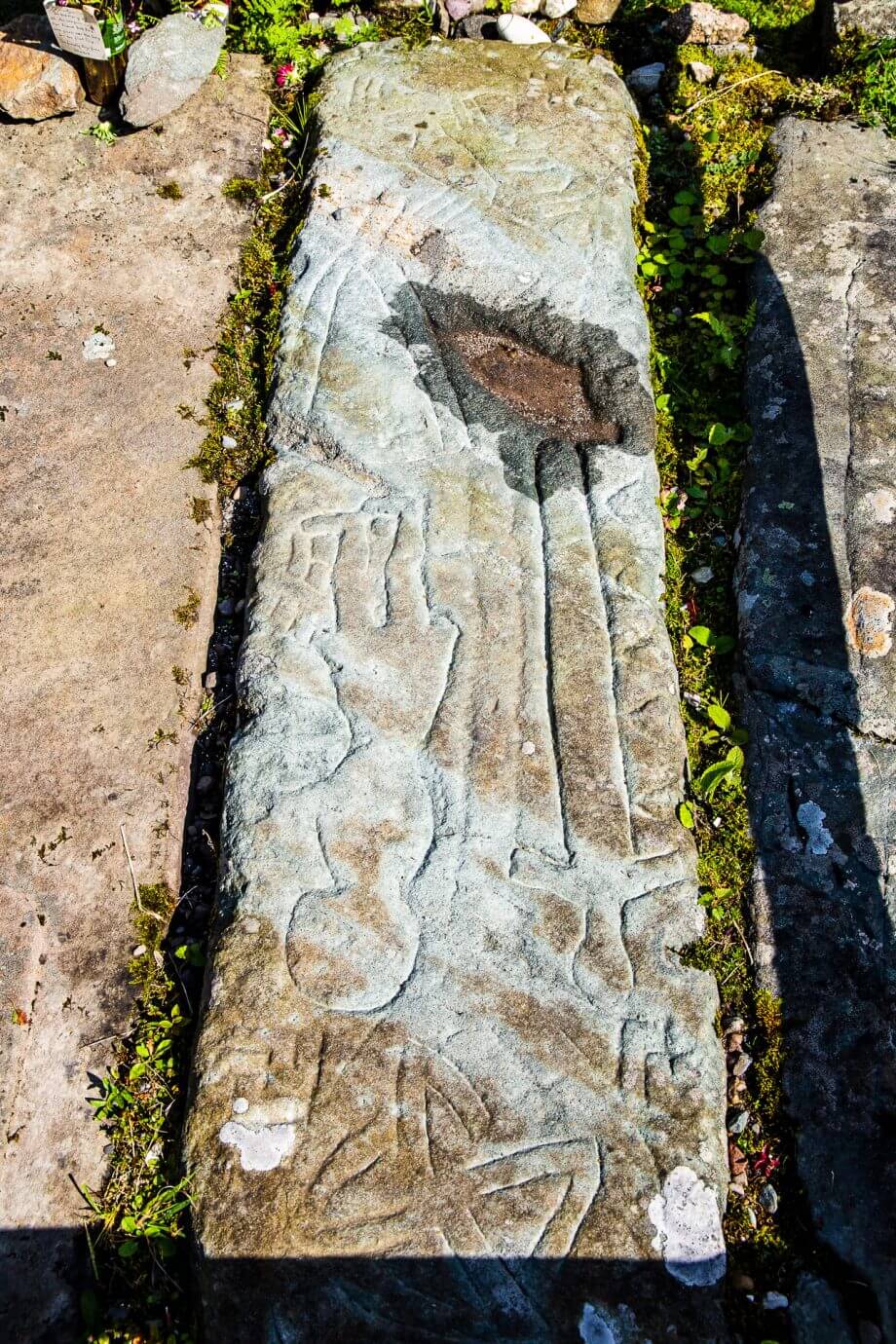
Rob Roy’s grave was originally marked only by a flat slab, on which a sword, a figure, and Celtic knots can be made out.
Later – owing to his growing myth – another gravestone was added, bearing the motto “MacGregor despite them”. It was, however, only put up in the 20th century.
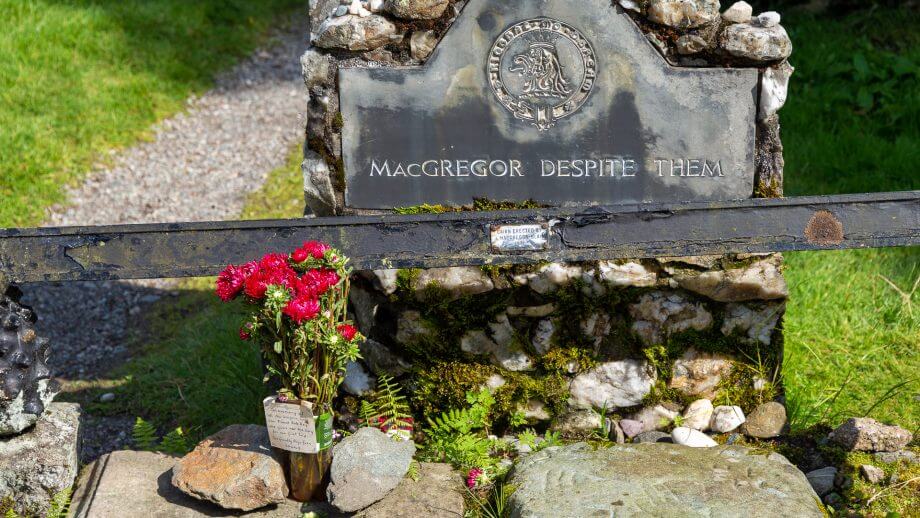
To honour the myth of Rob Roy, people often leave flowers, whisky, flags, or other objects at his grave.
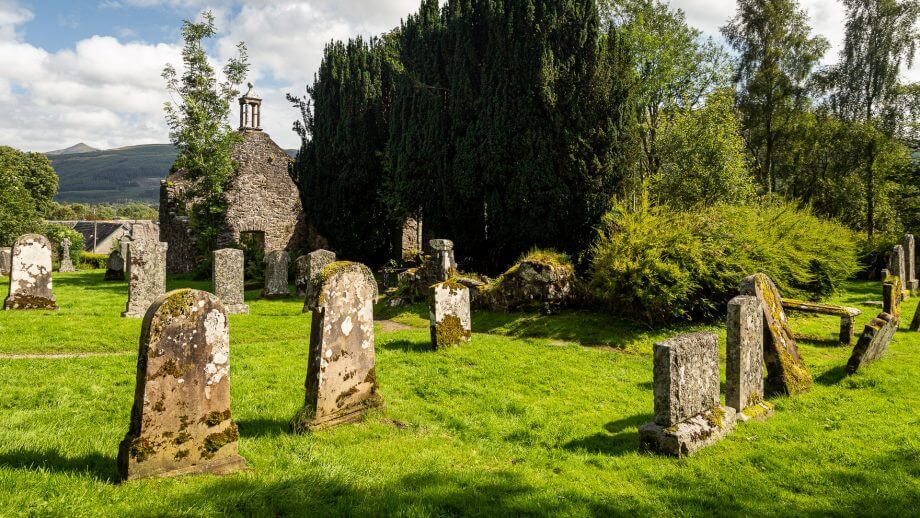
But the graveyard of Balquhidder is of course home to more than just the mortal remains of this Highland hero. The ruined church dates from 1631, though it stands on the remains of an even older chapel from the 13th century. No wonder that so many old gravestones cluster around it.
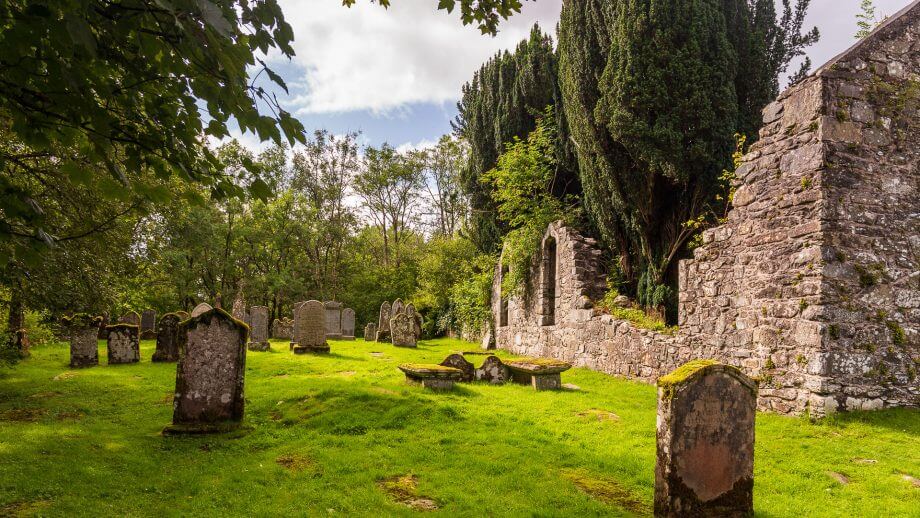
The walls of the old church were only stabilised in 1997, and now commemorate the members of Clan MacLaren buried here. Also worth a look are the beautiful window frames, which open up views of the surrounding graveyard.
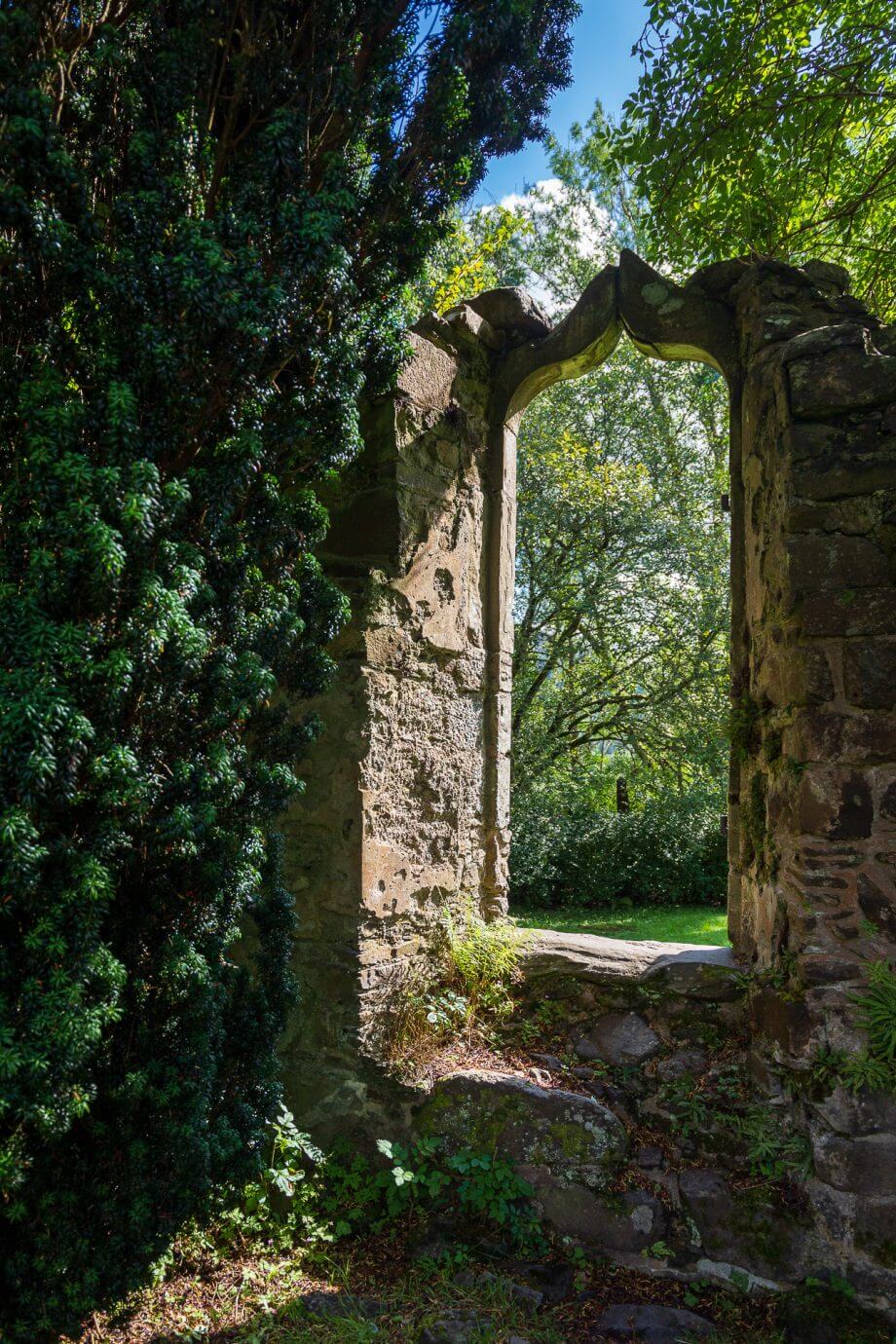
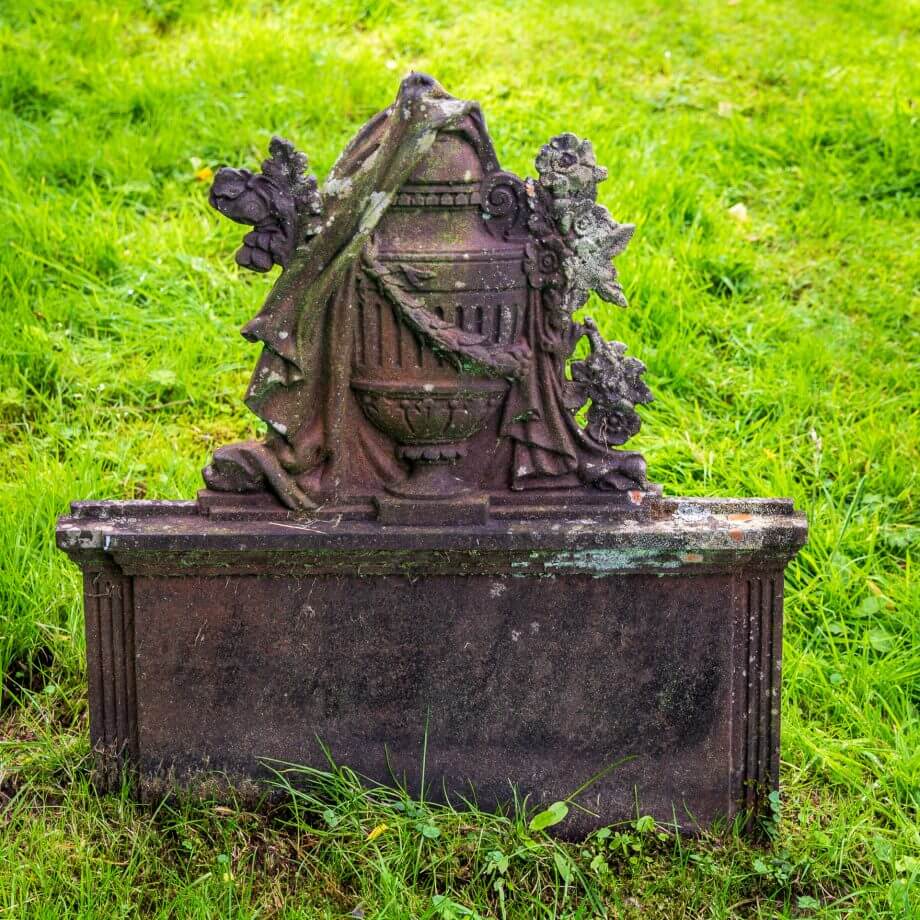
Of course, it’s worth taking a closer look at the gravestones in the graveyard. Some are older ones, only half emerging from the ground.
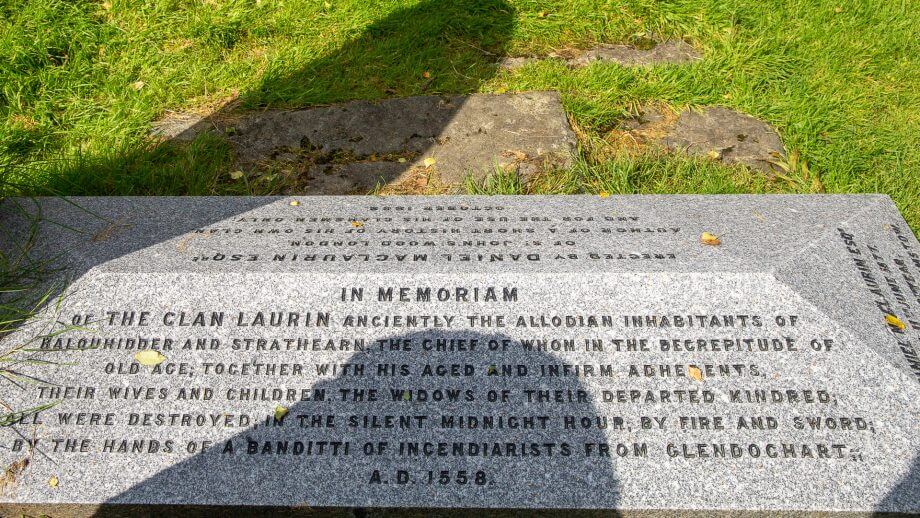
Or newer ones, commemorating events that don’t exactly cast the MacGregors in a good light. This one, for instance, marks the brutal raid by the MacGregors on the MacLarens in 1558.
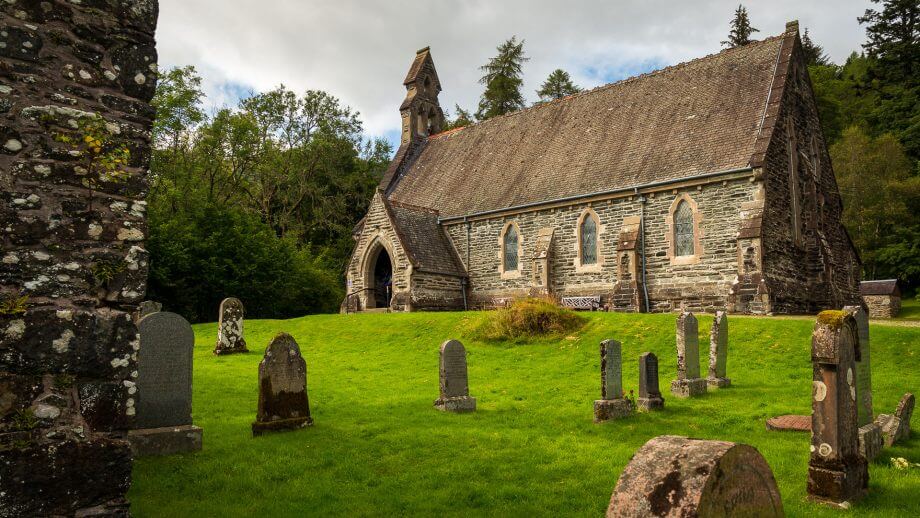
On a small rise, the new church of Balquhidder keeps watch over the dead.
If visitors pass the church on the left, they enter a short path leading to a lovely little waterfall.
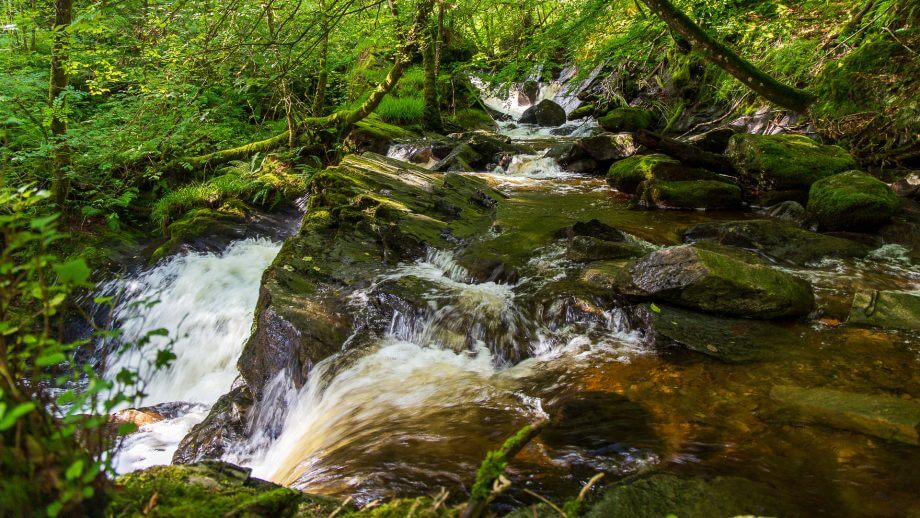
From here, you could walk on through Kirkton Glen and the forest to further waterfalls, and all the way up to Creag an Tuirc, which offers a wonderful view over Loch Voil. The Walkhighlands website lists a number of routes in the area.
The graveyard and church of Balquhidder make for a wonderful and remote spot, well worth visiting for more than just Rob Roy’s grave.
Did you know: About Rob Roy’s life and death
One thing is clear: Rob Roy died on 28 December 1734. But when was he born? The man Rob Roy in March 1671. The hero Rob Roy, on the other hand, came into being in 1723. That’s when – while he was still alive – the pamphlet “The Highland Rogue” appeared, written by Elias Brockett (some also attribute it to the author Daniel Defoe, who wrote Robinson Crusoe – though that’s speculation).
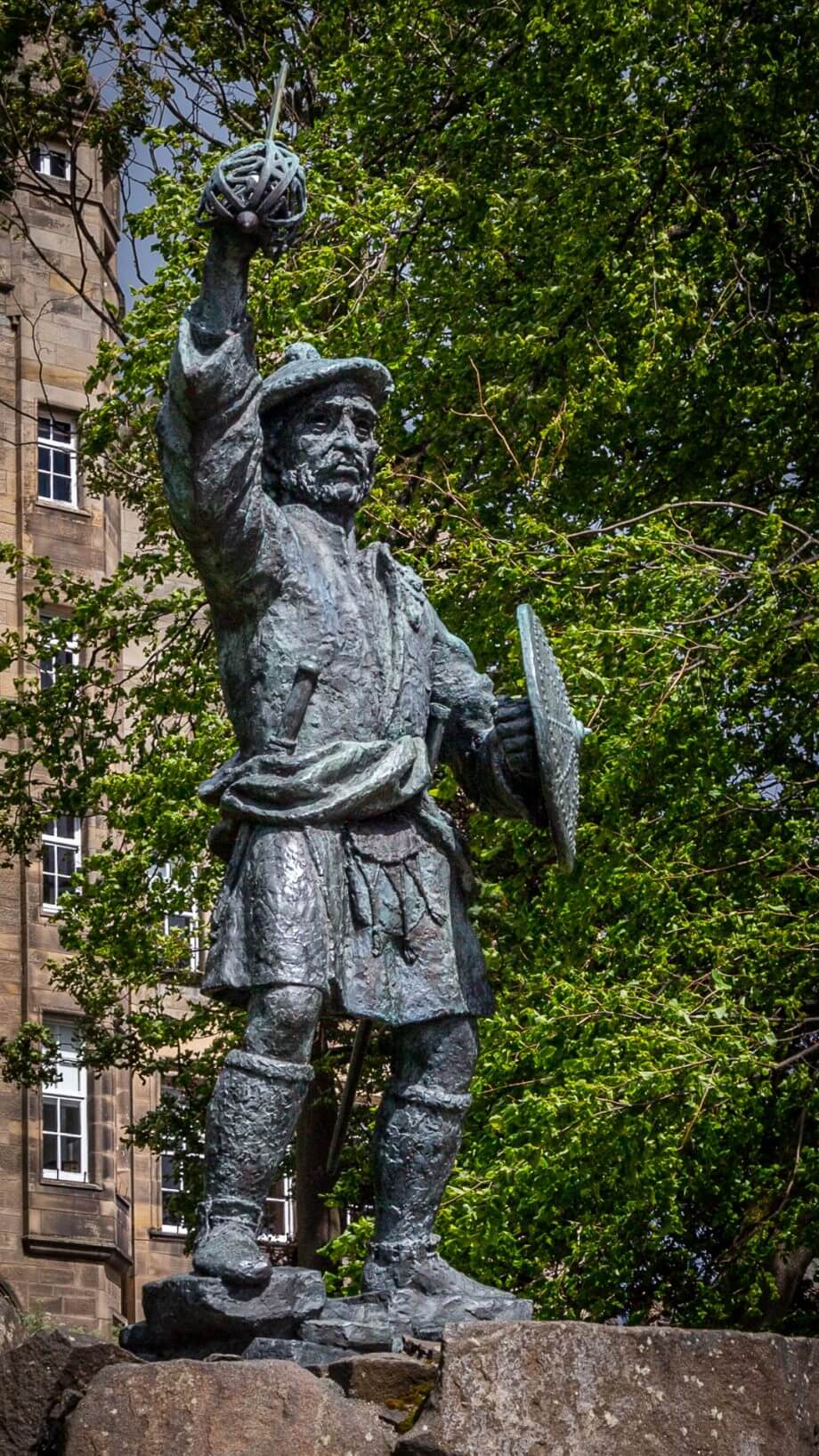
It was only after the man’s death that the life of Rob Roy the hero really began. In his poem “Rob Roy’s Grave“, the poet William Wordsworth was the first to connect Rob Roy with the Robin Hood myth:
A famous man is Robin Hood,
The English ballad-singer’s joy!
And Scotland has a thief as good,
An outlaw of as daring mood;
She has her brave Rob Roy!
When, finally, THE Scottish author Sir Walter Scott published his novel “Rob Roy” in 1818, the thief became even more famous posthumously. His fame has barely diminished since. Even the 1995 film adaptation was a great success (though rather overshadowed by Braveheart).
But how much does this fictional character still have to do with the man himself? Hard to say. There aren’t many reliable records; most of what we have comes from oral tradition. On top of that, there are letters he wrote himself.
This much is certain: Rob Roy is the anglicised form of Raibert Ruadh, meaning “Red Robert” – a reference to his red hair. His mother was a Campbell, his father a MacGregor.
Rob Roy is regarded as a hero today. Yet his actions were genuinely ambivalent. He also made a living from cattle rustling (which, in the Highlands of the time, was viewed as more of a sport) and from extortion (to prevent cattle from being stolen – logical enough). Even though some like to see him as a Jacobite, it was notable that he and his men usually arrived a touch too late for the fighting – as at the battle of Glen Shiel.
Then there were also letters to the political opponent. It looks as though Rob simply wanted to be on the winning side – whichever side that turned out to be. In 1725, Rob Roy even offered to work as a spy for the Hanoverian king.
What really brought him to ruin, though, was money – money he had borrowed from the Duke of Montrose and couldn’t repay. For that, he was declared an outlaw. That, presumably, is also the foundation his legend is built on.
Getting there:
With a sat nav: The postcode “FK19 8PA” takes you right to the area.
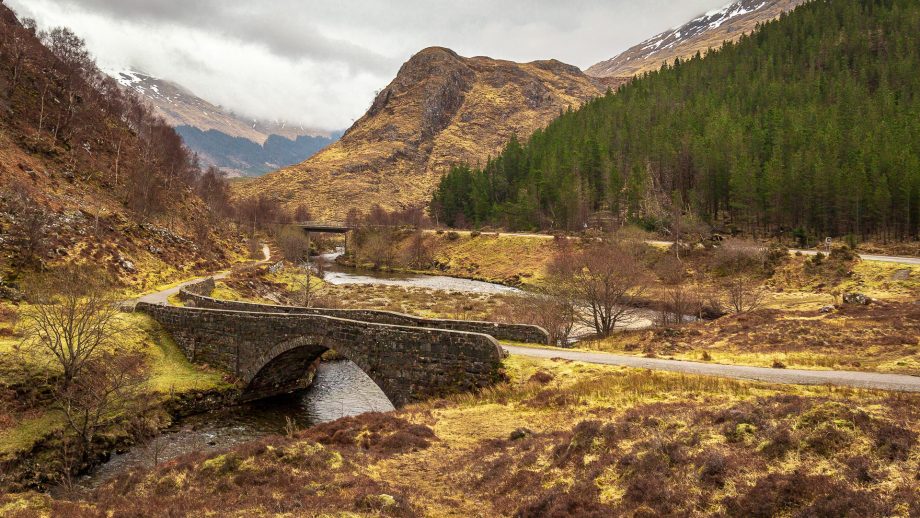
Without a sat nav: The A84 runs north from Stirling via Callander. Shortly before Lochearnhead, a turning to the right leads towards Balquhidder. You then pass under the road and continue along the single-track road. The road is often a little hard to read, so drive carefully. Eventually a brown sign appears on the right, pointing to “Rob Roy’s Grave”. There’s a small car park, though it’s often already full.