If there were still a school for castle-building, Dunstaffnage would surely be on the curriculum. Because what remains of the castle looks like an architect’s cutaway drawing of a medieval building.
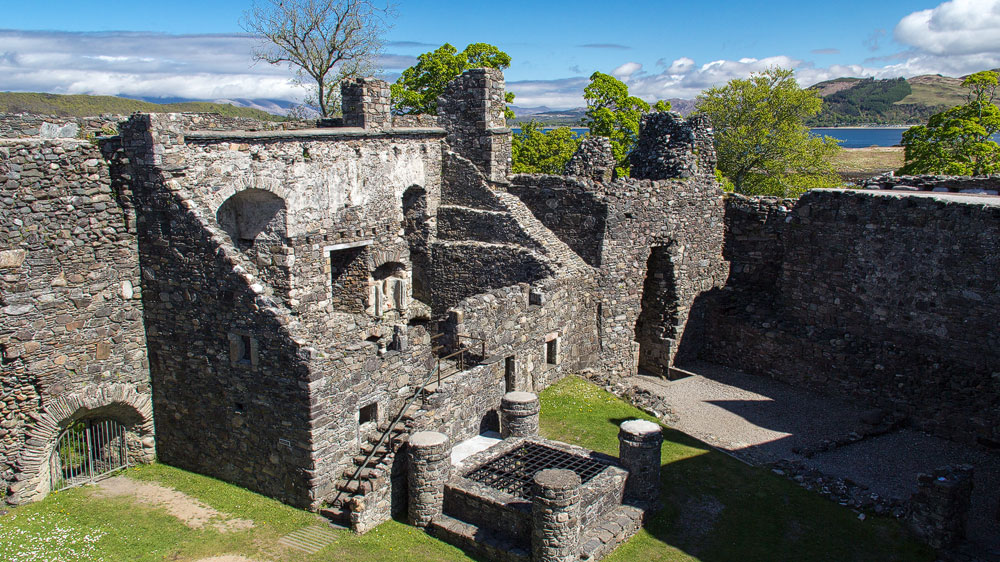
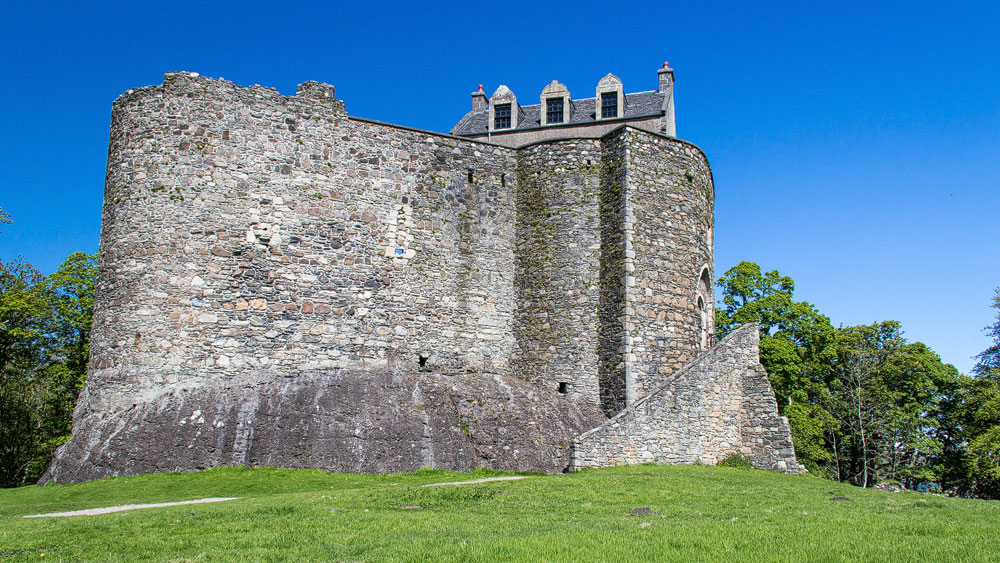
Approaching Dunstaffnage Castle, you hardly notice much beyond a smooth and incredibly tall wall. And it’s every bit as intact and defensible as it ever was. But as soon as you climb the small stairway to the entrance and step through the dark passage into the courtyard, the building’s inner life reveals itself. Hardly any other castle offers such insight into its own construction as Dunstaffnage.
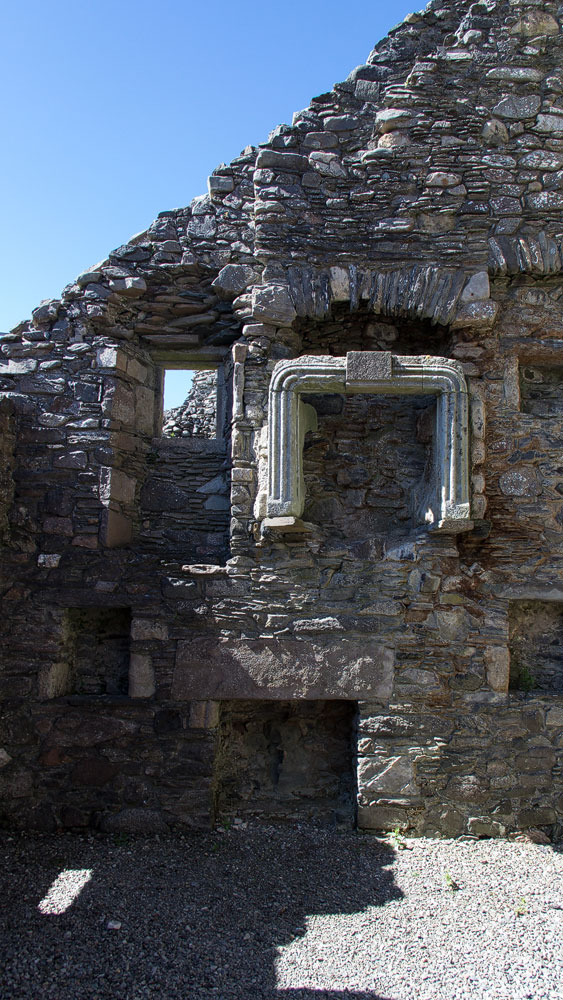
There, for instance, stands the old residential building, stripped of all its floors. Standing at the bottom, you can see the fireplaces floating in the walls above your head – because that was where the actual living space once was, while below lay the dungeon. From the windows, fireplaces and recesses, you can clearly make out who lived where and how, back then.
Dunstaffnage also shows quite clearly the styles of the different eras. In the corner stands the small keep, the former residence of the lord who moved in shortly after the castle’s construction in 1250. By today’s standards, it wouldn’t even count as a student flat, though a small hall for festivities is attached right next to it.
Not much remains of either, though. But just to the right rises the large gatehouse. Clan Campbell seized power here in 1470 and built this structure. Only later, in the 18th century, was the now-ruined house in the middle added.
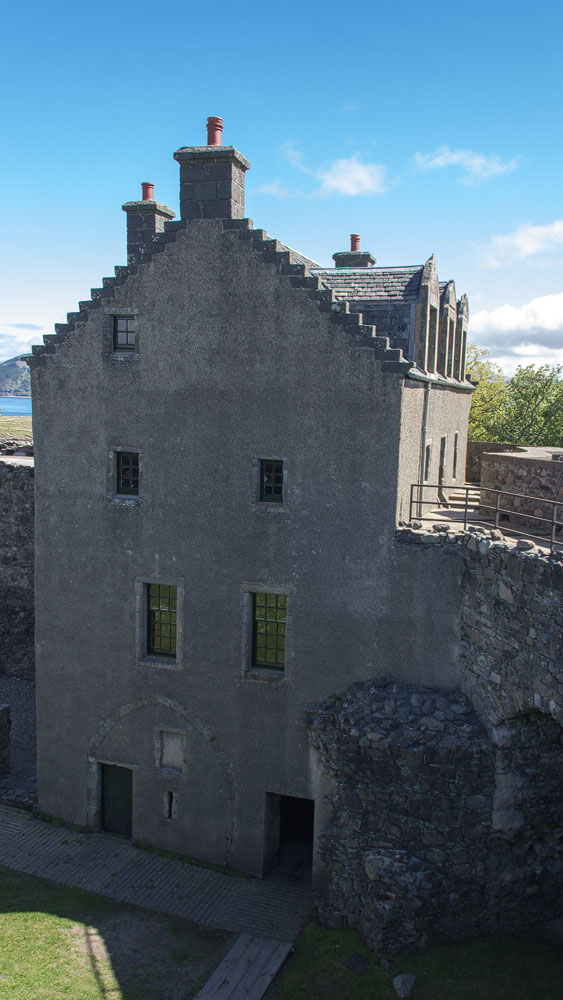
You can take in all of this beautifully from the walkway along the defensive wall. It carries you high enough that you can see the individual buildings and clearly make out the castle’s structure. The good news: an information board up on the walkway explains exactly these individual elements to visitors.
Amid all the enthusiasm for the construction on the inside, don’t forget to look outward over the walls too. In the distance you can see the sea, islands and bays. Beautiful.
Know: The history of Dunstaffnage
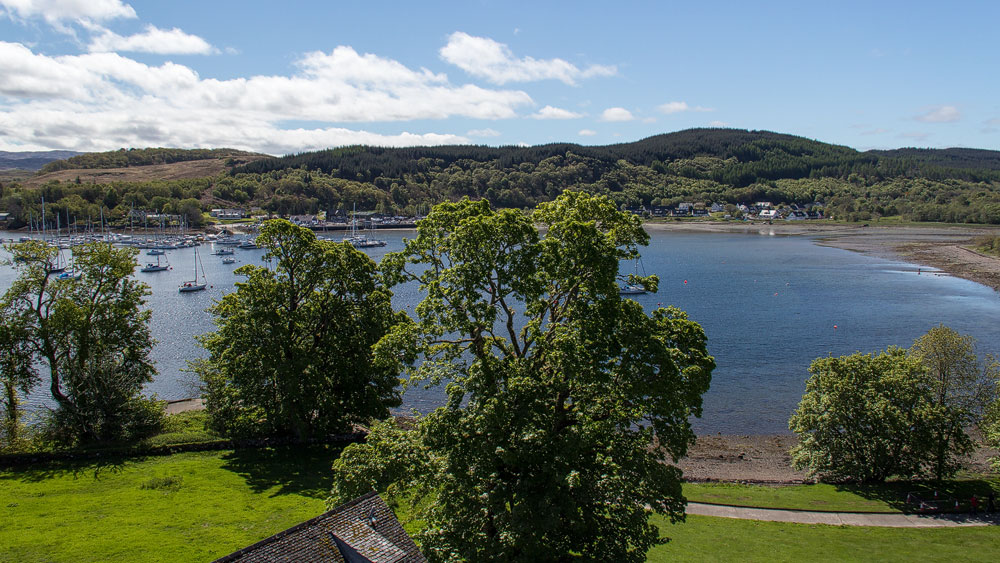
This magnificent view exists precisely because the castle was built around the year 1220 on a rock positioned to watch over the Firth of Lorn and the entrance to Loch Etive. The castle was built by the MacDougalls – more specifically, thought to be Duncan MacDougall, believed to have been a grandson of Somerled, the liberator of the islands (currently only available in German).
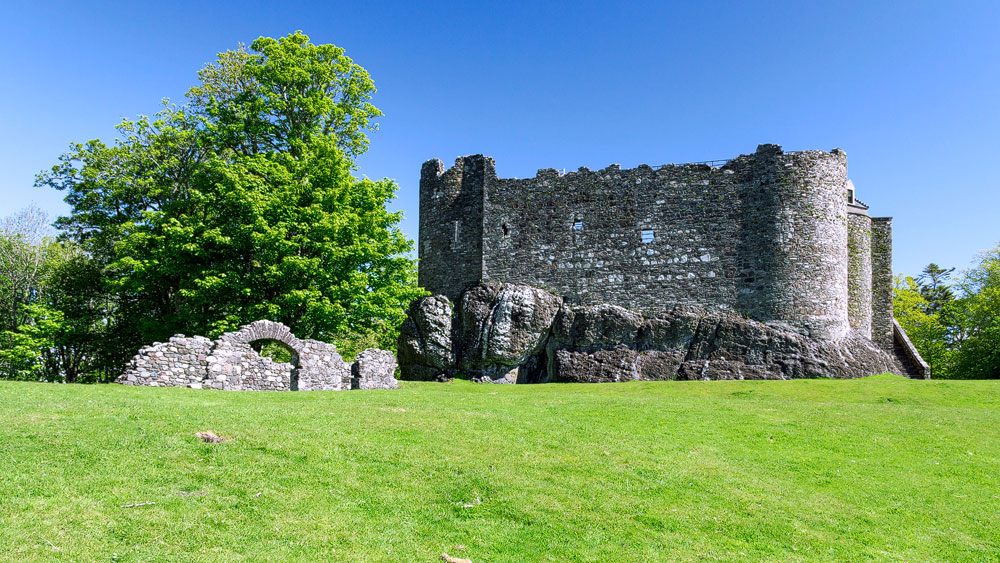
The MacDougalls were locked in constant feud with the Campbells, whom they managed to keep in check until they made the mistake of siding against Robert the Bruce, the liberator of Scotland. The MacDougalls were very much in favour of an independent Scotland, but they were related to Bruce’s rival John Comyn. After Robert the Bruce stabbed this rival to death, he marched against the MacDougalls with 3,000 men. They tried to lure him into an ambush, which failed. The upshot: Dunstaffnage was seized into royal possession and later handed over, of all people, to the arch-enemies of Clan Campbell.
Personal note: Flora was here too
There’s simply no escaping her: hardly a place exists that Flora MacDonald didn’t pass through – nor Bonnie Prince Charlie. So I was rather astonished to learn (though only during follow-up research) that after helping the prince escape in 1746, Flora MacDonald was imprisoned at Dunstaffnage for a few days, before being taken to the Tower of London.
Tip: Make sure to take time for a walk
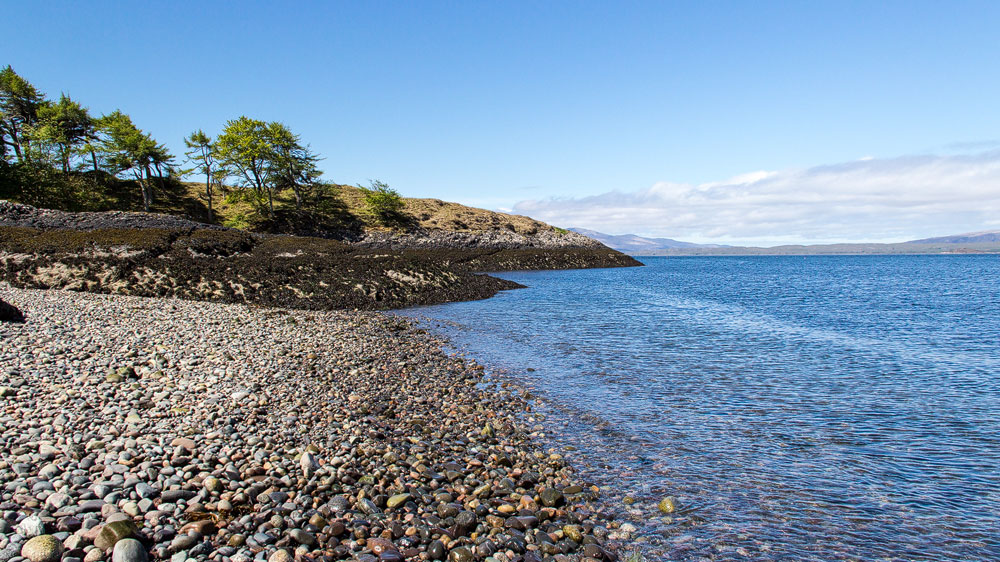
As so often, it’s well worth stepping a little way from the main attraction here too. If you wander a bit around the grounds, for instance into the nearby woodland, you’ll find the ruins of a chapel there, as well as a beautiful little pebble bay. But here too – as ever – good footwear is a must.
Getting there:
With a sat nav: enter “PA37 1PZ”, which brings you close by; then watch for the signposts.
Without a sat nav: coming from Oban, take the A85 towards Fort William. After about 4 kilometres, or a little over 2 miles, turn left following the signpost and drive through the new industrial estate to the car park.