No other woman is so woven into the history of the Highlands as Flora MacDonald. She was heroine, prisoner, emigrant, role model – and of course helped Bonnie Prince Charlie escape. Across two continents, her memory is still honoured with great respect today. Here is her story.
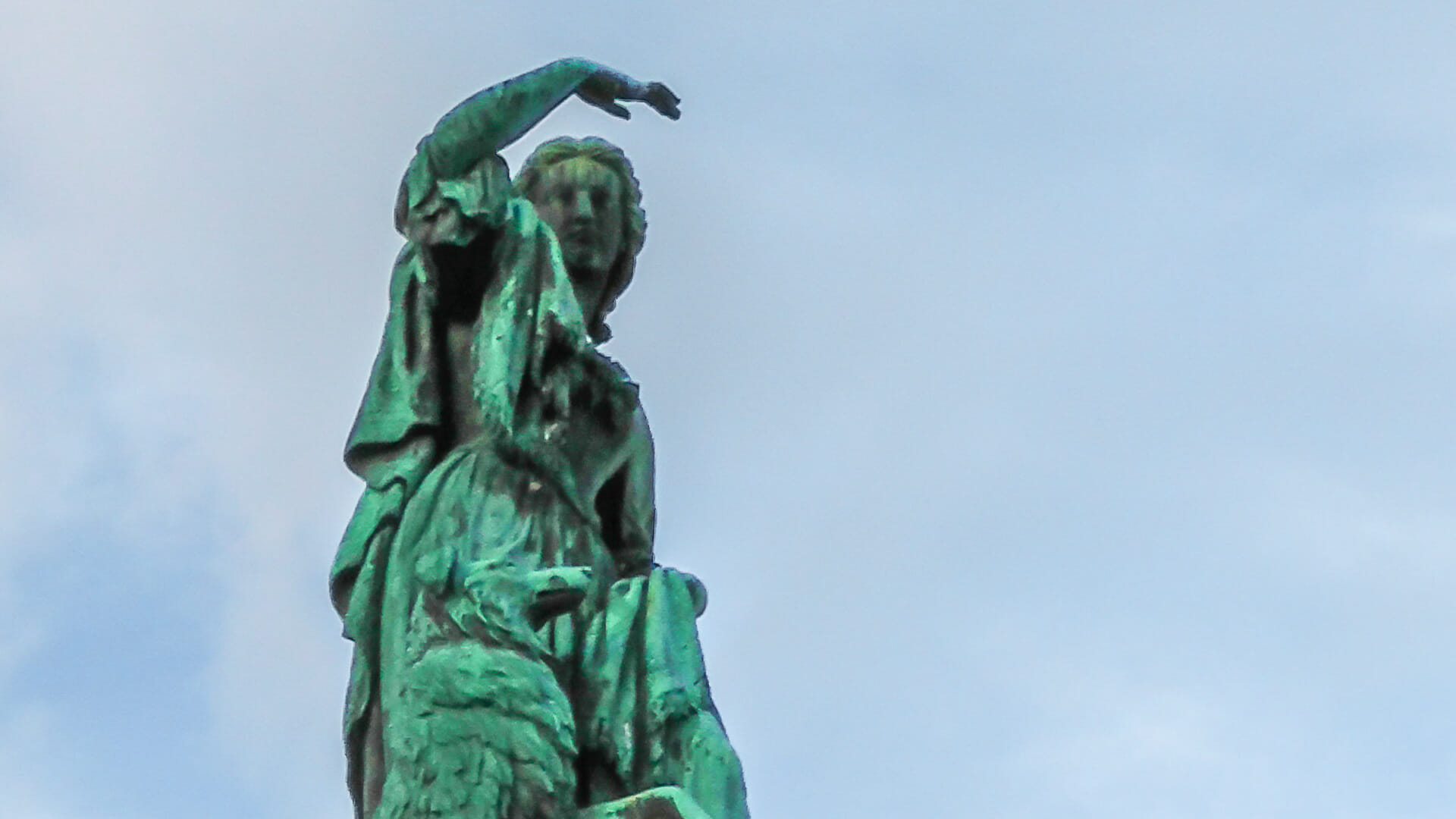
Flora was born at the very edge of Scotland – though her exact birthplace remains hidden in the mists of time. It was probably on the Outer Hebrides island of Benbecula, at a place called Balivanich, where her family lived. Many other authors claim instead that it was Milton on South Uist (currently only available in German), but this claim is not scientifically well founded (more on why Milton was probably not her birthplace can be found in the interview with book author Angus MacMillan (currently only available in German)).
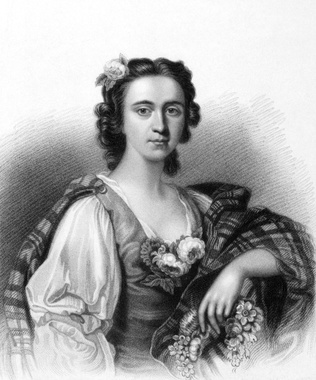
At least the date seems relatively clear: it was roughly the year 1722. Flora’s mother was a minister’s daughter, a beautiful woman, as is still said today. Her father was named Ranald II of Balivanich and was already around seventy years old at the time of her birth. Flora also had two brothers: the elder died in a firearms accident, while the (probably!) younger one later partly inherited from their father, who died when Flora was just two years old.
Her mother, however, was still young at around 30, and remarried in 1728. As her second husband she chose Hugh MacDonald, whose roots lay on the Isle of Skye. Flora’s stepfather would soon go on to play a decisive role in the later adventures surrounding the escape of the Stuart prince. Flora spent her youth on Benbecula, where she likely received a thorough and good education nearby in Nunton. She grew into a pleasant lady who was considered cultivated, composed, and always in good spirits. Flora was known for performing beautiful Gaelic songs. In short: she was very much a true lady.
Contrary to many circulating stories, however, Flora MacDonald never received an education in Edinburgh or on the Isle of Skye. This too is a misconception that has falsely worked its way into the historical narrative. At Whitsun 1746, the family moved to Skye; only her brother stayed behind. The reason for this was rather unpleasant: her stepfather had got a married woman pregnant near Balivanich, and was therefore forced to leave the home in Balivanich behind.
Flora and the handsome prince
The Jacobite rising had already ended in 1746, and its leader was on the run. At the same time, Flora happened to be visiting her old home and her relatives there. When Bonnie Prince Charlie, the leader of the rising against the crown, finally arrived on the Outer Hebrides during his wanderings, Flora’s fate became bound up with his.
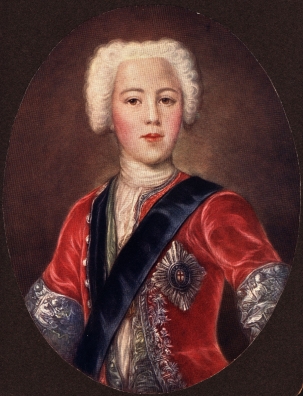
Although she herself had no interest in politics, she felt a sense of duty towards the prince and his house – as most Highlanders did. Even her stepfather Hugh, who commanded the crown’s forces on the island, apparently had a soft spot for the prince. Only this explains his later assistance. Flora became part of the escape group – an important part! Because Bonnie Prince Charlie wanted to leave the Outer Hebrides again and cross over to Skye. The danger of being caught on the Outer Hebrides was too great for him. The plan: Flora was to obtain passes for herself, a servant (O’Neil, a loyal follower of the prince), and a maid from Ireland named Betty Burke – who was in truth to be Prince Charles in women’s clothing. And so she set off to organise the escape, but was captured by militia that very same evening.
It was her good fortune that the commander of the troop was her own stepfather, who promptly obtained the passes for her and let her go. She then arranged a boat for the crossing. Only once all of this was done was she allowed to see the prince for the first time. That was at the end of June 1746. The rest is Highland legend: together the three of them dared the crossing and had a number of adventures on Skye, before parting ways in Portree on 30 June 1746 – just three days after the prince and Flora had first met. More on these adventures and the further, sensational escape of Charles Edward Stuart can be found here. Incidentally, the two of them never had a genuine romantic relationship, even though it would make for a wonderfully romantic story.
Prisoner of the crown
Handsome Charlie was able to escape the consequences of Culloden thanks to his flight. Flora was not so fortunate. She was held accountable and later had to witness how her homeland was subjected to the consequences of defeat, saw how her fellow countrymen suffered under reprisals, hunger and displacement – the Clearances. So while Bonnie Prince Charlie sailed off to France, Flora’s part in the conspiracy was discovered, and she was captured and deported to the Tower of London. She openly admitted to her actions, and for many Scots she was thereby regarded as a heroine.
Flora MacDonald also knew how to win men over with her charming manner. The captain of the ship that transported her to London, for instance, wrote a letter advocating that she not be kept in prison for long. The letter, and her popularity, didn’t fail to have an effect: Flora was soon transferred to a comfortable house arrest. So she was doing well, while in many parts of the Highlands brutal revenge was being inflicted upon the ordinary population. She was freed as early as 1747. She didn’t forget her fellow prisoners, either: she successfully campaigned for their release too. She then returned to Skye, where on 6 November 1750 she married Alan MacDonald. With him she would go on to experience her next adventures. But for a number of years, things remained quiet around our Highland heroine.
A Scot in North Carolina
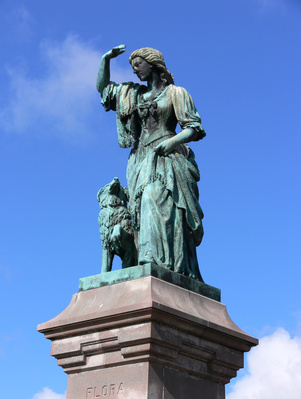
Then came the time of the Clearances, the time of hunger, the time of emigration. Flora’s family too – like many Scots – sought their fortune in the New World. So the MacDonalds settled in North Carolina in 1774. Indeed, the family (Flora had five sons and two daughters; three further sons had already died young) found a reasonably good life here. Until 1775, when the War of Independence broke out. An irony of fate: she had once done everything to betray the British crown by helping Bonnie Prince Charlie, yet now she felt entirely loyal to the very people she had once fought against – the Hanoverians.
Her husband, her sons and other Highlanders set out to join the British troops. And Flora rallied them with a fiery speech in Gaelic. But her husband’s troop fell into an ambush, and he was taken prisoner. Flora remained in North Carolina until 1779, but was no longer able to find joy in her life there. She often had to defend herself against attacks, and lost several of her young children to illness.
Eventually she left the United States of America with her younger daughter. The country had nothing more to offer her. Her husband Alan remained behind in the prison at Halifax. On the crossing back home, Flora experienced her final adventure: the ship on which she sailed to Scotland was attacked by French privateers, and it is said that she herself helped defend it and broke an arm in the process. Flora thereafter lived once again on Skye, near Monkstadt. In 1783 her husband too was freed and returned to his family. The two of them did indeed still have a happy life together.
Flora’s death and Samuel Johnson’s words
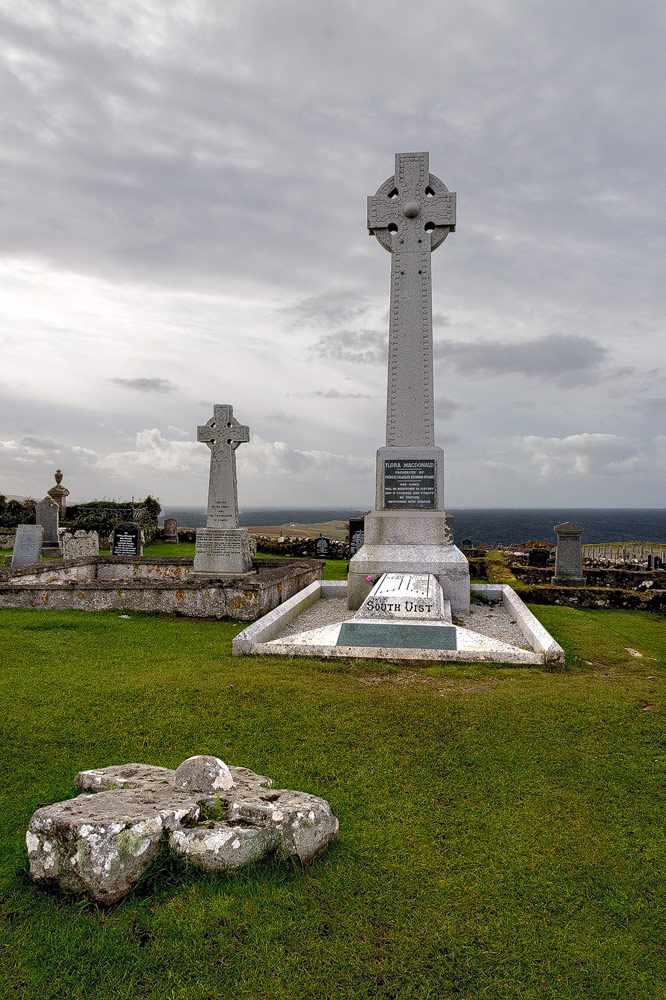
On 5 March 1790, the great heroine Flora MacDonald died on the Isle of Skye at the age of 67, after a brief illness. She was buried near Kilmuir, a place on the north-east coast of the island. Her husband followed her into the grave two years later. Flora’s body was wrapped in a bedsheet in which Bonnie Prince Charlie had once spent a night on Skye. The prince himself had already died in Rome two years earlier. The two of them never saw each other again and never communicated with each other again. Yet it is known that Prince Charles always mentioned Flora’s name with the utmost respect.
At her funeral on Skye, a procession of mourners numbering 3,000 people took part – and it’s said that some 300 litres of whisky flowed as well. Years later, a large Celtic cross was erected at her grave in her memory. On it are the famous words of Samuel Johnson, a writer and scholar who visited Flora in 1773. He said of her at the time:
“Her name will be mentioned in history and if courage and fidelity be virtues mentioned with honour.”
(These are Samuel Johnson’s original words.)
Sources:
- https://ia601407.us.archive.org/21/items/lifeoffloramacdo00macguoft/lifeoffloramacdo00macguoft.pdf
- http://www.electricscotland.com/history/women/wih9.htm
- Interview with Angus MacMillan (currently only available in German)
