Today, a whisky distillery dominates the bay of Lagavulin on Islay. But long before that, one of Scotland’s most important castles stood here: Dunyvaig Castle.
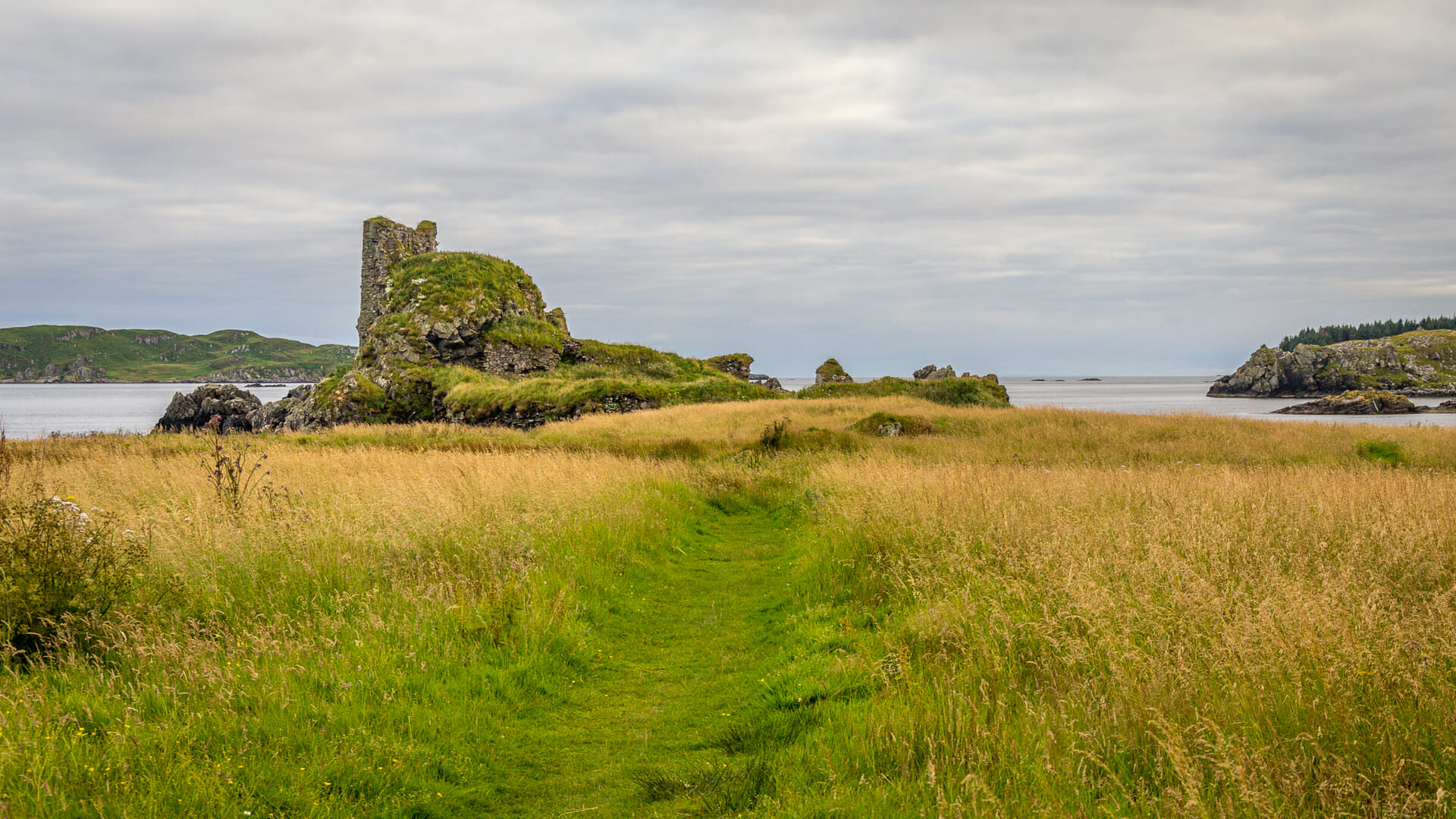
A sheltered bay, where the sea embraces a green meadow. And although the white distillery draws almost all the attention, another structure still stands here too. As if guarding the precious water of life flowing from the distillery, the remains of an old castle rise on a rocky outcrop: Dunyvaig Castle.
Not much remains of the fortifications, and it takes a fair bit of imagination to picture their former scale. On one side stood a tower, whose walls are still recognisable today; below it, though, lay a much larger walled courtyard, with room for further buildings.
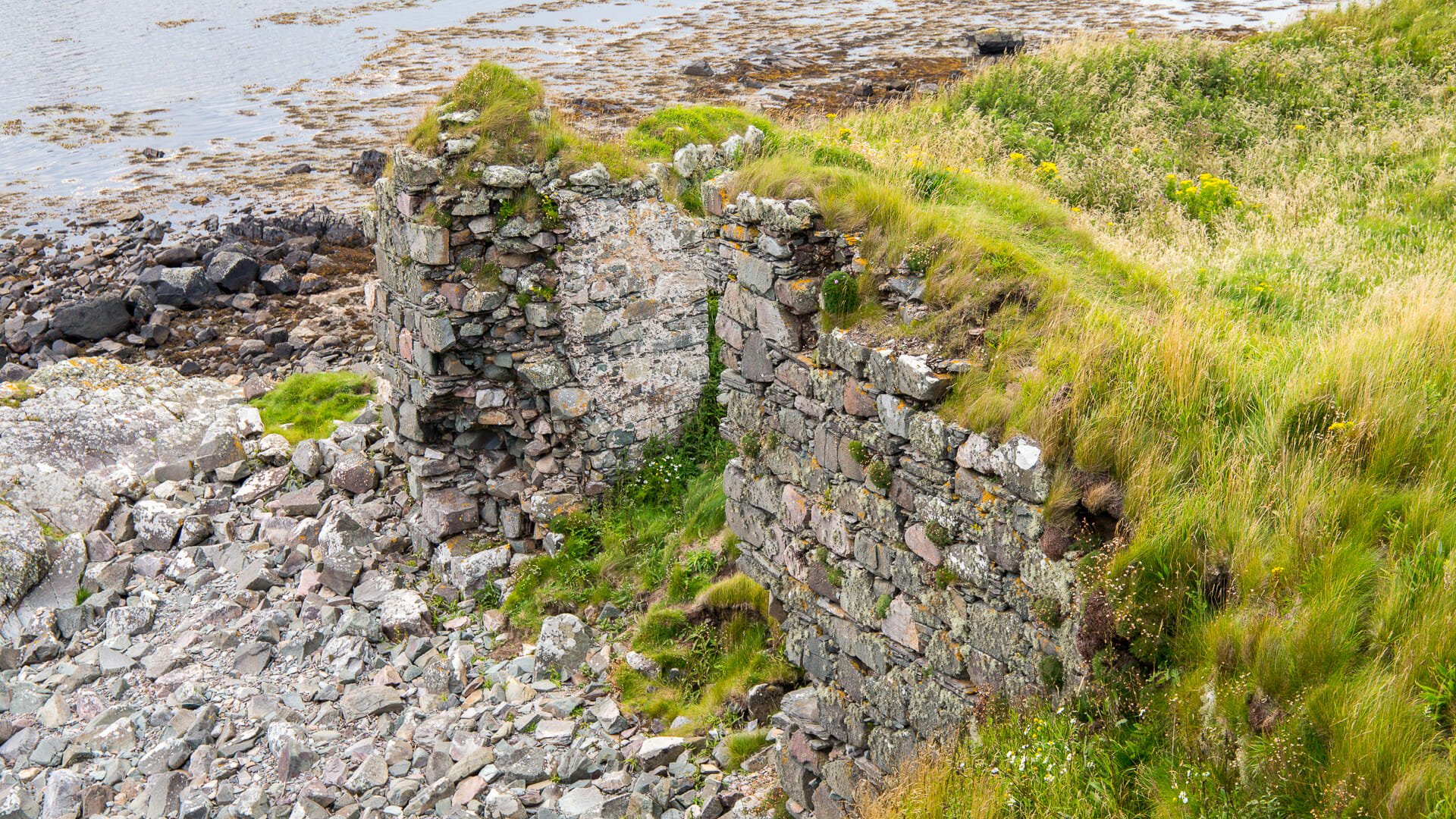
Dunyvaig’s age is difficult to pin down precisely. It’s believed that even the first castle here was built atop a prehistoric fort, dating back to the 12th century. Work was carried out on it again and again over the centuries that followed.
What is certain is that the Lords of the Isles, whose council met at Finlaggan on Islay, were already making use of the castle. A son of the first Lord of the Isles, named Iain Mhòir – or, in English, John Mor – was granted Dunyvaig and founded his own branch of the clan, the “MacDonalds of Dunnyveg and the Glens”. The clan’s territory later stretched across Islay and Kintyre, but also – as the word “Glens” suggests – as far as Antrim, in what is now Northern Ireland.
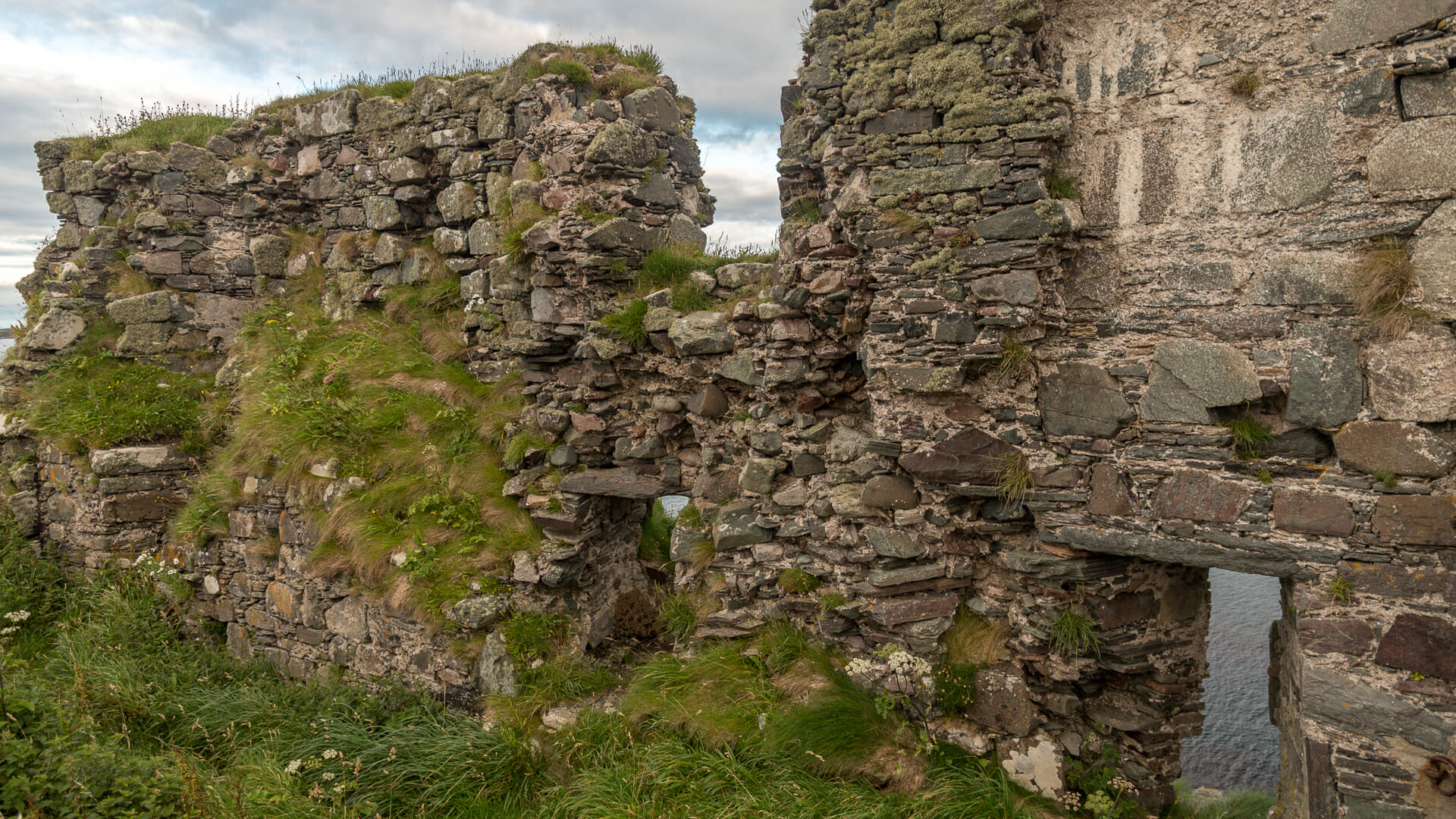
To hold this realm together, Dunyvaig’s location was ideal. On a clear day, you can still make out the shores of Northern Ireland and Kintyre in the distance from here today. The castle therefore served as both harbour and hub.
There are now theories suggesting that Dunyvaig wasn’t primarily intended for defence (even though it was besieged twice), nor as a residence for the Lords, but rather that it served mainly as a trading post for goods arriving from every direction. It appears that goods were stored in the courtyard below, while an overseer resided in the tower above. One gate led out to the sea and had a ramp, while another led inland. Goods were presumably unloaded via the ramp and then stored in buildings further inland.
Although the great realm of the Lords of the Isles came to an end in 1493, the MacDonalds of Dunnyveg and the Glens managed to hold their ground for a while longer. Yet the castle repeatedly changed hands. In the end, it was the scheming of their arch-rivals, the Campbells, that sealed the decline of the MacDonalds of Dunnyveg. From 1614 onwards, the Campbells were granted the whole of Islay, including the castle in the bay of Lagavulin. The last MacDonald of Dunnyveg died in London in 1626.
The castle soon proved of little use to the Campbells either. In 1677, Hugh Campbell had the walls torn down. He himself took up residence in his new Islay House.
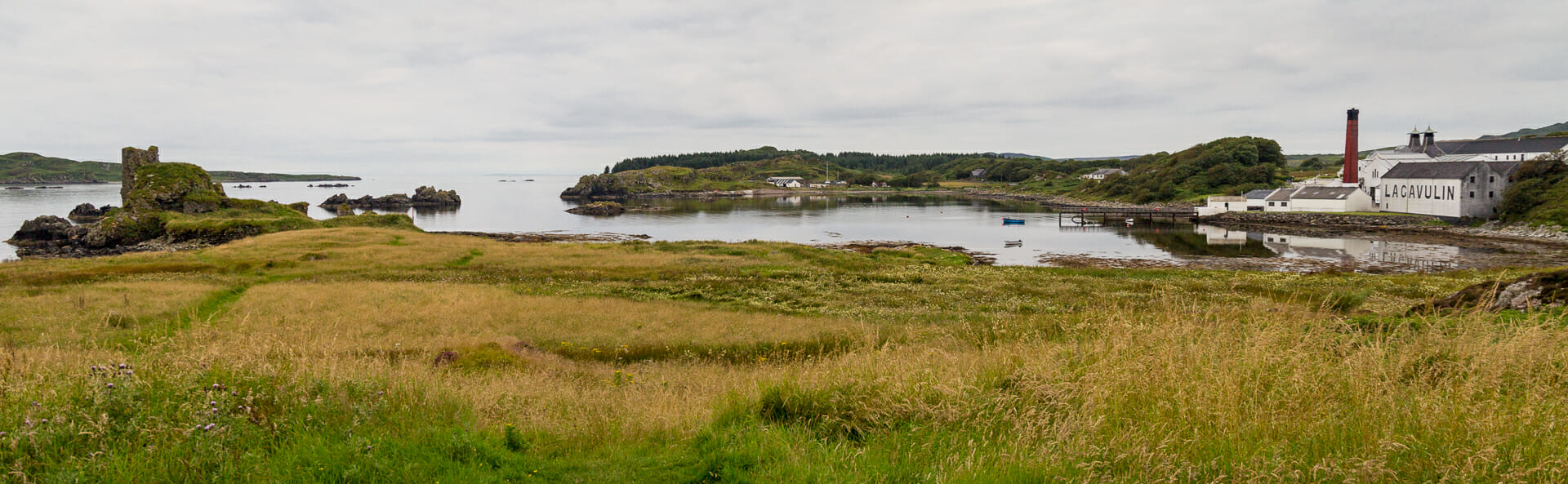
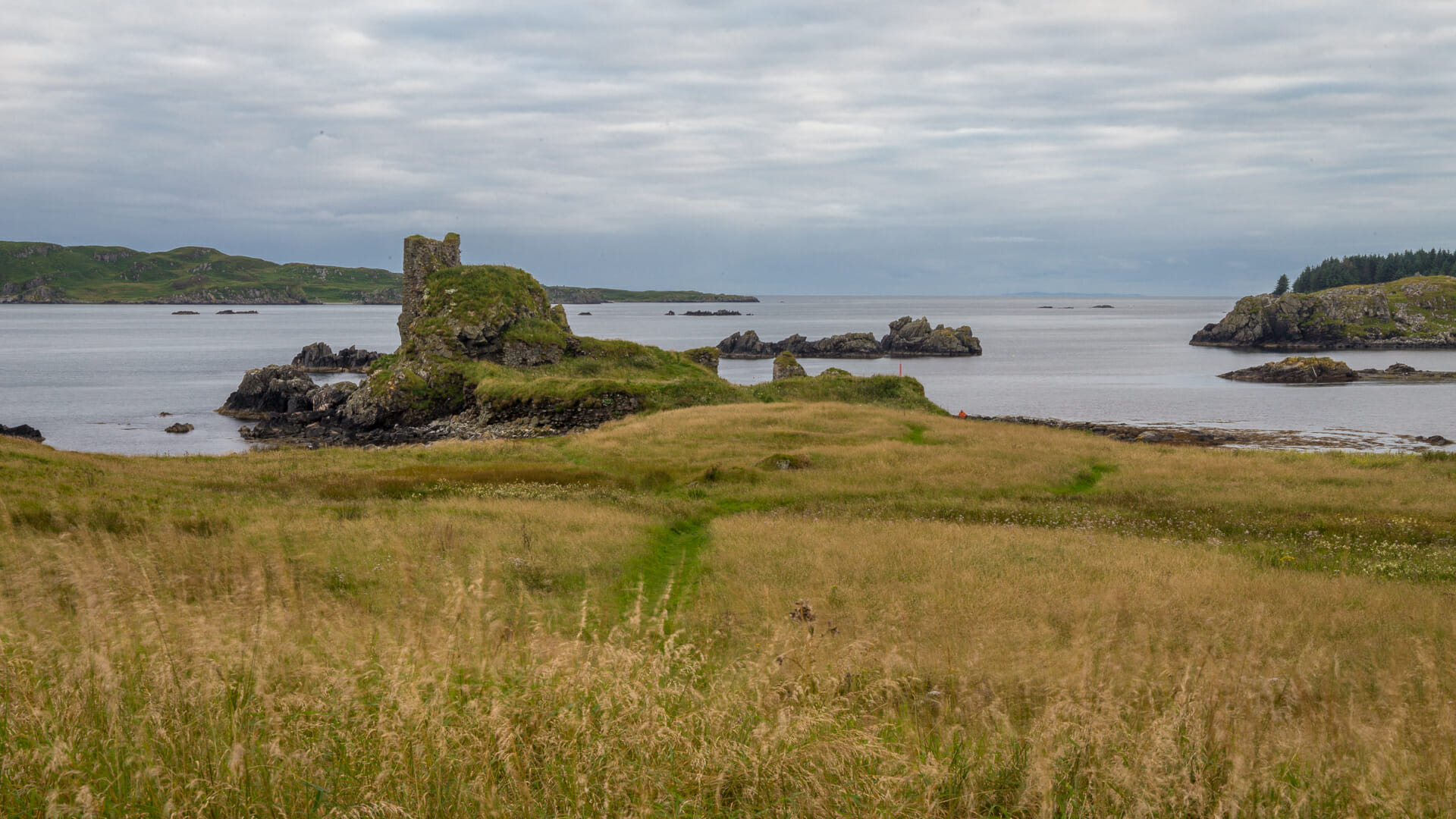
Today, only a stump of the tower remains. And it’s at severe risk of collapse. That’s why Islay Heritage is currently fundraising for the castle’s preservation.
Did you know: the Gaelic name Dunyvaig
Behind the English pronunciation “Dunyvaig”, some see the Gaelic “Dùn Naomhaig”. The word “Dùn” means fortification or castle, and appears in many Scottish place names – Dunvegan Castle, for example. “Naomh”, meanwhile, means “holy”. So it could mean “holy castle”. Other sources, however, render the castle’s Gaelic name as “Dùn Naibhig”. “Naibh” means “ship”, which would make it the castle of the little ship. Given the sheltered bay, that would certainly make sense.
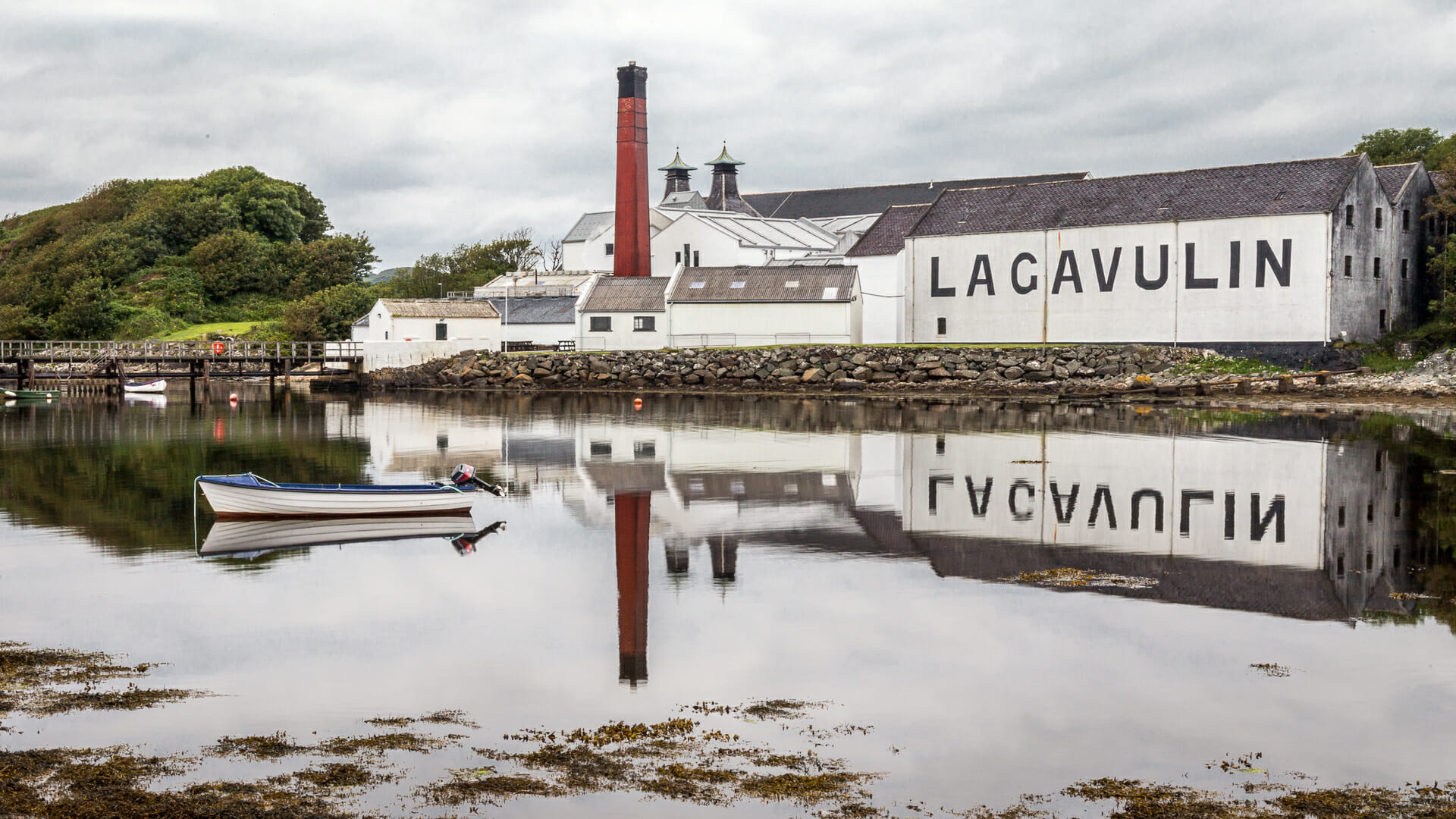
The whisky, and the bay it takes its name from, is called “Lag a’Mhuilin” in Gaelic – “the hollow of the mill”.
Note: exploring Dunyvaig is dangerous
Apart from a warning sign in the grass, there are no safety measures in place here. Anyone wishing to explore the castle walls and enjoy the view from up top does so entirely at their own risk. There are certainly a few narrow spots along the way with steep drops, and, as already mentioned, the entire area is at severe risk of collapse.
Getting there:
By sat nav: enter “PA42 7DX” into your navigation system. This will bring you all the way to the village of Lagavulin.
Without sat nav: from Port Ellen, follow the A846 east. “Ardbeg” is signposted. Along the road you’ll pass the Laphroaig distillery, then the Lagavulin distillery appears directly by the roadside. Past all the houses of the village, a turn-off to the right appears after a short distance. It leads down into the bay.