The Scottish island of Islay is famous above all for whisky. Yet it has far more to offer: culture, nature, festivals. Here’s the overview for your trip to Islay.
Islay at a glance:
» General
» Main sights
» Islay’s beaches
» Whiskies
» Best time to visit
» Getting there
» Festivals
» History
Islay is the southernmost island of the Hebrides. It lies roughly level with Edinburgh and Glasgow, off Scotland’s west coast.
Islay is roughly the same size as Singapore. However, while 5.6 million people live on Singapore’s 620 square kilometres, Islay has just 3,228 residents.
Islay is known and celebrated for whisky. No fewer than eight distilleries produce the “water of life” here, with more in the planning.
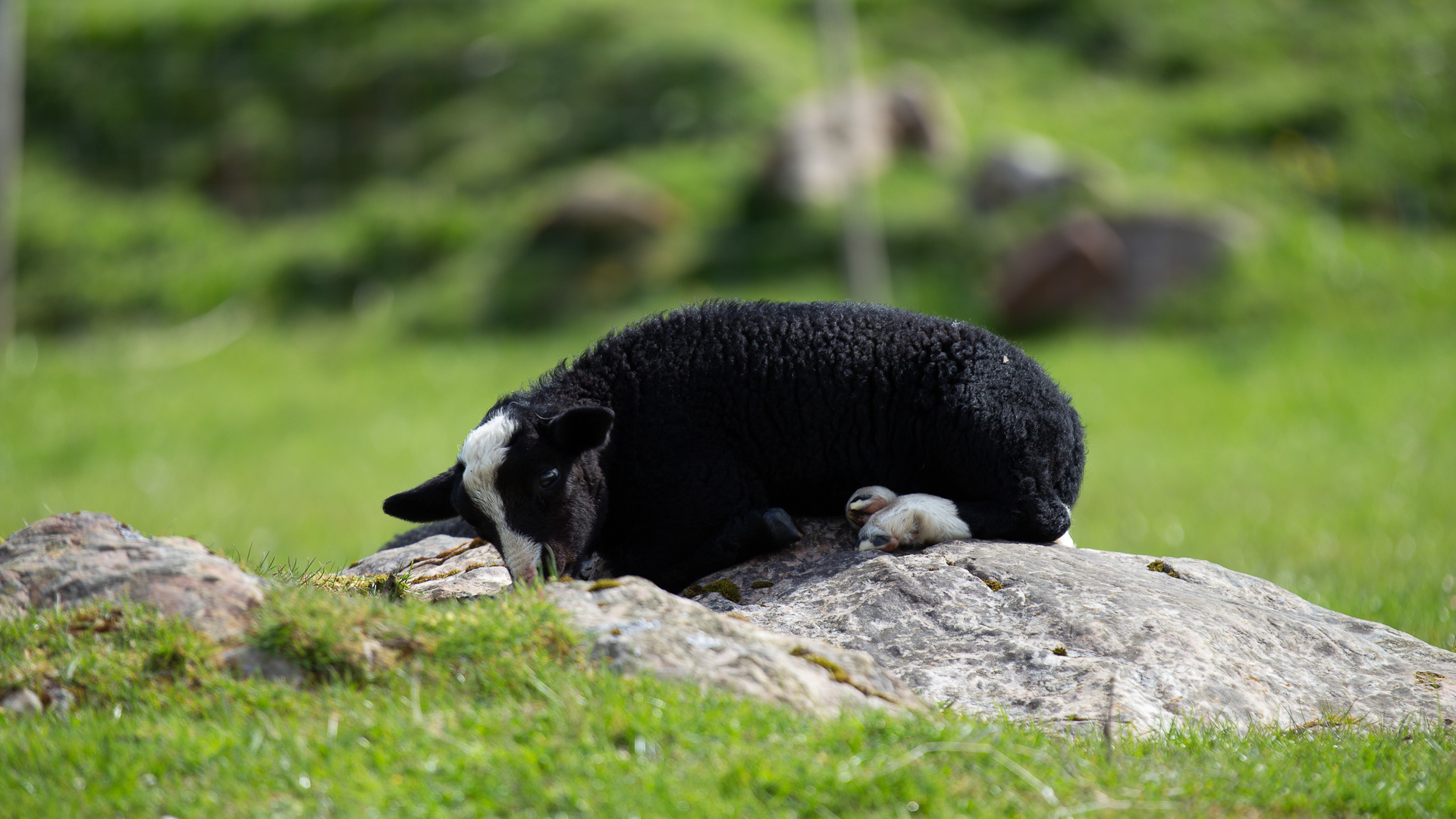
But alongside that, the island also captivates with wonderful nature: green hills run down to white sandy beaches, eagles circle above steep cliffs where the turquoise sea breaks. Cattle and sheep, some of unusual breeds, graze on the farmland.
And then, of course, there are the people and their history. Islay was once the centre of a Gaelic island kingdom, ruled by the MacDonalds. Even today the old language of the Highlands and Islands is present on the island – at cultural events, at festivals, and, not least, in the names of the island’s whiskies. In Gaelic, incidentally, the island is called Ìle, pronounced roughly “eela”.
Islay’s places and regions: A journey with a witch’s help
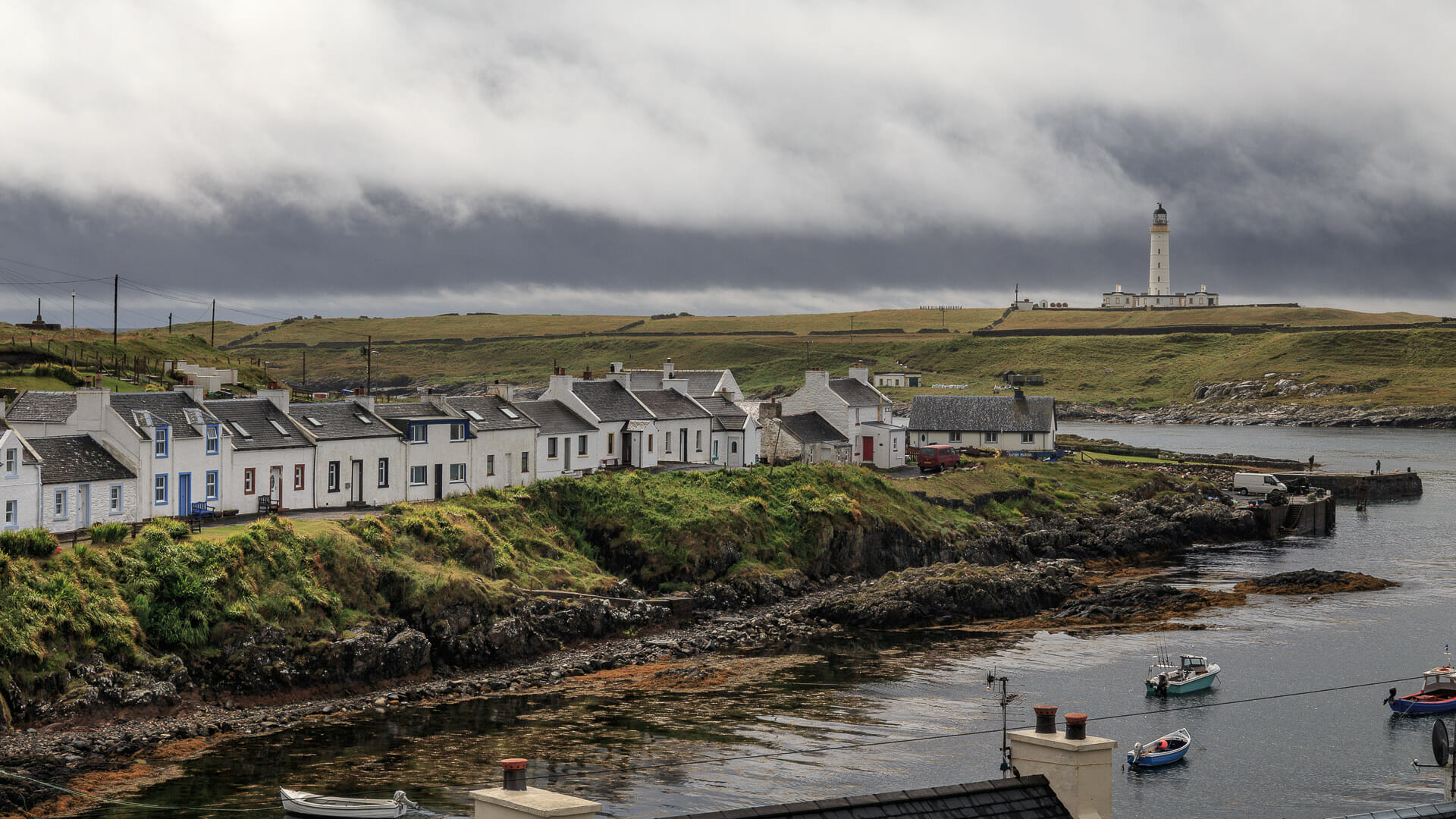
On the map, with a little imagination, Islay is shaped like an old witch: the elongated face with a chin and witch’s hat is formed by the Rhinns of Islay peninsula. “Rhinns” comes from the Gaelic “Roinn”, meaning roughly “a portion” or “division”. On it sit the two distilleries Kilchoman and Bruichladdich. To the south, the Rhinns of Islay end near the village of Portnahaven.
Along the west of the Rhinns run some of Islay’s most beautiful beaches, such as Machir and Saligo Bay. The witch has an eye here too: Loch Gorm is the island’s largest freshwater loch.
The sea lochs Indaal and Gruinart cut deep into Islay, forming the witch’s neck. Loch Gruinart is one of Islay’s two bird reserves, home to tens of thousands of geese from September to April.
East of Loch Gruinart begins the main body of Islay – essentially the witch’s hunched back. Here lies Loch Finlaggan, the centre of the Lords of the Isles. Further east, we approach the strait between Islay and Jura; the neighbouring island’s two striking mountain peaks are called the Paps of Jura, and they become a constant eye-catcher – no wonder, given that “paps” is also an old word for breasts.
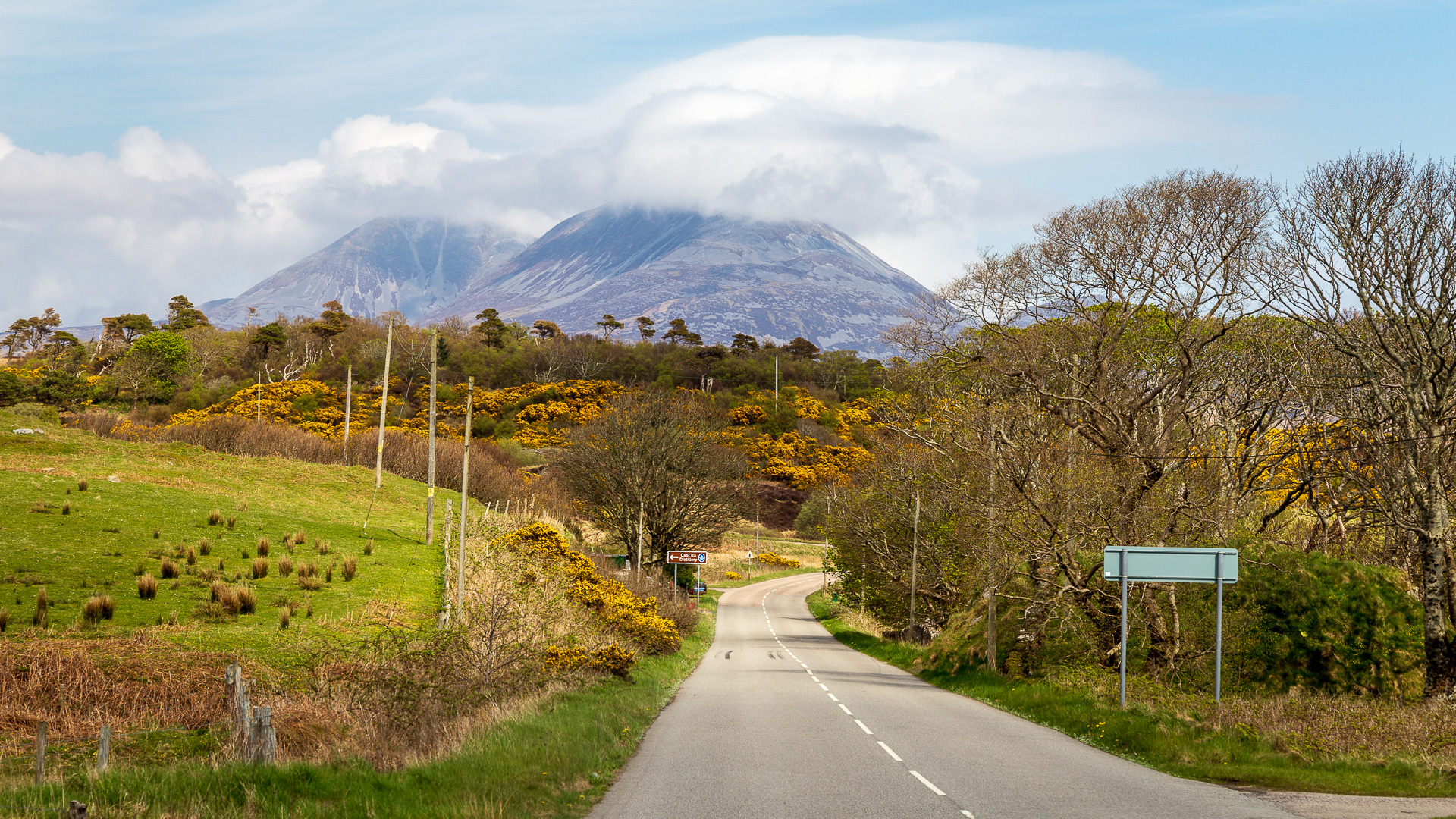
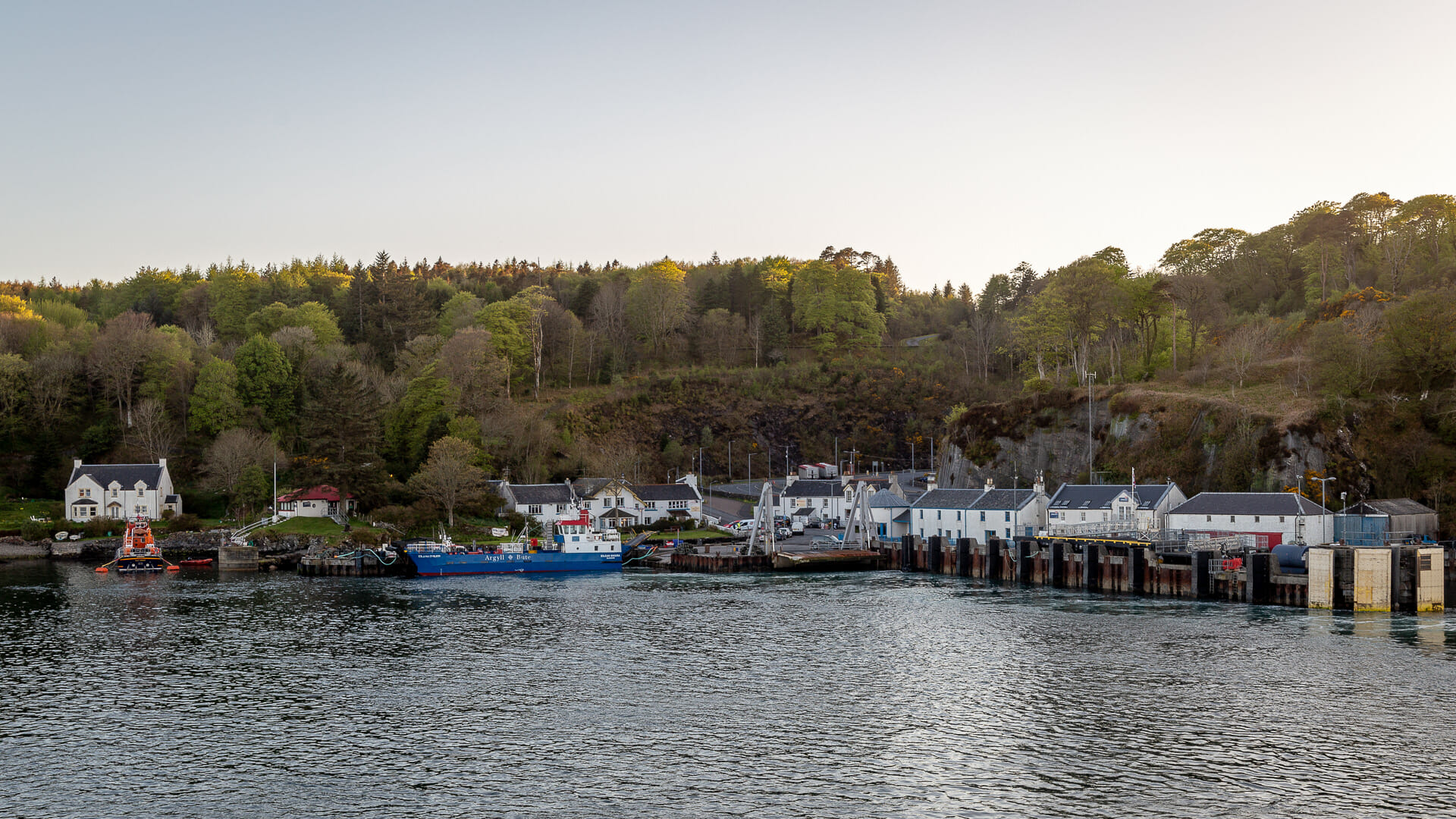
Near the strait, the Caol Ìle (pronounced roughly “cool eela”), three more whisky distilleries have set up: the newcomer Ardnahoe and the two old stalwarts Bunnahabhain and Caol Ila. In the east, the island finally comes to an end at the harbour of Port Askaig. From here, ferries run not only to the mainland but also across to the island of Jura.
Follow the road back west and then turn south, and the village of Bowmore appears next.
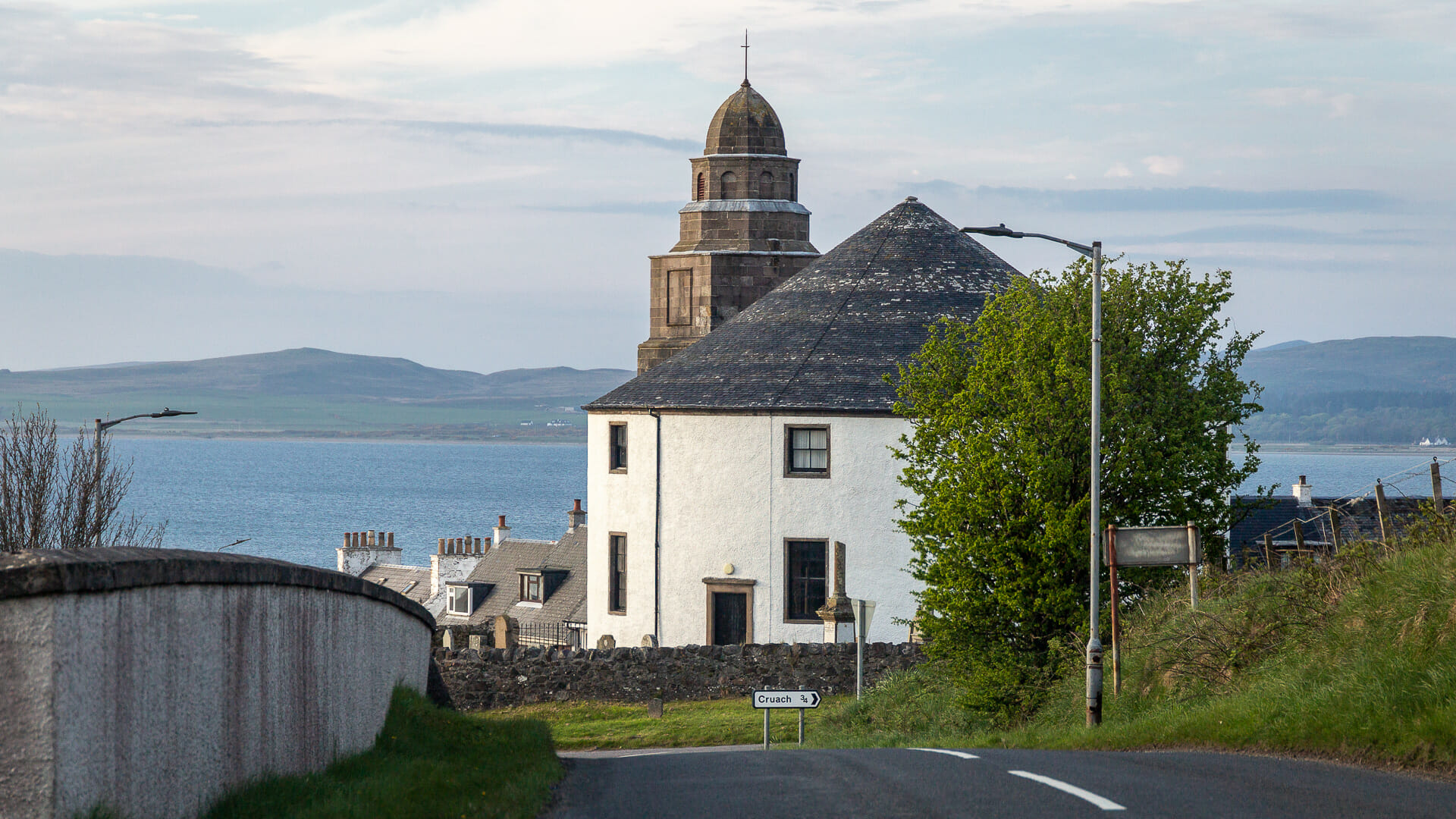
Bowmore is Islay’s beating heart. A string of pubs and hotels line up here, and there’s even a small row of shops. The little harbour also offers a splendid view of the Bowmore distillery. At the southern edge of the village stands the famous round church – round, so the story goes, so the devil has no corner to hide in.
The road then runs a long stretch along the island’s main road, past the airport, until the Islay Maltings, the island’s big malting house, appears in the south.
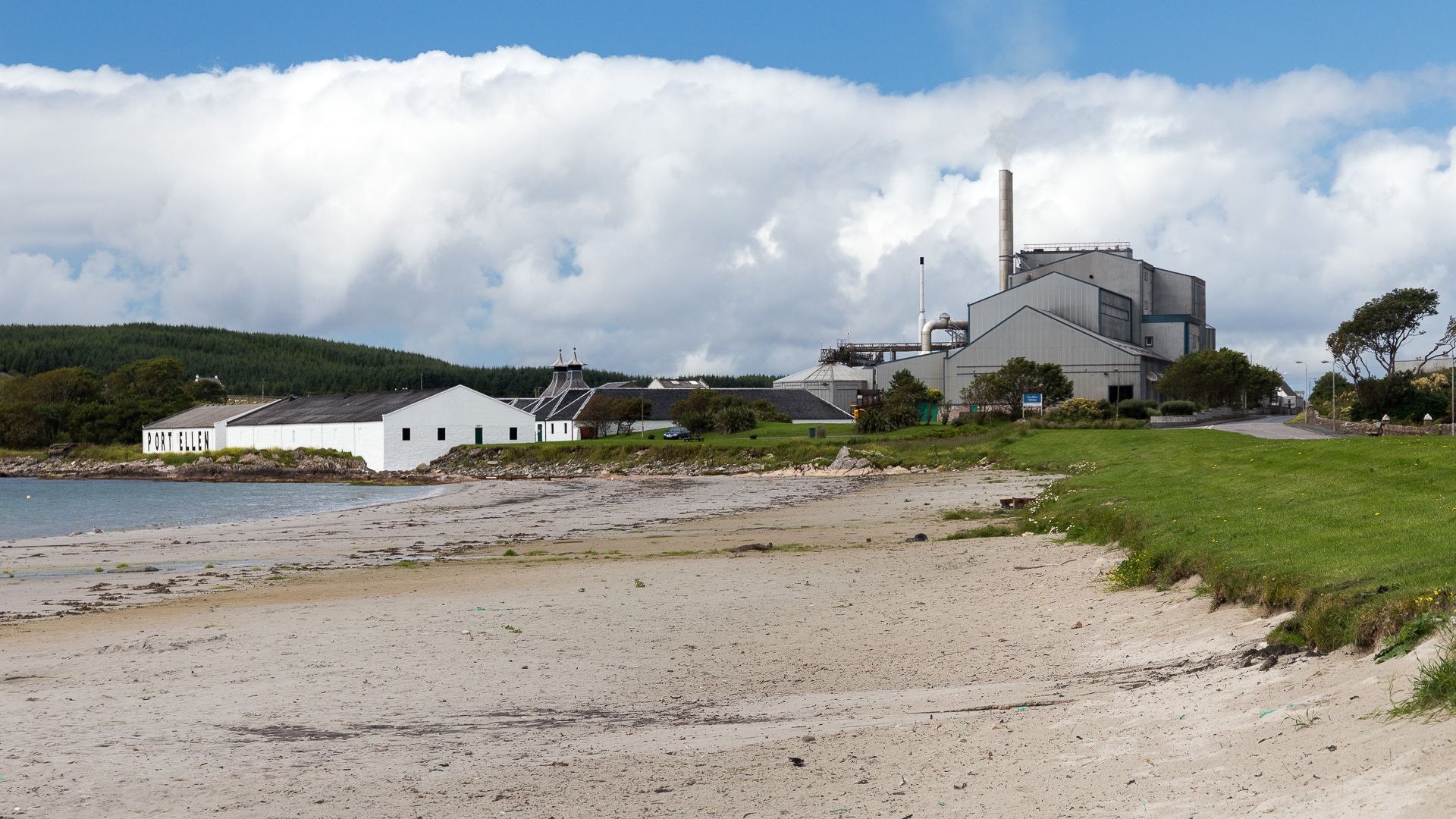
Beyond it lies the village of Port Ellen, the island’s second ferry port, which also has larger hotels with restaurants.
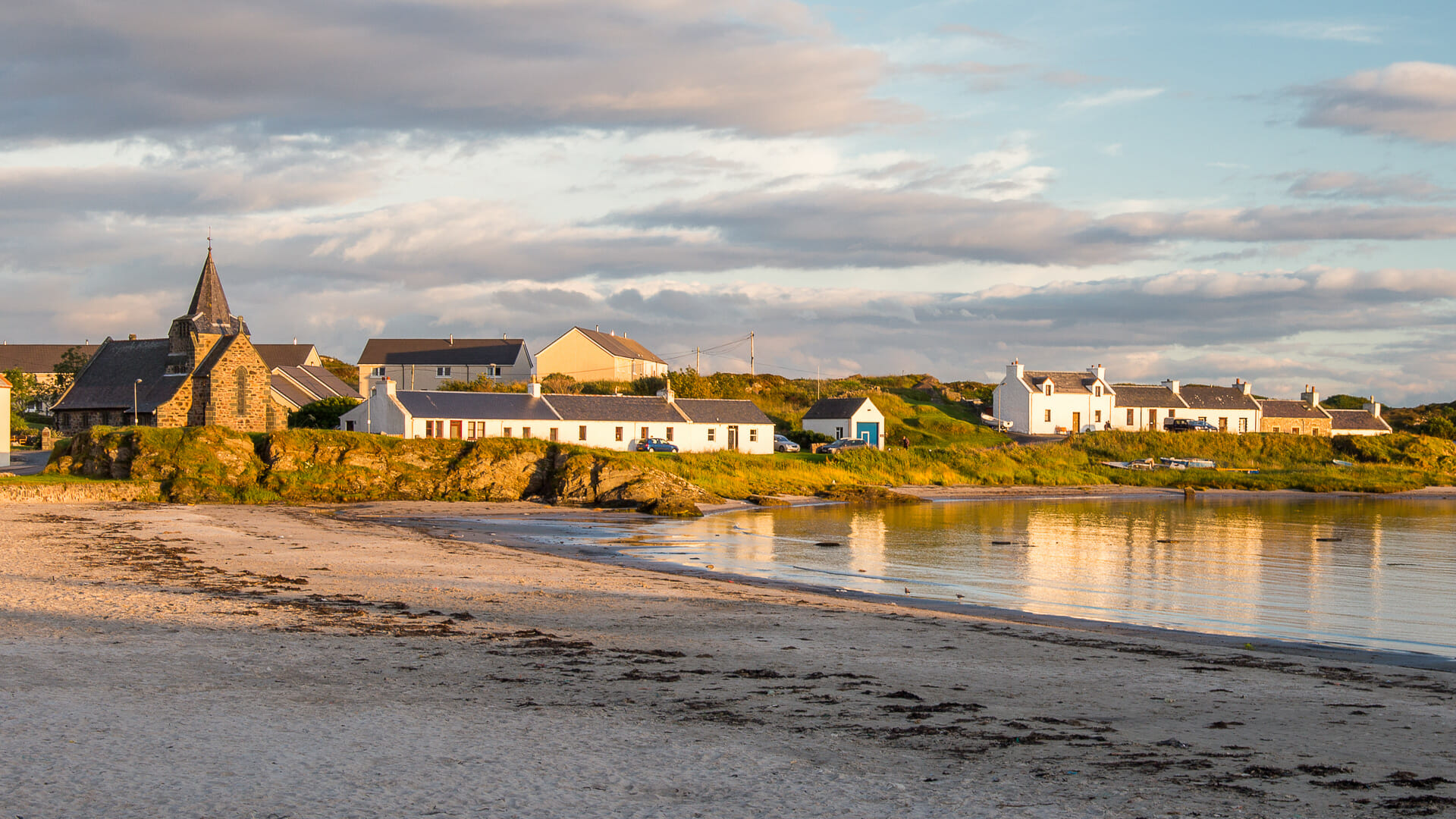
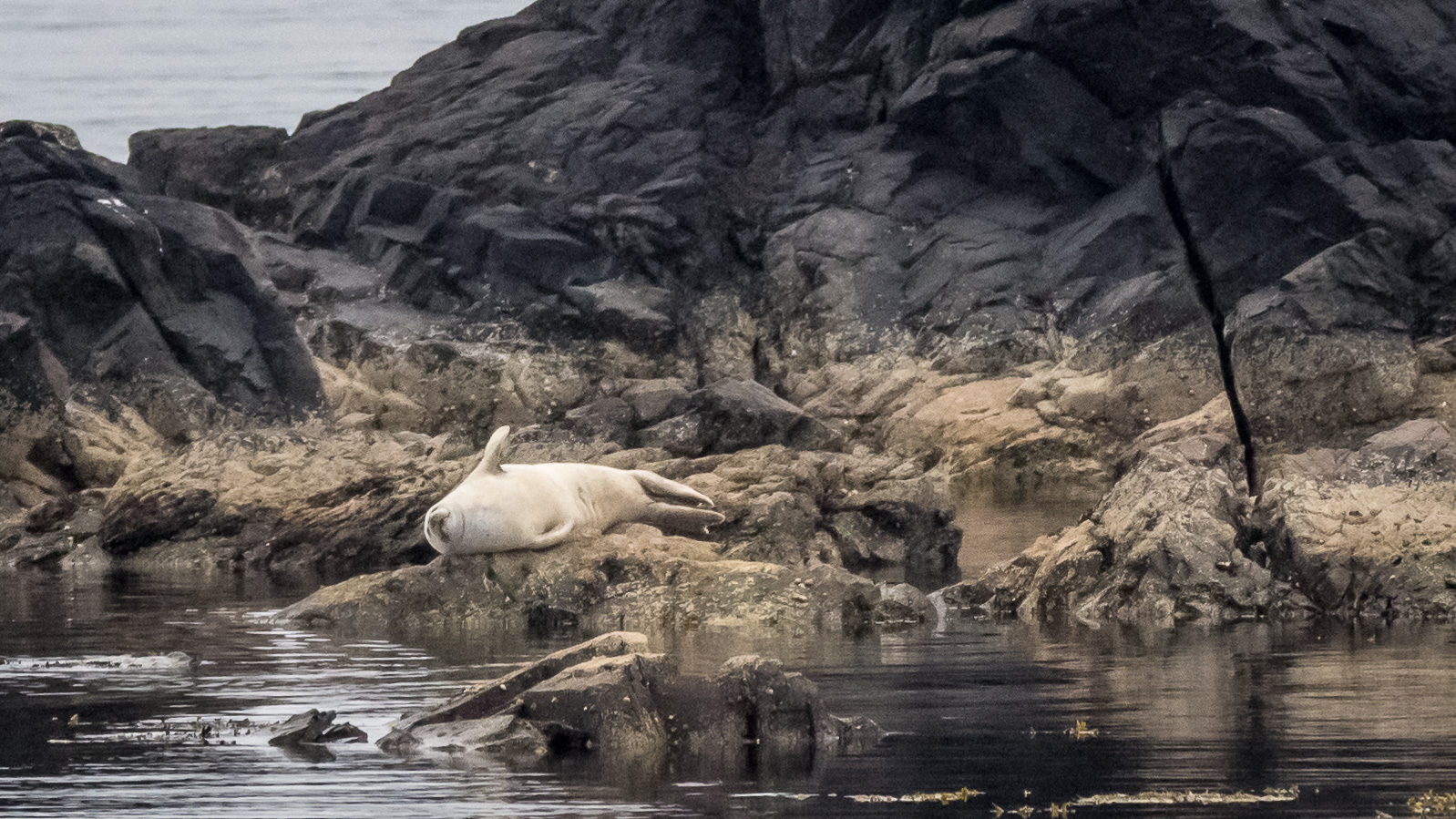
From there the road continues east – essentially towards the witch’s backside. Here the three distilleries Laphroaig, Lagavulin and Ardbeg line up along the rocky coast. Seals often lie about on the rocks in the southern bays, enjoying themselves.
Last but not least, the witch’s feet: the Oa peninsula in the south-west of Islay. Here you’ll find the island’s second bird reserve and an impressive stretch of cliffs.
Main sights
Below are Islay’s most important – and most photogenic – sights. The distilleries have their own section, as do the beaches. All the locations are gathered on the overview map:
Kildalton Cross
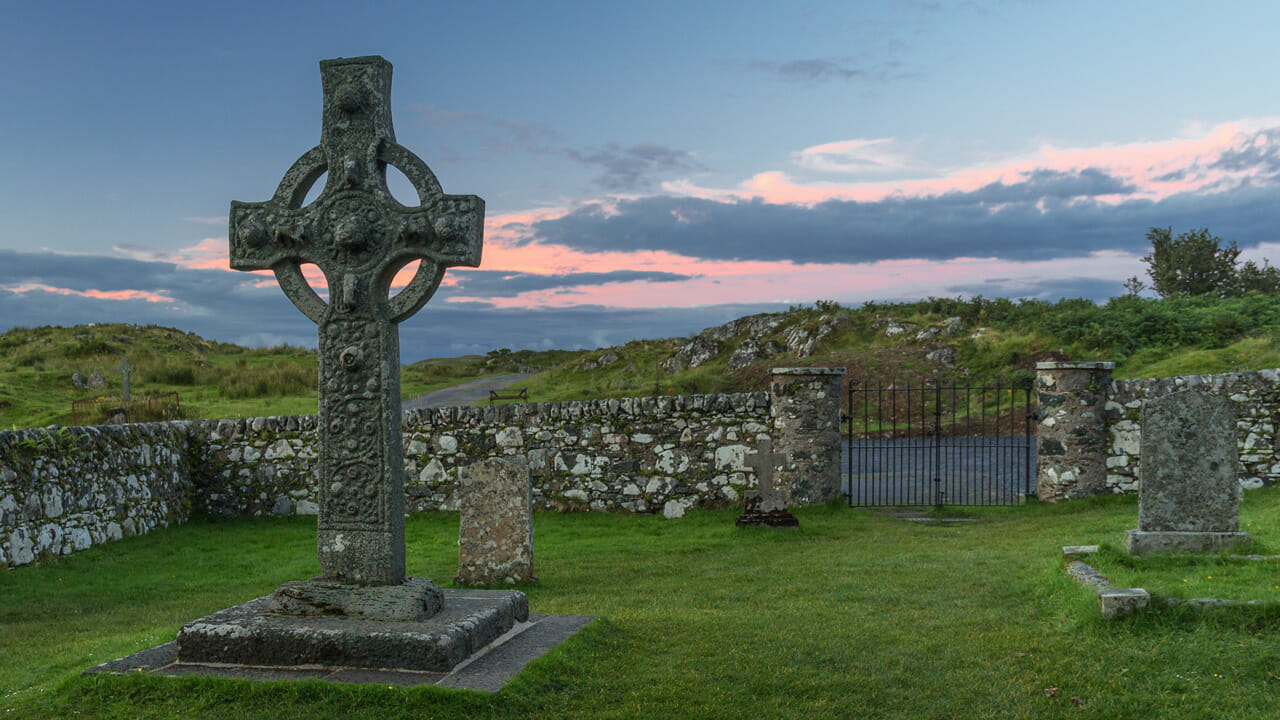
Various gravestones stand at the ruin of Kildalton Church. Among them, one stone carving stands out: the Kildalton Cross. Carved from a single stone, this cross, over a thousand years old, is an example of the high culture that flourished on the island under the Lords of the Isles.
More on the Kildalton Cross here.
Dunyvaig Castle
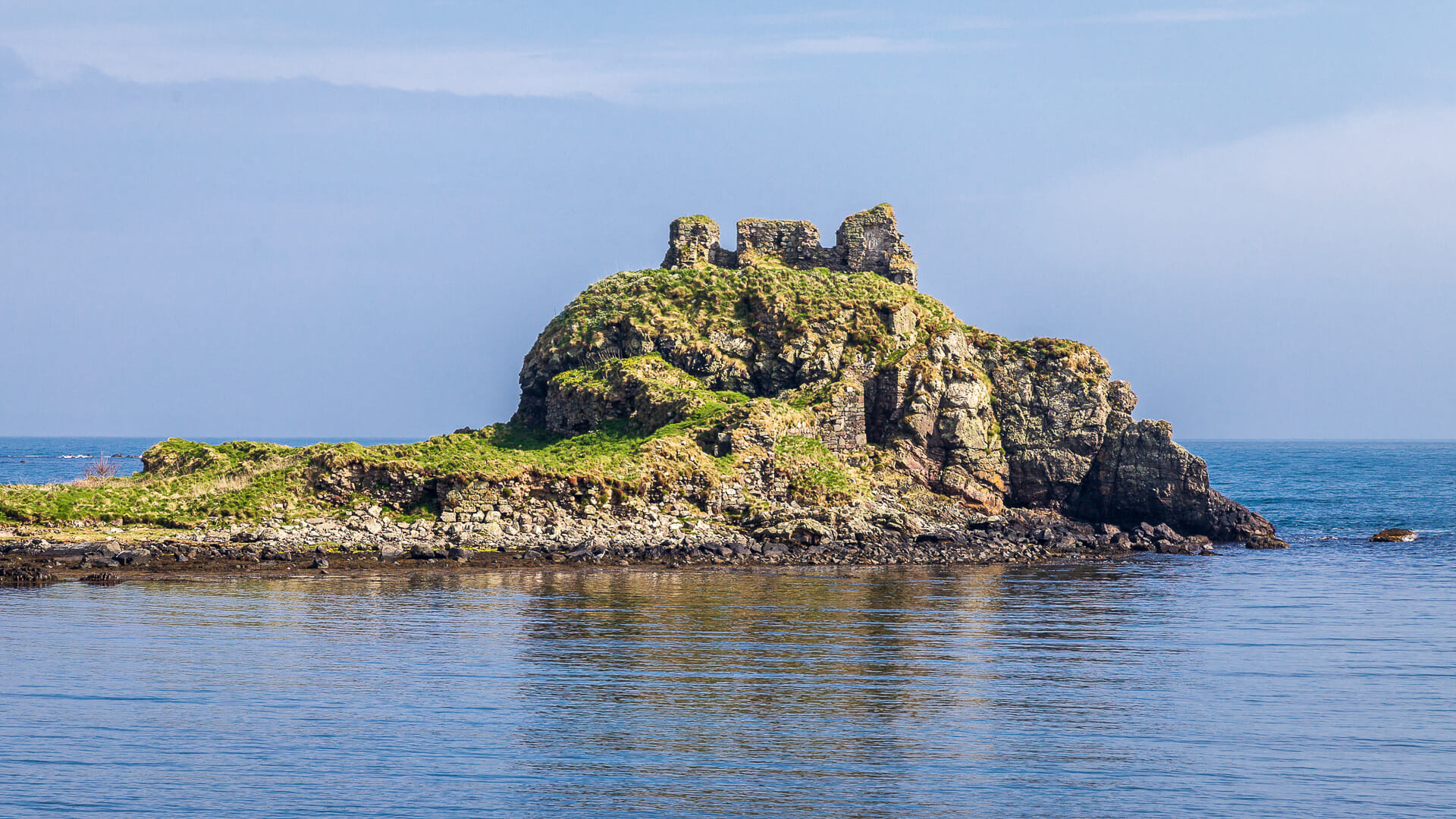
The ruin of an old MacDonald castle, set in the bay of Lagavulin, right opposite the distillery. Ships from Ireland once landed here too. The castle belonged to the MacDonalds.
More about Dunyvaig Castle here (German only for now).
Mull of Oa and the American Monument
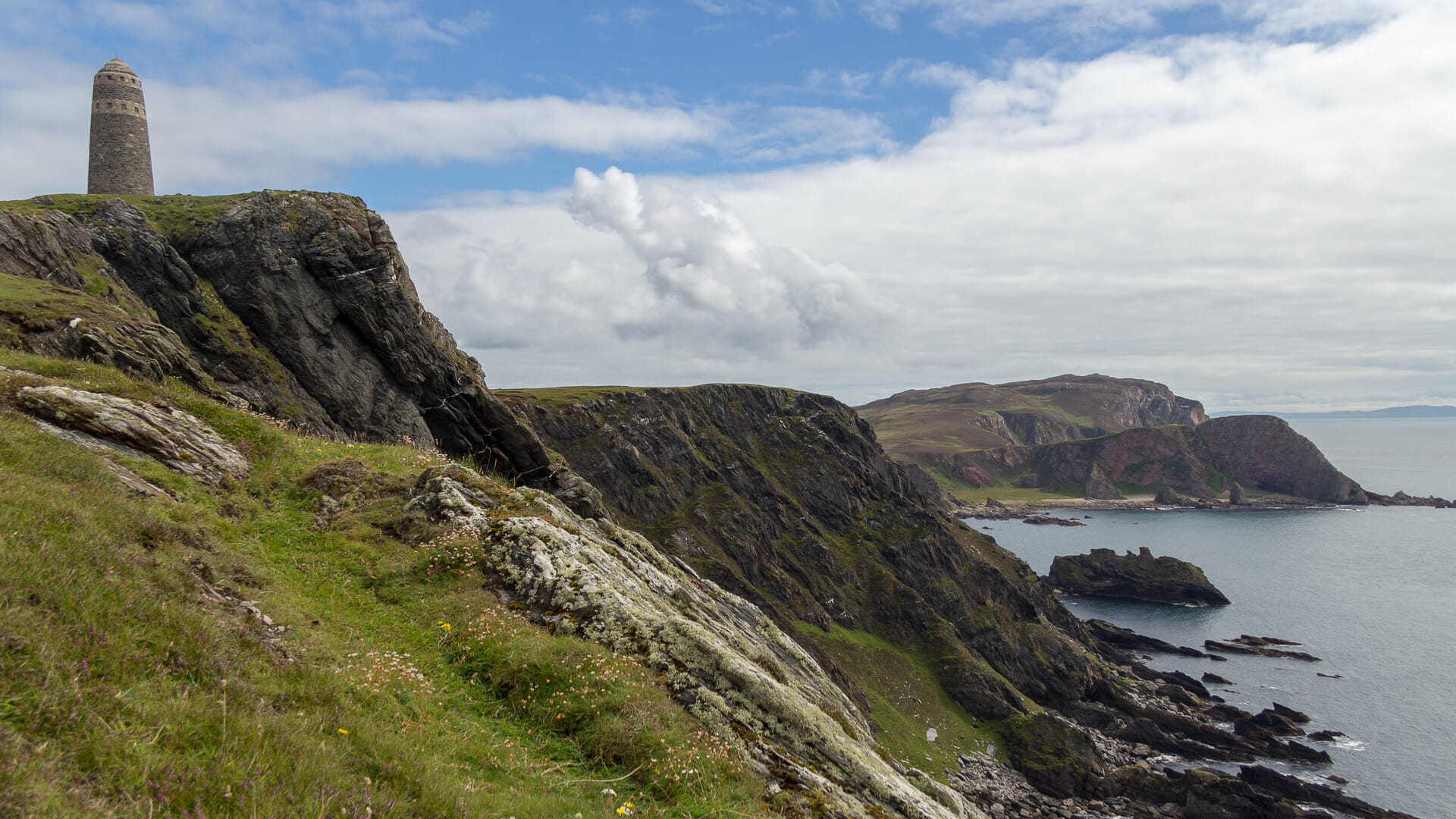
Visitors often skip the south-west of Islay. Yet it shows one of the island’s most beautiful and wildest sides. The peninsula is called An Oa. One of Islay’s two bird reserves lies here. On top of that, the land ends here in a real crescendo: the Mull of Oa offers magnificent cliff scenery, crowned by a tower, the American Monument. It commemorates sailors who died off the Mull of Oa.
More about the Mull of Oa here (German only for now).
Kilarrow Parish Church
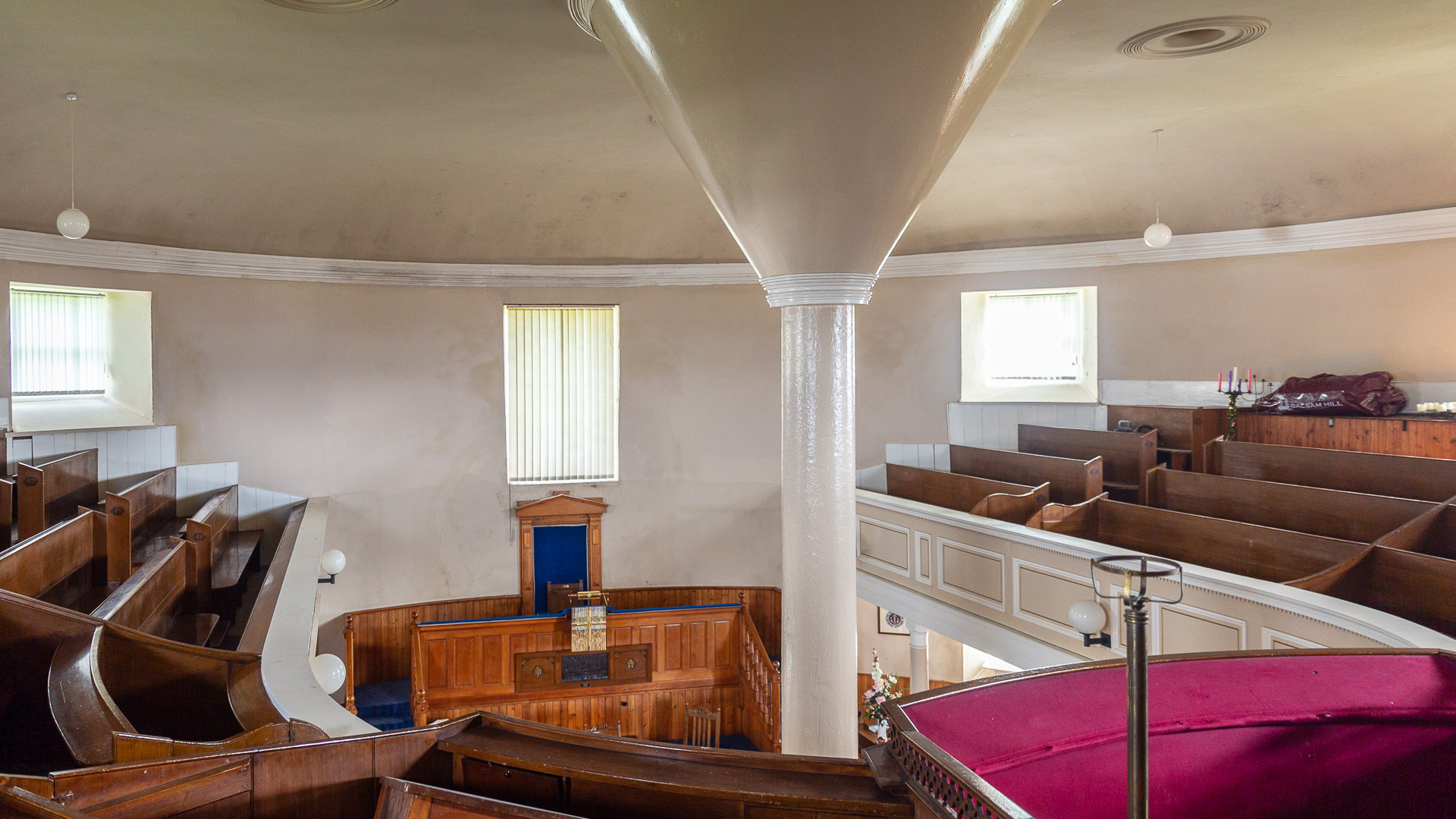
The striking church in Bowmore is called Kilarrow Parish Church. It stands out because it sits on a rise, with the village’s main street seeming to lead almost straight into it. It’s also built completely round. Legend has it there should be no corners for the devil to hide in. In reality, though, the builder was simply inspired by an architect’s design he’d seen elsewhere. Kilarrow Parish Church opened back in 1769 and is listed on Scotland’s heritage register. Services are still held here today, and the adjoining graveyard is lovely too.
Finlaggan
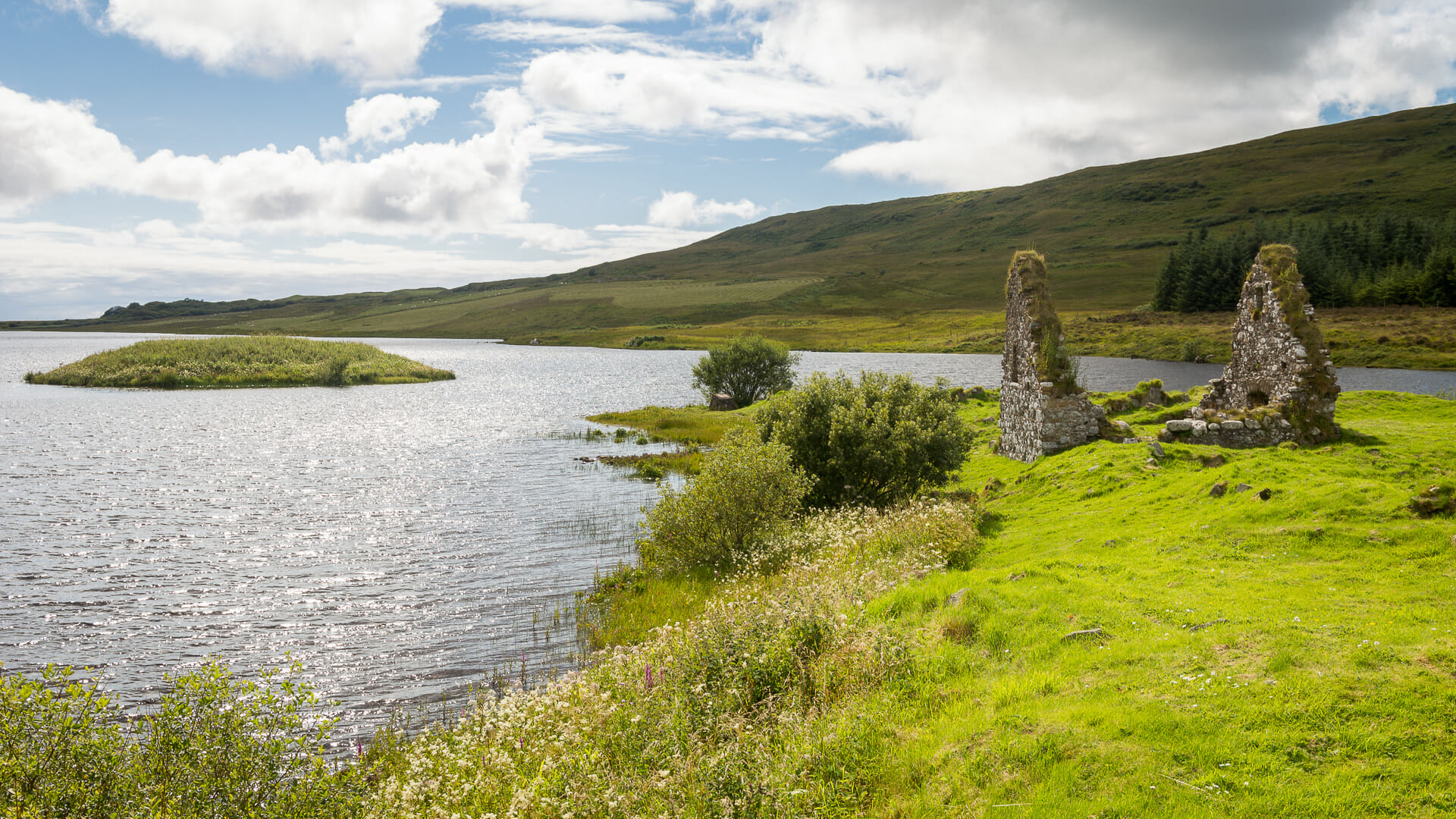
Once the heart of the great island kingdom of the Lords of the Isles, set on an island in a freshwater loch. Even though only ruins remain today, the place still lives through its atmosphere. The museum also has a café.
More about Finlaggan here.
Kilmeny Graveyard and Dun Ghuaidhre
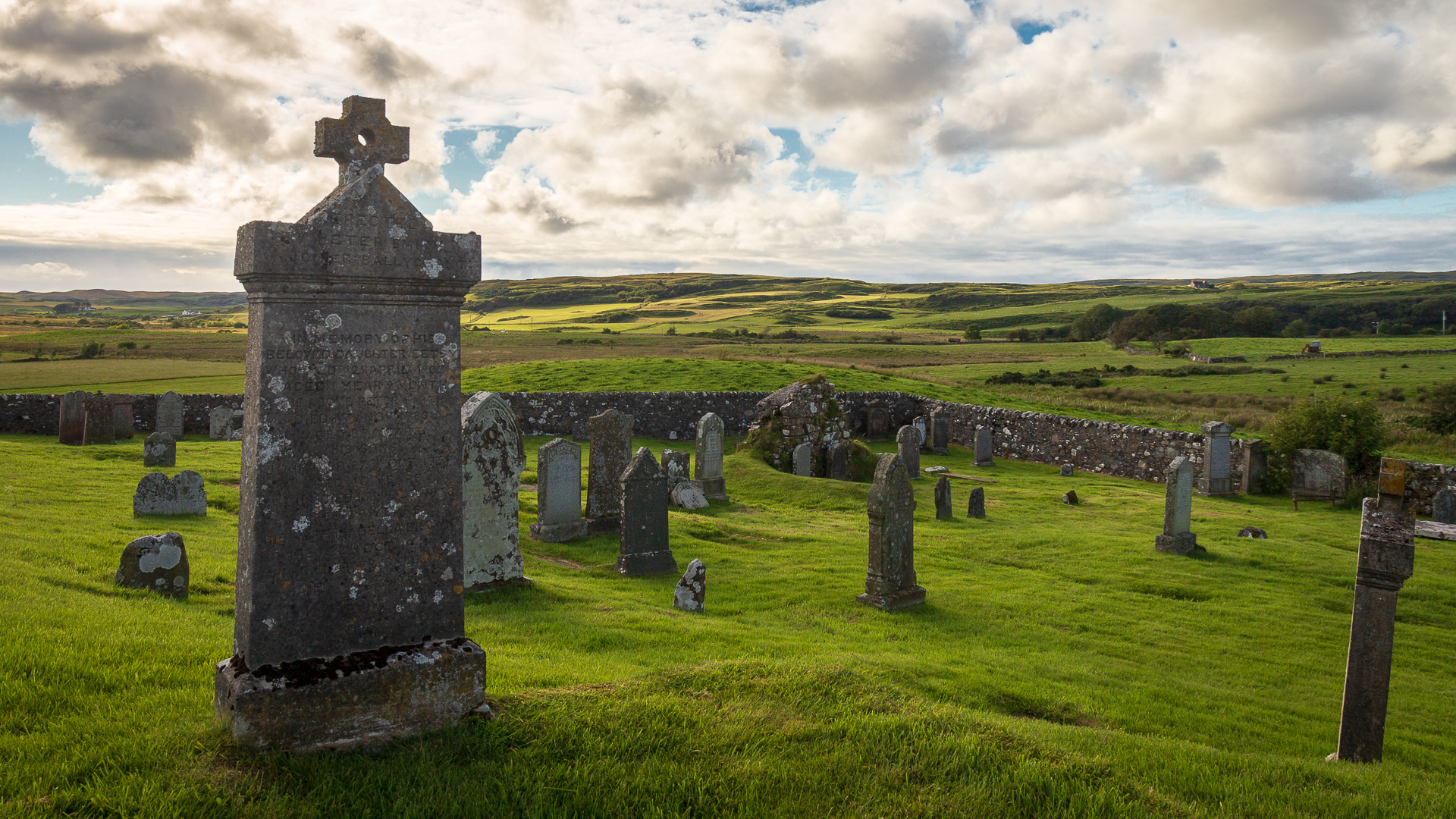
Just a short detour off the road brings you to a beautiful graveyard with a view over Islay’s fields. Even the turn-off from the road is a lovely sight in itself. Coming from Port Askaig, turn left towards Kilmeny House. The farm track leads through a little fairy-tale wood.
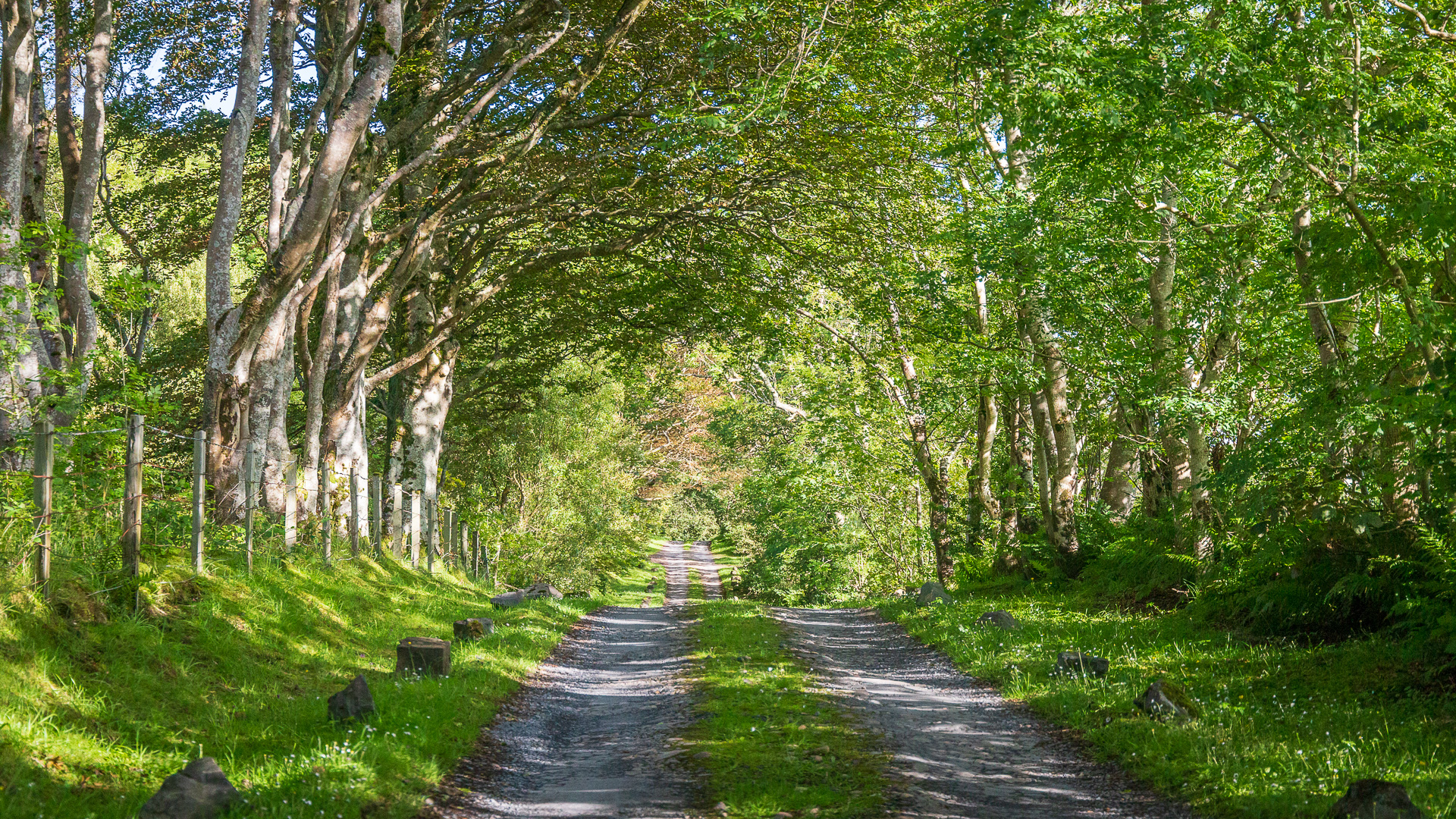
Keep going straight and you’ll reach Kilmeny House, a B&B. For the graveyard, turn right at the next junction.
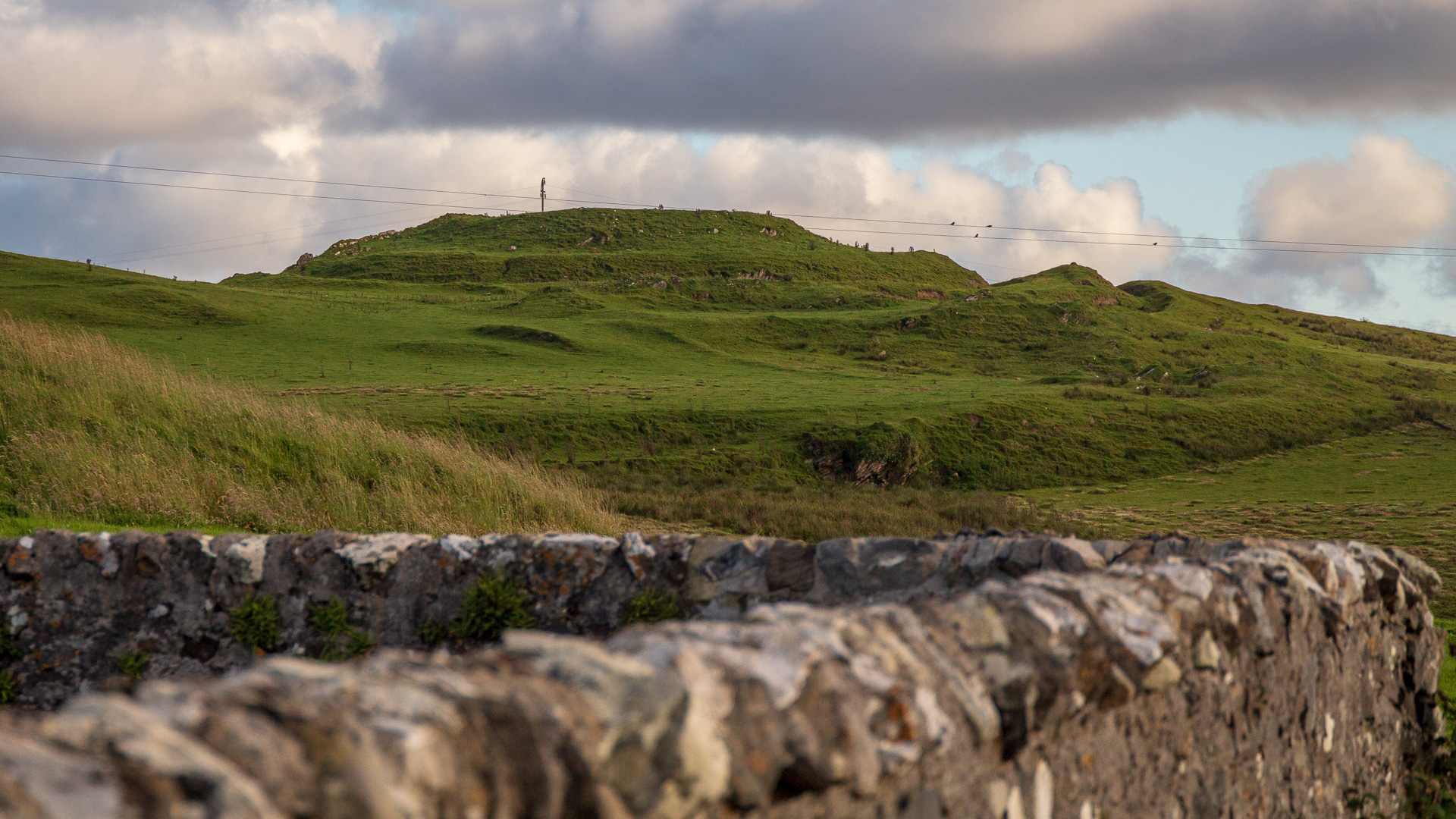
From the graveyard you’ll spot a hill that doesn’t look entirely natural. That’s Dun Ghuaidhre, a former Iron Age fort. From here, head back the same way to the road.
Woollen Mill
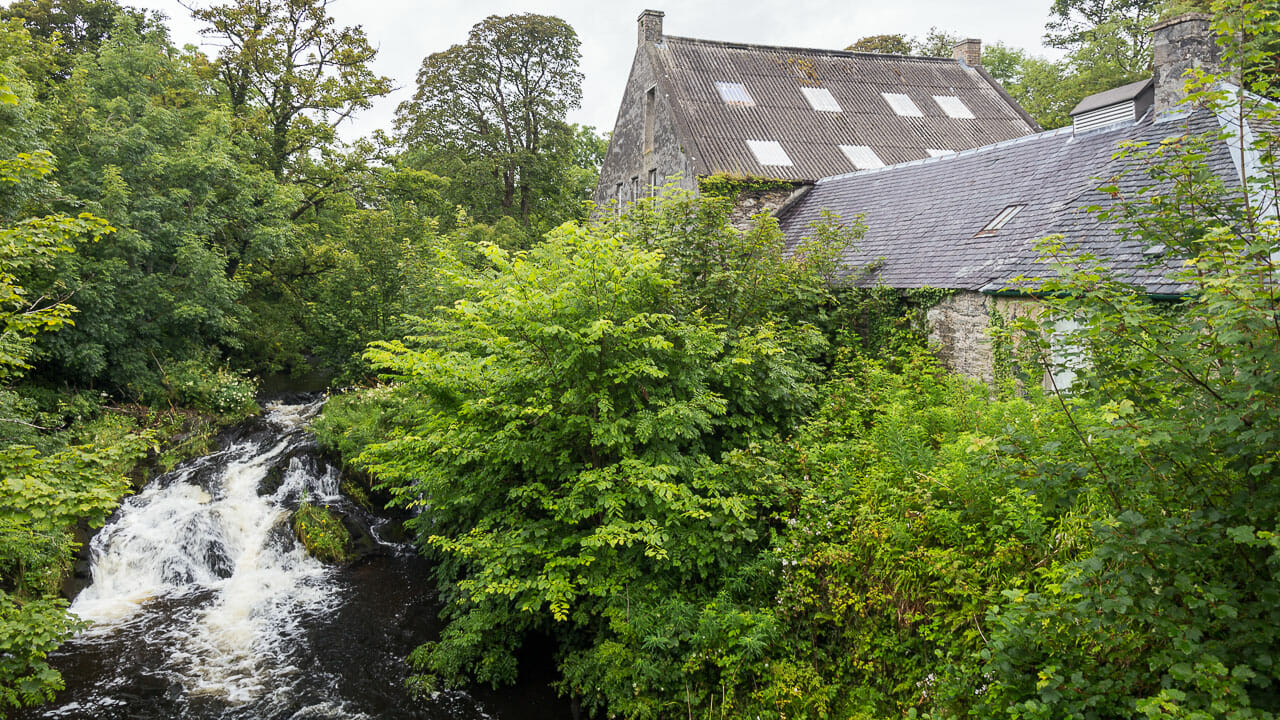
An unassuming stone building hides quite a story: old looms and new clothing. The Islay Woollen Mill has produced costumes for films as well as for the kingdom’s high nobility. A visit is well worth it for the owner’s stories and the tour through the workings of the mill.
More about the Islay Woollen Mill here (German only for now).
Cill Chiarain
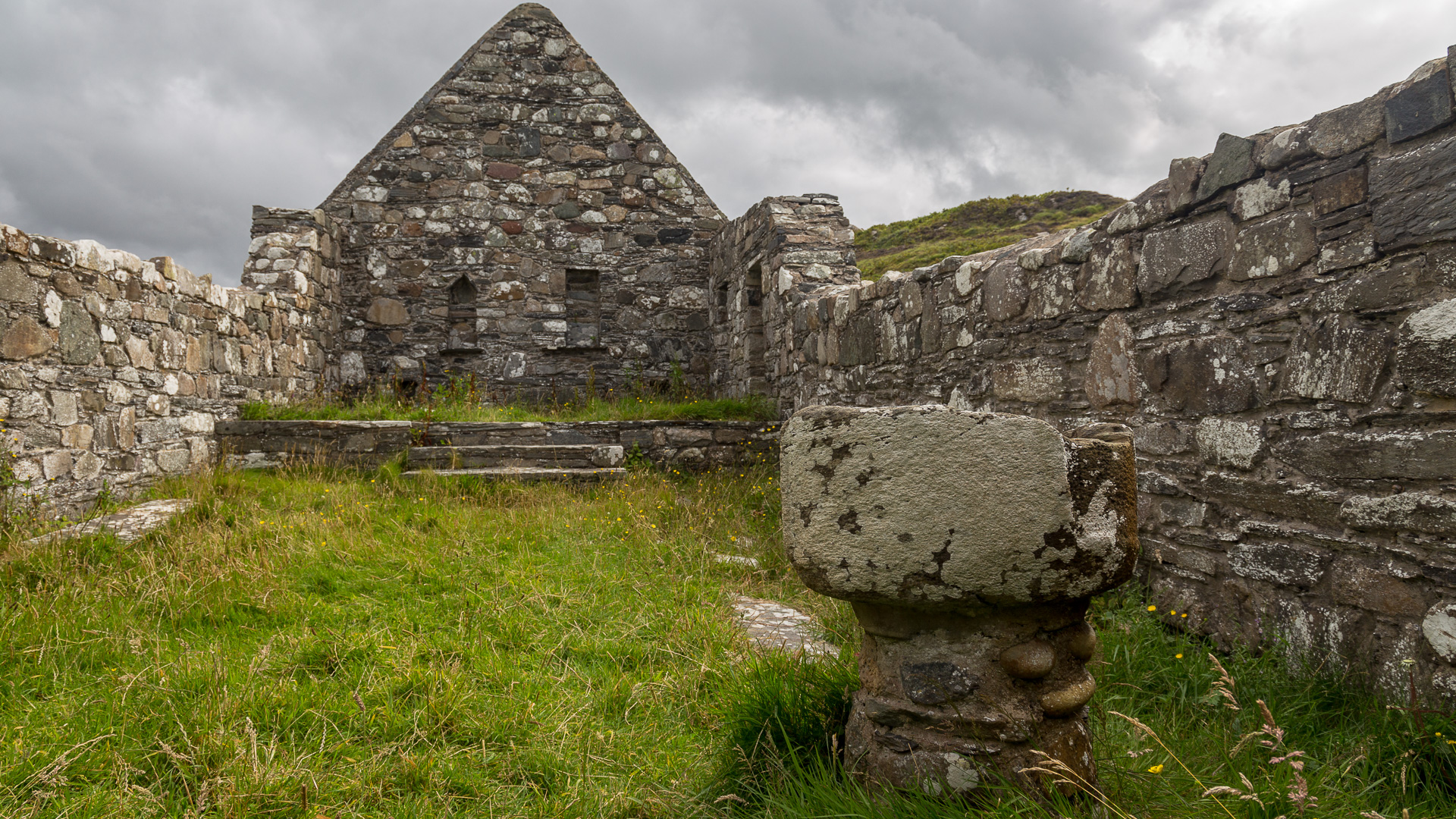
Below the scattered houses of Kilchiaran, on the west coast of the Rhinns of Islay, lies a medieval church ruin. This, legend says, is where St Columba, Scotland’s great missionary, first set foot on Islay. Inside the church you’ll find, among other things, an old baptismal font. Continue down from the church towards the bay and you’ll find a beach made mostly of coarse stones.
Tormisdale Croft Crafts
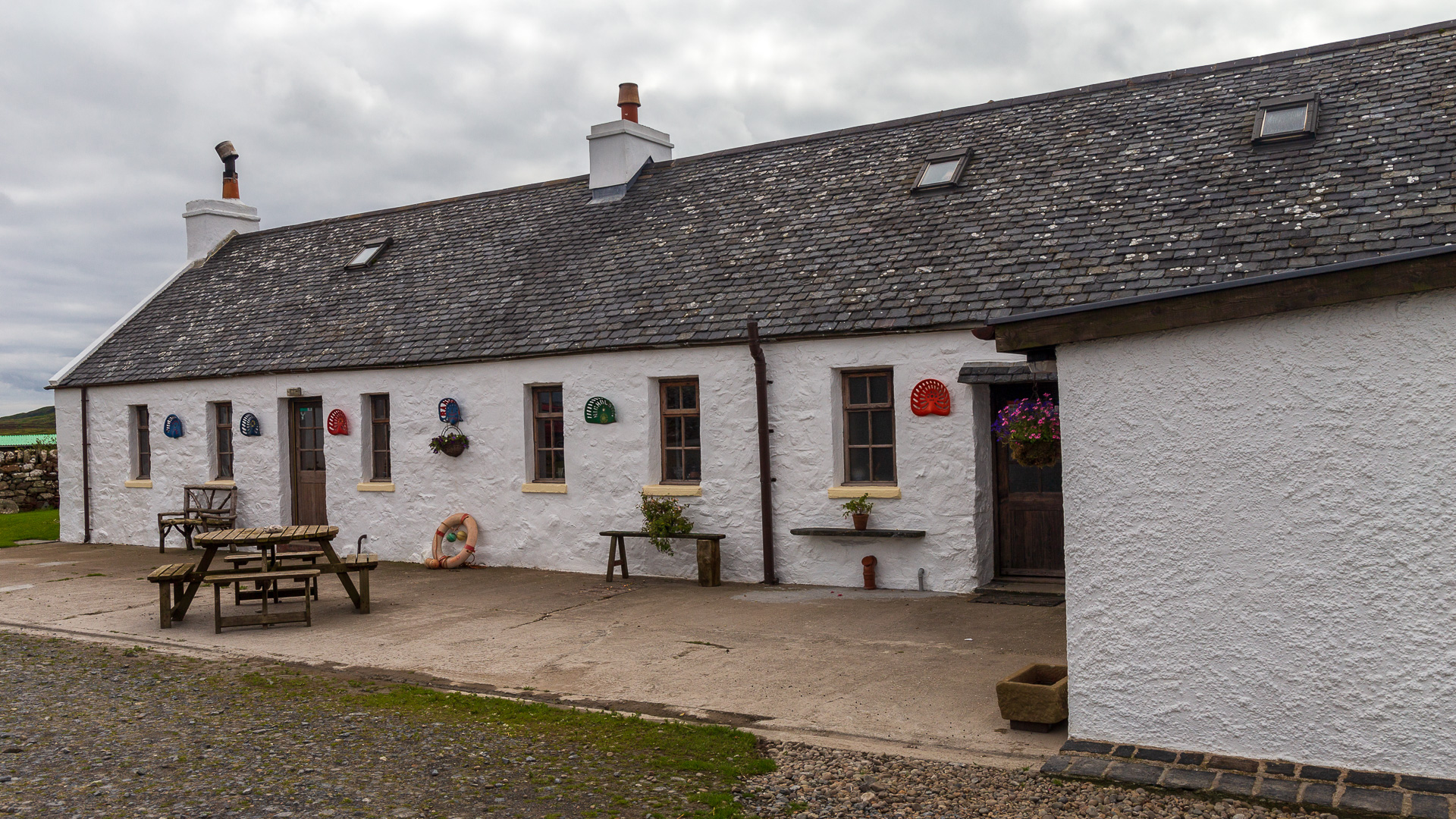
In the middle of nowhere on the Rhinns you’ll find the Tormisdale Croft Craft Shop. Here you can find hand-spun wool and all sorts of other natural products straight from the farm. Without question a wonderfully rustic little farm shop.
Beaches on Islay: Sand as far as the eye can see
Some of Scotland’s most beautiful beaches are on Islay. Admittedly, you’ll rarely see people sunbathing or swimming here – there’s usually a wind blowing and the water is quite cold, and dangerous currents can occur in the sea. But the beaches here are wonderfully quiet and perfect for long walks.
The main beaches are marked on the sights map above. There’s also a lovely beach in front of the Bowmore distillery, as well as at the entrance to Port Ellen and in Port Ellen itself.
Here are a few more lovely beaches on Islay, briefly introduced.
Cruach Mhòr
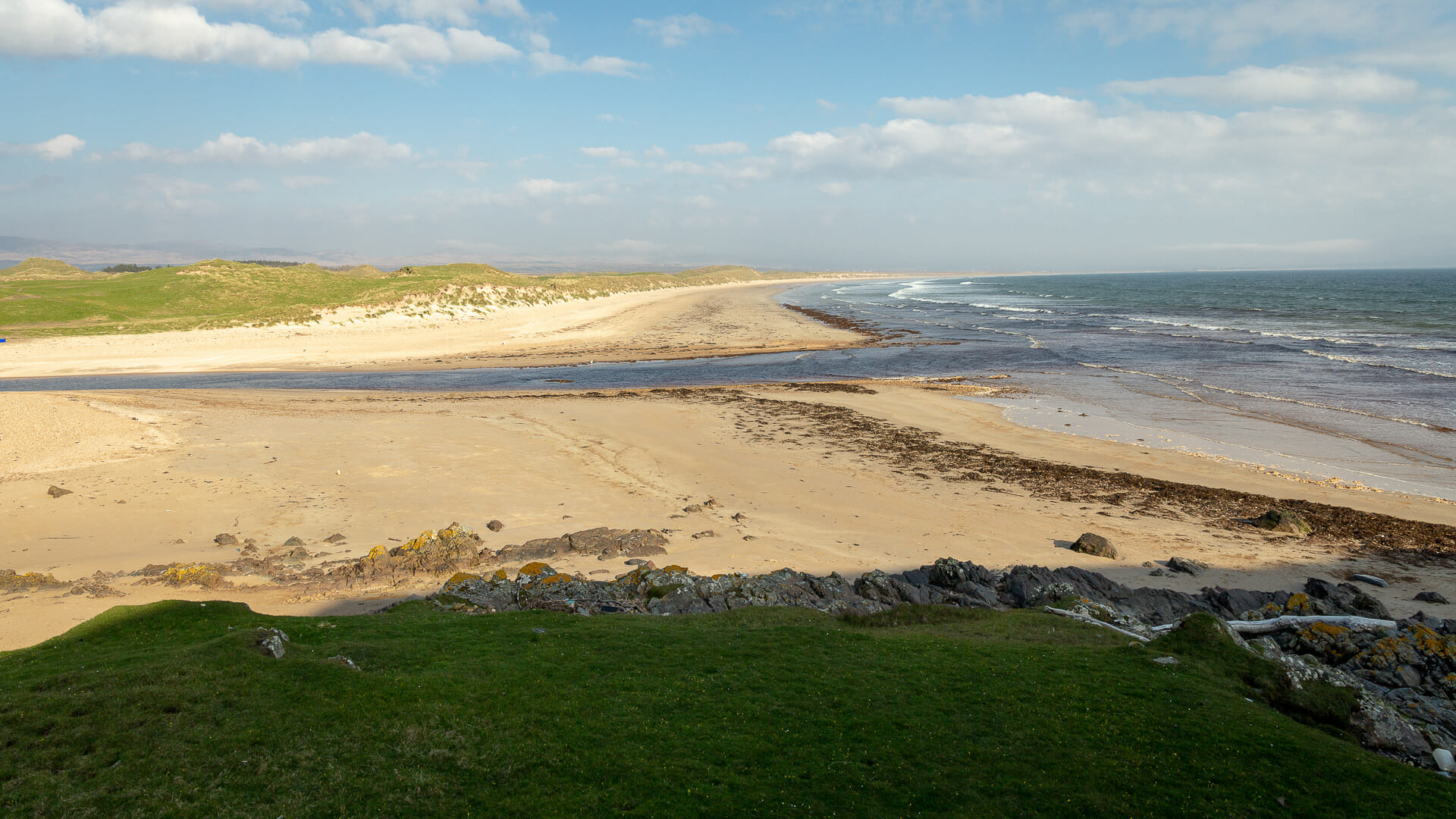
Islay’s biggest beach stretches west of the road between Bowmore and Port Ellen. Almost eight kilometres of the finest sand, broken up here and there by rocks. Access, though, isn’t entirely straightforward. A farm track leads north off the A846 to Laggan Farm. In the middle, directly north of Islay Airport, there’s also a rough farm track leading to the beach. In the south, access is via Kintra Farm, where the road is much better.
Kilchiaran Bay
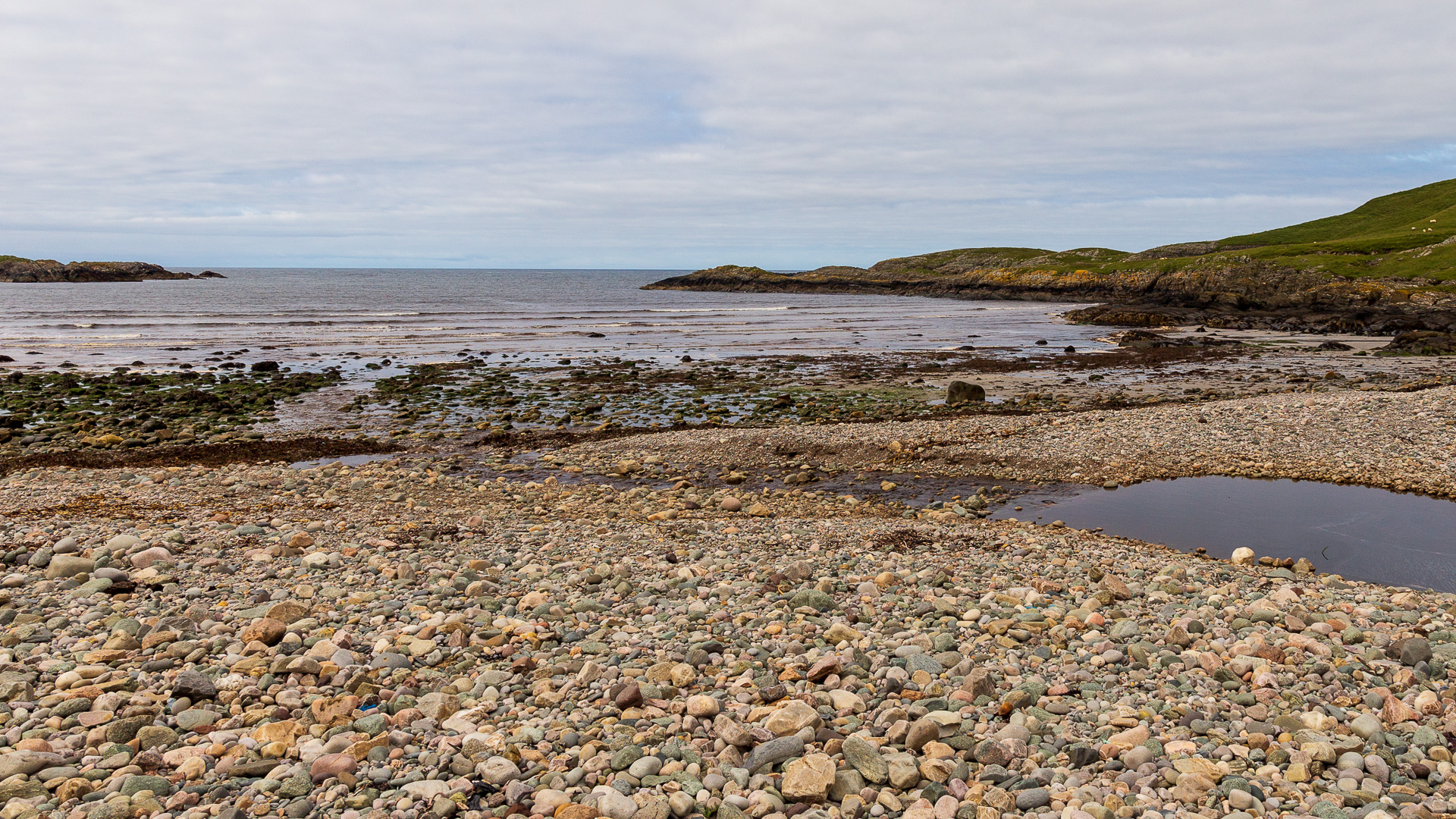
From Port Charlotte, a road heads out to the west coast of the Rhinns of Islay. The village of Kilchiaran, with its church ruin, sits there, and once you pass the ruin you end up in the bay, where you’ll find plenty of stones and some sand too.
Saligo Bay
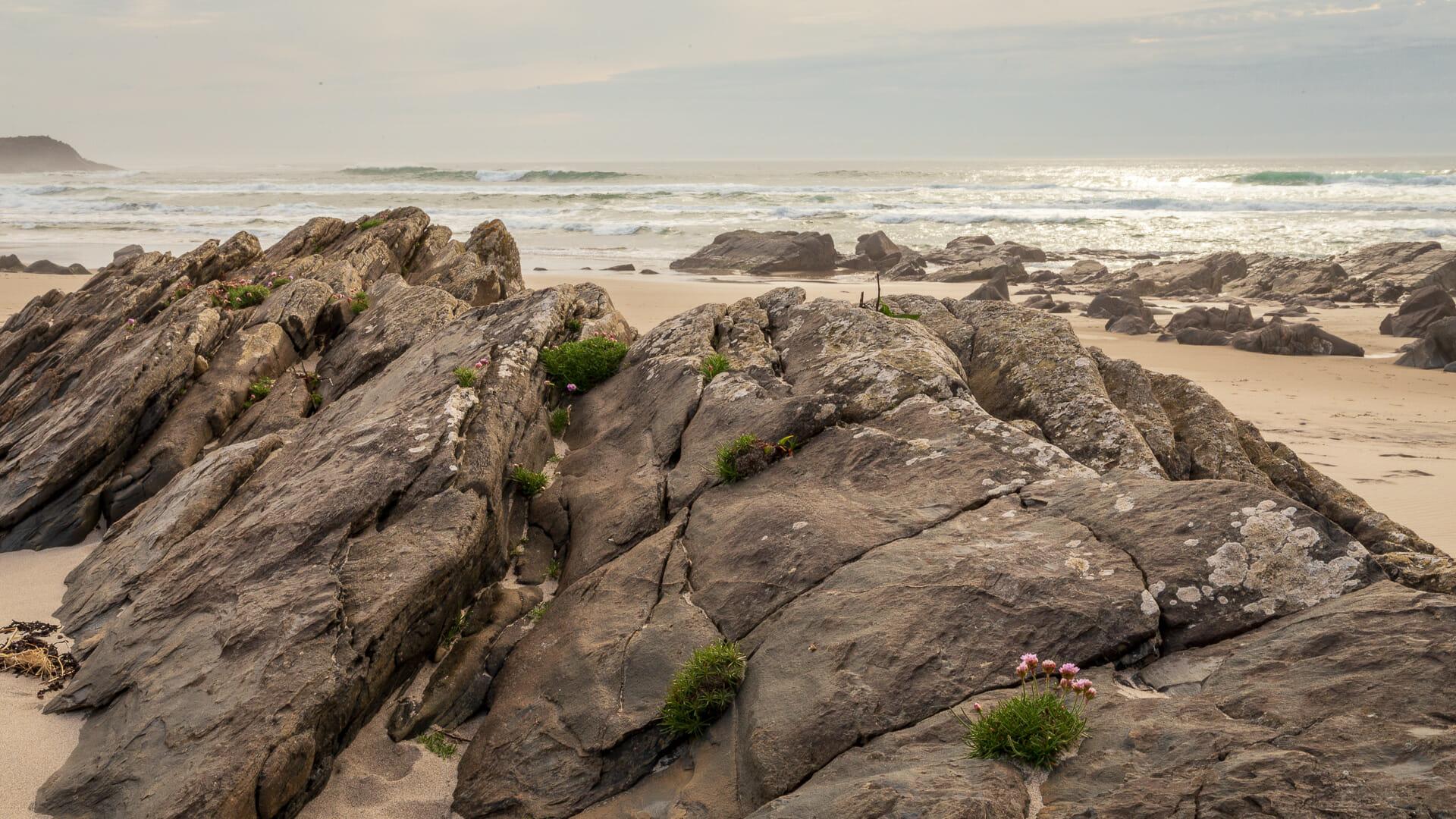
One of the most interesting and wildest beaches on the island lies at Saligo Bay. Sand gives way here and there to striking rock formations, and flint can be found along the break in the grassland. The surf here seems even wilder than at other beaches. You reach Saligo Bay via a road that passes the Kilchoman distillery, then turns right.
Machir Bay
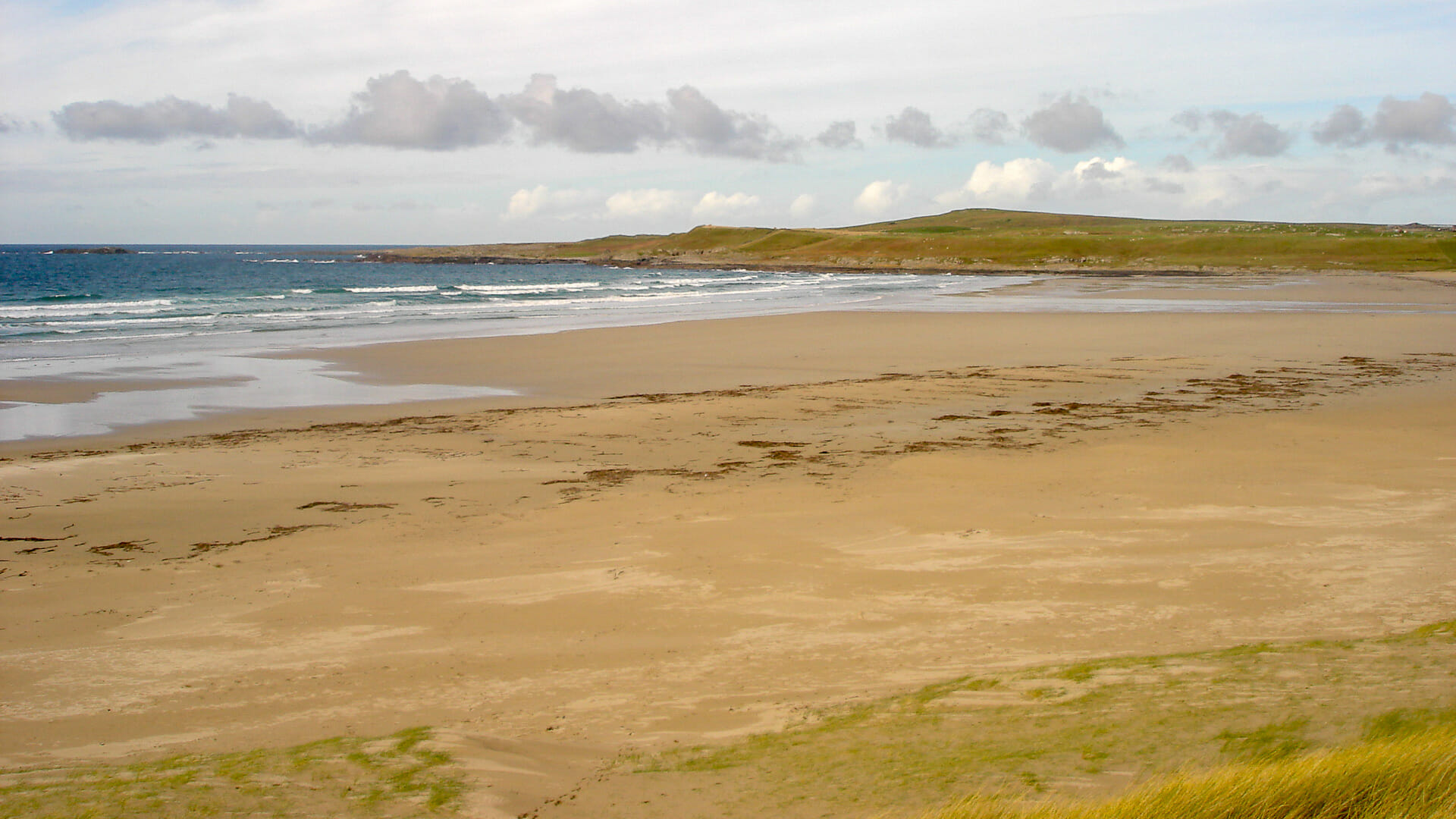
A small, beautiful beach lies near the village of Kilchoman, close to the whisky distillery. There’s also a graveyard here for sailors who died in a shipwreck nearby.
More about Machir Bay here.
Claggain Bay
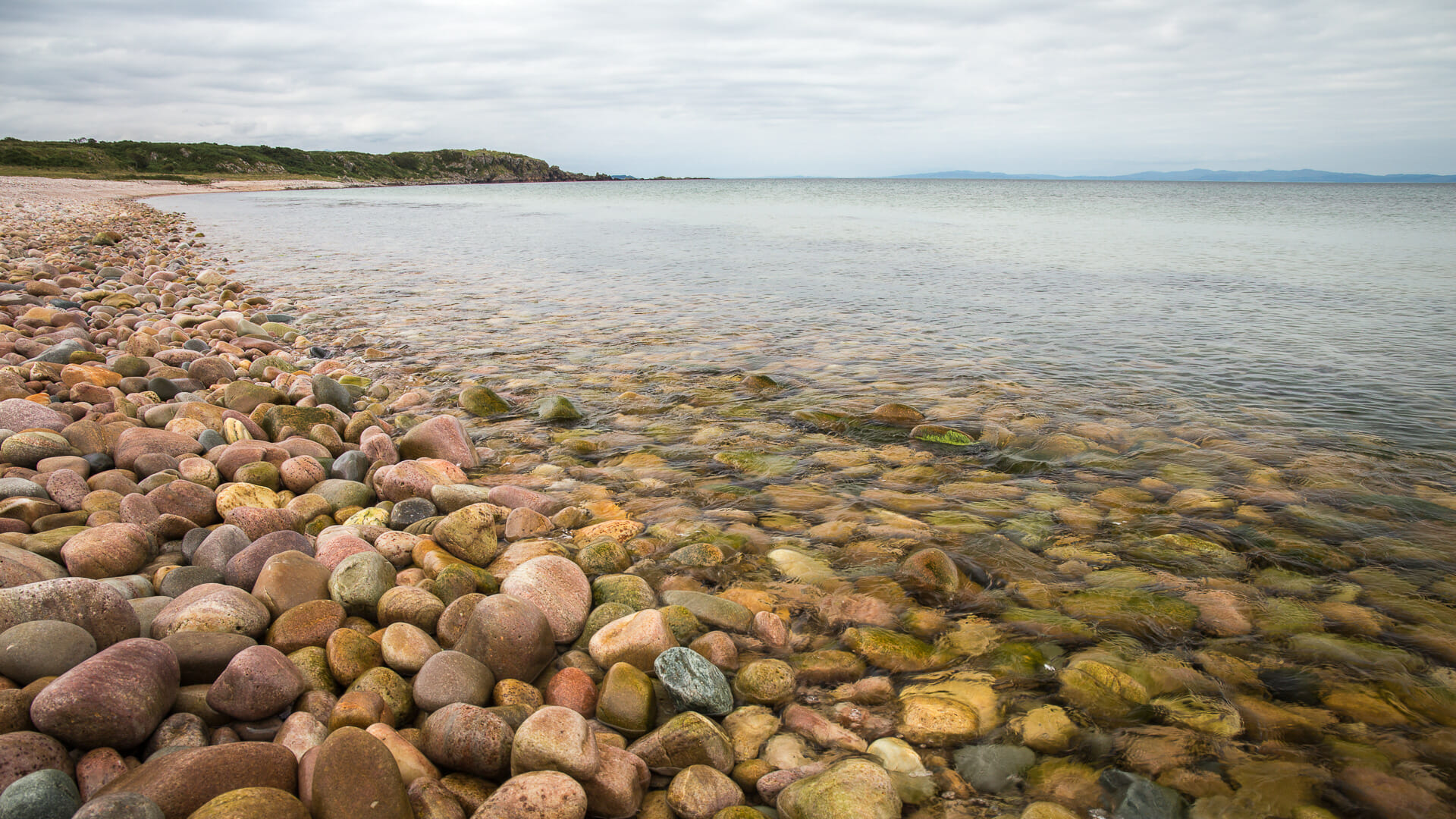
No sand, and precisely that’s what makes it so beautiful. At Claggain Bay, the surf has rounded off coarse stones and, in doing so, brought out their play of colour wonderfully. The road there passes the three distilleries in the south of the island and then simply continues straight on.
Islay whisky: An island as a whisky region
Naturally, the spirit of whisky hangs over the whole island. Travellers encounter more than just distilleries everywhere they look. The grain silo at Port Ellen harbour, the malting house at the edge of the village, the shop in Bowmore, and the many warehouses all keep reminding you that whisky is made here – and in serious quantities.
Every distillery has a shop and offers tours and tastings, ranging from a simple tour all the way up to masterclasses featuring finer drams with expert commentary. Shops usually stock a Distillers Edition available only on site. Some distilleries offer a free dram to try, while others charge a little for it.
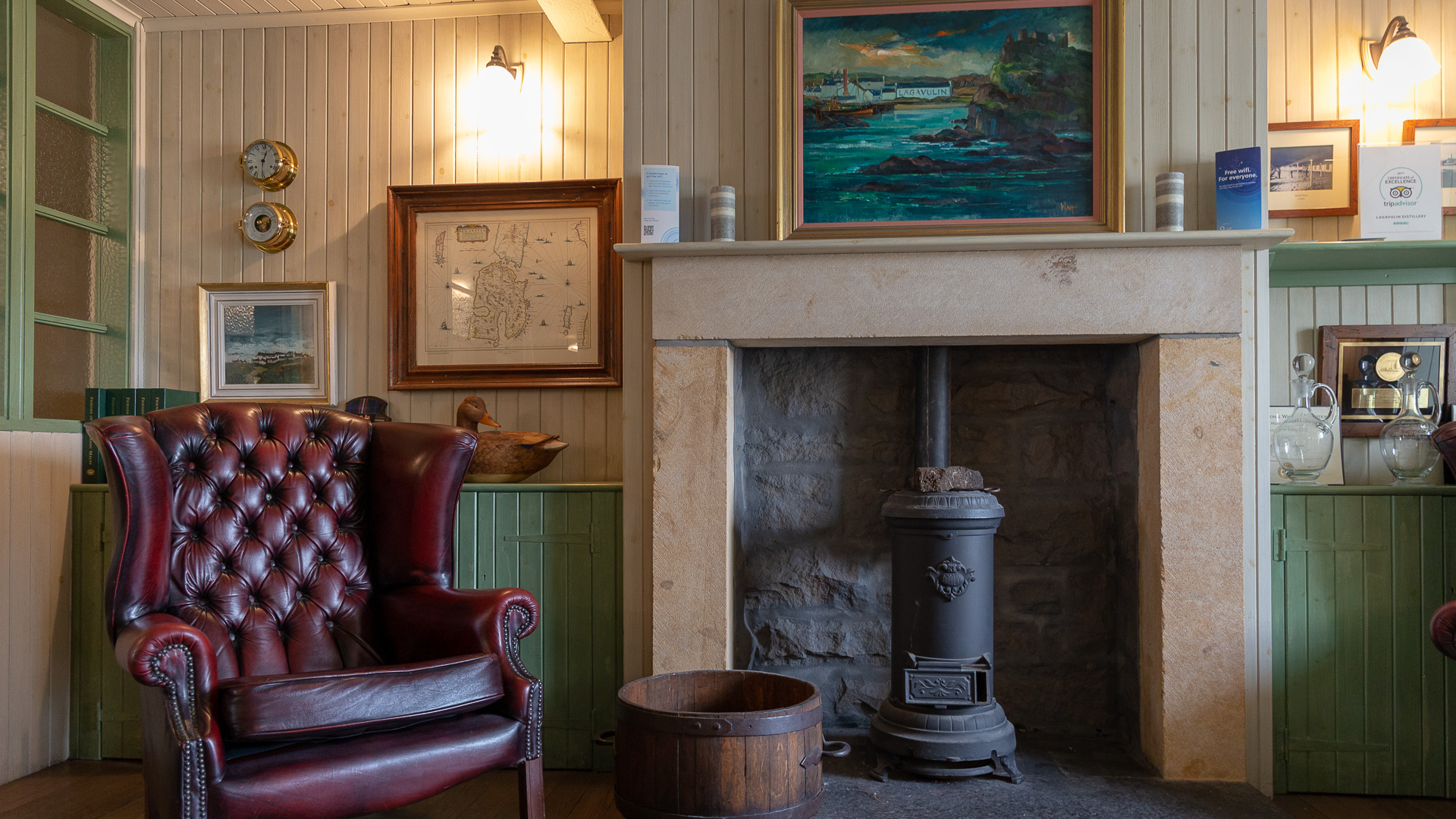
All the distilleries carry names that come from Gaelic, usually simply describing the place. The name often appears in its English form, which phonetically imitates the Gaelic. The good news: Bowmore, Lagavulin, Ardbeg are pronounced exactly as they’re written.
When it comes to pronouncing the Gaelic names, plenty of variants do the rounds. For Caol Ila, for instance, you’ll often hear “kall eela” or “cool eela” passed around. Honestly, neither has much to do with real Gaelic. “Caol” means strait, and is pronounced roughly “cool”. Ila, in today’s usage, isn’t strictly “genuine” Gaelic at all. The proper form would be Ìle, pronounced roughly “eela” (long e, long i). I’ve even heard locals use this pronunciation for the strait. But try ordering a whisky that way at a German whisky fair …
Still, it’s genuinely interesting to trace where each name comes from. So let’s travel from south to north on Islay and visit the distilleries along the way.
The three in the south:
All three distilleries in the south aren’t for the faint of heart. Their whiskies taste smoky and peaty, even medicinal. The bold walk the road from Port Ellen and visit all three distilleries along the way. Because this has repeatedly led to accidents involving drunk pedestrians on the road, a dedicated paved path now runs alongside it.
Laphroaig
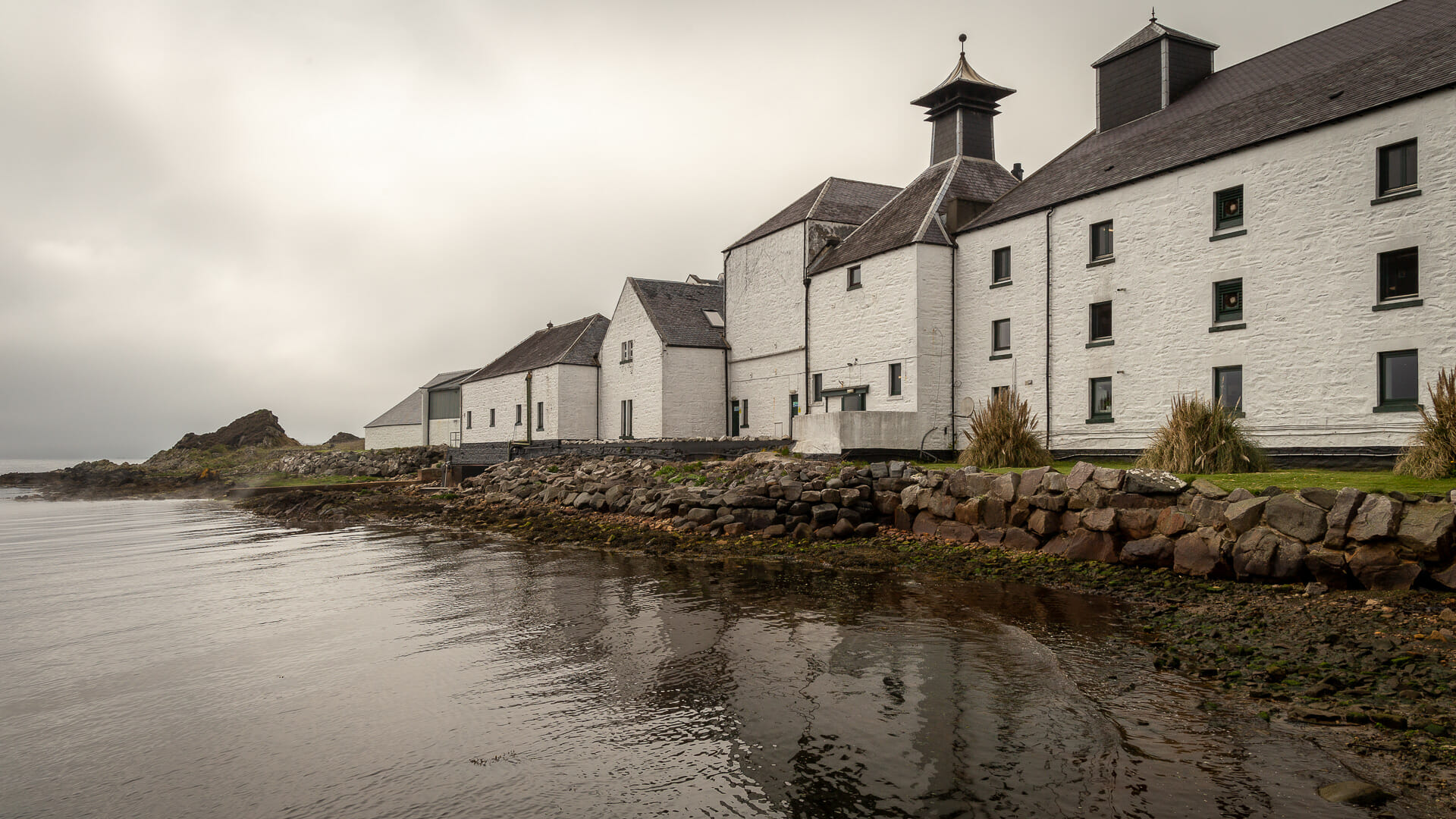
Whisky has been made in the “hollow of the broad bay” since 1815. Cresols give Laphroaig its utterly distinctive taste. The distillery buildings are listed on Scotland’s heritage register. Laphroaig malts some of its own barley and also sources some from the Port Ellen maltings. It’s owned by the American-Japanese Beam Suntory group. The name is pronounced “la-froyg”.
Why visit: A characterful distillery with a real flair all its own, and a whisky that’s every bit as stubborn. You can get a great photo under the lettering on the warehouse.
Lagavulin
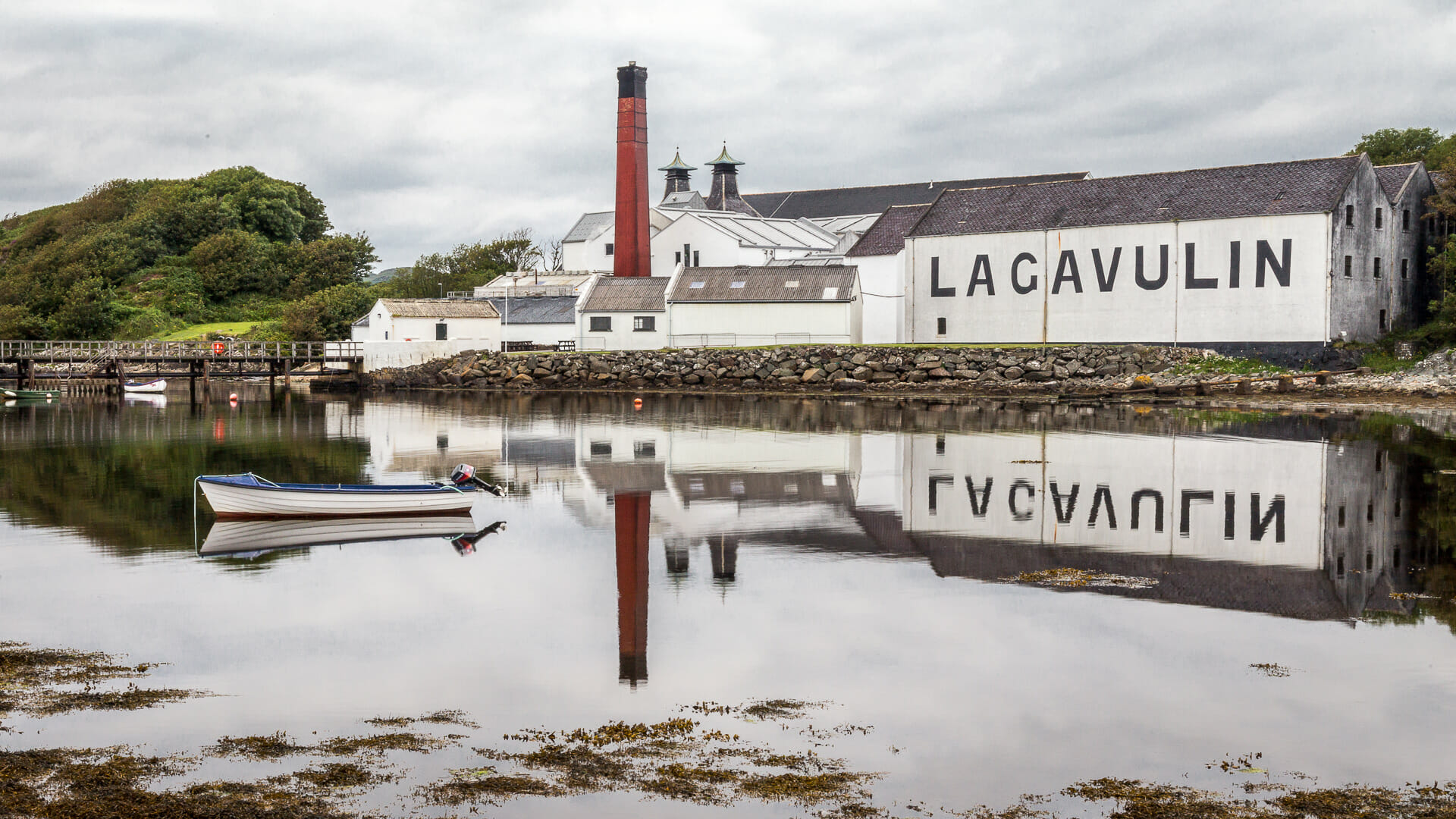
Standing in the “hollow of the mill”, this distillery faces the ruined Dunyvaig Castle across the bay – and makes for a wonderfully photogenic setting. It too produces a fairly robust whisky. Founded in 1816, Lagavulin gets all its grain from the Port Ellen Maltings and belongs to the drinks giant Diageo.
Why visit: Lovely old rooms in the visitor area. Otherwise, the bay and the view of the castle are simply stunning. With a bit of luck, you might spot seals.
Ardbeg
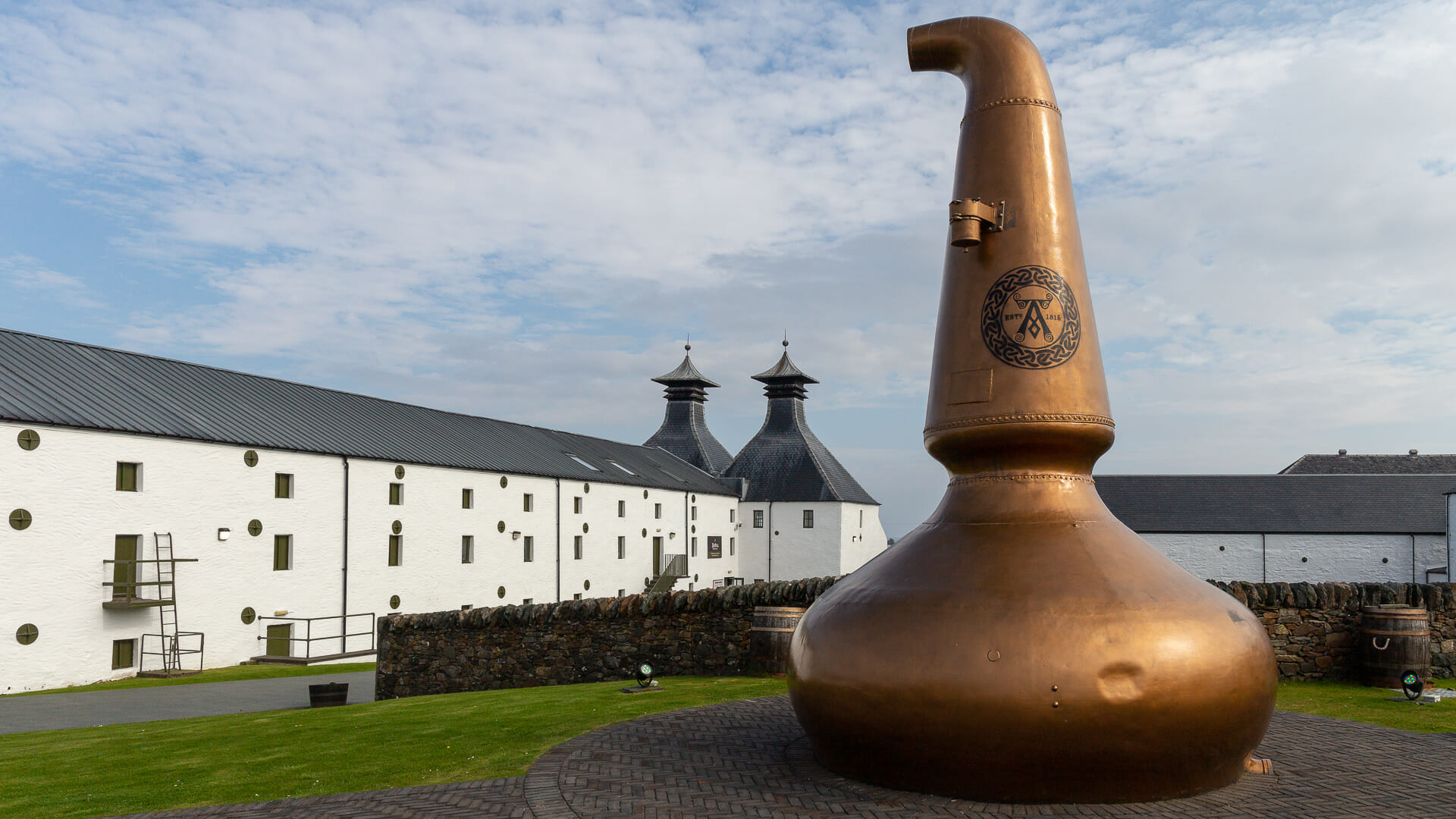
Bringing up the rear is Ardbeg, whose origins likewise go back to 1815. “Ardbeg” means “little height”. It produces quite a number of different bottlings, all fairly peaty. Ardbeg belongs to the Moët Hennessy Louis Vuitton group. The visitor centre also serves good food.
Why visit: A good restaurant, a huge site, a photogenic still right by the car park, and the warehouse with its tin roof. Wonderful.
The three in the west:
Bowmore
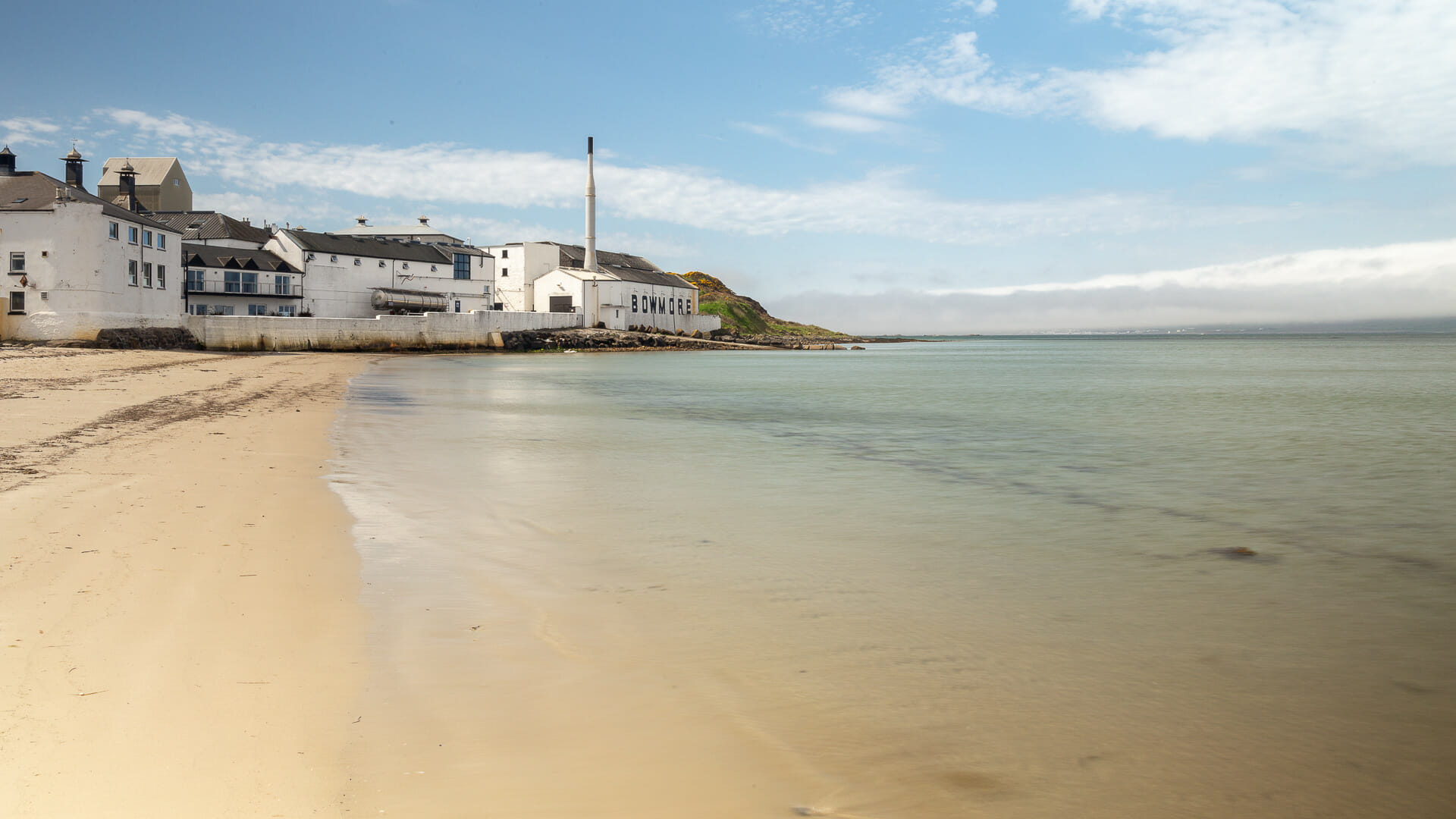
One of the oldest distilleries around, producing whisky since as far back as 1779. Bowmores are very often aged in sherry casks, adding sweet notes alongside a touch of smoke and peat. Bowmore – or “Bogh Mór” in Gaelic – means “big bend”. The distillery belongs to the Beam Suntory group, and Bowmore is one of the few distilleries that still does its own malting.
Why visit: Combines nicely with a stroll around the village of Bowmore. Otherwise, the tour shows you everything from the malting floor right through to Vault No. 1.
Bruichladdich
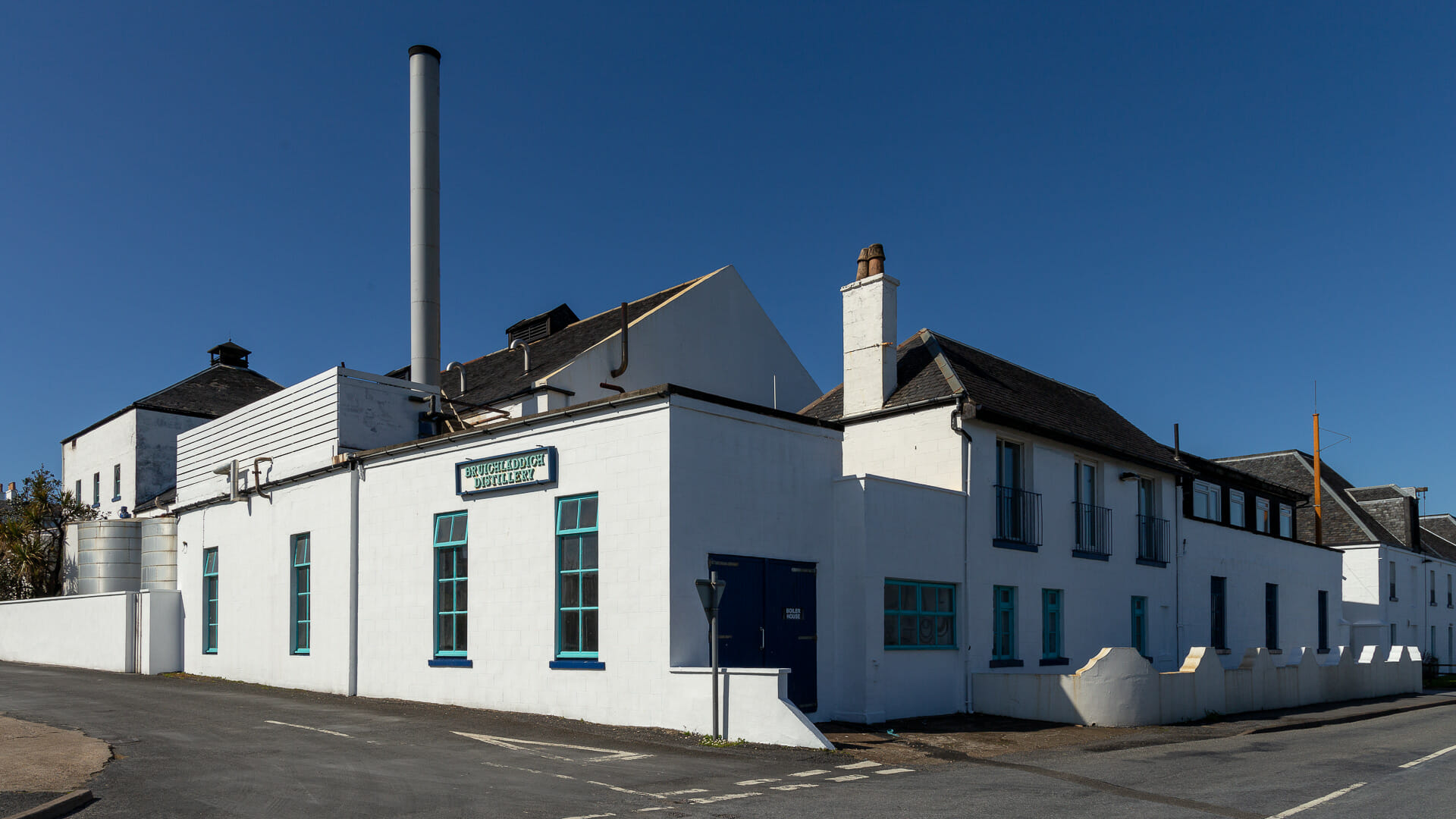
Hop across Loch Indaal and you land at the Bruichladdich distillery. The name comes from the Gaelic “Bruthach a’ Chladaich”, with “Bruichladdich” essentially the English phonetic version of it – roughly translated: “steep shore slope”. Although founded back in 1884, distilling only resumed here in 2001 – and highly successfully at that.
While the original idea was to distil unpeated whiskies under the Bruichladdich name, the distillery proved with Port Charlotte that it can handle peat and smoke just as well. With Octomore, they’ve even set the benchmark in that category. And for some time now they’ve also been making waves with the gin “The Botanist”. Tours and tastings are on offer for both gin and whisky here. Bruichladdich now belongs to the Rémy Cointreau group.
Why visit: The partly preserved Victorian fittings and the combination with gin make Bruichladdich something special.
Kilchoman
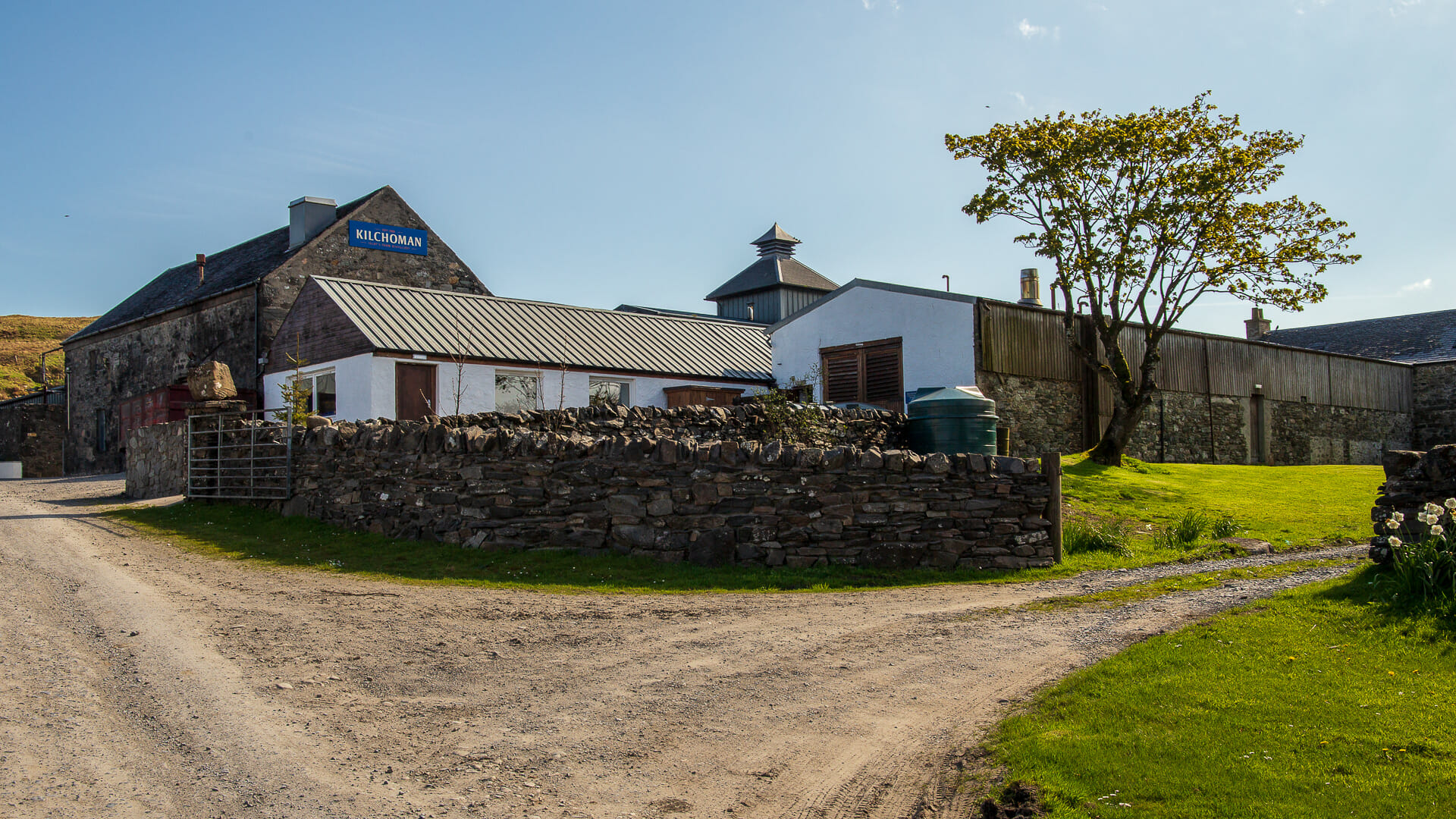
This distillery is fairly small and completely independent. They even release a whisky under the “100% Islay” label – here even the grain comes from their own farm, and maturation also takes place entirely on the island (which is no longer the case at some other producers).
Kilchoman’s signature is a hint of liquorice. Overall they offer so many different bottlings that a visit to the masterclass becomes an unforgettable tasting experience (yes, the author is a bit of a Kilchoman fan). Unlike the old warehouses of the competition, the buildings of this young distillery aren’t much to look at, though.
The little café in the distillery building, incidentally, is very good too. Kilchoman is the English rendering of “Cille Chomain”, meaning “church of Coman”.
Why visit: Among the warmest and most family-run distilleries on Islay, with a nice shop and good food. One of the most knowledgeable tours I’ve been on – though that was during the masterclass. Follow it up with a visit to one of the nearby beaches.
More on the Kilchoman Distillery and its tour in the full article.
The three in the north-east:
Caol Ila
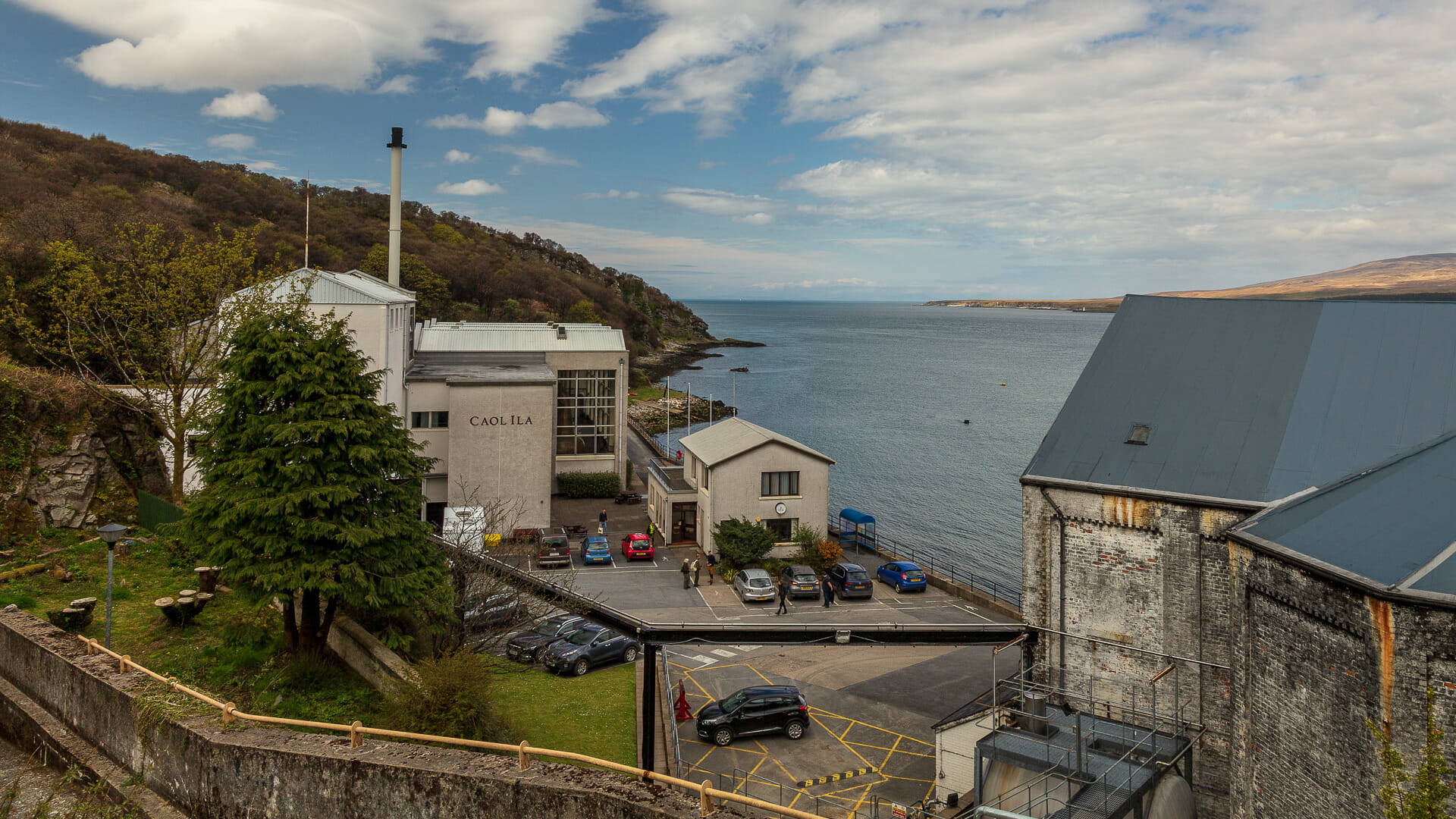
Let’s just say it up front: the building itself is fairly ugly. And yet Caol Ila still has its charm. Partly because of the sheer volume produced here, and partly because the view across the Caol Ìle strait, with its strong currents and the mountains of Jura in the background, is simply magnificent. I’ve already covered the pronunciation of the whisky’s name above.
Why visit: The distillery with the biggest output on Islay – six stills to admire. Otherwise, the view alone is worth the trip.
Ardnahoe
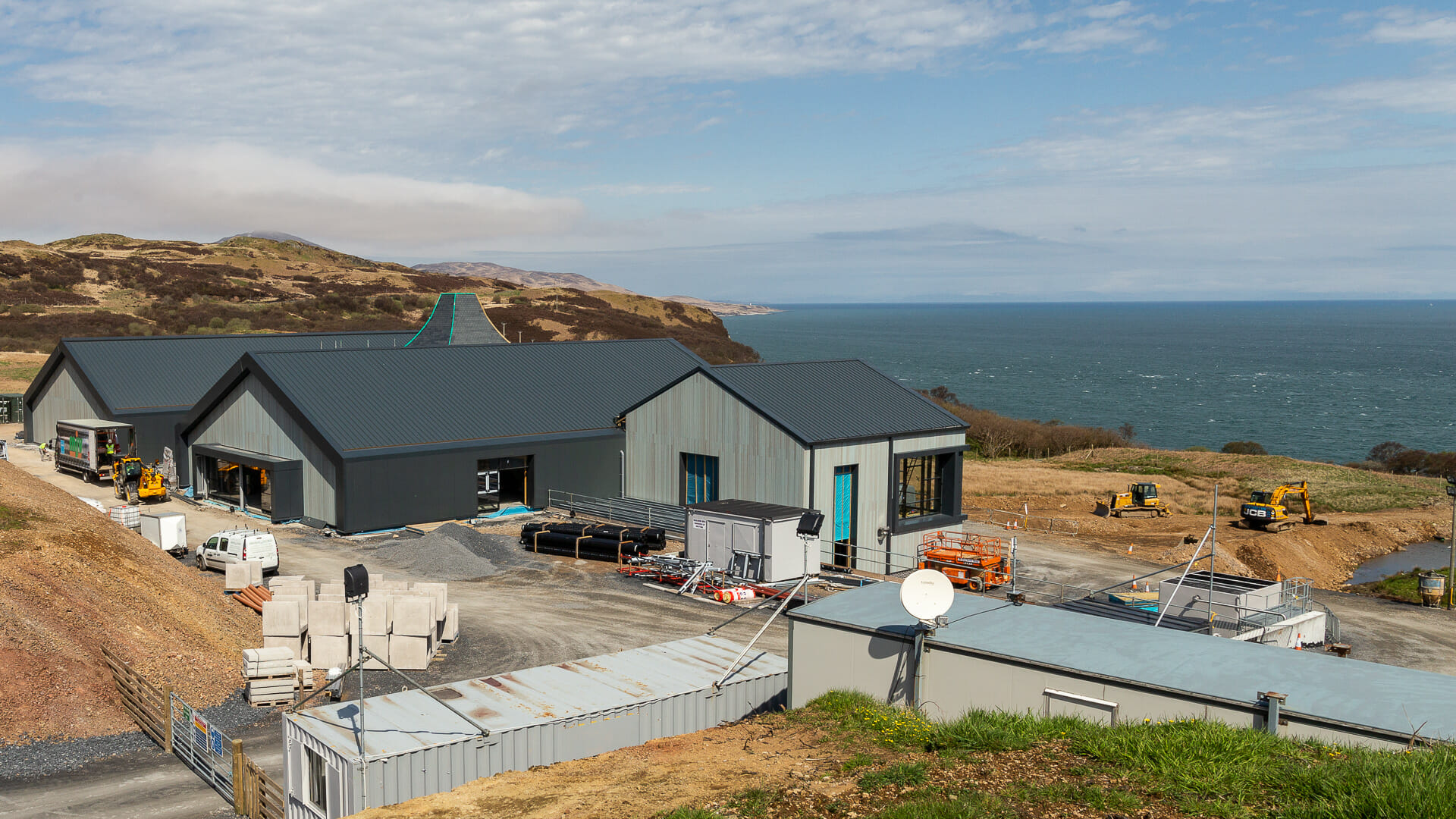
There’s not much to say yet about either the whisky or the distillery. Ardnahoe wasn’t finished yet on my last visit.
Bunnahabhain
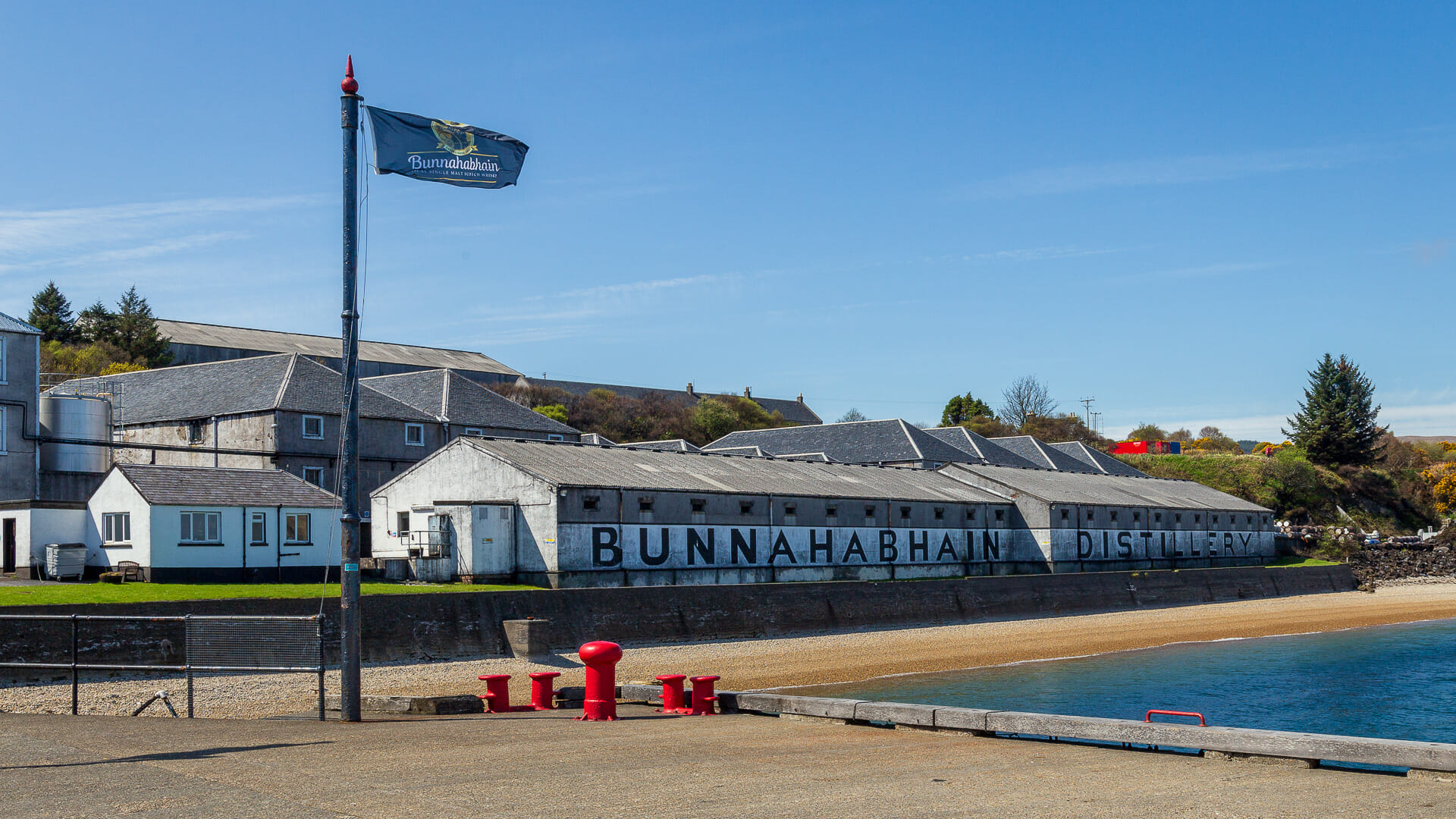
The Bunnahabhain distillery was founded in 1881, and its grey warehouses are themselves listed on Scotland’s heritage register. The whisky is relatively mild and only lightly peated. Malted barley from Port Ellen is used for distilling.
In Gaelic, Bunnahabhain is written “Bun na h-Abhainne”, likely meaning “mouth of the river”. Wikipedia gives “source of the river”, since “bun” can also mean “origin”. Given the site’s location by the sea, and the distillery’s own account to the contrary, I’d call that nonsense. The distillery is owned by the South African Distell group.
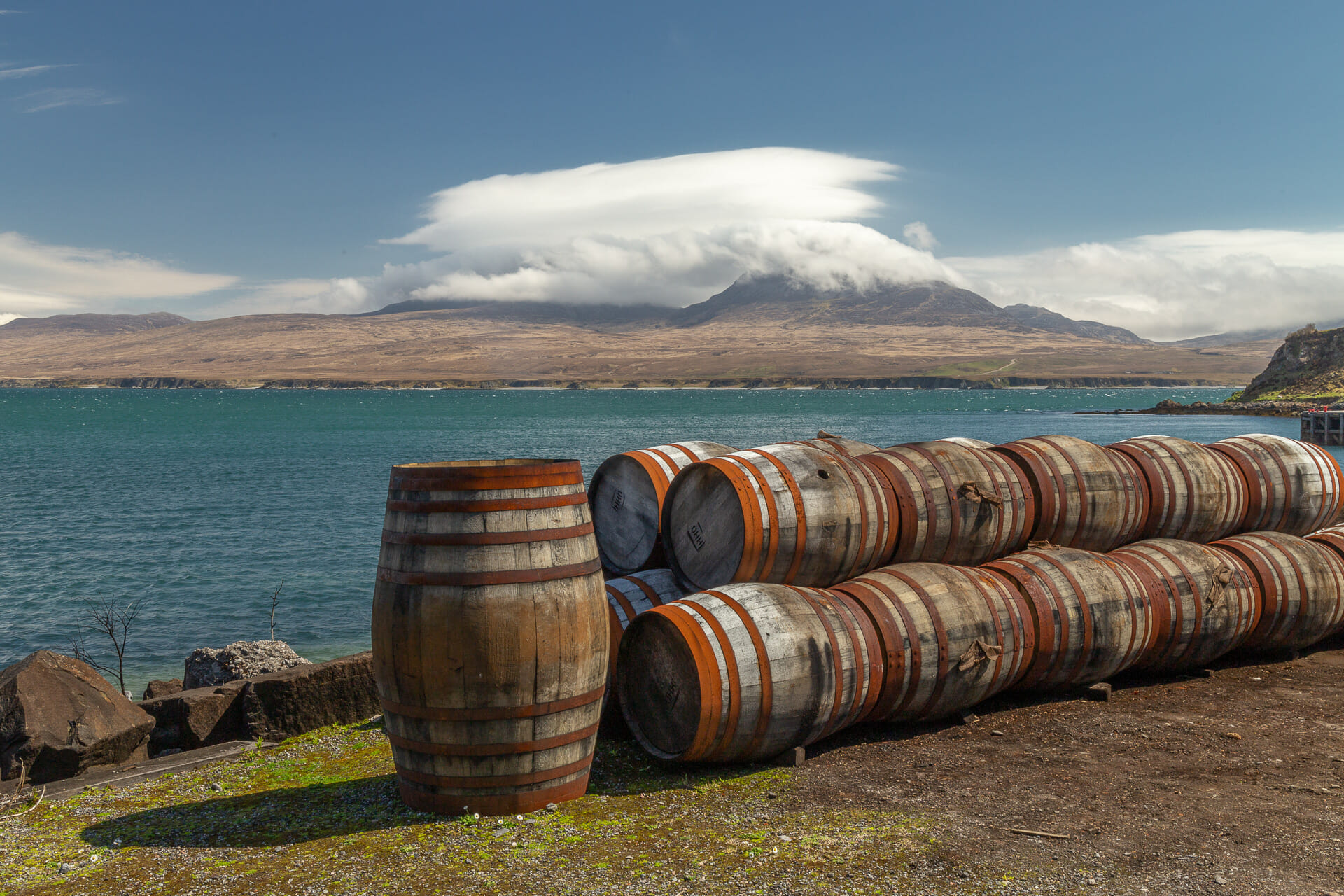
Why visit: The distillery’s setting in a rocky bay on the Caol Ìle offers magnificent views, and the buildings themselves are listed on Scotland’s heritage register. Plenty of photogenic casks stacked around outside, too.
Islay gin
Gin distilleries seem to be popping up everywhere in Scotland right now. Whisky island Islay is no exception – and in fact, the most successful gin here comes from a whisky distillery.
Botanist Gin
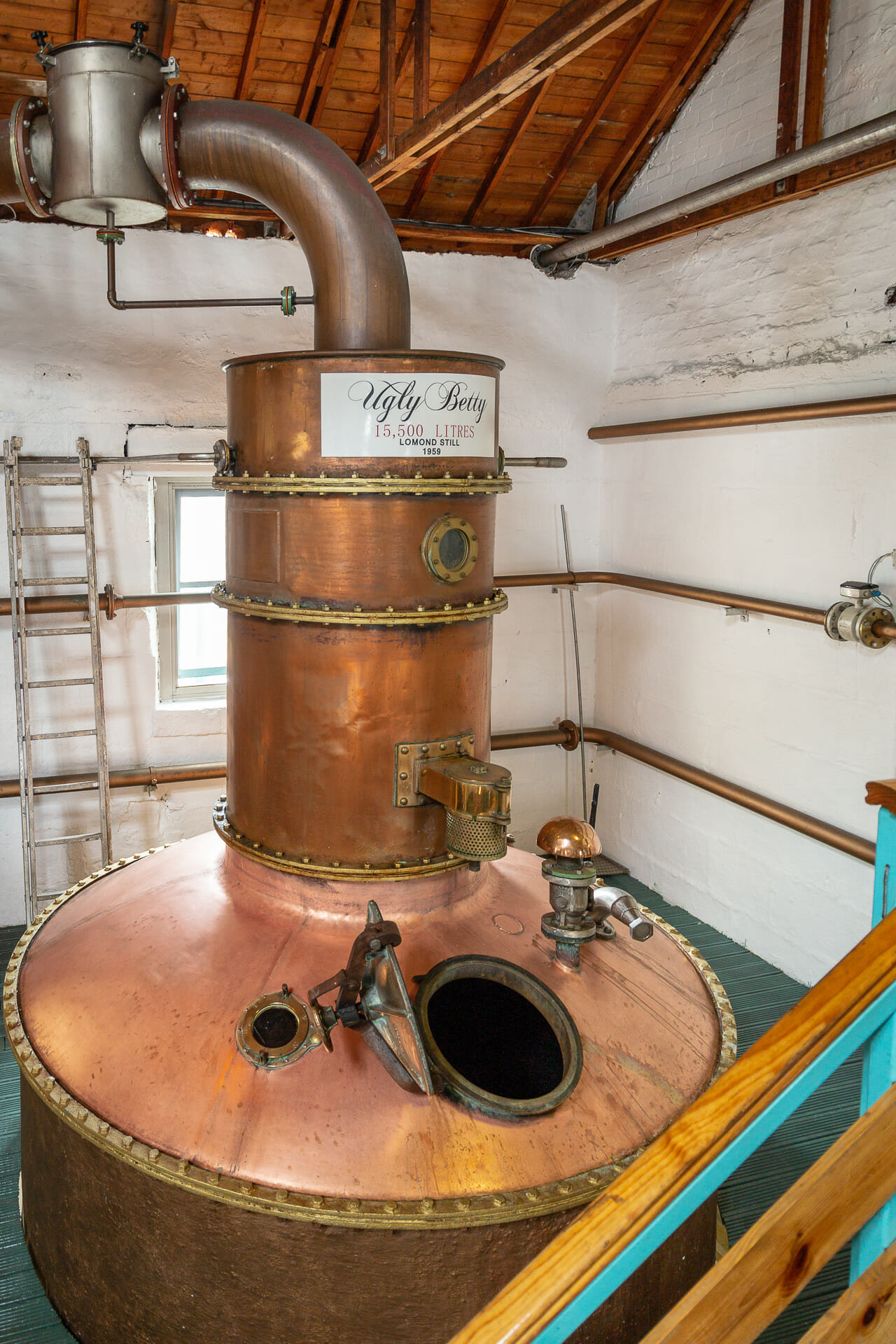
Ugly Betty is the name of the still at Bruichladdich used to make Botanist Gin. The bottles, with their botanicals worked right into the glass, are now widely available in Germany too. Botanist is excellent for mixing, and visitors can learn exactly how by booking the gin tour at Bruichladdich itself.
Nerabus Islay Dry Gin
Still fairly new is Nerabus Gin. For now, it’s just worth a mention here. Characteristic is the addition of heather, which grows locally.
Best time to visit Islay
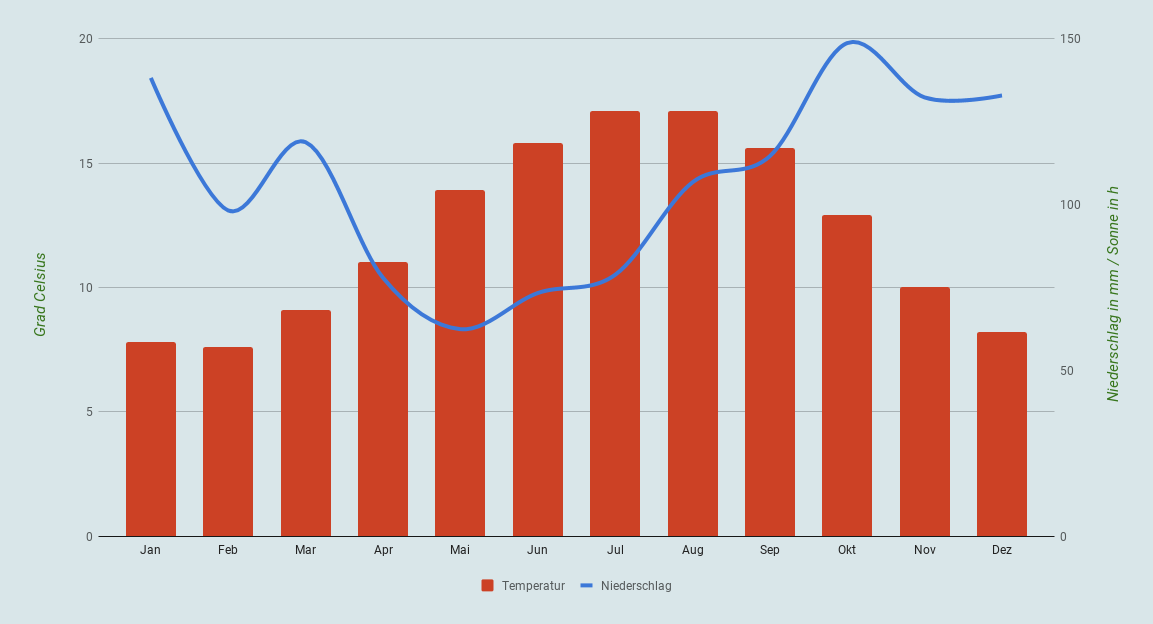
The best time to visit Scotland is also the best time to visit Islay: May. Rainfall is lowest then, and temperatures are already pleasant. Midges – the Highland biting flies – are generally still manageable. One thing to keep in mind for May, though: the last week is dominated by Fèis Ìle, when the island really fills up.
Islay is also very popular with tourists thanks to its distilleries, so B&B and hotel prices are comparatively high, and booking well in advance is strongly recommended.
Getting there: Ferry and plane to Islay
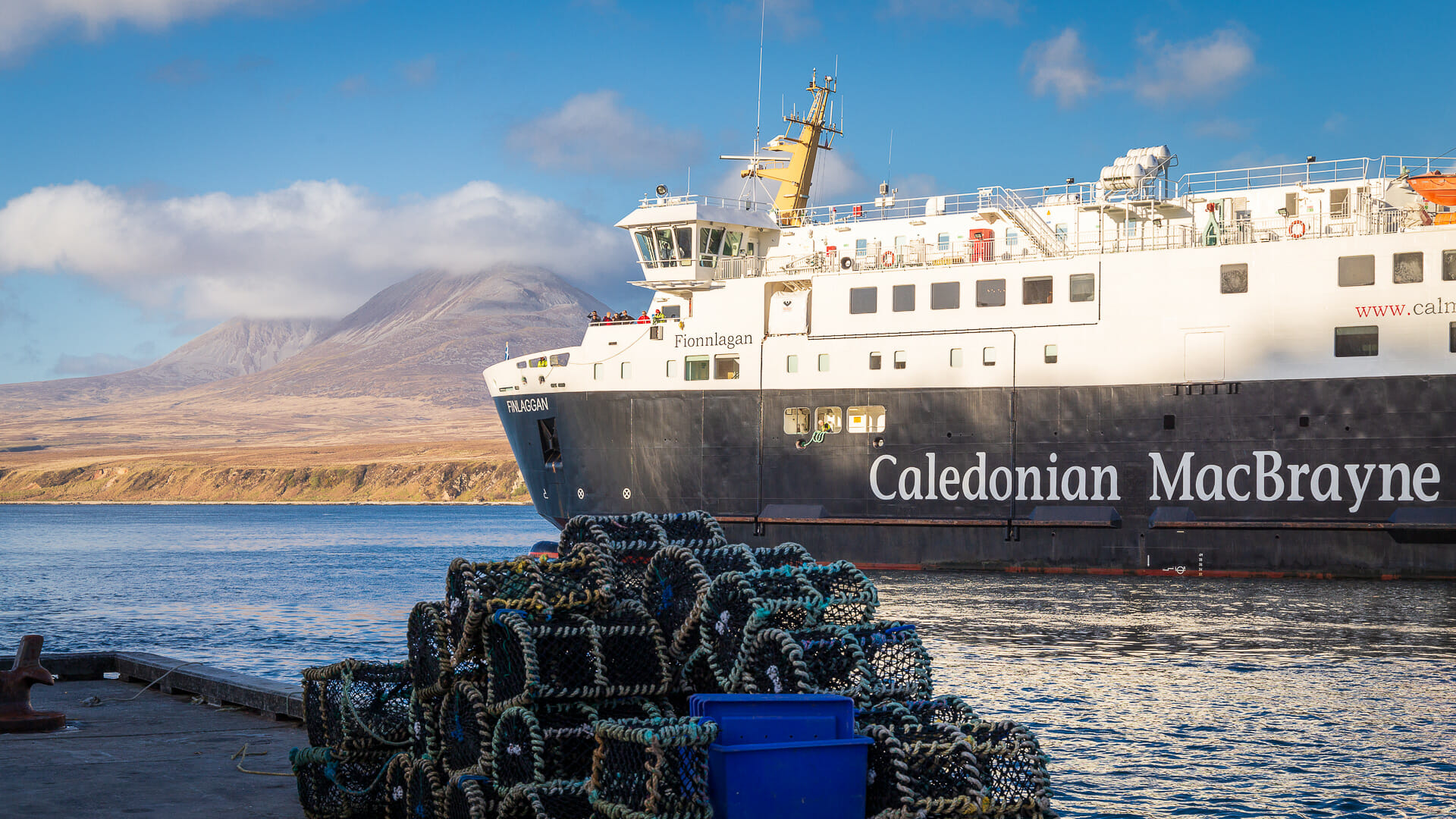
Most travellers take the ferry from the terminal at Kennacraig, which usually departs five times a day in summer. The still fairly new “Finlaggan” makes the crossing in around two hours. The destination port on Islay varies – sometimes it’s Port Ellen, sometimes Port Askaig, largely depending on the tides.
A return foot passenger ticket costs around £14, while a car (driver and passengers not included) is around £70 return. Booking the ferry ahead is essential during spring and summer, but it’s wise even in winter now, since Islay sees plenty of visitors year-round these days. Also be sure to check whether your travel dates clash with Fèis Ìle – ferries get even busier during that time.
More information from ferry operator Calmac.
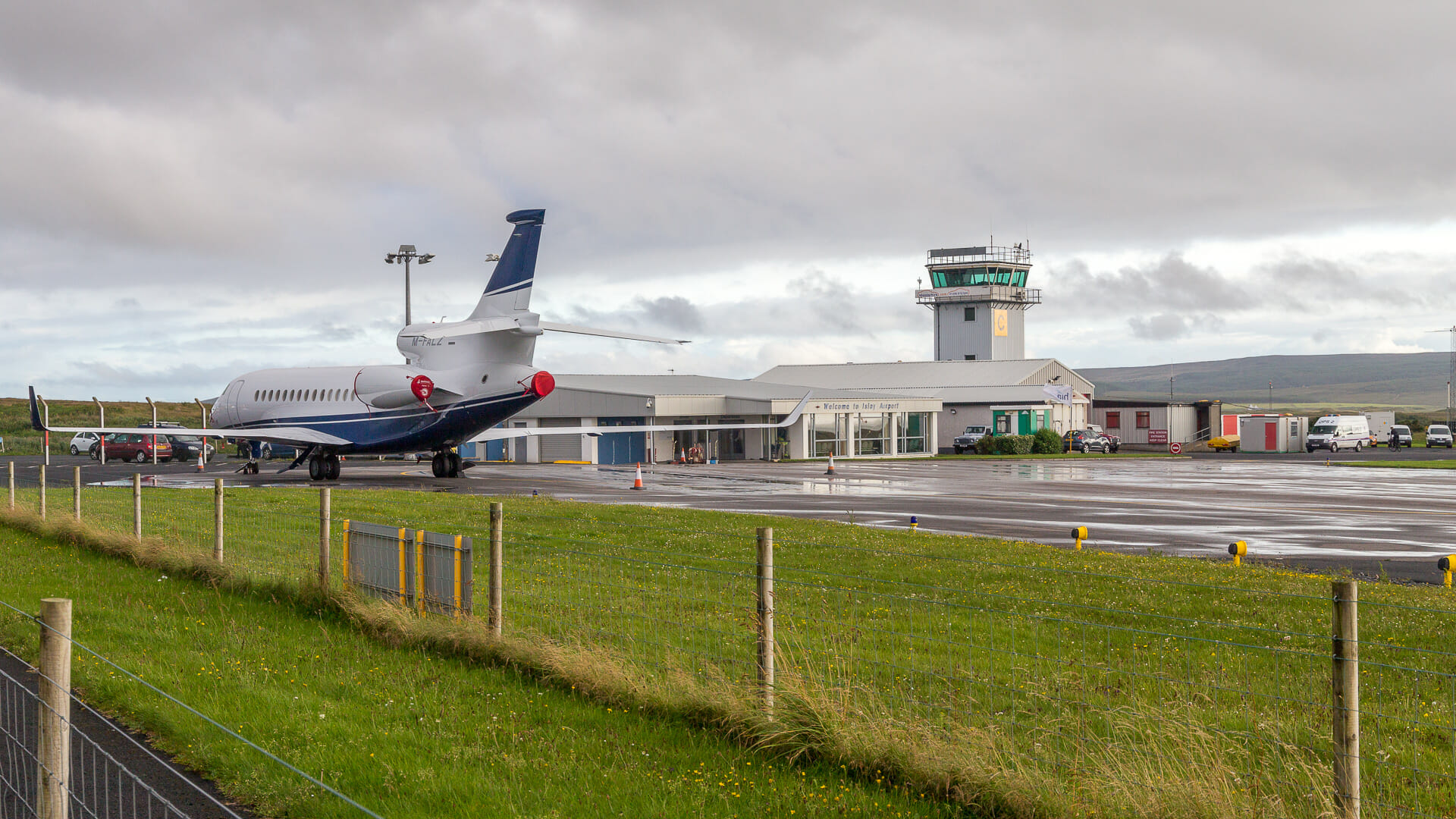
The second way to reach the island is with the airline Loganair. Travellers can fly from Glasgow to Islay in just 40 minutes. Fares start at around £100 one way. A rental car can be picked up right at the airport.
More information on flights from Loganair and on rental cars from Islay Car Hire.
Fèis Ìle: And other Islay festivals and events
Every year, in the last week of May, Islay hosts Fèis Ìle – pronounced roughly “faysh eela”. The long “ay” sound matters here, because the word “feis”, pronounced “fesh”, means “sex”.
The festival is celebrated with music, dancing, food and – of course – drink. The distilleries take turns hosting open days, and each also releases a special festival edition of its whisky.
Fèis Ìle also offers a chance to dip into Gaelic culture, with language and singing lessons in the tongue of the Highlands and Islands.
More information on the Fèis Ìle website.
Towards the end of November, traditional musicians gather for the Islay Sessions. This three-day folk festival brings plenty of Scottish music, paired – naturally – with a dram or two of whisky.
More information on the Islay Sessions page.
In late April, hikers can join Walk Islay. Over six days, guided groups walk together across the islands of Islay, Jura and Colonsay, getting to know the landscape and learning plenty about the local nature along the way. Taking part comes with a fee of a few pounds.
More information on the Walk Islay website.
History of Islay: Of MacDonalds and Campbells
The earliest evidence of people on Islay points to hunter-gatherers around 8000 BC. Bronze Age roundhouses carry on the story of settled life. Remains of the typical brochs found from the Iron Age across Scotland (see, for example, Dun Carloway), however, are fairly rare on Islay.
With the Christian mission from Ireland in the 6th century came writing and recorded history too. St Columba himself is said to have come to Islay. What followed here was much the same as across most of the Hebrides: monastic cells sprang up – “cellulam” in Latin, which became “Cill” in Gaelic. This word element still survives in many of the island’s place names today: Kil-choman, Kil-chiaran, Kil-dalton, and so on.
The centre of Gaelic Christianity was the island of Iona, and the kingdom of Dál Riata stretched from Northern Ireland across the islands to the mainland. Islay lay right in the middle of this kingdom.
With the arrival of the Vikings and Norsemen around AD 900, the political landscape changed dramatically. They would leave their mark on the island for centuries to come. Place names ending in “-bus” point to Norse farmsteads, from the Old Norse “bólstaðr”.
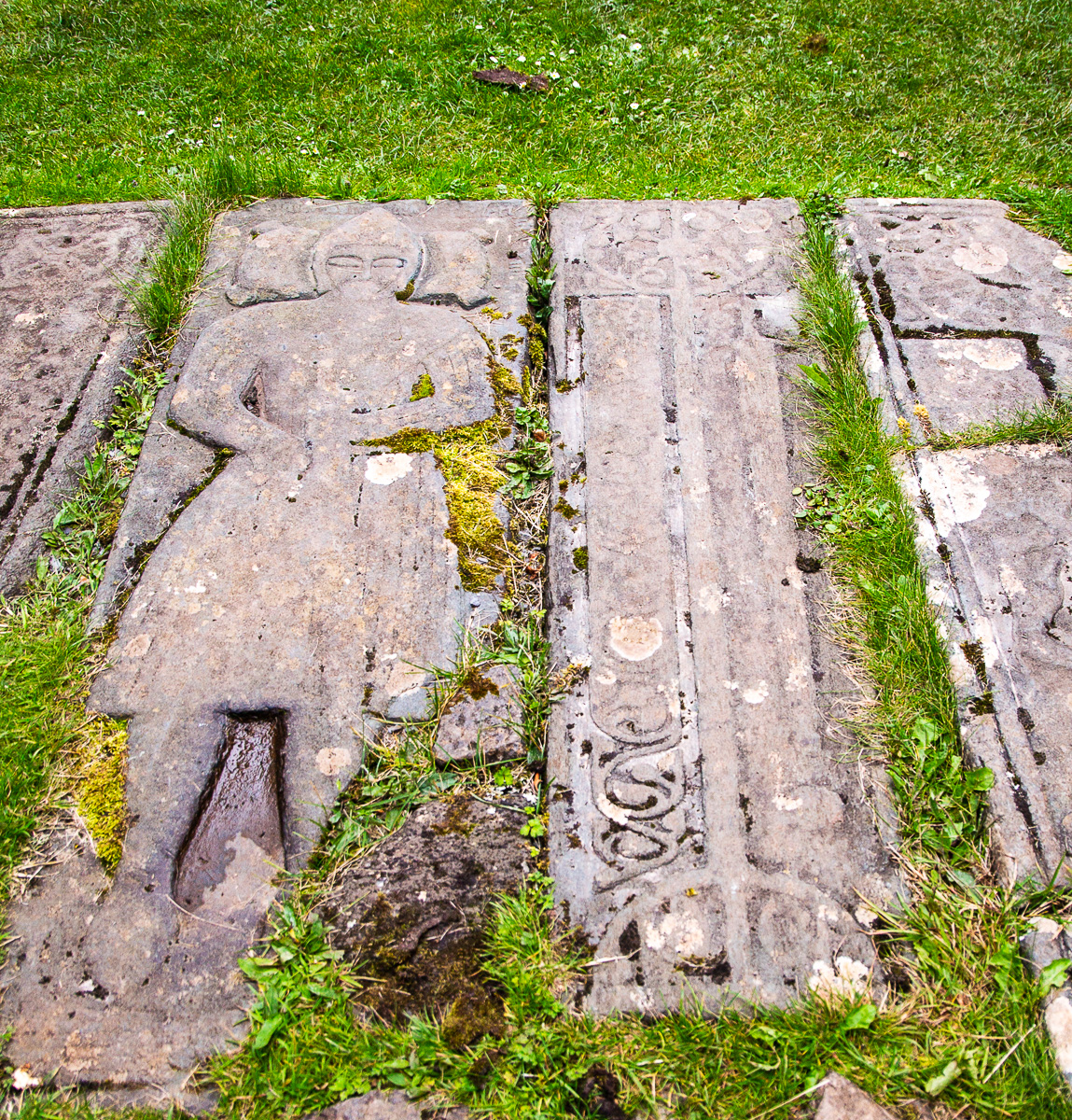
Out of the Vikings and the Gaels, though, a new power gradually took shape: the Lords of the Isles. Led by the MacDonalds, the clans of the surrounding islands held council at Finlaggan and became a power the young kingdom of Scotland viewed as a serious threat. Rightly so.
By 1493 the Scots had finally brought the kingdom under their control, and the Lords of the Isles fell apart. Clan Donald, however, remained on the island – for now. Because the Campbells were just as ambitious a clan as they were successful, and they soon came to own most of Islay.
The new lords did genuinely try to develop the island. In the 18th and 19th centuries, new villages were founded, such as Bowmore, Port Charlotte, Port Ellen and Port Wemyss. During this period the Campbells also recognised the value of whisky distilling, which was now allowed to operate legally.
In 1848, Islay – like the whole of Scotland – was hit by the potato blight. A famine that drove many to leave for America. Fortune deserted the Campbells too, and eventually Islay was broken up and its estates sold off individually.
Even today, the island’s land is owned by a handful of – mostly absentee – landlords. Yet thanks to whisky and tourism, along with a few larger farms, Islay ranks among the wealthier Scottish islands.
