The village of Falkland in the region of Fife sits picturesquely at the foot of a hill. Its old houses are so well preserved that they served as a backdrop for the TV series “Outlander”. A visit.
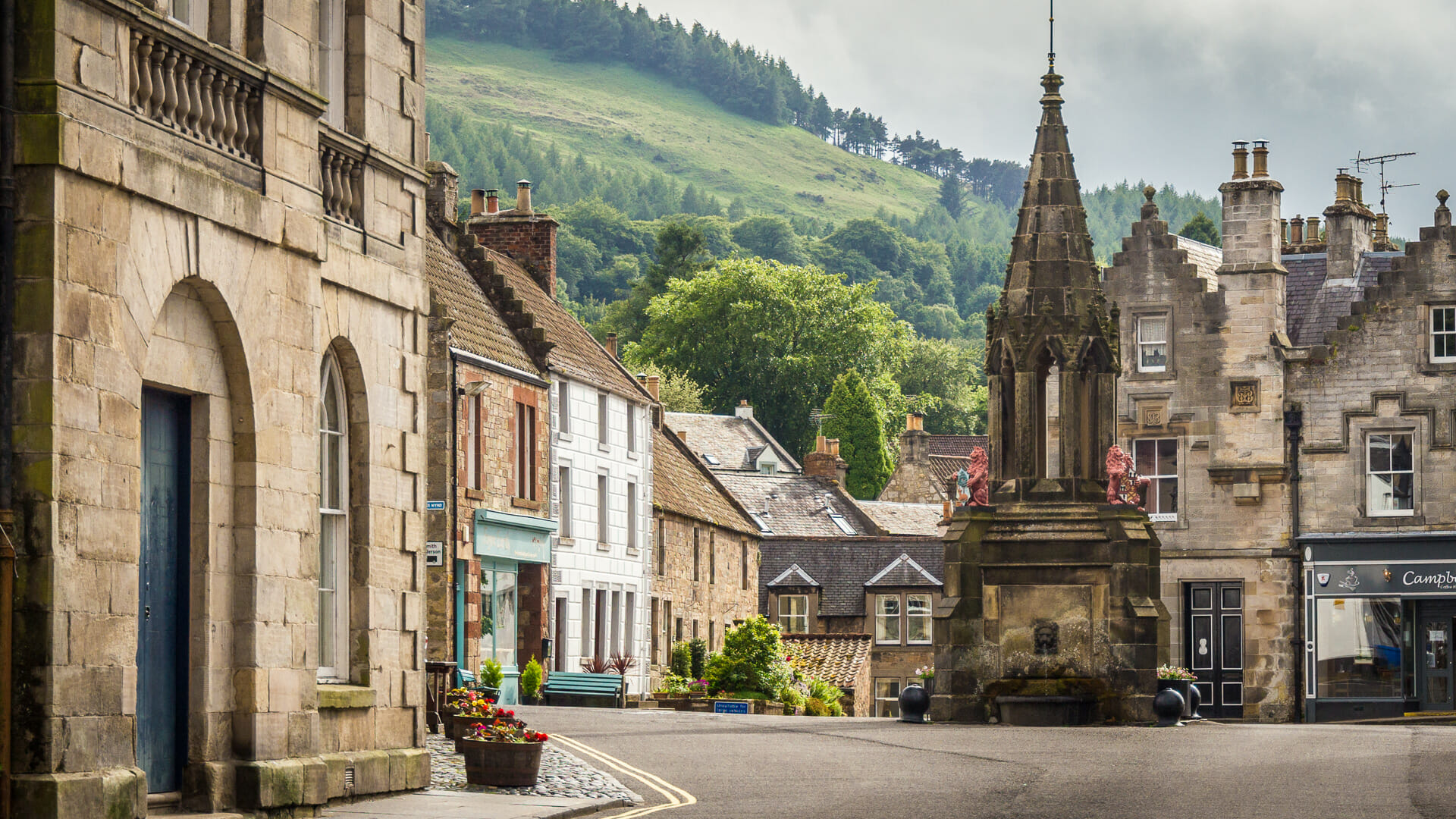
Silence. As evening falls, the village of Falkland in Fife slips back into a kind of sleeping-beauty slumber. No more sign of the Outlander fans, no more visitors streaming in and out of Falkland Palace. No people on the streets – only the village fountain gently trickling away to itself.
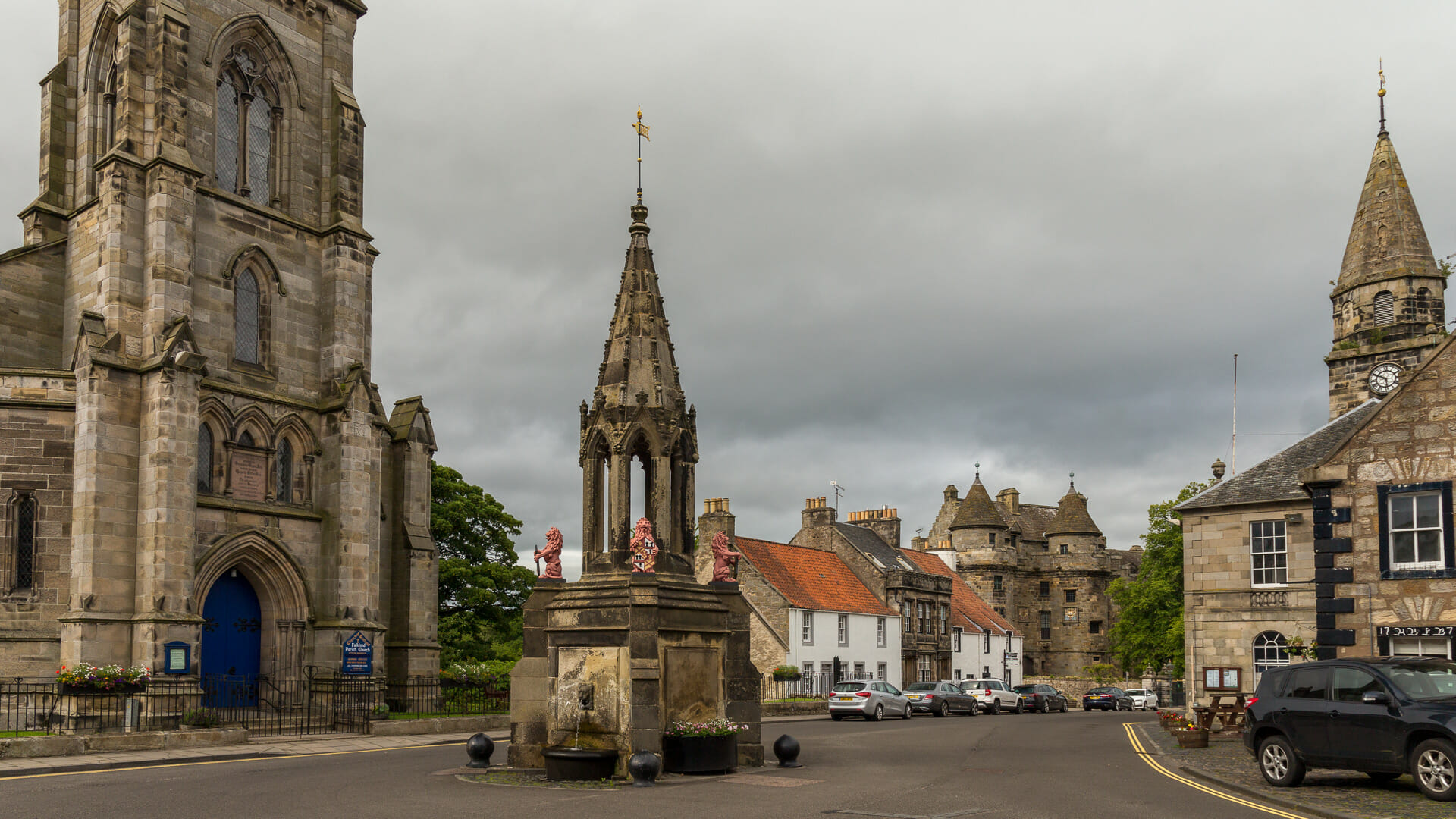
Visitors could almost, just almost, imagine themselves transported back in time. The few parked cars vanish neatly behind walls and corners at just the right angle, and no modern building spoils the townscape here in the centre. Falkland Palace does the rest, with its old façade, turrets and coats of arms.
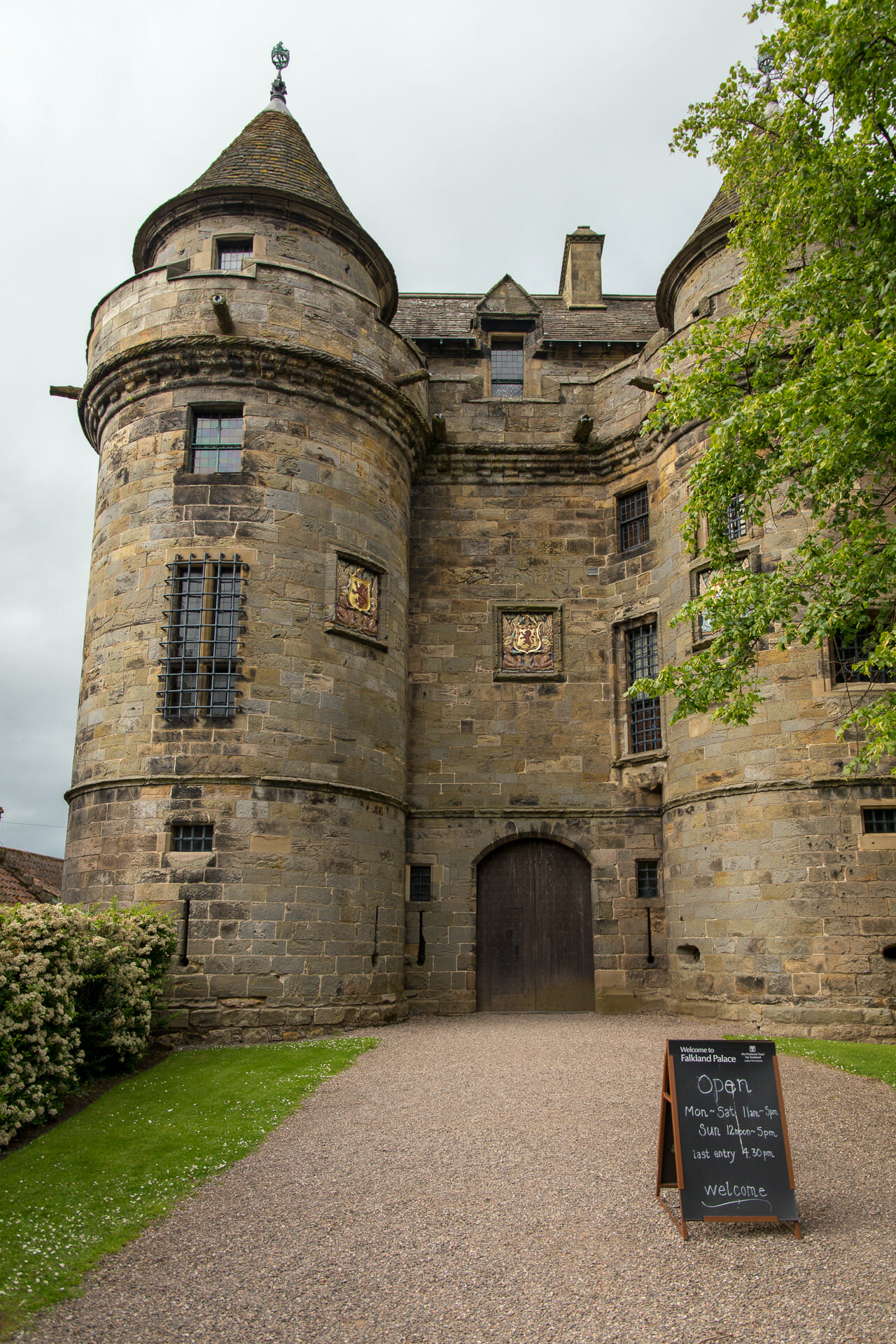
The fact that Falkland feels as though it has fallen out of time today is no accident. The former Royal Burgh was Scotland’s very first “Conservation Area”. Since 1970, considerable effort has gone into preserving the old houses and the townscape as far as possible. There are now 600 such conservation areas across the country – the wonderful village of Culross is another of them.
Falkland’s history stretches far back, and revolves around the palace at its centre. A castle once stood here, where the Stewart kings would stay during hunting trips. The kings, of course, brought a whole retinue and various guests with them. A settlement grew up around the castle – and later the palace – whose sole purpose was to support the royal entourage.
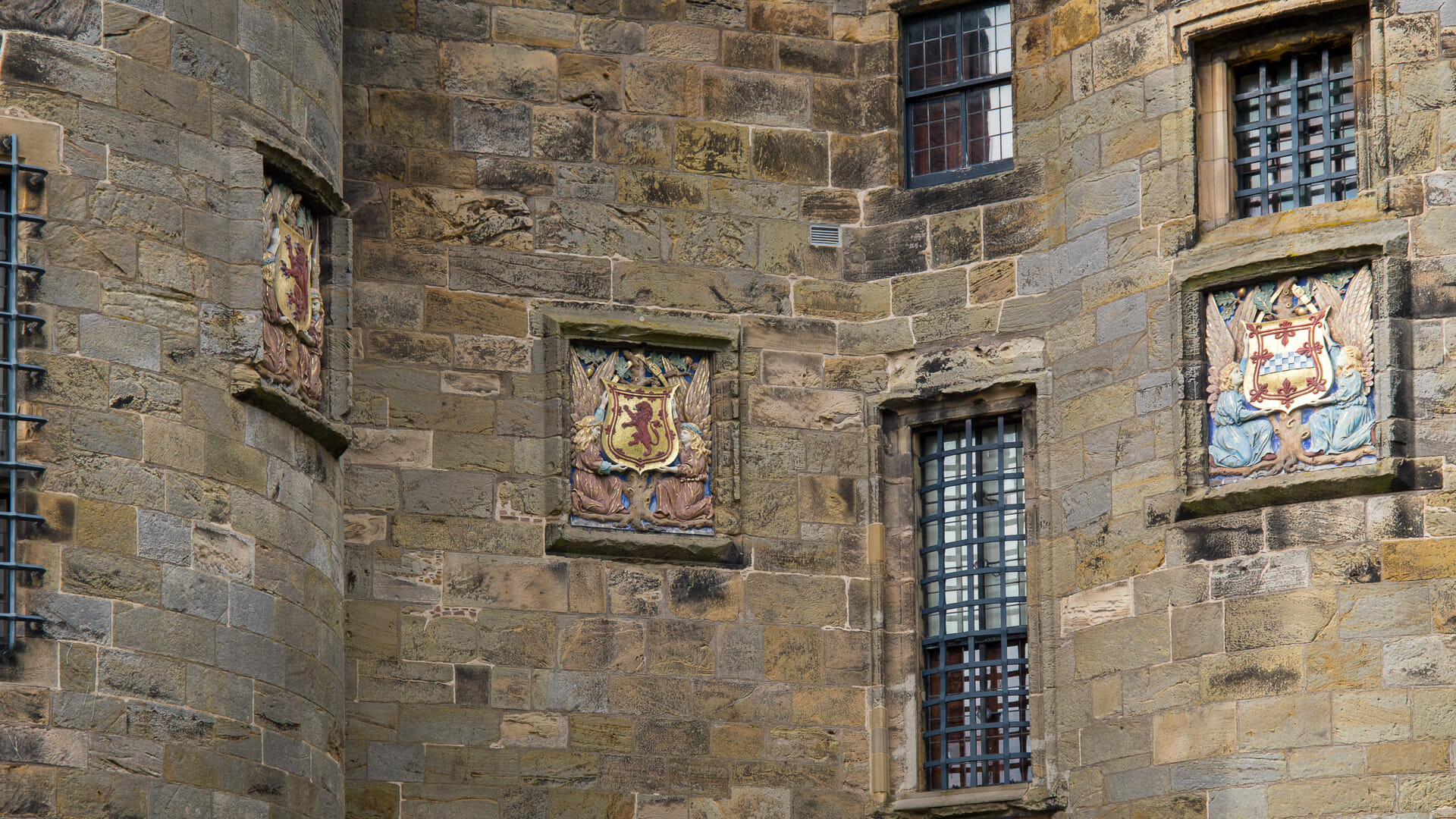
Falkland was hit hard when the Stewarts took over the crown of the whole of Britain and relocated to the court in London. The palace lost its significance – and so did the settlement around it.
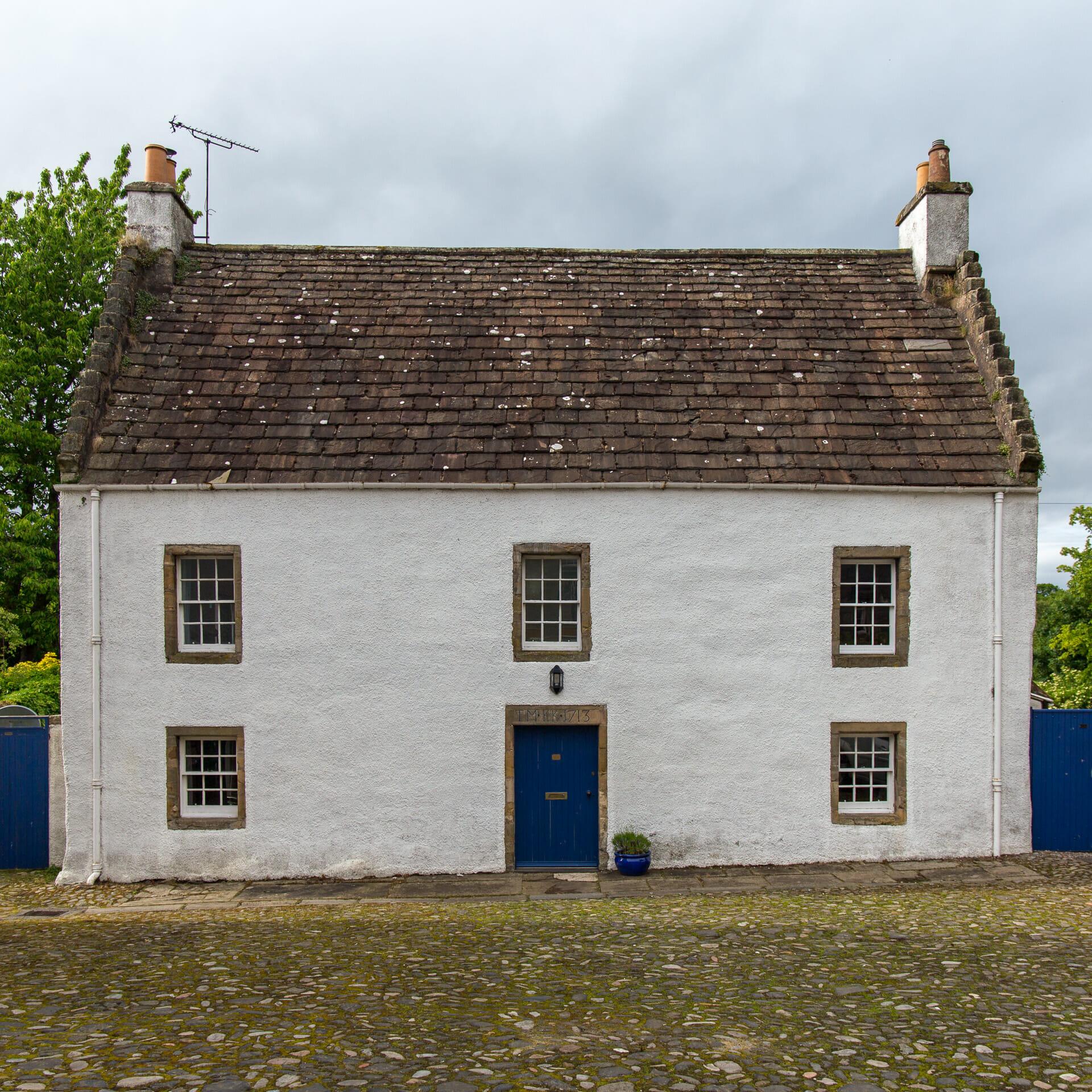
Although the people of Falkland attempted to move into weaving in the 17th century, hardly any industry ever really settled here. What caused hardship back then is an advantage today – the town centre effectively fell into a kind of slumber. As a result, some houses in Falkland are today up to 300 years old, such as Key House next to the palace. It dates from 1713, was originally an inn, and is now a cottage.
Yet the oldest structures here aren’t the houses themselves, but the old street layout. The High Street is connected via small alleyways, known as wynds, to the Horse Market and Brunton Street. It’s these little lanes that make a walk through town so interesting.
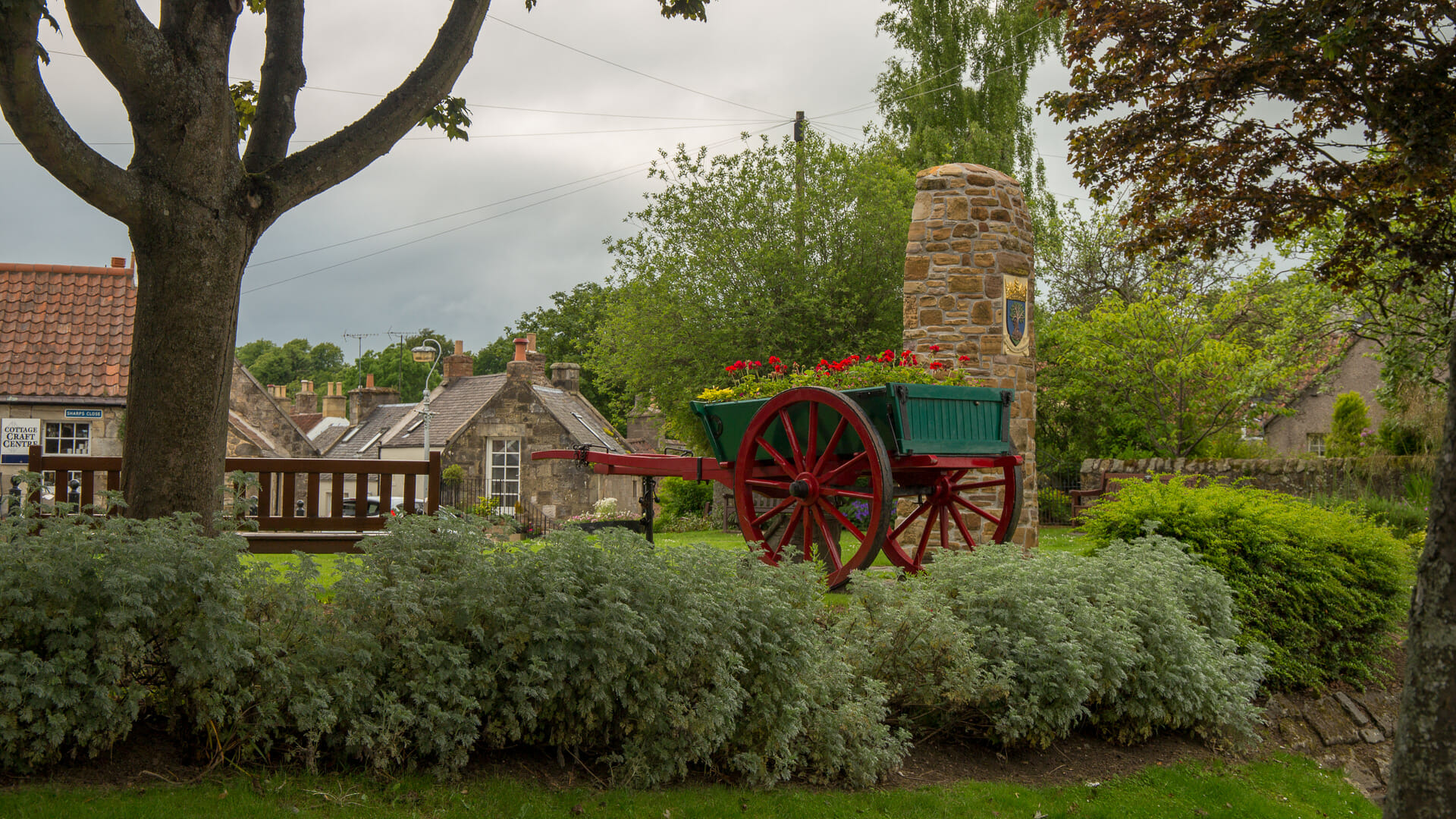
The green parks you’ll come across here and there, however, are not remnants of the old days, romantic as they may look. In medieval times, further houses stood where they now sit – everything was tightly packed and built-up. The street known as Horse Market gives more of an impression of that.
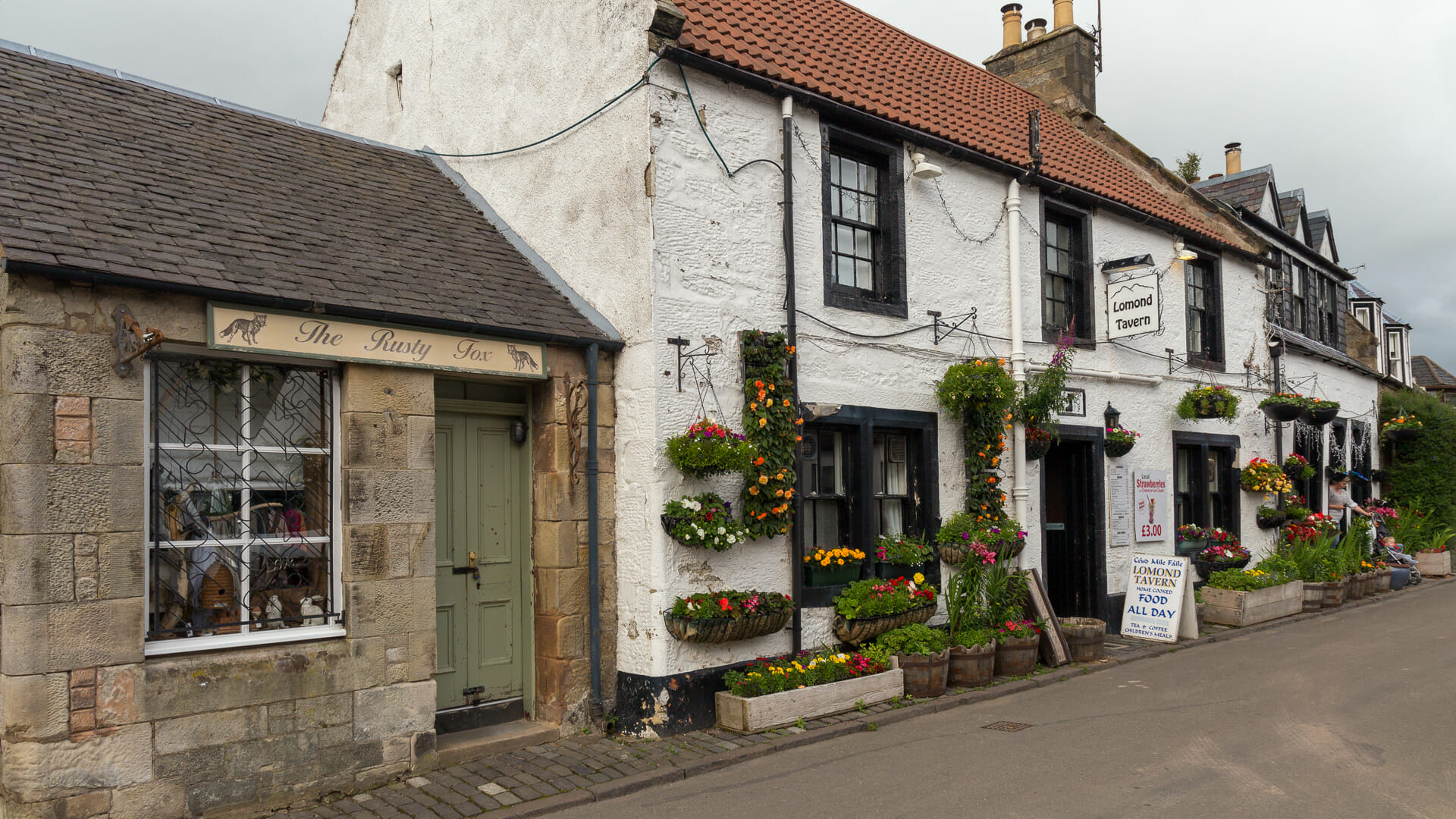
A glance into one or two of the back yards makes it even clearer just how cramped things must once have been between the houses.
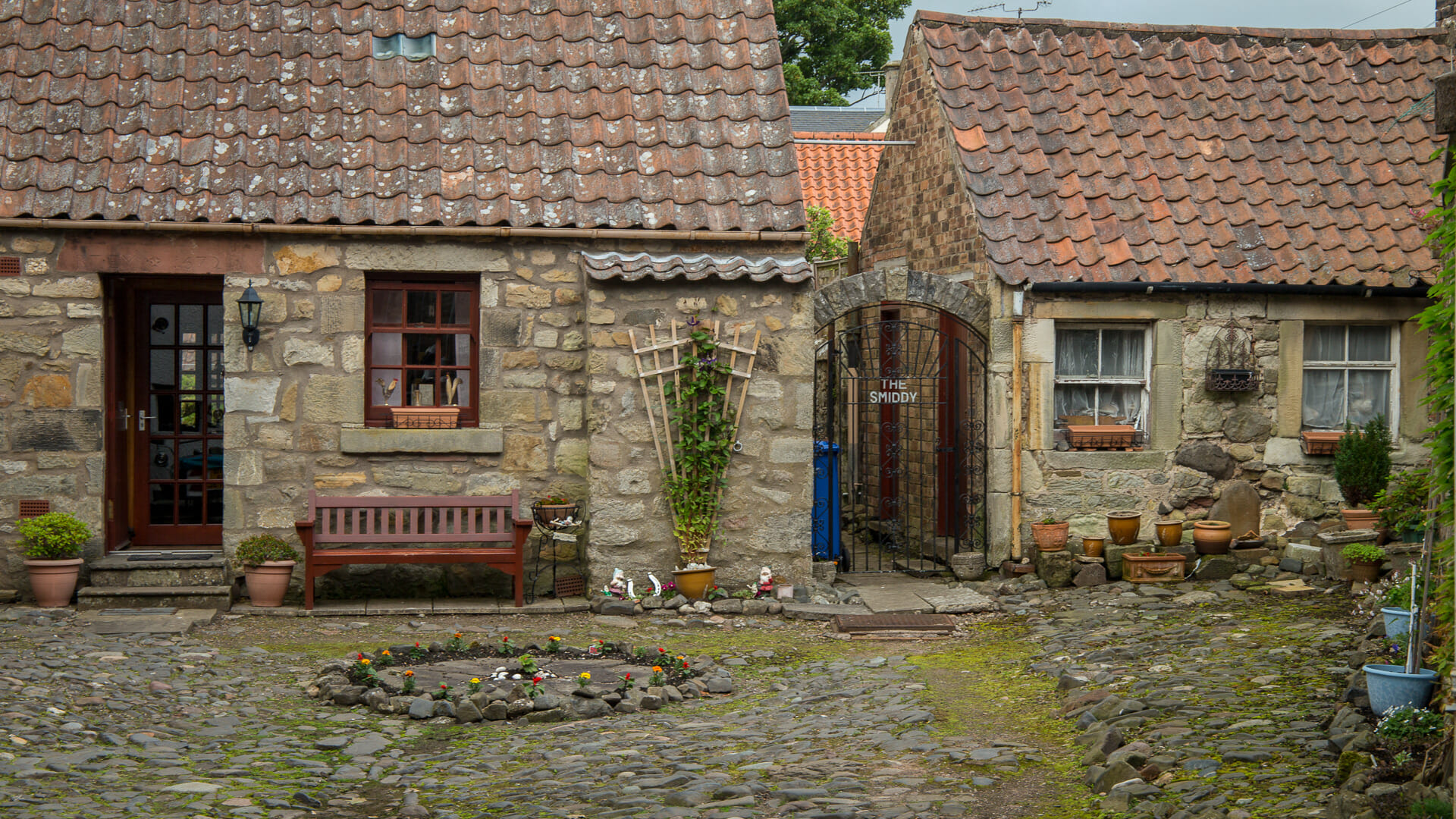
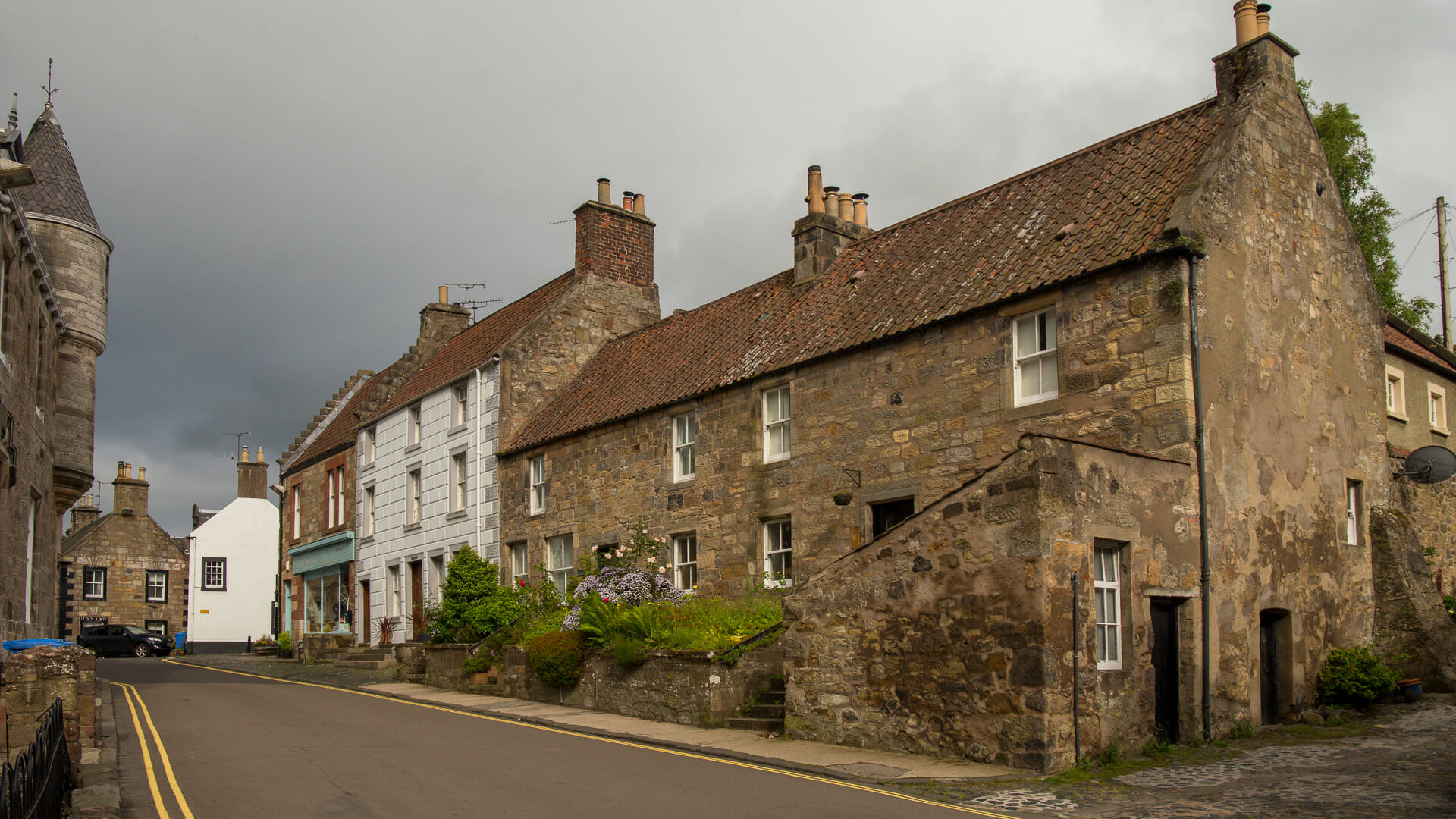
The buildings along this street partly date back to the 18th century. Typical of them are the external staircases leading up to the upper floors at the front of the houses.
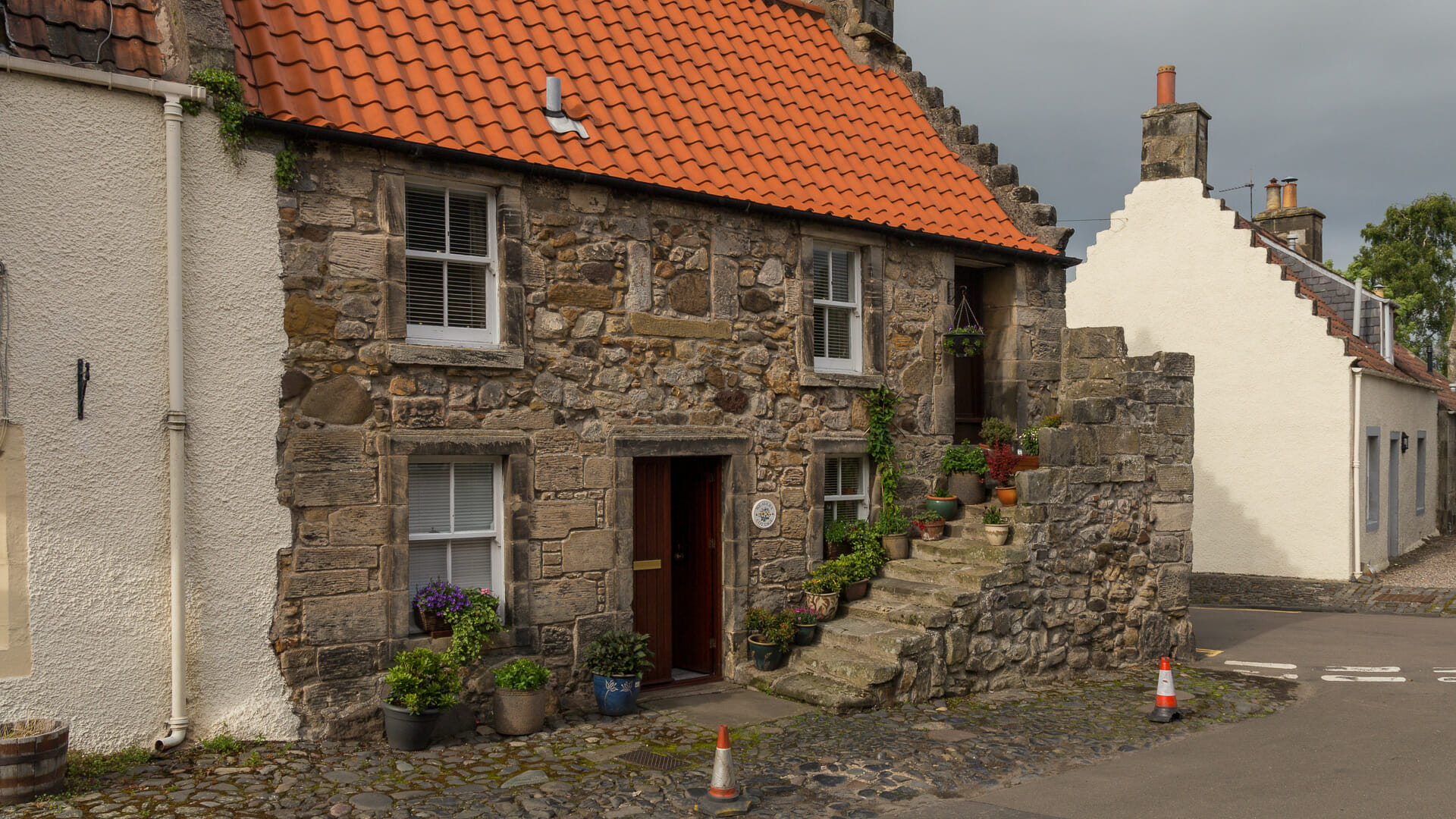
These houses often originally had thatched roofs too, which have since been replaced with modern tiles.
After exploring the narrow lanes, the town hall and the surrounding buildings on the market square feel almost modern by comparison.
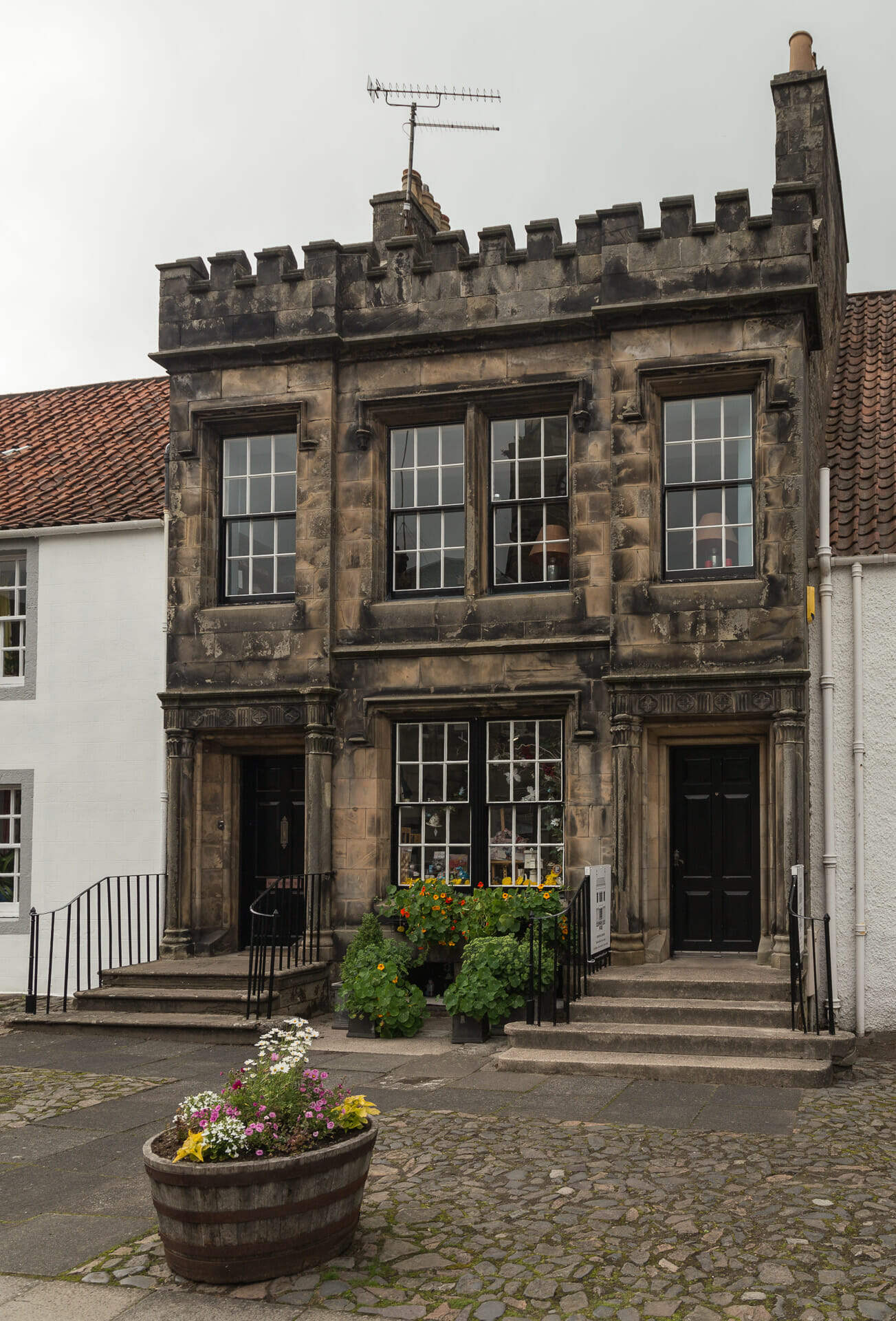
Maspie House, dating from 1819, seems almost out of place. Between two typical white cottages with their tiled roofs, its brooding Gothic façade, with two entrance doors and a battlemented flat roof, stands out rather starkly.
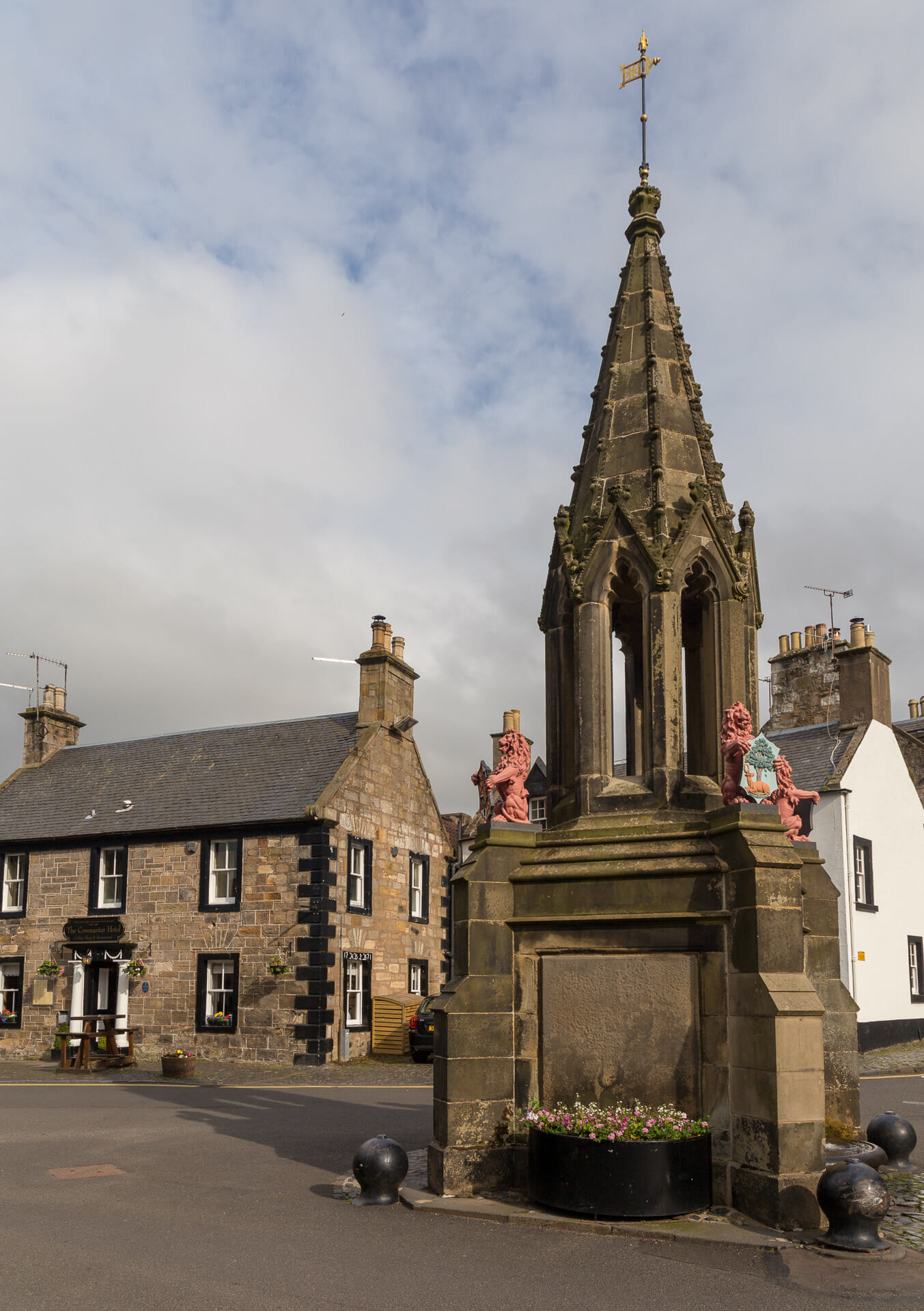
And incidentally, even the fountain at the centre of the market square dates from a later period too. The Bruce Fountain wasn’t erected here until 1856.
A walk through the village of Falkland leads from a grand palace, through medieval alleyways, past 300-year-old houses, and back to the Victorian market square. Truly a journey through past eras.
Did you know: how the Falkland Islands got their name
Search online for the term “Falkland” and you’ll mostly be shown the islands of the same name. That’s not unusual – emigrants have often taken place names from their homeland along with them. Perth in Australia, or Inverness in Nova Scotia, are just two of hundreds of examples.
Here, though, the story is different: the still-disputed archipelago off the southern coast of Argentina was named in honour of Anthony Cary, 5th Viscount of Falkland, who served as an English admiral in the mid-17th century. Cary did take his title from Scotland, but was actually born in Somerset, in the south of England, and so had little real connection to the town in Fife.
Tip: following the trail of Outlander in Falkland
Just as Blackness Castle stood in for Fort William during filming for Outlander, Falkland played the part of early Inverness. Right in the very first episode, Jamie’s ghost stands longingly by the fountain in Falkland, gazing towards Claire.
In the shop behind the fountain, Claire falls in love with a vase. Claire and Frank’s lodgings, “Mrs Baird’s B&B”, are in reality the Covenanter Hotel.
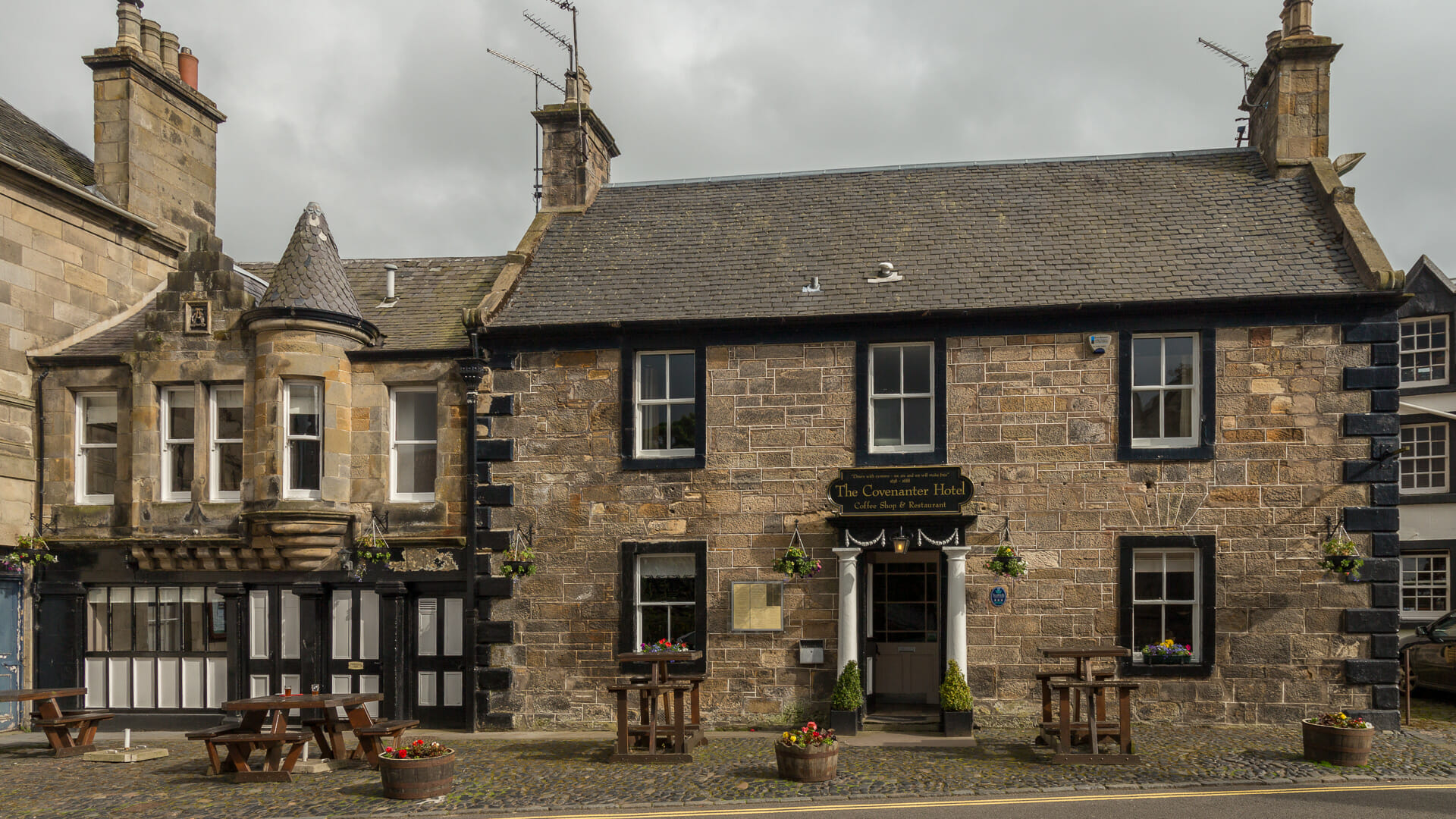
Some of the lanes here were used to depict Inverness as it stood in 1746. One of the houses on Brunton Street served as the lodgings for Alex Randall, who was cared for here until his death.
Outlander fans, then, will find plenty to discover on a walk around here.
Getting there:
By sat nav: enter “KY15 7BZ”.
Without sat nav: from Edinburgh, take the M90 heading north. Then take the exit onto the A91 towards St Andrews. Turn right onto the A912 once Strathmiglo and Falkland Palace are signposted. Continue on into Falkland and look for parking, for instance by the rather unattractive modern “Village Hall” at the end of Back Wynd.