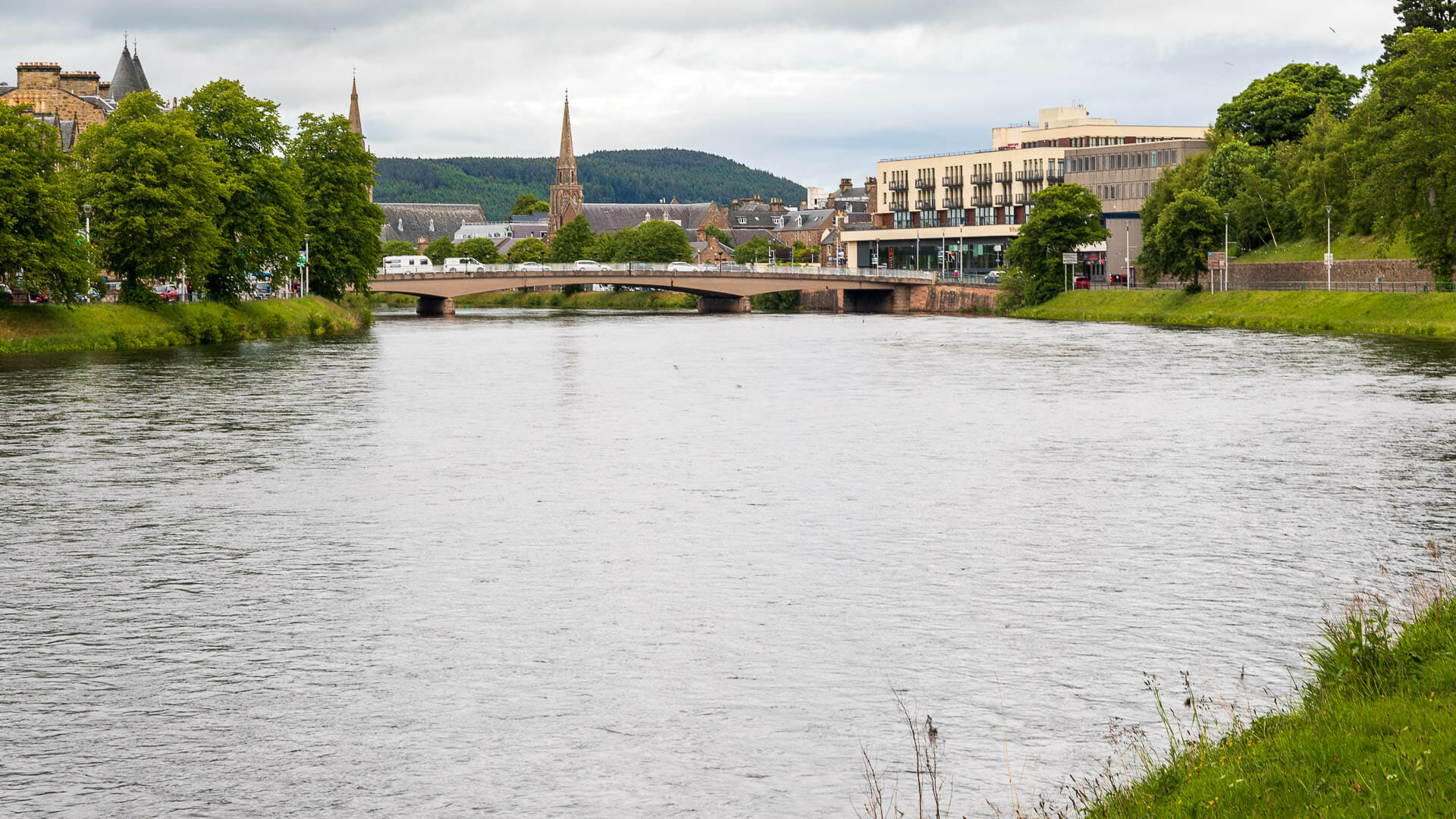
It is the northernmost city in Great Britain, capital of the Highlands, and gateway to the north of Scotland. What there is to see and experience in Inverness is covered here.
Inverness Info:
» Attractions
» Around Inverness
» Shopping
» Accommodation
» History
Fittingly for the turn of the millennium, the Highland capital made it: in the year 2000, Inverness was declared a “city”. These days, around 50,000 Scots also work and live here.
Inverness is also an important place for visitors to the Highlands – not only because of its own attractions. Inverness can also be used as a base for exploring nearby sights, such as the famous Culloden battlefield, mysterious Loch Ness, or even Fort George, Cawdor Castle, or Elgin.
Is Inverness Beautiful?
Inverness itself does have a long history, but exudes less of the medieval charm that, say, Edinburgh has. Old churches and houses alternate with rather ugly concrete blocks. Many old buildings were demolished in the middle of the last century in the name of “modernisation” – sadly not to the townscape’s benefit. Today’s city planners are aware of this, and so Inverness is sure to become more attractive in the years ahead – the first signs of that are already visible.
And anyone who looks a little closer and walks down the right streets will already find plenty of lovely corners in Inverness today. Here are the top attractions of the Highland capital.
Attractions in Inverness
Here’s a quick overview before each attraction is shown individually with a photo and further information:
These Inverness Attractions You Should Know
- Inverness Castle Experience
- Old High Church
- Town House
- The Steeple
- Abertarff House
- Old Town
- Victorian Market
- Inverness Museum & Art Gallery
- St. Andrew’s Cathedral
- Ness Islands
- Hydro Ness
- Kessock Bridge
Inverness Castle Experience
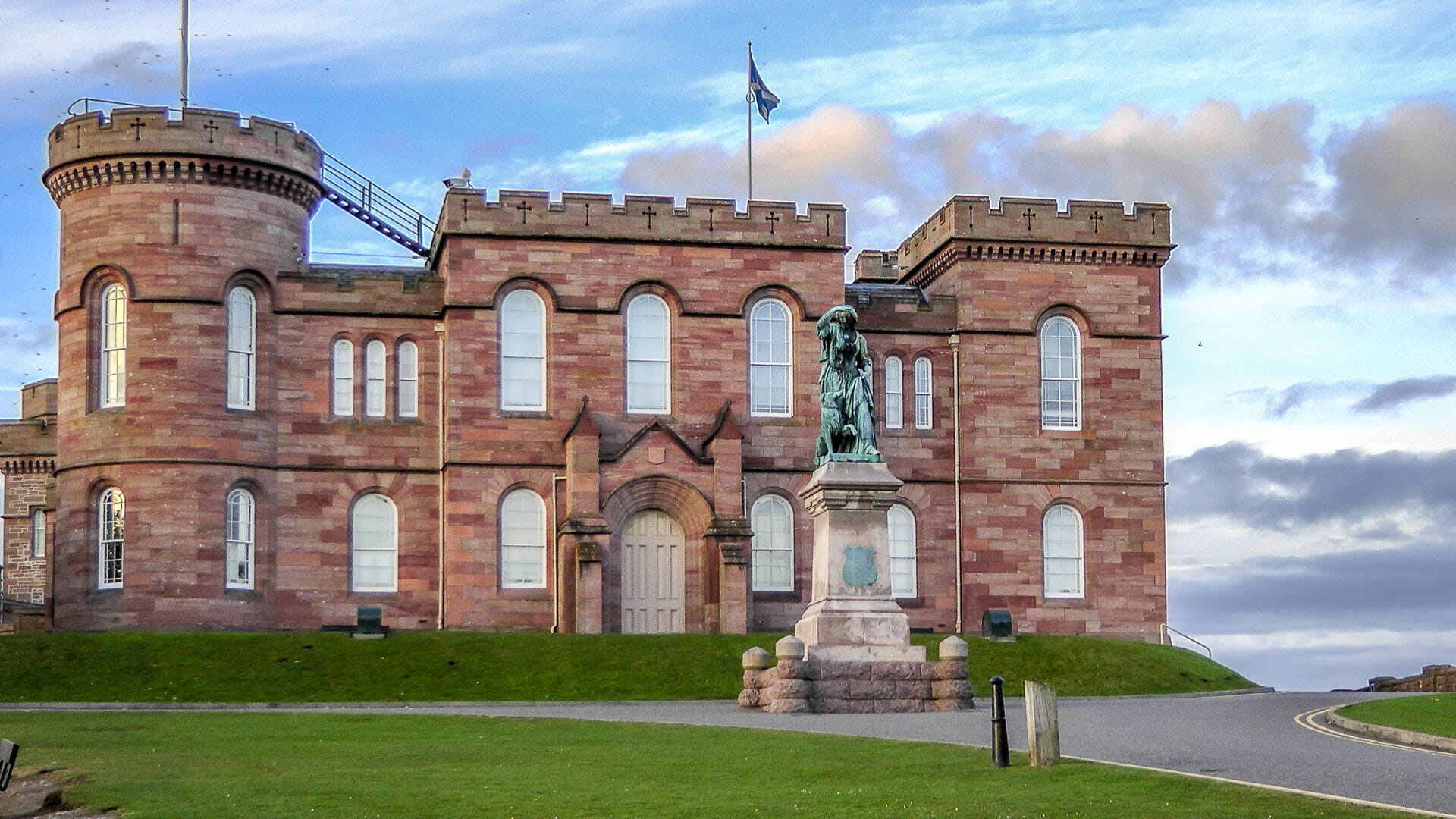
A landmark towers right by the river: Inverness Castle – actually an administrative and courts building that was long inaccessible to the public. That has changed.
Today visitors can experience the Inverness Castle Experience inside. A multimedia tour with many exhibits and the chance to look out over the city from the battlements of the towers.
During the restoration, several original architectural elements inside were uncovered and restored, which visitors can admire today – such as the rose window.

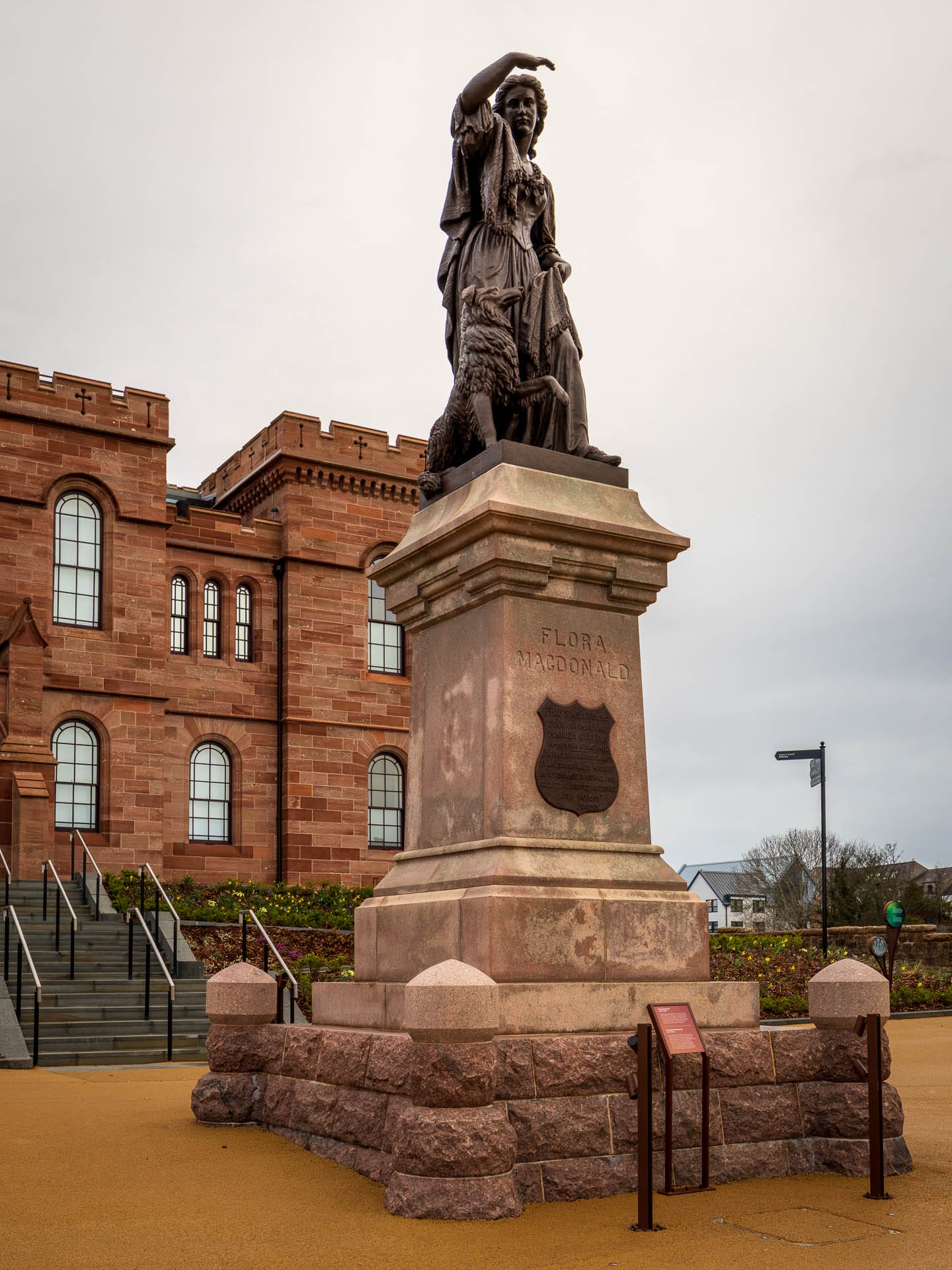
A garden has now been laid out in front of Inverness Castle, and the statue of Flora MacDonald has been freed of its green patina.
Opening hours:
April – May 10:00am – 7:00pm daily, (last admission 5:00pm)
June – August 10:00am – 8:00pm daily, (last admission 6:00pm)
September – October 10:00am – 7:00pm daily, (last admission 5:00pm)
November – March 10:00am – 6:00pm daily, (last admission 4:00pm)
Admission: from £20 adults, from £14 children, families from £24 to £55 depending on number – online advance purchase is cheaper
Address: Castle, Inverness IV2 3EG
Web: https://invernesscastle.scot/
Old High Church
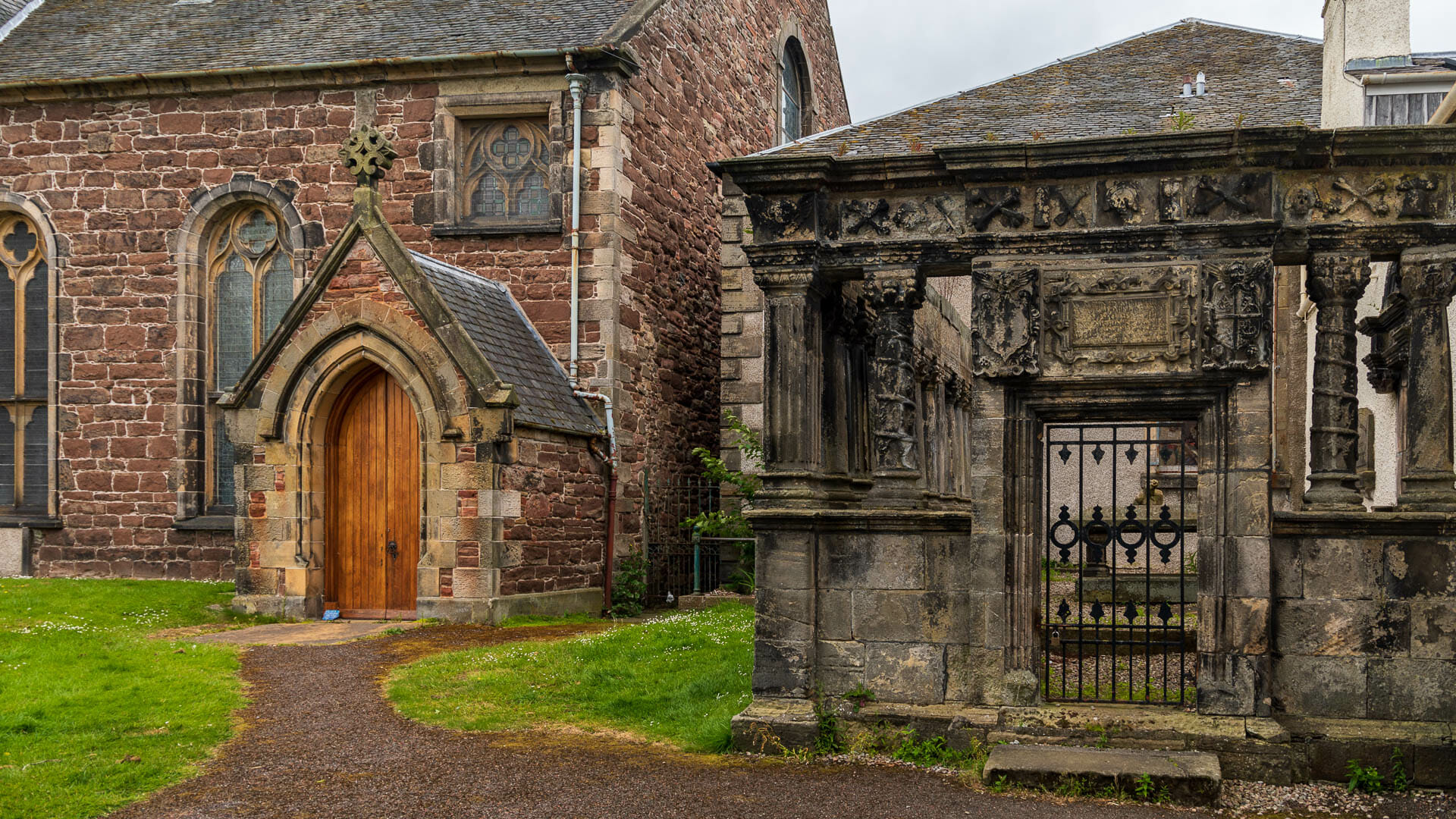
The Old High Church stands on St Michael’s Hill. Although most of this building “only” dates back to 1772, some parts are older and date from the time of Robert the Bruce in the 14th century.
Historians believe the very first church in the Highlands may have stood on this hill. The location matches a description from the time of St Columba’s mission to convert the Pictish king Brude in the year 565. There was also a documented mention of a chapel in the 12th century.
A graveyard extends around the Old High Church. The Robertson of Inesh Mausoleum in particular draws the eye. It dates from the 16th century and is considered a true masterpiece of stonemasonry.
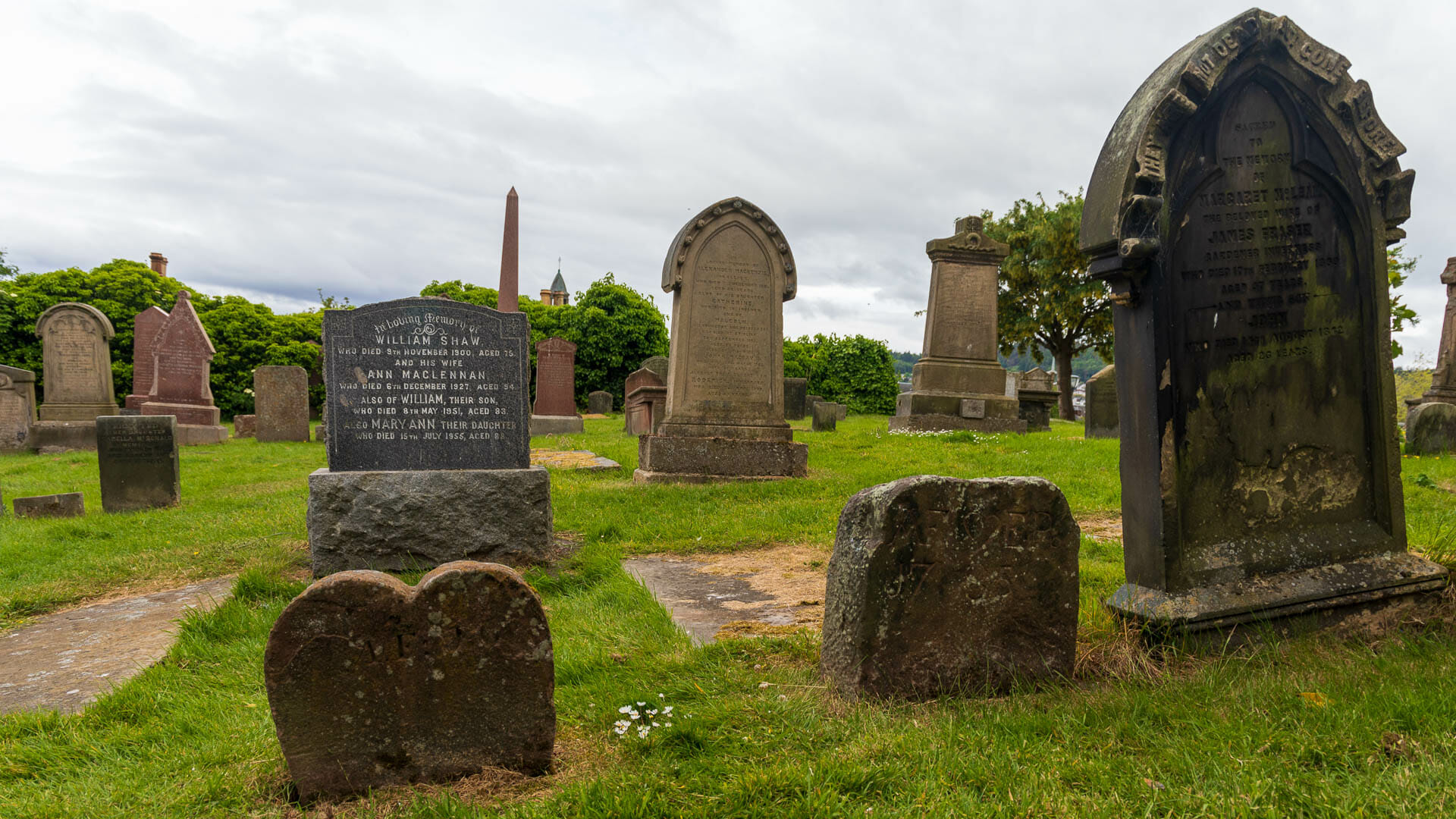
Further stories here revolve around officers executed after the Jacobite Rising of 1745/46. They were held prisoner on the church grounds. For the execution, the condemned sat on a stone a few metres away, while the soldier rested his musket in the v-shaped notch of the stone to aim and fire.
Address: Church St, Inverness IV1 1EY
Web: https://www.oldhighststephens.com/
Town House
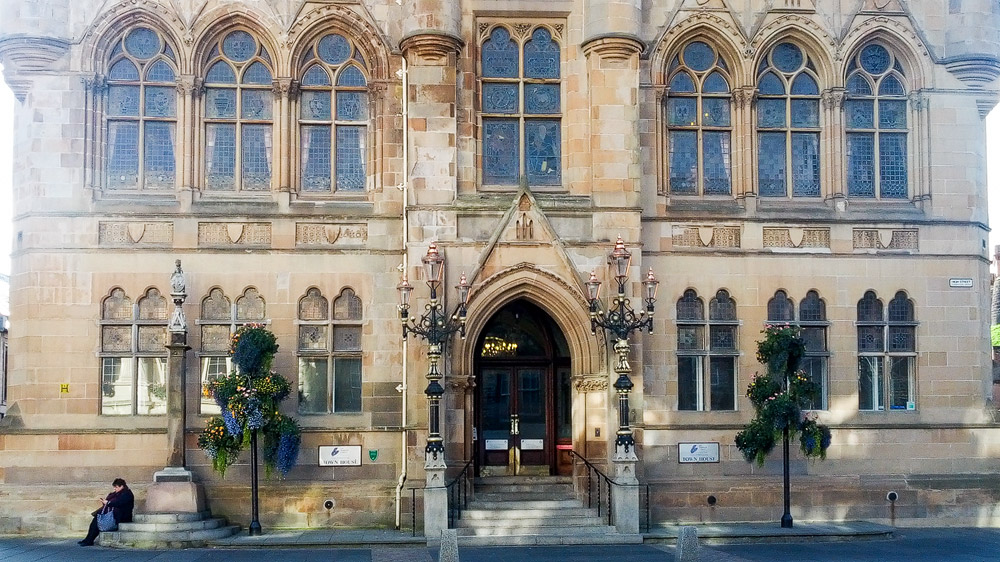
The Town House of Inverness makes quite an impression. Built in Gothic style at the end of the 19th century, it stands in contrast to the otherwise somewhat more modern surroundings of the street. Visitors can’t normally go inside – real governing and administration happens here.
Still, it’s worth taking a closer look. Standing in front of it, visitors will find the Mercat Cross of Inverness on the left. It dates from 1768, with additions around 1900.
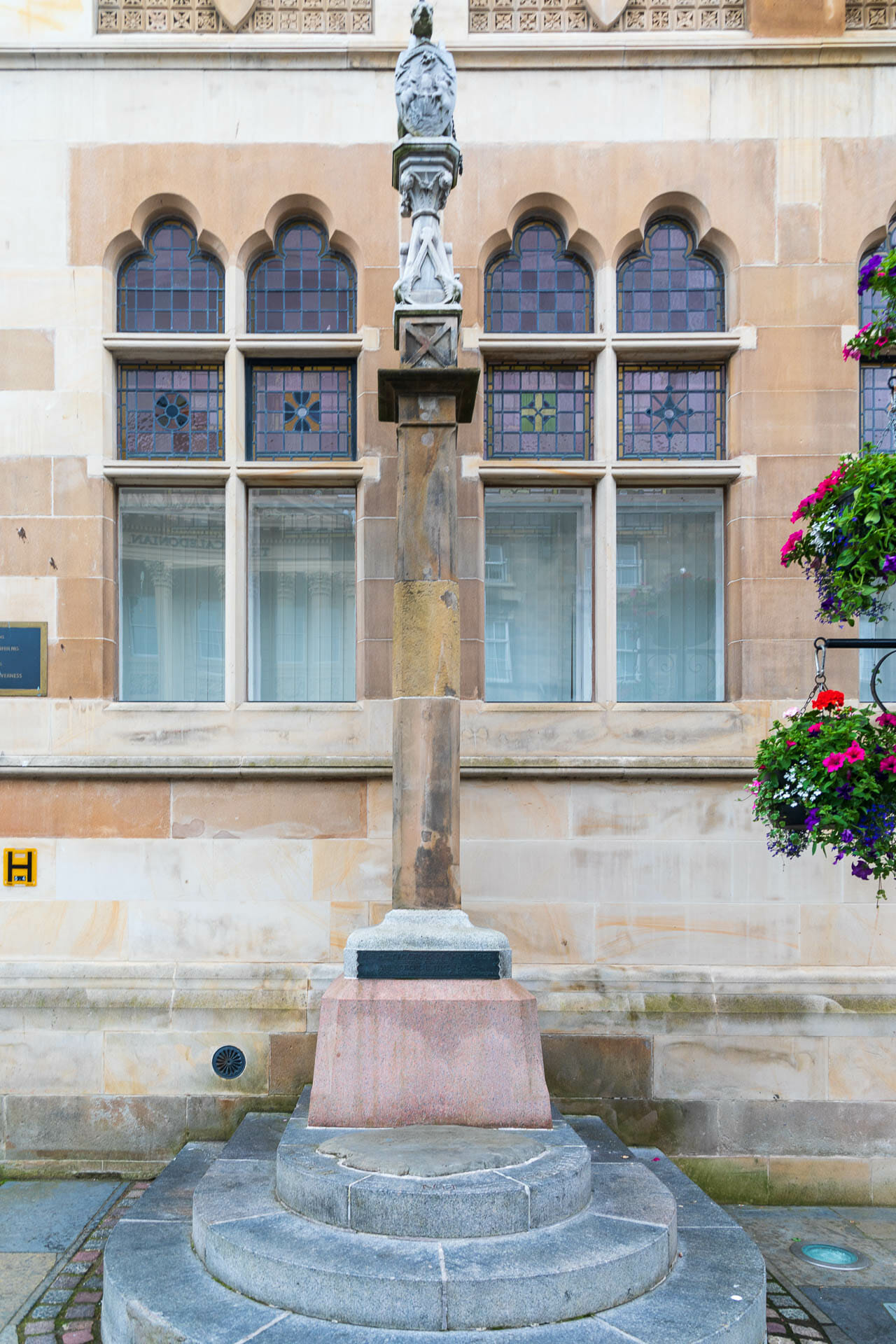
The stone in front of it is interesting, inscribed with the Gaelic words “Clach na cùdainn” – “Stone of the Tub”. The women of the town are said to have rested their washtubs on it to take a break.
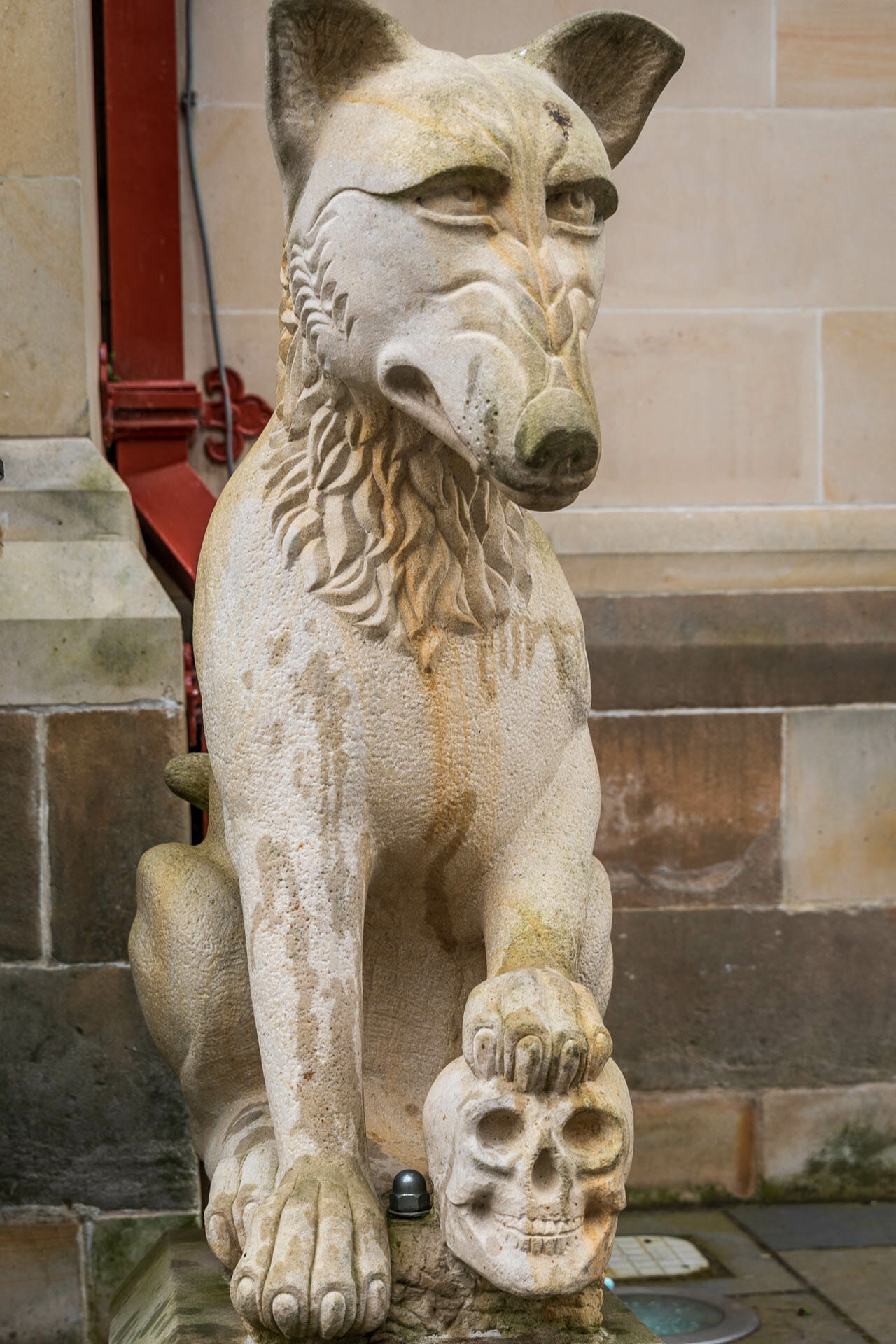
For some time now, wolves have also sat to the left and right of the entrance. The two animals were created by two artists in 2017. The reason: old pictures of the Town House show two dogs on the roof, but they were missing. So the two wolf statues were commissioned. But just as they were finished, the stone dogs turned up again in an old storeroom. Now the originals sit on the roof again and the new wolf statues sit beside the entrance. All of them beautiful.
Address: Castle Wynd, Inverness IV2 3BJ
The Steeple
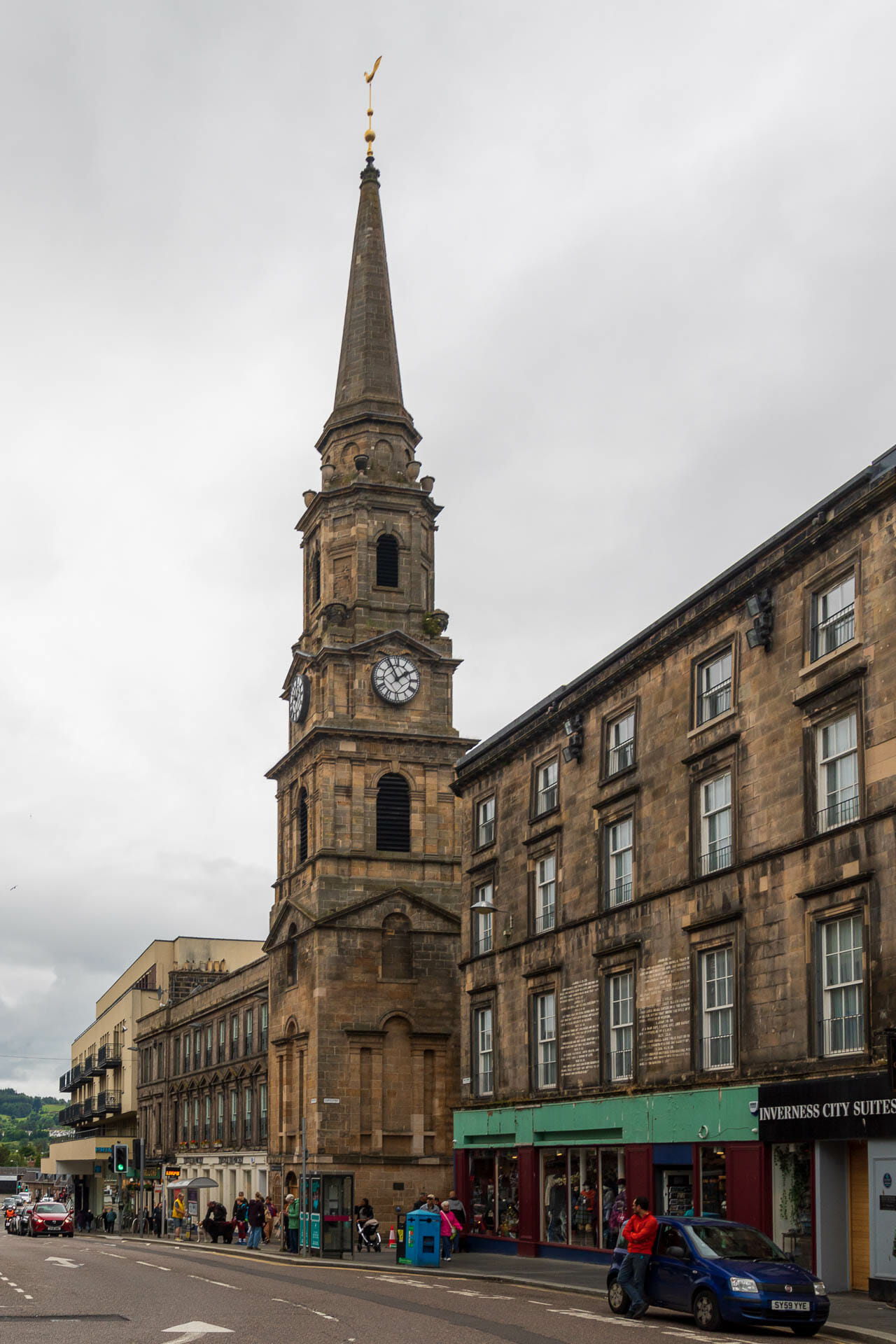
No, this isn’t a church tower, but a typical tolbooth steeple. Tolls were collected here – perhaps for crossing the bridge. The tower dates from 1791 and also housed a small prison. An earthquake twisted the tower, and it was restored in 1828 to – as a contemporary wrote – “the state of its original unimportance”.
Visitors can only admire this one from the outside too.
Address: 8 Bridge St, Inverness IV1 1HD
Abertarff House
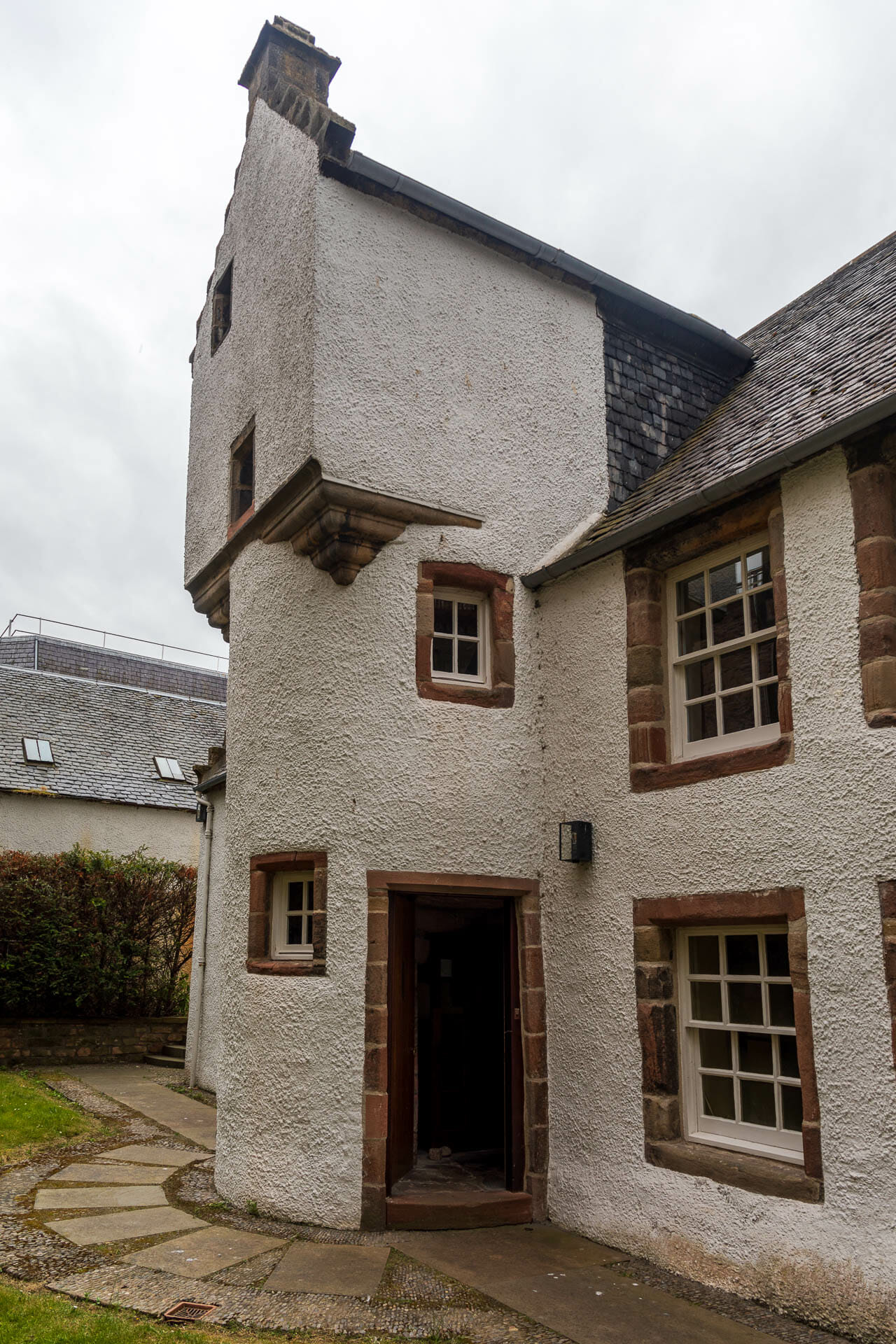
A real gem was long hidden almost invisibly in an alleyway. After its rediscovery, the National Trust for Scotland set about it and completely restored the oldest surviving non-ecclesiastical building in Inverness. Abertarff House is strongly reminiscent of the buildings found in Culross. It has stood since 1593 and was inhabited, among others, by the Frasers of Lovat.
Only two rooms are accessible to the public: the small café and an exhibition room where history is explored.
Opening hours:
01 Jan–02 Jun, closed
03 Jun–31 Oct, Fri–Mon: 10:30am–5:30pm
01 Nov–31 Dec, closed
Admission: free
Address: 71 Church St, Inverness IV1 1ES
Web: https://www.nts.org.uk/visit/places/abertarff-house
Old Town
Abertarff House is located on Church Street, where many more interesting houses, sculptures and shops can be found. Strollers turning into Church Street from the large Bridge Street first encounter some strange geometric structures.
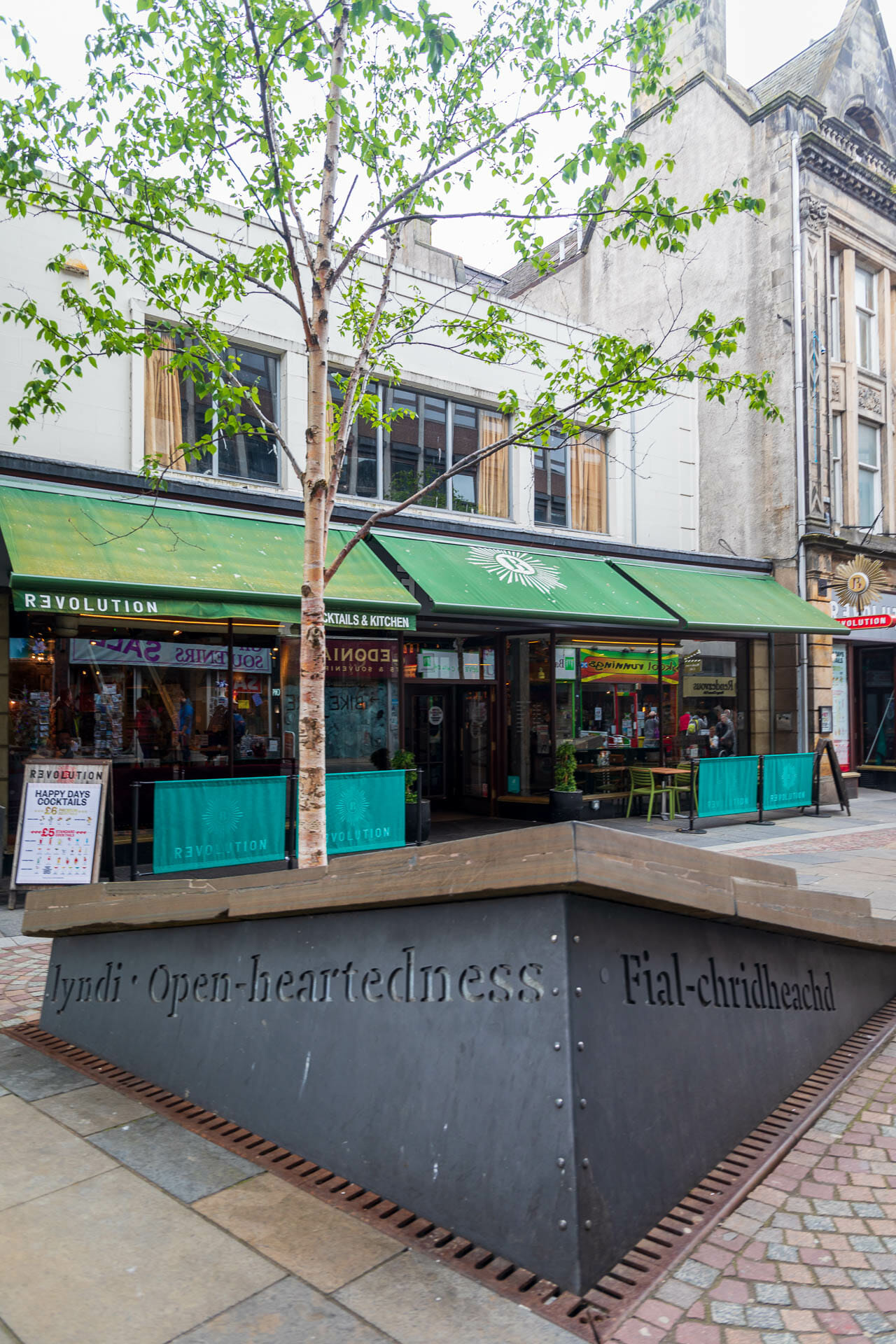
These are the three new virtues of Inverness: perseverance, openness, and insight. They are symbolised by three sloping platforms covered with Caithness stone. On the side, the new virtues are engraved in three languages: English, Gaelic, and Old Norse. A birch tree grows on each of the plinths. The birches come from Scotland, Asia, and North America. All of this is meant to show a modern and cosmopolitan Inverness that is aware of its roots.
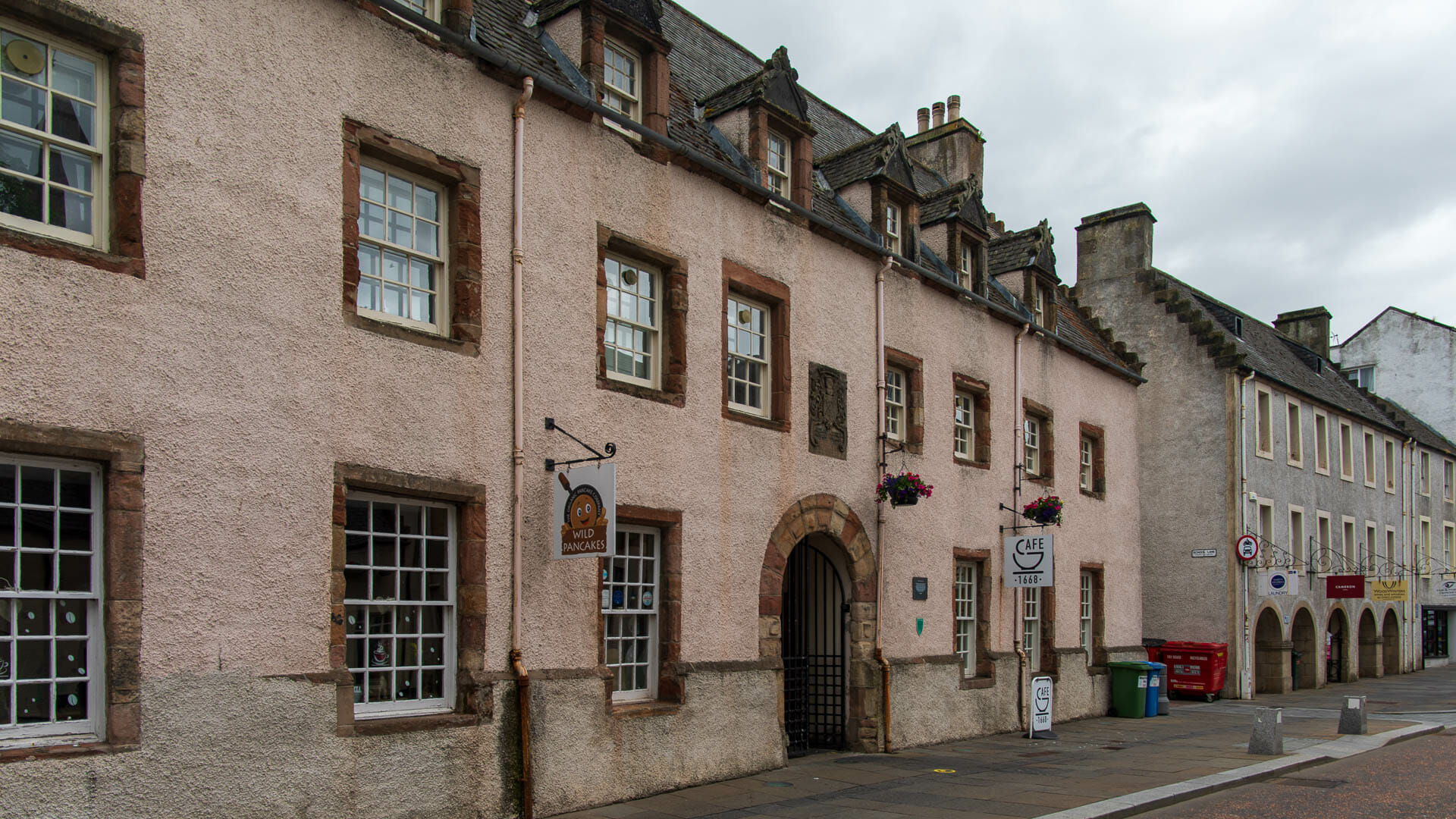
Near the church stand the two houses of Bow Court and Dunbar’s Hospital (today home to Pancake Place). Dunbar’s Hospital was built in 1668 and was first a hospital, then a school. Bow Court dates from 1729.
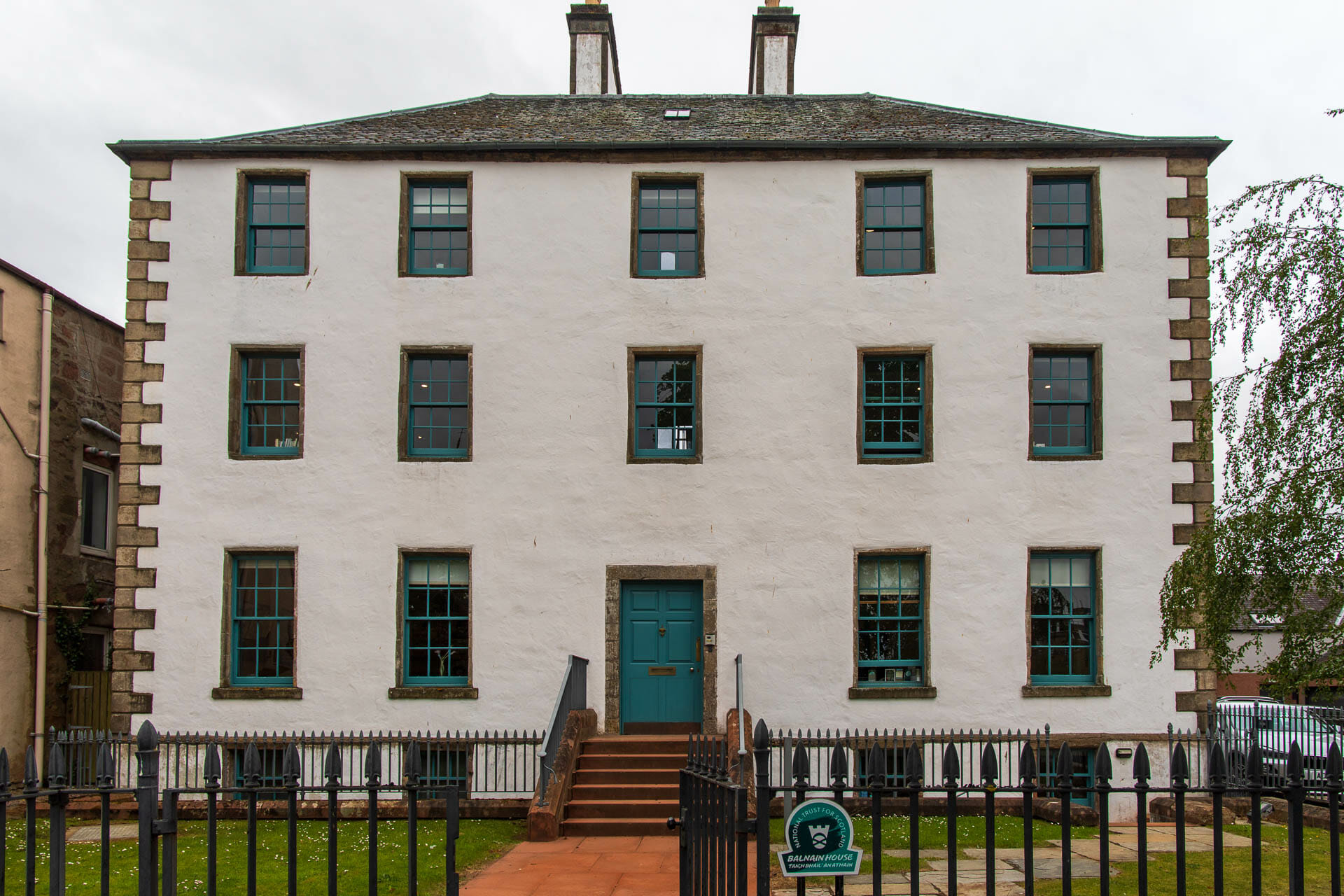
On the other side of the river there’s another interesting house. This is Balnain, home today to the National Trust for Scotland. The building dates from around 1720. Around 1746 it served as a hospital for wounded soldiers of the British government. A piquant detail: the wounded could watch as captured Jacobites were executed opposite in the Old Church graveyard.
Victorian Market
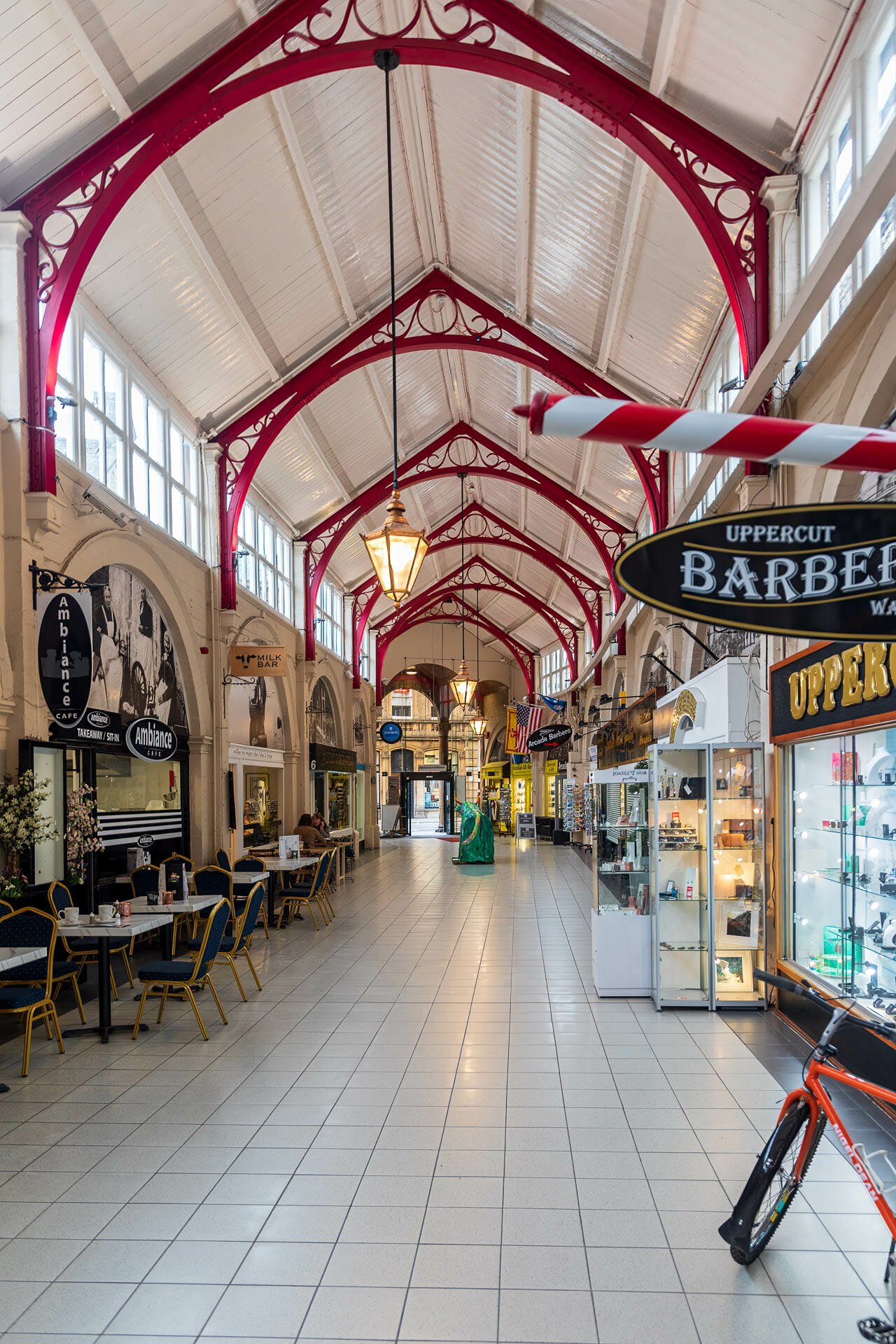
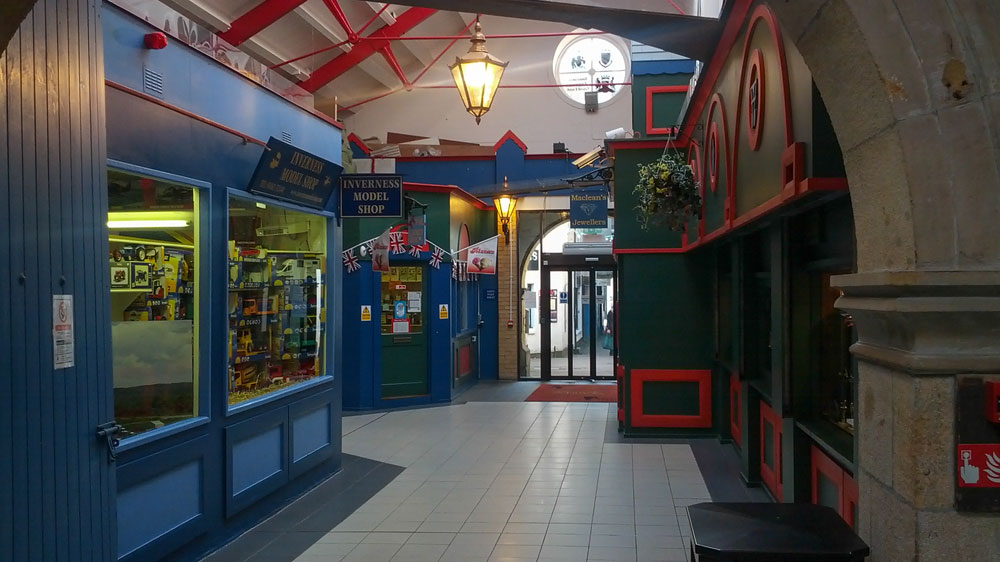
The Victorian Market opened in 1870. Barely recognisable from the outside, inside it’s a beautiful collection of colourful rows of shops, lit by elegant, richly decorated lanterns.
The market takes you on a little journey through time, so to speak, with a cosy shopping stroll right in the city centre near the busy pedestrian zone.
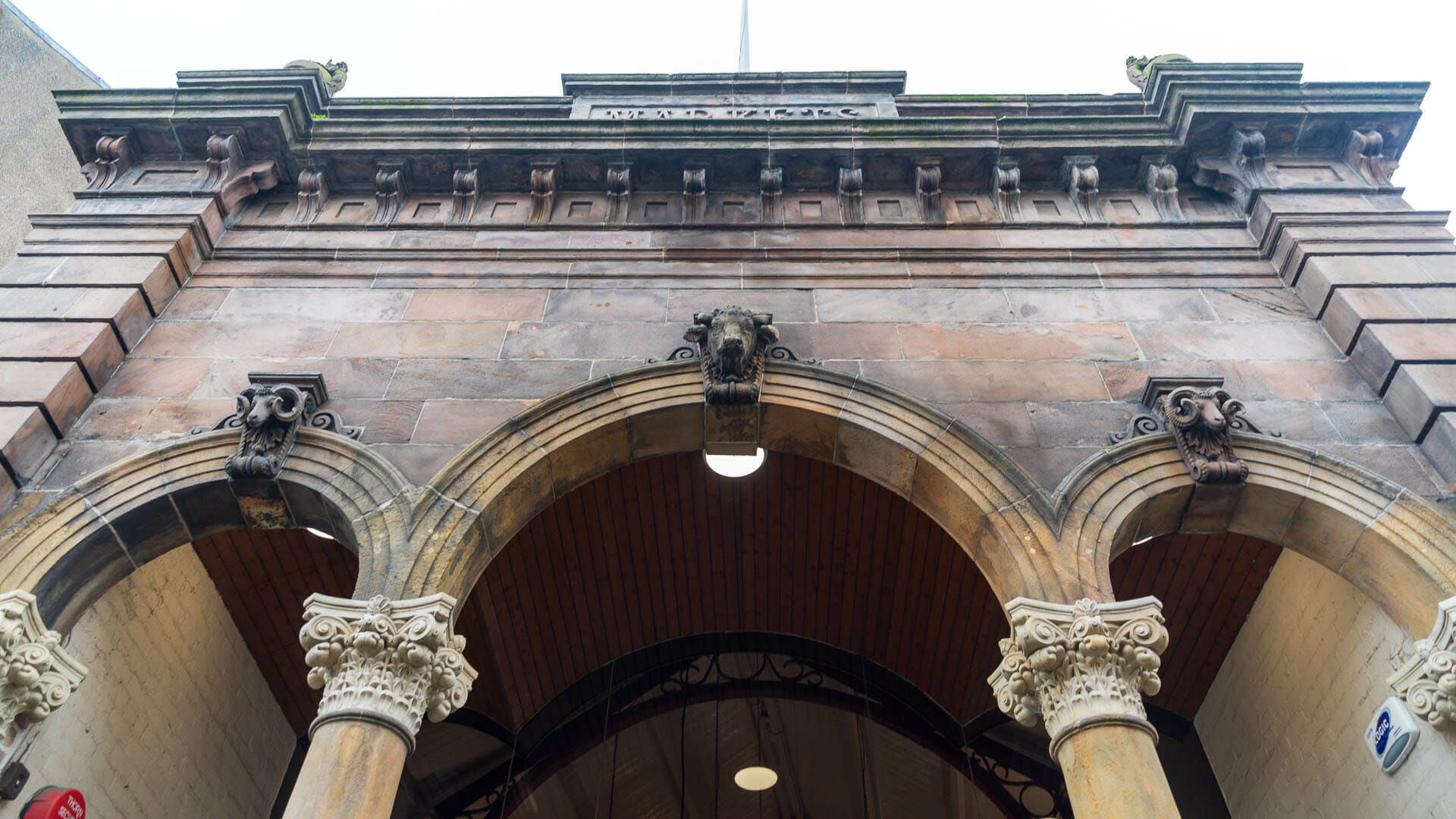
In 1890 a fire destroyed the market halls. The current appearance dates roughly from the period afterwards. The main entrance on Academy Street, however, survived the fire with its ram’s and bull’s heads.
Opening hours:
Mon–Sat 7:00am–6:00pm
Sun 11:00am–4:00pm
Admission: free
Address: Academy St, Inverness IV1 1JN
Web: https://thevictorianmarket.co.uk/
Inverness Museum & Art Gallery
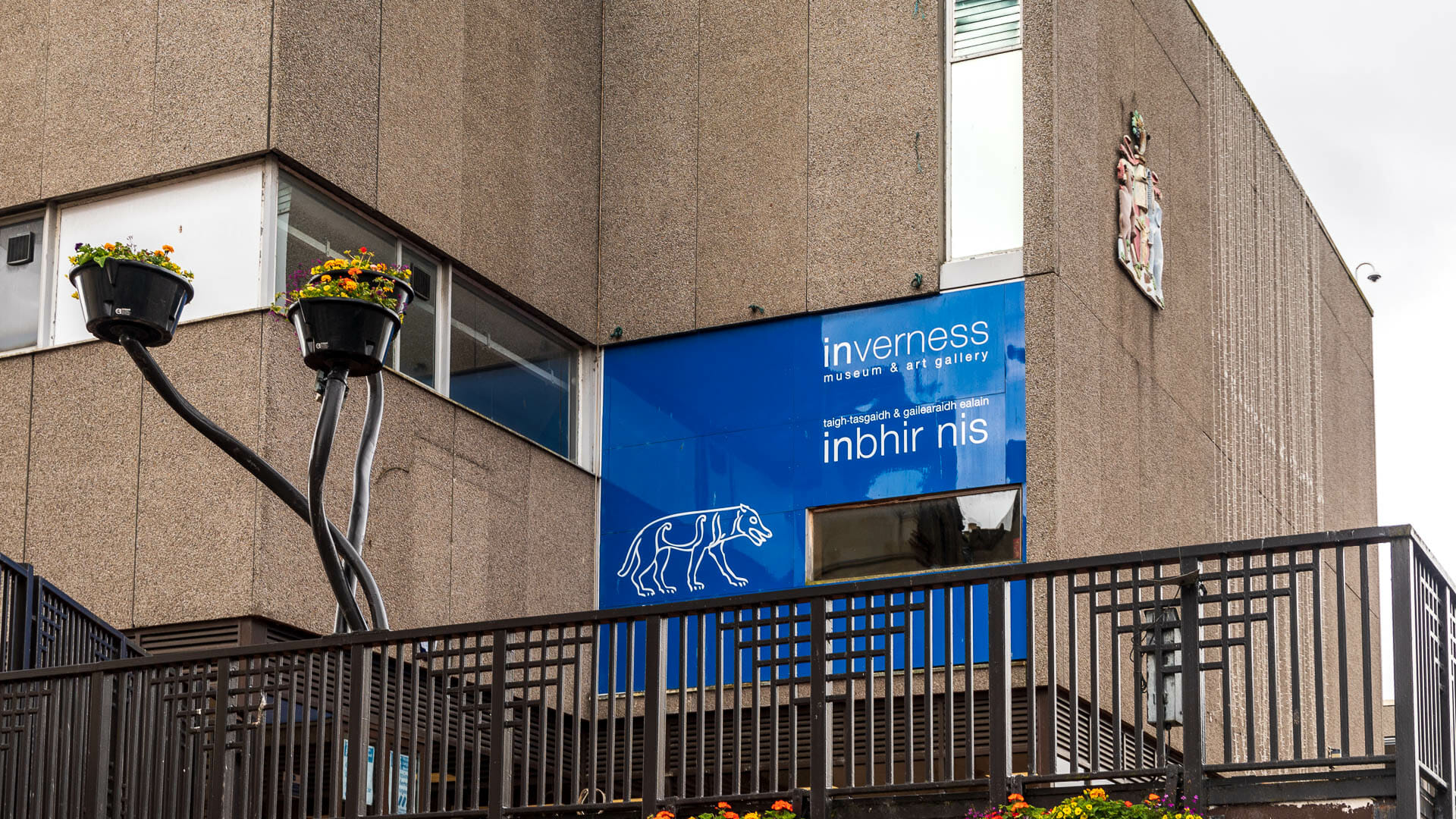
Below the castle on the main street is the Inverness Museum & Art Gallery. There, visitors marvel at finds from the Highlands spanning the Stone Age, the Middle Ages, and up to the present day – weapons, art and jewellery are among them. A photo collection shows life in northern Scotland in earlier times.
Opening hours:
Apr–Oct
Tue-Sat: 10:00am–5:00pm (Café: 10:00am–4:00pm)
Sun, Mon: closed
Admission: free, donations welcome
Address: Castle Wynd, Inverness IV2 3EB
Web: https://www.highlifehighland.com/inverness-museum-and-art-gallery/
St. Andrew’s Cathedral
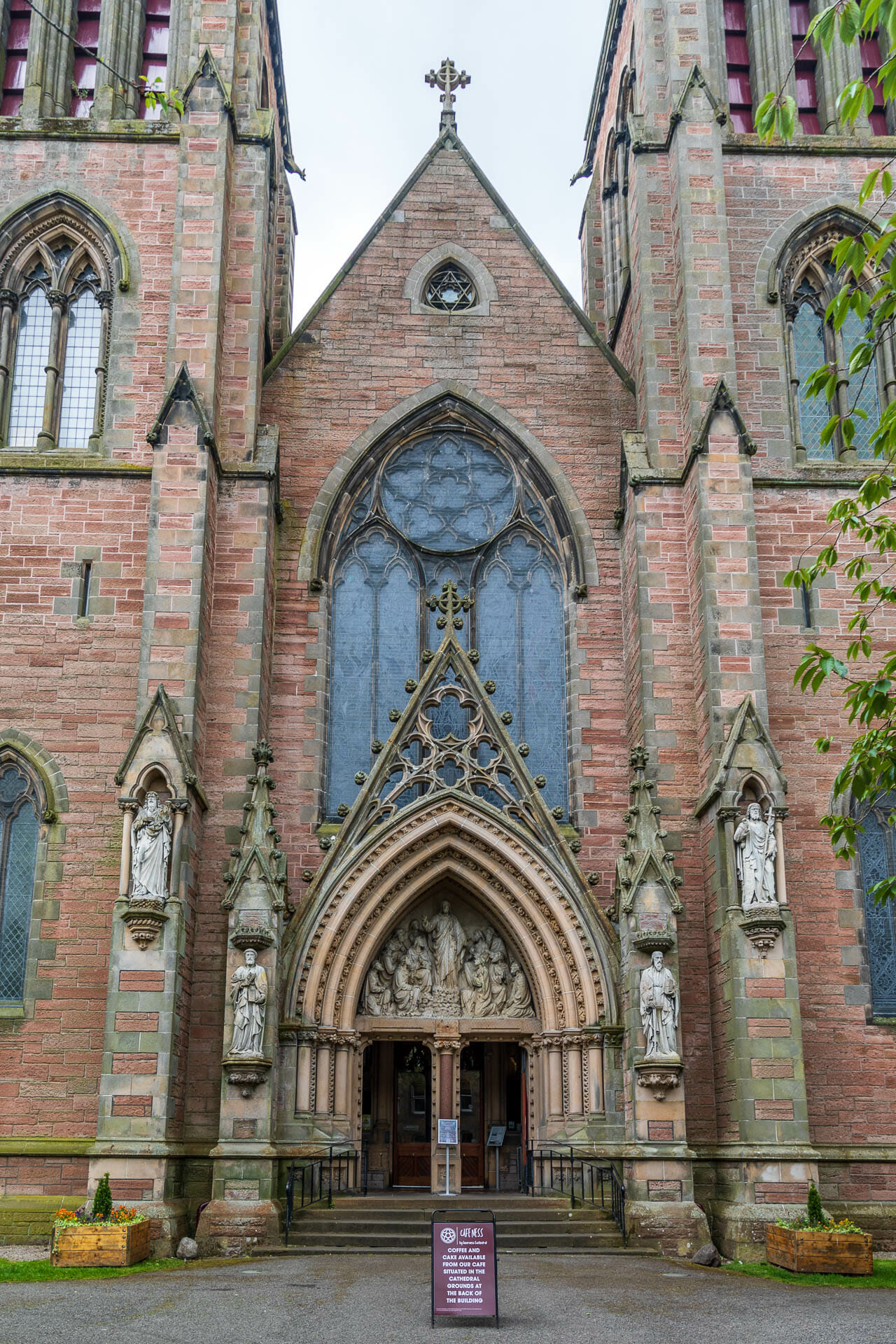
Somehow the spires are missing, but St. Andrew’s Cathedral is still a source of pride for Inverness. Built in the Gothic Revival style (as is the Town House), it stands near the river a little to the west of the city.
Remarkable is the story of the horse that powered the crane during construction. Shortly before completion, a stone fell on the poor animal and killed it. Since it had served so faithfully before, it was given a memorial in the church. It appears as a horse and wheel on one of the window frames.
Opening hours:
daily: 8:00am-7:00pm
Café: 9:00am-4:00pm
Admission: £1
Address: Ardross St, Inverness IV3 5NN
Web: https://invernesscathedral.org/
Inverness also has a green lung, since the River Ness divides the city into two halves. Around it, lovely rows of houses, some with gardens, are grouped at first, soon giving way to parkland to the south. About a kilometre and a half south of the city centre there are even small islands in the river, which are great for a walk.
War Memorial and the Three Old Virtues

On the east bank of the River Ness (the same side the castle stands on) are two memorials. One is the Inverness War Memorial with a small park around it. Here the dead of the world wars are remembered.
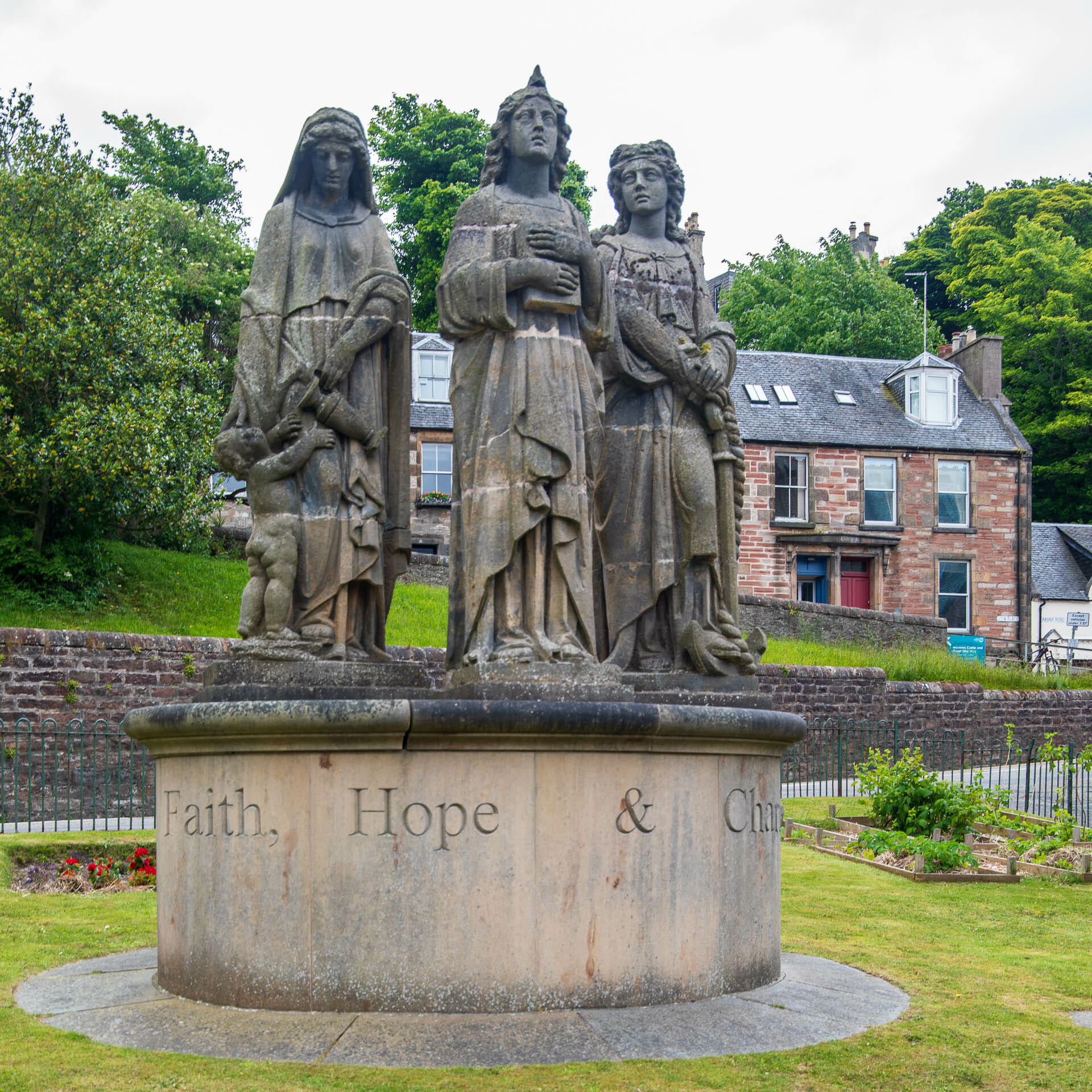
A little further back towards the city centre, near a church, watch over the three old virtues of Inverness: Faith, Hope, and Charity. The artwork crowned the YMCA building in Inverness from 1868. The building was demolished in 1951, however, and the three virtues were acquired by a collector on Orkney. It wasn’t until 2007 that Inverness bought the three back and placed them here.
Ness Islands
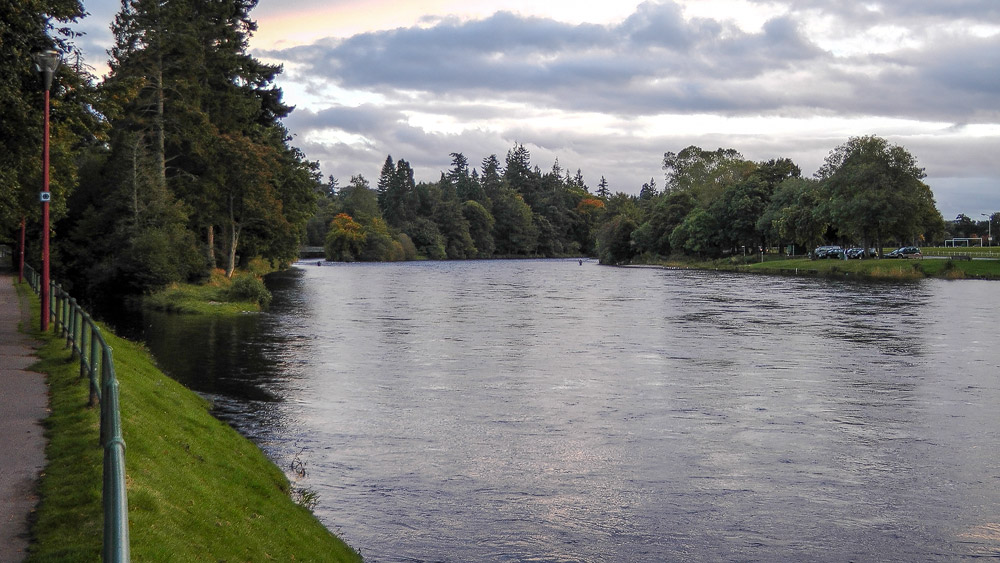
If you want to enjoy the old rows of houses and the river’s special flair, a walk along the Ness Island Walk is worthwhile. It starts at Inverness Castle and follows the path down along Island Bank Road, past the War Memorial and many small flower beds lovingly tended here.
After a little over a kilometre you reach a small metal suspension bridge that leads just a few metres to a small island in the river. Here begins the walk on the Ness Islands, where you can see the large wooden Nessie and other charming sights.
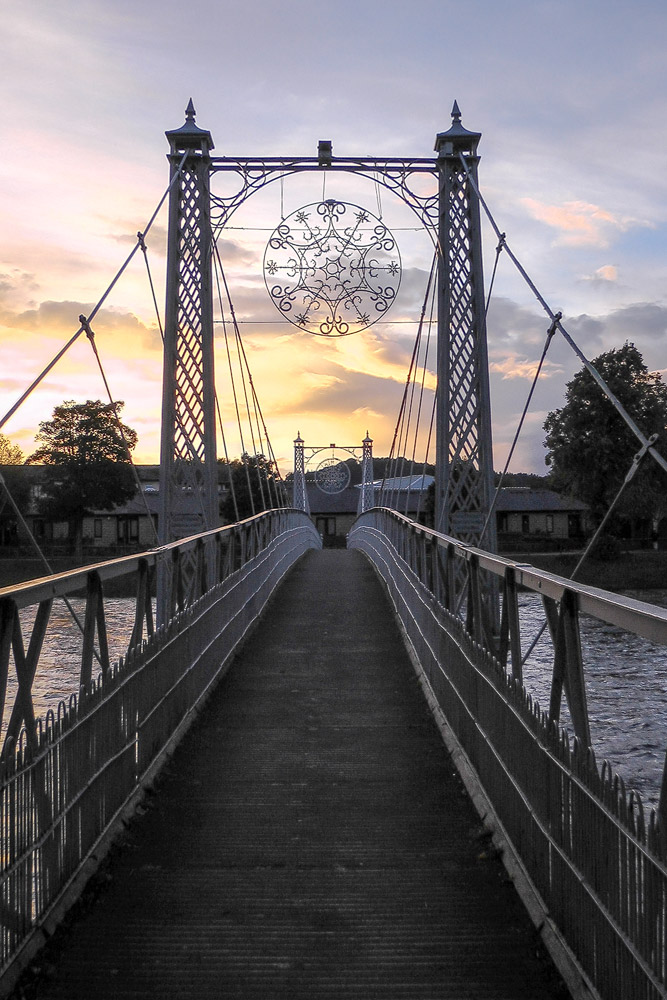
You leave the islands on the other side of the River Ness, so that on the way back you pass the cathedral and some beautiful old houses. You can then walk on to the Ness Bridge and end the outing there.
Hydro Ness
Located in the southwest at the end of Whin Park is a new, modern attraction: Hydro Ness is a hydroelectric power station that works with an Archimedes screw. The metallic design turns this award-winning power station into an attraction. It isn’t yet freely accessible to visitors, but anyone can take a look at it. In future it’s meant to let visitors inside too.
Address: Inverness IV2 4RB (at Holm Mills Bridge)
Web: https://www.hydro-ness.scot/
Kessock Bridge and the Dolphins
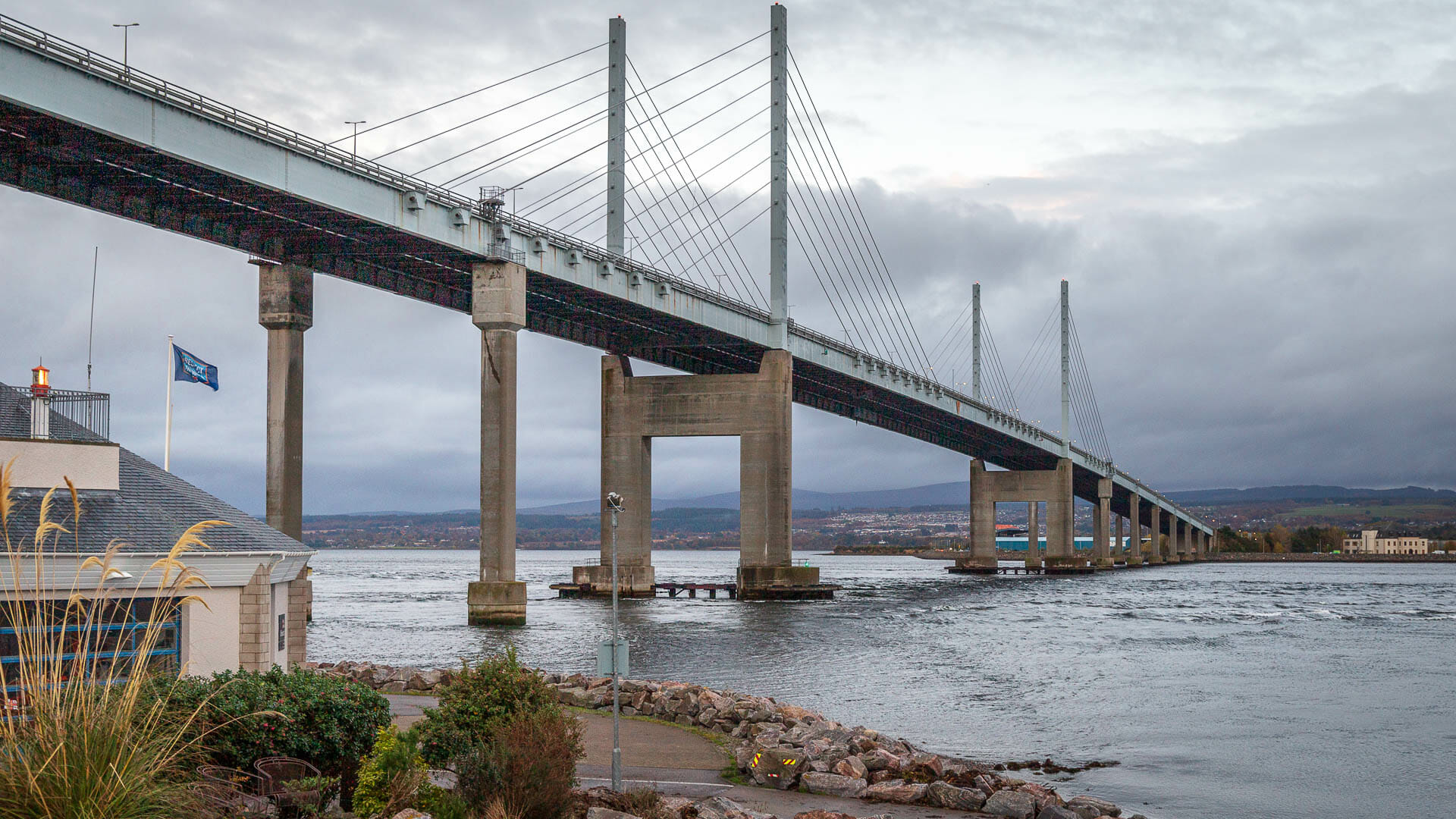
The Kessock Bridge connects the Black Isle with Inverness to the north. On both sides of the bridge there’s a chance to look out for the dolphins that live in the Moray Firth.
Anyone unlucky here can drive on to the Black Isle to Fortrose to Chanonry Point. Sightings are even more frequent there.
Address: Kessock Bridge
Web: https://dolphincentre.whales.org/
Around Inverness
Inverness makes a great base for wonderful trips into the surrounding area.
Culloden Battlefield
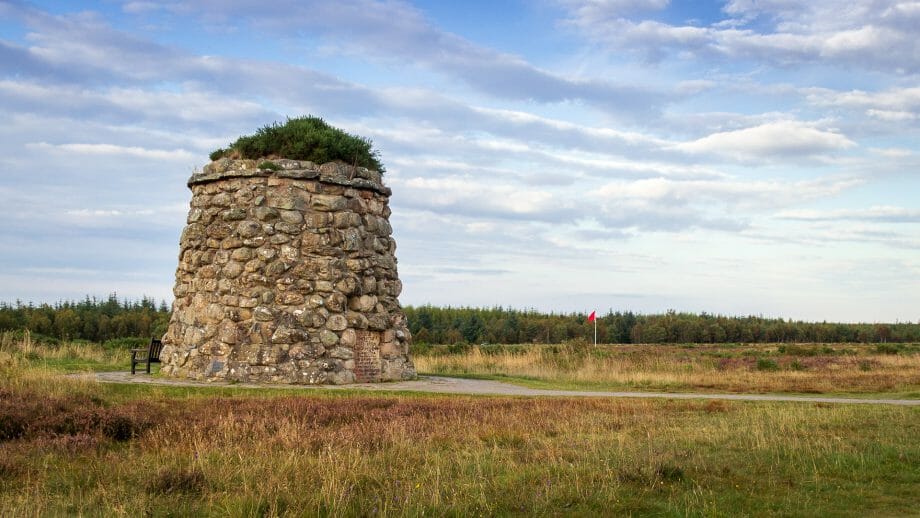
Here the armies of the Jacobites and the British government faced each other. The battle ended in the bloody defeat of Bonnie Prince Charlie’s troops, who afterwards endured a months-long flight through the Highlands. A terrible time then began for the Highlands and their clans.
The visitor centre at Culloden Battlefield covers the history before, during and after the battle. Culloden Moor is only a quarter of an hour’s drive from Inverness city centre. More information and background in the article on the Battle of Culloden.
Visitor centre opening hours:
01 Jan-11 Jan: closed
12 Jan-1 May, Wed-Sun: 10:00am-4:00pm
02 May-29 May, daily: 10:00am-4:00pm
30 May-2 Oct, daily: 9:00am-4:00pm
03 Oct-23 Dec, Wed-Sun: 10:00am-4:00pm
24 Dec-11 Jan 2023: closed
The battlefield itself can be entered at any time.
Admission:
Adults: £14
Families: £30
Family, one adult: £25
Concessions: £11
Address: Culloden, Inverness IV2 5EU
Web: https://www.nts.org.uk/visit/places/culloden/planning-your-visit
Clava Cairns
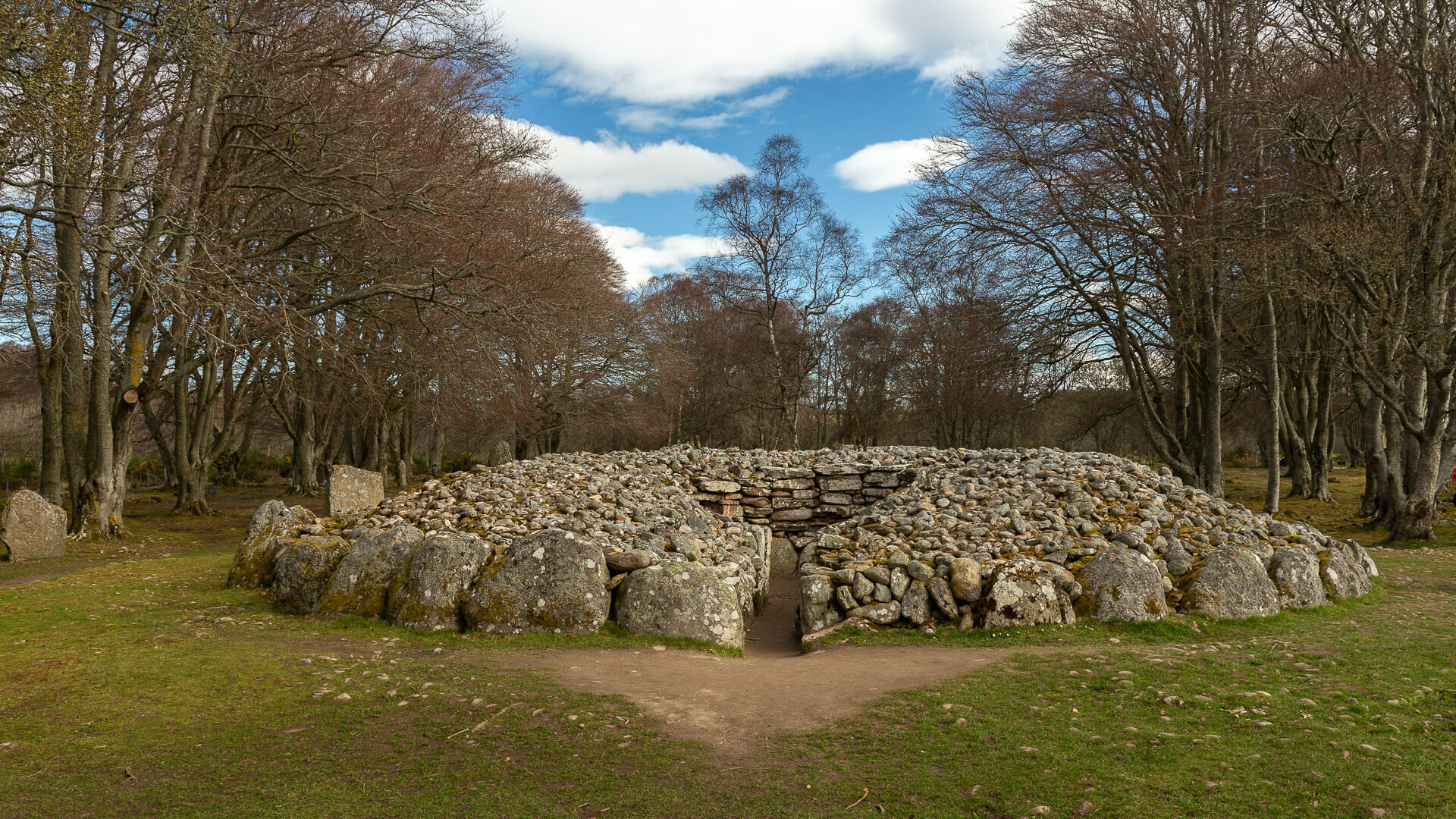
Prehistoric cultures built astonishing things. The stone circles in Scotland are among the most beautiful in the world. And near Inverness too there’s a place showing standing stones as well as ancient burial cairns. The Clava Cairns lie near Culloden, so a visit combines well with one there.
What awaits you at the Clava Cairns is covered here on MyHighlands.de.
Opening hours: always open
Admission: free
Address: Culloden Moor, IV2 5EU
Fort George
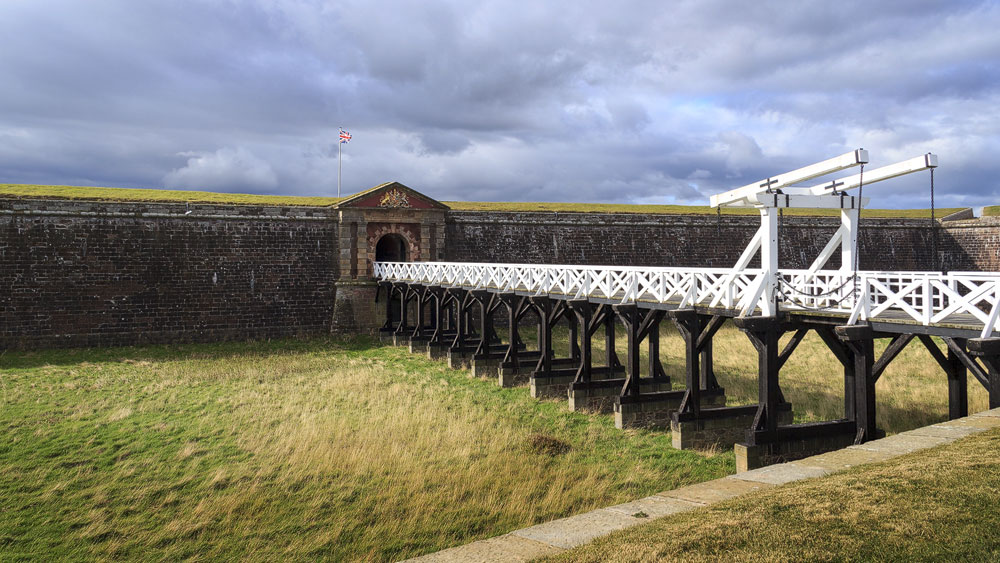
After the Jacobite rising and their defeat at Culloden, the British government wanted to nip any further uprisings in the bud. One instrument for this was Fort George – a bulwark built to the latest methods of the time. Today visitors can look around and marvel at how much firepower and military finesse are packed into the fortress.
More information on what awaits you at Fort George is available on this page at MyHighlands.de.
Opening hours:
Apr.-Sep., daily: 9:30am-5:30pm
Last admission 4:45pm
Oct-Mar, daily: 10:00am-4:00pm
Last admission 3:15pm
Admission:
Adults: £9.50
Concessions: £7.50
Children: £5.50
Family from £19
Address: Near Ardersier, Inverness, IV2 7TD
Web: https://www.historicenvironment.scot/visit-a-place/places/fort-george/
Shopping: Kilts, Antiques, Clothing
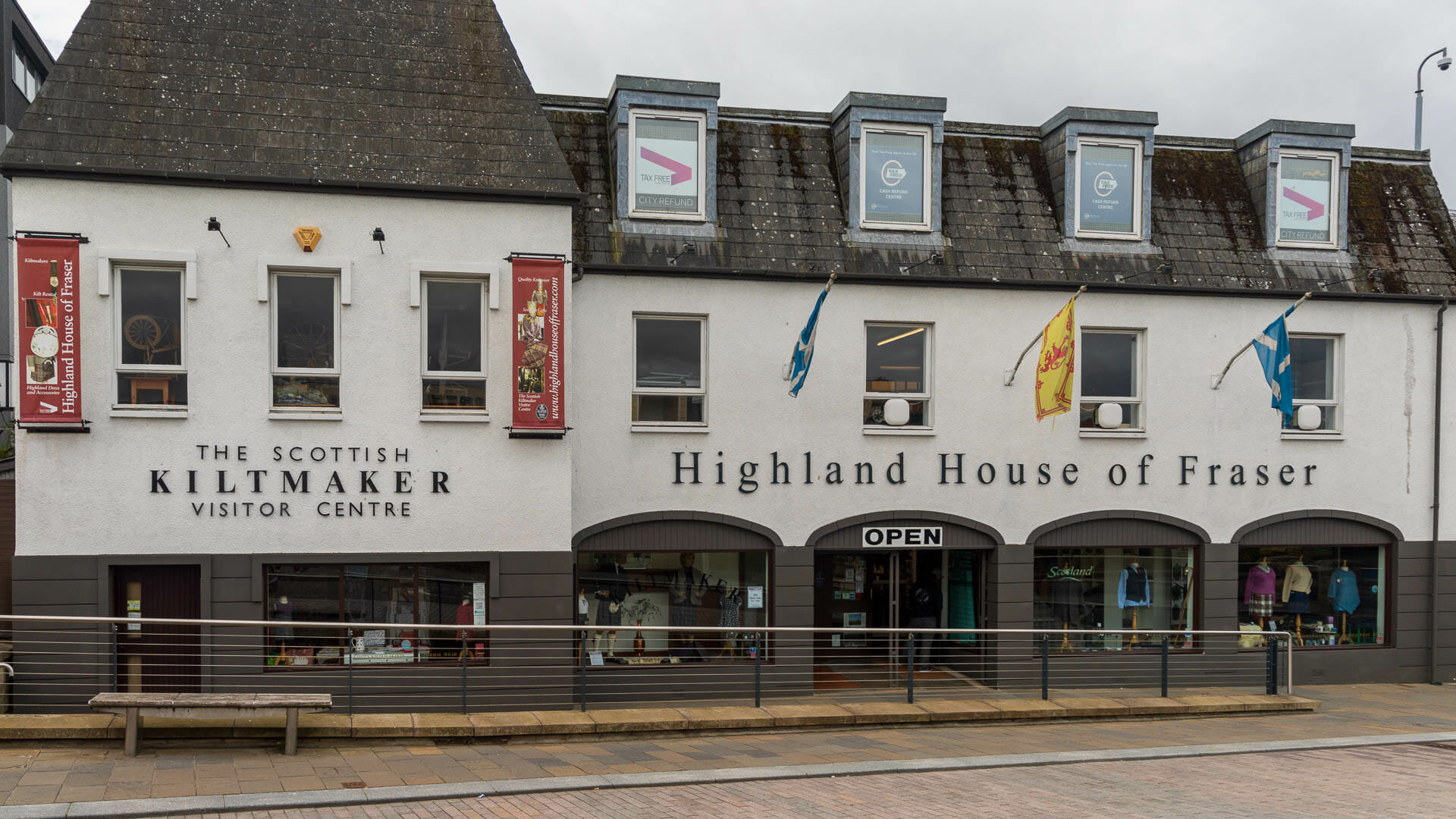
One of the essential stops in Inverness for Scotland enthusiasts is surely the Highland House of Fraser. At the Scottish Kiltmaker Visitor Centre, visitors can learn more about the history and making of the national dress. Right next door they can then buy kilts, clothing, and accessories.
Address: 4-9 Huntly St, Inverness IV3 5PR
Web: https://www.highlandhouseoffraser.com/
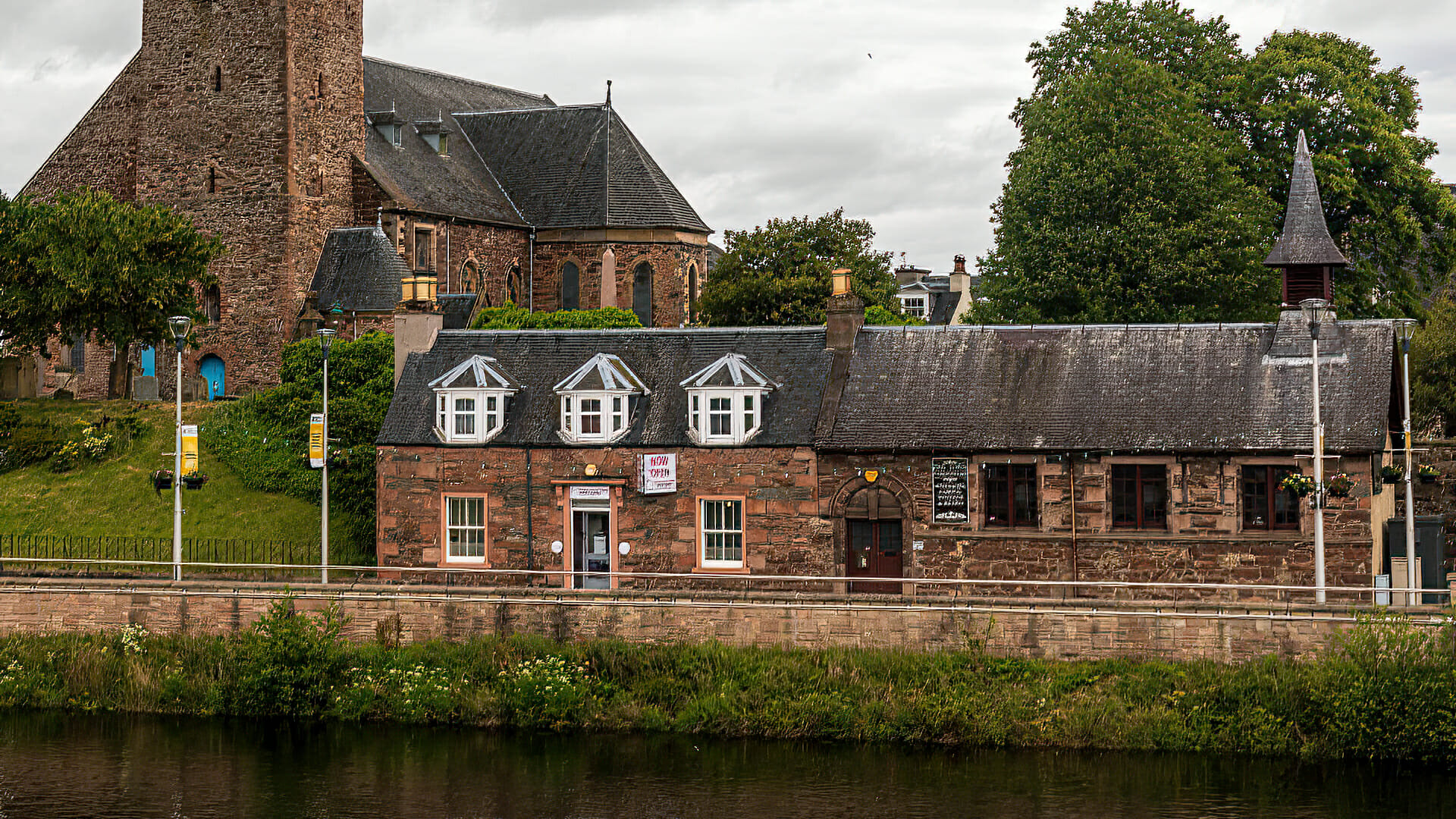
In the Old Town on the other side of the river there are further shopping opportunities. By the church on Bank Street, Old Town Curiosities sells antiques and curios.
Opening hours:
Mon: 12:00-3:00pm
Fri, Sat: 11:00am-3:00pm
Address: 6 Bank St, Inverness IV1 1QY
Web: https://www.facebook.com/Old-Town-Curiosities-157780275038387/
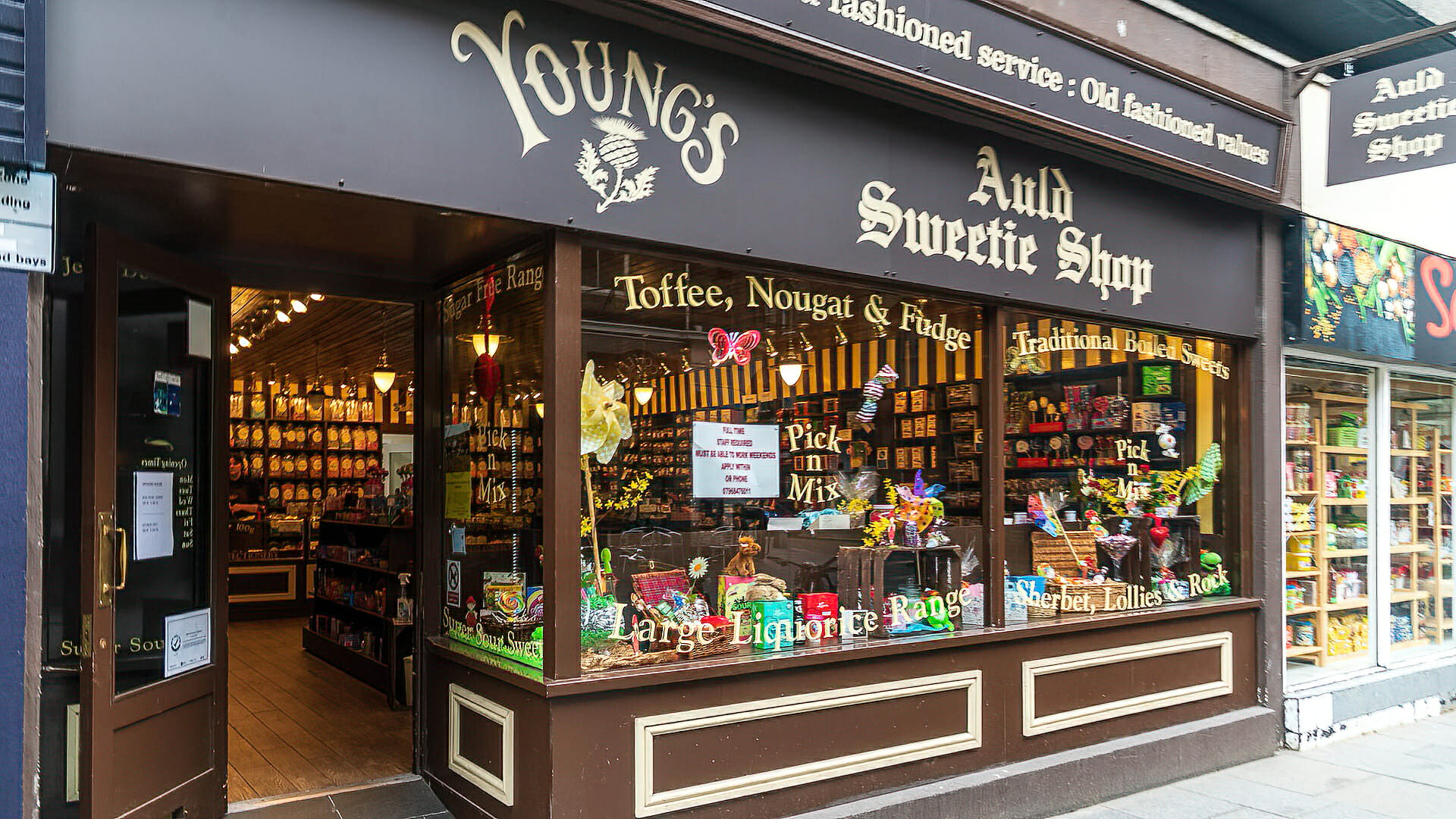
There are more shops on Church Street. It’s worth visiting the ice cream parlour “Miele’s Gelateria”. More sweets can be found at the sweet shop “Auld Sweetie Shop”.
Books, clothing, or even electronics can be found at the “Eastgate Shopping Centre”. It lies along the extension of Bridge Street, which turns into a pedestrian zone and eventually leads to the shopping centre.
Opening hours:
Mon-Wed, Fri, Sat: 9:00am-5:30pm
Thu: 9:00am-6:00pm
Sun 11:00am-5:00pm
Address: Centre Management, 11 Eastgate, Inverness IV2 3PP
Web: https://eastgateshopping.co.uk/
Accommodation: Hotels and More in Inverness
Here is a selection of hotels on the map. The links and the map are affiliate links – if you book through them, I receive a small commission. (Advertisement)
You are currently viewing a placeholder content from Default. To access the actual content, click the button below. Please note that doing so will share data with third-party providers.
More InformationKnowledge: Name and History of Inverness
The name Inverness comes from the Gaelic “Inbhir Nis” and means “the mouth of the Ness”. The river flows out of the famous Loch Ness, which lies a little further southwest in the Great Glen.
Inverness was also always an important strategic point in the struggle for Scotland. Whoever controlled the town and the bridge held power over the Highlands. In 1411, for instance, Inverness was seized by the Lords of the Isles, and the bridge was torn down in the process. And in 1746 Inverness witnessed the bloody end of the Jacobite Rising. Afterwards the English used Inverness as a base to control the Highlands from and to prevent any further clan uprisings.
