The Highland Folk Museum doesn’t show off the glitz and glamour of life in the Highlands. Instead, visitors learn about the everyday lives of ordinary people over the last 300 years.
It’s a walk through time: across a length of a kilometre and a half, the Highland Folk Museum displays more than 30 historic buildings. Along a single path, visitors stroll straight past the centuries, seeing old village schools, watchmakers’ workshops, tweed weavers, joiners, and of course a church. At the end of the path stands a building housing exhibitions of old everyday and household objects.
For many, though, the highlight of the exhibition is the 18th-century village, made up of six thatched-roof houses. Partly because it reaches furthest back into the past, but also because parts of the series “Outlander” were filmed right here among these houses. The show’s makers thought the old cottages made the perfect backdrop for shooting a village scene.
No wonder, then, that visitors at the entrance are often asked straight away whether they’re an Outlander fan. Because many people really do only want to see this one part of the museum – though the path there first leads through a stretch of woodland.
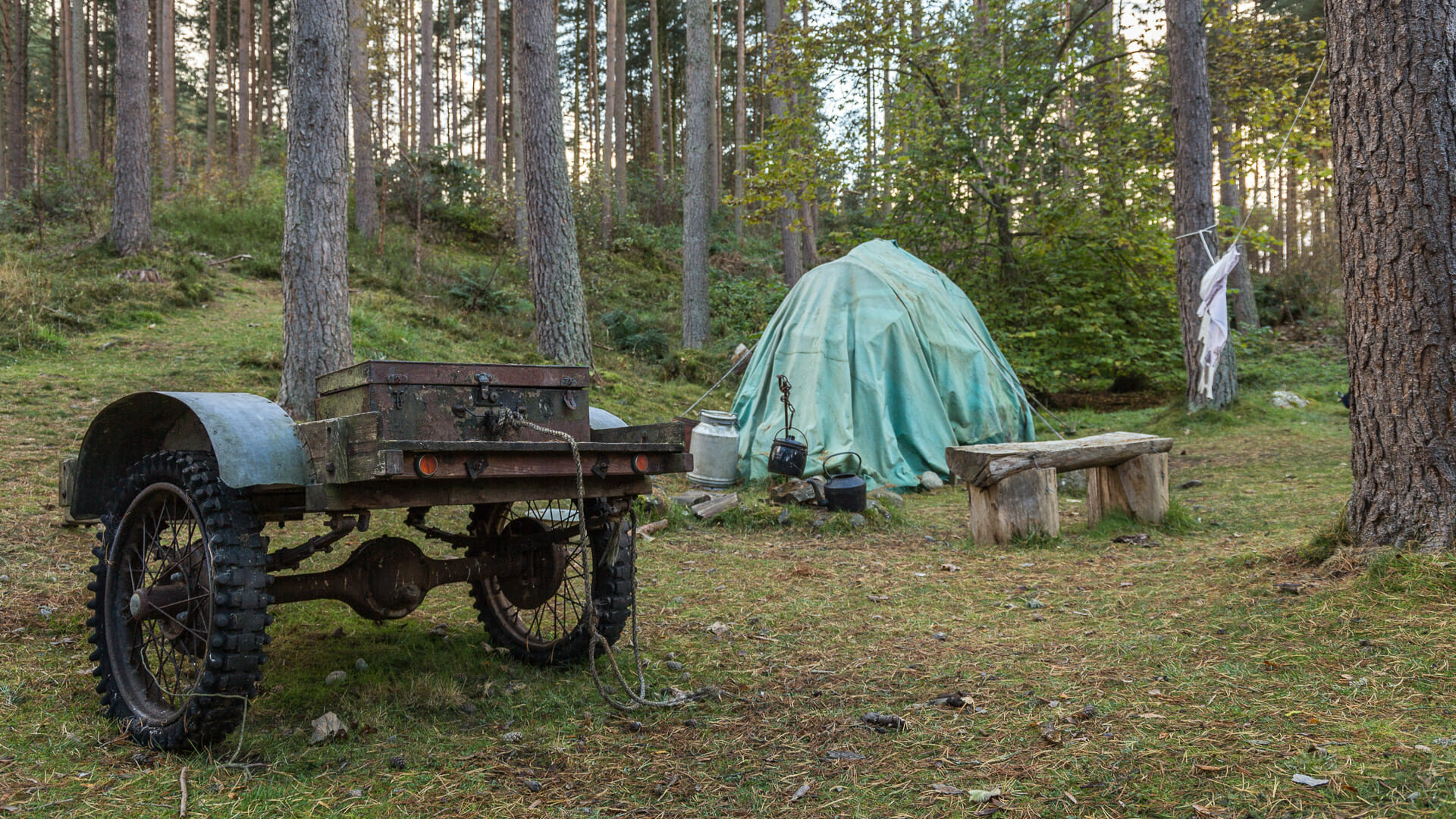
Even along the woodland path, you’ll already come across old dwellings – in this case, belonging to the travelling folk.
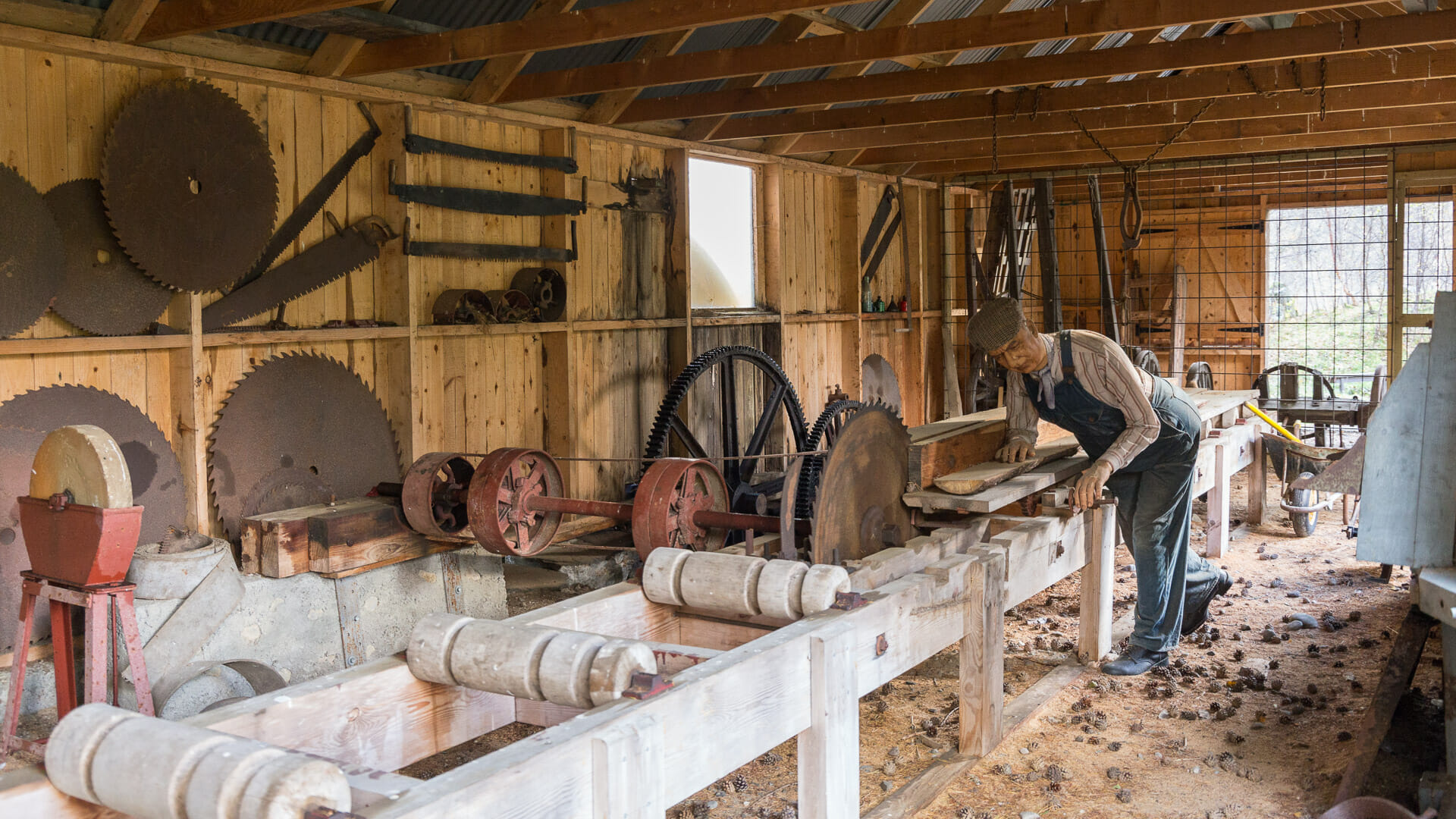
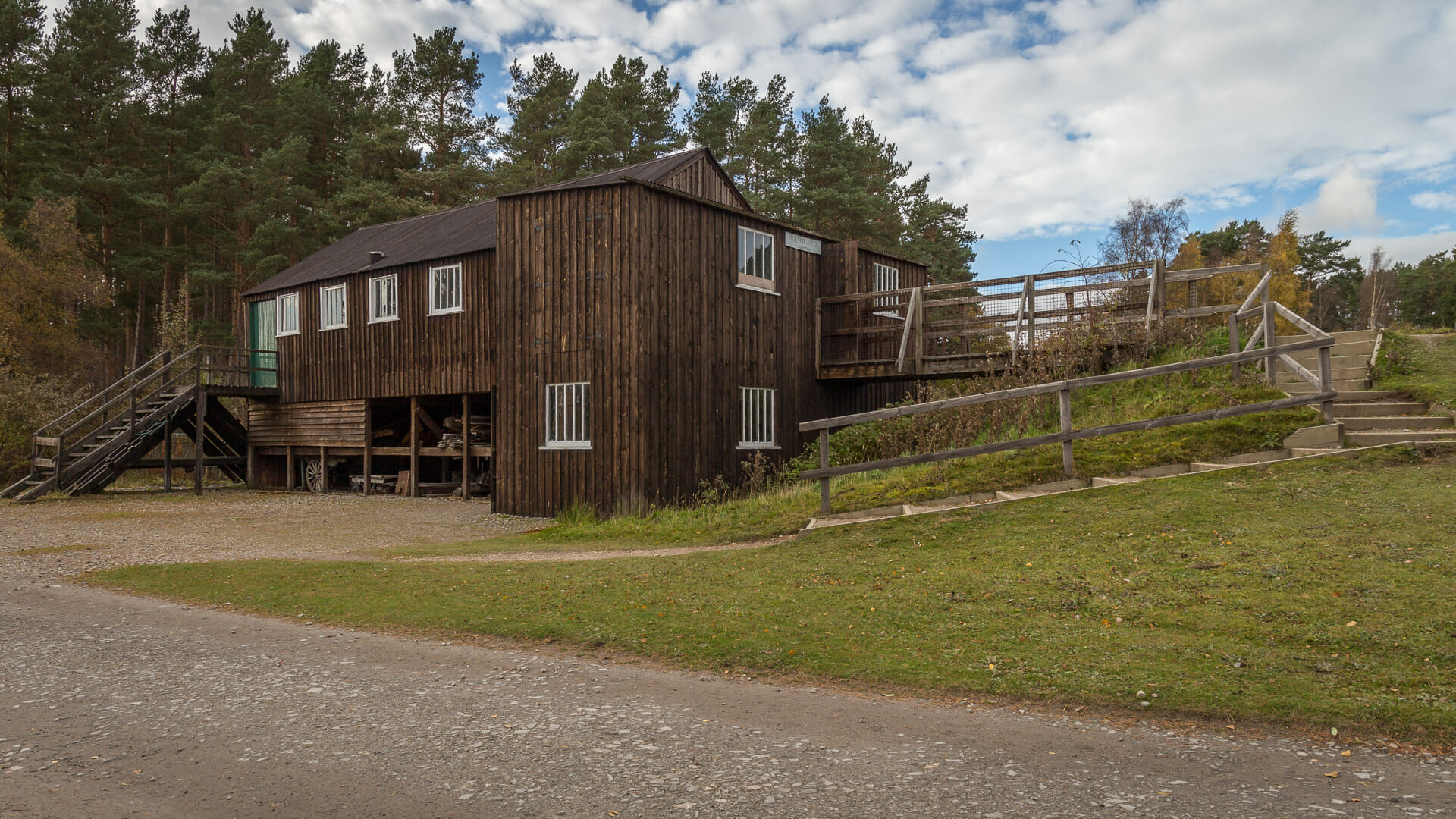
Or the old sawmill.
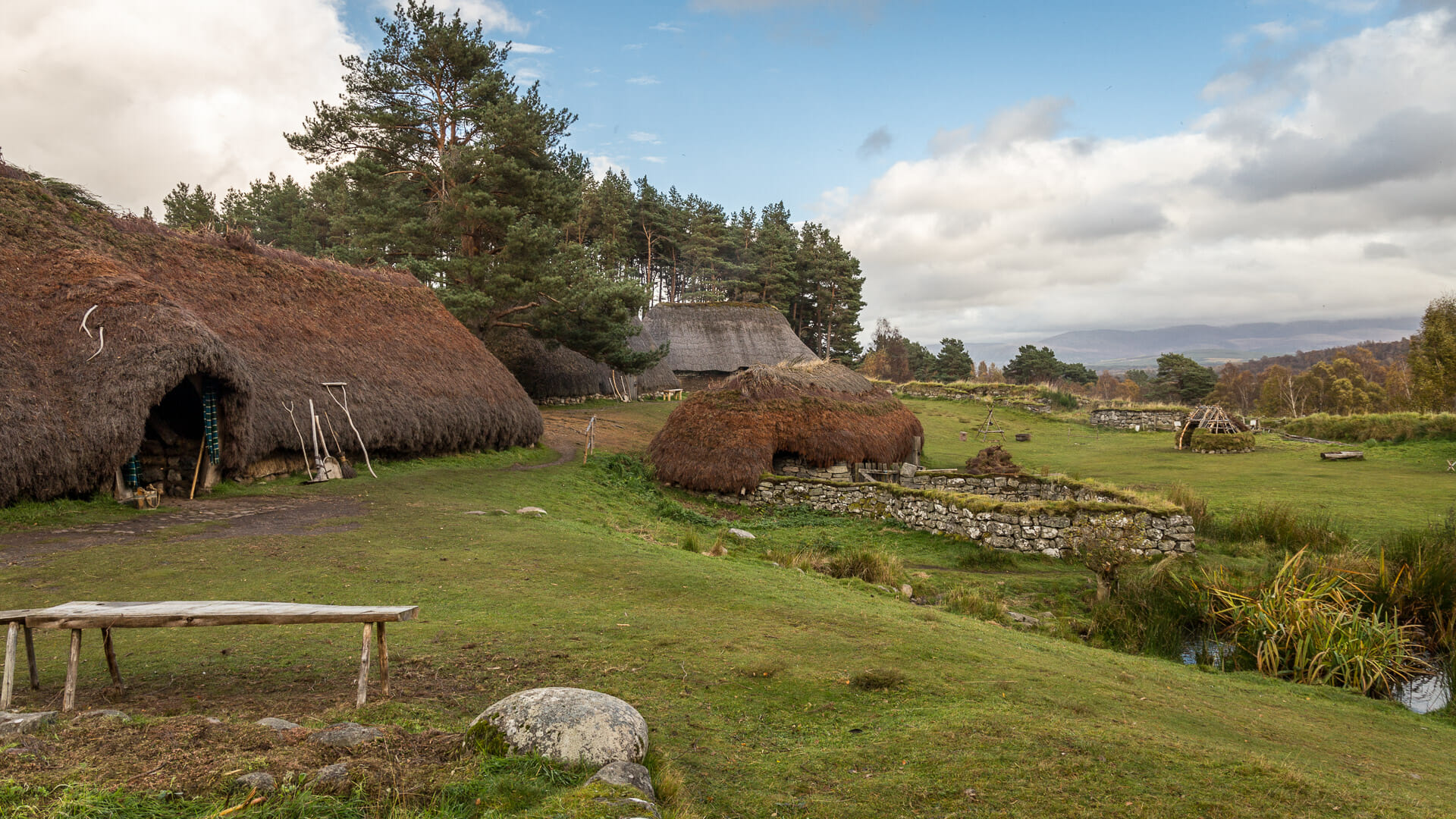
Once you’ve made it through the woods, the view opens up onto the 18th-century village of “Baile Gean” – roughly “village of good cheer” in English. First you reach the house of the village headman, the tacksman. His job was to collect rent for the clan chief, which is why his house was also the largest and most comfortable one – though “comfortable” is relative here.
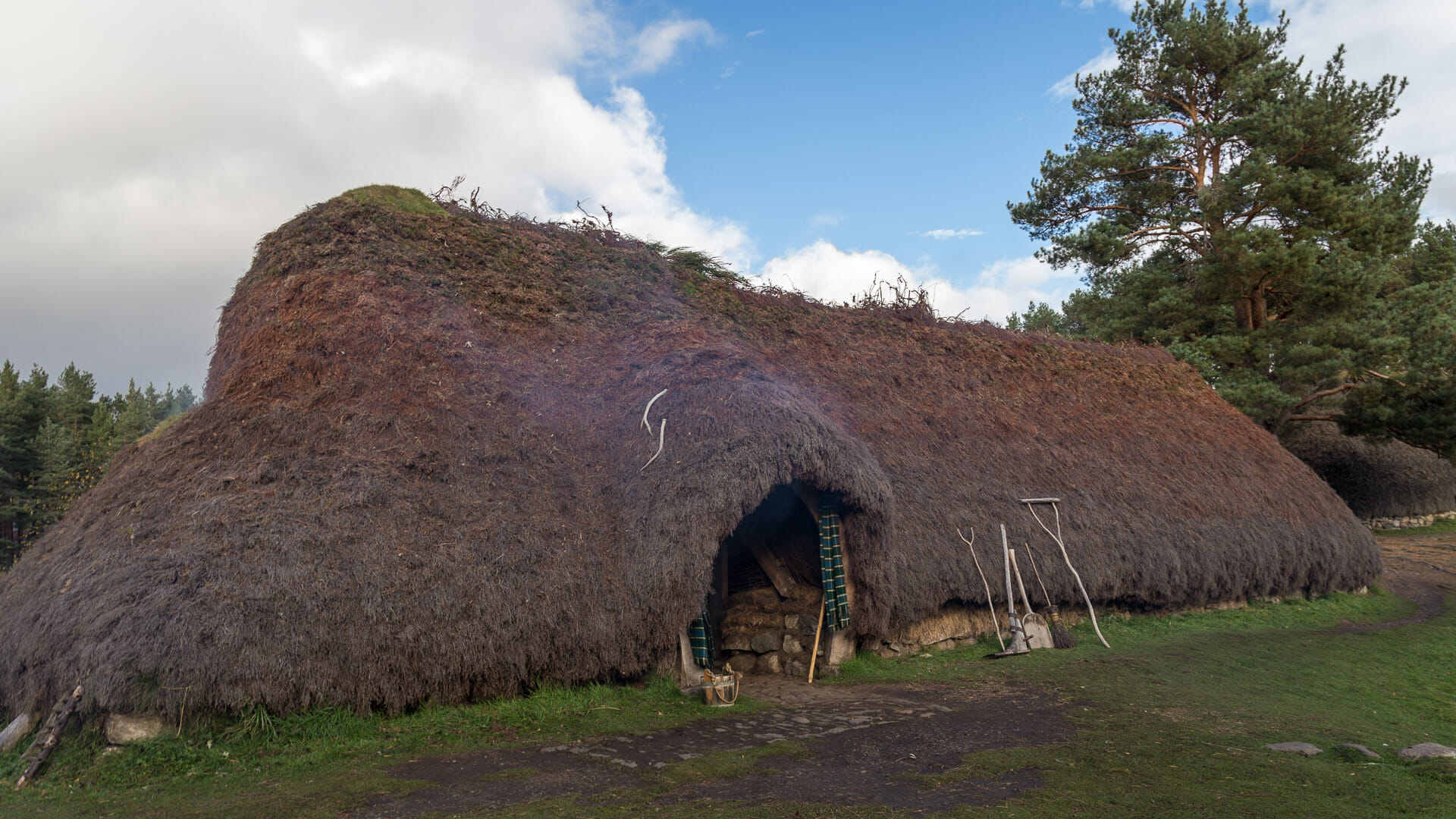
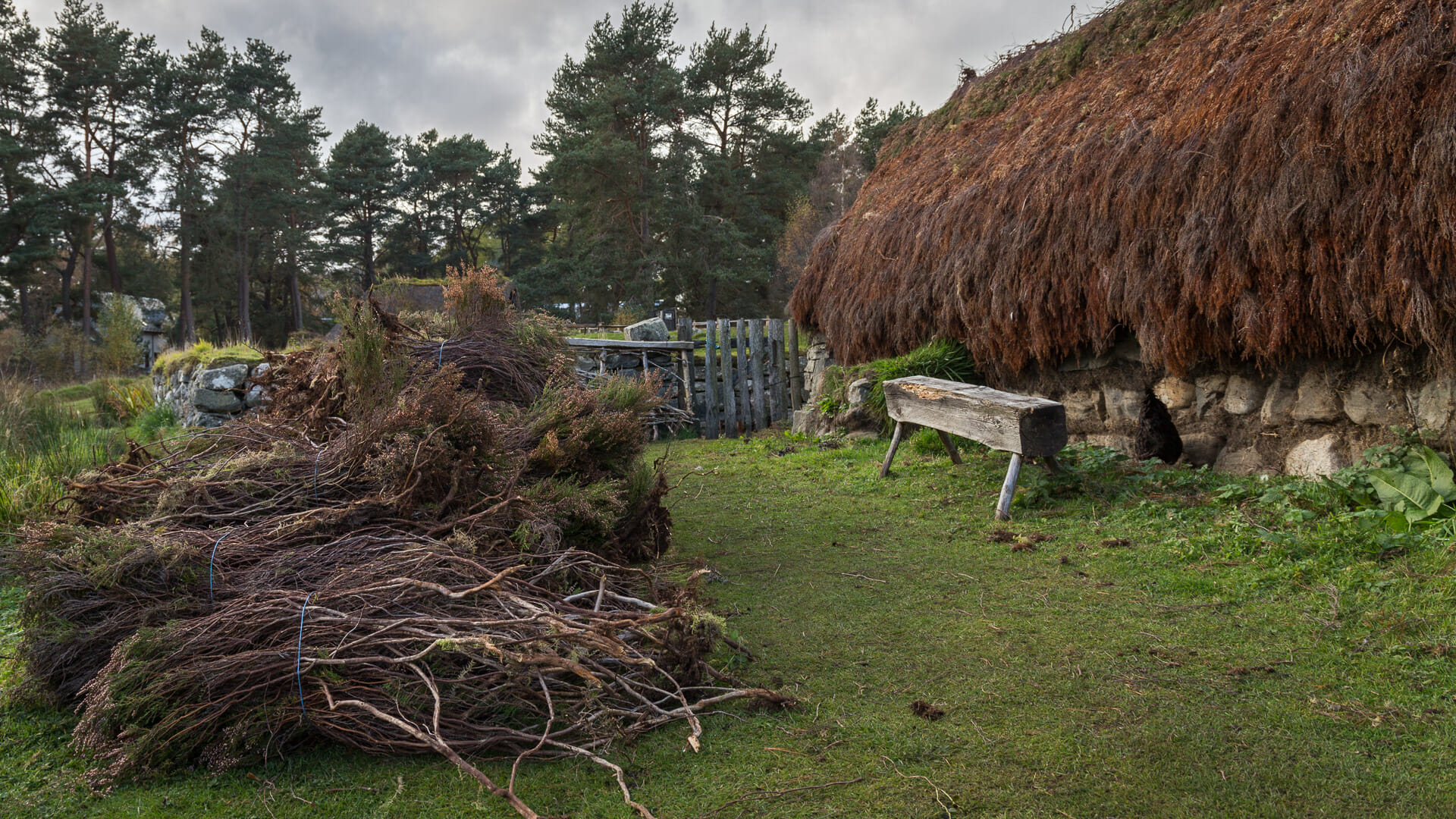
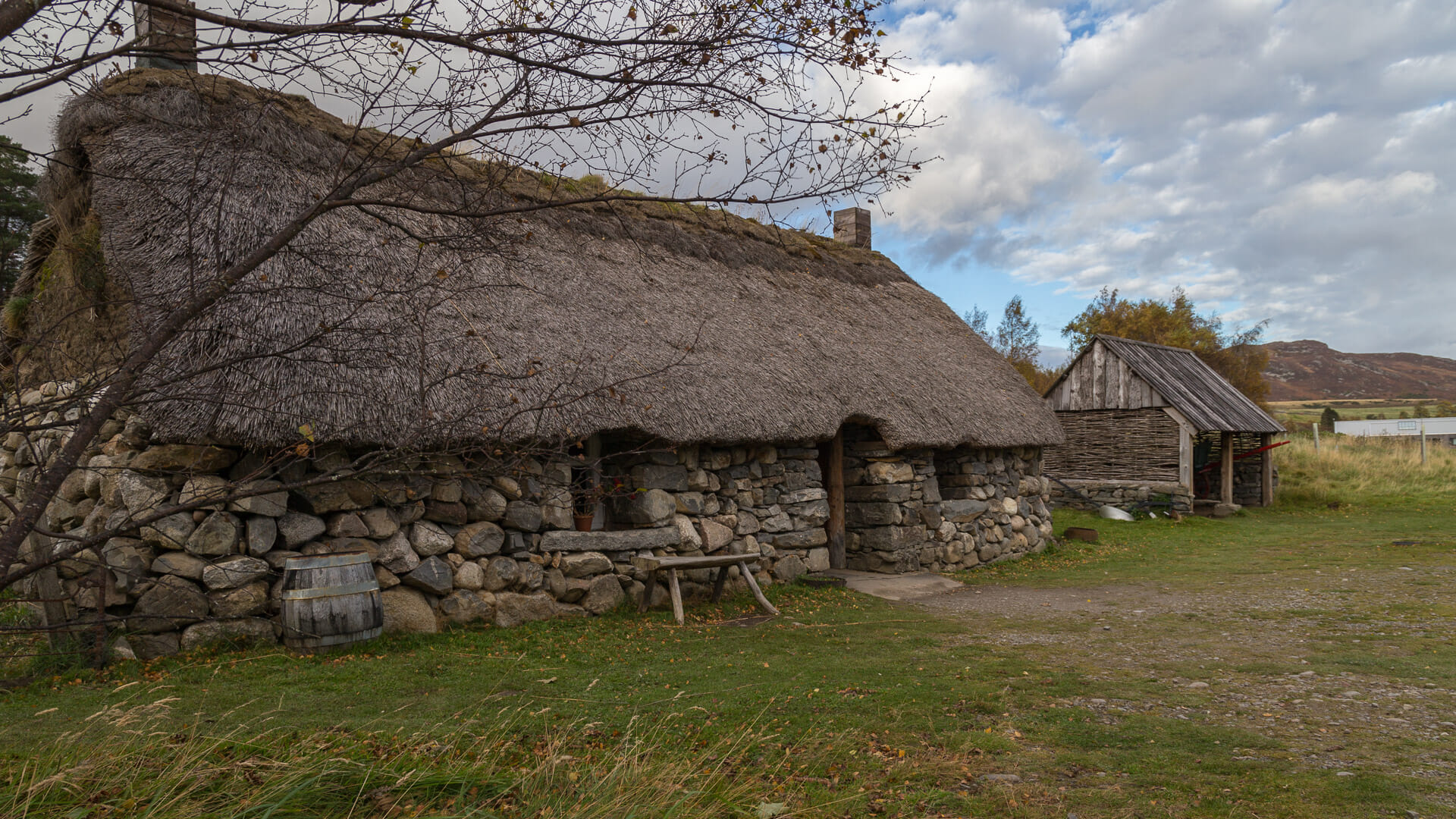
You can see it clearly in the photo: there’s no chimney – smoke from the fire escapes through the doorway or simply seeps straight through the heather-thatched roof. Which also means the inside would once have been filled with smoke throughout the whole room. A great deterrent against midges and other pests, but certainly nothing we’re used to today.
It’s not just the chimney that’s missing – there are no windows either. So the inside of the house is dark, lit only by a fire at its centre.
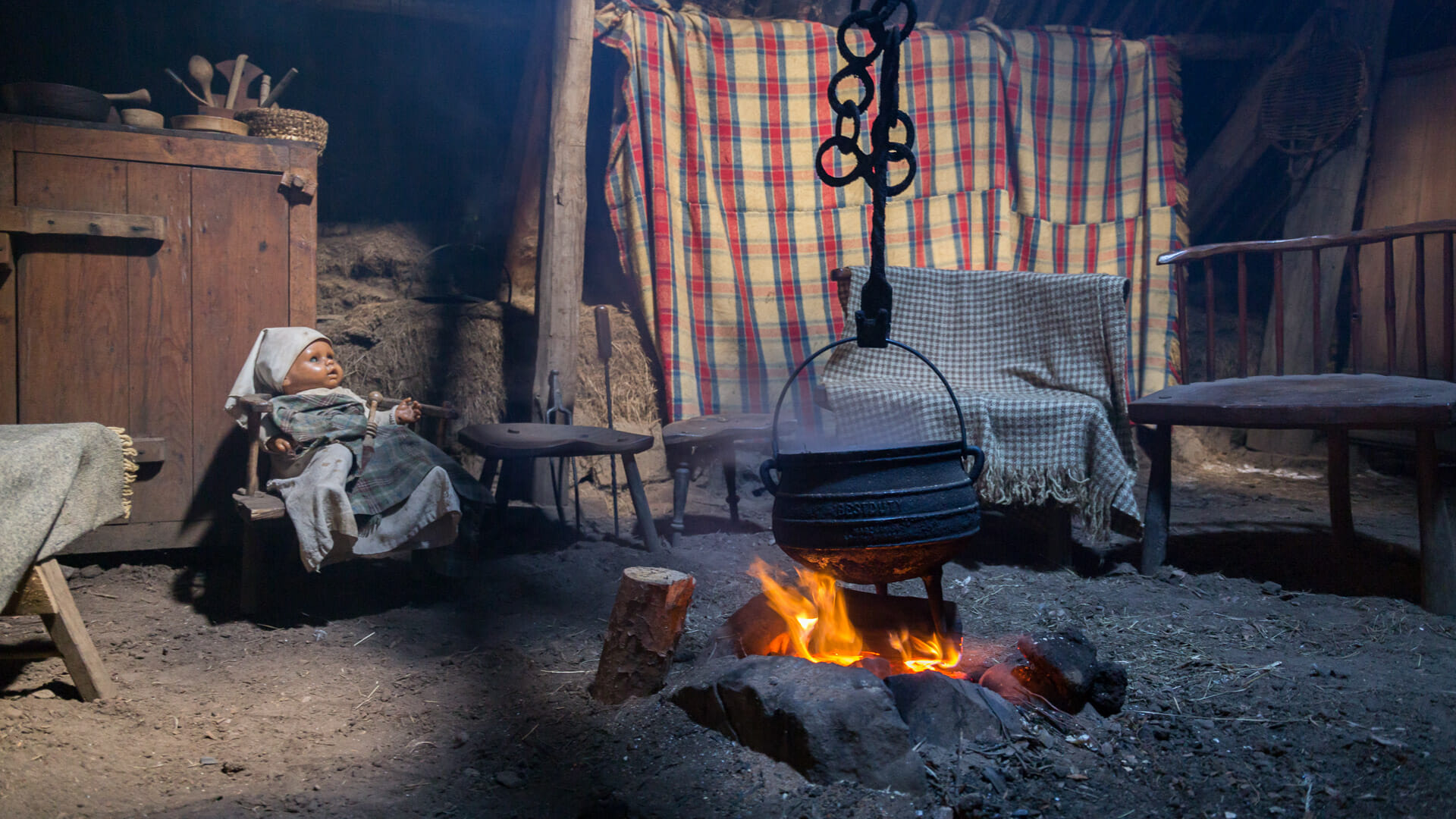
“After a few minutes, your eyes adjust to the darkness” – inside the house stands a villager in period costume, telling stories of the old days. Once upon a time, the smoke hung thick from knee height upward. In winter, the front section housed the livestock, the middle held the hearth and communal living space, while the rear provided a private nook for wedding nights, or for collecting taxes.
Listening to the villagers talk about life back then is genuinely a lot of fun. And you do meet quite a few of them along the way, some of whom are happy to pose for photos too.
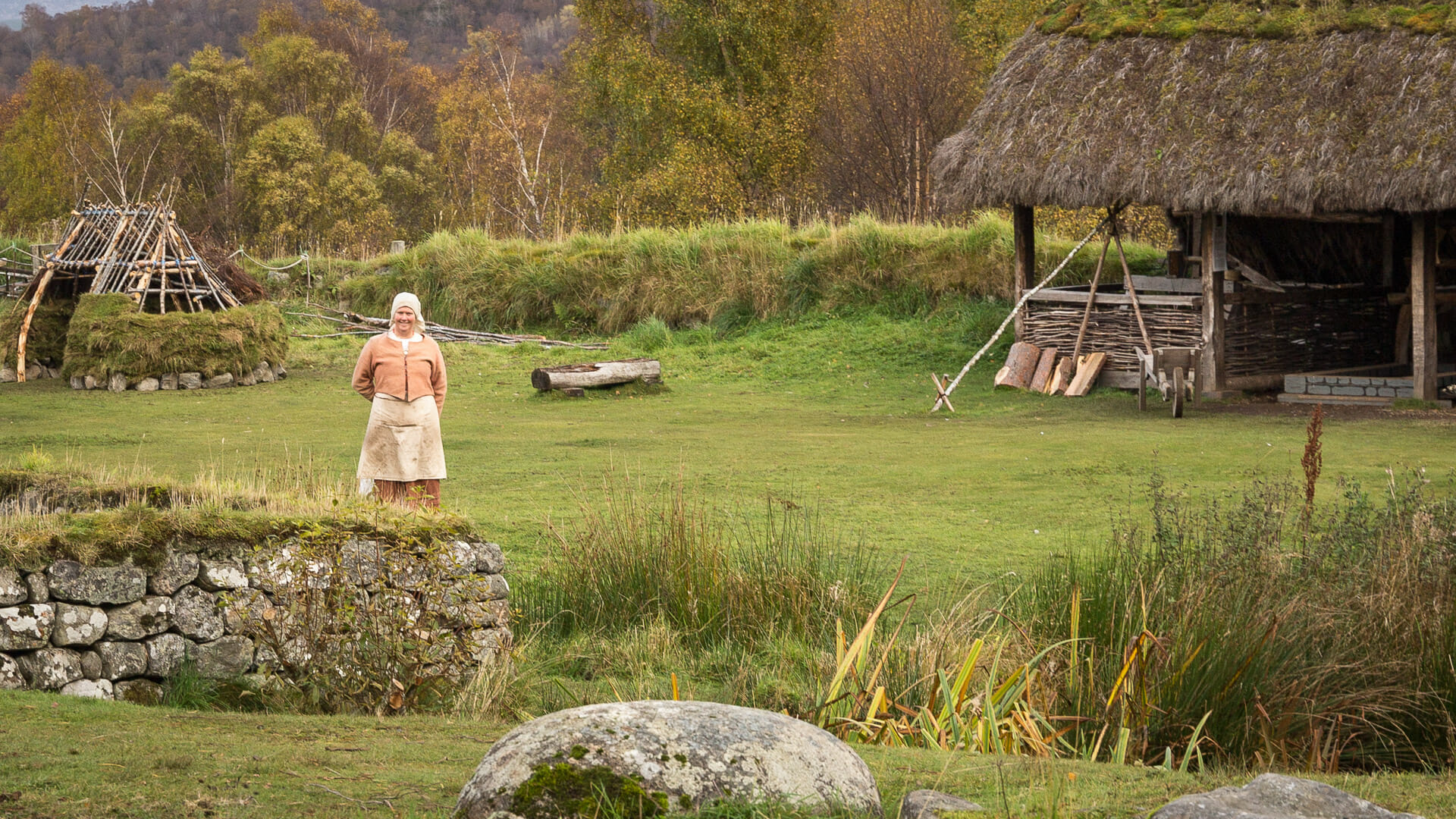
It’s especially interesting when the thatcher is at work, and you can watch him handle the long bundles of heather.
Visitors can enter and explore every house, cottage and byre in the village of “Baile Gean”, and in between, rest on one of the wooden benches overlooking the village pond.
Eventually you leave “Baile Gean” behind and take time for the other lovely buildings along the path, such as a joiner’s workshop that stayed in operation right up into the 1930s.
The little watchmaker’s hut is also well worth a look, for instance.
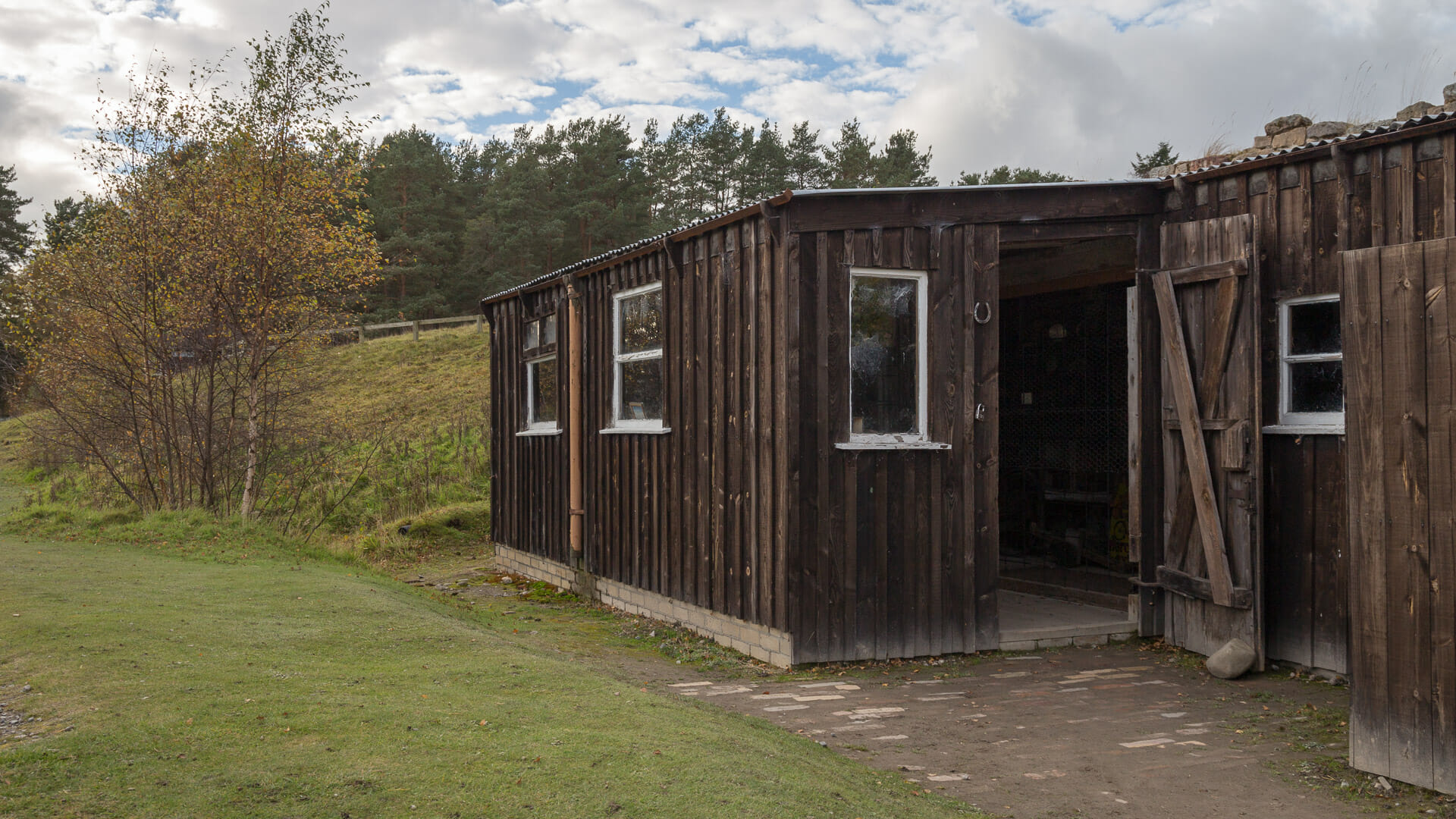
Inside, visitors get the feeling the watchmaker has just stepped out for lunch, leaving all his little tools and materials scattered across his workbench.
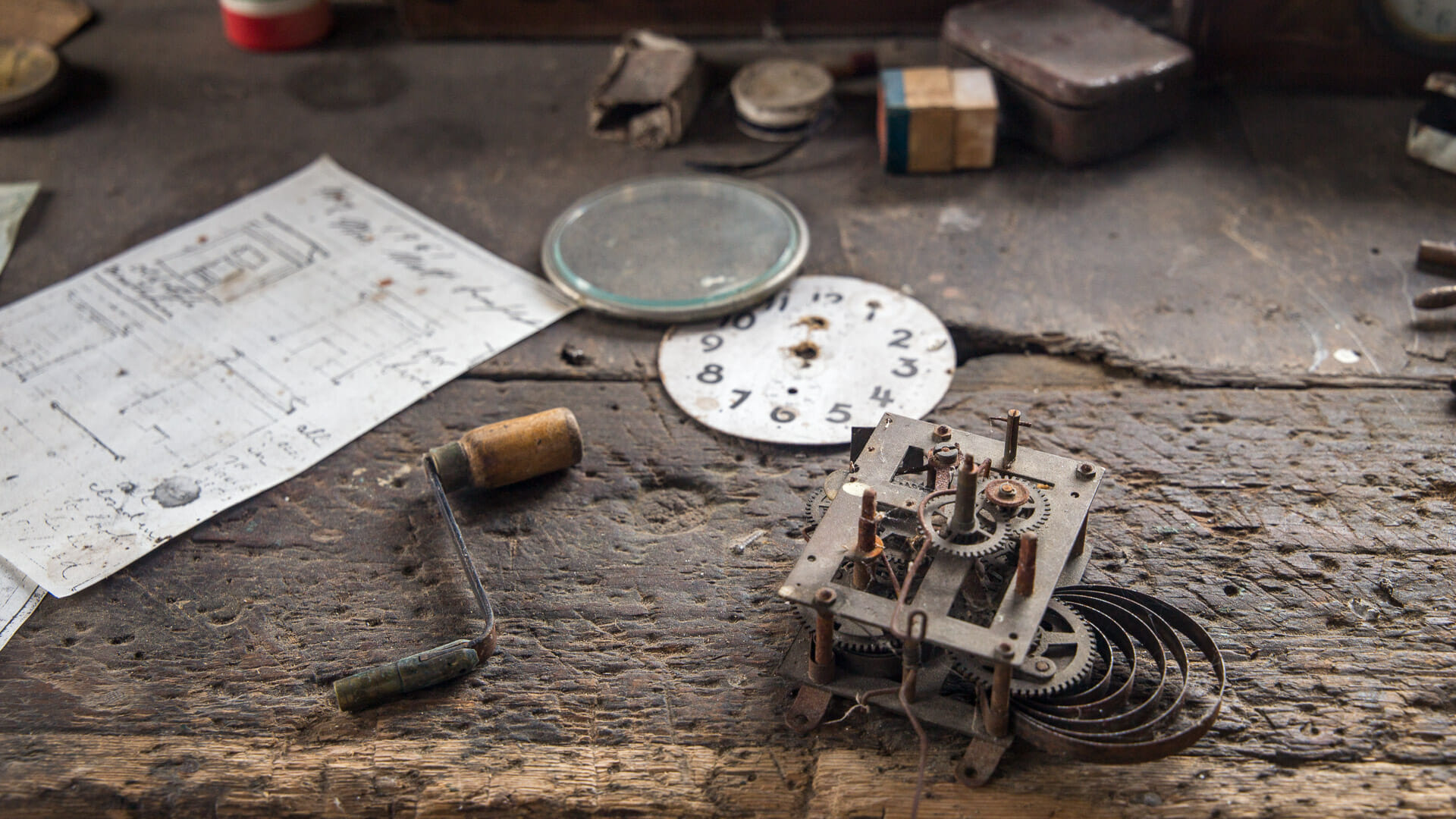
This building and others here, by the way, aren’t reconstructions but genuine originals, which the Highland Folk Museum brought here and rebuilt piece by piece. The watchmaker Alexander “Alick” McIntyre, for instance, lived a good 75 kilometres from Newtonmore, in Nairn.
The tailor’s shop, on the other hand, comes straight from Newtonmore itself.
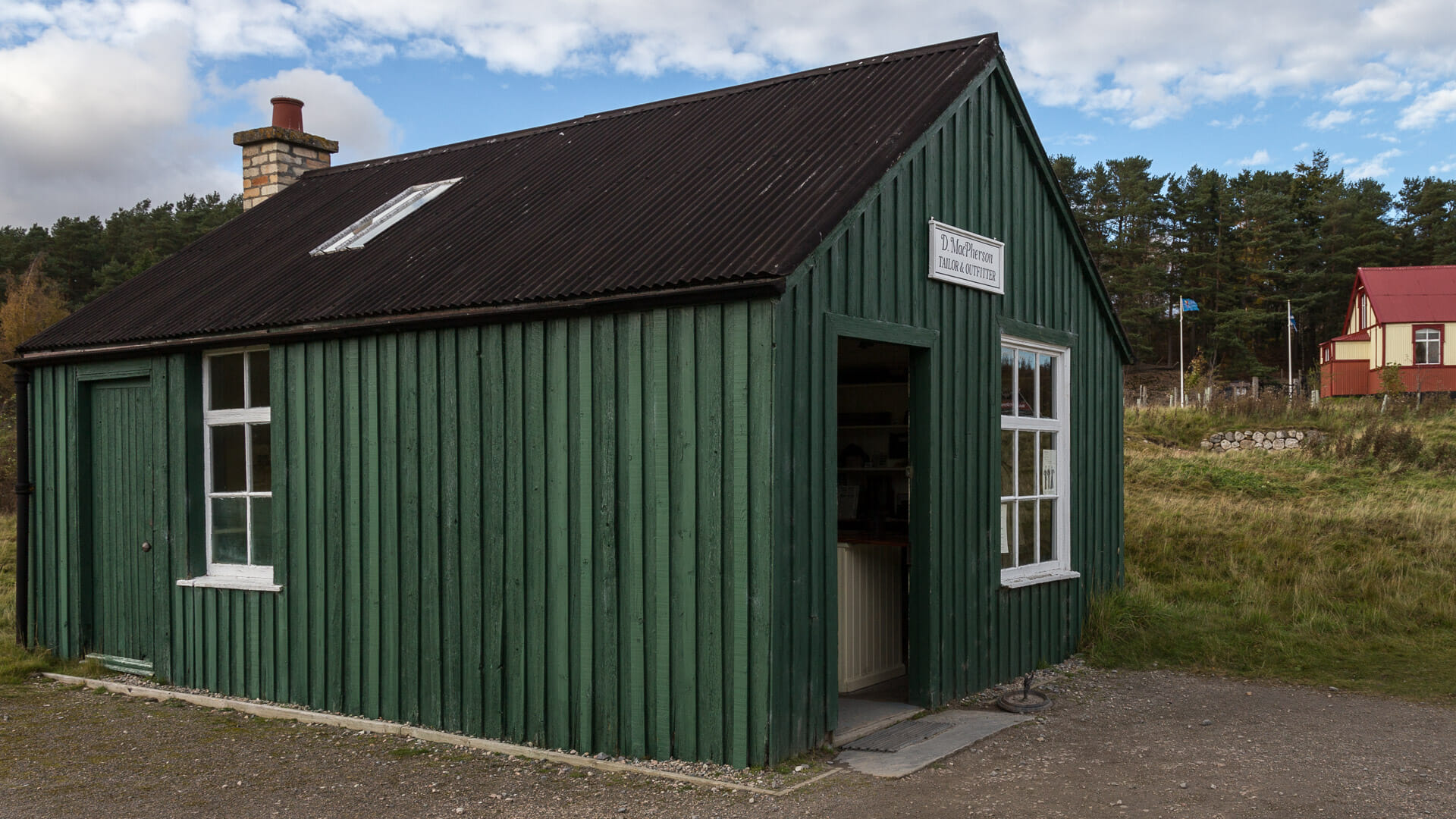
At the front, you’ll find the shop counter and shelving set up.
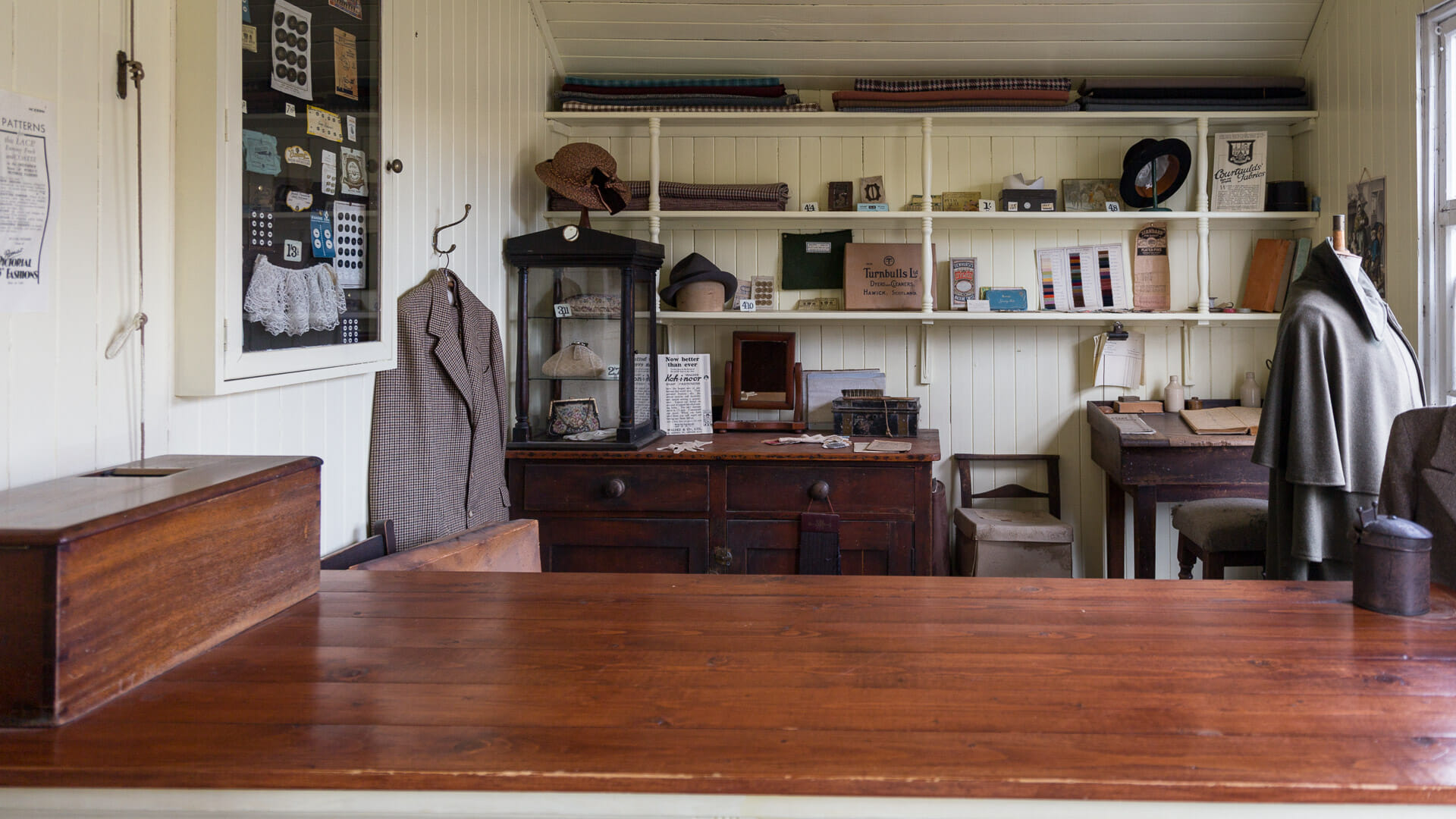
At the back is the workshop, complete with an impressive stove that heated the flat irons and the tea at the same time.
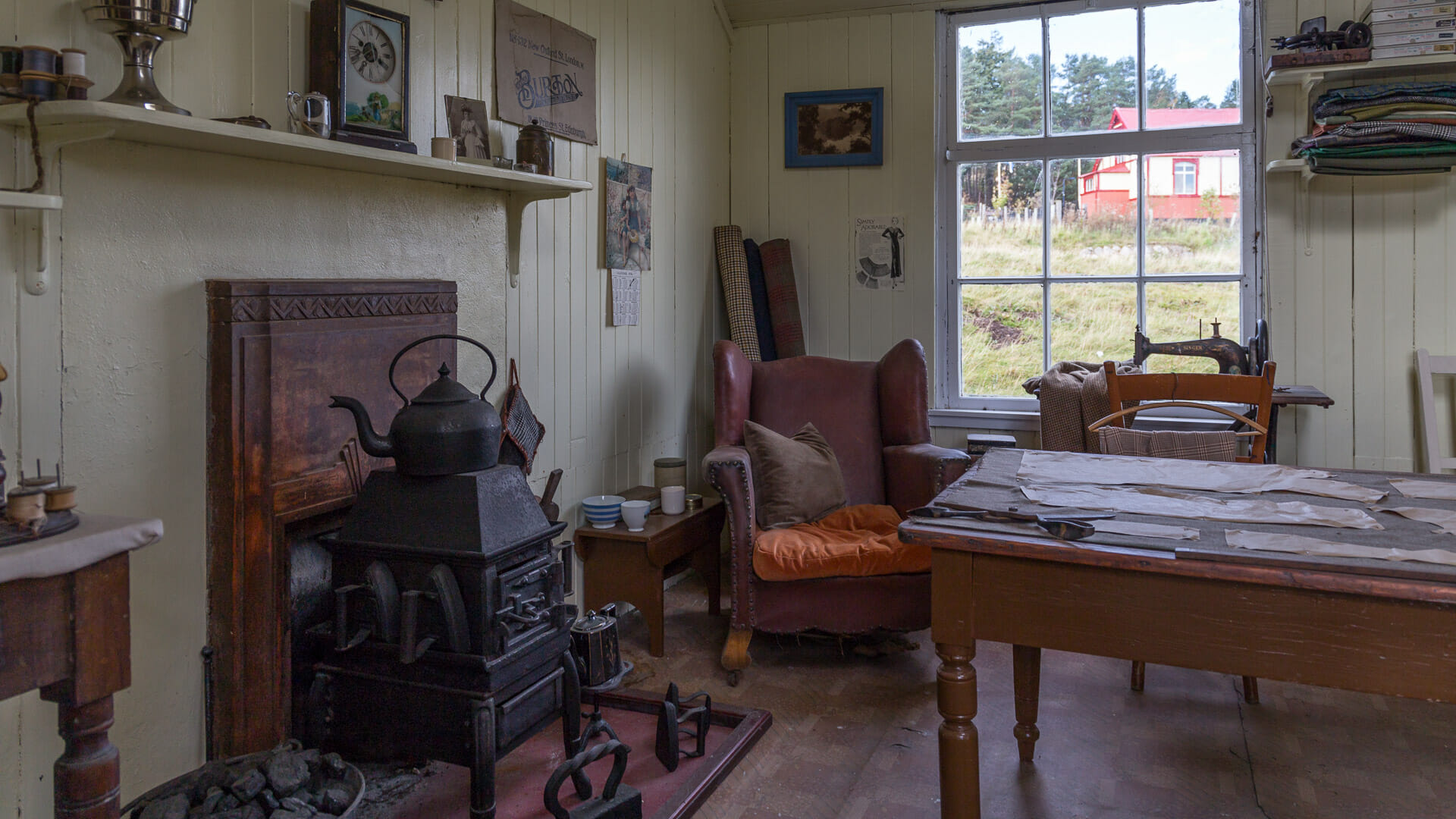
The attention to detail the Highland Folk Museum puts on display makes visitors quickly lose track of time and slip straight into the lives of people from back then. Whether it’s the tweed weaving shed or the shepherd’s hut, it always looks as though the owner has simply popped out for a moment.
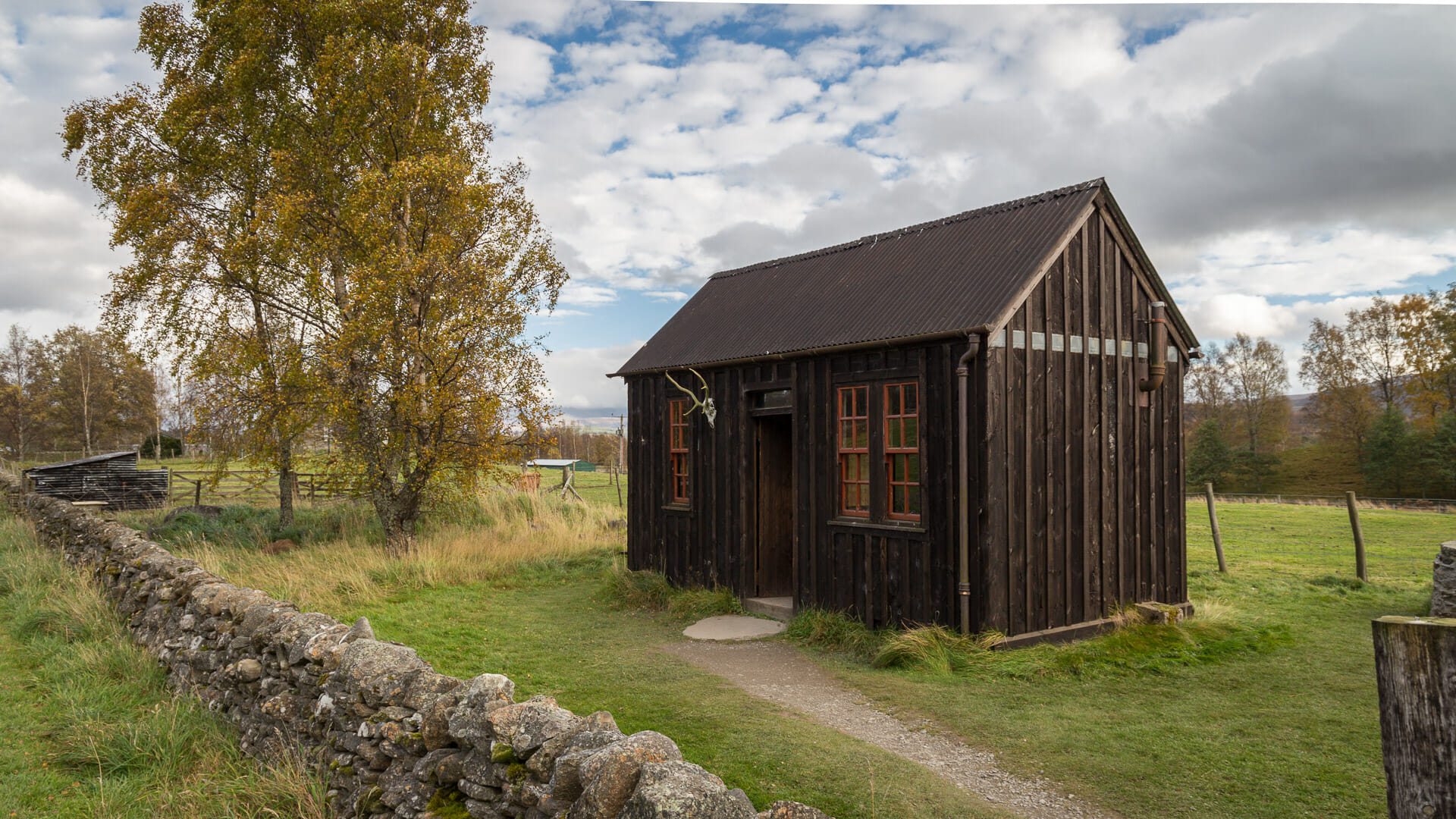
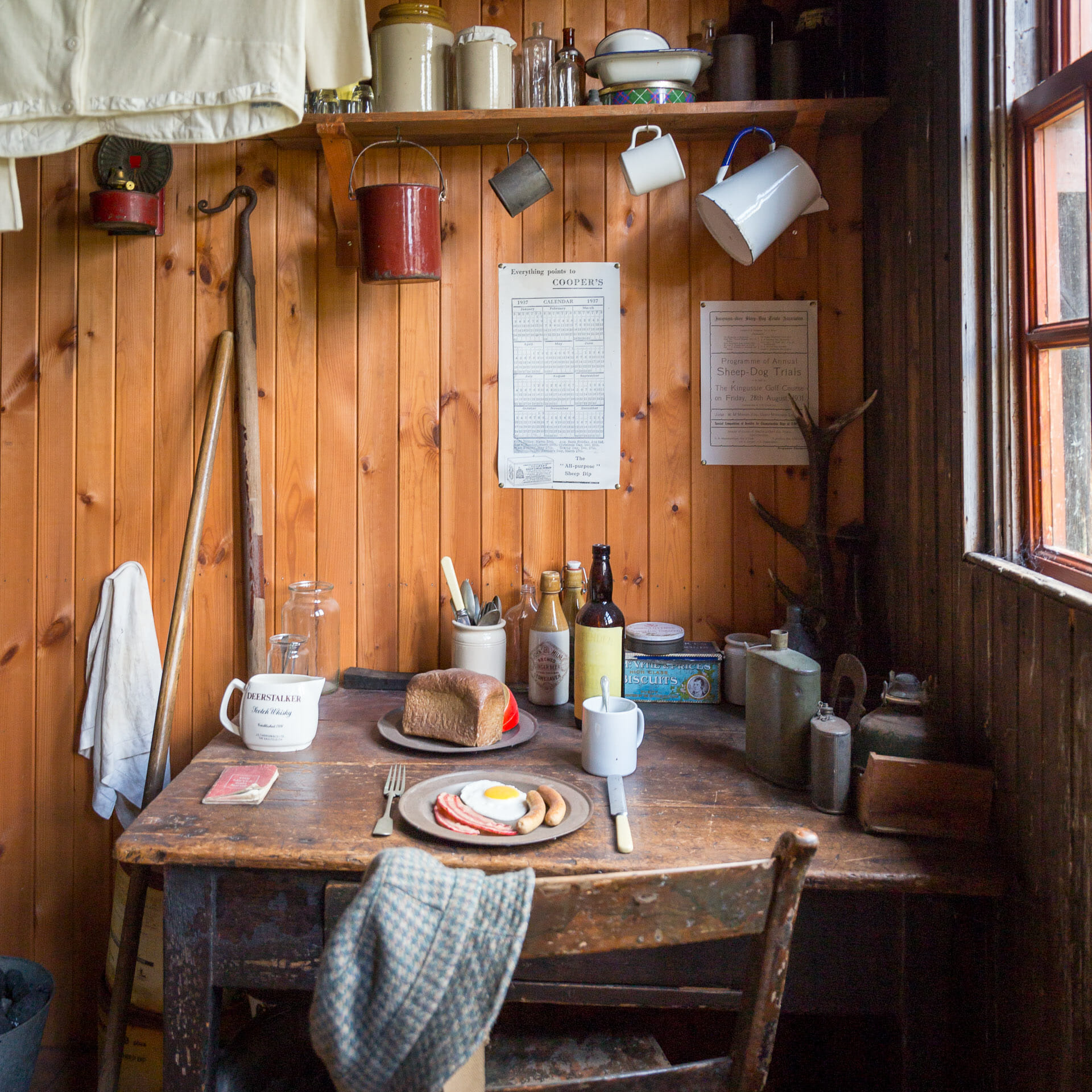
In the school, a teacher even lectures from behind his desk – with full Victorian sternness. And the museum’s creators haven’t forgotten even the remotest corners of the Highlands: they’re proud of their reconstruction of a blackhouse from the Outer Hebrides.
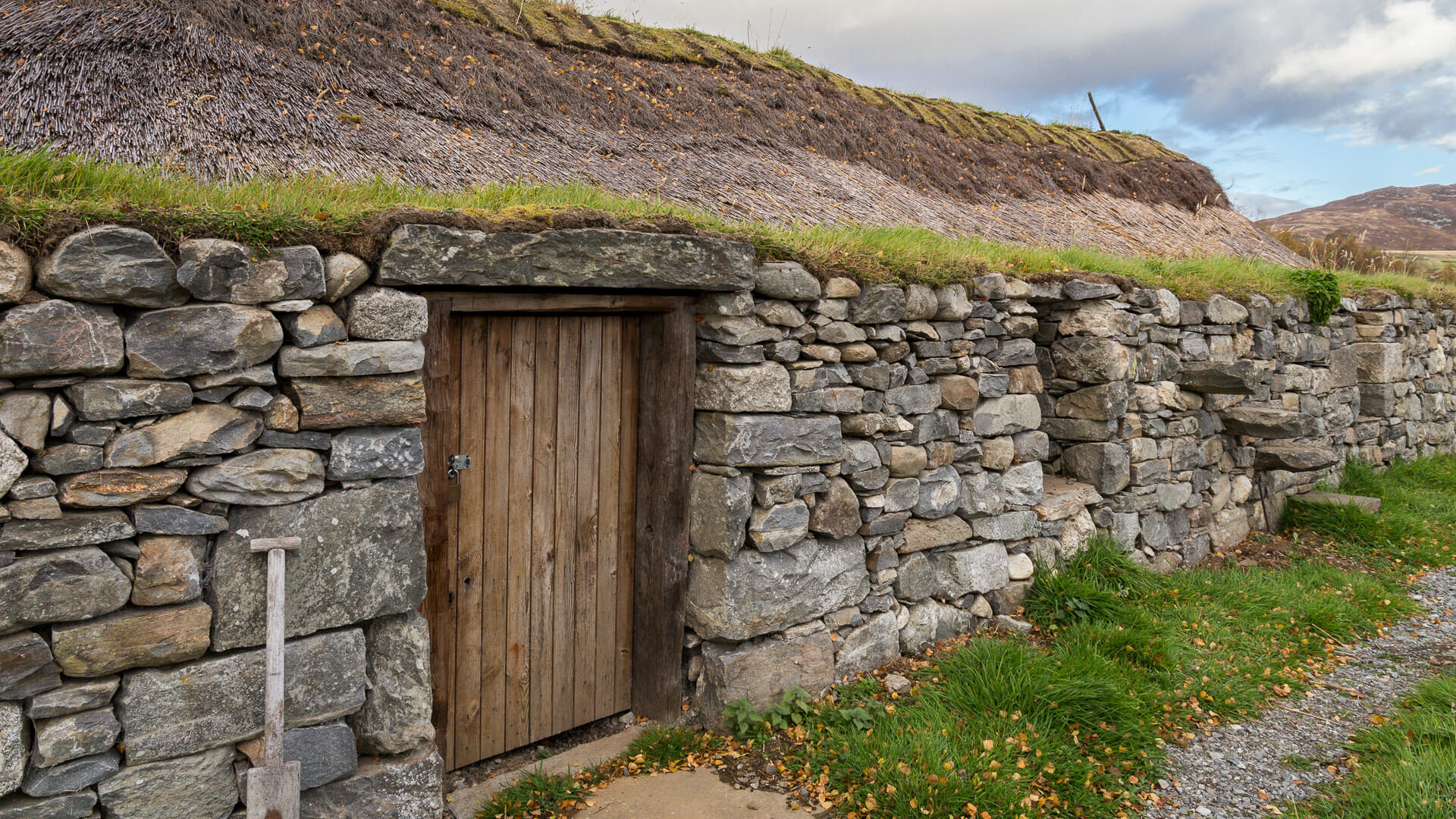
Or a typical Highland cottage:
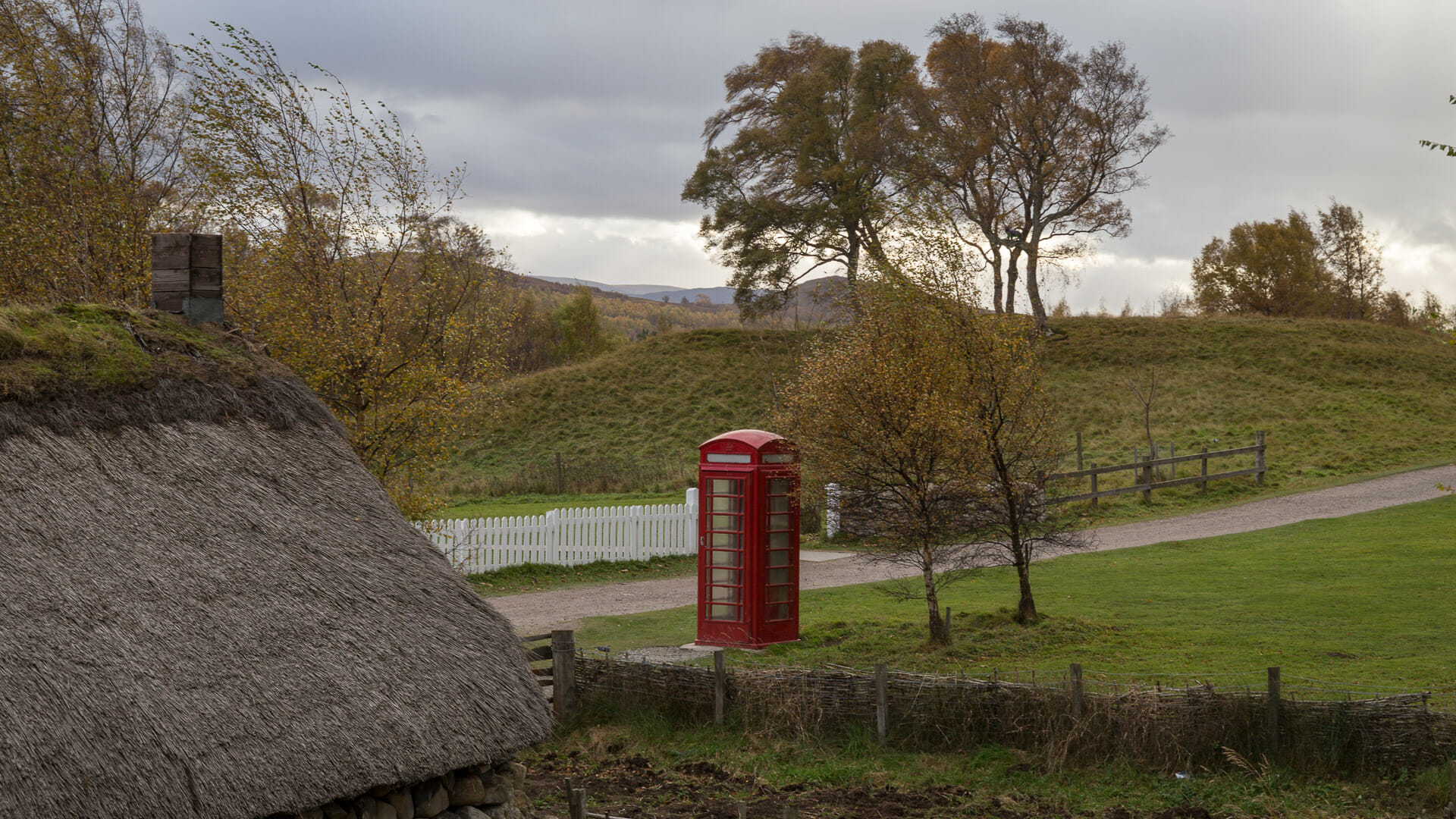
Also worth noting are the little buildings dotted along the path: the smokehouse, the railway halt, or simply the classic red telephone box.
The Highland Folk Museum brings the past to life, and before you know it, time has slipped away inside the museum too. Between its sheer scale and its meticulous attention to detail, interested visitors barely notice how long they’ve been there. If you really want to take your time and see everything properly, you should set aside at least half a day for this excellent exhibition at the heart of the Highlands. It’s well worth it!
Good to know: about the Highland Folk Museum
The museum’s roots stretch back a long way in their own right. As early as 1935, founder Dr Isobel F. Grant put together a first collection about life in the Highlands, on the Isle of Iona. In Gaelic, she called it “Am Fasgadh” – “the shelter”.
Just four years later, the collection had already outgrown Iona, and it moved to the mainland. Finally, in 1944, Grant bought parts of what is today’s site, which has kept growing ever since.
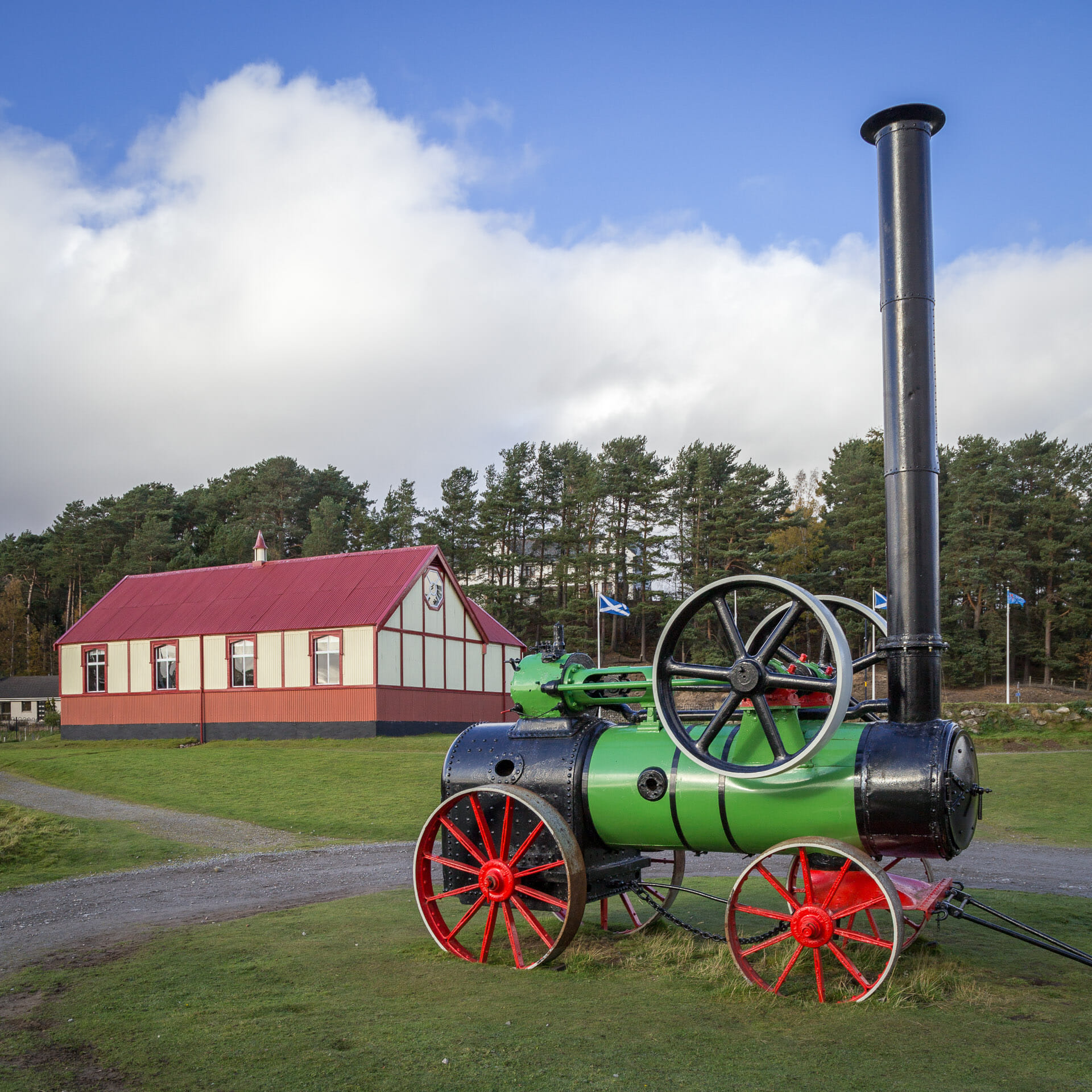
The Highland Folk Museum is considered Britain’s first open-air museum, and today belongs to the Highland Council, the regional authority. In 2013, a new “Am Fasgadh” building was constructed to house the original collection.
Tip: a shortcut through the woods
It’s quite a walk from the entrance to the old village of “Baile Gean”. The way in is still well worth it, though, thanks to the many lovely wood carvings dotted along the path through the woodland.
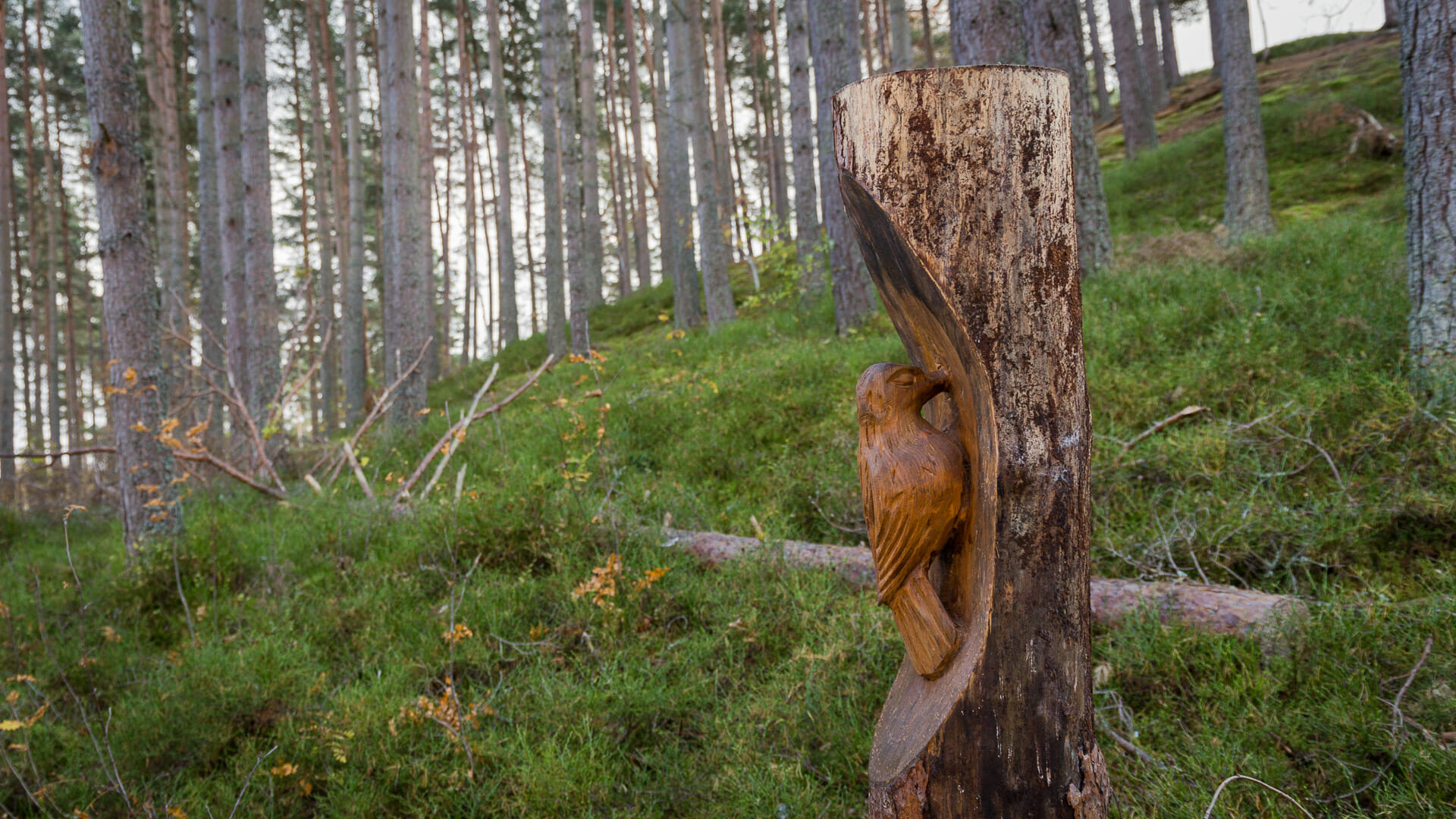
On the way back, though, you can shorten the walk a little. A path leads out of the village from the rear. That said, this path then descends a slope, which is best tackled in sturdy shoes.
Personal note: no admission fee, we still give something
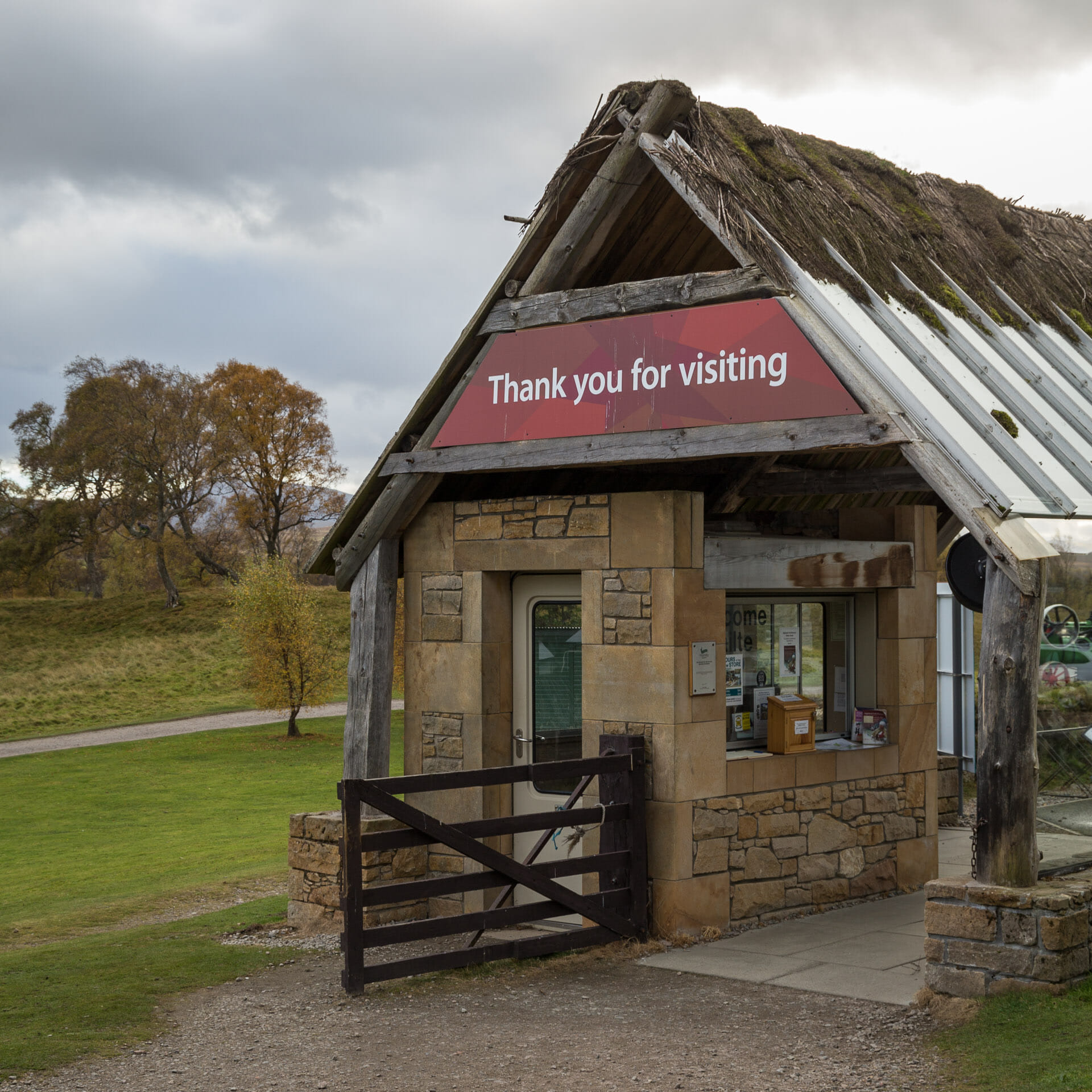
As is so often the case in Scotland, state-run museums are free of charge for visitors. It’s frequently volunteers who help keep the museum going and bring it to life.
I think that’s fantastic, and it’s why I’m not stingy either. The people running these places are always very happy to accept donations, and they’ve certainly earned it. So I’m always glad to leave a donation of ten pounds or so.
Getting there:
With a sat nav: “PH20 1AY” takes you right to the museum. A large car park is available.
Without a sat nav: the museum lies between the towns of Newtonmore and Kingussie. Whether coming from Inverness or Edinburgh, you reach them via the A9. Both Newtonmore and Kingussie are signposted as exits. Follow the B9150 into the town, where the road becomes the Main Street. Follow this towards Kingussie until you see the sign for the museum on the left, with the large car park appearing on the right.