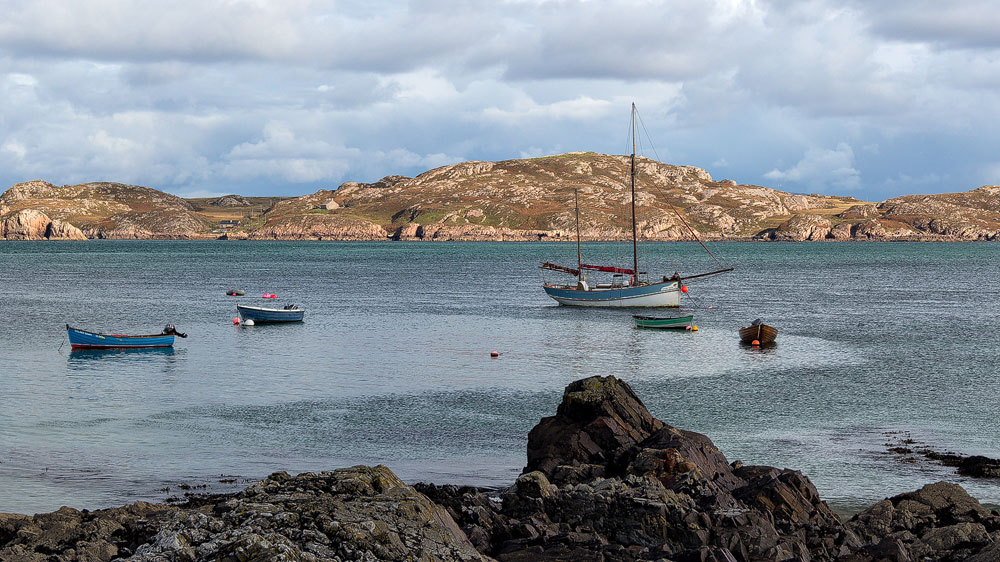
It is considered a spiritual centre of Scotland – the place from which Christianity spread into the Highlands. The small island of Iona is geographically little more than an appendage of Mull. And yet it is so much more important than that.
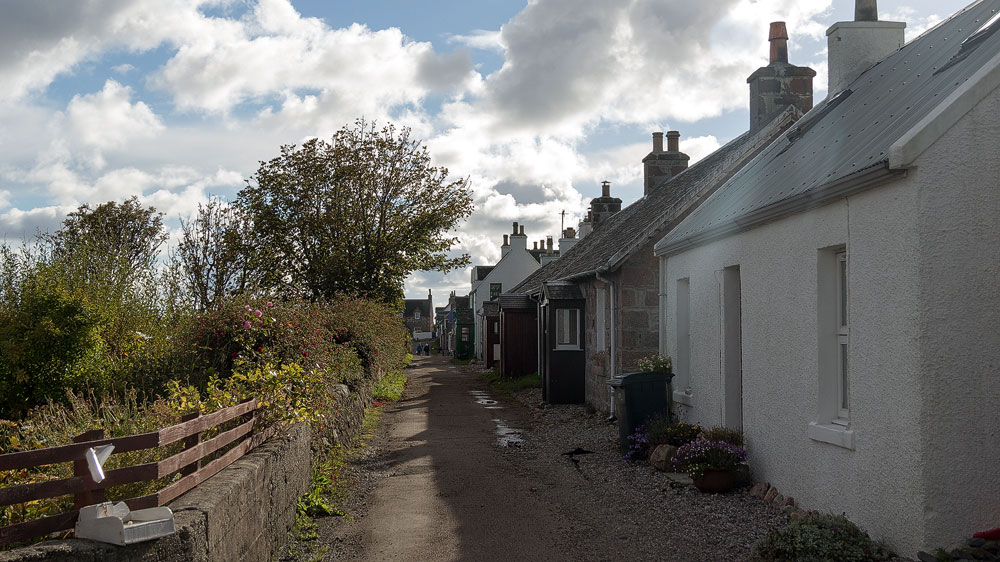
Emerald green, the isle sits on a turquoise sea as the small ferry approaches the jetty of Iona’s sleepy village. White sandy beaches line the shore. Once you’ve landed on the other side, no engine noise disturbs the peace any more – cars are a rarity on Iona. Only a few residents keep a vehicle here.
Iona is, of course, a spiritual centre for Scottish Christians on the one hand. On the other, you can also spot birds here: falcons, puffins, skuas and more. Wildflowers bloom here in almost every season. A walk is well worth it – and doesn’t take long. Iona is not even six kilometres long, and measures just two and a half kilometres at its widest point.
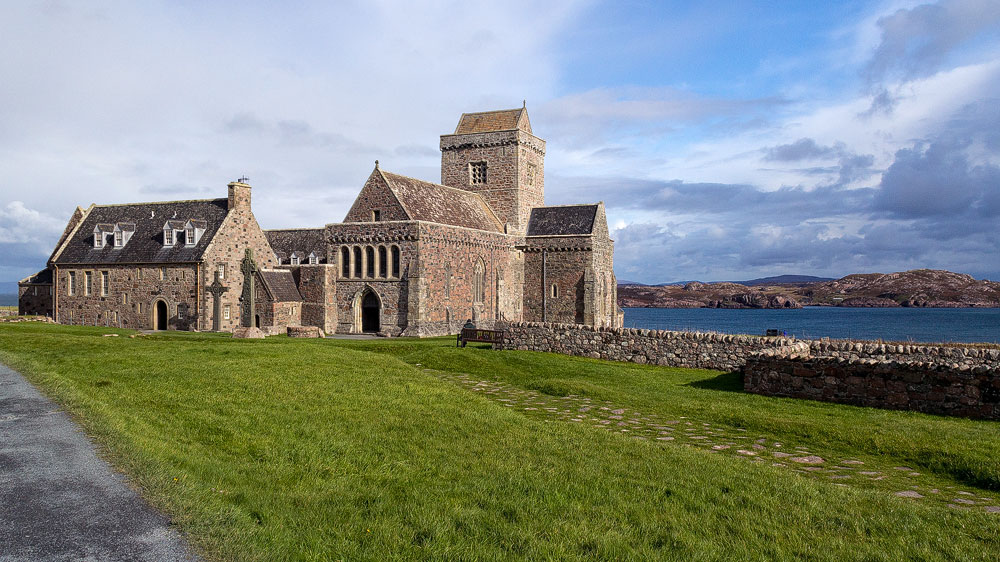
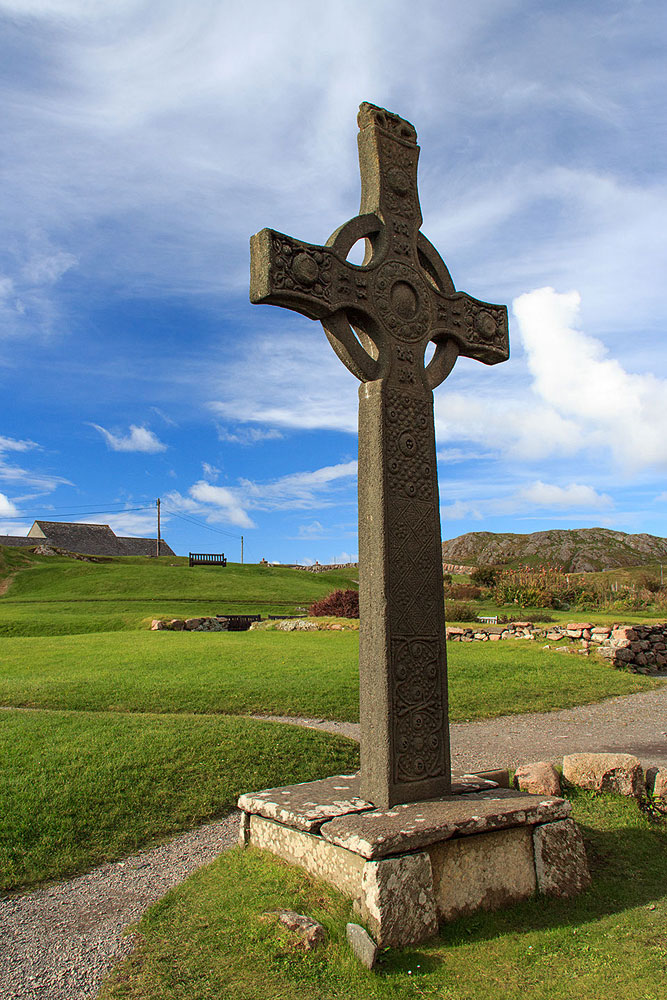
A particular feature of the abbey complex are its two old Celtic crosses. St John’s Cross is complete and richly decorated. It’s one of the most beautiful Celtic crosses in Scotland. A top photo subject!
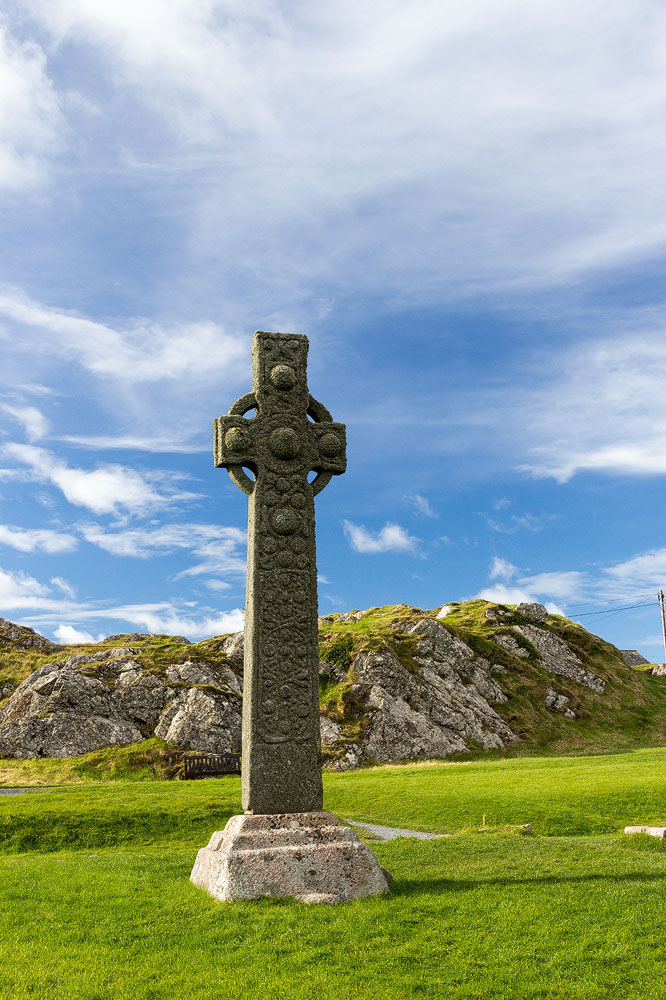
St Martin’s Cross is more unassuming. It stands a few metres away and looks incomplete, as its side arms are missing. It is, however, the older of the two.
Tip: Leave via the back of the church
Normally, visitors go in the front and come back out the same way. But if you walk along the side of the church, you come to a pasture fence with a small gate at the back. From there you can go straight down to the beach and later into the small village. Hardly any other visitors take this route, so you can enjoy the island’s atmosphere pretty much undisturbed.
Good to know: The history of Iona
563 AD. A still-unknown Irishman, who would later become known as Columba, set foot on the small island together with twelve disciples. He had come from Ireland in search of a place where he could study and pray. Iona seemed suitable enough to him. So he built the first small monastery here – really more of a small settlement with huts and a church.
Over time he converted more and more Picts and Gaels to Christianity. He had monasteries and churches founded on the mainland and on the Outer Hebrides, gathered knowledge in a great library, and even got involved in politics. The arts – poetry and sculpture – flourished. So, over time, power grew on the little island. When Columba died in June 597, his successors carried on his work there.
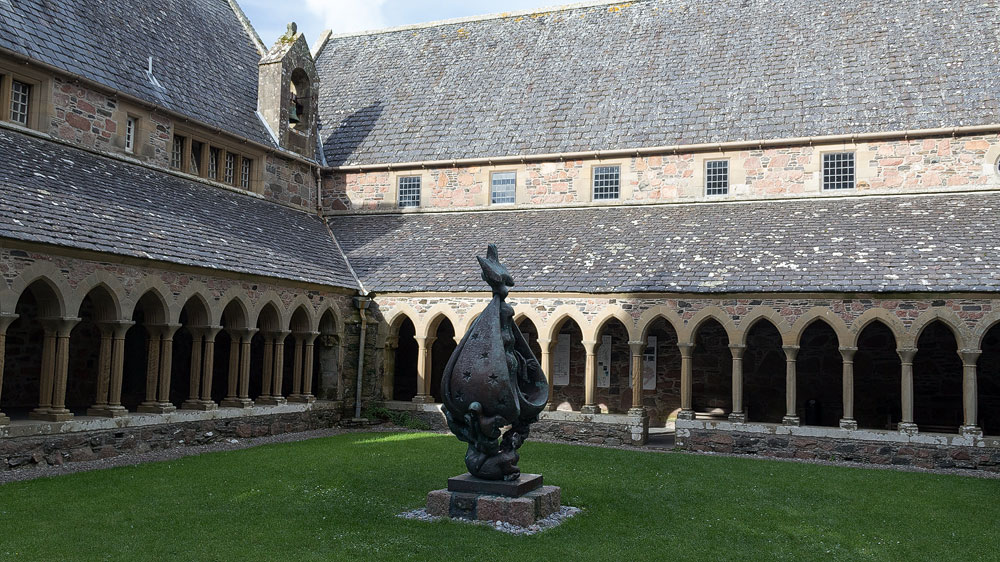
Naturally, all this learning attracted visitors, and Iona became a centre for pilgrimages. For the dead too – many Scottish kings found their final resting place here.
But it wasn’t only pilgrims who came. Wealth also attracted greed. In the year 794, dragon-prowed longships appeared on the horizon – the Vikings plundered the monastery. And not just once. Until 850 they slaughtered and looted – names like Martyrs’ Bay still recall these events.
Since it was no longer possible to live safely there, the remaining monks left the island. For 150 years, it grew quiet around Iona – until Christianity reached the Vikings too. Before long, Iona also became a holy place for the Norsemen, and it was resettled. Eventually, in the 13th century, a nunnery was even added.
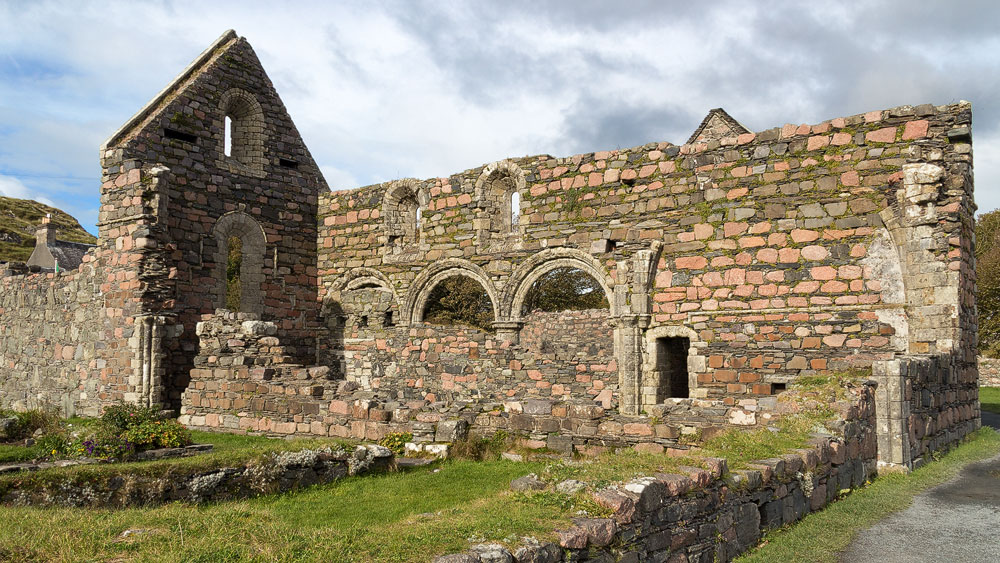
This second flourishing was eventually halted by the Reformation. From the 16th century onwards, the abbey fell into ruin.
It wasn’t until 1938 that the abbey was rebuilt – in the form you see today.
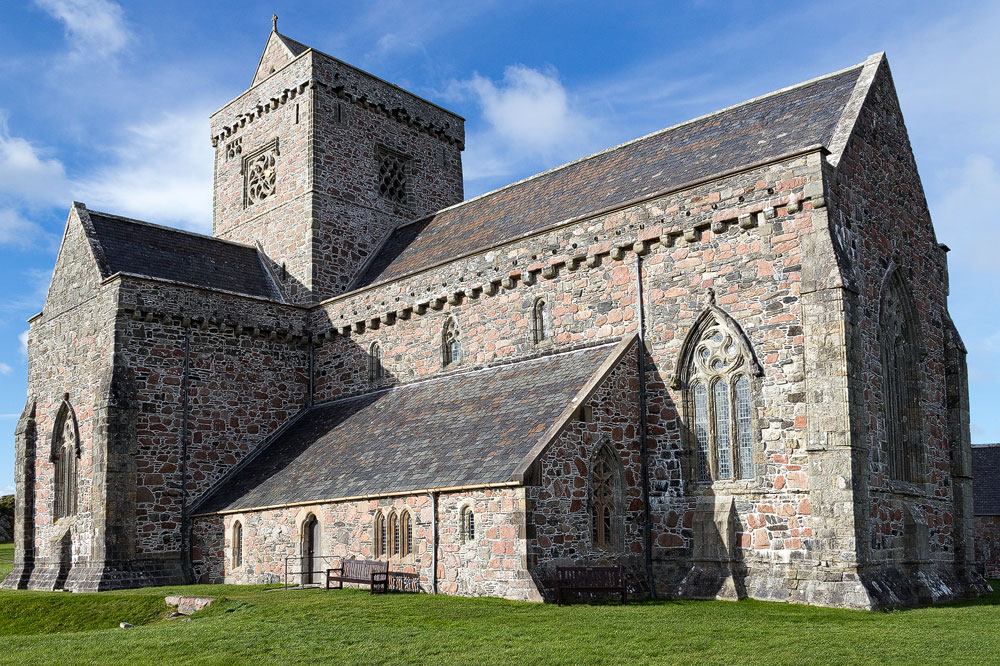
Personal notes: Silence does you good
Naturally, you can’t expect such an important attraction to be free of people. Yet despite relatively high numbers of tourists, Iona feels like a refuge. Especially if you stay a little off the beaten tourist paths.
Getting there:
On Mull, take the A849 heading south. Keep going all the way to Fionnphort. Leave your car in the car park there and take the ferry. That’s all there is to it.