Small houses line the road leading to the loch. All around them: a picture-perfect landscape. A visit to Luss on Loch Lomond.
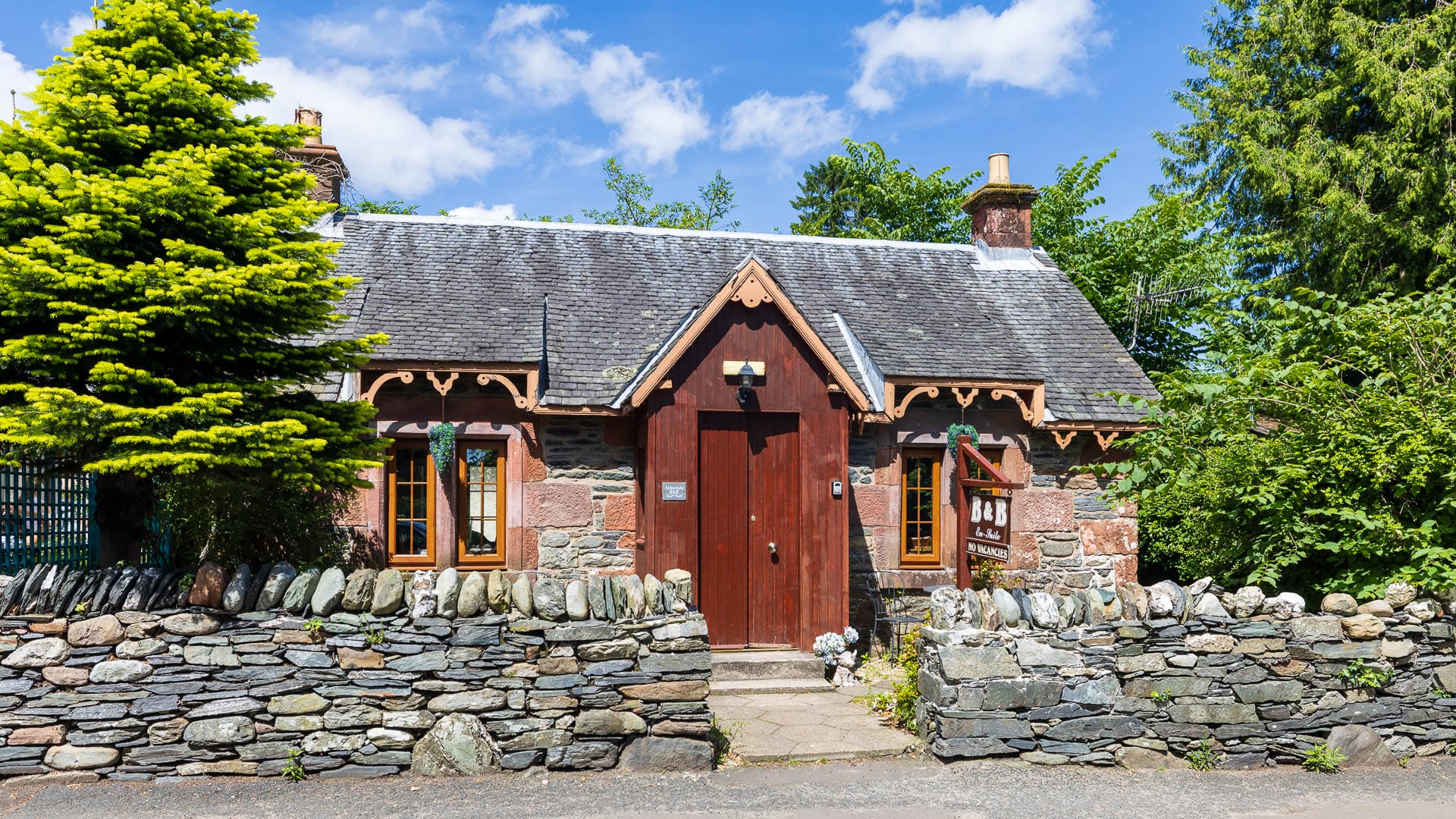
Luss is almost too romantic for words. The little cottages lining the road, with their slate roofs and beautiful gardens, create a place that is unique in Scotland.
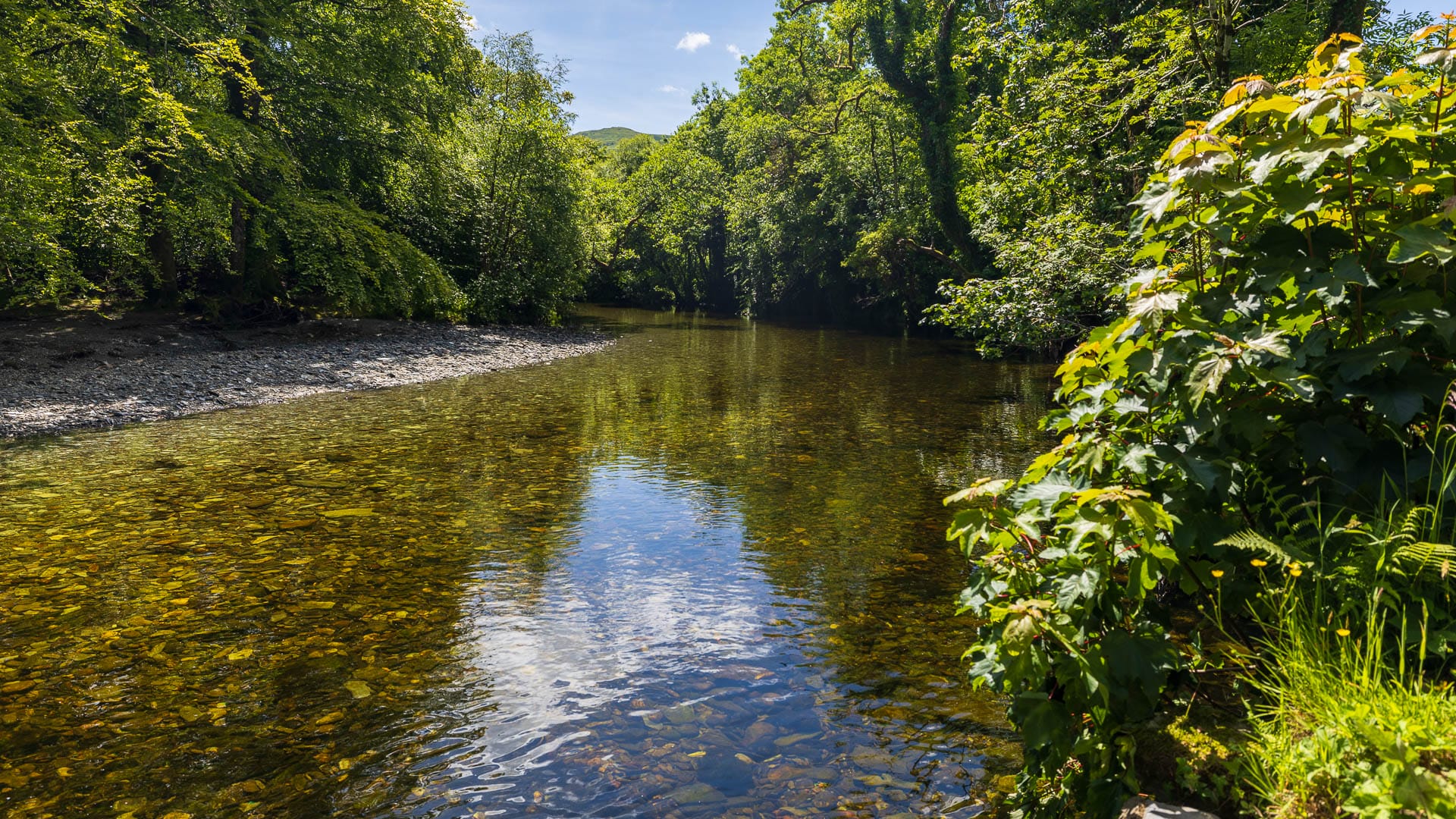
The village is surrounded by magnificent natural scenery, with the mountains and the loch providing the perfect backdrop. Just before it flows into Loch Lomond, the River Luss Water winds its way along the edge of the village.
Water taxis and sightseeing boats also set off from the pier in Luss. The view from the shore of the panoramic landscape, with the jetty in the foreground, is magnificent.
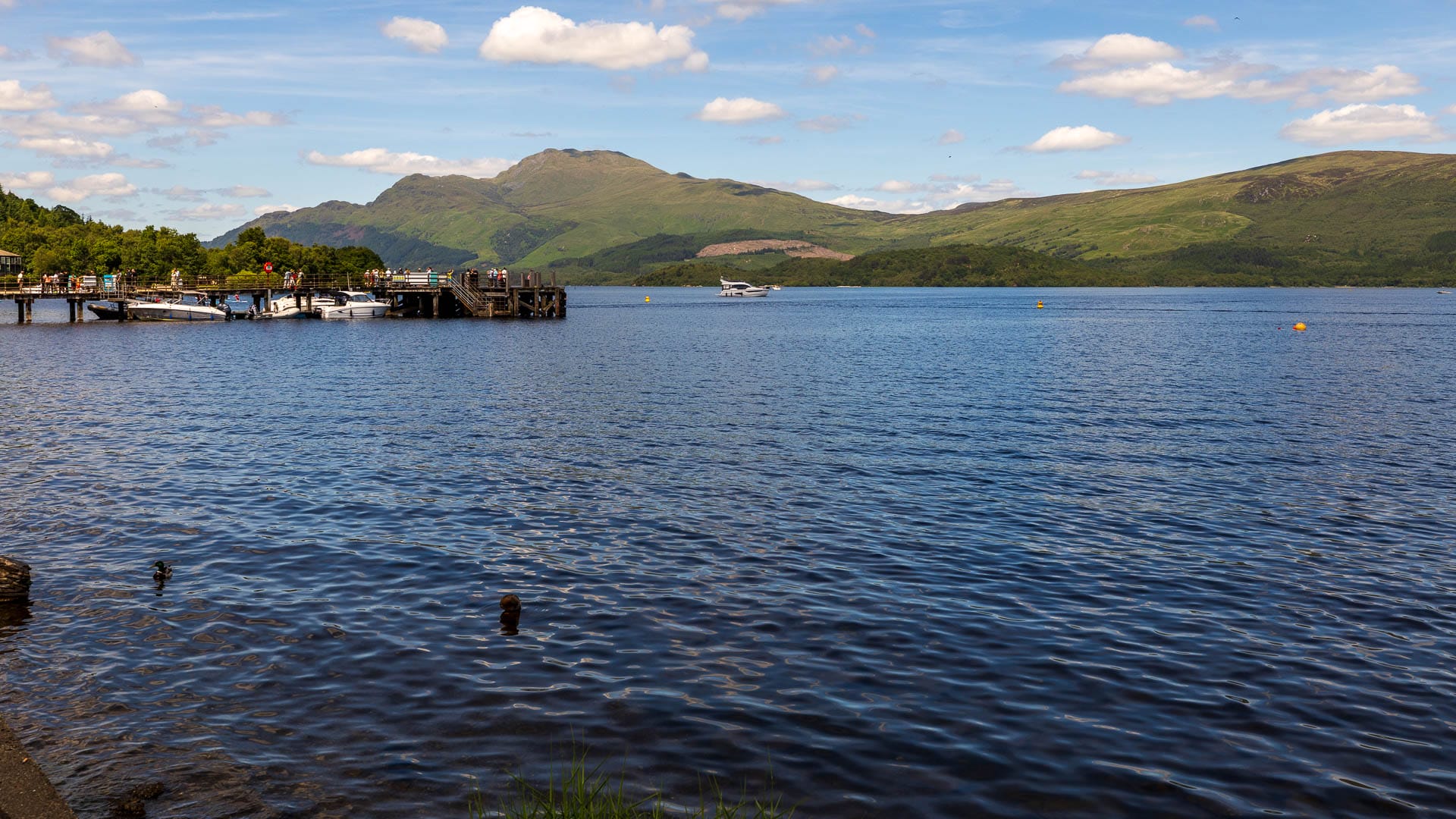
However – and this is simply part of life in Luss – the jetty and the village’s popularity make it a favourite destination in summer. The main street, Pier Road, is then bustling with visitors.
The good news, though, is that two large car parks for visitors take the pressure off the village’s traffic. Lots of pedestrians, but at least no car traffic.
There are several small attractions in the village that are well worth exploring.
Luss Gin & Loch Lomond Whisky
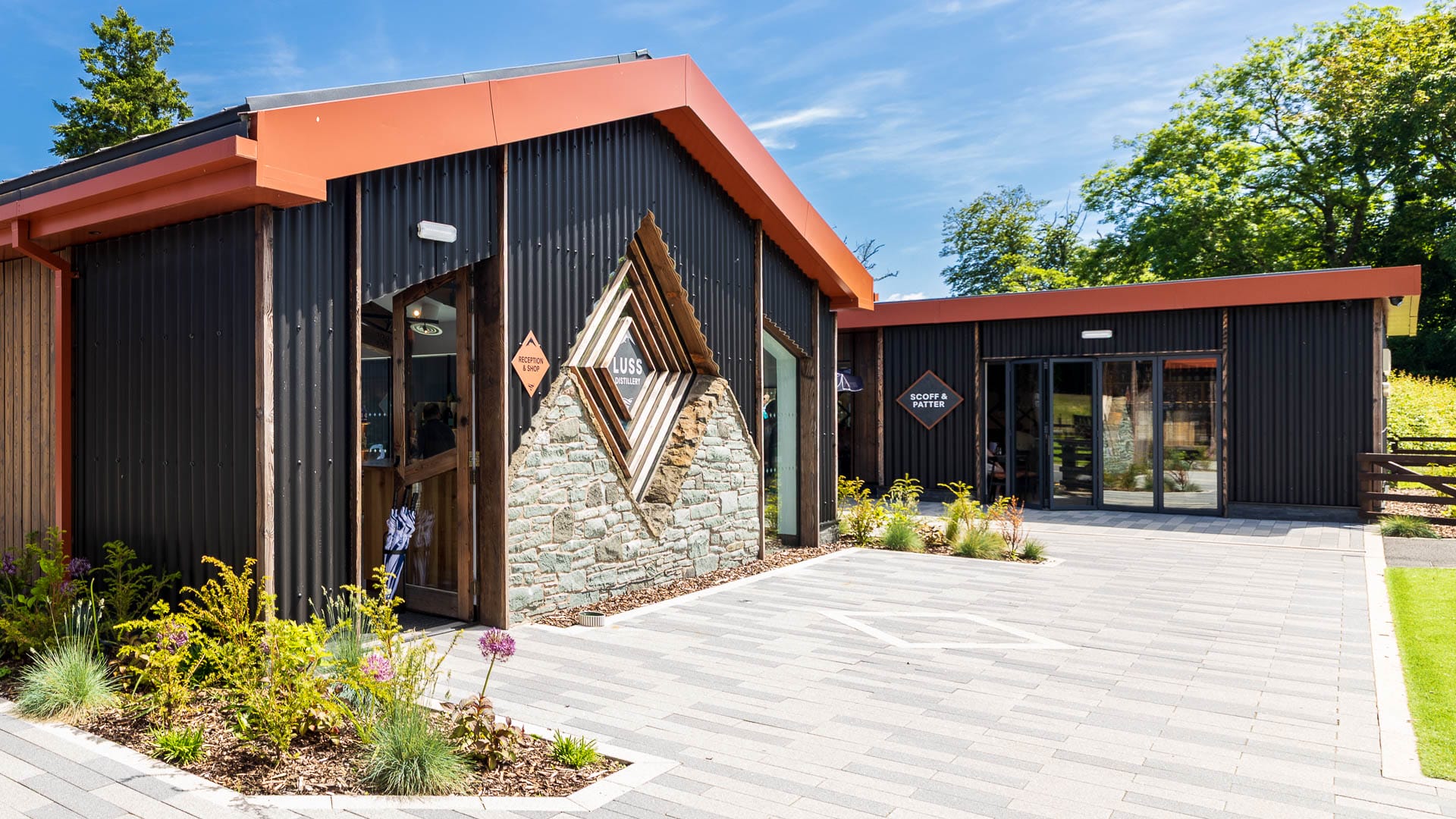
The local distillery produces Ben Lomond Scottish Gin in a modern building. There’s, of course, a shop where visitors can buy bottles and souvenirs. Also under the same roof is the Loch Lomond Whisky Experience, which offers tastings.
In the adjoining building, there’s a sensory experience for gin and whisky enthusiasts. And, of course, the café serves refreshments and snacks well into the afternoon.
Luss Parish Church & Hogback Stone
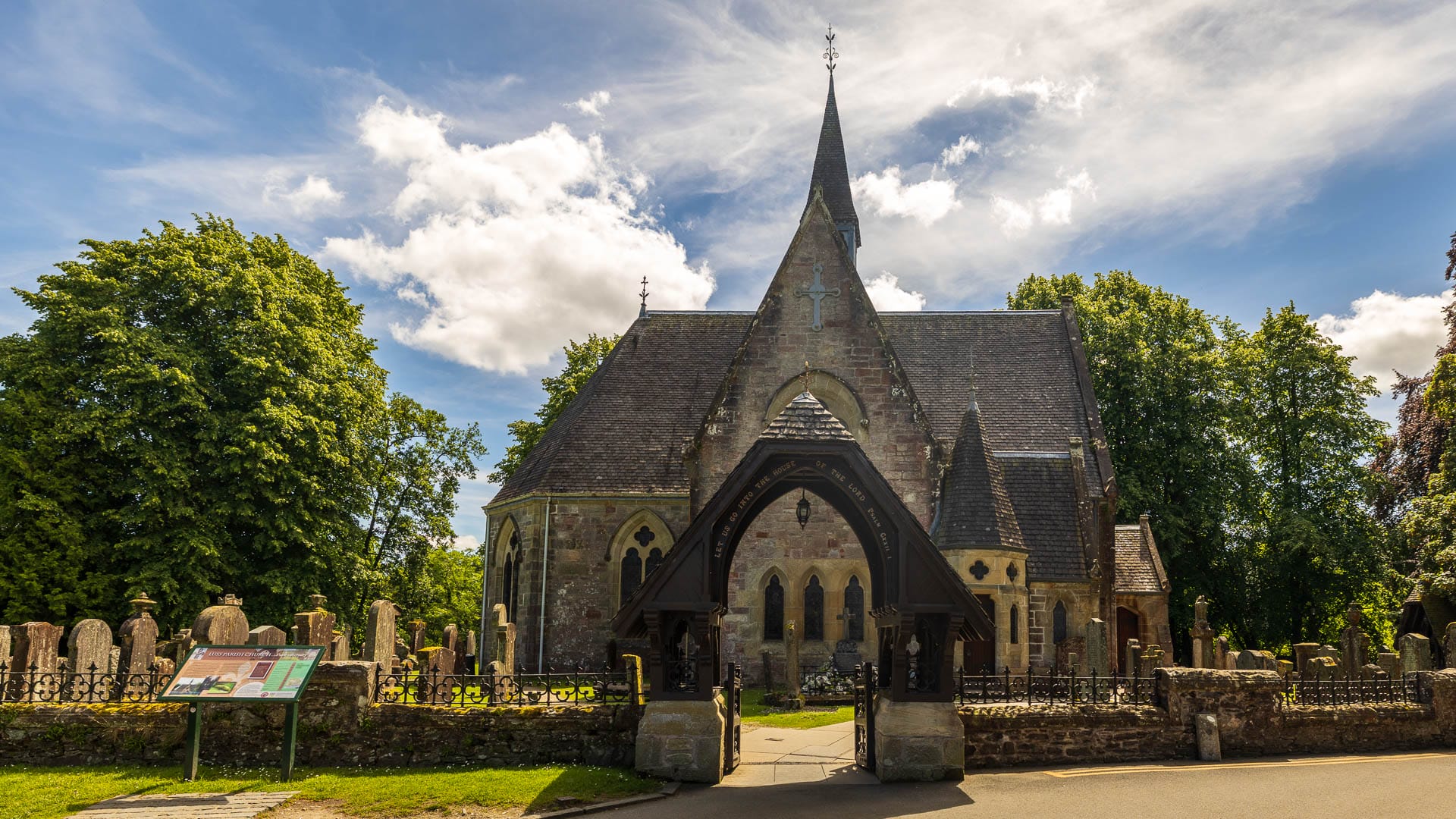
The small church in the village dates from 1875. Sir James Colquhoun had it built for his father, who had drowned two years earlier. The roof is said to resemble an upturned boat.
Luss Parish Church was built in a Gothic-style. Inside, you can see clan coats of arms and stained-glass windows. It was dedicated to the village’s founder, Saint Kessog.
The highlight, however, can be admired in the churchyard. There lies a so-called hogback stone.
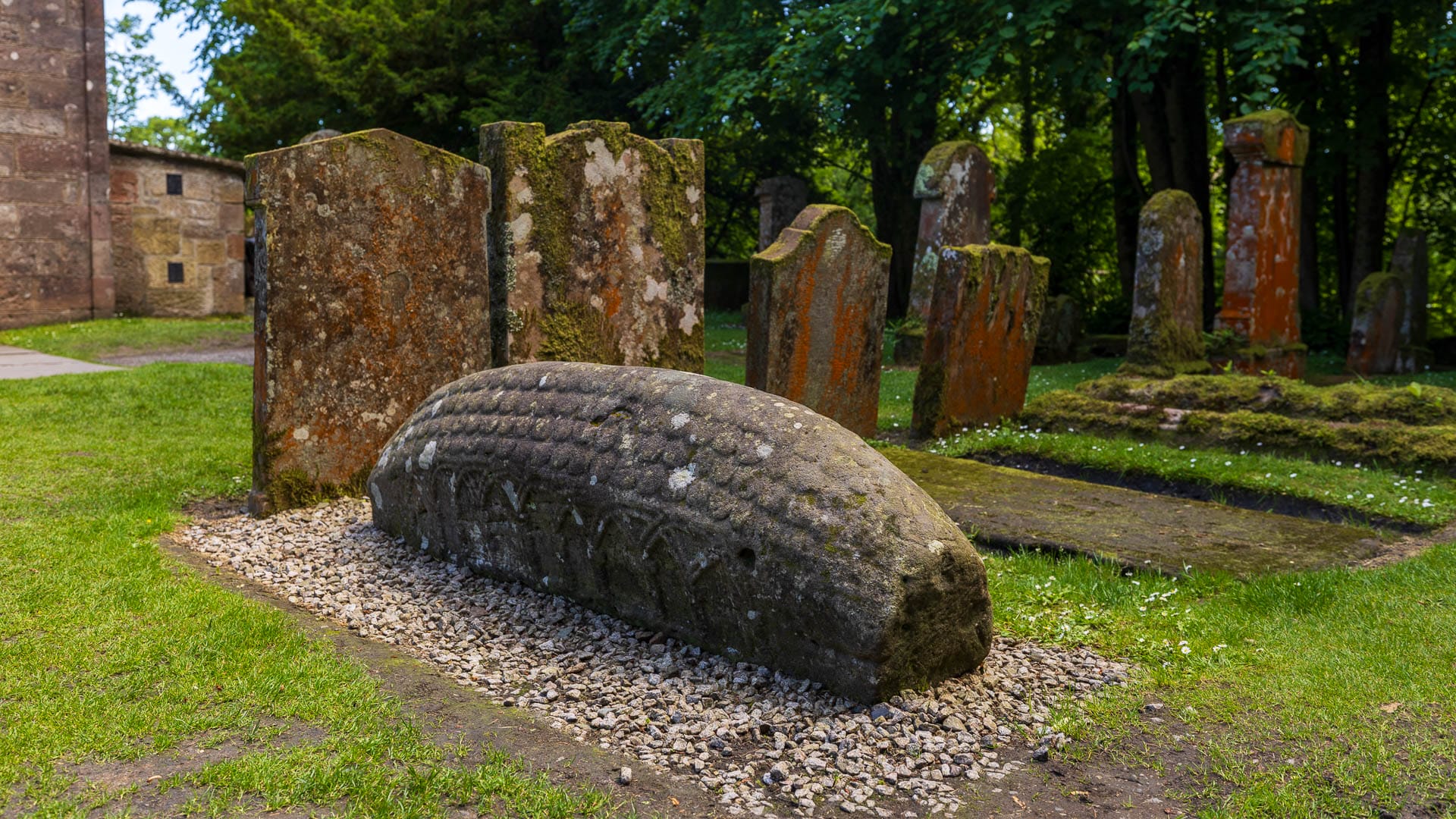
This particular type of gravestone is relatively rare (with the exception of the collection at the Govan Stones). This one dates from the 11th century (the date given on the information board on site – 1260 – is incorrect). It points to Anglo-Scandinavian influences in the region, which at that time formed part of the Kingdom of Strathclyde. It is said that the shape corresponds to a typical Viking house.
Incidentally, there are even older gravestones in the cemetery.
Queen’s Tree
Further up Pier Road stands a red oak with a ring of inscriptions around its base. This is the Queen’s Tree.
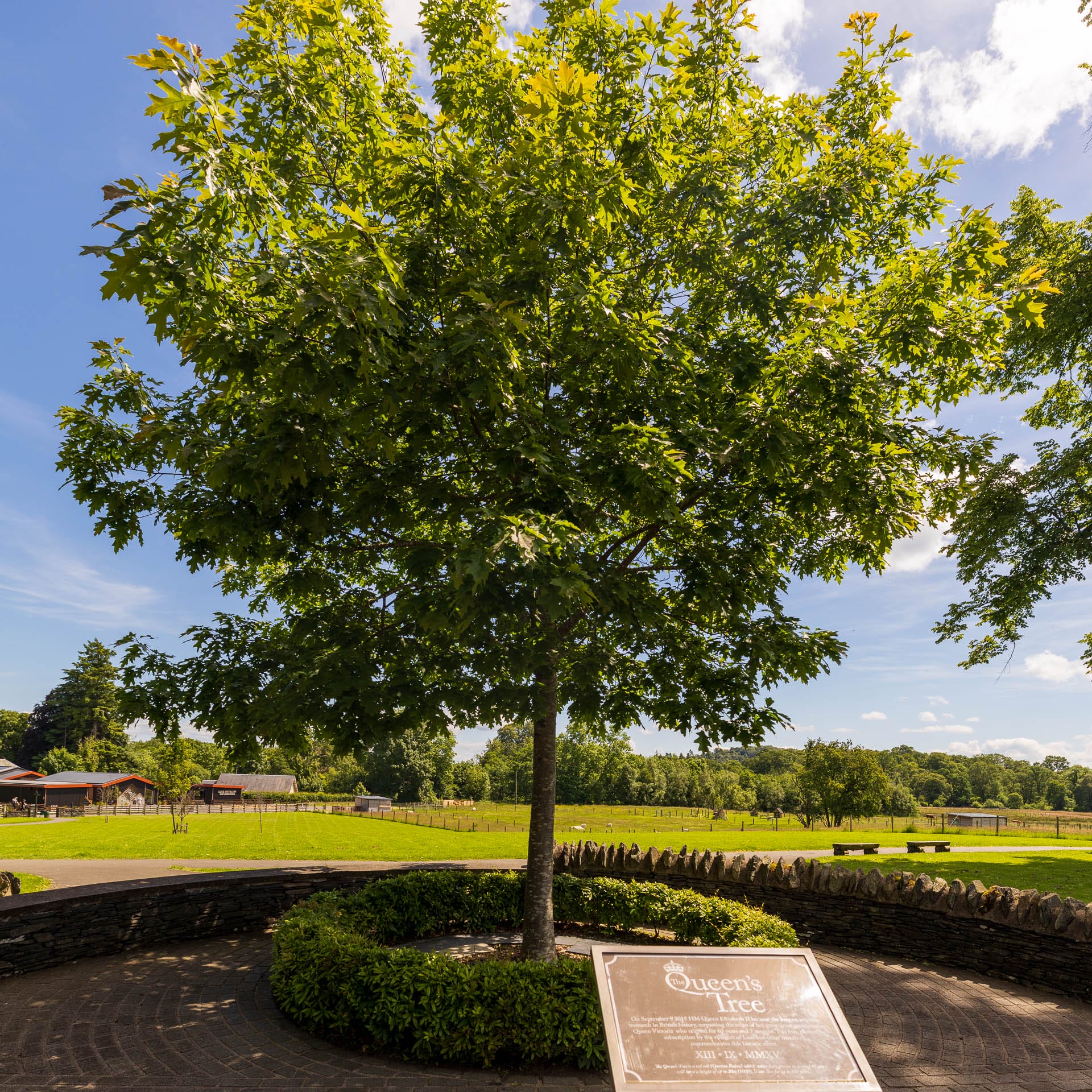
The tree commemorates Queen Elizabeth II. When she succeeded Queen Victoria as the Kingdom’s longest-reigning monarch in 2015, local organisations in Luss planted the tree to mark the occasion.
Loch Lomond Arms
The luxury hotel at the head of Pier Road stands out even from the outside: deer antlers are mounted on the façade.
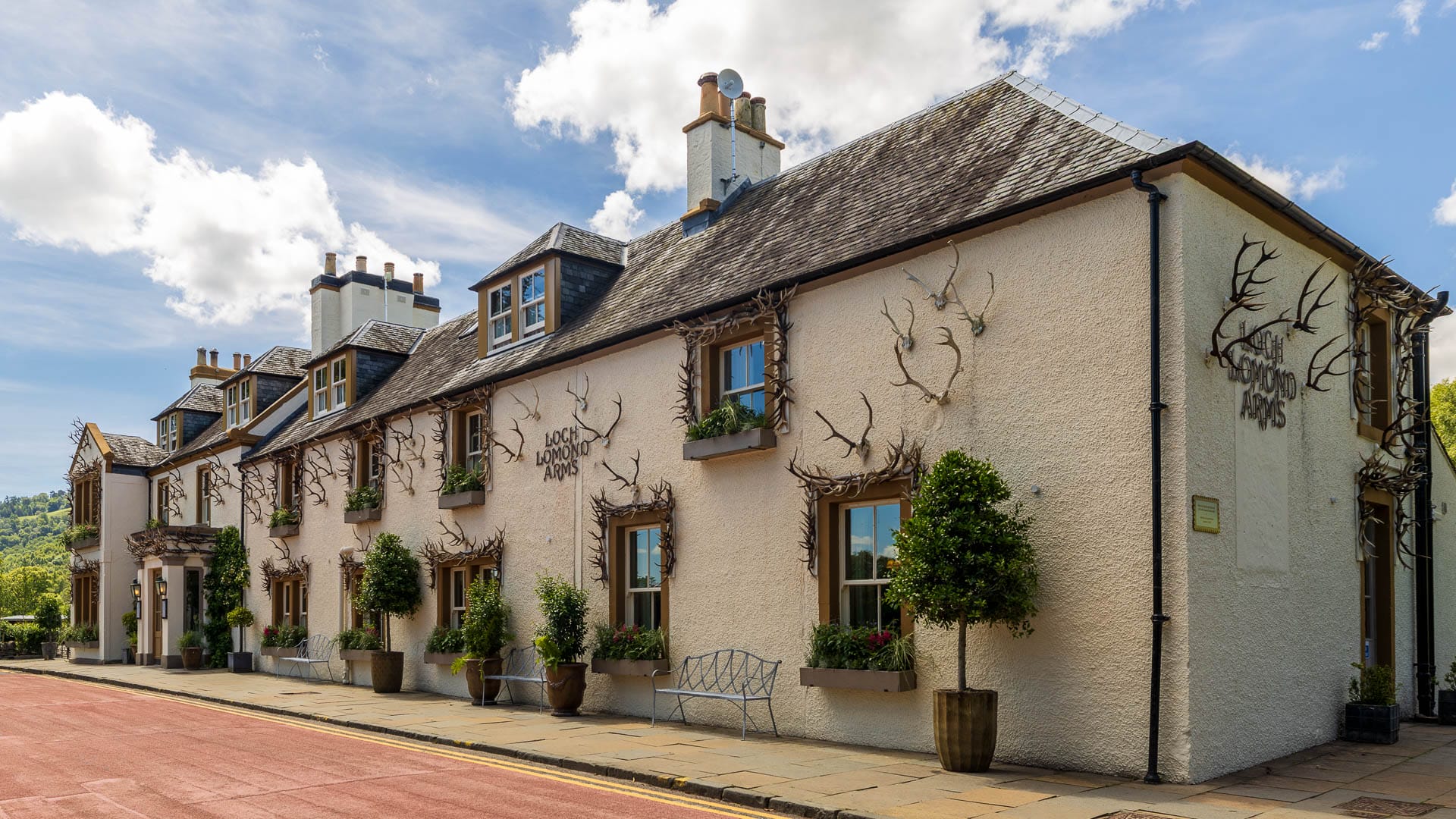
The building dates back to the 17th century, when it served as a coaching inn, much like the Drovers Inn some 30 kilometres further north.
Facts: Saints, Clans and Soap Operas
The founding legend of Luss goes like this: an Irish monk named Kessog arrived in Scotland around 510 AD – a good half a century before St Columba went to Iona. Kessog got on well with the kings of Dal-Riáta and performed miracles in the area.
He founded a church here; at that time, the place was still called Clachan dubh, ‘black village’. When he was later martyred by robbers, his body was embalmed in herbal oil, and herbs are said to have grown on his grave. In Gaelic, plants are called ‘lus’ – and it is said that ‘Luss’ derives from this.
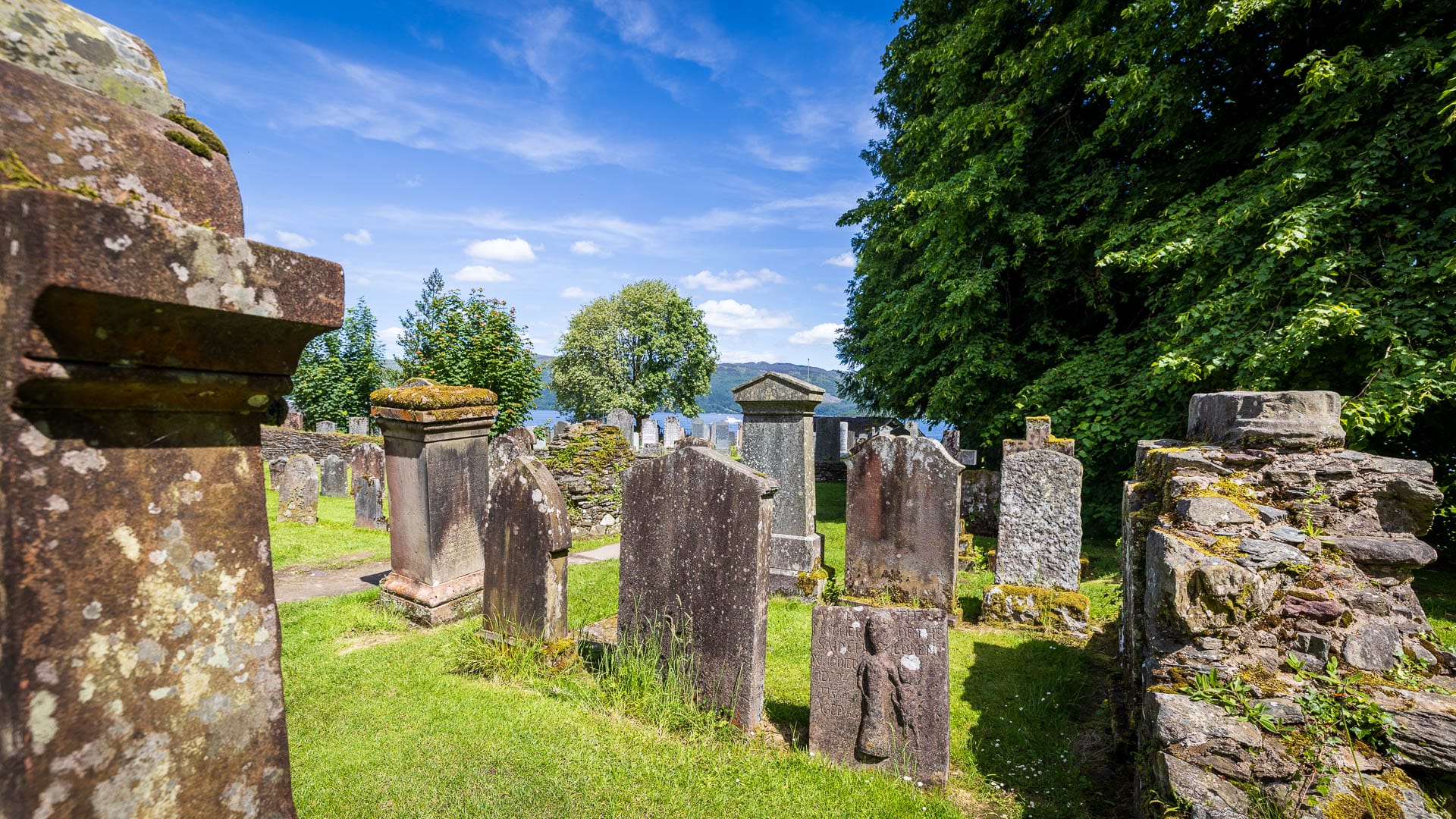
Although the present-day church is of more recent date, the gravestones surrounding it date back almost to the time of Saint Kessog – they are said to date as far back as the 7th century.
Later, the Colquhoun clan settled here – pronounced roughly ‘ko-huun’. Their motto is ‘Si je puis’ – ‘If I can’. A rather hesitant motto. The story behind it: in the 15th century, King James I of Scotland is said to have challenged the Colquhoun chieftain, John, to conquer the nearby Dumbarton Rock. A virtually impossible undertaking, hence his reply: ‘If I can’.
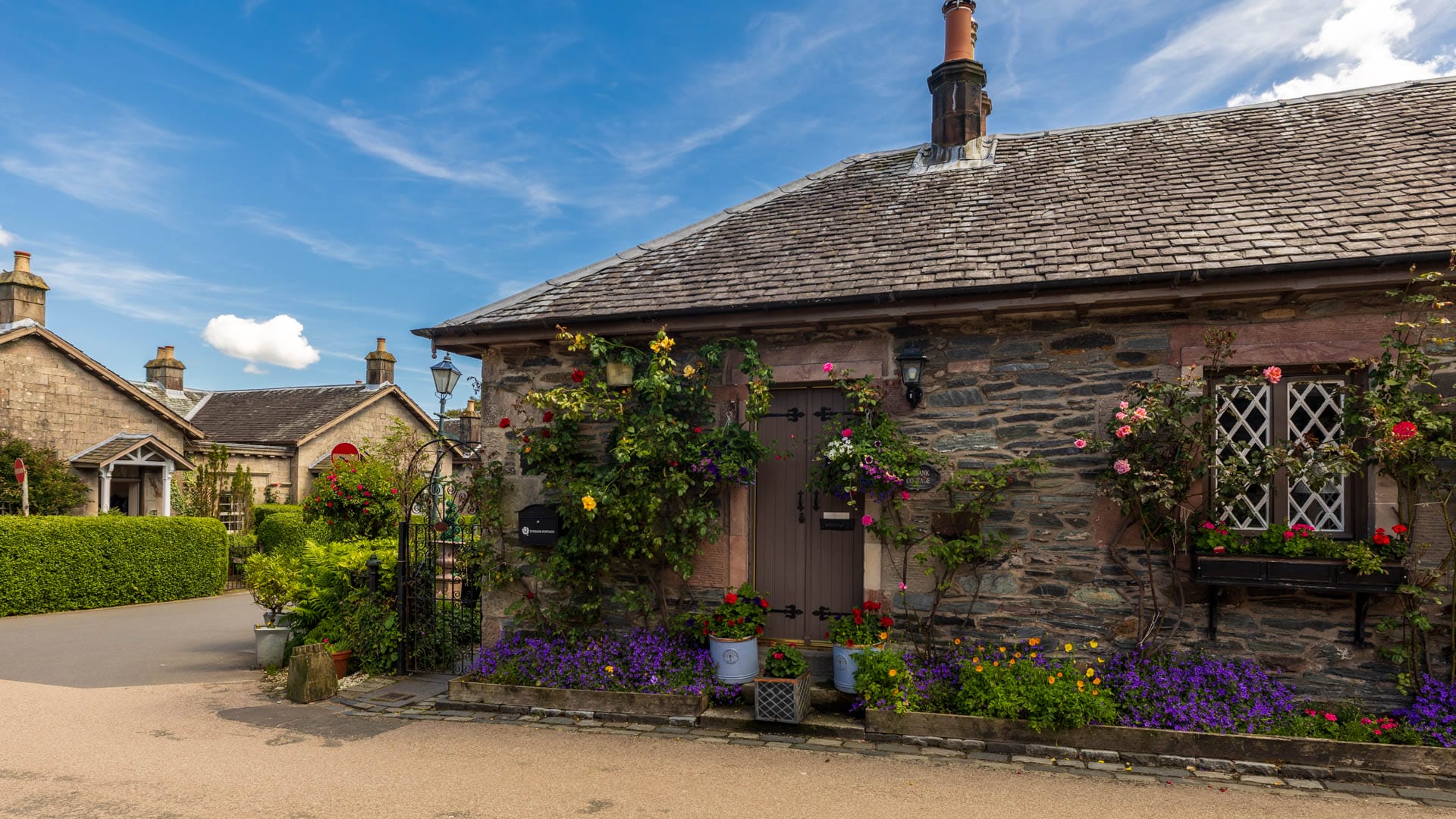
Luss was known for its slate quarries in the 18th and 19th centuries. To improve the workers’ living conditions, the laird had the houses built. The result can still be seen in Luss today, even though the houses are no longer the very old ones. But the roofs are still covered in slate.
Thanks to this backdrop, the wonderful church and the lake, a soap opera was filmed here for twenty years from the 1980s onwards. In *Take the High Road*, Luss was known as Glendarroch. That, too, still draws visitors to the streets today.
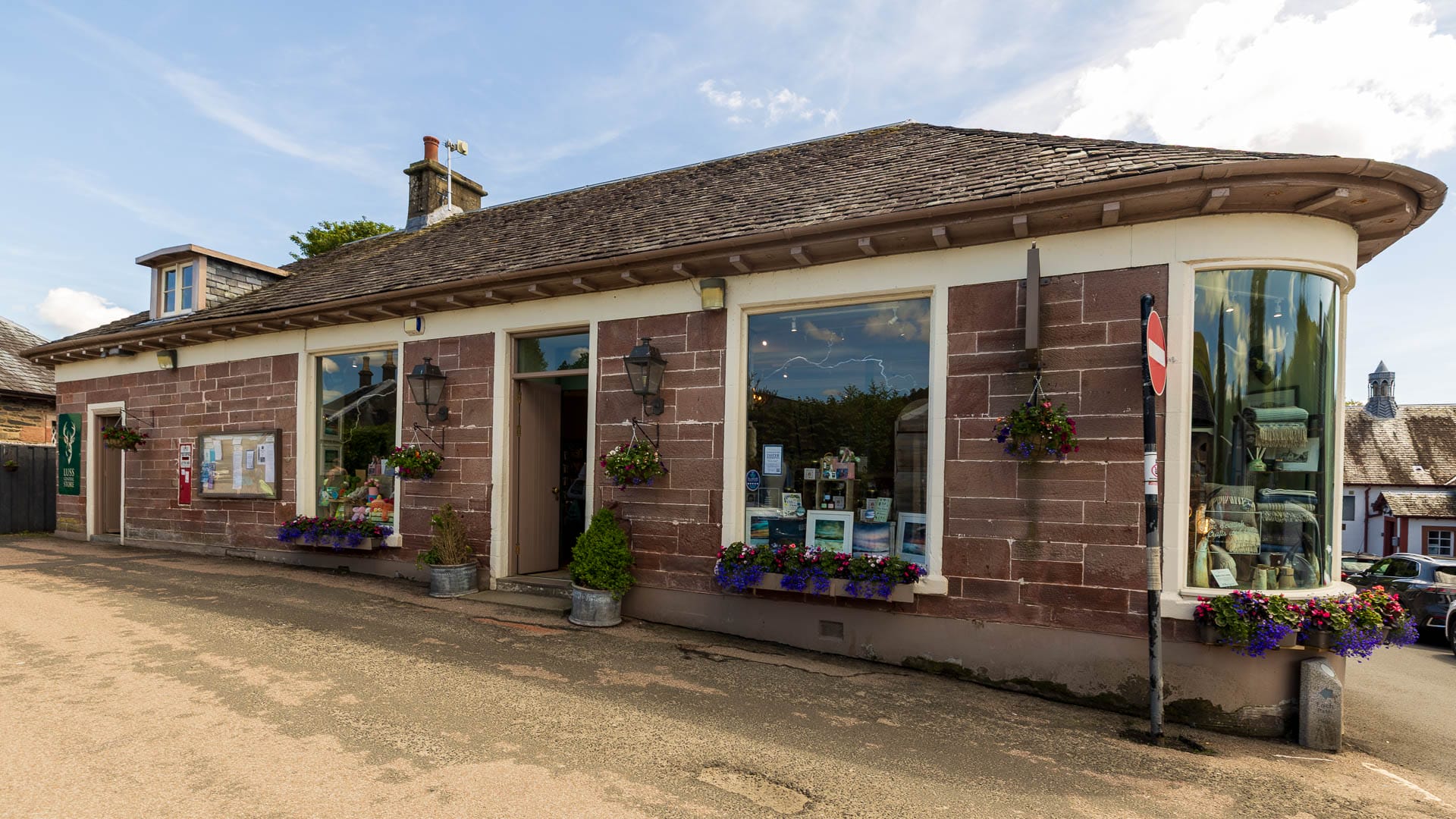
Exploring Luss: The Tours
To explore everything, there are four short walking tours, which are shown in this PDF.
- Lake Walk ( 15 minutes) – leads through the village and along the lakeshore on flat, even ground
- River Path (30 minutes) – follows the banks of the Luss Water on flat, even ground
- Slate Quarry (30 minutes) – takes you past one of the old mills and a slate quarry, with some steep sections and steps
- Luss Heritage Walk ( 1 hour) – a circular walk through the village, along the river and through the surrounding countryside, with some steep sections and steps
How to get there
Using sat-nav: enter “G83 8PG” – this will take you to Luss.
Without sat-nav: Luss is easy to find. Follow the A82 along Loch Lomond and simply look out for the signpost. Then turn off onto the road to Luss. The first car park is just ahead. You can start looking for a space here. If it’s full, there’s another car park further south. The cost is around two pounds an hour.