Moffat lies at the heart of southern Scotland. A hub for walkers and spa guests. But there are other sights to discover here too.
Contents:
» Sights
» Food & Drink
» Good to know
» Getting there
Prosperity arrived with the sulphur. Once the people of Moffat realised they could sell the foul-smelling water from the springs as a spa cure, the once-modest village grew into a fashionable spa town, drawing wealthy guests from every corner of Scotland.
As a result, many of the buildings still standing today were built in the 18th century. One of the finest of these was the Moffat Hydro – a vast hotel as grand as a castle. But by 1920, spa visitor numbers had dropped so sharply that parts of the furnishings had already been sold off. In 1921, the hotel burned to the ground entirely. That marked the end of the great spa era.
Before this discovery, Moffat was a town set in the long valley of “Annandale”. This valley may also explain the name Moffat, which probably comes from Gaelic. One theory holds it’s a combination of “magh” and “fada”. “Magh” means “plain” and “fada” means “long” – so, “long plain”.
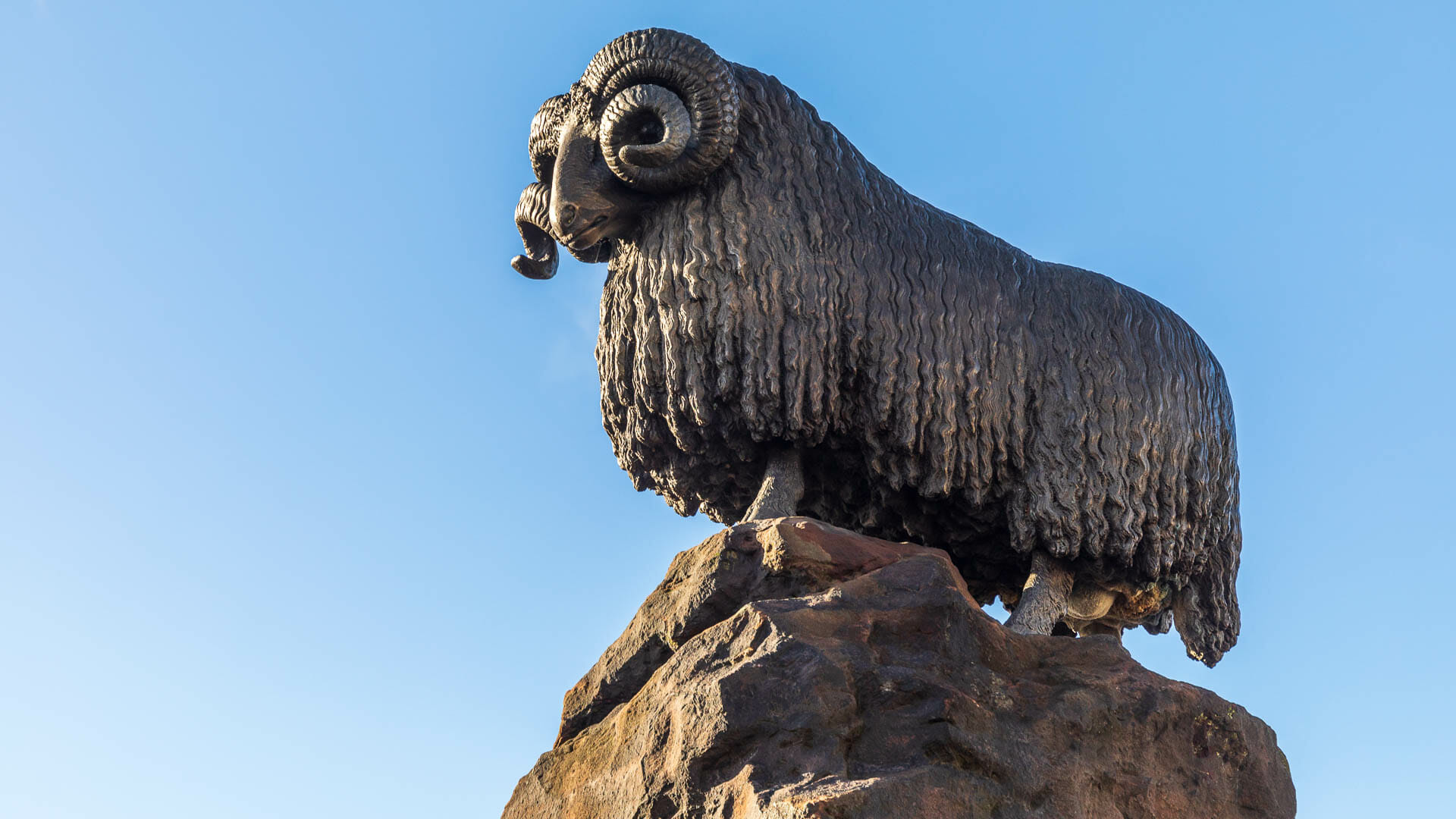
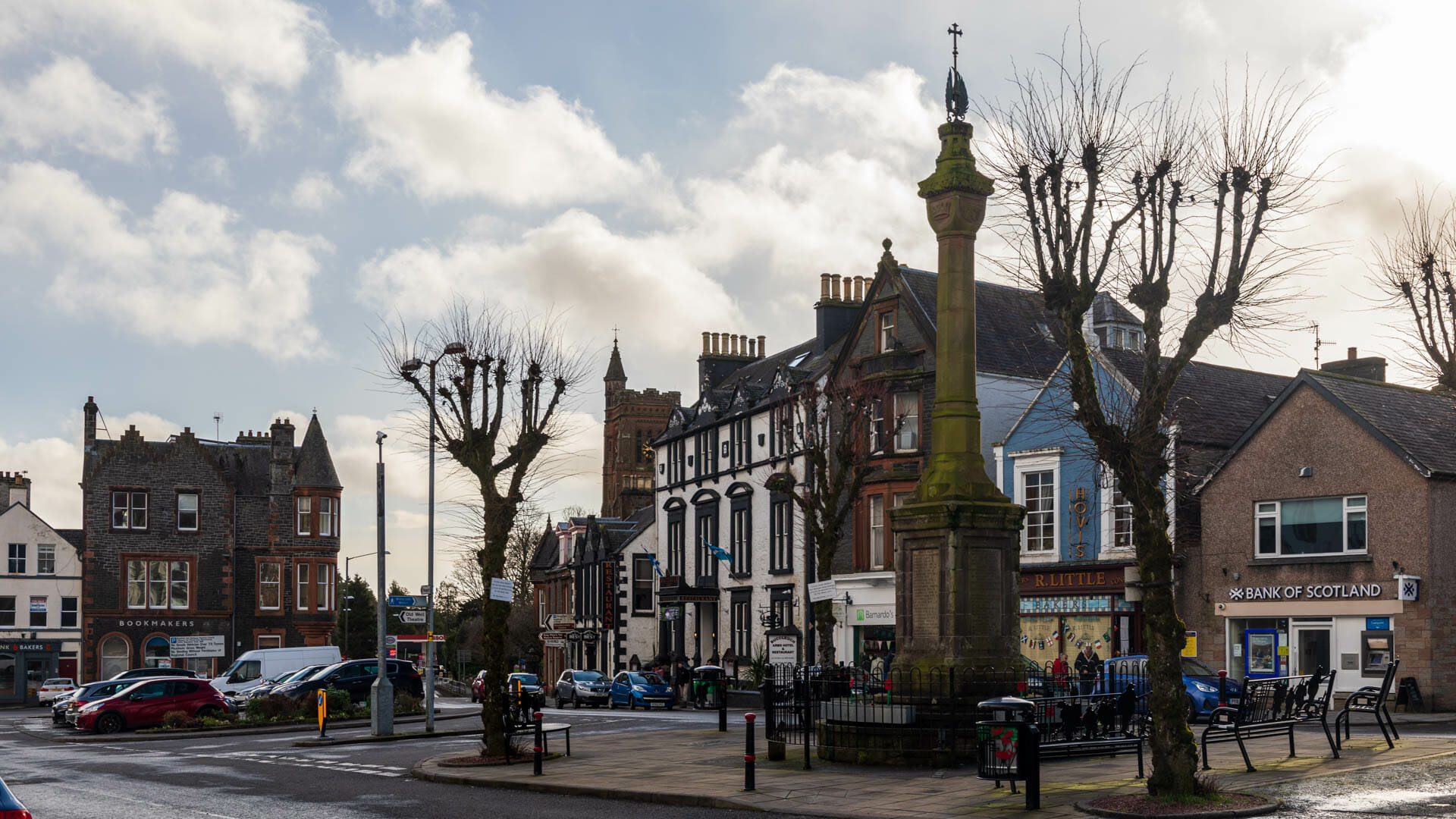
The River Annan flows through the valley, emptying into the Solway Firth and passing the Annandale Distillery (currently only available in German) along the way. A perfect place for sheep farming too, and Moffat was famous for that as well. This heritage is commemorated in the town centre by the large ram statue that adorns a fountain – and around which a ghost story has grown up, more on that below.
Sheep were also often driven into the hollow known as The Devil’s Beeftub (currently only available in German) to the north, which offered them shelter. The view from up there is well worth enjoying.
Today, Moffat is a popular starting point for excursions by nature lovers and anglers into the surrounding Moffat Hills. It’s a stop on the Annandale Way, which follows the river from its source to the sea. Moffat is also Europe’s first Dark Sky Town – a place where light pollution is kept very low at night. A real bonus for stargazers.
Moffat’s main sights
All the sights listed here are located around the central High Street.
Moffat Candy
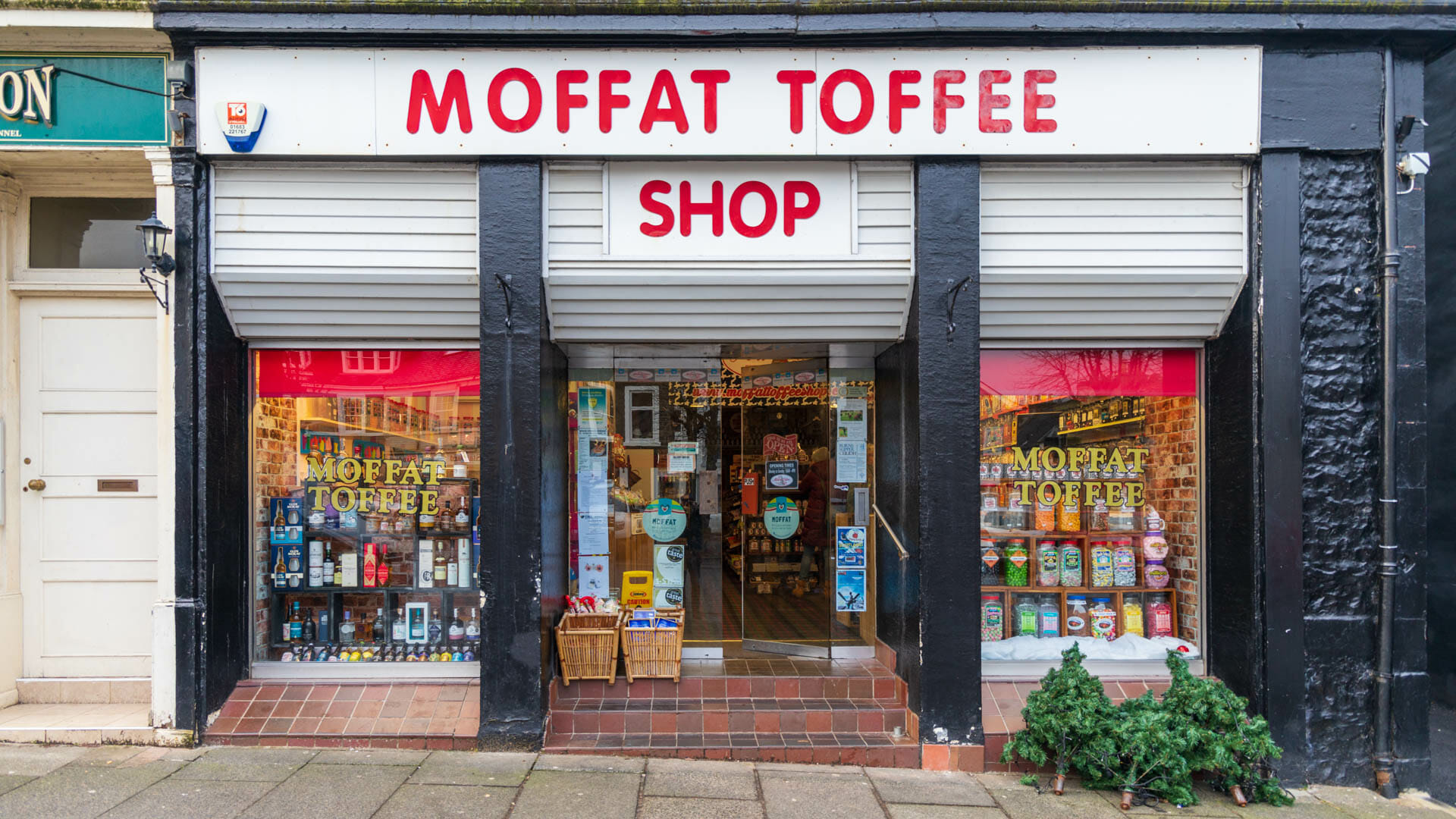
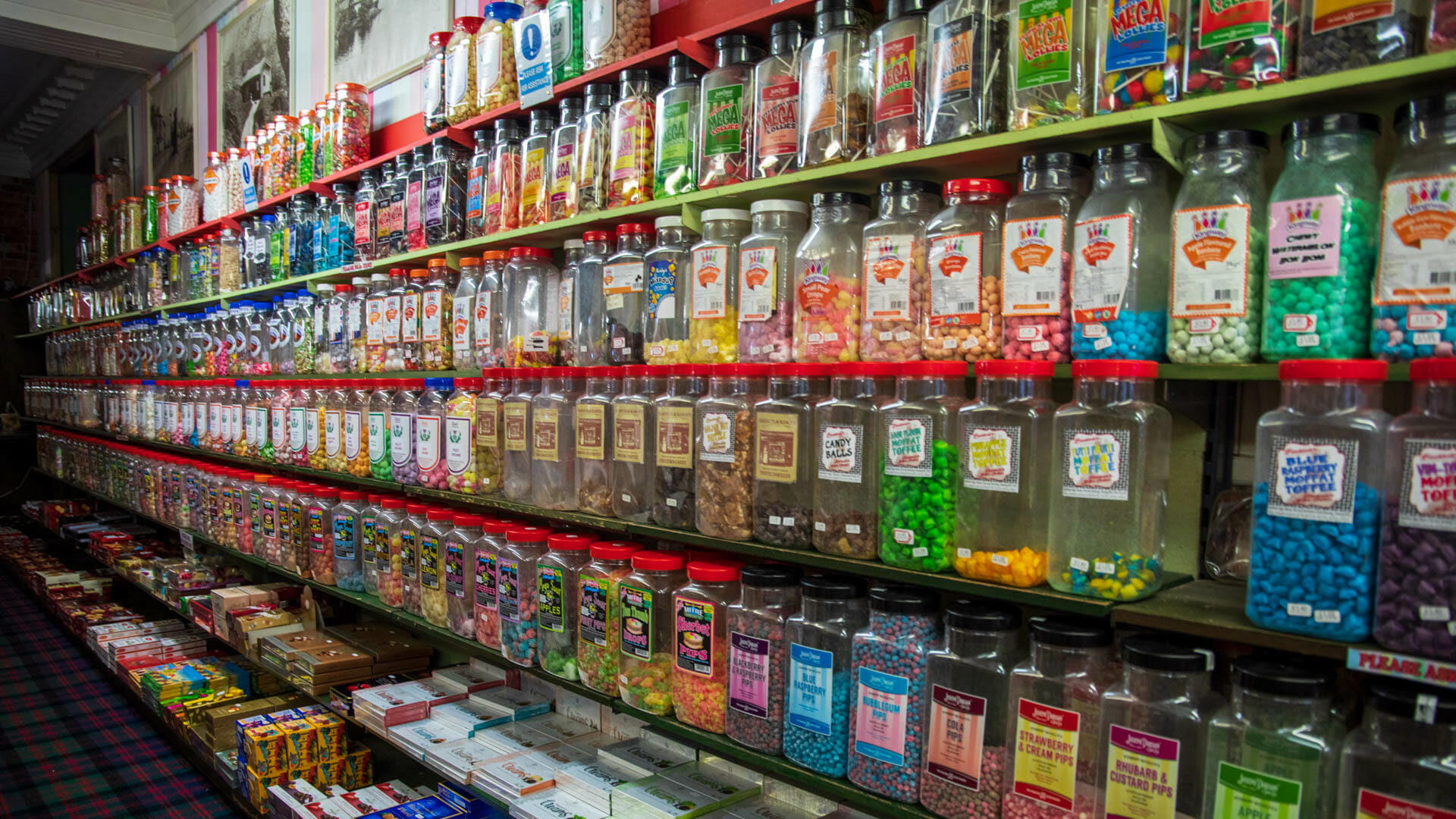
Good for the mood, bad for the teeth – the delicious sweets from the Moffat Toffee Shop send anyone with a sweet tooth into a sugar rush. The shop’s selection is enormous. Every customer can order their own bag at the counter, and mixed bags are available too. Whatever else you get, make sure to pick up the original Moffat Toffees. A personal insider tip: the Irn-Bru flavour, made from that classic sugary fizzy drink.
The shop is located on Moffat’s main square and is hard to miss.
Moffat Ram
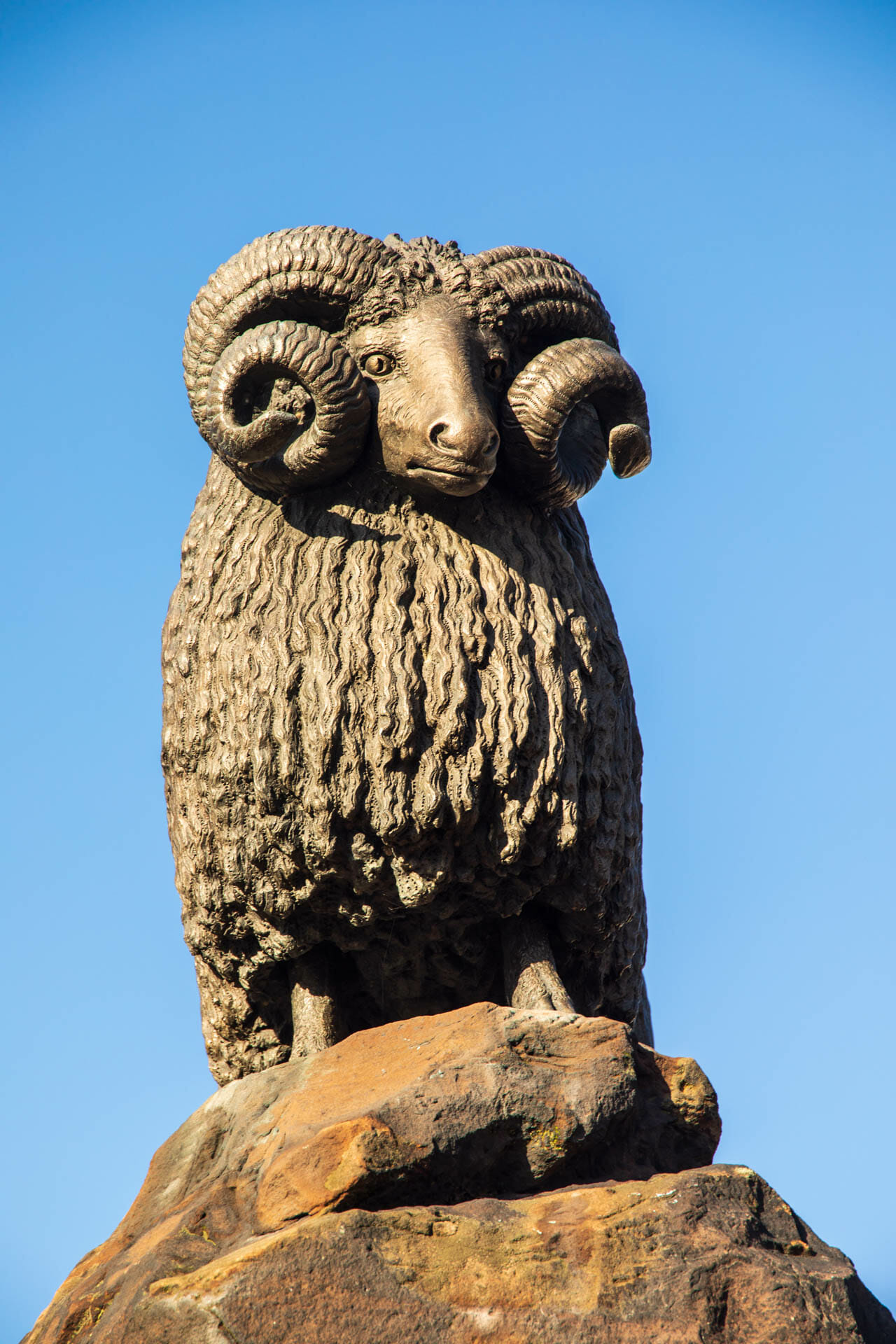
At the centre of the village square stands a large statue of a ram, perched on a rocky column. The animal has stood here for around 150 years now. A ghost story has grown up around the ram: when the statue was unveiled in 1875, a villager reportedly called out “It has nae lugs!” – “It has no ears!” Indeed, the sculptor did appear to have forgotten them entirely. Legend has it that the artist took his own life out of grief, and now haunts the town in search of the missing ears.
This legend, however – as is so often the case – is rather dubious. Why that is, you’ll find further down in the section Good to know: The Moffat Ram and its ghost.
Town Hall
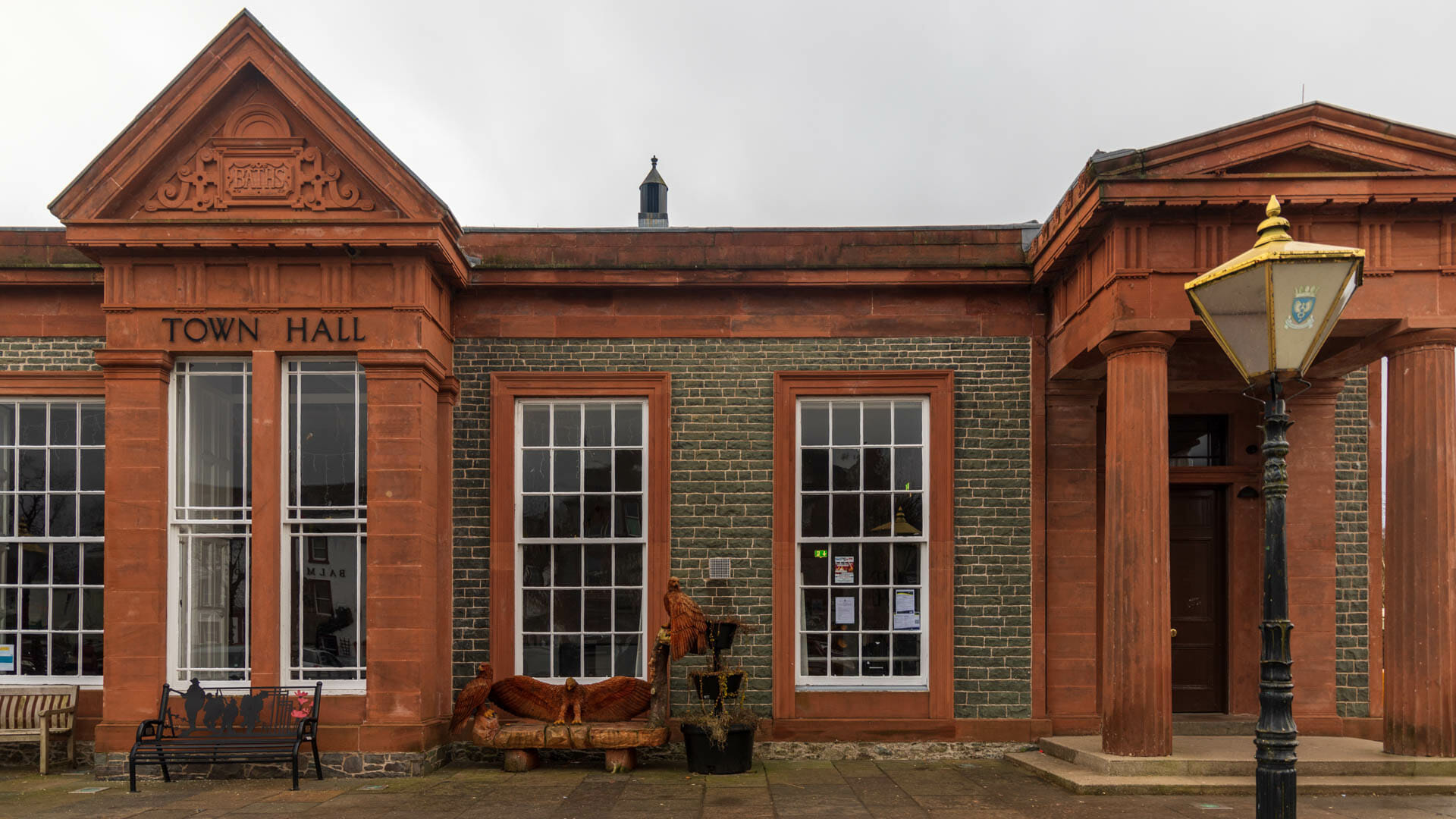
It’s one of the surviving witnesses to the town’s spa-era past. The Town Hall was built in 1827 as the Moffat Baths Hall. Here, guests could enjoy a warm bath in the mineral-rich water for 2 shillings (roughly 10 pence). A cold bath cost half that. Either way, these were considerable sums at the time, so only the well-off could afford the spa cure.
The building is now used for events, and a trust looks after its upkeep.
Star Hotel
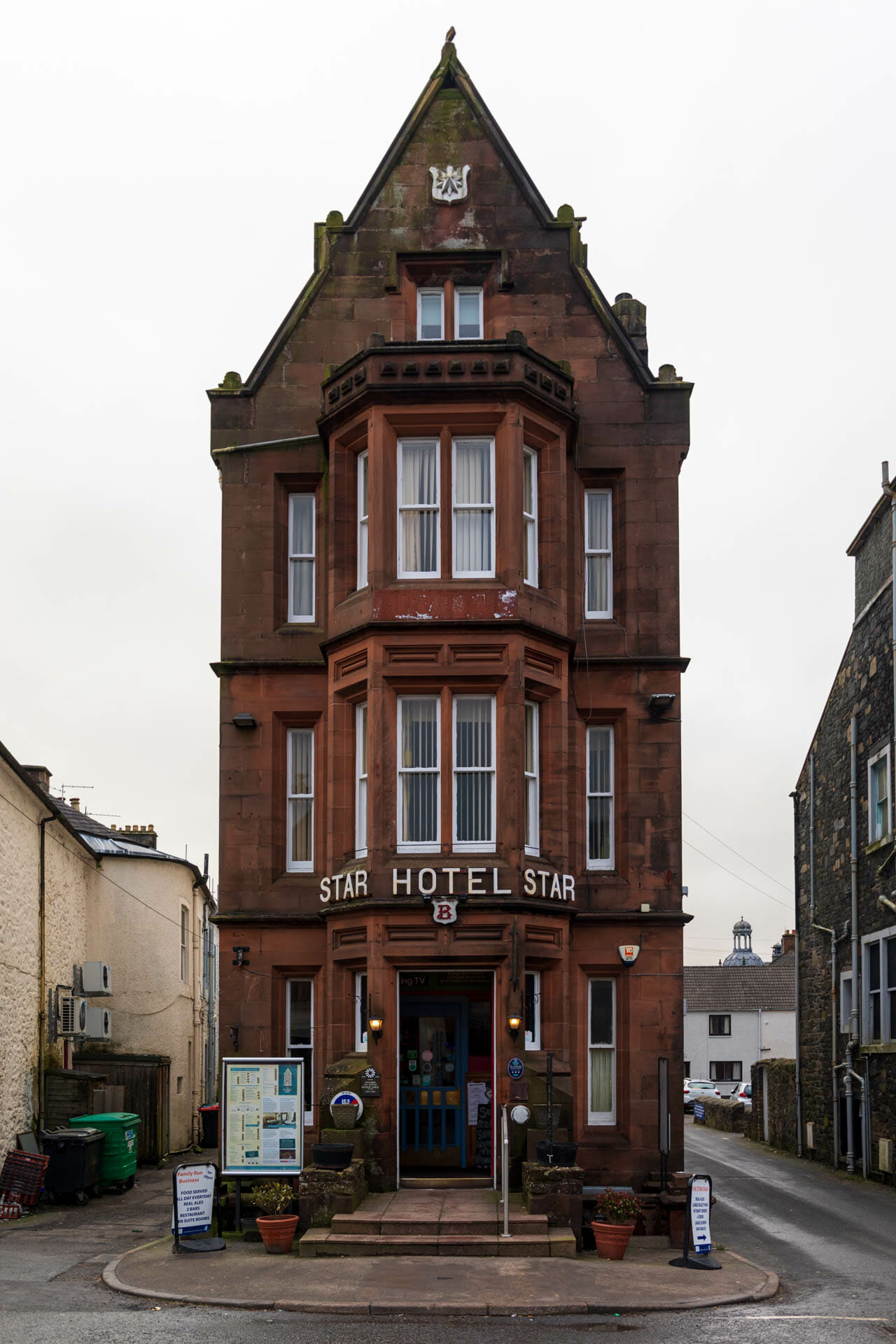
The Star Hotel claims to hold the Guinness World Record for the narrowest hotel in the world. It’s just six metres wide, but 50 metres long. The building dates back to the 18th century.
Moffat Museum
Everything about Moffat’s history can be found in the museum next to the Black Bull Inn, opposite the church. Alongside the permanent exhibition, there are also rotating special displays. Admission is free.
Info: moffatmuseum.co.uk
Old Graveyard
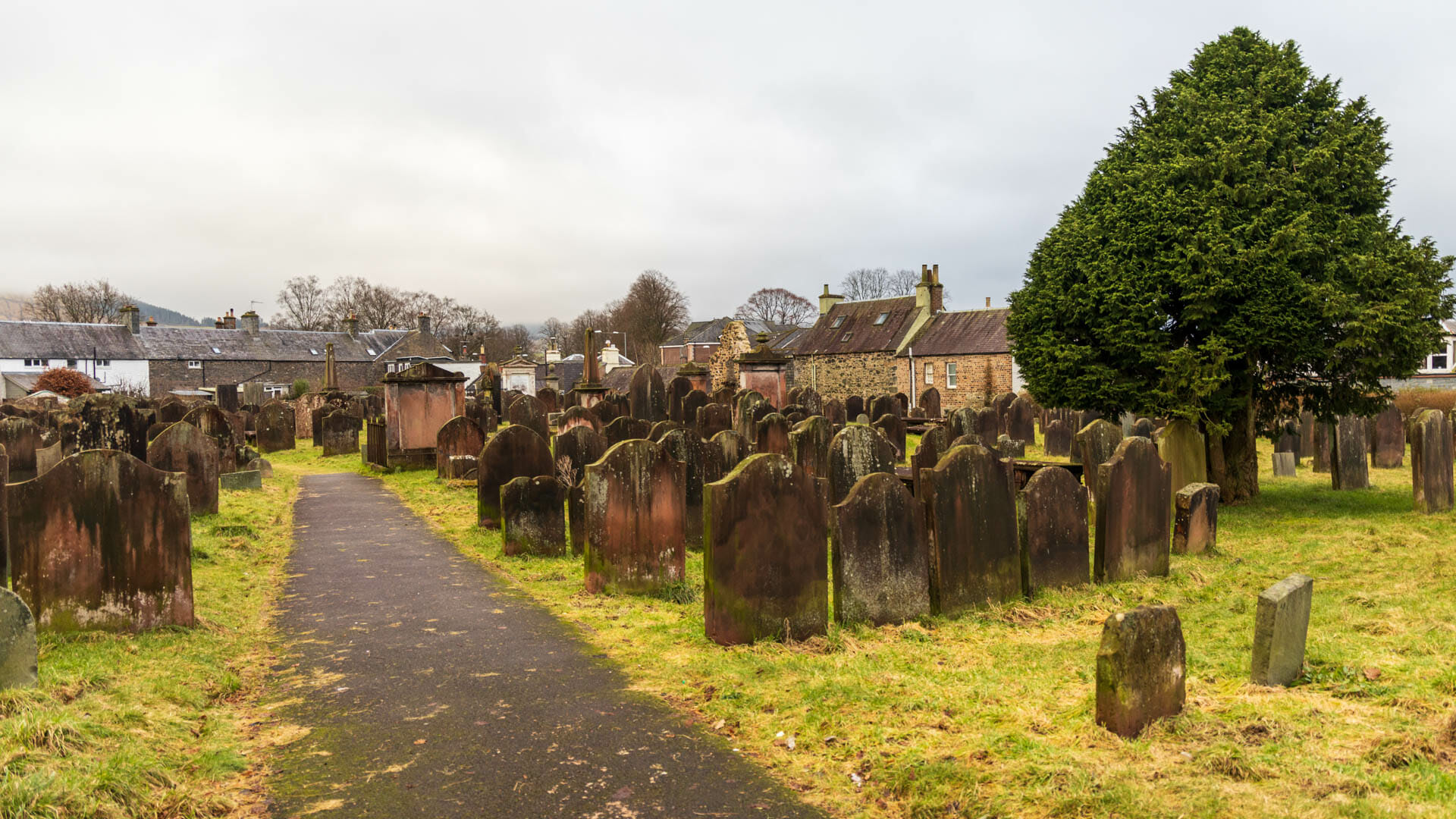
Moffat’s old graveyard lies at the southern end of the High Street. Alongside the many old and striking gravestones, one story in particular is worth mentioning. Two postmen took their job so seriously that they lost their lives in the snow near the Devil’s Beeftub while trying to deliver the post to Moffat. The graveyard also contains the ruins of a pre-Reformation church. Here, in 1685, John Graham, 1st Viscount Dundee, called on the people of Moffat to swear an oath of loyalty to King James VII. He was, in other words, a Jacobite (currently only available in German).
St Andrew’s Church
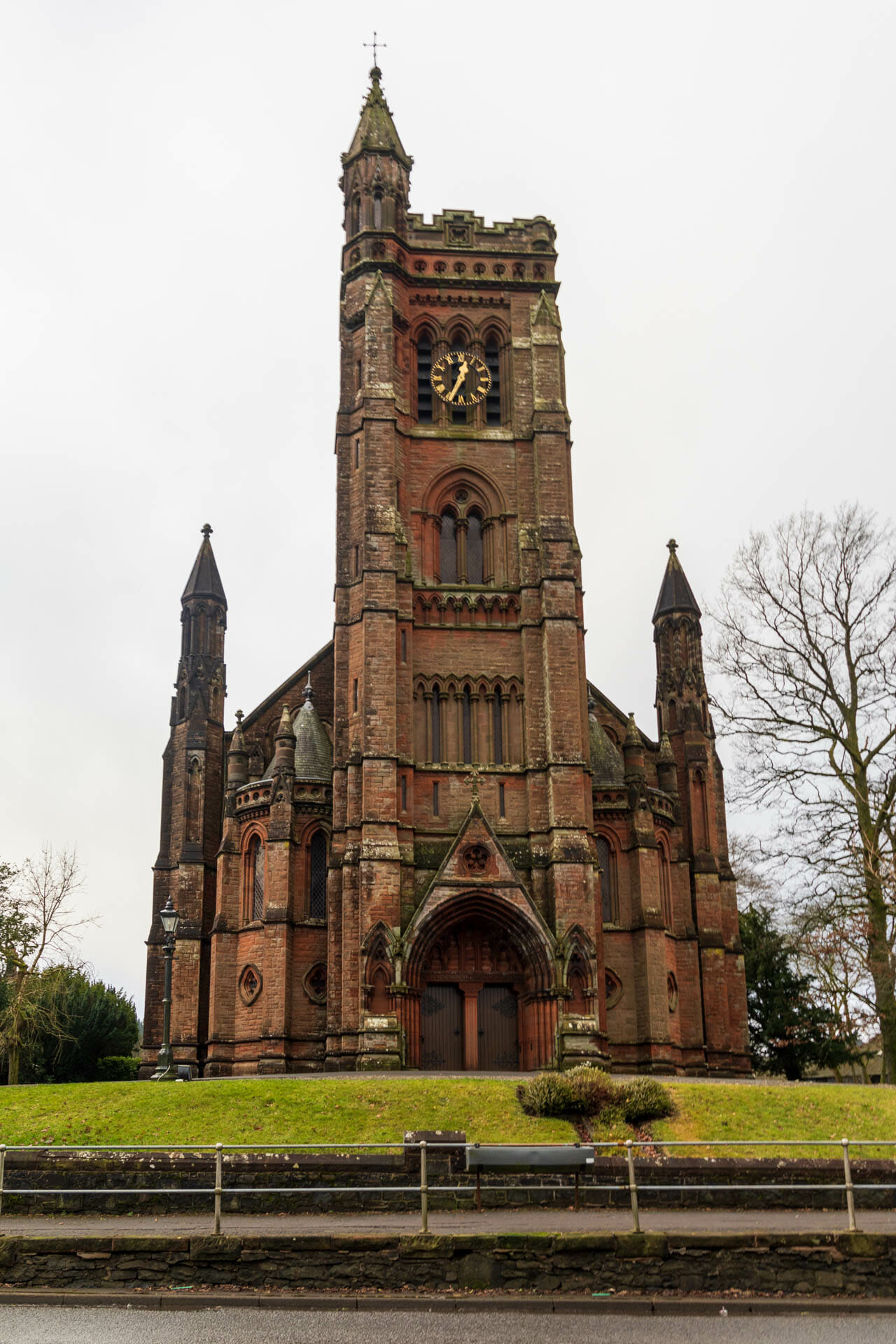
The church stands at the entrance to the town centre. Built in red sandstone in the English Gothic style, it’s considered a fine example of skilled stonemasonry.
Moffat House Hotel
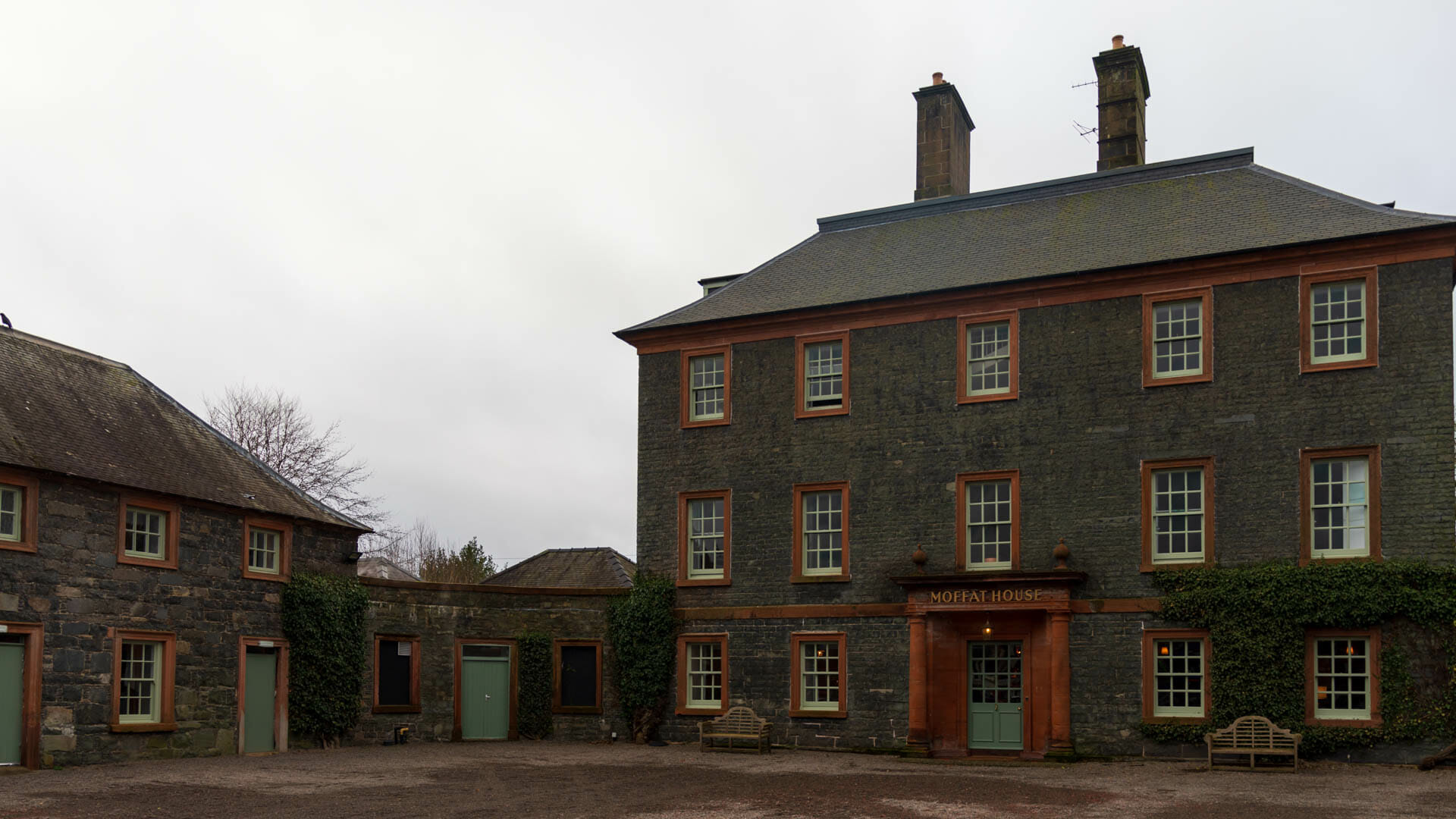
An impressive manor house next to the Town Hall, built in 1762 for the Earl of Hopetoun. It has been a hotel since 1950.
Food and drink
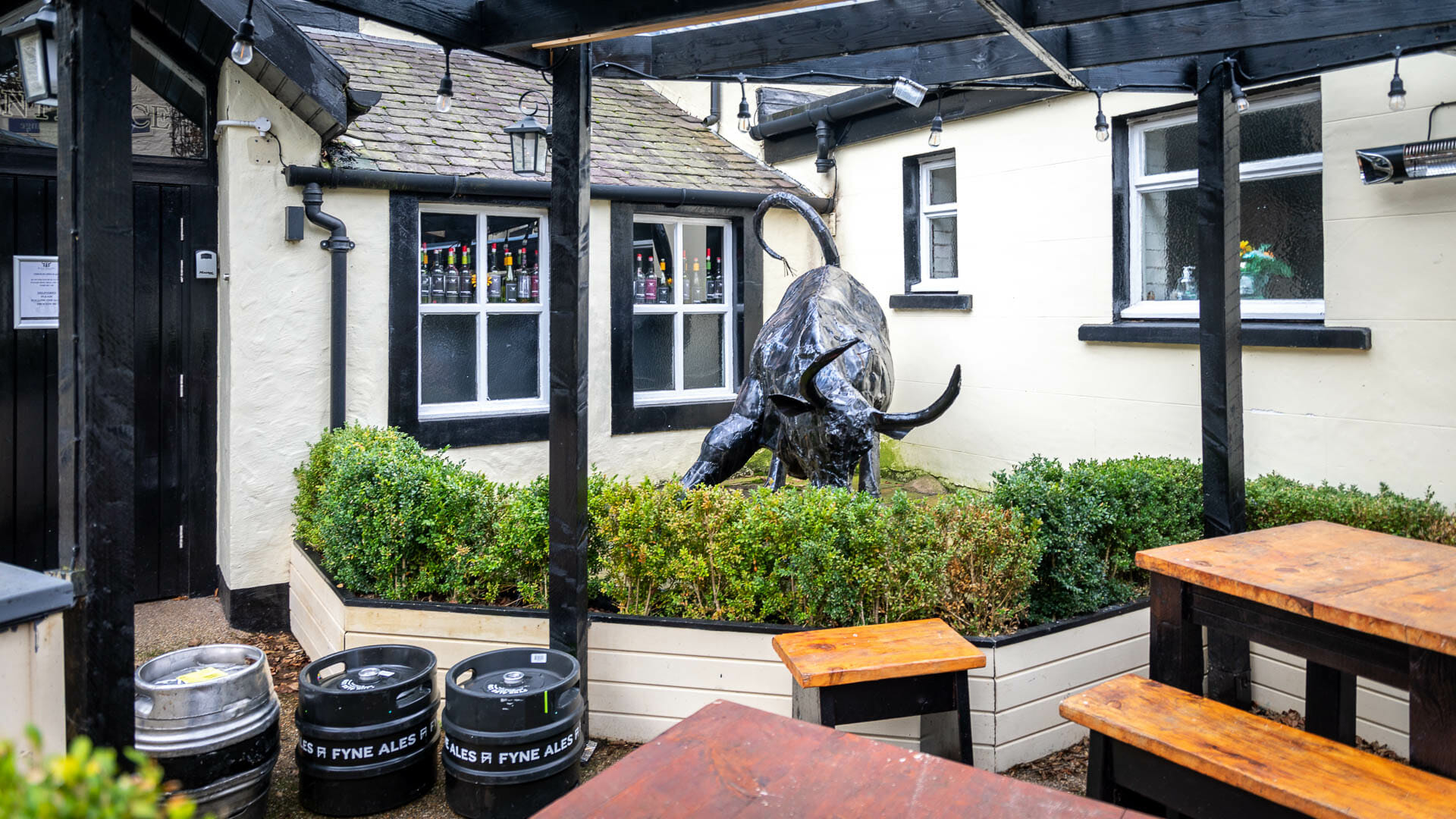
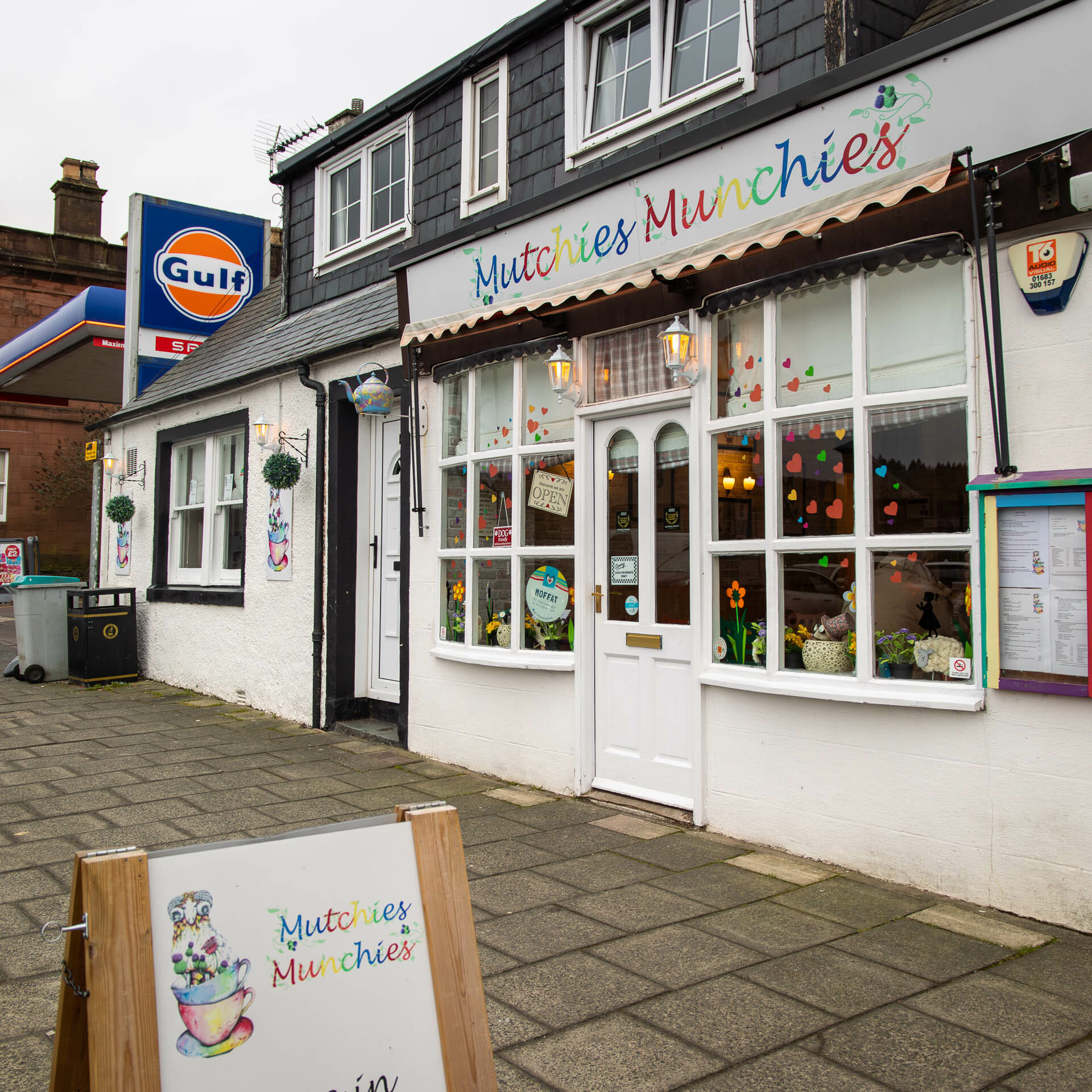
Almost every hotel and inn in town also serves food and drink. The Black Bull Inn opposite the church serves rather traditional, hearty fare. Just a few metres away, Brodies Restaurant, Gin & Coffee Lounge serves guests coffee, tea and sandwiches during the day, with an elaborate dinner menu in the evening. A small but excellent café on the High Street is Mutchies Munchies.
Shopping: Sweets and wool
Besides the Moffat Toffee Shop (see above), there’s another sweet shop with Campbells Fudge. Here you’ll find not just fudge but also chocolate and more. The shop sits opposite the church, right next to the Black Bull Inn.
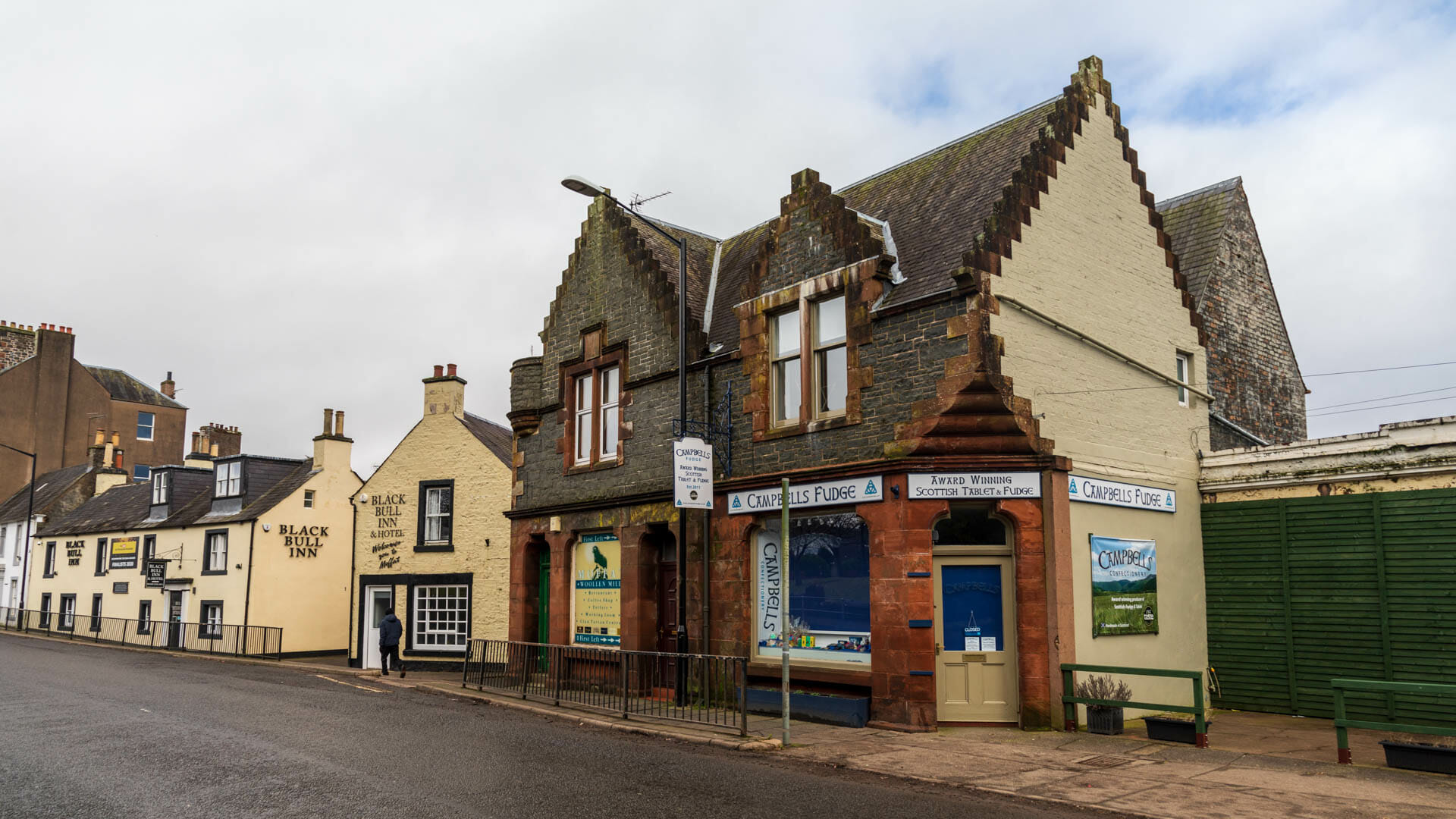
The legacy of sheep farming and its products is kept alive by Moffat Mill, which today is part of the “Edinburgh Woollen Mill” chain.
Good to know: The Moffat Ram and its ghost
Legend has it that the sculptor of the ram statue killed himself out of shame at having forgotten the ears on his sculpture. As is so often the case, the real story behind it is more complicated: the sculptor was William Brodie, a former plumber and lead-founder who had worked his way up to become one of the finest sculptors of his time. He was commissioned to work for Queen Victoria, created several of the sculptures on the Scott Monument in Edinburgh, and many of the busts at Greyfriars Kirkyard. He was also the sculptor behind one of the best-known Scottish landmarks: the Greyfriars Bobby Fountain. Today, thousands of tourists rub the nose of the little Skye terrier in Edinburgh.
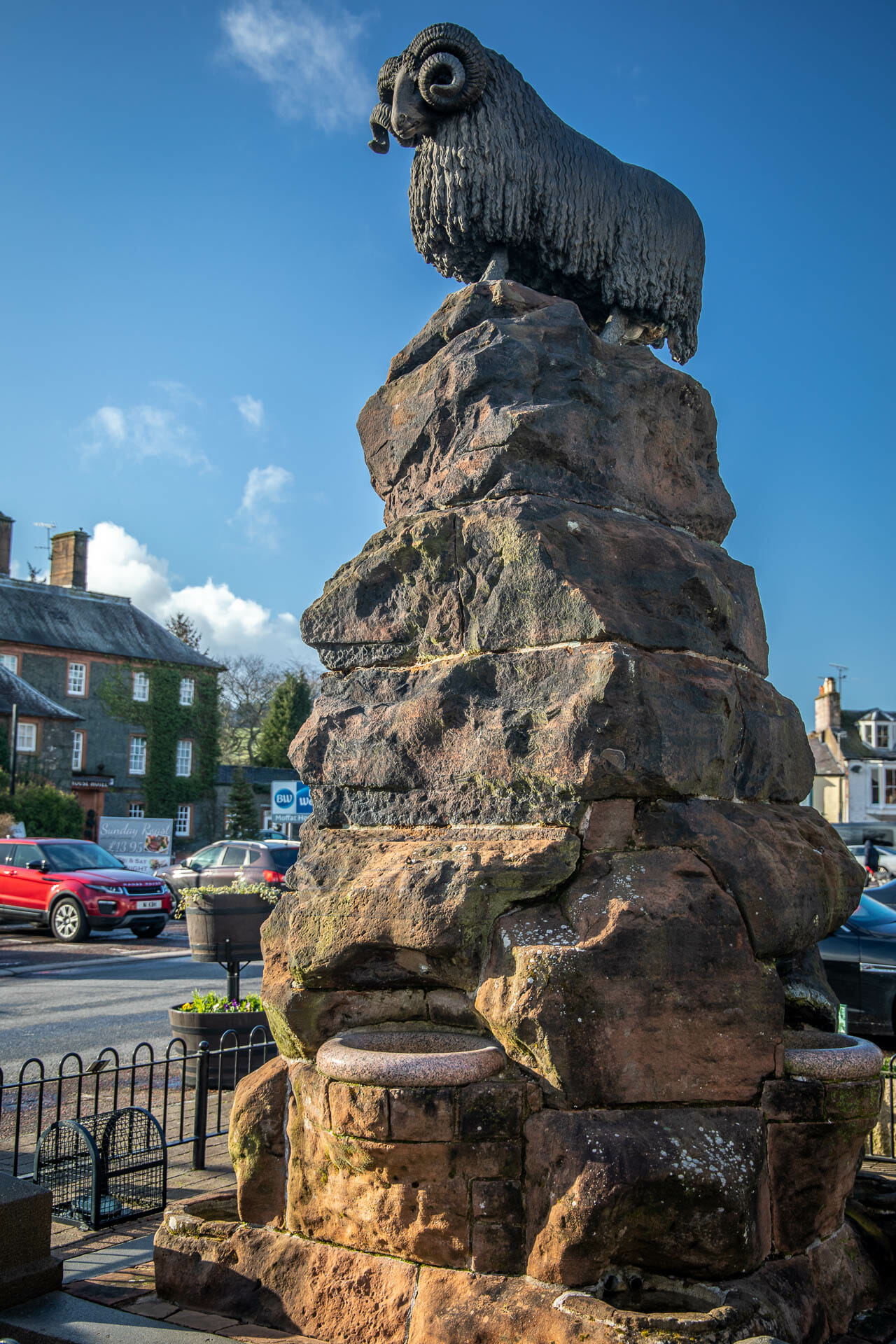
That alone should raise an eyebrow! An artist of this calibre doesn’t make a mistake of that kind. And indeed, Brodie had stuck faithfully to his model – the ears were simply hidden beneath the thick fleece. His popularity was demonstrably unaffected by the statue; students continued to come to his studio to train under the successful master. What is known, however, is that Brodie’s condition visibly deteriorated over the last two years of his life.
William Brodie died in 1881 at the age of 66, in Edinburgh. Whether he really did choose to end his own life to put a stop to his illness remains unclear. But that he would have killed himself six years after the ram’s unveiling in Moffat, simply because a villager failed to understand the statue, seems rather unlikely.
Getting there
With a sat nav: “DG10 9EG” will bring you to the town centre.
Without a sat nav: Coming from Glasgow: take the M8 south-east. At J15, switch onto the M74. Stay on it until junction 15, signposted for Dumfries, Beattock and Moffat. Follow the signs to Moffat. From Edinburgh, take the A701 towards Peebles. The road runs via the Devil’s Beeftub all the way to Moffat.