Tucked into the gentle hills of the Isle of Lewis stands a mill whose roots reach all the way back to the Iron Age – the Norse Mill near Shawbost.
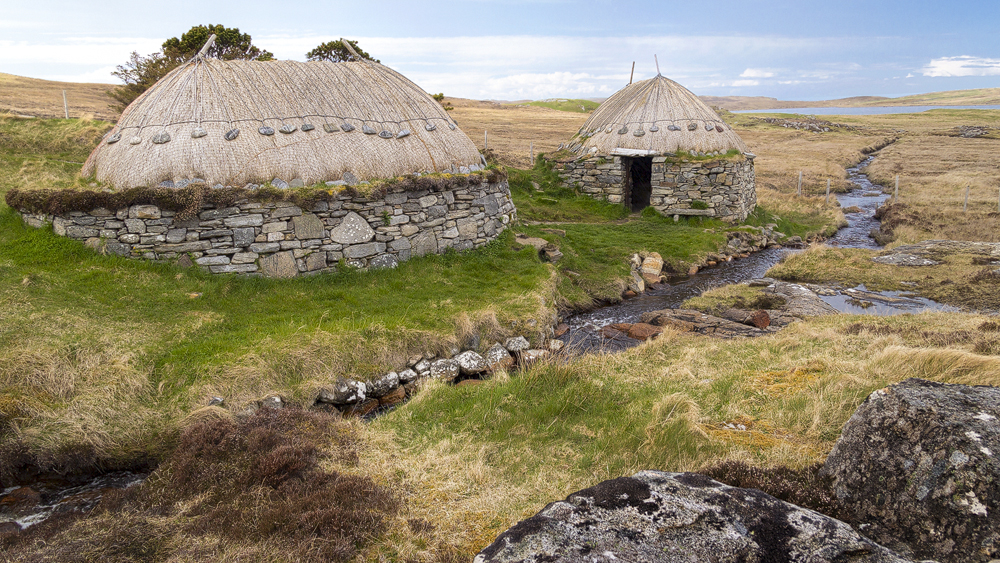
Sweet peat smoke, rushing water, clattering mill wheels – visitors making their way down the hill to the mill would still have experienced all of this well into the first half of the 20th century. Today, though, a soothing silence envelops the Norse Mill near Shawbost.
The path leading away from the road towards the mill is soon joined by a stone-lined channel, which once carried the water that drove the millstone.
The channel disappears into the rear of the two buildings, since that’s where the actual mill was housed. Stepping inside, visitors will still find the mechanism there today – at a glance, you can grasp exactly how it worked: water flowed through a channel in the floor past a mill wheel, which turned the stone above it. Grain was poured into the large wooden hopper, which the stone would grind into flour.
For this to work perfectly, the grain had to be bone dry. That’s what the second building was for: the drying house, known as the kiln. A peat fire burned in the large hollow at the centre of the room, while the grain was laid out on the raised area, where the heat would help it dry more quickly.
In front of the mill house entrance sits a small bench that catches the midday sun, offering a lovely view of the stream running below. With a little imagination, you can picture the miller sitting here, puffing on a pipe in the sunshine, waiting for the next batch of flour to be ready.
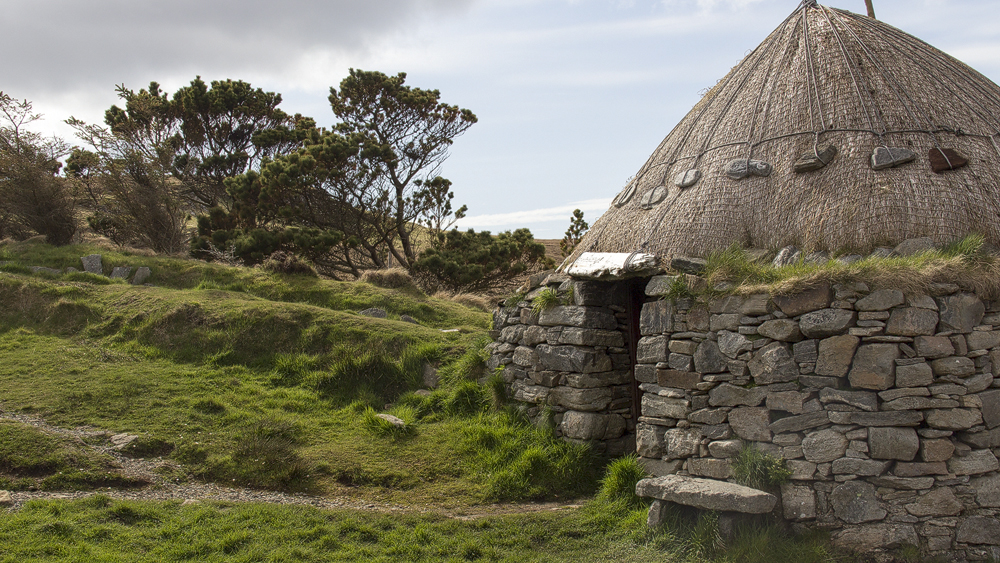
The Norse Mill at Shawbost nestles into a beautiful landscape, a few hundred metres off the road, and being not yet all that well known, it hasn’t yet drawn crowds of tourists. Visitors can therefore take their time drifting back into the past inside the two buildings, undisturbed.
Know: Function and age of the Norse Mill
Mills like this one were once common across the Outer Hebrides, and their design hasn’t changed all that much since the Vikings, which is why it’s also called the “Norse Iron Age Mill”. In essence, it’s made up of two classic blackhouses, like the ones found at Na Gearrannan, with a special purpose.
The mill is thought to have been in service here until 1930, when it was abandoned and fell into disrepair. Schoolchildren began rebuilding it in 1960, though the restoration wasn’t completed until 1995.
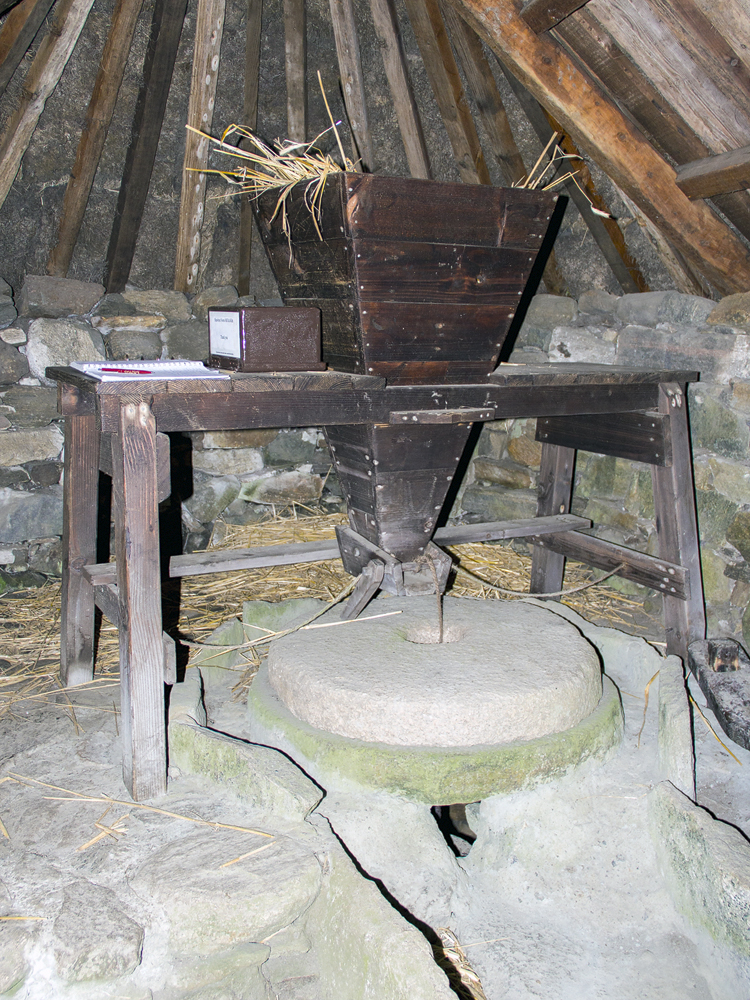
The mill was mainly used to grind barley and, later, maize as well, since these were the two crops grown on Lewis.
Personal note: The view from the stream
We were lucky enough to be the only visitors on a rather beautiful day, and could enjoy the mill and its view undisturbed. If you cross the stream by the mill and walk a few steps up the hill, you’re rewarded with a wonderful view over the two blackhouses and Loch na Muilne beyond them.
Getting there:
The mill lies on the A858, between Carloway to the south and Shawbost to the north. Watch for the brown sign reading “Muillean & Ath – Norse Mill & Kiln” along the road. You can park here and then walk to the mill through the small gate along the footpath. It’s around 200 metres over a hill.