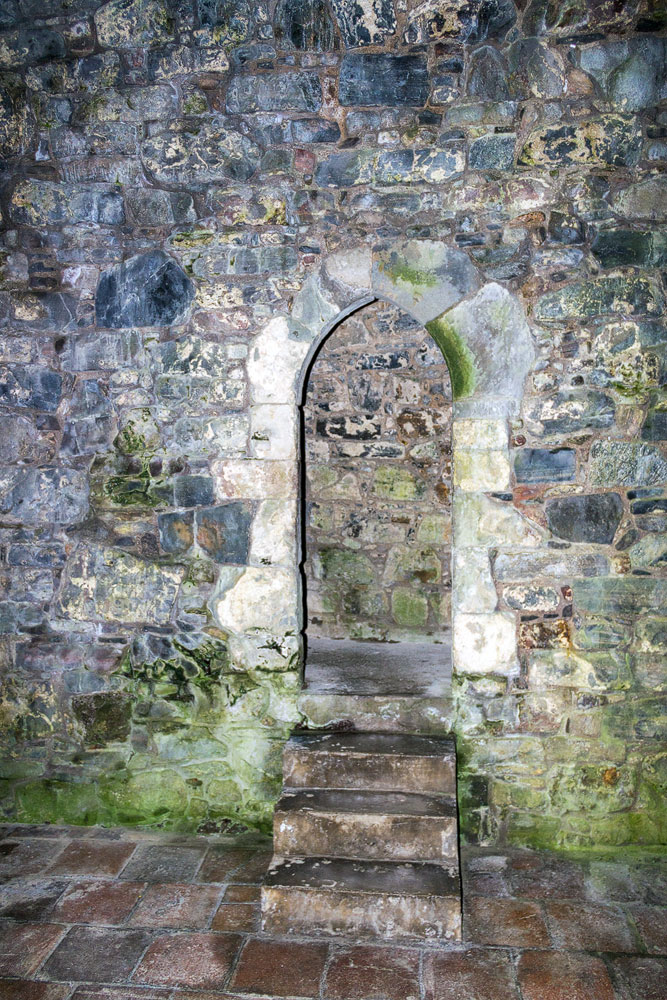
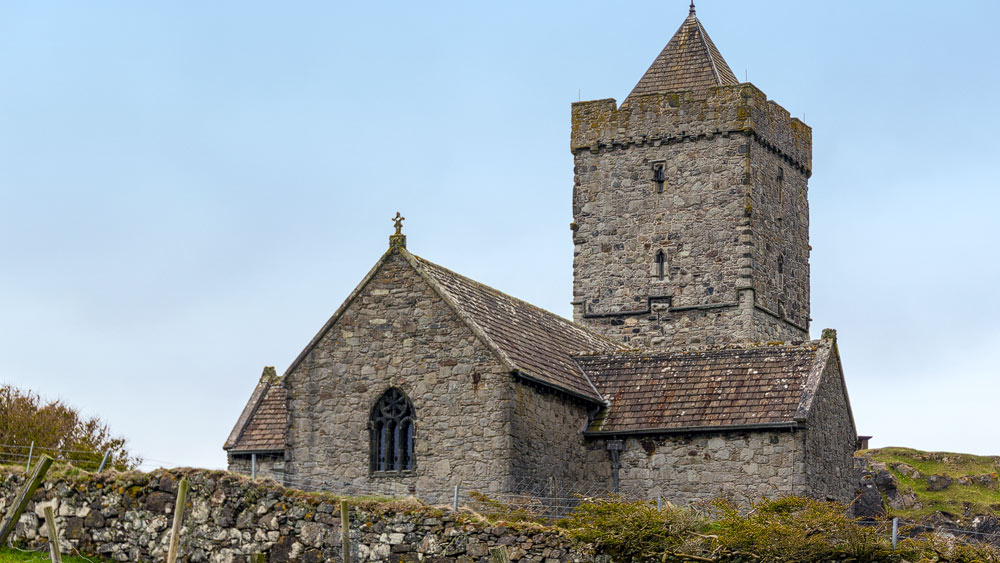
Great sins call for great penance. Alexander MacLeod paid his with an entire church – St Clement’s Church near Rodel. But what crimes was he actually guilty of?
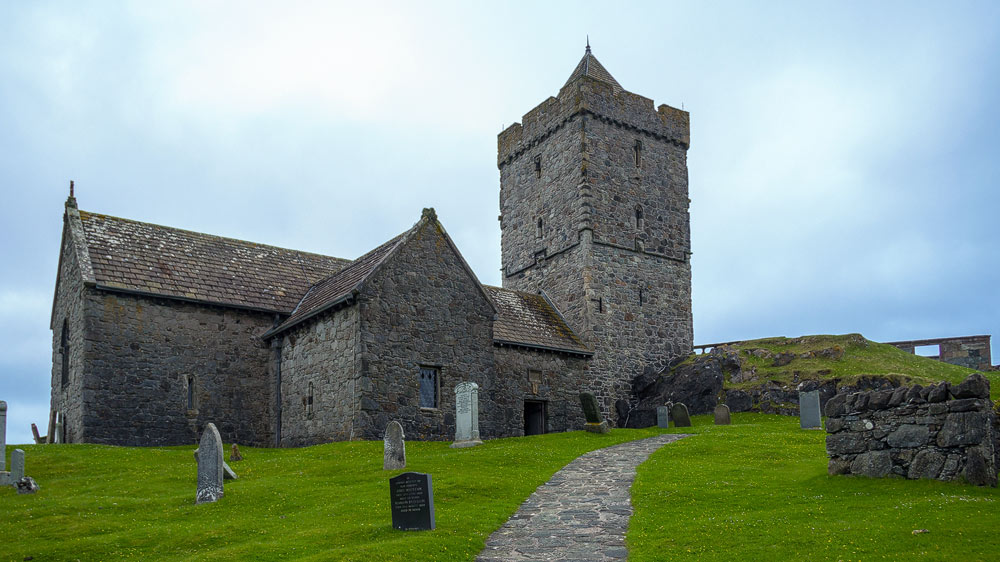
Alasdair Crotach had much to atone for. The massacre of 400 men, women and children weighed on his conscience, and that was only ONE incident in an entire era of barbarity!
Alasdair Crotach is better known today as Alexander MacLeod, chief of Clan MacLeod of Harris in the early 16th century. It was a time of anarchy, since the former rulers of the Western Isles, the Lords of the Isles, had lost their power, and the arm of the Scottish crown did not yet reach far enough to keep law and order here.
So the years around 1500 AD were marked by the feud between the MacDonalds and the MacLeods. And this feud was waged with merciless severity. Severe enough that Alexander had ordered the smoking out and slaughter of 400 people in a cave on the small island of Eigg. He had his reasons …
But he also had a religion: Christianity. And did it not preach mercy and forgiveness?
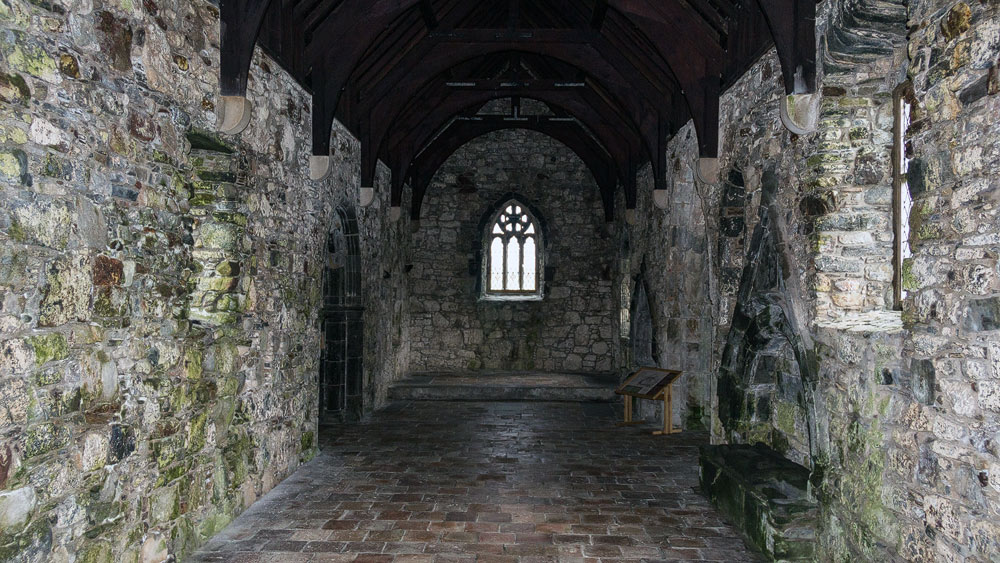
Alexander MacLeod wanted to do penance. He handed his title, his lands and Dunvegan Castle over to his son William and left the Isle of Skye. His destination was the Harris peninsula, part of the Outer Hebrides. Here, together with monks, he built the church of St Clement’s near Rodel. Now a monk himself, he did penance here until the end of his life. His grave can still be seen in the church today.
Know: About St Clement’s Church
The Gaelic name of the church is “Tur Chliamainn” – roughly “Clement’s Tower” in English. It is dedicated to the third pope of Rome, Saint Clement.
It is believed that the church was rebuilt in its present form in 1528, by none other than clan chief Alexander MacLeod, who spent his final years here as a monk. Alexander broke with tradition, incidentally, since the seven MacLeod chiefs before him had all been buried on Iona near Mull.
It is thought that a chapel already stood here before 1528, though no proof of this has yet been found. The building has had little luck since then. It fell victim to fire several times, only to be restored again afterwards.
Since 1913, however, St Clement’s Church has stood unchanged in the middle of a small graveyard. It was built in late Gothic style, with a simple cruciform layout and an imposing square tower.
Inside, alongside Alexander’s grave, you will find further medieval grave slabs and an old stone cross.
Tip: Climb the tower
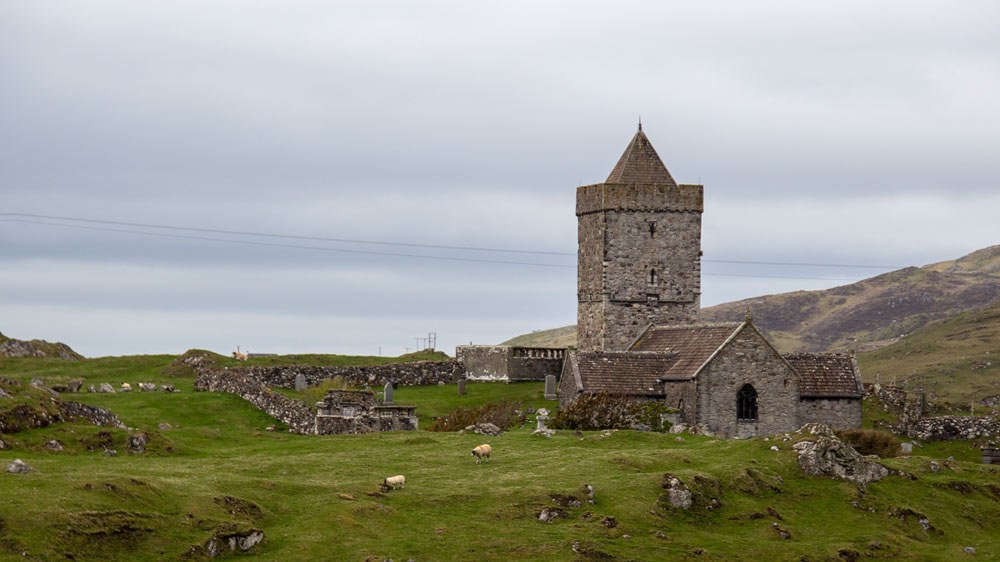
The church tower is open and can be climbed. However, you can’t come out at the top, so you can only take a peek through the small windows – still worth it.
Inside, you should definitely take a look at Alexander MacLeod’s grave. It has beautiful carvings along its side.
Personal note:
Since we had to catch the ferry at Leverburgh, I had far too little time to admire the church at leisure and take better photos inside. A shame.
Getting there:
With a sat nav: Enter “HS5 3TW”, the address of the Rodel Hotel. The church is a little under a kilometre from there.
Without a sat nav: Coming from Tarbert in the north, the fastest route is via the A859 towards Leverburgh. However, keep going straight through Leverburgh and continue south, until after about four kilometres the church appears on the right. If you have some time, you can also take the single-track route from Tarbert. Shortly after Tarbert, follow the signs for “The Golden Route”, which takes you along the wild east coast of the island. Note: not for nervous drivers.