Harsh Atlantic winds and acidic peat soil make South Uist almost infertile. Yet An Garradh Mòr, the great garden, has defied the elements for over 300 years. A visit.
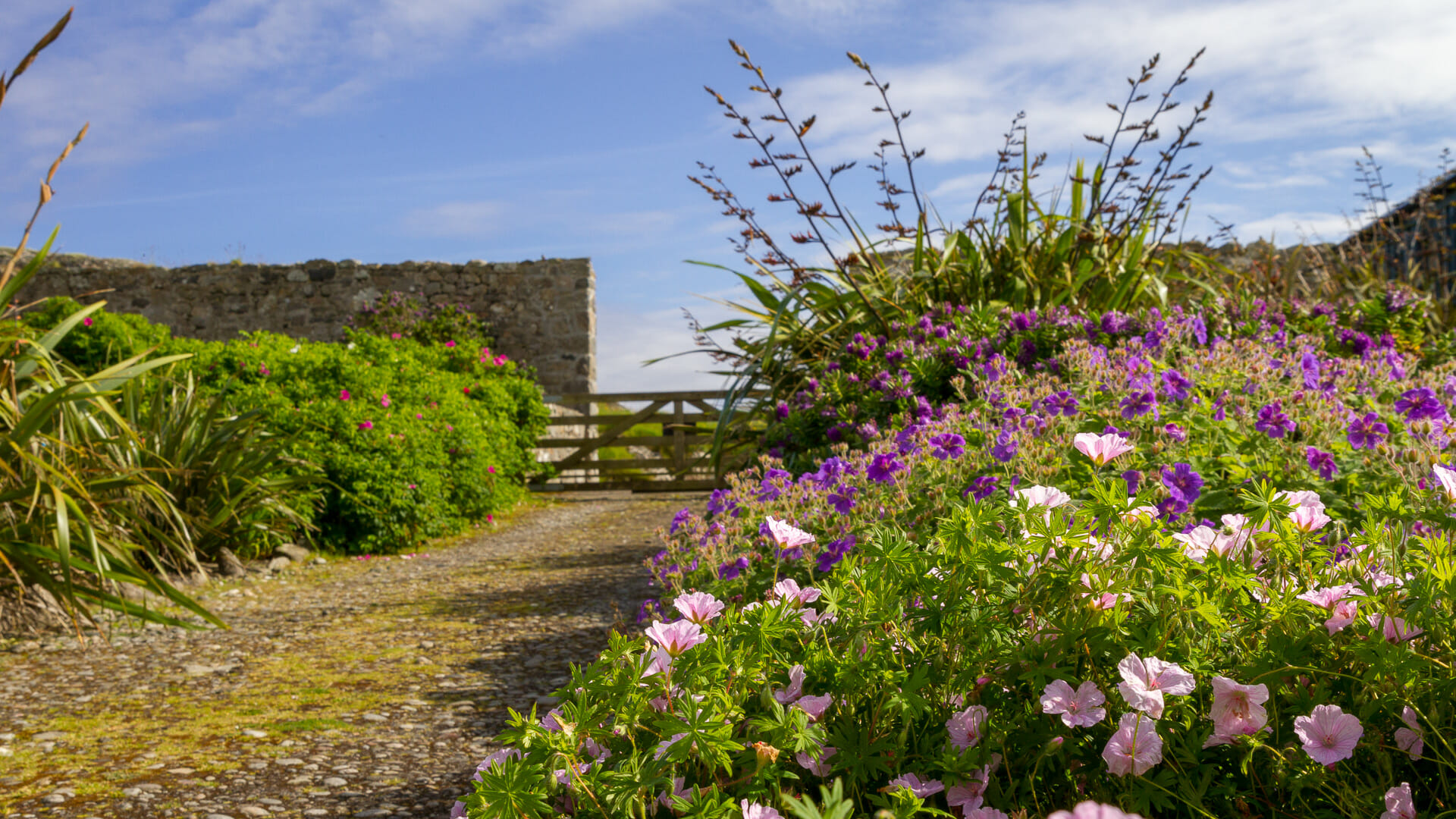
His house and his garden mattered more to Alexander MacDonald I. of Boisdale than the backward-looking rebellion of an upstart prince who had never before set foot on Scottish soil. And so came about that encounter which still makes Alexander famous today.
It was 1745: Charles Edward Stewart, better known today as Bonnie Prince Charlie, wanted to reclaim the throne of Great Britain for his family. On 23 July the prince anchored the French warship La Doutelle off Eriskay, the neighbouring island of South Uist. He immediately summoned MacDonald of Boisdale to him. Boisdale was an important member of Clanranald. But when he saw that the prince had brought neither an army nor sufficient money, he gave Charles only the advice to set off at once back to where he had come from.
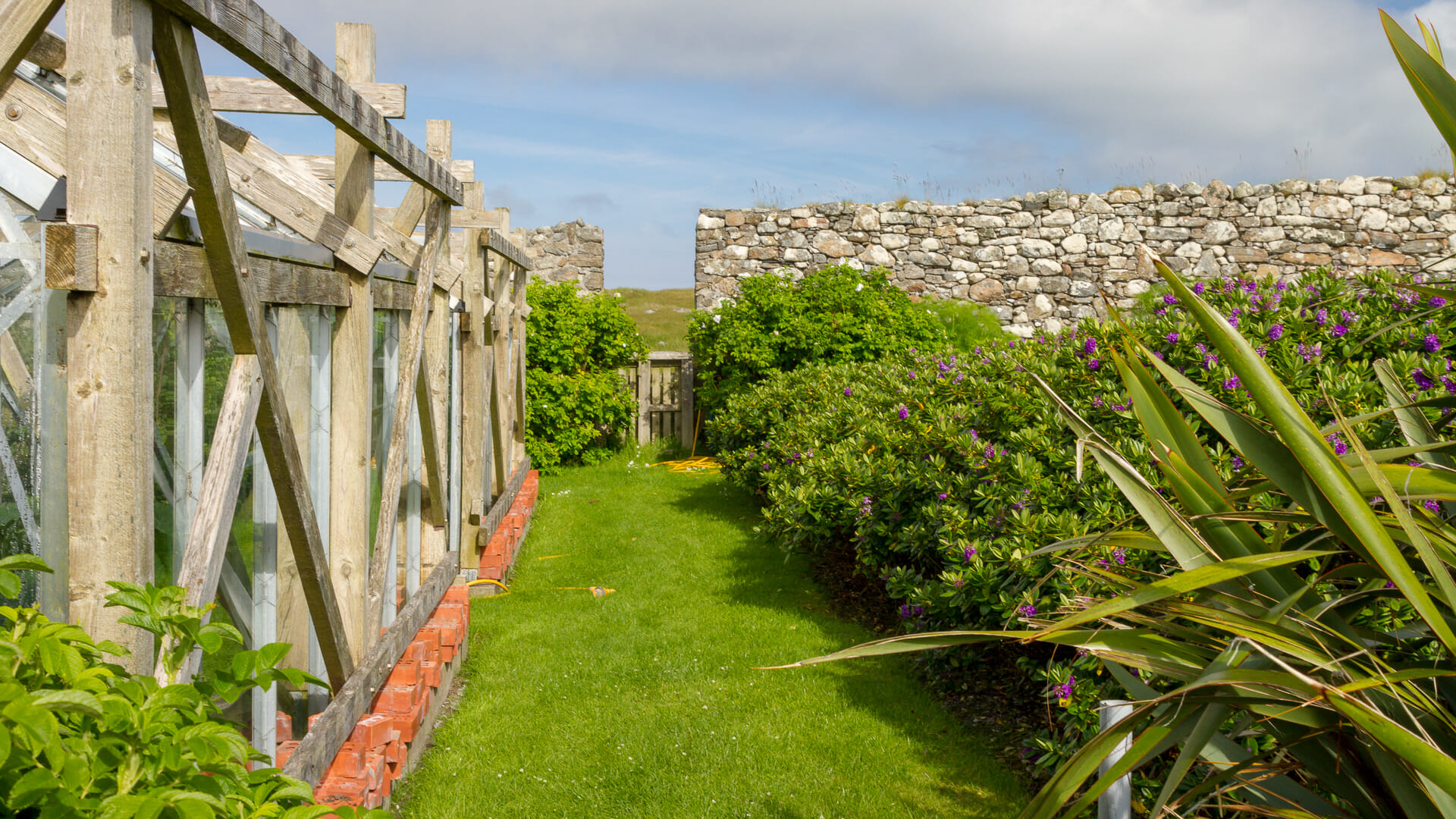
Boisdale had good reasons for this. He was no romantic, but a child of the Enlightenment, a practically minded man. And five years earlier he had gone into debt to build his house – a house that needed a large garden able to feed its inhabitants.
A spirit of experimentation already reigned in his garden, the Garradh Mòr, back then. In 1740 the first potatoes on the Outer Hebrides are said to have been planted here. One reason why the garden is today listed as a Listed Building.
The prince’s half-baked plans put all of this at risk in 1745, but Boisdale played the right card by not supporting Bonnie Prince Charlie. Unlike many of his fellow clansmen, he did not have to go into exile in France.
About a hundred years later, however, his house and garden met a fate that brought suffering across the whole of the Highlands: the so-called Clearances. In 1840 Clanranald, who had once ruled here, sold his estates to Colonel John Gordon of Cluny, who also owned, for example, Vatersay. Cluny was only interested in sheep and money, not gardens. So the land was divided up and the crofting village of Kilbride was created.
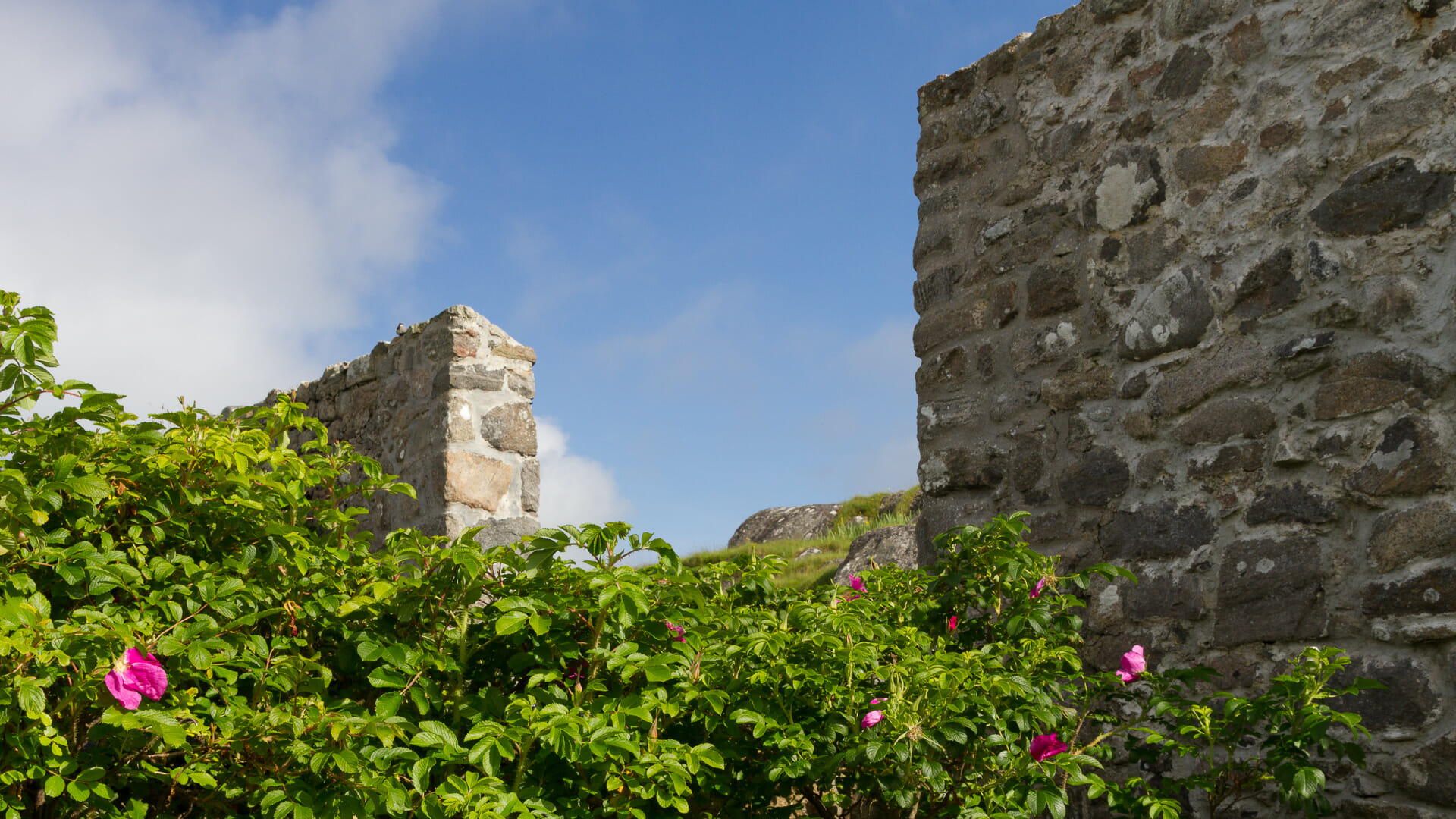
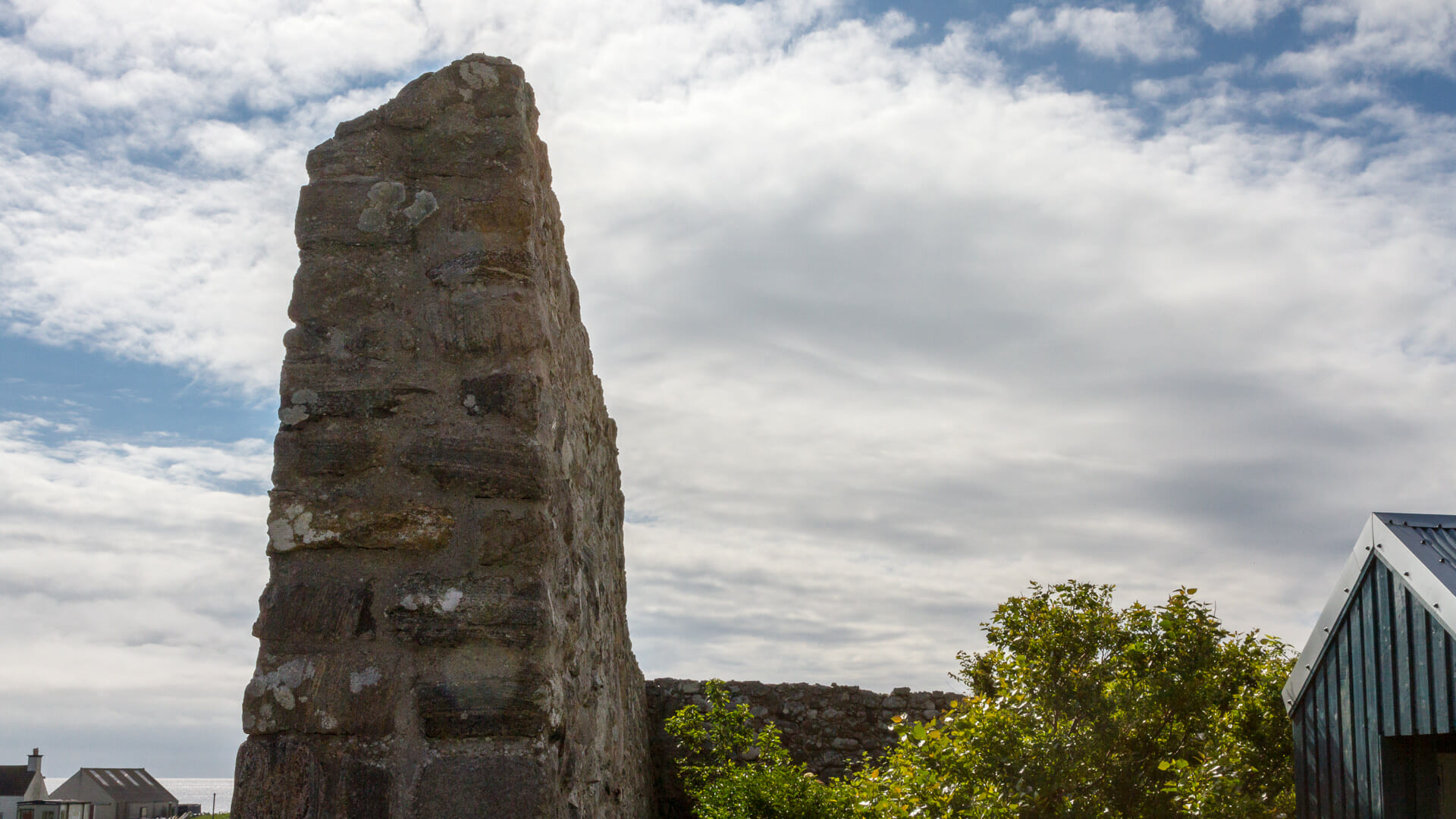
Boisdale’s house did not survive the passage of time; it was demolished in 1911. By then at the latest, the garden ran wild for good. And so An Garradh Mòr would soon have disappeared and been forgotten, had an English couple not come along almost a hundred years later.
In 2002 Denise and Jonathan Bridge began rebuilding the garden – the walls were still standing, but the interior could no longer be called a garden. Like Boisdale, they had to battle adversity. The devastating hurricane of 2005, which also killed a number of islanders, destroyed the work done so far.
Unfortunately, the fate of An Garradh Mòr is uncertain. Further storms and unclear funding currently seem, at the very least, to have taken the project off the table for public access. But at least you’ll know, when you drive past, what a historic place lies there by the road.
Know-how: An Garradh Mòr and Walled Gardens
Walled gardens have always been widespread in Scotland. The walls were built from local stone and pointed with lime. They protected the soil and the plants from the wind, and behind them a microclimate of their own developed, one that even allowed the cultivation of non-native plants. At the same time, the high walls kept pests out.
In most cases, however, fertile soil first had to be created on the Hebrides. Because the ground here is usually either acidic peat or sandy. Only at the seam between the two does the so-called Machair arise, which produces fertile meadows. But that isn’t enough for growing vegetables. So earth was also brought in behind the walls.
It is thought that some of this soil may even have come from France. The Outer Hebrides shipped livestock there. On the way back the boats took on lighter luxury goods and therefore needed ballast. That could also be so-called “night soil” – a polite term for human excrement, which cleaning crews collected from the latrines at night. What is certain is that the garden was also repeatedly fertilised with seaweed. The layer of fertile soil is now a good metre thick.
Getting there:
With satnav: “HS8 5TT” takes you to Kilbride; the garden lies directly on the road.
Without satnav: Coming from the north on South Uist’s main road, keep driving. At Dalabrog, however, don’t continue towards Loch Baghasdail, but turn off towards Pol a’ Charra and Eirisgeigh. Follow the B888. At some point it bends to the right. Then watch out for the campsite. An Garradh Mòr lies directly behind it. Please look for a parking spot carefully and sensibly.