Scotland’s north-west is home to a type of meadow found nowhere else in the world: the machair. Every summer it delights with a unique beauty – yet the machair is fragile, and its very existence is under threat.
The meadow begins right behind the sea. What a sight it offers! Wildflowers bloom here – rare orchids, pinks, daisies and plenty of clover. Rare bird species like the corncrake or the hen harrier hide among the flowers and grasses, and above it all hover Scotland’s rare bumblebees.
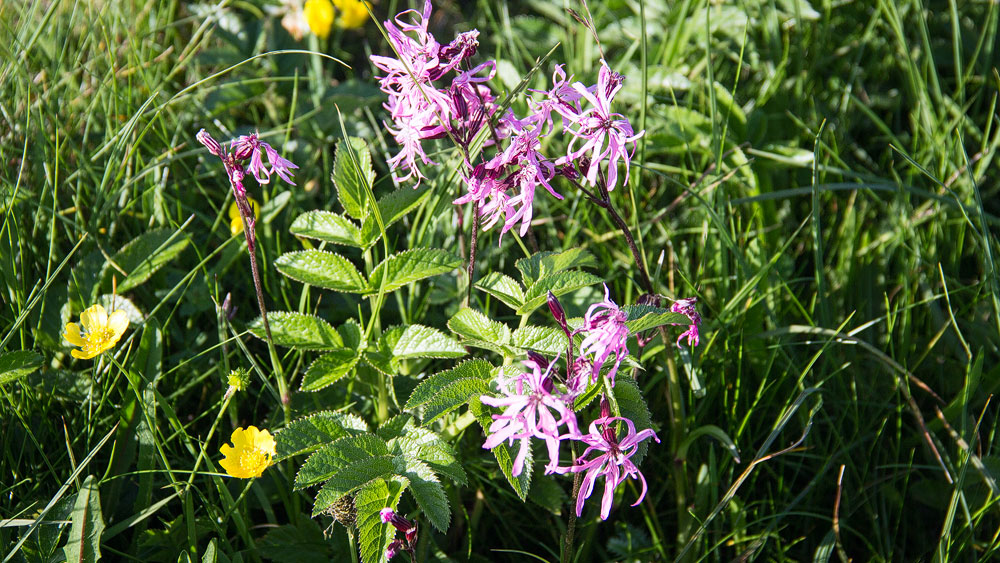
These beautiful meadows by the sea have their own name: machair. It’s unique to north-west Scotland (with a little of it still found in north-west Ireland too). But what makes it so special? After all, there’s no shortage of wildflower meadows in Germany.
That’s exactly the point: in the Highlands, such meadows are rare, since acidic peat soil dominates almost everywhere here. That’s also why you’ll only find a few areas in the west where, say, grain is grown. The right kind of soil is simply missing.
But machair is precisely the kind of soil on which at least a few hardy varieties of grain can be grown even in the west of Scotland, and on which flowers thrive that you won’t otherwise find in the Highlands. Since it essentially consists of nothing more than a thin layer of wind-blown sand, though, it’s fragile and consequently under threat today.
The heartland of machair: the Outer Hebrides
The finest and most expansive machair is probably found on South Uist. It runs along the island’s equally expansive sandy beach, which stretches almost the whole length of its west coast.
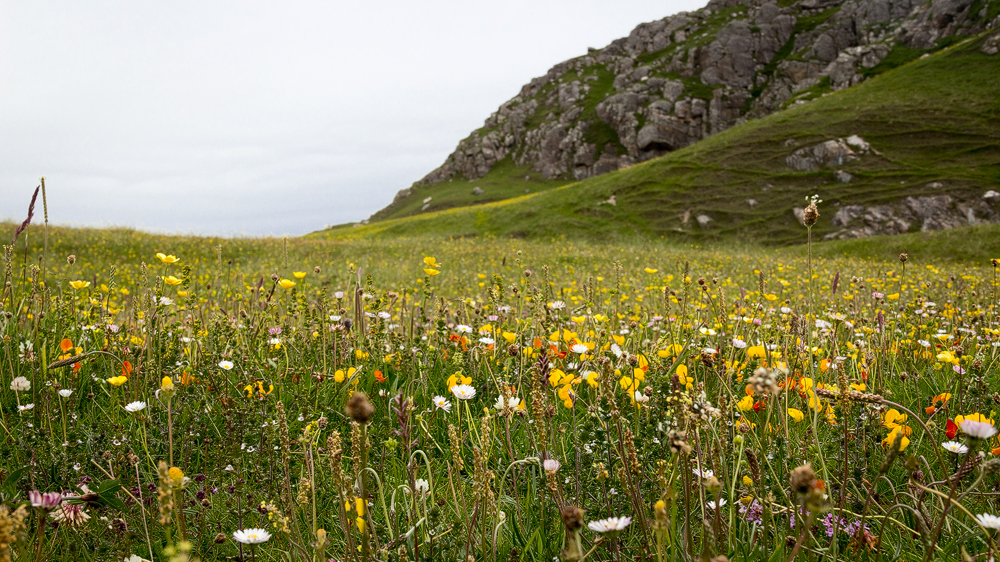
But this special soil also occurs on Barra, North Uist, Berneray, Harris and Lewis, as well as on Tiree, Islay, parts of the Isle of Skye and Mull, and in a few stretches of Scotland’s west and north coast – machair is even found on Orkney and Shetland.
Machair is so closely tied to the Outer Hebrides that it even gave its name to a Scottish Gaelic-language soap opera. From 1993 to 1999, 151 episodes of “Machair”, spread across twelve seasons, flickered across television screens. It was filmed on the Isle of Lewis.
Experiencing machair: flora and fauna
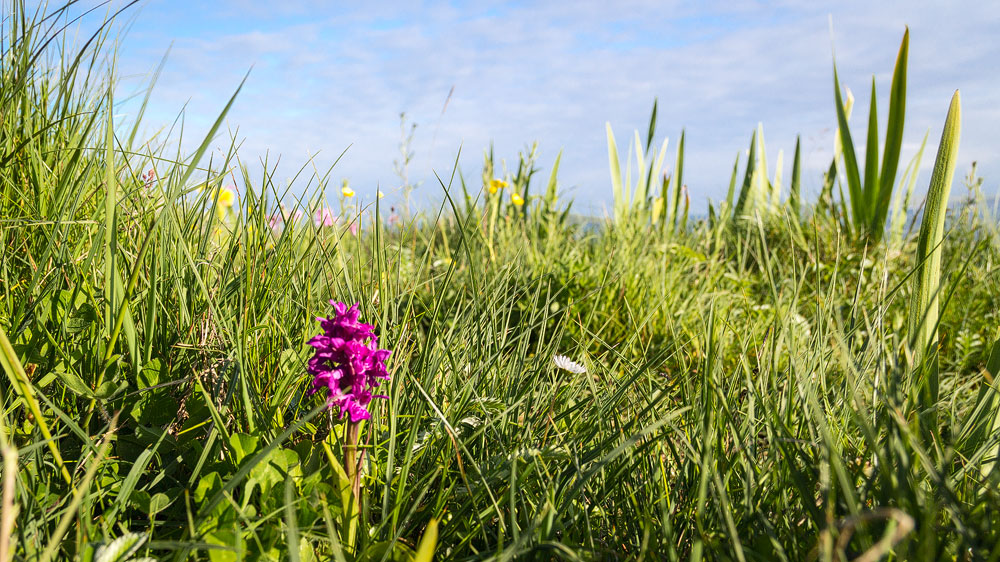
The machair is a paradise for plant lovers. A particular highlight: the orchids. Early marsh orchids grow here, for example, along with several other species. The Dactylorhiza majalis scotica is found nowhere else at all. Cotton grass is a common sight too, along with plenty of clover, naturally, and many other meadow flowers.
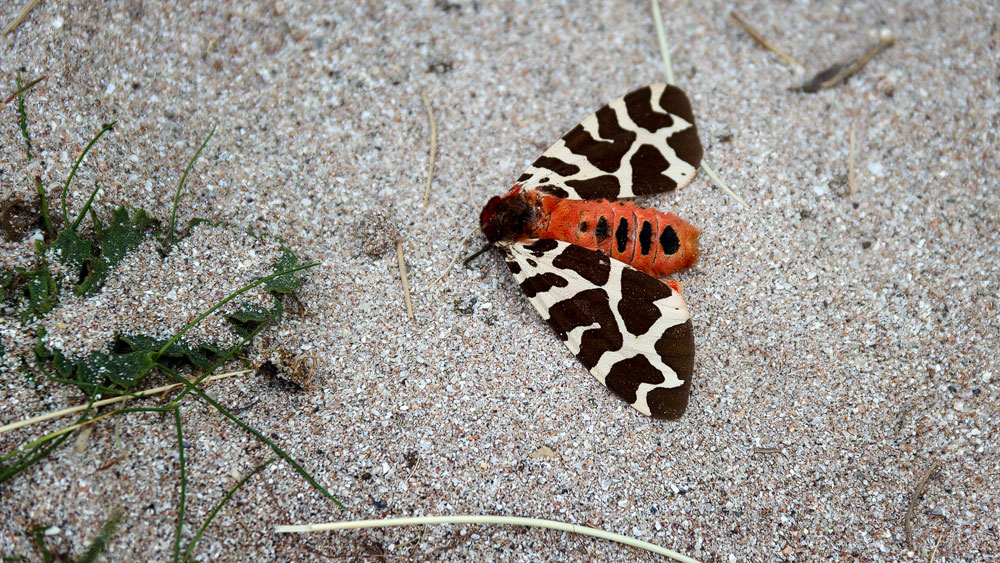
For flowers to reproduce, they need insects. The notorious Highland midge is barely suited to pollinating plants. But here in the machair you’ll find the bumblebee, which is otherwise rare in Scotland. Even a few butterflies can be spotted here.
The machair also offers shelter and a fitting habitat to all sorts of rare birds. Chief among them is surely the corncrake (Crex Crex). Its calls are frequently heard, even though the bird itself rarely shows itself – unless you’re very lucky. But waders are most commonly represented, such as lapwings and turnstones. A fantastic spot to see these birds in, around and above the machair is the Balranald Reserve on North Uist.
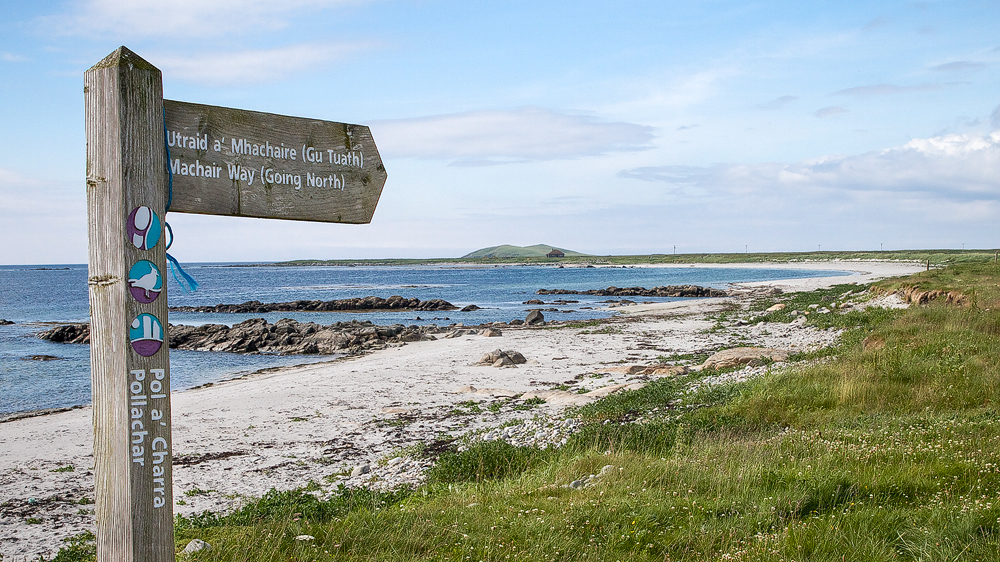
On South Uist, the Machair Way runs along the entire length of the beach and can be walked by visitors.
Definition: so what exactly is machair?
A word of warning: this next part gets a bit more scientific, and so a bit drier too. Academics would like to set out clear criteria for machair, in order to identify the important areas and, ideally, protect them. And they’ve had a hard time of it.
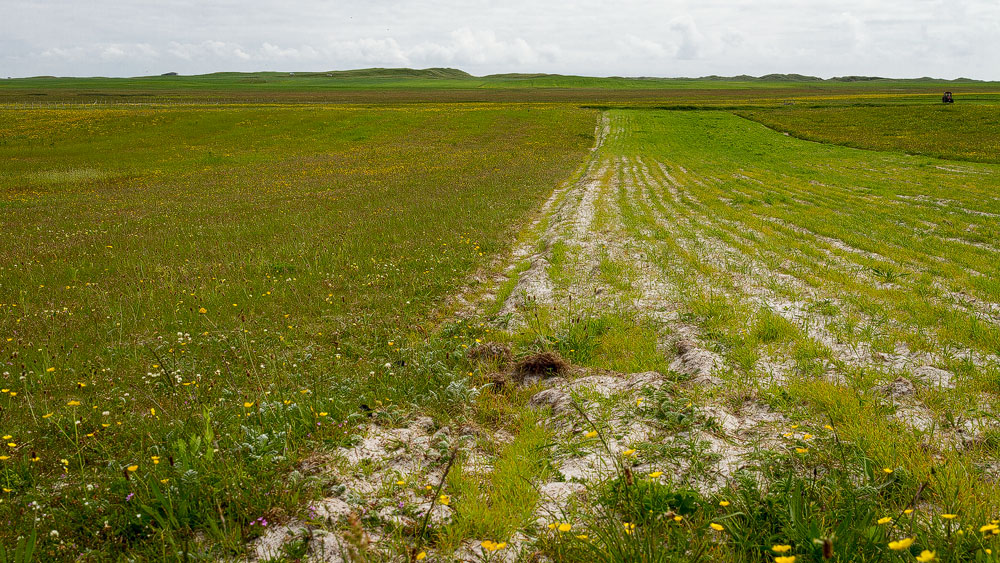
In 1976, William Ritchie laid out several criteria: machair, he said, is a thin, lime-rich soil on gently undulating terrain beside an ocean, with the corresponding damp, cool conditions. It must also be grazed occasionally by livestock and should flood in winter. He also provided a catalogue of plants that should be found there: white clover, bird’s-foot trefoil, red fescue, yarrow, lady’s bedstraw, ribwort plantain, common eyebright and a particular species of moss. Tall dune grass, on the other hand, should not occur there.
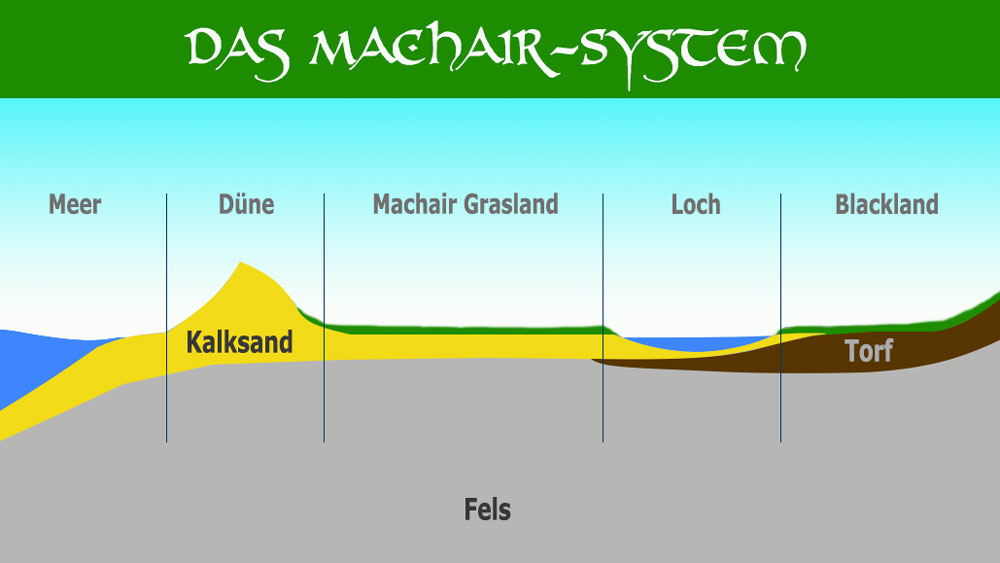
The problem with Ritchie’s criteria: they’re too narrowly defined. So another scientist named Stewart Angus proposed (see here) taking much more of the machair’s surrounding environment into account. Sea, dune, grassland, freshwater lochs, right up to where the sand still overlies the peat (the “blacklands”), together form a typical machair environment. He thus began describing a kind of machair system, within which the machair grassland could then be identified – or, in his own words:
“By identifying machair systems, it should then be possible to identify the machair grasslands within these.”
Stewart Angus, De tha machair? Towards a machair definition
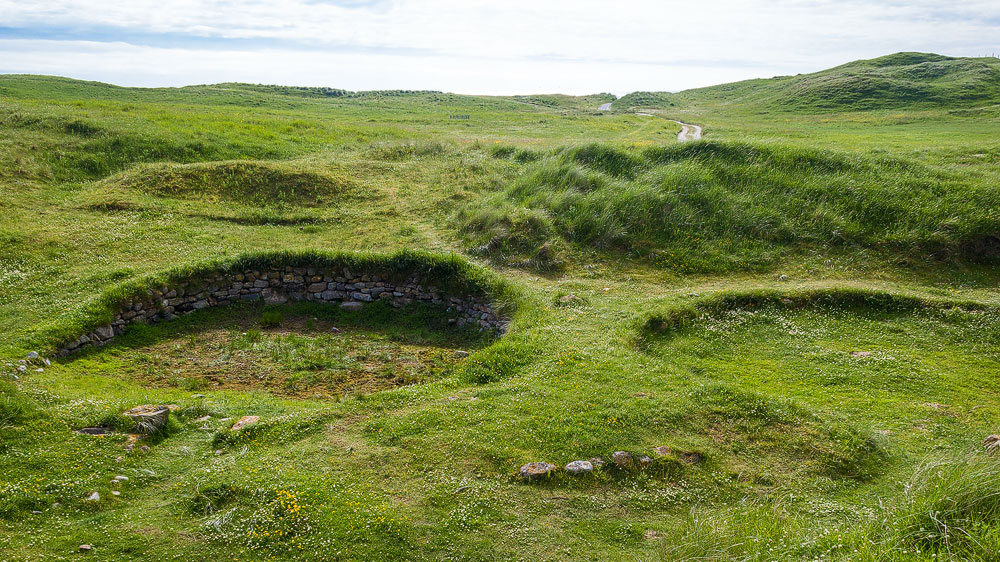
A key part of the machair story is human involvement in its development. Specifically, that means grazing by livestock and management through arable farming.
This relationship between machair and people appears to date back as far as the Mesolithic, around 5000 BC, as suggested by a 2004 paper. Finds of old settlements near machair, such as the Bronze Age site of Cladh Hallan on South Uist or the Iron Age site of Bostadh on Great Bernera, also point to an early relationship between people and machair.
Crofters still grow hardy grain varieties there today, usually oats and rye. The field is cultivated for one season and then left to rest for a year or two. Fertiliser is applied too, usually seaweed, since artificial fertiliser washes out too quickly in the sandy soil.
Pronunciation and origin: the word “machair”
The word “machair” comes from Gaelic, the ancient language of the western Highlands. It’s pronounced roughly “MA-cher” (you can hear the exact pronunciation here). Originally, the term simply described a flat plain, and it also found its way into several place names, such as Machrihanish on the west coast of the Kintyre peninsula, or Machir Bay on Islay.
Today, though, the word machair has come to mean the fertile strip along the coast, lying between sea and moor.
