It is considered to be one of the last of its kind: Duffus Castle once protected the influential Murray family from enemies and consolidated the power of the Scottish king. But it had a fatal flaw.
Duffus Castle stood on the north bank. Yes, you read that right: The castle once stood by the sea. In the Middle Ages, an estuary stretched all the way to the town of Elgin and its cathedral here, where today there is a green plain. Today, only a small lake remains.
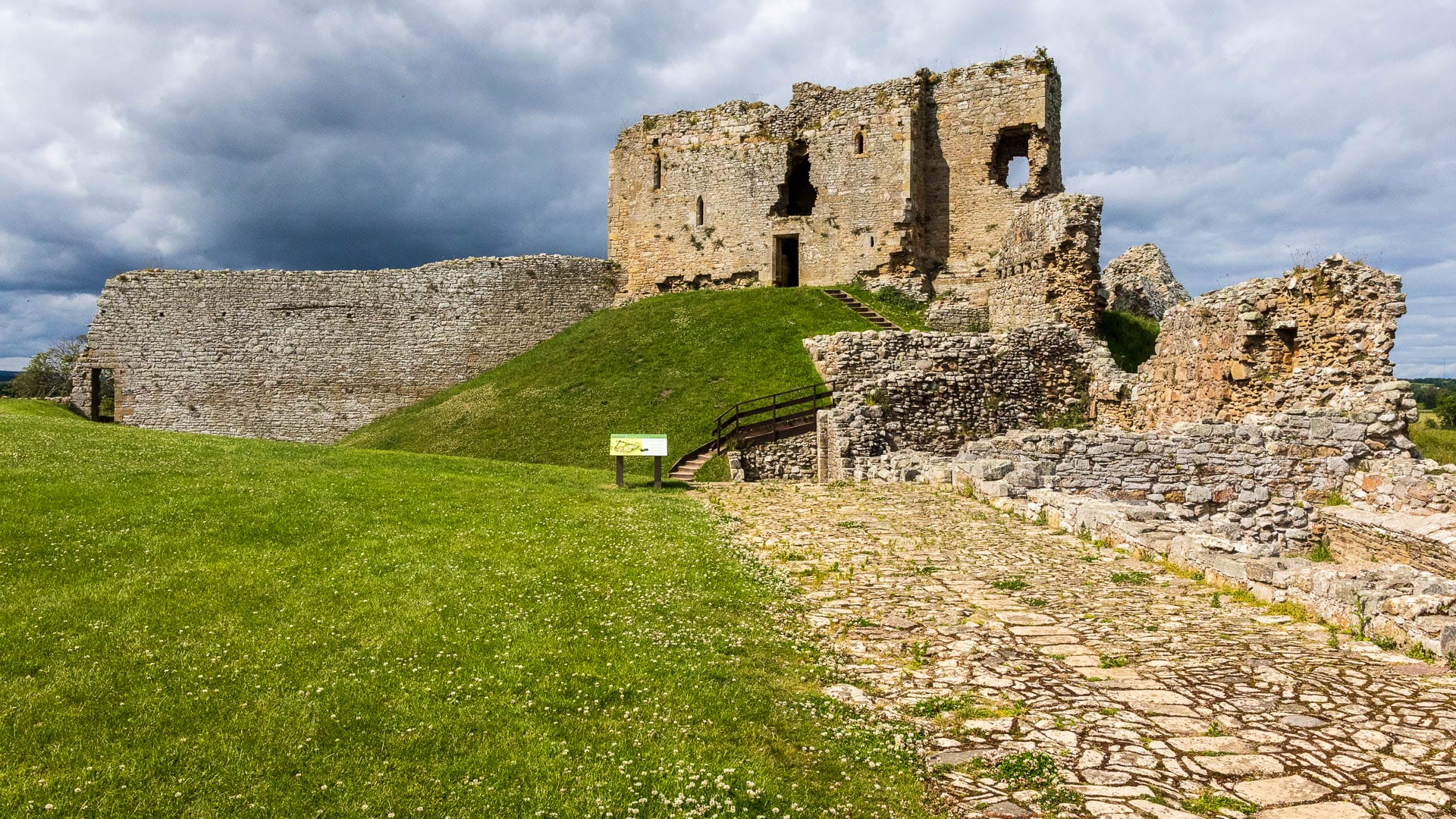
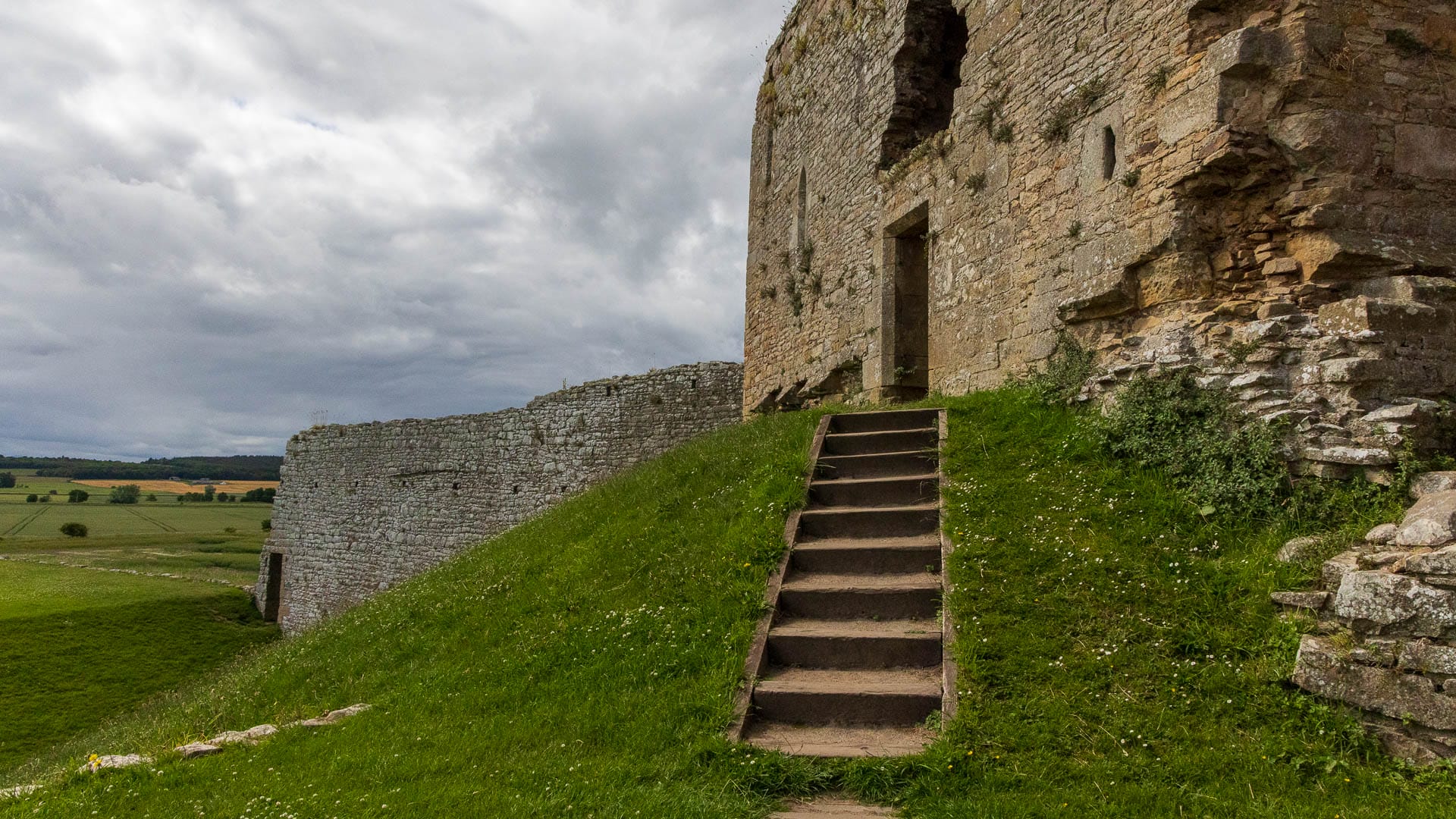
Duffus Castle is now a ruin, but it is well worth a visit – for several reasons. There is, of course, the castle itself. It is one of the few remaining examples of a “motte and bailey castle”. In other words, a wooden defence tower stood on a man-made castle hill (motte). This was where the inhabitants could retreat to in the event of an attack. (Find out more about the development of Scottish castles over the centuries)
However, most people lived in the bailey, the castle courtyard at the foot of the hill. Stables and workshops were also located here.

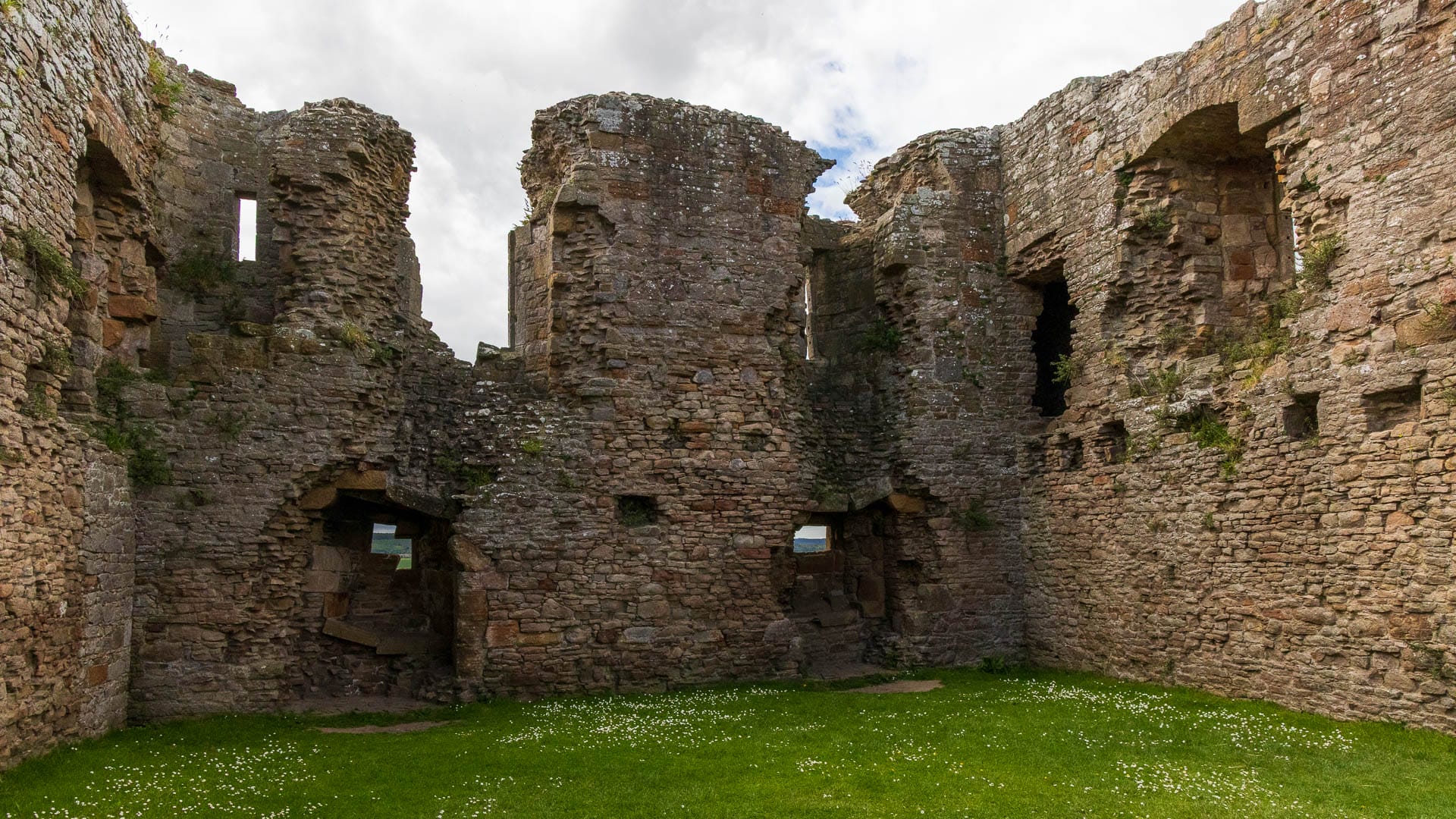
The wooden tower was later replaced by a stone structure. A fatal mistake. The man-made hill did not provide enough support for the walls. And so, in the 14th century, a whole section of the building slipped away.
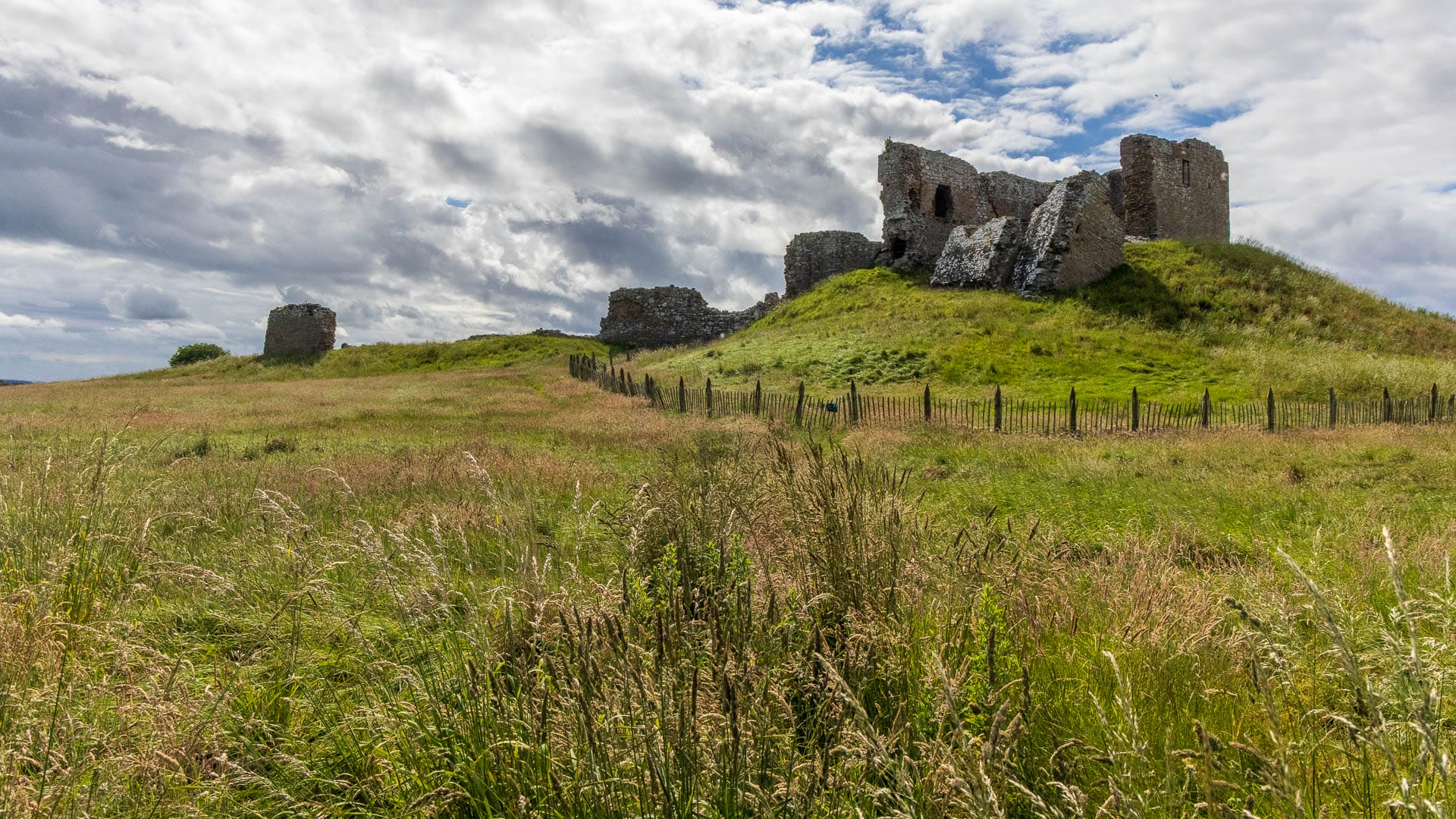
Nevertheless, the castle remained a power factor until it was abandoned in 1705. By that time, Loch Spynie was already cut off from the sea. In the following decades it was also drained and reduced to its present size.
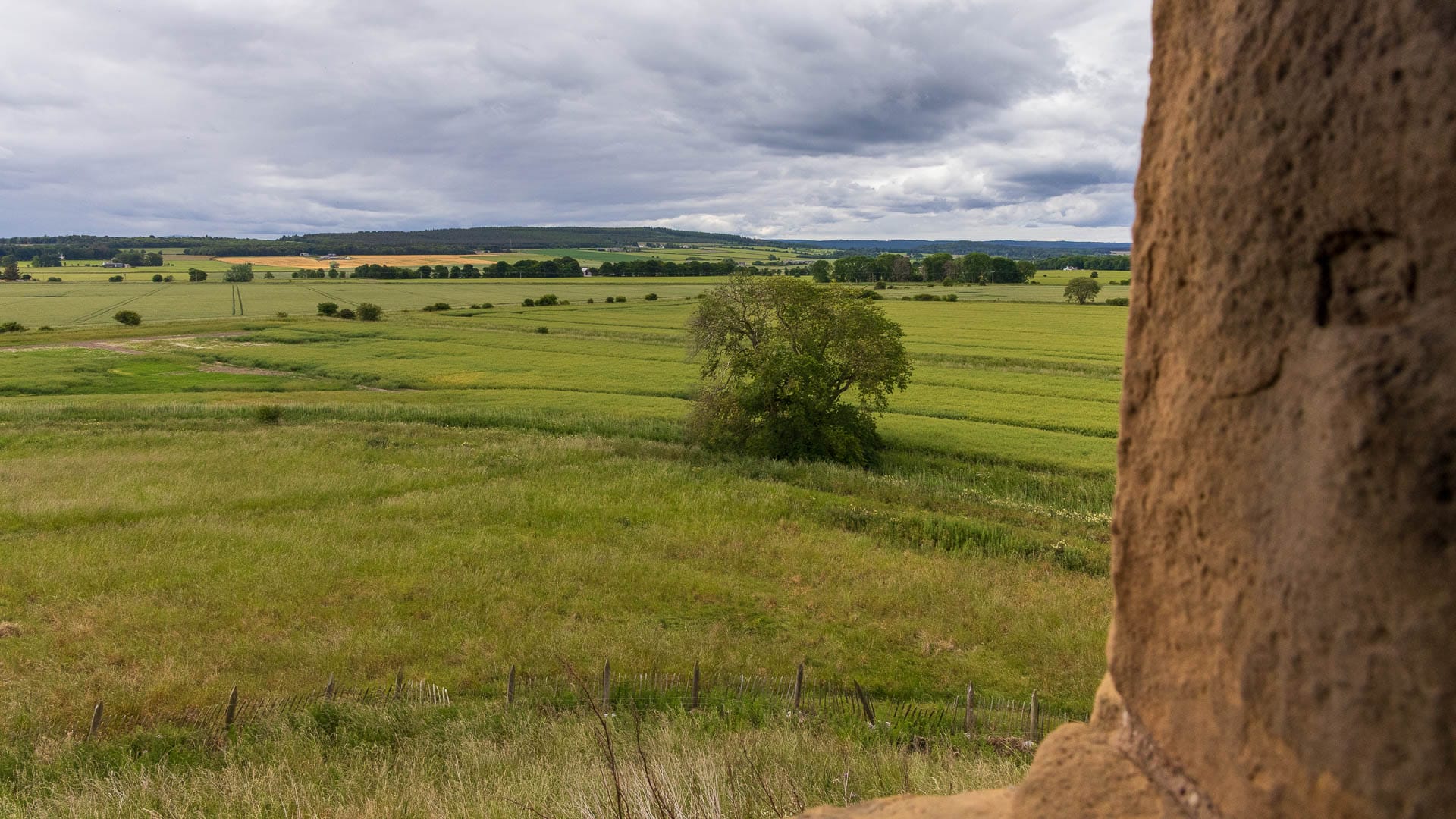
The reclaimed land is now known as the Laich of Moray. This very fertile plain is also a reason to visit. A marvellous biotope has been created around Duffus Castle.
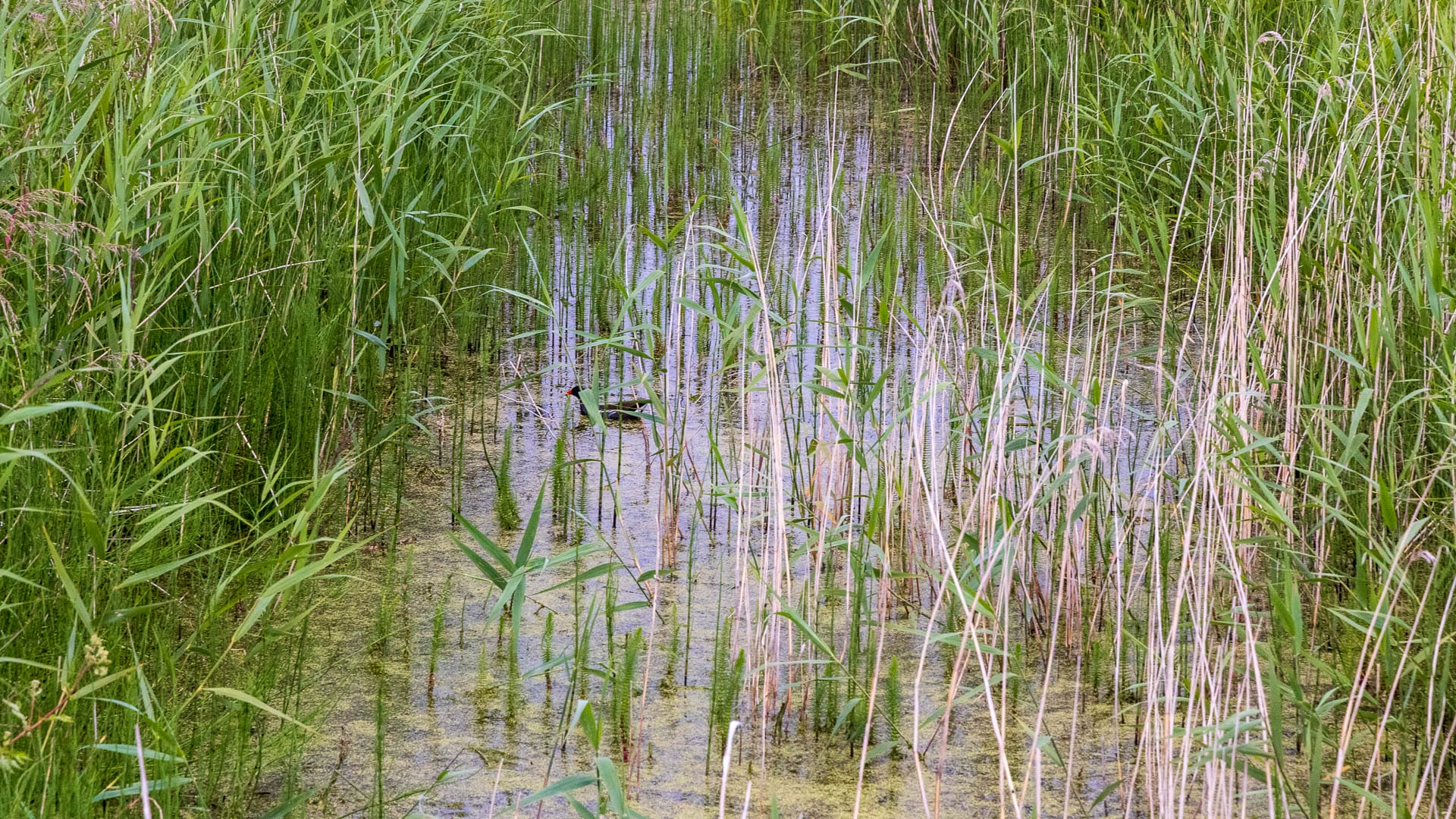
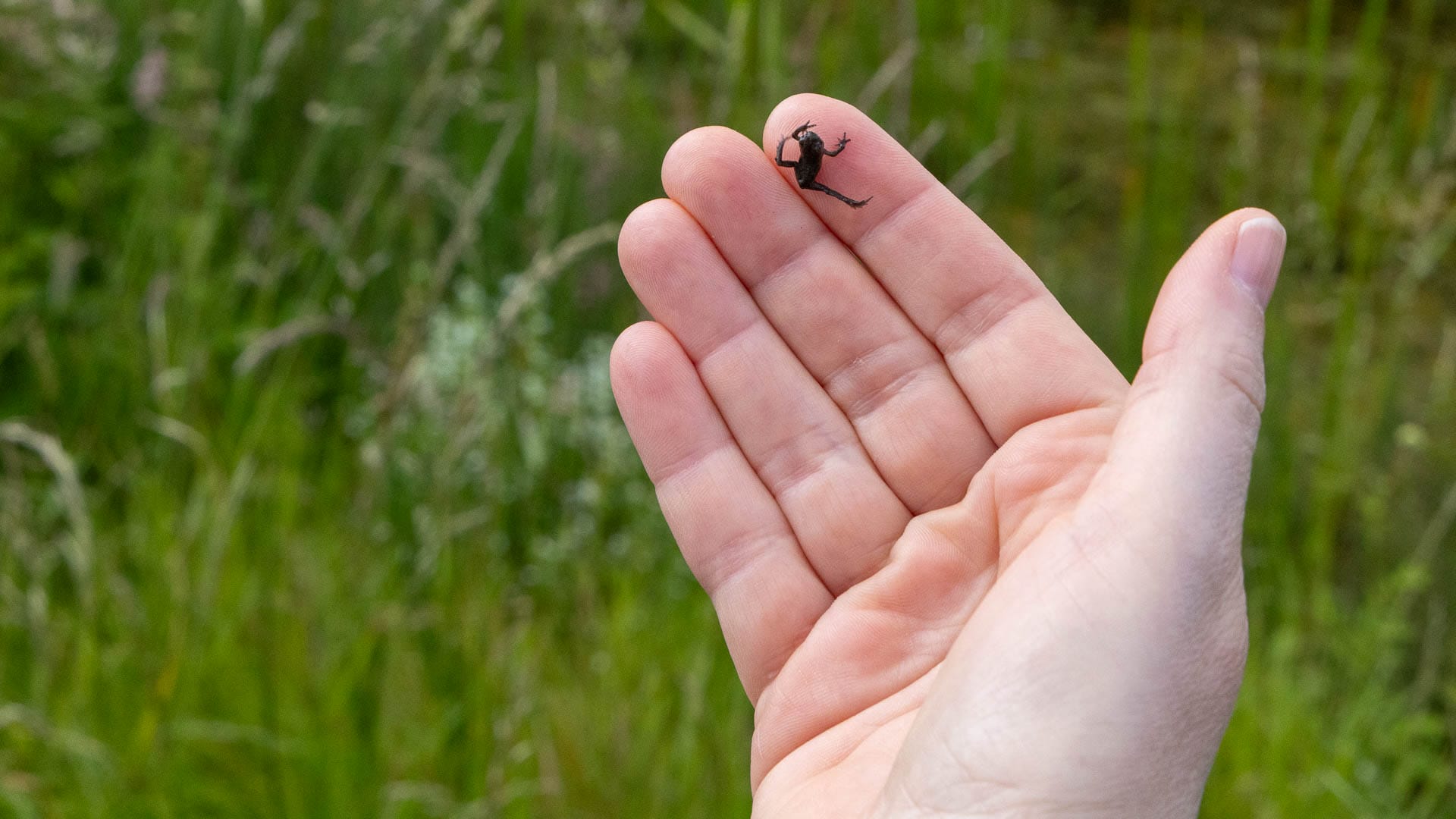
In summer, you can see ducks paddling across the water with their young. Small frogs hop around (and sometimes have to be carefully brought to the water from the path).
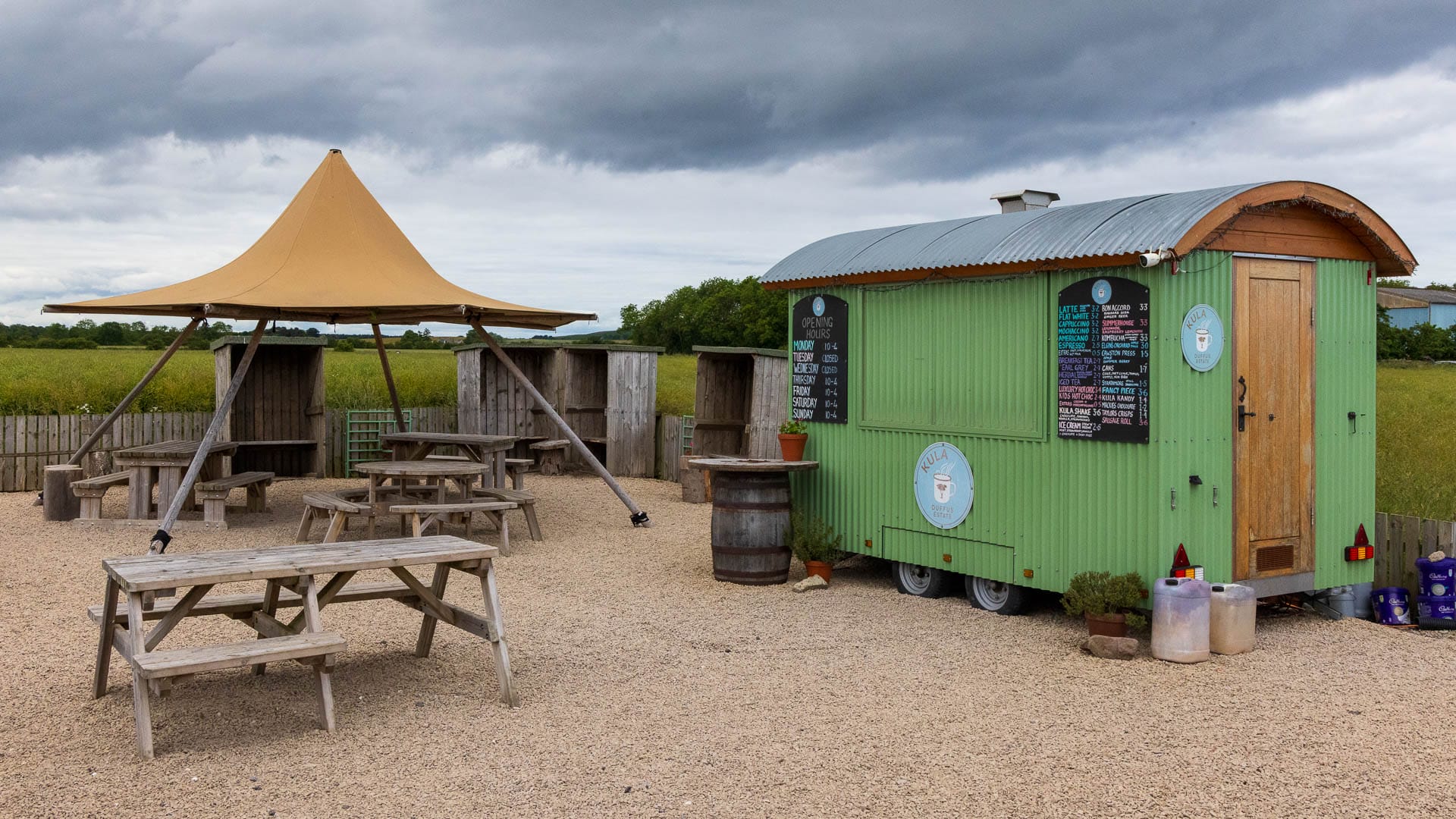
And there’s a third reason to drive to Duffus Castle. A small café has established itself in the wonderful landscape by the car park. It’s a wonderful place to sit in good weather.
Duffus Castle offers its visitors a glimpse into the Middle Ages, shows a living nature and
Knowledge: Duffus Castle and its inhabitants
Duffus Castle tells the story of King David I and his struggle for power in Scotland. He was associated with the English royal family and was not without controversy in Scotland. There were repeated uprisings against him, especially in Moray.
In order to consolidate his power here, he gave land to a man with a Flemish name: Freskin. However, it is assumed that he did not actually come from Flanders in what is now Belgium, but instead from Flemish immigrants to Wales. The Flemings were used by the English and Scottish royal families to repopulate and control British territory. They were battle-hardened knights and helped to establish the new feudal system.
Freskin was no different here. With Duffus Castle, he initially built a wooden power base on the shores of the Sea of Spynie. He was very successful and became known as “de Morovia”, meaning “of Moray”. This gave rise to the name “Murray”, one of the most powerful Scottish families of all. Because Freskin also received territories near Linlithgow, the name is also present there. Andrew Murray, for example, was William Wallace’s congenial partner at the Battle of Stirling Bridge on 11 September 1297.
In the north, the descendants formed the Sutherland family, an equally powerful branch of the family.

However, the stone castle we see today only existed from around 1300, when Sir Reginald Cheyne the Elder took over Duffus Castle. He was also allied with the English royal family. The conqueror Edward I wanted to consolidate his power in Scotland in 1305 and granted Cheyne building materials. At this time, Duffus was transformed into a wall of stone. The English were not thrown out of the country by Robert the Bruce until a few years later at the Battle of Bannockburn.
However, by the middle of the 14th century, the castle keep, i.e. the building on the hill, must have slipped away. The nobles now lived in buildings in the courtyard.

Duffus once again appeared in the history books when Viscount Dundee was catered for here in 1689, shortly before he rode into battle at Killiecrankie. At the beginning of the 18th century, Duffus Castle began to fall into disrepair.
How to get there
With satnav: The postcode “IV30 5RH” will take you to the area.
Without sat nav: The A96 leads into Elgin. Stay on it and look out at the roundabouts for the turn off to Moray Motor Museum. Follow North Street past the museum. Then turn left towards “Hopeman” and “Burghead”. Shortly afterwards, turn right towards Hopeman onto the B9012. Stay on the road until the brown sign for Duffus Castle points to the right. Turn off there and look out for the next brown sign to the right. Again, follow the sign and drive to the car park.