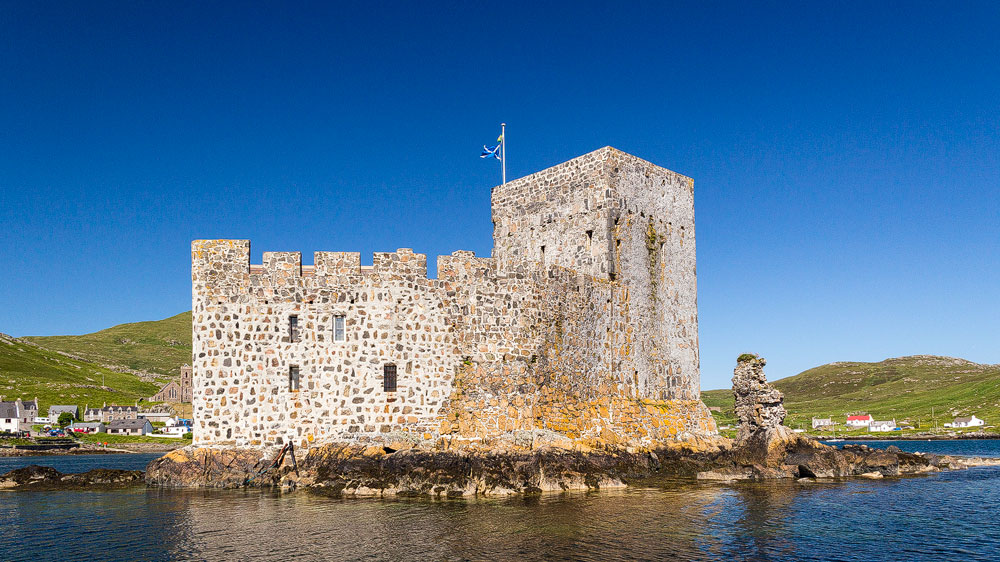
For 600 years it has stood out in the sea, defying the waves – only time managed to bring its walls down. That Kisimul Castle can still be admired today is thanks to a clan chief from the USA.
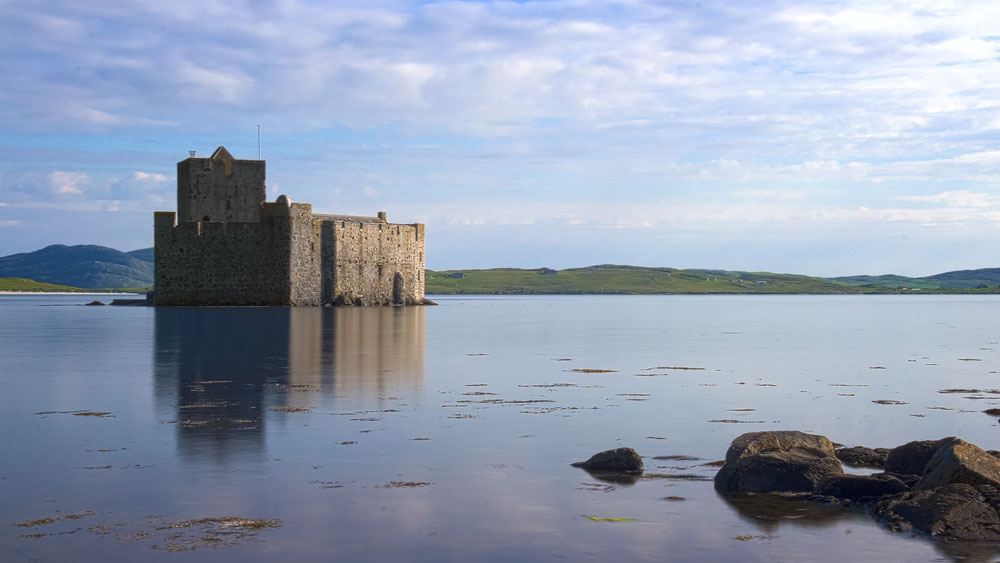
Robert Lister MacNeil built models of castles even as a child. One of them fascinated him above all others: Kisimul Castle on Barra, the castle of his ancestors. But Robert was born in the wrong place at the wrong time. When he came into the world in America in 1889, his ancestors on Barra had already given up the castle – and the whole island – more than 40 years earlier. Debt had forced their hand.
The local population of the time had little reverence for the old castle. They helped themselves to stones from its walls, using them as ballast for ships. Kisimul Castle fell into ruin.
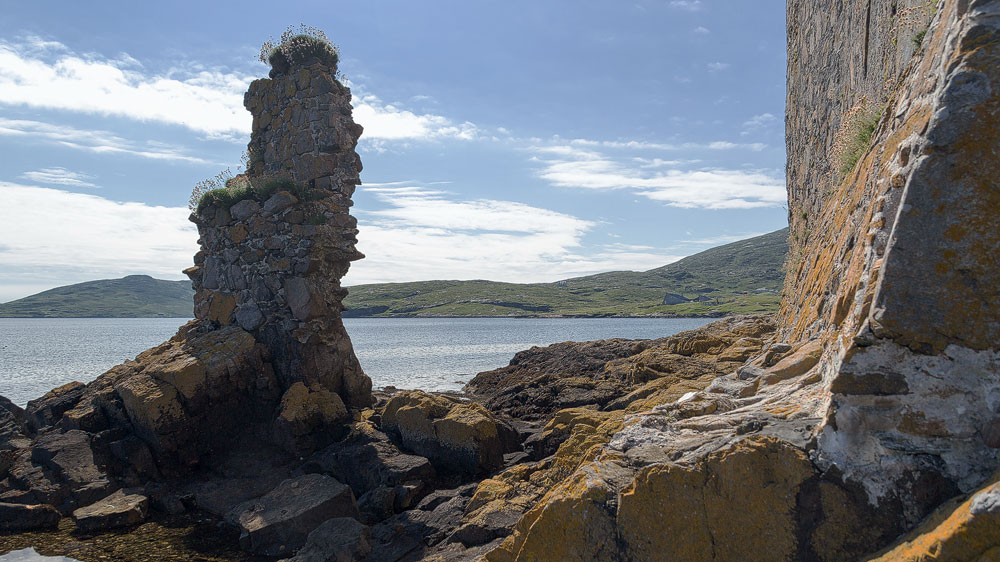
And yet the castle in the bay of Castlebay had withstood the waves of the Atlantic – and plenty of enemies – for almost 600 years. In the 15th century, the MacNeils were part of the Lords of the Isles, the island lords who ruled the Inner and Outer Hebrides. They weren’t a particularly powerful clan, but they were at least granted the island of Barra. Their stronghold became Kisimul Castle.
Reaching islands only by boat was simply normal for the island lords. They thought of the sea as a road, travelled with their agile birlinns – fast, manoeuvrable sailing boats. And at Kisimul too, the clan chief and his retinue would have arrived by birlinn.
By Robert’s time, nothing remained of that rule – not even an intact castle. But that was about to change.
Robert Lister MacNeil grew up and became an architect. The Barra line of clan chiefs could no longer find a suitable successor, so the search extended across the Atlantic. The clan found what it was looking for in Robert Lister MacNeil – at the age of 25, the clan made him chief. A chief without a proper seat? That simply wouldn’t do!
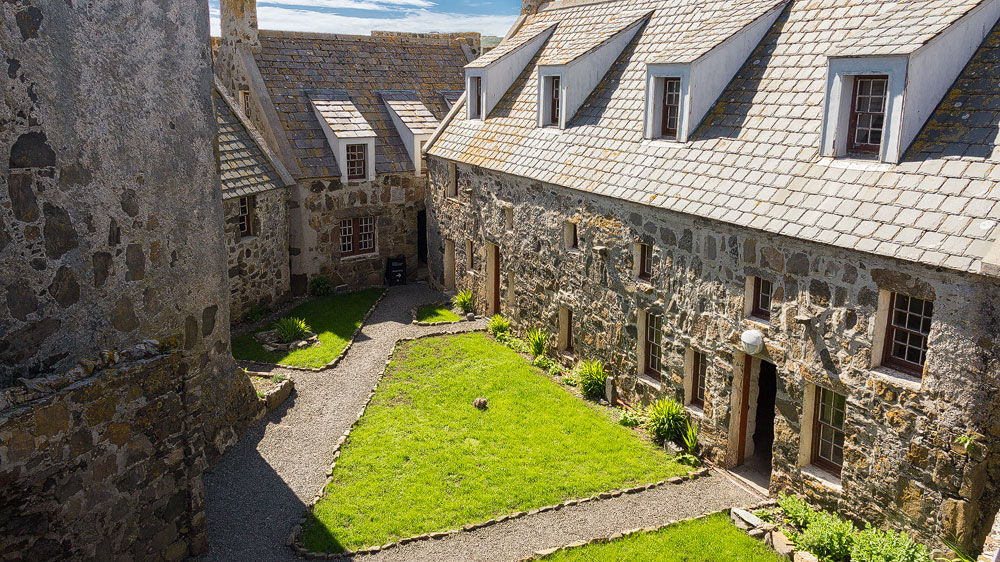
In 1937, Robert bought Kisimul Castle using his wife’s money. He then spent the next 33 years restoring the walls to their old glory. Although “old glory” isn’t quite right, since flush toilets and similar comforts didn’t exist 600 years ago. So the castle got a new face on its old foundations.
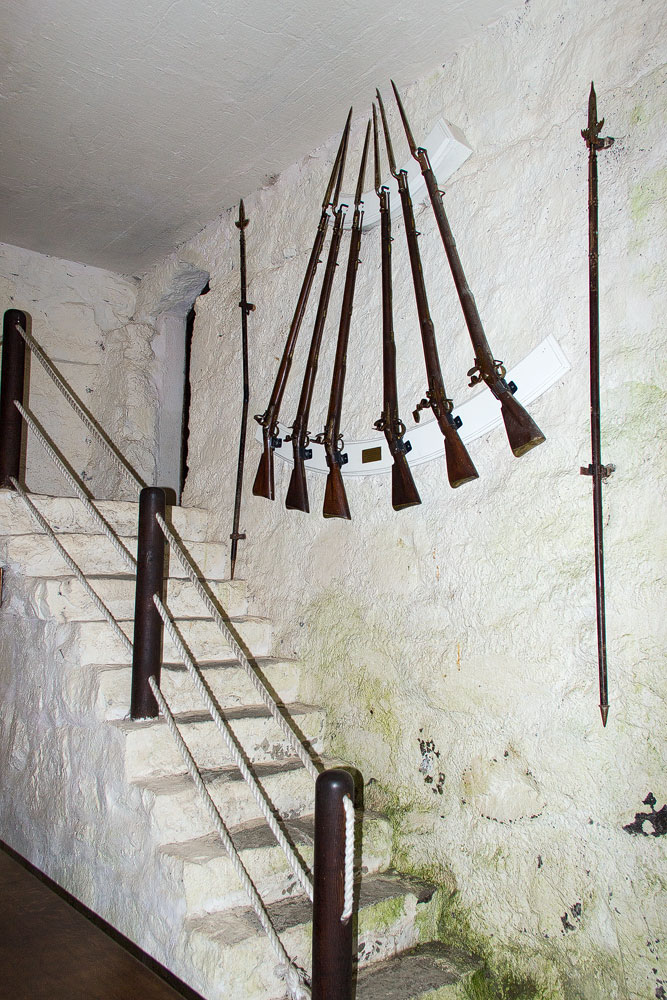
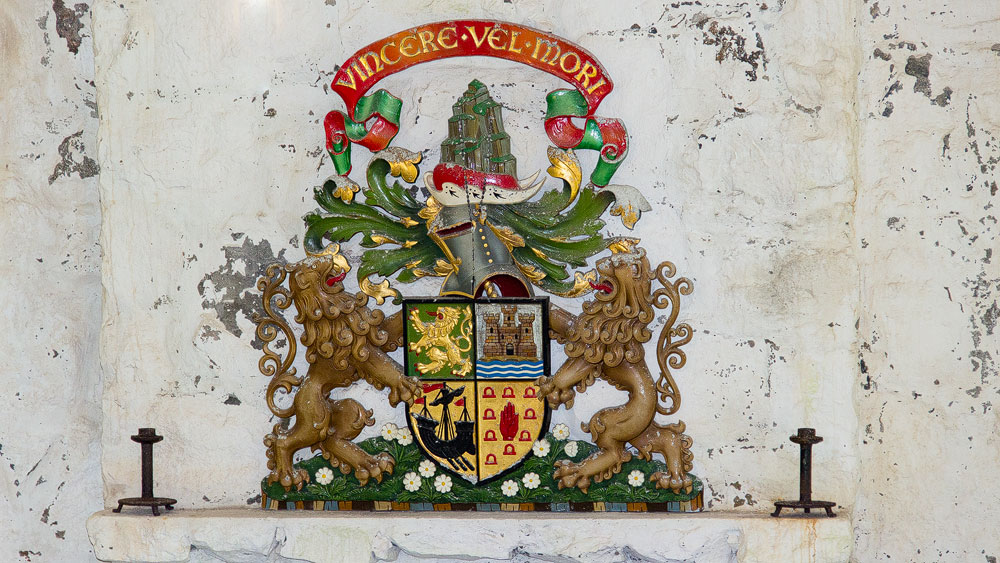
That said, the castle doesn’t necessarily look particularly homely today. The courtyard has since been planted with greenery, but most of the rooms stand empty. The great hall is dominated by the coat of arms, a few muskets that saw action at Culloden, and a large old wooden table.
At least, that was the case up to 2020. The castle was then restored over more than six years, through to spring 2026 – protected above all against the looming threat of decay. What exactly has changed inside, I haven’t yet been able to check for myself.
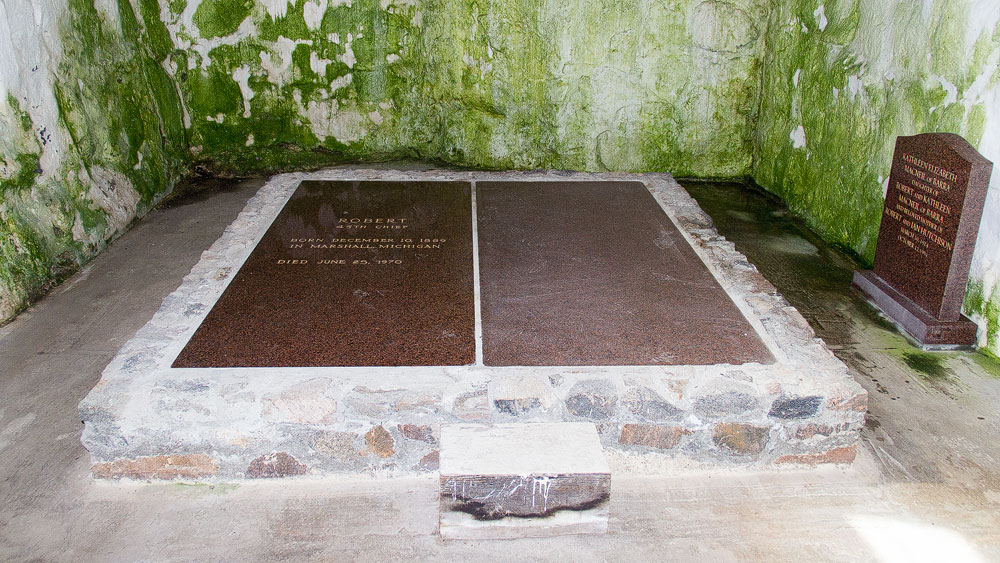
Even so, Robert Lister MacNeil had realised his life’s dream. Kisimul Castle is once again the clan centre of the MacNeils today. After his death, Robert was buried beneath a large grave slab in the chapel.
Good to know: the MacNeils of Barra and Historic Scotland
“Conquer or die” reads the Latin motto on the MacNeil coat of arms. The clan traces its roots back to Ireland: the Uí Néill there were descendants of the High King Nial of the Nine Hostages, a legendary figure of the 5th century. A member of the Irish clan named Ánrothán Ua Néill is said to have come to Barra in the 11th century.
The MacNeils were first mentioned in a document in 1427, in a charter from the Lord of the Isles that stated Barra belonged to the MacNeils. It’s likely the oldest parts of Kisimul Castle date from this period too. Incidentally, “Kisimul” is an anglicised corruption of the Gaelic name Caisteal Chiosmuil, which translates as “castle of the rock in the small bay”.
In the period after the Lords of the Isles, the MacNeils earned themselves a reputation as pirates; later they became part of the royal army, and Roderick MacNeil fought alongside Bonnie Prince Charlie in the Jacobite rising. When he returned to Barra after the defeat at Culloden, he had already moved his seat away from Kisimul Castle.
In 1838, the MacNeils sold the island of Barra due to financial difficulties – bringing 800 years of MacNeil rule to an end.
After Robert Lister MacNeil, who had bought Kisimul, his son Ian Roderick MacNeil succeeded him as clan chief. In 2000, he placed the castle into the care of Historic Scotland, which now looks after its upkeep. Some sources say Historic Scotland must pay an annual rent of one pound and a bottle of Talisker whisky for the privilege. Ian Roderick died in 2010; today, his son Rory MacNeil is the chief of the clan.
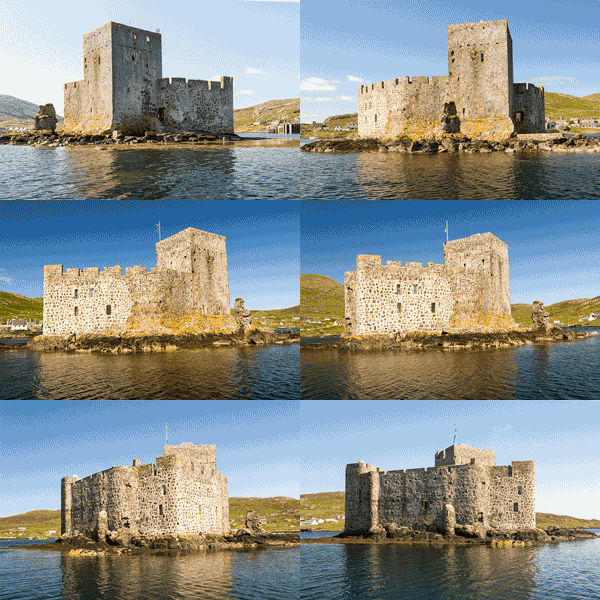
Tip: the boat loop around Kisimul Castle
Have your camera ready as you leave the castle. If the operators still run things the same way, the boat circles the castle once before heading back to Castlebay – giving you a view of the castle from every side.
From my own photos, I put together an animated GIF of Kisimul Castle, so you can get an impression of it from all angles.
Personal note: mind your head in the bare stone walls
Some of the doorways in the castle are very low. There are warning signs, repeatedly telling you to mind your head. But they don’t seem to help much – not even for me. Even at 1.76 metres, I still cracked my head against the crossbeam of the door in the tower.
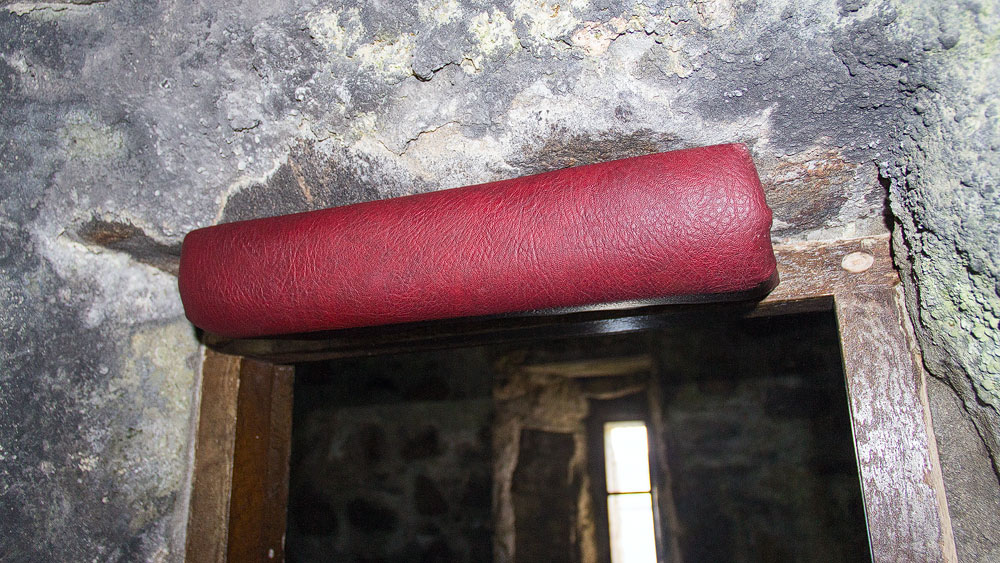
The nice thing is: apparently I was in such good company at this particular spot that the castle wardens had fitted a thick red cushion there as a buffer. And before anyone laughs – try not to bump your own head first.
Overall, though, the interior of the castle wasn’t all that interesting. It’s dominated by rooms and halls rendered in limewash white, on which green algae are already forming, encouraged by the dampness of the seawater.
Getting there:
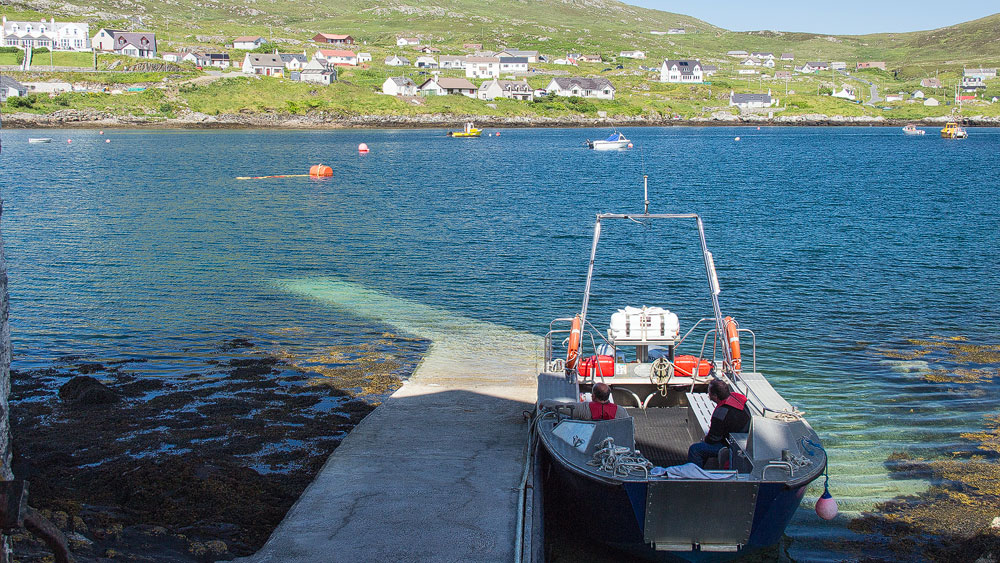
With sat nav: “HS9 5XA” will bring you close to the jetty for the ferry to the castle.
Without sat nav: Barra has one large ring road. Follow it to Castlebay and, once you enter the village, turn off towards the Tourist Information onto Pier Road. Find a parking spot there and look for the jetty for the small ferry to Kisimul. It sits diagonally opposite the Café Kisimul.