Old stone houses opening out onto the sea, a long harbour full of boats, a colourful shopping street – you’ll find all this in Lerwick, the capital of Shetland.
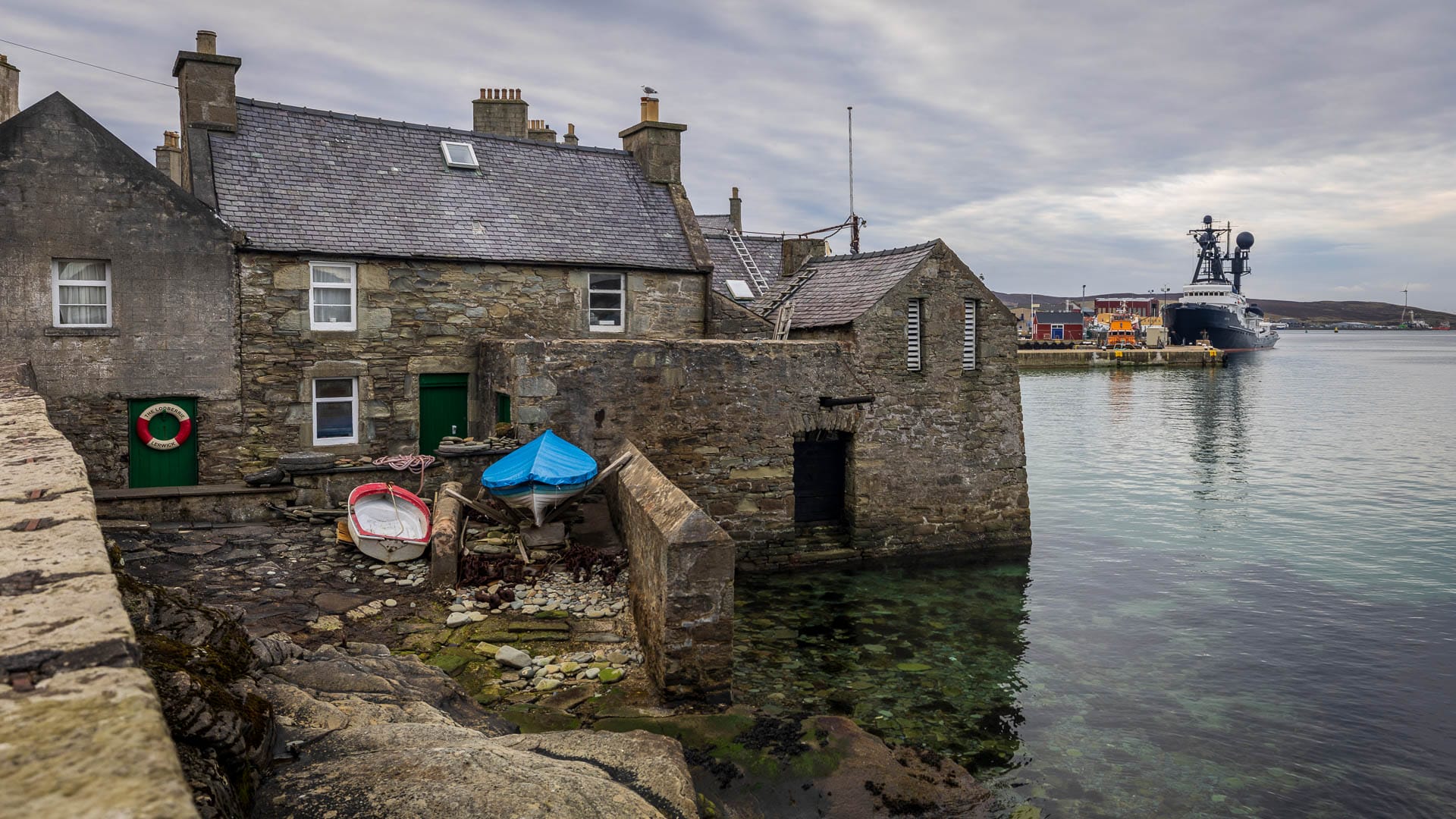
Lerwick wasn’t always the capital of Shetland. It took over from Scalloway on the west coast. One reason was that the strait between Bressay and Lerwick offered a calmer harbour for merchant ships from the Netherlands.
This international history has become ingrained in the town. Old houses still stand on the waterfront today, over which the cargo of many a ship was unloaded. Not infrequently, this was done under the watchful eye of tax collectors.
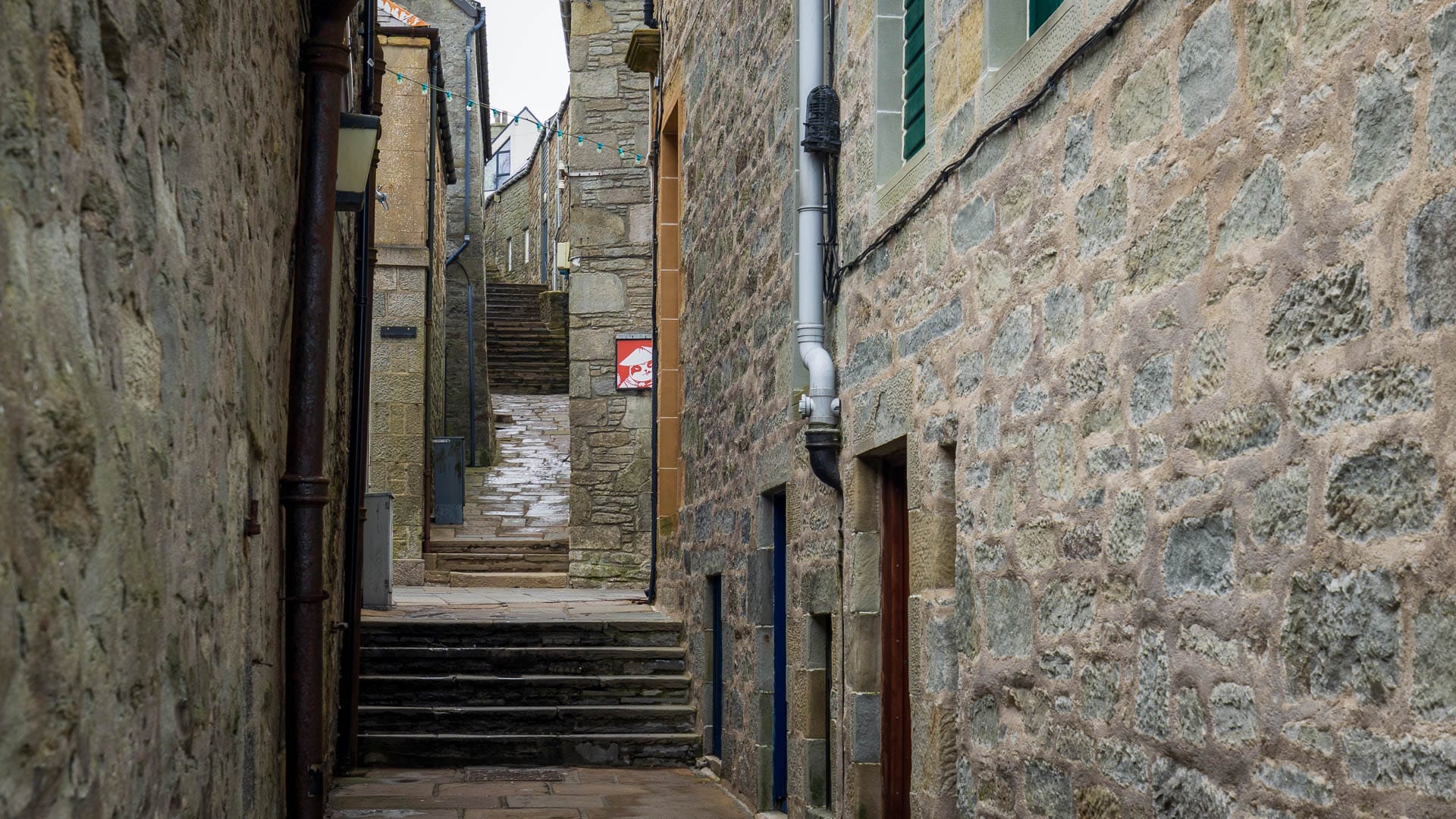
The town rises up towards the land. It winds its way up through narrow streets, criss-crossed by stairways. Perched atop the hill are the old fort and Lerwick’s venerable town hall.
Some of these houses might look familiar to you if you’ve watched the series “Murder on Shetland”. That’s because Lerwick was home to the TV detective Jimmy Perez.
If you want to visit Lerwick, allow at least a day. I’ll show you what you can see and do here.
Map: Sights in Lerwick
As you can see on the map, most of the town’s attractions are located near the water.
You are currently viewing a placeholder content from Google Maps. To access the actual content, click the button below. Please note that doing so will share data with third-party providers.
More InformationLerwick highlights: What you definitely shouldn’t miss
You shouldn’t miss these must-sees.

Shetland Museum
In the main town, a modern exhibition showcases the lives of the islanders over the centuries. You can see facial reconstructions, medieval stone carvings, traditional boats and even cars. Free entry.
Lodberries
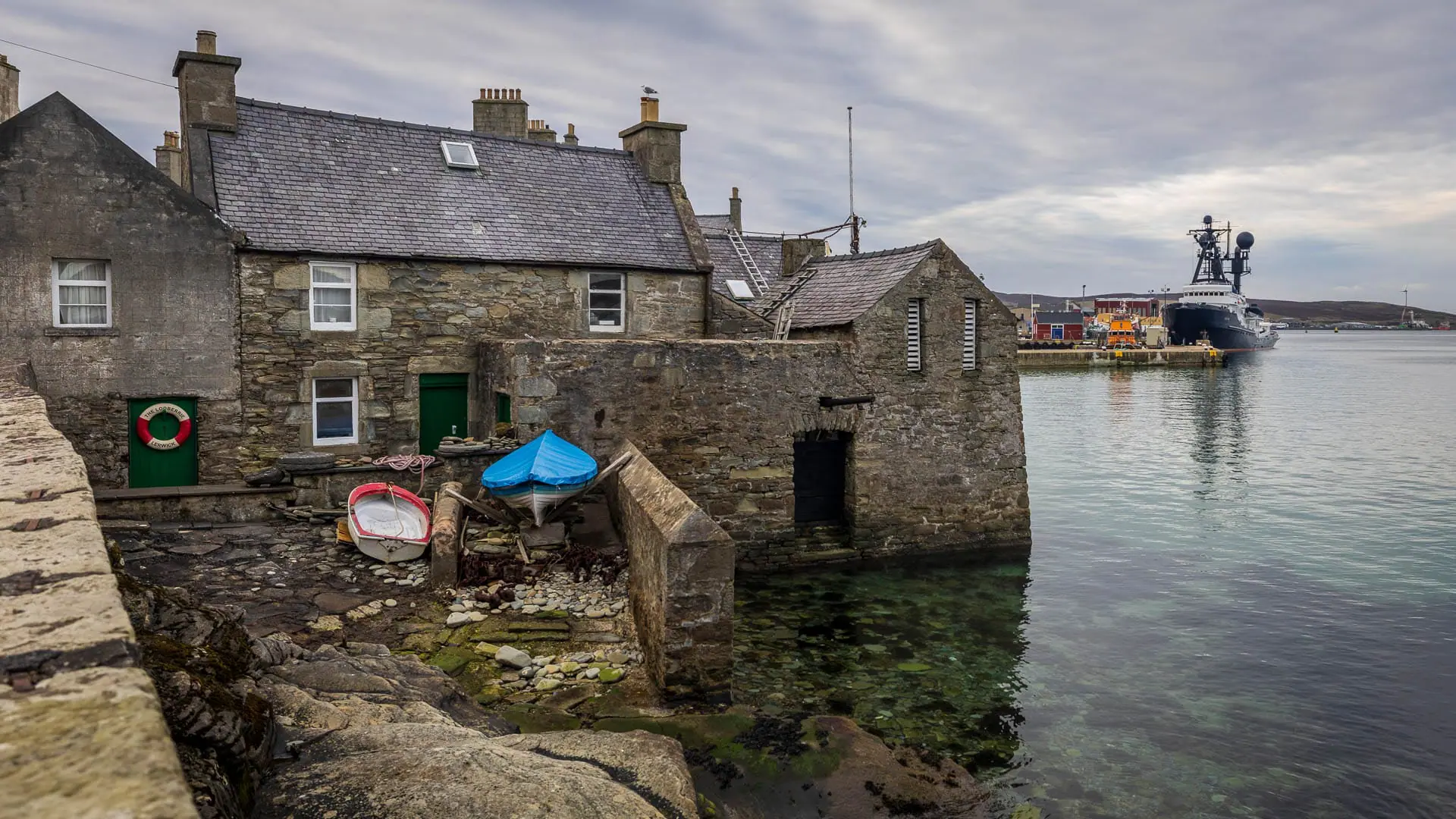
A row of buildings jutting out into the harbour are the Lodberries. They were built to unload cargo from ships. Today, the buildings are one of the most beautiful sights. What’s more, ‘The Lodberry’ is the home of the fictional policeman Jimmy Perez from the series ‘Murder on Shetland’.
Clickimin Broch
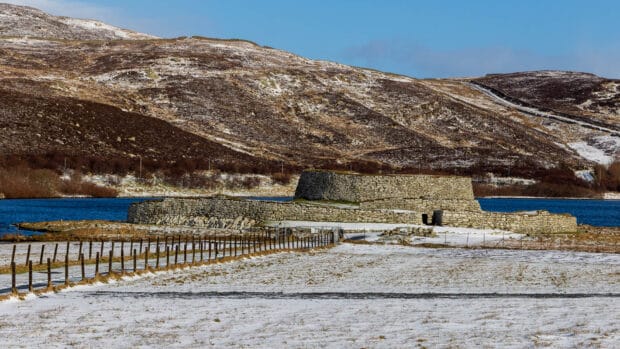
Just outside the capital, Lerwick, lies the Clickimin site. This collection of prehistoric structures in a loch was inhabited for centuries. The most important part: the remains of the broch. Admission is free.
Exploring Lerwick: a stroll to the sights
The best way to explore Lerwick is on foot. Most of the town’s sights are strung out like a string of pearls following the water’s edge.
The exception is the Broch of Clickimin, which is located outside the town. I have written a separate post about this: Broch of Clickimin.
I have chosen the order so that the attractions that do not close (shops, museums) are visited first. The main route is 4 to 5 kilometres long and takes one to one and a half hours to walk. On top of that is the time I have estimated for each stop at the attractions.
Roughly speaking, I would allow six hours for the day in Lerwick, possibly more (without a visit to Clickimin).
Parking & Getting There
If you’re coming by car, there’s a car park at the Shetland Museum. You can park here for free for up to two hours; after that, there’s a charge. Alternatively, there’s another car park above Fort Charlotte.
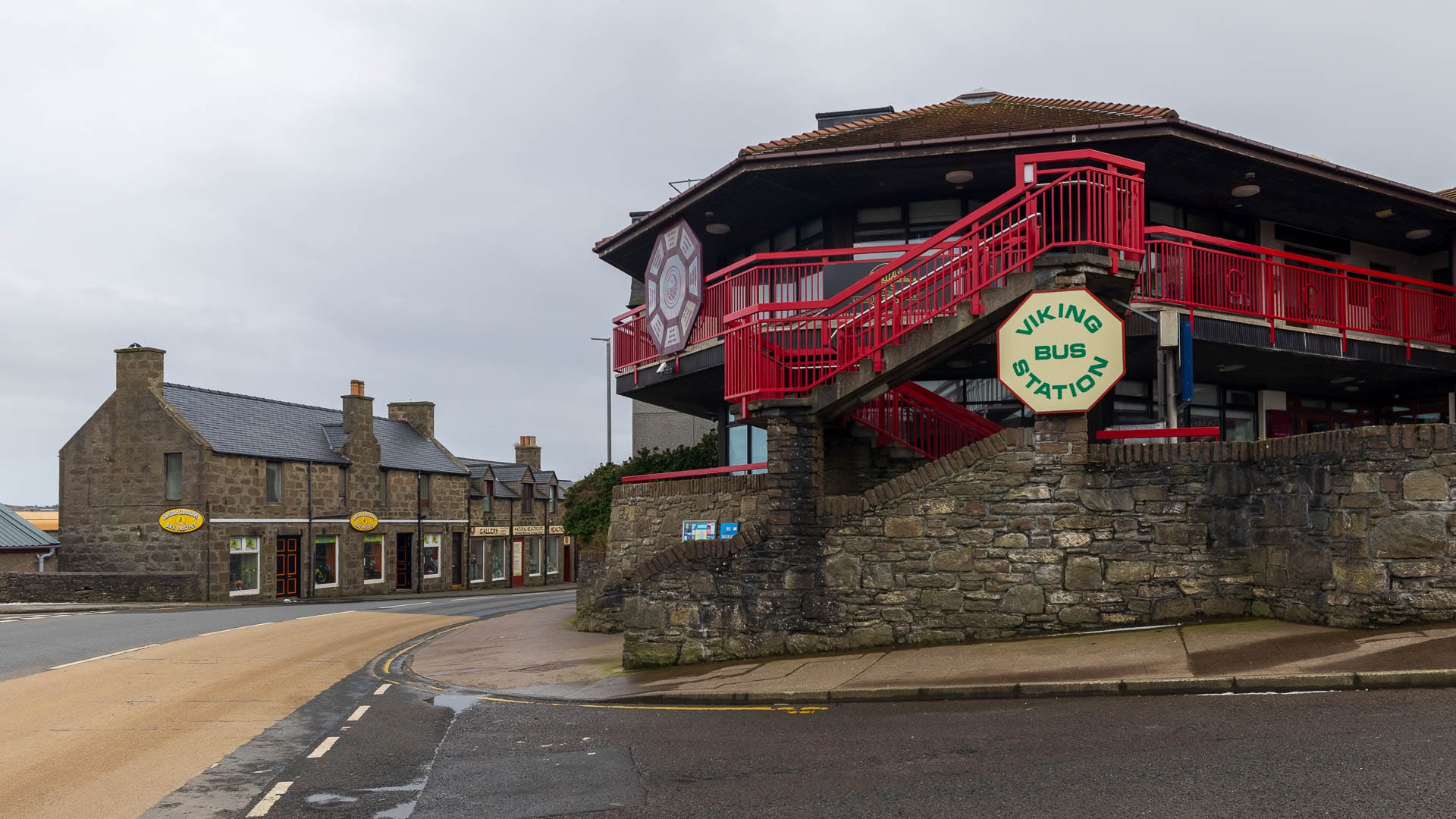
If you’re travelling by bus, you can get off at the Viking Bus Station. It’s about 200 metres from the museum.
Shetland Museum
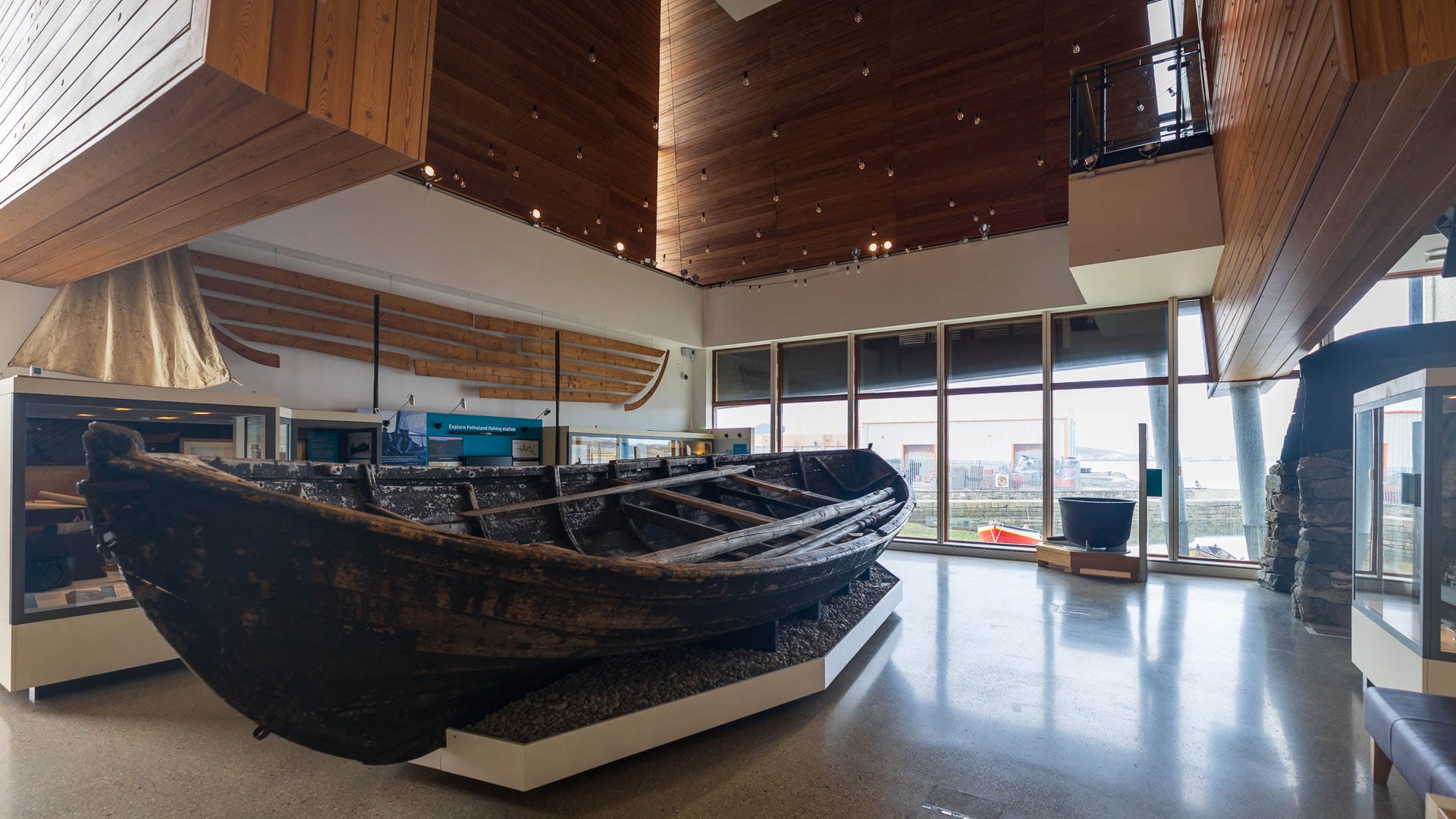
Address: Hay’s Dock, Lerwick, ZE1 0WP
Opening hours (summer): Tue–Sat, 10:00–17:00, Sun–Mon, 12:00–17:00
Admission: free, donations welcome
Duration: approx. 2 hours
Web: shetlandmuseumandarchives.org.uk
This modern and beautiful museum in Lerwick offers a deep insight into the history and culture of Shetland. All this is showcased through fascinating display cases featuring artefacts. Boats and huts are also on display, and there is even an old car to be seen in the museum.
A real highlight (in the truest sense) is the old lighthouse mechanism, which spans two floors. In front of the museum lies a harbour basin with old stone buildings and boats.
I can highly recommend the museum. Admission is free.
Lerwick Distillery

Address: Whisky Lane, 32 Market St, Lerwick, ZE1 0JP
Opening hours: Mon–Sun, 10:00–17:00
Admission: no guided tours yet, tastings from £15, shop free
Duration: approx. 20 minutes
Web: shetlandwhisky.com
A little further on lies the Lerwick Distillery. It is now Scotland’s northernmost whisky distillery, although no whisky had yet been distilled at the time of my visit (March 2026).
Despite Shetland’s rugged landscape, the future whisky is likely to be rather smoother – without peat or smoke. It is fitting, then, that a veteran from Speyside has been recruited as master distiller. Ian Millar previously oversaw the Glenfiddich, Balvenie and Kininvie distilleries.
Elisabeth Atia can often be spotted in the shop here in her Nordic attire. There are no tours yet, but perhaps you’ll be allowed a peek into the room to see the stills and the spirits safe.
Town Hall
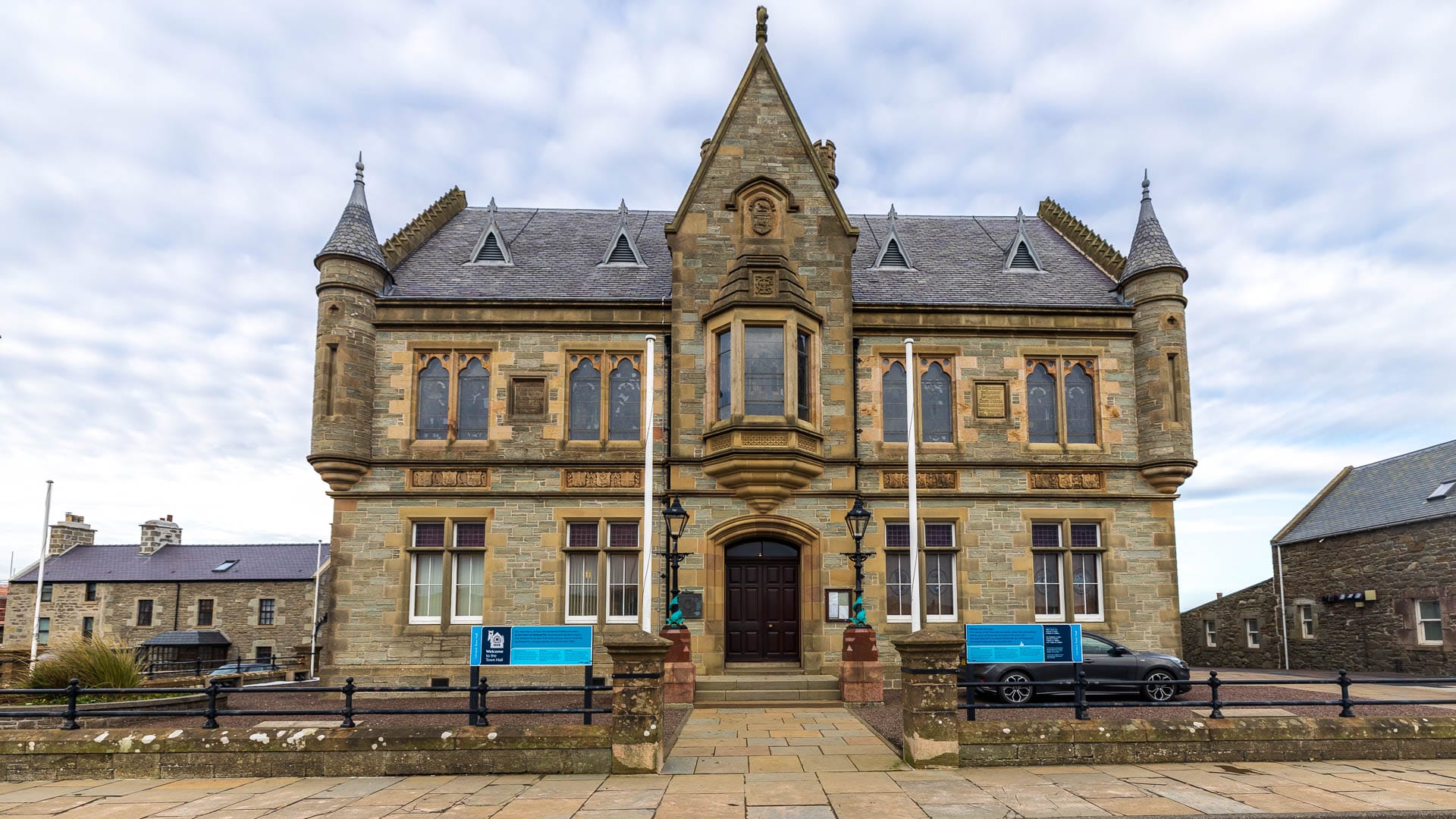
Address: Hillhead, Lerwick, ZE1 0HB
Stop: have a quick look around, then move on
If you simply continue along Market Street, where the Lerwick Distillery is located, you’ll reach the Town Hall on “Hillhead” after a short detour. Opposite stands the war memorial and diagonally opposite is the police station from the Shetland crime series.
From here, turn left past the Town Hall into Charlotte Street. On your left, a path leads through a gate into Fort Charlotte.
Fort Charlotte
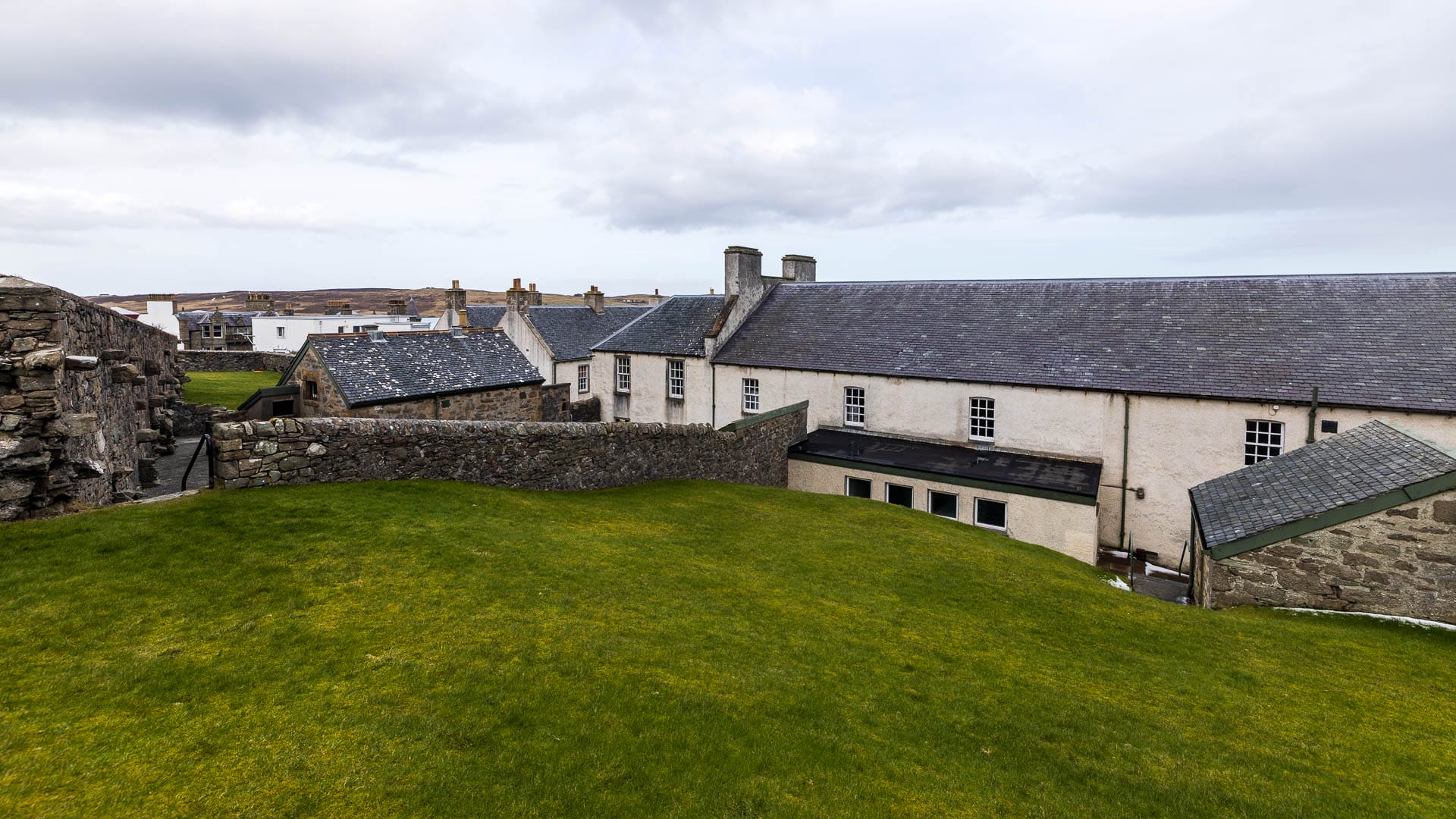
Address: 179 Commercial St, Lerwick, ZE1 0HX
Opening hours: Mon–Sun, 10:00–16:00
Admission: free
Duration: approx. 20 minutes
Web: historicenvironment.scot
The fort is situated above the harbour and was once intended to protect against attacks by the Dutch and other enemies. The first complex was built as early as 1655, but the fort’s current state reflects the period around 1780.
You can view the old buildings, such as the powder magazine, quarters, bakery and more, from the outside. The view of the harbour from the ramparts is particularly worth seeing.
Afterwards, leave the fort through the same gate you entered through (Charlotte Street) and turn left.
Pedestrian zone
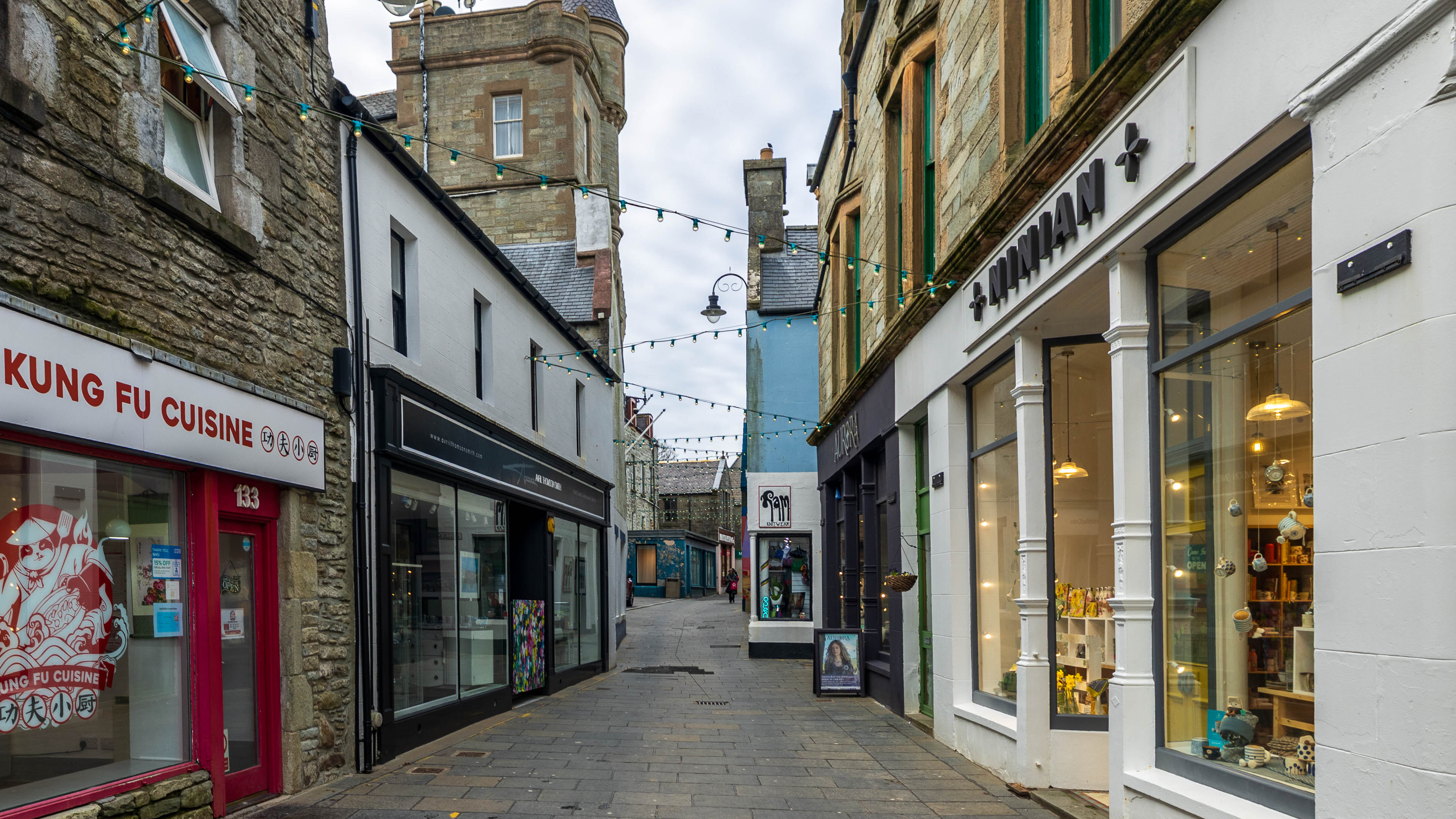
Address: Commercial St, Lerwick, ZE1 0HX
Duration: depending on how much you fancy shopping
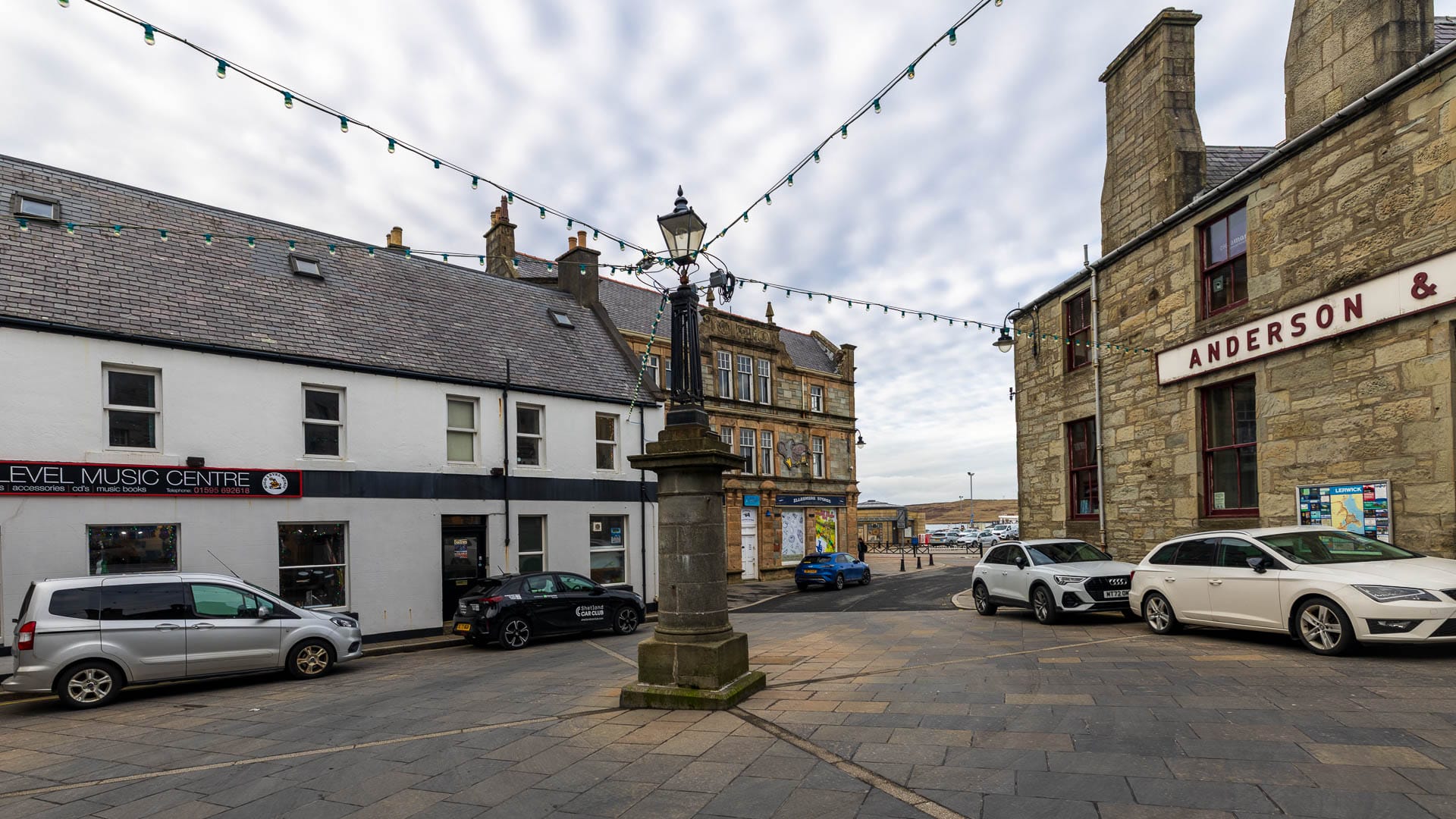
You’ll reach Commercial Street, Lerwick’s main shopping street. Here you’ll find fashion shops, banks, souvenir shops, outdoor gear shops, cafés and restaurants. The sweet shop “The Island Larder” near the Mercat Cross is particularly famous.
At Mercat Cross, don’t continue along Commercial Street, but head straight through to the harbour. You’ll reach Victoria Pier.
Victoria Pier & Albert Dock
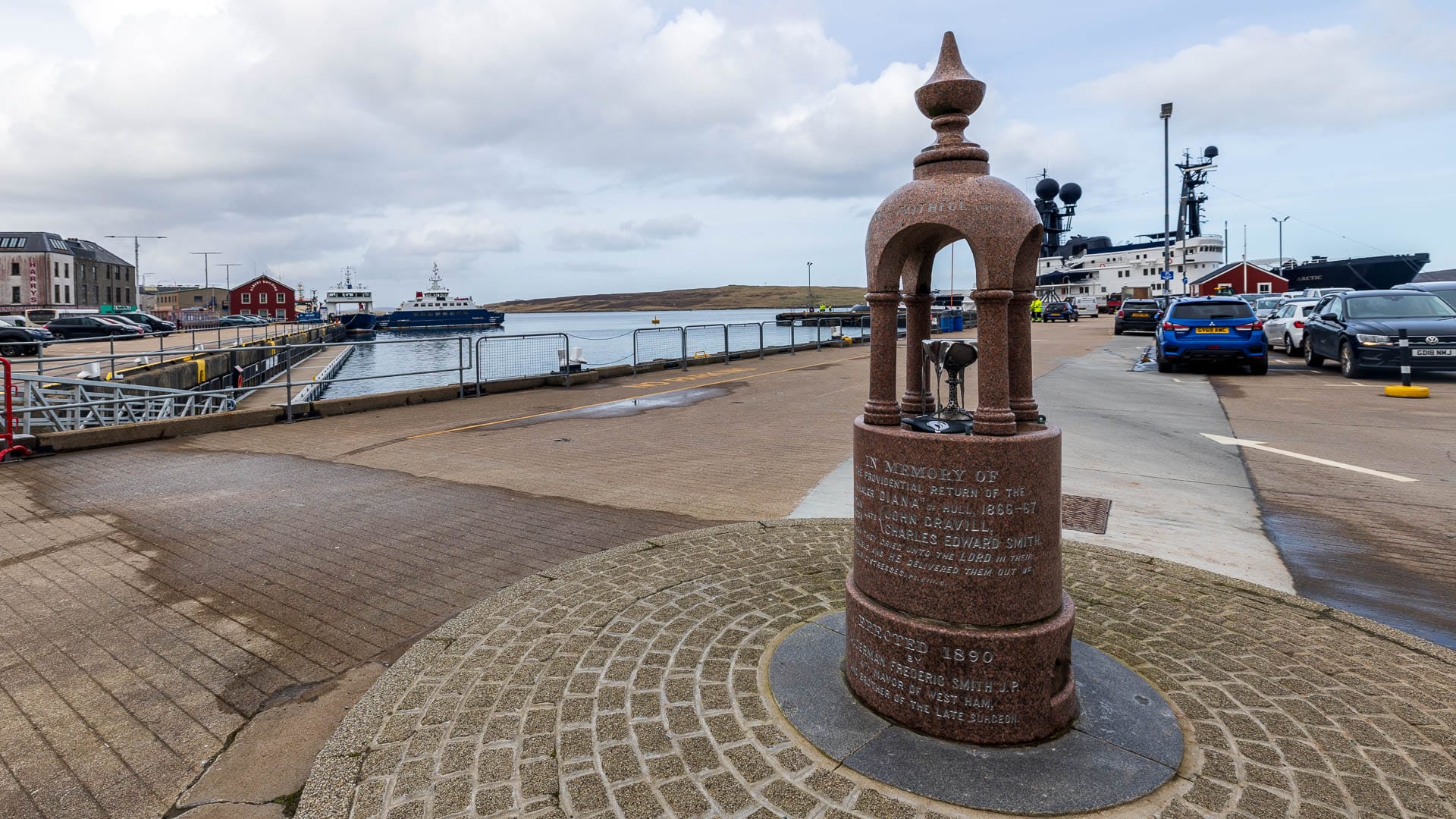
Address: Lerwick, ZE1 0LL
Duration: 10 minutes
From Victoria Pier, you have a lovely view across the harbour. At the start of the pier stands a memorial. It commemorates the ill-fated voyage of the Diana, a whaling ship that was trapped in the ice for six months and lost 13 men. The sculpture of the overflowing chalice inside, however, dates from the year 2000.
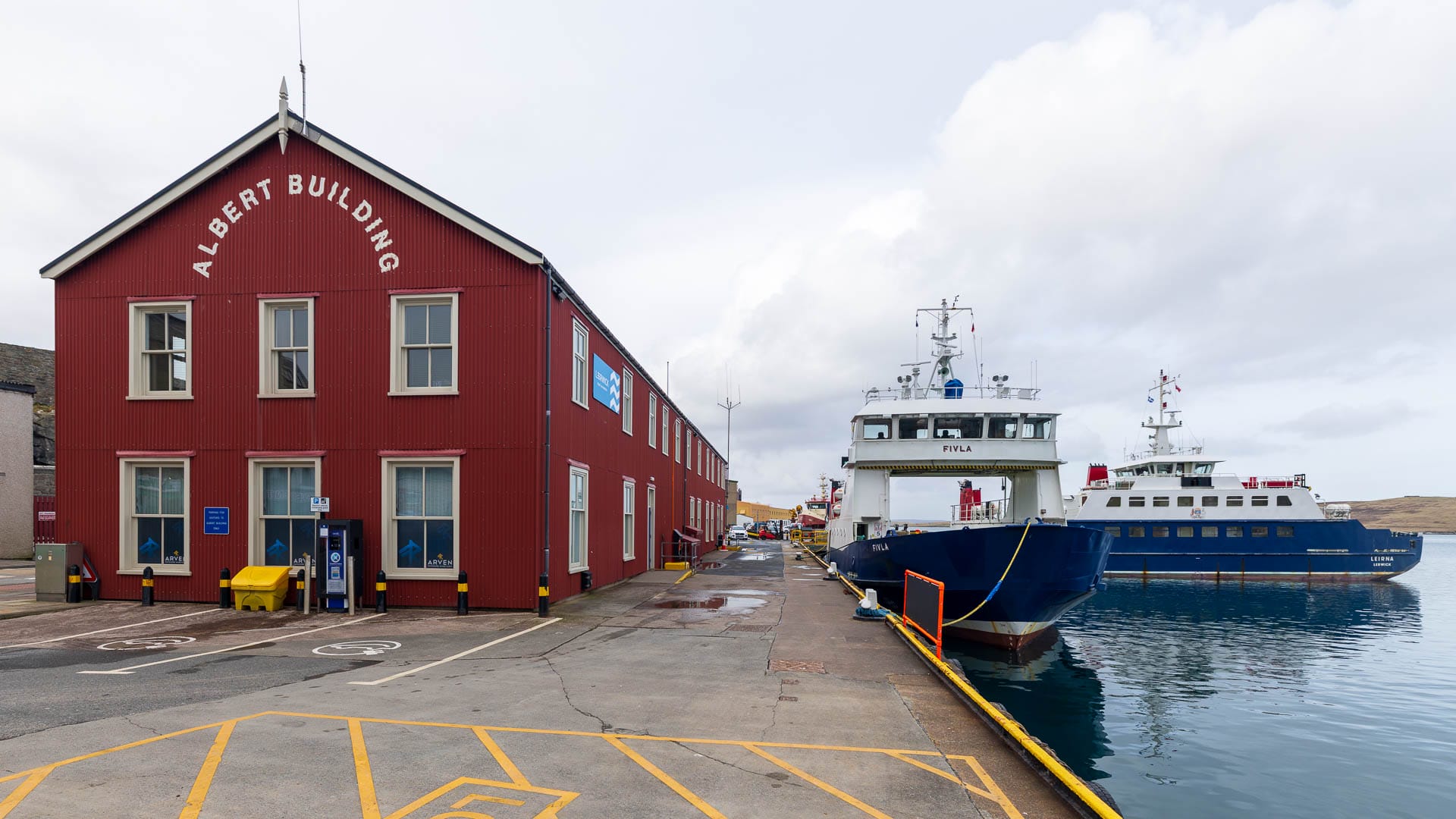
You can often see larger ships here and look across to Albert Dock on one side. That’s where the ferries to Bressay and the Out Skerries in the east of Shetland are moored.
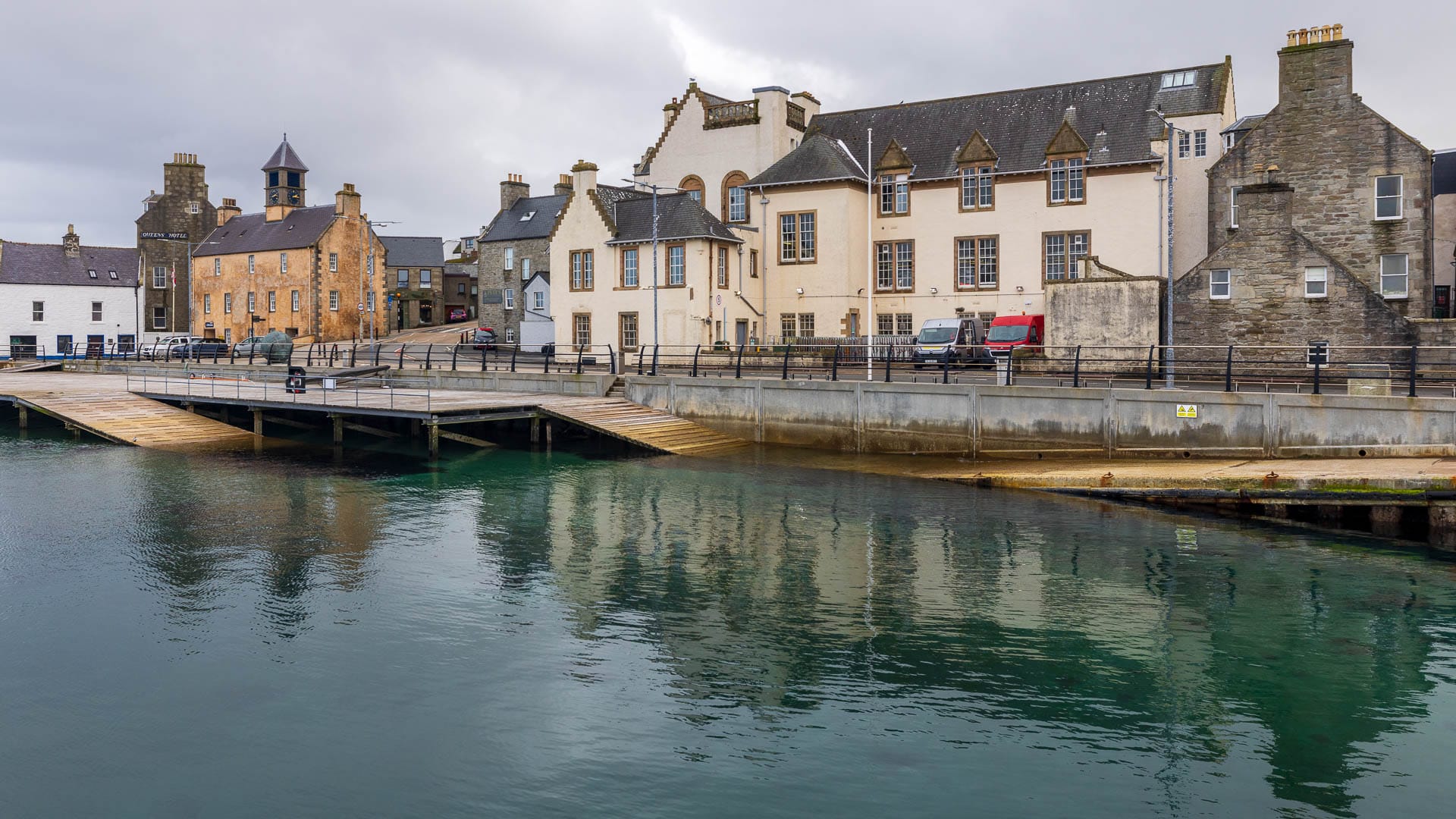
In the other direction, you have a lovely view of the front of the old buildings: the Lerwick Delivery Office, the Tollbooth and the Queen’s Hotel.
Now head back to Commercial Street and continue along it.
Tollbooth
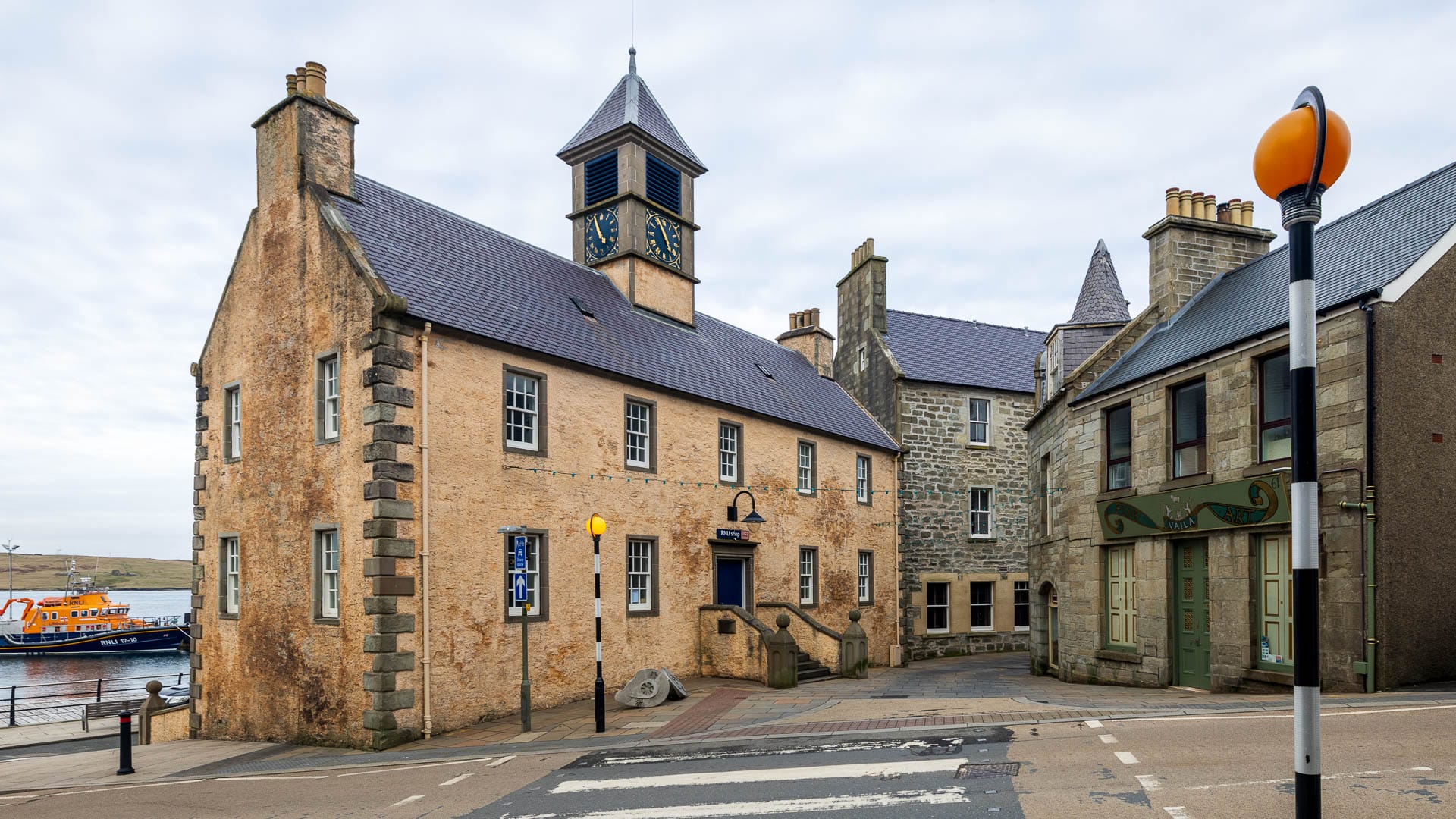
Address: Lerwick, ZE1 0LL
Duration: 5 minutes
Lerwick’s Tollbooth was once the main administrative building. It dates in its present form from 1767. It was used for collecting taxes, as a prison, as a courthouse and more.
The Tollbooth marks the entrance to the street with the Lodberries. So continue along Commercial Street from here.
Bain’s Beach
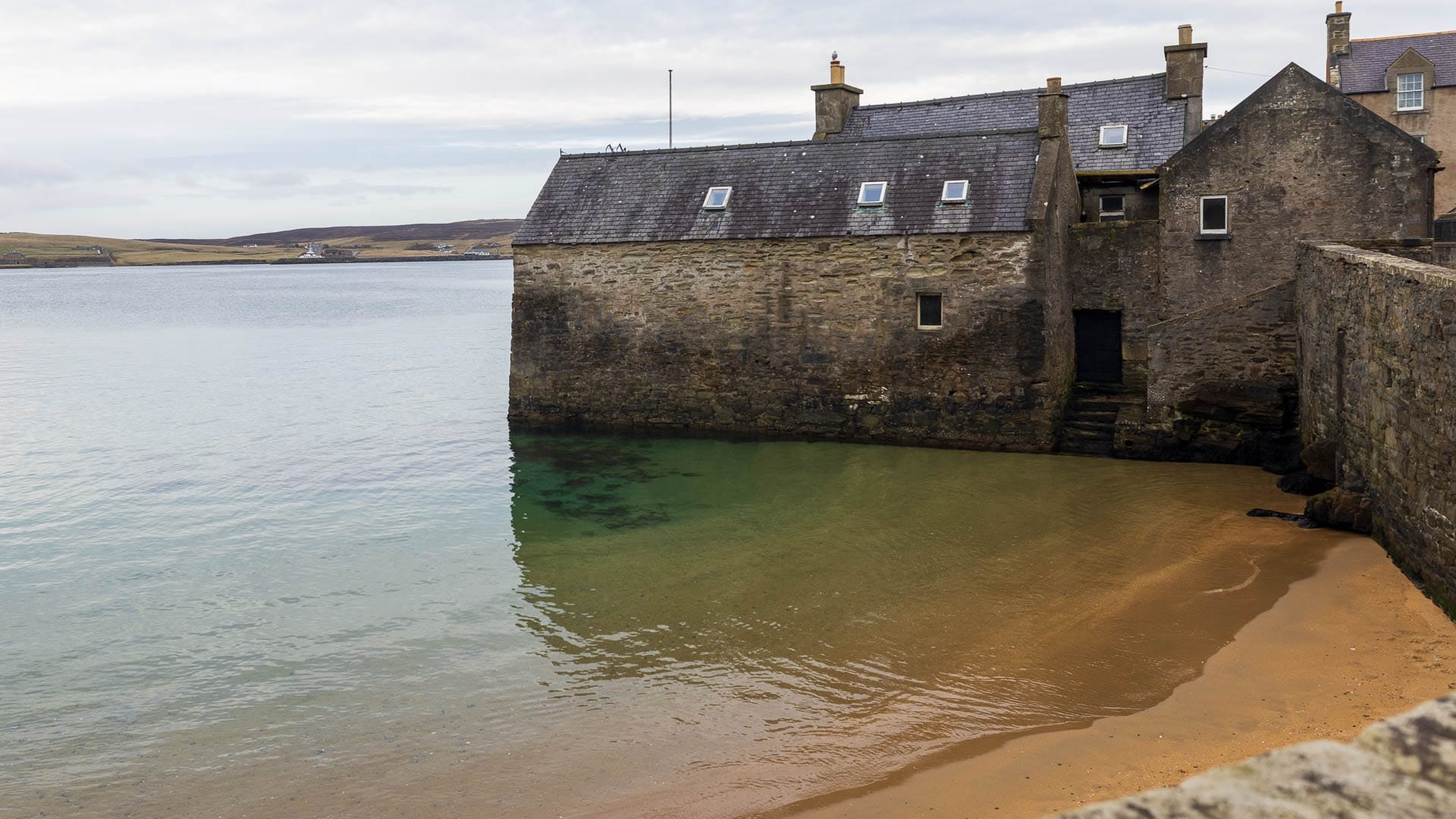
Address: Lerwick, ZE1 0LL
Duration: 5 minutes
This is where the Lodberries area begins. Behind this strange name lies the Old Norse term “hlaðberg”. This referred to a rock where ships were loaded, essentially a natural pier. In this case, the term was also used for houses built far out into the water so that ships could transport their cargo across more easily.
The Queen’s Hotel, just behind the Tollbooth, is already one such Lodberry. Behind it, sand has accumulated and formed a beach. This is Bain’s Beach, a beach nestled between houses right in the heart of Lerwick.
The Lodberry
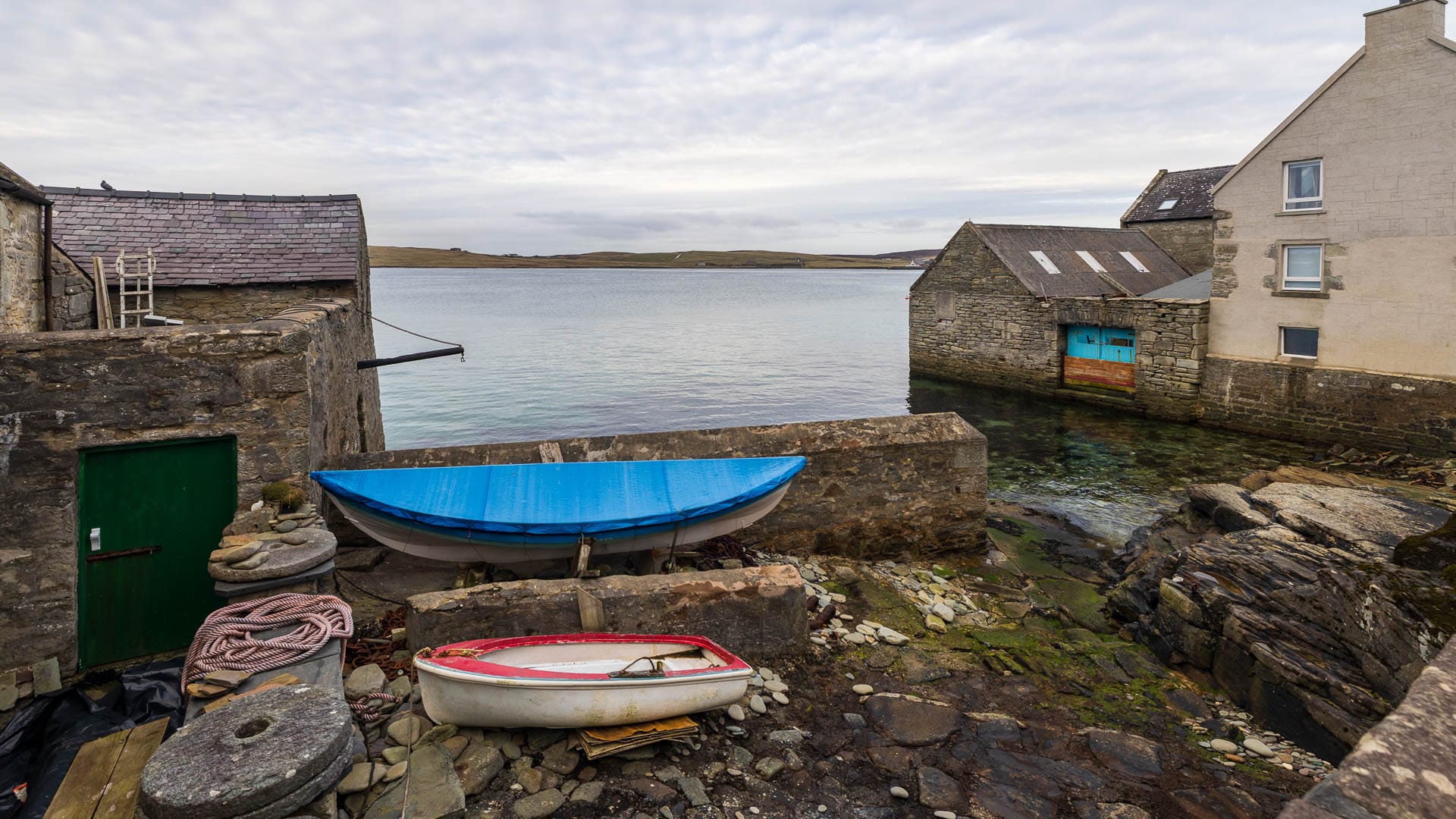
Address: 20 Commercial St, Lerwick, ZE1 0AN
Visit: 5 minutes
There is also THE Lodberrie – the Lodberrie. Thanks to the Shetland crime series, the building is one of the best-known and most photographed in Shetland. The fictional detective Jimmy Perez has his flat here.
The building itself dates from around 1800 and used to be known as Robertson’s Lodberrie. It has two storeys and was formerly used as a warehouse. It also housed a workshop. Outside, you can still see the old crane above the door, which was used to unload ships.
The Lodberrie and the neighbouring South Lodberrie give a good impression of what the entire Lerwick harbour front looked like in the 19th century.
Stout’s Pier
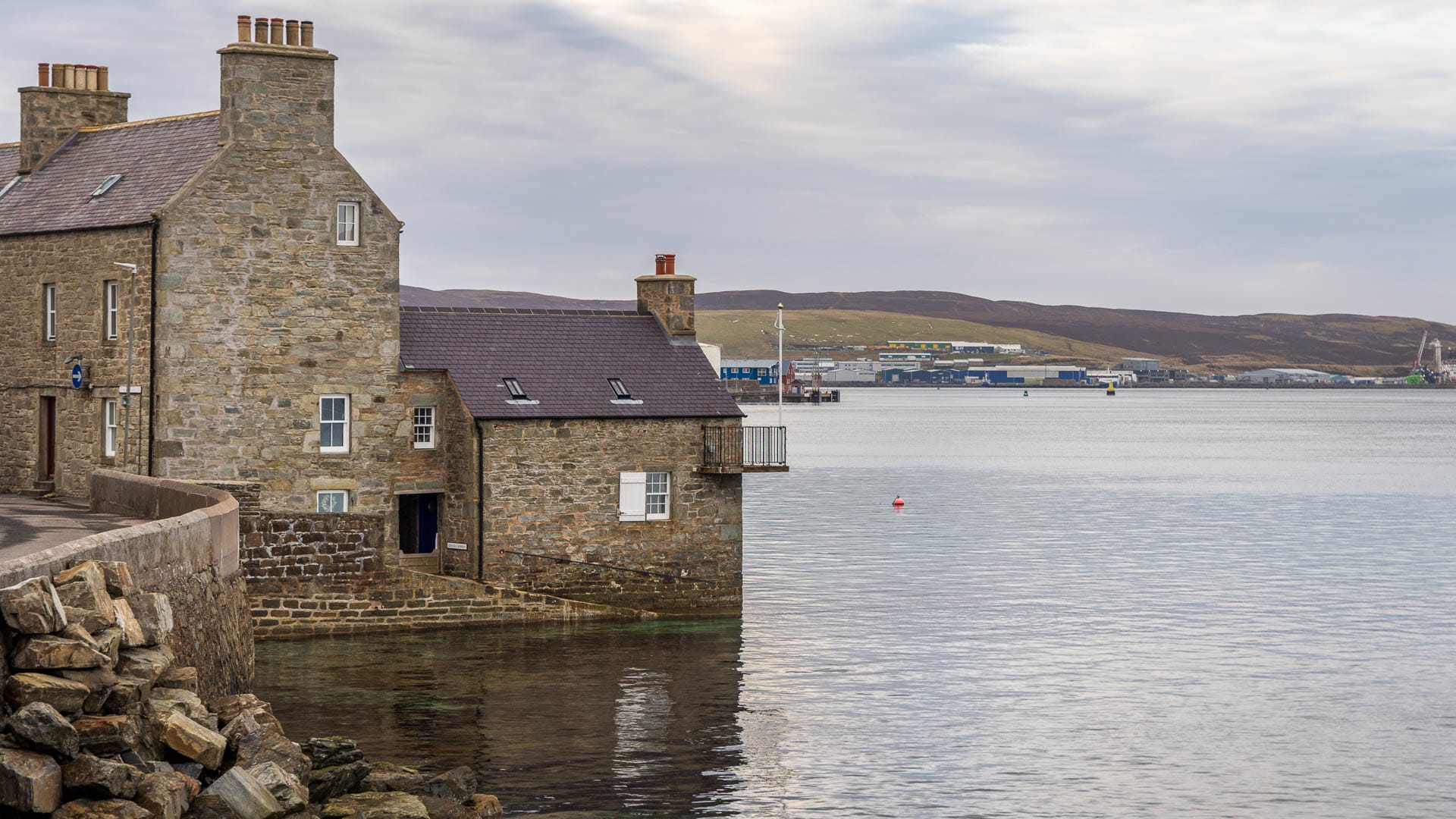
Address: 6 Commercial St, Lerwick, ZE1 0AN
Duration: 5 minutes
Commercial Street ends at this Lodberrie. Once again, you’ll see a beautiful house jutting out into the water, with Lerwick’s commercial harbour in the background.
On the other side stands a small house with a garage, the roof of which is made from one of Shetland’s old, traditional boats.
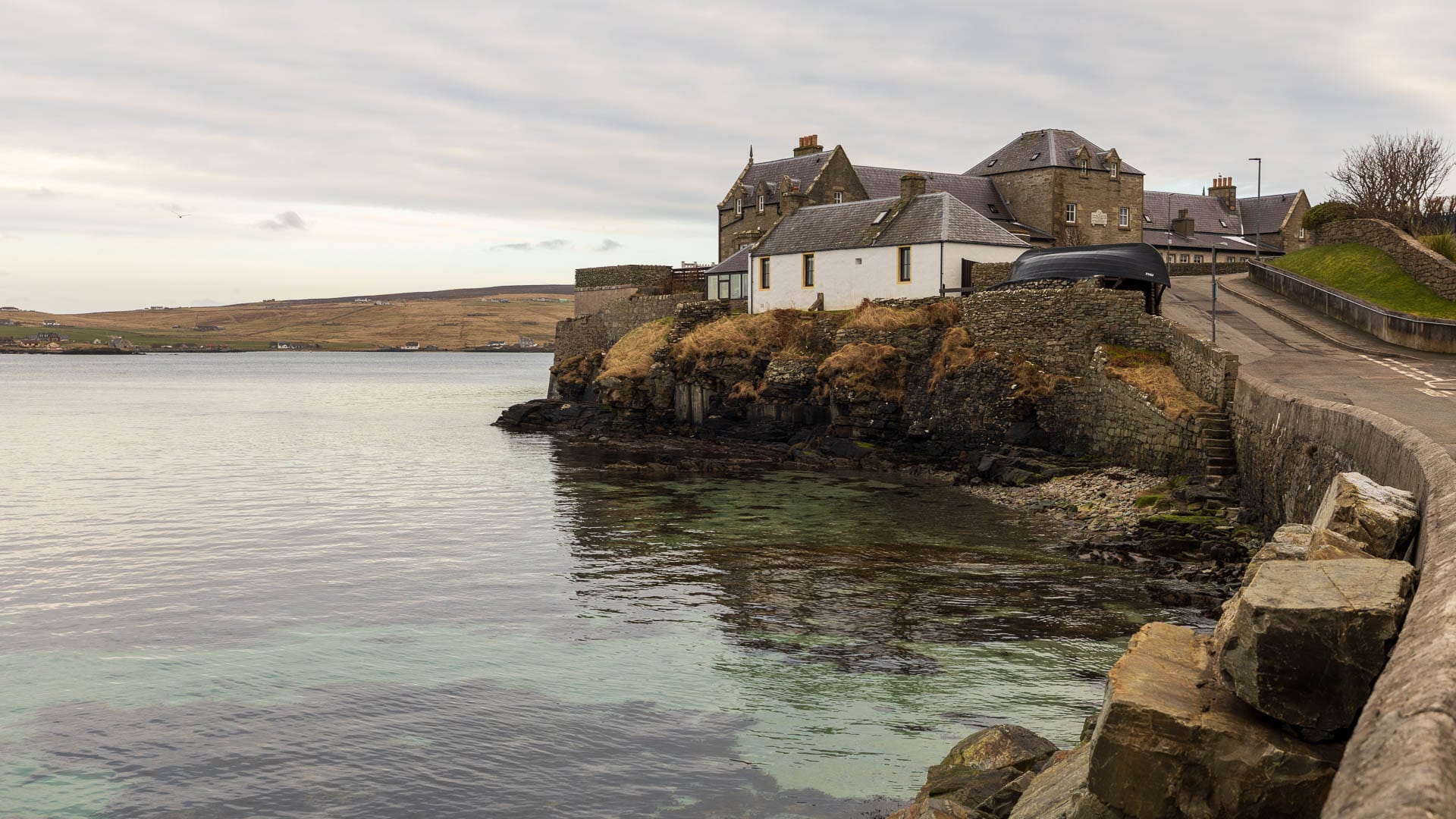
If you like, you can end your walk here and head back to the car park. If you have more time, you can walk on to the Knab of Lerwick.
Knab of Lerwick
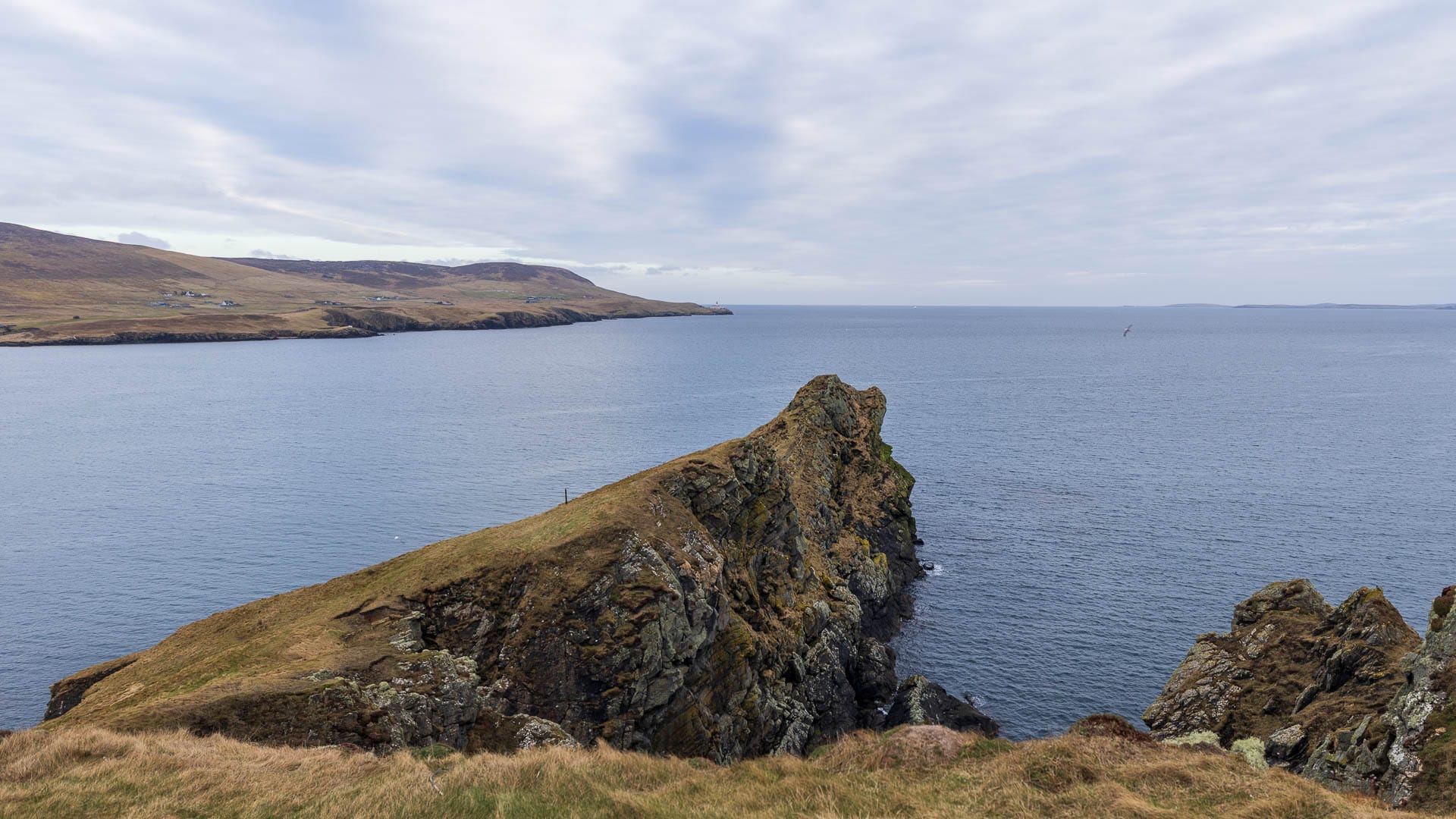
Address: Knab Rd, Lerwick, ZE1 0YB
Duration: 10–15 minutes
Follow the road all the way, and look out for the sign on the left marking the path to the Knab. It is tarmac-surfaced and takes you past the town’s cemetery to the headland. On the way, you’ll pass a torpedo platform.
Above Knab there is a viewing platform that explains what you can see around you.
Knab Road ends just before the viewing platform. You can follow it back into town. Or you can continue walking along the coast to Breiwick Road.
Knab Golf Course
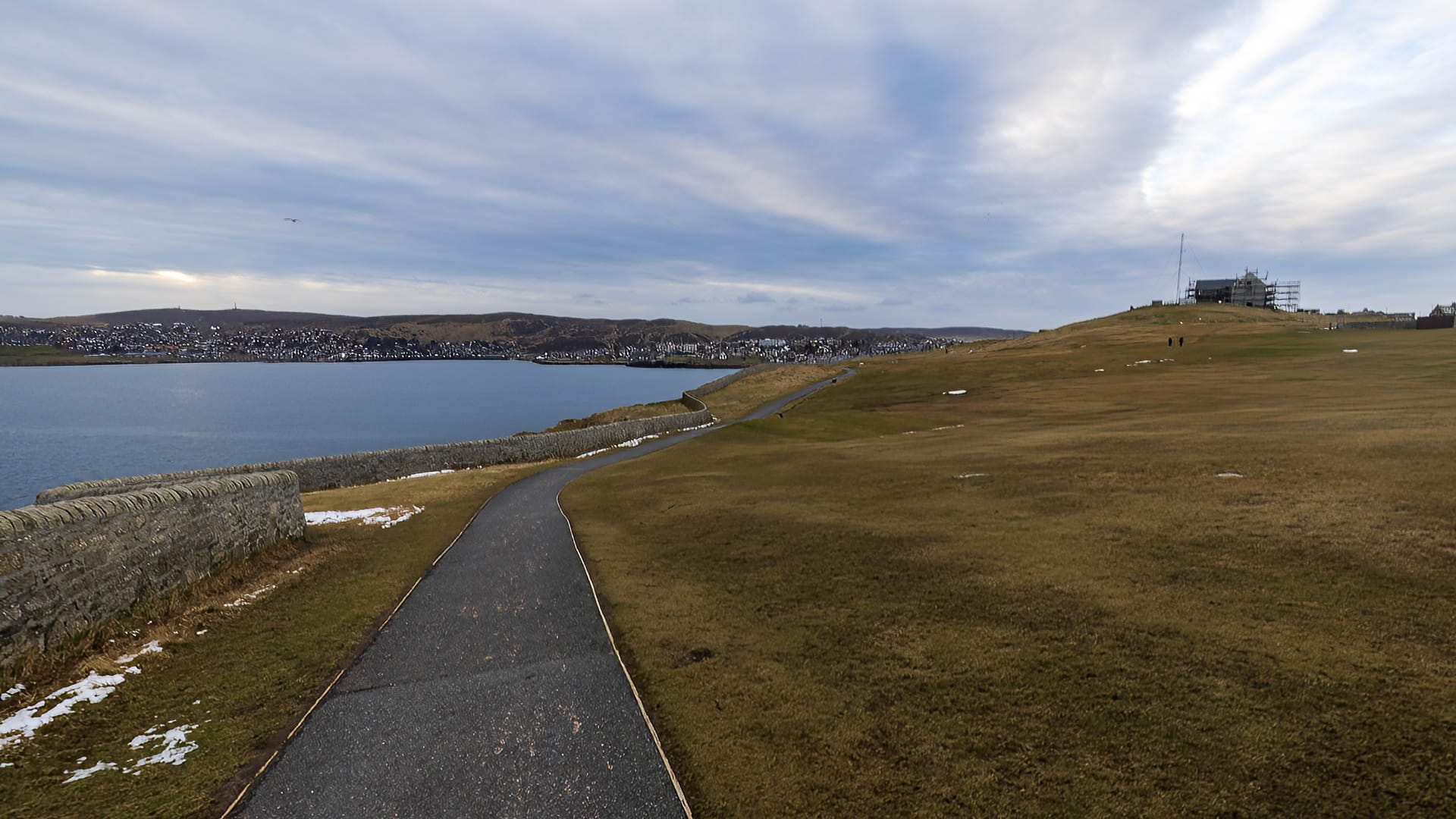
Address: Hjaltland Pl, Lerwick, ZE1 0DU
Stay: 5 minutes on one of the benches
The path back to town runs along the cliff edge. Cannons used to stand here too, to defend the harbour. Watch out for golf balls, as this is also home to the nine-hole Knab Golf Course. It was laid out in 1920 and anyone can play on it for free.
The path ends at Brewick Road. If you head straight on here onto Ronald Street and then on to Mounthooly Street, you’ll walk straight back to the Mercat Cross and can then make your way back to the car park via the harbour.
I hope you enjoyed my walk. Feel free to write about what caught your eye or what happened.